1. Introduction
Hepatitis C virus (HCV) infection remains a major cause of chronic liver disease, cirrhosis, hepatocellular carcinoma, and liver-related mortality worldwide. The global prevalence of HCV infection varies substantially, ranging from relatively low rates in Western Europe (0.5–1%) to higher rates in Eastern Europe (up to 6%) [
1].
The advent of direct-acting antiviral agents (DAA) has revolutionized the management of HCV infection, achieving sustained virologic response rates exceeding 95% and offering markedly improved safety and tolerability profiles. In response to these therapeutic advances, the World Health Organization (WHO) established an ambitious to eliminate viral hepatitis (specifically HCV virus) by 2030. The core targets include a 90% reduction in new HCV infections, a 65% reduction in HCV-related mortality, diagnosis of 90% of individuals living with HCV, and treatment of 80% of eligible persons. Despite encouraging progress, only 24% of high-income countries are currently on the track to meet the 2030 elimination target, while approximately 60% are projected to fall behind by at least two decades [
2,
3].
One of the main strategies to achieve the WHO’s HCV elimination goals is to focus on defined populations with a higher prevalence of infection. The concept of “microelimination” has emerged as a targeted approach aimed at achieving high rates of HCV diagnosis and treatment within high-risk populations–such as incarcerated individuals, people who inject drugs (PWID), and migrants–who are often poorly engaged with conventional healthcare services [
4,
5]. This strategy facilitates improved linkage-to-care through a multidisciplinary framework that integrates medical and nursing assessment, addiction treatment, psychiatric and social support, thereby addressing barriers to care in a more efficient and cost-effective manner [
6].
Incarcerated populations represent a key target group for microelimination initiatives. A recent systematic review reported a global pooled HCV antibody prevalence of approximately 18% among people in prison [
7]. This elevated prevalence is attributed to high-risk behaviors such as unprotected sexual activity, injection drug use, and tattooing with non-sterile equipment–particularly within correctional facilities. Access to HCV care in prisons remains limited, primarily due to restricted diagnostic capacity, the high cost of antiviral therapy, and the transient nature of the prison population, with frequent transfers, releases, and re-entries, complicating treatment continuity [
8]. Nevertheless, prisons also offer a unique opportunity for HCV control and elimination, as they provide a structured environment conducive to universal screening at entry, high treatment adherence through supervised medication administration, and easier access to the healthcare services. In addition, reduced access to illicit drugs and alcohol, along with educational programs addressing high-risk behaviors, can further support sustained virologic response and minimize reinfection risk [
9,
10,
11].
PWID constitute another high-risk population with a high prevalence of HCV infection, primarily due to direct exposure to the virus through the sharing of contaminated needles and syringes [
12]. A systemic review reported an HCV-antibody prevalence of 52.3% among PWID, while another analysis estimated that 39% of individuals with recent injecting behavior were HCV RNA positive [
13,
14].
Several harm-reduction interventions have been implemented to mitigate HCV transmission within this population, the needle and syringe programs (NSP) and opioid substitution therapy (OST). Despite these significant efforts, global access to such programs remains limited, and their impact is still below the desired threshold [
8]. Access to HCV care for PWID already diagnosed with infection is even more restricted, largely due to stigma, discrimination and criminalization [
15]. Compared with incarcerated people, who typically have structured access to medical services and supervised treatment, PWID often face substantial barriers to healthcare engagement, sometimes due to mistrust or unwillingness to seek care, resulting in lower diagnosis and treatment. Rates. To address these challenges, HCV screening and treatment initiatives should be integrated into harm-reduction settings, such as addiction centers offering NSP and OST, in order to enhance linkage to care, support adherence, and tailor interventions to patients’ needs. The efficacy of DAA therapy among PWID is comparable to that observed in non-PWID populations [
8,
16]. Modeling studies suggest that scaling up such combined strategies can reduce HCV incidence in more than 80% within 10 years [
14]. Given the high baseline prevalence and the ongoing risk behaviors within this community, each effective HCV treatment gains additional significance, as it contributes not only to individual cure but also to reduced onward transmission.
The aim of the present study is to describe different models of HCV diagnosis and treatment among mono-infected individuals in two hard-to-reach populations, illustrating practical examples of microelimination strategies that are essential to achieving global HCV eradication.
2. Methods
2.1. Prison Setting
Porto’s correctional facility is an all-male prison located in the northern Portugal, in the city of Porto, the second largest city in the country. It is also the second largest prison in Portugal, with a capacity for approximately 1200 inmates. The Medical Department comprises one treatment room, four outpatient consultation rooms (one assigned to the chief nurse and three for physicians), and an inpatient ward with a capacity for ten patients.
The medical team includes one permanent physician, four visiting physicians who attend periodically, four nurses, two administrative staff, and two permanent security guards responsible for ensuring the safety of the medical personnel.
Upon admission, all inmates are offered screening for hepatitis B virus (HBV), hepatitis C virus (HCV), and human immunodeficiency virus (HIV). The refusal rate for screening is below 0.5%. All inmates who test positive for anti-HCV antibodies, HIV, hepatitis B surface antigen, undergo confirmatory viral load testing, regardless of any prior treatment history, since HCV reinfection may occur after successful therapy. Viral load quantification and HCV genotyping were performed in accordance with international guidelines. All patients with positive HCV antibody For HCV RNA quantification it was used the Roche COBAS TaqMan HCV quantitative test, from Germany with a lower limit of detection of 15 IU/mL. For HCV genotyping, it was used the Roche Amplicor HCV test.
To be eligible for treatment, inmates were required to be ≥18 years old (no individuals under 18 were incarcerated) and to have detectable serum HCV RNA at the time of screening. An important procedural updated introduced during the program allowed treatment initiation even when the inmate’s sentence duration was insufficient to complete therapy or when transfer to another facility was planned. For those released before treatment completion, the remaining medication was dispensed for home administration, and follow-up was offered at the ULS São João outpatient clinic.
Following the identification of HCV RNA, HCV mono-infected patients were referred by the prison physician to the Hepatologist, while co-infected patients (HCV/HIV) were referred to the Infectious Diseases Department. The medical team, from the Gastroenterology Department of ULS São João-the largest hospital in the north of the country–was composed of a single hepatologist who followed all patients throughout the program. In coordination with the prison physician, the hepatologist conducted on-site consultations whenever HCV RNA-positive patients were identified.
Each patient had three scheduled clinical visits:
First visit: A comprehensive medical assessment was conducted, including demographics data, personal and family medical history, and evaluation of HCV risk factors. Patients with newly diagnosed infections received counseling on the disease, treatment options and prognosis. A transient elastography was performed in loco, and results were discussed immediately with the patient. Based on clinical and laboratory findings, the medical team determined the treatment regimen and duration, which were then requested from the central pharmacy.
Second visit: Once medication was available, the hepatologist reviewed the treatment plan, explained the dosing schedule and potential adverse effects, and emphasized the importance of avoiding high-risk behaviors during and after therapy. Treatment was initiated either the same day or the following day. Prison healthcare staff were informed of the treatment schedule and were supervised daily by the administration of DAAs, as they were already trained in delivering opioid substitution therapy. Any adverse events were promptly communicated to the hepatologist, who assessed the need for treatment interruption or modification.
Third visit: This visit focused on assessing treatment outcomes, specifically the sustained virological response at week 12 (SVR 12), defined according to internation guidelines [
17]. During this visit, health education was reinforced, emphasizing the avoidance of high-risk behaviors and harmful practices that could lead to reinfection.
Patients diagnosed with cirrhosis were enrolled in regular surveillance programs for hepatocellular carcinoma and esophageal varices, in accordance with EASL Clinical Practice Guidelines [
18,
19].
In cases of HBsAg-positive patients, individuals were referred to the Department of Hepatology for treatment and follow-up.
All blood samples were collected on-site within the prison by the resident nursing staff. Blood analyses were scheduled at three time points: (1) at prison entry, for initial screening; (2) at the end of the treatment, to assess treatment response; and (3) 12 weeks after treatment completion, to confirm sustained virological response. In addition, all patients were routinely tested for HIV and HBV infection.
The degree of liver fibrosis was assessed using a portable Fibroscan 430 mini device (Echosens, Paris, France) owned by our department. Examinations were performed on-site by the gastroenterology medical team and results were classified according to the METAVIR scoring system [
20].
Only procedures meeting quality criteria–a minimum of 10 valid measurements, an interquartile range/median ratio < 30%, and a success rate ≥ 60%—were included in the analysis. The median liver stiffness value was recorded in kPa. All measurements were conducted by the same experienced and certified operator with extensive training in transient elastography.
2.2. Addiction Centers
Our program included three addiction centers located in different areas of the city of Porto: West, East and Cedofeita.
Each center comprised a multidisciplinary team including nurses, psychologists, psychiatrist and social workers, operating within facilities equipped with multiple consultation rooms. Daily services included needle and syringe programs, opioid substitution therapy, and psychological and social support.
At the addiction centers, patients were offered rapid point-of-care tests for hepatitis C virus. In case of positive results, a confirmatory HCV RNA test and HCV genotyping were performed to determine active infection. Blood samples were collected on-site by the addiction centers’ nursing teams and sent to ULS São João for analysis under the supervision of the hepatology department.
To be eligible for treatment, patients had to be ≥18 years old and have detectable serum HCV RNA at the time of screening. Ongoing alcohol or drug use did not constitute a contraindication to treatment. Upon confirmation of active HCV infection, the hepatologist at ULS São João determined the appropriate treatment regimen and communicated it to the addiction center teams. Once available, medications were delivered to the centers and administered to patients during their opioid substitution therapy visits. Comprehensive information regarding treatment schedules and potential adverse effects was provided by the addiction center teams, as well as they ensured treatment giving them the medication needed for each week o treatment. Any adverse events were promptly reported to the hepatologist, who evaluated the need for treatment adjustment or discontinuation. Harm-reductions interventions were reinforced at each visit. Treatment efficacy was assessed by determining the sustained virological response at week 12 (SVR 12). For interested patients, on-site consultations with the hepatologist were scheduled at the addiction centers, where transient elastography was also performed.
As in the prison setting, patients diagnosed with cirrhosis were enrolled in regular surveillance programs for hepatocellular carcinoma and esophageal varices in ULS São João.
All blood samples were collected by the addiction centers’ nursing teams and transported to ULS São João. Blood analyses were scheduled at two time points: (1) Following a positive rapid point-of-care test, to confirm active HCV infection, and (2) twelve weeks after treatment completion, to confirm sustained virological response (SVR 12). In addition, all patients were routinely tested for HIV and HBV infection
For patients who elected to be evaluated by the hepatologist, the degree of liver fibrosis was assessed using a portable Fibroscan 430 mini device.
2.3. Statistical Analysis
Continuous variables were expressed as medians (range), and categorical variables were presented as absolute numbers (n) and percentages (%).
Data were analyzed using SPSS version 30.0.0.0 (172) (IBM Corp, Armonk, NY, USA).
2.4. Ethical Considerations
This study was conducted in accordance with the Declaration of Helsinki, and informed consent was obtained from all participants. Ethical approval was granted by the Ethics Committee of ULS São João (protocol code CE 12-17, approved date: 17 March 2017).
3. Results
3.1. Clinical Features
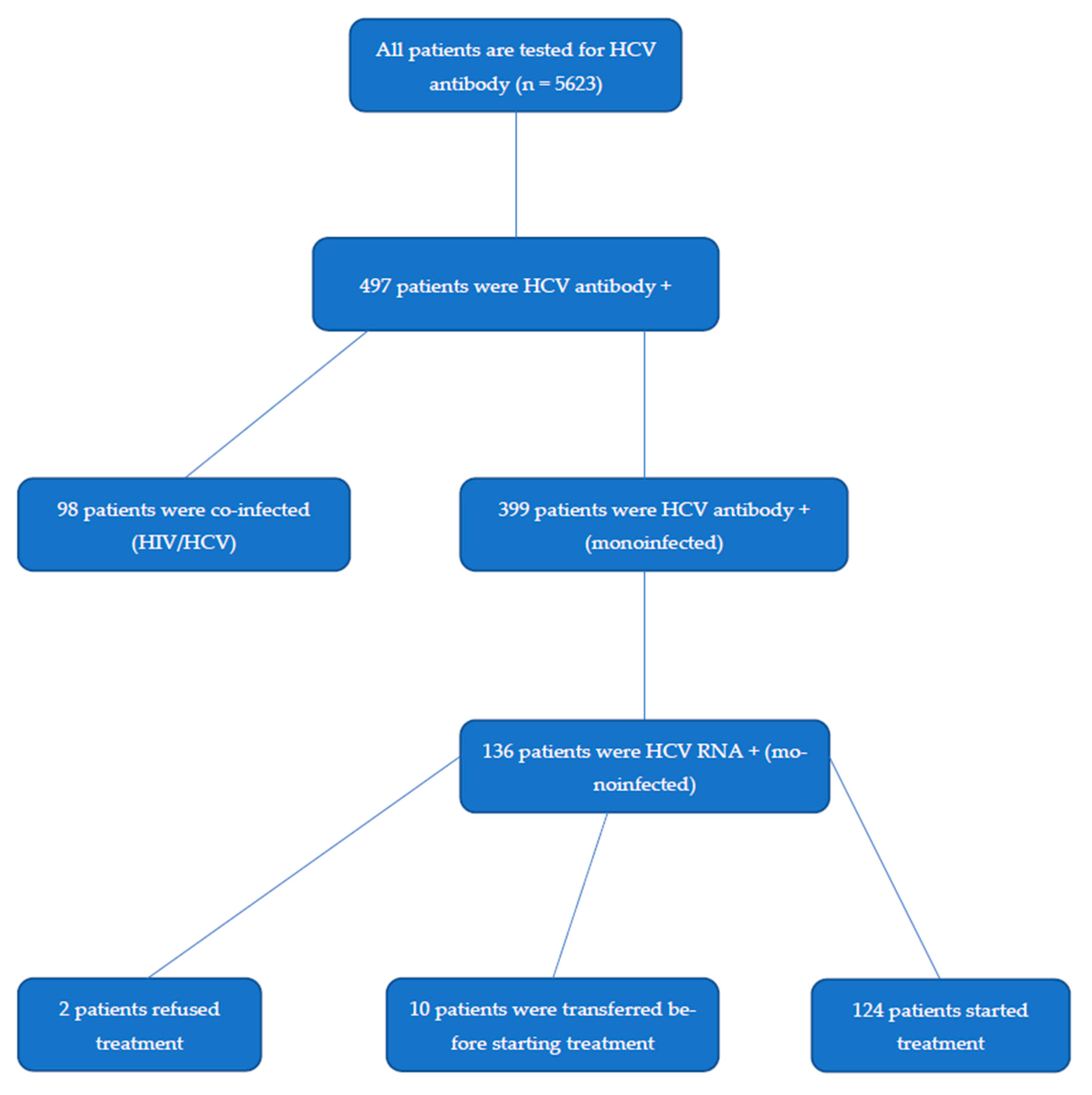
During the analysis period (2017–2025), 5623 inmates were screened, and 497 prisoners (8.8%) tested positive for anti-HCV antibodies. Among these individuals, 98 patients were co-infected with HCV and HIV, and 399 were positive for HCV-antibodies only. Of the 399 patients, 136 tested positive for HCV RNA. Two patients declined participation in the study and treatment initiation, and ten patients were transferred to another institution or released prior treatment initiation (
Figure 1).
The mean age of the final cohort of 124 patients was 43.0 ± 8.4 years. All patients were Caucasian and had a mean body mass index of 23.8 ± 2.6 kg/m2.
With regard to risk factors for HCV acquisition, 7.4% had a prior history of blood transfusions, 74.4% were injecting drug users, and 71.8% had tattoos, 39.5% of which had been performed in prison. The vast majority (94.4%) also reported a history of smoked drug use, primarily cocaine and cannabis. Active tobacco smoking was reported in 91.1% of patients, and 71.0% reported daily alcohol consumption, with 69.1% consuming more than 30 g/day. Regular medication use included benzodiazepines in 76.8% of patients, methadone in 24.8% and antidepressants in 42.4%.
For most patients, the diagnosis of HCV infection was made during routine laboratory testing performed outside the prison (42.4%). For a minority, the diagnosis was established in addiction centers (13.6%) or during routine laboratory testing performed inside the prison (13.3%).
3.2. Laboratory Data
Except for mild elevations in alanine aminotransferase (ALT) and gamma-glutamyl transferase (GGT), all laboratory parameters were within the normal range. No patients tested positive for hepatitis B surface antigen (HBsAg); however, 42.9% were positive for chepatitis B core antibody (anti-HBc).
3.3. Virology and Fibrosis Assessment
The median HCV viral load was 1,740,000 copies/mL (range: 67,250–19,900,000). The most prevalent genotype was genotype 1a (58.1%), followed by genotype 3 (25.0%), genotype 4 (9.7%) and genotype 1b (4.8%). The genotype’s distribution is summarized in
Table 1.
All liver elastography assessments included more than 10 valid measurements and an interquartile range < 30%. According to the FibroScan scoring system, 78.9% of the patients were classified as stage F0–F2, while 22.1% were classified as stage F3–F4.
3.4. Treatment
All patients completed 8 or 12 weeks of therapy according to the prescribed regimen, with 100% adherence, ensured through daily supervised medication distribution by the prison staff. The treatment regimens prescribed were: elbasvir/grazoprevir in 45 patients (36.3%), sofosbuvir/velpatasvir in 45 patients (36.3%), glecaprevir/pibrentasvir in 22 patients (17.7%), and sofosbuvir/ledipasvir in 12 patients (9.7%), all without ribavirin. Two patients declined treatment, and ten initiated therapy in another institution after being transferred. No major adverse events were reported during treatment. Three patients reported fatigue, and eleven experienced mild headaches, none requiring additional medication.
The sustained virological response at week 12 (SVR 12) was 99.2% (123/124).
There were no cases of hepatitis B virus reactivation during the entire follow-up period.
The types of treatment received by the patients are summarized in
Table 1.
3.5. Clinical Features
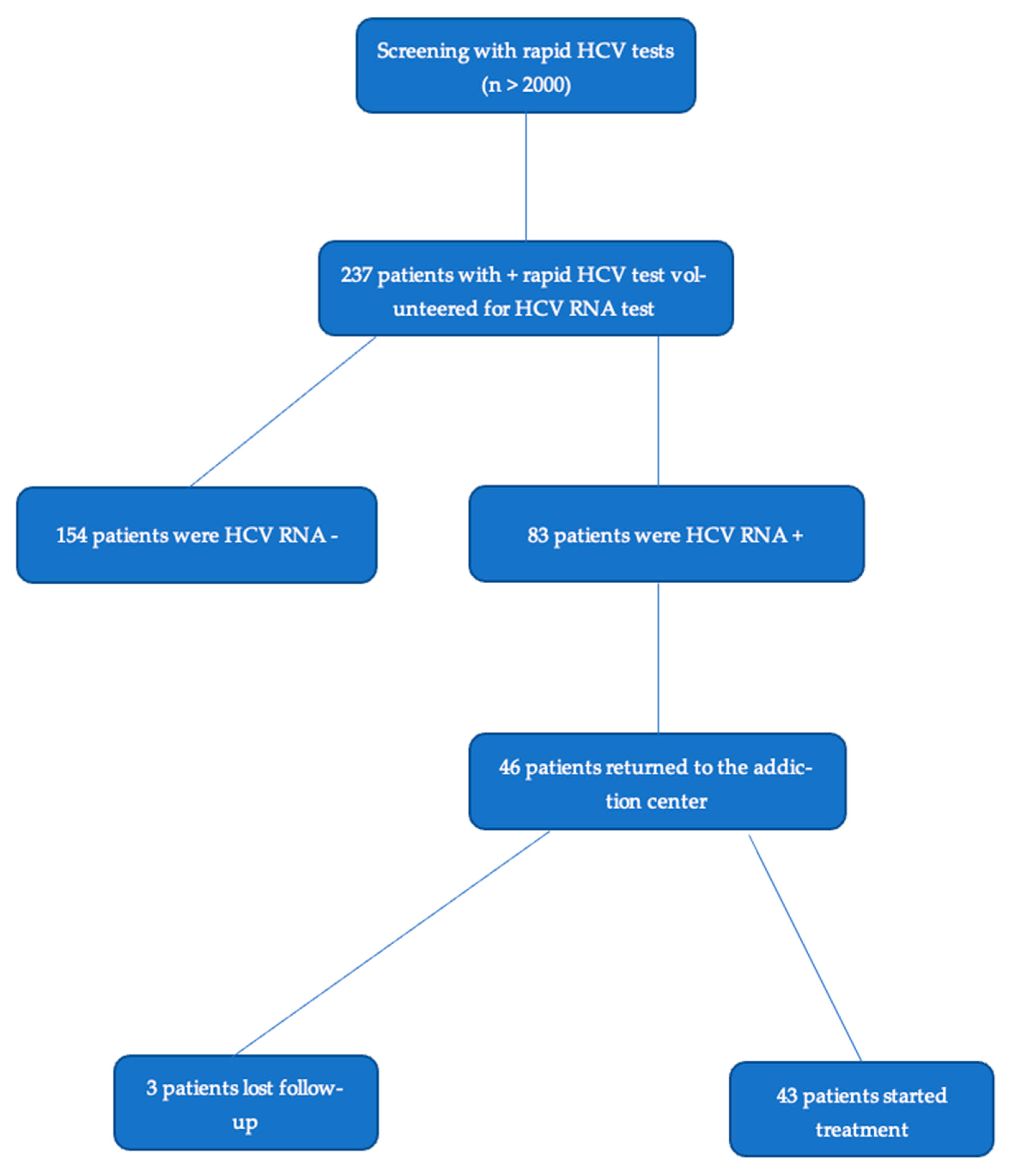
During the analysis period (2024–2025), voluntary HCV screening was performed using rapid antigen tests in more than 2000 individuals attending addiction centers. Among those with a positive rapid test, 237 volunteered for confirmatory HCV RNA testing, which identified 83 individuals with detectable HCV-RNA (56% in Cedofeita, 22% in West Porto and 22% in East Porto). Of these, only 46 returned to the addiction centers after receiving their results and initiated treatment procedures. However, during the waiting period for the medication delivery, 3 patients were lost to follow-up (
Figure 2).
The mean age of the final group of 43 patients was 54.9 ± 5.9 years, and 6 patients were female (14%). All patients were Caucasian and had a mean body mass index of 21.3 ± 1.8. Of the 43 patients, 22 were from the Cedofeita center, 9 from the West center and 12 from the East center.
The vast majority (88.4%) reported a history of injecting drug use. Active smoking was present in 90.7%, and 4.4% reported alcohol consumption.
For most patients, the diagnosis of HCV infection was made during routine laboratory testing performed in addiction centers.
3.6. Laboratory Data
No patients tested positive for HBs antigen; however, 53.5% were positive for HBc antibody.
3.7. Virology and Fibrosis Assessment
The median HCV viral load was 3,720,000 copies/mL (range 216–131,400,000). The most prevalent genotype was genotype 1a (53.4%), followed by genotype 3 (32.6%), genotype 4 (7.0%) and genotype 1b (4.7%). The genotypes’ distributions are summarized in
Table 1.
Only seven patients underwent liver elastography, and among them, only two were found to have advanced fibrosis (stages F3 or F4).
3.8. Treatment
All patients completed 8 or 12 weeks of therapy according to the prescribed regimen, with medications distributed weekly at the time of methadone dispensing. Regarding treatment, 20 patients (46.5%) received sofosbuvir/velpatasvir and 23 patients (53.5%) with glecaprevir/pibrentasvir, all without ribavirin. Three patients did not present initiate treatment. No major adverse events were reported during the treatment period. Ten patients reported fatigue, and two patients requested to discontinue treatment at week 6.
The sustained virological response at week 12 after treatment was 97.7% (42/43).
The types of treatment received by the patients are summarized in
Table 1.
4. Discussion
The ambitious goal of eliminating Hepatitis C by 2030, established by the World Health Organization in 2016, was initially met with considerable enthusiasm, leading to the development of numerous initiatives aimed at achieving this objective. In 2021, an analysis of 45 high-income countries identified several nations that appear likely to meet the 2030 target, including Australia, Canada, France, Spain, Italy, Iceland, Germany, Japan, Switzerland and the United Kingdom [
2]. Some middle-income countries, such as Egypt and Georgia, also appear to be on the track. However, most countries worldwide are not expected to achieve this goal. A major contributing factor is that the majority of individuals with HCV infection remain undiagnosed, harm-reduction coverage is insufficient, and access to treatment is limited in many settings. Therefore, expanding screening efforts, integrating HCV care into high-risk populations–where prevalence is highest-and ensuring universal and rapid access to treatment are essential.
Microelimination represents a critical strategy toward achieving the broader goal of HCVelimination. Its purpose is to target well-defined, high-risk populations with a greater prevalence of HCV infection and typically reduced access to healthcare. This approach relies on concrete, focused interventions, including on-site evaluation, to promote higher rates of diagnosis and treatment [
8].
In this study, we describe our intervention in two different settings involving high-risk populations for HCV infection, with objective of reaching groups that are typically difficult to engage in care.
Although prisons may initially appear to be difficult environments in which to implement healthcare interventions, they in fact offer an unexpectedly favorable opportunity to diagnose and treat individuals with HCV. Unlike in the community, where people may have limited access to healthcare, face substance use-related challenges, and encounter stigma, prisons provide a stable environment with access to psychiatric support for mental health and substance use disorders, as well as continuous supervision of medication delivery and monitoring of adverse events. Establishing an HCV care model based on widespread testing and on-site evaluation and treatment can enhance inmates’ confidence and well-being while simultaneously reducing viral transmission among incarcerated individuals who were previously uninfected. Although initial costs may rise due to expanded treatment, long-term benefits include a reduction in new infections and a decrease in liver-related complications. Equally important is health education, particularly regarding modes of HCV transmission, such as the use of contaminated materials for in-prison tattooing, and the risk of reinfection after successful treatment. Our excellent results, with an SVR rate of 99.2% in this challenging setting, demonstrates that this project constitutes a highly effective and feasible strategy. By addressing structural and behavioral barriers through outreach screening and on-site treatment, this approach significantly strengthens the HCV cascade of care.
The addiction centers represent a completely different environment, posing several barriers not only for patients but also for healthcare providers. PWID has a markedly higher seroprevalence of HCV infection, primarily due to repeated direct parental exposure. They constitute a highly complex population in whom screening and treatment are more challenging for several reasons: ongoing high-risk behaviors with continued sharing of needles and other injection equipment, increasing the risk of reinfection; unstable living conditions that hinder attendance at appointments or laboratory testing; coexisting mental health and substance use disorders; misconceptions among clinicians; and, importantly, stigma, criminalization, and various legal and social barriers. For these reasons, we adapted our strategy to address all these needs in a more effective manner. Unlike the prison setting, where patients are always available and appointments can be scheduled easily, we shifted our approach in addiction centers. We implemented rapid HCV testing at the time of patients’ weekly methadone treatments, performed by staff members whom they already knew and trust. This strategy reduced the need for patients to present on a separate day to an outpatient clinic to see an unfamiliar physician. Following a positive rapid HCV test, blood sampling was performed on-site by addiction center nurses and sent to the hospital for analysis. After reviewing the results, the hepatologist collaborated with the addiction center staff to select the most appropriate antiviral regimen, considering each patient’s clinical history and concurrent medications. Treatment was then delivered on-site when patients collected their methadone doses. At this stage, patients were invited to attend an outpatient consultation with the hepatologist at the addiction center, during which transient elastography was also performed. Using this more tailored and context-specific strategy, we have already treated 43 patients, achieving an SVR rate of 97.7%. This project demonstrated that even in highly challenging environment, dedicated, flexible and continuous engagement in healthcare ca substantially mitigate the burden of HCV infection.
One of the major strengths of our work is that these projects represent on-site screening and treatment initiatives direct at populations that are traditionally difficult to reach, employing distinct approaches tailored to patients needs and addressing the barriers inherent to each setting. Another positive aspect is unrestricted availability of antiviral medication, which significantly enhances the effectiveness and outcomes of our interventions.
Despite these excellent results, the implemented strategies are resource-intensive. They depend on the full availability of the medical team to work beyond the hospital setting and travel to prisons and addiction centers, often without reliable transportation, and require careful logistical coordination, including the transport of portable transient elastography equipment and continuous communication among professionals, which is made more difficult by the lack of a shared electronic health record system. A potential limitation of our analysis is the reduced number of patients of the addiction centers who underwent liver elastrography: although they received treatment, the FibroScan examination required scheduling at a specific time, and a substantial number of patients did not attend their appointments. Another limitation is that we do not had access to the HIV testing, as the results were communicated exclusively to the Infectious Disease Department, which was responsible for the management of patients with positive results.