Article

Self-Reported Prevalence Rates of Gluten-Related Disorders and Gluten-Free Diet Adherence Are Increasing in a Mexican Population: A Seven-Year Follow-Up Study


by
Oscar Gerardo Figueroa-Salcido
1,
José Antonio Mora-Melgem
1,
Raúl Tinoco-Narez-Gil
1,
Noé Ontiveros
2,* and
Jesús Gilberto Arámburo-Gálvez
1,*
1
Nutrition Sciences Postgraduate Program, Faculty of Nutrition and Gastronomy Sciences, Autonomous University of Sinaloa, Culiacan 80019, Sinaloa, Mexico
2
Clinical and Research Laboratory (LACIUS, C.N., CONAHCYT National Laboratory, LANIBIOC), Department of Chemical, Biological, and Agricultural Sciences (DC-QB), Faculty of Biological and Health Sciences, University of Sonora, Navojoa 85880, Sonora, Mexico
*
Authors to whom correspondence should be addressed.
Gastroenterol. Insights 2026, 17(1), 5; https://doi.org/10.3390/gastroent17010005
Submission received: 30 November 2025 / Revised: 1 January 2026 / Accepted: 5 January 2026 / Published: 8 January 2026
(This article belongs to the Section Gastrointestinal Disease)

Abstract

Background/Objectives: Temporal trends in the prevalence rates of gluten-free diet (GFD) adherence and gluten-related disorders (GRDs) have not been evaluated in Latin America. This study aimed to conduct a 7-year comparison of self-reported prevalence rates of GFD adherence and GRDs in a Mexican population. Methods: A cross-sectional survey-based study was conducted, and the prevalence estimates were compared with those from a previous study (2015/n = 1238 vs. 2022/n = 1214). Motivations for GFD adherence and the role of medical advice were also assessed. Results: The estimated prevalence rates were (2015/2022): recurrent adverse reactions to wheat- and/or gluten 7.83%/11.7% (p = 0.001), self-reported gluten sensitivity 1.53%/3.29% (p = 0.0045), celiac disease 0.08%/0.24% (p = 0.3699), wheat allergy 0.08%/0.57% (p = 0.037), non-celiac gluten sensitivity 1.37%/2.47% (p = 0.0474), GFD adherence 3.63%/7.16% (p = 0.0001), and self-reported physician-diagnosed CD 0.08%/0.24% (p = 0.3699). In the 2022 cohort, most people on GFD did not meet the criteria for SR-GS (60.91%), and their main motivations for GFD adherence were weight control (74.42%) and the perception that a GFD is healthier (22.64%) than a conventional one. Among those on GFD, 45.97% reported no medical or dietitian supervision. Conclusions: The prevalence rates of self-reported GFD adherence and GRDs increased significantly over 7 years. Although this finding could imply greater awareness of GRDs, a high proportion of those adhering to the diet are still doing so without medical/dietitian supervision and for reasons other than a medical condition.

1. Introduction

The consumption of wheat- and/or gluten can trigger celiac disease (CD), wheat allergy (WA), or non-celiac gluten sensitivity (NCGS) in susceptible individuals. These conditions, named gluten-related disorders (GRDs), have different diagnostic work-ups [1]. While the hallmark of CD diagnosis is based on histological analysis of intestinal biopsies and/or the evaluation of anti-tissue transglutaminase II antibodies [2,3], the cornerstone of WA diagnosis relies on the serological assessment of anti-wheat IgE antibodies and wheat challenges [4,5]. Regarding NCGS, the exclusion of both CD and WA is mandatory. Furthermore, the most accepted approach for NCGS diagnosis involves evaluations of the potential symptoms triggered after wheat- and/or gluten consumption in a double/single-blind placebo-controlled gluten challenge [6]. Although these diagnostic approaches are widely accepted and give certainty about the diagnosis, they can hardly be implemented in epidemiological studies with a population-based design. This last point is mainly due to the need for highly specialized human resources and economic resources as well. Alternatively, population-based surveys have emerged as important sources of scientific information for improving our understanding of the magnitude and relevance of GRDs across regions [7,8,9,10,11].
Following a wheat- and/or gluten-free diet (GFD) is the only accepted treatment for GRDs [12,13]. This restrictive diet could negatively impact the recommended daily intake of fiber and some micronutrients, such as folic acid, calcium, and iron [14,15]. This potential nutritional imbalance underscores the importance of individuals on a GFD receiving dietary counseling from a trained health professional [16,17]. However, current evidence highlights that most people following a GFD have not received dietary advice or a diagnosis of GRDs and have not triggered adverse reactions after wheat- and/or gluten consumption [9,10,11]. In this context, scientific evidence on the benefits and risks of following a GFD has increased over the last years, and the scientific community has called for greater awareness regarding the diagnosis of GRDs. However, temporal trends in the prevalence of GRDs and adherence to a GFD remain uncertain in Latin America, limiting our knowledge of how the magnitude and relevance of potential dietary risks associated with a GFD, as well as the prevalence rates of GRDs, have evolved in this region. Therefore, we conducted a 7-year follow-up study to assess the self-reported prevalence rates of GRDs and adherence to GFD in a Mexican population.

2. Materials and Methods

2.1. Questionnaire and Study Design

We conducted a repeated cross-sectional study design to evaluate temporal trends by comparing data collected from a 2022 cohort with baseline estimates from 2015, utilizing identical sampling locations and the same validated instrument. A validated questionnaire designed to estimate the self-reported prevalence of adverse reactions to wheat- and/or gluten was utilized [7]. The questionnaire gathers information about demographics and general clinical characteristics (section one), the type, frequency and onset of adverse reactions triggered by wheat and/or gluten, the physician’s diagnosis of a GRD and the diagnostic protocol used to diagnose it (section two). Questions about adherence to GFD and motivations for following a GFD are also included.
Data were collected in public places in the city of Culiacan, Sinaloa, in the period from 6 March to 17 March 2022. The participants were approached outside shopping malls, urban parks and supermarkets. The data were collected in the same public places sampled in a previous study conducted by our research group 7 years ago using the same instrument [7]. Inclusion criteria were as follows: (1) Culiacan, México residents who agreed to participate in the study and (2) participants who were ≥18 years old. Questionnaires with incomplete data were excluded. Trained interviewers (dietitians) assisted participants if necessary. The epidemiological data from our previous study were used to compare the prevalence rates estimated in the present study. Participants from the 2015 study were recategorized according to current classification criteria to ensure fair comparisons. Thus, the prevalence rate estimates presented in the present study differ slightly from those originally published in 2015 [7].

2.2. Classification Criteria

Participants were classified according to their responses (Table 1): adverse reactions to foods (either recurrent or non-recurrent), adverse reactions to wheat and/or gluten (either recurrent or non-recurrent), self-reported gluten sensitivity, self-reported physician diagnosis (SR-PD) of CD, wheat allergy (either SR-PD WA or self-reported WA), and NCGS (either SR-PD NCGS or self-reported NCGS).

2.3. Statistical Analysis

Categorical variables were expressed as total numbers and percentages. Odds ratios and 95% confidence intervals (95% CI) were calculated to compare clinical conditions between SR-GS and Non-SR-GS individuals. A two-tailed Fisher’s exact test was employed to determine associations. Mean differences among groups were determined using Student’s t-test. The GraphPad Prism Version 11.0 (GraphPad Software, San Diego, CA, USA) was used for the statistical analysis. A p-value < 0.05 was considered statistically significant. Prevalence rates were reported per 100 inhabitants (95% CI) using the OpenEpi software version 3.03a. A sample size of 1192 participants was considered representative considering the following parameters: (1) infinite population, (2) an expected prevalence of recurrent adverse reactions to wheat and/or gluten of 7.8%, (3) precision of 2% and (4) CI of 99%.

3. Results

3.1. Participant Characteristics

A total of 1276 individuals accepted to participate in the study (Response rate: 88.55%; 1441/1276), but sixty-two of them were excluded from the analysis because they provided incomplete data (Valid response rate: 84.25%; mean age 31.8 years, range 18–85). The percentages of females and males were 53.07% (n = 652) and 46.29% (n = 562), respectively (Table 2). Colitis (18.37%), lactose intolerance (12.85%), food allergy (3.62%) and irritable bowel syndrome (IBS) (2.22%) were the most common physician-diagnosed conditions.

3.2. Prevalence Estimations

Prevalence rates, either general or by gender, are shown in Table 3. General prevalence rates of adverse reactions to wheat and/or gluten (ARW/G) and recurrent adverse reactions to wheat and/or gluten (RARW/G) consumption were 20.92% (95% CI, 18.73–23.30) and 11.77% (95% CI, 10.09–13.71), respectively. Only 40 individuals met the criteria for SR-GS (3.29% (95% CI, 2.42–4.45)). The general prevalence of SR-WA and SR-NCGS was 0.57% (95% CI, 0.27–1.18) and 2.47% (95% CI, 1.73–3.50), respectively. Three cases met the criteria for SR-CD (0.24% (95% CI, 0.08–0.72)). Excluding self-reported GRDs, all the self-reported conditions were more prevalent in women than in men (p < 0.05). Participants that met the criteria for SR-GS showed significant association with IBS (Odds Ratio, 7.48 (95% CI, 2.93–20.29)), colitis (Odds Ratio, 3.86 (95% CI, 2.06–7.35)) and lactose intolerance (Odds Ratio, 6.14 (95% CI, 3.24–11.84)) (p < 0.05) (Table 4).

3.3. Self-Reported Diagnosis of GRDs

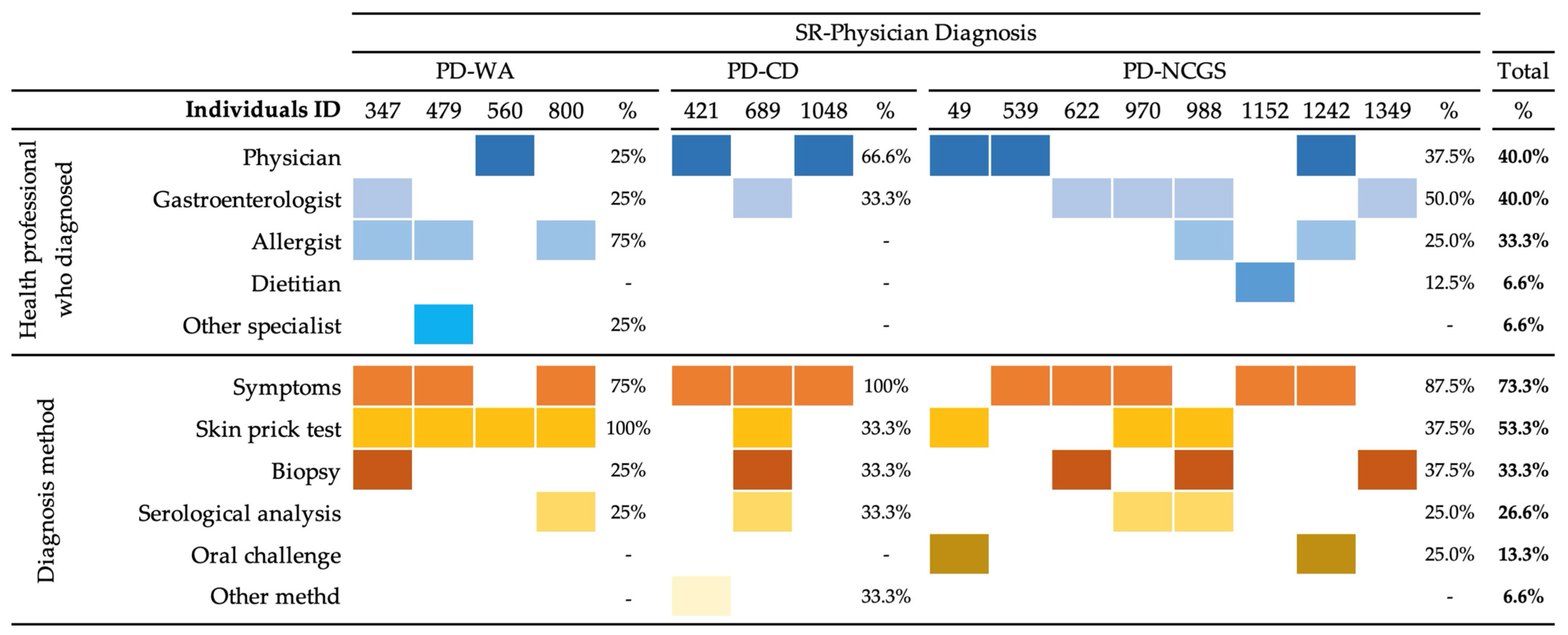
A total of 15 subjects met the criteria for SR-PD GRDs (1.08%). The diagnoses were made by gastroenterologists (40%, n = 6), general practitioners (40%, n = 6) and allergists (33.33%, n = 5) (Figure 1). Two out of three individuals who met the criteria for SR-PD CD reported that their diagnosis was symptom-based only (Figure 1). In contrast, all individuals who met the criteria for SR-PD WA reported that their diagnosis was established using objective diagnostic tests. Regarding the participants who met the criteria for SR-PD-NCGS, 6 out of 8 (75%) declared evaluations with an objective diagnostic test, but only 25% (n = 2) of them reported having undergone an oral food challenge. Two cases reported the coexistence of two SR-PD GRDs (NCGS/WA and CD/WA) and were considered only for the prevalence estimate of SR-WA due to convincing symptoms of food allergies.

3.4. Recurrent Symptoms Triggered by Gluten Ingestion in SR-GS

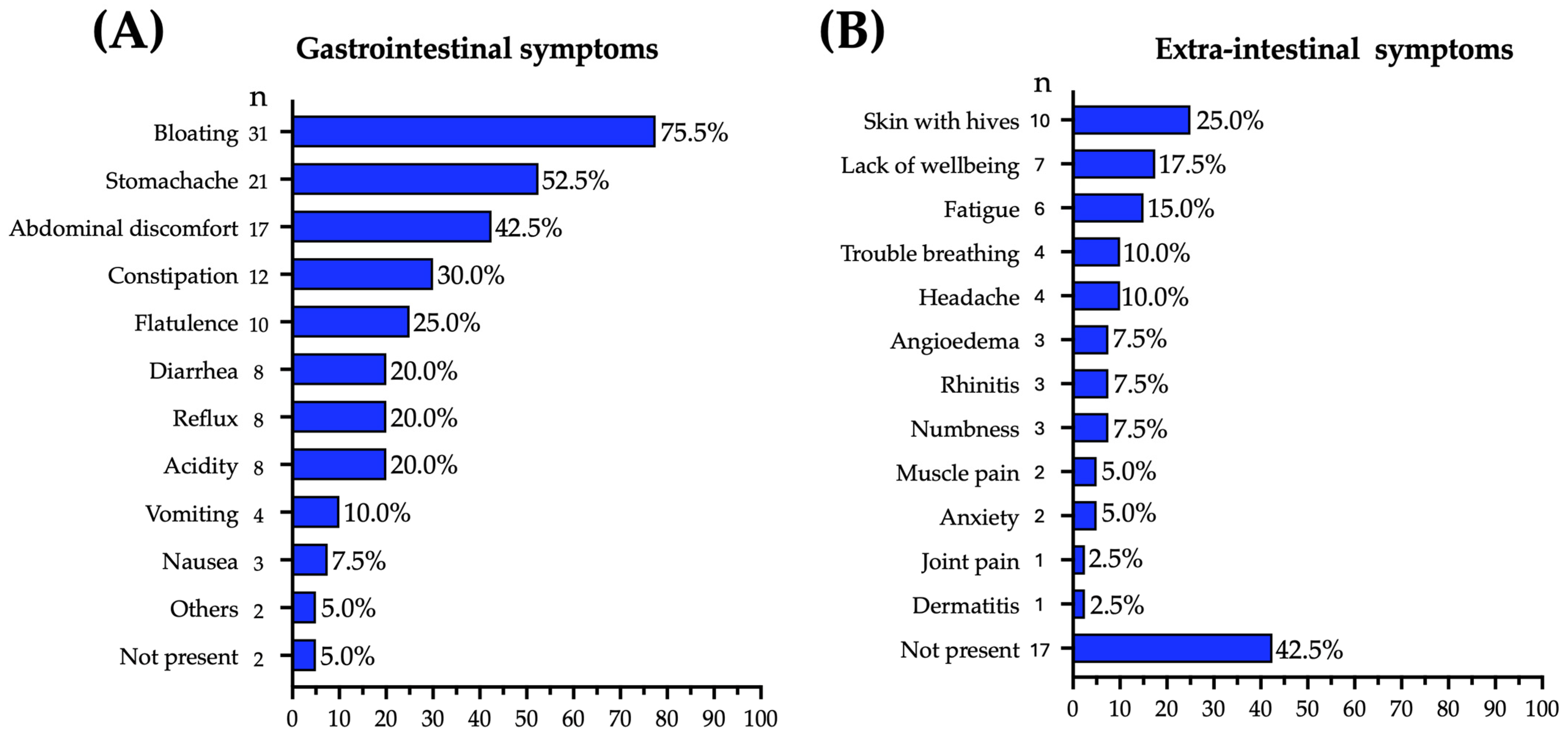
Thirty-eight out of 40 (95%) individuals who met the criteria for SR-GS reported that they trigger recurrent gastrointestinal symptoms after gluten consumption. Bloating (77.50%), stomachache (52.50%) and abdominal discomfort (42.50%) were the most common gastrointestinal symptoms (Figure 2A). Twenty-three out of 40 (57.5%) participants reported extra-intestinal symptoms. The most common extraintestinal symptoms were skin with hives (25%), lack of wellbeing (17.50%) and tiredness (15%) (Figure 2B). Most SR-GS individuals reported more than one symptom (85%) and half of them reported the combination of gastrointestinal and extra-intestinal symptoms (52.5%).

3.5. Adherence to GFD and People Who Avoid Wheat and/or Gluten-Containing Foods

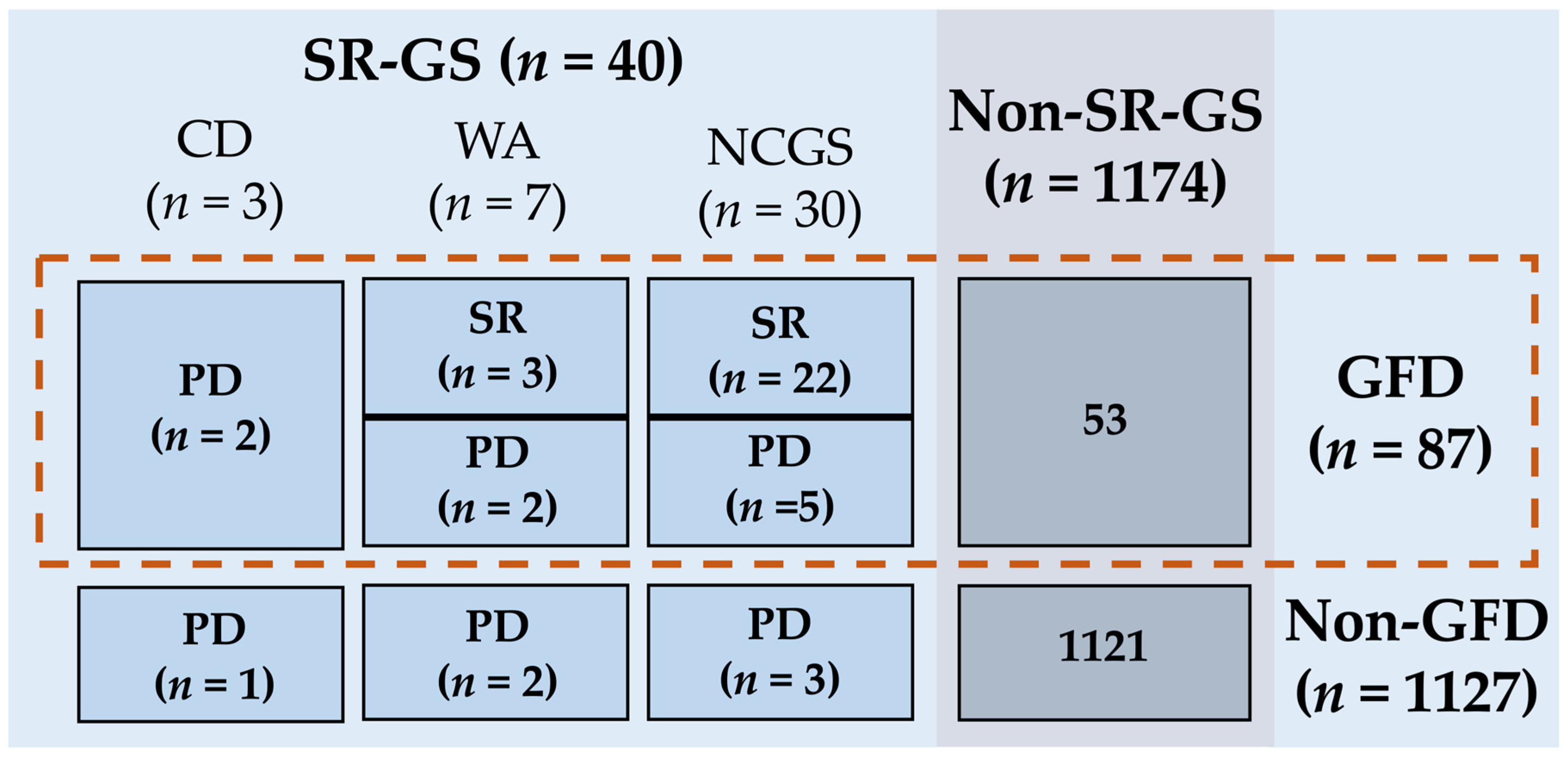
The prevalence of adherence to a GFD was 7.16% (n = 87) (95% CI, 5.84–8.75) (Table 3). Although 34 out of 40 (85%) of the SR-GS individuals reported that they were on a GFD, most of those on a GFD were non-SR-GS cases (53 out of 87; 60.91%) (Figure 3). Among the 15 SR-PD cases, 6 of them were not following a GFD (40%) (Figure 3). The main reasons declared for GFD non-compliance were that wheat-containing foods taste better than gluten-free ones (50%; n = 3) and the belief that they do not need to follow a strict GFD (33.33%; n = 2). Among the non-SR-GS individuals who were following a GFD (n = 53), 39 (72.22%) of them did not report adverse reactions to wheat and/or gluten. Regarding the gluten avoiders, the prevalence was 25.84% (95% CI, 23.48–28.40) and more than half of them (63.03%; n = 198) did not report adverse reactions to wheat and/or gluten. Subjects ≥ 39 years old had higher rates of GFD adherence and gluten avoiders than those between the ages of 18 and 38 (11.11% versus 5.73% (p = 0.0023) and 33.95% versus 22.92% (p = 0.0002), respectively).
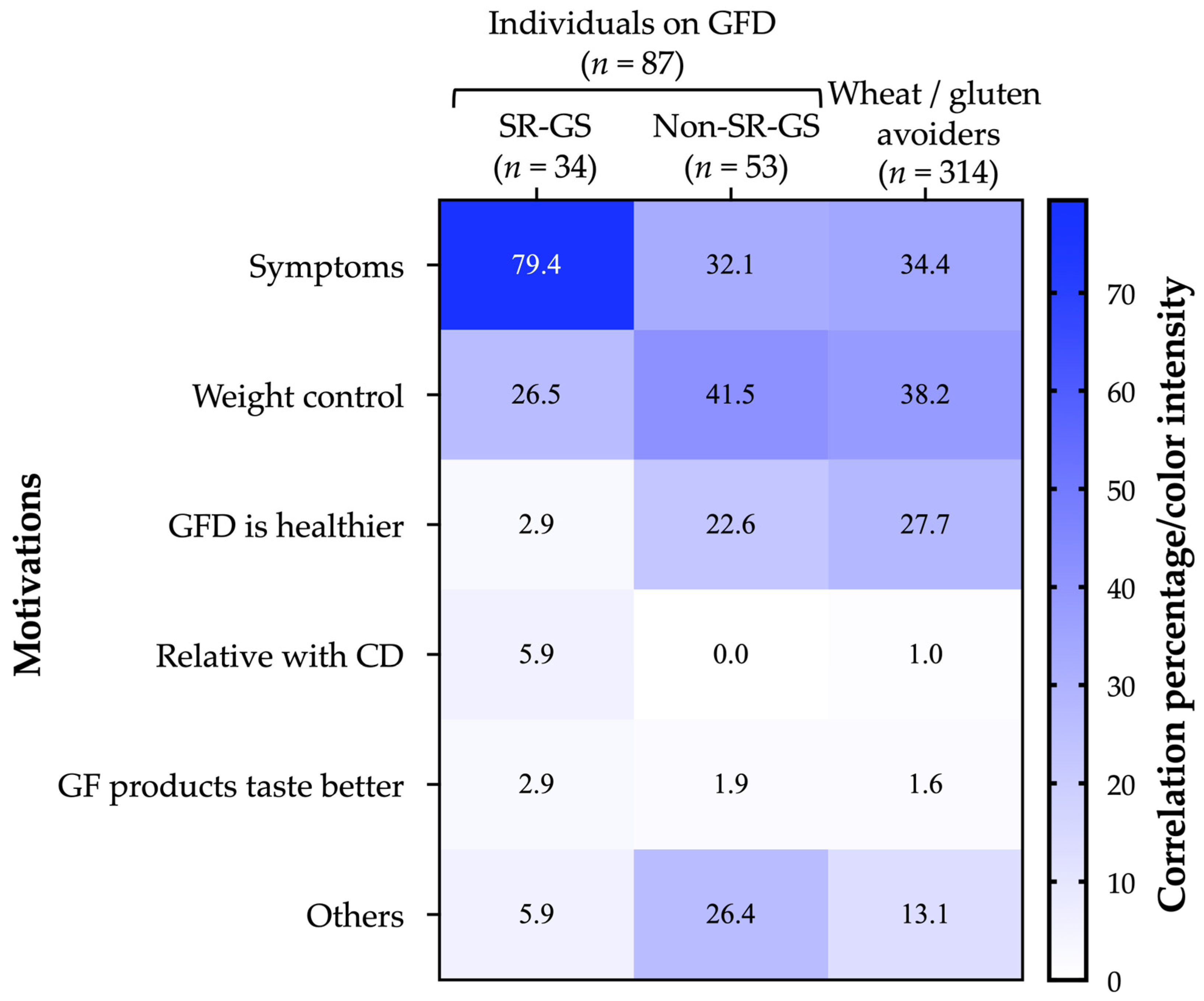
Among the 87 participants who were following a GFD, 40 (45.97% (10 SR-GS and 30 non-SR-GS)) were not under medical/dietitian supervision. Participant age and motivations for following a GFD did not differ significantly between individuals with and without medical/dietitian supervision (p > 0.05). Interestingly, men were significantly more likely to follow a GFD without supervision compared to women (62.07% vs. 37.93%; p < 0.05). Considering the 34 SR-GS individuals following a GFD, the main motivations for following the diet were the symptoms triggered after wheat and/or gluten ingestion (79.41%), weight control (26.47%) and having a relative with CD (5.88%) (Figure 4). Regarding the non-SR-GS individuals (n = 53), the main motivations for following a GFD were weight control (74.42%), the symptoms triggered after wheat and/or gluten ingestion (32.08%) and the perception that a GFD is healthier than a regular one (22.64%). Similarly, wheat and/or gluten avoiders declared weight control (38.22%), the symptoms triggered after wheat and/or gluten ingestion (34.39%) and the perception that a GFD is healthier (27.71%) as the main motivations to avoid wheat and/or gluten-containing foods.

3.6. Changes in Prevalence Rates of Adverse Reactions to Wheat and/or Gluten Across Time

Prevalence rate comparisons are shown in Table 5. The general prevalence of recurrent adverse reactions to wheat and/or gluten significantly increased in the 2022 cohort (2022: 11.77% (95% CI, 10.09–13.71) vs. 2015: 7.83% (95% CI, 6.46–9.46)) (p = 0.001). Contrarily, significant differences were not found for either the SR-PD CD or the SR-PD NCGS cases (p < 0.05). Three participants met the criteria for SR-PD WA in the 2022 cohort, but no one met these criteria in the 2015 cohort. The prevalence of SR-GS (2022: 3.29% (95% CI, 2.42–4.45) vs. 2015: 1.53% (95% CI, 0.98–2.38)) and adherence to GFD (2022: 7.16% (95% CI, 5.84–8.75) vs. 2015: 3.63% (95% CI, 2.72–4.82) were significantly higher in the 2022 cohort compared to the 2015 one (p = 0.0045 and p = 0.0001, respectively).

4. Discussion

A follow-up study to assess temporal trends regarding self-reported prevalence of symptomatic adverse reactions to wheat and/or gluten, GRDs, and adherence to a GFD in a Mexican population was conducted. To the best of our knowledge, this is the first longitudinal comparison of its kind in Latin America, documenting a statistically significant increase in nearly all self-reported conditions between 2015 and 2022. Specifically, the prevalence of recurrent adverse reactions to wheat and/or gluten (2015: 7.83% vs. 2022: 11.77%) and SR-GS (2015: 1.53% vs. 2022: 3.29%) significantly increased. Similarly, the prevalence of WA significantly increased during the 2015–2022 period (from 0.08% to 0.57%), reaching a prevalence estimate consistent with reports from other Latin American countries (0.33–0.79%) [8,9,10]. Regarding NCGS, its prevalence significantly increased as well (from 1.37% to 2.47%), but this prevalence rate is still lower than the global pooled prevalence of self-reported NCGS (10.3%) [18]. The most plausible explanation for these trends is an increase in public awareness about GRDs and shifts in dietary habits, which could be influenced by the rapid expansion of the global gluten-free market, growing approximately 96.4% between 2015 and 2019 [19], the promotion of GFD as a wellness trend by celebrities and athletes [20], social media misinformation about the GFD [21,22], and post-pandemic health-seeking behaviors [23].
The prevalence of SR-PD CD (2015: 0.08% vs. 2022: 0.24%) remained low and consistent with reports from other Latin American countries, such as Colombia (0.0%) [24], El Salvador (0.15%) [9], and Brazil (0.30%) [10], but contrasts with reports from Argentina (0.58%) [8] and Paraguay (3.11%) [11]. While the high prevalence in Paraguay may be influenced by sampling methods (online survey), in Argentina, a national program for CD detection and control has been implemented, encouraging CD diagnosis [25]. Thus, the low prevalence of CD observed in the present study suggests that CD remains underdiagnosed in Mexico and that health programs for its detection, including public health infrastructure and policies, should be implemented to avoid the long-term complications associated with untreated CD, such as anemia, osteoporosis, and lymphoma, among others [26].
GRDs are clinically heterogeneous, with their symptoms highly overlapping, making their differential diagnosis challenging [27]. Therefore, clinicians should follow the clinical guidelines for GRD diagnosis as closely as possible. No PD-WA cases were reported in the 2015 cohort, but in the present study, the three participants that met the criteria for PD-WA cases reported that they were diagnosed based on objective criteria (skin prick test), suggesting that health professionals are informed about food allergy diagnostic guidelines, which could be partially attributed to the development of the Mexican diagnostic guidelines for IgE-mediated food allergy in 2019 [28]. Conversely, two out of three participants who met the criteria for SR-PD CD reported that they neither underwent serology tests (e.g., anti-tissue transglutaminase II antibodies) nor histological analysis of intestinal biopsies, potentially leading to a misdiagnosis [2]. Similarly, only two out of 8 SR-PD NCGS cases reported that they underwent oral food challenges and another two underwent celiac serology to establish their diagnosis. As NCGS lacks specific diagnostic biomarkers, ruling out CD and WA and subsequently performing an oral gluten challenge is required for its diagnosis [6]. In this clinical setting, there is the possibility that some CD cases were misdiagnosed as NCGS, as stated by others [24]. Certainly, both CD and NCGS are treated with a GFD, but CD patients require clinical follow-up to assess dietary compliance for avoiding long-term complications [26], as mentioned before. Overall, our findings suggest that actions to increase awareness regarding the proper diagnosis of CD and NCGS among Mexican health professionals are needed.
Although the GFD is a treatment and mainly indicated for celiac individuals, there is an increasing trend to follow this diet without a diagnosis of a GRD. In the present study, the general prevalence of adherence to a GFD was 7.16%. Others have conducted survey studies in Mexico and in other Latin American countries, reporting similar prevalence rates (3.7–7.6%) [7,8,9,10,11]. Interestingly, the prevalence of adherence to a GFD reported in the present study is 1.97 times higher than that reported seven years ago (7.16% vs. 3.63%), using the same instrument and conducting the survey in the same geographical location [7]. Several studies have highlighted the popularity of the GFD and the increasing interest in consuming gluten-free products [29,30]. For instance, online searches for GFD and gluten-free products have increased globally, but the information disseminated on social platforms by self-promoters or commercial entities may lack a scientific foundation [21,31]. In Mexico, online searches for gluten-free diets and gluten-free products have increased by up to +1450% from April 2015 to 2022 (Google Trends, consulted 12 November 2025). This highlights the growing interest in acquiring gluten-free products and trying to follow a GFD or restricting gluten from the diet. However, current scientific evidence supports the GFD as a treatment for individuals with a diagnosis of GRDs, but the evidence does not support health benefits of the diet in the absence of GRDs [8,32]. Despite this, more than half of the participants following a GFD (60.19%) did not meet the criteria for SR-GS. This high proportion of people on a GFD has previously been reported in Latin America and elsewhere [8,9,10,11]. Adhering to a GFD under professional supervision is generally considered safe, but the absence of dietary counseling may lead to nutritional imbalances, including deficiencies in micronutrients such as folic acid, iron, and calcium, as well as an increased intake of fats and sugars [32,33,34,35]. In the present study, 45.97% of Mexicans on a GFD had no dietary advice, an estimation that is in line with previous reports (31.91–50.65%) [8,9,10,11]. These findings highlight that public health initiatives to inform the Mexican population about the potential risks of adhering to a GFD without the dietary counseling of a trained health professional are needed.
It is not uncommon for people to believe that a GFD is a healthier option than a gluten-containing one [32]. In this context, weight control was the main motivation for following a GFD in the present study, either in the group that met the criteria for SR-GS or non-SR-GS, and even in the gluten avoiders’ group (26.5–41.2%). Other studies carried out in the Latin American region and worldwide reported similar findings [8,9,10,11,36], but current evidence suggests that following a GFD does not have an impact on body weight loss and can even promote weight gain in individuals with CD [37]. In fact, gluten-free products generally contain more calories, fat, and sugar than their regular counterparts [32,34,35]. This last contrast with the perception that a GFD is healthier than a regular one, as it was stated in the present study by some participants from the gluten avoiders (27.70%) and non-SR-GS (22.60%) groups. It should also be noted that gluten avoidance is associated with a lower micronutrient intake, such as zinc, ferritin, and vitamin D, and a reduced consumption of whole grains, which consumption could lower the risk for cardiovascular disease [38,39]. In Mexico, the Mexican Official Norm (NOM-247-SSA1-2008) [40] mandates the fortification of wheat flour with iron, zinc, folic acid, thiamin, riboflavin, and niacin. While industrial nixtamalized corn flour is also fortified, many gluten-free alternatives available (e.g., rice flour, tapioca starch, or almond flour) are not subject to mandatory fortification laws. Therefore, following a GFD may increase the risk of micronutrient deficiency due to the exclusion of fortified wheat-based products. Furthermore, data indicate that the Mexican population exhibits a high prevalence of inadequate micronutrient intake (e.g., iron, zinc, folate, and vitamin B12) [41,42]. This suggests that dietary patterns in Mexico place individuals at a nutritional risk that could be exacerbated by following a GFD without medical/dietitian supervision. Overall, these results suggest that it is necessary to inform people about the scientifically proven benefits of following a GFD, or perhaps people trust their sources of information regarding the health benefits of the GFD. This latter point warrants further investigation in future studies.
Finally, we acknowledge that our study has some limitations. First, the data are based on self-reports only, which are inherently subject to recall and perception biases. This could lead to misclassifications, potentially affecting the estimated prevalence rates. For instance, FODMAP sensitivity or nocebo responses cannot be excluded from the identified SR-NCGS cases. Second, data were collected only in the urban area of Culiacán, Sinaloa, through interviews with the ambulatory population. Therefore, they are not generalizable to either the rural regions of Culiacán, where sociodemographic/economic and dietary profiles may differ, or the entire Mexican population. And third, sampling in public places of a capital city may overrepresent an urban population with greater access to health information and higher exposure to commercial dietary trends. Consequently, this may lead to an overestimation of the prevalence of gluten avoidance and adherence to a GFD. Despite these limitations, this is the first study in Latin America to evaluate temporal trends in the prevalence of self-reported GRDs and adherence to a GFD in the same geographical location using a consistent methodology.

5. Conclusions

Self-reported prevalence rates of GRDs and adherence to a GFD have increased significantly in a population from the northwest of Mexico over the last 7 years. However, it seems that there is still a need for improving awareness about GRDs and particularly of their diagnostic workup. The high rate of adherence to a GFD, driven mainly by misconceptions regarding its health benefits and without professional dietary counseling, represents a challenge for public health institutions and professionals, as people should be informed about the scientifically proven risks and benefits of following a GFD.

Author Contributions

Conceptualization, O.G.F.-S., J.G.A.-G. and N.O.; methodology, O.G.F.-S., J.G.A.-G. and N.O.; software, R.T.-N.-G. and J.A.M.-M.; formal analysis, O.G.F.-S. and J.G.A.-G.; data curation, R.T.-N.-G. and J.A.M.-M.; writing—original draft preparation, O.G.F.-S., J.G.A.-G. and N.O.; writing—review and editing, R.T.-N.-G. and J.A.M.-M. All authors have read and agreed to the published version of the manuscript.

Funding

This research received no external funding.

Institutional Review Board Statement

The study was conducted in accordance with the Declaration of Helsinki, and approved by the Institutional Review Board of the Autonomous University of Sinaloa (protocol code CE-UACNYG-2014-AGO-001, approval Date: 1 August 2014).

Informed Consent Statement

Informed consent was obtained from all subjects involved in the study.

Data Availability Statement

The original contributions presented in this study are included in the article. Further inquiries can be directed to the corresponding authors.

Acknowledgments

The authors wish to thank the technical support for data collection from Luis Ricardo Álva-rez-Álvarez, Diana Laura Camacho-Cervantes, Lidia Sofia Zarate-Gonzalez, Daniela Gonzalez Valdez, and Merary Bethsabé Beltrán-Torres.

Conflicts of Interest

The authors declare no conflicts of interest.

Abbreviations

The following abbreviations are used in this manuscript:
ARW/GAdverse reactions to wheat and/or gluten
CDCeliac disease
GFDGluten-free diet
GRDsGluten-related disorders
GSGluten sensitivity
IBSIrritable bowel syndrome
NCGSNon-celiac gluten sensitivity
PDPhysician diagnosis
RARW/GRecurrent adverse reactions to wheat and/or gluten
SRSelf-reported
WAWheat allergy
95% CI95% confidence intervals

References

  1. Jansson-Knodell, C.L.; Rubio-Tapia, A. Gluten-Related Disorders from Bench to Bedside. Clin. Gastroenterol. Hepatol. 2024, 22, 693–704. [Google Scholar] [CrossRef]
  2. Rubio-Tapia, A.; Hill, I.D.; Semrad, C.; Kelly, C.P.; Greer, K.B.; Limketkai, B.N.; Lebwohl, B. American College of Gastroenterology Guidelines Update: Diagnosis and Management of Celiac Disease. Off. J. Am. Coll. Gastroenterol. ACG 2023, 118, 59–76. [Google Scholar] [CrossRef]
  3. Al-Toma, A.; Zingone, F.; Branchi, F.; Schiepatti, A.; Malamut, G.; Canova, C.; Rosato, I.; Ocagli, H.; Trott, N.; Elli, L.; et al. European Society for the Study of Coeliac Disease 2025 Updated Guidelines on the Diagnosis and Management of Coeliac Disease in Adults. Part 1: Diagnostic Approach. United Eur. Gastroenterol. J. 2025, 13, 1855–1886. [Google Scholar] [CrossRef]
  4. Cianferoni, A. Wheat Allergy: Diagnosis and Management. J. Asthma Allergy 2016, 9, 13–25. [Google Scholar] [CrossRef] [PubMed]
  5. Zheng, W.; Wai, C.Y.Y.; Sit, J.K.C.; Cheng, N.S.; Leung, C.W.M.; Leung, T.F. Routinely Used and Emerging Diagnostic and Immunotherapeutic Approaches for Wheat Allergy. Biomedicines 2024, 12, 1549. [Google Scholar] [CrossRef]
  6. Catassi, C.; Elli, L.; Bonaz, B.; Bouma, G.; Carroccio, A.; Castillejo, G.; Cellier, C.; Cristofori, F.; De Magistris, L.; Dolinsek, J.; et al. Diagnosis of Non-Celiac Gluten Sensitivity (NCGS): The Salerno Experts’ Criteria. Nutrients 2015, 7, 4966–4977. [Google Scholar] [CrossRef]
  7. Ontiveros, N.; López-Gallardo, J.A.; Vergara-Jiménez, M.J.; Cabrera-Chávez, F. Self-Reported Prevalence of Symptomatic Adverse Reactions to Gluten and Adherence to Gluten-Free Diet in an Adult Mexican Population. Nutrients 2015, 7, 6000–6015. [Google Scholar] [CrossRef] [PubMed]
  8. Cabrera-Chávez, F.; Dezar, G.V.A.; Islas-Zamorano, A.P.; Espinoza-Alderete, J.G.; Vergara-Jiménez, M.J.; Magaña-Ordorica, D.; Ontiveros, N. Prevalence of Self-Reported Gluten Sensitivity and Adherence to a Gluten-Free Diet in Argentinian Adult Population. Nutrients 2017, 9, 81. [Google Scholar] [CrossRef]
  9. Ontiveros, N.; Rodríguez-Bellegarrigue, C.I.; Galicia-Rodríguez, G.; Vergara-Jiménez, M.D.J.; Zepeda-Gómez, E.M.; Arámburo-Galvez, J.G.; Gracia-Valenzuela, M.H.; Cabrera-Chávez, F. Prevalence of Self-Reported Gluten-Related Disorders and Adherence to a Gluten-Free Diet in Salvadoran Adult Population. Int. J. Environ. Res. Public Health 2018, 15, 786. [Google Scholar] [CrossRef] [PubMed]
  10. Arámburo-Gálvez, J.G.; Beltrán-Cárdenas, C.E.; Geralda André, T.; Carvalho Gomes, I.; Macêdo-Callou, M.A.; Braga-Rocha, É.M.; Mye-Takamatu-Watanabe, E.A.; Rahmeier-Fietz, V.; Figueroa-Salcido, O.G.; Vergara-Jiménez, M.D.J.; et al. Prevalence of Adverse Reactions to Glutenand People Going on a Gluten-Free Diet: A Survey Study Conducted in Brazil. Medicina 2020, 56, 163. [Google Scholar] [CrossRef]
  11. Ontiveros, N.; Real-Delor, R.E.; Mora-Melgem, J.A.; Beltrán-Cárdenas, C.E.; Figueroa-Salcido, O.G.; Vergara-Jiménez, M.D.J.; Cárdenas-Torres, F.I.; Flores-Mendoza, L.K.; Arámburo-Gálvez, J.G.; Cabrera-Chávez, F. Prevalence of Wheat/Gluten-Related Disorders and Gluten-Free Diet in Paraguay: An Online Survey-Based Study. Nutrients 2021, 13, 396. [Google Scholar]
  12. Cabanillas, B. Gluten-Related Disorders: Celiac Disease, Wheat Allergy, and Nonceliac Gluten Sensitivity. Crit. Rev. Food Sci. Nutr. 2020, 60, 2606–2621. [Google Scholar] [CrossRef] [PubMed]
  13. Aljada, B.; Zohni, A.; El-Matary, W. The Gluten-Free Diet for Celiac Disease and Beyond. Nutrients 2021, 13, 3993. [Google Scholar] [CrossRef] [PubMed]
  14. Marciniak, M.; Szymczak-Tomczak, A.; Mahadea, D.; Eder, P.; Dobrowolska, A.; Krela-Kaźmierczak, I. Multidimensional Disadvantages of a Gluten-Free Diet in Celiac Disease: A Narrative Review. Nutrients 2021, 13, 643. [Google Scholar] [CrossRef]
  15. Russell, L.A.; Alliston, P.; Armstrong, D.; Verdu, E.F.; Moayyedi, P.; Pinto-Sanchez, M.I. Micronutrient Deficiencies Associated with a Gluten-Free Diet in Patients with Celiac Disease and Non-Celiac Gluten or Wheat Sensitivity: A Systematic Review and Meta-Analysis. J. Clin. Med. 2025, 14, 4848. [Google Scholar] [PubMed]
  16. Crespo-Escobar, P.; Vázquez-Polo, M.; van der Hofstadt, M.; Nuñez, C.; Montoro-Huguet, M.A.; Churruca, I.; Simón, E. Knowledge Gaps in Gluten-Free Diet Awareness among Patients and Healthcare Professionals: A Call for Enhanced Nutritional Education. Nutrients 2024, 16, 2512. [Google Scholar] [CrossRef]
  17. Perez-Junkera, G.; Simón, E.; Calvo, A.E.; García Casales, Z.; Oliver Goicolea, P.; Serrano-Vela, J.I.; Larretxi, I.; Lasa, A. Importance of an Ongoing Nutritional Counselling Intervention on Eating Habits of Newly Diagnosed Children with Celiac Disease. Nutrients 2024, 16, 2418. [Google Scholar] [CrossRef]
  18. Shiha, M.G.; Manza, F.; Figueroa-Salcido, O.G.; Ontiveros, N.; Caio, G.; Jansson-Knodell, C.L.; Rubio-Tapia, A.; Aziz, I.; Sanders, D.S. Global Prevalence of Self-Reported Non-Coeliac Gluten and Wheat Sensitivity: A Systematic Review and Meta-Analysis. Gut 2025. [Google Scholar] [CrossRef]
  19. Barbaro, M.R.; Cremon, C.; Wrona, D.; Fuschi, D.; Marasco, G.; Stanghellini, V.; Barbara, G. Non-Celiac Gluten Sensitivity in the Context of Functional Gastrointestinal Disorders. Nutrients 2020, 12, 3735. [Google Scholar] [CrossRef]
  20. Lerner, B.A.; Green, P.H.; Lebwohl, B. Going Against the Grains: Gluten-Free Diets in Patients Without Celiac Disease—Worthwhile or Not? Dig. Dis. Sci. 2019, 64, 1740–1747. [Google Scholar]
  21. Germone, M.; Wright, C.D.; Kimmons, R.; Coburn, S.S. Twitter Trends for Celiac Disease and the Gluten-Free Diet: Cross-Sectional Descriptive Analysis. JMIR Infodemiol. 2022, 2, e37924. [Google Scholar]
  22. Ye, C.; Fang, Y.; Lian, Y.; He, Y. Gluten-Free Diet on Video Platforms: Retrospective Infodemiology Study. Digit. Health 2024, 10, 20552076231224594. [Google Scholar]
  23. Savarese, M.; Castellini, G.; Morelli, L.; Graffigna, G. Can “Free-From” Food Consumption Be a Signal of Psychological Distress during COVID-19? Foods 2022, 11, 513. [Google Scholar] [CrossRef]
  24. Figueroa-Salcido, O.G.; Cárdenas-Torres, F.I.; Cabrera-Chávez, F.; González-Santamaría, J.; Arámburo-Gálvez, J.G.; López-Teros, V.; Astiazaran-García, H.; Ontiveros, N. Is It Time to Encourage Celiac Disease Assessment in Colombia? Results of an Epidemiological Survey. Rev. Médica Univ. Autónoma Sinaloa REVMEDUAS 2022, 12, 104–115. [Google Scholar] [CrossRef]
  25. Minesterio de Salud Resolución 1560/2007. Available online: https://www.argentina.gob.ar/ (accessed on 29 November 2025).
  26. Kowalski, M.K.; Domżał-Magrowska, D.; Małecka-Wojciesko, E. Celiac Disease—Narrative Review on Progress in Celiac Disease. Foods 2025, 14, 959. [Google Scholar] [CrossRef] [PubMed]
  27. Schiepatti, A.; Savioli, J.; Vernero, M.; Borrelli de Andreis, F.; Perfetti, L.; Meriggi, A.; Biagi, F. Pitfalls in the Diagnosis of Coeliac Disease and Gluten-Related Disorders. Nutrients 2020, 12, 1711. [Google Scholar] [CrossRef]
  28. Larenas-Linnemann, D.; Luna-Pech, J.A.; Rodríguez-Pérez, N.; Rodríguez-González, M.; Arias-Cruz, A.; Blandón-Vijil, M.V.; Costa-Domínguez, M.C.; Del Río-Navarro, B.E.; Estrada-Cardona, A.; Navarrete-Rodríguez, E.M.; et al. GUIMIT 2019, Mexican Guideline on Immunotherapy. Guideline on the Diagnosis of IgE-Mediated Allergic Disease and Immunotherapy Following the ADAPTE Approach. Rev. Alerg. Mex. 2019, 66, 1–105. [Google Scholar] [CrossRef] [PubMed]
  29. MarketsandMarkets. Gluten-Free Products Market Size, Share & Forecast to 2029. MarketsandMarketsTM. Available online: https://www.marketsandmarkets.com/Market-Reports/gluten-free-products-market-738.html (accessed on 29 November 2025).
  30. Gluten-Free Products Market Size. Industry Report. 2030. Available online: https://www.grandviewresearch.com/industry-analysis/gluten-free-products-market (accessed on 29 November 2025).
  31. Rej, A.; Tai, F.; Green, P.; Lebwohl, B.; Sanders, D. The Growing Global Interest in the Gluten Free Diet as Reflected by Google Searches. Dig. Liver Dis. 2020, 52, 1061–1062. [Google Scholar] [CrossRef]
  32. Sabença, C.; Ribeiro, M.; Sousa, T.D.; Poeta, P.; Bagulho, A.S.; Igrejas, G. Wheat/Gluten-Related Disorders and Gluten-Free Diet Misconceptions: A Review. Foods 2021, 10, 1765. [Google Scholar] [CrossRef]
  33. Missbach, B.; Schwingshackl, L.; Billmann, A.; Mystek, A.; Hickelsberger, M.; Bauer, G.; König, J. Gluten-Free Food Database: The Nutritional Quality and Cost of Packaged Gluten-Free Foods. PeerJ 2015, 3, e1337. [Google Scholar]
  34. Marcason, W. Is There Evidence to Support the Claim That a Gluten-Free Diet Should Be Used for Weight Loss? J. Am. Diet. Assoc. 2011, 111, 1786. [Google Scholar] [CrossRef] [PubMed]
  35. Taetzsch, A.; Das, S.K.; Brown, C.; Krauss, A.; Silver, R.E.; Roberts, S.B. Are Gluten-Free Diets More Nutritious? An Evaluation of Self-Selected and Recommended Gluten-Free and Gluten-Containing Dietary Patterns. Nutrients 2018, 10, 1881. [Google Scholar]
  36. Jones, A.L. The Gluten-Free Diet: Fad or Necessity? Diabetes Spectr. 2017, 30, 118–123. [Google Scholar] [CrossRef]
  37. Xin, C.; Imanifard, R.; Jarahzadeh, M.; Rohani, P.; Velu, P.; Sohouli, M.H. Impact of Gluten-Free Diet on Anthropometric Indicators in Individuals with and Without Celiac Disease: A Systematic Review and Meta-Analysis. Clin. Ther. 2023, 45, e243–e251. [Google Scholar] [CrossRef]
  38. Lebwohl, B.; Cao, Y.; Zong, G.; Hu, F.B.; Green, P.H.; Neugut, A.I.; Rimm, E.B.; Sampson, L.; Dougherty, L.W.; Giovannucci, E.; et al. Long Term Gluten Consumption in Adults Without Celiac Disease and Risk of Coronary Heart Disease: Prospective Cohort Study. BMJ 2017, 357, j1892. [Google Scholar] [CrossRef]
  39. Jivraj, A.; Hutchinson, J.M.; Ching, E.; Marwaha, A.; Verdu, E.F.; Armstrong, D.; Pinto-Sanchez, M.I. Micronutrient Deficiencies Are Frequent in Adult Patients with and Without Celiac Disease on a Gluten-Free Diet, Regardless of Duration and Adherence to the Diet. Nutrition 2022, 103, 111809. [Google Scholar] [CrossRef] [PubMed]
  40. NOM-247-SSA1-2008; SEGOB Norma Oficial Mexicana, Productos y Servicios. Cereales y Sus Productos. Cereales, Harinas de Cereales, Sémolas o Semolinas. Alimentos a Base de: Cereales, Semillas Comestibles, de Harinas, Sémolas o Semolinas o Sus Mezclas. Productos de Panificación. Disposiciones y Especificaciones Sanitarias y Nutrimentales. Métodos de Prueba. SEGOB: Ciudad de México, Mexico, 2009.
  41. Ramírez-Silva, I.; Rodríguez-Ramírez, S.; Barragán-Vázquez, S.; Castellanos-Gutiérrez, A.; Reyes-García, A.; Martínez-Piña, A.; Pedroza-Tobías, A. Prevalence of Inadequate Intake of Vitamins and Minerals in the Mexican Population Correcting by Nutrient Retention Factors, Ensanut 2016. Salud Pública México 2020, 62, 521–531. [Google Scholar] [CrossRef]
  42. Rivera, J.A.; Pedraza, L.S.; Aburto, T.C.; Batis, C.; Sánchez-Pimienta, T.G.; González de Cosío, T.; López-Olmedo, N.; Pedroza-Tobías, A. Overview of the Dietary Intakes of the Mexican Population: Results from the National Health and Nutrition Survey 2012. J. Nutr. 2016, 146, 1851S–1855S. [Google Scholar] [CrossRef] [PubMed]
Figure 1. Health professionals who made the diagnoses of GRDs and the evaluations carried out to establish them. Each column represents a single individual. Colored squares indicate the specific professional(s) involved and the diagnostic method(s) utilized for that case. Acronyms used: PD-WA: physician-diagnosed wheat allergy; PD-NCGS: physician-diagnosed non-celiac gluten-sensitivity.
Gastroent 17 00005 g001
Figure 2. Self-reported gastrointestinal and extra-intestinal symptoms in SR-GS individuals (n = 40). (A) Recurrent gastrointestinal symptoms. (B) Recurrent extra-intestinal symptoms.
Gastroent 17 00005 g002
Figure 3. Characteristics of the study population regarding the GFD (N = 1214).
Gastroent 17 00005 g003
Figure 4. Motivations for following a GFD or avoiding wheat and/or gluten from the diet.
Gastroent 17 00005 g004
Table 1. Definitions and criteria used to classify participants.
ConditionCriteria
Adverse reaction to foodFood-induced symptoms
Adverse reaction to wheat and/or glutenSymptoms triggered by wheat and/or gluten ingestion Recurrent (most of the time and always) + Non-recurrent (sometimes)
SR-GS *Recurrent symptoms triggered by wheat and/or gluten ingestion + GFD or Physician diagnosis of GRDs
SR-PD CDIndividuals who declared that a physician diagnosed them with CD.
Wheat allergy (WA)Physician diagnosis of WA (SR-PD WA): Individuals who declared that a physician diagnosed them with WA.
Self-reported WA: Individuals who meet the following: (1) SR-GS criteria, (2) present convincing symptoms of WA (e.g., trouble breathing, itchy throat, skin with hives, angioedema, diarrhea, vomit), and (3) declared that the symptoms appear within two hours after wheat and/or gluten ingestion.
NCGSPhysician diagnosis of NCGS (SR-PD NCGS): Individuals who were informed that a physician diagnosed them with NCGS.
Self-reported NCGS: Individuals who meet the following: (1) SR-GS criteria, (2) do not meet the self-reported WA criteria, and (3) do not meet the criteria either for SR-PD CD nor for SR-PD WA.
* The term “SR-GS” is the umbrella for all GRDs (SR-PD CD, WA, and NCGS).
Table 2. Clinical and demographic characteristics.
Variable%n (Male/Female)
Gender46.29/53.70562/652
Colitis18.37223
Lactose intolerance12.85156
Food allergy3.6244
IBS2.2227
Non-food allergy2.3128
Food intolerance1.4818
Psychiatric disease1.2415
Eating disorders0.334
Diabetes mellitus0.334
Table 3. Self-reported prevalence rates estimated.
Condition(+) CasesMean Age in Years (Range)Prevalence by Gender (95% IC)p ValueGeneral Prevalence % (95% CI)
Adverse reactions to foodsTotal = 456 M = 177 F = 27932.72 (18–77)M 31.49 (27.79–35.45)
F 42.79 (39.05–46.62)
<0.000137.56 (34.88–40.32)
Adverse reactions to wheat and/or glutenTotal = 254 M = 87 F = 16734.03 (18–77)M 15.48 (12.73–18.7)
F 25.61 (22.41–29.10)
<0.000120.92 (18.73–23.30)
Recurrent adverse reactions to wheat and/or glutenTotal = 143 M = 49 F = 9434.06 (18–77)M 8.718 (6.65–11.34)
F 14.41 (11.93–17.32)
0.002311.77 (10.09–13.71)
(a) SR-GSTotal = 40 M = 13 F = 2734.40 (18–76)M 2.31 (1.35–7.29)
F 4.14 (2.86–5.95)
0.07853.29 (2.42–4.45)
(b) CDTotal = 3 M = 0 F = 328.66 (26–32)F 0.46 (0.15–1.34)-0.24 (0.08–0.72)
(c) Wheat allergyTotal = 7 M = 2 F = 527 (19–54)M 0.35 (0.09–1.28)
F 0.76 (0.32–1.78)
0.46080.57 (0.27–1.18)
(d) NCGSTotal = 30 M = 11 F = 1936.16 (18–76)M 1.95 (1.09–3.47)
F 2.91 (1.87–4.50)
0.27442.47 (1.73–3.50)
Adherence to GFDTotal = 87 M = 29 F = 5835.82 (18–76)M 5.16 (3.61–7.31)
F 8.89 (6.94–11.33)
0.01387.16 (5.84–8.75)
Avoid wheat and/or glutenTotal = 314 M = 122 F = 19233.92 (18–85)M 21.70 (18.5–25.30)
F 29.44 (26.08–33.06)
0.002525.84 (23.48–28.40)
Table 4. Associations between self-reported gluten sensitivity and other clinical conditions.
VariableSR-GS (n = 40)Non-SR-GS (n = 1174)Odds Ratio (IC 95%)
n%n%
Non-food allergy00.00221.87-
IBS512.50221.877.48 (2.93–20.29)
Colitis1845.0020517.463.86 (2.06–7.35)
Lactose intolerance1845.0013811.756.14 (3.24–11.84)
Psychiatric disease 12.50141.192.12 (0.19–13.62)
Food intolerance25.00161.363.80 (0.84–14.60)
Food allergy12.50443.750.69 (0.06–4.13)
Eating disorder00.0040.34-
Autoimmune disease00.0040.34-
IBS: Irritable bowel syndrome; SR-GS: Self-reported Gluten sensitivity.
Table 5. Prevalence comparisons of adverse reactions to wheat and/or gluten, gluten-related disorders and adherence to GFD between the 2015 and 2022 cohorts.
ConditionMexican Population (2015) (n = 1238)Mexican Population (2022) (n = 1214)
(+) CasesGeneral Prevalence (95% CI)(+) CasesGeneral Prevalence (95% CI)p Value
Recurrent adverse reactions to wheat and/or gluten977.83 (6.46–9.46)14311.77 (10.09–13.71)0.001
SR-GS191.53 (0.98–2.38)403.29 (2.42–4.45)0.0045
SR-PD CD10.08 (0.01–0.45)30.24 (0.08–0.72)0.3699
Wheat allergy (WA)10.08 (0.01–0.45)70.57 (0.27–1.18)0.037
PD-WA0-30.24 (0.08–0.72)-
SR-WA10.08 (0.01–0.45)40.32 (0.12–0.84)0.2139
NCGS171.37 (0.85–2.18)302.47 (1.73–3.50)0.0474
PD-NCGS100.80 (0.43–1.48)80.65 (0.33–1.29)0.6661
SR-NCGS70.56 (0.27–1.16)221.81 (1.2–2.72)0.0043
Adherence to GFD453.63 (2.72–4.82)877.16 (5.84–8.75)0.0001
Disclaimer/Publisher’s Note: The statements, opinions and data contained in all publications are solely those of the individual author(s) and contributor(s) and not of MDPI and/or the editor(s). MDPI and/or the editor(s) disclaim responsibility for any injury to people or property resulting from any ideas, methods, instructions or products referred to in the content.