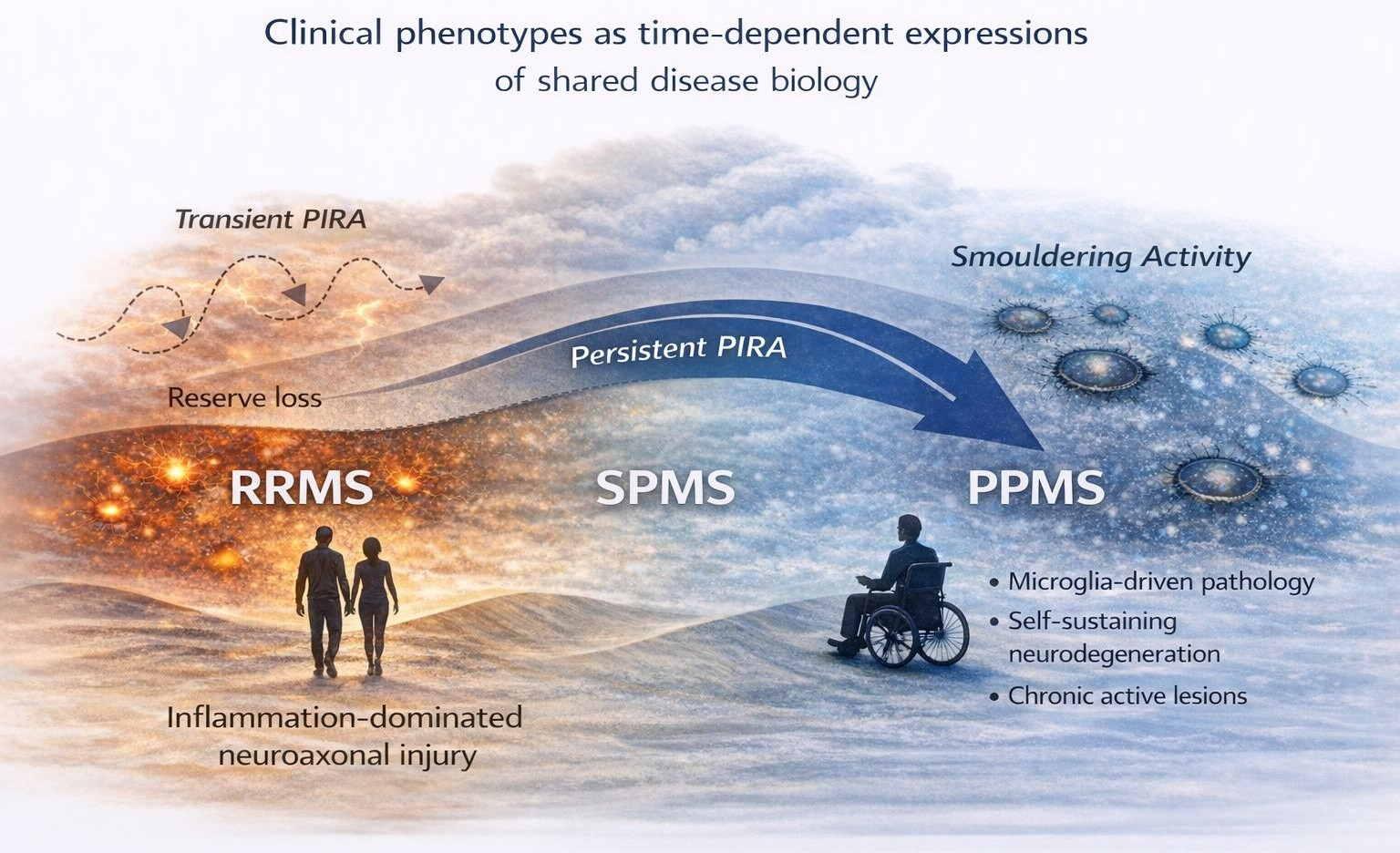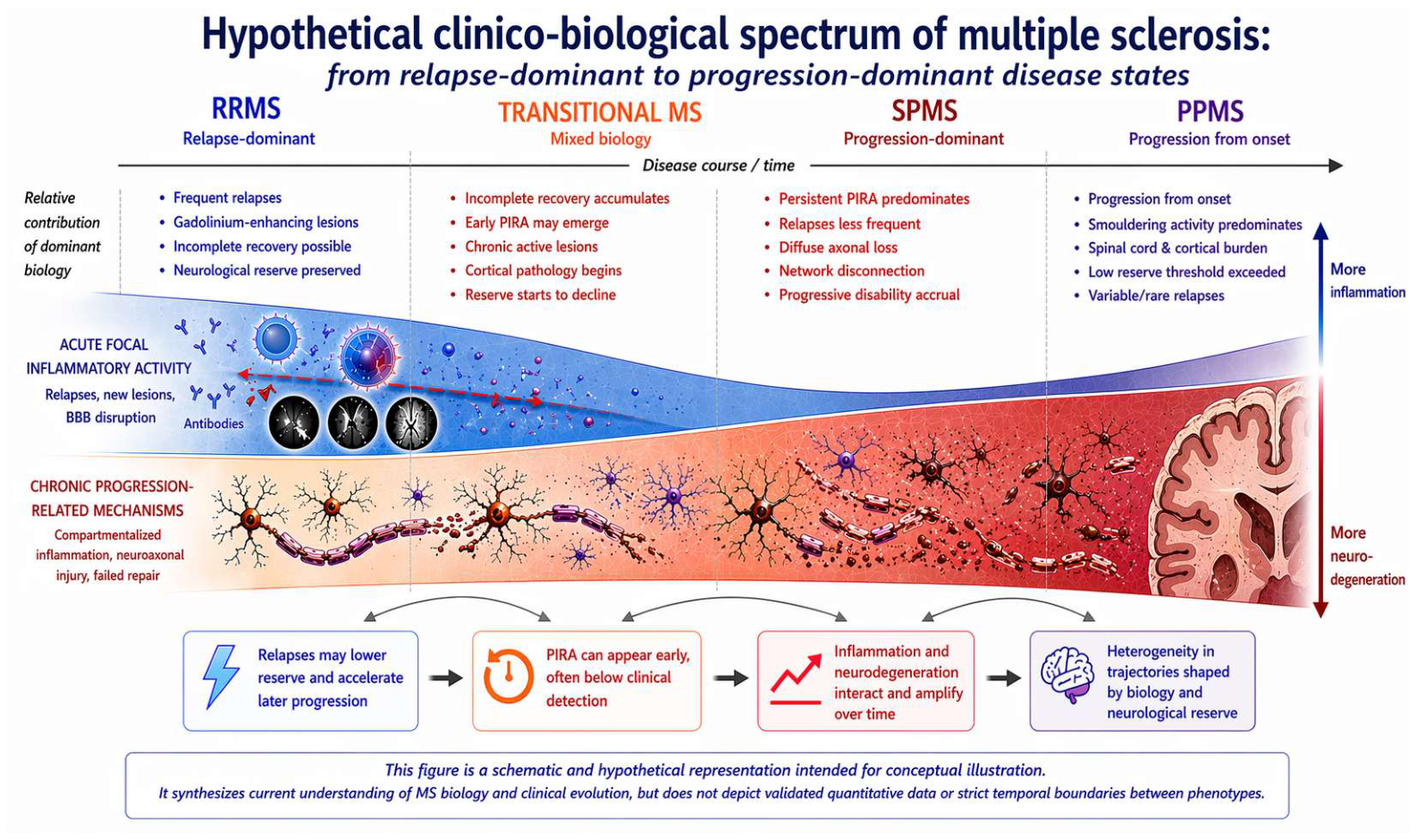

From Phenotypes to Spectrum: Rethinking RRMS, SPMS and PPMS in the Era of PIRA—A Framework Integrating PIRA, Smouldering-Associated Worsening, and Neurologic Reserve to Facilitate Earlier Recognition of Progression


Abstract
Share and Cite
Vasilev, G.V.; Ivanova, S.; Milanov, I. From Phenotypes to Spectrum: Rethinking RRMS, SPMS and PPMS in the Era of PIRA—A Framework Integrating PIRA, Smouldering-Associated Worsening, and Neurologic Reserve to Facilitate Earlier Recognition of Progression. Neurol. Int. 2026, 18, 86. https://doi.org/10.3390/neurolint18050086
Vasilev GV, Ivanova S, Milanov I. From Phenotypes to Spectrum: Rethinking RRMS, SPMS and PPMS in the Era of PIRA—A Framework Integrating PIRA, Smouldering-Associated Worsening, and Neurologic Reserve to Facilitate Earlier Recognition of Progression. Neurology International. 2026; 18(5):86. https://doi.org/10.3390/neurolint18050086
Chicago/Turabian StyleVasilev, Georgi V., Sonya Ivanova, and Ivan Milanov. 2026. "From Phenotypes to Spectrum: Rethinking RRMS, SPMS and PPMS in the Era of PIRA—A Framework Integrating PIRA, Smouldering-Associated Worsening, and Neurologic Reserve to Facilitate Earlier Recognition of Progression" Neurology International 18, no. 5: 86. https://doi.org/10.3390/neurolint18050086
APA StyleVasilev, G. V., Ivanova, S., & Milanov, I. (2026). From Phenotypes to Spectrum: Rethinking RRMS, SPMS and PPMS in the Era of PIRA—A Framework Integrating PIRA, Smouldering-Associated Worsening, and Neurologic Reserve to Facilitate Earlier Recognition of Progression. Neurology International, 18(5), 86. https://doi.org/10.3390/neurolint18050086