
Duropathies as Unifying Concept—Part Two: A Narrative Overview of Clinical and Neuroradiological Features

 , , , , and
Abstract
1. Introduction
2. Methods
- -
- (spontaneous intracranial hypotension) AND (dural leak): 357 records
- -
- (superficial siderosis) AND (dural leak): 32 records
- -
- (spinal cord herniation) AND (dural leak): 24 records
- -
- (arachnoid web) AND (dural leak): 3 records
- -
- (bibrachial amyotrophy) AND (dural leak): 2 records.
3. The Spectrum of Duropathies: Clinical and Pathophysiological Features
3.1. Spontaneous Intracranial Hypotension
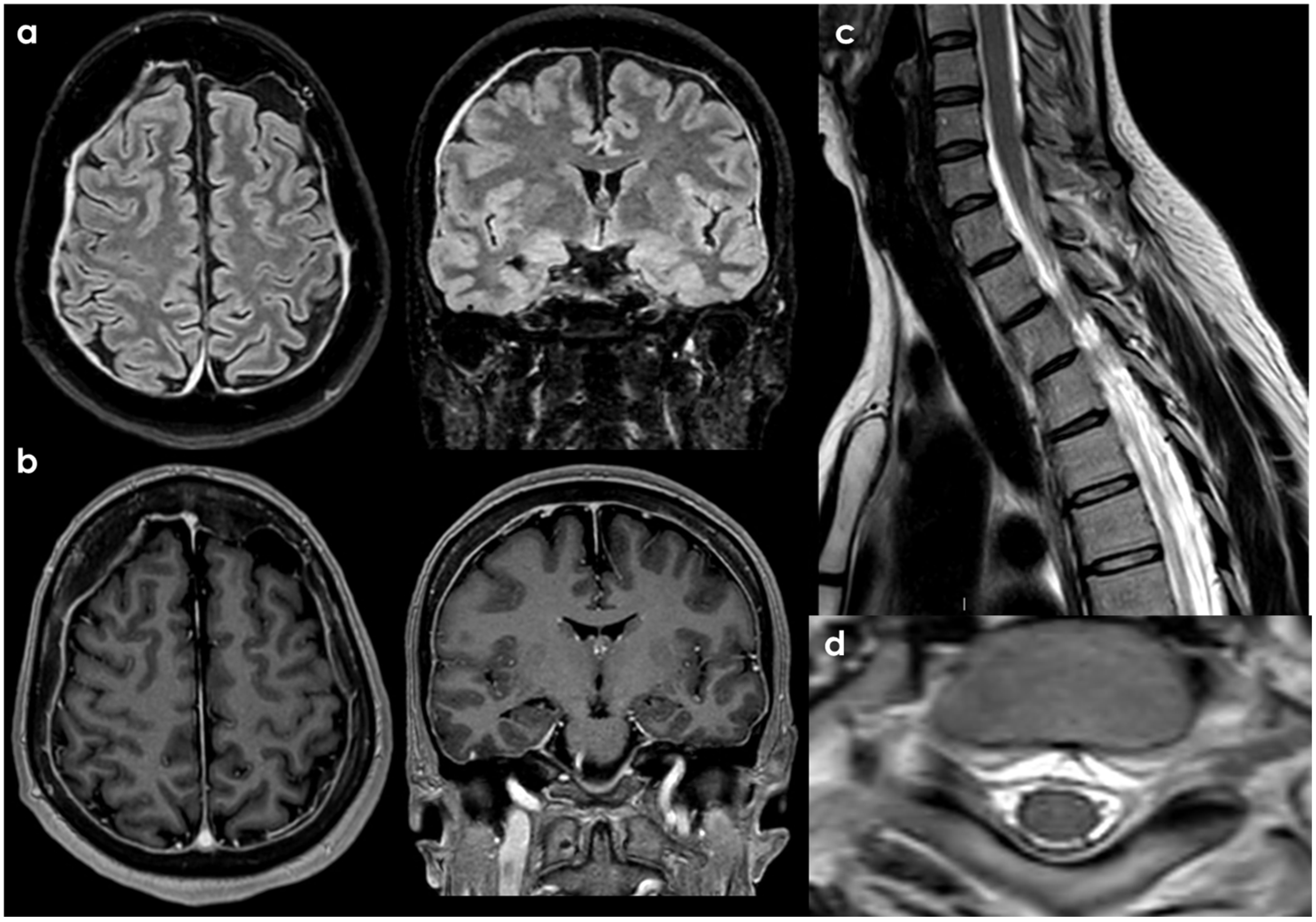
3.2. Bibrachial Amyotrophy
3.3. Spontaneous Transdural Spinal Cord Herniation
- (1)
- First, the adult spinal cord lacks growth potential unless a neoplasm is involved.
- (2)
- Second, a spontaneous opening in the ventral dura seems improbable given its consistency and lack of movement; if movement plays a role, it occurs along the smooth connective tissue: the posterior longitudinal ligament (PLL).
- (3)
- Third, the spinal cord is highly sensitive to trauma, and any protrusion anchored in a dural defect is likely to coincide with a severe neurological deficit.
- (4)
- Fourth, most patients present symptoms in their sixth decade, having gradually developed signs, often following an acute temporary neurological deficit after a minor fall several years before symptom onset.
- (5)
- Finally, biopsies or resections of the herniated segment typically do not result in neurological deficits [91].
3.4. Spinal Arachnoid Web
3.5. Superficial Siderosis
4. Neuroimaging Patterns
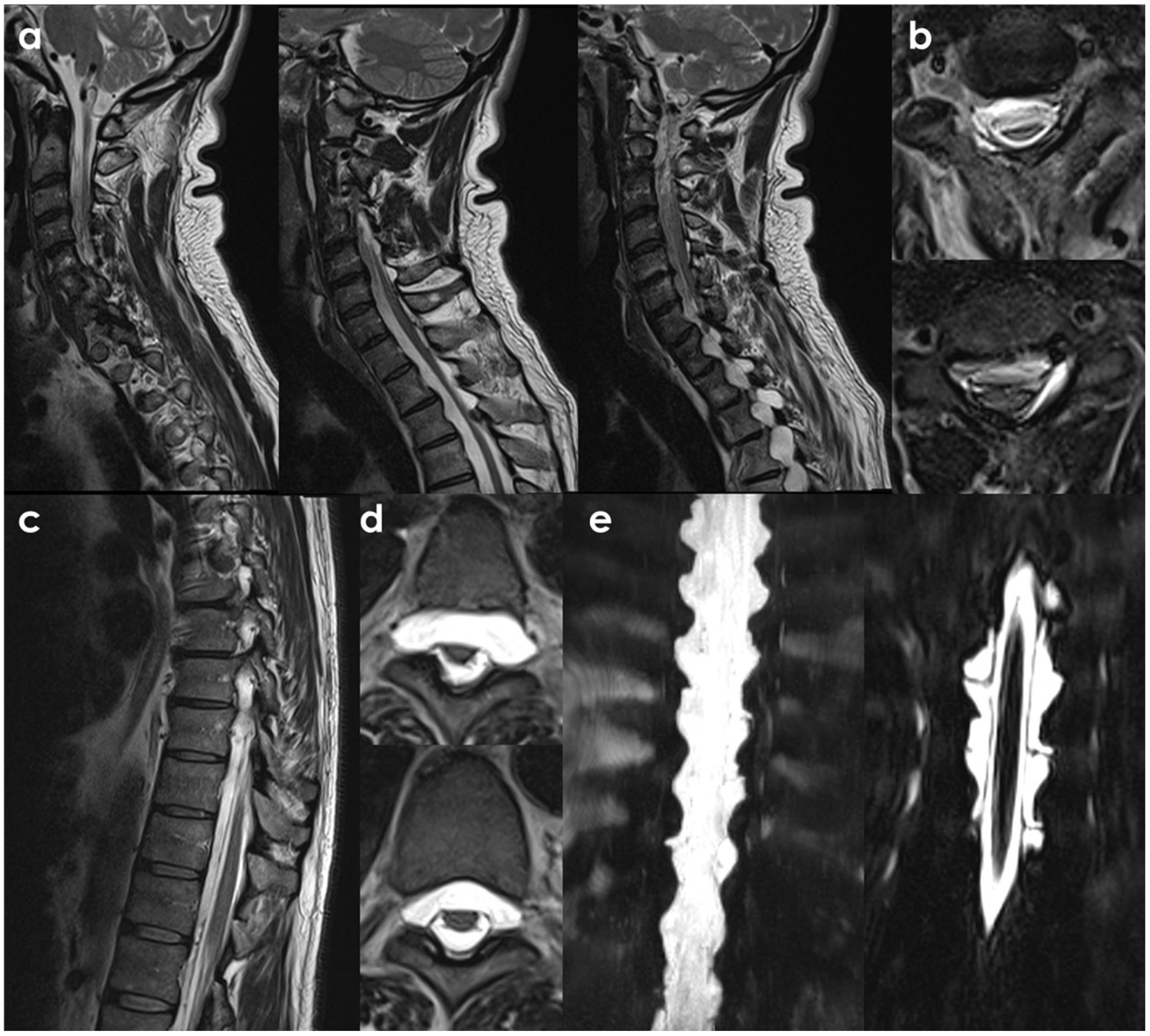
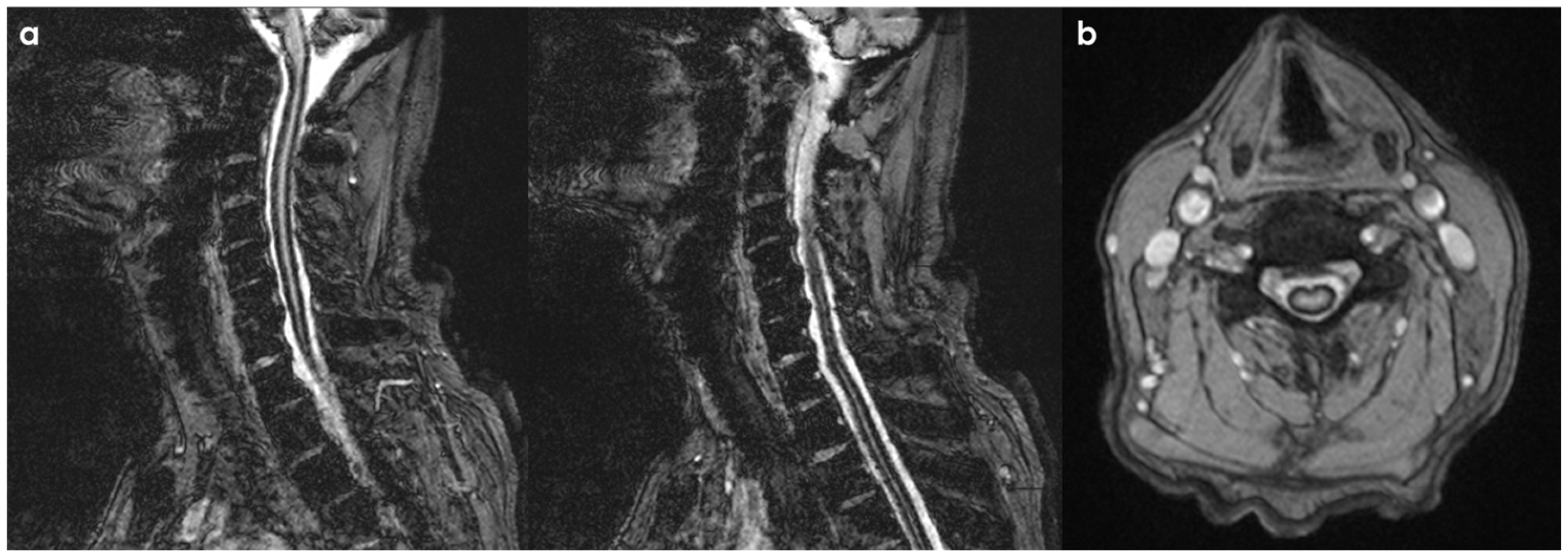
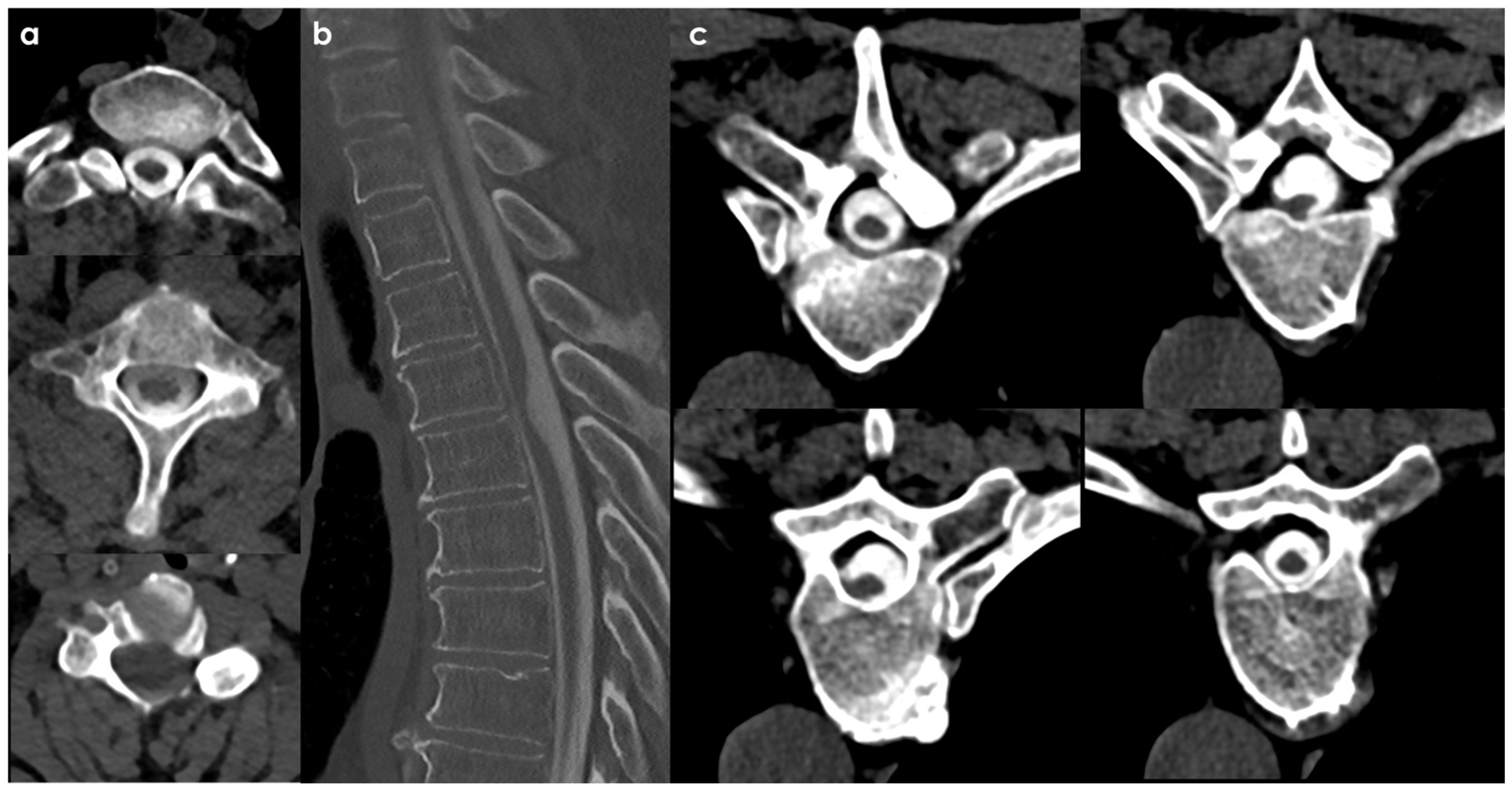
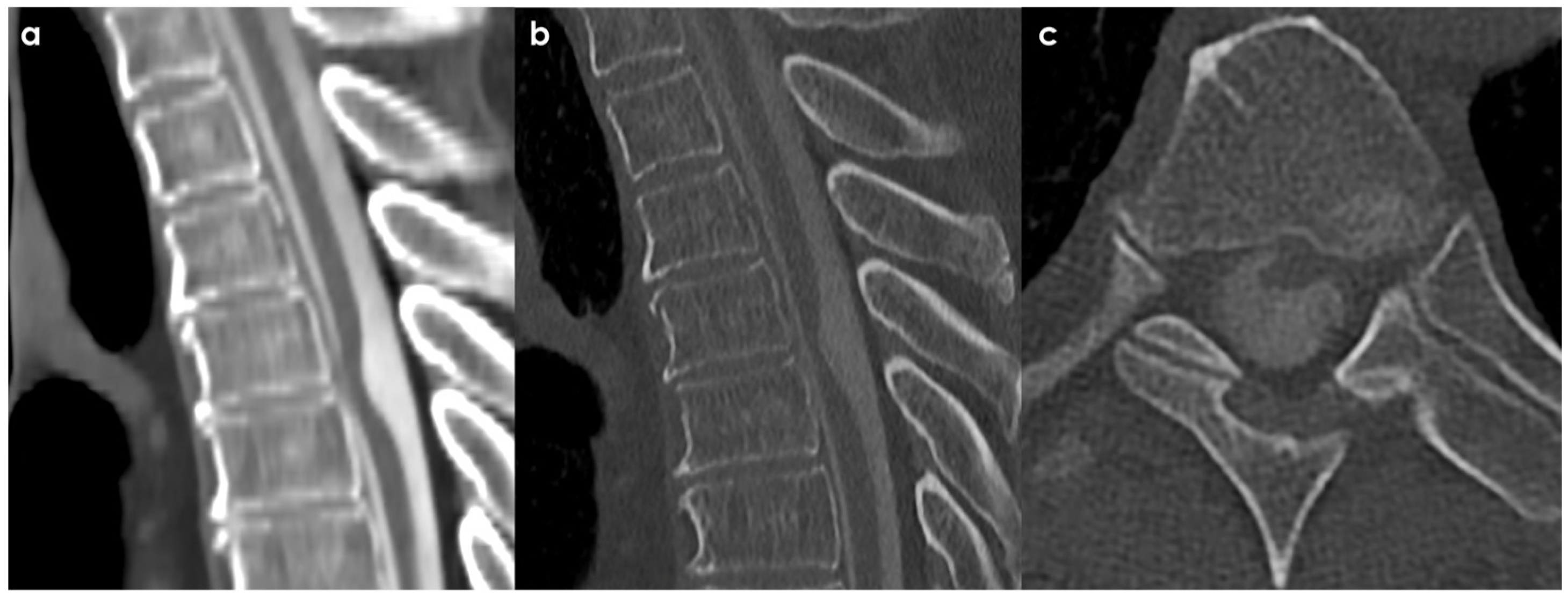
4.1. Dural Tear
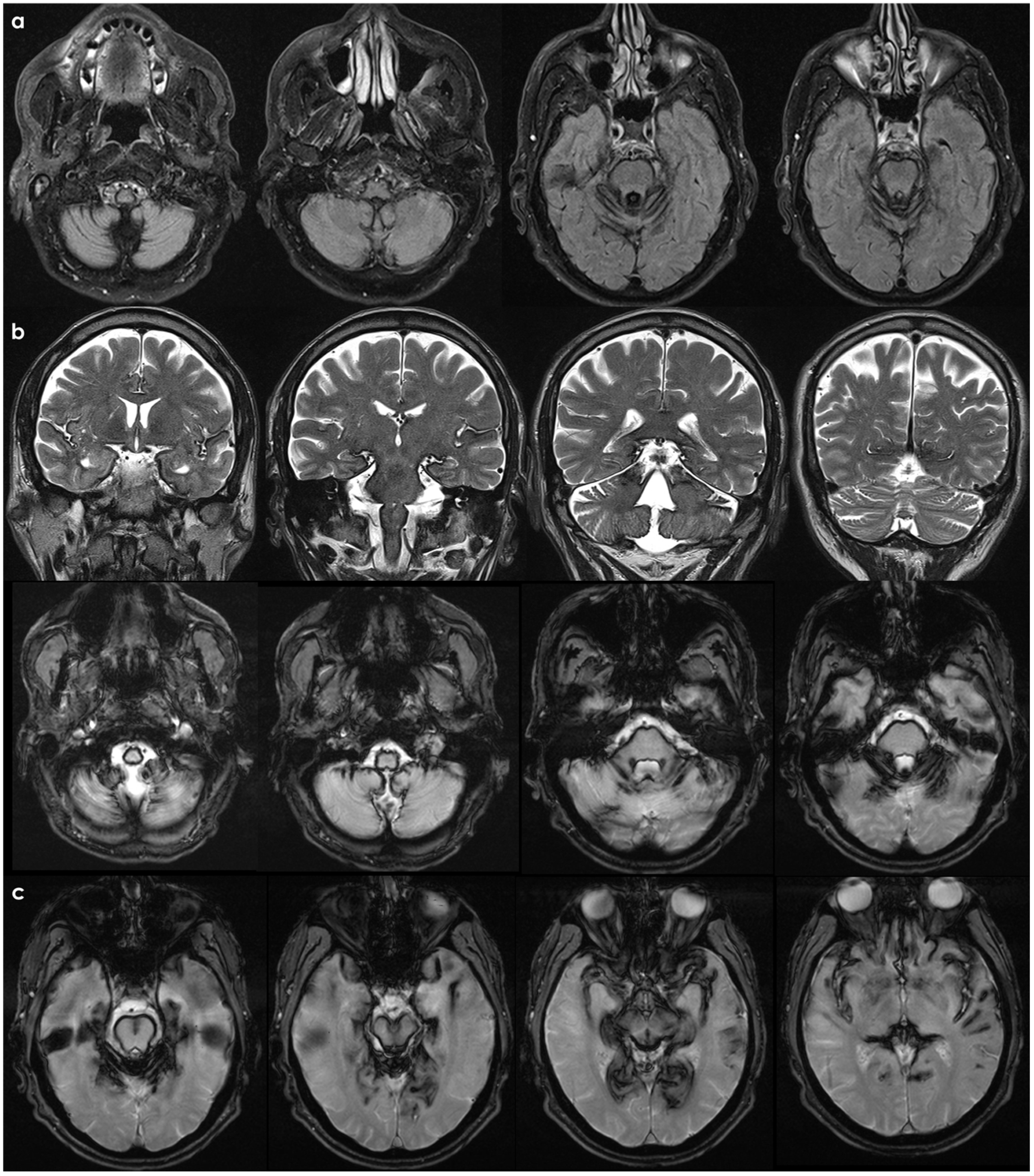
4.2. Superficial Siderosis and VLISFC
Diagnostic Pathway of SS
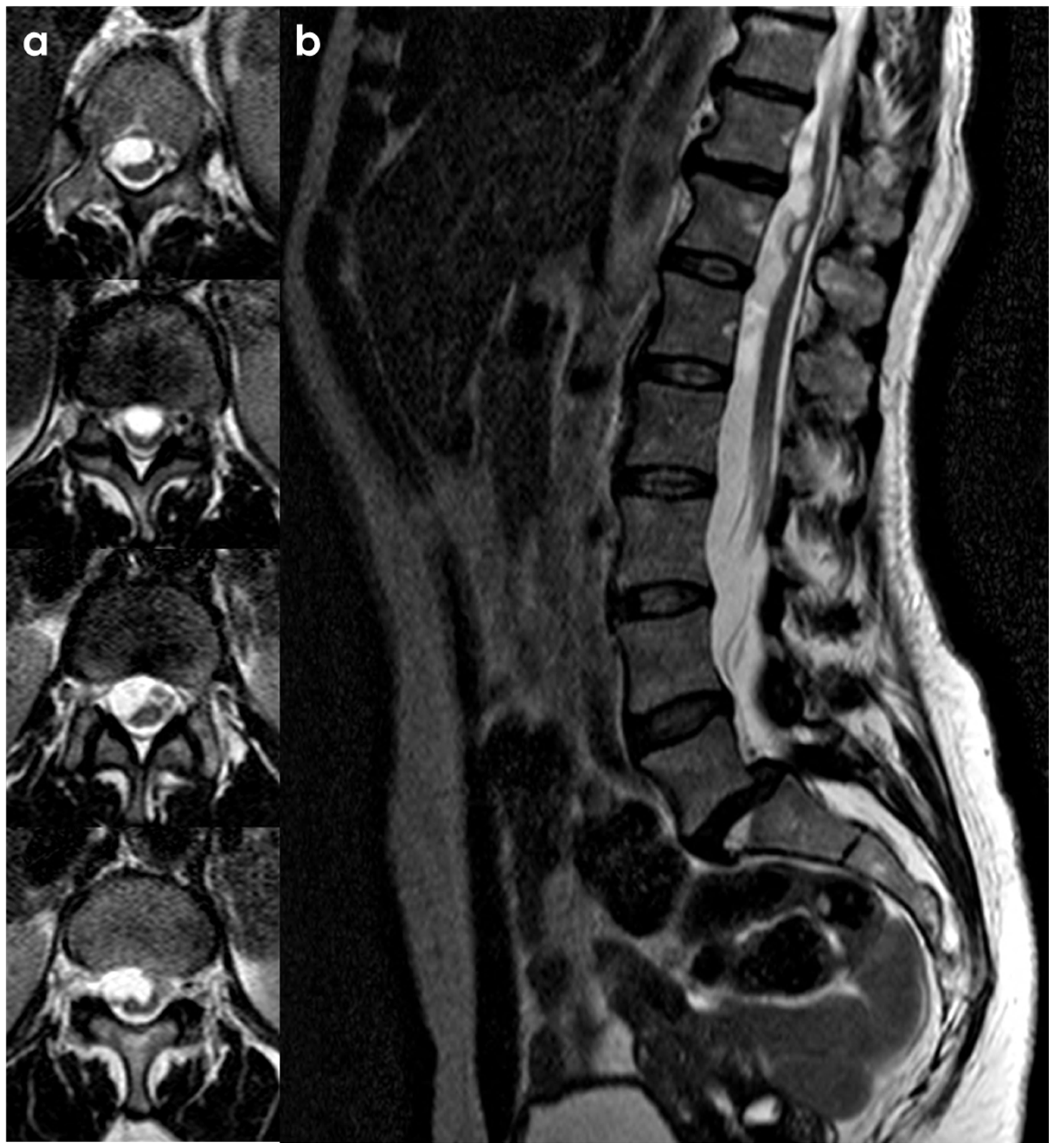
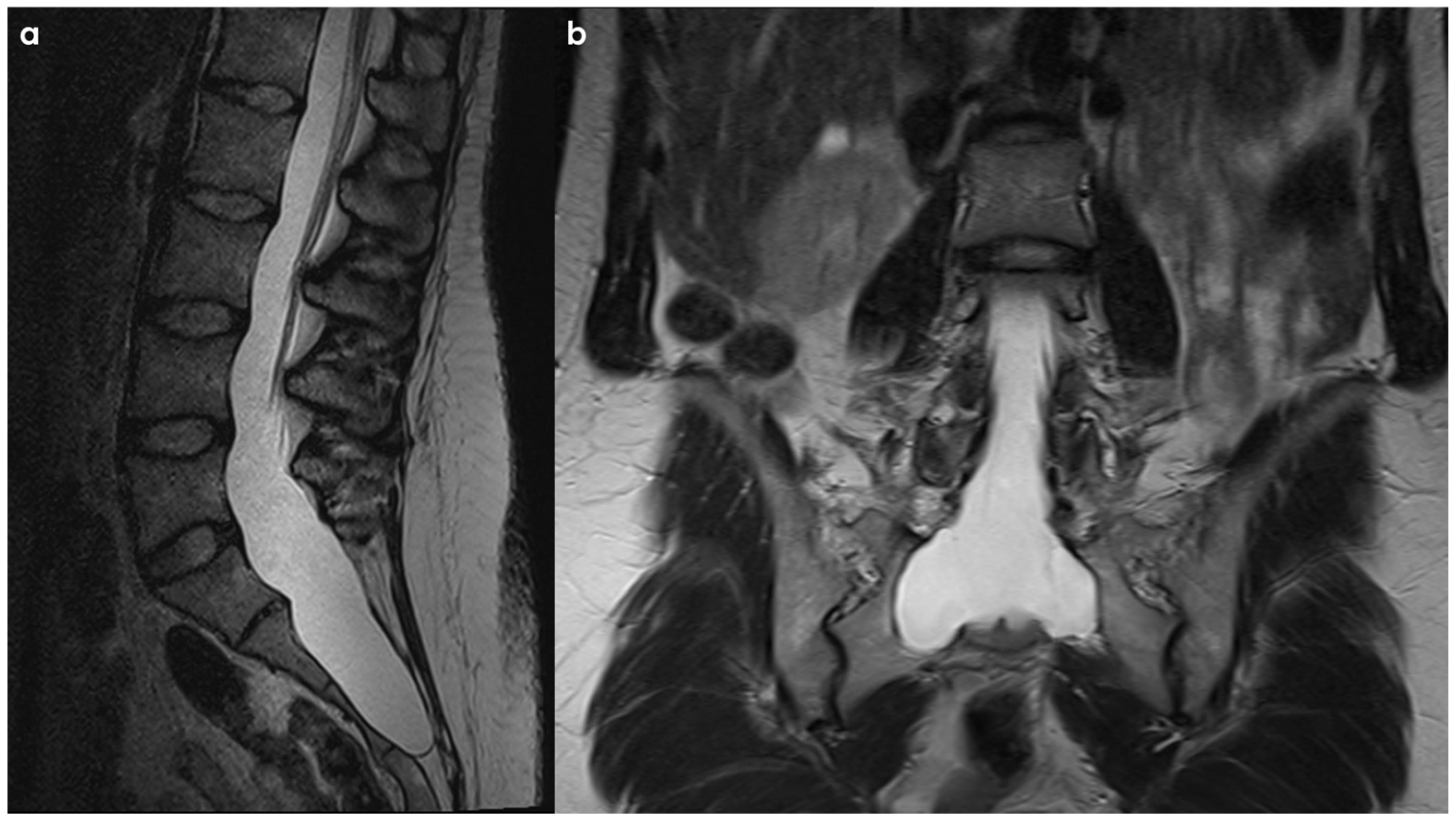
4.3. Intradural Pseudocyst
- A defect may develop in the inner layer of the dura mater.
- The arachnoid membrane (AM) herniates into this defect, resulting in the development of a granulomatous lesion around the defect, which may ultimately lead to the breakdown of the herniated AM.
- Continuous bleeding from the granulomatous tissue can result in subarachnoid hemorrhage, contributing to the onset of SS.
- The influx of CSF through the defect may prompt the formation of an intradural pseudocyst, which can impact blood vessels in the dura mater, leading to hemosiderin deposition.
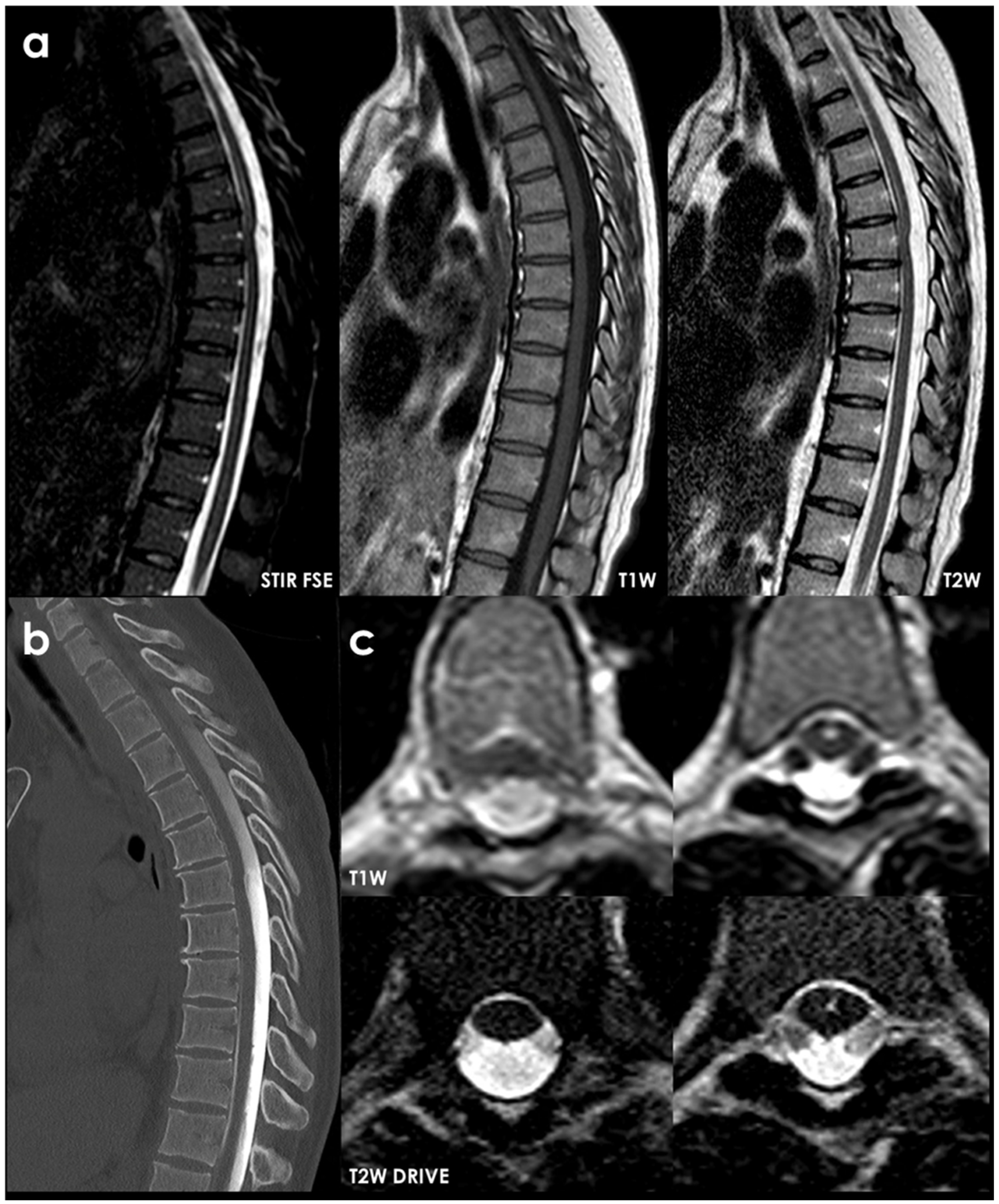
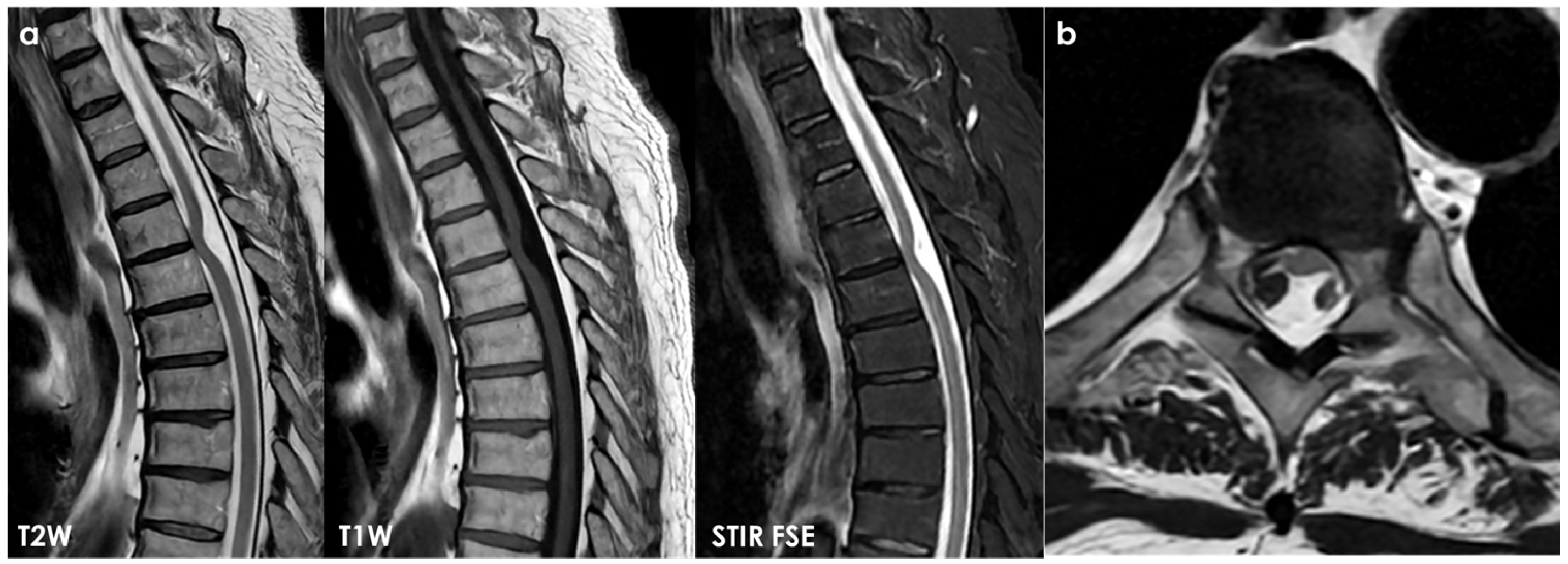
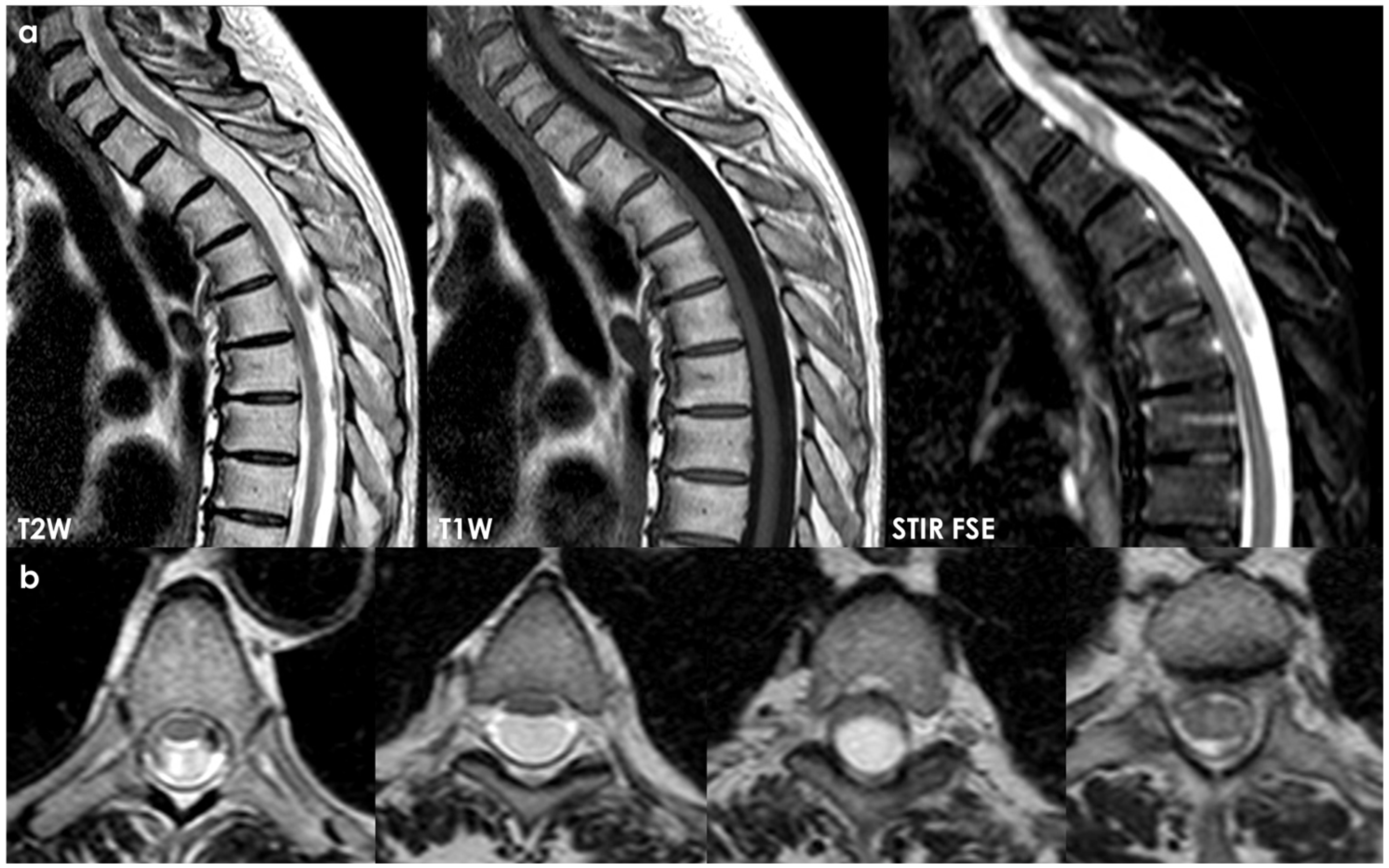
4.4. Spontaneous Transdural Spinal Cord Herniation
4.5. Spinal Arachnoid Web
- -
- An extramedullary transverse band of arachnoid tissue extending to the dorsal surface of the spinal cord.
- -
- Dorsal indentation of the spinal cord.
5. The Need for a Unifying Concept and Strategy
6. Conclusions
Author Contributions
Funding
Institutional Review Board Statement
Informed Consent Statement
Data Availability Statement
Conflicts of Interest
References
- Kumar, N. Beyond superficial siderosis: Introducing “duropathies”. Neurology 2012, 78, 1992–1999. [Google Scholar] [CrossRef] [PubMed]
- Kumar, N. Neuroimaging in superficial siderosis: An in-depth look. AJNR Am. J. Neuroradiol. 2010, 31, 5–14. [Google Scholar] [CrossRef] [PubMed]
- Ellika, S.; Marin, H.; Pace, M.; Newman, D.; Abdulhak, M.; Kole, M. Case Series: Long segment extra-arachnoid fluid collections: Role of dynamic CT myelography in diagnosis and treatment planning. Indian J. Radiol. Imaging. 2012, 22, 108–115. [Google Scholar] [CrossRef] [PubMed]
- Zedde, M.; Pascarella, R. Duropathies: A Narrative Overview of a Neglected Concept—Part One: Anatomical, Embryological and Pathophysiological Elements. NeuroSci 2025, 6, 115. [Google Scholar] [CrossRef]
- Kharytaniuk, N.; Cowley, P.; Sayal, P.; Eleftheriou, P.; Farmer, S.F.; Chan, E.; Bamiou, D.E.; Werring, D.J. Classical infratentorial superficial siderosis of the central nervous system: Pathophysiology, clinical features and management. Pract. Neurol. 2022, 22, 274–284. [Google Scholar]
- Schievink, W.I. Spontaneous intracranial hypotension. N. Engl. J. Med. 2021, 385, 2173–2178. [Google Scholar] [CrossRef]
- Mokri, B.; Hunter, S.F.; Atkinson, J.L.; Piepgras, D.G. Orthostatic headaches caused by CSF leak but with normal CSF pressures. Neurology 1998, 51, 786–790. [Google Scholar] [CrossRef]
- Schievink, W.I. Spontaneous spinal cerebrospinal fluid leaks and intracranial hypotension. JAMA 2006, 295, 2286–2296. [Google Scholar] [CrossRef]
- Dobrocky, T.; Nicholson, P.; Häni, L.; Mordasini, P.; Krings, T.; Brinjikji, W.; Cutsforth-Gregory, J.K.; Schär, R.; Schankin, C.; Gralla, J.; et al. Spontaneous intracranial hypotension: Searching for the CSF leak. Lancet Neurol. 2022, 21, 369–380. [Google Scholar] [CrossRef]
- Schievink, W.I.; Maya, M.M.; Jean-Pierre, S.; Nuño, M.; Prasad, R.S.; Moser, F.G. A classification system of spontaneous spinal CSF leaks. Neurology 2016, 87, 673–679. [Google Scholar] [CrossRef]
- Schievink, W.I.; Schwartz, M.S.; Maya, M.M.; Moser, F.G.; Rozen, T.D. Lack of causal association between spontaneous intracranial hypotension and cranial cerebrospinal fluid leaks. J. Neurosurg. 2012, 116, 749–754. [Google Scholar] [CrossRef]
- Kranz, P.G.; Gray, L.; Amrhein, T.J. Spontaneous intracranial hypotension: 10 myths and misperceptions. Headache 2018, 58, 948–959. [Google Scholar] [CrossRef]
- Mark, I.T.; Morris, P.P.; Brinjikji, W.; Madhavan, A.A.; Cutsforth-Gregory, J.K.; Verdoorn, J.T. Sacral CSF-venous fistulas and potential imaging techniques. AJNR Am. J. Neuroradiol. 2022, 43, 1824–1826. [Google Scholar] [CrossRef] [PubMed]
- HIS Classification ICH-3. Headache Attributed to Spontaneous Intracranial Hypotension. ICHD-3. Available online: https://ichd-3.org/7-headache-attributed-to-non-vascular-intracranial-disorder/7-2-headache-attributed-to-low-cerebrospinal-fluid-pressure/ (accessed on 1 October 2025).
- D’Antona, L.; Jaime Merchan, M.A.; Vassiliou, A.; Watkins, L.D.; Davagnanam, I.; Toma, A.K.; Matharu, M.S. Clinical presentation, investigation findings, and treatment outcomes of spontaneous intracranial hypotension syndrome: A systematic review and meta-analysis. JAMA Neurol. 2021, 78, 329–337. [Google Scholar] [CrossRef] [PubMed]
- Dobrocky, T.; Winklehner, A.; Breiding, P.S.; Grunder, L.; Peschi, G.; Häni, L.; Mosimann, P.J.; Branca, M.; Kaesmacher, J.; Mordasini, P.; et al. Spine MRI in spontaneous intracranial hypotension for CSF leak detection: Nonsuperiority of intrathecal gadolinium to heavily T2-weighted fat-saturated sequences. AJNR Am. J. Neuroradiol. 2020, 41, 1309–1315. [Google Scholar] [CrossRef] [PubMed]
- Schievink, W.I.; Maya, M.; Moser, F.; Nuño, M. Long-term Risks of Persistent Ventral Spinal CSF Leaks in SIH: Superficial Siderosis and Bibrachial Amyotrophy. Neurology 2021, 97, e1964–e1970. [Google Scholar] [CrossRef]
- Kumar, N.; Cohen-Gadol, A.A.; Wright, R.A.; Miller, G.M.; Piepgras, D.G.; Ahlskog, J.E. Superficial siderosis. Neurology 2006, 66, 1144–1152. [Google Scholar] [CrossRef]
- Schievink, W.I.; Maya, M.M.; Nuño, M. Chronic cerebellar hemorrhage in spontaneous intracranial hypotension: Association with ventral spinal cerebrospinal fluid leaks: Clinical article. J. Neurosurg. Spine 2011, 15, 433–440. [Google Scholar] [CrossRef]
- Wilson, D.; Chatterjee, F.; Farmer, S.F.; Rudge, P.; McCarron, M.O.; Cowley, P.; Werring, D.J. Infratentorial superficial siderosis: Classification, diagnostic criteria, and rational investigation pathway. Ann. Neurol. 2017, 81, 333–343. [Google Scholar] [CrossRef]
- Kumar, N. Superficial siderosis: A clinical review. Ann. Neurol. 2021, 89, 1068–1079. [Google Scholar] [CrossRef]
- Mihaylova, T.; Biondo, A.; Zak, I.; Lewis, R.A. Anteriorn horn cell loss from subdural hygroma: A consequence of spontaneous spinal fluid leak. J. Neurol. Sci. 2011, 305, 156–159. [Google Scholar] [CrossRef] [PubMed]
- Deluca, G.C.; Boes, C.J.; Krueger, B.R.; Mokri, B.; Kumar, N. Ventral intraspinal fluid-filled collection secondary to CSF leak presenting as bibrachial amyotrophy. Neurology 2011, 76, 1439–1440. [Google Scholar] [CrossRef] [PubMed]
- Schievink, W.; Chu, R.M.; Maya, M.M.; Johnson, J.P.; Cohen, H.C.M. Spinal manifestations of spontaneous intracranial hypotension. J. Neurosurg. Spine 2013, 18, 96–101. [Google Scholar] [CrossRef]
- Morishima, R.; Takai, K.; Ando, T.; Nakata, Y.; Shimizu, T.; Taniguchi, M. Brachial multisegmental amyotrophy caused by cervical anterior horn cell disorder associated with a spinal CSF leak: A report of five cases. J. Neurol. 2019, 266, 2679–2684. [Google Scholar] [CrossRef] [PubMed]
- Brus-Ramer, M.; Dillon, W.P. Idiopathic thoracic spinal cord herniation: Retrospective analysis supporting a mechanism of diskogenic dural injury and subsequent tamponade. AJNR Am. J. Neuroradiol. 2012, 33, 52–56. [Google Scholar] [CrossRef]
- Ulrich, C.T.; Fung, C.; Piechowiak, E.; Gralla, J.; Raabe, A.; Beck, J. Disc herniation, occult on preoperative imaging but visualized microsurgically, as the cause of idiopathic thoracic spinal cord herniation. Acta Neurochir. 2018, 160, 467–470. [Google Scholar] [CrossRef]
- Vishteh, A.G.; Schievink, W.I.; Baskin, J.J.; Sonntag, V.K. Cervical bone spur presenting with spontaneous intracranial hypotension: Case report. J. Neurosurg. 1998, 89, 483–484. [Google Scholar] [CrossRef]
- Beck, J.; Ulrich, C.T.; Fung, C.; Fichtner, J.; Seidel, K.; Fiechter, M.; Hsieh, K.; Murek, M.; Bervini, D.; Meier, N.; et al. Diskogenic microspurs as a major cause of intractable spontaneous intracranial hypotension. Neurology 2016, 87, 1220–1226. [Google Scholar] [CrossRef]
- Amrhein, T.J.; Befera, N.T.; Gray, L.; Kranz, P.G. CT fluoroscopy-guided blood patching of ventral CSF leaks by direct needle placement in the ventral epidural space using a transforaminal approach. AJNR Am. J. Neuroradiol. 2016, 37, 1951–1956. [Google Scholar] [CrossRef]
- Beck, J.; Raabe, A.; Schievink, W.I.; Fung, C.; Gralla, J.; Piechowiak, E.; Seidel, K.; Ulrich, C.T. Posterior approach and spinal cord release for 360° repair of dural defects in spontaneous intracranial hypotension. Neurosurgery 2019, 84, E345–E351. [Google Scholar] [CrossRef]
- Schievink, W.I.; Maya, M.M.; Nuño, M. De Novo Formation of Idiopathic Spinal Cord Herniation. AJNR Am. J. Neuroradiol. 2024, 45, 1385–1387. [Google Scholar] [CrossRef] [PubMed]
- Fearnley, J.M.; Stevens, J.M.; Rudge, P. Superficial siderosis of the central nervous system. Brain 1995, 118 Pt 4, 1051–1066. [Google Scholar] [CrossRef] [PubMed]
- Hamill, R.C. Report of a case of melanosis of the brain, cord and meninges. J. Nerv. Ment. Dis. 1908, 35, 594. [Google Scholar] [CrossRef]
- Castro-Gomez, S.; Binder, J.; Schievelkamp, A.H.; Heneka, M.T. CNS superficial siderosis mimicking a motor neuron disease. Brain Sci. 2022, 12, 1558. [Google Scholar] [CrossRef]
- Deguchi, K.; Honjo, N.; Takata, T.; Touge, T.; Masaki, T. Flail arm syndrome mimic caused by hemosiderin deposition in the anterior horn. Acta Neurol. Belg. 2020, 120, 1487–1489. [Google Scholar] [CrossRef]
- Driver-Dunckley, E.D.; Hoxworth, J.M.; Patel, N.P.; Bosch, E.P.; Goodman, B.P. Superficial siderosis mimicking amyotrophic lateral sclerosis. J. Clin. Neuromuscul. Dis. 2010, 11, 137–144. [Google Scholar] [CrossRef]
- Kumar, N.; Fogelson, J.L.; Morris, J.M.; Pichelmann, M.A. Superficial siderosis should be included in the differential diagnosis of motor neuron disease. Neurologist 2012, 18, 139–145. [Google Scholar] [CrossRef]
- Payer, M.; Sottas, C.; Bonvin, C. Superficial siderosis of the central nervous system: Secondary progression despite successful surgical treatment, mimicking amyotrophic lateral sclerosis. Case report and review. Acta Neurochir. 2010, 152, 1411–1416. [Google Scholar] [CrossRef]
- Turner, B.; Wills, A.J. Superficial siderosis associated with anterior horn cell dysfunction. J. Neurol. Neurosurg. Psychiatry 2002, 72, 274–275. [Google Scholar] [CrossRef][Green Version]
- Iakovleva, V.; Verde, F.; Cinnante, C.; Sillani, A.; Conte, G.; Corsini, E.; Ciusani, E.; Erbetta, A.; Silani, V.; Ticozzi, N. Duropathy as a rare motor neuron disease mimic: From bibrachial amyotrophy to infratentorial superficial siderosis. BMC Neurol. 2024, 24, 309. [Google Scholar] [CrossRef]
- Takai, K.; Taniguchi, M. Superficial siderosis of the central nervous system associated with ventral dural defects: Bleeding from the epidural venous plexus. J. Neurol. 2021, 268, 1491–1494. [Google Scholar] [CrossRef]
- Schievink, W.I.; Maya, M.M. Spinal meningeal diverticula, spontaneous intracranial hypotension, and superficial siderosis. Neurology 2017, 88, 916–917. [Google Scholar] [CrossRef] [PubMed]
- Quattrocchi, S.; Bonan, L.; Cirillo, L.; Avoni, P.; Di Stasi, V.; Rizzo, G.; Liguori, R.; Vacchiano, V. Bibrachial amyotrophy as a rare manifestation of intraspinal fluid collection: A case report and systematic review. Neurol. Sci. 2024, 45, 2279–2288. [Google Scholar] [CrossRef] [PubMed]
- Preethish-Kumar, V.; Vengalil, S.; Tiwari, S.; Polavarapu, K.; Netravathi, M.; Ramalingaiah, A.H.; Nalini, A. Ventral longitudinal intraspinal fluid collection: Rare presentation as brachial amyotrophy and intracranial hypotension. J. Spinal Cord Med. 2019, 42, 45–50. [Google Scholar] [CrossRef] [PubMed]
- Rosenthal, P. Siderosis of the marginal zones of the central nervous system. Dtsch. Z. Nervenheilkd. 1958, 178, 431–472. [Google Scholar]
- Takahashi, Y.; Kodaira, M.; Yamada, M.; Uehara, K.; Ito, K.; Kaneko, T.; Ohashi, H.; Yazaki, M.; Sekijima, Y. Anterior horn damage in brachial multisegmental amyotrophy with superficial siderosis and dural tear: An autopsy case report. BMC Neurol. 2023, 23, 129. [Google Scholar] [CrossRef]
- Iwase, R.; Kanouchi, T.; Yoshii, T.; Ishiguro, T.; Hirai, T.; Okawa, A.; Yokota, T.; Sanjo, N. Diverging pathophysiology in superficial siderosis with proximal upper limb amyotrophy. J. Neurol. Sci. 2022, 436, 120248. [Google Scholar] [CrossRef]
- Mizuno, J.; Nakagawa, H.; Chang, H.S.; Hashizume, Y. Postmortem study of the spinal cord showing snake-eyes appearance due to damage by ossification of the posterior longitudinal ligament and kyphotic deformity. Spinal Cord 2005, 43, 503–507. [Google Scholar] [CrossRef][Green Version]
- Ito, T.; Oyanagi, K.; Takahashi, H.; Takahashi, H.E.; Ikuta, F. Cervical spondylotic myelopathy. Clinicopathologic study on the progression pattern and thin myelinated fibers of the lesions of seven patients examined during complete autopsy. Spine 1996, 21, 827–833. [Google Scholar] [CrossRef]
- Kameyama, T.; Ando, T.; Yanagi, T.; Yasui, K.; Sobue, G. Cervical spondylotic amyotrophy. Magnetic resonance imaging demonstration of intrinsic cord pathology. Spine 1998, 23, 448–452. [Google Scholar] [CrossRef]
- Hirayama, K. Juvenile muscular atrophy of distal upper extremity (Hirayama disease). Intern. Med. 2000, 39, 283–290. [Google Scholar] [CrossRef] [PubMed]
- Häni, L.; Fung, C.; Jesse, C.M.; Ulrich, C.T.; Miesbach, T.; Cipriani, D.R.; Dobrocky, T.; Z’Graggen, W.J.; Raabe, A.; Piechowiak, E.I.; et al. Insights into the natural history of spontaneous intracranial hypotension from infusion testing. Neurology 2020, 95, e247–e255. [Google Scholar] [CrossRef] [PubMed]
- Child, N.; McGuinness, B.; Kilfoyle, D. Bibrachial amyotrophy and ventral spinal cyst associated with myelomalacia and intracranial hypertension. J. Clin. Neurosci. 2014, 21, 531–533. [Google Scholar] [CrossRef] [PubMed]
- Schmalbach, S.; Petri, S.; Götz, F.; Dengler, R.; Krampfl, K. Anterior cysts of the spine: A difficult differential diagnosis to amyotrophic lateral sclerosis. J. Neurol. 2008, 255, 1662–1669. [Google Scholar] [CrossRef]
- Yedavalli, V.S.; Patil, A.; Shah, P. Amyotrophic lateral sclerosis and its mimics/variants: A comprehensive review. J. Clin. Imaging Sci. 2018, 8, 53. [Google Scholar]
- Gomathy, S.B.; Agarwal, A.; Garg, A.; Vishnu, V.Y. Hirayama disease: Review on pathophysiology, clinical features, diagnosis and treatment. touchReviews Neurol. 2022, 18, 109–116. [Google Scholar] [CrossRef]
- Maira, G.; Denaro, L.; Doglietto, F.; Mangiola, A.; Colosimo, C. Idiopathic spinal cord herniation: Diagnostic, surgical, and follow-up data obtained in five cases. J. Neurosurg. Spine 2006, 4, 10–19. [Google Scholar] [CrossRef]
- Groen, R.J.M.; Lukassen, J.N.M.; Boer, G.J.; Vergeer, R.A.; Coppes, M.H.; Drost, G.; Middel, B. Anterior thoracic spinal cord herniation: Surgical treatment and postoperative course: An individual participant data metaanalysis of 246 cases. World Neurosurg. 2018, 123, 453–463. [Google Scholar] [CrossRef]
- Bhatia, K.; Madhavan, A.; Coutinho, C.; Mathur, S. Idiopathic spinal cord herniation. Clin. Radiol. 2020, 75, 721–729. [Google Scholar] [CrossRef]
- Najjar, M.W.; Baeesa, S.S.; Lingawi, S.S. Idiopathic spinal cord herniation: A new theory of pathogenesis. Surg. Neurol. 2004, 62, 161–170; discussion 170-1. [Google Scholar] [CrossRef]
- Wortzman, G.; Tasker, R.R.; Rewcastle, N.B.; Richardson, J.C.; Pearson, F.G. Spontaneous incarcerated herniation of the spinal cord into a vertebral body: A unique cause of paraplegia: Case report. J. Neurosurg. 1974, 41, 631–635. [Google Scholar] [CrossRef]
- Parmar, H.; Park, P.; Brahma, B.; Gandhi, D. Imaging of idiopathic spinal cord herniation. RadioGraphics 2008, 28, 511–518. [Google Scholar] [CrossRef]
- Imagama, S.; Matsuyama, Y.; Sakai, Y.; Nakamura, H.; Katayama, Y.; Ito, Z.; Wakao, N.; Sato, K.; Kamiya, M.; Kato, F.; et al. Image classification of idiopathic spinal cord herniation based on symptom severity and surgical outcome: A multicenter study. J. Neurosurg. Spine 2009, 11, 310–319. [Google Scholar] [CrossRef] [PubMed]
- Barrenechea, I.J.; Lesser, J.B.; Gidekel, A.L.; Turjanski, L.; Perin, N.I. Diagnosis and treatment of spinal cord herniation: A combined experience. J. Neurosurg. Spine 2006, 5, 294–302. [Google Scholar] [CrossRef] [PubMed]
- Haber, M.D.; Nguyen, D.D.; Li, S. Differentiation of idiopathic spinal cord herniation from CSF-isointense intraspinal extramedullary lesions displacing the cord. RadioGraphics 2014, 34, 313–329. [Google Scholar] [CrossRef] [PubMed]
- Isu, T.; Iizuka, T.; Iwasaki, Y.; Nagashima, M.; Akino, M.; Abe, H. Spinal cord herniation associated with an Intradural spinal arachnoid cyst diagnosed by magnetic resonance imaging. Neurosurgery 1991, 29, 137–139. [Google Scholar] [CrossRef]
- Tekkok, I.H. Spontaneous spinal cord herniation: Case report and review of the literature. Spine 2000, 46, 485–492. [Google Scholar] [CrossRef]
- Marquardt, G.; Weidauer, S.; Zanella, F.; Seifert, V. Acute posttraumatic spinal cord herniation. Case report and review of the literature. J. Neurosurg. Spine 2001, 94, 316–318. [Google Scholar] [CrossRef]
- Miyaguchi, M.; Nakamura, H.; Shakudo, M.; Inoue, Y.; Yamano, Y. Idiopathic spinal cord herniation associated with intervertebral disc extrusion: A case report and review of the literature. Spine 2001, 26, 1090–1094. [Google Scholar] [CrossRef]
- Buntting, C.S.; Ham, Y.; Teng, K.X.; Dimou, J.; Gauden, A.J.; Nair, G. Scalpel sign: Dorsal thoracic arachnoid web, thoracic arachnoid cyst and ventral cord herniation. Radiol. Case Rep. 2022, 17, 3564–3569. [Google Scholar] [CrossRef]
- Masuzawa, H.; Nakayama, H.; Shitara, N.; Suzuki, T. Spinal cord herniation into a congenital extradural arachnoid cyst causing Brown-Sequard syndrome. J. Neurosurg. 1981, 55, 983–986. [Google Scholar] [CrossRef]
- Taylor, T.R.; Dineen, R.; White, B.; Jaspan, T. The thoracic anterior spinal cord adhesion syndrome. Br. J. Radiol. 2012, 85, e123–e129. [Google Scholar] [CrossRef] [PubMed]
- Ewald, C.; Kuhne, D.; Hassler, W.E. Progressive spontaneous herniation of the thoracic spinal cord: Case report. Neurosurgery 2000, 46, 493. [Google Scholar] [CrossRef] [PubMed]
- Mokri, B. Spontaneous cerebrospinal fluid leaks: From intracranial hypotension to cerebrospinal fluid hypovolemia—Evolution of a concept. Mayo Clin. Proc. 1999, 74, 1113–1123. [Google Scholar] [CrossRef] [PubMed]
- Longridge, N.S.; Hashimoto, S.; Marotta, T.R.; Mezei, M. Superficial siderosis: A cause of audiovestibular failure. J. Otolaryngol. 1996, 25, 41–43. [Google Scholar]
- Hashimoto, M.; Hoyt, W.F. Superficial siderosis and episodic fourth nerve paresis: Report of a case with clinical and magnetic resonance imaging findings. J. Neuroophthalmol. 1996, 16, 277–280. [Google Scholar] [CrossRef]
- van Harskamp, N.J.; Rudge, P.; Cipolotti, L. Cognitive and social impairments in patients with superficial siderosis. Brain 2005, 128, 1082–1092. [Google Scholar] [CrossRef]
- Uttner, I.; Tumani, H.; Arnim, C.V.; Brettschneider, J. Cognitive impairment in superficial siderosis of the central nervous system: A case report. Cerebellum 2009, 8, 61–63. [Google Scholar] [CrossRef]
- Ball, B.G.; Luetmer, P.H.; Giannini, C.; Mokri, B.; Kumar, N.; Piepgras, D.G. Ventral “spinal epidural meningeal cysts”: Not epidural and not cysts? Case series and review of literature. Neurosurgery 2012, 70, 320–328. [Google Scholar] [CrossRef]
- Mokri, B.; Piepgras, D.G.; Miller, G.M. Syndrome of orthostatic headaches and diffuse pachymeningeal gadolinium enhancement. Mayo Clin. Proc. 1997, 72, 400–413. [Google Scholar] [CrossRef]
- Cheng, C.-Y.; Chen, M.-H.; Wang, S.-J.; Lin, K.-P. A proposed mechanism of superficial siderosis supported by surgical and neuroimaging findings. Med. Hypotheses 2011, 76, 823–826. [Google Scholar] [CrossRef]
- Kumar, N.; McKeon, A.; Rabinstein, A.A.; Kalina, P.; Ahlskog, J.E.; Mokri, B. Superficial siderosis and CSF hypovolemia: The defect (dural) in the link. Neurology 2007, 69, 925–926. [Google Scholar] [CrossRef] [PubMed]
- Bartolomei, J.; Wong, J.; Awad, I.A.; Dickman, C.A.; Das, K.; Kalfas, I.; Rodts, G. Case problems conference: Thoracic spinal cord hernia. Neurosurgery 2000, 46, 1408–1415. [Google Scholar] [CrossRef] [PubMed]
- Sagiuchi, T.; Iida, H.; Tachibana, S.; Utsuki, S.; Tanaka, R.; Fujii, K. Idiopathic spinal cord herniation associated with calcified thoracic disc extrusion—Case report. Neurol. Med.-Chir. 2003, 43, 364–368. [Google Scholar] [CrossRef] [PubMed]
- Ulivieri, S.; Olivieri, G.; Petrini, C.; D’elia, F.; Cuneo, G.L.; Cerase, A. Thoracic spinal cord herniation: Case report and technical note. Neurol. Neurochir. Pol. 2009, 43, 86–89. [Google Scholar]
- Alkan, O.; Kizilkilic, O.; Karakurum Goksel, B.; Yildirim, T.; Birol Sarica, F. Ventral thoracic spinal cord herniation: A commonly misdiagnosed and treatable cause of myelopathy. Neuroradiol. J. 2008, 21, 563–567. [Google Scholar] [CrossRef]
- Hassler, W.; Al-Kahlout, E.; Schick, U. Spontaneous herniation of the spinal cord: Operative technique and follow-up in 10 cases. J. Neurosurg. Spine 2008, 9, 438–443. [Google Scholar] [CrossRef]
- Senturk, S.; Guzel, A.; Guzel, E. Atypical clinical presentation of idiophatic thoracic spinal cord herniation. Spine 2008, 33, E474–E477. [Google Scholar] [CrossRef]
- Haque, A.; Morgan, H. Thoracic transdural spinal cord herniation at a level caudal to prior discectomy. Acta Neurochir. 2010, 152, 1985–1989. [Google Scholar] [CrossRef]
- Bartels, R.H.M.A.; Brunner, H.; Hosman, A.; van Alfen, N.; Grotenhuis, J.A. The Pathogenesis of Ventral Idiopathic Herniation of the Spinal Cord: A Hypothesis Based on the Review of the Literature. Front. Neurol. 2017, 8, 476. [Google Scholar] [CrossRef]
- Prada, F.; Saladino, A.; Giombini, S.; Erbetta, A.; Saini, M.; DiMeco, F.; Lodrini, S. Spinal cord herniation: Management and outcome in a series of 12 consecutive patients and review of the literature. Acta Neurochir. 2012, 154, 723–730. [Google Scholar] [CrossRef] [PubMed]
- Sai Kiran, N.A.; Vaishya, S.; Kasliwal, M.K.; Kale, S.S.; Sharma, B.S. Spontaneous thoracic spinal cord herniation presenting as tethered cord syndrome. Neurol. India 2009, 57, 221–222. [Google Scholar] [CrossRef] [PubMed]
- Groen, R.J.; Middel, B.; Meilof, J.F.; de Vos-van de Biezenbos, J.B.; Enting, R.H.; Coppes, M.H.; Journee, L.H. Operative treatment of anterior thoracic spinal cord herniation: Three new cases and an individual patient data meta-analysis of 126 case reports. Neurosurgery 2009, 64, ons145-59; discussion ons159-60. [Google Scholar] [CrossRef] [PubMed]
- O’Rahilly, R.; Muller, F. The meninges in human development. J. Neuropathol. Exp. Neurol. 1986, 45, 588–608. [Google Scholar] [CrossRef]
- van Dun, P.L.S.; Girardin, M.R.G. Embryological study of the spinal dura and its attachment into the vertebral canal. Int. J. Osteopath. Med. 2006, 9, 85–93. [Google Scholar] [CrossRef]
- Sioutos, P.; Arbit, E.; Tsairis, P.; Gargan, R. Spontaneous thoracic spinal cord herniation: A case report. Spine 1996, 21, 1710–1713. [Google Scholar] [CrossRef]
- Henry, A.; Tunkel, R.; Arbit, E.; Ku, A.; Lachmann, E. Tethered thoracic cord resulting from spinal cord herniation. Arch. Phys. Med. Rehabil. 1997, 78, 530–533. [Google Scholar] [CrossRef]
- Brugières, P.; Malapert, D.; Adle-Biasette, H.; Fuerxer, F.; Djindjian, M.; Gaston, A. Idipathic spinal cord herniation: Value of MR phase-contrast imaging. AJNR Am. J. Neuroradiol. 1999, 20, 935–939. [Google Scholar]
- Ellger, T.; Schul, C.; Heindel, W.; Evers, S.; Ringelstein, E.B. Idiopathic spinal cord herniation causing progressive Brown-Sequard syndrome. Clin. Neurol. Neurosurg. 2006, 108, 388–391. [Google Scholar] [CrossRef]
- Spissu, A.; Peltz, M.T.; Matta, G.; Cannas, A. Traumatic transdural spinal cord herniation and the nuclear trail sign: Case report. Neurol. Sci. 2004, 25, 151–153. [Google Scholar] [CrossRef]
- Summers, J.C.; Balasubramani, Y.V.; Chan, P.C.; Rosenfeld, J.V. Idiopathic spinal cord herniation: Clinical review and report of three cases. Asian J. Neurosurg. 2013, 8, 97–105. [Google Scholar] [CrossRef] [PubMed]
- Blasel, S.; Elke, H.; Baas, H.; Zanella, F.; Weidauer, S. Spontaneous spinal cord herniation: MR imaging and clinical features in six cases. Clin. Neuroradiol. 2008, 18, 224–230. [Google Scholar] [CrossRef]
- Hausmann, O.N.; Moseley, I.F. Idiopathic dural herniation of the thoracic spinal cord. Neuroradiology 1996, 38, 503–510. [Google Scholar] [CrossRef] [PubMed]
- Krauss, W.E.; Mikula, A.L.; Kumar, N. Commentary: Clinical Characteristics, Outcomes, and Pathology Analysis in Patients with Dorsal Arachnoid Web. Neurosurgery 2022, 90, e116. [Google Scholar] [CrossRef]
- Delgardo, M.; Higgins, D.; McCormick, K.L.; Reid, P.; Canoll, P.; McCormick, P.C. Clinical characteristics, outcomes, and pathology analysis in patients with dorsal arachnoid web. Neurosurgery 2022, 90, 581–587. [Google Scholar]
- Reardon, M.A.; Raghavan, P.; Carpenter-Bailey, K.; Mukherjee, S.; Smith, J.S.; Matsumoto, J.A.; Yen, C.P.; Shaffrey, M.E.; Lee, R.R.; Shaffrey, C.I.; et al. Dorsal thoracic arachnoid web and the “scalpel sign”: A distinct clinical-radiologic entity. AJNR Am. J. Neuroradiol. 2013, 34, 1104–1110. [Google Scholar]
- Ben Ali, H.; Hamilton, P.; Zygmunt, S.; Yakoub, K.M. Spinal arachnoid web-a review article. J. Spine Surg. 2018, 4, 446–450. [Google Scholar] [CrossRef]
- Sridharan, A.; Heilman, C.B. Transverse dorsal arachnoid web and syringomyelia: Case report. Neurosurgery 2009, 65, E216–E217; discussion E217. [Google Scholar]
- Paramore, C.G. Dorsal arachnoid web with spinal cord compression: Variant of an arachnoid cyst? Report of two cases. J. Neurosurg. 2000, 93, 287–290. [Google Scholar]
- Arai, A.; Aihara, H.; Miyake, S.; Hanada, Y.; Kohmura, E. Syringomyelia due to thoracic spinal stenosis with ossified ligamentum flavum—Case report. Neurol. Med.-Chir. 2011, 51, 157–159. [Google Scholar]
- Chang, H.S.; Nagai, A.; Oya, S.; Matsui, T. Dorsal spinal arachnoid web diagnosed with the quantitative measurement of cerebrospinal fluid flow on magnetic resonance imaging. J. Neurosurg. Spine 2014, 20, 227–233. [Google Scholar] [CrossRef] [PubMed]
- Aiyer, R.; El-Sherif, Y.; Voutsinas, L. Dorsal thoracic arachnoid web presenting as neuropathic pain: ‘Scalpel’ sign found on MRI. Neuroradiol. J. 2016, 29, 393–395. [Google Scholar] [CrossRef] [PubMed]
- Yamaguchi, S.; Hida, K.; Takeda, M.; Mitsuhara, T.; Morishige, M.; Yamada, N.; Kurisu, K. Visualization of regional cerebrospinal fluid flow with a dye injection technique in focal arachnoid pathologies. J. Neurosurg. Spine 2015, 22, 554–557. [Google Scholar] [CrossRef] [PubMed]
- Mallucci, C.L.; Stacey, R.J.; Miles, J.B.; Williams, B. Idiopathic syringomyelia and the importance of occult arachnoid webs, pouches and cysts. Br. J. Neurosurg. 1997, 11, 306–309. [Google Scholar] [CrossRef]
- Nisson, P.L.; Hussain, I.; Härtl, R.; Kim, S.; Baaj, A.A. Arachnoid web of the spine: A systematic literature review. J. Neurosurg. Spine 2019, 31, 175–184. [Google Scholar] [CrossRef]
- Naggar, A.; El Ouali, I.; Aidi, S.; Melhaoui, A.; Ech-cherif el Kettani, N.; Fikri, M.; Jiddane, M.; Touarsa, F. Spinal arachnoid web: A systematic review of a rare entity, with two illustrative case reports. Egypt. J. Radiol. Nucl. Med. 2024, 55, 178. [Google Scholar] [CrossRef]
- Arora, V.; Verma, H.; Kamal, R.; Lone, N.A. Dorsal arachnoid web: The ‘scalpel’ sign—Acase report differential diagnosis Egypt, J. Radiol. Nucl. Med. 2022, 53, 163. [Google Scholar] [CrossRef]
- Hines, T.; Wang, C.; Duttlinger, C.; Thompson, J.; Watford, K.; Motley, B.; Wheeler, G. Thoracic dorsal arachnoid web with rapid onset of symptoms: A report of two cases and brief review of the literature. Surg. Neurol. Int. 2021, 12, 323. [Google Scholar] [CrossRef]
- Nada, A.; Mahdi, E.; Mahmoud, E.; Cousins, J.; Ahsan, H.; Leiva-Salinas, C. Multi-modality imaging evaluation of the dorsal arachnoid web. Neuroradiol. J. 2020, 33, 508–516. [Google Scholar] [CrossRef]
- Hamilton, P.; Bartley, J.; Lawrence, P.; Eisenring, C.V. Dorsal thoracic arachnoid web—Confounders of a rare entity in the developing setting. Interdiscip. Neurosurg. 2021, 25, 101276. [Google Scholar] [CrossRef]
- Zhang, D.; Papavassiliou, E. Spinal intradural arachnoid webs causing spinal cord compression with inconclusive preoperative imaging: A report of 3 cases and a review of the literature. World Neurosurg. 2017, 99, 251–258. [Google Scholar] [CrossRef] [PubMed]
- Suzuki, Y.I.; Kobayashi, M.; Kuwabara, S. Spinal arachnoid web probably associated with systemic inflammation. Intern. Med. 2023, 62, 2025–2026. [Google Scholar] [CrossRef] [PubMed]
- Agarwal, P.; Roy, S.; Sharma, N.; Stone, J.G.; Agarwal, N.; Moosy, J.J. Arachnoid web associated with an intrathecal pain pump. Interdiscip. Neurosurg. 2021, 25, 101252. [Google Scholar] [CrossRef]
- Kawaguchi, H.; Ono, K.; Takabayashi, N.; Ito, T.; Harada, K.; Sudo, Y.; Kim, Y.; Nakajima, T.; Miyamoto, M.; Majima, T. Cine MRI Is useful for the diagnosis of intradural arachnoid cyst with spinal arachnoid web: A case report. JBJS Case Connect. 2022, 12, e21. [Google Scholar] [CrossRef]
- Adib, S.D.; Schittenhelm, J.; Kurucz, P.; Hauser, T.K.; Tatagiba, M. Surgical management of syringomyelia associated with spinal arachnoid web: Strategies and outcomes. Neurosurg. Rev. 2023, 46, 152. [Google Scholar] [CrossRef]
- Lee, S.T.; Lui, T.N.; Jeng, C.M. Spinal cord herniation after stabbing injury. Br. J. Neurosurg. 1997, 11, 84–86. [Google Scholar] [CrossRef]
- Visel, A.; Thaller, C.; Eichele, G. GenePaint.org: An atlas of gene expression patterns in the mouse embryo. Nucleic Acids Res. 2004, 32, D552–D556. [Google Scholar] [CrossRef]
- Laxpati, N.; Malcolm, J.G.; Tsemo, G.B.; Mustroph, C.; Saindane, A.M.; Ahmad, F.; Refai, D.; Gary, M.F. Spinal arachnoid webs: Presentation, natural history, and outcomes in 38 patients. Neurosurgery 2021, 89, 917–927. [Google Scholar] [CrossRef]
- Abou-Fakhr, F.S.; Kanaan, S.V.; Youness, F.M.; Hourani, M.H.; Haddad, M.C. Thoracic spinal intradural arachnoid cyst: Report of two cases and review of literature. Eur. Radiol. 2002, 12, 877–882. [Google Scholar] [CrossRef]
- Mohindra, S.; Gupta, R.; Bal, A. Intra-dural spinal arachnoid cysts: A short series of 10 patients. Br. J. Neurosurg. 2010, 24, 679–683. [Google Scholar] [CrossRef]
- Sklar, E.; Quencer, R.M.; Green, B.A.; Montalvo, B.M.; Post, M.J. Acquired spinal subarachnoid cysts: Evaluation with MR, CT myelography, and intraoperative sonography. AJNR Am. J. Neuroradiol. 1989, 10, 1097–1104. [Google Scholar] [CrossRef]
- Srinivasan, V.M.; Fridley, J.S.; Thomas, J.G.; Omeis, I. Nuances in Localization and Surgical Treatment of Syringomyelia As-sociated with Fenestrated and Webbed Intradural Spinal Arachnoid Cyst: A Retrospective Analysis. World Neurosurg. 2016, 87, 176–186. [Google Scholar] [CrossRef] [PubMed]
- Greitz, D. Unraveling the riddle of syringomyelia. Neurosurg. Rev. 2006, 29, 251–263; discussion 264. [Google Scholar] [CrossRef] [PubMed]
- Ruschel, L.G.; Agnoletto, G.J.; Aurich, L.A.; Vosgerau, R.P. Dorsal Arachnoid Web and Scalpel Sign: A Diagnostic Imaging Entity. Turk. Neurosurg. 2016, 28, 689–690. [Google Scholar] [CrossRef] [PubMed]
- Anderson, N.E.; Sheffield, S.; Hope, J.K. Superficial siderosis of the central nervous system: A late complication of cerebellar tumors. Neurology 1999, 52, 163–169. [Google Scholar] [CrossRef]
- Sydlowski, S.A.; Levy, M.; Hanks, W.D.; Clark, M.D.; Ackley, R.S. Auditory profile in superficial siderosis of the central nervous system: A prospective study. Otol. Neurotol. 2013, 34, 611–619. [Google Scholar] [CrossRef]
- Kang, K.W.; Lee, C.; Kim, S.H.; Cho, H.H.; Lee, S.H. Bilateral Vestibulopathy documented by video head impulse tests in superficial siderosis. Otol. Neurotol. 2015, 36, 1683–1686. [Google Scholar] [CrossRef]
- Kumar, N.; Miller, G.M.; Piepgras, D.G.; Mokri, B. A unifying hypothesis for a patient with superficial siderosis, low-pressure headache, intraspinal cyst, back pain, and prominent vascularity. J. Neurosurg. 2010, 113, 97–101. [Google Scholar] [CrossRef]
- Fiechter, M.; Ott, A.; Beck, J.; Weyerbrock, A.; Fournier, J.Y. Intradural non-calcified thoracic disc herniation causing spontaneous intracranial hypotension: A case report. BMC Surg. 2019, 19, 66. [Google Scholar] [CrossRef]
- Kumar, N.; Lane, J.I.; Piepgras, D.G. Superficial siderosis: Sealing the defect. Neurology 2009, 72, 671–673. [Google Scholar] [CrossRef]
- Koeppen, A.H.; Hurwitz, C.G.; Dearborn, R.E.; Dickson, A.C.; Borke, R.C.; Chu, R.C. Experimental superficial siderosis of the central nervous system: Biochemical correlates. J. Neurol. Sci. 1992, 112, 38–45. [Google Scholar] [CrossRef] [PubMed]
- Nasri, A.; Kacem, I.; Sidhom, Y.; Djebara, M.B.; Gargouri, A.; Gouider, R. Isolated spinal cord compression syndrome revealing delayed extensive superficial siderosis of the central nervous system secondary to cervical root avulsion. J. Spinal Cord Med. 2018, 41, 490–495. [Google Scholar] [CrossRef] [PubMed]
- Clifton, W.E.; Stone, J.J.; Kumar, N.; Marek, T.; Spinner, R.J. Delayed myelopathy in patients with traumatic preganglionic brachial plexus avulsion injuries. World Neurosurg. 2019, 122, e1562–e1569. [Google Scholar] [CrossRef] [PubMed]
- Hoxworth, J.M.; Patel, A.C.; Bosch, E.P.; Nelson, K.D. Localization of a rapid cerebrospinal fluid leak with digital substraction myelography. AJNR Am. J. Neuroradiol. 2009, 30, 516–519. [Google Scholar] [CrossRef]
- Koeppen, A.H.; Dentinger, M.P. Brain hemosiderin and superficial siderosis of the central nervous system. J. Neuropathol. Exp. Neurol. 1988, 47, 249–270. [Google Scholar] [CrossRef]
- Koeppen, A.H.; Borke, R.C. Experimental superficial siderosis of the central nervous system: I: Morphological observations. J. Neuropathol. Exp. Neurol. 1991, 50, 579–594. [Google Scholar] [CrossRef]
- Nasri, A.; Kacem, I.; Sidhom, Y.; Djebara, M.B.; Gargouri, A.; Gouider, R. Algorithmic multimodality approach to diagnosis and treatment of spinal CSF leak and venous fistula in patients with spontaneous intracranial hypotension. AJR Am. J. Roentgenol. 2022, 219, 292–301. [Google Scholar] [CrossRef]
- Madhavan, A.A.; Verdoorn, J.T.; Shlapak, D.P.; Pope, M.C.; Benson, J.C.; Diehn, F.E.; Liebo, G.B.; Lehman, V.T.; Kim, D.K.; Oien, M.P. Lateral decubitus dynamic CT myelography for fast cerebrospinal fluid leak localization. Neuroradiology 2022, 64, 1897–1903. [Google Scholar] [CrossRef]
- Dobrocky, T.; Häni, L.; Rohner, R.; Branca, M.; Mordasini, P.; Pilgram-Pastor, S.; Kaesmacher, J.; Cianfoni, A.; Schär, R.T.; Gralla, J.; et al. Brain Spontaneous Intracranial Hypotension Score for Treatment Monitoring After Surgical Closure of the Underlying Spinal Dural Leak. Clin. Neuroradiol. 2022, 32, 231–238. [Google Scholar] [CrossRef]
- Kim, D.K.; Brinjikji, W.; Morris, P.P.; Diehn, F.E.; Lehman, V.T.; Liebo, G.B.; Morris, J.M.; Verdoorn, J.T.; Cutsforth-Gregory, J.K.; Farb, R.I.; et al. Lateral decubitus digital subtraction myelography: Tips, tricks, and pitfalls. AJNR Am. J. Neuroradiol. 2020, 41, 21–28. [Google Scholar] [CrossRef]
- Linn, J.; Halpin, A.; Demaerel, P.; Ruhland, J.; Giese, A.D.; Dichgans, M.; van Buchem, M.A.; Bruckmann, H.; Greenberg, S.M. Prevalence of superficial siderosis in patients with cerebral amyloid angiopathy. Neurology 2010, 74, 1346–1350. [Google Scholar] [CrossRef]
- Hoxworth, J.M.; Trentman, T.L.; Kotsenas, A.L.; Thielen, K.R.; Nelson, K.D.; Dodick, D.W. The role of digital subtraction myelography in the diagnosis and localization of spontaneous spinal CSF leaks. AJR Am. J. Roentgenol. 2012, 199, 649–653. [Google Scholar] [CrossRef] [PubMed]
- Nakazawa, H.; Toyama, Y.; Satomi, K.; Fujimura, Y.; Hirabayashi, K. Idiopathic spinal cord herniation: Report of two cases and review of the literature. Spine 1993, 18, 2138–2141. [Google Scholar] [CrossRef] [PubMed]
- Kumar, R.; Taha, J.; Greiner, A.L. Herniation of the spinal cord: Case report. J. Neurosurg. 1995, 82, 131–136. [Google Scholar] [CrossRef] [PubMed]
- Aizawa, T.; Sato, T.; Tanaka, Y.; Kotajima, S.; Sekiya, M.; Kokubun, S. Idiopathic herniation of the thoracic spinal cord: Report of three cases. Spine 2001, 26, E488–E491. [Google Scholar] [CrossRef]
- Mokri, B. Spontaneous intracranial hypotension. Continuum 2015, 21, 1086–1108. [Google Scholar] [CrossRef]
- Rabin, B.M.; Roychowdhury, S.; Meyer, J.R.; Cohen, B.A.; LaPat, K.D.; Russell, E.J. Spontaneous intracranial hypotension: Spinal MR findings. AJNR Am. J. Neuroradiol. 1998, 19, 1034–1039. [Google Scholar]
- Chiapparini, L.; Farina, L.; D’Incerti, L.; Erbetta, A.; Pareyson, D.; Carriero, M.R.; Savoiardo, M. Spinal radiological findings in nine patients with spontaneous intracranial hypotension. Neuroradiology 2002, 44, 143–150. [Google Scholar] [CrossRef]
- Burtis, M.T.; Ulmer, J.L.; Miller, G.A.; Barboli, A.C.; Koss, S.A.; Brown, W.D. Intradural spinal vein enlargement in craniospinal hypotension. AJNR Am. J. Neuroradiol. 2005, 26, 34–38. [Google Scholar]
- Koss, S.A.; Ulmer, J.L.; Hacein-Bey, L. Angiographic features of spontaneous intracranial hypotension. AJNR Am. J. Neuroradiol. 2003, 24, 704–706. [Google Scholar]
- Ikeda, T.; Noto, D.; Noguchi-Shinohara, M.; Ono, K.; Takahashi, K.; Ishida, C.; Yoshita, M.; Kawaguchi, M.; Kawahara, N.; Iwasa, K.; et al. CSF tau protein is a useful marker for effective treatment of superficial siderosis of the central nervous system: Two case reports. Clin. Neurol. Neurosurg. 2010, 112, 62–64. [Google Scholar] [CrossRef] [PubMed]
- Kumar, N.; Lindell, E.P.; Wilden, J.A.; Davis, D.H. Role of dynamic CT myelography in identifying the etiology of superficial siderosis. Neurology 2005, 65, 486–488. [Google Scholar] [CrossRef] [PubMed]
- Wilden, J.A.; Kumar, N.; Murali, H.R.; Lindell, E.P.; Davis, D.H. Unusual neuroimaging in superficial siderosis. Neurology 2005, 65, 489. [Google Scholar] [CrossRef] [PubMed]
- Biondi, A.; Dormont, D.; Weitzner, I.; Bouche, P.; Chaine, P.; Bories, J. MR Imaging of the cervical cord in juvenile amyotrophy of distal upper extremity. AJNR Am. J. Neuroradiol. 1989, 10, 263–268. [Google Scholar]
- Huang, Y.C.; Ro, L.S.; Chang, H.S.; Chen, C.M.; Wu, Y.R.; Lee, J.D.; Lyu, R.K. A clinical study of Hirayama disease in Taiwan. Muscle Nerve 2008, 37, 576–582. [Google Scholar] [CrossRef]
- Koeppen, A.H.; Michael, S.C.; Li, D.; Chen, Z.; Cusack, M.J.; Gibson, W.M.; Petrocine, S.V.; Qian, J. The pathology of superficial siderosis of the central nervous system. Acta Neuropathol. 2008, 116, 371–382. [Google Scholar] [CrossRef]
- Yamawaki, T.; Sakurai, K. Diagnosis and treatment of superficial siderosis. Brain Nerve 2013, 65, 843–855. [Google Scholar]
- Holle, D.; Sandalcioglu, I.E.; Gizewski, E.R.; Asgari, S.; Timmann, D.; Diener, H.C.; Weimar, C. Association of superficial siderosis of the central nervous system and low pressure headache. J. Neurol. 2008, 255, 1081–1082. [Google Scholar] [CrossRef]
- Koeppen, A.H.; Dickson, A.C.; Chu, R.C.; Thach, R.E. The pathogenesis of superficial siderosis of the central nervous system. Ann. Neurol. 1993, 34, 646–653. [Google Scholar] [CrossRef]
- Ohira, M.; Takao, M. Nationwide epidemiological survey of superficial hemosiderosis in Japan. J. Neurol. Sci. 2019, 404, 106–111. [Google Scholar] [CrossRef]
- Thielen, K.R.; Sillery, J.C.; Morris, J.M.; Hoxworth, J.M.; Diehn, F.E.; Wald, J.T.; Rosebrock, R.E.; Yu, L.; Luetmer, P.H. Ultrafast dynamic computed tomography myelography for the precise identification of high-flow cerebrospinal fluid leaks caused by spiculated spinal osteophytes. J. Neurosurg. Spine 2015, 22, 324–331. [Google Scholar] [CrossRef]
- McCarron, M.O.; Flynn, P.A.; Owens, C.; Wallace, I.; Mirakhur, M.; Gibson, J.M.; Patterson, V.H. Superficial siderosis of the central nervous system many years after neurosurgical procedures. J. Neurol. Neurosurg. Psychiatry 2003, 74, 1326–1328. [Google Scholar] [CrossRef]
- Cohen-Gadol, A.A.; Krauss, W.E.; Spinner, R.J. Delayed central nervous system superficial siderosis following brachial plexus avulsion injury: Report of three cases. Neurosurg. Focus. 2004, 16, E10. [Google Scholar] [CrossRef] [PubMed]
- Cohen-Gadol, A.A.; Atkinson, P.P.; Krauss, W.E. Central nervous system superficial siderosis following spinal surgery. J. Neurosurg. Spine 2005, 2, 206–208. [Google Scholar] [CrossRef] [PubMed]
- Wiacek, M.; Perenc, A.; Tolpa, B.; Bartosik-Psujek, H. Superficial siderosis and intracranial hypotension syndrome following brachial plexus avulsion injury: A case of surgical treatment. Clin. Neurol. Neurosurg. 2020, 192, 105723. [Google Scholar] [CrossRef] [PubMed]
- O’Hare, M.; Fearon, C.; Kavanagh, E.C.; Murray, B.; Lynch, T. Superficial siderosis and dural ectasia: A case report. Neurology 2016, 87, 1743–1744. [Google Scholar] [CrossRef]
- Hosokawa, M.; Murata, K.Y.; Hironishi, M.; Koh, J.; Nishioka, K.; Nakao, N.; Ito, H. Superficial siderosis associated with duplicated dura mater detected by CISS reverse MRI. J. Neurol. Sci. 2018, 392, 38–43. [Google Scholar] [CrossRef]
- Sato, Y.; Endo, T.; Inoue, T.; Fujimura, M.; Tominaga, T. Successful endoscopic identification of the bleeding source in the ventral dura of the cervical spine in a case of superficial siderosis. J. Neurosurg. Spine 2020, 33, 73–76. [Google Scholar] [CrossRef]
- Schievink, W.I.; Wasserstein, P.; Maya, M.M. Intraspinal hemorrhage in spontaneous intracranial hypotension: Link to superficial siderosis? Report of 2 cases. J. Neurosurg. Spine 2016, 24, 454–456. [Google Scholar] [CrossRef]
- Schievink, W.I.; Maya, M.M. Diffuse non-aneurysmal SAH in spontaneous intracranial hypotension: Sequela of ventral CSF leak? Cephalalgia 2016, 36, 589–592. [Google Scholar] [CrossRef]
- McCarron, M.O.; McKinstry, C.S.; Gibson, J.M. Superficial siderosis 20 years after brain tumour. Lancet Neurol. 2002, 1, 326. [Google Scholar] [CrossRef] [PubMed]
- Kumar, N.; Kotagal, S.; Parisi, J.E.; Westmoreland, B.F. Cerebral hemiatrophy with superficial siderosis and PLEDs due to a germ cell tumor of the basal ganglia. Eur. J. Neurol. 2006, 13, 904–907. [Google Scholar] [CrossRef] [PubMed]
- Kumar, N.; Eggers, S.D.; Milone, M.; Keegan, B.M. Acquired progressive ataxia and palatal tremor: Importance of MRI evidence of hemosiderin deposition and vascular malformations. Park. Relat. Disord. 2011, 17, 565–568. [Google Scholar] [CrossRef] [PubMed]
- Lummel, N.; Bernau, C.; Thon, N.; Bochmann, K.; Linn, J. Prevalence of superficial siderosis following singular, acute aneurysmal subarachnoid hemorrhage. Neuroradiology 2015, 57, 349–356. [Google Scholar] [CrossRef]
- Zhao, H.; Wang, J.; Lu, Z.; Wu, Q.; Lv, H.; Liu, H.; Gong, X. Superficial siderosis of the central nervous system induced by a single-episode of traumatic subarachnoid hemorrhage: A study using MRI-enhanced gradient echo T2 star weighted angiography. PLoS ONE 2015, 10, e0116632. [Google Scholar] [CrossRef]
- Assis Lopes, P.; Raposo, N.; Charidimou, A.; Zotin, M.C.Z.; Gurol, M.E.; Greenberg, S.; Viswanathan, A. SWI versus GRE-T2*: Assessing cortical superficial siderosis in advanced cerebral amyloid angiopathy. Rev. Neurol. 2024, 180, 532–538. [Google Scholar] [CrossRef]
- Sima, D.M.; Phan, T.V.; Franceschi, A.M.; Gibbs, W.N.; Barkhof, F.; Scheltens, P.; Salloway, S.; Cummings, J.; Van Hecke, W.; Smeets, D. Monitoring of amyloid related imaging abnormalities: SWI vs T2*-GRE. J. Prev. Alzheimer’s Dis. 2025, 12, 100220. [Google Scholar] [CrossRef]
- Egawa, S.; Yoshii, T.; Sakaki, K.; Inose, H.; Kato, T.; Kawabata, S.; Tomizawa, S.; Okawa, A. Dural closure for the treatment of superficial siderosis. J. Neurosurg. Spine 2013, 18, 388–393. [Google Scholar] [CrossRef]
- Sakoda, A.; Yamashita, K.I.; Hayashida, M.; Iwamoto, Y.; Yamasaki, R.; Kira, J.I. A case of superficial siderosis ameliorated after closure of dural deficit detected by MRI CISS (constructive interference in steady state) imaging. Rinsho Shinkeigaku 2017, 57, 180–183. [Google Scholar] [CrossRef]
- Webb, A.J.; Flossmann, E.; Armstrong, R.J. Superficial siderosis following spontaneous intracranial hypotension. Pract. Neurol. 2015, 15, 382–384. [Google Scholar] [CrossRef]
- Katoh, H.; Shibukawa, S.; Yamaguchi, K.; Hiyama, A.; Horie, T.; Sato, M.; Watanabe, M. A combination of magnetic resonance imaging techniques to localize the dural defect in a case of superficial siderosis-a case report. Medicines 2020, 7, 36. [Google Scholar] [CrossRef] [PubMed]
- Luetmer, P.H.; Mokri, B. Dynamic CT myelography: A technique for localizing high-flow spinal cerebrospinal fluid leaks. AJNR Am. J. Neuroradiol. 2003, 24, 1711–1714. [Google Scholar]
- Luetmer, P.H.; Schwartz, K.M.; Eckel, L.J.; Hunt, C.H.; Carter, R.E.; Diehn, F.E. When should I do dynamic CT myelography? Predicting fast spinal CSF leaks in patients with spontaneous intracranial hypotension. AJNR Am. J. Neuroradiol. 2012, 33, 690–694. [Google Scholar] [CrossRef]
- Ito, K.; Yamada, M.; Uehara, K.; Takahashi, Y.; Kodaira, M.; Sekijima, Y.; Toyoshima, Y.; Kakita, A.; Makino, K.; Ohashi, H.; et al. Spinal intradural pseudocyst formation in central nervous system superficial siderosis. Brain Pathol. 2024, 34, e13269. [Google Scholar] [CrossRef]
- Morita, D.; Yukawa, Y.; Nakashima, H.; Ito, K.; Yoshida, G.; Machino, M.; Kanbara, S.; Iwase, T.; Kato, F. Range of motion of thoracic spine in sagittal plane. Eur. Spine J. 2014, 23, 673–678. [Google Scholar] [CrossRef]
- Darbar, A.; Krishnamurthy, S.; Holsapple, J.W.; Hodge, C.J., Jr. Ventral thoracic spinal cord herniation: Frequently misdiagnosed entity. Spine 2006, 31, E600–E605. [Google Scholar] [CrossRef]
- Ghostine, S.; Baron, E.M.; Perri, B.; Jacobson, P.; Morsette, D.; Hsu, F.P. Thoracic cord herniation through a dural defect: Description of a case and review of the literature. Surg. Neurol. 2009, 71, 362–366; discussion 366–367. [Google Scholar] [CrossRef]
- Nakagawa, H.; Kamimura, M.; Uchiyama, S.; Takahara, K.; Itsubo, T.; Miyasaka, T. Idiopathic spinal cord herniation associated with a large erosive bone defect: A case report and review of the literature. J. Spinal Disord. Tech. 2003, 16, 299–305. [Google Scholar] [CrossRef]
- Inoue, T.; Cohen-Gadol, A.A.; Krauss, W.E. Low-pressure headaches and spinal cord herniation: Case report. J. Neurosurg. 2003, 98, 93–95. [Google Scholar] [CrossRef]
- Boncoraglio, G.B.; Bellabio, E.; Erbetta, A.; Prada, F.; Savoiardo, M.; Parati, E.A. Superficial siderosis due to dural defect with thoracic spinal cord herniation. J. Neurol. Sci. 2012, 312, 170–172. [Google Scholar] [CrossRef]
- Tekkök, I.H. Spinal cord herniation: Which one is really traumatic? AJNR Am. J. Neuroradiol. 2000, 21, 609–612. [Google Scholar] [PubMed]
- Batzdorf, U.; Holly, L.T. Idiopathic thoracic spinal cord herniation: Report of 10 patients and description of surgical ap-proach. J Spinal Disord Tech. 2012, 25, 157–162. [Google Scholar] [CrossRef] [PubMed]
- Zairi, F.; Thines, L.; Bourgeois, P.; Dereeper, O.; Assaker, R. Spinal cord herniation: A misdiagnosed and treatable cause of thoracic myelopathy. Acta Neurochir. 2010, 152, 1991–1996. [Google Scholar] [CrossRef] [PubMed]
- Novak, K.; Widhalm, G.; de Camargo, A.B.; Perin, N.; Jallo, G.; Knosp, E.; Deletis, V. The value of intraoperative motor evoked potential monitoring during surgical intervention for thoracic idiopathic spinal cord herniation. J. Neurosurg. Spine 2012, 16, 114–126. [Google Scholar] [CrossRef]
- Marshman, L. Progressive spontaneous spinal cord herniation: Case report. Neurosurgery 2000, 47, 1469. [Google Scholar] [CrossRef]
- Marshman, L.A.; Hardwidge, C.; Ford-Dunn, S.C.; Olney, J.S. Idiopathic spinal cord herniation: Case report and review of the literature. Neurosurgery 1999, 44, 1129–1133. [Google Scholar] [CrossRef]
- Sugimoto, T.; Kasai, Y.; Takegami, K.; Morimoto, R.; Maeda, M.; Uchida, A. A case of idiopathic spinal cord herniation with duplicated dura mater. J. Spinal Disord. Tech. 2005, 18, 106–111. [Google Scholar] [CrossRef]
- Ruella, M.; Marco Del Pont, F.; Martin, A.; María Giovannini, S.J.; Centeno, T.R.; Cervio, A. scalpel sign in spine pathology: Presentation in 3 different rare diagnoses. World Neurosurg. 2022, 157, e77–e87. [Google Scholar] [CrossRef]
- Aljuboori, Z.; Boakye, M. Rare dorsal thoracic arachnoid web mimics spinal cord herniation on imaging. Surg. Neurol. Int. 2020, 11, 66. [Google Scholar] [CrossRef]
- Buttiens, A.; Feyen, B.; Dekeyzer, S. Dorsal arachnoid web: A rare cause of myelopathy. J. Belg. Soc. Radiol. 2021, 105, 88. [Google Scholar] [CrossRef]
- Sayal, P.; Zafar, A.; Carroll, T. Syringomyelia secondary to “occult” dorsal arachnoid webs: Report of two cases with review of literature. J. Craniovertebral Junction Spine 2016, 7, 101. [Google Scholar] [CrossRef]
- Voglis, S.; Romagna, A.; Germans, M.R.; Carreno, I.; Stienen, M.N.; Henzi, A.; Frauenknecht, K.; Rushing, E.; Molliqaj, G.; Tung, K.; et al. Spinal arachnoid web—A distinct entity of focal arachnopathy with favorable long-term outcome after surgical resection: Analysis of a multicenter patient population. Spine J. 2022, 22, 126–135. [Google Scholar] [CrossRef]
- Li, A.E.; Wilkinson, M.D.; McGrillen, K.M.; Stoodley, M.A.; Magnussen, J.S. Clinical applications of cine balanced steady-state free precession MRI for the evaluation of the subarachnoid spaces. Clin. Neuroradiol. 2015, 25, 349–360. [Google Scholar] [CrossRef]
- Hakky, M.M.; Justaniah, A.I.; David, C.; French, R.J.; Martin, D.; Kwok, N.; Erbay, S.H. The neuroimaging spectrum of septum posticum derangement and associated thoracic myelopathy. J. Neuroimaging 2015, 25, 818–823. [Google Scholar] [CrossRef]
- Mauer, U.M.; Freude, G.; Danz, B.; Kunz, U. Cardiac gated phase-contrast magnetic resonance imaging of cerebrospinal fluid flow in the diagnosis of idiopathic syringomyelia. Neurosurgery 2008, 63, 1139–1144. [Google Scholar] [CrossRef]
- Maclean, G.; Dolle, P.; Petkovich, M. Genetic disruption of CYP26B1 severely affects development of neural crest derived head structures, but does not compromise hindbrain patterning. Dev. Dyn. 2009, 238, 732–745. [Google Scholar] [CrossRef]
- Grewal, S.S.; Pirris, S.M.; Vibhute, P.G.; Gupta, V. Identification of arachnoid web with a relatively novel magnetic resonance imaging technique. Spine J. 2015, 15, 554–555. [Google Scholar] [CrossRef]
- Schultz, R., Jr.; Steven, A.; Wessell, A.; Fischbein, N.; Sansur, C.A.; Gandhi, D.; Ibrahimi, D.; Raghavan, P. Differentiation of idiopathic spinal cord herniation from dorsal arachnoid webs on MRI and CT myelography. J. Neurosurg. Spine 2017, 26, 754–759. [Google Scholar] [CrossRef]
- Klekamp, J. Treatment of syringomyelia related to nontraumatic arachnoid pathologies of the spinal canal. Neurosurgery 2013, 72, 376–389. [Google Scholar] [CrossRef]
- Fam, M.D.; Woodroffe, R.W.; Helland, L.; Noeller, J.; Dahdaleh, N.S.; Menezes, A.H.; Hitchon, P.W. Spinal arachnoid cysts in adults: Diagnosis and management. A single-center experience. J. Neurosurg. Spine 2018, 29, 711–719. [Google Scholar] [CrossRef]
- Shinomiya, K.; Dawson, J.; Spengler, D.M.; Konrad, P.; Blumenkopf, B. An Analysis of the Posterior Epidural Ligament Role on the Cervical Spine Cord. Spine 1996, 21, 2081–2088. [Google Scholar] [CrossRef] [PubMed]
- Di Chiro, G.; Timins, E.L. Supine myelography and the septum posticum. Radiology 1974, 111, 319–327. [Google Scholar] [CrossRef] [PubMed]
- Yamamoto, N.; Katoh, S.; Higashino, K.; Sairyo, K. Idiopathic spinal cord herniation with duplicated dura mater and dorsal subarachnoid septum. Report of a case and review of the literature. Int. J. Spine Surg. 2014, 8, 29. [Google Scholar] [CrossRef]
- Malfait Malfait, F.; Francomano, C.; Byers, P.; Belmont, J.; Berglund, B.; Black, J.; Bloom, L.; Bowen, J.M.; Brady, A.F.; Burrows, N.P.; et al. The 2017 international classification of the Ehlers–Danlos syndromes. Am. J. Med. Genet. Part C Semin. Med. Genet. 2017, 175, 8–26. [Google Scholar] [CrossRef] [PubMed]
- Gensemer, C.; Burks, R.; Kautz, S.; Judge, D.P.; Lavallee, M.; Norris, R.A. Hypermobile Ehlers-Danlos syndromes: Complex phenotypes, challenging diagnoses, and poorly understood causes. Dev. Dyn. 2021, 250, 318–344. [Google Scholar] [CrossRef]
- Marathe, N.; Lohkamp, L.N.; Fehlings, M.G. Spinal manifestations of Ehlers-Danlos syndrome: A scoping review. J. Neurosurg. Spine 2022, 37, 783–793. [Google Scholar] [CrossRef]
- Lundby, R.; Rand-Hendriksen, S.; Hald, J.K.; Lilleås, F.G.; Pripp, A.H.; Skaar, S.; Paus, B.; Geiran, O.; Smith, H.J. Dural ectasia in Marfan syndrome: A case control study. AJNR Am. J. Neuroradiol. 2009, 30, 1534–1540. [Google Scholar] [CrossRef]
- De Paepe, A.; Devereux, R.B.; Dietz, H.C.; Hennekam, R.C.; Pyeritz, R.E. Revised diagnostic criteria for the Marfan syndrome. Am. J. Med. Genet. 1996, 62, 417–426. [Google Scholar] [CrossRef]
- Böker, T.; Vanem, T.T.; Pripp, A.H.; Rand-Hendriksen, S.; Paus, B.; Smith, H.J.; Lundby, R. Dural ectasia in Marfan syndrome and other hereditary connective tissue disorders: A 10-year follow-up study. Spine J. 2019, 19, 1412–1421. [Google Scholar] [CrossRef]
- Pérez, M.A.; Bialer, O.Y.; Bruce, B.B.; Newman, N.J.; Biousse, V. Primary spontaneous cerebrospinal fluid leaks and idiopathic intracranial hypertension. J. Neuroophthalmol. 2013, 33, 330–337. [Google Scholar] [CrossRef] [PubMed]
- Jafari, E.; Karaminia, M.; Togha, M. Early and Delayed Rebound Intracranial Hypertension following Epidural Blood Patch in a Case of Spontaneous Intracranial Hypotension. Case Rep. Neurol. Med. 2022, 2022, 5637276. [Google Scholar] [CrossRef] [PubMed]
- Parikh, S.K. Rebound Intracranial Hypertension. Curr. Pain. Headache Rep. 2024, 28, 395–401. [Google Scholar] [CrossRef] [PubMed]
- Schievink, W.I.; Maya, M.M.; Slattery, W.H. Spontaneous Intracranial Hypotension Due to Cerebrospinal Fluid Rhinorrhea. JAMA Neurol. 2025, 82, 867–868. [Google Scholar] [CrossRef] [PubMed]
- Aquilina, K.; Kumar, R.; Lu, J.; Rawluk, D. Superficial siderosis of the central nervous system following cervical nerve root avulsion: The importance of early diagnosis and surgery. Acta Neurochir. 2005, 147, 291–297. [Google Scholar] [CrossRef]
- Shih, P.; Yang, B.P.; Batjer, H.H.; Liu, J.C. Surgical management of superficial siderosis. Spine J. 2009, 9, e16–e19. [Google Scholar] [CrossRef]
- Kumar, N.; Diehn, F.E.; Carr, C.M.; Verdoorn, J.T.; Garza, I.; Luetmer, P.H.; Atkinson, J.L.; Morris, J.M. Spinal CSF venous fistula: A treatable etiology for CSF leaks in craniospinal hypovolemia. Neurology 2016, 86, 2310–2312. [Google Scholar] [CrossRef]
- Arishima, H.; Higashino, Y.; Yamada, S.; Akazawa, A.; Arai, H.; Tsunetoshi, K.; Matsuda, K.; Kodera, T.; Kitai, R.; Awara, K.; et al. Spinal endoscopy combined with selective CT myelography for dural closure of the spinal dural defect with superficial siderosis: Technical note. J. Neurosurg. Spine 2018, 28, 96–102. [Google Scholar]
- Machino, M.; Imagama, S.; Ishiguro, N. Detection of spinal dural defect in superficial siderosis by intraoperative ultrasonography. World Neurosurg. 2019, 129, 386–388. [Google Scholar] [CrossRef]



| Disease | T1W | T1W-CE | T2W | CTM | DWI | Clinical Presentation | Comments |
|---|---|---|---|---|---|---|---|
| STSCH | Anterior displacement of the spinal cord, possible kinking | No enhancement | Anterior displacement of the spinal cord, possible kinking | No filling defect | No restricted diffusion | BSS, paraparesis, isolated sensory or motor weakness | Delayed diagnosis common; may see soft tissue extending through the dura on high-resolution MR images. Flow artifact posterior to the cord suggests absence of a space-occupying mass. |
| Epidermoid cyst | Iso- to hyperintense | Mild to no peripheral enhancement | Iso- to hyperintense | Filling defect | Restricted diffusion | Nonspecific; signs and symptoms related to tumor size and location | Appearance at T1WI and T2WI depends on cystic protein concentration; hyperintense to CSF on FLAIR MR images. |
| Arachnoid cyst | Isointense | No enhancement | Iso- to slightly hyperintense | Usually no filling defect | No restricted diffusion | Nonspecific; pain is the most common presenting symptom | Pain may worsen with Valsalva maneuver; may see scalloping of the posterior vertebral body or widening of the pedicles; iso- to hyperintense to CSF on FLAIR MR images. |
| SEA | Hypo- to slightly hyperintense relative to spinal cord | Diffuse homogeneous or heterogeneous enhancement | Hyperintense relative to spinal cord | CTM not recommended; may seed infection into subarachnoid space | Restricted diffusion | Localized back pain, fever, neurologic deficit | Use of T1WI and T1WI-CE is critical to detection. |
| Cystic Schwannoma | Hypo- to isointense relative to spinal cord | Peripheral nodular enhancement | Mildly to markedly hyperintense relative to spinal cord | Filling defect | No restricted diffusion | May see T2 signal shine-through artifact; often asymptomatic | Pain or localized findings if growth is large. |
| Plane | Type | Features |
|---|---|---|
| Sagittal | Kink type (Type K) | It displays a noticeable spinal kink towards the ventral side |
| Discontinuous type (Type D) | The spinal cord is completely absent at the herniated site | |
| Protrusion type (Type P) | It is characterized by the disappearance of the subarachnoid space in the anterior spinal cord with minimal kink in the posterior spinal cord | |
| Sagittal | Vertebral | Herniation at the vertebral level |
| Disc | Herniation at the disc level | |
| Sagittal | Bone spurs around the herniation | Present/absent |
| Axial (for hiatus location) | Central (Type C) | Central hiatus |
| Lateral (Type L) | Lateral Hiatus | |
| Axial (for the laterality of herniated spinal cord) | Same (Type S) | Corresponding to the hiatus location |
| Opposite (Type O) | On the opposite side of the hiatus location | |
| Axial | Bone defect at the hiatus | Present/absent |
| Condition | Main Neuroimaging Features |
|---|---|
| Thoracic SAW |
|
| STSCH |
|
| SAC |
|
Disclaimer/Publisher’s Note: The statements, opinions and data contained in all publications are solely those of the individual author(s) and contributor(s) and not of MDPI and/or the editor(s). MDPI and/or the editor(s) disclaim responsibility for any injury to people or property resulting from any ideas, methods, instructions or products referred to in the content. |
© 2026 by the authors. Licensee MDPI, Basel, Switzerland. This article is an open access article distributed under the terms and conditions of the Creative Commons Attribution (CC BY) license.
Share and Cite
Zedde, M.; Cirillo, L.; Ciceri, E.F.M.; Limbucci, N.; Muto, M.; Bergui, M.; Causin, F.; Pascarella, R. Duropathies as Unifying Concept—Part Two: A Narrative Overview of Clinical and Neuroradiological Features. Neurol. Int. 2026, 18, 60. https://doi.org/10.3390/neurolint18030060
Zedde M, Cirillo L, Ciceri EFM, Limbucci N, Muto M, Bergui M, Causin F, Pascarella R. Duropathies as Unifying Concept—Part Two: A Narrative Overview of Clinical and Neuroradiological Features. Neurology International. 2026; 18(3):60. https://doi.org/10.3390/neurolint18030060
Chicago/Turabian StyleZedde, Marialuisa, Luigi Cirillo, Elisa Francesca Maria Ciceri, Nicola Limbucci, Mario Muto, Mauro Bergui, Francesco Causin, and Rosario Pascarella. 2026. "Duropathies as Unifying Concept—Part Two: A Narrative Overview of Clinical and Neuroradiological Features" Neurology International 18, no. 3: 60. https://doi.org/10.3390/neurolint18030060
APA StyleZedde, M., Cirillo, L., Ciceri, E. F. M., Limbucci, N., Muto, M., Bergui, M., Causin, F., & Pascarella, R. (2026). Duropathies as Unifying Concept—Part Two: A Narrative Overview of Clinical and Neuroradiological Features. Neurology International, 18(3), 60. https://doi.org/10.3390/neurolint18030060