Review

Supervised Physical Therapy and Polymyositis/Dermatomyositis—A Systematic Review of the Literature


Department of Public Health, Federico II University of Naples, Via S. Pansini 5, 80131 Naples, Italy
*
Author to whom correspondence should be addressed.
Neurol. Int. 2020, 12(3), 77-88; https://doi.org/10.3390/neurolint12030015

Submission received: 15 October 2019 / Accepted: 28 May 2020 / Published: 24 November 2020

Abstract

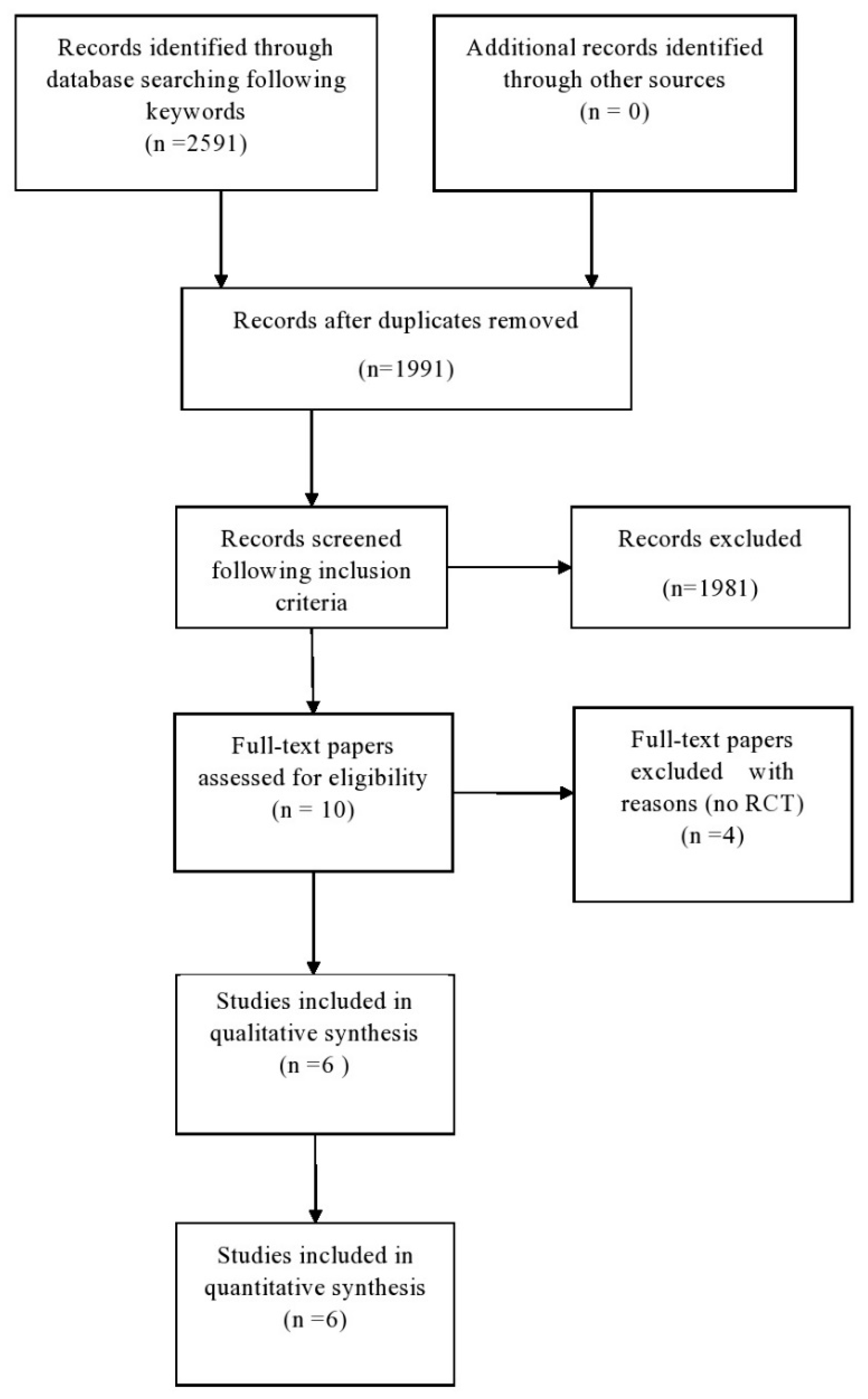
Objective: to find the most up-to-date evidence of the effectiveness and safety of supervised physical therapy in polymyositis/dermatomyositis patients. Methods: a systematic review of the literature in the main scientific databases was carried out. We searched for randomized controlled trials concerning supervised physical therapy and polymyositis/dermatomyositis. The PICOS method was used for the formulation of the clinical query. Methodological quality and the level of evidence of the included studies were assessed using the modified Jadad scale and the Oxford Centre for Evidence-Based Medicine Levels of Evidence guide, respectively. Results: a total of 2591 articles were found. By applying the inclusion/exclusion criteria, six randomized controlled clinical trials were admitted to the final phase of the review. The compared approaches concerned supervised exercise programs based on strategies of muscle strengthening or aerobic work. Following these exercises, an increase in the maximum rate of oxygen consumption, a decrease in creatine phosphokinase levels, an enhancement in the patient’s aerobic performance and an improvement in the quality of life indexes were registered. The methodological quality of the included studies ranged from 3 to 4.5. All the studies were classified as presenting an evidence level of 2b. Conclusions: supervised physical therapy in polymyositis/dermatomyositis is an effective, safe and free-of-contraindications tool to be used both in the acute and in the established phases of the pathology. However, further and higher-quality studies are necessary to confirm those findings, to clarify the timing of exercise delivery and to guide the choice towards different types of muscle contraction exercises.
Keywords: polymyositis; dermatomyositis; physical therapy; rehabilitation; quality of life polymyositis; dermatomyositis; physical therapy; rehabilitation; quality of life