
Research on a Boomerang Aerodynamic Ellipse Optimization Algorithm–Informer–Autoregressive Integrated Moving Average-Based Forecasting Model for New Energy Vehicle Sales in China


Abstract
1. Introduction
2. Theoretical Foundation
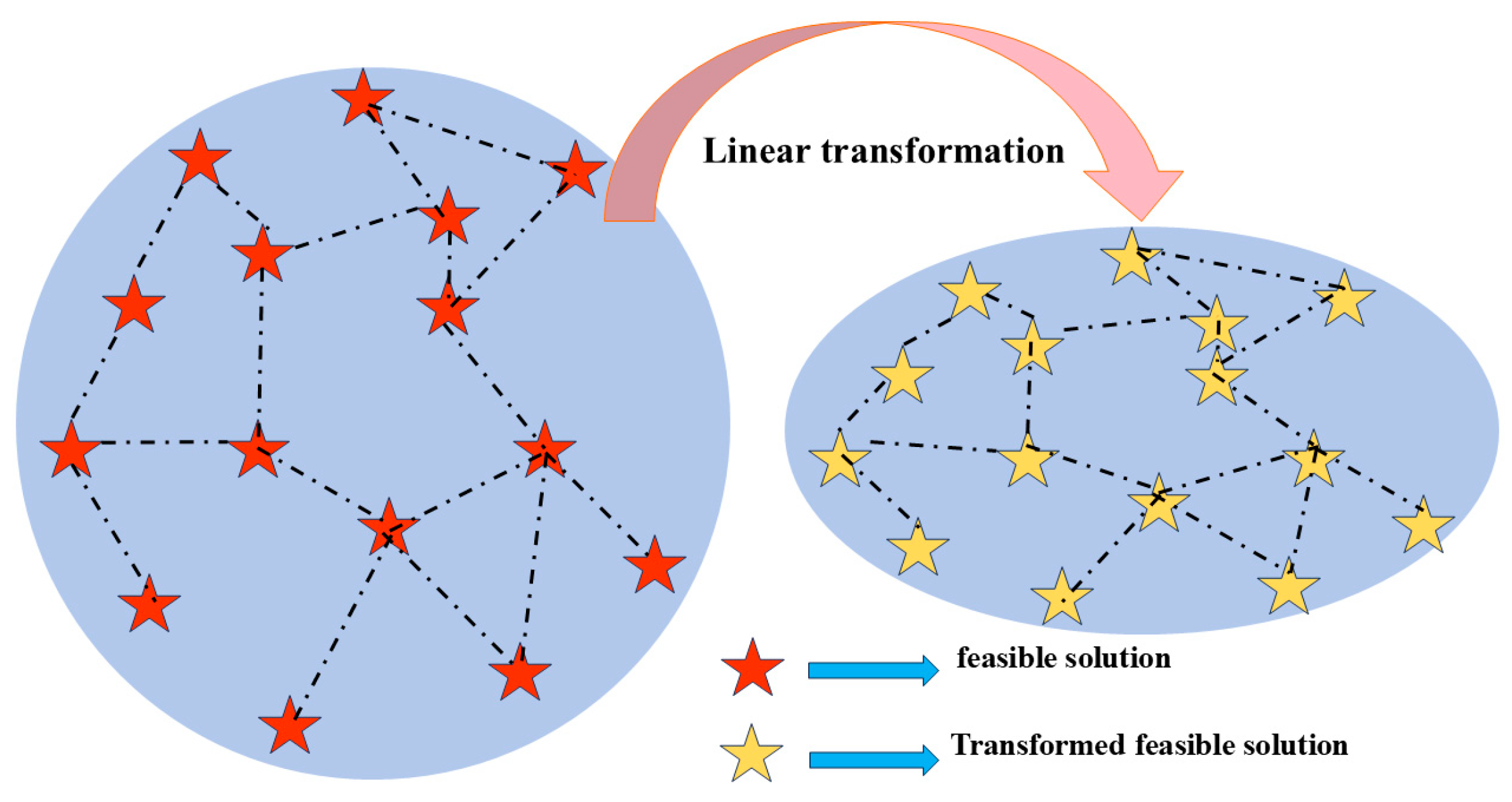
2.1. Boomerang Aerodynamic Elliptical Optimizer (BAEO)
2.2. Informer Model
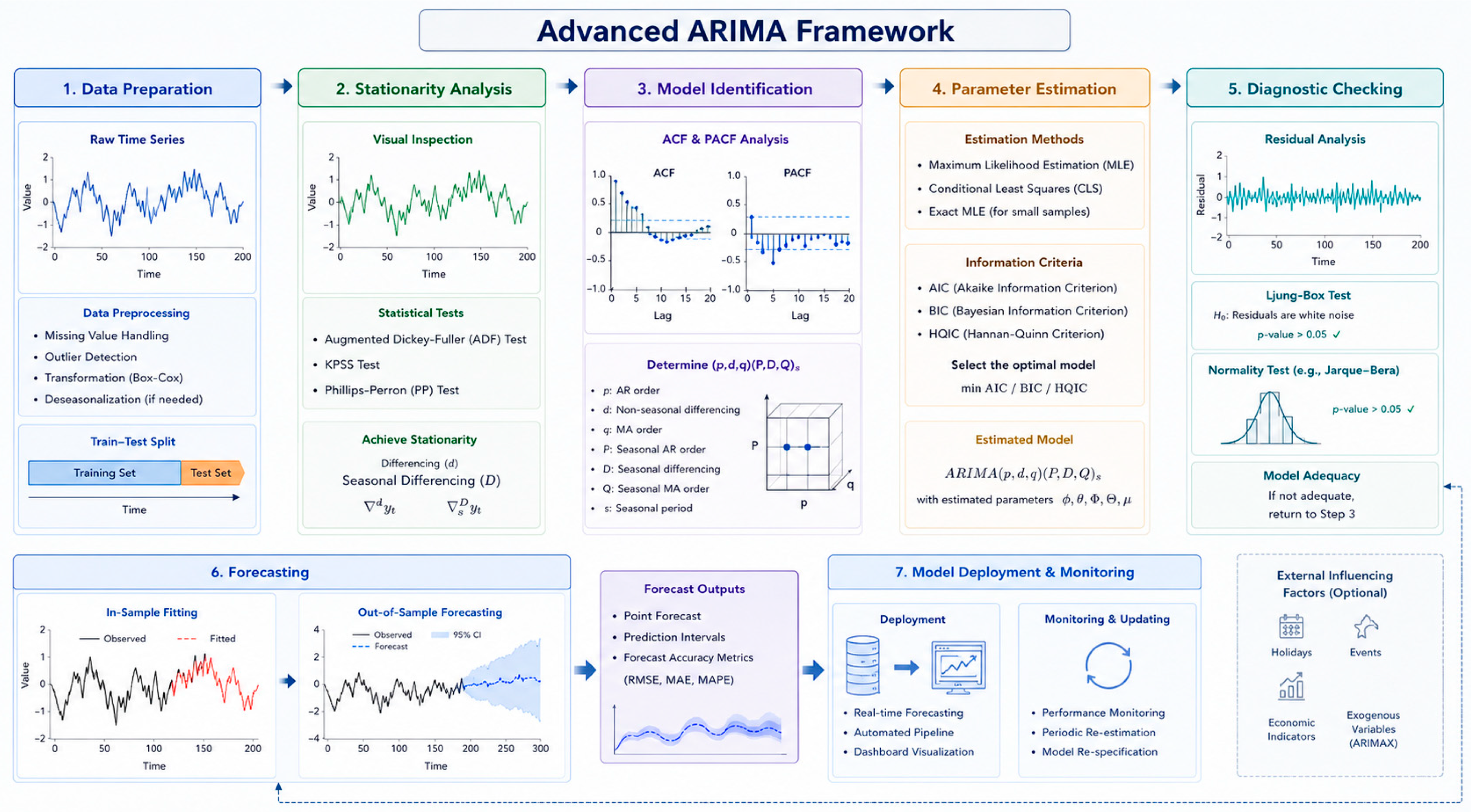
2.3. ARIMA Model
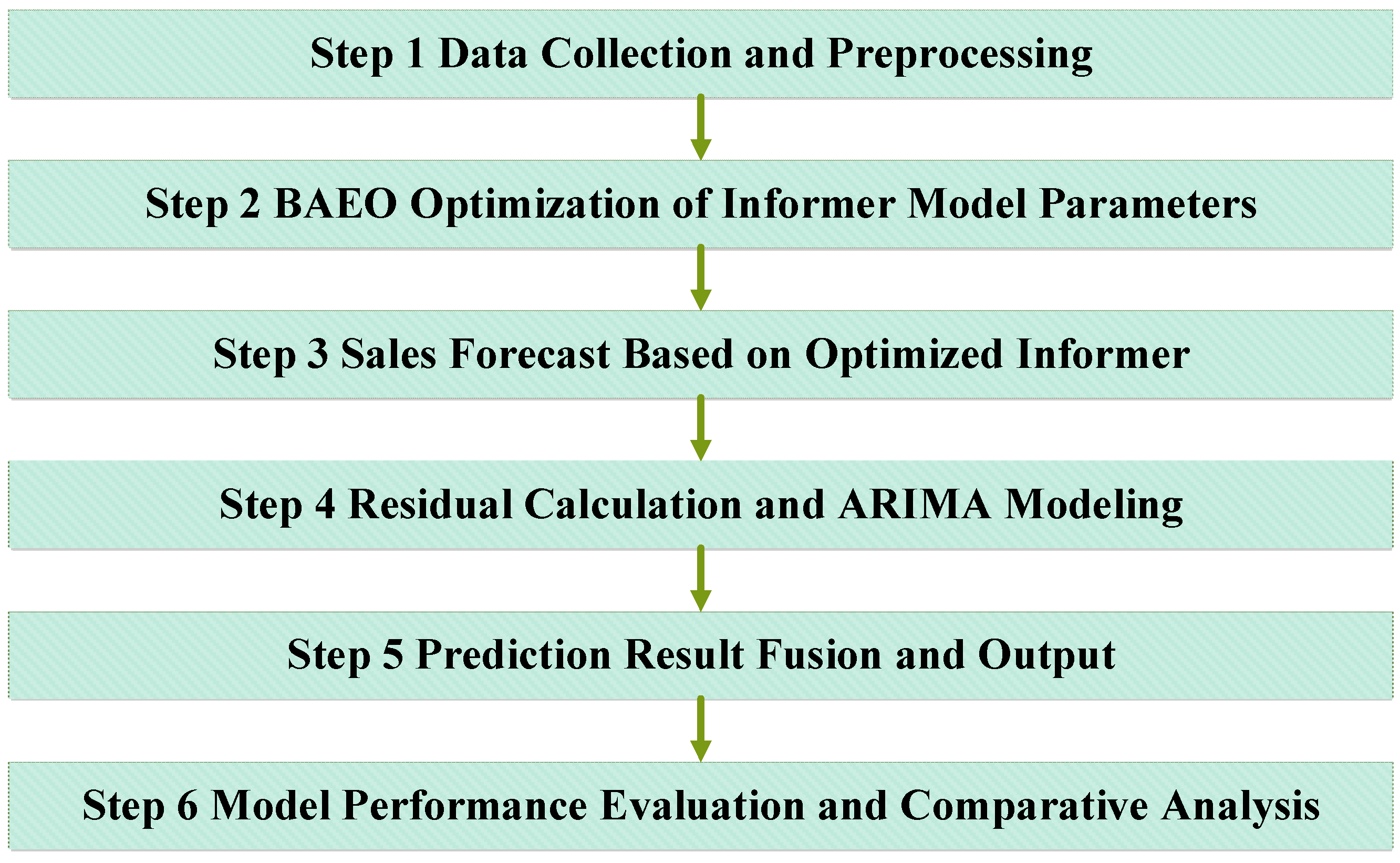
2.4. Construction of a Combined Predictive Model
- Step 1. Data Collection and Preprocessing
- Step 2. BAEO Optimization of Informer Model Parameters
- Step 3. Sales Forecasting Using Optimized Informer
- Step 4. Residual Calculation and ARIMA Modeling
- Step 5. Forecast Fusion and Output
- Step 6. Model Performance Evaluation and Comparative Analysis
3. Results Analysis
3.1. Data Acquisition and Preprocessing
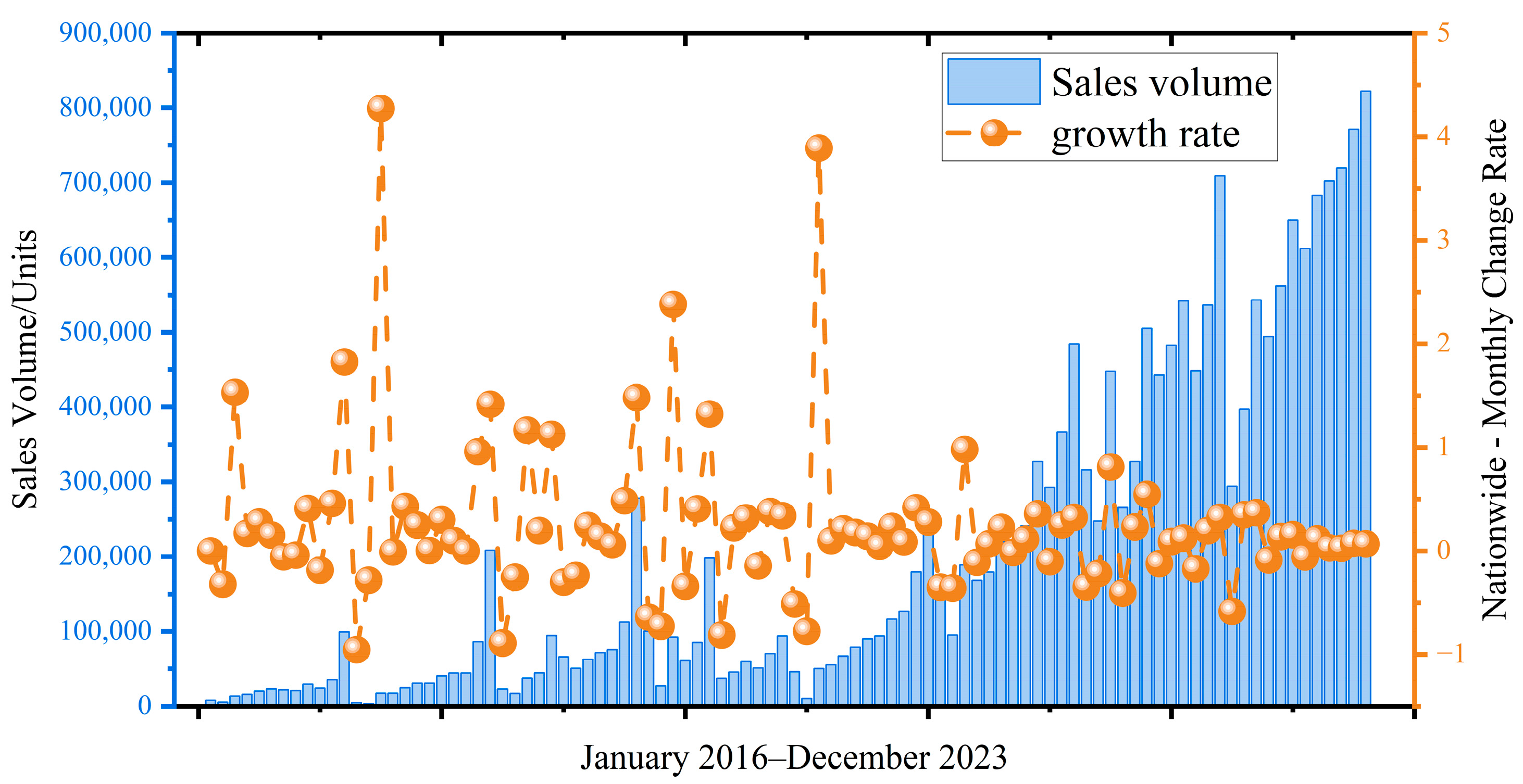
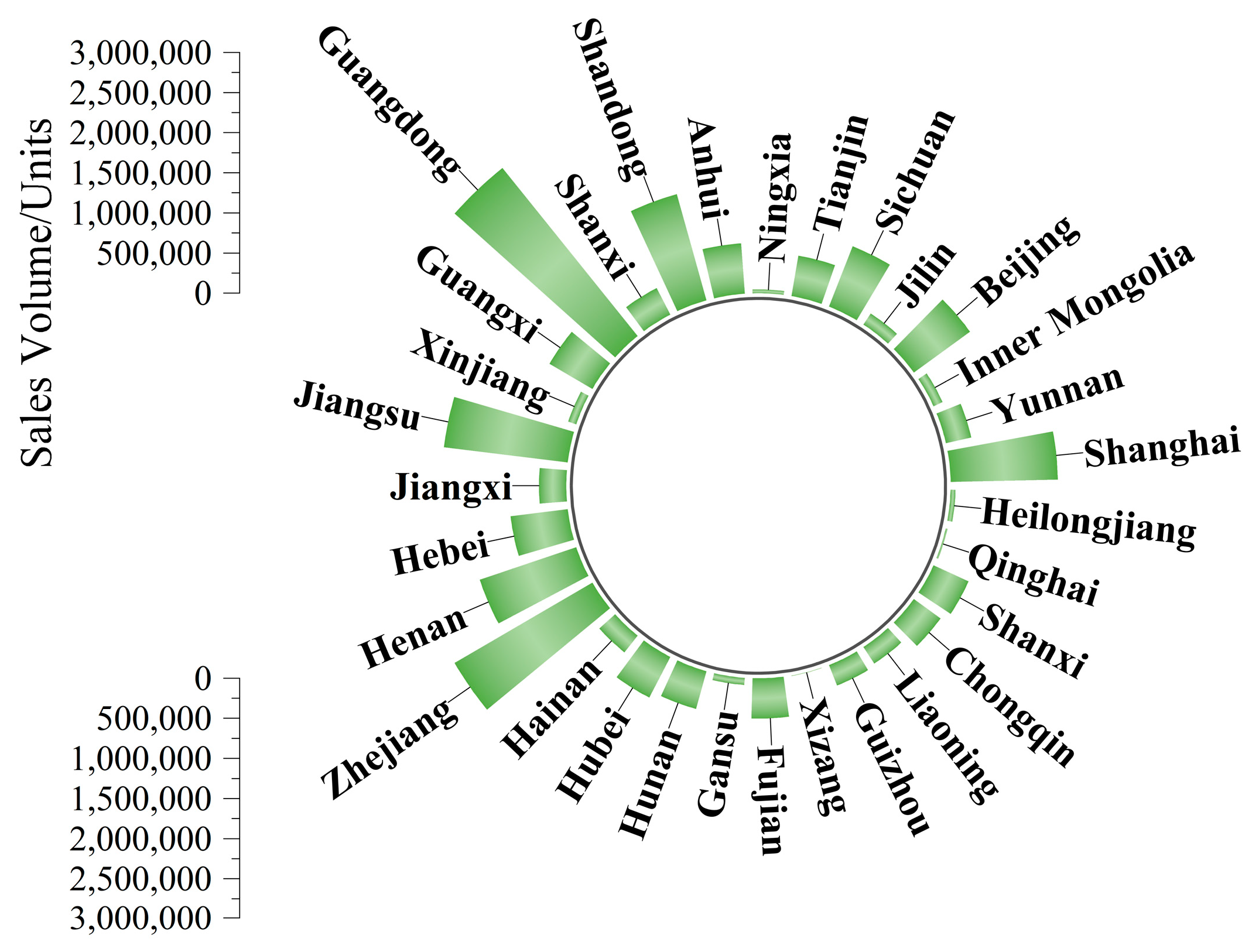
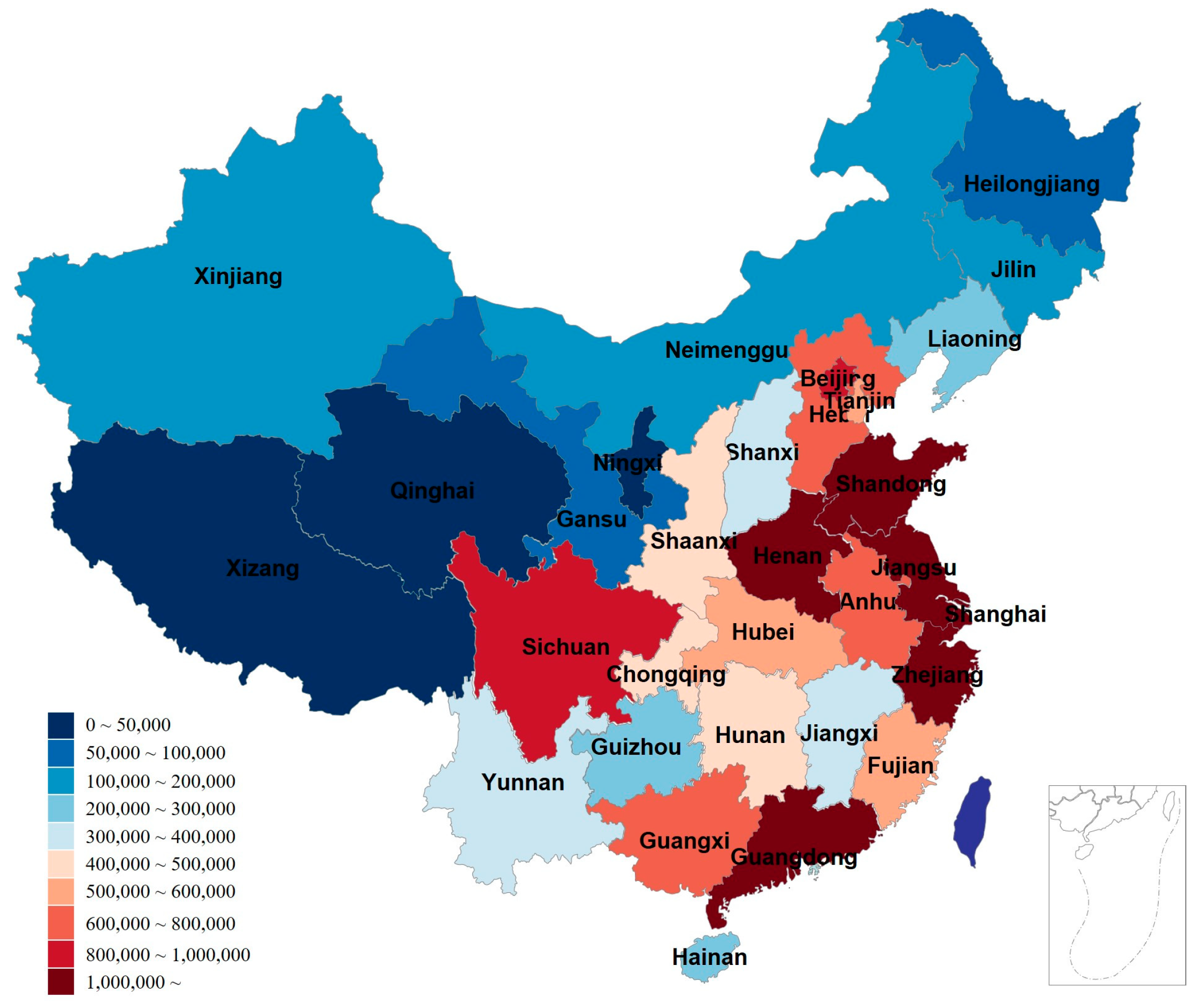
3.2. Research on Sales Distribution Trends of New Energy Vehicles
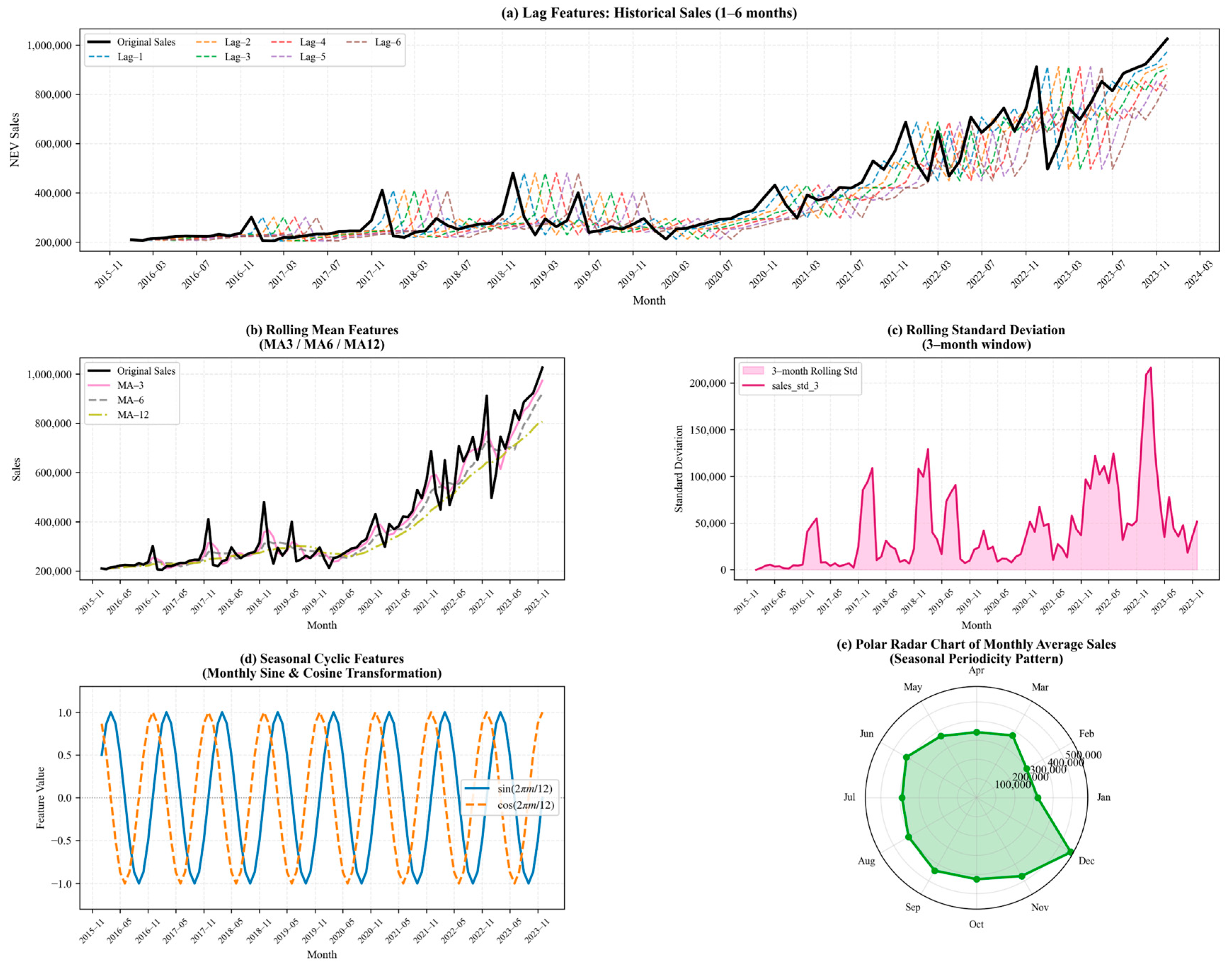
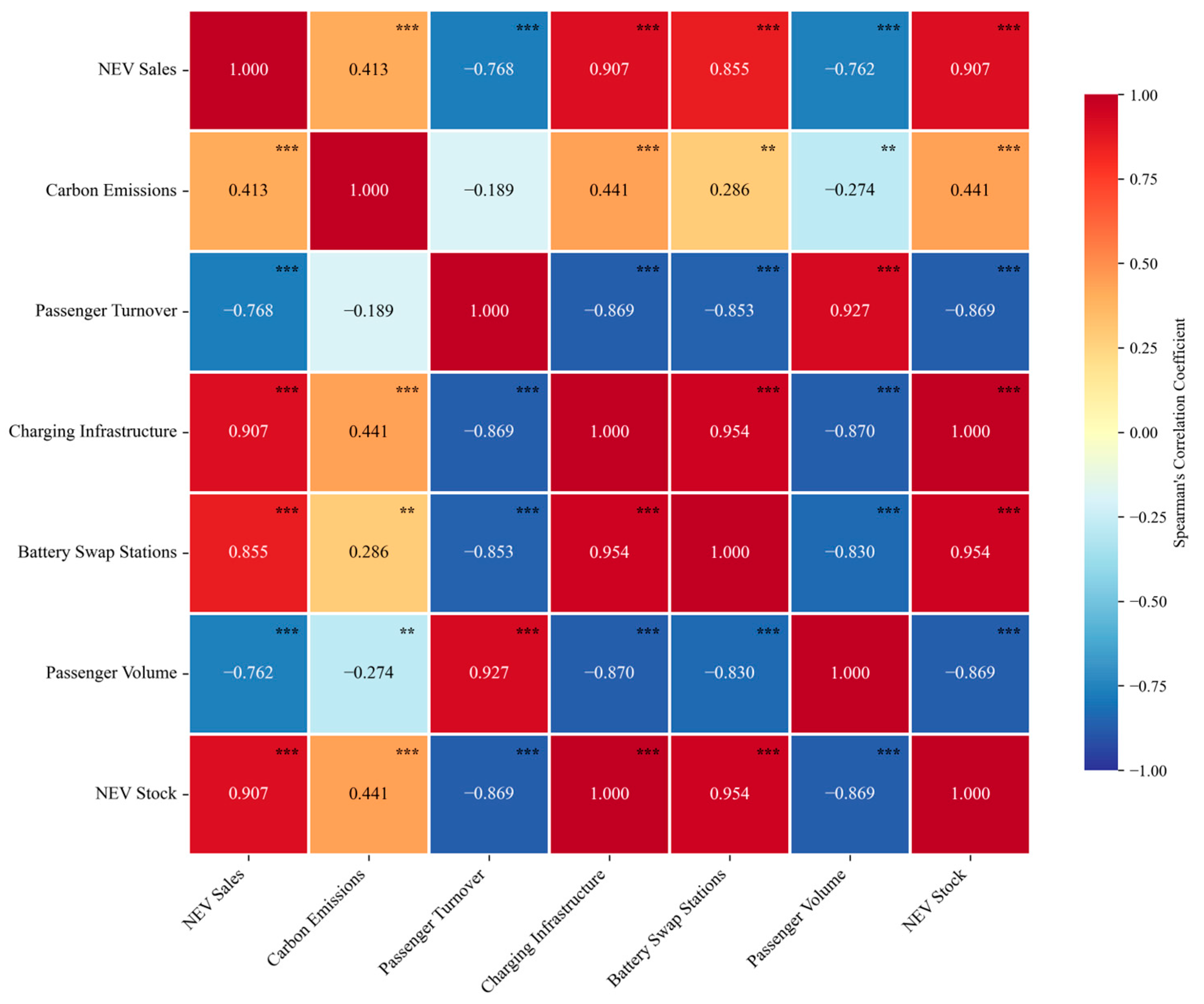
3.3. Factors Affecting New Energy Vehicle Sales Volume
3.4. Model Parameter Configuration and Evaluation Metric Determination
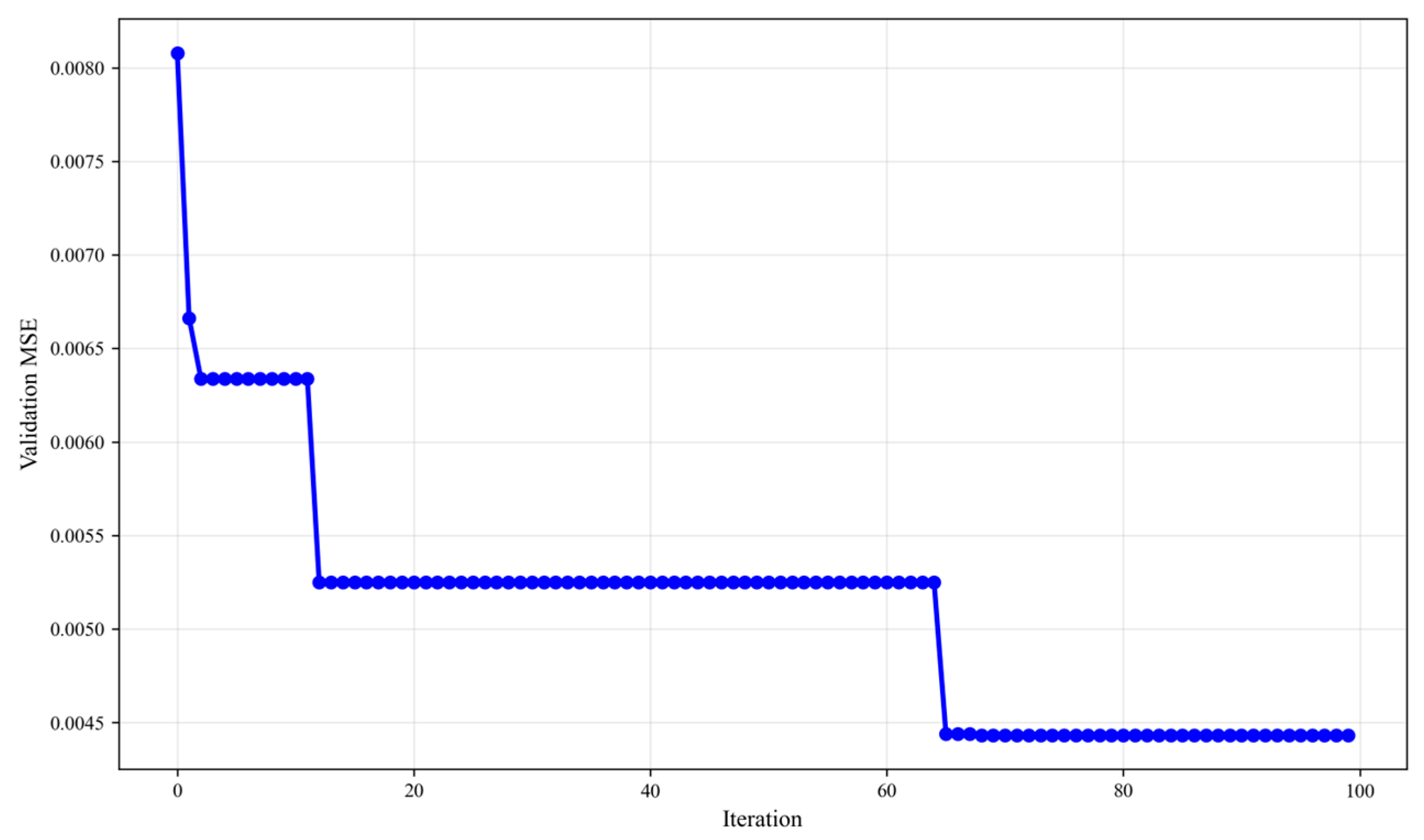
3.4.1. Hyperparameter Optimization of the BAEO-Based Informer Model
- (1)
- Population Initialization: Initialize the BAEO population, where each “boomerang” individual represents a potential hyperparameter combination vector .
- (2)
- Fitness Evaluation: Substitute each set of hyperparameters into the Informer model, then train and predict on the validation set, using mean squared error (MSE) as the fitness function.where represents the number of samples in the validation set; denotes the true value; and indicates the predicted value.
- (3)
- Position Update: Continuously update the position of each individual based on the BAEO’s spiral mechanism and aerodynamic elliptical search strategy.
- (4)
3.4.2. Determination of Model Evaluation Metrics
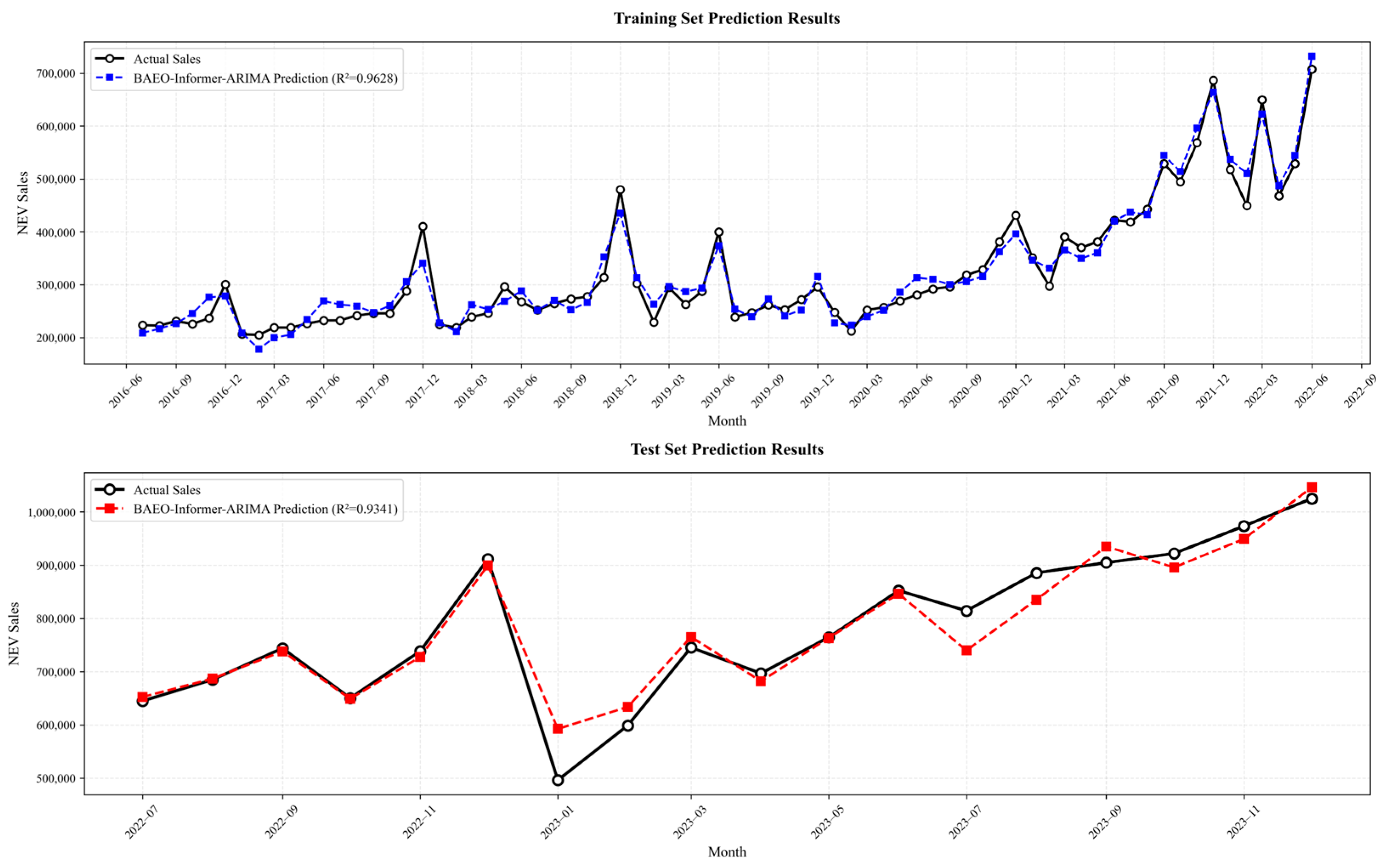
3.5. Analysis of Model Prediction Results
3.6. Comparison of Prediction Results Across Different Models
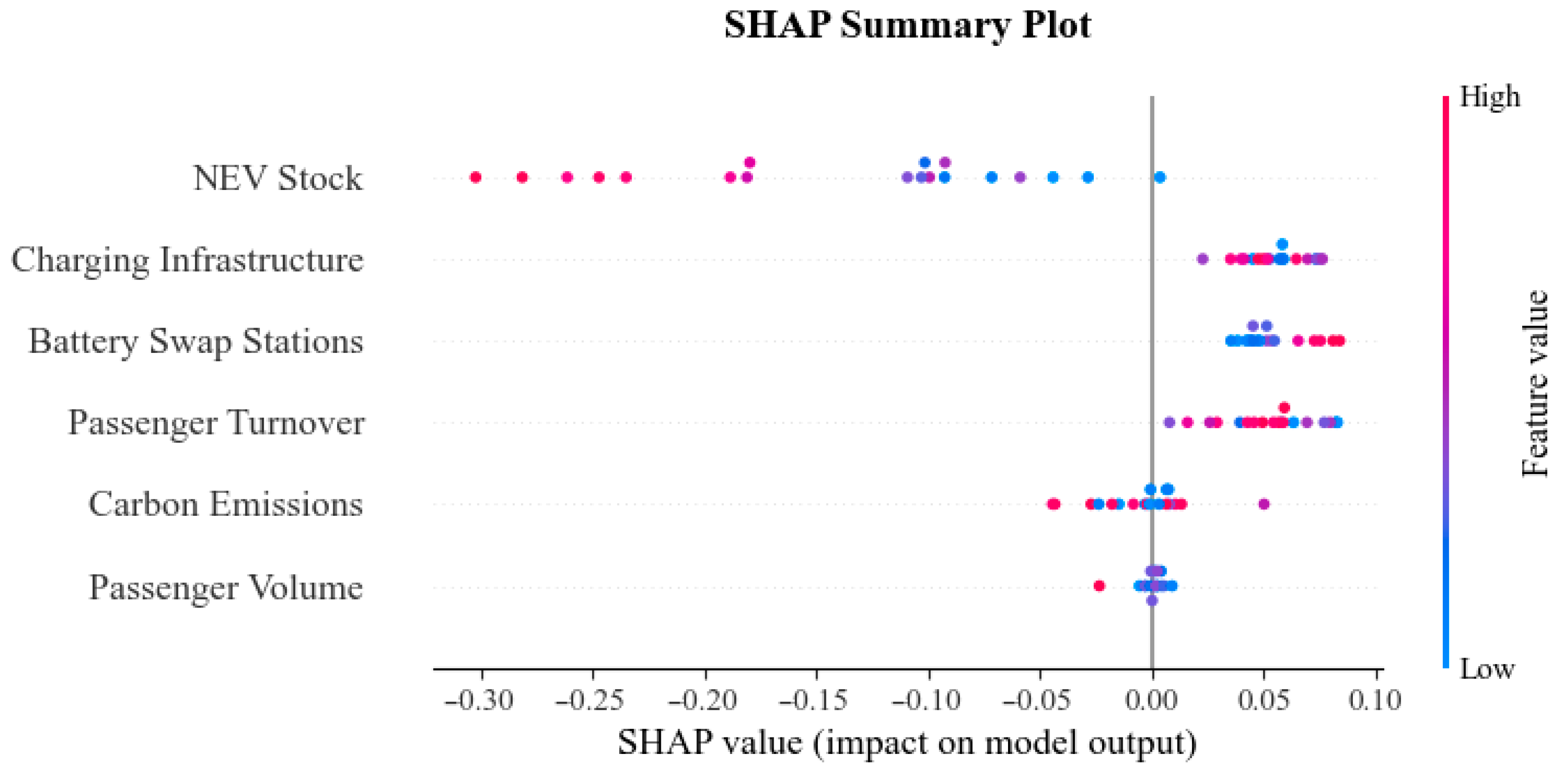
3.7. Feature Contribution Analysis
4. Discussion
5. Conclusions
- (1)
- The proposed BAEO–Informer–ARIMA model demonstrated superior forecasting capability compared with conventional statistical models and advanced deep learning approaches, including SARIMA, Prophet, XGBoost, LSTM, GRU, Transformer, and Informer. The results indicate that BAEO optimization improves the representation ability of Informer, while ARIMA residual correction further enhances prediction accuracy and robustness.
- (2)
- Under a chronological evaluation strategy, the proposed model achieved high prediction accuracy, with an R2 of 0.9544 and a MAPE of 3.39% on the test set, outperforming all benchmark models. These results confirm the effectiveness of combining evolutionary optimization, long-range temporal feature extraction, and residual error correction for NEV sales forecasting.
- (3)
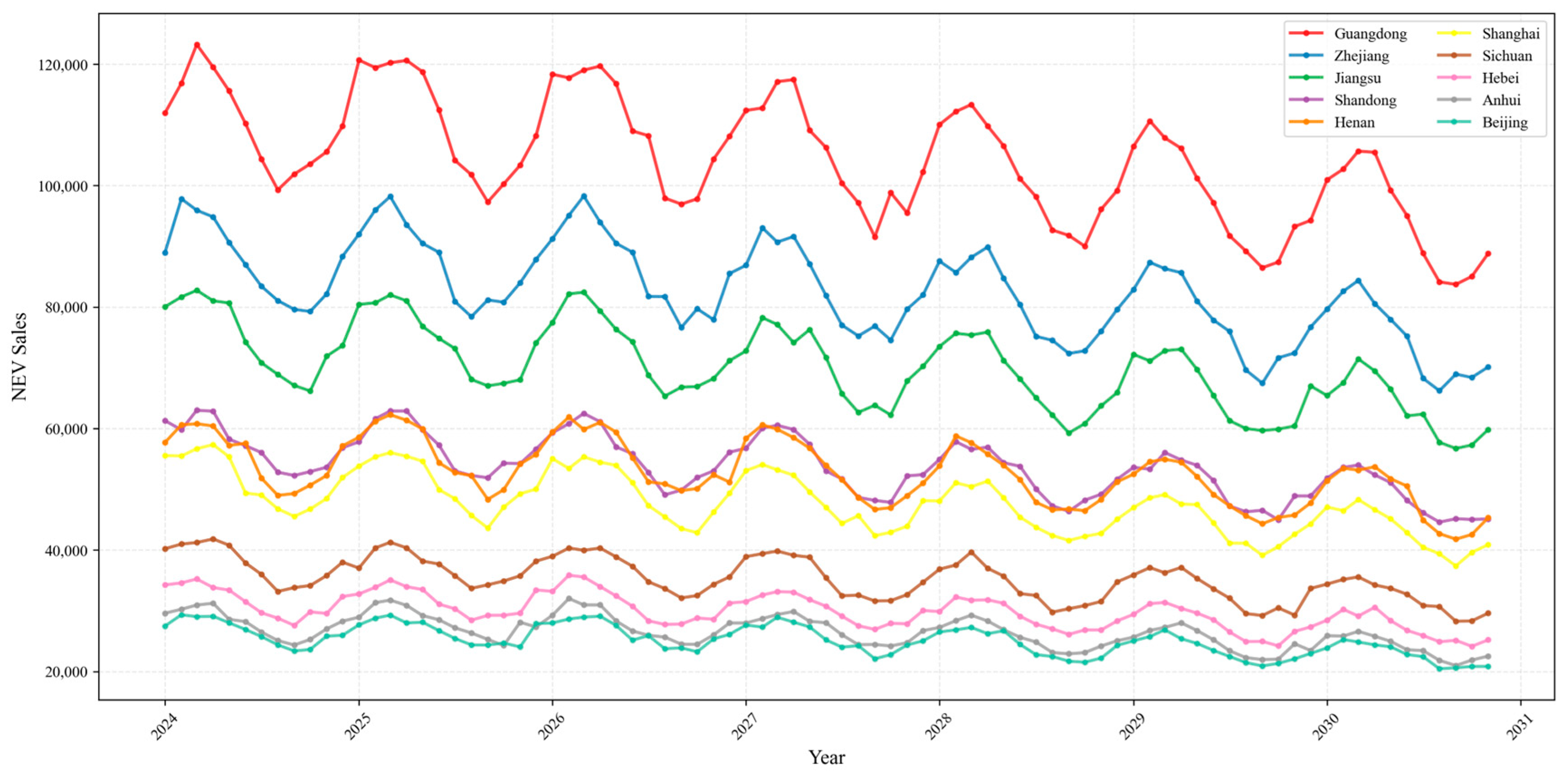
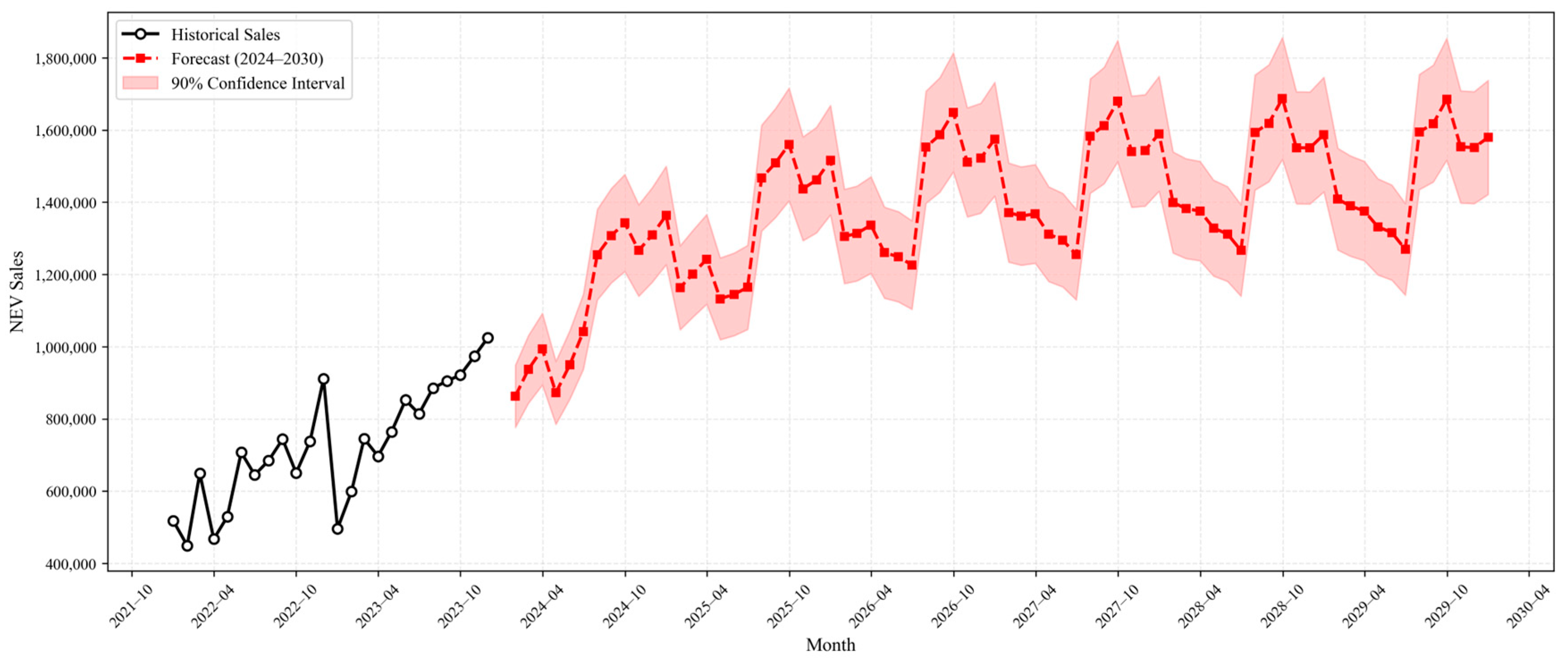
- The model successfully reproduced the historical growth trajectory and seasonal characteristics of China’s NEV market, capturing rapid market expansion after 2021 as well as periodic fluctuations caused by factors such as holiday effects and annual market cycles. Future projections suggest that NEV sales will maintain sustained growth from 2024 to 2030, although the growth rate is expected to gradually moderate.
- (4)
- The uncertainty analysis based on forecast errors provided reliable confidence intervals for future predictions, offering additional information for policymakers, infrastructure planners, and industry stakeholders. The proposed framework can serve as an effective decision-support tool for medium- and long-term NEV market planning.
Author Contributions
Funding
Data Availability Statement
Conflicts of Interest
Nomenclature and Abbreviations
| Abbreviation | Full term |
| NEV | New Energy Vehicle |
| BAEO | Boomerang Aerodynamic Ellipse Optimizer |
| ARIMA | Auto-Regressive Integrated Moving Average |
| SARIMA | Seasonal Auto-Regressive Integrated Moving Average |
| LSTM | Long Short-Term Memory |
| GRU | Gated Recurrent Unit |
| XGBoost | eXtreme Gradient Boosting |
| KCC | Mean Absolute Error |
| MAE | Mean Absolute Error |
| MSE | Mean Squared Error |
| RMSE | Root Mean Squared Error |
| MAPE | Mean Absolute Percentage Error |
| R2 | Coefficient of Determination |
| SHAP | SHapley Additive exPlanations |
| MLP | Multi-Layer Perceptron |
| RNN | Recurrent Neural Network |
| SVR | Support Vector Regression |
| RF | Random Forest Regression |
| Prophet | Prophet |
References
- Issakhov, A.; Omarova, P. Modeling and analysis of the effects of barrier height on automobiles emission dispersion. J. Clean. Prod. 2021, 296, 126450. [Google Scholar] [CrossRef] [Scilit]
- Ahmed, Z.; Cary, M.; Le, H.P. Accounting asymmetries in the long-run nexus between globalization and environmental sustainability in the United States: An aggregated and disaggregated investigation. Environ. Impact Assess. Rev. 2021, 86, 106511. [Google Scholar] [CrossRef] [Scilit]
- Avetisyan, M.; Hertel, T.; Sampson, G. Is local food more environmentally friendly? The GHG emissions impacts of consuming imported versus domestically produced food. Environ. Resour. Econ. 2014, 58, 415–462. [Google Scholar] [CrossRef] [Scilit]
- Qi, S. Factors Influencing the Consumption Behavior Towards New Energy Vehicles (Nev) in Japan. Ph.D. Thesis, Waseda University, Tokyo, Japan, 2022. [Google Scholar]
- Azar, C.; Lindgren, K.; Andersson, B.A. Global energy scenarios meeting stringent CO2 constraints—Cost-effective fuel choices in the transportation sector. Energy Policy 2003, 31, 961–976. [Google Scholar] [CrossRef] [Scilit]
- Halff, A.; Younes, L.; Boersma, T. The likely implications of the new IMO standards on the shipping industry. Energy Policy 2019, 126, 277–286. [Google Scholar] [CrossRef] [Scilit]
- Ning, T.; Lu, B.; Ouyang, X.; Ouyang, H.; Chen, J. Prospect and sustainability prediction of China’s new energy vehicles sales considering temporal and spatial dimensions. J. Clean. Prod. 2024, 468, 142926. [Google Scholar] [CrossRef] [Scilit]
- Li, B. Industrial Policy and Enlightenments: Analysis of China’s New Energy Vehicle Industry. 2024. Available online: https://ssrn.com/abstract=5171262 (accessed on 23 July 2026).
- Li, Y.; Zhang, L.; Liu, J.; Qiao, X. Can the dual-credit policy help china’s new energy vehicle industry achieve corner overtaking? Sustainability 2023, 15, 2406. [Google Scholar] [CrossRef] [Scilit]
- Tanmayi, G.; Radha, R.; Sai Varshitha, U.V.; Prakash, P.A. Leveraging deep transfer learning and adaptive power models for enhanced charging time prediction in electric vehicles. Energy Inform. 2025, 8, 110. [Google Scholar] [CrossRef] [Scilit]
- Resch, G.; Liebmann, L.; Geipel, J.; Wien, F.H.T.; Hendricks, D.; Vollmer, J.; Fouquet–EREF, D. Study on 2030 Renewable Energy and Energy Efficiency Targets in the European Union; European Renewable Energies Federation: Brussels, Belgium, 2023. [Google Scholar]
- Huang, Y.; Yang, J.; Liu, C.; Jing, R.; Lu, Q. Spatial and Temporal Variations in Rainwater Chemistry in a Rapid Urbanization Area of Shenzhen, China. Atmosphere 2024, 15, 1536. [Google Scholar] [CrossRef] [Scilit]
- Shi, L.; Fu, Z.; Guo, W.; Zhang, J.; Sun, J. Exploring the Factors That Promote Sustainable Growth in Regional Sales of New Energy Vehicles: An Empirical Study of China. Sustainability 2023, 15, 6748. [Google Scholar] [CrossRef] [Scilit]
- Rao, Y. New energy vehicles and sustainability of energy development: Construction and application of the Multi-Level Perspective framework in China. Sustain. Comput. Inform. Syst. 2020, 27, 100396. [Google Scholar] [CrossRef] [Scilit]
- Yuan, X.; Liu, X.; Zuo, J. The development of new energy vehicles for a sustainable future: A review. Renew. Sustain. Energy Rev. 2015, 42, 298–305. [Google Scholar] [CrossRef] [Scilit]
- Liu, L.; Liu, S.; Wu, L.; Zhu, J.; Shang, G. Forecasting the development trend of new energy vehicles in China by an optimized fractional discrete grey power model. J. Clean. Prod. 2022, 372, 133708. [Google Scholar] [CrossRef] [Scilit]
- Rietmann, N.; Hügler, B.; Lieven, T. Forecasting the trajectory of electric vehicle sales and the consequences for worldwide CO2 emissions. J. Clean. Prod. 2020, 261, 121038. [Google Scholar] [CrossRef] [Scilit]
- Tang, L.; Sun, J. Predict the sales of New-energy Vehicle using linear regression analysis. In Proceedings of the E3S Web of Conferences, Shanghai, China, 16–18 August 2019; EDP Sciences: Les Ulis, France, 2019; p. 02076. [Google Scholar]
- Wang, S. Exploring the sustainability of China’s new energy vehicle development: Fresh evidence from population symbiosis. Sustainability 2022, 14, 10796. [Google Scholar] [CrossRef] [Scilit]
- Kamis, A.; Abraham, P.S. Predictive models of electric vehicle adoption in the United States: Charging ahead with renewable energy. Transp. Res. Interdiscip. Perspect. 2024, 24, 101041. [Google Scholar] [CrossRef] [Scilit]
- Chen, D. Chinese automobile demand prediction based on ARIMA model. In Proceedings of the 2011 4th International Conference on Biomedical Engineering and Informatics (BMEI), Shanghai, China, 15–17 October 2011; IEEE: New York, NY, USA, 2011; pp. 2197–2201. [Google Scholar]
- Luo, W.; Deng, J.; Zhou, T.; Xu, R. Research on the Development of New Energy Vehicles and the Prediction of Carbon Emissions in a Region of Asia. In Proceedings of the 2023 International Conference on Network, Multimedia and Information Technology (NMITCON), Bengaluru, India, 1–2 September 2023; IEEE: New York, NY, USA, 2023; pp. 1–7. [Google Scholar]
- Du, Y.; Wei, K.; Wang, Y.; Jia, J. New energy vehicles sales prediction model combining the online reviews sentiment analysis: A case study of Chinese new energy vehicles market. In Proceedings of the Artificial Intelligence in China: Proceedings of the 3rd International Conference on Artificial Intelligence in China, Changbaishan, China, 22–23 October 2022; Springer: Singapore, 2022; pp. 424–431. [Google Scholar]
- Shahin, M.; Chen, F.F.; Maghanaki, M.; Firouzranjbar, S.; Hosseinzadeh, A. Evaluating the fidelity of statistical forecasting and predictive intelligence by utilizing a stochastic dataset. Int. J. Adv. Manuf. Technol. 2025, 138, 193–223. [Google Scholar]
- Sakib, M.; Mustajab, S.; Alam, M. Ensemble deep learning techniques for time series analysis: A comprehensive review, applications, open issues, challenges, and future directions. Clust. Comput. 2025, 28, 73. [Google Scholar]
- Al-Mahdi, I.; Darwish, S.; Madbouly, M. Heart disease prediction model using feature selection and ensemble deep learning with optimized weight. Comput. Model. Eng. Sci. 2025, 143, 875. [Google Scholar] [CrossRef] [Scilit]
- Bilal, O.; Hekmat, A.; Shahzad, I.; Raza, A.; Khan, S.U.R. Boosting Machine Learning Accuracy for Cardiac Disease Prediction: The Role of Advanced Feature Engineering and Model Optimization. Rev. Socionetwork Strateg. 2025, 19, 271–300. [Google Scholar] [CrossRef] [Scilit]
- Zhao, S.; Meng, F.; Cai, L.; Yang, R. Boomerang aerodynamic ellipse optimizer: A human game-inspired optimization technique for numerical optimization and multilevel thresholding image segmentation. Math. Comput. Simul. 2025, 238, 604–636. [Google Scholar] [CrossRef] [Scilit]
- Lan, H.; Lu, H.; Wu, Y.; Qin, R.; Tao, S.; Huang, H.; Zhang, S. Application of Informer model based on dual probsparse self-attention mechanism and temporal feature decoder in PEMFC degradation prediction. Energy Convers. Manag. 2026, 348, 120737. [Google Scholar] [CrossRef] [Scilit]
- Jin, Z.; Fu, X.; Xiang, L.; Zhu, G.; Hu, A. Informer learning framework based on secondary decomposition for multi-step forecast of ultra-short term wind speed. Eng. Appl. Artif. Intell. 2025, 139, 109702. [Google Scholar] [CrossRef] [Scilit]
- Kuang, D.; Wang, Z.; Zhao, Y.; Li, L. Estimating the health status of lithium-ion batteries using deep learning method based on informer model. J. Power Sources 2025, 645, 237176. [Google Scholar] [CrossRef] [Scilit]
- Wang, L.; Chen, L.; Jin, S.; Li, C. Forecasting the green behaviour level of Chinese enterprises: A conjoined application of the autoregressive integrated moving average (ARIMA) model and multi-scenario simulation. Technol. Soc. 2025, 81, 102825. [Google Scholar] [CrossRef] [Scilit]
- Gong, X.; Li, B.; Yang, Y.; Li, M.; Li, T.; Zhang, B.; Zheng, L.; Duan, H.; Liu, P.; Hu, X. Construction and application of optimized model for mine water inflow prediction based on neural network and ARIMA model. Sci. Rep. 2025, 15, 2009. [Google Scholar] [CrossRef] [Scilit] [PubMed]
- Yearbook, C.S. China Statistical Yearbook; Zhongguo Tongji Chubanshe: Beijing, China, 2014. [Google Scholar]
- Wu, S.; Yang, Z. Availability of public electric vehicle charging pile and development of electric vehicle: Evidence from China. Sustainability 2020, 12, 6369. [Google Scholar] [CrossRef] [Scilit]
- Tarkhov, S. Geography of the passenger turnover dynamics at airports in Europe and Russia’s regions in the first year of the COVID-19 pandemic. Reg. Res. Russ. 2021, 11, 435–453. [Google Scholar] [CrossRef] [Scilit]
- Huang, R.; Zhang, S.; Wang, P. Key areas and pathways for carbon emissions reduction in Beijing for the “Dual Carbon” targets. Energy Policy 2022, 164, 112873. [Google Scholar] [CrossRef] [Scilit]
- Yang, H.; Wang, H.; Gao, Y.; Liu, X.; Xu, M. A significant wave height forecast framework with end-to-end dynamic modeling and lag features length optimization. Ocean Eng. 2022, 266, 113037. [Google Scholar] [CrossRef] [Scilit]
- Wang, Z.; Yang, J.; Guo, Y. Unknown fault feature extraction of rolling bearings under variable speed conditions based on statistical complexity measures. Mech. Syst. Signal Process. 2022, 172, 108964. [Google Scholar] [CrossRef] [Scilit]
- Lach, J. Analysis of the Differences Resulting from the Determination of Langmuir Isotherm Coefficients from Linear and Non-Linear Forms—A Case Study. Materials 2025, 18, 3506. [Google Scholar] [CrossRef] [Scilit] [PubMed]
- Camarillo-Cisneros, J.; Ramirez-Alonso, G.; Arzate-Quintana, C.; Varela-Rodríguez, H.; Guzman-Pando, A. MolGC: Molecular geometry comparator algorithm for bond length mean absolute error computation on molecules. Mol. Divers. 2024, 28, 1925–1945. [Google Scholar] [CrossRef] [Scilit] [PubMed]
- Karunasingha, D.S.K. Root mean square error or mean absolute error? Use their ratio as well. Inf. Sci. 2022, 585, 609–629. [Google Scholar] [CrossRef] [Scilit]
- Takyi-Aninakwa, P.; Wang, S.; Zhang, H.; Li, H.; Xu, W.; Fernandez, C. An optimized relevant long short-term memory-squared gain extended Kalman filter for the state of charge estimation of lithium-ion batteries. Energy 2022, 260, 125093. [Google Scholar] [CrossRef] [Scilit]
- Mangalathu, S.; Hwang, S.-H.; Jeon, J.-S. Failure mode and effects analysis of RC members based on machine-learning-based SHapley Additive exPlanations (SHAP) approach. Eng. Struct. 2020, 219, 110927. [Google Scholar] [CrossRef] [Scilit]






| Hyperparameters | Search Scope | Optimum Value |
|---|---|---|
| Learning Rate | [0.001, 0.005] | 0.001083 |
| Hidden Size | [96, 232] | 190 |
| Sequence Length | [1, 7] | 1 |
| Batch Size | [8, 20] | 19 |
| Dropout Rate | [0.15, 0.35] | 0.179 |
| Validation MSE | - | 0.004432 |
| Dataset | R2 | MAPE (%) | MAE | RMSE |
|---|---|---|---|---|
| Training Set | 0.9798 | 3.4755 | 10,945.4 | 15,423.41 |
| Test Set | 0.9544 | 3.3899 | 24,068.3 | 28,621.54 |
| Method | R2 | MSE | MAE | RMSE | ||||
|---|---|---|---|---|---|---|---|---|
| Training Set | Test Set | Training Set | Test Set | Training Set | Test Set | Test Set | Training Set | |
| Informer | 0.9491 | 0.9022 | 601,303,040 | 742,910,231 | 18,800.64 | 24,500.54 | 24,521.48 | 28,017.87 |
| ARIMA | 0.6692 | 0.6154 | 3,910,822,728 | 4,052,991,482 | 44,780.87 | 48,900.21 | 62,536.57 | 64,807.44 |
| Informer-ARIMA | 0.9733 | 0.9381 | 314,975,456 | 389,120,551 | 12,537.08 | 16,200.45 | 17,747.59 | 21,213.26 |
| BAEO–Informer | 0.9591 | 0.9157 | 483,982,752 | 558,201,394 | 16,376.43 | 20,100.89 | 21,999.61 | 24,899.84 |
| BAEO–Informer–ARIMA | 0.9798 | 0.9544 | 230,113,468 | 269,452,108 | 10,945.39 | 24,068.29 | 15,423.42 | 28,621.54 |
| Model | R2 (Test) | MAE (Test) | RMSE (Test) | MAPE (%) |
|---|---|---|---|---|
| SARIMA | 0.8427 | 47,860 | 59,420 | 8.74 |
| Prophet | 0.8619 | 44,730 | 55,680 | 8.05 |
| XGBoost | 0.9016 | 36,540 | 45,870 | 6.43 |
| LSTM | 0.9142 | 33,260 | 41,930 | 5.78 |
| GRU | 0.9237 | 31,180 | 39,240 | 5.31 |
| Transformer | 0.9351 | 28,940 | 35,760 | 4.62 |
| Informer | 0.9022 | 24,501 | 28,017 | 4.07 |
| BAEO–Informer–ARIMA | 0.9544 | 24,068 | 26,822 | 3.39 |
Disclaimer/Publisher’s Note: The statements, opinions and data contained in all publications are solely those of the individual author(s) and contributor(s) and not of MDPI and/or the editor(s). MDPI and/or the editor(s) disclaim responsibility for any injury to people or property resulting from any ideas, methods, instructions or products referred to in the content. |
© 2026 by the authors. Published by MDPI on behalf of the World Electric Vehicle Association. Licensee MDPI, Basel, Switzerland. This article is an open access article distributed under the terms and conditions of the Creative Commons Attribution (CC BY) license.
Share and Cite
Lin, S.; Liu, W.; Pang, Z.; Li, Y. Research on a Boomerang Aerodynamic Ellipse Optimization Algorithm–Informer–Autoregressive Integrated Moving Average-Based Forecasting Model for New Energy Vehicle Sales in China. World Electr. Veh. J. 2026, 17, 404. https://doi.org/10.3390/wevj17080404
Lin S, Liu W, Pang Z, Li Y. Research on a Boomerang Aerodynamic Ellipse Optimization Algorithm–Informer–Autoregressive Integrated Moving Average-Based Forecasting Model for New Energy Vehicle Sales in China. World Electric Vehicle Journal. 2026; 17(8):404. https://doi.org/10.3390/wevj17080404
Chicago/Turabian StyleLin, Shiming, Wenhao Liu, Zhiyi Pang, and Yi Li. 2026. "Research on a Boomerang Aerodynamic Ellipse Optimization Algorithm–Informer–Autoregressive Integrated Moving Average-Based Forecasting Model for New Energy Vehicle Sales in China" World Electric Vehicle Journal 17, no. 8: 404. https://doi.org/10.3390/wevj17080404
APA StyleLin, S., Liu, W., Pang, Z., & Li, Y. (2026). Research on a Boomerang Aerodynamic Ellipse Optimization Algorithm–Informer–Autoregressive Integrated Moving Average-Based Forecasting Model for New Energy Vehicle Sales in China. World Electric Vehicle Journal, 17(8), 404. https://doi.org/10.3390/wevj17080404