Article

Designing and Evaluating a Neural Network-Based Control Strategy for a PMSM-Driven Electric Vehicle Under Various Driving Cycles


1
Watch Laboratory of Emerging Technologies (LAVETE), Faculty of Sciences and Technology, Hassan First University, Settat 26000, Morocco
2
NEST Research Group, Energy and Electrical Systems Laboratory (LESE Lab.), National Higher School of Electricity and Mechanics (ENSEM), Hassan II University of Casablanca, Casablanca 20000, Morocco
3
Watch Laboratory of Radiation-Matter and Instrumentation (RMI), Faculty of Sciences and Technology, Hassan First University, Settat 26000, Morocco
4
Laboratory of Engineering and Advanced Systems Innovation (LIISA), Faculty of Sciences and Technology, Hassan First University, Settat 26000, Morocco
*
Authors to whom correspondence should be addressed.
World Electr. Veh. J. 2026, 17(7), 327; https://doi.org/10.3390/wevj17070327 (registering DOI)
Submission received: 9 May 2026 / Revised: 18 June 2026 / Accepted: 22 June 2026 / Published: 24 June 2026
(This article belongs to the Section Energy Supply and Sustainability)

Highlights

Conventional control strategies, such as field-oriented control (FOC) and direct torque control (DTC), can have their performance affected by system nonlinearities, external disturbances, and variations in motor parameters related to operating conditions. The main contributions of this work can be summarized as follows:
  • Development of an ANN-based controller capable of handling system nonlinearities and reducing the sensitivity to motor parameter variations.
  • Improvement of speed tracking performance and stator current quality while maintaining satisfactory operation under various operating conditions.
What are the main findings?
  • The proposed controller, based on artificial neural networks, improves the dynamic response and robustness of the PMSM drive system.
  • The results obtained demonstrate superior performance and greater energy efficiency compared to conventional control strategies.
What are the implications of the main findings?
  • Improved control system efficiency causes reduced energy consumption and increased autonomy for electric vehicles.
  • These research findings bring new prospects for integrating AI approaches into advanced control systems for electric motors.

Abstract

In light of the rapid development of the electric vehicle market, permanent magnet synchronous motors (PMSMs) are becoming essential components of propulsion systems. This is due to their high efficiency, remarkable power density, and ability to deliver high torque over a wide speed range. However, the optimal control of these motors under dynamic conditions remains a major challenge due to system nonlinearities, parameter variations, and external disturbances. Conventional strategies such as field-oriented control (FOC), direct torque control (DTC), and fuzzy logic control (FLC) show variable performance in terms of current quality, robustness, and energy efficiency. To overcome these limitations, this study proposes an intelligent control strategy based on artificial neural networks (ANNs), which ensures efficient operation and high control performance under various operating conditions. This approach leverages the learning capabilities of deep neural networks to improve control accuracy, system stability, and overall energy performance. The results obtained show a significant reduction in the current’s total harmonic distortion (THD) as well as an improvement in the stator’s current quality and the electromagnetic torque’s dynamic behavior compared to conventional methods. This improvement reduces overall losses in the electric drive system, thereby contributing to increased vehicle energy efficiency. As a result, the electric vehicle’s range is extended, and the dynamic performance of the PMSM is optimized. These results confirm the potential of artificial intelligence techniques for developing intelligent, robust, and adaptive control systems designed for modern electric propulsion applications.

1. Introduction

Today, the rapid increase in the number of fuel-powered vehicles worldwide has led to their widespread use in many transportation sectors. However, these vehicles contribute to environmental pollution and consume large quantities of fossil fuels. These two factors have led to the need to find an alternative energy source [1,2]. As a result, the automotive industry is increasingly turning to electric vehicles (EVs), which have recently undergone rapid growth thanks to their wide adoption. They play a vital role in environmental protection and economic development, such as reducing greenhouse gas emissions, lowering fuel costs, and reducing air pollution. To meet this challenge, EVs must be equipped with motor and transmission control systems that deliver reliable, efficient, and stable performance at all driving speeds [3,4,5].
Among the various motor technologies available, permanent magnet synchronous motors (PMSMs) are the most widely used. These motors are distinguished by their high efficiency, powerful density, and ability to deliver high torque over a wide speed range. Despite these advantages, the optimal control of permanent magnet synchronous motors (PMSMs) remains a major challenge. This is particularly true when operating conditions are subject to variations, such as load, speed, and/or temperature. Conventional speed control strategies for PMSMs cannot follow these variations in operating conditions. They have significant limitations due to system nonlinearities, parametric uncertainties, and external disturbances. To overcome these difficulties, several advanced control approaches have been proposed in the literature [6,7,8,9].
Among these techniques is field-oriented control (FOC), which enables precise control of torque and flux. It combines high efficiency with significant robustness, even when operating conditions change rapidly. However, this control approach requires that the system parameters be known precisely, which involves accurate parameter identification. It also requires complex mathematical transformations and can be sensitive to parameter variations, which can affect stability [10,11,12].
Other studies have explored direct torque control (DTC) techniques. The main advantages of these techniques are a fast response and minimal torque ripple. This enables satisfactory overall performance under dynamic operating conditions. However, DTC can also lead to higher switching energy losses and requires sophisticated control algorithms. This makes it less straightforward to implement [13,14].
Recent studies have examined a third category of classical control approaches. This involves model predictive control (MPC), which can overcome the challenges and constraints associated with multivariable control. These studies have demonstrated that this approach delivers optimal performance under varying conditions [15]. However, it requires intensive computations, which may limit its use in certain cases.
Other control strategies include sliding mode control (SMC), adaptive control, and enhanced field-oriented control. These are very common control methods in EVs. Although these approaches offer satisfactory performance, their design generally relies on precise knowledge of system parameters, such as resistances, inductances, or the motor’s mechanical constants. However, these parameters can change over time due to temperature variations, component aging, or changes in operating conditions. These variations can lead to a degradation in control performance and often require additional mechanisms for parameter identification [16].
To overcome these limitations, integrating artificial intelligence and, more specifically, artificial neural networks (ANNs) represents a promising alternative. Unlike conventional approaches based on a precise model of the system, ANNs directly utilize measured input and output data to learn the system’s dynamic behavior. Thanks to their ability to learn and model nonlinear phenomena, they can adapt to different operating conditions without requiring exact knowledge of the engine’s internal parameters. In this context, this study proposes a control strategy based on artificial neural networks to control the speed of a permanent magnet synchronous motor intended for electric vehicle applications. The objective is to evaluate the proposed controller’s ability to maintain satisfactory performance under various speed, load, and driving conditions while improving stator current quality and reducing total harmonic distortion (THD).
The remaining sections of this paper are structured as follows: the second section presents the mechanical modeling integrating the variable conditions of the electric vehicle, as well as the associated mathematical equations. The third section presents the findings. The final section presents a general discussion and outlines research directions for future work.

2. System Architecture

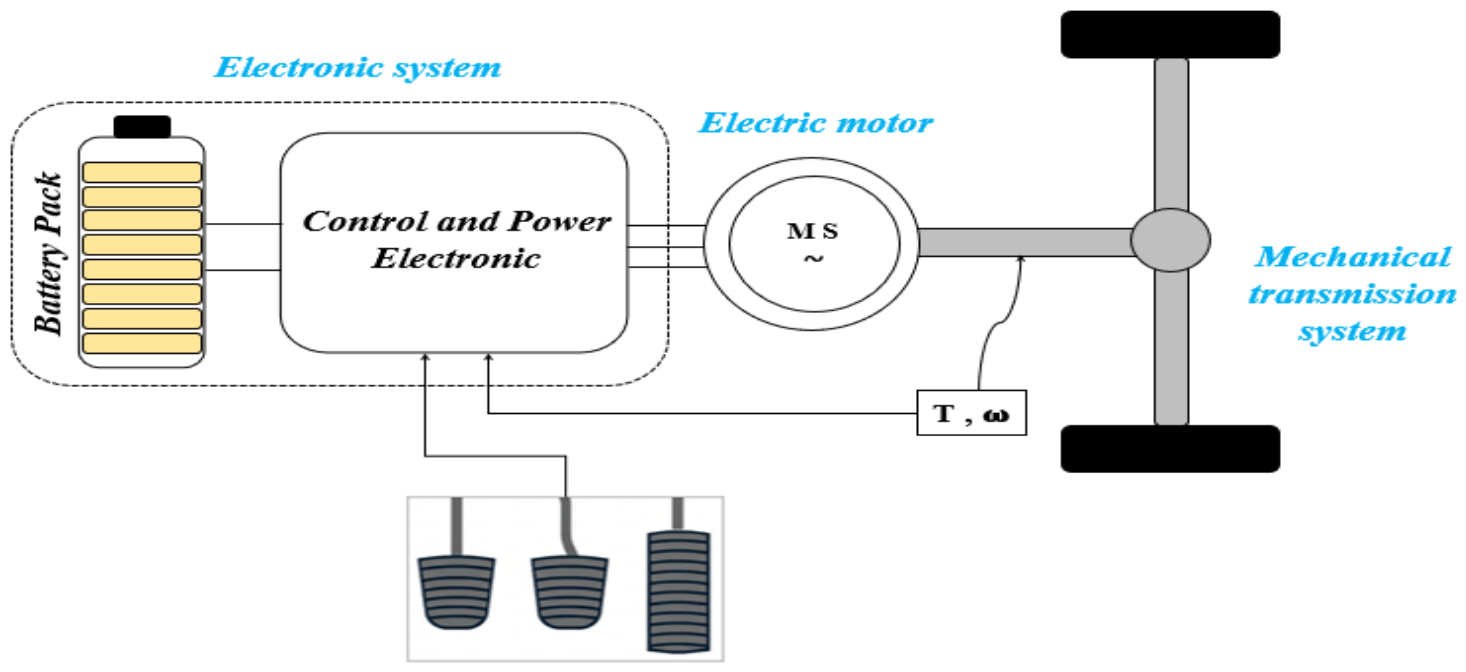
The powertrain of an electric vehicle consists of several subsystems that enable bidirectional energy conversion between the electrical and mechanical domains. In drive mode, the electrical energy supplied by the power source is converted into mechanical energy to propel the vehicle. In regenerative braking mode, the motor functions as a generator, and the mechanical energy is converted back into electrical energy to be fed back to the battery. Figure 1 illustrates the general architecture of the electric powertrain considered in this study.
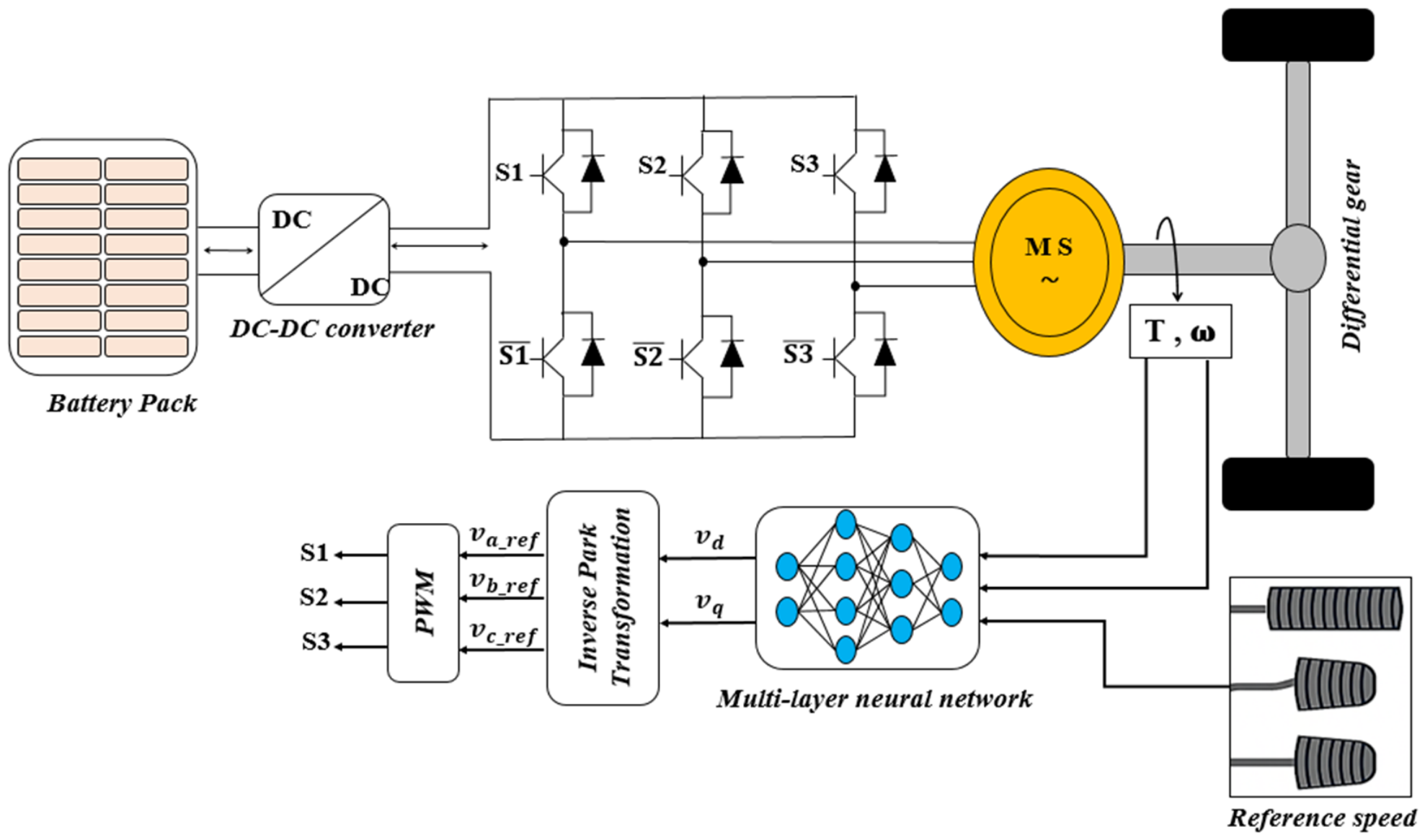
The architecture of the electric powertrain examined in this study consists of several interconnected components that handle energy conversion and management. The battery serves as the system’s primary power source. A bidirectional DC/DC converter is used to adjust the voltage level and enable energy recovery during regenerative braking. The DC/AC inverter then converts the DC electrical energy into AC energy to power the PMSM.
The control strategy is based on a controller that uses artificial neural networks. The controller’s inputs include the electric vehicle’s reference speed determined by the driver’s accelerator pedal position, the vehicle’s actual speed, and the electromagnetic torque generated by the motor. Based on this information, the controller generates the control signals needed to operate the system. These signals are then processed using the inverse Park transform and applied to a PWM modulator to control the inverter switches and ensure the motor operates under the desired driving conditions [17,18,19]. Figure 2 illustrates the proposed architecture of the traction system for electric vehicles.
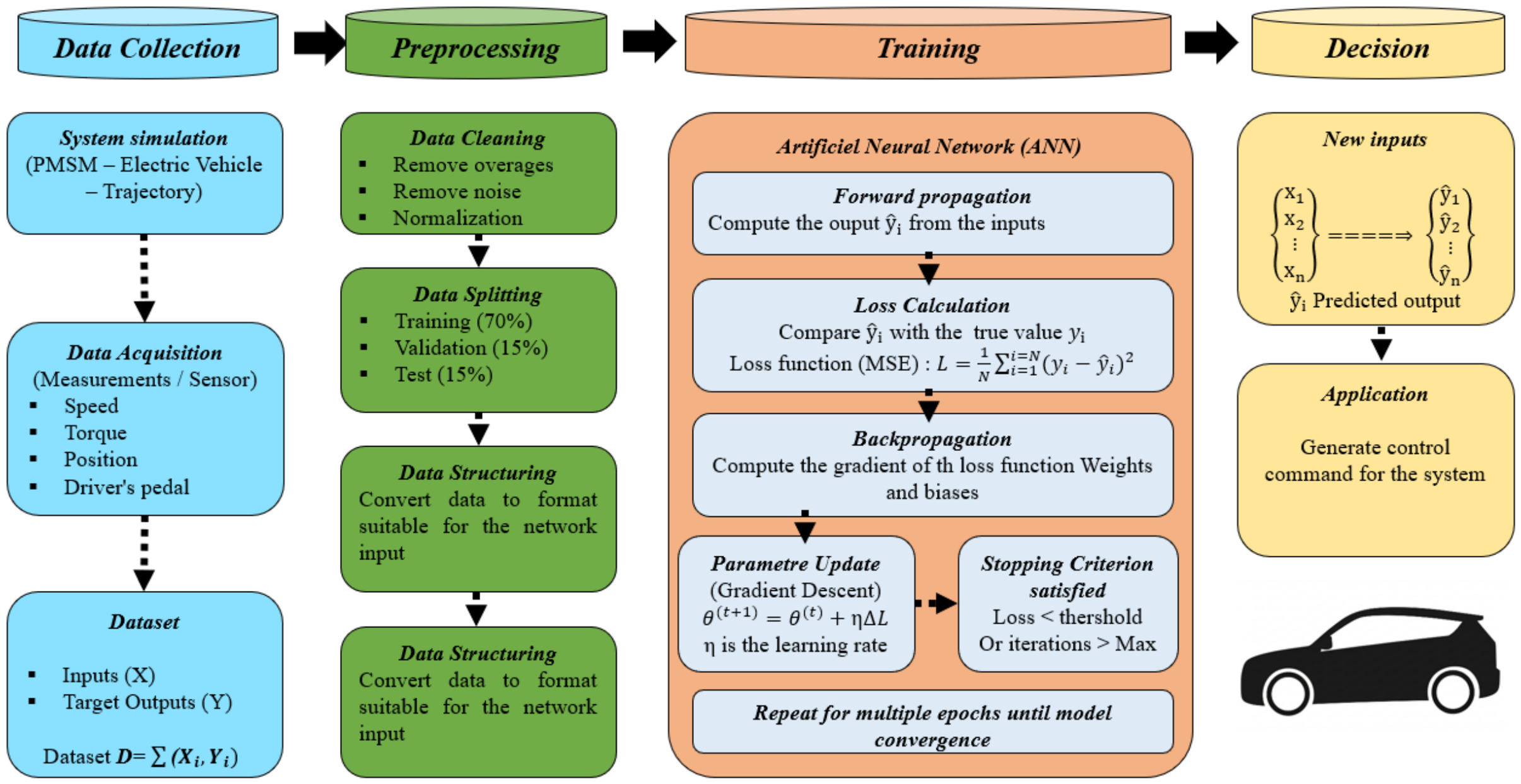
Figure 3 illustrates the general methodology based on artificial neural networks adopted to control the speed of a permanent magnet synchronous motor (PMSM). This methodology consists of four main steps. The first step involves collecting data representative of the system’s behavior under various operating conditions. This data is then subjected to a preprocessing phase aimed at eliminating outliers, reducing noise components, and improving data quality. The third step involves training the neural network, during which the nonlinear relationships between input and output variables are identified. Finally, the decision-making phase uses the knowledge acquired by the network to generate the appropriate control signals.

3. Design of the Control System

This section of the study is divided into three distinct parts. The first part focuses on determining the power required to propel the electric vehicle, taking into account resistance forces (aerodynamic drag, rolling resistance, slopes) and dynamic parameters (mass and acceleration). The second section presents the modeling process of the synchronous motor. This is based on the electrical and mechanical equations of the machine, formulated in Park’s reference frame in order to simplify the dynamic analysis and facilitate its use. Finally, the third section is dedicated to the development of the control model based on artificial neural networks (ANNs). It describes the chosen architecture, as well as the input and output variables used.

3.1. Dimensioning the Power Required to Propel an Electric Vehicle

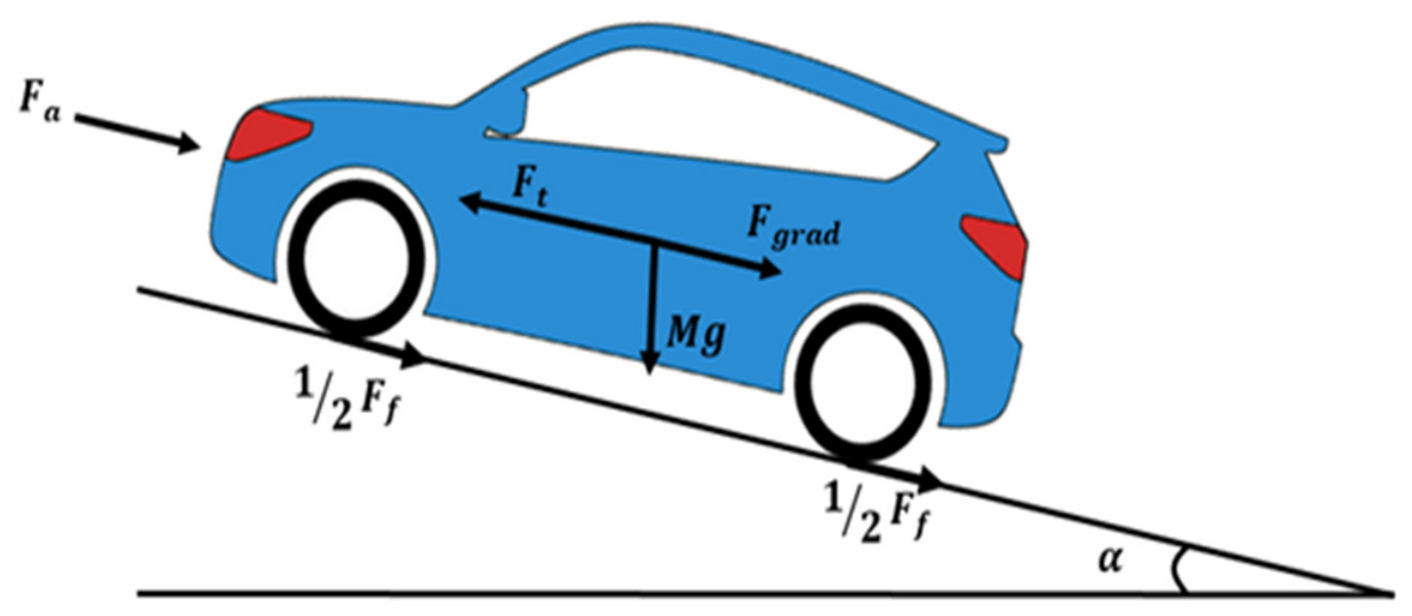
The power required to propel an electric vehicle corresponds to the mechanical energy supplied by the motor to compensate for the resistive forces opposing its movement. These resistive forces mainly come from aerodynamic drag, friction losses due to tire rolling, and the gravitational component when traveling on slopes. Their intensity varies depending on the vehicle’s speed, road conditions, and the environment, directly influencing energy consumption and range. Figure 4 schematically illustrates all of these forces that determine the propulsion system’s overall performance [20,21].
According to Newton’s second law, the acceleration of the vehicle can be expressed as follows:
M . a = F t + F f + F g r a d + F a
The tractive force Ft can be expressed by projecting the forces along the motion axis in the following form:
F t = F f + F g r a d + F a + M . a
Thus, we obtain
F t = C r . M . g . cos α + M . g sin α + 1 2 ρ . A . C d . v 2 + M . d v d t
The traction power and the resisting torque are given by
p t = F t . v T l o a d = F t . η R w h e e l . R t r s
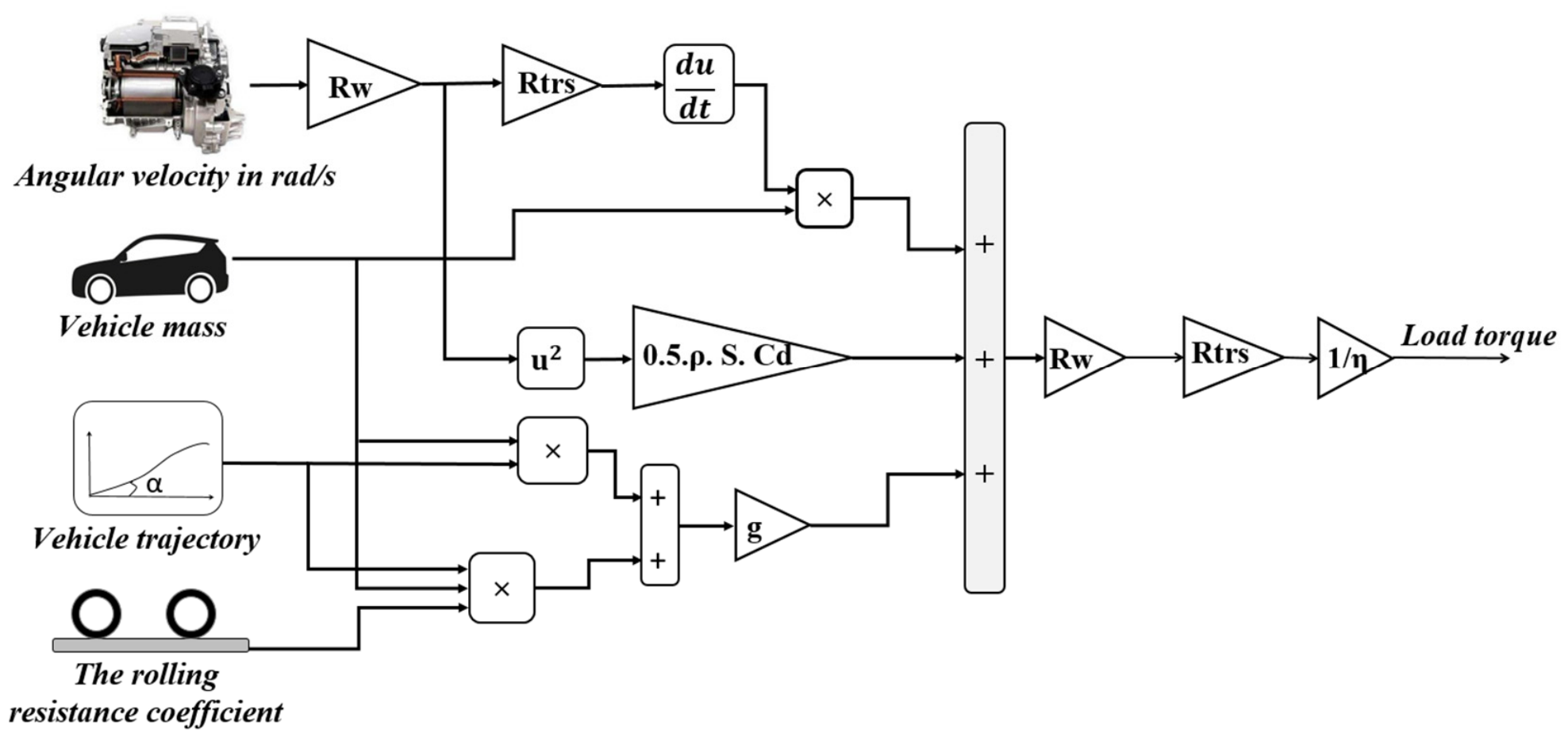
The modeling and simulation of the electric vehicle powertrain are based on the definition of basic design parameters, as described in Table 1. These parameters are derived from the technical specifications of an actual electric vehicle. These design specifications are then incorporated into a mathematical model of the electric vehicle, developed using MATLAB/Simulink 2016. The block diagram of the studied system is depicted in Figure 5.

3.2. Parametric Modeling of Synchronous Motors

In this section, the mathematical model of the permanent magnet synchronous machine (PMSM) is developed in the rotor-related direct-quadrature (d–q) coordinate system. The analysis is performed under the following assumptions: the machine is three-phase, its windings are perfectly balanced, and magnetic saturation effects are neglected [22,23,24,25,26,27].
v d = R s . i d + L d d i d d t ω e . L q . i q v q = R s . i q + L q d i q d t + ω e . ( L d . i d + ϕ f )
The state-space representation of the stator voltage in the d–q reference frame is obtained from Equation (5) and is expressed by Equation (6).
v d v q = R s 0 0 0 R s 0 i d i q ϕ f + L d 0 0 0 L q 0 d d t i d i q ϕ f + ω e 0 L d 0 L q 0 0 i d i q ϕ f
The electromagnetic torque, which links electrical quantities to the mechanical forces of the synchronous motor, is given by
T e = 3 2 p ( ϕ d . i q ϕ q i d )
The fundamental equations of the mechanical dynamics of a system, derived from Newton–Euler laws, relate forces and moments to linear and angular accelerations.
J d ω m d t = T e T L f ω m
The nomenclature and definitions of the symbols used throughout this paper are provided in Appendix A.

3.3. ANN Controller Design

The proposed control model is based on an artificial neural network (ANN), enabling intelligent control of the synchronous motor. The input variables include the vehicle’s linear speed, derived from the motor’s rotational speed; the reference speed based on the accelerator pedal position; and the electromagnetic torque developed by the motor. This information is used to calculate the speed deviation and adjust the vehicle’s response [28,29,30,31].
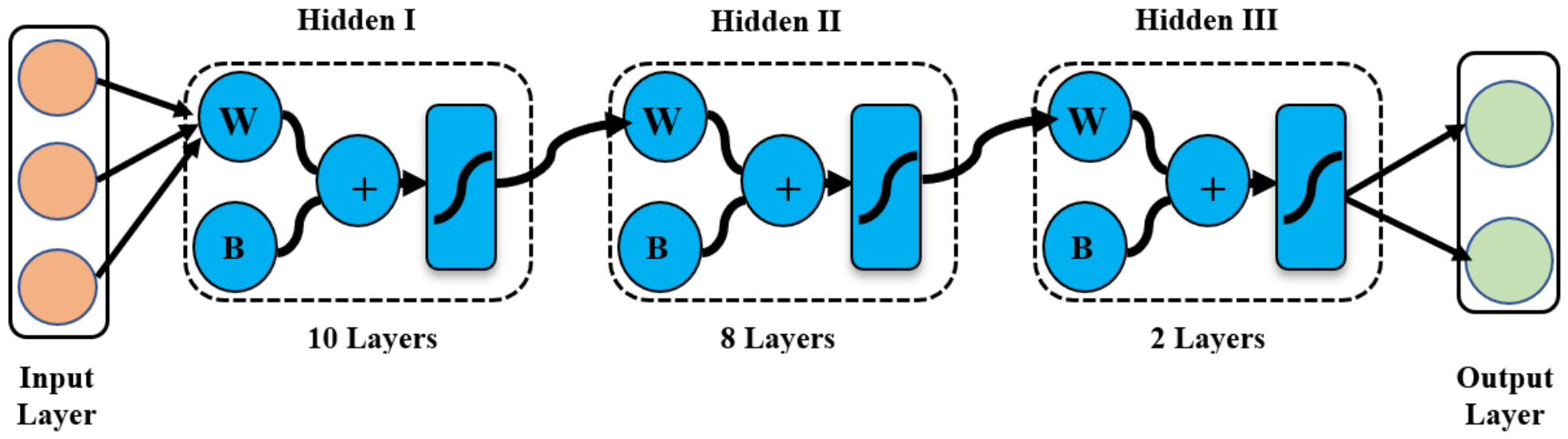
At the output, the model generates the voltage components vd and vq in the Park reference system, which are necessary for vector control. These components are then converted into PWM signals to drive the inverter switches, ensuring optimal torque and speed control and thus improving the electric vehicle’s overall performance. Figure 6 illustrates the architecture of the artificial neural network used in this study. The orange circles represent the network’s input variables, while the green circles correspond to the output variables. The blocks outlined by dotted lines represent the hidden layers of the neural network. Each layer consists of a set of neurons characterized by synaptic weights (W), biases (B), a summation operation, and a nonlinear activation function. The arrows indicate the direction of information flow between the different layers of the network. The choice of architecture, including the number of hidden layers, the number of neurons per layer, and the associated activation functions, was made to ensure the model’s strong learning and generalization capabilities. In the selected configuration, the three hidden layers contain 10, 8, and 2 neurons, respectively, thereby enabling an effective representation of the nonlinear relationships between the input and output variables of the system under study [32,33,34,35,36,37,38].
Operating an artificial neural network relies on information propagating through the network’s various layers. For each neuron in the first hidden layer, the output is obtained by applying an activation function to a weighted linear combination of the input signals. This operation can be expressed as:
h 1 j = f i = 1 n w i j ( 1 ) . x i + b j ( 1 )
To improve the network’s approximation capability and capture the complex nonlinearities of the electric traction system, a second hidden layer is introduced. The activations produced by the first hidden layer are fed into this layer, where they undergo a new weighted linear combination followed by a nonlinear activation function. The corresponding mathematical expression is given by:
h 2 j = f j = 1 N h 1 w j k ( 2 ) . h 1 j + b k ( 2 )
The information extracted by the first two hidden layers is then passed to the third hidden layer, where it undergoes further processing to refine the representation of the system’s nonlinearities. The output of this third hidden layer is obtained by applying a weighted combination of the activations from the previous layer, followed by an appropriate activation function, according to the following equation:
h 3 j = f k = 1 N h 2 w k ( 3 ) . h 1 j + b ( 3 )
The neural network is trained offline using the Levenberg–Marquardt backpropagation algorithm, which is widely recognized for its fast convergence and effectiveness in optimizing nonlinear problems. To evaluate learning quality, the cost function used is the mean squared error (MSE), which quantifies the difference between the desired output values and those estimated by the network. This function is defined by:
M S E = 1 N k N ( y k y ^ k ) 2
To minimize this cost function, the Levenberg–Marquardt algorithm iteratively updates the network’s weights and biases according to the following equation:
w k + 1 = w k + 1 J T J + μ I 1 . J T ( y k y ^ k )

4. Results and Discussion

This section is divided into two parts. The first part presents and analyzes the results of the MLP model learning process. The second part presents the results validating the accuracy and robustness of the speed control model.

4.1. Analysis of the Training Results of a Multilayer Perceptron

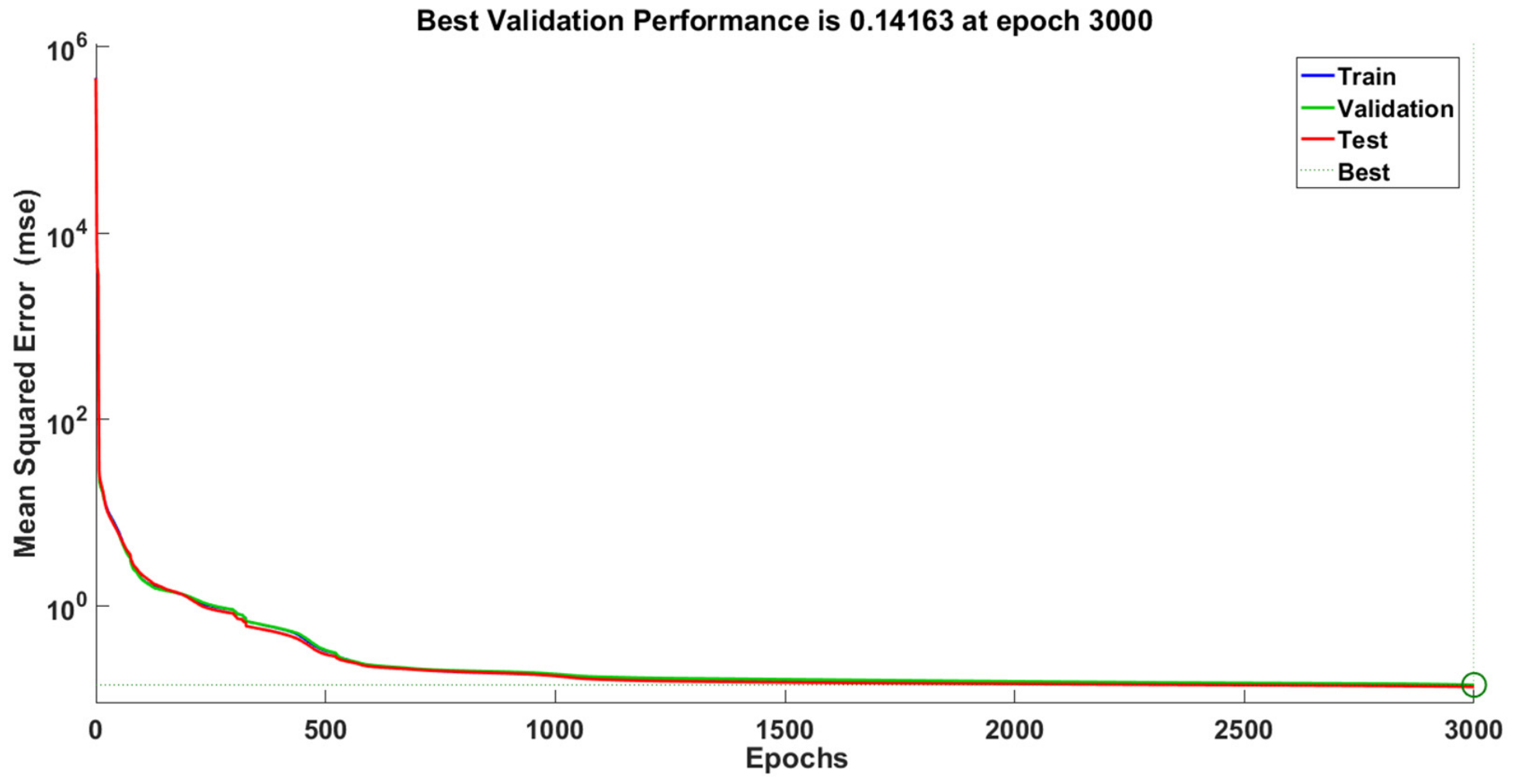
The training quality of a neural network can be assessed using several indicators, among which the mean square error (MSE) is one of the most commonly used. A low MSE value indicates a good approximation of the model’s expected outputs. Figure 7 shows the evolution of the MSE during the learning process. It can be seen that, for the three-phase training, validation, and testing, the MSE value reaches 0.14163 at epoch 3000, confirming the effectiveness of the training and the convergence of the model’s predictions towards the desired outputs.
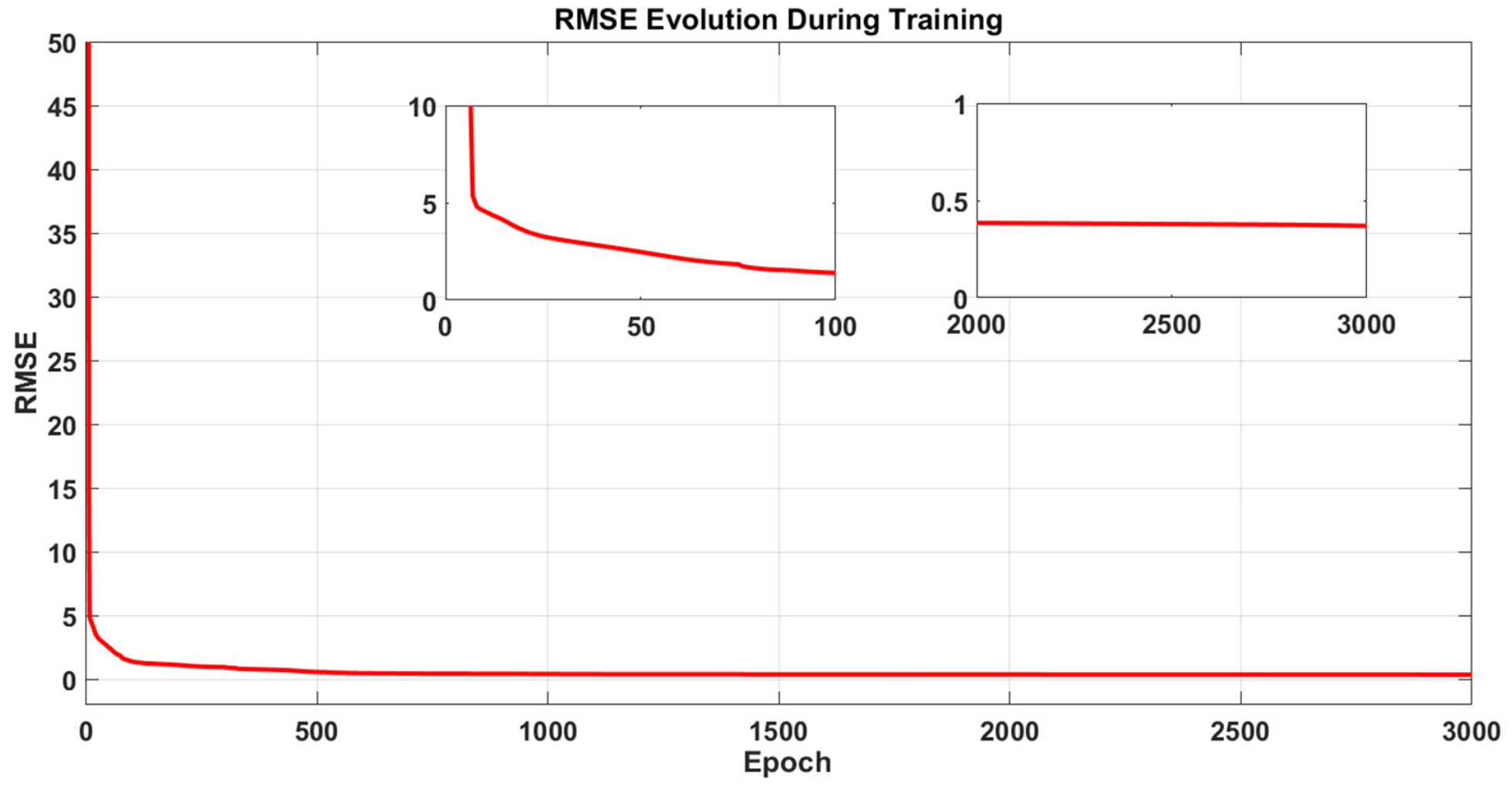
Figure 8 shows the evolution of the root mean square error (RMSE) during the neural network’s training phase. This metric decreases gradually over the course of the iterations, reaching a value of approximately 0.4 at epoch 3000. This trend reflects the convergence of the learning process and the reduction in the model’s prediction error.
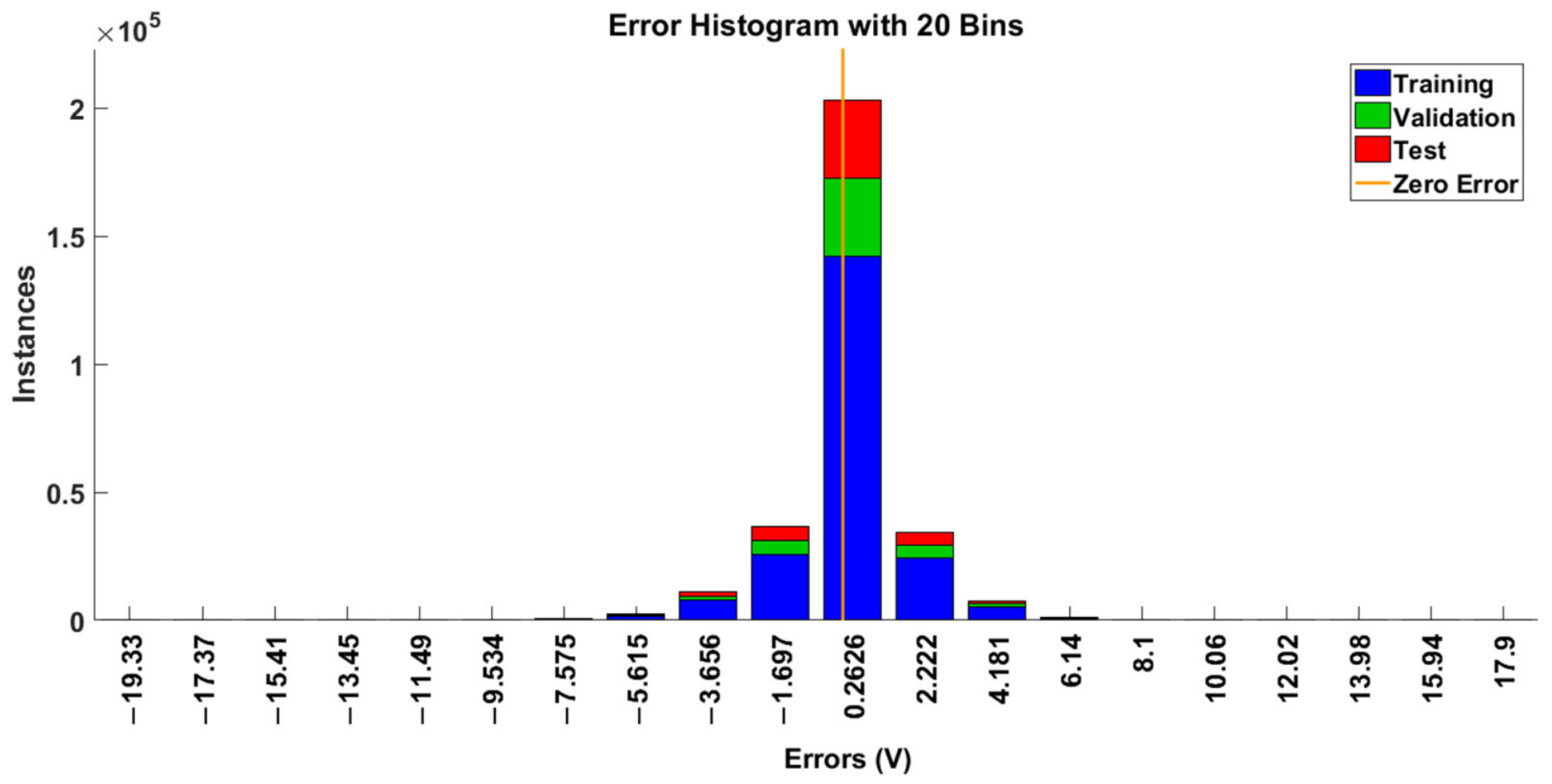
To evaluate the quality and predictive power of the model, a complementary approach is to analyze the error histogram. As shown in Figure 9, this histogram has a maximum centered around 0.2626, indicating that the majority of samples are predicted with a small deviation from the real values, reflecting satisfactory accuracy. Analyzing this distribution also makes it possible to detect any trends or biases in the model’s predictions. In this case, the concentration of errors around zero confirms that the artificial neural network can provide accurate and stable control of the electric vehicle’s speed.
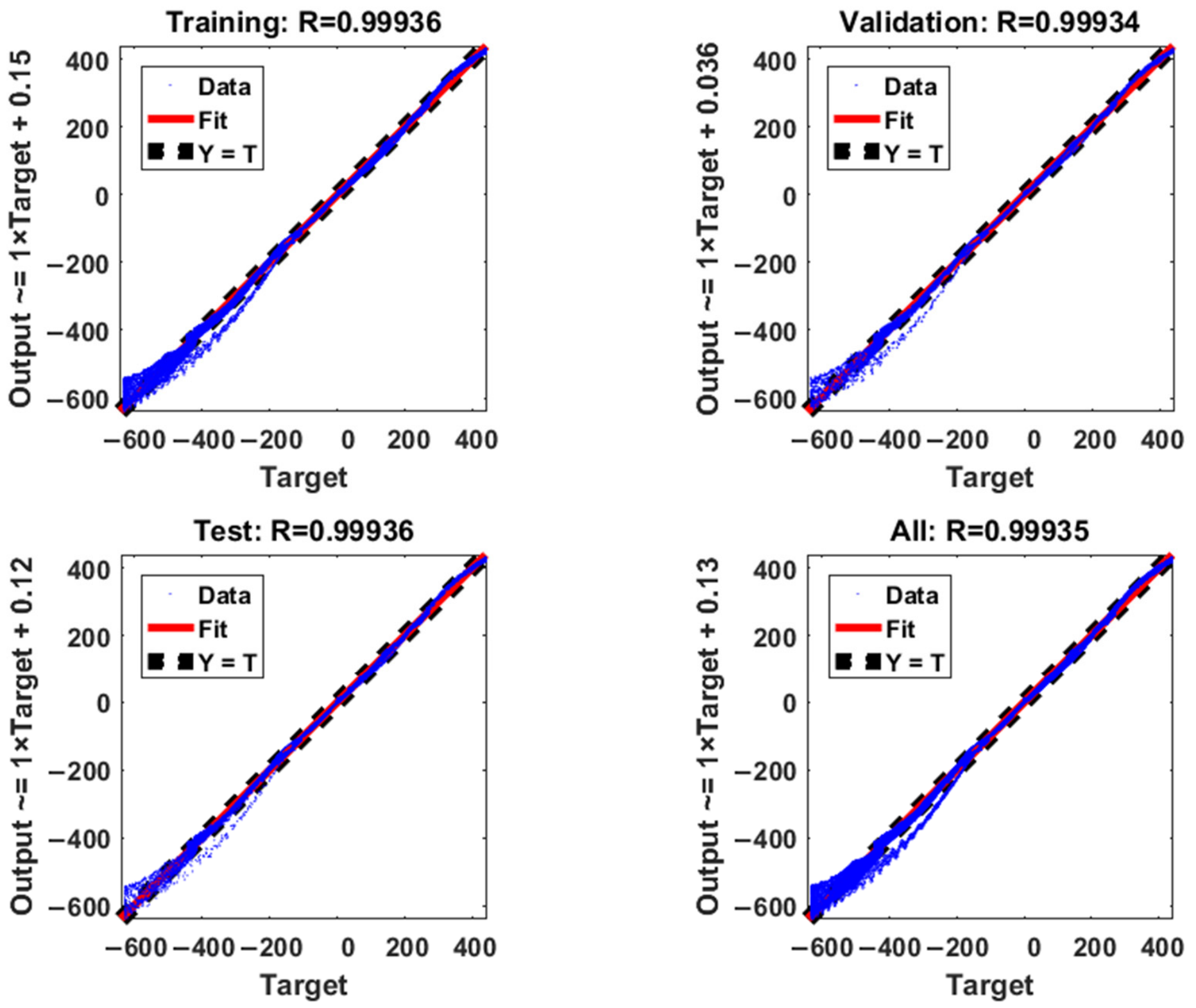
Figure 10 shows the regression performance of the neural network by comparing the predicted values with the target values for the training, validation, and test sets, as well as for the entire dataset. The correlation coefficients obtained are 0.99936 for the training set, 0.99934 for the validation set, 0.99936 for the test set, and 0.99934 for the entire dataset. These values, which are very close to 1, indicate a strong correlation between the network’s outputs and the reference values. Furthermore, the similarity of the regression coefficients obtained for the different phases shows that the model’s performance remains consistent across the training data and the data not used during training. These results confirm the neural network’s ability to reproduce the nonlinear relationship under study with a low prediction error.
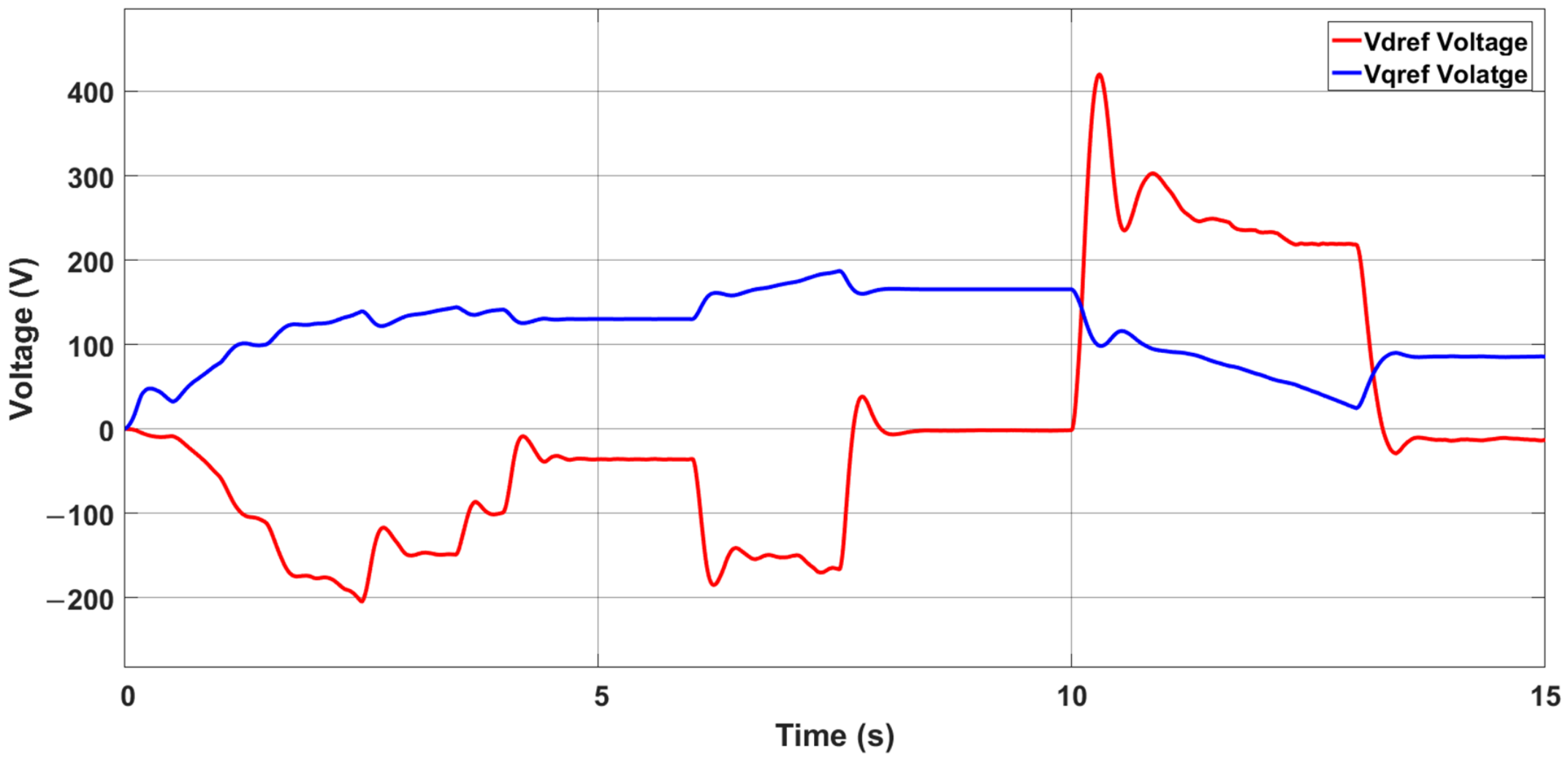
The outputs from the neural network model initially correspond to the voltages Vd and Vq. After applying Park’s inverse transformation, these voltages are converted into reference signals used to control the DC/AC converter. Figure 11 illustrates the output voltages generated by the neural model, which constitute the essential setpoints for the control system, thus ensuring optimal regulation of the inverter’s operation.

4.2. Discussion of the Findings

This section is dedicated to presenting and analyzing the simulation results obtained from the proposed model. It aims to demonstrate the validity of the approach adopted, as well as the neural network’s ability to effectively control the synchronous motor. The different figures illustrate the characteristic quantities studied, allowing us to evaluate both the dynamic performance and the accuracy of the model.
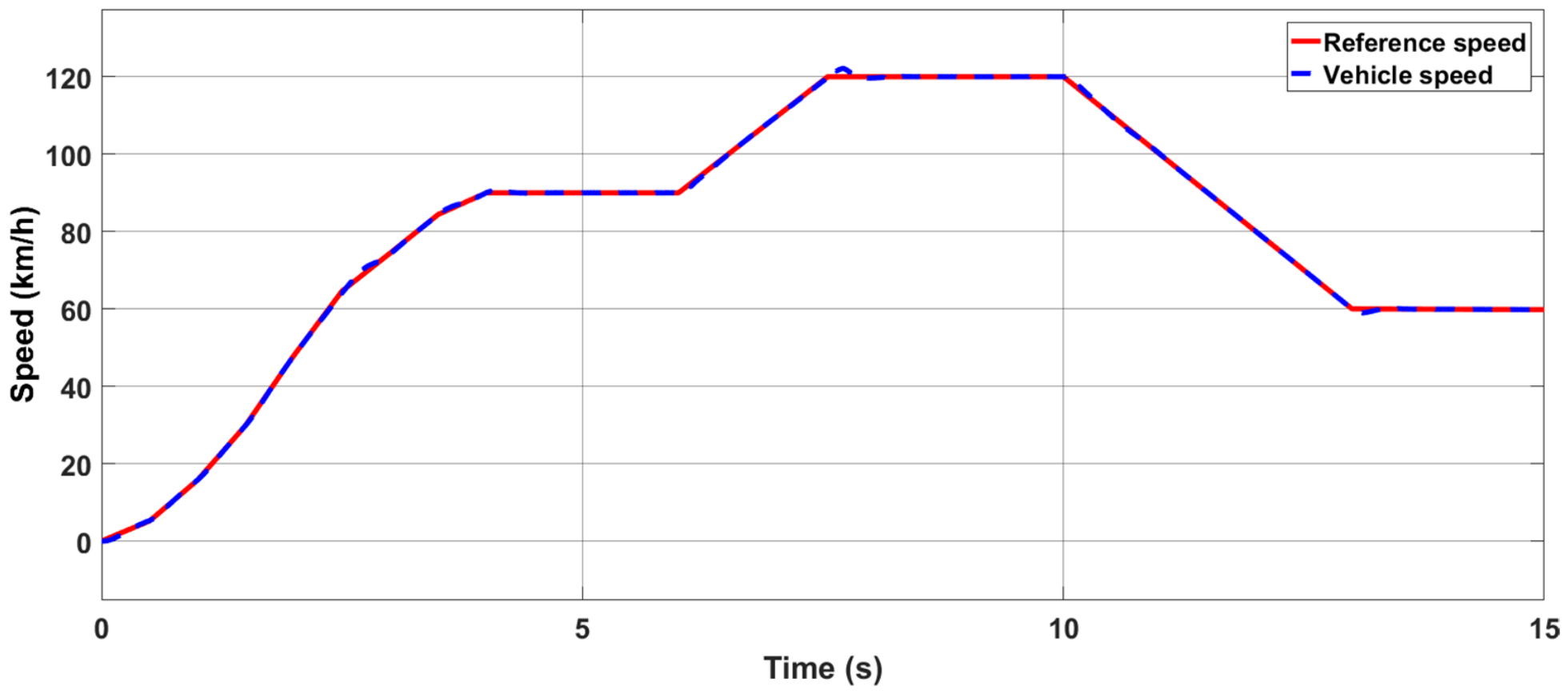
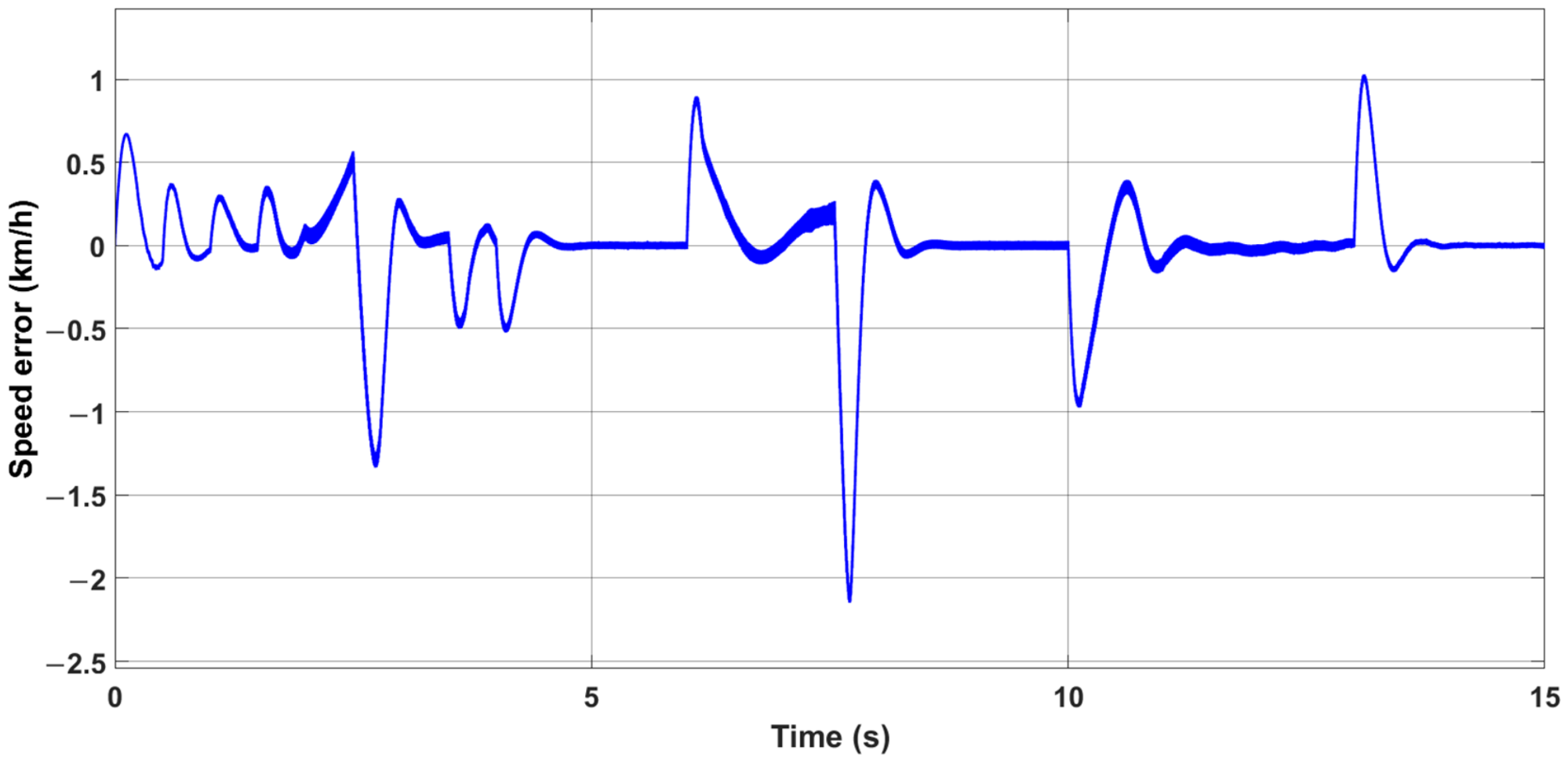
Figure 12 and Figure 13 illustrate, respectively, the evolution of vehicle speed and the speed error (in km/h), calculated from the reference speed derived from the accelerator pedal position.
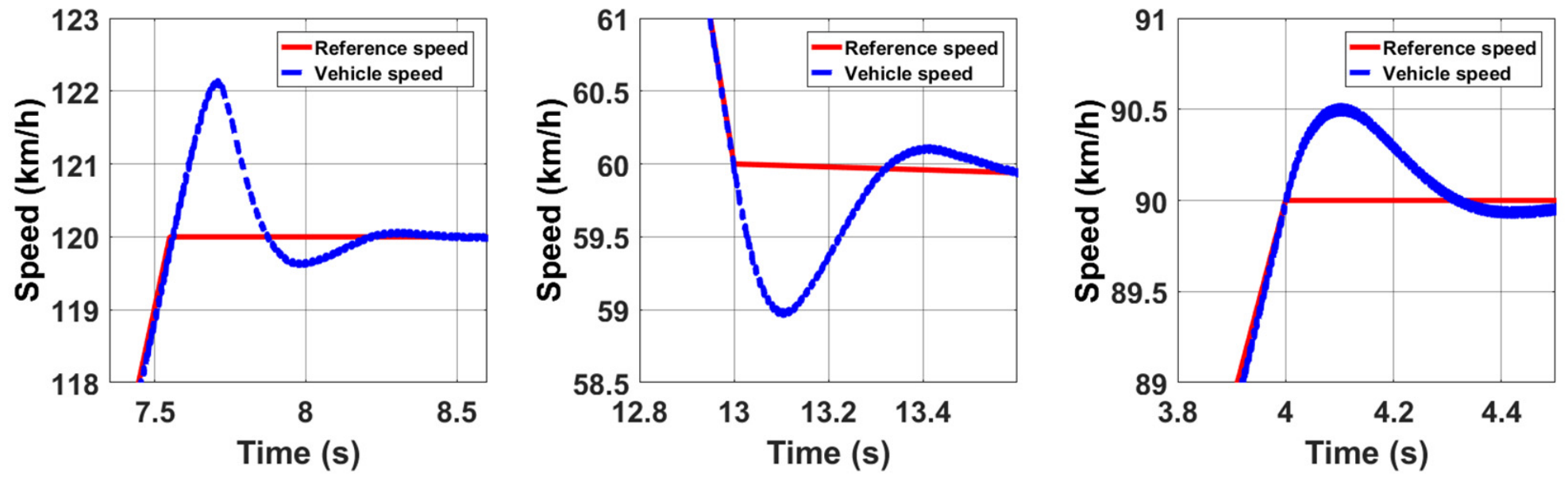
During the time interval between 0 s and 4 s, corresponding to an acceleration phase, the vehicle speed gradually converges toward the reference speed set to 90 km/h. During this transient phase, a tracking error occurs due to the system dynamics, but it remains small and decreases rapidly. Starting at (t = 4) s, the system achieves a steady state, and the vehicle speed stabilizes at the reference value of 90 km/h, while the speed error becomes nearly zero. A second acceleration phase begins at (t = 6) s, bringing the vehicle to a new reference speed of 120 km/h. After this transition, the speed stabilizes at this value until t = 10 s, with a small deviation between the actual speed and the reference speed. A deceleration phase is then applied to evaluate the controller’s behavior under various dynamic conditions. The results obtained show that the controller ensures tracking of the speed reference during the different operating phases. The maximum error observed between the actual speed and the reference speed does not exceed 2.2 km/h, which highlights the proposed strategy’s ability to maintain a limited tracking error during both transient and steady-state phases.
To evaluate the system’s stability, the maximum speed overshoot was analyzed. Three main overshoots were observed: 0.55% between 4 s and 4.3 s, 1.8% between 7.55 s and 7.85 s, and 1.69% between 13 s and 13.3 s. These values remain below 2%, indicating a well-damped response and rapid convergence to the reference value after each setpoint change.
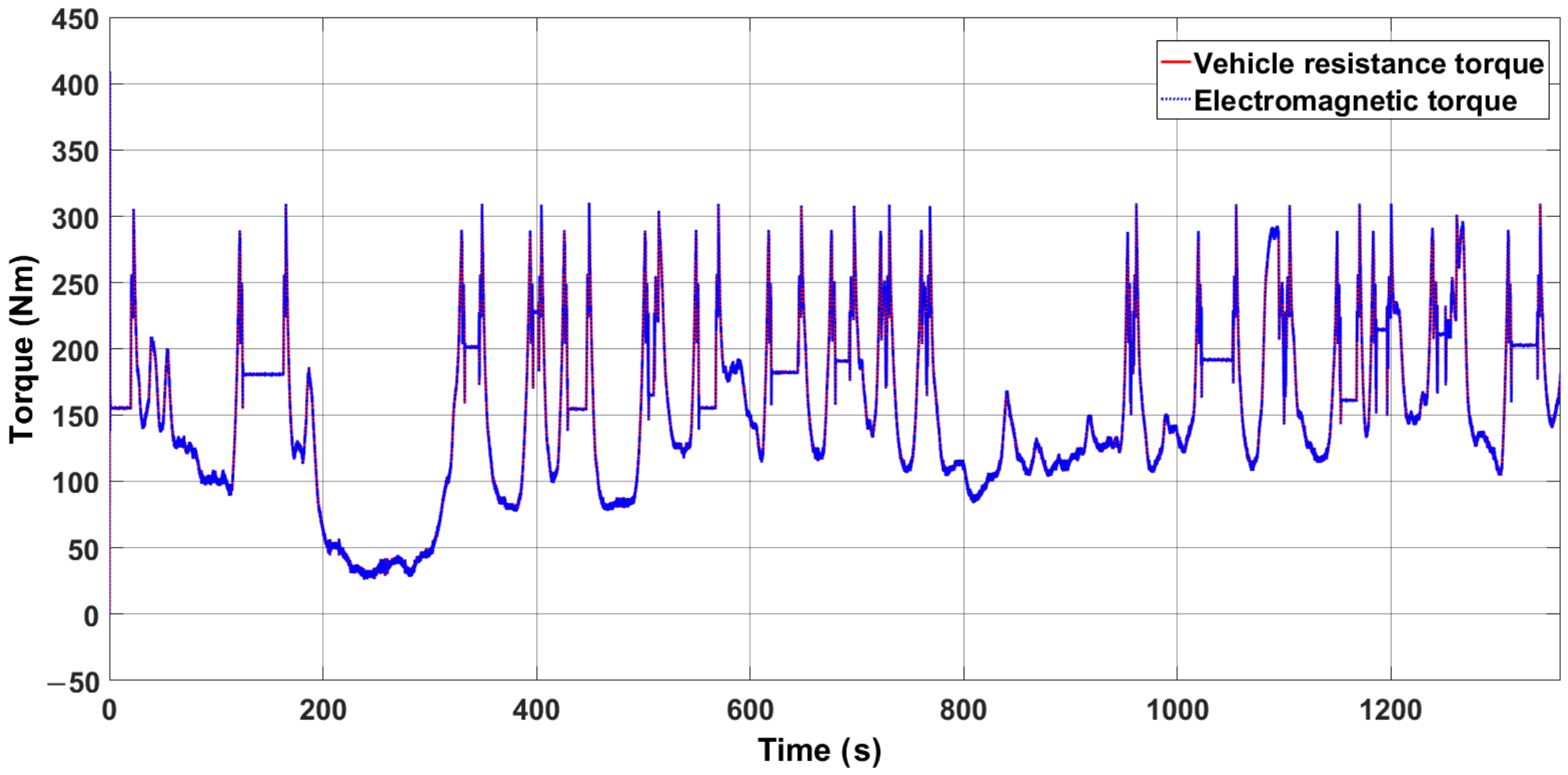
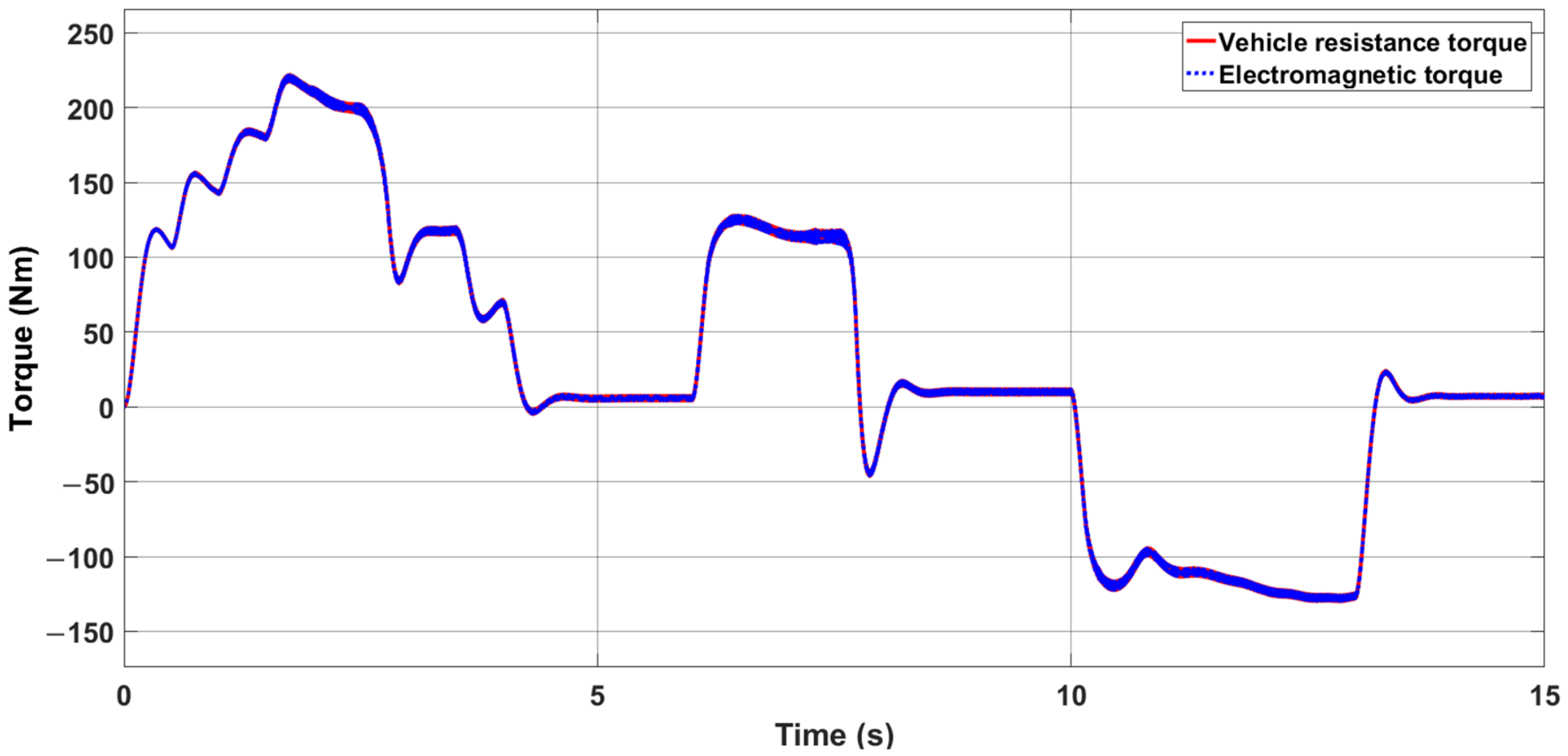
Figure 14 illustrates the evolution of electromagnetic versus load torque during motor operation. The first corresponds to the torque generated by the permanent magnet synchronous motor, while the second represents the torque imposed by the load. We can see that the two curves overlap almost perfectly. During the first acceleration phase from 0 s to 4 s, then during the second acceleration phase from 6 s to 7.5 s, as well as during the deceleration phase from 10 s to 13 s, significant variations in the electromagnetic torque are observed. These variations reflect the motor’s dynamic adjustment to traction requirements and variations in the vehicle’s resistance torque. Once the speed has stabilized at its reference value, the electromagnetic torque gradually converges around a nearly constant value, corresponding to the balance between the motor torque developed and the applied load torque.
It is important to note that the maximum torque value observed during the transient phase reaches 250 Nm. This peak reflects the maximum mechanical effort the motor is capable of delivering to compensate for the applied load and ensure continuity of motion. This behavior confirms the robustness of the model used and its ability to guarantee accurate tracking, even under demanding dynamic conditions as illustrated in Figure 15.
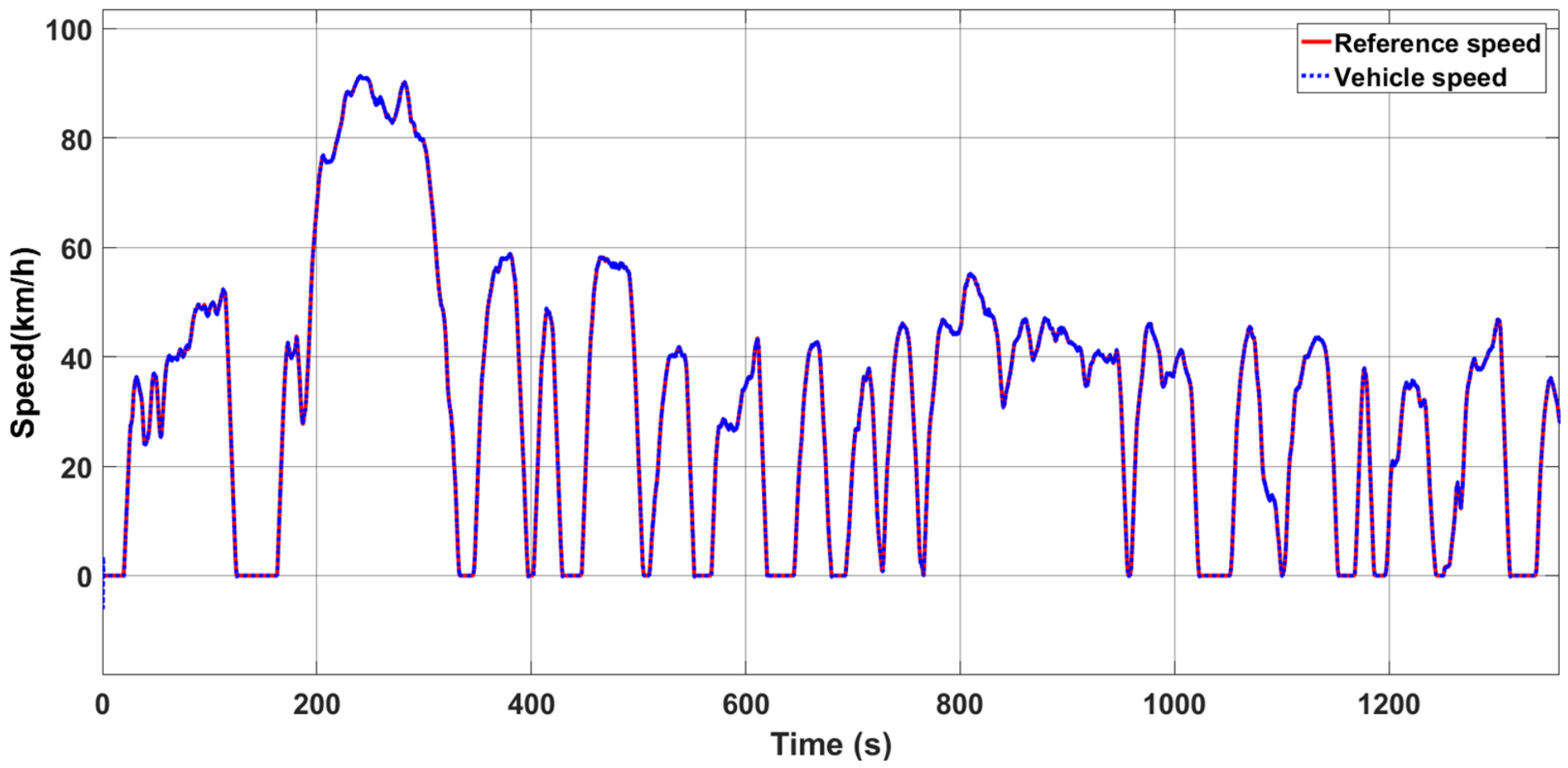
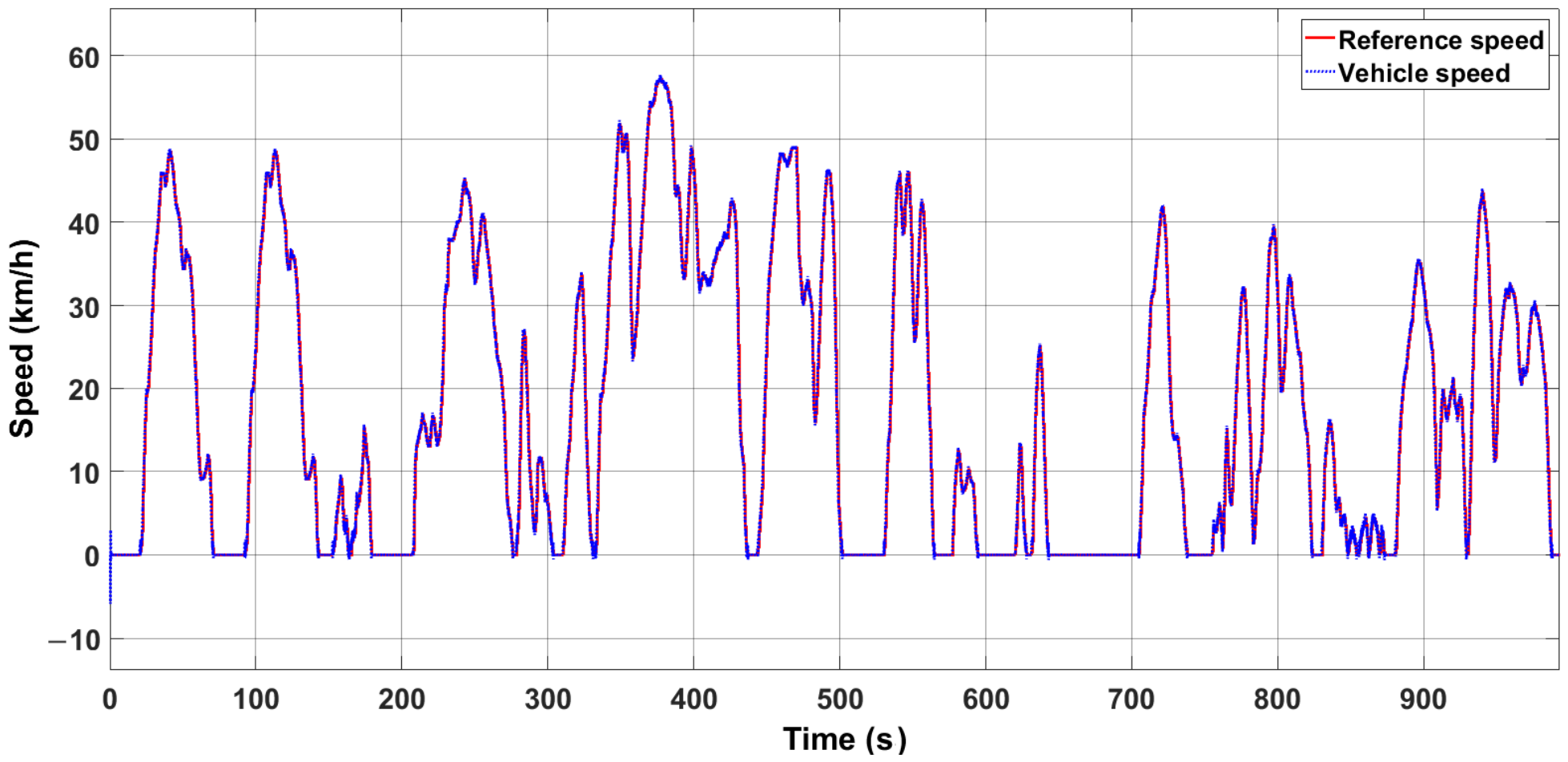
In addition to the proposed driving profile, two standardized driving cycles were used to validate the performance of the developed control strategy: the UDDS (Urban Dynamometer Driving Schedule) and the Artemis Urban. These profiles exhibit varied dynamic characteristics in terms of speed, acceleration, deceleration, and duration, thereby enabling the evaluation of the electric propulsion system’s behavior under different operating conditions.
The UDDS cycle primarily represents urban driving characterized by frequent stops and moderate speed variations. Figure 16 shows the speed profile corresponding to this cycle. The Artemis Urban profile replicates more realistic urban driving conditions, with more pronounced acceleration and deceleration phases; its temporal evolution is illustrated in Figure 17.
The results show that the vehicle speed closely tracks the reference speed for both driving cycles considered. The controller ensures rapid and stable tracking of the setpoint, with a limited tracking error, even during the acceleration and deceleration phases.
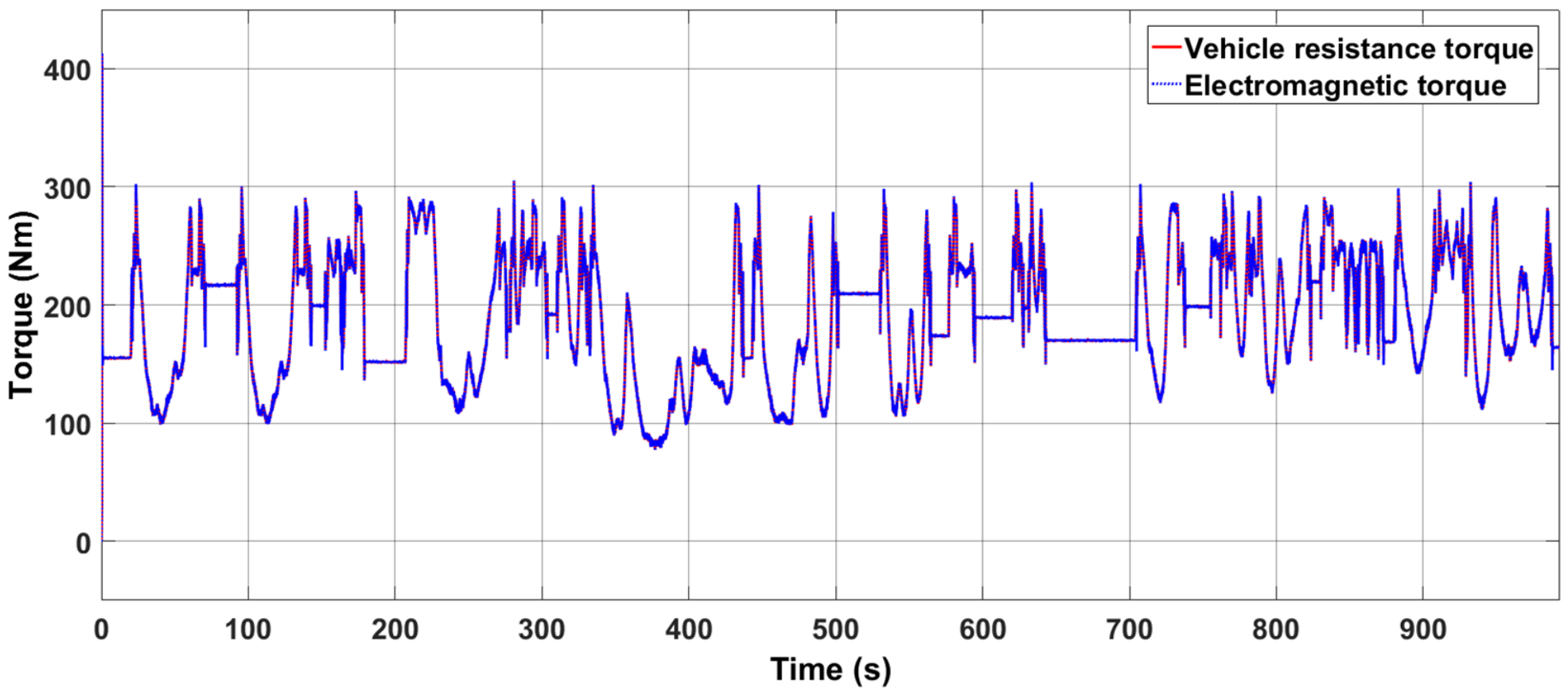
To evaluate the performance of the proposed control strategy in greater detail, an analysis of the variation in the motor’s electromagnetic torque and load torque was conducted. Figure 18 and Figure 19 show the results obtained for the UDDS and Artemis Urban driving cycles, respectively. The results show the simultaneous evolution of the electromagnetic torque and the load torque during the various driving cycles. Analysis of these variables highlights the controller’s ability to adjust the electromagnetic torque in response to variations in the resistive torque imposed by different operating conditions, thereby ensuring consistent behavior of the traction system throughout the driving cycle.
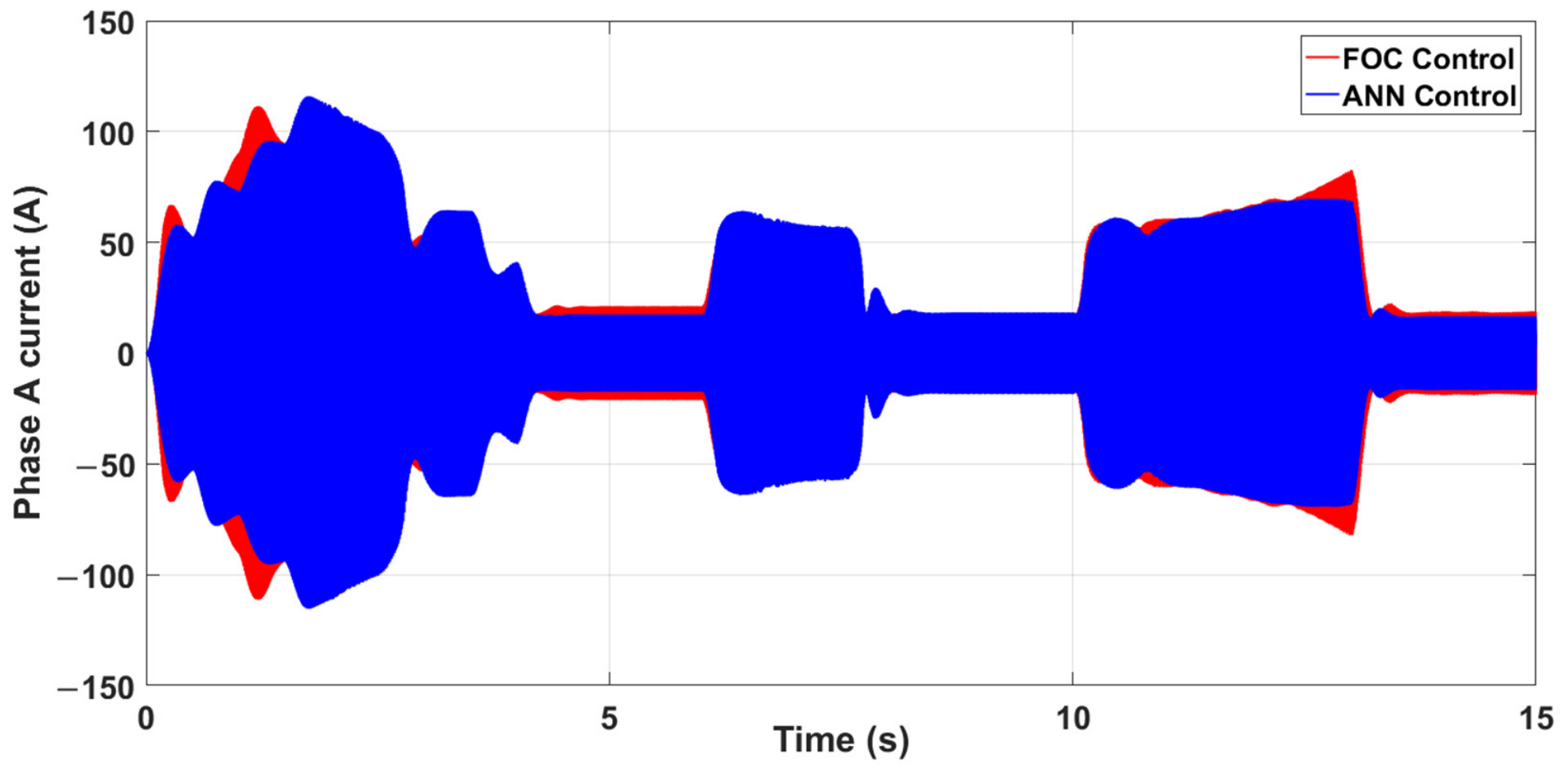
To further evaluate the effectiveness of the proposed control strategy, a benchmark study with conventional FOC is conducted under the same operating conditions. The comparison is based on a comparative analysis of the current consumption of a permanent magnet synchronous motor (PMSM) in an electric vehicle using field-oriented control (FOC) and a control strategy based on an artificial neural network (ANN).
Figure 20 shows the evolution of the current consumed by the permanent magnet synchronous motor (PMSM) during the transient operation of the electric vehicle, which is subjected to both a speed change imposed by the driver and a variation in load torque during driving. Under these dynamic conditions, the current reaches high values, up to 120 A, due to the significant demands placed on the drive system to meet rapid torque and speed requirements.
Furthermore, during the time intervals between 0 s and 2 s, between 4 s and 7 s, and between 10 s and 15 s, it is observed that the control strategy based on artificial neural networks (ANNs) requires a lower stator current than that required by field-oriented control (FOC). This reduction in current implies a lower power demand, which helps reduce energy losses and improve the overall efficiency of the drive system.
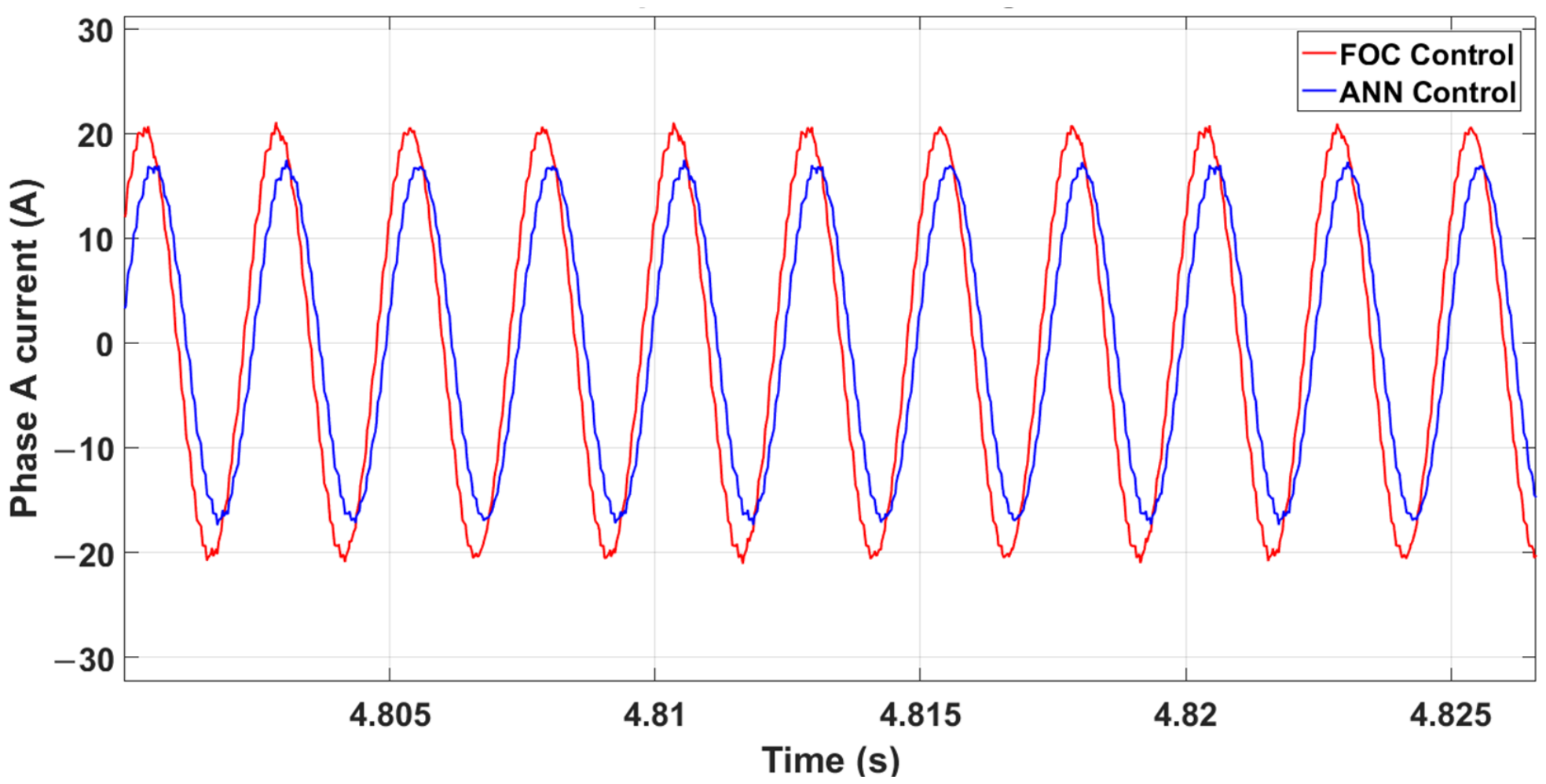
Meanwhile, Figure 21 illustrates the steady-state current behavior when the vehicle speed is stabilized. It is clear that under control based on artificial neural networks (ANNs), the current absorbed by the motor exhibits more regular and less rippled behavior than that obtained with field-oriented control (FOC). This reduction in current fluctuations demonstrates the ability of the proposed control strategy to ensure stable system regulation under the operating conditions considered.
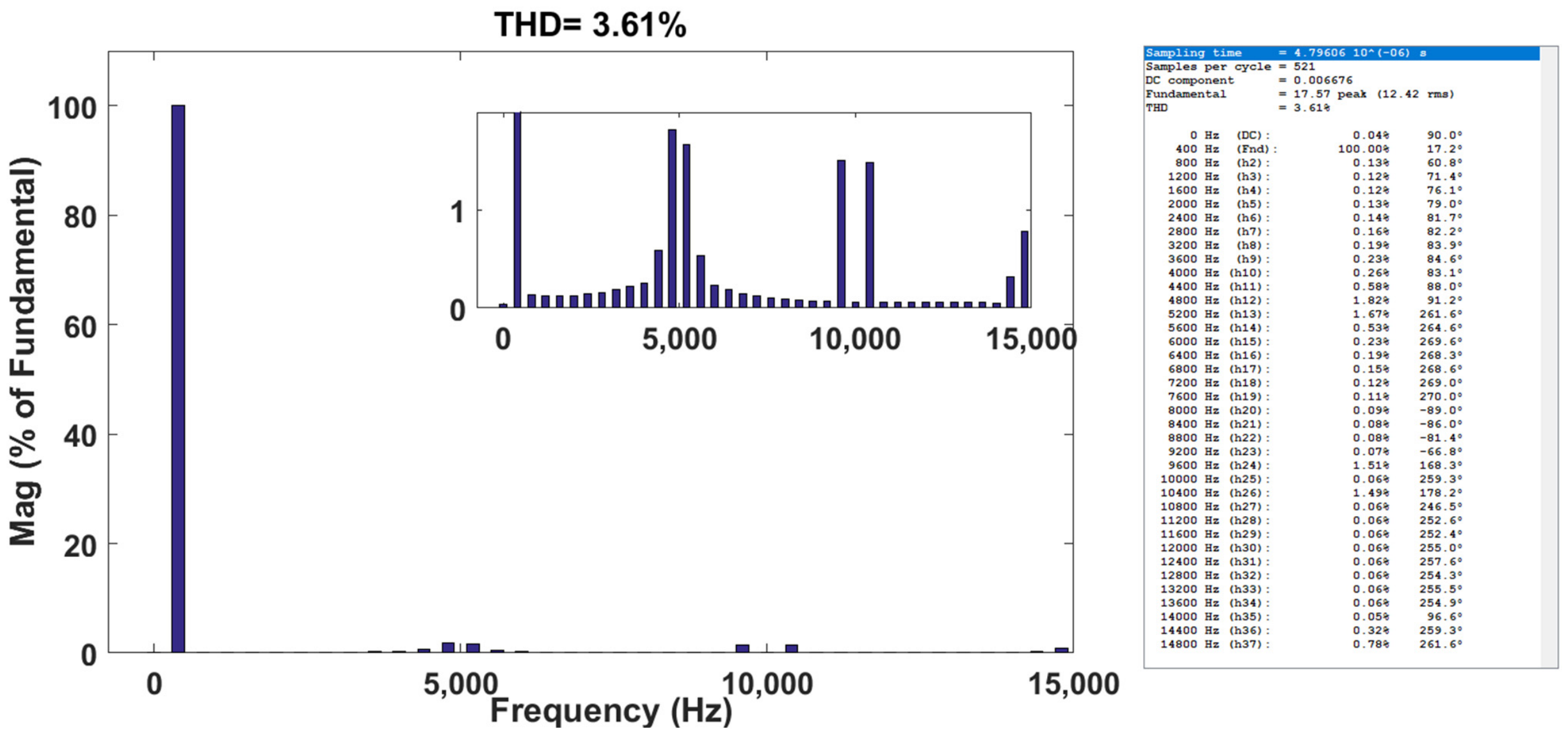
To quantify the energy analysis regarding the permanent magnet synchronous motor (PMSM)’s power consumption, a harmonic analysis of the current draw is performed by calculating the total harmonic distortion (THD) for the two control strategies under consideration: field-oriented control (FOC) and artificial neural network (ANN)-based control. This analysis is performed under steady-state conditions, i.e., when the vehicle speed is stabilized and the electromagnetic torque becomes constant, thereby allowing for a relevant assessment of the system’s behavior during nominal operation and an evaluation of the power quality of the absorbed current.
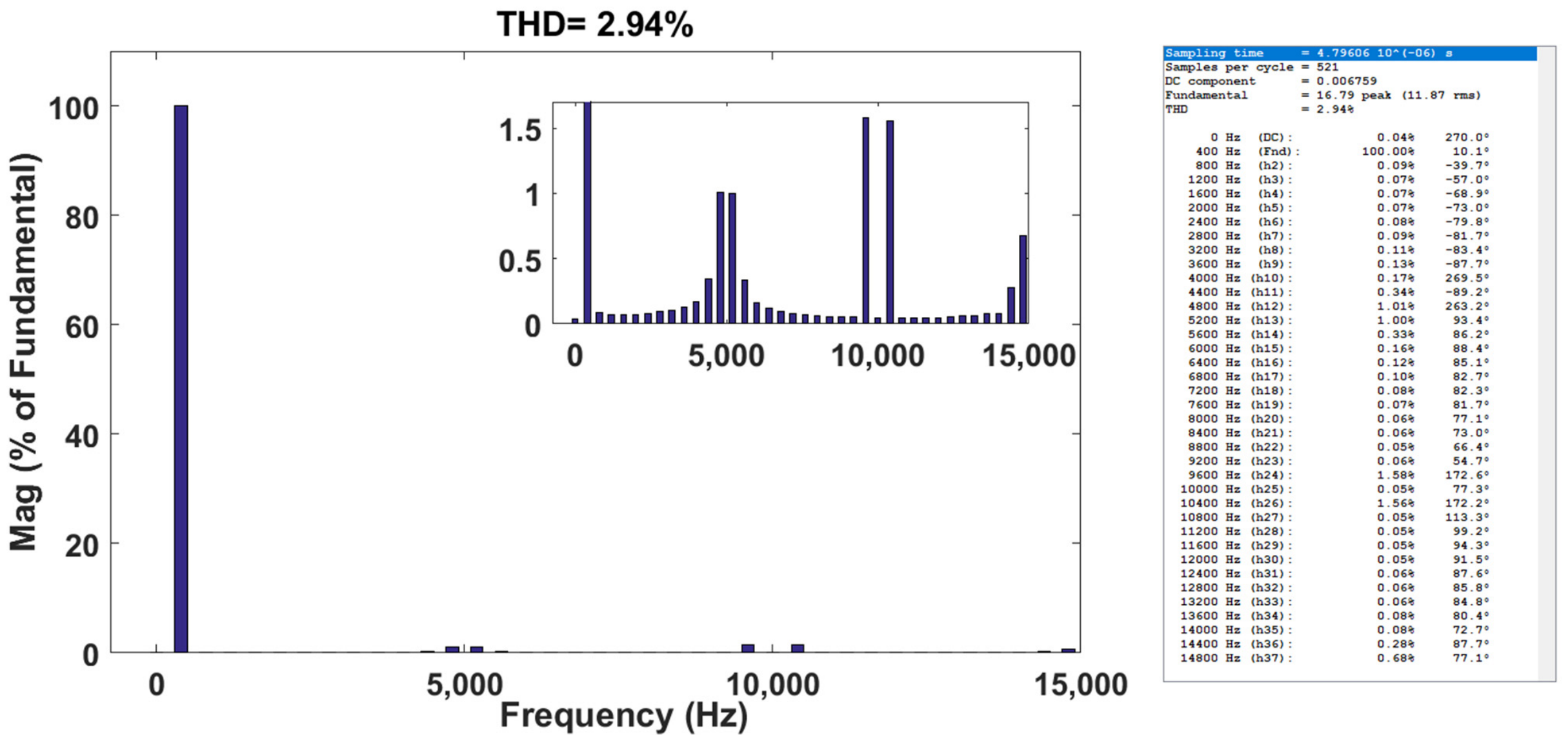
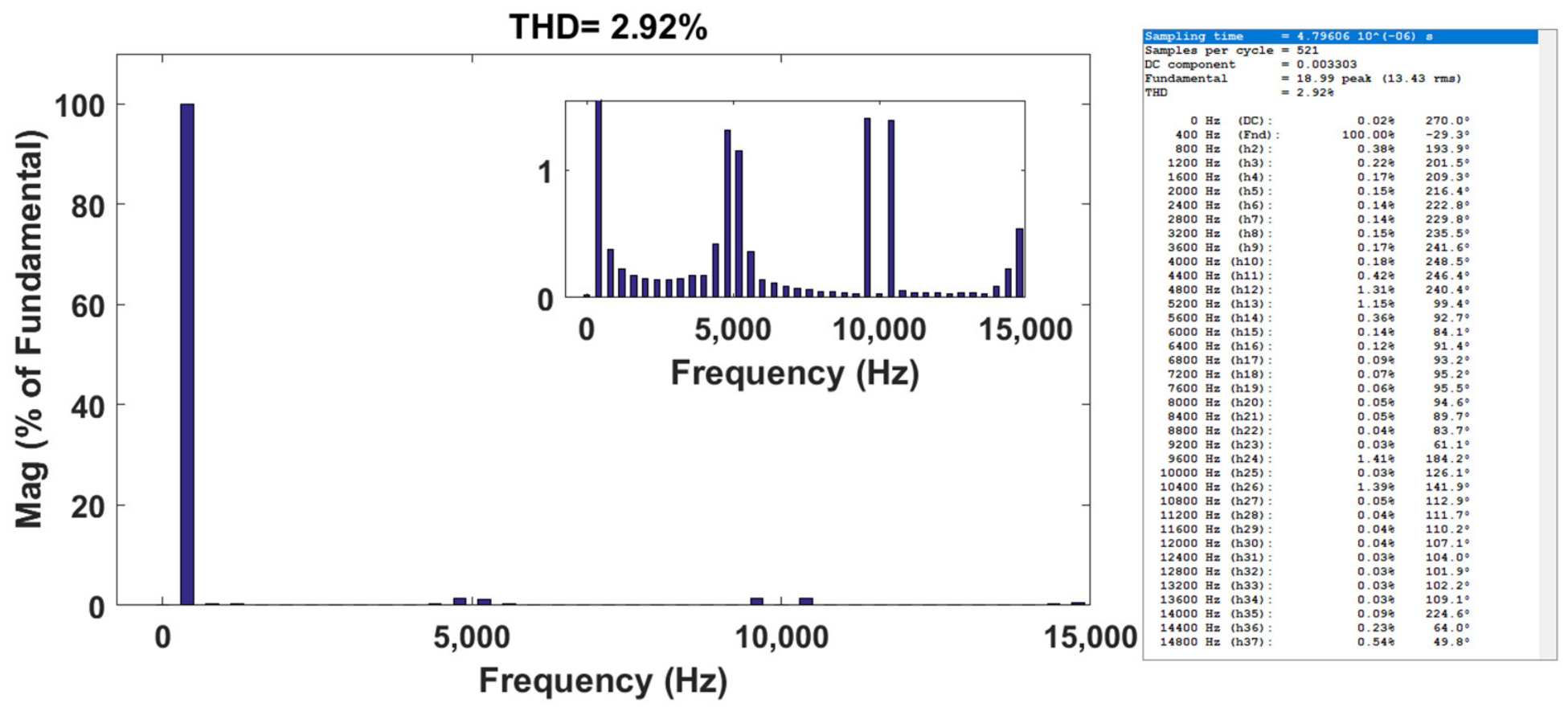
Figure 22, Figure 23 and Figure 24 present the results of the total harmonic distortion analysis of the current for the control strategies under consideration. FOC results in a THD of 3.61%, while the values obtained with the strategy based on artificial neural networks are 2.94% and 2.92% for stabilized speeds of 90 km/h and 120 km/h, respectively. The closeness of these values shows that the level of harmonic distortion remains virtually unchanged despite variations in the operating point. This reduction in THD indicates an improvement in the quality of the current consumed by the machine, reflecting a reduction in harmonic content and associated losses.
The obtained results clearly demonstrate that the control strategy based on artificial neural networks (ANNs) offers better performance in terms of power quality compared to FOC, particularly due to a reduction in THD and an improvement in the harmonic behavior of the stator current.
Although the proposed neural network-based method offers significant advantages over the conventional FOC strategy, its limitations remain relatively minor. To further highlight its performance, Table 2 provides a comparative analysis of the various speed control strategies for EV drive motors, including both classical and artificial intelligence-based methods. This evaluation outlines the advantages and drawbacks of each method in terms of complexity, accuracy, robustness, overshoot, and performance. Neural networks are known for their fast response times, high accuracy, excellent robustness, and near-zero error rates under stable conditions. They are also distinguished by their ability to adapt to changes in vehicle parameters, which may evolve over time. However, the use of artificial neural networks requires large amounts of training data and is highly complex.
Table 2 compares the main control strategies applied to the motor (PMSM) in terms of total harmonic distortion (THD). The results show that DTC exhibits a high THD of 43.25%, indicating relatively poor power quality despite a switching frequency of 6 kHz. FLC reduces this rate to 18.96%, while advanced methods such as model-free predictive current control (MFPCC) and nearest level control (NLC) achieve 6.07% and 4.73%, respectively.
Field-oriented control (FOC) further improves performance with a THD of 3.84% at a switching frequency of 8 kHz. However, the proposed method based on artificial neural networks (ANNs) offers the best performance, with a minimum THD of 2.92% at a reduced switching frequency of 5 kHz. This simultaneous reduction in THD and switching frequency contributes to lower conduction and switching losses in the inverter. Consequently, the overall energy efficiency and the traction system’s efficiency are improved, which helps increase the electric vehicle’s autonomy.

5. Conclusions

This study highlighted the benefits of artificial neural networks for speed control in electric vehicles equipped with a permanent magnet synchronous motor. The proposed strategy improved the system’s dynamic performance by ensuring precise tracking of the reference speed while maintaining low harmonic distortion in the stator current. The results obtained under various driving profiles confirmed the controller’s ability to maintain good performance despite variations in operating conditions. A comparative analysis conducted using several control strategies reported in the literature showed that the approach based on artificial neural networks represents a promising alternative for improving power quality and the overall performance of electric traction systems. The reduction in harmonic distortion helps limit losses associated with harmonic components and thus promotes greater energy efficiency in the system.
However, this study is based exclusively on numerical simulations. Consequently, experimental validation is still required to confirm the controller’s performance under real-world operating conditions. Future work will focus, in particular, on implementing the controller on a real-time platform, conducting hardware-in-the-loop tests or tests on an experimental test bench, and evaluating the proposed strategy under a broader range of driving conditions and disturbances. These efforts will further consolidate the potential of artificial neural networks for advanced electric propulsion applications.

Author Contributions

Conceptualization, E.E., H.A. and A.E.; methodology, E.E., E.J. and H.T.; software, E.E. and H.A.; validation, E.E., H.A. and A.E.; formal analysis, E.E., E.J. and H.T.; investigation, E.E. and A.E.; resources, E.E., E.J. and H.T.; data curation, E.E. and H.T.; writing—original draft preparation, E.E.; writing—review and editing, H.A. and A.E.; visualization, E.E.; supervision, H.A.; project administration, H.A. All authors have read and agreed to the published version of the manuscript.

Funding

This research received no external funding.

Data Availability Statement

The original contributions presented in this study are included in the article; further inquiries can be directed to the corresponding authors.

Conflicts of Interest

The authors declare no conflicts of interest.

Abbreviations

The following abbreviations are used in this manuscript:
ACAlternating Current
AIArtificial Intelligence
ANNArtificial Neural Network
DCDirect Current
EVElectric Vehicle
MLPMultilayer Neural Network
MPCModel Predictive Control
MSEMean Squared Error
RMSERoot Mean Squared Error
PIProportional–Integral
PMSMsPermanent Magnet Synchronous Motors
PWMPulse Width Modulation
DTCDirect Torque Control
FLCFuzzy logic control
MFPCCModel-Free Predictive Current Control
NLCNearest Level Control
FOCField-Oriented Control
THDTotal Harmonic Distortion

Appendix A. List of Nomenclature

The following table contains a summary of the main symbols used in this document and their physical meaning and units in the International System of Units (SI).
Table A1. List of key variables and parameters.
SymbolDescriptionUnit
F T Traction or propulsion forceNewton (N)
F a Aerodynamic forceNewton (N)
F f Tire–road friction forceNewton (N)
F g r a d Grade (slope) forceNewton (N)
MTotal vehicle masskilogram (kg)
aAccelerationmeter per second squared (m/s2)
gGravitational accelerationmeter per second squared (m/s2)
αVehicle inclination angledegree (°)
C r Tire rolling resistance coefficientdimensionless
ρAir densitykilogram per cubic meter (kg/m3)
vRelative air speedmeter per second (m/s)
C d Aerodynamic drag coefficientdimensionless
AVehicle frontal areasquare meter (m2)
R w h e e l Wheel radiusmeter (m)
R t r s Gear ratiodimensionless
P t Traction powerWatt (W)
T l o a d Torque loadNewton (N)
v d , v q d-axis and q-axis voltagesVolt (V)
i d , i q d-axis and q-axis currentsAmpere (A)
R s Stator resistanceOhm (Ω)
L d , L q Inductances (d-axis and q-axis)Henry (H)
ω e Electrical angular speedradian per second (rad/s)
ω m Mechanical angular speedradian per second (rad/s)
φ f Permanent magnet flux linkageWeber (Wb)
φ d , φ q magnetic flux (d-axis and q-axis)Weber (Wb)
PNumber of polesdimensionless
T e Electromagnetic torqueNewton (N)
W i j Weight connecting input (i) to hidden Neuron (j)dimensionless
b j Bias of neurondimensionless
fActivation functiondimensionless
JJacobian matrixdimensionless
HApproximation of the Hessian matrixdimensionless
NNumber of samplesdimensionless

References

  1. Alwaqfi, S.; Alzayed, M.; Chaoui, H. Flux-Weakening Control Methods for Permanent Magnet Synchronous Machines in Electric Vehicles at High Speed. Electronics 2025, 14, 3779. [Google Scholar] [CrossRef]
  2. Sangeetha, E.; Ramachandran, V.P. Speed and current harmonics reduction using an adaptive proportional integral resonant controller for PMSM-based electric vehicle drives. Sci. Rep. 2025, 15, 26514. [Google Scholar] [CrossRef] [PubMed]
  3. Abdelali, K.; Bendjedia, B.; Rizoug, N.; Kraiem, H.; Flah, A. Evaluation of electric vehicle performance using driving cycle clustering based on motor-inverter losses and efficiency. Sci. Rep. 2026, 16, 8040. [Google Scholar] [CrossRef] [PubMed]
  4. Rajesh, G.; Sebasthirani, K.; Maruthupandi, P.; Sree, R.R. GA-optimised fractional-order PID control with data-driven thermal forecasts for PMSM drives in electric vehicles. Discov. Electron. 2026, 3, 49. [Google Scholar] [CrossRef]
  5. Mohapatra, B.K.; Sharma, V.; Bhowmik, P.; Mishra, R. An optimal multi-objective control architecture of PMSM drives. Sci. Rep. 2026, 16, 11289. [Google Scholar] [CrossRef] [PubMed]
  6. Zhao, J.; Liu, W.; Tan, B. Research of Maximum Ratio of Torque to Current Control Method for PMSM Based on Least Square Support Vector Machines. In Proceedings of the 2010 International Conference on Electrical and Control Engineering; IEEE: New York, NY, USA, 2010; pp. 1623–1628. [Google Scholar] [CrossRef]
  7. Wang, X.; Reitz, M.; Yaz, E.E. Field Oriented Sliding Mode Control of Surface-Mounted Permanent Magnet AC Motors: Theory and Applications to Electrified Vehicles. IEEE Trans. Veh. Technol. 2018, 67, 10343–10356. [Google Scholar] [CrossRef]
  8. Wang, Z.; Chen, J.; Cheng, M.; Chau, K.T. Field-Oriented Control and Direct Torque Control for Paralleled VSIs Fed PMSM Drives with Variable Switching Frequencies. IEEE Trans. Power Electron. 2015, 31, 2417–2428. [Google Scholar] [CrossRef]
  9. Tarout, H.; Zaki, H.; Chahbouni, A.; Ennajih, E.; Louragli, E.M. Optimizing Energy Consumption in Electric Vehicles: A Systematic and Bibliometric Review of Recent Advances. World Electr. Veh. J. 2025, 16, 577. [Google Scholar] [CrossRef]
  10. Nasr, M.B.; Chtourou, M. Neural Network Control of Nonlinear Dynamic Systems Using Hybrid Algorithm. Appl. Soft Comput. 2014, 24, 423–431. [Google Scholar] [CrossRef]
  11. Iturra, R.G.; Thiemann, P. Sensorless Field Oriented Control of Synchronous Machines for Low and High Speeds with Space Vector Modulation-Based Direct Flux Control Measurement Sequence. Electronics 2023, 12, 1382. [Google Scholar] [CrossRef]
  12. Costin, M.; Lazar, C. Field-Oriented Predictive Control Structure for Synchronous Reluctance Motors. Machines 2023, 11, 682. [Google Scholar] [CrossRef]
  13. Geng, Q.; Qin, Z.; Jin, X.; Zhang, G.; Zhou, Z. Direct Torque Control of Dual Three-Phase Permanent Magnet Synchronous Motors Based on Master–Slave Virtual Vectors. World Electr. Veh. J. 2024, 15, 199. [Google Scholar] [CrossRef]
  14. Nicola, M.; Nicola, C.-I.; Selișteanu, D.; Ionete, C.; Șendrescu, D. Improved Performance of the Permanent Magnet Synchronous Motor Sensorless Control System Based on Direct Torque Control Strategy and Sliding Mode Control Using Fractional Order and Fractal Dimension Calculus. Appl. Sci. 2024, 14, 8816. [Google Scholar] [CrossRef]
  15. Liu, F.; Li, R.; Li, Y.; Xiao, G. Direct torque control of PMSM based on a new approach to the sliding mode speed regulation law. Flow Meas. Instrum. 2026, 107, 103095. [Google Scholar] [CrossRef]
  16. Gade, C.R.; W, R.S. Control of Permanent Magnet Synchronous Motor Using MPC–MTPA Control for Deployment in Electric Tractor. Sustainability 2022, 14, 12428. [Google Scholar] [CrossRef]
  17. Li, S.; Zhang, X.; Liu, X.; Su, H. Adaptive Robust Sensorless Control for PMSM Based on a Wavelet Neural Network Back EMF Observer and Extended State Observer. IEEE Trans. Power Electron. 2026. Epub ahead of printing. [Google Scholar] [CrossRef]
  18. Lahlou, Z.; Berrada, Y.; Boumhidi, I. Nonlinear Feedback Control for a Complete Wind Energy Conversion System. Int. Rev. Autom. Control 2019, 12, 136–144. [Google Scholar] [CrossRef]
  19. El Harouri, K.; El Hani, S.; Elbouchikhi, E.; Benbouzid, M.; Mediouni, H. Grid-Connected Plug-in Electric Vehicles Charging Stations Energy Management and Control. Int. J. Energy Convers. 2019, 7, 49–57. [Google Scholar] [CrossRef]
  20. Walter, C.E.; Kong, M.K.; Mullenhoff, D.J. Route Profile Analysis to Determine Suitability of Electric Postal Delivery Vehicles. In Proceedings of the 32nd IEEE Vehicular Technology Conference; IEEE: New York, NY, USA, 1982. [Google Scholar] [CrossRef]
  21. Kolsi, H.; Ben Hadj, N.; Chaieb, M.; Neji, R. Design of Permanent Magnet Synchronous Motor by Means of Power Density Optimization for E-Vehicle Applications. Int. Rev. Model. Simul. 2022, 15, 203–213. [Google Scholar] [CrossRef]
  22. Degobert, P.; Remy, G.; Zeng, J.; Barre, P.J.; Hautier, J.P. High Performance Control of the Permanent Magnet Synchronous Motor Using Self-Tuning Resonant Controllers. In Proceeding of the 2006 Thirty-Eighth Southeastern Symposium on System Theory; IEEE: New York, NY, USA, 2006; pp. 382–386. [Google Scholar] [CrossRef]
  23. Zhang, Y.; Yang, K.; Xie, H.; Zhu, C.; Wei, X.; Pan, Z. Optimal Efficiency Control of Modular PMSM on EVs Based on Iso Efficiency Contours. In Proceeding of the 2014 17th International Conference on Electrical Machines and Systems (ICEMS); IEEE: New York, NY, USA, 2014; pp. 2131–2135. [Google Scholar] [CrossRef]
  24. Tiwari, R.; Babu, N.R. Fuzzy Logic Based MPPT for Permanent Magnet Synchronous Generator in Wind Energy Conversion System. IFAC-Pap. 2016, 49, 462–467. [Google Scholar] [CrossRef]
  25. Abu Mallouh, M.; Abdelhafez, E.; Alajlouni, S.; Salah, M. Battery Electric Vehicle Powertrain Modelling, Simulation, and Performance Analysis. Int. Rev. Model. Simul. 2021, 14, 466–475. [Google Scholar] [CrossRef]
  26. Boyar, A.; Kabalci, E.; Kabalci, Y. Sensorless Speed Controller of an Induction Motor with MRAS-Based Model Predictive Control. Comput. Electr. Eng. 2024, 118, 109350. [Google Scholar] [CrossRef]
  27. Benzaoui, K.; Bouguerra, A.; Zeghlache, S.; Elsanabary, A.; Mekhilef, S.; Bendib, A.; Benyettou, L.; Loukal, K. SABO Optimisation Algorithm-Based Backstepping Controller for DSIG within a Wind Turbine System. Electr. Eng. 2024, 107, 5939–5955. [Google Scholar] [CrossRef]
  28. Jalali, M.; Khajepour, A.; Chen, S.-K.; Litkouhi, B. Integrated Stability and Traction Control for Electric Vehicles Using Model Predictive Control. Control Eng. Pract. 2016, 54, 256–266. [Google Scholar] [CrossRef]
  29. Qian, D.; Fan, G. Neural-Network-Based Terminal Sliding Mode Control for Frequency Stabilization. IEEE J. Autom. Sin. 2018, 5, 706–717. [Google Scholar] [CrossRef]
  30. Cardozo, D.O.; Medina, B.; Quintero, C.; Pardo, M. Enhancing Solar Radiation Prediction for Computational-Constrained Environments Using Hybrid Artificial Neural Networks. IEEE Access 2024, 12, 196382–196390. [Google Scholar] [CrossRef]
  31. Szumska, E.M. Regenerative Braking Systems in Electric Vehicles: A Comprehensive Review of Design, Control Strategies, and Efficiency Challenges. Energies 2025, 18, 2422. [Google Scholar] [CrossRef]
  32. Li, M.; Li, J.; Li, G.; Xu, J. Analysis of Active Suspension Control Based on Improved Fuzzy Neural Network PID. World Electr. Veh. J. 2022, 13, 226. [Google Scholar] [CrossRef]
  33. Belhadri, K.; Kouadri, B.; Zegai, M. Adaptive Neural Control Algorithm Design for Attitude Stabilization of Quadrotor UAV. Int. Rev. Autom. Control. (IREACO) 2016, 9, 390–396. [Google Scholar] [CrossRef]
  34. Wang, Y.; Yu, H.; Niu, S.; Gu, J.; Liu, Y.; Cheng, F.; Xia, T.; Zhang, W. Adaptive Observer-Based Current Constraint Control for Electric Vehicle Used PMSM. Appl. Energy 2024, 360, 122802. [Google Scholar] [CrossRef]
  35. Aripin, M.K.; Sam, Y.M.; Danapalasingam, K.A.; Peng, K.; Hamzah, N.; Ismail, M.F. A Review of Active Yaw Control System for Vehicle Handling and Stability Enhancement. Int. J. Veh. Technol. 2014. [Google Scholar] [CrossRef]
  36. Ji, X.; He, X.; Lv, C.; Liu, Y.; Wu, J. Adaptive-Neural-Network-Based Robust Lateral Motion Control for Autonomous Vehicle at Driving Limits. Control Eng. Pract. 2018, 76, 41–53. [Google Scholar] [CrossRef]
  37. Salim, A.; Ab Aziz, N.F.B.; Mohammed, K.K.; Rahmat, N.A.B.; Mekhilef, S. Optimization approaches for energy management system in electric vehicle charging station: A comprehensive review. J. Power Sources 2026, 676, 239752. [Google Scholar] [CrossRef]
  38. Mohan, A.; Khalid, M.; Binojkumar, A.C. A Novel Sliding Hysteresis Band Based Direct Torque Control Scheme for PMSM Motors to Achieve Improved Current THD With Reduction in Torque and Flux Ripples Eliminating the Low-Speed Problems. IEEE Access 2024, 12, 67971–67985. [Google Scholar] [CrossRef]
  39. Lv, C.; Wang, B.; Chen, J.; Zhang, R.; Dong, H.; Wan, S. Research on a Torque Ripple Suppression Method of Fuzzy Active Disturbance Rejection Control for a Permanent Magnet Synchronous Motor. Electronics 2024, 13, 1280. [Google Scholar] [CrossRef]
  40. Gu, W.; Ji, T.; Liu, X.; Yu, F. A Virtual-Vector Based Model-Free Predictive Current Control for PMSM Drives with Adaptive Control Gain. World Electr. Veh. J. 2026, 17, 145. [Google Scholar] [CrossRef]
  41. Hossain, M.S.; Said, N.A.M.; Hasan, M.A.; Halim, W.A.; Abdul Munim, W.N.W.; Jidin, A. Performance evaluation of a nearest level control-based TCHB multilevel inverter for PMSM motors in electric vehicle systems. Results Eng. 2025, 25, 103949. [Google Scholar] [CrossRef]
  42. You, Z.; Bian, Y.; Zhang, Y.; Chen, L. An intelligent optimization algorithm with novel fitness function for high-performance PMSM FOC. Alex. Eng. J. 2025, 115, 286–296. [Google Scholar] [CrossRef]
Figure 1. Electric vehicle traction system architecture.
Wevj 17 00327 g001
Figure 2. The proposed architecture of an electric traction system based on an inverter controlled by artificial neural networks.
Wevj 17 00327 g002
Figure 3. Overview of the data processing and model development stages.
Wevj 17 00327 g003
Figure 4. Forces acting on the propulsion system.
Wevj 17 00327 g004
Figure 5. Block diagram of the studied system.
Wevj 17 00327 g005
Figure 6. The structure of the used artificial neural network model.
Wevj 17 00327 g006
Figure 7. Training performance of the ANN controller using mean squared error.
Wevj 17 00327 g007
Figure 8. RMSE evolution during ANN controller training.
Wevj 17 00327 g008
Figure 9. Distribution of errors between target and predicted values.
Wevj 17 00327 g009
Figure 10. MLP neural network regression performance.
Wevj 17 00327 g010
Figure 11. Reference voltages in Park’s generated frame by the neural network controller.
Wevj 17 00327 g011
Figure 12. Evolution of vehicle speed relative to setpoint.
Wevj 17 00327 g012
Figure 13. Evolution of vehicle speed error relative to setpoint.
Wevj 17 00327 g013
Figure 14. Speed response overshoot zones.
Wevj 17 00327 g014
Figure 15. Evolution of electromagnetic torque and vehicle resistance torque.
Wevj 17 00327 g015
Figure 16. Vehicle speed profile under the UDDS driving cycle.
Wevj 17 00327 g016
Figure 17. Vehicle speed profile under the Artemis Urban driving cycle.
Wevj 17 00327 g017
Figure 18. Evolution of motor torque and load torque under the UDDS driving cycle.
Wevj 17 00327 g018
Figure 19. Evolution of motor torque and load torque under the Artemis Urban driving cycle.
Wevj 17 00327 g019
Figure 20. Phase A current absorbed by the PMSM under FOC and control based on artificial neural networks (ANNs).
Wevj 17 00327 g020
Figure 21. Current response of permanent magnet synchronous motors (PMSMs) in steady state using field-oriented control (FOC) and artificial neural networks (ANNs).
Wevj 17 00327 g021
Figure 22. THD analysis of the stator current in an FOC-controlled PMSM at 90 km/h.
Wevj 17 00327 g022
Figure 23. THD analysis of the stator current in an ANN-controlled PMSM at 90 km/h.
Wevj 17 00327 g023
Figure 24. THD analysis of the stator current in an ANN-controlled PMSM at 120 km/h.
Wevj 17 00327 g024
Table 1. Technical specifications of the vehicle.
Road HoldingAerodynamic CharacteristicsDimensions (mm) and Weights (kg)
RRC7.7 N/kNS.Cd0.75 m2MTC1900 kg
Rw0.3105 mρ1.184 kg/m3Empty weight1580 kg
Rtrs1/9
Table 2. Comparative analysis of different speed control strategies for PMSM.
Ref.Control StrategyInverter TypeSwitching Frequency THD (%)AdvantagesDisadvantages
[38]DTCMultilevel NPC6 kHz43.25
Fast response time
Simple structure
High THD
Torque ripple
Variable switching frequency
[39]FLCThree phases Four legsNot specified18.96
Fast response time
Low overshoot
Very low steady-state error
High robustness
Rule design complexity
Medium complexity
[40]MFPCCThree phases Two levels25 kHz6.07
No motor model required
Reduced modeling errors
High complexity
Sensitive to measurement noise
Requires significant computing power
[41]NLCThree phases TCHB10 kHz4.73
Low complexity
Good voltage quality
Depends on the number of levels
Hardware complexity
Low robustness
[42]FOCThree phases Two levels8 kHz3.84
Good performance
Low steady-state error
Low complexity
Fast response time
Parameter tuning required
Low robustness
High overshoot
Medium robustness
This workFOC enhancesThree phases Two levels5 kHz3.61--
ANNCThree phases Two levels5 kHz2.92
Very fast response time
Adaptive, high accuracy
Very high robustness
Low steady-state error
Requires training data
High complexity
Disclaimer/Publisher’s Note: The statements, opinions and data contained in all publications are solely those of the individual author(s) and contributor(s) and not of MDPI and/or the editor(s). MDPI and/or the editor(s) disclaim responsibility for any injury to people or property resulting from any ideas, methods, instructions or products referred to in the content.