1. Introduction
In the face of increasingly serious environmental problems and the energy crisis that may break out at any time around the world, the Chinese government put forward the strategy of a “double carbon” (carbon peak and carbon neutral) target in 2020 [
1,
2]. Against this backdrop, the new energy vehicle industry has been strategically recognized by China as an important tool for building a clean energy system and has also become a new engine of growth for China’s economy over the past two years [
3]. According to the China Association of Automobile Manufacturers (CAAM), China’s NEV market continued to flourish in 2022, with annual sales reaching an impressive 6.887 million units, a remarkable 93.4% year-on-year increase. The market penetration rate has also reached 27.6% [
4]. Additionally, according to a report by EV Volumes [
5], China’s NEV sales accounted for 64% of the global market share in its category, maintaining the top position for eight consecutive years. The rapid development of the NEV industry in China has significantly reshaped the competitive landscape of the global manufacturing industry and effectively propelled the transformation and upgrade of the Chinese economy.
However, under the impact of the COVID-19 pandemic, there was a clear downward trend in the global economy, leading to a subsequent intensification of the competitive landscape in the automotive industry. In January 2023, Tesla made headlines by announcing a price reduction of 20,000 RMB for its Model 3 and 48,000 RMB for its Model Y in the mainland Chinese market, initiating a new round of price wars in the automotive industry. Subsequently, nearly 40 automotive companies, including BYD, XPeng, and GAC Toyota, followed suit by reducing their prices [
6]. Some local governments, to help their local automotive companies gain a competitive edge in pricing, introduced targeted subsidy policies. For instance, Hubei Province, known as a major production hub for Citroën, launched the Government–Enterprise Joint Subsidy program to support the purchase of locally manufactured vehicles. This program offers a maximum subsidy of 90,000 RMB per vehicle for users purchasing Citroën C6.
As is widely recognized, the automotive industry, being a quintessential agglomeration sector, heavily relies on spatial clustering and large-scale production in related fields. Therefore, behind the automotive price wars, the competition encompasses not only the financial resources of the brands or local governments but also revolves around the concrete strengths of regional automotive industries. This includes factors such as having a more comprehensive industrial ecosystem, a more efficient supply chain, or a more innovative R&D cluster, among others. In this context, how to cultivate a high-quality, sustainable, and more competitive regional automotive industry cluster has become a pressing question that governments at all levels and industry researchers in China must address.
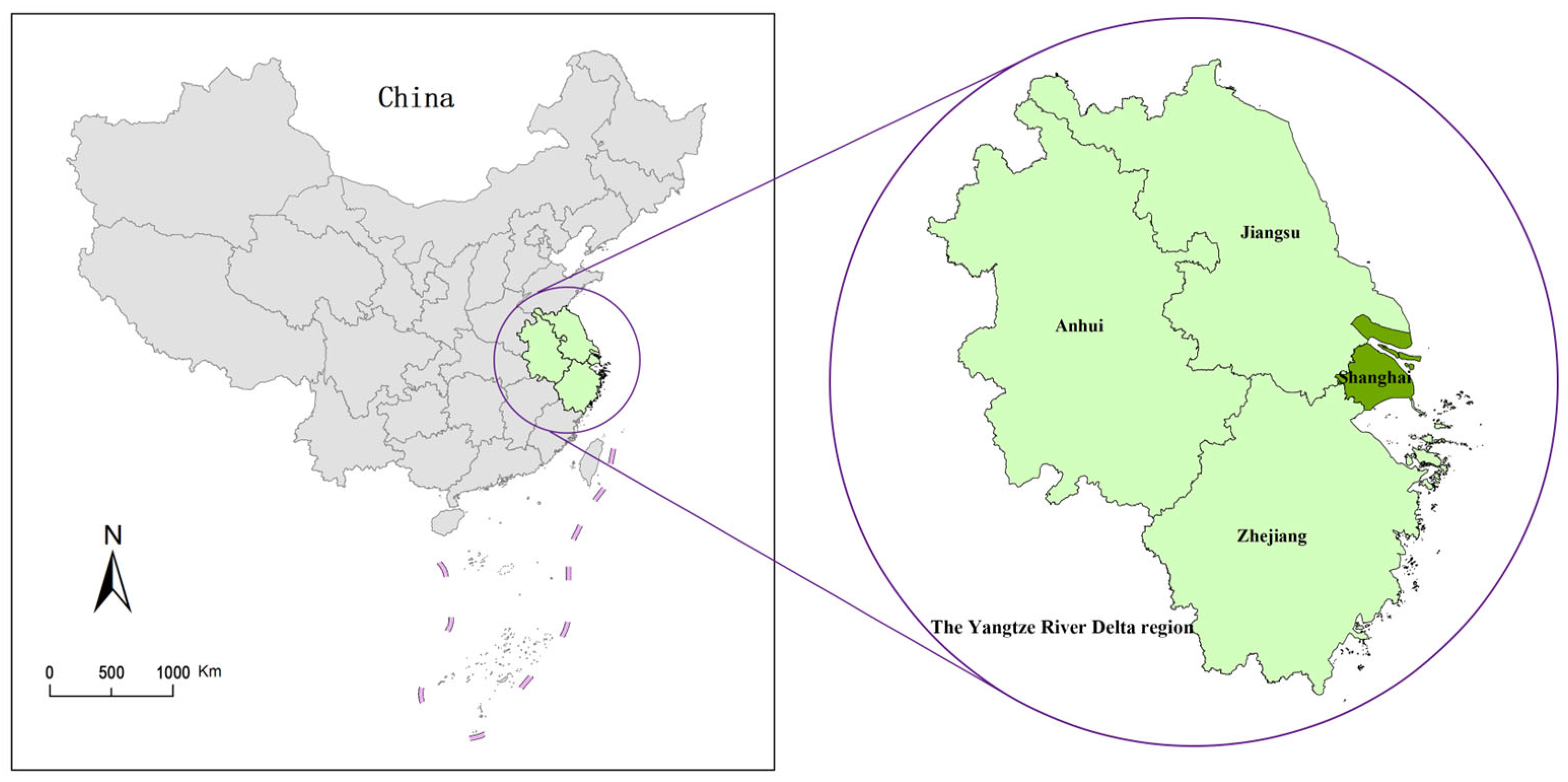
In this regard, the development experience of the NEV industry in China’s Yangtze River Delta (YRD) region seems to provide a convincing reference case. As the most economically dynamic region in China [
7], the Yangtze River Delta serves as a strategic cornerstone for advancing China’s economic development ambitions. It also represents a forefront segment for China’s engagement in international markets and competition. Specifically, the YRD contributes 23.6% to the country’s total economic output and boasts eight “double first-class” universities, 74 state key laboratories, a research investment equivalent to one-third of the national total, and 32.4% of the total number of patent applications [
8]. These remarkable economic prowess and innovation capabilities provide cities in the YRD with significant advantages and potential for the development of high-end equipment manufacturing [
9,
10]. Several scholars have already revealed that, in recent years, YRD has formed a leading industry cluster nationally or even globally in the field of NEVs [
11,
12,
13]. Therefore, the industrial development experience of the NEV sector in the YRD region serves as the “reference solution” for how to establish a high-quality automotive industry cluster in the era of electric vehicles. The NEV industry linkage model between cities within the YRD contains the “code” for the synergistic development of high-end manufacturing clusters at the regional level.
To provide a clear depiction of the collaborative relationships among cities within the region and to understand how the NEV industry is specialized, distributed, and organized in the YRD, this paper employs social network analysis (SNA) as its primary research methodology. SNA originated in social network theory, which is a theoretical framework that has been used to understand the connections and interactions between members of a society [
14]. In the study of regional industrial clusters, SNA can offer a more vivid and comprehensible perspective to unveil the organizational structure and operational mechanisms within the regional industrial ecosystem.
Using this method, the paper assesses the city network structure in the YRD region related to the NEV industry. It analyzes the characteristics and patterns of collaborative development in the regional automotive industry, providing explanations for the unique distribution and cooperation networks within this sector. This research addresses a gap in regional NEV industry studies, offering insights to enhance both overall and local production strategies in the YRD, and it is anticipated to inspire the sustainable development of related industries and regions.
The remainder of this paper is structured as follows.
Section 2 provides a review of the existing research progress related to the selected topic and identifies gaps in the current literature.
Section 3 presents the research area, data sources, and methodologies employed in this study. Building upon the established methods and data,
Section 4 focuses on constructing our city network and conducting specific analyses. Lastly, in
Section 5, we present the conclusions drawn from our findings and offer recommendations for future studies in this field.
2. Literature Review
There is an interesting phenomenon in the field of NEV industry-related research: although the NEV industry is growing at an incredible rate in China, there are only a few studies concerning the spatial layout of the NEV industry in the academic community over the past few years. After a deeper search of the literature, scholars in social sciences seem to have a keener sense of this emerging industry. This has led to a relatively rapid and in-depth development of their research [
15,
16]. However, due to their disciplinary specialties, they tended to prioritize qualitative research at the macro level of the industry [
17,
18], such as conducting a review of the overall development stage of the industry and examining the current situation and problems in the industry chain. They also combined their research with quantitative methods to analyze the promotion effect of relevant policies on the development of NEV industry [
19,
20].
Among the few studies dealing with the spatial distribution of the industry, scholars were still confined to discussing the geospatial location and quantitative distribution of the NEV industry at a relatively macroscopic scale. Peng Hua computed the industrial concentration coefficient by gathering data on the quantity of NEV production bases, totaling 180, within each province of China. This data was then coupled with the production and sales figures of NEVs in each region to create a comprehensive map illustrating the distribution of NEV clusters throughout the country [
21]. Cao supplemented the data sources with information on the quantity and geographical locations of key NEV enterprises and production facilities. He claimed that China, at the macro level of the NEV industry, exhibits a spatial expansion pattern characterized as a “Four-point, One-axis” model [
11]. Recently, the author’s team also proposed a new direction on the same research scale, using, for the first time, the location information data of NEV-listed companies to identify that China has formed an “8” industrial axis pattern with the Yangtze River Delta, the Pearl River Delta, and the Beijing–Tianjin–Hebei urban clusters as the core [
12]. It is not difficult to see that the above studies obtained different findings due to the different basic data sources that were chosen. However, their description of the spatial pattern of China’s NEV industry all stayed at the national scale without focusing on the specific distribution of NEV clusters in a certain region.
In terms of research methodology, with the deepening of informationalization and globalization, the interpretation of regional industrial patterns can no longer rely solely on the geographical distribution of industries. The traditional theoretical model of the central place to which industries are attached is being permeated and reshaped by a network relationship, resulting in a networked spatial organizational architecture consisting of interconnected large, medium, and small cities, also known as the city network. Therefore, a study on the regional industrial pattern can be realized with the help of portraying the city network based on specific industries in the study area.
In the early stages of research, “ city network”, as a research object, was generally treated as a static and relatively isolated system [
22]. It was common to rank the comprehensive attributes of cities by indicators such as the number of companies and the level of business services. Later on, the emergence of “flow space theory” prompted scholars to start considering cities in a dynamic, interconnected system [
23]. With Taylor pioneering the interlocking network model to study city networks [
24], more and more scholars began to use headquarters–branch office data to construct firm–city network transcreation models for the purpose of indirectly examining city network characteristics [
25,
26].
Using this method, scholars can make a clearer and more specific description of the interaction between cities in the YRD region based on specific industries. For example, Tang and Zhao constructed a city correlation network with 81 multinational companies that have established branches in the YRD region and belong to the production service industry as the main clues. The network is found to have both hierarchical and territorial properties [
27]. Based on the above, Wang expands the research data source to 392 productive service companies that have reached a certain scale, and provides a more detailed portrayal of the YRD city network in terms of three aspects: hierarchy, network pattern, and functional characteristics [
28]. Some other scholars have constructed city network models in the YRD region based on data from patent consulting firms [
29] and strategic emerging industry companies [
30], respectively, revealing the evolutionary trends of the YRD city network from different aspects.
Theoretically, this study bridges two streams of the literature. The first concerns industrial cluster theory and regional innovation systems (RISs), which emphasize how geographic proximity facilitates knowledge spillovers, labor pooling, and supplier–customer relationships [
31,
32]. The second stream draws from the “world city network” paradigm, which reconceptualizes urban systems as networks constituted through inter-firm relationships rather than static hierarchies based on city attributes alone [
33]. By applying the interlocking network model to a specific emerging industry within a bounded region, this study examines how the NEV industry—characterized by modular production, rapid technological change, and policy-driven development—organizes spatially in ways that may differ from both traditional manufacturing clusters and service sector-dominated global city networks.
Overall, the literature review exposes that, even as the most economically developed region in China, the Yangtze River Delta still lacks targeted industrial layout studies in emerging fields such as NEV. Meanwhile, a lot of empirical research shows that by constructing the headquarters–branch model of a specific industry, the distribution pattern of related industries can be obtained and the understanding of the city network structure in the region can be improved. Therefore, based on the perspective of company linkage, the use of SNA to study the spatial pattern of the NEV industry in the YRD can fill the gaps in regional-scale industrial research, and is also expected to enhance the understanding of the clustering law of the NEV industry and its regional development pattern.
4. Construction and Analysis of the YRD City Network
4.1. Overall Distribution of Companies
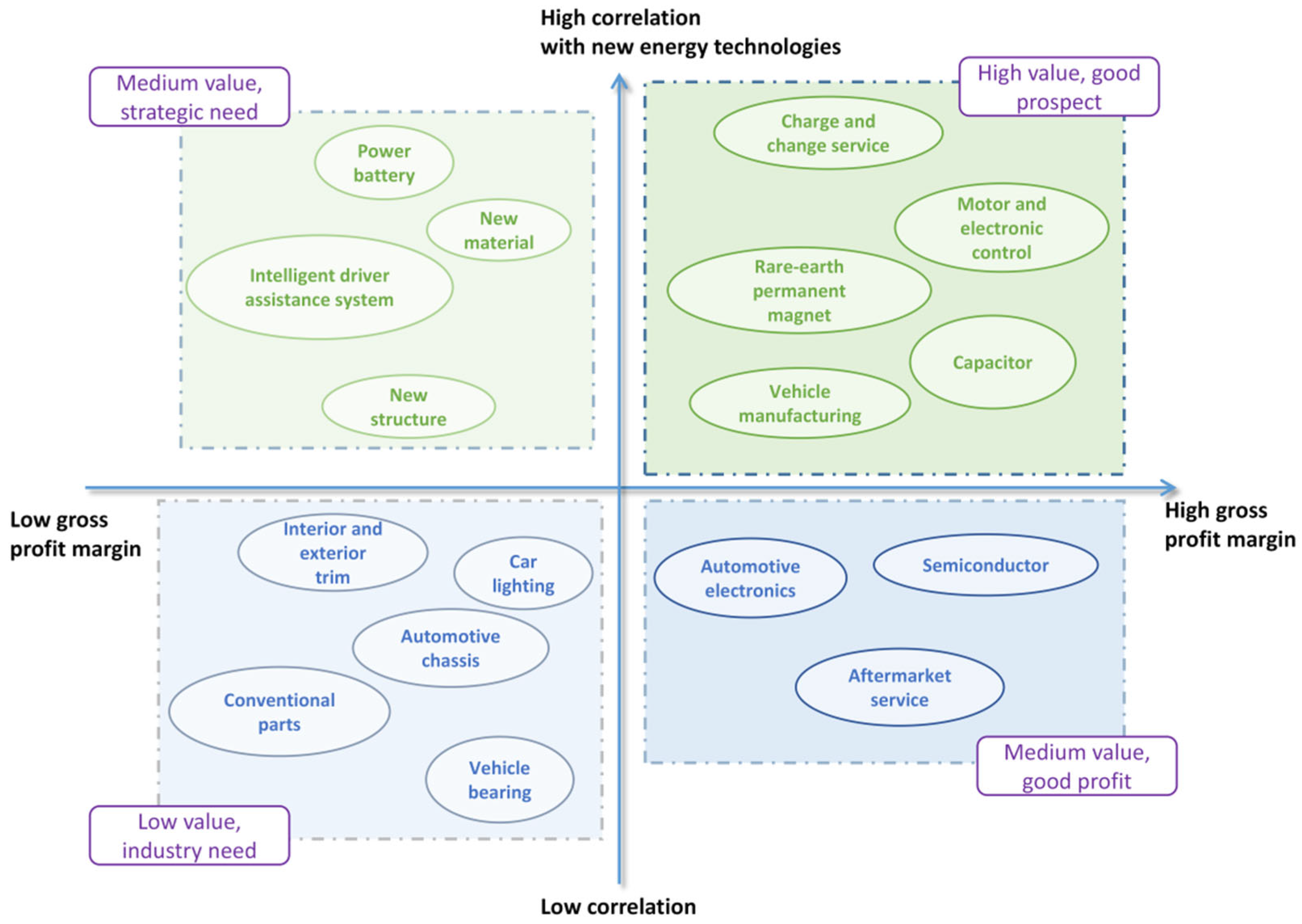
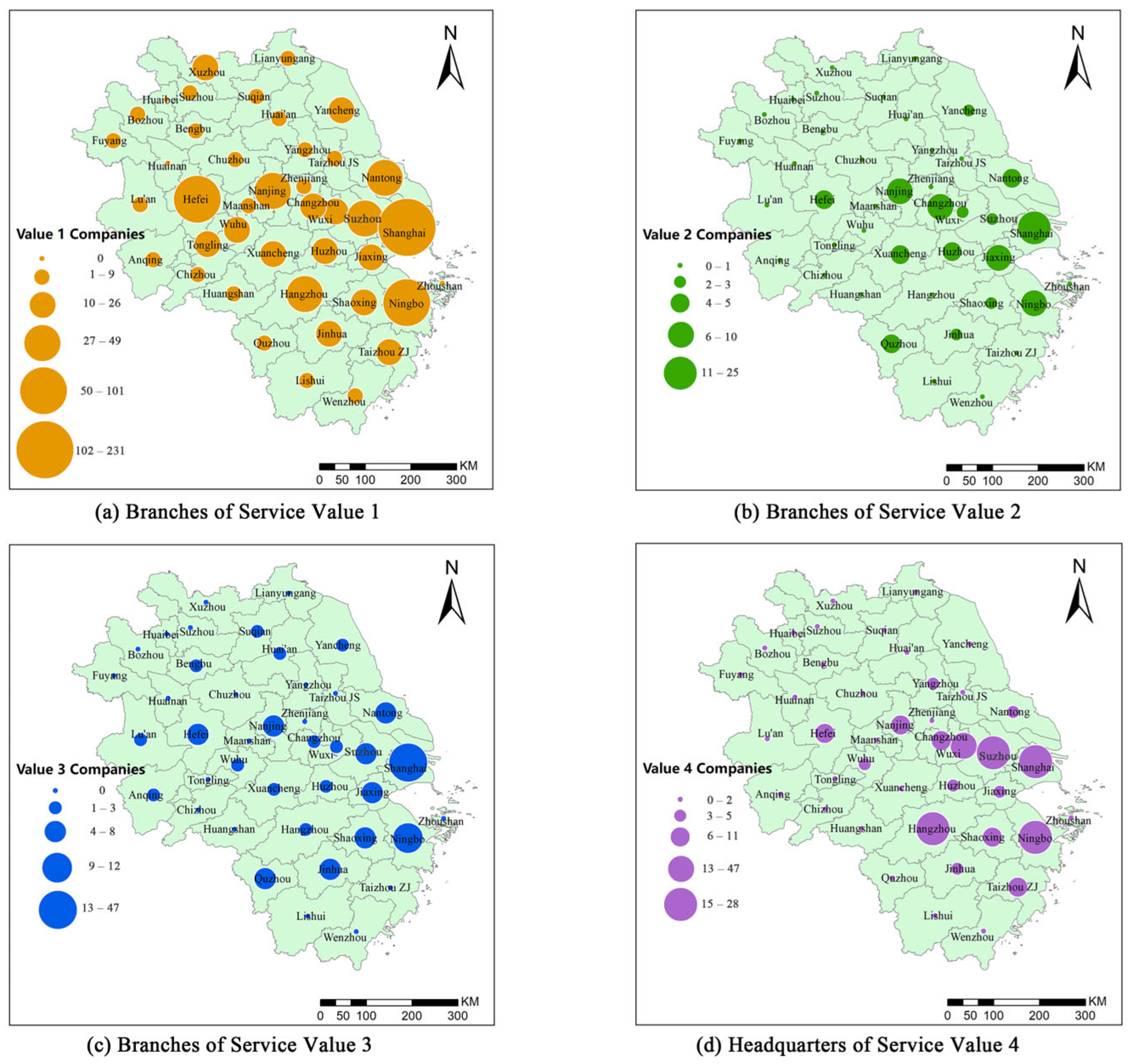
The new energy vehicle industry chain relies not only on traditional automotive OEMs but also involves suppliers or solution providers in different fields such as EIC systems, energy management, voice assistants, and autonomous driving. In this study, after establishing the database of companies with different service values according to the previous methods and steps, each company was associated with the surface element layer of the cities within the study area based on their location information. Subsequently, the number of companies with different service values in each city was counted, with the results shown in
Figure 3. Before proceeding to the next step, the initial distribution pattern of each type of company can be understood in this figure first.
Overall, the YRD region has the largest number of companies with a service value of 1 in the NEV Industry, which are basically located in all the 39 cities within the study area. As described in the rules for assigning service value, companies with a score of 1 are engaged in the production of general automotive technology or general components. This type of market segment has a relatively low entry barrier due to the inheritance of technology or products from the traditional automobile manufacturing industry, so general cities can layout this type of industry to participate in the competition, which leads to a relatively large number of companies.
The number of companies with a service value of 2 to 3 in the YRD is significantly lower than the number of companies with a score of 1, and the gap between the leading cities and the others is larger. Four cities, Shanghai, Ningbo, Nanjing and Hefei, have a high number of companies in both categories. Other cities, on the other hand, find it difficult to achieve a balance among industry types, such as Jiaxing and Changzhou, which have a high number of two-point companies and a low number of three-point companies. In contrast, Shaoxing and Jinhua have more three-point firms and fewer two-point firms.
The distribution of listed companies with a service value of 4 is shown more clearly in this subsection after switching to the hierarchical symbols to show the difference in the number of companies between regions. Shanghai, Suzhou, Wuxi, Changzhou, and Nanjing form the main east–west corridor of corporate headquarters in the YRD. Ningbo and Hangzhou also stand out in terms of the number of companies with a score of 4 outside the main corridors. Although they do not form high-value contiguous clusters with neighboring cities, they reflect the attractiveness to the headquarters of NEV-listed companies in each of the two cities.
4.2. Construction of City Network
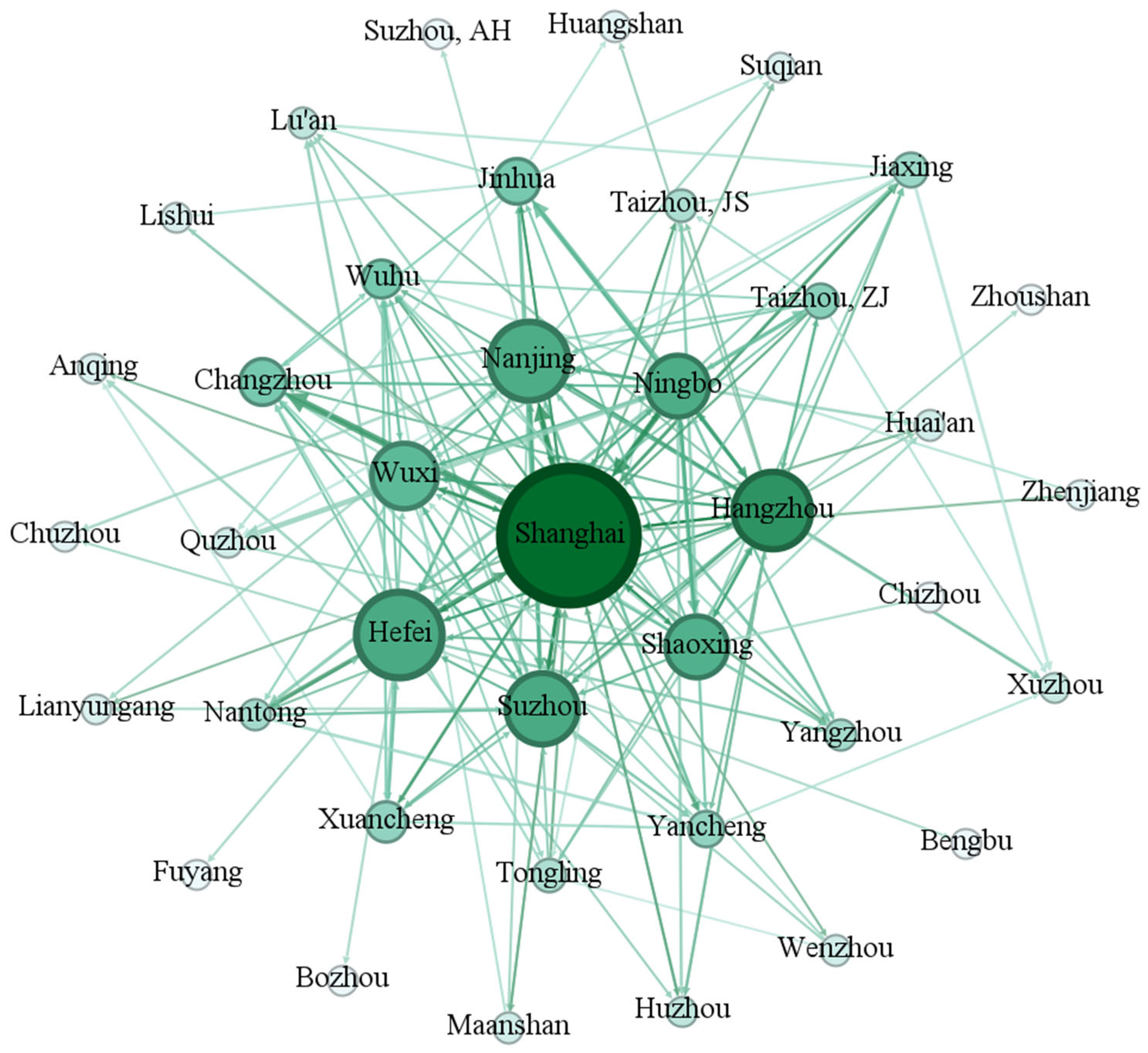
After obtaining the distribution of firms with different service values, the linkage values generated by headquartered firms within the same city were aggregated, which resulted in the city’s linkage values (in one direction) with other cities based on the headquarters of NEV firms. By summing up the linkage values of each of the 39 cities with other cities, the original two-mode matrix (companies × cities) could be transformed into a one-mode matrix (cities × cities), and a bidirectional linkage matrix based on the affiliation network of listed NEV companies could be obtained for cities in the YRD region. Furthermore, the above bidirectional linkage matrix was imported into the Gephi software to obtain the city network model for subsequent social network analysis. The constructed city network model is shown in
Figure 4, based on the total degree of each city node to differentiate the size of nodes and the Fruchterman–Reingold layout to visualize its network structure.
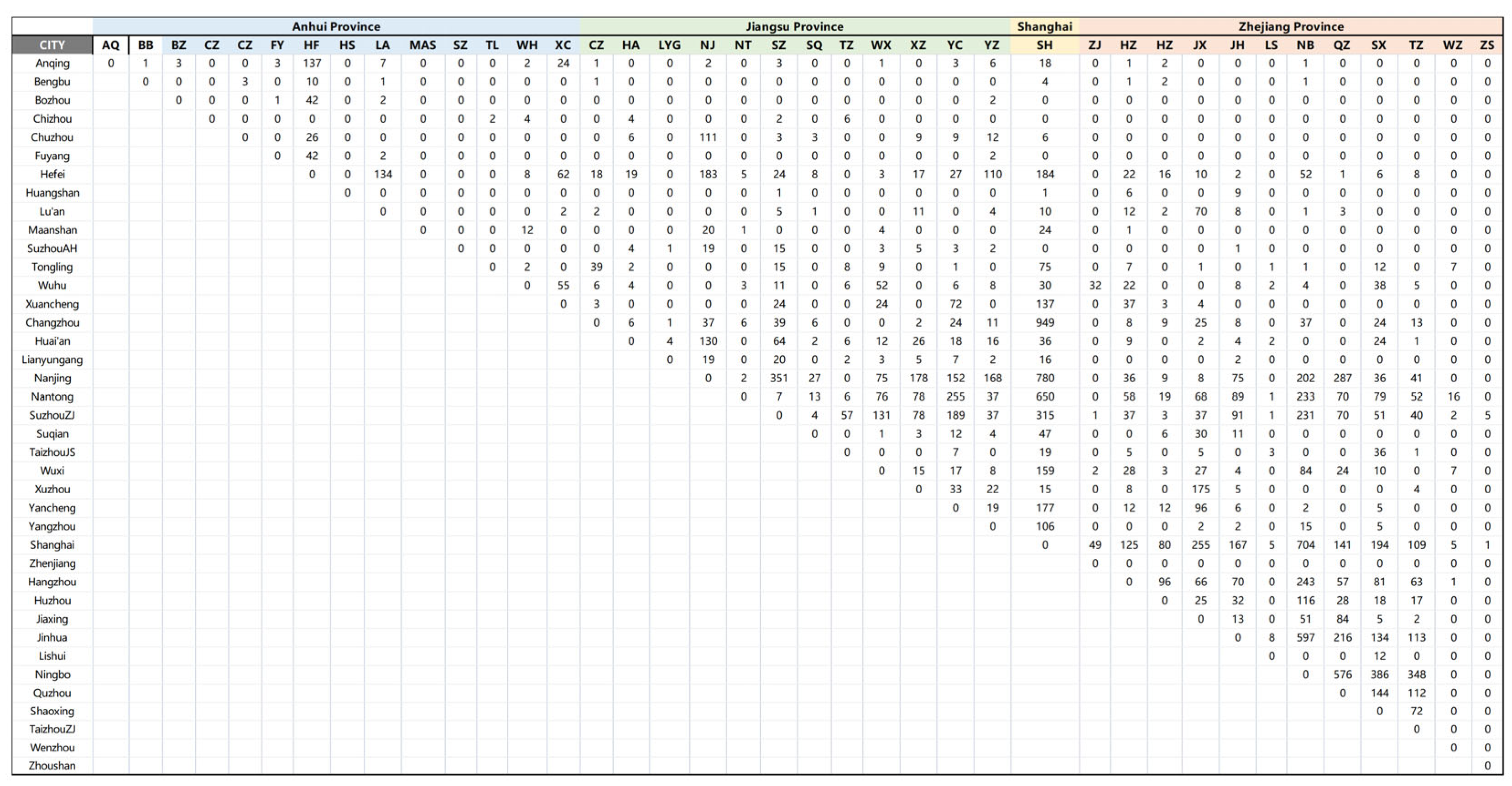
Finally, the linkage values formed by the above enterprises with headquarters in city A and branches in city B are summed with the linkage value formed by the headquarters in city B but with branches in city A to obtain the connection value between cities A and B based on the entire sample of NEV enterprises (
Figure 5), which is the “connection strength value” used in this paper to describe the degree of connection between two nodes.
4.3. Overall Characteristics of the City Network
The first characteristic of the network is low density. After the calculation of SNA software accordingly, the total number of links (directed) between 39 city nodes within the target network was 189, with a graph density of 0.128. This means that the actual amount of business connections between cities is only 12.8% of the theoretical link volume, which is typically a low-density network compared to a random network density of 0.5 for the same node size. This pattern is typical for specialized industrial networks where firms strategically select partners based on complementary capabilities rather than forming exhaustive connections. Such a low density reflects specialization and strategic selectivity in modular production systems rather than indicating inefficiency. For context, prior studies on regional manufacturing networks report density values typically ranging from 0.10 to 0.20 for specialized sectors, suggesting that the observed pattern (0.128) falls within expected ranges for mature industrial clusters. We can find evidence for this selective connectivity in the structural diagram of the network (
Figure 4): peripheral cities establish targeted partnerships with specific hub cities rather than forming diffuse connections across the entire network. Similar industrial networks show comparable density levels (0.12–0.18) [
49,
50].
The second characteristic of the network is a short path. The measured target network diameter is 4, and the average path length is only 2.009, which indicates that the furthest partnership between cities in the network is separated by a maximum of three cities. And on average, any two cities only need to pass through one intermediary city to link to each other. From a global view of the network, the characteristic path length of our constructed city network model is short, with few layers involved overall. This implies that there may be some nodal cities acting as intermediaries for the exchange of industrial factors. Combined with
Figure 4, we can speculate that these “intermediary cities” dominate the production activities of the peripheral cities for industrial support (generally one-way) on the one hand, while engaging in more complex and complementary factor exchanges with many other “intermediaries” on the other hand.
4.4. Distributional Characteristics of Node Centrality
4.4.1. Selection of Centrality Indicators
To identify the above “intermediary cities”, we investigate the centrality of nodes in depth. In general SNA, the centrality of a node can be judged by the magnitude of degree centrality. Since this study uses a directed network structure, the degree centrality of each node is the sum of their in-degree and out-degree. However, as other scholars have pointed out [
51], degree centrality only measures the local centrality of the network and does not take into account extraneous effects such as the presence or absence or number of indirectly linked cities. In other words, degree centrality only measures the linking ability of city nodes without considering their ability to control other cities. Put into the context of this study, a node with a high degree centrality can only indicate that this node aggregates a high number of intra-enterprise connections as a terminal. Such a city can be described as a popular location for the layout of NEV-listed companies but may not necessarily be a key city to keep the regional industry chain functioning.
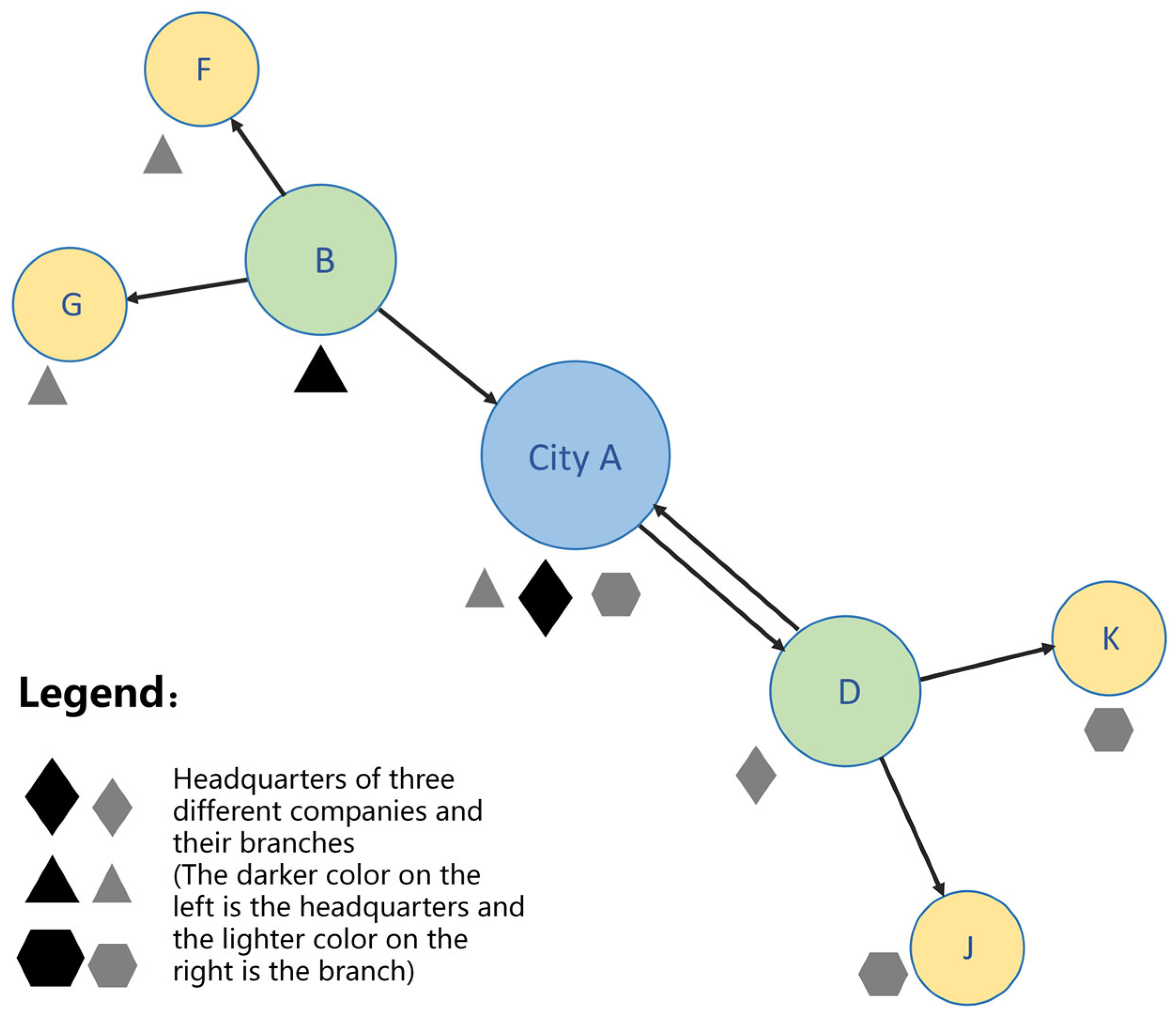
In this context, the study started to consider the suitability of betweenness centrality as an alternative indicator. For this purpose, this study extracts part of the constructed city network comparing the two types of centralities and draws an abstract network structure, as in
Figure 6. In this network, it is assumed that there are a number of city nodes numbered alphabetically and three publicly traded companies represented by different icons. By analyzing the linking relationships between the nodes, it can be found that city A adds up to a total degree of 3, which is smaller compared to the total degree of 4 than city D, and is only the same as city B. That is to say that, from a degree centrality point of view, city A is less important or popular than city D in the network.
However, node A is in an important structural hole position of this network, connecting the local network composed of nodes B and D as the core, because, from an industrial point of view, city A brings together the headquarters or branches of three listed companies at the same time, leading to higher theoretical possibilities of business cooperation occurring in it than any other node in the graph. Even from the point of view of structural necessity, if city A fails to disconnect all links, only two discrete clusters will exist in the network. Therefore, in the research scenario of this paper, city A plays the most crucial role for the stable operation of the regional industry. The indicator for measuring this role in SNA is betweenness centrality.
Inspired by the above analysis, this paper chooses to use betweenness centrality as a core indicator of cities’ ability to control the city network in the NEV domain, with other classical indicators considered as references. We aggregate the above indicators and rank them by betweenness centrality, intercepting the top twelve cities, as shown in
Table 1.
The table above shows that:
Shanghai has the highest in-degree, out-degree, degree centrality, and betweenness centrality indicators. The extremely high degree centrality reflects the popularity of Shanghai in the whole network, while the betweenness centrality, which is far ahead of the second one, reveals Shanghai’s irreplaceable control and influence in the regional NEV industry network.
Among the top ten cities, except for Wuxi and Changzhou, the other eight cities are all characterized by the in-degree being smaller than the out-degree. This indicates that the top cities with a higher influence in the NEV industry in the YRD usually have more headquarters for listed companies that can expand their business to other cities or that the better industrial output capability of these cities can bring them more voice and influence in the NEV industry network.
This ranking of network betweenness centrality does not follow the ranking of degree centrality. For example, in the ranking of the four cities below Shanghai, Hangzhou has a degree centrality as high as 30, only second to Shanghai, but the betweenness centrality ranks fourth. Similarly, Hefei and Suzhou both have a centrality of 23, but Hefei’s intermediary centrality is nearly 44.5% higher than Suzhou’s. Nanjing and Ningbo even have the same values for the out-degree and in-degree but differ by five places in betweenness centrality rankings.
4.4.2. Hierarchical Distribution of Node Centrality
Based on the betweenness centrality obtained from the previous calculations, the 39 cities were categorized into five tiers according to the natural breakpoint hierarchy (
Table 2). The first tier is only Shanghai, which is the hub of the entire YRD city network and occupies the absolute regional core of the NEV industry. The second tier is the sub-core of the region, with seven cities—Hefei, Nanjing, Hangzhou, Suzhou, Wuxi, Shaoxing, and Ningbo—and four non-provincial capitals are shortlisted in this tier. The third tier also has only three cities, Changzhou, Jinhua and Xuancheng, whose betweenness centrality is between 15 and 23, which belongs to the middle range that is less than the top and more than the bottom, assuming the role of local core nodes of the network. The fourth level starts with a larger number of cities; there are 10 cities at this level, such as Wuhu, Yancheng, Jiaxing, Taizhou, etc., which still control some of the lower-level cities in the network, assuming the role of the localized sub-core. The fifth tier consists mainly of cities with a betweenness centrality of 0, which are usually in a dominated position in the city network and belong to the bottom nodes in the network structure. This tier covers the largest number of cities, amounting to 18, accounting for 46.15% of all nodes. All in all, based on the distribution of node levels alone, the cities in the YRD region form a hierarchical pyramid-like structure in the field of the NEV industry.
4.5. Clustering and Spatial Distribution Pattern of Nodes
An important part of SNA is the community structure in the network, which is the real or potential pattern of relationships among network members [
52]. However, this is not simply a subjective judgment of city groups in alliances but rather an objective calculation based on a city network model to discover “clusters” that are relatively close internally but less connected to external cities belonging to different communities. In this paper, we chose to detect these clusters in the YRD city network based on the Modular Functions in Gephi software. In fact, the Gephi software uses the Louvain Method (LM) to classify the clusters of nodes with the community detection algorithm, with the ability to distinguish each cluster by coloring after partitioning [
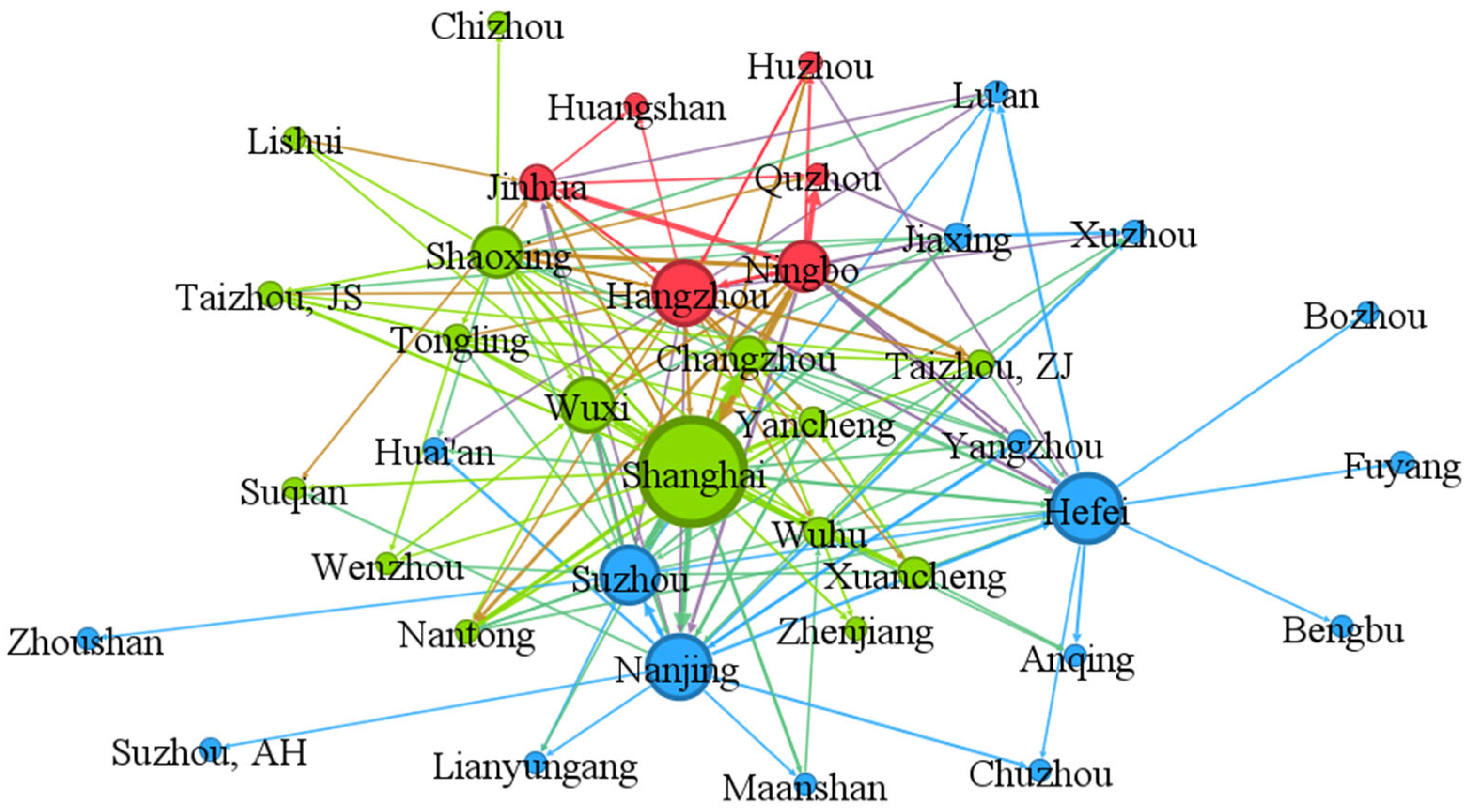
53]. Using this method, we colored the classification of the YRD city network and adjusted it to the Yifan Hu layout model to show the clustering results of the network more clearly (
Figure 7). As shown in the figure, the cities in the YRD are generally divided into three major communities. If looking closely at the cities which compose the three major communities, two interesting features can be found.
First, the clustering results show that geographic proximity does not determine which community a city belongs to. While the traditional “Central Place Theory” considers cities to be connected by strong geographic proximity based on transportation costs, which has led to the classical “core-edge” model [
54], the city connection based on modern enterprises is more expressed as a comprehensive flow of various factors such as traffic flow, information flow, capital flow, and technology flow. This mobility, attached to both modern communication infrastructure networks and transportation facilities, has greatly freed the cities from geographical proximity, making inter-city cooperation less constrained by distance [
55]. Therefore, we can see in
Figure 7 that Huangshan in Anhui can form a cluster with Hangzhou, Jinhua, and other Zhejiang cities. Wuhu can also choose to join the largest community led by Shanghai for its development regardless of the influence of the neighboring provincial capital Hefei.
Secondly, we can find several “body layer” cities around Shanghai that are allied with each other to compete with the “Shanghai Club”. Geographically, Suzhou, Hangzhou, Ningbo, and Jiaxing are all very close to Shanghai. But they did not join the community led by Shanghai as Changzhou and Wuxi did. Frankly speaking, it is difficult to find all the reasons from this study; maybe these cities have NEV industry cooperation at the government level, or maybe the expansion is initiated by the related companies for their own benefit. However, it is certain that the endogenous development needs of cities will inevitably lead to competition among cities in popular industry sectors. Although the NEV industry is widely recognized to possess great value-chain potential, the total accessible market remains limited. In addition, Shanghai itself ranks first in the auto industry in the YRD, with well-known auto groups such as SAIC and GM. If Shanghai is allowed to develop, unhindered, in the field of NEV, other cities may not be able to get a big enough share in this wave of automotive energy transition. This pattern suggests that cities with strong industrial bases may be establishing collaborative networks that operate somewhat independently of Shanghai’s direct influence. The network structure is consistent with competitive dynamics in the NEV sector, where provincial capitals leverage local industrial advantages to build regional partnerships. While the data patterns align with such strategic positioning, further research incorporating policy documents, firm interviews, or investment flow data would be needed to confirm the intentional nature of these alliance formations.
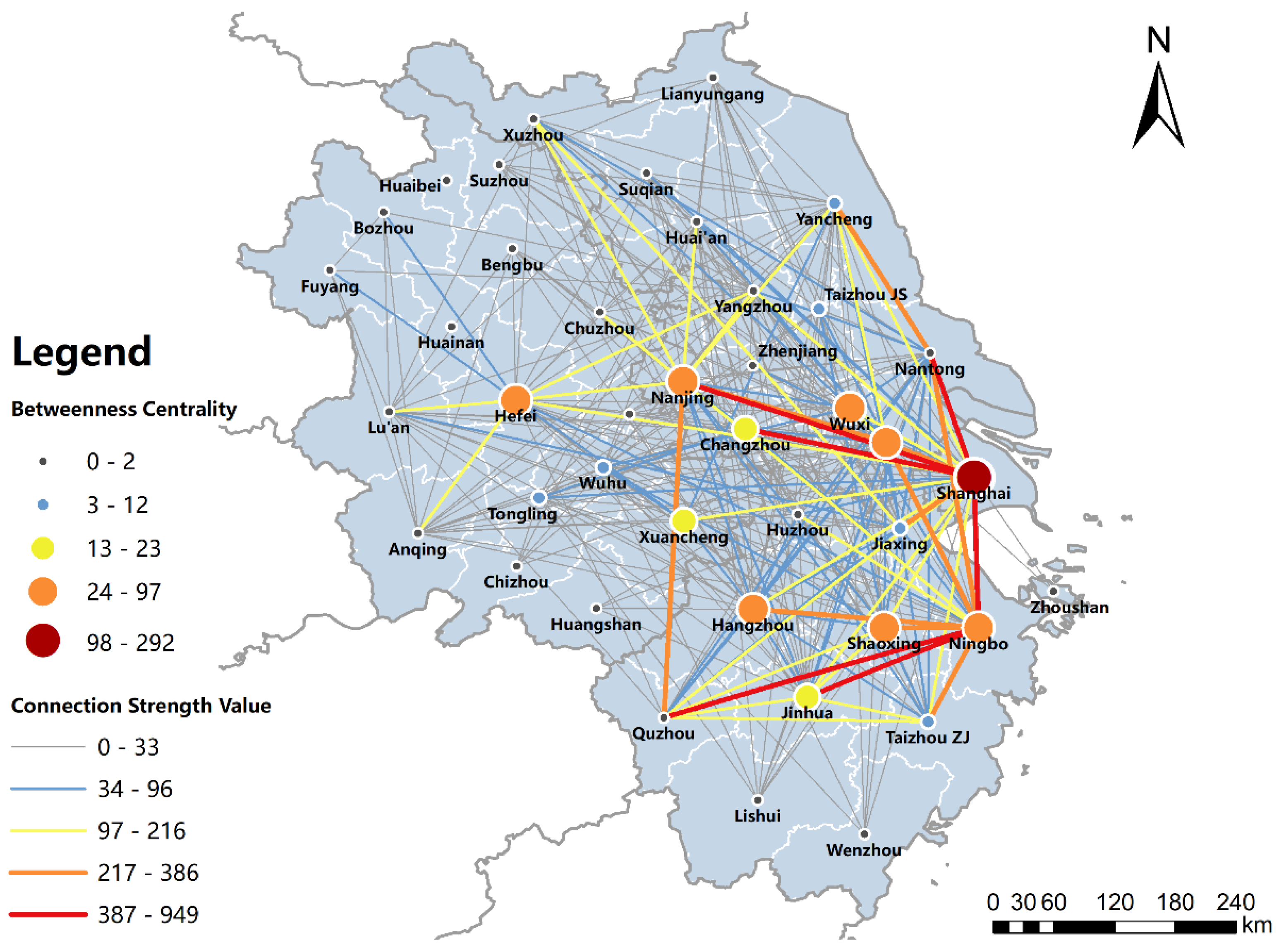
In general, the YRD region has formed a competition between the “three clubs” in the field of the NEV industry. Each club has its own “star” city with high betweenness centrality and has gathered some members who can break away from geographical proximity and eventually form a pattern of “agglomeration at large scales and dispersion at small scales”. Further, if we apply the previously calculated betweenness centrality and the connection strength values between cities onto the map, we can then use the ArcGis platform to integrate and visualize them to get the geographically based city network linkage map of the region (
Figure 8).
After adding the actual geographical information, we can clearly see that Shanghai and the seven cities in the second tier of control are not a simple “core-edge” structure, which also confirms our hypothesis given above. Specifically, Suzhou, Wuxi, Nanjing, and Hefei are distributed in an axis from east to west. Hangzhou, Shaoxing, and Ningbo form another east–west axis distributed parallel in the south of the region. The closest linking route in the north–south direction is composed of five cities along the coastline: Yancheng, Nantong, Shanghai, Ningbo, and Taizhou. Combining the above routes, the YRD city cluster has formed a “golden bow”-shaped NEV industrial corridor in terms of morphology. It is not only an important vein linking the hot cities but also the core skeleton supporting the YRD region to gain world-class influence in the NEV field.
The regional industrial pattern reflected in the above structure has an important practical meaning, which is breaking the inherent impression that local protectionism prevails in the industrial sector at all levels of government in China (especially at the provincial level). The success of the YRD in the NEV sector shows that the criteria for selecting partners among cities in the same region do not need to be limited by artificial administrative boundaries. A more liberal model of cooperation, at least in the NEV sector, has been proven to not create an over-concentration of the industry but rather to help improve the overall development in the region. This also means that, in the future, when the region formulates relevant industrial policies, it should start with a more integrated regional development perspective rather than trying to create a complete and independent industrial chain within a single province.
4.6. Robustness Analysis
To address potential concerns regarding the subjectivity of service value assignments, we conducted a robustness analysis using alternative weighting schemes. We reconstructed the city network using: (a) equal weights (all links weighted as 1) and (b) unweighted binary links (considering only the existence of connections). This allows us to test whether the observed network structure is driven by the specific service value assignments or reflects genuine collaboration patterns.
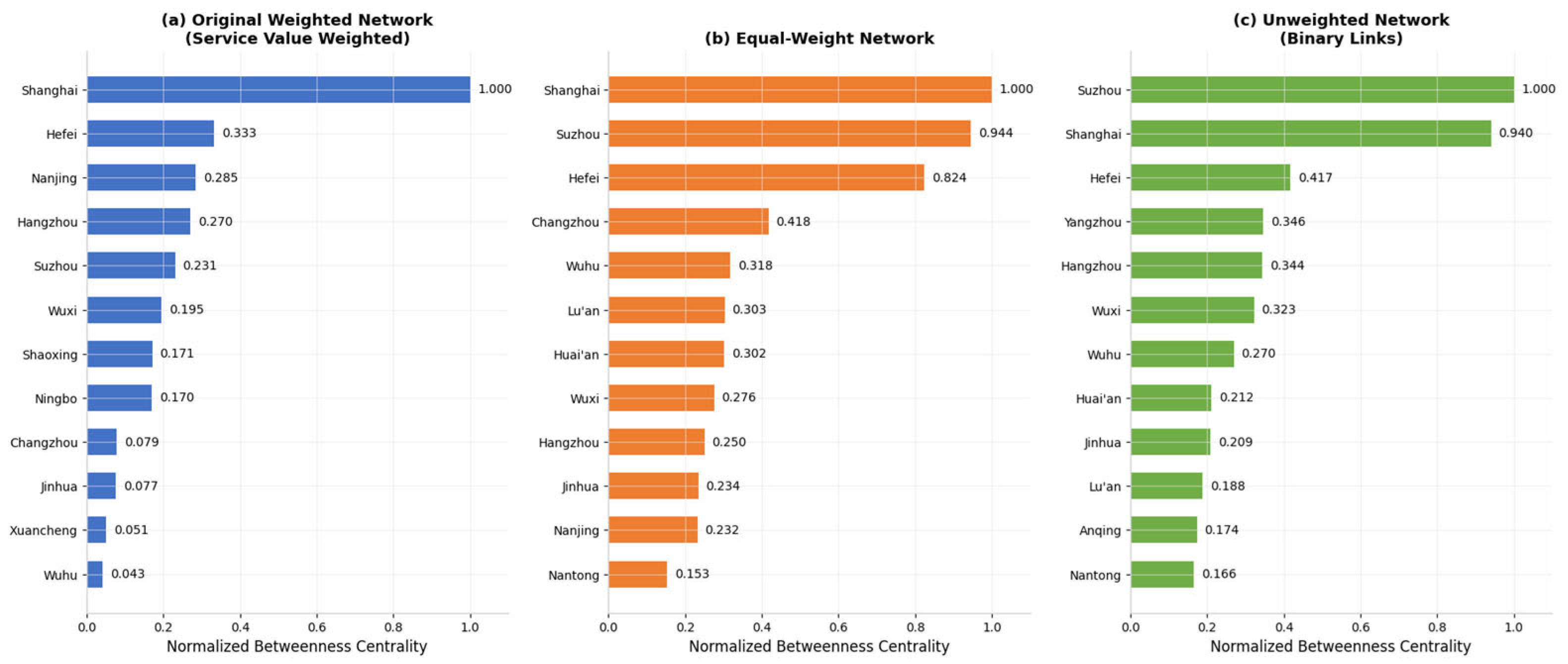
Figure 9 compares the top 12 cities by normalized betweenness centrality across the three networks. Several findings confirm the robustness of our main conclusions.
First, Shanghai consistently ranks first or second across all three networks (BC = 1.000, 1.000, and 0.940), confirming its position as the undisputed regional core. Hefei maintains stable high centrality (rank 2–3), reinforcing its role as the sub-core of the Anhui region. This stability of top-tier cities supports the “pyramid-type hierarchy” finding.
Second, the six cities identified as network cores in the original analysis—Shanghai, Hefei, Nanjing, Hangzhou, Suzhou, and Wuxi—all remain within the top 11 in both alternative networks (
Table 3). While specific rankings vary due to different weighting schemes, the multi-center structure is preserved. Notably, Suzhou shows stronger centrality in equal-weight and unweighted networks (ranks two and one), suggesting that its extensive connectivity may be underweighted in the service value scheme. On the other hand, Nanjing’s ranking drops from third to 11th (equal weight) and 13th (unweighted). This reflects Nanjing’s strategy for maintaining fewer but higher-value connections (average edge weight = 151.7 vs. Suzhou’s 72.6), primarily with headquarters and R&D centers rather than widespread manufacturing branches.
Third, community detection reveals consistent regional clustering. The original weighted network identifies three major communities, while the equal-weight and unweighted networks identify four communities (
Table 4). However, a closer examination reveals that the four communities in the alternative networks can be meaningfully grouped into three geographic clusters:
- -
Anhui Cluster: Community 1 (7–8 cities, Hefei-centered) remains stable across all networks.
- -
Zhejiang Cluster: Community 3 (7–8 cities, Hangzhou-centered) remains stable across all networks.
- -
Jiangsu–Shanghai Cluster: Communities 2 and 4 in the alternative networks together correspond to Community 2 in the original network, representing the Jiangsu province and Shanghai municipality. The split in the alternative networks reflects the internal differentiation between southern Jiangsu (Suzhou, Wuxi, connected with Shanghai) and northern Jiangsu (Nanjing, Yangzhou, etc.), but both remain part of the broader Jiangsu–Shanghai industrial system.
Table 4.
Community detection under three scenarios.
Table 4.
Community detection under three scenarios.
| Network Type | Number of Communities | Communities (by Province Composition) |
|---|
| Original Weight | 3 | Anhui (8), Jiangsu–Shanghai (21), Zhejiang (9) |
| Equal Weight | 4 | Anhui (8), Jiangsu-South + Shanghai (12), Zhejiang (8), Jiangsu-North (11) |
| Unweighted | 4 | Anhui (8), Jiangsu-South + Shanghai (12), Zhejiang (8), Jiangsu-North (11) |
This confirms that the “three clubs” finding (Anhui Club, Jiangsu–Shanghai Club, and Zhejiang Club) is robust to weighting schemes. The additional community split in the alternative networks reflects internal structural differentiation within the Jiangsu–Shanghai Club rather than a fundamentally different clustering pattern.
In summary, the key structural features—low density (0.128), short average path length (2.009), multi-center hierarchy, and provincial-based community clustering—remain stable across all three networks. This validates that the service value assignment method captures genuine industrial importance without artificially creating the observed patterns. The robustness analysis strengthens confidence in the conclusions regarding the YRD’s NEV industry collaboration structure.
5. Conclusions
Based on the data related to NEV-listed companies and their branches, this study investigates the city network within the Yangtze River Delta region using the method of social network analysis. By conducting a comprehensive analysis of the spatial distribution of various types of enterprises, along with the development of an abstract social network model and a geographically projected city linkage map, the following conclusions have been drawn:
The city network associated with the NEV industry in the YRD exhibits three fundamental characteristics: low density, short path, and multi-center. These structural features remain stable across alternative network constructions using different weighting schemes (
Section 4.6), strengthening confidence in the observed patterns. Such a structure proves that, while cities in the YRD region still need to attach themselves to Shanghai as a super-industrial core to receive the radiation diffusion of elements such as knowledge and technology, they are also actively forming more efficient small-scale industrial alliances with other complementary cities to occupy more market shares. In the above context, the YRD has formed three major NEV industry “clubs” led by Shanghai, Hefei, and Hangzhou, which show the pattern of “agglomeration in large scale and dispersion in small scale” geographically.
Using the degree of betweenness centrality, it is found that the cities in the YRD region exhibit a “pyramid-type” collaborative relationship in the NEV industry. This hierarchical structure is robust across alternative weighting schemes, with core cities (Shanghai, Hefei, Suzhou, Hangzhou, and Wuxi) maintaining top positions regardless of whether service values, equal weights, or binary links are used. Based on the characteristics of the city network constructed by a single industry, this study advocates for the adoption of the betweenness centrality ranking of each city and explains the structure of the city network model. We believe that a pyramid-type collaboration exists in the YRD in the NEV industry, which can help cities in the region establish a clear hierarchical and efficiently communicated cooperation network.
The YRD example demonstrates that cooperation between cities in the NEV industry can transcend the constraints of geographic proximity. This finding is further supported by the robustness analysis, which shows that provincial-based community clustering persists even when service value weights are removed, suggesting that administrative and institutional factors may play a role in shaping inter-city collaboration patterns alongside geographic considerations. In each of the three major city clubs of the NEV industry in the YRD, we can clearly find some members who are geographically very far away from the community center. This phenomenon is less prevalent in the traditional automobile manufacturing industry, where transportation and logistics costs play a significant role. This suggests that value creation in the NEV industry chain extends beyond physical dimensions to a certain extent.
There are several limitations to this study. Firstly, the data used in this paper only includes headquarters and branches of NEV-related A-share-listed companies. While listed firms typically represent industry leaders with established market positions, this sampling strategy may introduce structural bias by excluding non-listed but highly innovative small- and medium-sized enterprises (SMEs) that often play crucial roles in emerging industries. Many NEV startups—particularly those focused on autonomous driving software, battery recycling, or charging infrastructure—may not yet meet listing requirements but nonetheless contribute significantly to regional innovation ecosystems. Consequently, the network constructed in this study likely captures the “backbone” of established industrial relationships while potentially underrepresenting emerging collaborative patterns among newer market entrants. Future research could address this limitation by incorporating data from venture capital investment networks, patent co-authorship, or government subsidy recipient lists to capture a broader spectrum of industry participants.
Second, this study adopts a subjective weighting scheme to assign values to different types of firms, a practice commonly used since Taylor. Although robustness analysis (
Section 4.6) suggests that the results are not sensitive to weighting assumptions, assigning weights solely based on business type may still misrepresent firm importance within specific industry chains. Future research should incorporate more comprehensive firm-level data and explore alternative flow-based measures (e.g., contract values, goods flows) to better capture inter-city industrial linkages in the NEV sector.
The empirical findings carry several policy implications. First, the identified “pyramid-type” hierarchy suggests that policy interventions should be differentiated by city tier: core cities (tiers 1–2) may benefit from policies supporting R&D coordination and cross-firm technology transfer, while peripheral cities (tiers 4–5) may require targeted support to establish initial connections with the network backbone. Second, the persistence of provincial-based community clustering—even after controlling for service value weights (
Section 4.6)—suggests that administrative boundaries continue to shape industrial collaboration patterns. Achieving deeper regional integration may require policy mechanisms that actively incentivize cross-provincial collaboration, such as joint R&D funding programs or inter-provincial industrial park initiatives. Third, the finding that geographic proximity does not fully determine community membership suggests that investments in digital connectivity and logistics efficiency may be as important as traditional transportation infrastructure for fostering industrial collaboration in emerging technology sectors
In conclusion, this study focuses on the research gaps in the regional NEV industry pattern, using the headquarters–branch data of listed companies and the social network analysis method to reveal the special regionally collaborative relationship of China’s Yangtze River Delta in the field of the NEV industry. The robustness analysis strengthens confidence that the observed patterns reflect genuine industrial relationships rather than methodological artifacts. It can provide an optimized reference for the productivity layout of related industries in the region and can also provide an example to support the research on development law for related industries. We hope that this research will accelerate the progress of replacing conventional fuel vehicles with clean-powered vehicles, thus helping to realize the goal of a sustainable planet.