Article

Optimization Research on Torque Ripple of Built-In V-Shaped Permanent Magnet Motor with Magnetic Isolation Holes


1
Intelligent Manufacturing and Automobile School, Chongqing Polytechnic University of Electronic Technology, Chongqing 401331, China
2
School of Traffic and Vehicle Engineering, Shandong University of Technology, Zibo 255000, China
*
Author to whom correspondence should be addressed.
World Electr. Veh. J. 2026, 17(1), 50; https://doi.org/10.3390/wevj17010050
Submission received: 26 November 2025 / Revised: 17 January 2026 / Accepted: 18 January 2026 / Published: 21 January 2026
(This article belongs to the Section Propulsion Systems and Components)

Abstract

The built-in V-shaped permanent magnet motor can effectively utilize reluctance torque to improve torque density, but there is also a problem of large torque ripple causing high vibration noise. This article proposes a rotor structure with four magnetic isolation holes to reduce torque ripple in V-shaped built-in permanent magnet motors. Firstly, a finite element analysis model of the built-in V-shaped permanent magnet motor is established. The influence of slot width, rotor rib width, and magnetic bridge parameters on the torque of the permanent magnet motor was studied through parameterized scanning, and an optimization scheme was selected. Then, the position and size of the magnetic hole were optimized through an adaptive single-objective algorithm. Compared with the ordinary built-in V-shaped structure, the torque ripple of the built-in V-shaped permanent magnet motor with four magnetic isolation holes is reduced from 17.7% to 6.7%. The proposed internal V-shaped rotor structure with magnetic isolation holes and the optimization method can effectively reduce torque ripple, thus effectively solving the problem of vibration noise caused by torque ripple.

1. Introduction

The permanent magnet synchronous motor (PMSM) has become the core power device of new energy vehicles due to its excellent power density, dynamic response, and excellent efficiency. The built-in V-shaped permanent magnet motor can effectively utilize reluctance torque to improve torque density, but there is also a problem of large torque ripple causing high vibration noise.
In the field of structural topology innovation, numerous scholars have proposed various breakthrough solutions. Ref. [1] designed a magnetic isolation hole rotor structure to reduce the radial electromagnetic force of the built-in “—”-shaped PMSM, combined with multi-physics field simulation and genetic algorithm optimization of electromagnetic force amplitude, permanent magnet dosage, and torque. Experimental verification showed significant efficiency improvement and noise suppression. Previous studies [2,3] combined Halbach magnetization with neodymium iron boron/ferrite hybrid materials and added rotor auxiliary slots to construct a composite rotor. Through sensitivity analysis and response surface methodology optimization, torque pulsation was reduced by 45%, radial electromagnetic force was reduced by 38%, and stator vibration and noise were significantly improved. Ref. [4] proposed a U-shaped motor “U-type” magnetic pole topology, integrating Halbach magnetization and rotor slotting, analyzing the low-frequency components of electromagnetic force, and optimizing them layer by layer. The cogging torque decreased by 91.3%, the output torque increased by 39.6%, the radial electromagnetic force harmonic pop decreased, and the sound pressure level decreased by 9 dB. Ref. [5] proposes a design method from local optimization of magnetic poles to overall model data fusion optimization of the motor. The sinusoidal correction model of tile-shaped magnetic poles is used to locally optimize the magnetic poles. Based on this, the response surface method and Bayesian algorithm are used to globally optimize the key variables of multiphase permanent magnet motors, improving torque density and efficiency throughout the entire operating range. In the optimization process, the motor model is combined with data-driven optimization algorithms to ensure the accuracy and time cost of multi-objective optimization of permanent magnet propulsion motors. Ref. [6] proposes a magnetic aggregation rotor topology structure to further improve the torque density and weak field range of wheel hub motors. A torque density, weak field capability, and rotor stress proxy model were constructed using response surface methodology. The improved cuckoo algorithm was used for multi-objective optimization, and a 75 kW prototype was tested to verify the effectiveness of the multi-objective optimization algorithm. Ref. [7] proposed a novel fault-tolerant rotor permanent magnet flux-switching motor, which involves designing an integrated rotor with auxiliary permanent magnets and optimizing it using a boundary-based multi-objective particle swarm algorithm to improve output torque and reduce torque ripple. Experimental results show that the comprehensive performance of the proposed topology prototype is superior to traditional structures. Ref. [8] proposed a hybrid excitation flux-switching motor that uses ferrite to provide the main flux and an auxiliary air gap at the stator yoke to assist the magnetic field winding in adjusting the main flux. Compared with permanent magnet flux-switching motors, this motor has a wider constant power range and higher output torque, but the efficiency is reduced, and the temperature rise is higher. Ref. [9] proposes a segmented asymmetric V-shaped permanent magnet motor structure to solve the problems of torque ripple and large cogging torque in traditional V-shaped permanent magnet motors. Ref. [10] conducted theoretical analysis on the sideband harmonic components and electromagnetic force characteristics introduced by pulse width modulation strategy, established a complete simulation process and numerical prediction model for sideband acoustic and vibration response, and optimized the suppression of sideband acoustic and vibration response based on random carrier frequency modulation. Ref. [11] classified asynchronous starting permanent magnet synchronous motors into six design scenarios based on stator skewed slots and motor magnetic field saturation. Response surface methodology was used to establish response functions for cogging torque, efficiency, and torque ripple. The particle swarm optimization algorithm was used for multi-objective optimization, significantly improving starting performance and running stability. In terms of efficient optimization algorithms, Ref. [12] proposed topology for a 20/18-pole hybrid-excitation motor, optimized via orthogonal testing and an improved NSGA-II algorithm, and significantly boosted the prototype’s power density and overload capacity. Ref. [13] proposed a sensitivity-based hierarchical optimization method for spoke-type synchronous motors, combining response surface (high-sensitivity) and analytical (low-sensitivity) models with a multi-objective genetic algorithm to reduce cogging torque and torque fluctuation. Ref. [14] proposed an optimization method for reducing cogging torque by optimizing the shape and size of rotor laminations. The influence of multiple structural size parameters of rotor laminations on cogging torque was studied, and the optimal size parameters were determined through multi parameter optimization, significantly reducing motor cogging torque.
References showed that using two magnetic isolation holes can significantly reduce the torque ripple of the “one”-shaped built-in permanent magnet motor. Compared to the “—”-shaped structure, the “V”-shaped structure can more effectively utilize reluctance torque and is widely used in the field of electric vehicle drive motors. This article takes a 6-pole, 36-slot V-shaped embedded permanent magnet motor as the research object and proposes a new rotor structure with four magnetic isolation holes from the perspective of reducing torque ripple. The magnetic isolation spaces are rectangular in shape and are uniformly distributed among the permanent magnets arranged in a V-shaped configuration. Combining the adaptive single-objective algorithm to optimize the motor rotor parameters, the tooth slot torque and torque ripple before and after optimization are compared and analyzed to verify the effectiveness of the proposed new rotor structure and optimization method in reducing torque ripple.

2. Materials and Methods

2.1. Optimization Scheme

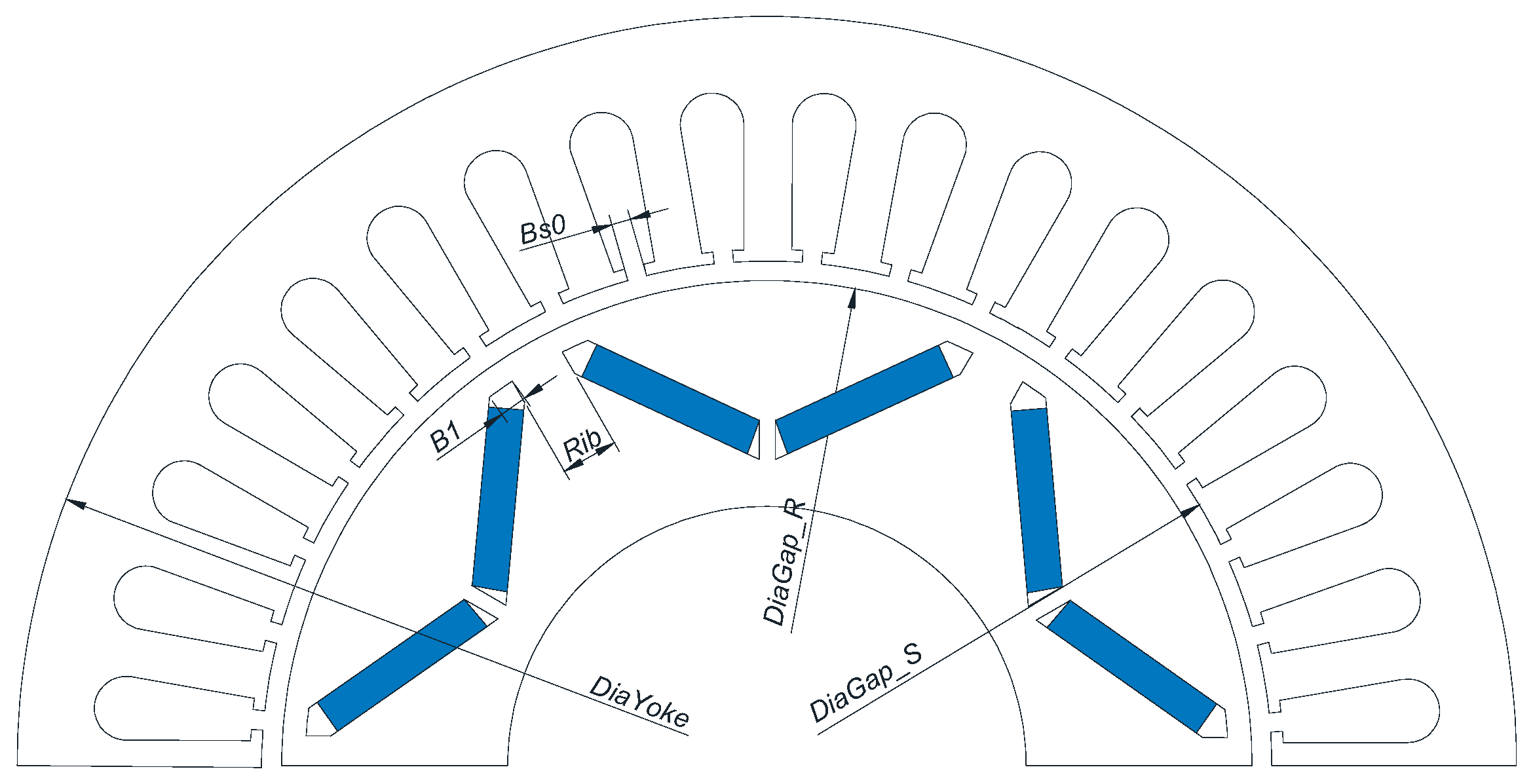
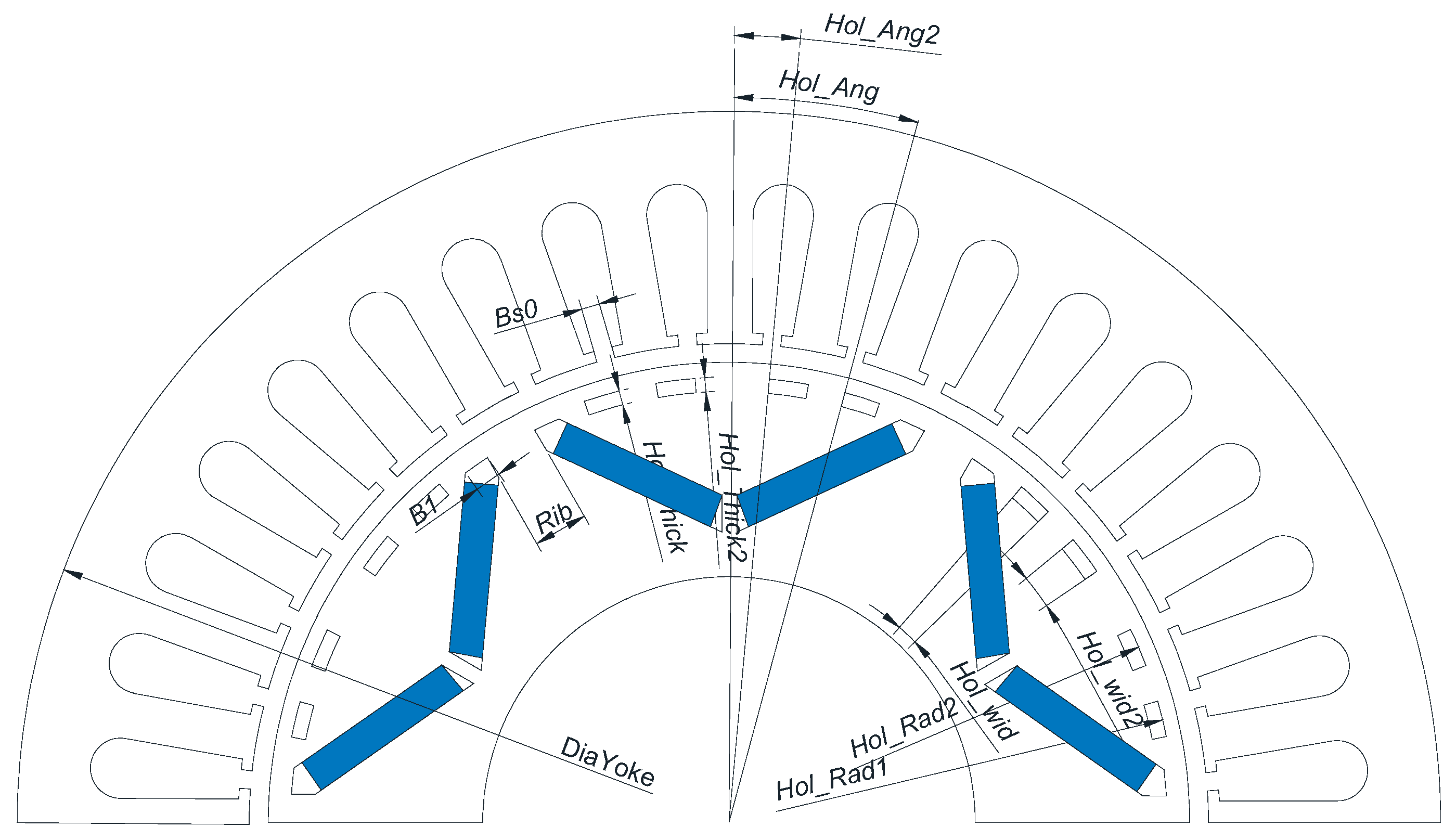
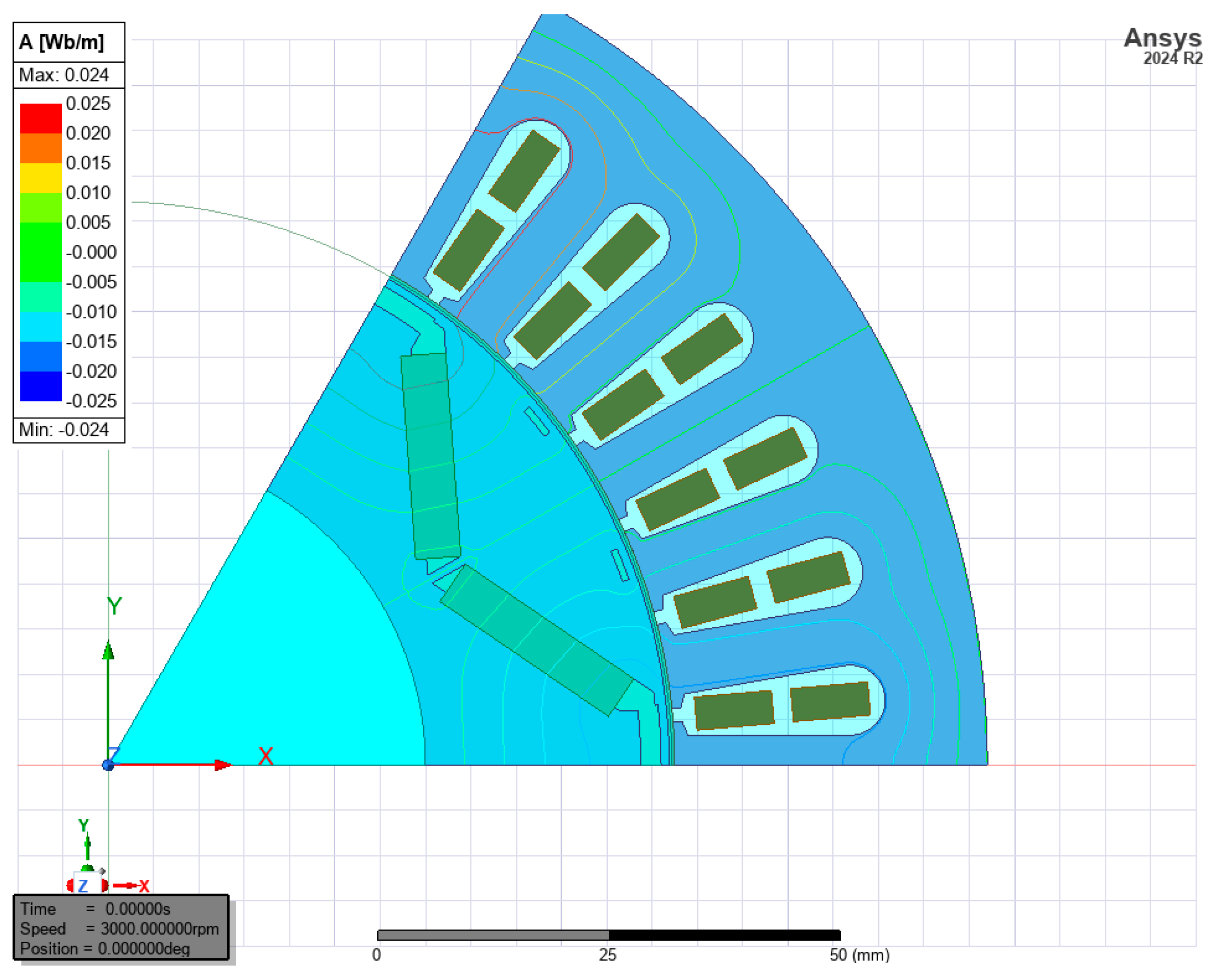
The structure of the built-in V-shaped permanent magnet motor is shown in Figure 1. The stator adopts pear-shaped slots and double-layer windings, and the rotor adopts a built-in V-shaped permanent magnet structure. The V-shaped permanent magnet has a magnetic gathering effect, which can effectively increase the air gap magnetic flux density and improve the motor output torque. Table 1 presents the main parameters of the motor according to Ref. [15]. Unlike the original motor’s 8-pole 48-slot configuration, research and analysis were conducted on a 6-pole, 36-slot structure in this study.
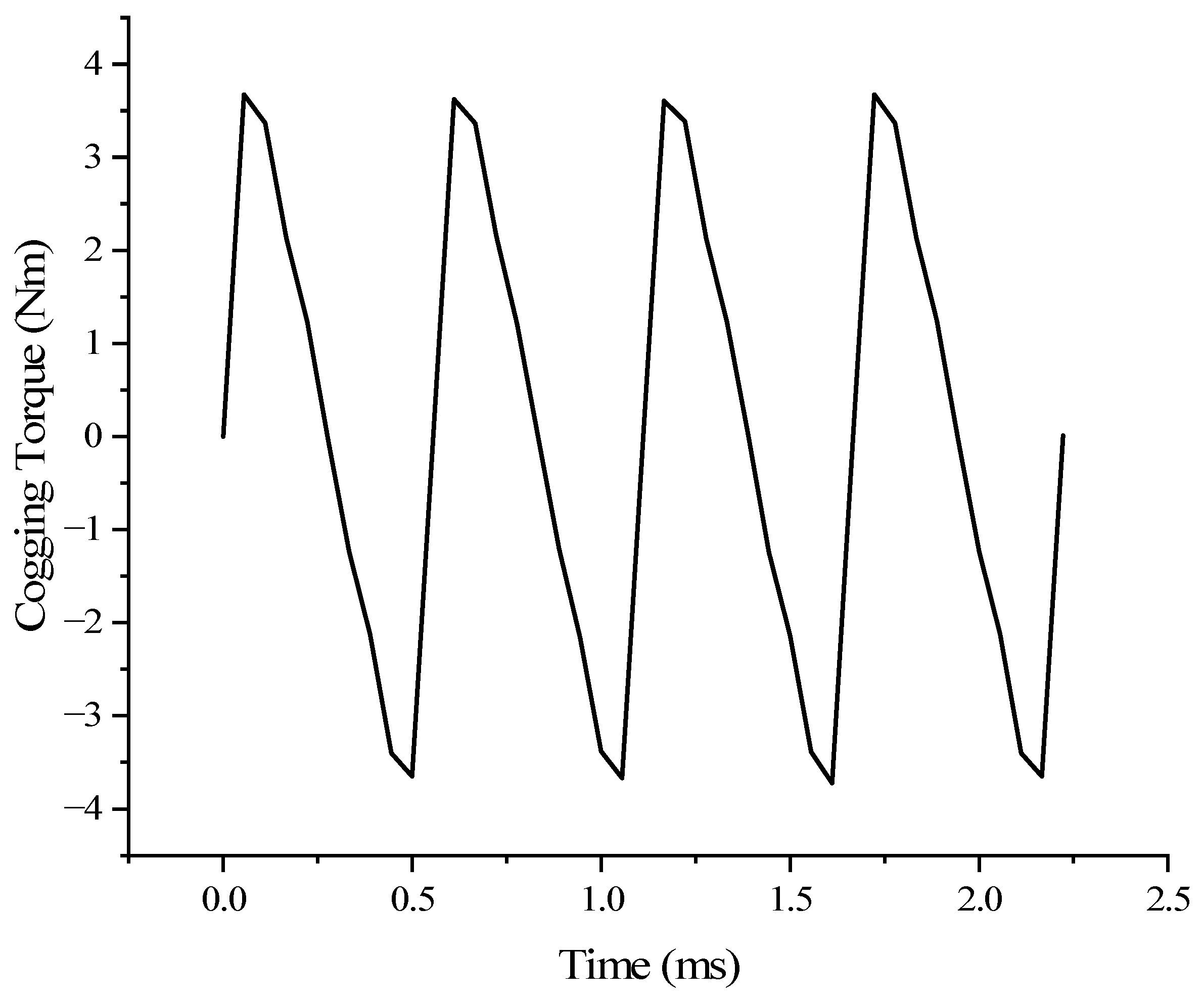
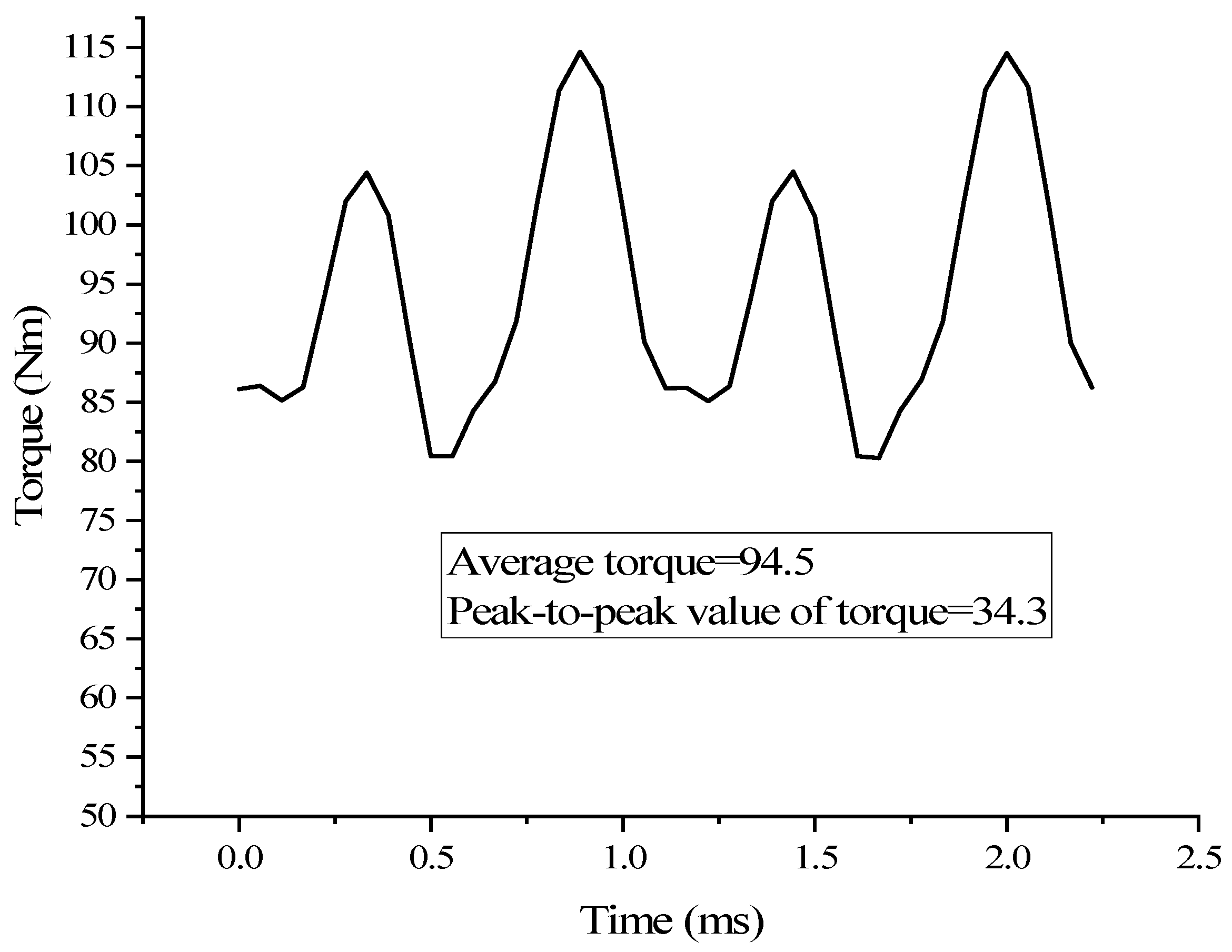
Using the Maxwell module in Ansys EM Suite 2024 R2, a finite element analysis model of the motor was established and analyzed. A zero magnetic vector boundary was applied on the outer circle of the stator, and periodic symmetry of the magnetic circuit was achieved through master–slave constraint combined with the reverse magnetic potential method. A rotating coordinate system and sliding grid technology were used to handle rotor motion. By using a multi-scale grid strategy to refine the mesh model, a 2 mm structured grid was used in the iron core area, a 1 mm structured grid was used in the permanent magnets, and the air gap was implemented with two layers of radial refinement to 0.3 mm and optimized for circumferential refinement. Core material nonlinearity, saturation, losses effects are represented by the B-H curve and Core Loss Model of DW310_35 in the Ansys EM Suite 2024 R2 Database; the same applies to permanent magnets. The electromagnetic calculation process uses a transient solver to calculate the output torque, further obtaining the peak-to-peak values of torque and torque ripple. The cogging torque is shown in Figure 2, and the output torque is shown in Figure 3.
In Figure 2, the cogging torque reaches 3.5 N∙m. Figure 3 indicates that the average output torque is 94.5 N∙m, with a peak-to-peak torque value of 34.3 N∙m and a torque ripple of 36.2%. The preliminary simulation analysis reveals that the significant cogging torque and torque ripple in the motor may lead to substantial vibration and noise, thereby compromising motor reliability. The stator outer diameter significantly influences the saturation level of the stator magnetic circuit, thereby affecting the torque output capability of the motor. The rotor rib width considerably impacts the pole arc coefficient. For a given amount of permanent magnet material, it strongly affects the magnitude and waveform of the magnetomotive force. These variables affect variations in the air gap magnetic field, consequently leading to changes in cogging torque and torque ripple.
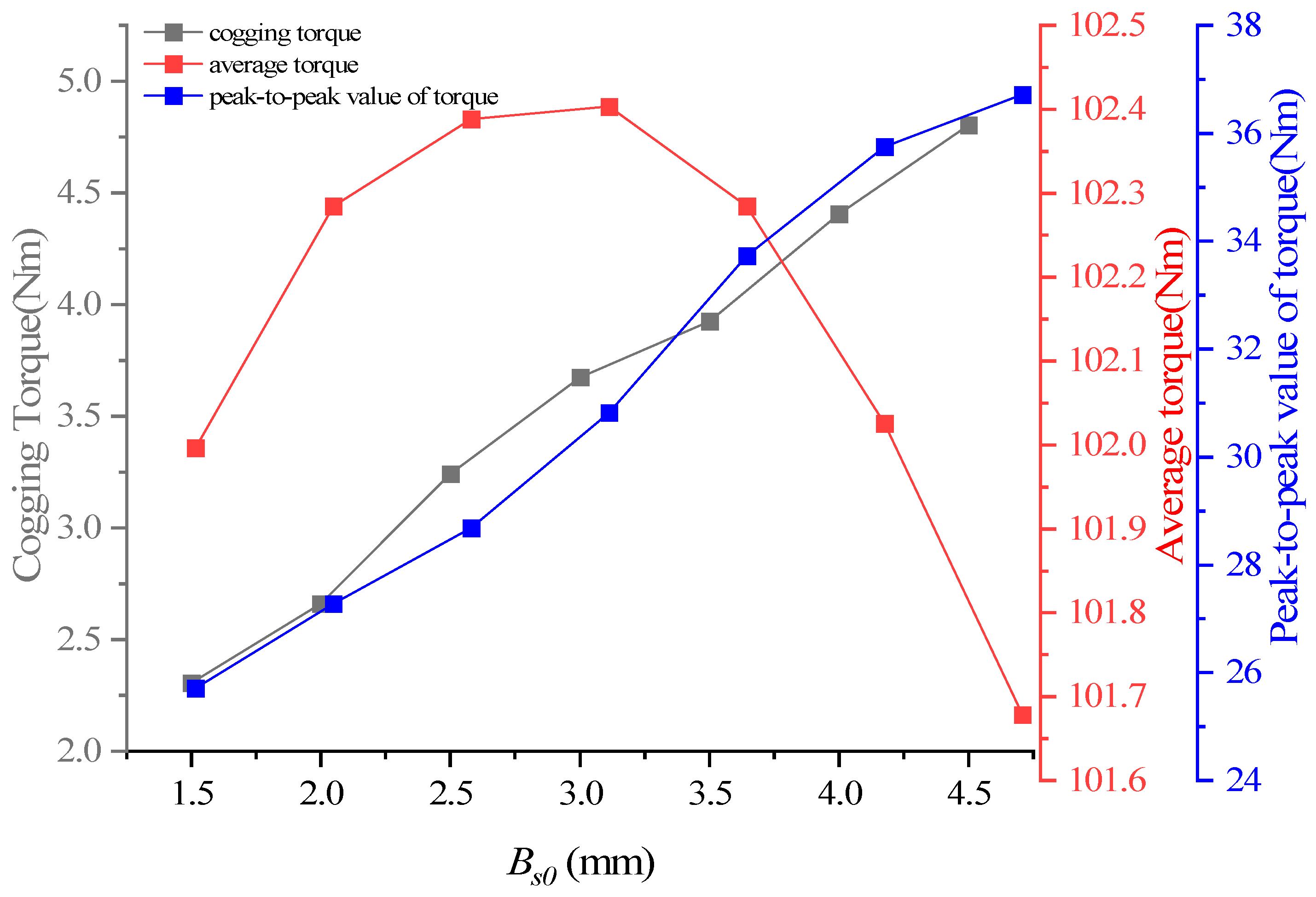
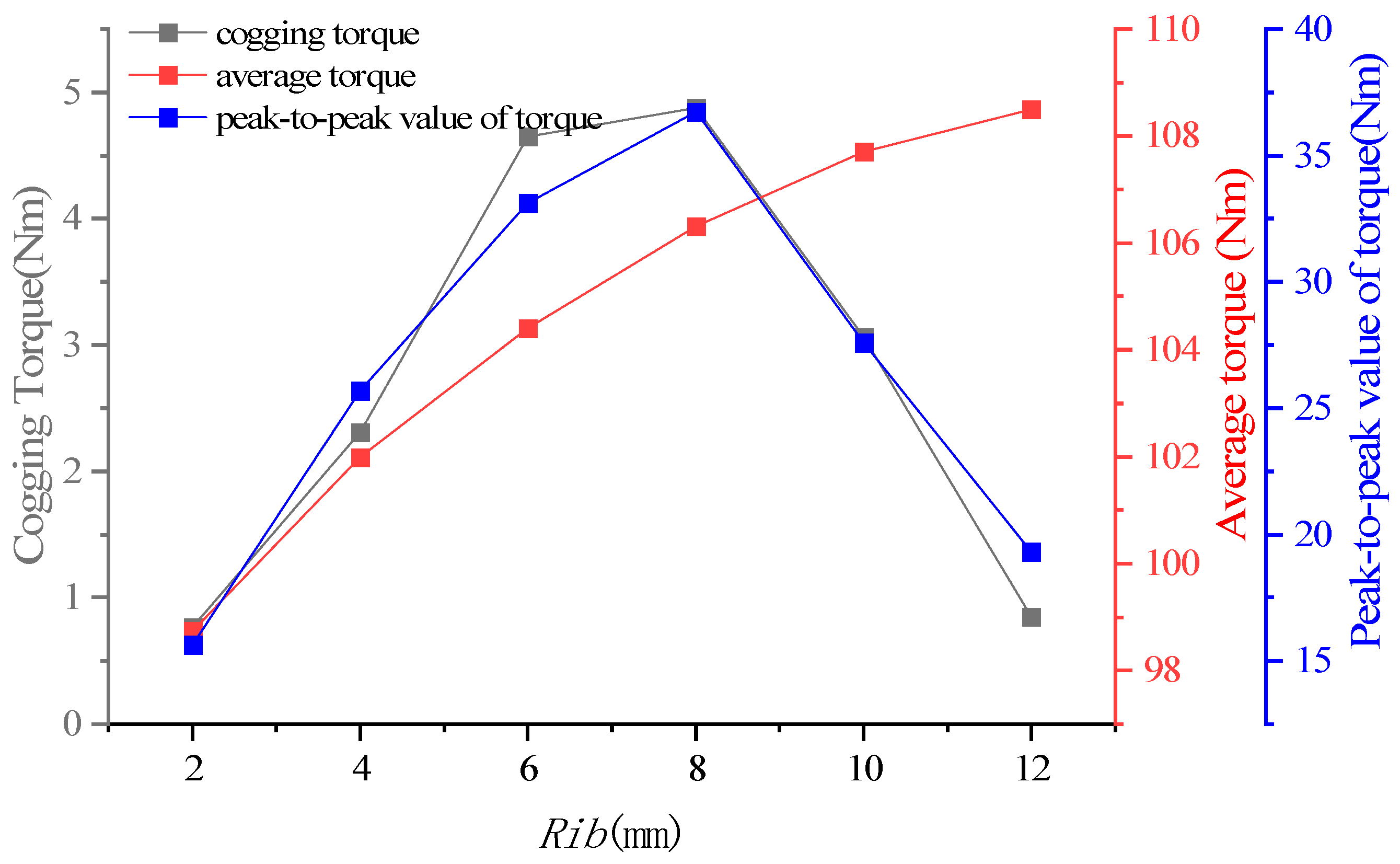
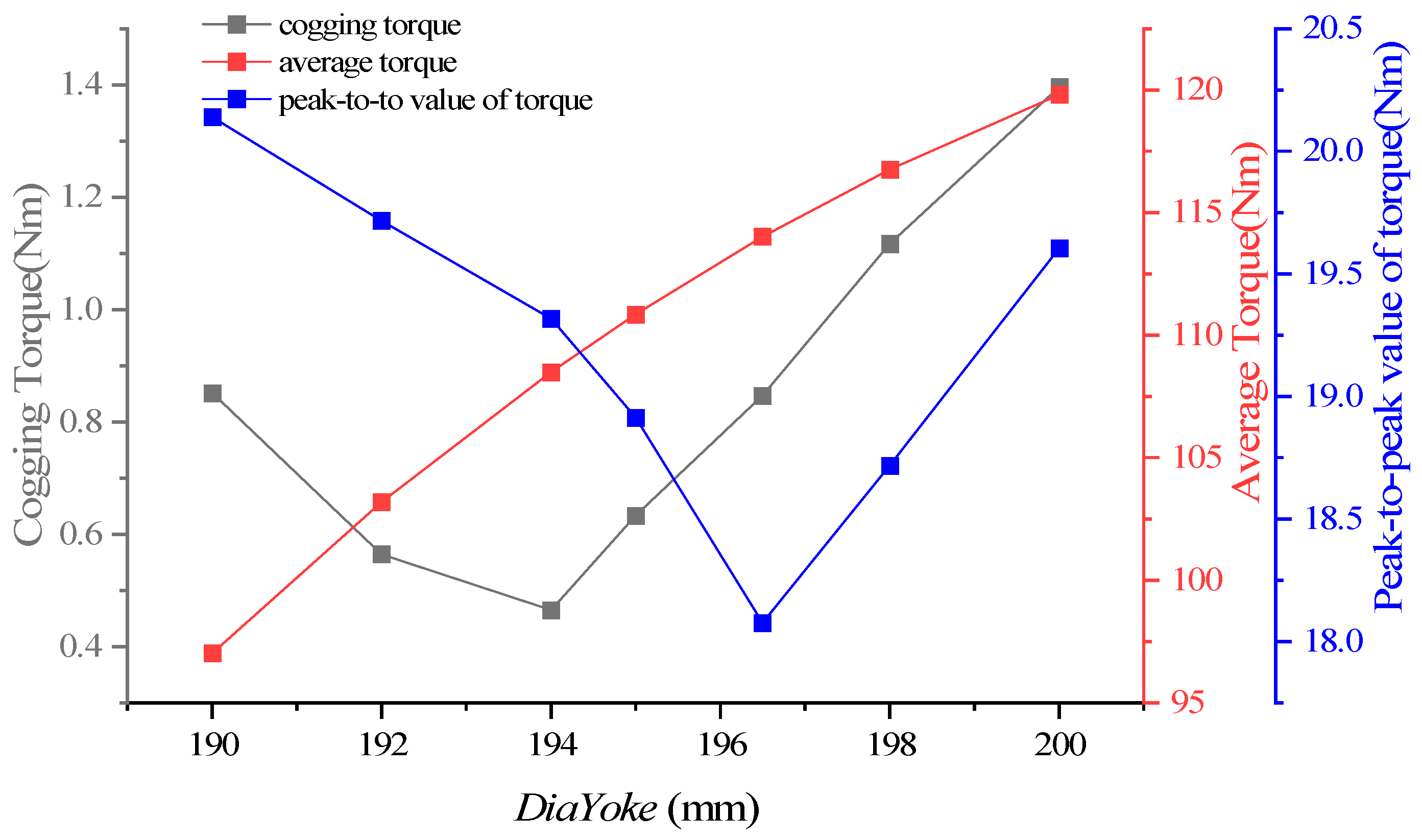
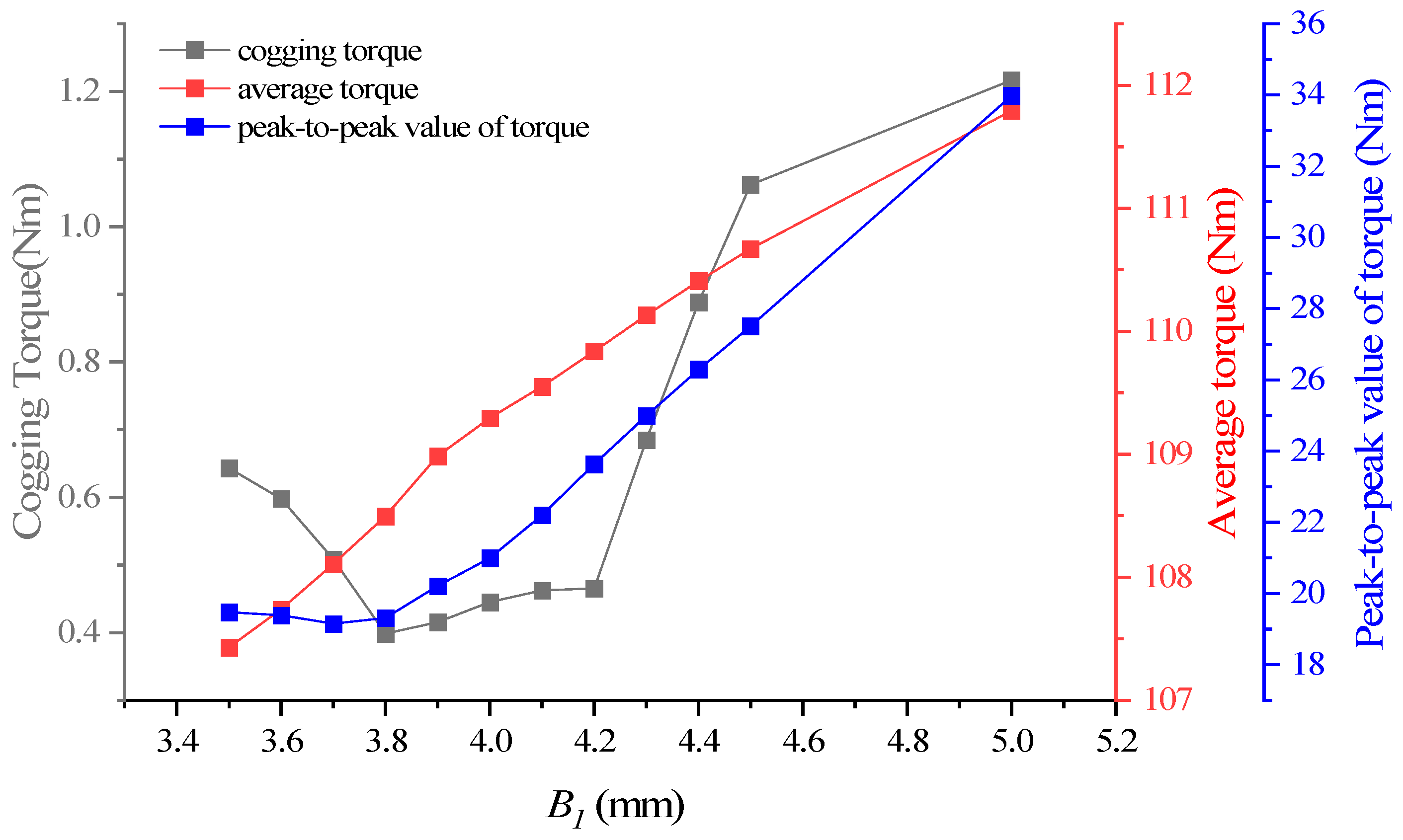
The influence of the stator slot opening width, rotor rib width, stator outer diameter, and duct thickness of the rotor on cogging torque, average torque, and torque ripple was analyzed via parametric sweep, with the results presented in Figure 4, Figure 5, Figure 6 and Figure 7.
It can be seen from Figure 4 that when the width of the stator slot changes from 1.5 mm to 4.5 mm, the cogging torque and the peak-to-peak value of torque gradually increase, and the average output torque first increases and then decreases, but the overall variation range is small. As can be seen from Figure 5, when the width of the rotor rib changes from 2 mm to 12 mm, the cogging torque and the peak-to-peak value of torque first increase and then decrease, and the average output torque gradually increases. As can be seen from Figure 6, when the outer diameter of the rotor changes from 190 mm to 200 mm, the cogging torque and the peak-to-peak value of torque first decrease and then increase, the average output torque gradually increases, and the minimum value of the cogging torque and the peak-to-peak value of torque do not occur at the same time. When the outer diameter of the stator is 194 mm, the cogging torque reaches the minimum value, and when the outer diameter of the stator is 196 mm, the peak-to-peak value of torque is the minimum. It can be seen from Figure 7 that when the width of the magnetic bridge of the rotor changes from 3.4 mm to 5.2 mm, the cogging torque and the peak-to-peak value of torque first decrease and then increase, and the average output torque gradually increases. When the duct thickness of the rotor is 3.8 mm, the minimum value of the cogging torque is 398 mN∙m, and the minimum value of the peak-to-peak value of torque is 19.3 N∙m. At this time, the average output torque is 108.5 N∙m, and the torque ripple is 17.8%. To sum up, it can be seen that although the cogging torque and torque ripple are effectively reduced by adjusting the stator slot width, rotor rib width, rotor outer diameter, and duct thickness of the rotor, the torque ripple still needs to be further optimized.
For the interior permanent magnet synchronous motor, its output torque and torque ripple, respectively, can be expressed as
T = p Ψ f i q + L d L q i d i q
T r i p p l e = T m a x T m i n T a v g
In the formula, p represents the number of pole pairs; Ψ f represents the magnetic flux of the permanent magnet; L d and L q are the d-axis and q-axis inductances, respectively; i d and i q are the d-axis and q-axis currents, respectively; T m a x and T m i n are the maximum and minimum values of the output torque, respectively; and T a v g is the average value of the output torque.
According to Ref. [1], the magnetic flux Ψ f can be represented as
Ψ f = 4.44 3 f k d p N B r A m ω
In the equation, f is the motor frequency; k d p is the winding factor; N is the number of turns per phase in the armature winding; B r is the magnitude of the air gap magnetic flux density; and A m is the cross-sectional area of the magnetic flux path per pole.
According to Ohm’s law of magnetic circuits, the amplitude of air gap magnetic flux density B r can be expressed as
B r = F A m R m
where F is the magnetomotive force of the magnetic circuit, and R m is the reluctance in the magnetic circuit.
According to Formulas (1) to (4), the size of the air gap magnetic density can be changed by altering the magnetic resistance in the magnetic circuit, which in turn affects the magnetic flux linkage of the permanent magnet and the magnitude of the output torque and torque ripple. For permanent magnet motors, the magnetic resistance in the magnetic circuit consists of three components: the magnetic resistance of the stator core, the magnetic resistance of the air gap, and the magnetic resistance of the rotor core. To further optimize the torque ripple, this article proposes a rotor structure with four magnetic isolation holes to reduce torque ripple. The structural topology of the proposed rotor with magnetic isolation holes is illustrated in Figure 8. The parameters of magnetic isolation holes are shown in Table 2.
According to Ref. [16], The electromagnetic torque considering the stator and rotor slots can be expressed as
T e = T e 0 + T e S + T e R = π r g l s t k p 2 h g λ 0 0 2 π ν S F R m ν R F m φ ν S s i n ν R ± ν S p θ ± ν R ± 1 ω t ± φ d θ + π r g l s t k p 4 h g λ k S 0 2 π ν S F R m ν R F m φ ν S s i n ν R ± ν S p ± k S Z S θ ± ν R ± 1 ω t ± φ d θ + π r g l s t k p 4 h g λ k R 0 2 π ν S F R m ν R F m φ ν S s i n ν R ± ν S ± k R p θ ± ν R ± 1 ± k R ω t ± φ d θ
In the equation, T e 0 is the torque generated by the interaction between the stator and rotor magnetomotive forces and the average relative permeability of the air gap; T e S is the torque generated by the interaction between the stator and rotor magnetomotive forces and the harmonic relative permeability of the stator slotted air gap; and T e R is the torque generated by the interaction between the stator and rotor magnetomotive forces and the harmonic relative permeability of the rotor open virtual slot air gap. r g is the average air gap radius; l s t k is the axial length of the motor; F R m ν R is the amplitude of the ν R -th order permanent magnet magnetomotive force; F m φ ν S is the amplitude of the ν S -th order armature magnetomotive force; ν R is the spatial order of the rotor magnetomotive force, with ν R = 2k + 1 (k = 0, 1, 2, 3, …); ν S is the spatial order of the stator magnetomotive force, where a negative value indicates a direction opposite to the fundamental magnetomotive force, with ν S = ±(6k ± 1) (k = 0, 1, 2, 3, …); φ is the control leading angle; λ k S is the amplitude of the harmonic relative permeability caused by stator slots; k S is the harmonic order of the relative permeability caused by stator slots, with k S = 1, 3, 5, …; Z S is the number of stator slots; λ k R is the amplitude of the harmonic relative permeability caused by rotor slots; and k R is the harmonic order of the relative permeability caused by rotor slots, with k R = 2, 4, 6, ….
In Equation (5), only when the spatial order of the trigonometric function is 0, the integration result is not 0. T e 0 ≠ 0 needs to satisfy the requirement of ν R ± ν S = 0. Therefore, T e 0 is the torque ripple generated by the harmonic magnetic electromotive force of the stator and rotor with the same harmonic order and the average ratio permeability of the air gap. T e S and T e R are non-zero, and there are many combinations that satisfy the equations of ν R ± ν S p ± k S Z S = 0 and ν R ± ν S ± k R = 0, respectively. Due to the maximum amplitude of the fundamental magnetomotive force, which also has the greatest impact on torque ripple, only the magnetomotive force combinations involving the fundamental magnetomotive force in T e S and T e R are considered. Taking a 6-pole, 36-slot, winding short distance motor as an example, Table 3 lists the combinations of stator and rotor magnetomotive forces that can generate torque ripple in Equation (5).
According to Table 3, the 5th, 7th, 11th, and 13th harmonics of the permanent magnetic field, as well as the 5th, 7th, 11th, and 13th harmonics of the coupling magnetic field between the permanent magnetic field and the air gap permeability, are among the main sources of 6th and 12th harmonic torque ripple for the 6-pole/36-slot three-phase PMSM, while the 3rd harmonic does not generate torque. If the optimization scheme proposed in this paper can effectively suppress the 5th, 7th, 11th, and 13th harmonics of the no-load air gap magnetic field, it can effectively reduce torque ripple.

2.2. Optimization Objective

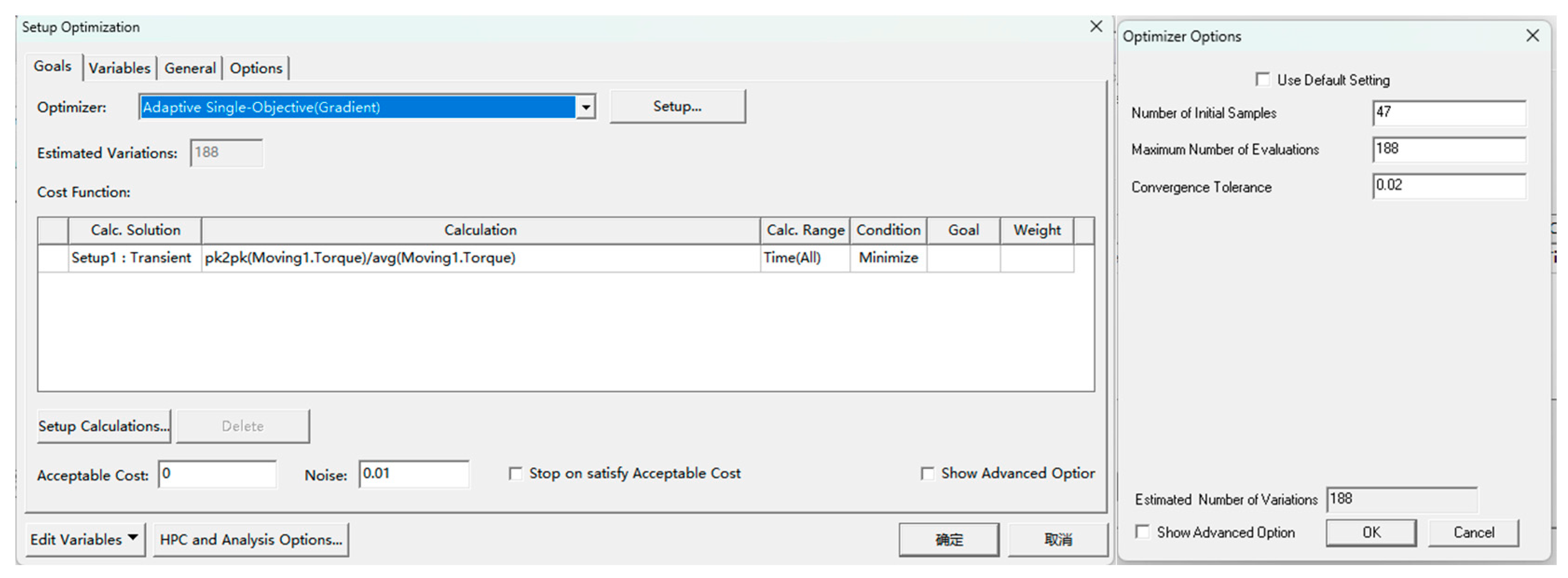
The average value of the motor output torque reflects the output capability and torque density of the motor; hence, maximizing the average output torque is one of the optimization objectives. Cogging torque and torque ripple induce periodic angular acceleration in the motor rotor. Variations in angular acceleration result in motor vibration, which is transmitted through the motor structure to the surrounding environment, thereby generating noise. Therefore, to reduce motor vibration and noise, minimizing cogging torque and torque ripple also constitutes a key optimization objective. Torque ripple is defined as the ratio of the peak-to-peak value of torque to the average output torque. Pursuing the minimization of torque ripple comprehensively reflects the requirements of maximizing the average output torque while minimizing both cogging torque and torque ripple. In summary, this paper defines the minimization of torque ripple as the optimization objective.

2.3. Optimize Variables

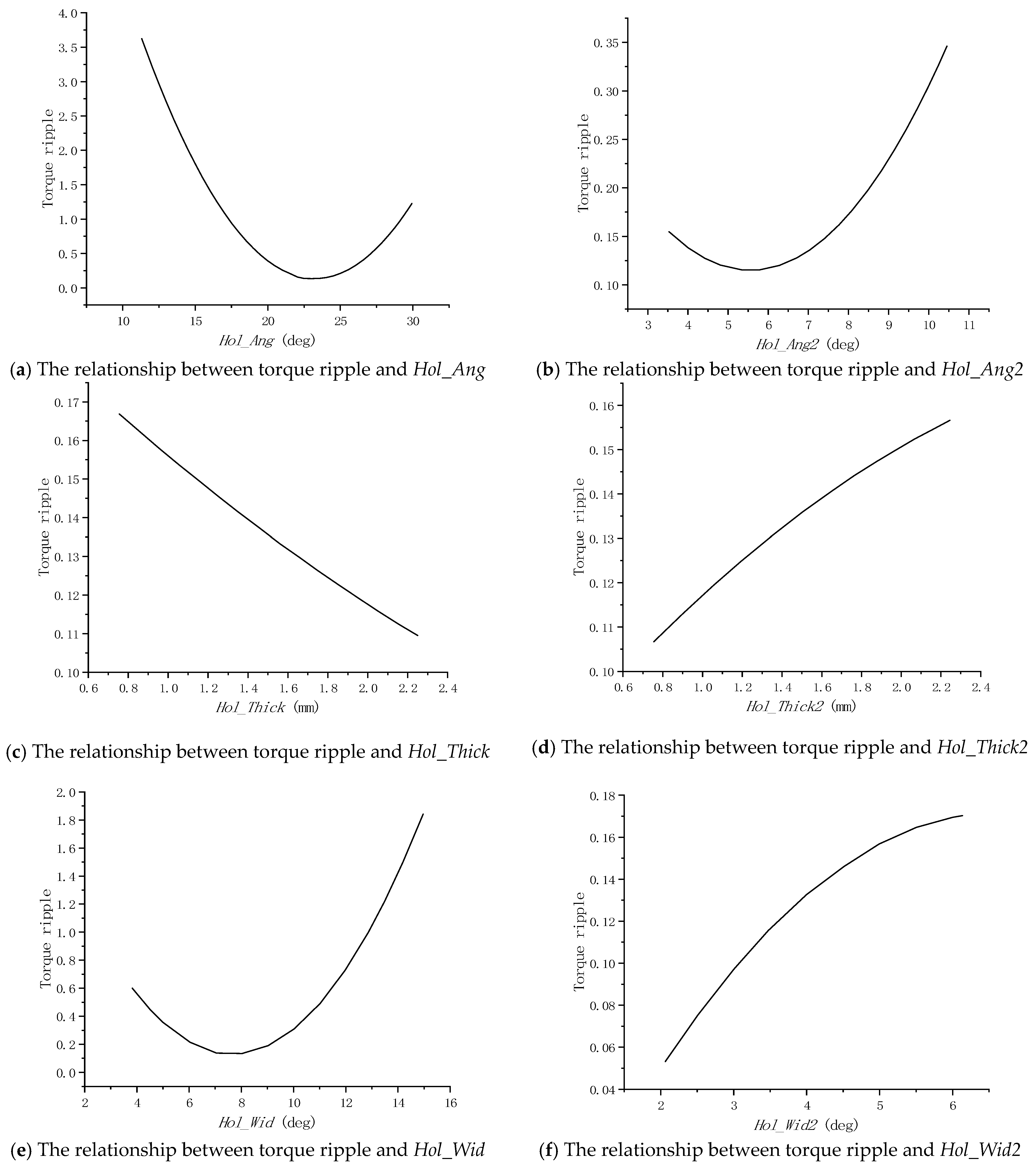
The dimensions and position of the rotor magnetic isolation holes greatly influence the magnetic reluctance of the circuit. These variables affect variations in the air gap magnetic field, consequently leading to changes in cogging torque and torque ripple. Therefore, the dimensions of the magnetic isolation holes were selected as optimization variables. Using the sensitivity analysis function of Ansys EM Suite 2024 R2, a quadratic regression analysis was conducted on the relationship between motor torque ripple and the size of the magnetic isolation hole.
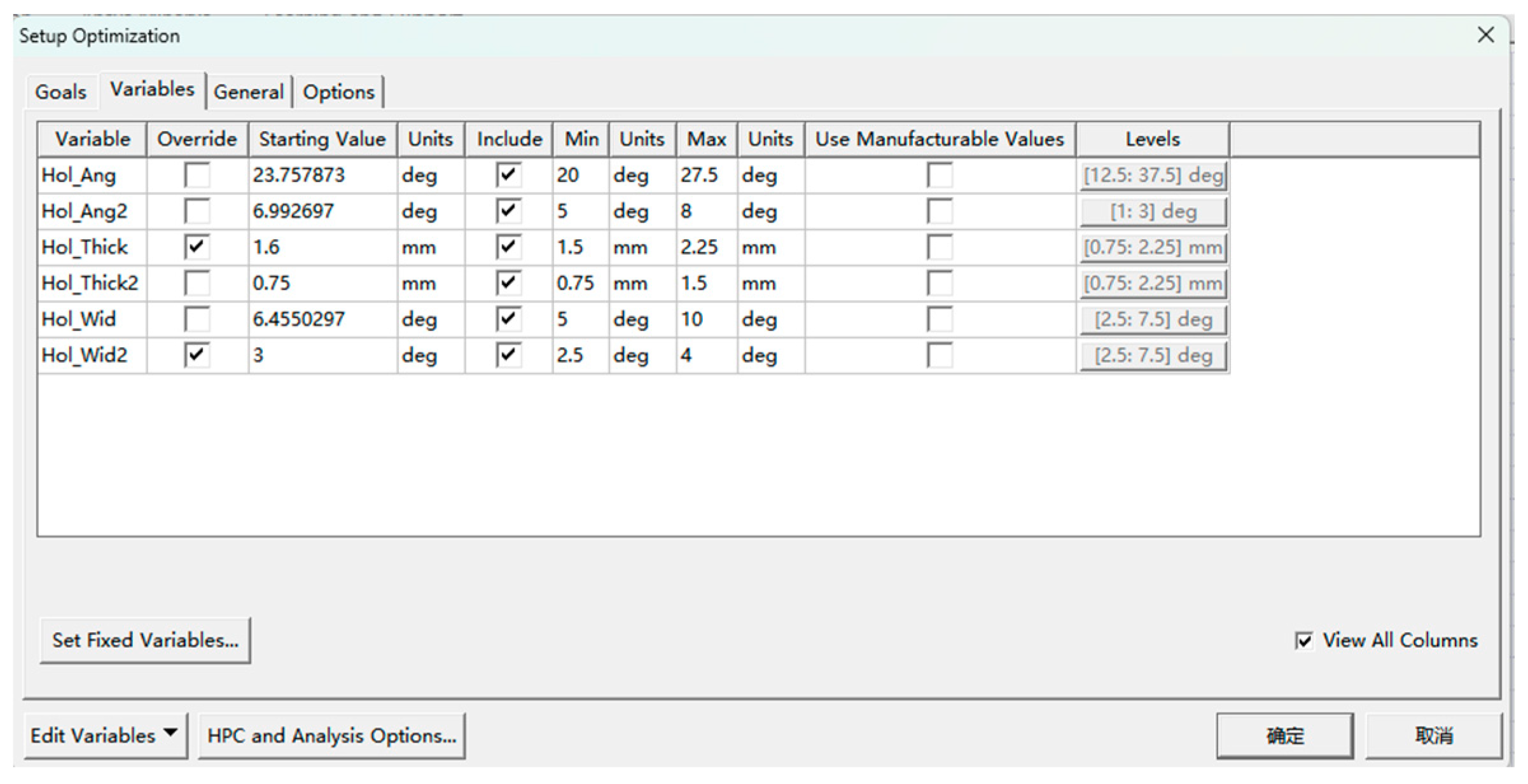
The analysis results are shown in Figure 9. From Figure 9a,c,e, it can be seen that the torque ripple first decreases and then increases with the changes in Hol_Ang and Hol_Wid and decreases with the increase in Hol_Thick; this indicates that within a certain range, there is an optimal position and width for the first set of magnetic isolation holes, and the thicker the better; from Figure 9b,d,f, it can be seen that the torque ripple first decreases and increases with the change in Hol_Ang2 and then increases with the increase in Hol_Thick and Hol_Wid; this indicates that within a certain range, there is an optimal position for the second group of magnetic separators, while the thickness and width should be as small as possible. Based on the analysis results, the optimization range of the magnetic isolation hole size was selected to minimize the output torque ripple, as shown in Table 4.

2.4. Optimization Method

In terms of optimization, the main objective of this article is to reduce the peak-to-peak value of torque and improve the average torque. By comparing the two optimization objectives, they can be integrated into one. Therefore, a simple algorithm can meet the requirements.
The adaptive single-objective (gradient) algorithm was applied to optimize the dimensions of the flux barrier holes. This algorithm implements a gradient-based search strategy that combines finite-difference gradient estimation with adaptive step-size control, following a sequential nonlinear programming approach.
(1)
Initial Design Sampling
A set of 47 initial design points was generated before initiating the gradient-based search. This initial sampling helped identify promising regions and provides a robust starting point for the gradient optimizer.
(2)
Gradient Computation
The algorithm computed gradients using forward finite differences. For each design variable, the objective function (torque ripple) was evaluated at a perturbed point, with the perturbation size adaptively adjusted based on the local sensitivity.
(3)
Iterative Search Process
At each iteration, the algorithm computed the gradient vector, determined a search direction using gradient information, performed a line search along this direction to find an improved design point, and updated the design variables within specified bounds.
(4)
Convergence Criteria
The optimization terminated when any of the following conditions was met: the relative improvement in the objective function between consecutive iterations was less than the specified convergence tolerance of 0.02; the maximum allowed number of 188 finite-element evaluations was reached; or the algorithm detected stagnation based on internal criteria.
(5)
Constraint Handling
Design constraints were enforced through bound constraints on the optimization variables. The optimizer ensures all intermediate designs remain within the feasible region. The complete specification of optimization objectives, variables, and their bounds is provided in Figure 10 and Figure 11.

3. Results

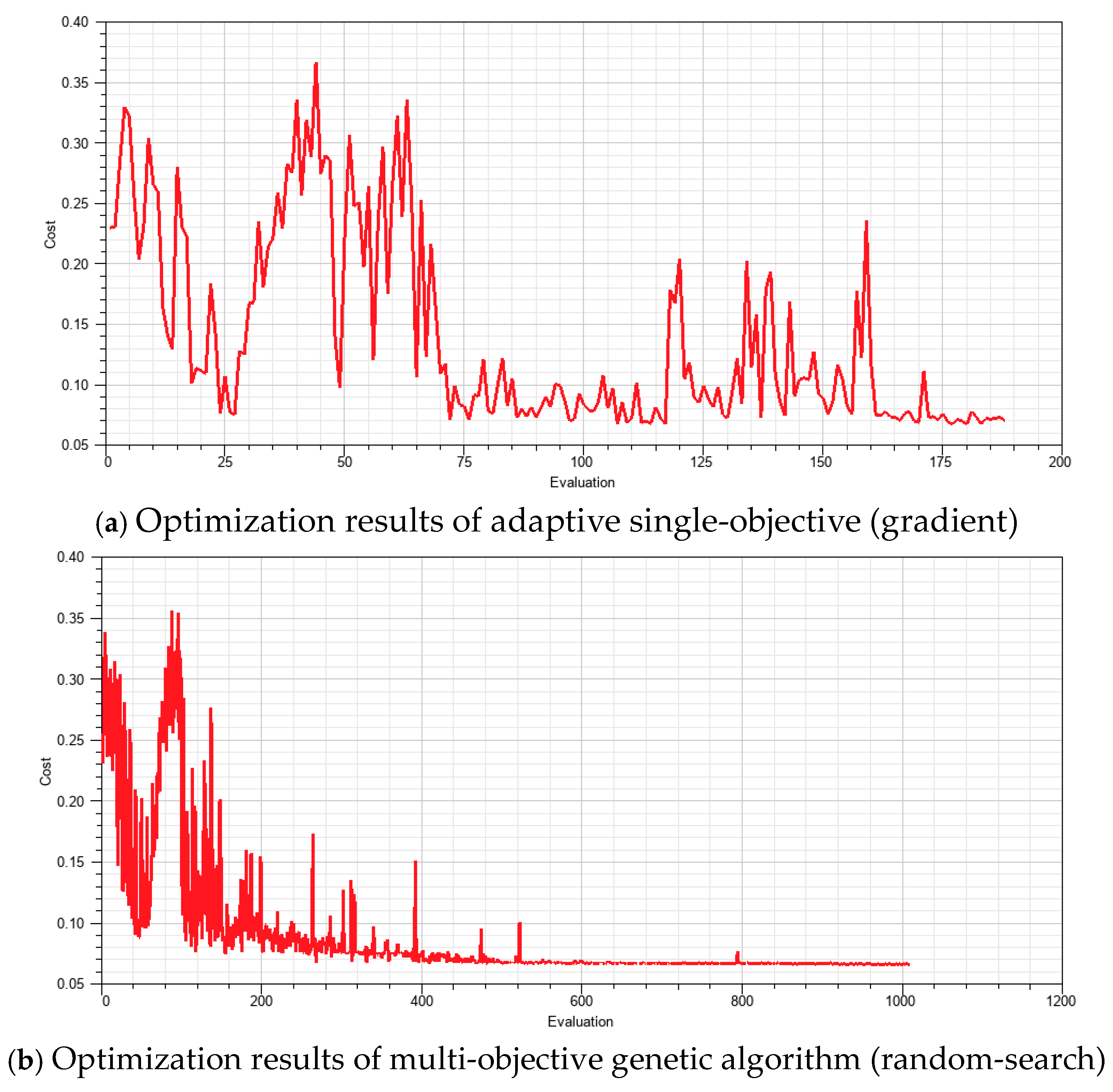
The adaptive single-objective (gradient) algorithm was used to optimize the size of the magnetic isolation hole. The computer processor was an Intel (R) Core (TM) i5-10505 CPU@3.2GHz with 32 GB of RAM, and the calculation time was 9 h 16 min and 16 s. The optimization results after 188 iterations are shown in Figure 12a.
To verify the effectiveness of the adaptive single-objective (gradient) algorithm, the commonly used multi-objective genetic algorithm (random-search) from the literature was employed in this study to optimize the size of the magnetic isolation hole. The optimization results are shown in Figure 12b. A comparative analysis of the two algorithms is presented in Table 5. From the table, it can be seen that the adaptive single-objective algorithm has a search count of 188 times, while the multi-objective genetic algorithm has a search count of 1010 times. the optimization results of both are close.
Combined with the previous analysis results of the stator slot width, rotor rib width, rotor outer diameter, and magnetic isolation bridge width, final optimization schemes were selected, as shown in Table 6.

4. Discussion

The optimized motor structure diagram is shown in Figure 13. It can be observed that the first set of magnetic isolation holes are distributed on the q-axis of the motor, and these holes are large in size. The second set of magnetic isolation holes are distributed on the d-axis of the motor, and these holes are smaller in size. Therefore, we can infer that the first set of magnetic isolation holes plays a significant role in reducing the torque ripple of the motor by adjusting the q-axis magnetic reluctance.
The results of the above two optimization methods are shown in Figure 14, Figure 15 and Figure 16.
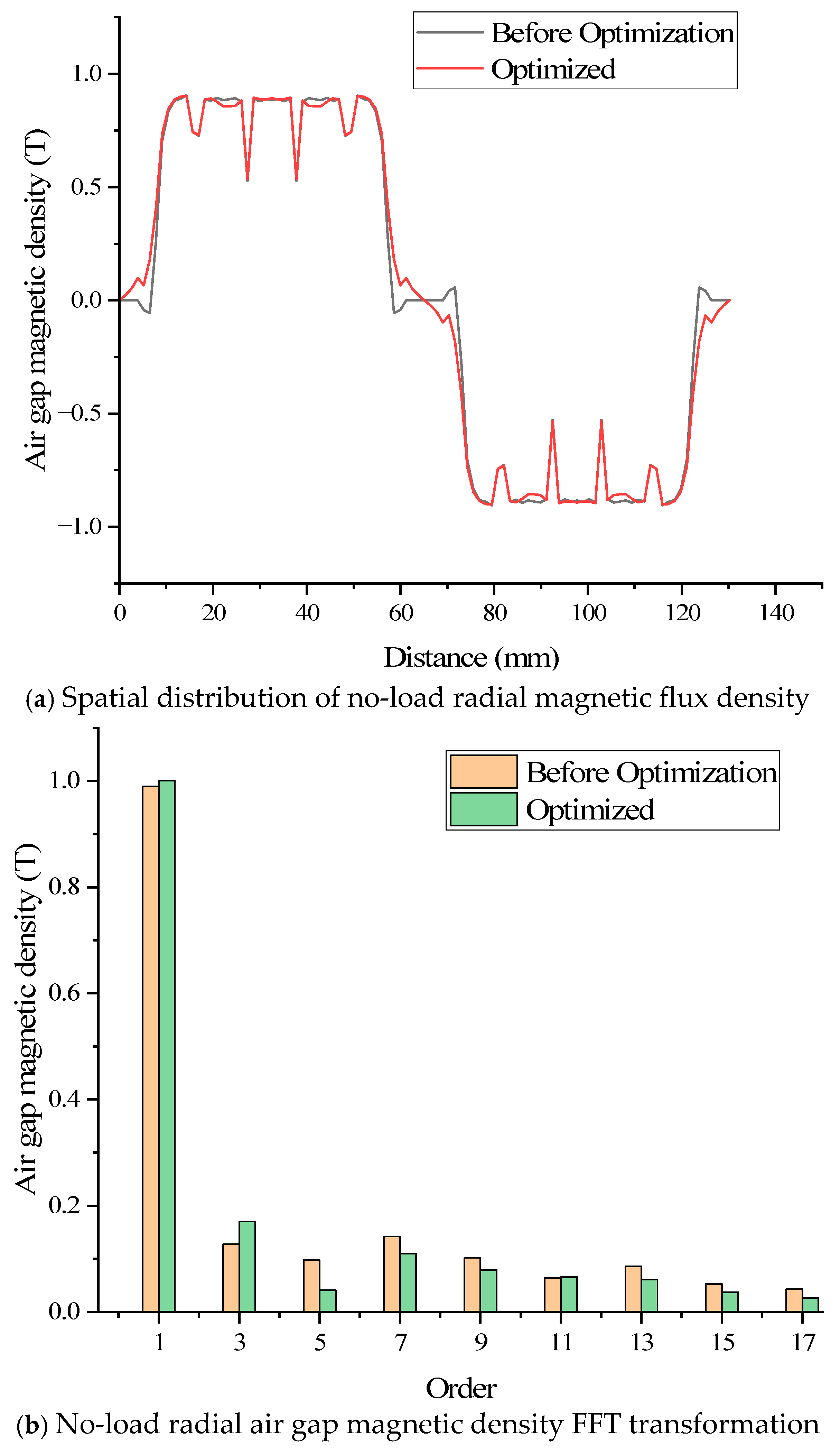
Figure 14 shows the air gap magnetic density distribution of no load. As can be seen from Figure 14a, after optimization, due to the presence of the first set of magnetic isolation holes, the amplitude of air gap magnetic density at the d-axis of the motor increases more, and magnetic flux generated by the permanent magnet passes through the stator, reducing magnetic flux leakage. The second set of magnetic isolation holes makes minor adjustments to the waveform of the air gap magnetic field. As can be seen from Figure 14b, after optimization, the fundamental component of the air gap magnetic flux density increases, the utilization rate of the permanent magnet increases, and the 5th, 7th, 9th, 13th, and 15th harmonics are effectively suppressed. According to the theoretical analysis of the principle of torque ripple in a 6-pole, 36-slot permanent magnet motor in optimization scheme, it is known that the 5th, 7th, 11th, and 13th harmonics of the permanent magnetic field, as well as the 5th, 7th, 11th, and 13th harmonics of the coupling magnetic field between the permanent magnetic field and the air gap permeability, are among the main sources of 6th and 12th harmonic torque ripple for the 6-pole/36-slot three-phase PMSM, while the 3rd harmonic does not generate torque or have a weak impact. The optimization objective of this study is to reduce torque ripple, so the optimization results show that the 5th, 7th, 13th, and 15th harmonics have been effectively suppressed. The simulation results are consistent with the previous theoretical analysis.
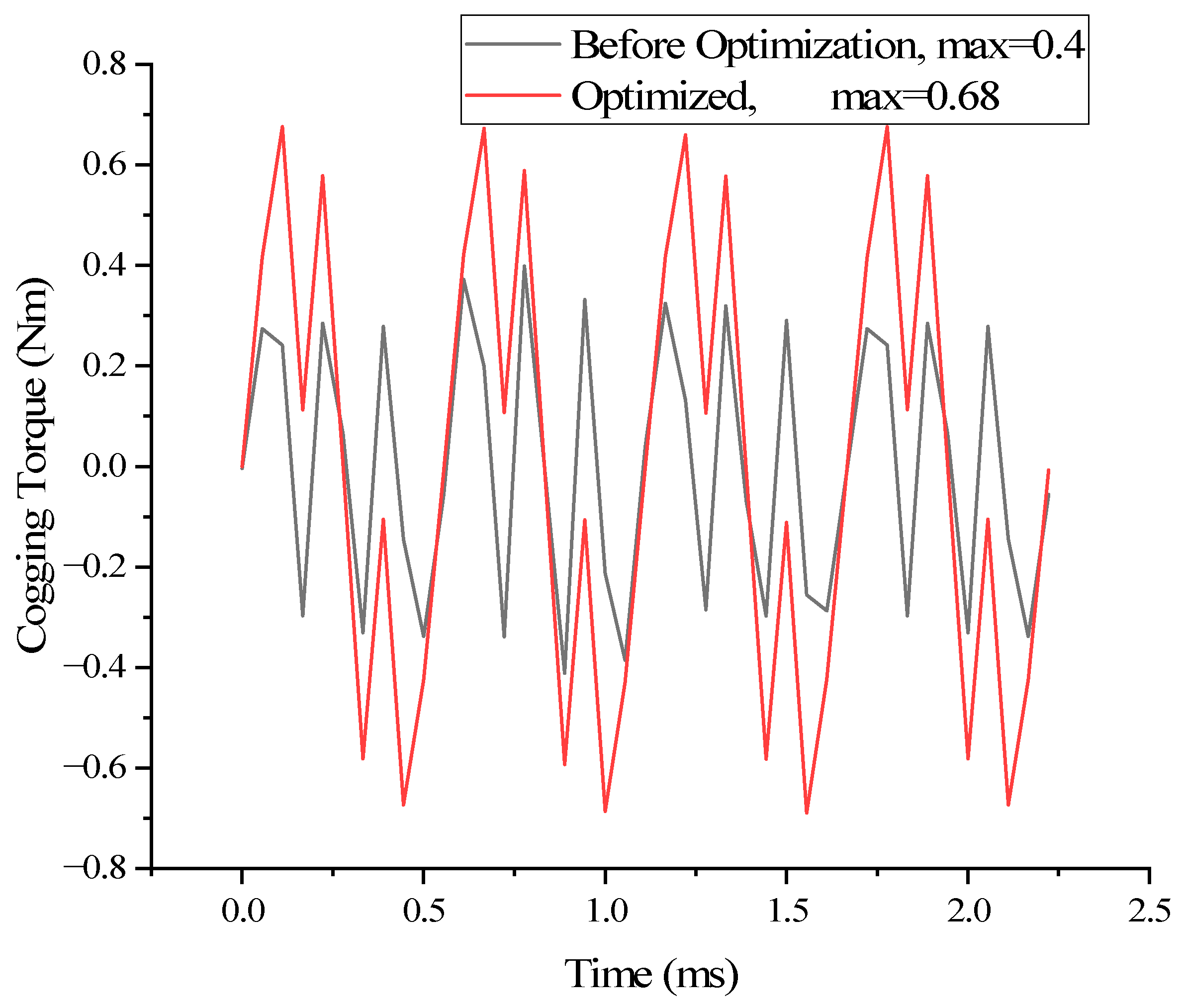
Figure 15 shows the cogging torque distribution before and after optimization. It can be seen from Figure 12 that the maximum cogging torque before optimization is 0.4 N∙m, and optimized cogging torque is 0.68 N∙m. The cogging torque increases, but the overall amplitude is still within an acceptable range.
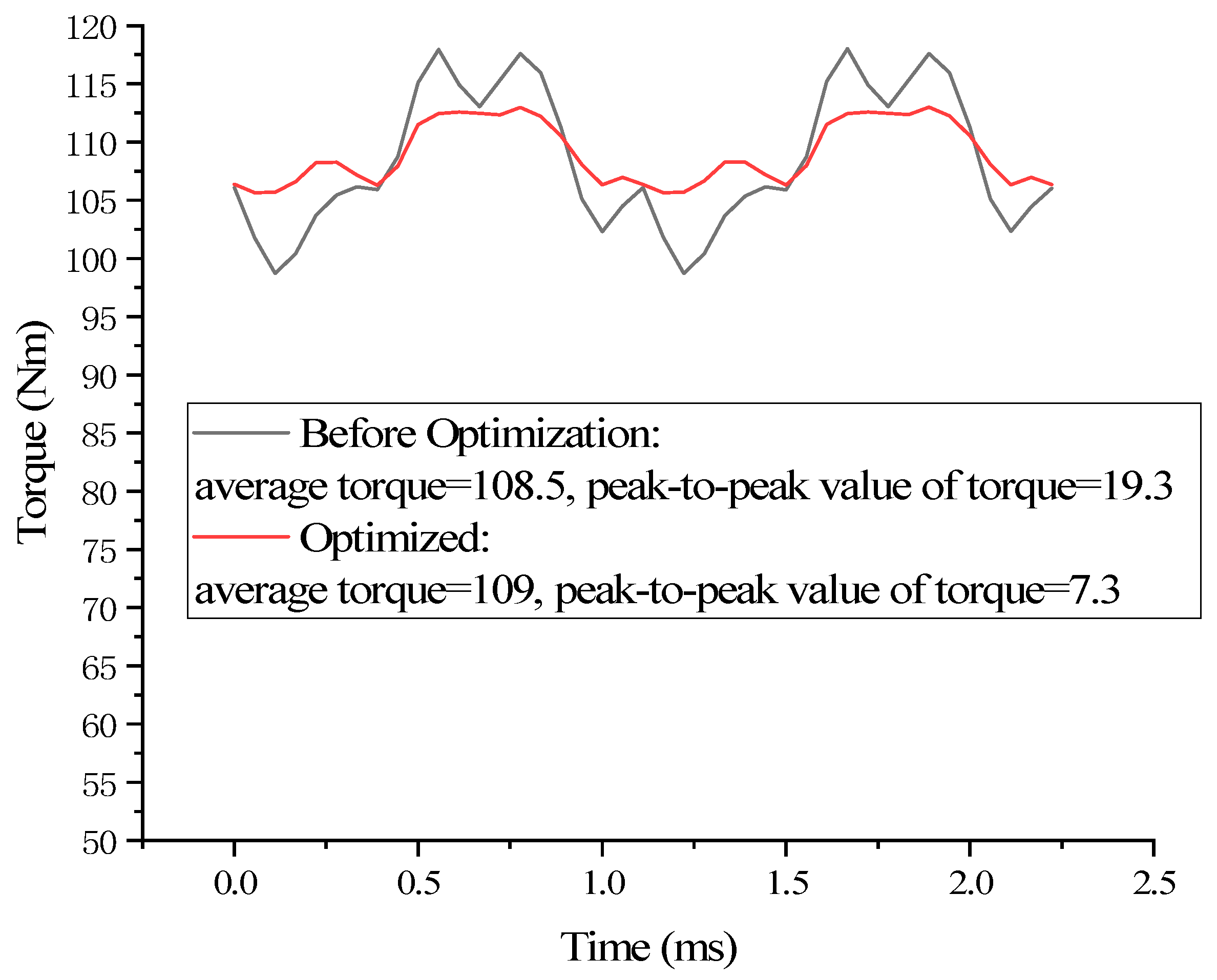
Figure 16 shows the torque distribution before and after optimization. It can be seen from Figure 13 that before optimization, the average output torque was 108.5 N∙m, the peak-to-peak value of torque was reduced to 19.3 N∙m, and the torque ripple was 17.7%. Through optimization scheme, the peak-to-peak value of torque was reduced to 7.3 N∙m when average output torque was 109 N∙m, and the torque ripple was reduced to 6.7%. However, due to the increased magnetic reluctance of the q-axis magnetic circuit caused by the first set of magnetic isolation holes, the load current of the optimized motor increased from 100 A to 108 A when producing the same torque. This led to an increase in copper loss in the motor. The trade-off between reducing torque ripple and increasing copper loss needs to be balanced according to specific usage requirements. The increased magnetic isolation holes can be completed by the stamping process, and the weight of the rotor can also be reduced, but the mechanical strength of the rotor needs be considered in the subsequent design process.

5. Conclusions

The built-in V-shaped permanent magnet motor can effectively utilize reluctance torque to improve torque density, but there are also adverse effects such as large torque ripple and vibration noise. This article proposes a rotor structure with four magnetic isolation holes to reduce torque ripple in a built-in V-shaped permanent magnet motor. The position and size of the magnetic isolation hole are optimized through an adaptive single-objective algorithm to reduce torque ripple from 17.7% to 6.7%. At the same time, the magnetic isolation holes increase the magnetic resistance of the q-axil magnetic circuit, and the load current of the optimized motor increases when producing the same torque. This leads to an increase in copper loss in the motor, and the trade-off between reducing torque ripple and increasing copper loss needs to be balanced according to specific usage requirements. The increased magnetic isolation holes can be completed by the stamping process, and the weight of the rotor can also be reduced, but the mechanical strength of the rotor needs be considered in the subsequent design process. This work validates the effectiveness of the proposed method to reduce torque ripple, thus effectively solving the problem of vibration noise caused by torque ripple.

Author Contributions

Conceptualization, J.D. and H.Y.; methodology, J.D. and H.Y.; software, X.S., X.W. and M.L.; validation, X.W. and M.L.; formal analysis, J.D.; investigation, H.Y.; resources, J.D.; data curation, H.Y.; writing—original draft preparation, H.Y.; writing—review and editing, H.Y., X.S. and X.W.; visualization, X.S. and X.W.; supervision, J.D.; project administration, J.D.; funding acquisition, J.D. All authors have read and agreed to the published version of the manuscript.

Funding

This research was funded by Chongqing Education Commission Science and Technology Project (KJQN202203123), Research Project of Chongqing Electronic Science and Technology Vocational University (22XJDXWT42).

Data Availability Statement

The original contributions presented in the study are included in the article, further inquiries can be directed to the corresponding author.

Conflicts of Interest

The authors declare no conflicts of interest.

References

  1. Xie, Y.; Geng, G.; Cai, W.; Zh, K.; Wu, Y.; Yang, Y. Efficiency and vibration noise optimization design of permanent magnet synchronous motor with rotor structure of magnetic isolation holes. Proc. CSEE 2025, 1–11. [Google Scholar] [CrossRef]
  2. Gao, J.; Xu, W.; Wang, J.; Fang, S.; Liu, X. Cooperative topology optimization of Halbach interior permanent magnet synchronous motor considering vibration noise suppression. Trans. China Electrotech. Soc. 2024, 39, 37–50. [Google Scholar]
  3. Gao, J.; Gao, F.; Yao, P.; Song, Z.; Yang, K.; Gao, X.; Xu, H. Electromagnetic vibration analysis of Halbach permanent magnet motor based on sensitivity layered optimization. J. Harbin Inst. Technol. 2024, 56, 142–153. [Google Scholar]
  4. Gao, F.; Yue, W.; Gao, J.; Xu, H.; Sun, W.; Wu, Y. Electromagnetic optimization and vibration noise suppression of interior U-type permanent magnet motors. J. Harbin Inst. Technol. 2025, 57, 71–83. [Google Scholar]
  5. Lin, Y.; Zheng, X.; Chen, C. Model-data fusion optimization design of surface-mounted multiphase permanent magnet motors based on sinusoidal pole correction. Proc. CSEE 2024, 44, 296–305. [Google Scholar]
  6. Wang, C.; Huang, J.; Jiang, M.; Han, J.; Zhang, Z. Multi-objective optimization design of magnetic aggregation permanent magnet hub motors. Proc. CSEE 2024, 44, 1173–1184. [Google Scholar]
  7. Eduku, S.; Chen, Q.; Xu, G.; Liu, G.; Liao, J.; Zhang, X. A new fault-tolerant rotor permanent magnet flux-switching motor. IEEE Trans. Transp. Electrif. 2022, 8, 3606–3617. [Google Scholar]
  8. Wang, D.; Xu, G.; Wang, B.; Wang, X.; Li, Z.; Wang, X. A New Hybrid Excitation Flux Switching Motor Using Low Cost Ferrites with Flux Regulation Capability. IEEE Trans. Energy Convers. 2025, 40, 382–393. [Google Scholar] [CrossRef]
  9. Wang, L.; Zhang, X.; Wu, J.; Wang, M.; Hu, W.; Geng, H.; Pang, X. Multi-objective Optimization Design of a Segmented Asymmetric V-Type Interior Permanent Magnet Synchronous Motor. IEEE Trans. Magn. 2025, 61, 8200312. [Google Scholar] [CrossRef]
  10. Qiu, Z.; Zhang, W.; Wang, F.; Kong, Z.; Huang, X. Numerical simulation and suppression optimization of sideband vibration response of permanent magnet synchronous motors considering switching loss. Electr. Mach. Control 2025, 29, 73–83. [Google Scholar]
  11. Ai, M.; Song, X.; Liu, W.; Shen, T. Rotor design of asynchronous starting permanent magnet synchronous motor considering saturation based on multi-objective particle swarm optimization. Trans. China Electrotech. Soc. 2025, 40, 3857–3867. [Google Scholar]
  12. Zhao, Y.; Xu, L.; Li, D.; Zhang, X.; Lin, S. Multi-objective hierarchical staged optimization design of five-phase hybrid-excited doubly salient pole motors. Trans. China Electrotech. Soc. 2024, 39, 7045–7058. [Google Scholar]
  13. Liu, Y.; Song, B.; Zhou, X.; Tang, X. Analysis and multi-objective optimization design of spoke-type Vernier permanent magnet motors. Electr. Mach. Control 2023, 27, 1–9. [Google Scholar]
  14. Li, Z.; Zhao, G.; Ding, S.; Ma, Z.; Zeng, C.; Yang, R. Optimization design of cogging torque for permanent magnet synchronous motor based on rotor punch shape. Micro Mot. 2025, 58, 42–46+58. [Google Scholar]
  15. Liu, H.; Zhang, Z.; Song, T. ANSYS Maxwell+Workbench 2021: Finite Element Analysis of Electromechanical Multi-Physics Coupling from Entry to Engineering Practice; Chemical Industry Press: Beijing, China, 2022. [Google Scholar]
  16. Wang, L.; Wang, X.; Gao, P.; Liu, S. Analysis and Suppression of Torque Ripple in Built-in Permanent Magnet Synchronous Motors for Electric Vehicles. Trans. China Electrotech. Soc. 2024, 39, 6386–6396. [Google Scholar]
Figure 1. Built-in V-shaped permanent magnet motor.
Wevj 17 00050 g001
Figure 2. Cogging torque.
Wevj 17 00050 g002
Figure 3. Output torque.
Wevj 17 00050 g003
Figure 4. Relationship between torque and Bs0.
Wevj 17 00050 g004
Figure 5. Relationship between torque and Rib.
Wevj 17 00050 g005
Figure 6. Relationship between torque and DiaYoke.
Wevj 17 00050 g006
Figure 7. Relationship between torque and B1.
Wevj 17 00050 g007
Figure 8. Structural topology of rotor opening isolation magnetic holes.
Wevj 17 00050 g008
Figure 9. Quadratic regression analysis of torque ripple and magnetic isolation hole size.
Wevj 17 00050 g009
Figure 10. Optimization objective and optimizer settings.
Wevj 17 00050 g010
Figure 11. Optimization variable settings.
Wevj 17 00050 g011
Figure 12. Optimization results.
Wevj 17 00050 g012
Figure 13. Optimized motor structure diagram.
Wevj 17 00050 g013
Figure 14. Air gap magnetic density distribution of no load.
Wevj 17 00050 g014
Figure 15. Cogging torque distribution before and after optimization.
Wevj 17 00050 g015
Figure 16. Distribution of output torque before and after optimization.
Wevj 17 00050 g016
Table 1. Parameters of the V-type interior permanent magnet motor.
Structural ParameterSymbolValue
Stator outer diameter (mm)DiaYoke190
Stator inner diameter (mm)DiaGap_S125
Rotor outer diameter (mm)DiaGap_R123.8
Slot opening width (mm)Bs03
Rib width of the rotor (mm)Rib4
Duct thickness of the rotor (mm)B14.2
Permanent magnet material/Arnold_2DSF1.000_X
Number of stator slots/36
Number of pole pairs/3
Rated speed (rpm)/3000
Rated torque (kW)/30
Bus voltage (V)/336
Axial length of the stator and rotor (mm)Len100
Table 2. Parameters of the magnetic isolation holes.
SymbolStructural Parameter
Hol_Ang (deg)The angle of the first set of magnetic isolation holes relative to the centerline of the magnetic pole
Hol_Ang 2(deg)The angle of the second group of magnetic isolation holes from the centerline of the magnetic pole
Hol_Thick (mm)The thickness of the first set of magnetic isolation holes
Hol_Thick2 (mm)The thickness of the second group of magnetic isolation holes
Hol_Wid (deg)The width of the first set of magnetic isolation holes
Hol_Wid2 (deg)The width of the second set of magnetic isolation holes
Table 3. Source of torque ripple for 6-pole/36-slot PMSM.
Harmonic Number of Torque Ripple T e 0 T e S T e R
ν S ,   ν R ν S ,   ν R ,   k S ν S ,   ν R   ±   k R
6−5, 5--−5, 5
7, 77, 7
12−11, 111, 11, 1−11, 11
13, 131, 13, 113, 13
Table 4. Optimization variables and ranges.
Structural ParameterInitial ValueRange
Hol_Ang (deg)22.520~27.5
Hol_Ang (deg)75–8
Hol_Thick (mm)1.61.5–2.25
Hol_Thick2 (mm)1.20.75–1.5
Hol_Wid (deg)7.55–10
Hol_Wid2 (deg)32.5~4
Table 5. Comparison of optimization algorithms.
NameAdaptive Single-Objective (Gradient)Multi-Objective Genetic Algorithm (Random-Search)
Number of evaluations1881010
Optimized results0.0670.067
Table 6. Structural parameters before and after optimization.
VariableBefore OptimizationOptimized
Bs0 (mm)1.51.5
Rib (mm)1212
DiaYoke (mm)194194
B1 (mm)3.83.8
Hol_Ang (deg)/23.75
Hol_Ang2 (deg)/6.99
Hol_Thick (mm)/2.25
Hol_Thick2 (mm)/0.75
Hol_Wid (deg)/6.46
Hol_Wid2 (deg)/3.38
Disclaimer/Publisher’s Note: The statements, opinions and data contained in all publications are solely those of the individual author(s) and contributor(s) and not of MDPI and/or the editor(s). MDPI and/or the editor(s) disclaim responsibility for any injury to people or property resulting from any ideas, methods, instructions or products referred to in the content.