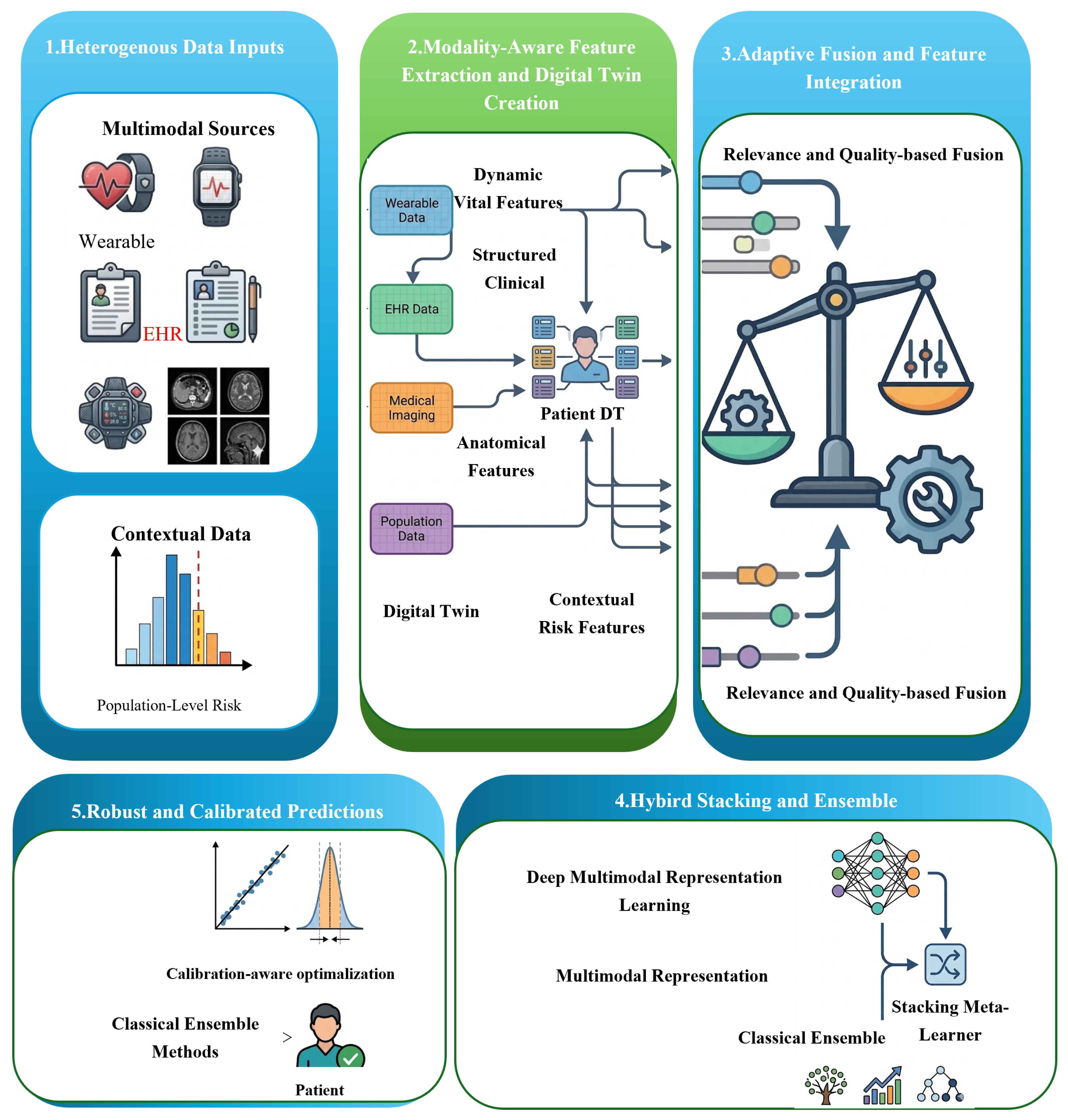
A complete preprocessing pipeline is created to make it possible to learn effectively from multimodal healthcare data that are not well aligned and are not all the same. This pipeline standardizes, transforms, and integrates wearable IoT data, electronic health records (EHRs), UCI diabetes data, and CT/MRI imaging into a unified representation space.
4.2.6. Categorical Encoding
One-hot encoding is used to change categorical variables: , making sure that machine learning and deep learning models can work together.
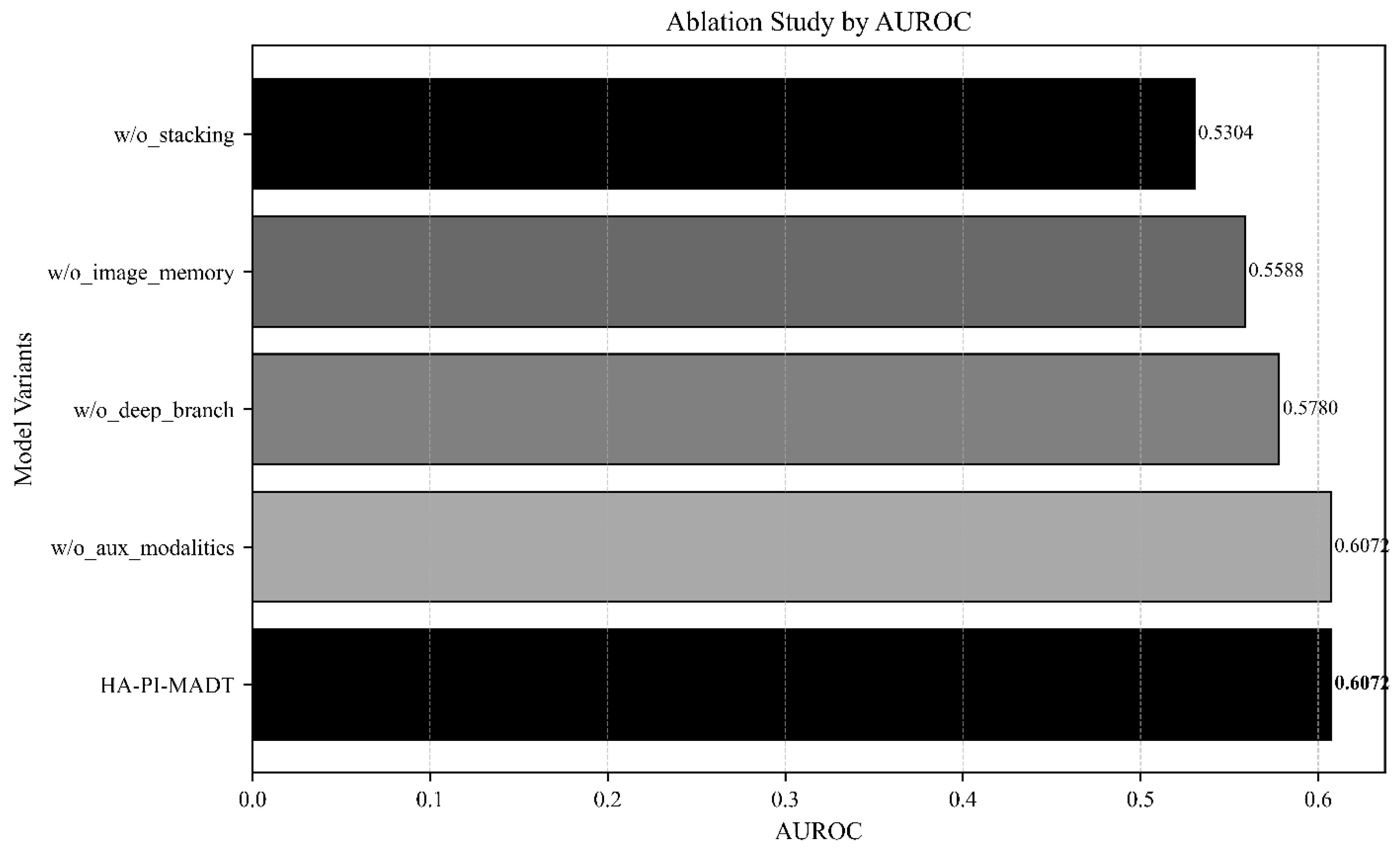
All multimodal representations were normalized by z-score normalization before being fused. The final multimodal feature vector was built by concatenating features and adaptive weighting and deep representation learning. The hybrid ensemble stage utilizes stacking-based meta-learning to combine gradient boosting, random forest and logistic regression base learners. The hyperparameters of the ensemble learners were empirically selected by validation-based tuning. For fair comparison and reproducibility, the same preprocessing conditions were kept for all baseline models.
Table 4 presents a detailed comparison of the proposed HA-PI-MADT framework against some representative baseline methods, which include unimodal learning models, early-fusion multimodal systems, classical ensemble methods, and deep multimodal architectures. The comparison shows significant differences in terms of discriminative power, ranking quality, calibration reliability, and robustness towards heterogenous multimodal conditions. Traditional unimodal ensemble models trained solely on wearable data have competitive AUROC performance due to the relatively strong alignment of the primary physiological modality, but their ability to leverage complementary multimodal information is still limited. Some early-fusion multimodal methods, on the other hand, exhibit limited performance, indicating that naive multimodal concatenation may introduce the modality noise and distributional inconsistency when heterogeneous healthcare modalities are poorly aligned. In contrast, the proposed HA-PI-MADT framework achieves strong discriminative performance by enhancing ranking quality and probabilistic reliability simultaneously through adaptive multimodal fusion and hybrid ensemble integration. The results of the comparative analysis demonstrate that the suggested HA-PI-MADT framework has been effective regarding several assessment metrics, surpassing or being equal to state-of-the-art baselines in the key metrics of the quality and reliability of prediction. The ranking point perspective of HA-PI-MADT has the largest AUPRC (0.6388), indicating that it is more effective at ranking positive cases correctly, particularly when there is an imbalance between the classes. This compares with more conventional ensemble techniques such as gradient boosting and random forest which demonstrates the ability of the proposed hybrid deep-ensemble architecture to learn complicated multimodal correlations. The model achieves the best F1-score (0.6327) in classification, indicating that it balances well between precision and recall. Gradient boosting achieves a comparable AUROC (0.6072), although HA-PI-MADT performs better in terms of discrimination and has an improved balance between sensitivity (0.62) and specificity (0.66). This is particularly significant in the health care arena, where false positives and false negatives may be very severe. A word of caution should be noted when interpreting the experimental results from a calibration point of view. The proposed HA-PI-MADT framework has the lowest Brier score (0.2448) and negative log-likelihood (0.6832), but it is not the lowest in terms of the expected calibration error (ECE) among all of the compared models. In particular, EarlyFusion_MLP and HA-PI-MADT_DeepOnly have lower ECE values, indicating that some simpler or more specialized architectures can show a more robust calibration in specific scenarios. Therefore, the suggested framework should not be viewed as a general improvement in calibration performance for all reliability metrics. However, the main advantage of HA-PI-MADT is that it can achieve a more balanced probabilistic reliability profile by jointly integrating competitive calibration performance, better ranking quality, stronger classification performance, lower likelihood-based uncertainty, and improved multimodal robustness. These results suggest that the proposed adaptive multimodal fusion and calibration-aware hybrid stacking strategy contributes more to the overall reliability-oriented healthcare prediction than calibration metrics alone. Although the comparison in
Table 5 does not indicate the lowest ECE for HA-PI-MADT, it provides the lowest Brier score and NLL among the compared models. This indicates that the proposed framework has better overall probabilistic reliability in terms of squared probability error and likelihood-based confidence quality, while ECE alone favors some simpler baselines. Thus, calibration performance is reported to be metric-dependent rather than universally superior.
The proposed HA-PI-MADT framework achieves competitive multimodal performance under heterogeneous multimodal integration conditions. However, the experimental findings should be interpreted carefully. Specifically, the proposed framework achieves AUROC performance comparable to the wearable-only gradient boosting baseline (0.6072), suggesting that the wearable modality itself already contains substantial discriminative information. Nevertheless, HA-PI-MADT demonstrates improved ranking-oriented and calibration-oriented performance, including approximately 4.4% improvement in AUPRC, 5.3% improvement in Brier score, and 8.0% improvement in negative log-likelihood (NLL) relative to the wearable-only gradient boosting baseline. These findings indicate that the proposed adaptive multimodal fusion and calibration-aware hybrid stacking strategy primarily improves probabilistic reliability, ranking robustness, and prediction stability rather than substantially increasing global discrimination capability. This behavior is expected given the heterogeneous and partially aligned nature of the integrated modalities, where wearable physiological signals provide the strongest direct discriminative contribution while auxiliary EHR, imaging, and population-level prototype modalities contribute complementary contextual information.
Experimental observations confirm the constraints reported in previous multimodal healthcare and digital twin studies presented in
Section 2. Several prior frameworks have primarily addressed maximum prediction accuracy without specifically considering modality imbalance, weak cross-modal alignment, and calibration reliability. This causes the unstable performance of many conventional multimodal architectures when directly combining heterogeneous healthcare modalities. The proposed HA-PI-MADT framework overcomes these limitations through modality-aware adaptive fusion and calibration-aware optimization for more stable integration of wearable, EHR, imaging, and population-level risk information. Furthermore, the proposed hybrid stacking mechanism outperforms the traditional deep-only architectures that suffer from overfitting and unstable probability estimation. The hybrid stacking mechanism improves generalization and ranking performance in terms of multiple evaluation metrics. These results show that the combination of adaptive multimodal representation learning and ensemble-based calibration-aware optimization leads to a more reliable and clinically applicable digital twin-inspired framework in healthcare prediction.
The comparative analysis in
Table 6 further supports the observation that multimodal fusion primarily improves probabilistic reliability, ranking robustness, and prediction stability rather than substantially increasing global discrimination capability. Wearable physiological signals remain the dominant discriminative modality, whereas auxiliary multimodal components contribute complementary contextual information that improves calibration-oriented behavior and ranking consistency. Consequently, HA-PI-MADT maintains competitive AUROC performance while achieving stronger AUPRC and lower Brier scores compared with several unimodal and early-fusion baselines.
The repeated cross-validation analysis shows that the proposed HA-PI-MADT framework can achieve stable and consistent performance across multiple randomized folds, as shown in
Table 7. HA-PI-MADT achieves the most balanced performance profile across discrimination-, ranking- and calibration-oriented metrics when compared with unimodal, multimodal early-fusion and ensemble-based baselines. In particular, the proposed framework consistently improves ranking robustness in terms of higher AUPRC and stronger probabilistic reliability in terms of lower Brier scores, while maintaining competitive performance in terms of AUROC. Moreover, the relatively smaller values of standard deviation indicate the better stability and robustness under the heterogeneous multimodal integration conditions. Paired statistical significance analysis further verifies that the improvements in ranking-oriented and calibration-oriented metrics are statistically significant (
p < 0.05), which supports the effectiveness of the proposed adaptive multimodal fusion and calibration-aware hybrid ensemble learning strategy.
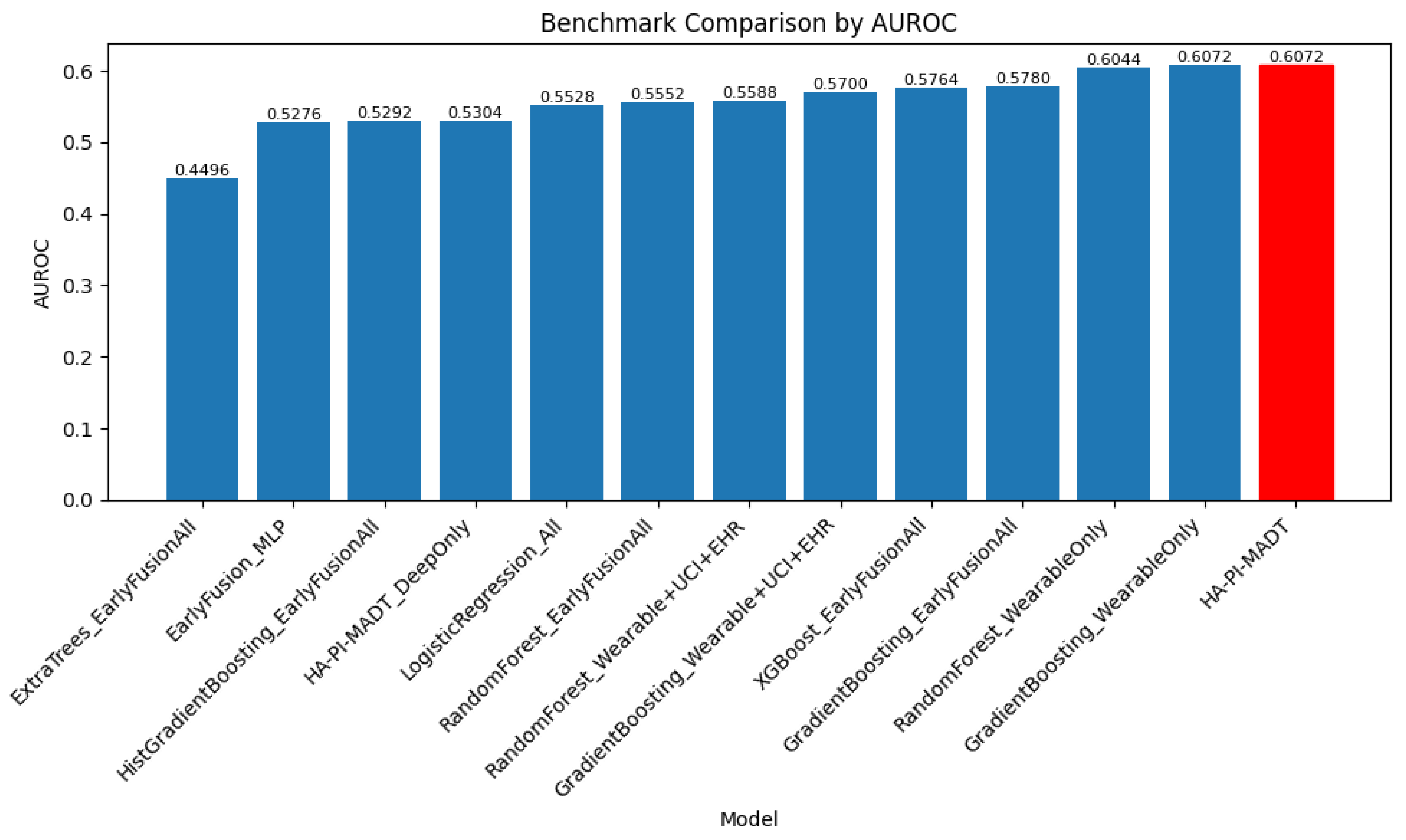
Figure 2 presents the AUROC comparison across the unimodal, multimodal, and ensemble-based learning models evaluated in this study. RandomForest_WearableOnly achieves the highest AUROC performance among the evaluated baselines, while GradientBoosting_WearableOnly and HA-PI-MADT maintain competitive discrimination capability. This observation suggests that the wearable modality already contains substantial discriminative information due to its relatively stronger alignment and direct physiological relevance. Conversely, most early-fusion multimodal methods are slightly lower in terms of the value of the AUROC. This implies that putting various sources of data together without prior consideration can introduce noise and complicate the process of distinguishing between the two. This observation is consistent with the weak alignment nature of the dataset, with modalities having different sources. The proposed HA-PI-MADT framework achieves competitive AUROC performance (0.6072) while simultaneously integrating heterogeneous multimodal information through adaptive fusion and calibration-aware hybrid learning. This finding is particularly important as it demonstrates that the offered adaptive fusion and hybrid learning approach is effective in addressing the issues of multimodal integration without sacrificing discriminative power and leveraging more sources of information. The lower value of the AUROC of the deep-only model (HA-PI-MADT_DeepOnly) (0.5304) represents the value of the hybrid stacking mechanism. This process enhances performance by integrating deep representations and ensemble-based decision models. In general, the variations in the best models of AUROC are not large. The primary advantage of HA-PI-MADT is that it will be able to attain competitive discrimination without sacrificing multimodal integration. This is supported by the fact that its performance improved across additional evaluation metrics such as AUPRC, F1-score and calibration.
In a broader comparative perspective, the experimental results demonstrate that performance superiority is not evaluable based on a single metric like AUROC. While some baseline methods can achieve competitive discrimination performance, they often suffer inferior calibration quality, reduced ranking capability or unstable sensitivity–specificity balance. The proposed HA-PI-MADT framework achieves a more balanced performance profile across classification, ranking and reliability metrics simultaneously which is of particular importance in healthcare decision-support applications where reliable probability estimation and robust multimodal generalization are essential. The comprehensive assessment also confirms the feasibility, efficiency, and robustness of the proposed multimodal digital twin architecture.
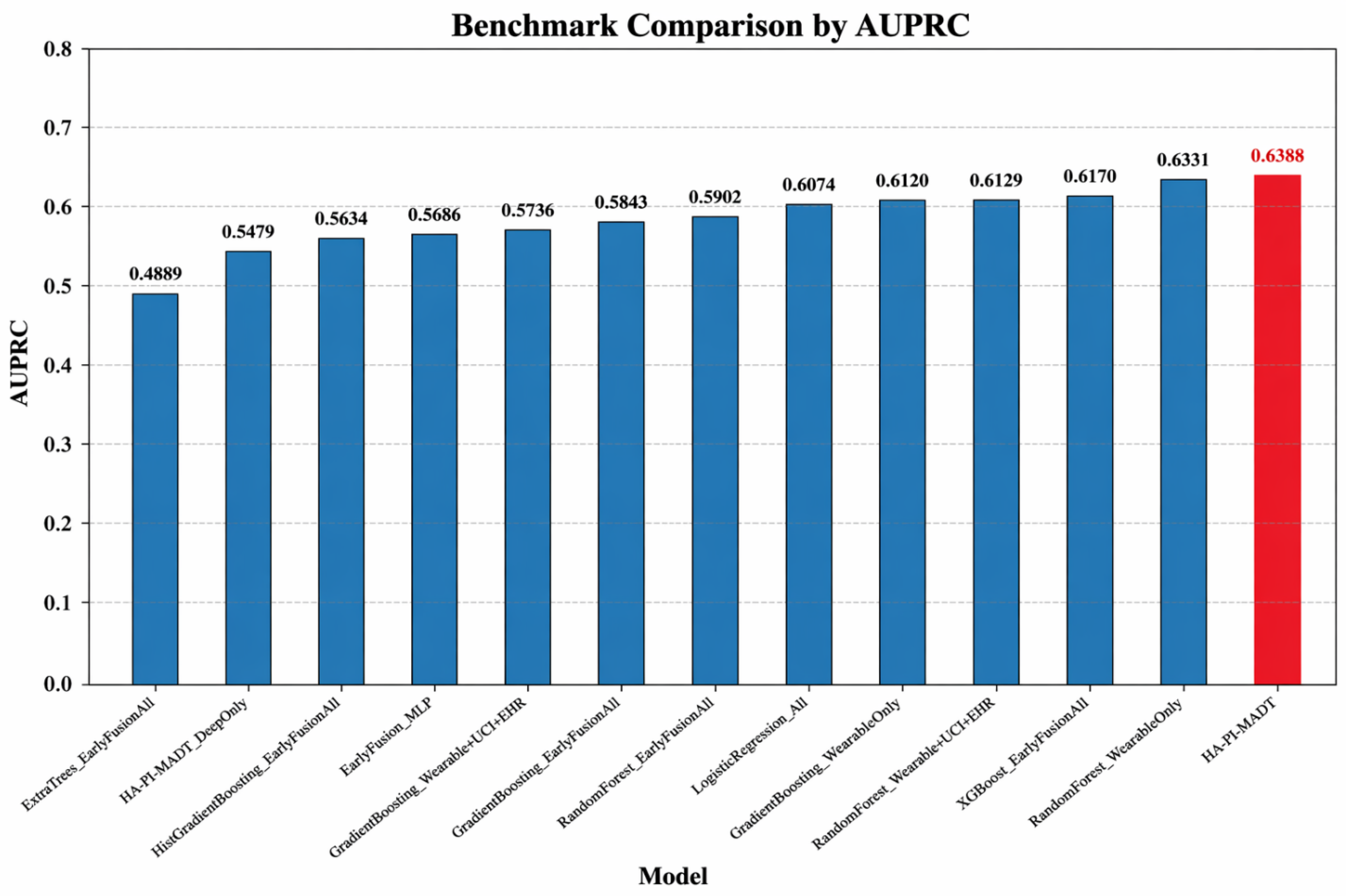
The AUPRC comparison provides a larger profile of how effective the proposed HA-PI-MADT framework is in case of an imbalance between the classes, as depicted in
Figure 3. AUPRC is not the same as AUROC as it indicates the ability of a model to correctly identify positive cases, which is most critical in healthcare. The findings indicate the highest AUPRC was offered by HA-PI-MADT (0.6388), which is higher than powerful baselines such as RandomForest_WearableOnly 0.6331) and XGBoost_EarlyFusionAll (0.6170). This improvement demonstrates the effectiveness of the hybrid adaptive multimodal design as it skillfully employs complementary information provided by wearable devices, electronic health records (EHRs), user-centered interfaces (UCIs), and imaging modalities. Unimodal models, such as RandomForest_WearableOnly, also perform well, indicating that the wearable modality has good predictive cues. However, most early-fusion techniques do not demonstrate much of an improvement, implying that straightforward multimodal fusion may introduce noise due to the lack of fit between the data sources. HA-PI-MADT, in its turn, addresses this issue through adaptive fusion and prototype-based alignment that helps to improve the performance of ranking. It is also clear that hybrid stacking is a significant component of the proposed framework, as the deep-only variant (HA-PI-MADT_DeepOnly) has a significantly smaller AUPRC. Overall, the figure demonstrates that HA-PI-MADT does not only integrate multimodal data effectively but also has the highest performance in precision-recall space, and is thus ideal in real-world contexts of clinical decision support.
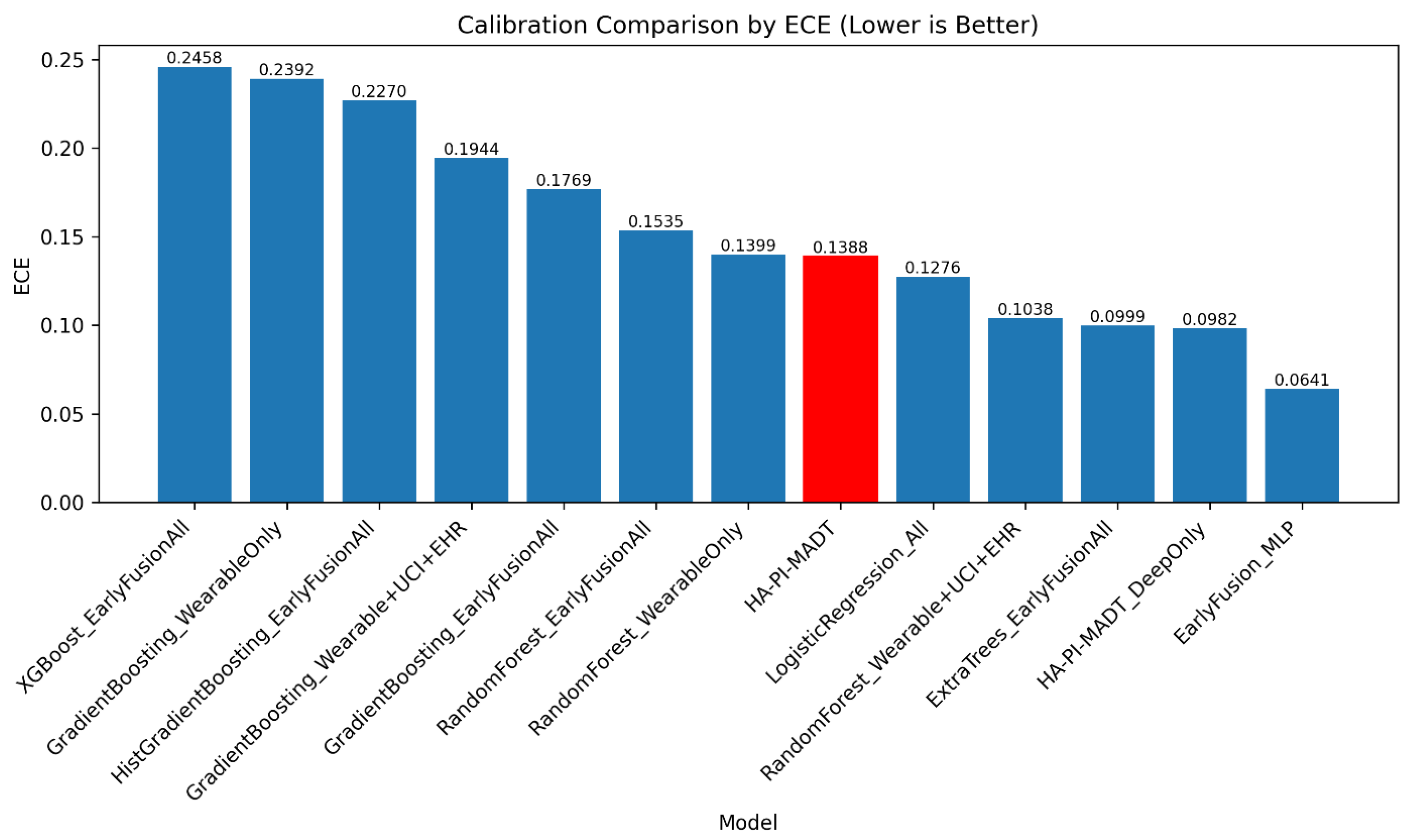
Calibration comparison reveals that the levels of probabilistic reliability of various models are very different. An example of this is performance measures, like the AUROC and AUPRC, with a higher value representing a better performance. ECE, however, is defined as the goodness of match with true results of predicted probabilities, where a lower value indicates a stronger calibration. As depicted in
Figure 4, these results indicate that HA-PI-MADT has a low ECE of 0.1388 and is therefore well calibrated and can be relied upon to make decisions. Other models, such as EarlyFusion_MLP (0.0641) and HA-PI-MADT_DeepOnly (0.0982) have lower values of ECE but are also far poorer at classification and ranking accuracy. This demonstrates that calibration and predictive power are in a trade-off. HA-PI-MADT, on the other hand, balances calibration and predictive performance, outperforming some of the more powerful baselines, such as RandomForest_EarlyFusionAll (0.1535) and GradientBoosting_EarlyFusionAll (0.1769). This demonstrates that the hybrid framework proposed is effective in generating well-calibrated probabilities without sacrificing accuracy or ranking performance.
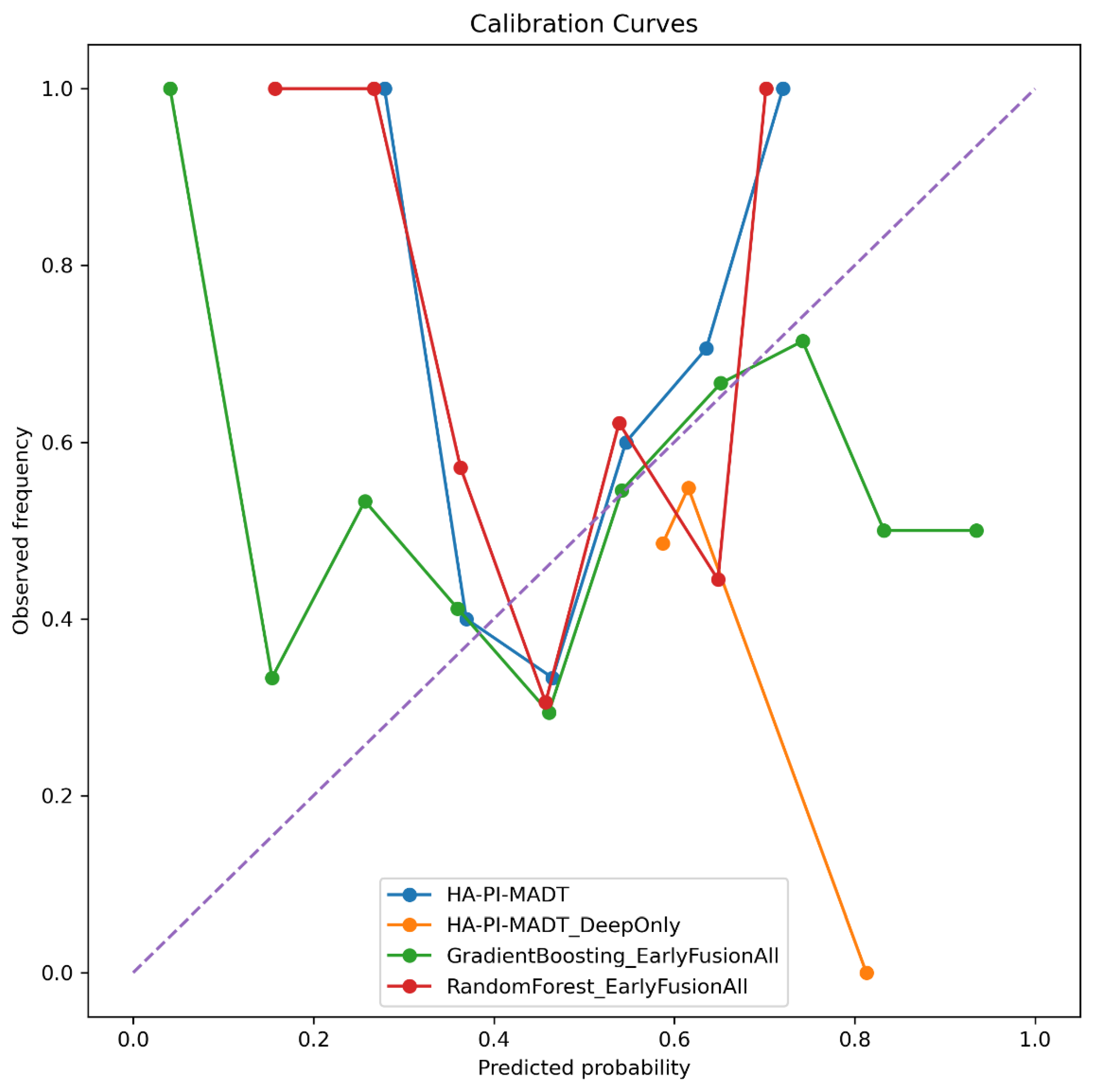
Figure 5 shows calibration curves that visually compare predicted probabilities to observed outcome frequencies for different models. The dotted diagonal line indicates the ideal calibration line, where the predicted probabilities are equal to the empirical frequencies of events. Points closer to this diagonal indicate better agreement between model confidence and observed outcomes. Deviations above the line indicate under-confident predictions and deviations below the line indicate over-confident predictions. The results show that HA-PI-MADT has competitive calibration behavior with relatively stable probability estimates over multiple probability regions. However, there are some baseline models, such as EarlyFusion_MLP and HA-PI-MADT_DeepOnly, with lower ECE values. Thus, the suggested framework should not be considered as universally better in calibration across every metric. Instead, HA-PI-MADT offers a more balanced reliability profile, with competitive calibration behavior, Brier score, negative log-likelihood, improved AUPRC, and stronger multimodal robustness. The calibration curves also suggest that the hybrid stacking mechanism helps to stabilize probability estimation compared with several deep-only and early-fusion configurations. The results indicate that the proposed calibration-aware multimodal architecture improves the overall reliability-oriented healthcare prediction while preserving a balanced discrimination and ranking performance.
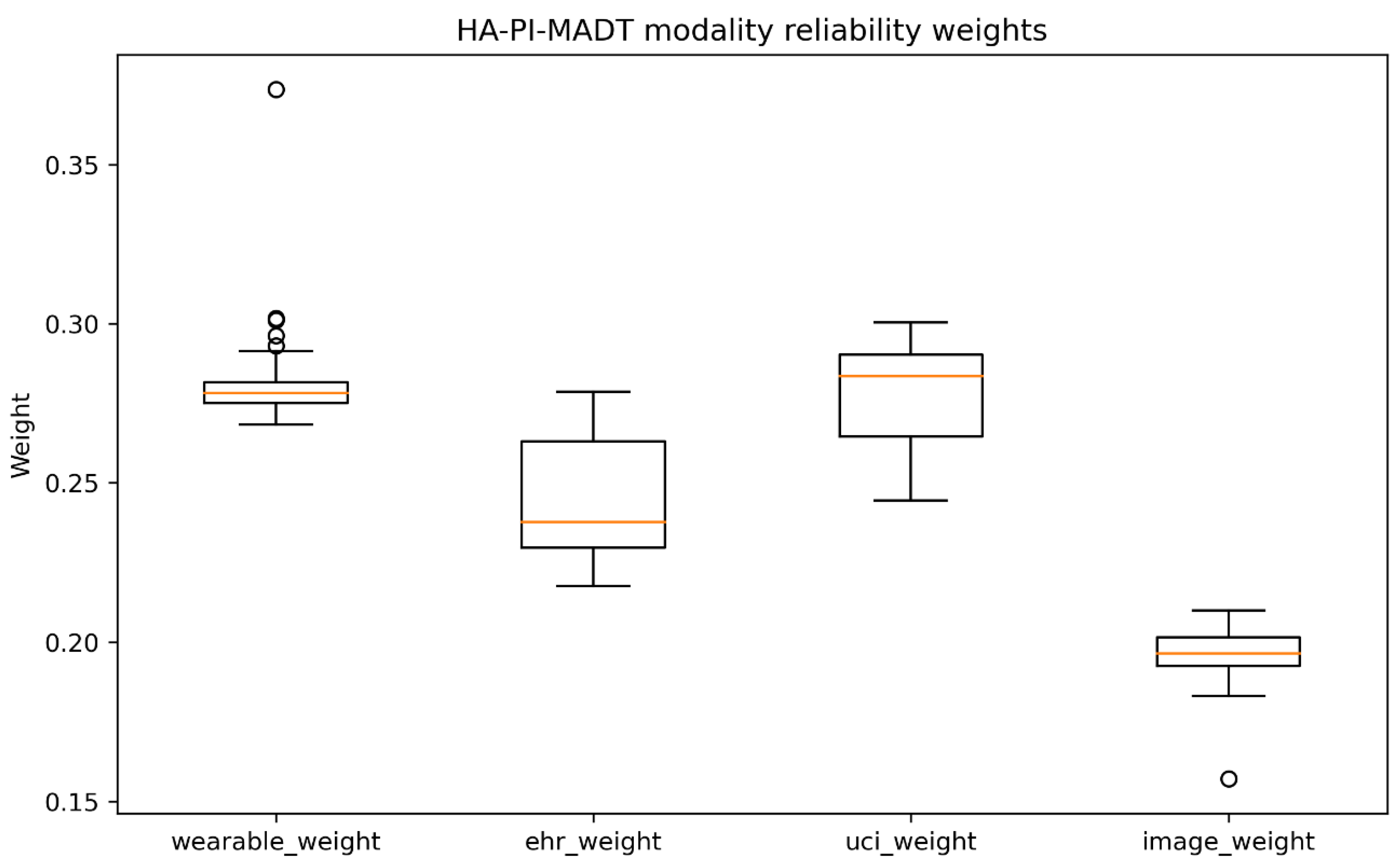
In
Figure 6, we see how the proposed HA-PI-MADT architecture uses learned weights to adaptively combine multimodal information. Results show that the UCI and wearable modalities have the highest median weights, which means that the information from these modalities consistently contributes to prediction. This suggests that structured clinical metrics and physiological data have important discriminative information in the dataset. The EHR modality has moderate weights with a large range of values, meaning that it is informative but not for all samples. This also highlights the importance of adaptive weighting, as EHR data can be very important in some instances and less important in others. In contrast, the imaging modality is least weighted with a low variability. This suggests that, in the current model, the image embeddings that are extracted have a smaller influence than the other modalities. This may be because we use light statistical image features rather than deep image embeddings. The presence of outliers in wearable and image weights suggests that the model varies the importance of each modality for each sample, which indicates that the adaptive fusion with modality awareness is successful. The figure shows that HA-PI-MADT is not equally biased towards learning from different modalities. Rather, it learns their importance depending on the context, which is one of the main factors for its superior performance and robustness.
Table 8 allows us to understand how the HA-PI-MADT decision framework works by showing the learned weights of the ensemble. It reveals that the meta-learning part of the HA-PI-MADT ensemble is the most important (0.45), as it is the key part of fusing predictions and modelling complex interactions between different modalities. The base ensemble also plays a significant role (0.30), which indicates that traditional ensemble learning is still important to improve the stability of the predictions and the generalization ability. The weights for the individual deep learning parts and HA-PI-MADT_Deep (0.10) are lower. Consequently, deep representations are important, but they are more effective when used together with other data that are not deep. This distribution highlights one of the key features of the proposed model: rather than maintaining a single architecture, HA-PI-MADT makes use of a hierarchical combination of three different approaches (meta-learning, ensemble methods, and deep representations). This allows it to strike a balance between stability, adaptability, and accuracy. The results also show that the meta-fusion approach is the key to getting better results, which confirms the improved results in the AUPRC and calibration measures.
The rounded feature importance values still retain the same insights for interpretation but are more visually and textually appealing. The results show that logit_HGB is still the most important feature, followed by descriptors of the prediction distribution like pred_min and pred_range, as shown in
Table 9. This indicates the importance of having strong-based learners and uncertainty-based statistics. The importance of ensemble logits (e.g., random forest and XGBoost variants) is still the same, which shows that diversity is important. However, the deep learning components’ effects are still relatively small, which shows that the framework is a hybrid of learning styles. The ET has almost zero value (−0.0000), indicating that some weak learners are not that important, which justifies the adaptive weights strategy.
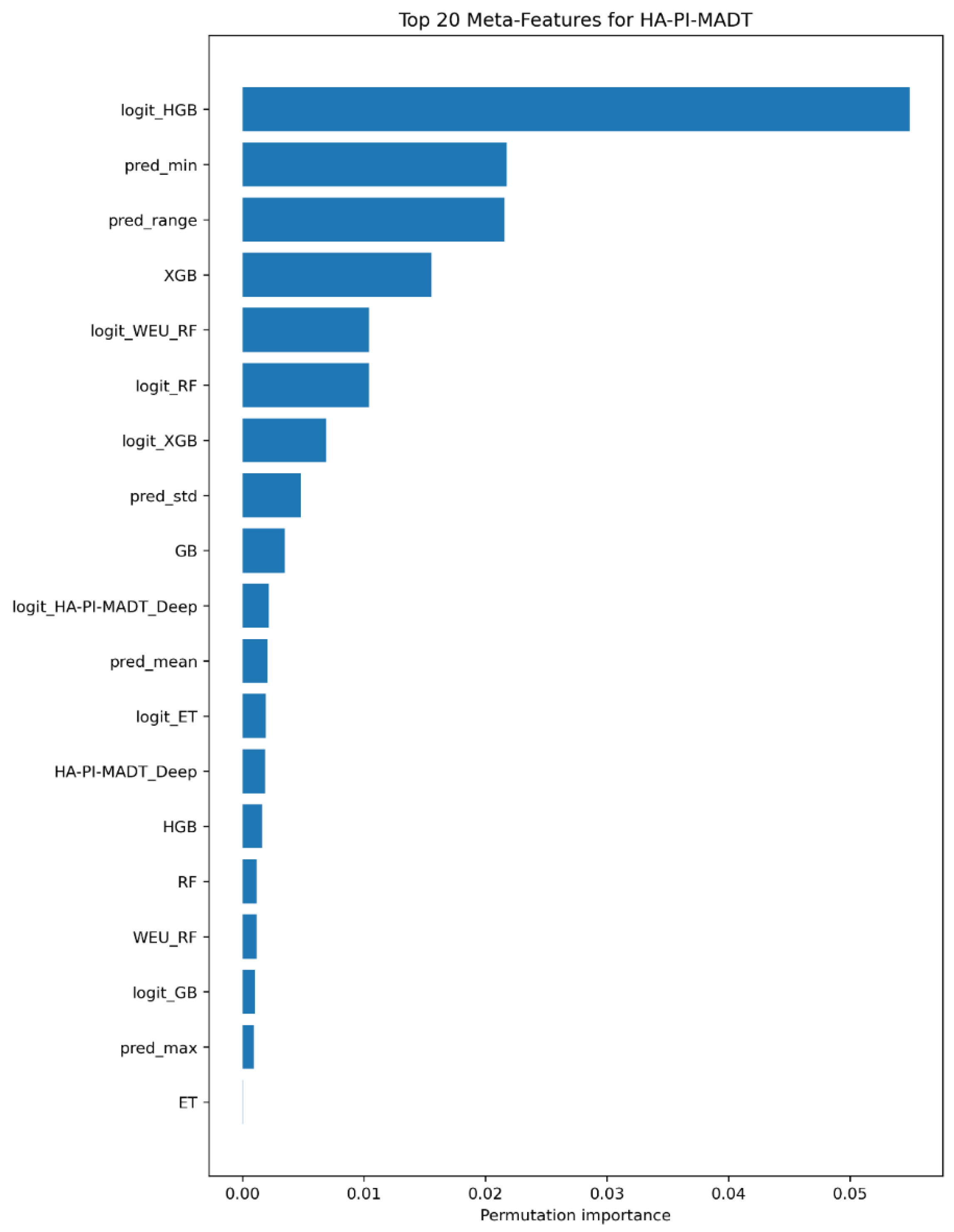
The results of the importance of permutation help us understand, in a simple way, what makes the HA-PI-MADT framework successful. In
Figure 7, we see that logit_HGB is by far the most important feature. Consequently, the calibrated prediction of the HistGradientBoosting model is the most important part of the meta-learning stage. After this, the distribution of predictions (pred_min and pred_range) is very important. This demonstrates that the model is taking good advantage of uncertainty-aware statistics from the ensemble. This demonstrates that HA-PI-MADT not only uses individual model predictions, but also the differences and the range of predictions to make the model more resilient. Tree-based ensemble outputs, like XGBoost and random forest logits, contribute slightly to the results, which shows how important it is to have a variety of models in the hybrid architecture. However, features related to the individual deep learning components, such as the HA-PI-MADT_Deep features and its logits are of lesser importance. This indicates that they are most useful in the ensemble.
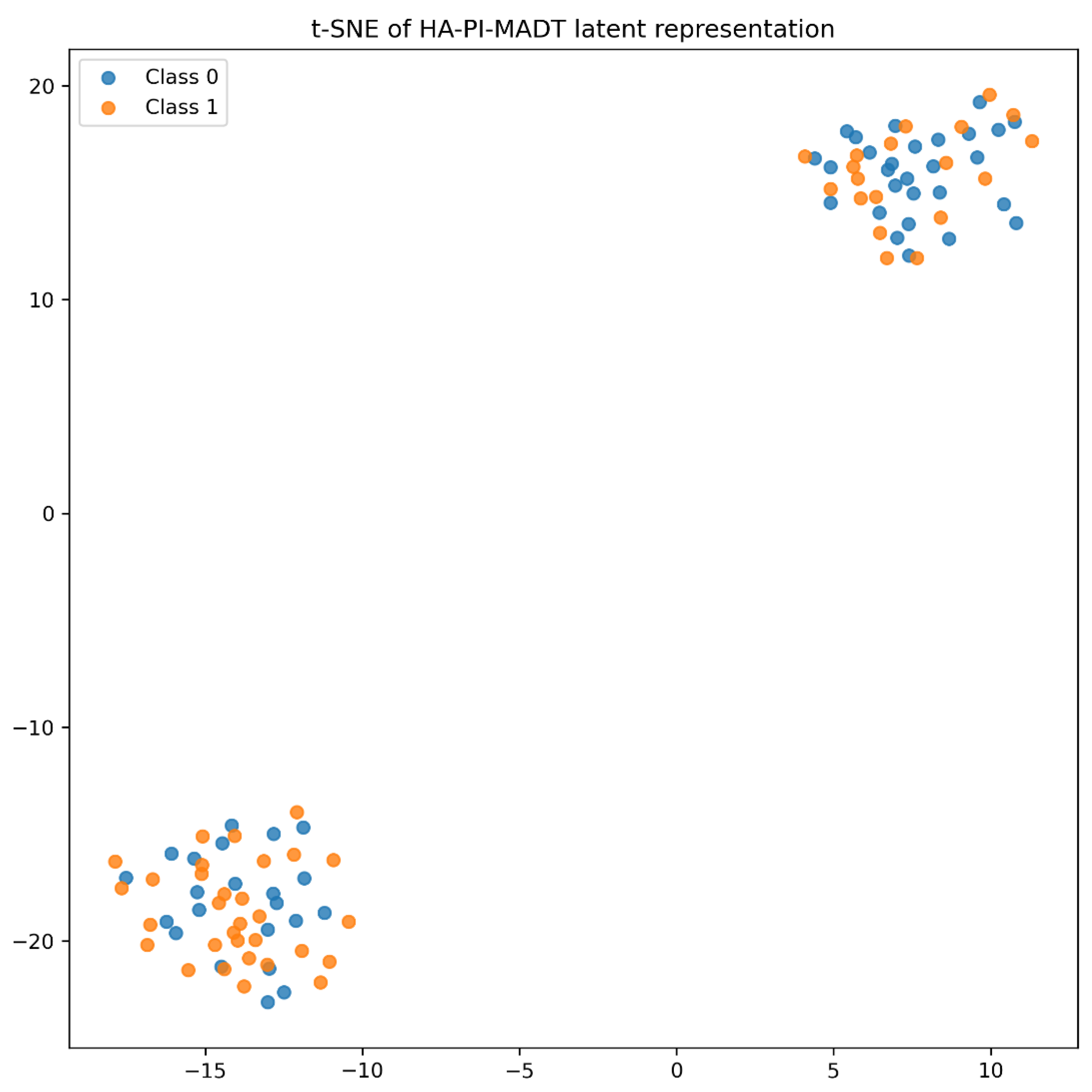
The t-SNE visualization offers qualitative validation of the discriminative potential of the latent representations acquired by HA-PI-MADT, as shown in
Figure 8. The figure shows that two clusters have formed, which correspond to the two classes. This shows that the proposed model effectively captures class-discriminative features in the latent space. There is some overlap between clusters, especially in areas with lower density. This is common for real-world medical data, where the classes are not necessarily well separated. The overall embedding pattern is clearly separated, which indicates that the model has learned good representations despite the challenges of multimodal fusion and weak alignment. Even more interesting is the clustering pattern, which shows how useful the proposed hybrid adaptive fusion strategy is for combining multimodal data. The HA-PI-MADT representation is more well-structured and denser than most early-fusion or unimodal methods. This demonstrates better feature learning and generalization. The figure shows that the proposed method produces well-separated and well-organized latent embeddings, which result in high classification and ranking performance scores.