
Reddit Depression Communities as Spaces of Emotion Regulation: A Data-Informed Analysis of Coping and Engagement

 , , , ,
  ,
,  and
and 
Abstract
1. Introduction
2. Materials and Methods
2.1. Psychological Dimensions of Online Content
2.2. Clustering and Topic Detection
3. Results
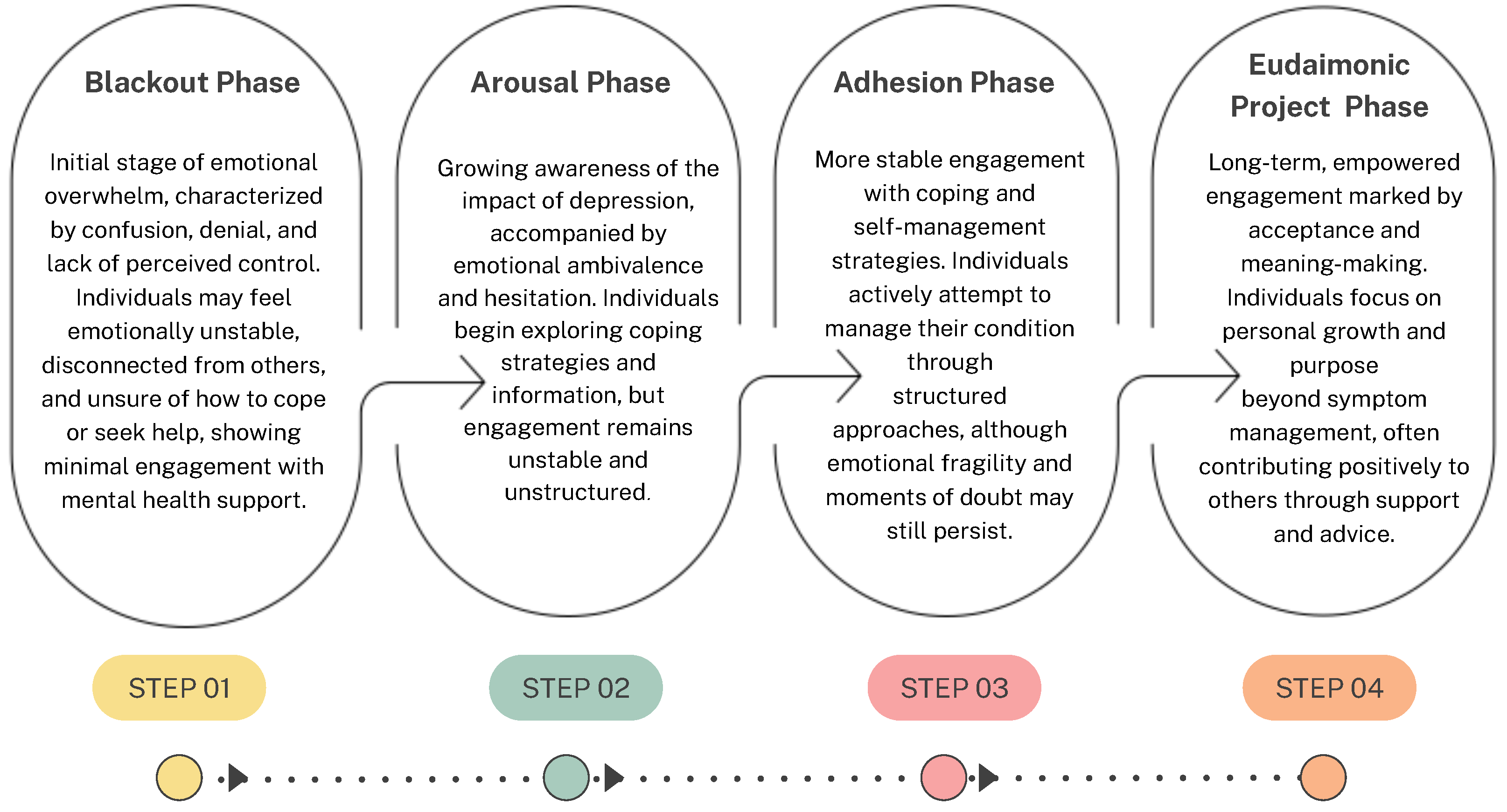
3.1. Cluster 1: Emotionally Turbulent/Under Blackout Users
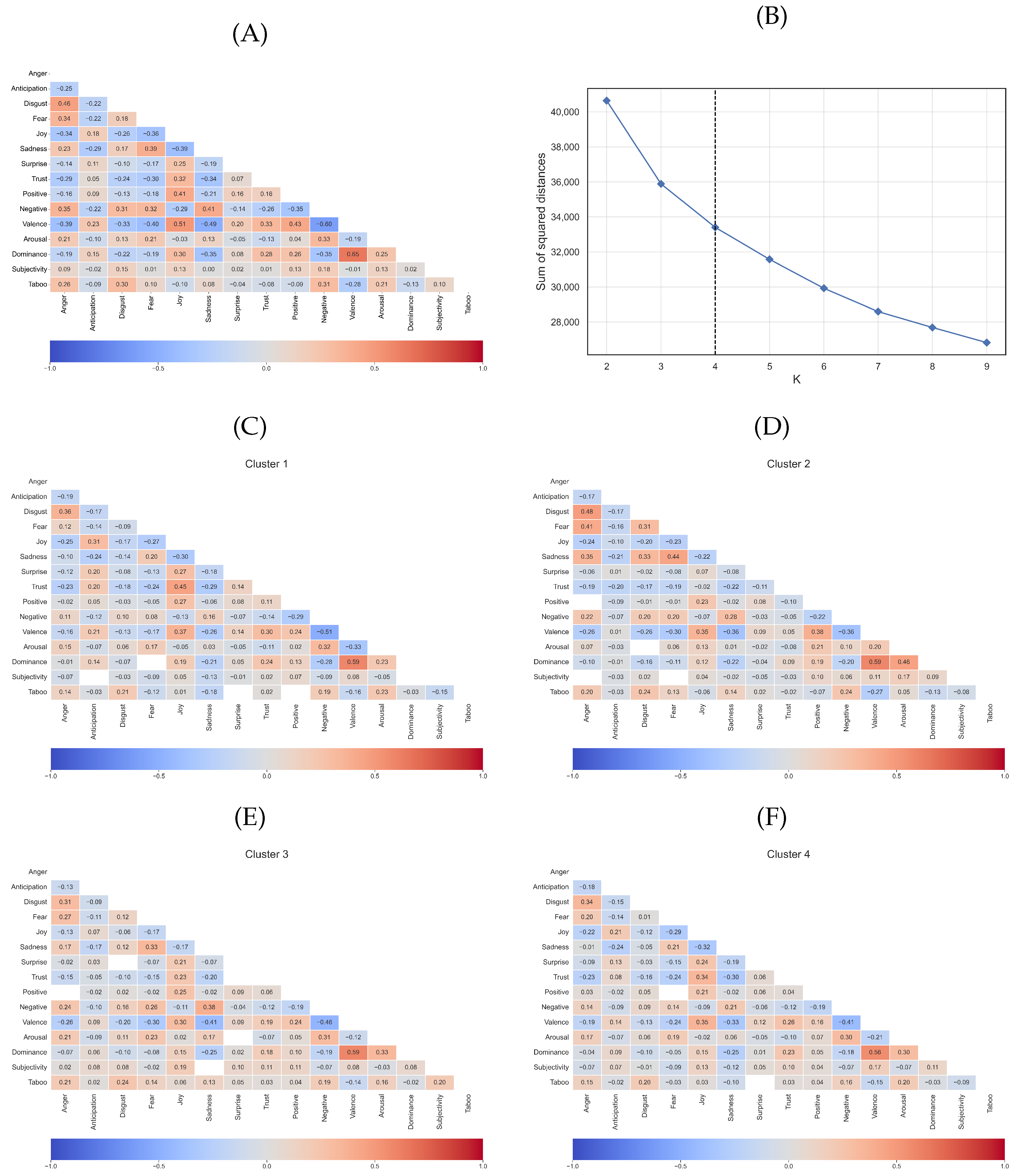
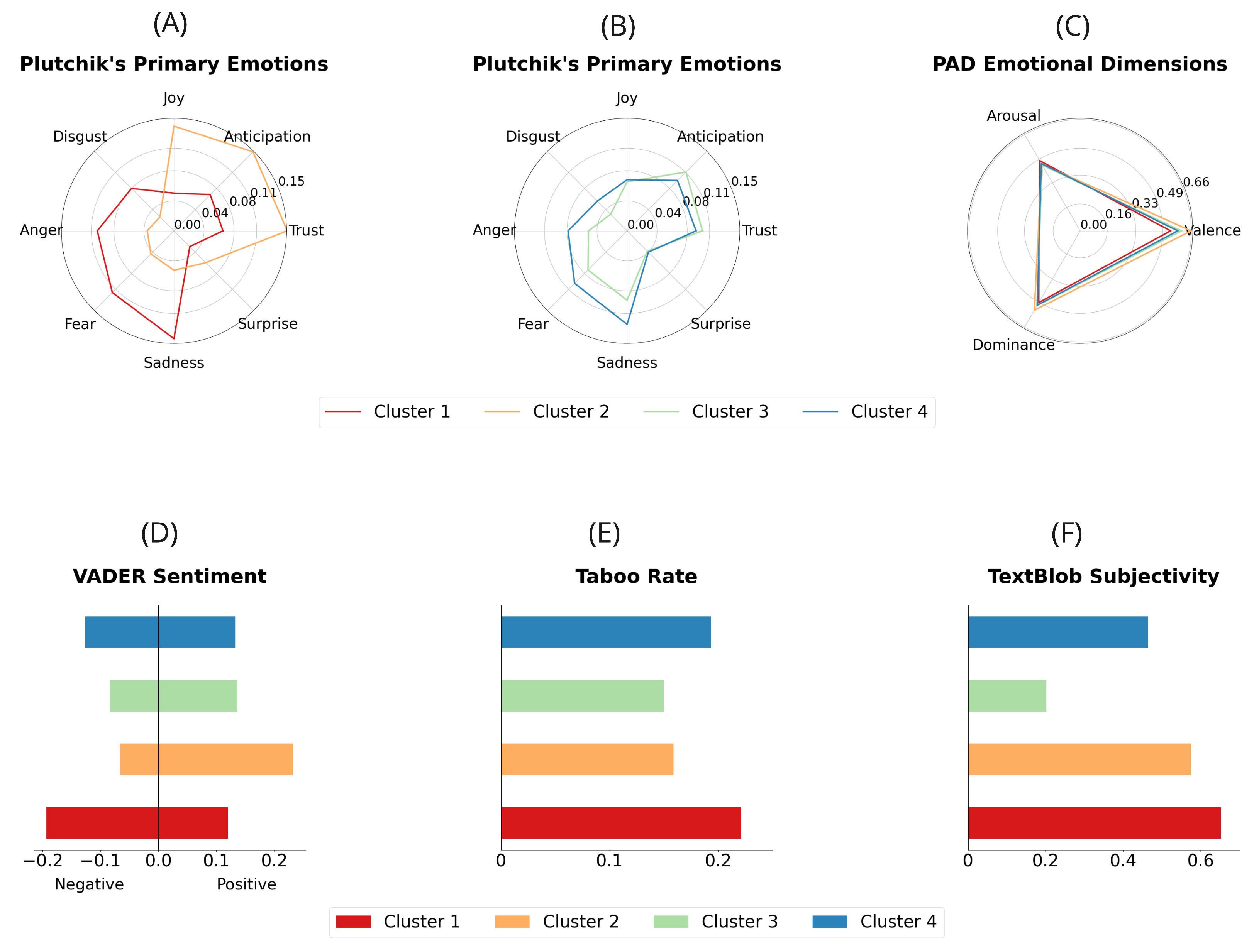
- Psychological/Linguistic Dimension. As shown in Figure 4A,B,D, users in this cluster display a clear prevalence of negative sentiment (−0.19) relative to positive sentiment (0.12). Among Plutchik’s eight basic emotions, negative ones dominate: sadness (0.14), fear (0.12), anger (0.10), and disgust (0.08) all score higher than joy (0.05), while surprise (0.03), trust (0.06), and anticipation (0.07) remain similarly subdued. These emotional scores co-occur with elevated levels of arousal (0.48), valence (0.54), dominance (0.49), taboo word usage (0.22), and subjectivity (0.65) (see Figure 4C,E,F). Taken together, this configuration points consistently toward a negative emotional orientation, making cluster 1 the group with the strongest negative affective profile across all dimensions [31,32]. Looking at the PAD Emotional Dimensions specifically, this cluster exhibits marginally elevated arousal alongside somewhat reduced dominance and valence scores compared to the other groups (see Figure 4A,C). Furthermore, cluster 1 records the highest negative sentiment and the lowest positive sentiment, as well as the greatest use of taboo words and the highest degree of subjectivity across all clusters (see Figure 4E,F). Turning to within-cluster correlations (Figure 3C), taboo rate shows a significant relationship with subjectivity (r = −0.15; p < 0.001), anger (r = 0.14; p < 0.001), and disgust (r = 0.21; p < 0.001). This pattern may reflect a tendency to use aggressive language not so much to provoke others directly, but as a byproduct of depersonalized expression—that is, language stripped of personal perspective or emotional ownership [23]. The Theory of Deindividuation [33] offers a useful frame here: when individuals operate under conditions of anonymity, their sense of personal accountability and self-monitoring tends to weaken. A parallel dynamic may apply to linguistic depersonalization: by distancing themselves from their own viewpoint, users may feel less inhibited in reaching for offensive or taboo expressions, effectively treating their language as anonymous output rather than personal disclosure. Consistent with this reading, taboo rate is negatively correlated with fear (r = −0.12; p < 0.001, Figure 3C), suggesting that the more a user relies on offensive language, the less fear is present in their writing—as though impersonal expression lowers the perceived social risk of hostile communication. Also notable is the near-absence of both anticipation and surprise in this cluster. Within Plutchik’s framework [23], these two emotions constitute opposing ends of the same dyad; their joint suppression here may signal both a lack of forward-looking engagement (no anticipation) and an absence of reactive alertness to new information (no surprise). This temporal flatness reinforces the picture of a group whose emotional narratives are anchored predominantly in present or past experiences, with little cognitive orientation toward what lies ahead.
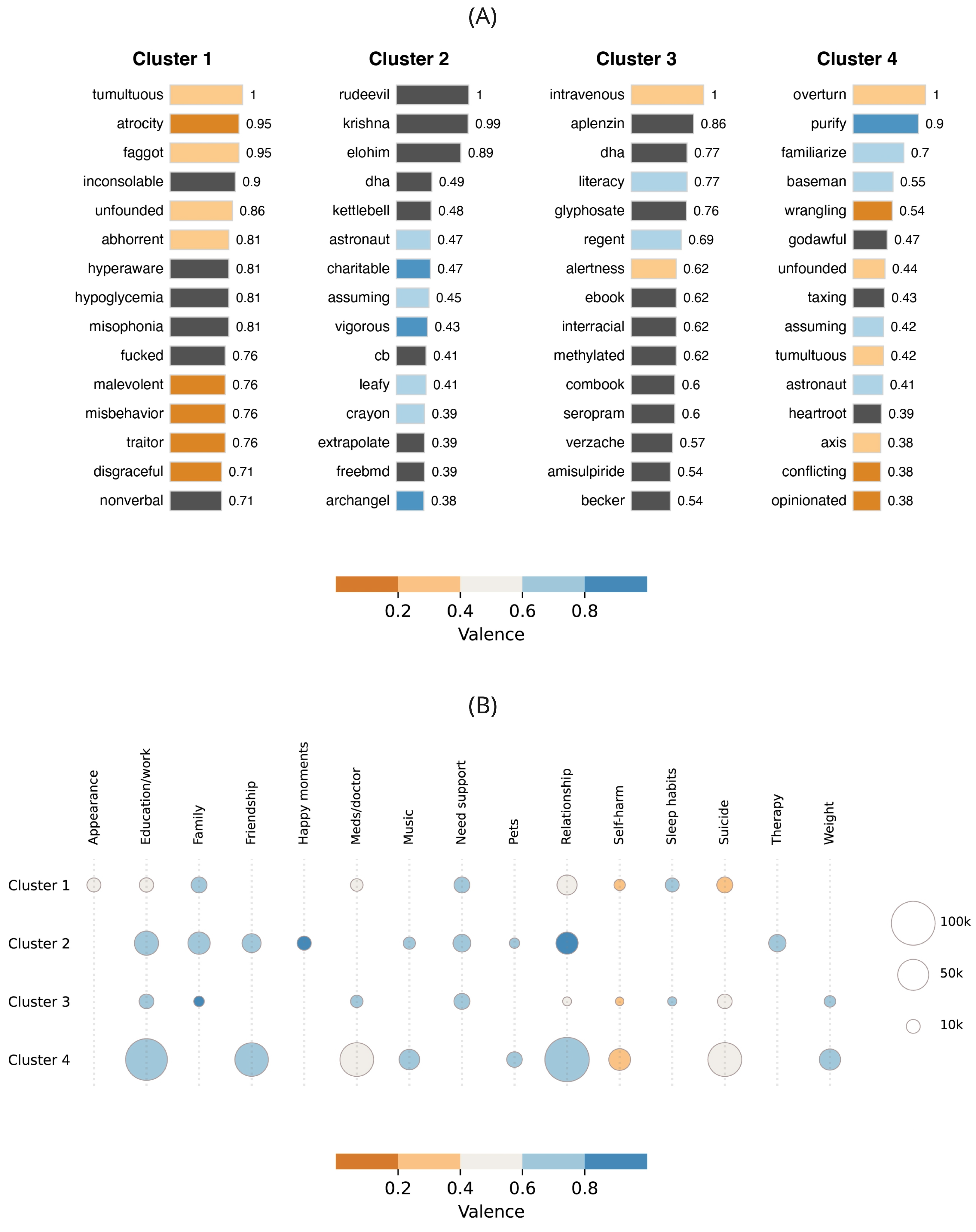
- Content Profile. This emotional landscape described previously is reflected in the cluster’s most frequent words (Figure 5A), which are predominantly negative and include offensive terms (e.g., “faggot”) and pessimistic expressions (e.g., “atrocity”, “abhorrent”, “unfounded”). Notably, cluster 1 is the only cluster without any positively associated words among its top 15 most frequent terms, as determined by TF-IDF analysis.
3.2. Cluster 2: Users Living a Eudaimonic Project Phase
- Psychological/Linguistic Dimension. The emotional profile of this cluster stands in marked contrast to cluster 1 at the level of psycholinguistic expression. Positive sentiment reaches a comparatively high level (0.23), while negative sentiment remains low (−0.07). Negative emotions are largely absent: sadness (0.05), fear (0.04), anger (0.03), and disgust (0.03) all register near-floor values, whereas joy (0.14), trust (0.15), and anticipation (0.15) emerge as the defining emotional signals, with surprise (0.06) also contributing (see Figure 4A). On the PAD dimensions (Figure 4C), this emotional pattern is accompanied by moderately elevated arousal (0.46), the highest valence score across all clusters (0.66), and a notable degree of dominance (0.54). The overall picture is one of pronounced positive affective orientation, with cluster 2 scoring highest on positivity among all groups. Taboo word usage is comparatively restrained (0.16), while subjectivity remains relatively high (0.57) (see Figure 4E,F). Within-cluster correlations (Figure 3D) shed further light on how offensive language functions in this group. Taboo rate is positively associated with anger (r = 0.20; p < 0.001), disgust (r = 0.24; p < 0.001), fear (r = 0.13; p < 0.001), and sadness (r = 0.14; p < 0.001), and similarly correlates with negative sentiment (r = 0.24; p < 0.001), while showing a negative relationship with valence (r = −0.27; p < 0.001). Unlike in cluster 1, where taboo language appears decoupled from negative affect, here its use is tightly bound to unpleasant emotional states—suggesting that when users in this group resort to offensive expression, it reflects genuine negative arousal rather than depersonalized venting.
- Content Profile. The analysis of the most frequent words (Figure 5A) highlights a lexical profile characterized by predominantly positive-valence terms, such as “charitable”, “vigorous”, and “archangel”, which are among the most distinctive words in this cluster according to TF-IDF. This positive tone appears closely tied to users’ faith and spiritual beliefs, as evidenced by the prevalence of religion-related words like “krishna” and “elohim”. The connection between religiosity and improved mental health is well-documented in literature [37,38], with researchers attributing this link to enhanced social support, the discovery of meaning, and improved self-regulation that often accompany religious practice. The cluster’s positivity is not solely rooted in spirituality, however. Physical activity and the pursuit of new hobbies emerge as potential contributors to the overall positive mood [39,40]. Moreover, the presence of terms like “dha” and “assuming” suggests a focus on medication adherence, which may play a significant role in maintaining this positive sentiment [41,42]. The positive emotional profile is mirrored in the topics (Figure 5B). The conversation revolves around areas such as “Education/Work”, “Family”, “Relationship”, “Friendship”, “Need Support”, “Therapy”, “Happy moments”, “Music”, and “Pets”. Notably absent are the “Suicide” and “Self-Harm” topics that appear in other clusters. All discussed topics carry a positive valence (0.6–0.8), with “Happy moments” and “Relationship” scoring even higher (exceeding 0.8). Social support, long recognized as a protective factor against depression [43,44,45], is a recurring theme. Users talk about multiple sources of possible support, each offering unique benefits. Psychotherapy, widely employed in depression treatment [46], is discussed in positive terms, suggesting users find it helpful in their mental health journeys. Music emerges as another significant positive element. Users engage with music both passively (listening) and actively (playing). Research has shown such interventions to be effective in reducing depression by enhancing socialization and improving cognitive and emotional processes [47]. The topic of Pets also features prominently in discussions in positive-valence terms, aligning with researches that associate pet ownership with lower levels of depression [48]. In conclusion, Cluster 2 is characterized by a predominantly positive-affect and approach-oriented linguistic profile, with topics less centered on self-harm and suicide than in other clusters. These patterns reflect more engaged and meaning-oriented forms of expression in the analyzed texts.
3.3. Cluster 3: Adherent-Yet-Conflicted Users
- Psychological/Linguistic Dimension. Cluster 3 occupies an intermediate emotional position relative to the preceding groups. Negative sentiment is moderately suppressed (−0.08), while positive sentiment reaches a moderate level (0.14). Among individual emotions, sadness (0.09), trust (0.10), and anticipation (0.11) stand out as the most represented, whereas joy (0.06), fear (0.07), anger (0.05), disgust (0.03), and surprise (0.04) remain peripheral (see Figure 4B). On the PAD dimensions, the cluster shows moderate scores across arousal (0.45), valence (0.60), and dominance (0.51) (see Figure 4C). Most distinctively, cluster 3 records the lowest values for both taboo word usage (0.15) and subjectivity (0.20) of all four groups (see Figure 4E,F). The low subjectivity score is particularly informative when read alongside the within-cluster correlations shown in Figure 3E. Subjectivity is positively associated with joy (r = 0.19; p < 0.001), trust (r = 0.11; p < 0.001), and positive sentiment (r = 0.11; p < 0.001). Given how infrequently these users engage in first-person, opinion-laden expression, moments of self-assertion appear to carry particular emotional weight: the more individuals in this cluster voice their own perspective, the more they tend to report positive affect and a sense of trust—whether directed at themselves upon achieving a personal goal, or at others who respond with genuine attention. The negative correlation between sadness and anticipation (r = −0.17; p < 0.001) points to another characteristic feature of this group. As sadness intensifies, forward-looking engagement diminishes—a pattern well consistent with the temporal disturbances associated with depression. Where non-depressed individuals typically maintain a motivationally driven orientation toward the future, depression can fracture this relationship, leaving the person anchored in the present with no clear sense of what lies ahead. This temporal compression tends to manifest as a diffuse feeling of stagnation, in which past, present, and future lose their ordinary distinctions [49]. Importantly, however, the anticipation present in this cluster does not take on an anxious character: its negative correlations with anger (r = −0.13; p < 0.001), fear (r = −0.11; p < 0.001), and sadness (r = −0.17; p < 0.001) indicate that it is not accompanied by distress, distinguishing it from the ruminative or threat-focused anticipation typically associated with anxiety disorders. Taken together, these features describe a group that is considerably less emotionally polarized than clusters 1 and 2. A quiet but consistent orientation toward trust—both in oneself and in others—combines with a stable, non-distressing sense of anticipation, against a backdrop of mild but persistent sadness. The overall tone is one of restrained engagement rather than either acute distress or pronounced well-being.
- Content Profile. Analysis of the most frequent words (Figure 5A) reveals a strong emphasis on technical terminology related to depression. This lexicon includes medical terms describing medication administration (e.g., “intravenous”), chemical factors associated with depression (“methylated”), names of antidepressants (“aplenzin”, “seropram”), other psychotropic medications (“amisulpiride”), and supplements supporting depression treatment (“dha”). The presence of terms like “glyphosate” suggests discussions about substances that can induce depression-like behaviors [50] or are used in suicide attempts [51]. The words “literacy” and “alertness” also feature prominently, with positive and negative valences respectively. “Literacy” might refer to general reading and writing abilities or more specifically to health literacy, reflecting users’ high level of knowledge about depression-related processes. Conversely, “alertness”, with its negative connotation could indicate discussions about side effects of psychotropic medications. The topics within cluster 3 exhibit more nuanced valences compared to previous clusters (Figure 5B). “Education/Work”, “Meds/Doctor”, “Need support”, “Sleep Habits”, and “Weight” show positive valences (0.6–0.8). “Suicide” and “Relationship” are neutral (0.4–0.6), while “Family” is strongly positive (>0.8), and “Self-Harm” is negatively connotated (0.2–0.4). The “Meds/Doctor” topic’s positive valence likely stems from perceived benefits of regular medication and doctor visits, as evidenced by terms like “effect”, “help”, and “work”. Similarly, “Need support” carries a positive sentiment, possibly reflecting fulfilled desires for sharing experiences and expressing emotions, which has been linked to enhanced well-being [35]. “Sleep habits” are discussed positively, which is noteworthy given the prevalence of sleep disturbances in depression. This positive perspective may be associated with effective medication and professional help, as suggested by the co-occurrence of “Meds/Doctor” and “Sleep habit” topics in this cluster. The “Weight” topic suggests a focus on healthy lifestyle choices, including regular exercise and a nutritious diet. This aligns with research showing the positive impact of diet [52] and physical activity [53] on mental health and depression management. Interestingly, the “Suicide” topic carries a neutral, rather than negative, connotation in this cluster. This could be due to the overall positive tone moderating the emotional impact of suicide-related discussions. The “Relationship” topic also maintains a neutral tone despite potentially negative content, possibly indicating successful resolution of relationship issues. The only topic with a negative valence is “Self-Harm”. This topic’s persistent negative connotation may reflect the complex dynamics of online self-harm communities. While these forums offer support and a sense of community, they may also normalize self-harming behaviors and perpetuate negative emotions [54]. In summary, cluster 3 represents a group with a high level of medical knowledge about depression, actively engaged in treatment and lifestyle improvements. While they discuss challenging topics like suicide and self-harm, the overall tone is more neutral or positive compared to other clusters, suggesting a more balanced perspective on their mental health journey.
3.4. Cluster 4: Users Navigating the Arousal Phase
- Psychological/Linguistic Dimension. The sentiment distribution in this cluster is notably balanced, with positive (0.13) and negative (−0.12) scores nearly mirroring each other (see Figure 4D). Most emotions register at moderate levels (Figure 4B): anticipation (0.09), trust (0.09), joy (0.07), fear (0.10), anger (0.08), and disgust (0.06), with sadness standing out as the most elevated (0.12) and surprise as the least represented (0.04). The PAD scores—arousal (0.46), dominance (0.51), and valence (0.58)—fall in a range comparable to clusters 2 and 3. In terms of taboo word usage (0.19) and subjectivity (0.46), cluster 4 more closely resembles cluster 2 than the remaining groups (see Figure 4B–F). Several noteworthy negative correlations emerge from the within-cluster analysis (Figure 3F): sadness relates inversely to dominance (r = −0.25; p < 0.001), trust (r = −0.30; p < 0.001), and anticipation (r = −0.24; p < 0.001). The inverse relationship between sadness and dominance may reflect how certain coping strategies alter the subjective experience of emotional intensity. When individuals rely on distraction or avoidance, they may report feeling less governed by their sadness even as its objective level rises. This interpretation receives support from Joormann, Siemer, and Gotlib [55], who found that distraction—rather than the retrieval of positive memories—was the more effective strategy for alleviating low mood in both currently and formerly depressed individuals. As noted by Lazarus and Folkman [14], no coping strategy is inherently adaptive or maladaptive; outcomes depend heavily on the individual and the situational context, and the same behavior may serve different regulatory functions across people. The negative link between sadness and trust is consistent with findings by Dunn and Schweitzer [56], who demonstrated that momentary emotional states shape interpersonal trust in systematic ways: happy individuals trust more than sad ones, who in turn trust more than angry ones. The authors attribute this gradient to differences in cognitive appraisal—specifically, the degree of perceived control embedded in each emotional state. Anger, which involves attributing outcomes to other people, and happiness, which involves low control appraisals, both exert stronger effects on trust than sadness, whose appraisal profile is more situationally grounded. In our data, trust is further negatively correlated with anger (r = −0.23; p < 0.001) and positively with joy (r = 0.34; p < 0.001), a pattern that aligns closely with this framework [56]. Finally, the inverse association between sadness and anticipation echoes the temporal disruptions described in prior work on depression [49]: as sadness deepens, motivation to engage with future events weakens. More broadly, this cluster appears to capture individuals managing a heterogeneous mix of everyday stressors, whose cumulative effect depresses both negative and, to a lesser extent, positive emotional perception [57].
- Content Profile. The thematic landscape of cluster 4 includes Relationship”, Education/Work”, Suicide”, Meds/Doctor”, Friendship”, Self-Harm”, Weight”, Music”, and Pets” (Figure 5B). Of these, Self-Harm” is the only topic carrying a negative valence (0.2–0.4); Meds/Doctor” and Suicide” are tonally neutral (0.4–0.6); and all remaining topics skew positive (0.6–0.8). The lexical content of the Self-Harm” topic—including terms such as “like” and “help”—suggests that users may frame such behaviors as a means of managing overwhelming affect rather than purely as destructive acts. The neutral treatment of Suicide” may follow from this: some researchers have proposed that non-suicidal self-injury can function as a short-term buffer against suicidal ideation, temporarily reducing emotional pressure [58], which would explain the ambivalence observed here. Social connection emerges as a prominent coping resource across several topics. Friendship”, anchored by the term “talk”, reflects the value users place on sharing their experiences with peers, who can provide emotional, informational, and practical support [59]. Relationship” similarly suggests that confiding in a partner may serve an emotion-regulating function [60]. Music” and Pets” round out this picture, functioning either as sources of comfort [48] or as means of distraction from depressive thoughts [47]. The neutral valence of Meds/Doctor”—characterized by terms like “side effect”, “help”, “work”, and “try”—points to a pragmatic engagement with pharmacological treatment: users acknowledge its limitations while maintaining adherence. A comparable orientation toward health behavior appears in the Weight” topic, where expressions around eating and body mass likely reflect both the metabolic side effects of antidepressants [61] and the well-documented tendency toward emotional eating in depression [62]. “Education/Work”, by contrast, carries a clearly positive tone, with terms such as “good”, “time”, and “like” suggesting that occupational and academic engagement remains a source of satisfaction despite broader difficulties. Worth noting is that the TF-IDF terms most distinctive of cluster 4 (Figure 5A) are comparatively uninformative and add little to the characterization derived from topic modeling alone. Overall, cluster 4 portrays a group that is emotionally and behaviorally active across multiple life domains, employing a range of coping strategies—some adaptive, some not—while sustaining meaningful engagement with work, relationships, and daily routines.
4. Discussion
4.1. Cluster 1: Emotionally Turbulent/Under Blackout Users
4.2. Cluster 2: Users Living a Eudaimonic Project Phase
4.3. Cluster 3: Adherent-Yet-Conflicted Users
4.4. Cluster 4: Users Navigating the Arousal Phase
5. Conclusions
Author Contributions
Funding
Data Availability Statement
Acknowledgments
Conflicts of Interest
References
- World Health Organization. Depression. Available online: https://www.who.int/news-room/fact-sheets/detail/depression (accessed on 9 January 2021).
- Proudman, D.; Greenberg, P.; Nellesen, D. The growing burden of major depressive disorders (MDD): Implications for researchers and policy makers. Pharmacoeconomics 2021, 39, 619–625. [Google Scholar] [CrossRef] [Scilit]
- Saxena, S.; Thornicroft, G.; Knapp, M.; Whiteford, H. Resources for mental health: Scarcity, inequity, and inefficiency. Lancet 2007, 370, 878–889. [Google Scholar] [CrossRef] [Scilit]
- Thornicroft, G.; Tansella, M. Mental Health Outcome Measures; RCPsych Publications: London, UK, 2010. [Google Scholar]
- Sansoni, M.; Varallo, G.; Malighetti, C.; Tuena, C.; Di Lernia, D.; Cesa, G.L.; Manzoni, G.M.; Castelnuovo, G.; Riva, G. Unlocking the potential of virtual reality to expand treatment frontiers for bulimia nervosa: A pilot study to explore the impact of virtual reality-enhanced cognitive-behavioral therapy. Virtual Real. 2024, 28, 79. [Google Scholar] [CrossRef] [Scilit]
- Vila, A.; Ardoy-Cuadros, J.; Romero-Moreno, R.; Nogales-Gonzalez, C.; Ritchey, A.J.; Sansoni, M.; Riva, G. Body, emotions, and sexuality in the metaverse: A randomized control trial exploring the use of second life for an avatar-based intervention to support women with female orgasmic disorder. Comput. Hum. Behav. 2024, 161, 108390. [Google Scholar] [CrossRef] [Scilit]
- Vila, A.; Sansoni, M.; Riva, G. Advancing virtual reality interventions for sexuality and related emotions: A systematic review. Virtual Real. 2025, 29, 48. [Google Scholar] [CrossRef] [Scilit]
- Ma, X.; Hancock, J.; Naaman, M. Anonymity, intimacy and self-disclosure in social media. In Proceedings of the 2016 CHI Conference on Human Factors in Computing Systems, San Jose, CA, USA, 7–12 May 2016; pp. 3857–3869. [Google Scholar]
- Morini, V.; Sansoni, M.; Rossetti, G.; Pedreschi, D.; Castillo, C. Participant behavior and community response in online mental health communities: Insights from Reddit. Comput. Hum. Behav. 2025, 165, 108544. [Google Scholar] [CrossRef] [Scilit]
- Morini, V.; Citraro, S.; Sajno, E.; Sansoni, M.; Riva, G.; Stella, M.; Rossetti, G. Online posting effects: Unveiling the non-linear journeys of users in depression communities on Reddit. Comput. Hum. Behav. Rep. 2025, 17, 100542. [Google Scholar] [CrossRef] [Scilit]
- Joseph, S.M.; Citraro, S.; Morini, V.; Rossetti, G.; Stella, M. Cognitive network neighborhoods quantify feelings expressed in suicide notes and Reddit mental health communities. Phys. A Stat. Mech. Its Appl. 2023, 610, 128336. [Google Scholar] [CrossRef] [Scilit]
- Riva, G.; Di Lernia, D.; Tuena, C.; Bernardelli, L.; Maldonado, J.G.; Ferrer-Garcia, M.; Porras-Garcia, B.; Meyer, M.L.; Shiban, Y.; Castelnuovo, G.; et al. A self-help virtual therapeutic experience intervention for overcoming psychological distress related to the COVID-19 pandemic: Results from the European multicentric COVID Feel Good trial. Biopsychosoc. Sci. Med. 2023, 85, 639–650. [Google Scholar] [CrossRef] [Scilit]
- Aalbers, G.; McNally, R.J.; Heeren, A.; De Wit, S.; Fried, E.I. Social media and depression symptoms: A network perspective. J. Exp. Psychol. Gen. 2019, 148, 1454. [Google Scholar] [CrossRef] [Scilit]
- Lazarus, R.S.; Folkman, S. Stress, Appraisal, and Coping; Springer Publishing Company: Berlin/Heidelberg, Germany, 1984. [Google Scholar]
- Roohafza, H.R.; Afshar, H.; Keshteli, A.H.; Mohammadi, N.; Feizi, A.; Taslimi, M.; Adibi, P. What’s the role of perceived social support and coping styles in depression and anxiety? J. Res. Med. Sci. Off. J. Isfahan Univ. Med. Sci. 2014, 19, 944. [Google Scholar]
- Carver, C.S.; Scheier, M.F.; Weintraub, J.K. Assessing coping strategies: A theoretically based approach. J. Personal. Soc. Psychol. 1989, 56, 267. [Google Scholar] [CrossRef]
- Litman, J.A. The COPE inventory: Dimensionality and relationships with approach-and avoidance-motives and positive and negative traits. Personal. Individ. Differ. 2006, 41, 273–284. [Google Scholar] [CrossRef] [Scilit]
- Mayordomo, T.; Viguer, P.; Sales, A.; Satorres, E.; Meléndez, J.C. Resilience and coping as predictors of well-being in adults. In Mental Health and Psychopathology; Routledge: London, UK, 2021; pp. 265–277. [Google Scholar]
- Nipp, R.D.; El-Jawahri, A.; Fishbein, J.N.; Eusebio, J.; Stagl, J.M.; Gallagher, E.R.; Park, E.R.; Jackson, V.A.; Pirl, W.F.; Greer, J.A.; et al. The relationship between coping strategies, quality of life, and mood in patients with incurable cancer. Cancer 2016, 122, 2110–2116. [Google Scholar] [CrossRef] [Scilit] [PubMed]
- Graffigna, G.; Barello, S.; Riva, G. How to make health information technology effective: The challenge of patient engagement. Arch. Phys. Med. Rehabil. 2013, 94, 2034–2035. [Google Scholar] [CrossRef] [Scilit]
- Graffigna, G.; Barello, S.; Triberti, S. Patient Engagement: A Consumer-Centered Model to Innovate Healthcare; Walter de Gruyter GmbH & Co KG: Berlin, Germany, 2016. [Google Scholar]
- Baumgartner, J.; Zannettou, S.; Keegan, B.; Squire, M.; Blackburn, J. The pushshift reddit dataset. In Proceedings of the International AAAI Conference on Web and Social Media, Virtually, 8 June 2020; pp. 830–839. [Google Scholar]
- Plutchik, R. A general psychoevolutionary theory of emotion. In Theories of Emotion; Elsevier: Amsterdam, The Netherlands, 1980; pp. 3–33. [Google Scholar]
- Mohammad, S.M.; Turney, P.D. Crowdsourcing a word–emotion association lexicon. Comput. Intell. 2013, 29, 436–465. [Google Scholar] [CrossRef] [Scilit]
- Mehrabian, A.; Russell, J.A. An Approach to Environmental Psychology; The MIT Press: Cambridge, MA, USA, 1974. [Google Scholar]
- Mohammad, S. Obtaining reliable human ratings of valence, arousal, and dominance for 20,000 English words. In Proceedings of the 56th Annual Meeting of the Association for Computational Linguistics, Melbourne, Australia, 15–20 July 2018; pp. 174–184. [Google Scholar]
- Hutto, C.; Gilbert, E. Vader: A parsimonious rule-based model for sentiment analysis of social media text. In Proceedings of the International AAAI Conference on Web and Social Media, Ann Arbor, MI, USA, 1–4 June 2014; pp. 216–225. [Google Scholar]
- Reilly, J.; Kelly, A.; Zuckerman, B.M.; Twigg, P.P.; Wells, M.; Jobson, K.R.; Flurie, M. Building the perfect curse word: A psycholinguistic investigation of the form and meaning of taboo words. Psychon. Bull. Rev. 2020, 27, 139–148. [Google Scholar] [CrossRef] [Scilit]
- MacQueen, J. Multivariate observations. In Proceedings of the 5th Berkeley Symposium on Mathematical Statisticsand Probability; University of California Press: Oakland, CA, USA, 1967; Volume 1, pp. 281–297. [Google Scholar]
- Luhn, H.P. A statistical approach to mechanized encoding and searching of literary information. IBM J. Res. Dev. 1957, 1, 309–317. [Google Scholar] [CrossRef] [Scilit]
- Russell, J.A. A circumplex model of affect. J. Personal. Soc. Psychol. 1980, 39, 1161. [Google Scholar] [CrossRef] [Scilit]
- Bradley, M.M.; Lang, P.J. Measuring emotion: The self-assessment manikin and the semantic differential. J. Behav. Ther. Exp. Psychiatry 1994, 25, 49–59. [Google Scholar] [CrossRef] [Scilit]
- Festinger, L.; Pepitone, A.; Newcomb, T. Some consequences of de-individuation in a group. J. Abnorm. Soc. Psychol. 1952, 47, 382–389. [Google Scholar] [CrossRef] [Scilit]
- Bergmans, Y.; Gordon, E.; Eynan, R. Surviving moment to moment: The experience of living in a state of ambivalence for those with recurrent suicide attempts. Psychol. Psychother. Theory Res. Pract. 2017, 90, 633–648. [Google Scholar] [CrossRef] [Scilit]
- Smyth, J.M.; Pennebaker, J.W.; Arigo, D. What are the health effects of disclosure. Handb. Health Psychol. 2012, 175. [Google Scholar]
- Stickley, A.; Leinsalu, M.; DeVylder, J.E.; Inoue, Y.; Koyanagi, A. Sleep problems and depression among 237 023 community-dwelling adults in 46 low-and middle-income countries. Sci. Rep. 2019, 9, 12011. [Google Scholar] [CrossRef] [Scilit]
- Garssen, B.; Visser, A.; Pool, G. Does spirituality or religion positively affect mental health? Meta-analysis of longitudinal studies. Int. J. Psychol. Relig. 2021, 31, 4–20. [Google Scholar] [CrossRef] [Scilit]
- Moreira-Almeida, A.; Lotufo Neto, F.; Koenig, H.G. Religiousness and mental health: A review. Braz. J. Psychiatry 2006, 28, 242–250. [Google Scholar] [CrossRef] [Scilit]
- Lange, K.W.; Nakamura, Y.; Lange, K.M. Sport and exercise as medicine in the prevention and treatment of depression. Front. Sport. Act. Living 2023, 5, 1136314. [Google Scholar] [CrossRef] [Scilit] [PubMed]
- Fancourt, D.; Opher, S.; de Oliveira, C. Fixed-effects analyses of time-varying associations between hobbies and depression in a longitudinal cohort study: Support for social prescribing? Psychother. Psychosom. 2020, 89, 111–113. [Google Scholar] [CrossRef] [Scilit] [PubMed]
- Ho, S.C.; Chong, H.Y.; Chaiyakunapruk, N.; Tangiisuran, B.; Jacob, S.A. Clinical and economic impact of non-adherence to antidepressants in major depressive disorder: A systematic review. J. Affect. Disord. 2016, 193, 1–10. [Google Scholar] [CrossRef] [Scilit]
- Liao, Y.; Xie, B.; Zhang, H.; He, Q.; Guo, L.; Subramanieapillai, M.; Fan, B.; Lu, C.; McIntyre, R.S. Efficacy of omega-3 PUFAs in depression: A meta-analysis. Transl. Psychiatry 2019, 9, 190. [Google Scholar] [CrossRef] [Scilit]
- Hall, B.J.; Sou, K.; Chen, W.; Zhou, F.; Chang, K.; Latkin, C. An evaluation of the buffering effects of types and sources of support on depressive symptoms among natural disaster–exposed Chinese adults. Psychiatry 2016, 79, 389–402. [Google Scholar] [CrossRef] [Scilit]
- Chatters, L.M.; Taylor, R.J.; Woodward, A.T.; Nicklett, E.J. Social support from church and family members and depressive symptoms among older African Americans. Am. J. Geriatr. Psychiatry 2015, 23, 559–567. [Google Scholar] [CrossRef] [Scilit]
- Eagle, D.E.; Hybels, C.F.; Proeschold-Bell, R.J. Perceived social support, received social support, and depression among clergy. J. Soc. Pers. Relationships 2019, 36, 2055–2073. [Google Scholar] [CrossRef] [Scilit]
- Munder, T.; Flückiger, C.; Leichsenring, F.; Abbass, A.; Hilsenroth, M.J.; Luyten, P.; Rabung, S.; Steinert, C.; Wampold, B.E. Is psychotherapy effective? A re-analysis of treatments for depression. Epidemiol. Psychiatr. Sci. 2019, 28, 268–274. [Google Scholar] [CrossRef] [Scilit]
- Raglio, A.; Attardo, L.; Gontero, G.; Rollino, S.; Groppo, E.; Granieri, E. Effects of music and music therapy on mood in neurological patients. World J. Psychiatry 2015, 5, 68. [Google Scholar] [CrossRef] [Scilit] [PubMed]
- Krause-Parello, C.A. Pet ownership and older women: The relationships among loneliness, pet attachment support, human social support, and depressed mood. Geriatr. Nurs. 2012, 33, 194–203. [Google Scholar] [CrossRef] [Scilit]
- Maiese, M. Getting stuck: Temporal desituatedness in depression. Phenomenol. Cogn. Sci. 2018, 17, 701–718. [Google Scholar] [CrossRef] [Scilit]
- Aitbali, Y.; Ba-M’hamed, S.; Elhidar, N.; Nafis, A.; Soraa, N.; Bennis, M. Glyphosate based-herbicide exposure affects gut microbiota, anxiety and depression-like behaviors in mice. Neurotoxicology Teratol. 2018, 67, 44–49. [Google Scholar] [CrossRef] [Scilit] [PubMed]
- Lee, H.L.; Chen, K.W.; Chi, C.H.; Huang, J.J.; Tsai, L.M. Clinical presentations and prognostic factors of a glyphosate—Surfactant herbicide intoxication a review of 131 cases. Acad. Emerg. Med. 2000, 7, 906–910. [Google Scholar] [CrossRef] [Scilit]
- Ljungberg, T.; Bondza, E.; Lethin, C. Evidence of the importance of dietary habits regarding depressive symptoms and depression. Int. J. Environ. Res. Public Health 2020, 17, 1616. [Google Scholar] [CrossRef] [Scilit]
- Schuch, F.B.; Stubbs, B. The role of exercise in preventing and treating depression. Curr. Sport. Med. Rep. 2019, 18, 299–304. [Google Scholar] [CrossRef] [Scilit]
- Dyson, M.P.; Hartling, L.; Shulhan, J.; Chisholm, A.; Milne, A.; Sundar, P.; Scott, S.D.; Newton, A.S. A systematic review of social media use to discuss and view deliberate self-harm acts. PloS ONE 2016, 11, e0155813. [Google Scholar] [CrossRef] [Scilit]
- Joormann, J.; Siemer, M.; Gotlib, I.H. Mood regulation in depression: Differential effects of distraction and recall of happy memories on sad mood. J. Abnorm. Psychol. 2007, 116, 484. [Google Scholar] [CrossRef] [Scilit] [PubMed]
- Dunn, J.R.; Schweitzer, M.E. Feeling and believing: The influence of emotion on trust. J. Personal. Soc. Psychol. 2005, 88, 736. [Google Scholar] [CrossRef] [Scilit]
- Richardson, C.M. Emotion regulation in the context of daily stress: Impact on daily affect. Personal. Individ. Differ. 2017, 112, 150–156. [Google Scholar] [CrossRef] [Scilit]
- Taylor, P.J.; Jomar, K.; Dhingra, K.; Forrester, R.; Shahmalak, U.; Dickson, J.M. A meta-analysis of the prevalence of different functions of non-suicidal self-injury. J. Affect. Disord. 2018, 227, 759–769. [Google Scholar] [CrossRef] [Scilit]
- Griffiths, K.M.; Crisp, D.A.; Barney, L.; Reid, R. Seeking help for depression from family and friends: A qualitative analysis of perceived advantages and disadvantages. BMC Psychiatry 2011, 11, 196. [Google Scholar] [CrossRef] [Scilit]
- Hicks, A.M.; Diamond, L.M. How was your day? Couples’ affect when telling and hearing daily events. Pers. Relationships 2008, 15, 205–228. [Google Scholar] [CrossRef] [Scilit]
- Gill, H.; Gill, B.; El-Halabi, S.; Chen-Li, D.; Lipsitz, O.; Rosenblat, J.D.; Van Rheenen, T.E.; Rodrigues, N.B.; Mansur, R.B.; Majeed, A.; et al. Antidepressant medications and weight change: A narrative review. Obesity 2020, 28, 2064–2072. [Google Scholar] [CrossRef] [Scilit] [PubMed]
- Konttinen, H. Emotional eating and obesity in adults: The role of depression, sleep and genes. Proc. Nutr. Soc. 2020, 79, 283–289. [Google Scholar] [CrossRef] [Scilit] [PubMed]
- Vingerhoets, A.J.; Bylsma, L.M.; De Vlam, C. Swearing: A biopsychosocial perspective. Psihol. Teme 2013, 22, 287–304. [Google Scholar]
- Malooly, A.M.; Flannery, K.M.; Ohannessian, C.M. Coping mediates the association between gender and depressive symptomatology in adolescence. Int. J. Behav. Dev. 2017, 41, 185–197. [Google Scholar] [CrossRef] [Scilit] [PubMed]
- Saravanan, C.; Mohamad, M.; Alias, A. Coping strategies used by international students who recovered from homesickness and depression in Malaysia. Int. J. Intercult. Relations 2019, 68, 77–87. [Google Scholar] [CrossRef] [Scilit]
- Ingledew, D.K.; Hardy, L.; Cooper, C.L.; Jemal, H. Health behaviours reported as coping strategies: A factor analytical study. Br. J. Health Psychol. 1996, 1, 263–281. [Google Scholar] [CrossRef] [Scilit]
- Park, C.L.; Iacocca, M.O. A stress and coping perspective on health behaviors: Theoretical and methodological considerations. Anxiety Stress Coping 2014, 27, 123–137. [Google Scholar] [CrossRef] [Scilit]
- Aldao, A.; Nolen-Hoeksema, S.; Schweizer, S. Emotion-regulation strategies across psychopathology: A meta-analytic review. Clin. Psychol. Rev. 2010, 30, 217–237. [Google Scholar] [CrossRef] [Scilit]


Disclaimer/Publisher’s Note: The statements, opinions and data contained in all publications are solely those of the individual author(s) and contributor(s) and not of MDPI and/or the editor(s). MDPI and/or the editor(s) disclaim responsibility for any injury to people or property resulting from any ideas, methods, instructions or products referred to in the content. |
© 2026 by the authors. Licensee MDPI, Basel, Switzerland. This article is an open access article distributed under the terms and conditions of the Creative Commons Attribution (CC BY) license.
Share and Cite
Morini, V.; Citraro, S.; Sajno, E.; Sansoni, M.; Riva, G.; Stella, M.; Rossetti, G. Reddit Depression Communities as Spaces of Emotion Regulation: A Data-Informed Analysis of Coping and Engagement. Future Internet 2026, 18, 198. https://doi.org/10.3390/fi18040198
Morini V, Citraro S, Sajno E, Sansoni M, Riva G, Stella M, Rossetti G. Reddit Depression Communities as Spaces of Emotion Regulation: A Data-Informed Analysis of Coping and Engagement. Future Internet. 2026; 18(4):198. https://doi.org/10.3390/fi18040198
Chicago/Turabian StyleMorini, Virginia, Salvatore Citraro, Elena Sajno, Maria Sansoni, Giuseppe Riva, Massimo Stella, and Giulio Rossetti. 2026. "Reddit Depression Communities as Spaces of Emotion Regulation: A Data-Informed Analysis of Coping and Engagement" Future Internet 18, no. 4: 198. https://doi.org/10.3390/fi18040198
APA StyleMorini, V., Citraro, S., Sajno, E., Sansoni, M., Riva, G., Stella, M., & Rossetti, G. (2026). Reddit Depression Communities as Spaces of Emotion Regulation: A Data-Informed Analysis of Coping and Engagement. Future Internet, 18(4), 198. https://doi.org/10.3390/fi18040198