Article

An Exploratory Study on the Feasibility of Conducting Deliberative Polling® in the Metaverse

by
Pablo López Guardiola
1,*,
Manuel Pardo Ríos
2,
Pablo Salvador Blesa Aledo
3 and
Alice Siu
4
1
General Office of Infrastructure and Digital Transformation, UCAM Universidad Católica San Antonio de Murcia, 30107 Murcia, Spain
2
New Health Technologies Research Group, Faculty of Health Sciences, UCAM Universidad Católica San Antonio de Murcia, 30107 Murcia, Spain
3
Faculty of Social Sciences and Communication, UCAM Universidad Católica San Antonio de Murcia, 30107 Murcia, Spain
4
Deliberative Democracy Lab, Senior Research Fellow, Center on Democracy, Development and the Rule of the Law, Stanford University, Stanford, CA 94305, USA
*
Author to whom correspondence should be addressed.
Future Internet 2026, 18(3), 123; https://doi.org/10.3390/fi18030123
Submission received: 4 February 2026 / Revised: 20 February 2026 / Accepted: 23 February 2026 / Published: 28 February 2026

Abstract

The ongoing digital revolution is reshaping human communication and collaboration. Immersive technologies and artificial intelligence are opening new avenues for interaction, raising the question of whether these innovations can support Deliberative Polling®, a social science method of engaging the public, in virtual environments. This study aims to explore the feasibility of conducting Deliberative Polling® in the Metaverse. Thirty individuals from 10 nationalities participated in three experiences conducted on two different platforms. The first experience, conducted on Meta Horizon Worlds, served as a preliminary test to evaluate the platform’s usability and interaction dynamics. The second and third experiences, following the Deliberative Polling methodology, were conducted on Meta Horizon Worlds and Spatial, respectively. Each experience lasted approximately two hours. Across sessions, opinion changes were observed, and participants displayed virtual social dynamics similar to those in face-to-face deliberation. The results suggest that Deliberative Polling®-like deliberations appear feasible in social VR under these exploratory conditions, as reflected in balanced discussions and topic-focused engagement. However, current VR hardware and software still require improvements to enhance accessibility, usability, and inclusivity for broader adoption. Future research with larger and more diverse participant pools is needed to assess not only feasibility but also effectiveness relative to traditional approaches.

1. Introduction

Immersive virtual environments and social VR platforms are transforming how people communicate, collaborate, and engage in shared discussions online. These technologies, envisioned in early form by Neal Stephenson [1] and now widely accessible through modern VR devices, enable participants to interact in three-dimensional simulated spaces using avatars, spatial audio and embodied cues. As Graylin & Rosenberg note, the convergence of AI and immersive technologies is reshaping human interaction and expanding opportunities for meaningful engagement in virtual settings [2]. This study examines how such environments may support structured deliberation by allowing participants to meet in immersive shared spaces that differ substantially from videoconferencing-based communication.

1.1. The Metaverse and Spatial Computing Technologies

The Metaverse represents a natural evolution of the internet, transitioning from a two-dimensional, information-driven experience to a three-dimensional, interactive one. This evolution signifies a profound transformation in education and human communication, where the concept, often subject to the act, is three-dimensional. These new technologies will fully explore such concepts in three dimensions [3]. To achieve this experience, users employ hardware components such as VR devices and software in the form of applications that recreate these virtual environments. These technologies have significantly evolved since their inception in hardware and software.
In 1968, researcher Ivan E. Sutherland [4] introduced a revolutionary device capable of altering the image seen by the user based on their viewpoint. In 1994, Nintendo launched The Virtual Boy [5], which was capable of 3D graphics in a unique tripod-mounted unit that allowed gamers to immerse themselves. In 2016, Oculus released the Rift 1 device, significantly broadening public access to this technology. A couple of years later, Meta acquired Oculus to enhance immersive technologies. In February 2024, another tech giant, Apple, launched its immersive device, the Apple Vision Pro.
Software has also evolved significantly. Second Life allowed users to create avatars and virtual environments, while Roblox introduced a platform for game creation and sharing, now enhanced with VR and reaching 212.5 million monthly players [6] by February 2024. The rise of generative AI is advancing metaverse development, enabling rapid 3D object creation with tools like Polycam for scanning [7] and CSMs (Common Sense Machines) for generating complex scenarios and objects [8]. HeyGen further enables synthetic avatars with personalized knowledge for live interactions [9]. The progress in immersive software, hardware, Generative AI, and drone technologies is broadening possibilities. This paper investigates their prospective implementation within Deliberative Polling initiatives.

1.2. Deliberative Polling

Deliberative Polling is a methodology designed to gather considered, deliberative public opinion. This methodology measures informed public opinion through detailed discussion and reflection on specific issues. Professor James S. Fishkin [10] from Stanford University developed this process in 1988 with the following steps. First, participants are randomly selected to reflect the population; the process ensures an accurate representation of the desired sampling population. After an initial survey, they engage in a day, weekend, or multi-day over several weeks of face-to-face discussions or AI-assisted Stanford Online Deliberation Platform guided by trained moderators (for in-person) and informed by vetted briefing materials. Small group discussions encourage balanced dialogue, with questions directed at experts in plenary sessions. Moderators ensure inclusivity and prevent domination. The process concludes with a final confidential survey, which is compared to the initial one to analyze changes in opinions, highlighting the impact of deliberation. Fishkin identifies several conditions underpinning deliberative quality, including access to balanced information, substantive balance, diversity, conscientiousness, and equal consideration. These dimensions provide the benchmarks against which the feasibility of new deliberative formats—including immersive VR—can be evaluated.
Several in-person Deliberative Polling® studies have been conducted worldwide (Deliberative Democracy Lab, n.d.). Here are some examples: In June 2009, a scientifically selected sample of citizens from all 27 European Union countries gathered to discuss the forthcoming European Parliament elections in 21 languages. In September 2019, over 500 American voters gathered in Dallas, Texas, for “America in One Room,” a discussion about major issues ahead of the 2020 presidential election [11].
In 2020, the Stanford Deliberative Democracy Lab and the Stanford Crowdsourced Democracy Team developed the AI-assisted Stanford Online Deliberation Platform [12] to implement online Deliberative Polling®. The deliberation platform features agenda management, automating speaking queues, automated nudges to encourage speaking, detection of toxic language, and real-time analytics [13].
Evolving AI moderation enhances discussion balance and scalability [13]. Rouhiainen, who participated as an expert in this paper’s Metaverse-based deliberative experiments, highlights AI’s potential to improve fairness and transparency in digital discussions [14]. The deliberation platform has supported online Deliberative Polling® in 40+ countries, demonstrating global applicability. A key example is the Meta Community Forum [15], where over 6300 participants, along with a comparable size control group, from 32 countries engaged in deliberation on this platform on the topic of policies towards bullying and harassment in the Metaverse.

1.3. Merging Deliberative Polling with the Metaverse

While the AI-assisted Stanford Online Deliberation Platform [12] has demonstrated the viability of conducting Deliberative Polling® through video-based online environments with AI-assisted moderation, these platforms remain fundamentally two-dimensional and screen-mediated. Immersive social VR differs qualitatively by enabling spatial copresence, embodied interaction through avatars, and three-dimensional shared environments that may activate distinct deliberative mechanisms—such as proxemic behavior and nonverbal expressivity—unavailable in standard videoconferencing setups. In addition, immersive technologies offer practical advantages for Deliberative Polling®, such as scalability and enhanced concentration. Traditional in-person Deliberative Polling® incurs high costs for travel, organization, and logistics, whereas online and metaverse platforms significantly reduce these expenses, enabling broader and more inclusive deliberation. As Hackl notes, the Metaverse is expanding beyond entertainment into education, collaboration, and civic engagement, making it a promising space for Deliberative Polling [16].
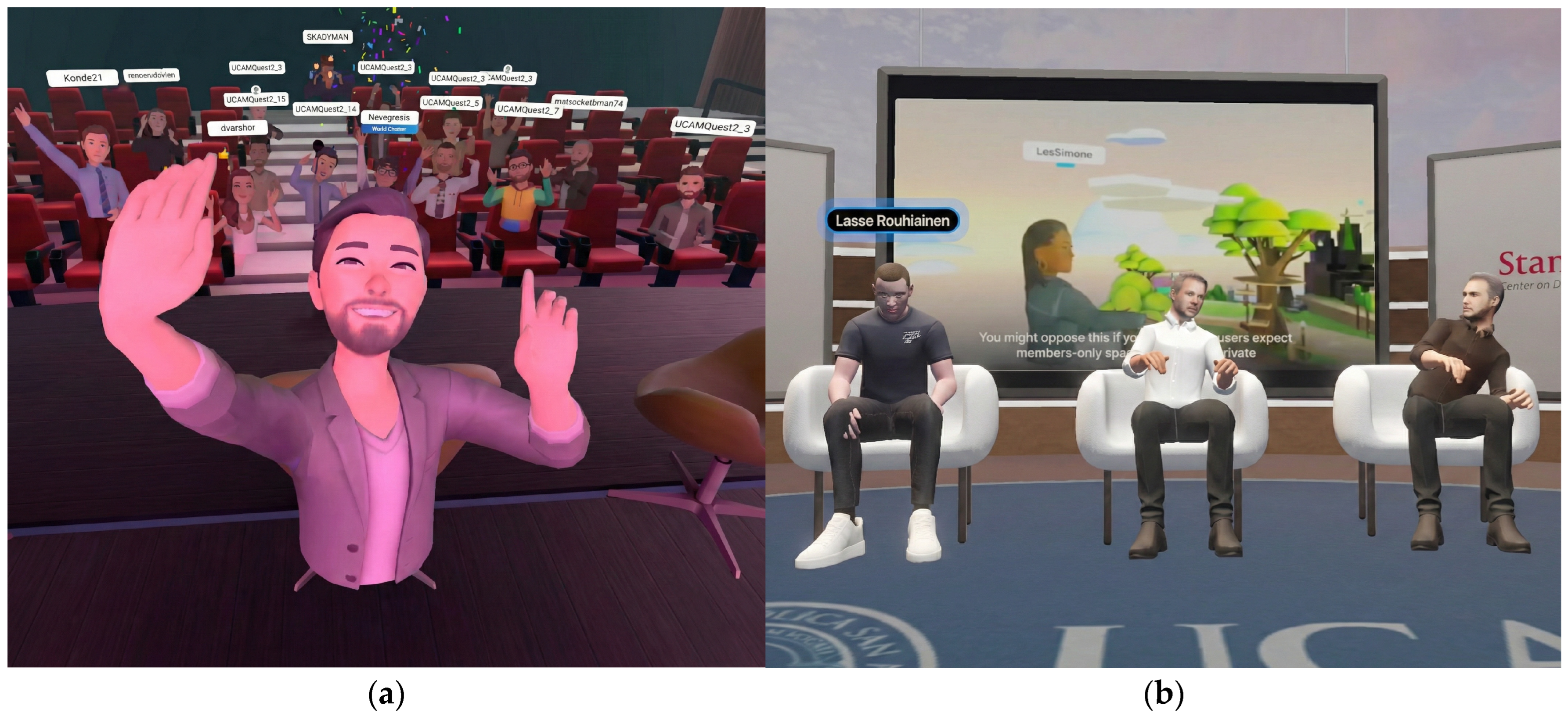
Another key advantage is the potential for enhanced concentration that the metaverse may offer over standard online interactions [17]. Full immersion may foster focused attention, which reduces distractions and improves participation quality. This heightened engagement fosters deeper, more reflective dialogue, which is essential for effective deliberation. Avatars not only represent participants but could also serve to conceal certain things like economic status if participants wanted to. Meta Horizon used simple, legless avatars, while Spatial offered more realism, allowing users to customize race and gender and even replicate their faces from photos, as seen in Figure 1.
Prior research highlights that behavioral realism in avatars enhances social presence and engagement [18]. Similarly, DeVeaux found that visual similarity between users and their avatars strengthens embodiment, improving social interactions and engagement in virtual environments [19].
Sharing the same virtual physical space may also foster greater empathy compared to traditional video conferencing. Having Deliberative Polling in the metaverse aims to foster greater empathy among participants, bridging the gap between in-person experiences and video-based calls. As noted by Stanford Professor Larry Diamond, empathy is crucial in the Deliberative Polling process: “People began to see one another as human beings. They got to know one another, and they began to develop something that is so rare in our hyper-polarized society: empathy” [20]. In any case, Deliberative Polling’s immersive mode does not aim to replace face-to-face interactions. Despite technological advancements, the human touch is irreplaceable.

1.4. Purpose and Scope of the Study

Building upon this context, the present study explores how immersive virtual environments can shape the Deliberative Polling experience, focusing on the experiential and design factors—such as embodiment and social presence that shape deliberative quality. For the purposes of this study, feasibility is operationally defined as the ability to conduct a complete deliberative session in VR, assessed through participant retention across the full session, balanced distribution of speaking time, observable engagement with the deliberative topic, and pre- to post-deliberation opinion change. Two social VR platforms—Spatial and Meta Horizon Worlds—were compared to examine how differences in avatar realism, environmental fidelity, and spatial affordances influence participants’ sense of copresence, empathy, and opinion change during democratic deliberation. Drawing on Social Presence Theory [21] and recent work on Embodiment in social VR [18,19], this study sought to identify the mechanisms through which immersive design can enhance deliberative quality and civic engagement. In doing so, it contributes both to the methodological evolution of Deliberative Polling and to the broader understanding of design principles for participatory democracy in the metaverse. Any parallels with in-person deliberation are treated as qualitative observations, consistent with the exploratory nature of the study. This is the first study to implement a Deliberative Poll-like process in immersive VR across two different social platforms, allowing a direct comparison of how platform design features shape deliberative interaction.

2. Materials and Methods

2.1. Study Overview

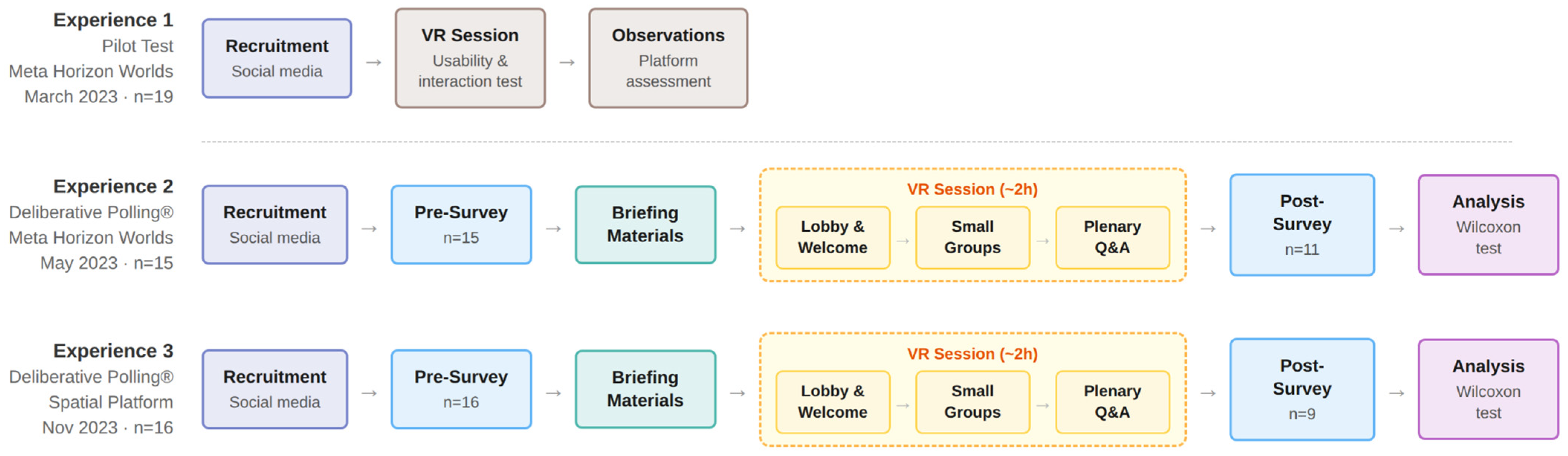
This exploratory study aims to assess the feasibility and interactional dynamics of conducting Deliberative Polling in immersive virtual reality environments. Specifically, the research investigates whether the key features of a deliberative process—balanced participation, opinion change, informed dialogue, and skilled moderation—can be replicated in social VR platforms. The study was structured into three distinct experiences: an initial pilot test to explore usability and interaction flow, followed by two deliberative sessions in two different virtual platforms. This progressive design allows for iterative refinement and comparative insights between tools and environments. The overall experimental workflow is summarized in Figure 2. This study conducted three Metaverse experiences with 30 participants in total. The first experience tested the platform’s usability and interaction dynamics with 19 participants. The other two experiences followed the Deliberative Polling® methodology, where participants first completed an initial survey, then received balanced briefing materials to familiarize themselves with the topic. Once in the Metaverse, they gathered in small discussion groups, where they could share perspectives and engage in dialogue. This was followed by a plenary session with experts, where participants had the opportunity to ask questions. Finally, they completed a post-deliberation survey, allowing for an analysis of opinion shifts compared to the initial responses. All sessions focused on policies towards bullying and harassment in the Metaverse. The two deliberative sessions adhered to the core elements of the Deliberative Polling® protocol: participants received balanced briefing materials prior to deliberation, small-group discussions were led by moderators trained by the Stanford Deliberative Democracy Lab, and expert panelists were selected in consultation with the Lab to ensure subject-matter expertise and balanced perspectives. However, given the exploratory nature of the study, participants were not randomly sampled from a target population, which represents a deviation from the standard Deliberative Polling protocol.
The two selected VR platforms, Meta Horizon Worlds (2023) and Spatial (2023), were chosen for their ability to customize virtual environments, create interconnected spaces, and support immersive VR interactions. However, they differ in graphics quality and avatar design, with Spatial offering more realistic environments and avatars compared to Horizon.

2.2. Participants and Recruitment

Participants were recruited through open invitations on social media. Only 56% of participants indicated prior VR experience upon registration. Selection prioritized those with VR headset access, though the research team sometimes provided the necessary devices. As a result, the participant pool was a convenience sample and not representative of any target population, which constitutes a limitation relative to the random sampling requirement of standard Deliberative Polling®. Furthermore, the gender distribution was substantially imbalanced (76.66% male, 23.33% female), reflecting broader trends in early VR adoption but limiting the generalizability of the findings. In all three sessions, participants entered VR mode using either their own or were provided Meta Quest 2 and Quest 3 headsets. The two Deliberative Polling® experiences were moderated by two bilingual UCAM professors trained by the Stanford Deliberative Democracy Lab.

2.3. The Three Deliberative Experiences

The first exploratory session took place on 16 March 2023, in Meta Horizon Worlds. This pilot test involved 19 participants and was designed to examine basic usability, avatar interaction, voice quality, and group navigation within the platform. Unlike the subsequent formal deliberative sessions, this experience did not follow the full Deliberative Polling® protocol.
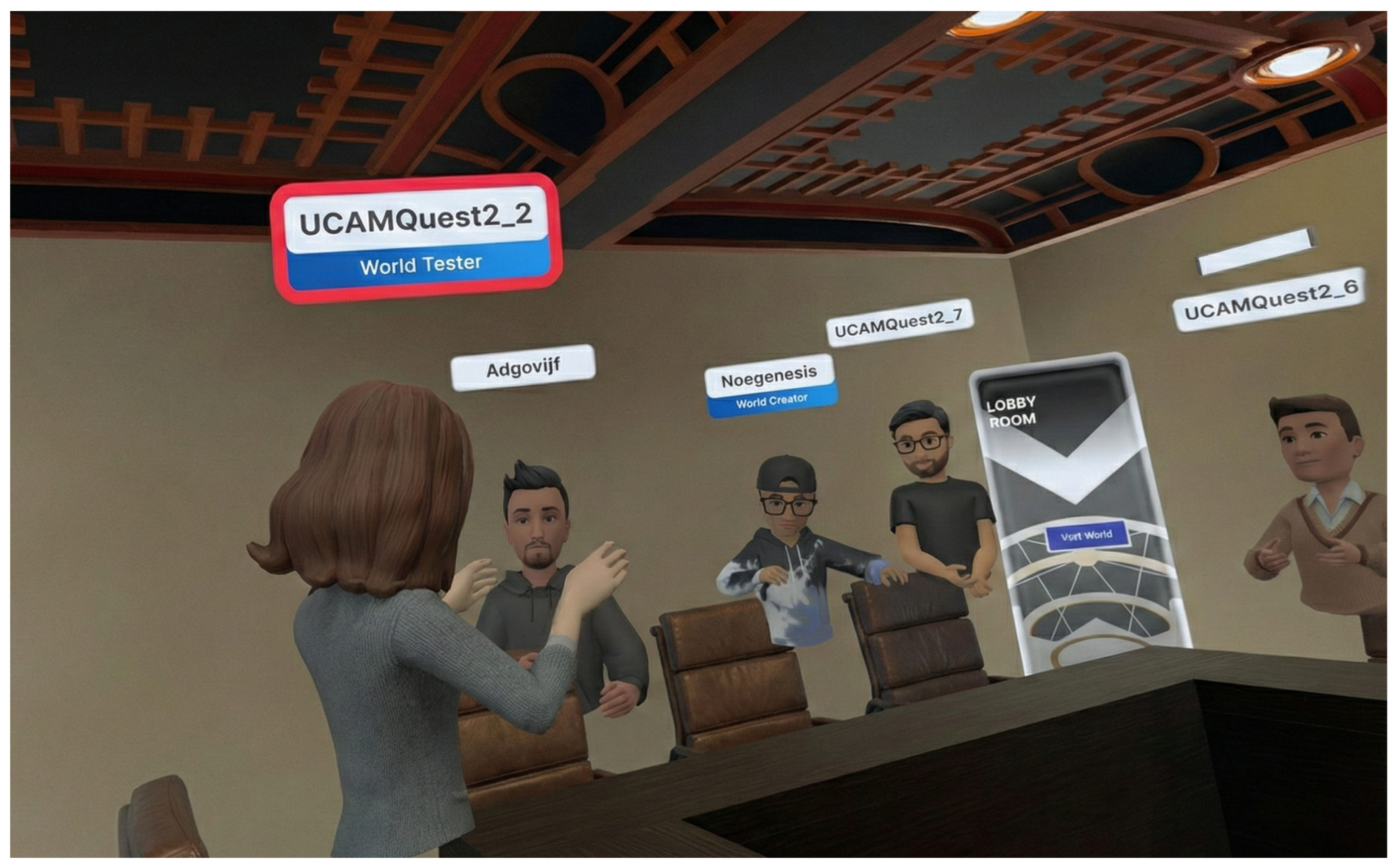
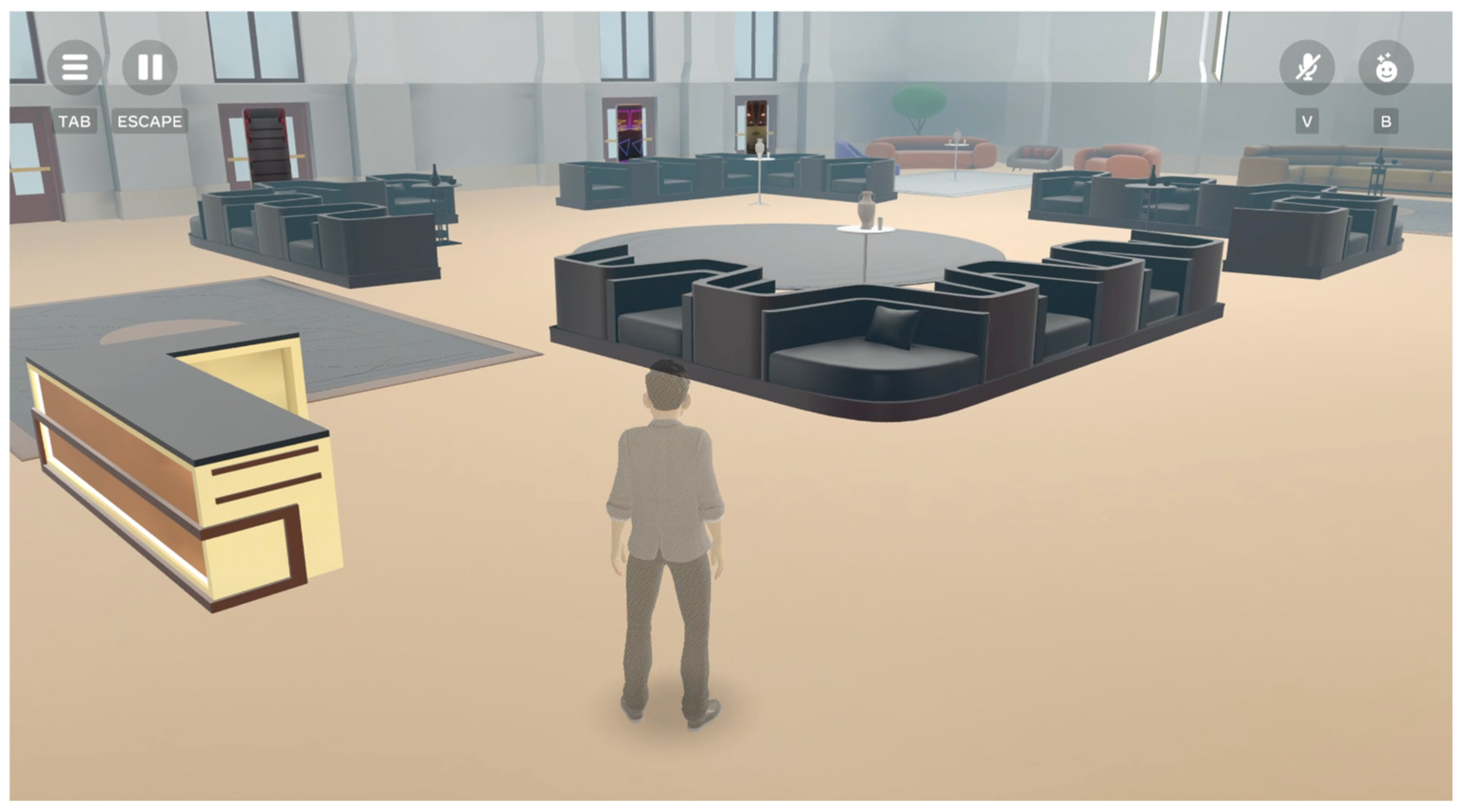
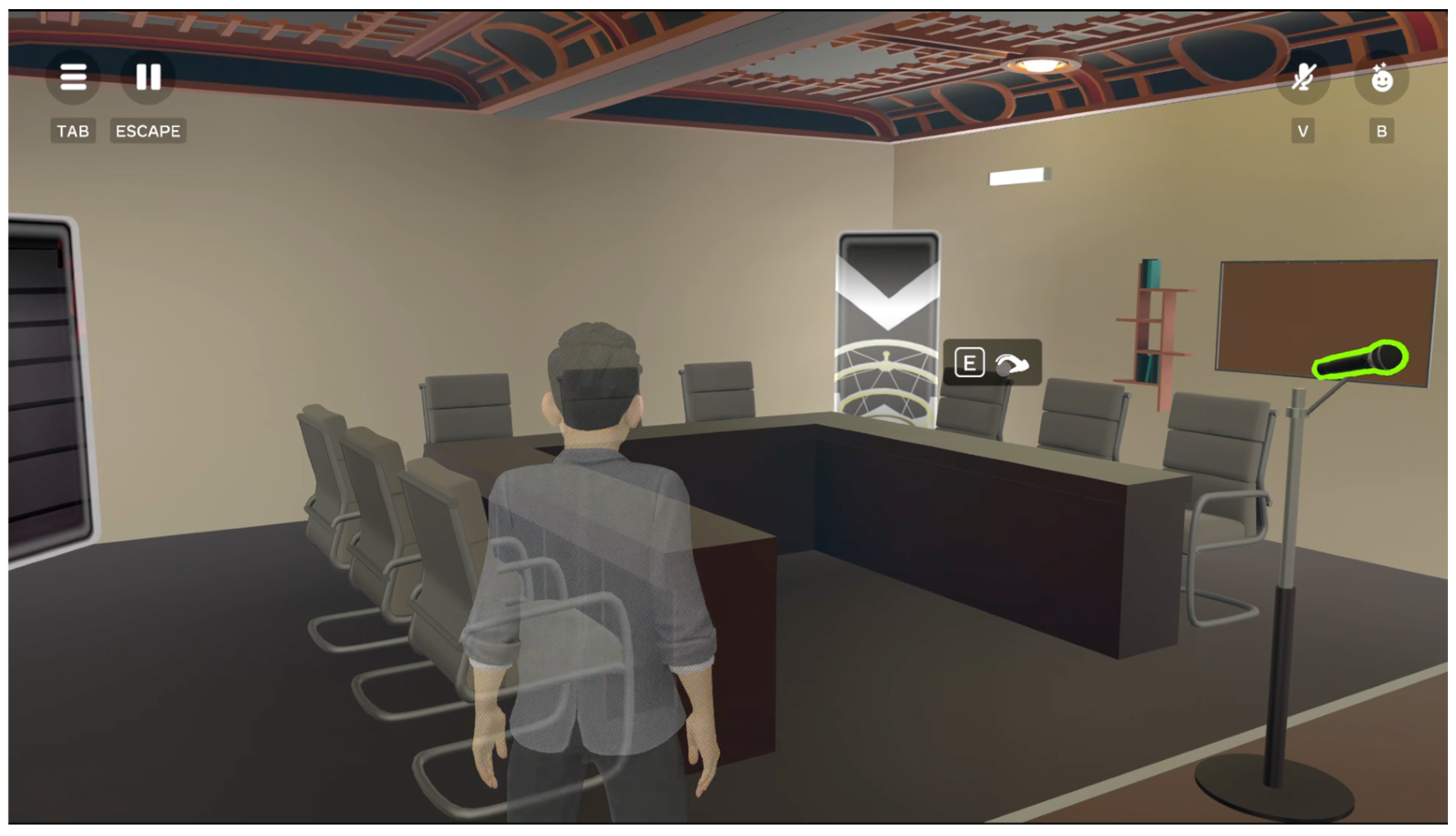
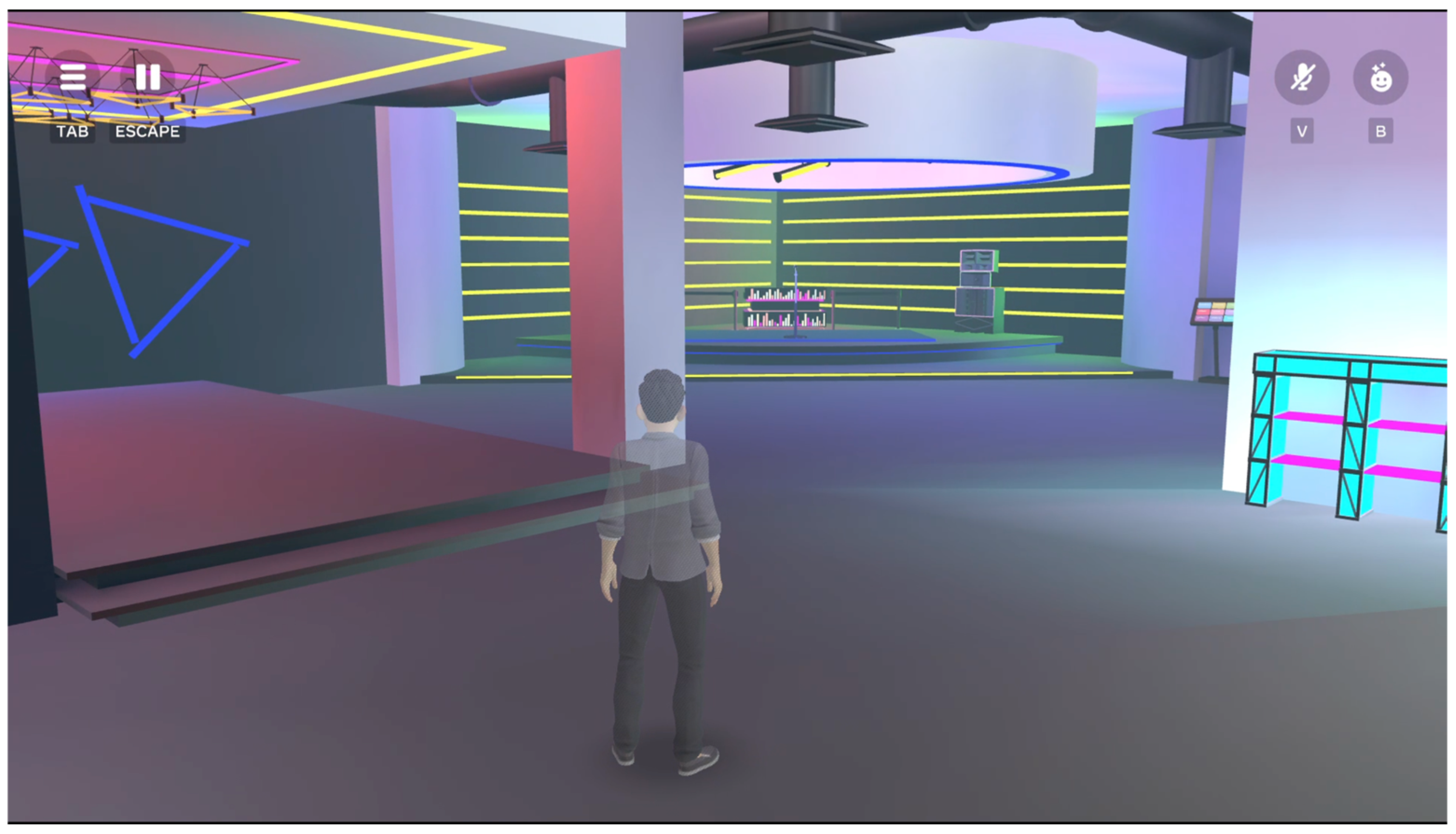
The first Deliberative Polling® experience took place on 17 May 2023, on Meta Horizon Worlds metaverse, following the Deliberative Polling methodology. Research Assistants at the Stanford Deliberative Democracy Lab led the design of four distinct virtual spaces, each crafted to emulate the key components of traditional Deliberative Polling. These designs incorporated small-group discussion rooms and plenary session rooms, mirroring the structured environments used in conventional in-person deliberations. The experience began in a spacious lobby, where users first entered (Figure A1). The lead moderator welcomed participants and explained the dynamics of the activity. Additionally, two smaller rooms were designed (Figure A2 and Figure A3) to facilitate more intimate discussions among groups (Figure 3).
Lastly, a theater-like space was created where two experts could address the participants’ questions. Portals within Horizon were established to allow participants to transition from one space to another seamlessly. At the beginning of the deliberation process, all 15 participants completed the initial survey and later received briefing materials. While 64% were from Spain, the group also included participants from Finland, Argentina, the Netherlands, and the USA.
Experts were selected, in consultation with the Stanford Deliberative Democracy Lab, based on their knowledge and experience in the topic of the Deliberative Polling® to ensure high-quality discussions and informed responses to participant inquiries. One expert had expertise in AI and is an author of four books on this topic. The second expert served as the Chief Responsible AI Officer at a large telecommunications company. They both served as experts for the plenary expert panel.
Following the deliberation, 11 participants responded to the final survey (Table S1), where we observed differences resulting from the deliberation in the metaverse. The event lasted 2 h and 15 min, comprising 15 min for participant arrival, 15 min for the welcome and introduction in the hall, 45 min for small group discussions in two spaces, 45 min for the plenary session, and a 15 min wrap-up.
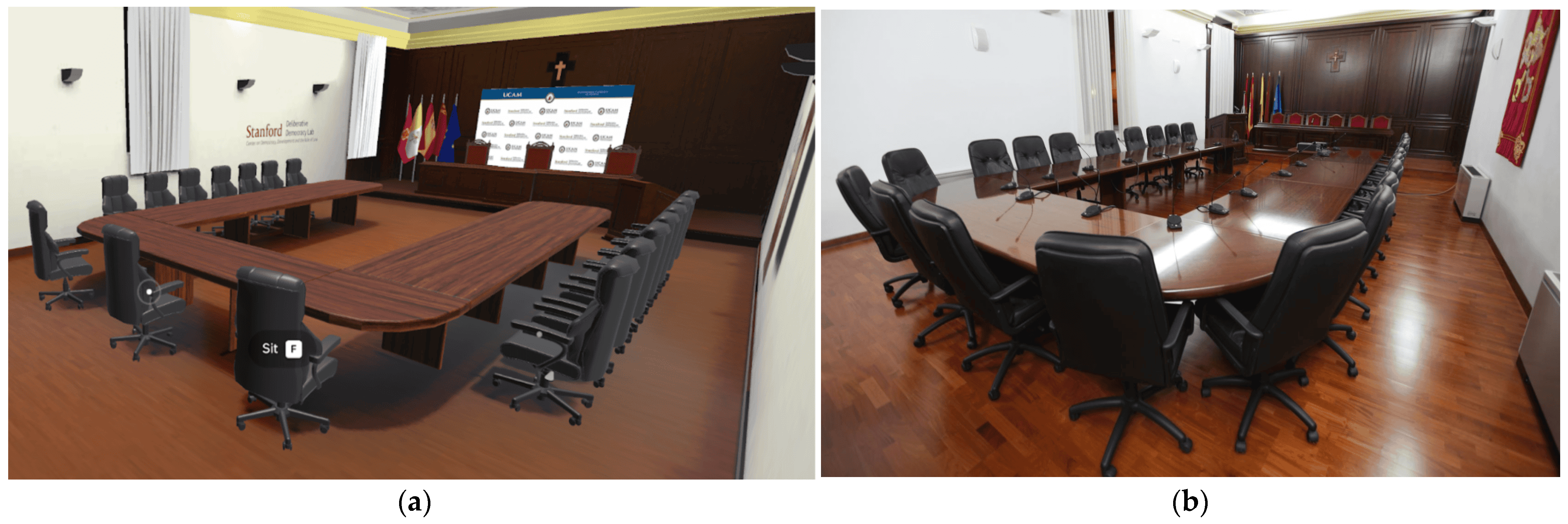
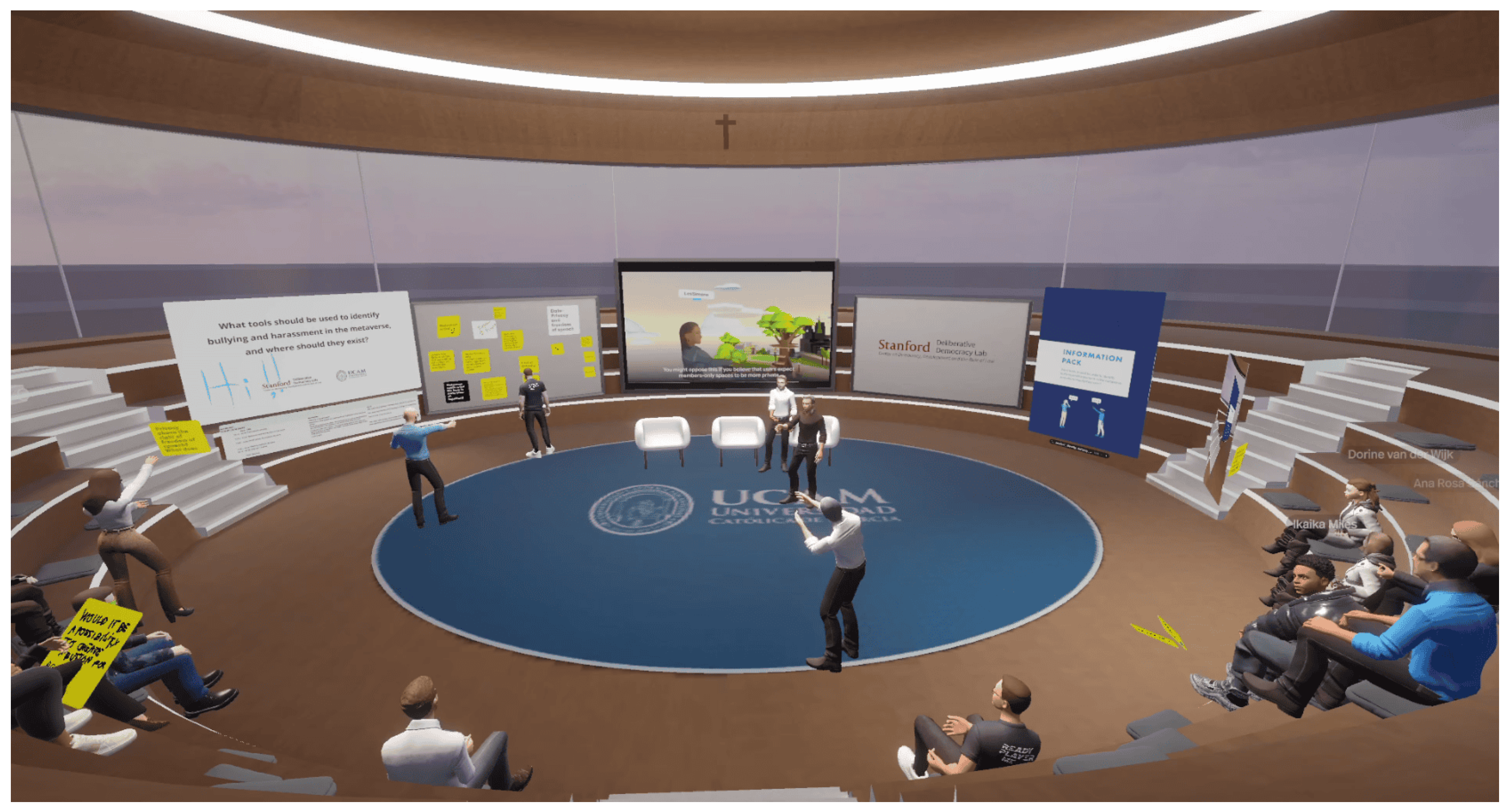
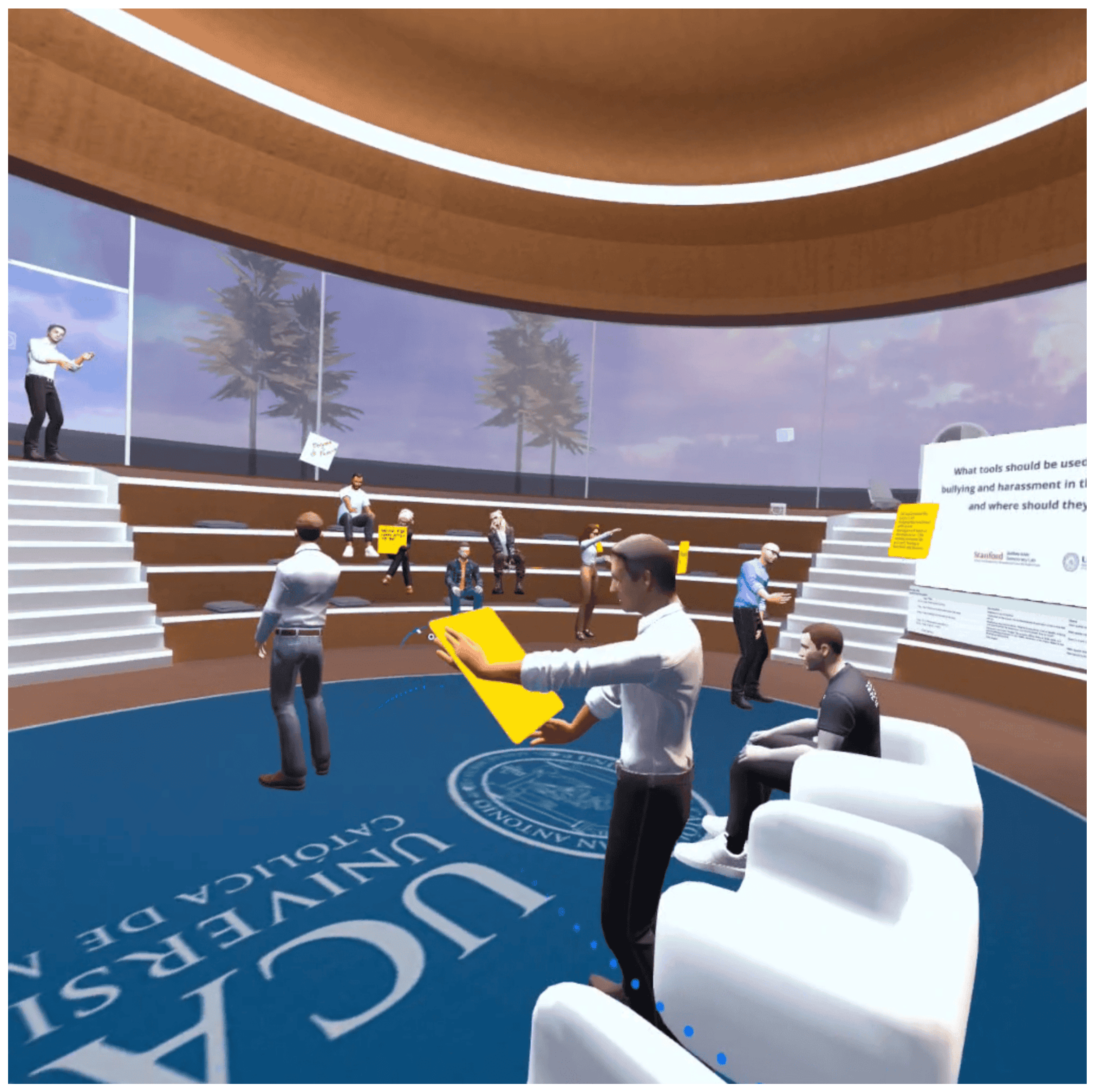
On 6 November 2023, we conducted a second Deliberative Polling experience on the Spatial platform (Link L1), maintaining the theme of policies toward bullying and harassment in the Metaverse. The session included 16 participants from Colombia, the USA, the Netherlands, Spain, France, and the Philippines. The UCAM XR Lab team designed the two virtual scenarios used in the platform. The first was an oval-shaped plenary space where all participants gathered at the start. This space featured three tiers of seating, areas for video and PDF projections, and a central area for 3D objects (Figure A4). It served as the venue for welcoming participants, explaining event dynamics, and presenting a five-minute briefing video. Secondly, participants were divided into two groups for 30 min small group discussions. Each group convened in a full-scale digital twin of UCAM’s real chapter hall. To create this virtual environment, we utilized photogrammetry and LiDAR scanning technologies via the Polycam app, which enabled the generation of an optimized 3D model that was subsequently uploaded to the Spatial platform (Figure 4). The virtual environment featured interactive, “sit-able” chairs that facilitated natural participant interactions and behaviors. This area was duplicated to accommodate the two groups, each engaging in their respective deliberations. Finally, both groups reconvened in the oval plenary space, where experts mentioned previously were available to answer participants’ questions for 45 min. At the end, nine participants responded to the final survey (Table S2).
Survey attrition across deliberative sessions (27% in Horizon, 44% in Spatial) is primarily attributed to the voluntary nature of the post-deliberation survey, as completion was not required for participation. Additionally, occasional technical issues during the sessions may have contributed to some participants disengaging before completion.

2.4. Data Collection

Data were collected through a combination of pre- and post-deliberation surveys, full-session recordings, and transcript-based analysis. The surveys, conducted before and after each deliberative session, captured participants’ opinions on the target topic—policies regarding bullying and harassment in the Metaverse—as well as basic demographic data. All VR sessions were recorded in their entirety (Supplementary Videos S1–S3) from multiple vantage points within the virtual environment. These recordings enabled the generation of detailed transcripts, which were subsequently analyzed to identify discussion themes, argumentative patterns, and conversational structure. Quantitative data, including speaking times and distribution of participation by role (participants, moderators, experts), were extracted manually from these transcripts and recordings. This comprehensive dataset provided both qualitative and behavioral insights into the interactional dynamics of deliberation in immersive virtual environments. As this was an exploratory feasibility study, VR-specific validated measures (e.g., presence, usability, cybersickness, embodiment) were not collected. We identify these as important instruments for future work.

2.5. Ethics Approval and Informed Consent

The study was approved by the Ethics Committee of Universidad Católica San Antonio de Murcia (UCAM) under project code CE042312 (approval date: 28 April 2023). Written informed consent was obtained from all participants prior to their inclusion in the study.

3. Results

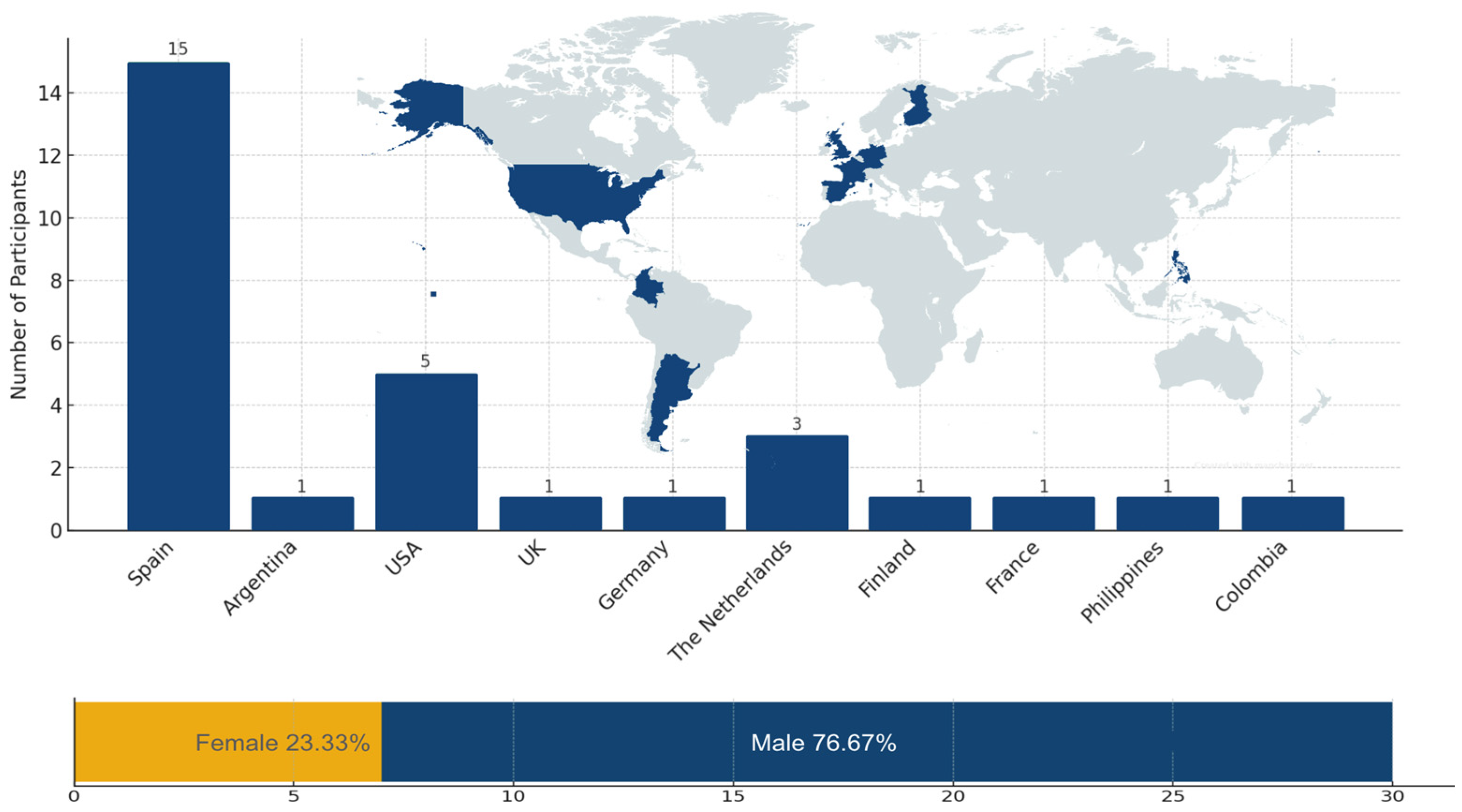
Our primary objective was to demonstrate the feasibility of developing a Deliberative Polling process in the Metaverse. In total, 30 individuals from 10 nationalities participated in the three experiences conducted across two different platforms. The gender distribution was 76.66% male and 23.33% female (Figure A5).
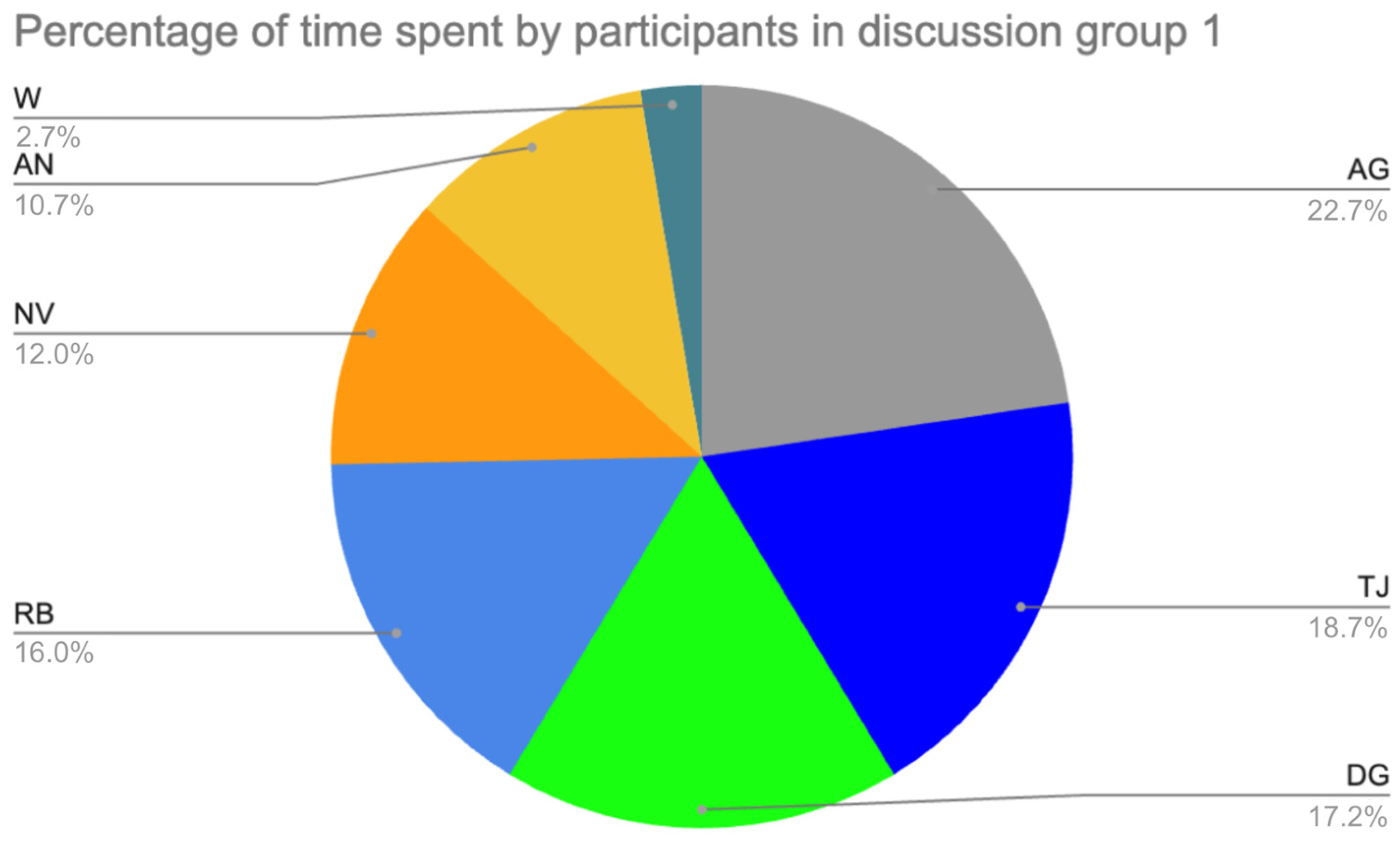
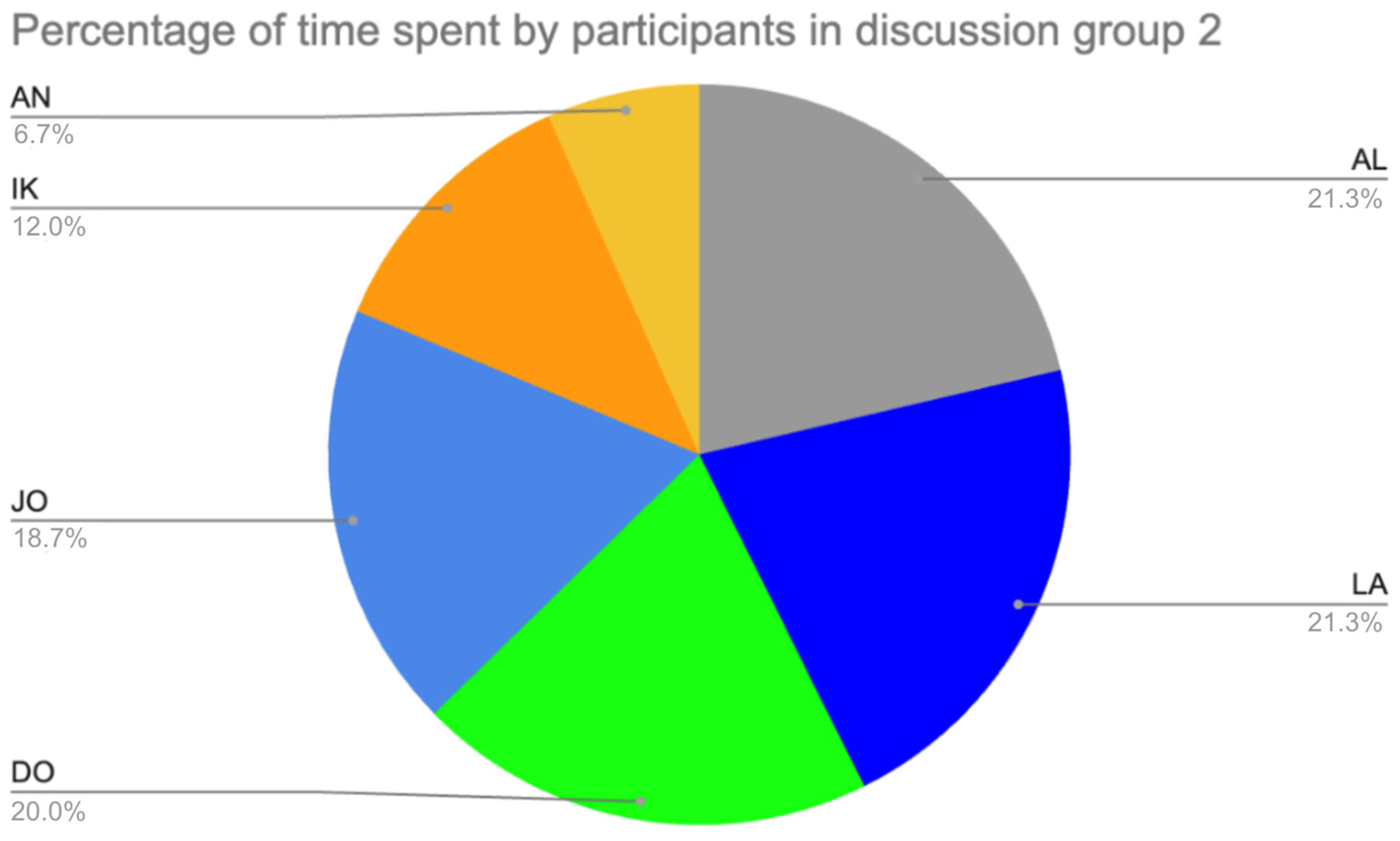
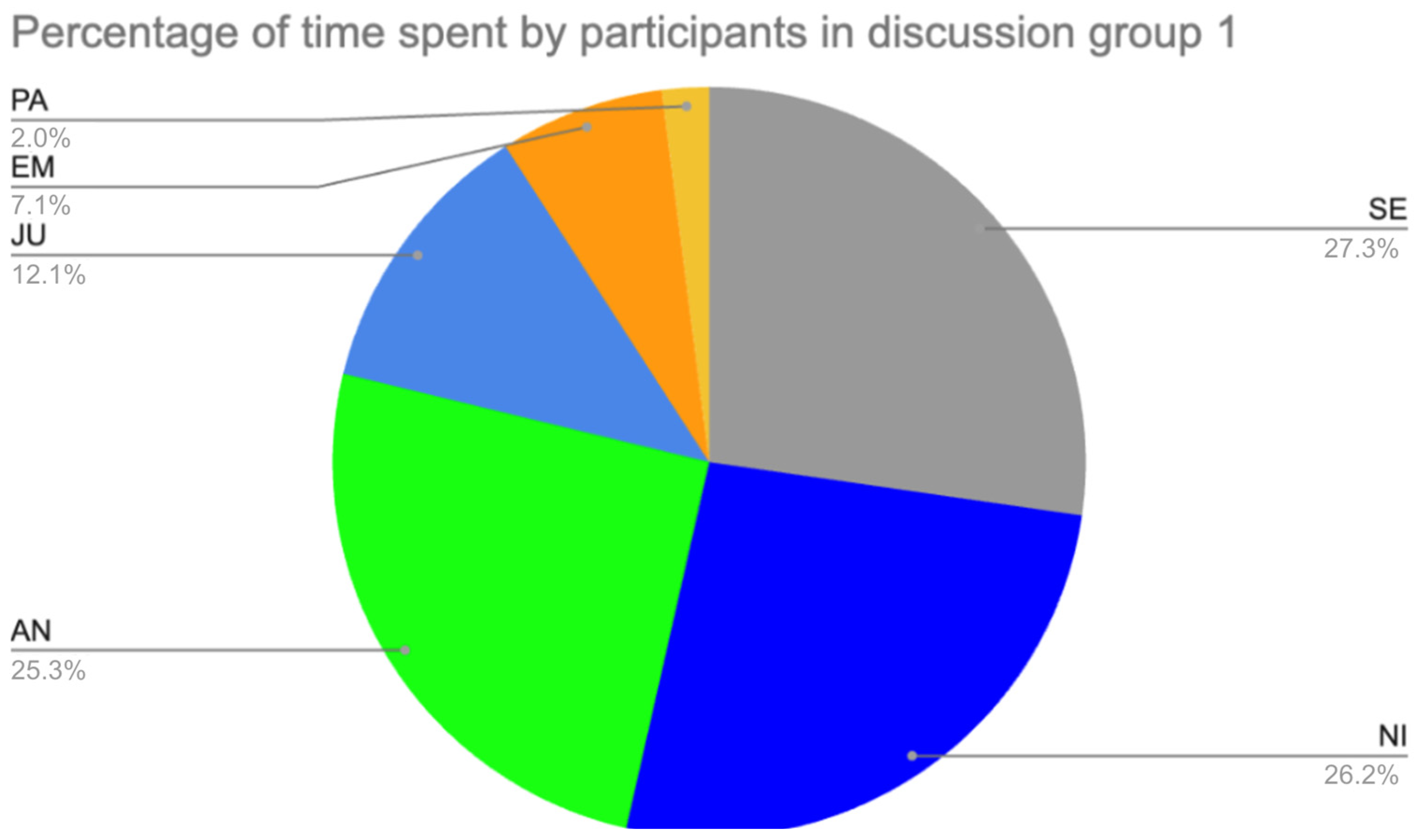
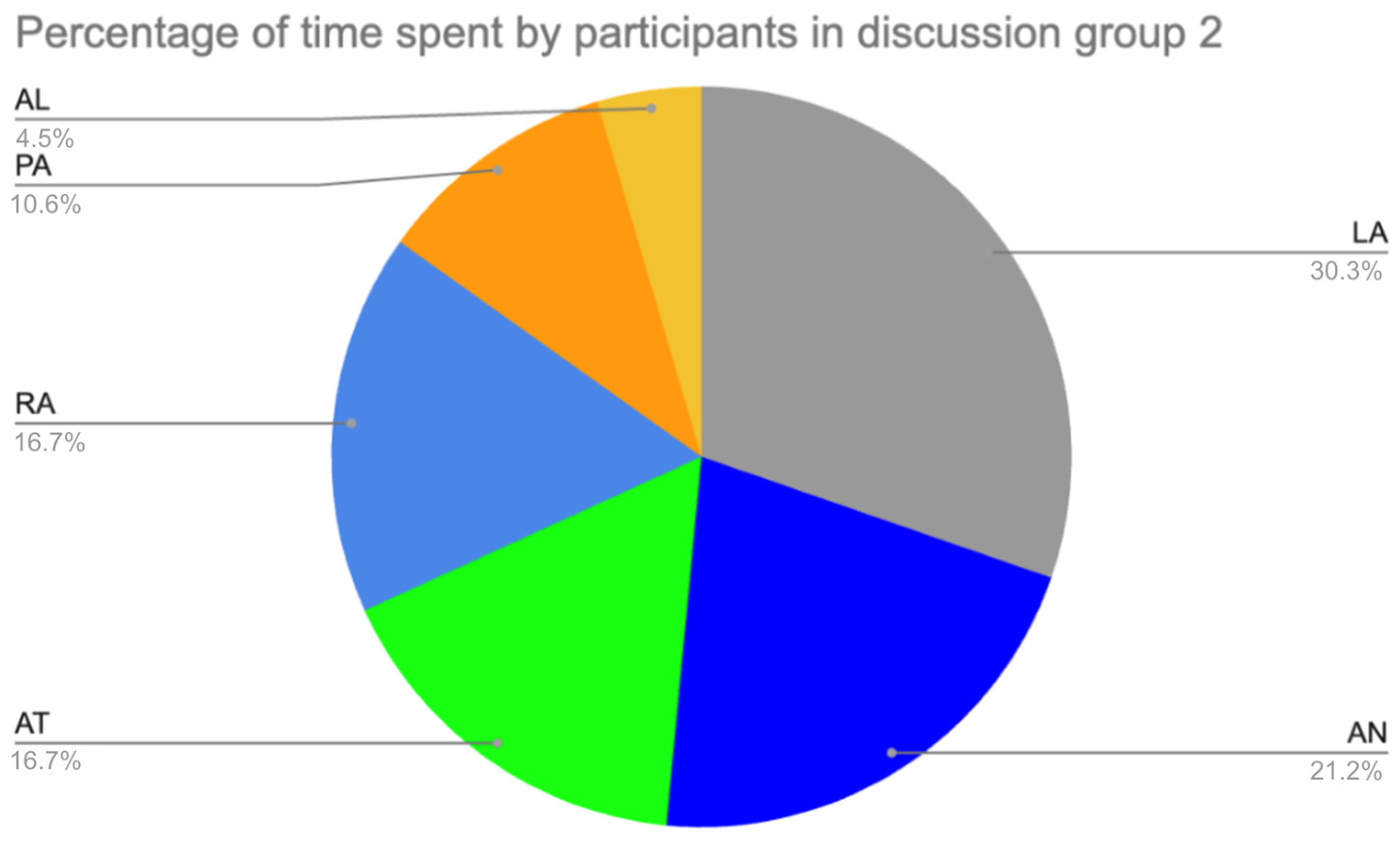
The transcription and AI analysis of session conversations reveal high participation levels and in-depth discussions. For example, small discussion group 1, consisting of 7 participants, engaged in a 27 min conversation during the Spatial Experience in November 2023. Their discussion covered key topics such as the Metaverse, spatial experience, virtual environments, auditory perception, AI-driven speech recognition, public space interactions, recording, and harassment concerns. As shown in Figure 5, the discussion group maintained a balanced distribution of speaking time, reflecting active and inclusive participation. This pattern is further supported by additional group data in Figure A6, Figure A7 and Figure A8, which display similar distributions of speaking time across other discussion sessions.
The data reflect a participatory balance that is not merely incidental but is actively pursued in Deliberative Polling® through skilled moderation. This suggests that trained moderators can fulfill their role effectively even in virtual reality contexts, managing turn-taking, limiting dominance, and fostering balanced dialogue. However, as English was not the primary language for most participants, the session presented linguistic challenges while also highlighting the accessibility and inclusivity of the virtual discussion environment.
The Stanford Deliberative Democracy Lab provided the surveys used for the two deliberations. These questions were originally employed in Stanford’s large-scale global online Deliberative Polling® on bullying and harassment in the metaverse, with results documented in the 2023 report Metaverse Community Forum: Results Analysis [15].
Given the small number of participants and the paired nature of the data, we conducted a Wilcoxon signed-rank test, the appropriate non-parametric test for these conditions. The observed differences between Spatial and Horizon should be interpreted as exploratory patterns rather than conclusive effects. Analyzing the results from the Deliberative Polling® conducted in Horizon in May 2023 (n = 11), we found notable differences; however, none reached statistical significance (p < 0.05). For instance, Q160_1 (p = 0.064) about support for video recording in public spaces, which would be deleted if there were zero reports of misconduct, increased from an average of 6.00 to 7.36 in the pre- and post-deliberation surveys, representing a 22.67% increase (Table S3).
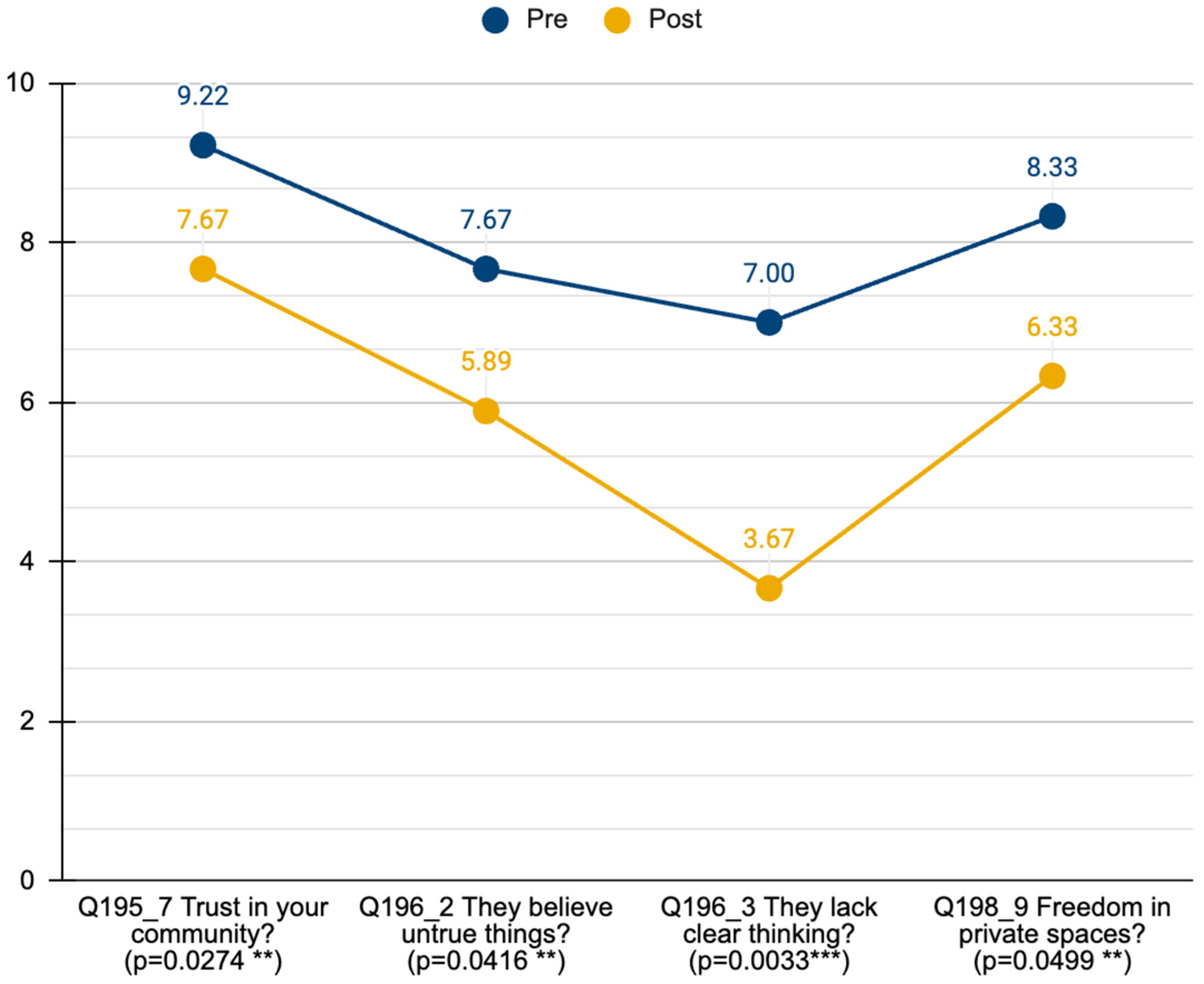
On the other hand, the Spatial Deliberative Polling® (November 2023) revealed four questions where the Wilcoxon signed-rank test yielded p-values below 0.05; however, given the small sample size (n = 9), these results should be interpreted as exploratory observations rather than confirmatory evidence. The most notable difference was observed in Q196_3 (p = 0.0033), which refers to supporting the thesis that participants are not thinking clearly. Support for this thesis dropped from 7.00 to 3.67, representing a 47.57% decrease. This indicates that after the deliberation, support for this statement declined. This could suggest an increased perception that participants are, in fact, thinking clearly (See Figure 6 and Table 1).

4. Discussion

The findings of this exploratory study show the feasibility of conducting Deliberative Polling in the metaverse, demonstrating that opinion shifts in the Spatial experience produced exploratory patterns of greater opinion change compared to Horizon. This difference could be attributed to the more realistic avatars and immersive environment that this platform offers compared to Horizon. According to Social Presence Theory [21], the perceived realism and immediacy of mediated interactions enhance users’ sense of copresence and social connection. In this context, the higher avatar fidelity and spatial affordances of Spatial likely increased participants’ social presence, facilitating richer engagement and greater openness to opinion change. These results also highlight the role of embodiment in shaping deliberative interactions. Research in social VR shows that when users experience a strong sense of owning and controlling their virtual body, engagement, empathy, and conversational responsiveness increase [18,19]. The higher avatar fidelity in Spatial likely strengthened this sense of embodiment, complementing the effects of social presence and providing a more natural foundation for turn-taking, nonverbal expressivity, and perspective taking. This suggests that immersive deliberation benefits not only from technical feasibility but from specific design features—such as avatar realism and spatial coherence—that support meaningful social interaction.
The participant’s gender distribution disparity (76.66% male and 23.33% female) aligns with broader trends in virtual reality (VR) engagement, where male users constitute a larger proportion. For instance, a 2023 study indicates that 57% of VR owners in the US are male, while 43% are female [22]. Additionally, research has shown that females are more susceptible to VR-induced motion sickness [23], which may influence participation rates. A study found that women reported a higher intensity of sickness and were more likely to end VR sessions early compared to men. Studies demonstrate that technological advancements in computing power [24], higher frame rates [25], ergonomics, lower latency, and related factors significantly reduce VR-induced motion sickness. This evolution is fundamental to ensuring that immersive technologies reach everyone and can be effectively employed in democratic processes. Based on informal observation, no participants reported cybersickness or significant discomfort during the sessions, though this was not formally measured; however, these factors remain important to monitor in future immersive deliberation studies. This gender imbalance may also have influenced the deliberation on bullying and harassment, as gendered experiences can shape how participants perceive and discuss these issues.
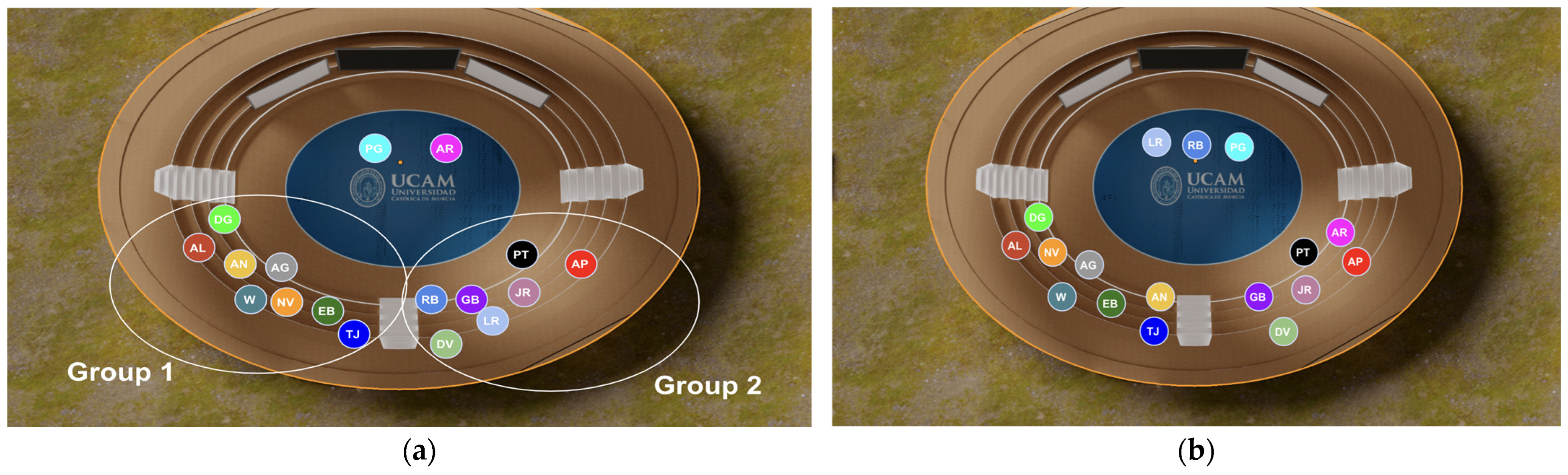
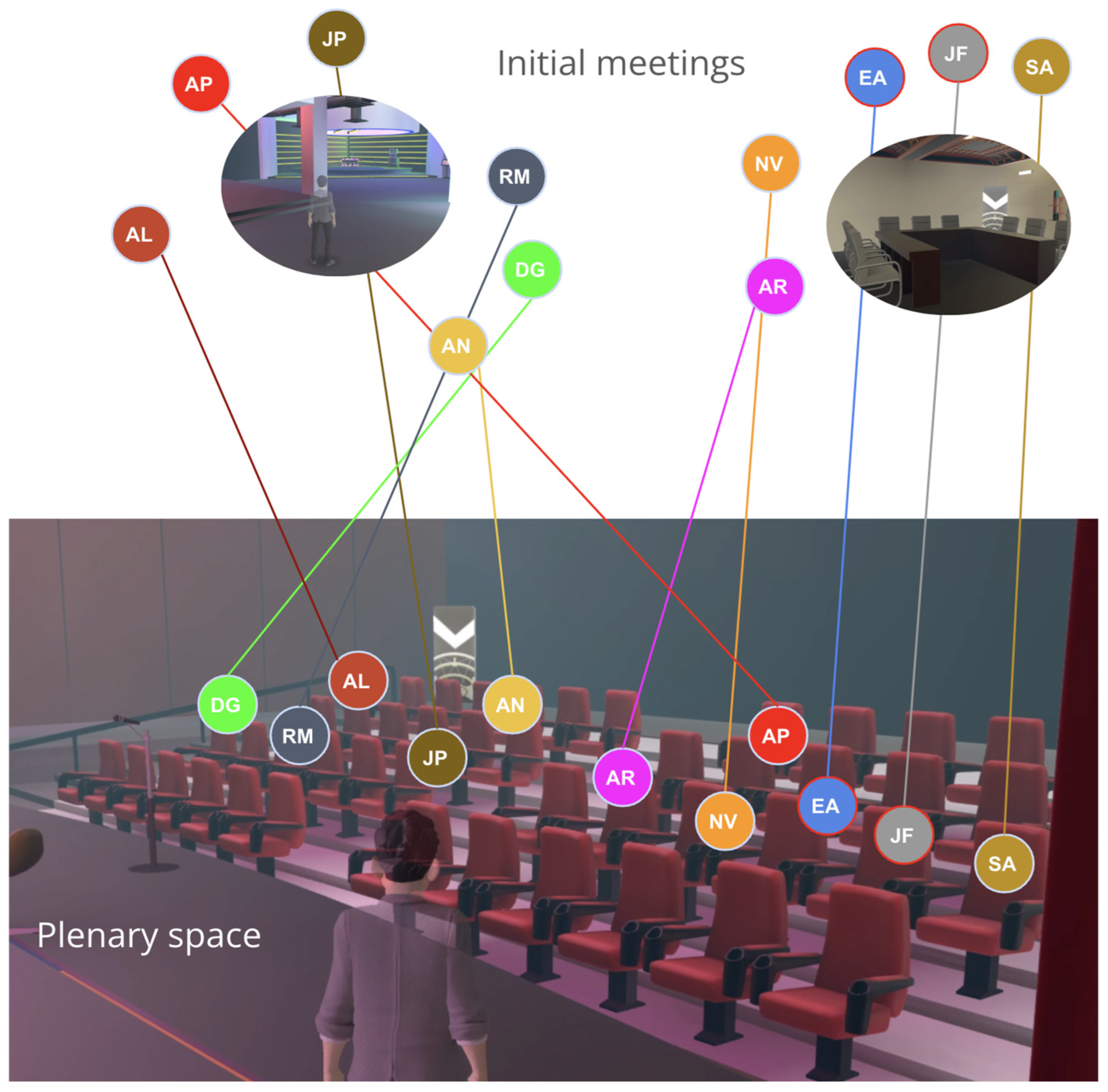
The qualitative analysis of this material provides interesting insights, such as the mimicry of human behavior within all the virtual spaces used. We observed how groups sat together when returning to the plenary space after getting to know each other during the small group deliberations in both platforms Spatial (Figure 7) and Horizon (Figure 8).
This behavior aligns with previous research on nonverbal behavior and proxemics in virtual environments [26], which established that users in VR maintain social norms of personal space and gaze behavior, similar to physical environments, while Han [27] demonstrated that in social VR, participants tend to form cohesive group arrangements, adjusting their distances based on virtual social context. Additionally, the work of Wang [28] expands on these findings by emphasizing how nonverbal cues such as gaze, head movement, and hand motion influence turn-taking behaviors and group dynamics in VR. These behaviors were evident in our study, as avatars naturally nodded in agreement, raised their hands to speak, and expressed themselves through emoticons. Such nonverbal interactions reinforce the importance of realistic and dynamic avatar embodiment for fostering effective communication. The Spatial platform also allows for post-it notes; participants and moderators use this feature to summarize and highlight key points of the discussion, improving the flow and dynamics of the debate (Figure A9).
Since these experiments were conducted in 2023, immersive technologies have continued to evolve rapidly. Newer headsets such as the Meta Quest 3 and Apple Vision Pro offer improved resolution, reduced latency, enhanced passthrough capabilities, and more ergonomic designs, all of which contribute to reducing cybersickness and improving accessibility. These advancements would likely strengthen the feasibility findings reported here, as many of the technical limitations observed—such as avatar fidelity and platform usability—are being progressively addressed by current-generation hardware and software.
The intersection of immersive technologies and artificial intelligence represents a promising frontier for deliberative processes. AI-driven tools could complement VR-based deliberation through real-time moderation support, automated speaking-time balancing, live translation for multilingual sessions, and sentiment analysis to monitor discussion dynamics. As noted in Section 1.2, the Stanford Online Deliberation Platform has already demonstrated the potential of AI-assisted moderation in online settings [13]; extending these capabilities to immersive environments could further enhance both the scalability and quality of VR-based deliberation.

Limitations

This study remains exploratory, with important limitations that must be considered. First, participants were not fully randomized; some had prior familiarity with VR technology, which may have influenced their ability to engage effectively in the deliberations. Second, the sample size was small due to limitations on the metaverse platforms, restricting our ability to draw broader conclusions about the quality of deliberation in VR compared to online video-based Deliberative Polling®. While we have validated that Deliberative Polling® can be conducted in immersive environments, future research with significantly larger and more diverse participant pools is necessary to rigorously evaluate the comparative effectiveness of VR-based deliberation against traditional online methodologies.

5. Conclusions

The analyzed experiences mark a significant milestone as, to our knowledge, the first Deliberative Polling-like deliberations conducted in the Metaverse, illustrating the potential of immersive technologies to facilitate structured public deliberation in virtual spaces. This pioneering research provides valuable insights into how VR can support democratic engagement, offering a glimpse into the future of digital deliberation.
Looking ahead, the technology itself must continue to evolve to make VR a fully viable platform for Deliberative Polling at scale. Advances in hardware, such as more accessible and user-friendly VR headsets, will be crucial in expanding participation beyond early adopters. As Lanier [29] discusses, the social and psychological barriers of VR adoption must also be addressed to ensure truly inclusive engagement, particularly in civic and deliberative spaces. Likewise, more robust and intuitive VR software applications will be essential in ensuring seamless and engaging deliberative experiences. The continued development of AI-driven moderation, improved avatar realism, and adaptive virtual environments may further enhance the depth and inclusivity of deliberation in the Metaverse. Future studies should investigate how these advancements impact the quality of discussions, the diversity of participation, and the long-term effects of VR-based deliberative engagement.

Supplementary Materials

The following supporting information can be downloaded at https://www.mdpi.com/article/10.3390/fi18030123/s1. Link S1: Link to the Spatial DP Metaverse used for the project. November 2023: https://www.spatial.io/s/Stanford-UCAM-Deliberative-Polling-r-101-64b918ccef125efd32040950?share=2067654509805072219 (21 February 2026). Table S1: Horizon Deliberative Polling® pre and post comparison with full survey results (May 2023): https://docs.google.com/document/d/1yIcyGUzYK26bOXTT_h2r4oOYiLMAvMpd/edit?usp=sharing&ouid=108505577631821138129&rtpof=true&sd=true. Table S2: Spatial Deliberative Polling® pre and post comparison with full survey results (November 2023): https://docs.google.com/document/d/1aPUuAcaUggZgRNt0rmz9P-30aB58UOkh/edit?usp=sharing&ouid=108505577631821138129&rtpof=true&sd=true. Supplementary Video S1: Video recordings of the first test that took place in Meta Horizon Worlds on 16 March 2023: https://drive.google.com/file/d/14buhlSUyN2lJppIzVrakqG9CWvwUR5f6/view?usp=sharing. Supplementary Video S2: Video recording of the first Deliberative Polling® that took place in Meta Horizon Worlds on 17 May 2023 with 15 participants: https://drive.google.com/file/d/1vTytdhSQvqYLIMfFglmtY4x-HH3AdWKQ/view?usp=sharing. Supplementary Video S3: Video recording of the first Deliberative Polling® that took place in Spatial platform on 6 November 2023 with 16 participants: https://drive.google.com/file/d/14tqd_2h33S0GAO0tZhsCIPmmFe75hp06/view?usp=sharing. Table S3: Horizon Deliberative Polling® pre and post comparison. May 2023: https://docs.google.com/document/d/1yZYsVXrm5ADtExnEAHdLaQTuWHE0XSOo/edit?usp=sharing&ouid=108505577631821138129&rtpof=true&sd=true. Supplementary S1: ethics approval letter: https://drive.google.com/file/d/1NiV_o8Tpz_KnU1jCtexb1wghHvBA3MPl/view?usp=sharing. S2_Informed Consent template: https://drive.google.com/file/d/1PaT6Hmk9p9w6r3Dk4o3xrXMOgTFC9BTC/view?usp=sharing. All links in this section accessed on 21 February 2026.

Author Contributions

Conceptualization, P.L.G., M.P.R., P.S.B.A. and A.S.; methodology, P.L.G., M.P.R. and A.S.; software, P.L.G.; validation, M.P.R., P.S.B.A. and A.S.; formal analysis, P.L.G., M.P.R., P.S.B.A. and A.S.; investigation, P.L.G. and A.S.; resources, P.L.G., M.P.R. and A.S.; data curation, P.L.G., M.P.R. and A.S.; writing—original draft preparation, P.L.G.; writing—review and editing, M.P.R., P.S.B.A. and A.S.; visualization, P.L.G.; supervision, M.P.R., P.S.B.A. and A.S.; project administration, P.L.G.; funding acquisition, M.P.R. and A.S. All authors have read and agreed to the published version of the manuscript.

Funding

This research was made possible through the financial support of the Deliberative Democracy Lab at Stanford University and UCAM Universidad Católica de Murcia.

Data Availability Statement

The datasets generated and/or analyzed during the current study are not publicly available but are available from the corresponding author on reasonable request.

Acknowledgments

We would like to thank Mª Dolores García Mascarell, Samuel Mendoza, Gonzalo Wandosell, Estrella Núñez, and Noemi Corona for their vision and collaboration. We also thank Emmanuel Corona, Ana Rosa Sánchez Muñoz, Javier Plitt-Stevens, Richard Benjamin, Lasse Rouhiainen, and all other participants of the Deliberative Polling® experiments for their essential support. Finally, we would like to thank our family and friends for their invaluable support.

Conflicts of Interest

The authors declare no ethical issues or conflicts of interest in this research.

Abbreviations

The following abbreviations are used in this manuscript:
DPDeliberative Polling®
VRVirtual Reality
ARAugmented Reality

Appendix A

Figure A1. Lobby main entrance in Meta Horizon Worlds.
Futureinternet 18 00123 g0a1
Figure A2. Small deliberation room 1/2 in Meta Horizon Worlds.
Futureinternet 18 00123 g0a2
Figure A3. Small deliberation room 2/2 in Meta Horizon Worlds.
Futureinternet 18 00123 g0a3
Figure A4. Oval-shaped plenary space in Spatial.
Futureinternet 18 00123 g0a4
Figure A5. Gender distribution and nationalities across all 3 Metaverse experiences.
Futureinternet 18 00123 g0a5
Figure A6. Percentage of time spent talking by participants in discussion group 2, excluding the moderator. November 2023, Spatial platform.
Futureinternet 18 00123 g0a6
Figure A7. Percentage of time spent talking by participants in discussion group 1, excluding the moderator. May 2023, Meta Horizon Worlds platform.
Futureinternet 18 00123 g0a7
Figure A8. Percentage of time spent talking by participants in discussion group 2, excluding the moderator. May 2023, Meta Horizon Worlds platform.
Futureinternet 18 00123 g0a8
Figure A9. Participants taking notes in Spatial platform.
Futureinternet 18 00123 g0a9

References

  1. Stephenson, N. Snow Crash; Bantam Books: New York, NY, USA, 1992. [Google Scholar]
  2. Graylin, A.W.; Rosenberg, L. Our Next Reality: How the AI-Powered Metaverse Will Reshape the World; John Murray Press: London, UK, 2024. [Google Scholar]
  3. René, G.; Mapes, D. The Spatial Web: How Web 3.0 Will Connect Humans, Machines and AI to Transform the World; Gabriel René: Los Angeles, CA, USA, 2019. [Google Scholar]
  4. Sutherland, I.E. A head-mounted three dimensional display. In Proceedings of the Fall Joint Computer Conference; ACM: New York, NY, USA, 1968. [Google Scholar] [CrossRef]
  5. Boyer, S. A Virtual Failure: Evaluating the Success of Nintendo’s Virtual Boy. Velv. Light Trap 2009, 64, 23–33. [Google Scholar] [CrossRef]
  6. Activeplayer. Roblox Live Player Count and Statistics. Available online: https://activeplayer.io/roblox/ (accessed on 14 February 2024).
  7. Polycam. Polycam (LiDAR & 3D Scanner). 2024. Available online: https://poly.cam/ (accessed on 19 February 2024).
  8. Common Sense Machines (CSM). Generative Agents (and Related 3D Generation Tooling). 2024. Available online: https://www.linkedin.com/company/common-sense-machines (accessed on 21 February 2024).
  9. PC Quest. HeyGen vs. Synthesia in AI Video Creation. Available online: https://www.pcquest.com/advice/heygen-vs-synthesia-in-ai-video-creation-4367858 (accessed on 1 February 2026).
  10. Fishkin, J.S. When the People Speak: Deliberative Democracy and Public Consultation; Oxford University Press: Oxford, UK, 2009. [Google Scholar]
  11. Deliberative Democracy Lab. What Is Deliberative Polling®? Available online: https://deliberation.stanford.edu/what-deliberative-pollingr (accessed on 2 February 2026).
  12. Deliberative Democracy Lab. Online Deliberation Platform (Tool Description). Available online: https://deliberation.stanford.edu/tools-and-resources/online-deliberation-platform (accessed on 2 February 2026).
  13. Gelauff, L.; Nikolenko, L.; Sakshuwong, S.; Fishkin, J.; Goel, A.; Munagala, K.; Siu, A. Achieving Parity with Human Moderators. In A Self-Moderating Platform for Online Deliberation; Routledge: London, UK, 2023; Chapter 15. [Google Scholar] [CrossRef]
  14. Rouhiainen, L. Inteligencia Artificial: 101 Cosas Que Debes Saber Hoy Sobre Nuestro Futuro; Alienta Editorial: Barcelona, Spain, 2018. [Google Scholar]
  15. Chang, S.; Ciesla, E.; Kartsang, T. Metaverse Community Forum: Results Analysis; Deliberative Democracy Lab, Stanford University: Stanford, CA, USA, 2023; Available online: https://fsi9-prod.s3.us-west-1.amazonaws.com/s3fs-public/2023-06/public_meta_community_forum_final_report_-_stanford_ddl_1.pdf (accessed on 2 February 2026).
  16. Hackl, C.; Matchett, T.; Townsend, D. Navigating the Metaverse: A Guide to Limitless Possibilities in a Web 3.0 World; Wiley: Hoboken, NJ, USA, 2022. [Google Scholar]
  17. Brand, D.; Knopf, T.; Stumpp, S. Metaverse and Social Virtual Reality for Online Collaboration. In Proceedings of the European Conference on Innovation and Entrepreneurship; Academic Conferences International Limited: Reading, UK, 2023; pp. 131–139. [Google Scholar]
  18. Kyrlitsias, C.; Michael-Grigoriou, D. Social Interaction with Agents and Avatars in Immersive Virtual Environments: A Survey. Front. Virtual Real. 2022, 2, 786665. [Google Scholar] [CrossRef]
  19. DeVeaux, C.; Han, E.; Landay, J.A.; Bailenson, J.N. Exploring the Relationship Between Attribute Discrepancy and Avatar Embodiment in Immersive Social Virtual Reality. Cyberpsycho. Behav. Soc. Netw. 2023, 26, 835–842. [Google Scholar] [CrossRef] [PubMed]
  20. De Witte, M. Could Deliberative Democracy Depolarize America? Stanford Report. 2021. Available online: https://news.stanford.edu/stories/2021/02/deliberative-democracy-depolarize-america (accessed on 2 February 2026).
  21. Short, J.; Williams, E.; Christie, B. The Social Psychology of Telecommunications; Wiley: London, UK, 1976. [Google Scholar]
  22. Elad, B. Virtual Reality Statistics and Facts. Enterprise Apps Today. 2024. Available online: https://www.enterpriseappstoday.com/stats/virtual-reality-statistics.html (accessed on 3 February 2026).
  23. Kelly, J.W.; Gilbert, S.B.; Dorneich, M.C.; Costabile, K.A. Gender differences in cybersickness: Clarifying confusion and identifying paths forward. In Proceedings of the 2023 IEEE Conference on Virtual Reality and 3D User Interfaces Abstracts and Workshops (VRW); IEEE: Piscataway, NJ, USA, 2023; pp. 283–288. [Google Scholar]
  24. Society for Simulation in Healthcare. The Impact of Virtual Reality Headset Selection on Cybersickness Severity. Available online: https://ssih.org/news/impact-virtual-reality-headset-selection-cybersickness-severity (accessed on 3 February 2026).
  25. Wang, J.; Shi, R.; Zheng, W.; Xie, W.; Kao, D.; Liang, H.N. Effect of Frame Rate on User Experience, Performance, and Simulator Sickness in Virtual Reality. IEEE Trans. Vis. Comput. Graph. 2023, 29, 2478–2488. [Google Scholar] [CrossRef] [PubMed]
  26. Bailenson, J.N.; Blascovich, J.; Beall, A.C.; Loomis, J.M. Equilibrium theory revisited: Mutual gaze and personal space in virtual environments. Presence Teleoperators Virtual Environ. 2001, 10, 583–598. [Google Scholar] [CrossRef]
  27. Han, E.; DeVeaux, C.; Miller, M.R.; Harari, G.M.; Hancock, J.T.; Ram, N.; Bailenson, J.N. Alone Together, Together Alone: The Effects of Social Context on Nonverbal Behavior in Virtual Reality. Presence Virtual Augment. Real. 2024, 33, 425–451. [Google Scholar] [CrossRef]
  28. Wang, P.; Han, E.; Queiroz, A.C.M.; DeVeaux, C.; Bailenson, J.N. Predicting and understanding turn-taking behavior in open-ended group activities in virtual reality. arXiv 2024, arXiv:2407.02896. Available online: https://arxiv.org/abs/2407.02896 (accessed on 3 February 2026).
  29. Lanier, J. Dawn of the New Everything: Encounters with Reality and Virtual Reality; Henry Holt and Co.: New York, NY, USA, 2017. [Google Scholar]
Figure 1. (a) Legless avatars in Meta Horizon Worlds’ theater-like space (May 2023); (b) Avatars with photorealistic faces in the Spatial platform (November 2023). Note: Meta Horizon Worlds has since updated its avatar system to include full-body avatars.
Futureinternet 18 00123 g001
Figure 2. Experimental workflow and data collection stages across all three experiences.
Futureinternet 18 00123 g002
Figure 3. Small group discussion held in Meta Horizon Worlds, being moderated by a trained facilitator. May 2023.
Futureinternet 18 00123 g003
Figure 4. (a) Virtual digital twin of UCAM’s chapter hall in Spatial; (b) UCAM’s real chapter hall.
Futureinternet 18 00123 g004
Figure 5. Percentage of time spent talking by participants in discussion group 1, excluding the moderator. This Figure illustrates one representative group; similar speaking-time distributions for the remaining groups are provided in the Supplementary Materials. November 2023.
Futureinternet 18 00123 g005
Figure 6. Spatial Deliberative Polling® poll results with p < 0.05. Responses range from 0 (strongly disagree/do not support) to 10 (strongly agree/support). Q195_7 (p = 0.0274): How much do you trust each of the following?—People in your own community in ordinary life. Q196_2: How strongly would you disagree or agree with the following statements?—They believe some things that are untrue. Q196_3: How strongly would you disagree or agree with the following statements?—They are not thinking clearly. Q198_9: How important or unimportant would you say each of the following is to you?—People should be free to do as they like in private spaces. ** p < 0.05; *** p < 0.01.
Futureinternet 18 00123 g006
Figure 7. (a) Initial positions of participants in the Metaverse Spatial’s plenary space at the session’s start; (b) positions upon returning after group deliberations.
Futureinternet 18 00123 g007
Figure 8. The distribution of participants during the initial meetings and in the plenary space was observed. Notably, only one participant chose to sit with the other group. Horizon, May 2023.
Futureinternet 18 00123 g008
Table 1. Spatial Deliberative Polling® poll results with p < 0.05. Responses range from 0 (strongly disagree/do not support) to 10 (strongly agree/support). ** p < 0.05; *** p < 0.01.
QuestionPre
(Mean ± std)
Post
(Mean ± std)
W
Statistic
p
Value
Q195_7: How much do you trust each of the following?—People in your own community in ordinary life9.22 ± 1.307.67 ± 1.412.430.0274 **
Q196_2: How strongly would you disagree or agree with the following statements?—They believe some things that are untrue.7.67 ± 1.805.89 ± 1.602.210.0416 **
Q196_3: How strongly would you disagree or agree with the following statements?—They are not thinking clearly.7.00 ± 1.943.67 ± 2.173.440.0033 ***
Q198_9: How important or unimportant would you say each of the following is to you?—People should be free to do as they like in private spaces.8.33 ± 1.586.33 ± 2.352.120.0499 **
Disclaimer/Publisher’s Note: The statements, opinions and data contained in all publications are solely those of the individual author(s) and contributor(s) and not of MDPI and/or the editor(s). MDPI and/or the editor(s) disclaim responsibility for any injury to people or property resulting from any ideas, methods, instructions or products referred to in the content.