Influence of Fabrication Techniques on the Physicochemical, Textural, Release and Skin Delivery Performance of Polyvinyl Alcohol-Based Transdermal Films Containing Menthol: A Comparative Study

 ,
,  ,
, 
 and
and 
Abstract
1. Introduction
2. Materials and Methods
2.1. Materials
2.2. Preparation of Film-Forming Solution and Film Fabrication
2.2.1. Viscosity Measurement of Film-Forming Solution
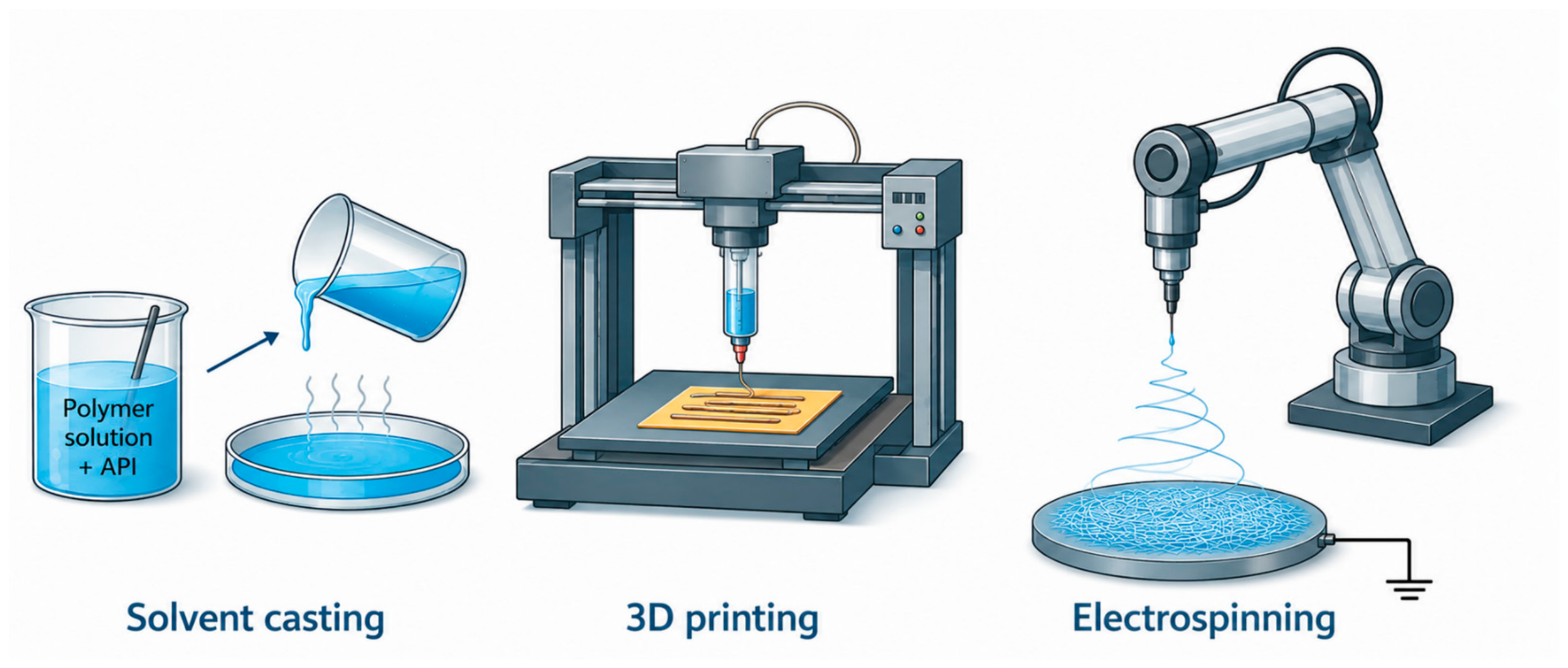
2.2.2. Semi-Solid Extrusion (SSE) 3D Printing Method
2.2.3. Solvent Casting Method
2.2.4. Electrospinning Method
2.3. Film Characterization
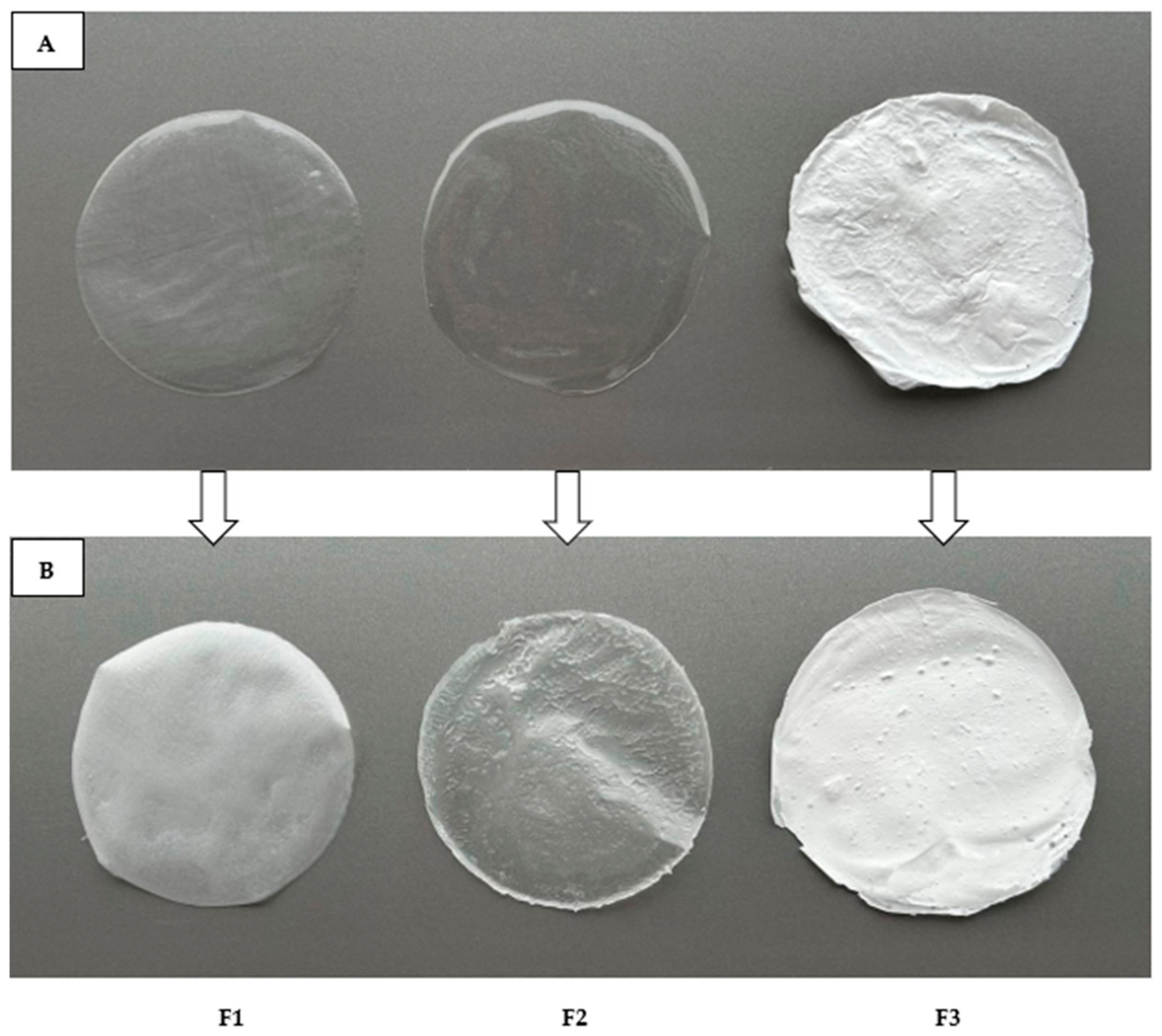
2.3.1. Organoleptic Evaluation
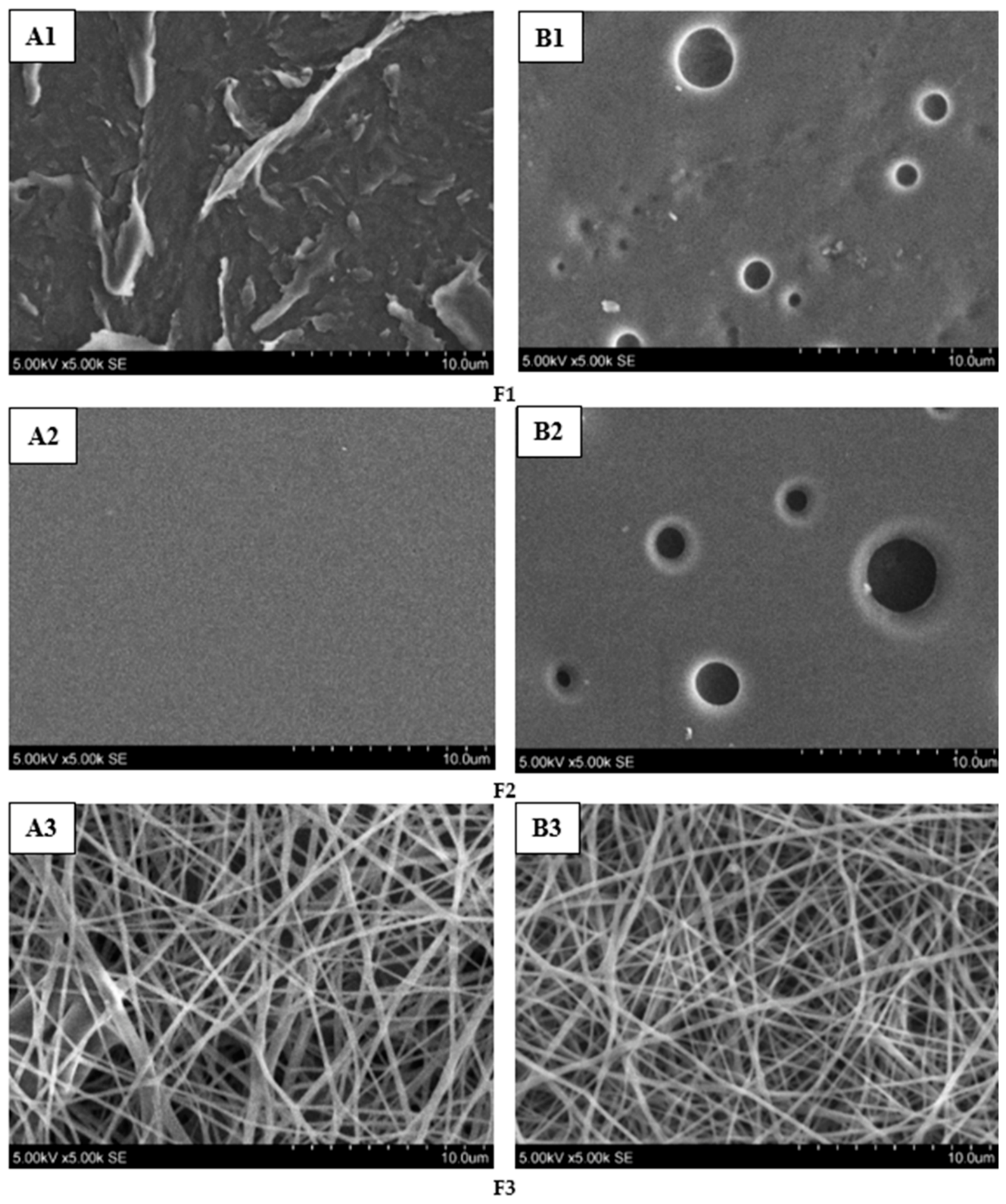
2.3.2. Scanning Electron Microscopy (SEM) Analysis of Film Surfaces
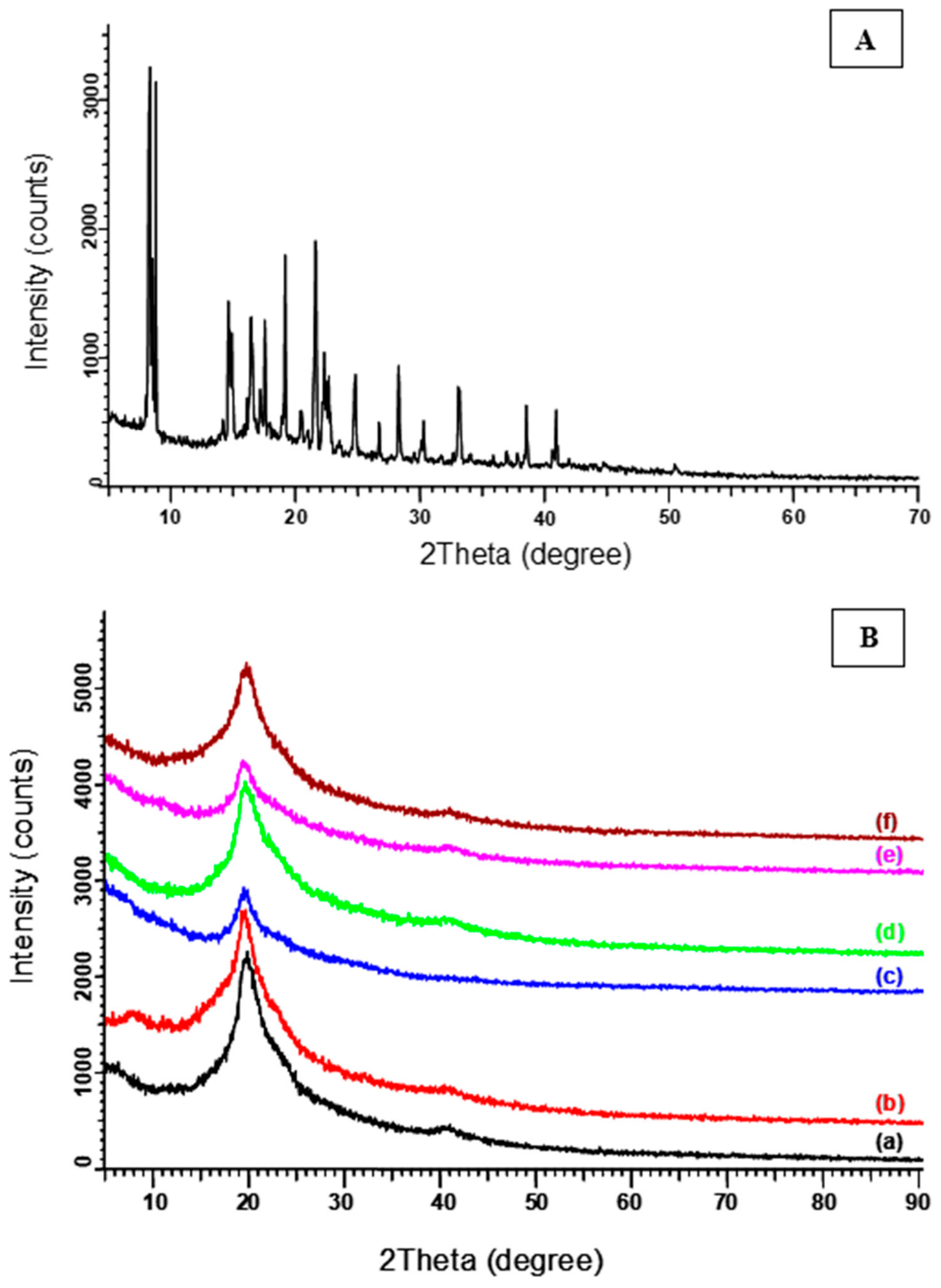
2.3.3. X-Ray Diffraction (XRD) Analysis
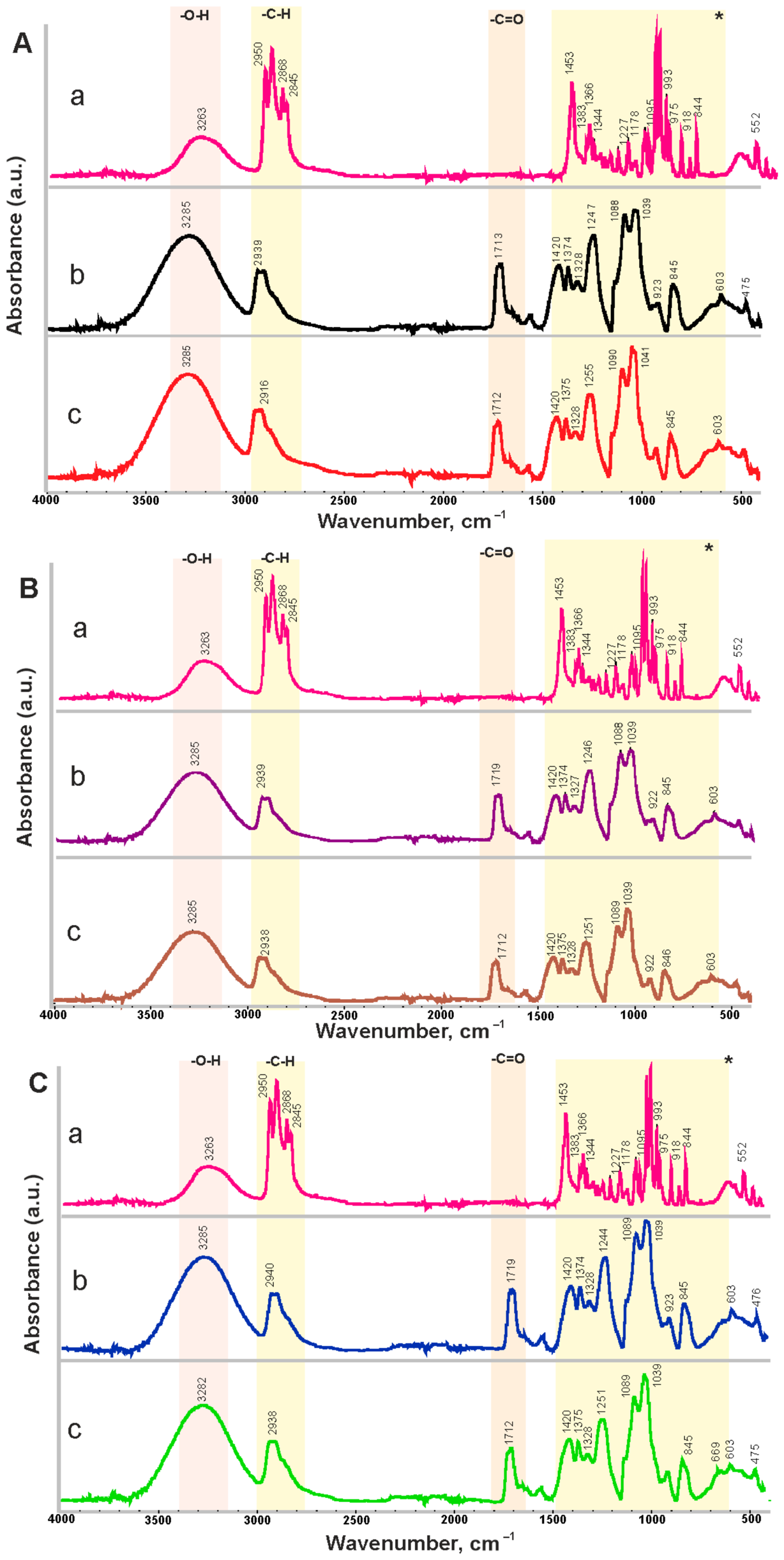
2.3.4. Attenuated Total Reflectance Fourier Transform Infrared (ATR-FTIR) Analysis
2.3.5. Thickness Measurement
2.3.6. Moisture Measurement
2.3.7. Folding Endurance Test
2.3.8. Textural Analysis
The Bursting Strength and Tensile Capacity Test
The Tensile (Elongation) Test
Assessment of Adhesion
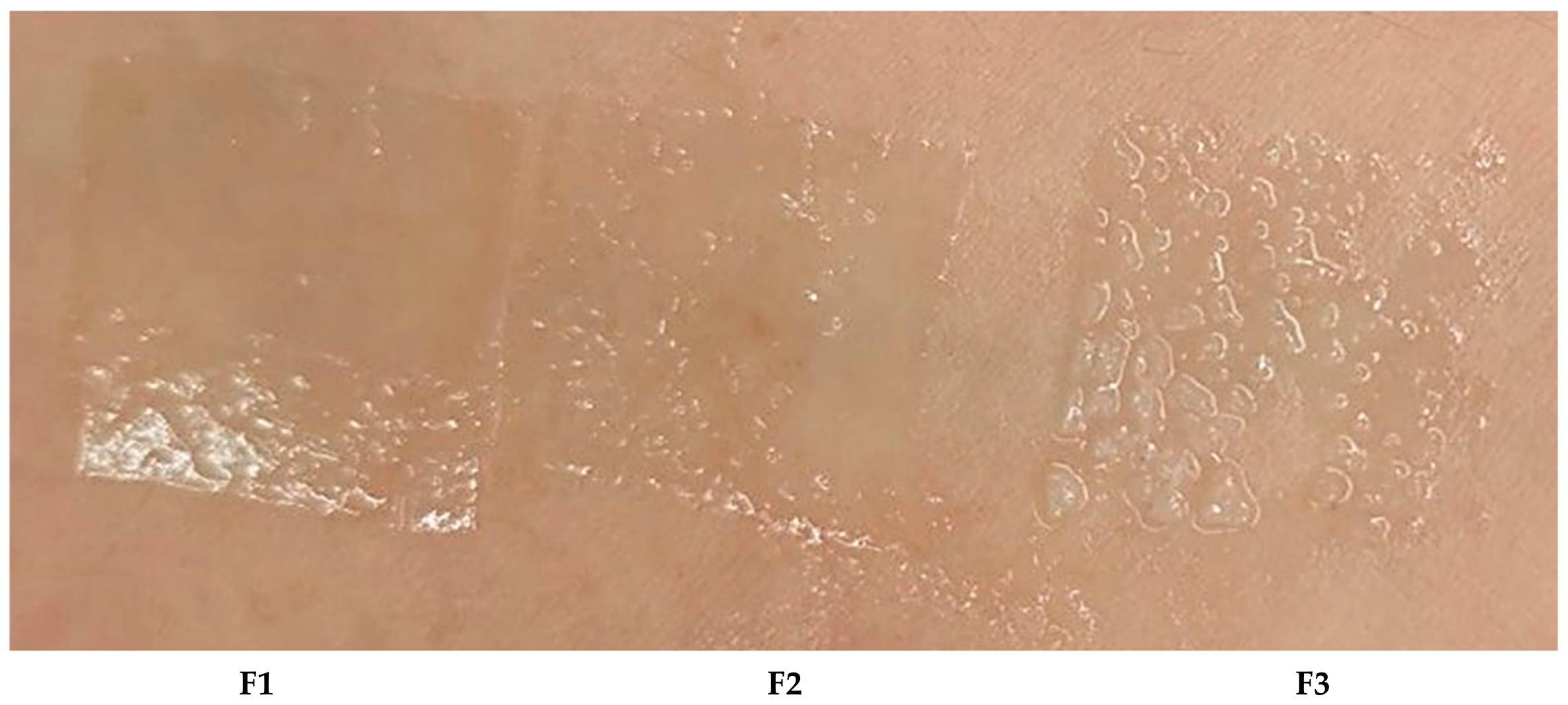
2.3.9. Visual Observation of Film Behavior on the Skin
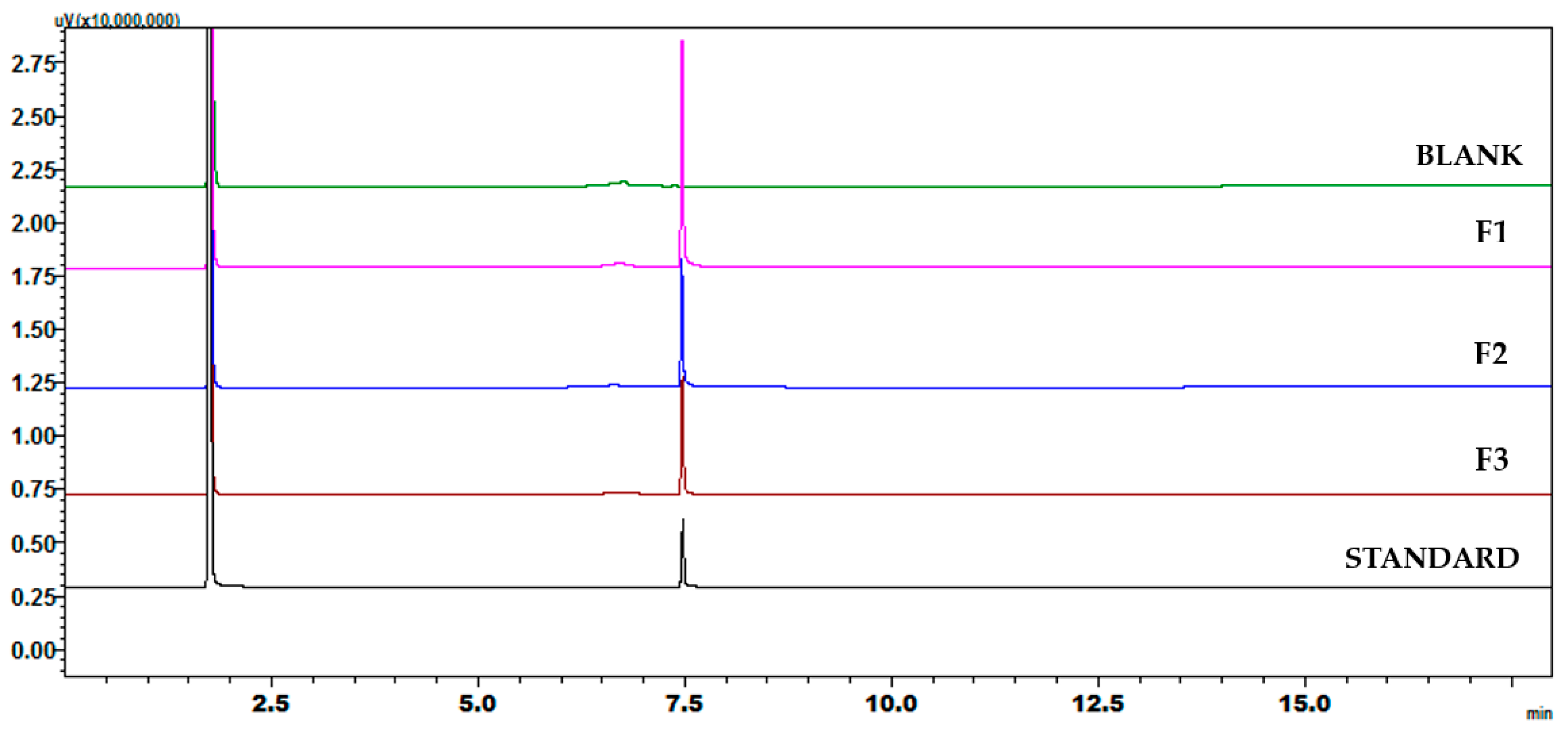
2.3.10. Determination of Menthol Content Using Gas Chromatography
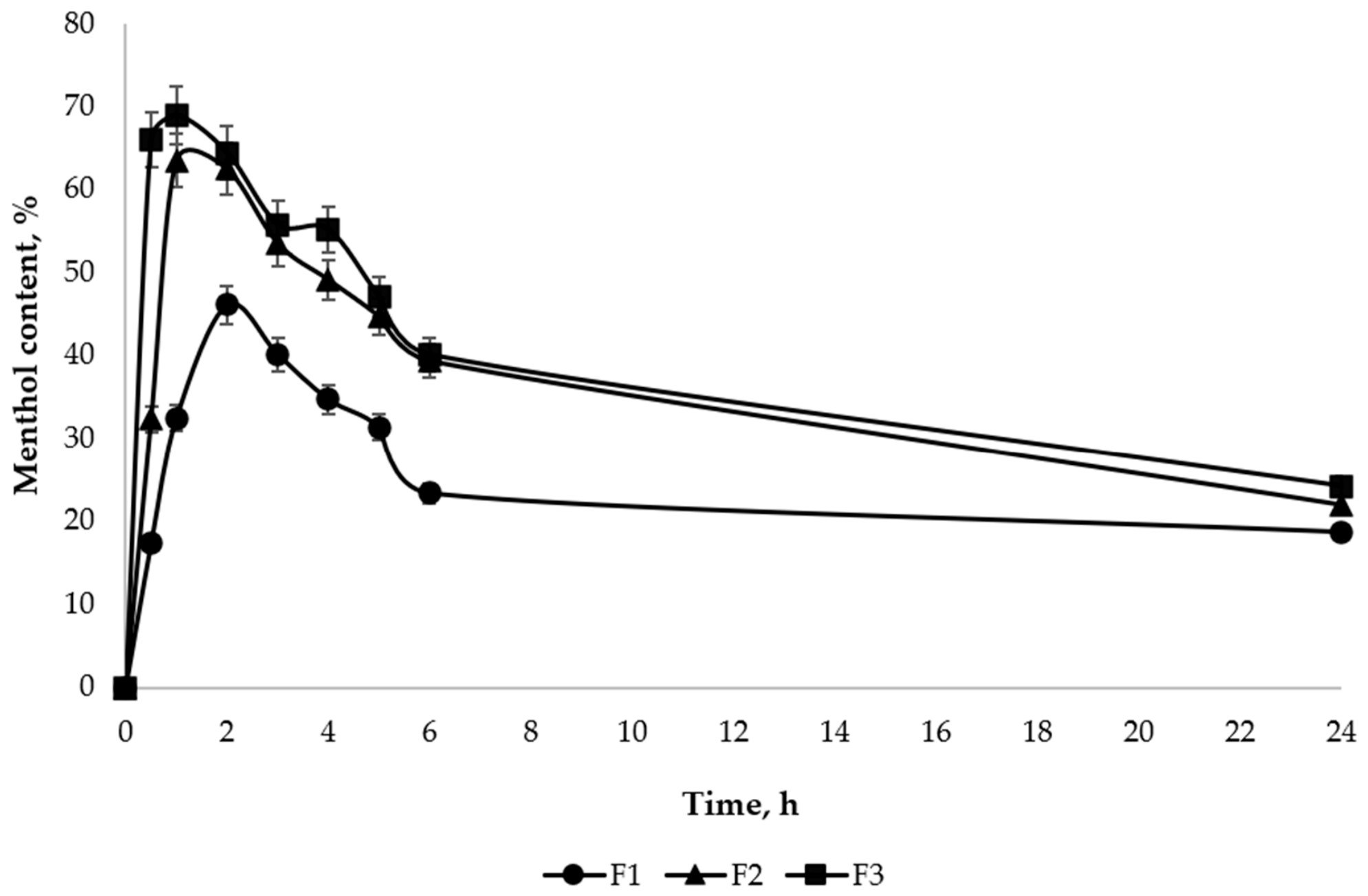
2.3.11. In Vitro Menthol Release Study
2.3.12. Ex Vivo Skin Permeation Studies
2.4. Stability Study
2.5. Statistical Analysis
3. Results and Discussion
4. Conclusions
Author Contributions
Funding
Institutional Review Board Statement
Informed Consent Statement
Data Availability Statement
Conflicts of Interest
References
- Crasta, A.; Painginkar, T.; Sreedevi, A.; Pawar, S.D.; Badamane Sathyanarayana, M.; Vasantharaju, S.G.; Osmani, R.A.M.; Ravi, G. Transdermal Drug Delivery System: A Comprehensive Review of Innovative Strategies, Applications, and Regulatory Perspectives. OpenNano 2025, 24, 100245. [Google Scholar] [CrossRef] [Scilit]
- Vaseem, R.S.; D’cruz, A.; Shetty, S.; -, H.; Vardhan, A.; Shenoy, S.; Marques, S.M.; Kumar, L.; Verma, R. Transdermal Drug Delivery Systems: A Focused Review of the Physical Methods of Permeation Enhancement. Adv. Pharm. Bull. 2023, 14, 67–85. [Google Scholar] [CrossRef] [Scilit] [PubMed]
- Kamatou, G.P.P.; Vermaak, I.; Viljoen, A.M.; Lawrence, B.M. Menthol: A Simple Monoterpene with Remarkable Biological Properties. Phytochemistry 2013, 96, 15–25. [Google Scholar] [CrossRef] [Scilit] [PubMed]
- Pergolizzi, J.V.; Taylor, R.; LeQuang, J.-A.; Raffa, R.B.; the NEMA Research Group. The Role and Mechanism of Action of Menthol in Topical Analgesic Products. J. Clin. Pharm. Ther. 2018, 43, 313–319. [Google Scholar] [CrossRef] [Scilit] [PubMed]
- Stabrauskiene, J.; Mazurkevičiūtė, A.; Majiene, D.; Balanaskiene, R.; Bernatoniene, J. Development and Evaluation of an Anti-Inflammatory Emulsion: Skin Penetration, Physicochemical Properties, and Fibroblast Viability Assessment. Pharmaceutics 2025, 17, 933. [Google Scholar] [CrossRef] [Scilit] [PubMed]
- Dillon, G.A.; Lichter, Z.S.; Alexander, L.M. Menthol-Induced Activation of TRPM8 Receptors Increases Cutaneous Blood Flow across the Dermatome. Microvasc. Res. 2022, 139, 104271. [Google Scholar] [CrossRef] [Scilit] [PubMed]
- Liu, B.; Fan, L.; Balakrishna, S.; Sui, A.; Morris, J.B.; Jordt, S.-E. TRPM8 Is the Principal Mediator of Menthol-Induced Analgesia of Acute and Inflammatory Pain. Pain® 2013, 154, 2169–2177. [Google Scholar] [CrossRef] [Scilit] [PubMed]
- Xu, L.; Han, Y.; Chen, X.; Aierken, A.; Wen, H.; Zheng, W.; Wang, H.; Lu, X.; Zhao, Z.; Ma, C.; et al. Molecular Mechanisms Underlying Menthol Binding and Activation of TRPM8 Ion Channel. Nat. Commun. 2020, 11, 3790. [Google Scholar] [CrossRef] [Scilit] [PubMed]
- Otto, F.; Froelich, A. Microemulsion-Based Polymer Gels with Ketoprofen and Menthol: Physicochemical Properties and Drug Release Studies. Gels 2024, 10, 435. [Google Scholar] [CrossRef] [Scilit] [PubMed]
- Brain, K.R.; Green, D.M.; Dykes, P.J.; Marks, R.; Bola, T.S. The Role of Menthol in Skin Penetration from Topical Formulations of Ibuprofen 5% in Vivo. Skin. Pharmacol. Physiol. 2006, 19, 17–21. [Google Scholar] [CrossRef] [Scilit] [PubMed]
- Kadowaki, R.; Ogata, F.; Fushiki, A.; Daimyo, S.; Deguchi, S.; Otake, H.; Nagata, M.; Sasaki, H.; Kawasaki, N.; Nagai, N. Skin Absorption of Felbinac Solid Nanoparticles in Gel Formulation Containing L-Menthol and Carboxypolymethylene. J. Pharm. Health Care Sci. 2023, 9, 20. [Google Scholar] [CrossRef] [Scilit] [PubMed]
- Nagai, N.; Ogata, F.; Yamaguchi, M.; Fukuoka, Y.; Otake, H.; Nakazawa, Y.; Kawasaki, N. Combination with L-Menthol Enhances Transdermal Penetration of Indomethacin Solid Nanoparticles. Int. J. Mol. Sci. 2019, 20, 3644. [Google Scholar] [CrossRef] [Scilit] [PubMed]
- Argoff, C.E. Topical Analgesics in the Management of Acute and Chronic Pain. Mayo Clin. Proc. 2013, 88, 195–205. [Google Scholar] [CrossRef] [Scilit] [PubMed]
- Leppert, W.; Malec–Milewska, M.; Zajaczkowska, R.; Wordliczek, J. Transdermal and Topical Drug Administration in the Treatment of Pain. Molecules 2018, 23, 681. [Google Scholar] [CrossRef] [Scilit] [PubMed]
- Pünnel, L.C.; Lunter, D.J. Film-Forming Systems for Dermal Drug Delivery. Pharmaceutics 2021, 13, 932. [Google Scholar] [CrossRef] [Scilit] [PubMed]
- Borbolla-Jiménez, F.V.; Peña-Corona, S.I.; Farah, S.J.; Jiménez-Valdés, M.T.; Pineda-Pérez, E.; Romero-Montero, A.; Del Prado-Audelo, M.L.; Bernal-Chávez, S.A.; Magaña, J.J.; Leyva-Gómez, G. Films for Wound Healing Fabricated Using a Solvent Casting Technique. Pharmaceutics 2023, 15, 1914. [Google Scholar] [CrossRef] [Scilit] [PubMed]
- Brokmann, F.; Luthe, K.; Hartmann, J.; Müller, L.; Klammt, F.; Hoffmann, C.; Weitschies, W.; Rosenbaum, C. Hot Melt Extrusion as Continuous Manufacturing Technique to Produce Bilayer Films Loaded with Paracetamol or Lactase. Pharmaceuticals 2025, 18, 310. [Google Scholar] [CrossRef] [Scilit] [PubMed]
- Riccio, B.V.F.; Silvestre, A.L.P.; Meneguin, A.B.; Ribeiro, T.D.C.; Klosowski, A.B.; Ferrari, P.C.; Chorilli, M. Exploiting Polymeric Films as a Multipurpose Drug Delivery System: A Review. AAPS PharmSciTech 2022, 23, 269. [Google Scholar] [CrossRef] [Scilit] [PubMed]
- Yildiz, Z.I.; Uyar, T. Fast-Dissolving Electrospun Nanofibrous Films of Paracetamol/Cyclodextrin Inclusion Complexes. Appl. Surf. Sci. 2019, 492, 626–633. [Google Scholar] [CrossRef] [Scilit]
- Kapoor, D.U.; Pareek, A.; Uniyal, P.; Prajapati, B.G.; Thanawuth, K.; Sriamornsak, P. Innovative Applications of 3D Printing in Personalized Medicine and Complex Drug Delivery Systems. iScience 2025, 28, 113505. [Google Scholar] [CrossRef] [Scilit] [PubMed]
- Xu, T.; Li, H.; Xia, Y.; Ding, S.; Yang, Q.; Yang, G. Three-Dimensional-Printed Oral Films Based on LCD: Influence Factors of the Film Printability and Received Qualities. Pharmaceutics 2023, 15, 758. [Google Scholar] [CrossRef] [Scilit] [PubMed]
- Yayehrad, A.T.; Siraj, E.A.; Matsabisa, M.; Birhanu, G. 3D Printed Drug Loaded Nanomaterials for Wound Healing Applications. Regen. Ther. 2023, 24, 361–376. [Google Scholar] [CrossRef] [Scilit] [PubMed]
- Gaaz, T.; Sulong, A.; Akhtar, M.; Kadhum, A.; Mohamad, A.; Al-Amiery, A. Properties and Applications of Polyvinyl Alcohol, Halloysite Nanotubes and Their Nanocomposites. Molecules 2015, 20, 22833–22847. [Google Scholar] [CrossRef] [Scilit] [PubMed]
- Hossain, M.; Afroz, S.; Islam, M.U.; Alam, A.K.M.M.; Khan, R.A.; Alam, A. Synthesis and Characterization of Polyvinyl Alcohol/Water-Hyacinth (Eichhornia Crassipes) Based Hydrogel by Applying Gamma Radiation. J. Polym. Res. 2021, 28, 167. [Google Scholar] [CrossRef] [Scilit]
- Teodorescu, M.; Bercea, M.; Morariu, S. Biomaterials of PVA and PVP in Medical and Pharmaceutical Applications: Perspectives and Challenges. Biotechnol. Adv. 2019, 37, 109–131. [Google Scholar] [CrossRef] [Scilit] [PubMed]
- Kamoun, E.A.; Kenawy, E.-R.S.; Chen, X. A Review on Polymeric Hydrogel Membranes for Wound Dressing Applications: PVA-Based Hydrogel Dressings. J. Adv. Res. 2017, 8, 217–233. [Google Scholar] [CrossRef] [Scilit] [PubMed]
- Zainal, S.H.; Mohd, N.H.; Suhaili, N.; Anuar, F.H.; Lazim, A.M.; Othaman, R. Preparation of Cellulose-Based Hydrogel: A Review. J. Mater. Res. Technol. 2021, 10, 935–952. [Google Scholar] [CrossRef] [Scilit]
- Jiang, Y.; Zhang, X.; Zhang, W.; Wang, M.; Yan, L.; Wang, K.; Han, L.; Lu, X. Infant Skin Friendly Adhesive Hydrogel Patch Activated at Body Temperature for Bioelectronics Securing and Diabetic Wound Healing. ACS Nano 2022, 16, 8662–8676. [Google Scholar] [CrossRef] [Scilit] [PubMed]
- Liu, X.; Liu, J.; Lin, S.; Zhao, X. Hydrogel Machines. Mater. Today 2020, 36, 102–124. [Google Scholar] [CrossRef] [Scilit]
- Bercea, M. Recent Advances in Poly(Vinyl Alcohol)-Based Hydrogels. Polymers 2024, 16, 2021. [Google Scholar] [CrossRef] [Scilit] [PubMed]
- Müller, L.; Rosenbaum, C.; Krause, J.; Weitschies, W. Characterization of an In Vitro/Ex Vivo Mucoadhesiveness Measurement Method of PVA Films. Polymers 2022, 14, 5146. [Google Scholar] [CrossRef] [Scilit] [PubMed]
- Suleiman, G.S.A.; Zeng, X.; Chakma, R.; Wakai, I.Y.; Feng, Y. Recent Advances and Challenges in Thermal Stability of PVA-based Film: A Review. Polym. Adv. Techs 2024, 35, e6327. [Google Scholar] [CrossRef] [Scilit]
- Aina, M.; Baillon, F.; Sescousse, R.; Sanchez-Ballester, N.M.; Begu, S.; Soulairol, I.; Sauceau, M. From Conception to Consumption: Applications of Semi-Solid Extrusion 3D Printing in Oral Drug Delivery. Int. J. Pharm. 2025, 674, 125436. [Google Scholar] [CrossRef] [Scilit] [PubMed]
- Maslii, Y.; Herbina, N.; Dene, L.; Ivanauskas, L.; Matulis, G.; Bernatoniene, J. Mucoadhesive Polymeric Film with Plant-Based Compounds for Dental Applications: Formulation, Characterization and Evaluation. Pharm. Dev. Technol. 2025, 30, 505–520. [Google Scholar] [CrossRef] [Scilit] [PubMed]
- Wang, P.; Li, Y.; Zhang, C.; Feng, F.; Zhang, H. Sequential Electrospinning of Multilayer Ethylcellulose/Gelatin/Ethylcellulose Nanofibrous Film for Sustained Release of Curcumin. Food Chem. 2020, 308, 125599. [Google Scholar] [CrossRef] [Scilit] [PubMed]
- Irfan, M.; Rabel, S.; Bukhtar, Q.; Qadir, M.I.; Jabeen, F.; Khan, A. Orally Disintegrating Films: A Modern Expansion in Drug Delivery System. Saudi Pharm. J. 2016, 24, 537–546. [Google Scholar] [CrossRef] [Scilit] [PubMed]
- Popovici, V.; Matei, E.; Cozaru, G.C.; Bucur, L.; Gîrd, C.E.; Schröder, V.; Ozon, E.A.; Musuc, A.M.; Mitu, M.A.; Atkinson, I.; et al. In Vitro Anticancer Activity of Mucoadhesive Oral Films Loaded with Usnea barbata (L.) F. H. Wigg Dry Acetone Extract, with Potential Applications in Oral Squamous Cell Carcinoma Complementary Therapy. Antioxidants 2022, 11, 1934. [Google Scholar] [CrossRef] [Scilit] [PubMed]
- Terreni, E.; Chetoni, P.; Burgalassi, S.; Tampucci, S.; Zucchetti, E.; Chipala, E.; Alany, R.G.; Al-Kinani, A.A.; Monti, D. A Hybrid Ocular Delivery System of Cyclosporine-A Comprising Nanomicelle-Laden Polymeric Inserts with Improved Efficacy and Tolerability. Biomater. Sci. 2021, 9, 8235–8248. [Google Scholar] [CrossRef] [Scilit] [PubMed]
- Adrover, A.; Varani, G.; Paolicelli, P.; Petralito, S.; Di Muzio, L.; Casadei, M.A.; Tho, I. Experimental and Modeling Study of Drug Release from HPMC-Based Erodible Oral Thin Films. Pharmaceutics 2018, 10, 222. [Google Scholar] [CrossRef] [Scilit] [PubMed]
- Cetindag, E.; Pentangelo, J.; Arrieta Cespedes, T.; Davé, R.N. Effect of Solvents and Cellulosic Polymers on Quality Attributes of Films Loaded with a Poorly Water-Soluble Drug. Carbohydr. Polym. 2020, 250, 117012. [Google Scholar] [CrossRef] [Scilit] [PubMed]
- Abd, E.; Yousuf, S.; Pastore, M.; Telaprolu, K.; Mohammed, Y.; Namjoshi, S.; Grice, J.; Roberts, M. Skin Models for the Testing of Transdermal Drugs. Clin. Pharmacol. Adv. Appl. 2016, 8, 163–176. [Google Scholar] [CrossRef] [Scilit] [PubMed]
- Lane, M.E. In Vitro Permeation Testing for the Evaluation of Drug Delivery to the Skin. Eur. J. Pharm. Sci. 2024, 201, 106873. [Google Scholar] [CrossRef] [Scilit] [PubMed]
- Schmook, F.P.; Meingassner, J.G.; Billich, A. Comparison of Human Skin or Epidermis Models with Human and Animal Skin in In-Vitro Percutaneous Absorption. Int. J. Pharm. 2001, 215, 51–56. [Google Scholar] [CrossRef] [Scilit] [PubMed]
- Bronaugh, R.L.; Stewart, R.F. Methods for In Vitro Percutaneous Absorption Studies IV: The Flow-Through Diffusion Cell. J. Pharm. Sci. 1985, 74, 64–67. [Google Scholar] [CrossRef] [Scilit] [PubMed]
- Nair, R.S.; Billa, N.; Morris, A.P. Optimizing In Vitro Skin Permeation Studies to Obtain Meaningful Data in Topical and Transdermal Drug Delivery. AAPS PharmSciTech 2025, 26, 147. [Google Scholar] [CrossRef] [Scilit] [PubMed]
- Kligman, A.M. Preparation of Isolated Sheets of Human Stratum Corneum. Arch. Dermatol. 1963, 88, 702. [Google Scholar] [CrossRef] [Scilit] [PubMed]
- Reifenrath, W.G.; Hawkins, G.S.; Kurtz, M.S. Percutaneous Penetration and Skin Retention of Topically Applied Compounds: An In Vitro-Ln Vivo Study. J. Pharm. Sci. 1991, 80, 526–532. [Google Scholar] [CrossRef] [Scilit] [PubMed]
- Schäfer-Korting, M.; Bock, U.; Diembeck, W.; Düsing, H.-J.; Gamer, A.; Haltner-Ukomadu, E.; Hoffmann, C.; Kaca, M.; Kamp, H.; Kersen, S.; et al. The Use of Reconstructed Human Epidermis for Skin Absorption Testing: Results of the Validation Study. Altern. Lab. Anim. 2008, 36, 161–187. [Google Scholar] [CrossRef] [Scilit] [PubMed]
- Fang, C. Synergistically Enhanced Transdermal Permeation and Topical Analgesia of Tetracaine Gel Containing Menthol and Ethanol in Experimental and Clinical Studies. Eur. J. Pharm. Biopharm. 2008, 68, 735–740. [Google Scholar] [CrossRef] [Scilit] [PubMed]
- Krishnaiah, Y.S.R.; Satyanarayana, V.; Bhaskar, P. Influence of Menthol and Pressure-Sensitive Adhesives on the in Vivo Performance of Membrane-Moderated Transdermal Therapeutic System of Nicardipine Hydrochloride in Human Volunteers. Eur. J. Pharm. Biopharm. 2003, 55, 329–337. [Google Scholar] [CrossRef] [Scilit] [PubMed]
- Sapra, B.; Jain, S.; Tiwary, A.K. Percutaneous Permeation Enhancement by Terpenes: Mechanistic View. AAPS J. 2008, 10, 120. [Google Scholar] [CrossRef] [Scilit] [PubMed]
- Awada, H.; Daneault, C. Chemical Modification of Poly(Vinyl Alcohol) in Water. Appl. Sci. 2015, 5, 840–850. [Google Scholar] [CrossRef] [Scilit]
- Jain, N.; Singh, V.K.; Chauhan, S. A Review on Mechanical and Water Absorption Properties of Polyvinyl Alcohol Based Composites/Films. J. Mech. Behav. Mater. 2017, 26, 213–222. [Google Scholar] [CrossRef] [Scilit]
- Park, J.-C.; Ito, T.; Kim, K.-O.; Kim, K.-W.; Kim, B.-S.; Khil, M.-S.; Kim, H.-Y.; Kim, I.-S. Electrospun Poly(Vinyl Alcohol) Nanofibers: Effects of Degree of Hydrolysis and Enhanced Water Stability. Polym. J. 2010, 42, 273–276. [Google Scholar] [CrossRef] [Scilit]
- Oz, M.; El Nebrisi, E.G.; Yang, K.-H.S.; Howarth, F.C.; Al Kury, L.T. Cellular and Molecular Targets of Menthol Actions. Front. Pharmacol. 2017, 8, 472. [Google Scholar] [CrossRef] [Scilit] [PubMed]
- Cheng, H.; An, X. Cold Stimuli, Hot Topic: An Updated Review on the Biological Activity of Menthol in Relation to Inflammation. Front. Immunol. 2022, 13, 1023746. [Google Scholar] [CrossRef] [Scilit] [PubMed]
- Islam, M.S.; Karim, M.R. Fabrication and Characterization of Poly(Vinyl Alcohol)/Alginate Blend Nanofibers by Electrospinning Method. Colloids Surf. A 2010, 366, 135–140. [Google Scholar] [CrossRef] [Scilit]
- Jia, L.; Qin, X. The Effect of Different Surfactants on the Electrospinning Poly(Vinyl Alcohol) (PVA) Nanofibers. J. Therm. Anal. Calorim. 2013, 112, 595–605. [Google Scholar] [CrossRef] [Scilit]
- Kan, Y.; Salimon, A.I.; Korsunsky, A.M. On the Electrospinning of Nanostructured Collagen-PVA Fiber Mats. Mater. Today Proc. 2020, 33, 2013–2019. [Google Scholar] [CrossRef] [Scilit]
- Somwongin, S.; Tammasorn, P.; Limbunjerd, R.; Norkaew, K.; Lertprachyakorn, N.; Kongsaeng, T.; Phokasem, P.; Disayathanoowat, T.; Lin, W.-C.; Chaiyana, W. Bee Product-Based Antimicrobial Film-Forming Gels Targeting Staphylococcus Aureus, Staphylococcus Epidermidis, and Cutibacterium Acnes for Anti-Acne Applications. Gels 2025, 11, 802. [Google Scholar] [CrossRef] [Scilit] [PubMed]
- Zaman, M.; Hassan, R.; Razzaq, S.; Mahmood, A.; Amjad, M.W.; Raja, M.A.G.; Qaisar, A.A.; Majeed, A.; Hanif, M.; Tahir, R.A. Fabrication of Polyvinyl Alcohol Based Fast Dissolving Oral Strips of Sumatriptan Succinate and Metoclopramide HCL. Sci. Prog. 2020, 103, 0036850420964302. [Google Scholar] [CrossRef] [Scilit] [PubMed]
- Al-Sahaf, Z.; Raimi-Abraham, B.; Licciardi, M.; De Mohac, L.M. Influence of Polyvinyl Alcohol (PVA) on PVA-Poly-N-Hydroxyethyl-Aspartamide (PVA-PHEA) Microcrystalline Solid Dispersion Films. AAPS PharmSciTech 2020, 21, 267. [Google Scholar] [CrossRef] [Scilit] [PubMed]
- Türkoğlu, G.C.; Khomarloo, N.; Mohsenzadeh, E.; Gospodinova, D.N.; Neznakomova, M.; Salaün, F. PVA-Based Electrospun Materials—A Promising Route to Designing Nanofiber Mats with Desired Morphological Shape—A Review. Int. J. Mol. Sci. 2024, 25, 1668. [Google Scholar] [CrossRef] [Scilit] [PubMed]
- Wright, E.J.; Andrews, G.P.; McCoy, C.P.; Jones, D.S. The Effect of Dilute Solution Properties on Poly(Vinyl Alcohol) Films. J. Mech. Behav. Biomed. Mater. 2013, 28, 222–231. [Google Scholar] [CrossRef] [Scilit] [PubMed]
- Tijani, A.T.; Ayodele, T.; Liadi, M.; Sarker, N.C.; Hammed, A. Mechanical and Thermal Characteristics of Films from Glycerol Mixed Emulsified Carnauba Wax/Polyvinyl Alcohol. Polymers 2024, 16, 3024. [Google Scholar] [CrossRef] [Scilit] [PubMed]
- Maria, T.M.C.; De Carvalho, R.A.; Sobral, P.J.A.; Habitante, A.M.B.Q.; Solorza-Feria, J. The Effect of the Degree of Hydrolysis of the PVA and the Plasticizer Concentration on the Color, Opacity, and Thermal and Mechanical Properties of Films Based on PVA and Gelatin Blends. J. Food Eng. 2008, 87, 191–199. [Google Scholar] [CrossRef] [Scilit]
- Kovács, T.; Kovács, T.; Detrich, M.; Gazdag, F.; Itatani, M.; Lagzi, I. The Effect of the Film Thickness, Cooling Rate, and Solvent Evaporation on the Formation of L-Menthol Ring-Banded Spherulites. Crystals 2024, 15, 17. [Google Scholar] [CrossRef] [Scilit]
- Shipenok, X.M.; Mazhikenova, A.M.; Glukhovskoy, E.G.; Shipovskaya, A.B. Phase Separation of L-Menthol an Aqueous Dispersion of Biologically Active Nanoparticles of Chitosan L- and D-Aspartate. J. Biomed. Photonics Eng. 2024, 10, 040316. [Google Scholar] [CrossRef] [Scilit]
- Mushtaq, A.; Hanif, M.A.; Nadeem, R.; Mushtaq, Z. Development of Methodology for Molecular Crystallization of Menthol. Heliyon 2024, 10, e38394. [Google Scholar] [CrossRef] [Scilit] [PubMed]
- Kovtun, G.; Casas, D.; Cuberes, T. Influence of Glycerol on the Surface Morphology and Crystallinity of Polyvinyl Alcohol Films. Polymers 2024, 16, 2421. [Google Scholar] [CrossRef] [Scilit] [PubMed]
- Lobo-Guerrero, A. X-Ray Analysis and Rietveld Refinement of Polyvinyl Alcohol. Mater. Lett. 2020, 265, 127434. [Google Scholar] [CrossRef] [Scilit]
- Enayati, M.S.; Behzad, T.; Sajkiewicz, P.; Bagheri, R.; Ghasemi-Mobarakeh, L.; Łojkowski, W.; Pahlevanneshan, Z.; Ahmadi, M. Crystallinity Study of Electrospun Poly (Vinyl Alcohol) Nanofibers: Effect of Electrospinning, Filler Incorporation, and Heat Treatment. Iran. Polym. J. 2016, 25, 647–659. [Google Scholar] [CrossRef] [Scilit]
- Zahra, F.T.; Quick, Q.; Mu, R. Electrospun PVA Fibers for Drug Delivery: A Review. Polymers 2023, 15, 3837. [Google Scholar] [CrossRef] [Scilit] [PubMed]
- Hancock, B.C.; Zografi, G. Characteristics and Significance of the Amorphous State in Pharmaceutical Systems. J. Pharm. Sci. 1997, 86, 1–12. [Google Scholar] [CrossRef] [Scilit] [PubMed]
- Ali, H.H.; Ghareeb, M.M.; Al-Remawi, M.; Al-Akayleh, F.T. New Insight into Single Phase Formation of Capric Acid/Menthol Eutectic Mixtures by Fourier-Transform Infrared Spectroscopy and Differential Scanning Calorimetry. Trop. J. Pharm. Res. 2020, 19, 361–369. [Google Scholar] [CrossRef] [Scilit]
- Tretinnikov, O.N.; Zagorskaya, S.A. Determination of the Degree of Crystallinity of Poly(Vinyl Alcohol) by FTIR Spectroscopy. J. Appl. Spectrosc. 2012, 79, 521–526. [Google Scholar] [CrossRef] [Scilit]
- Alshammari, A.H. Structural, Optical, and Thermal Properties of PVA/SrTiO3/CNT Polymer Nanocomposites. Polymers 2024, 16, 1392. [Google Scholar] [CrossRef] [Scilit] [PubMed]
- Suganthi, S.; Vignesh, S.; Kalyana Sundar, J.; Raj, V. Fabrication of PVA Polymer Films with Improved Antibacterial Activity by Fine-Tuning via Organic Acids for Food Packaging Applications. Appl. Water Sci. 2020, 10, 100. [Google Scholar] [CrossRef] [Scilit]
- Tsioptsias, C.; Fardis, D.; Ntampou, X.; Tsivintzelis, I.; Panayiotou, C. Thermal Behavior of Poly(Vinyl Alcohol) in the Form of Physically Crosslinked Film. Polymers 2023, 15, 1843. [Google Scholar] [CrossRef] [Scilit] [PubMed]
- Subbiah, T.; Bhat, G.S.; Tock, R.W.; Parameswaran, S.; Ramkumar, S.S. Electrospinning of Nanofibers. J. Appl. Polym. Sci. 2005, 96, 557–569. [Google Scholar] [CrossRef] [Scilit]
- Aşgın Uzun, Ş.; Dağdelen, A.F.; Gümüş, Ö.Y.; Dündar, A.N.; Sarıcaoğlu, F.T. Menthol and Organic Acid-Based Hydrophobic Deep Eutectic Solvents as Plasticizers in Biodegradable Poly (Lactic Acid) Films. Food Packag. Shelf Life 2025, 47, 101415. [Google Scholar] [CrossRef] [Scilit]
- Muñoz-Gimena, P.F.; Prado, A.D.; Aragón-Gutiérrez, A.; Peponi, L.; López, D. Chemically Modified Starch Films with Menthol or Sulfobetaine as Antimicrobial Agents for Active Packaging Applications. Polysaccharides 2025, 6, 103. [Google Scholar] [CrossRef] [Scilit]
- Srivastava, V.; Singh, S.; Das, D. Sugarcane Bagasse Fiber Reinforced Active Starch Biocomposite Films with Menthol Encapsulated Powder for Fresh-Cut Fruit Packaging. Food Bioprocess Technol. 2025, 18, 6191–6212. [Google Scholar] [CrossRef] [Scilit]
- Praveena, B.A.; Lokesh, N.; Buradi, A.; Santhosh, N.; Praveena, B.L.; Vignesh, R. A Comprehensive Review of Emerging Additive Manufacturing (3D Printing Technology): Methods, Materials, Applications, Challenges, Trends and Future Potential. Mater. Today Proc. 2022, 52, 1309–1313. [Google Scholar] [CrossRef] [Scilit]
- Seoane-Viaño, I.; Januskaite, P.; Alvarez-Lorenzo, C.; Basit, A.W.; Goyanes, A. Semi-Solid Extrusion 3D Printing in Drug Delivery and Biomedicine: Personalised Solutions for Healthcare Challenges. J. Control. Release 2021, 332, 367–389. [Google Scholar] [CrossRef] [Scilit] [PubMed]
- Drobny, J.G. Part I—Materials, Technology, and Properties. In Applications of Fluoropolymer Films; Elsevier: Amsterdam, The Netherlands, 2020; pp. 3–38. ISBN 978-0-12-816128-9. [Google Scholar]
- Saar, S.; Tuğcu Demiröz, F. Development and Characterization of Mucoadhesive Films Containing Metronidazole for Vaginal Drug Delivery. Turk. J. Pharm. Sci. 2025, 22, 71–76. [Google Scholar] [CrossRef] [Scilit] [PubMed]
- Liu, B.; Zhang, J.; Guo, H. Research Progress of Polyvinyl Alcohol Water-Resistant Film Materials. Membranes 2022, 12, 347. [Google Scholar] [CrossRef] [Scilit] [PubMed]
- Mitrea, L.; Călinoiu, L.-F.; Martău, G.-A.; Szabo, K.; Teleky, B.-E.; Mureșan, V.; Rusu, A.-V.; Socol, C.-T.; Vodnar, D.-C. Poly(Vinyl Alcohol)-Based Biofilms Plasticized with Polyols and Colored with Pigments Extracted from Tomato By-Products. Polymers 2020, 12, 532. [Google Scholar] [CrossRef] [Scilit] [PubMed]
- Cautela, M.P.; Moshe, H.; Sosnik, A.; Sarmento, B.; Das Neves, J. Composite Films for Vaginal Delivery of Tenofovir Disoproxil Fumarate and Emtricitabine. Eur. J. Pharm. Biopharm. 2019, 138, 3–10. [Google Scholar] [CrossRef] [Scilit] [PubMed]
- Zhang, X.; Yu, Y.; Jiang, Z.; Wang, H. Influence of Thickness and Moisture Content on the Mechanical Properties of Microfibrillated Cellulose (MFC) Films. Wood Res. 2016, 61, 851–860. [Google Scholar]
- Hajji, S.; Chaker, A.; Jridi, M.; Maalej, H.; Jellouli, K.; Boufi, S.; Nasri, M. Structural Analysis, and Antioxidant and Antibacterial Properties of Chitosan-Poly (Vinyl Alcohol) Biodegradable Films. Environ. Sci. Pollut. Res. 2016, 23, 15310–15320. [Google Scholar] [CrossRef] [Scilit] [PubMed]
- Ojagh, S.M.; Rezaei, M.; Razavi, S.H.; Hosseini, S.M.H. Development and Evaluation of a Novel Biodegradable Film Made from Chitosan and Cinnamon Essential Oil with Low Affinity toward Water. Food Chem. 2010, 122, 161–166. [Google Scholar] [CrossRef] [Scilit]
- Chen, X.; Taguchi, T. Enhanced Skin Adhesive Property of Hydrophobically Modified Poly(Vinyl Alcohol) Films. ACS Omega 2020, 5, 1519–1527. [Google Scholar] [CrossRef] [Scilit] [PubMed]
- Guo, X.; Cun, D.; Wan, F.; Bera, H.; Song, Q.; Tian, X.; Chen, Y.; Rantanen, J.; Yang, M. Comparative Assessment of in Vitro/in Vivo Performances of Orodispersible Electrospun and Casting Films Containing Rizatriptan Benzoate. Eur. J. Pharm. Biopharm. 2020, 154, 283–289. [Google Scholar] [CrossRef] [Scilit] [PubMed]
- Abualhasan, M.N.; Zaid, A.N.; Jaradat, N.; Mousa, A. GC Method Validation for the Analysis of Menthol in Suppository Pharmaceutical Dosage Form. Int. J. Anal. Chem. 2017, 2017, 1728414. [Google Scholar] [CrossRef] [Scilit] [PubMed]
- Sun, Y.; Fan, S.; Liang, R.; Ni, X.; Du, Y.; Wang, J.; Yang, C. Design and Characterization of Starch/Solid Lipids Hybrid Microcapsules and Their Thermal Stability with Menthol. Food Hydrocoll. 2021, 116, 106631. [Google Scholar] [CrossRef] [Scilit]
- Sapper, M.; Martin-Esparza, M.E.; Chiralt, A.; Gonzalez Martinez, C. Antifungal Polyvinyl Alcohol Coatings Incorporating Carvacrol for the Postharvest Preservation of Golden Delicious Apple. Coatings 2020, 10, 1027. [Google Scholar] [CrossRef] [Scilit]
- Zou, J.; Wang, L.; Wen, H.; Wang, S. Kinetic study on the volatility of menthol and borneol. Chin. J. Chin. Mater. Med. 2002, 27, 739–742. [Google Scholar]
- Wei, M.; Song, X.; Pan, X.; Li, R.; Chen, C.; Du, X.; Li, J. Thermal Triggered Release of Menthol from Different Carriers: A Comparative Study. Appl. Sci. 2020, 10, 1677. [Google Scholar] [CrossRef] [Scilit]
- Marin, M.; Baek, I.; Taylor, A.J. Volatile Release from Aqueous Solutions under Dynamic Headspace Dilution Conditions. J. Agric. Food Chem. 1999, 47, 4750–4755. [Google Scholar] [CrossRef] [Scilit] [PubMed]
- Kurek, M.; Descours, E.; Galic, K.; Voilley, A.; Debeaufort, F. How Composition and Process Parameters Affect Volatile Active Compounds in Biopolymer Films. Carbohydr. Polym. 2012, 88, 646–656. [Google Scholar] [CrossRef] [Scilit]
- Luo, W.; An, H.; Tan, C.; Wang, L.; Dong, D.; Liu, Q.; Cheng, Q.; Song, X. Scalable Cellulose Matrices for Menthol Controlled Release: Performance and Mechanistic Investigation. Polymer 2026, 354, 129968. [Google Scholar] [CrossRef] [Scilit]
- Li, Z.; Shang, S.; Fang, X.; Han, J.; Li, T.; Zhang, X.; Xiao, D.; Sun, Q.; Li, H.; Lei, P. Characterization of Menthol-Loaded Electrospun Nanofibrous Membranes and the Temperature-Controlled Release Properties. Adv. Polym. Technol. 2025, 2025, 8256208. [Google Scholar] [CrossRef] [Scilit]



| Sample | Ingredients, % w/w | Fabrication Method | ||||
|---|---|---|---|---|---|---|
| Menthol | PVA | Glycerol | Ethanol | Water Purified | ||
| F1 | 5.0 | 10.0 | 3.0 | 40.0 | 42.0 | 3D printing |
| F2 | 5.0 | 10.0 | 3.0 | 40.0 | 42.0 | Solvent casting |
| F3 | 5.0 | 10.0 | 3.0 | 40.0 | 42.0 | Electrospinning |
| Ethanol to Water Ratio (w/w) | Polymer Behaviour (10% PVA) | API Behaviour (5% Menthol) | Visual and Technological Outcome |
|---|---|---|---|
| 0.5:1 | Complete dissolution with no visible undissolved material. | Partial solubilization; visible undissolved material remained. | Turbid, opalescent system with visible phase separation and coalescence of menthol droplets at the surface. |
| 1:1 | Full solubility; homogeneous solution with no visible signs of aggregation or precipitation. | Complete solubilization with no visible undissolved material. | Homogeneous, single-phase, stable opalescent solution with no evidence of phase separation. |
| 1.5:1 | Rapid polymer precipitation, resulting in a heterogeneous system with visible solid aggregates. | Rapid and complete solubilization. | Visible polymer aggregation and heavy precipitation (white flakes); a heterogeneous multiphase system with complete loss of homogeneity. |
| PVA Concentration (w/w) | Rheological Status/Dynamic Viscosity | Technological Outcome by Processing Method | ||
|---|---|---|---|---|
| SSE 3D Printing | Solvent Casting | Electrospinning | ||
| 5% | Semi-dilute unentangled regime (near-Newtonian, low elasticity)/32.41 ± 1.15 mPa·s | Rapid spreading of deposited material with immediate track widening, resulting in loss of shape fidelity and structural collapse; no continuous film formation achieved. | Rapid spreading with fast deaeration, yielding very thin films with limited structural integrity that are fragile, prone to rupture due to low thickness and strong substrate adhesion. | Continuous jet disruption due to capillary instability, leading to a transition from electrospinning to electrospraying with bead/droplet deposition, resulting in non-uniform and low-quality nanofibrous mats. |
| 10% | Semi-dilute entangled regime (viscoelastic, shear-thinning behavior)/159.03 ± 0.72 mPa·s | Stable extrusion with good shape retention and preserved layer geometry; continuous and uniform film formation achieved upon deposition. | Homogeneous spreading with controlled evaporation, yielding high-quality films with preserved geometry and easy detachment from the substrate. | Stable, continuous jet formation, yielding uniform, dry, high-quality nanofibrous mats with good structural consistency. |
| 15% | Concentrated regime (high-viscosity, gel-like network)/745.20 ± 8.63 mPa·s | High flow resistance requiring increased extrusion pressure, with risk of premature drying and nozzle clogging; non-uniform and discontinuous film formation observed. | Air bubble entrapment during casting, leading to non-uniform film formation and reduced film quality, with shrinkage and distortion of the dried matrix. | Restricted mass transfer and rapid polymer solidification at the needle tip, causing capillary clogging and process interruption, resulting in incomplete and defective nanofibrous mat formation. |
| Parameters | Samples/Results | |||||
|---|---|---|---|---|---|---|
| F1 (3D Printing Method) | F2 (Solvent Casting Method) | F3 (Electrospinning Method) | ||||
| Without Menthol | With Menthol | Without Menthol | With Menthol | Without Menthol | With Menthol | |
| Thickness, μm | 167 ± 13 | 174 ± 14 | 155 ± 9 | 171 ± 15 | 180 ± 12 | 203 ± 18 |
| Moisture content, % | 12.58 ± 0.18 | 15.12 ± 0.22 | 12.98 ± 0.07 | 16.24 ± 0.31 | 14.38 ± 0.38 | 17.71 ± 0.48 |
| Folding endurance | >300 | >300 | >300 | >300 | >300 | >300 |
| Bursting strength, N | 23.11 ± 0.92 | 13.25 ± 0.65 | 22.41 ± 1.48 | 13.94 ± 1.12 | 21.22 ± 1.39 | 14.18 ± 0.22 |
| Tensile distance, mm | 4.98 ± 0.19 | 10.62 ± 0.71 | 6.29 ± 1.75 | 8.65 ± 1.09 | 5.58 ± 0.62 | 5.91 ± 0.51 |
| Tensile strength, N/mm | 1.685 ± 0.049 | 1.761 ± 0.328 | 1.244 ± 0.098 | 1.315 ± 0.169 | 1.275 ± 0.131 | 1.492 ± 0.174 |
| Adhesiveness, N | 3.20 ± 0.33 | 5.15 ± 0.27 | 3.35 ± 0.28 | 5.76 ± 0.54 | – | – |
| Parameters | Samples/Results | ||
|---|---|---|---|
| F1 (3D-Printing Method) | F2 (Solvent Casting Method) | F3 (Electrospinning Method) | |
| Epidermis flux (μg/cm2/h) | 1.433 ± 0.246 a | 0.325 ± 0.054 b | 0.027 ± 0.001 c |
| Dermis flux (μg/cm2/h) | 3.983 ± 0.208 d | 3.171 ± 0.333 d | 2.979 ± 0.588 d |
Disclaimer/Publisher’s Note: The statements, opinions and data contained in all publications are solely those of the individual author(s) and contributor(s) and not of MDPI and/or the editor(s). MDPI and/or the editor(s) disclaim responsibility for any injury to people or property resulting from any ideas, methods, instructions or products referred to in the content. |
© 2026 by the authors. Licensee MDPI, Basel, Switzerland. This article is an open access article distributed under the terms and conditions of the Creative Commons Attribution (CC BY) license.
Share and Cite
Matulis, G.; Maslii, Y.; Herbina, N.; Marksa, M.; Mazurkevičiūtė, A.; Bernatoniene, J. Influence of Fabrication Techniques on the Physicochemical, Textural, Release and Skin Delivery Performance of Polyvinyl Alcohol-Based Transdermal Films Containing Menthol: A Comparative Study. Pharmaceutics 2026, 18, 871. https://doi.org/10.3390/pharmaceutics18070871
Matulis G, Maslii Y, Herbina N, Marksa M, Mazurkevičiūtė A, Bernatoniene J. Influence of Fabrication Techniques on the Physicochemical, Textural, Release and Skin Delivery Performance of Polyvinyl Alcohol-Based Transdermal Films Containing Menthol: A Comparative Study. Pharmaceutics. 2026; 18(7):871. https://doi.org/10.3390/pharmaceutics18070871
Chicago/Turabian StyleMatulis, Gintaras, Yuliia Maslii, Nataliia Herbina, Mindaugas Marksa, Agnė Mazurkevičiūtė, and Jurga Bernatoniene. 2026. "Influence of Fabrication Techniques on the Physicochemical, Textural, Release and Skin Delivery Performance of Polyvinyl Alcohol-Based Transdermal Films Containing Menthol: A Comparative Study" Pharmaceutics 18, no. 7: 871. https://doi.org/10.3390/pharmaceutics18070871
APA StyleMatulis, G., Maslii, Y., Herbina, N., Marksa, M., Mazurkevičiūtė, A., & Bernatoniene, J. (2026). Influence of Fabrication Techniques on the Physicochemical, Textural, Release and Skin Delivery Performance of Polyvinyl Alcohol-Based Transdermal Films Containing Menthol: A Comparative Study. Pharmaceutics, 18(7), 871. https://doi.org/10.3390/pharmaceutics18070871