1. Introduction
Healthy normal wound repair involves coordinated processes including platelet activation (haemostasis), inflammation regulation, cellular proliferation, and extracellular wound matrix (ECM) generation and remodelling [
1,
2,
3]. Collagen, constituting circa 25% of the protein content in mammals and the main protein product in fibroblast, plays a vital role in the ECM [
3,
4,
5]. These functions include supporting molecular and cellular activities essential for keratinocytes and endothelial cells as well as fibroblasts migration at the wound site, improving native collagen synthesis for wound repair by restructuring tissue anatomy [
3,
4]. Connective tissues produce ECM including collagen I as part of the healthy wound healing process in response to compromised skin anatomy [
3,
4,
5,
6]. However, when ECM production becomes excessive, it can lead to tissue anatomical disorders such as keloids and hypertrophic scars [
3,
6,
7,
8]. Moreover, when wound healing is delayed, it can result in scar formation [
3]. Collagen production during wound healing is crucial for maintaining tissue tensile strength and proper anatomical structure. Uncontrolled collagen synthesis or delays in wound repair can lead to various types of scars, including atrophic, keloid, or hypertrophic scars [
3,
6,
7,
8]. Specifically, collagen production in keloids and hypertrophic scars demonstrate an approximate twenty-fold and three-fold increase in collagen deposition, respectively, when compared to the typical physiological levels observed in healthy normal tissue [
3,
6,
7,
8]. Excessive scarring not only impairs physical function but also affects a patient’s psychological well-being [
3]. In the developed world, circa 100 million patients develop scars from around 55 million elective operations and 25 million trauma-related procedures, with hypertrophic scarring incidence ranging from 40 to 70% after surgery and up to 91% following burn injuries, depending on wound depth [
3,
9,
10].
Cofactors such as retinoids, ascorbic acid, and zinc have been shown to regulate collagen production, which is essential for ECM synthesis [
3,
11]. Prior studies have shown that retinoids can regulate collagen I and III expression resulting in elevated procollagen I and III levels promoting epidermal thickness and reduced facial wrinkles possibly due to well-modulated collagen [
12,
13]. In addition, previous research by our group demonstrated the wound closure efficacy of retinol-based micelle formulations against wounded human-equivalent epidermal full-thickness skin model (HEFT–SM) specimens after six days of treatment [
14]. However, these studies did not address the activity of various retinoid micelle formulations on the HEFT-SM samples prior to the six-day treatment period. Moreover, some of the underlying mechanisms of the repair were not accounted for including wound ECM such as collagen generation. Sequel to this, our group was motivated to examine the wound contraction and healing of the wounded HEFT-SM samples following the two-day treatment period with three distinct Phytoceutical
® formulations, separately incorporating 0.3% retinol, 0.3% retinaldehyde, and 0.03% retinoic acid, and we elucidate the effect of the collagen in this context [
14]. Furthermore, research into the efficacy of other retinoid-based micelle formulations including retinaldehyde and retinoic acid are rare. These retinoids have known roles in cell differentiation, proliferation, and collagen synthesis, but their specific impact on wound healing and tissue repair in comparison to retinol has not been fully elucidated [
13,
15,
16,
17].
Retinoids play a critical role in skin repair through their ability to modulate keratinocyte proliferation and migration, thereby enhancing epidermal turnover and stimulating collagen synthesis via retinoic acid receptor (RAR)-mediated pathways. Despite their widespread application in dermatology and cosmetic science, the role of different retinoid derivatives in wound healing remains complex, particularly when comparing precursor molecules such as retinol and retinaldehyde with the biologically active retinoic acid. Several studies have demonstrated that retinoic acid exhibits the highest intrinsic biological activity due to its direct interaction with nuclear receptors, whereas retinol and retinaldehyde require metabolic conversion to exert comparable effects. However, these studies largely evaluate retinoids in isolation and do not account for the influence of delivery systems on their biological performance. Recent advances have therefore focused on nanocarrier and micellar delivery systems to improve retinoid physicochemical properties, including solubility, stability, and skin penetration. For example, prior work using human epidermal full-thickness skin models (HEFT-SM) has shown that retinol-based micellar formulations significantly accelerate wound closure compared to untreated controls, underscoring the importance of formulation strategy in modulating therapeutic efficacy. In addition, comprehensive reviews of retinoid delivery systems highlight that encapsulation can enhance bioavailability while reducing irritation, a major limitation of conventional retinoid therapy. In contrast, most studies to date focus on single retinoid systems, and direct head-to-head comparisons of retinol, retinaldehyde, and retinoic acid within equivalent delivery platforms remain limited, representing a critical gap in the field [
13,
14,
15,
16,
17]. While the retinoid active ingredients are the principal focus of this study, the contribution of the micellar carrier is of importance. Micelles are delivery systems capable of modifying retinoids’ physicochemical properties such as size, surface charge, critical micelle concentration, and interfacial dynamics. These properties can influence transdermal permeation and the local tissue microenvironment. Previous reports have demonstrated the importance of micellar systems in improving active ingredients’ physicochemical properties [
14,
17,
18,
19].
The techniques for measuring the properties of the recovered wound including the types and structure of the collagen produced are limited. A number of techniques including immunohistochemical assays via haematoxylin and eosin (H&E) staining have been employed to evaluate wound contraction. Conversely, immunohistochemical staining including van Gieson and Masson’s trichrome, alongside H&E staining, and microscopy (transmission electron microscopy and confocal laser scanning microscopy) have been leveraged to investigate collagen generation in both in vitro and ex vivo models. Numerous studies have shown that quantitative tissue assessment techniques, particularly advanced imaging modalities such as confocal laser scanning microscopy, could provide vital insights into tissue repair mechanisms during the wound healing process [
20,
21]. Moreover, biochemical quantification methods such as hydroxyproline and RT-qPCR could be applied in assessing bulk quantification of the collagen; however, our current study focuses on determining the spatial and structural collagen organisation using Masson’s trichrome staining and CLSM.
Herein, we investigated three distinct Phytoceutical
® formulations, containing 0.3% retinol, 0.3% retinaldehyde, and 0.03% retinoic acid, for their impact on wound healing and collagen production, a critical factor in epidermal differentiation and tissue stratification. Our investigation employs HEFT-SM specimens, treated for two days (48 h), with subsequent analysis conducted using H&E staining. The qualitative elucidation of the collagen morphology of the (un)treated HEFT-SM specimens was determined via Masson’s trichrome staining and confocal laser scanning microscopy. The HEFT skin model served as a suitable in vitro model due to its capacity to mimic human skin physiology and wound healing processes. This model has proven to be a relevant tool for evaluating the efficacy of new materials designed for wound repair [
22]. In addition, we report for the first time the dual deployment of Masson’s trichrome staining for structural collagen assessment alongside CLSM-based Fast Green (FG) fluorescence labelling for spatially resolved, three-dimensional collagen mapping.
Furthermore, the concentrations of retinol and retinaldehyde utilised were tenfold greater than that of retinoic acid, owing to retinoic acid’s twenty-fold higher potency compared to retinol and retinaldehyde [
17]. The selected doses (0.3% retinol, 0.3% retinaldehyde, 0.03% retinoic acid) were based on approximate potency equivalence. However, biological equivalence is not absolute due to differences in metabolism, receptor activation, and bioavailability.
2. Materials and Methods
Benzyl alcohol, benzyl benzoate, absolute ethanol (99.8%), methanol (HPLC grade), Fast Green FCF, and ethyl cinnamate were obtained from Sigma Aldrich (St. Louis, MO, USA) without further purification. Cultures of HEFT-SM (EpiDermFT-400), serum-free maintenance media, assay media, phosphate-buffered saline solution (PBS), and 6-well tissue culture plates were procured from MatTek
®, Mlynske Nivy, Slovak Republic. Fisherbrand™ (Loughborough, UK) Multi-Platform Shaker was used during tissue optical clearing. Leica SP8 microscope (Milton Keynes, UK) was used to elucidate collagen fibril orientation and architecture of the human-equivalent skin samples. The retinoid-based micellar formulations (RMF) were made following the Phytoceutical Ltd. IP protocol (Br. Pat. GB2550346 and Eur. Pat. App. 17724421.7). Detail protocol for the micellar formulation preparation has been provided in the
Supplementary Materials Section.
2.1. Treatments
Treated and untreated EFT tissue samples were separated randomly into three experimental groups: punch-wounded, UV-wounded and unwounded HEFT-SM tissues (control; no formulation was administered except for PBS to keep the tissue apical surface moist). Intact HEFT-SM specimens’ irradiation was conducted at 366 nm for 25 min (fluence: ~3.4 J/cm2). The treated HEFT-SM tissues were exposed to 25 µL of a single formulation on the apical surface to ensure uniform surface coverage of the tissue model. The formulations being tested were 0.3% retinol micelles (F1), 0.3% retinaldehyde micelles (F2), and 0.03% retinoic acid micelles (F3). The treated and untreated HEFT-SM cultures in 6-well tissue culture plates were maintained and assayed in a humidified incubator (95% relative humidity) at ~37 °C with ~5% CO2 (Thermo Fisher®, Waltham, MA, USA). The HEFT-SM consists of the epidermal layer containing stratum corneum and keratinocytes, and dermis composed of fibroblasts alongside deposited collagen matrix. The specimens were maintained in maintenance or assay media provided by the tissues manufacturer with replacement of the basal compartment media at predetermined time intervals. After the treatment period, the tissues were carefully removed from the membrane inserts with tissues stored in a 4% paraformaldehyde (PFA) methanolic solution for histological and confocal microscopy analysis.
2.2. Wound-Contraction Measurement
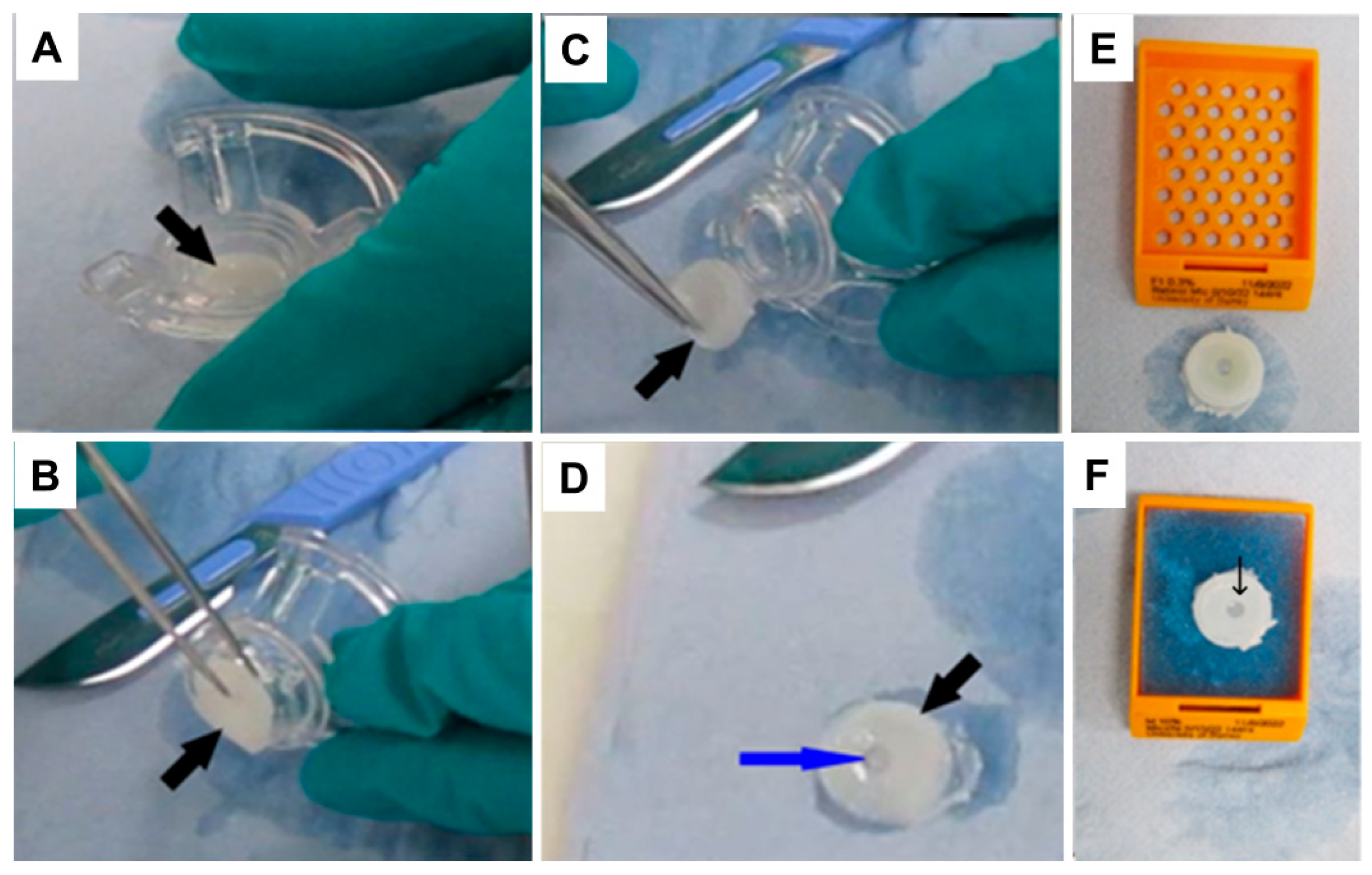
Figure 1A–D show the representative macrographs depicting the removal of the HEFT-SM specimens from the insert wells following treatment.
Haematoxylin and eosin (H&E)-staining analysis was used to assess the wound repair of the 3 mm punch wound. The treated and untreated wounded HEFT-SM were stored in 4% PFA and followed by gross evaluation of the tissues texture as shown in
Figure 1A–F. Thereafter, they were routinely processed, embedded in paraffin-wax, and blocks were made by surface flattening wounded HEFT-SM specimens to obtain homogeneous histological sections. Additionally, 5 μm thick sections were created and stained with H&E. The sectioned samples were scanned on a calibrated NanoZoomer Digital slide scanner (Hamamatsu
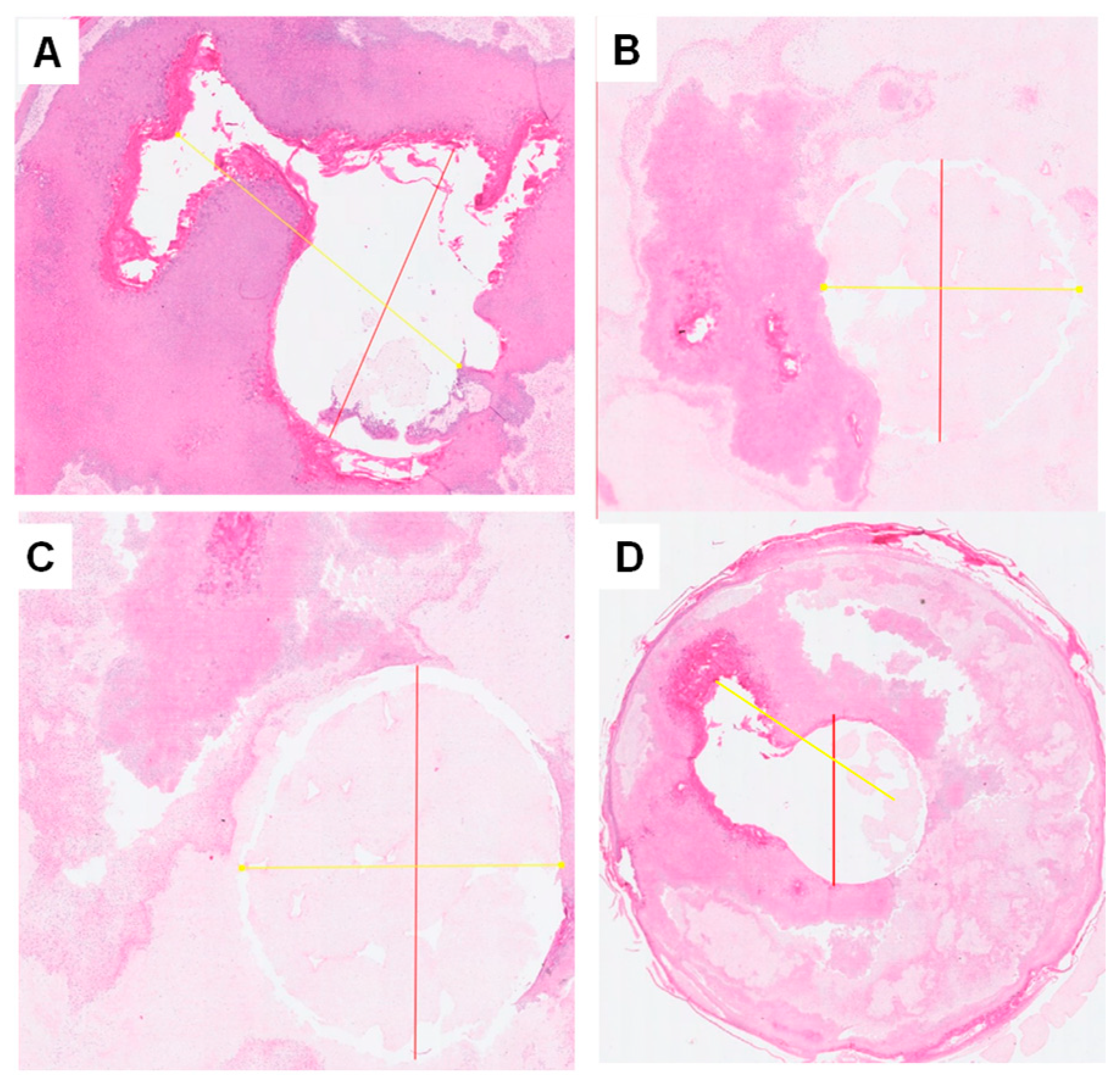
®, Hertfordshire, UK). Digital measurements of the diameters of the wounded HEFT-SM specimens were conducted horizontally [
14].
2.3. Masson Trichrome Staining
For the collagen detection using histological assay [
23], Masson’s trichrome staining (using a ready-to-use kit) was employed to qualitatively assess collagen production in response to the retinoid micellar formulations applied to the HEFT-SM specimens, following established protocols with minor modifications. The 4% PFA fixed HEFT-SM samples were deparaffinised, hydrated and sectioned. Thereafter, they were immersed in Bouin’s solution for 15 min to re-fix the HEFT-SM specimens. After fixation, the samples were treated with Weigert’s hematoxylin for 5 min, followed by Biebrich scarlet acid fuchsin staining for another 5 min. The tissues were subsequently differentiated by immersion in a phosphotungstic–phosphomolybdic acid solution for 5 min to enhance collagen staining. Finally, the differentiated HEFT-SM samples were stained with aniline blue solution to specifically stain the collagen fibre blue, enabling clear visualisation and evaluation of the collagen fibril orientation and arrangement.
2.4. Clearing and Staining
The (un)treated HEFT-SM tissues were cleared, stained and imaged by confocal laser scanning microscopy using adapted protocols previously described by Abadie et al. and Milinkovitch et al. [
20,
21]. The (un)treated HEFT-SM samples were washed with PBS for 1 h to remove any residual formulation, followed by overnight immersion in 4% paraformaldehyde (PFA) in PBS at room temperature with agitation on a shaker at 120 rpm. Afterwards, the samples were washed with PBS (3 times, 1 h each) at ambient temperature with agitation on a shaker at 120 rpm. The tissues were then immersed in methanol-in-PBS solutions of increasing concentrations (30%, 50%, 70%, and 100% methanol; 1 h each) with agitation on a shaker at 120 rpm. Finally, the tissues were immersed in 100% methanol overnight.
The fully dehydrated tissues were immersed in 2 μg/mL of Fast Green FCF (FG; Thermo Scientific) in methanol for 5 days and maintained on a shaker.
The FG-stained tissues were incubated in one part benzyl alcohol and two parts benzyl benzoate (BABB) solution and maintained at ambient temperature for 2 days on a shaker. The cleared FG-stained tissues were transferred into ethyl cinnamate and imaged using confocal microscopy.
2.5. Confocal Laser Scanning Microscopy
Volume images of cleared tissue samples were acquired using a Leica SP8 confocal laser scanning microscope equipped with a white light laser (NKT SuperK Extreme). The sample was placed in a commercially available Leica sample mounting frame (Leica, 158007063, Milton Keynes, UK) with #1.5 cover glass cemented in place with silicone sealant (Wacker E43, Milton Keynes, UK). The mounting frame was filled with Ethyl cinnamate so that the sample was covered but not floating or moving. A 25x/0.95 NA objective was used for excitation and detection, with a final lateral pixel dimension of 0.3 micrometres.
The surface of the sample was acquired using mosaic tiling and stitched together afterwards in the Leica LAS X software. The entire depth of the sample was acquired by creating stacks of images 20 um apart. Wavelengths used for imaging were 488 nm (autofluorescence) and 627 nm (Fast Green FCF). Filters were placed before the camera to capture each wavelength—a bandpass at 500–605 for 488 nm and 635–760 nm for 627 nm illumination.
All samples were imaged using identical detector settings throughout the study, and detector gain was maintained constant across all experimental groups during image acquisition to ensure consistency in fluorescence intensity measurements. Furthermore, excitation adjustments applied during z-stack acquisition to compensate for signal attenuation caused by tissue scattering at increasing imaging depths were performed systematically and identically across all samples. No photobleaching correction was applied during image analysis because fluorescence quantification was derived from single-frame acquisitions at each imaging plane rather than from time-lapse imaging experiments. Under these acquisition conditions, photobleaching effects are expected to be negligible and were minimised through standardised imaging procedures applied uniformly across all samples.
2.6. Image Analysis
Fiji ImageJ was used to visualise the volumetric data acquired from the Leica SP8 confocal microscope. To enhance image clarity and highlight collagen fibril orientation and structural architecture, the enhance local contrast (CLAHE) tool was applied. This method improved the local contrast in the images by using specific settings including block size (50), bins (256), and max slope (2.5). These parameters were selected based on literature to enhance image quality, resulting in better image visualisation of HEFT-SM tissue structures with the identification of important features including collagen fibril orientation and organisation [
24].
2.7. Statistical Analysis
All experiments were conducted using independent replicates (n = 3), with each condition tested in triplicate to ensure reproducibility. Data are presented as mean ± standard error of the mean (SEM). Statistical comparisons between multiple groups were conducted using one-way analysis of variance (ANOVA) to evaluate overall differences across treatments. Where significant effects were identified, appropriate post hoc multiple comparison tests were applied to determine pairwise differences between groups. A two-tailed p-value of less than 0.05 (p < 0.05) was considered statistically significant.
4. Discussion
Following two days of treatment, re-epithelialisation with a differentiated epidermal layer was observed in the RMF-treated HEFT-SM specimens compared to the control group, thereby accelerating wound closure as depicted in
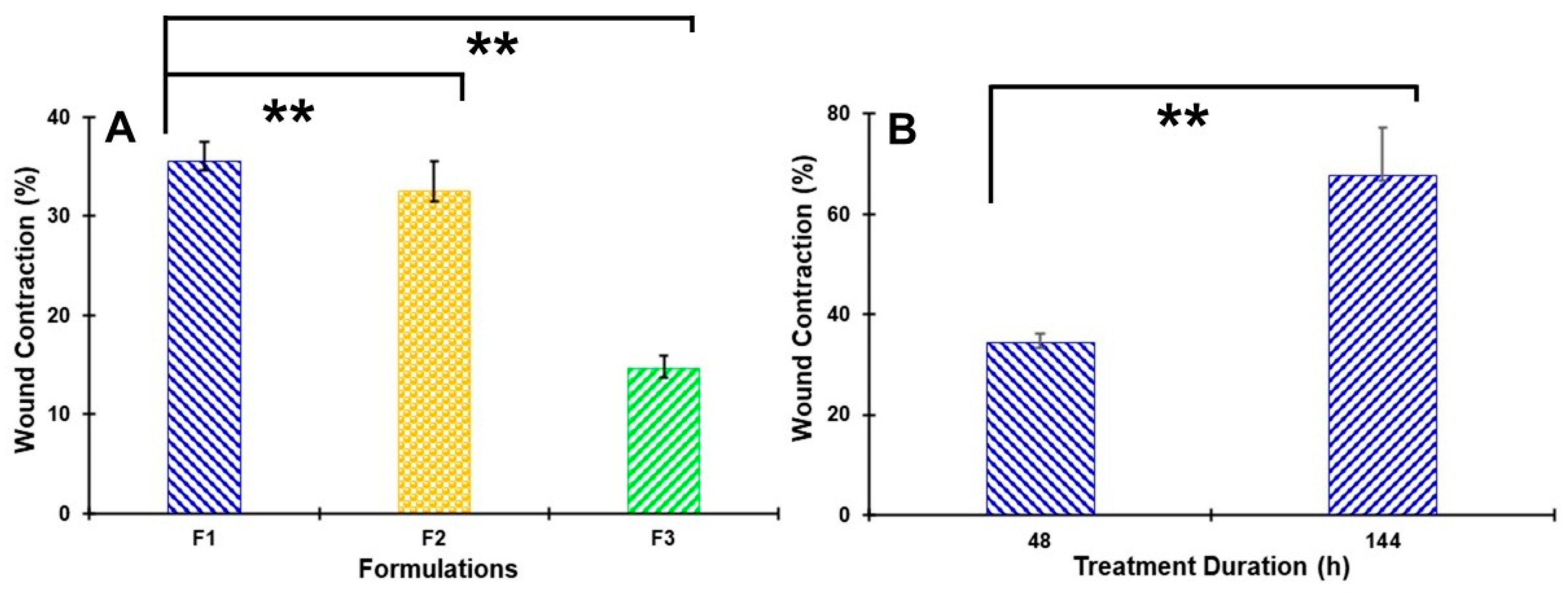
Figure 2A–D. This expedited wound closure may be attributed to retinoids (formulation) stimulating the wound microenvironment, leading to cellular proliferation and fibroblast migration at the wound site, which are crucial initial steps in wound repair. Moreover, the formulations could have promoted the extracellular matrix activation, keratinocyte recruitment, and fibroblast proliferation and migration activity at the wound site. Furthermore, all the treated HEFT-SM specimens demonstrated narrower wound diameters and significant wound contractions (the shortest distance across the wound site) within 48 h, in contrast to the control group (placebo). The observed diameters ranged from <1 to 35 ± 2%. The control group exhibited <1% wound contraction (WC), indicating no significant natural wound healing activity after 48 h treatment period. In contrast, formulation F1, containing 0.3% retinol micelles, showed a 35 ± 2% reduction. This was followed by F2 (retinaldehyde micelles) and F3 (retinoic acid micelles) with reductions of 32 ± 3% and 15 ± 1%, respectively. Among all the tested formulations, F1 demonstrated the highest WC at 35 ± 2%, while the lowest WC was observed with F3 at 15 ± 1%. This difference may be attributable to the applied low dose of the latter. The enhanced WC observed with RMF could be attributed to the cellular proliferation and migration, as well as epidermal differentiation and tissue stratification, driven by these formulations. Furthermore, the likely collagen architectural changes originating from the dermis may have contributed to the accelerated wound closure; see
Figure 4 [
4,
31,
32,
33,
34,
35]. These results align with prior research conducted by our team [
14] and other investigators, which has consistently demonstrated the effectiveness of bioactive formulations in promoting keratinocyte recruitment and migration, as well as fibroblast proliferation and migration. This process, initiated by collagen, leads to re-epithelialisation within the wound microenvironment, thereby accelerating wound closure [
12,
32,
33]. The near-zero contraction in untreated controls at 48 h is consistent with our prior research where only 8% wound contraction was observed following a 6-day treatment [
14]. Ex vivo skin models lack the fibroblast-populated contractile stroma and cytokine-driven cellular recruitment that underpin early wound contraction in vivo; passive contraction at 48 h in the absence of exogenous stimulation is therefore not unexpected and is consistent with reported behaviour in comparable models in the literature [
36,
37].
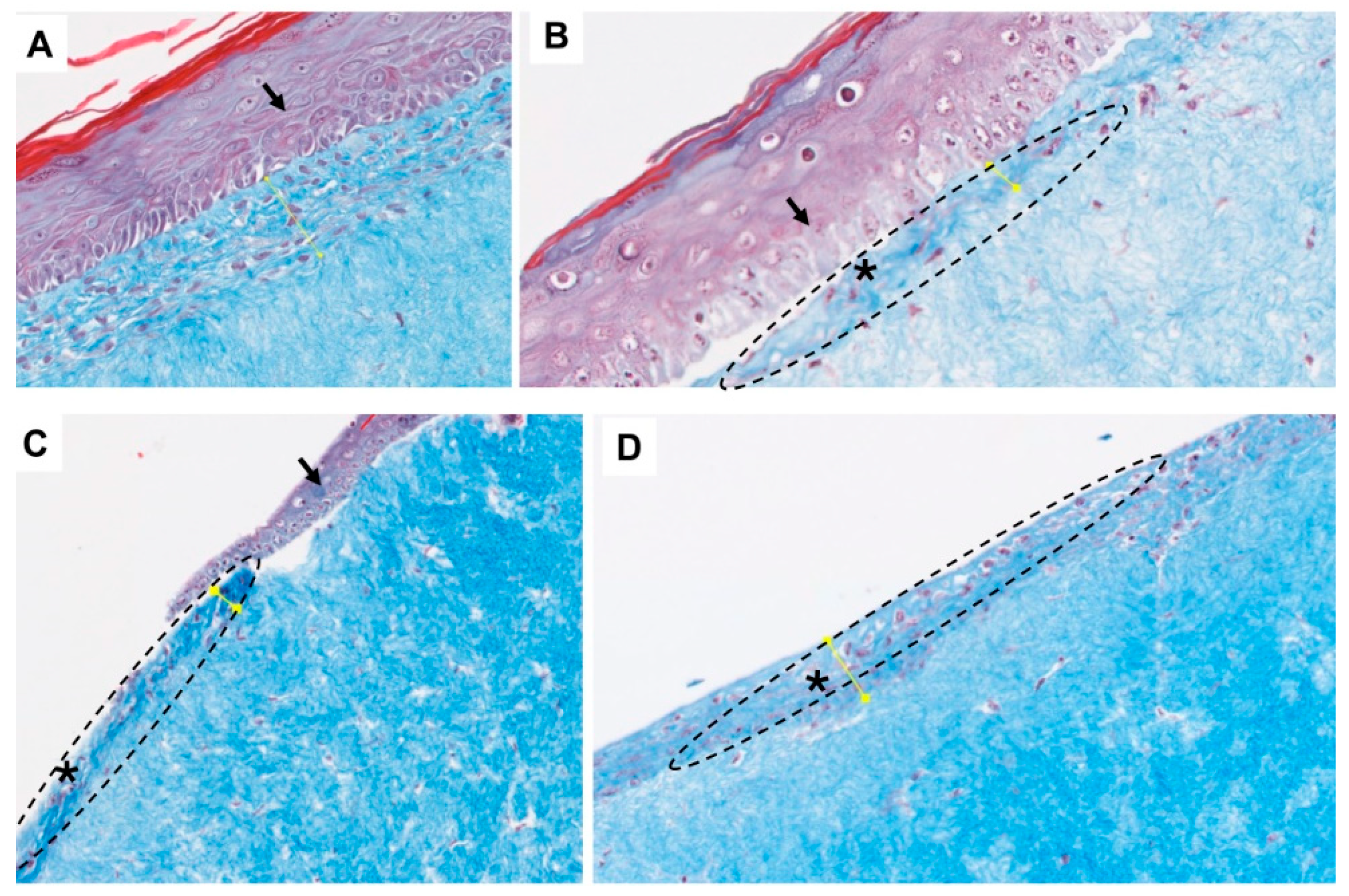
The MTS of the RMF-treated HEFT–SM specimens exhibited consistent improvement in the dermal collagen staining with enhanced tissue architecture in all the treated specimens compared to control group (placebo). The wounded HEFT–SM specimens were stained with MTS, with the photomicrographs displaying the epidermis in purple colouration, and dermis collagen in blue to light blue colouration. In addition, the MTS photomicrographs demonstrated improved collagen expression in the RMF-treated HEFT–SM specimens suggesting that RMF elicited ECM production and stratification (maturation) through the appearance of collagen during wound closure (
Figure 4). Moreso, the emergence of MTS patterns with finer, less densely packed collagen fibres in the treated HEFT-SM specimens consistent with collagen architectural changes during wound repair was observed. The appearance and distribution of these collagen architectural changes in the treated HEFT-SM specimens suggest active collagen generation which is a crucial factor in wound healing and tissue remodelling; see
Figure 4 [
35]. The untreated wounded HEFT-SM specimens (control) exhibit sparsely organised dermal collagen with a homogeneous blue colouration (
Figure 4A). In contrast, the treated HEFT-SM specimens demonstrate a well-organised collagen fibre distribution, characterised by heterogeneous blue-staining intensity at the periphery of the wound site (connective tissues); see
Figure 4B–D. Collagen fibres are stained blue, and the circled area suggests the presence of collagen architectural changes suggestive of remodelling activity. Arrows denote the epidermis, and light blue indicates dermal collagen. Asterisks highlight possible collagen architectural changes; see
Figure 4. Specifically, this pattern was more pronounced at the connective tissues of the RMF-treated specimens; see
Figure 4B–D (dotted circle). The improved collagen deposition and appearance of possible collagen architectural changes was supported by enhanced fibre organisation, possibly indicating regenerative remodelling [
3,
5,
32,
33,
34,
35]. Moreover, retinoids have been reported to prevent collagen degradation with collagen fostering the migration of keratinocyte, a cell vital for re-epithelisation in the wound repair process [
3,
12,
13,
14,
15,
16].
For the FG-labelled CLSM collagen determination, two distinct wound conditions were employed to capture a broader spectrum of clinically relevant tissue responses: UV-irradiated skin and punch-wounded skin. UV irradiation of the ex vivo skin model was applied to induce a photodamage response. This included the generation of reactive oxygen species (ROS) and oxidative stress, leading to progressive collagen degradation and impairment of keratinocyte proliferation and differentiation. Collectively, these changes are characteristic of photoaged or chronically compromised tissue, making this model particularly relevant for simulating the wound microenvironment encountered in elderly or sun-damaged skin, where healing capacity is often diminished. In contrast, the punch-wound model was employed to simulate an acute, mechanically defined wound, characterised by a discrete zone of full-thickness tissue disruption. This model is widely used in wound healing research for its reproducibility and its capacity to elicit well-characterised reparative responses, including inflammatory cell infiltration, granulation tissue formation, and collagen remodelling at the wound margin [
38,
39].
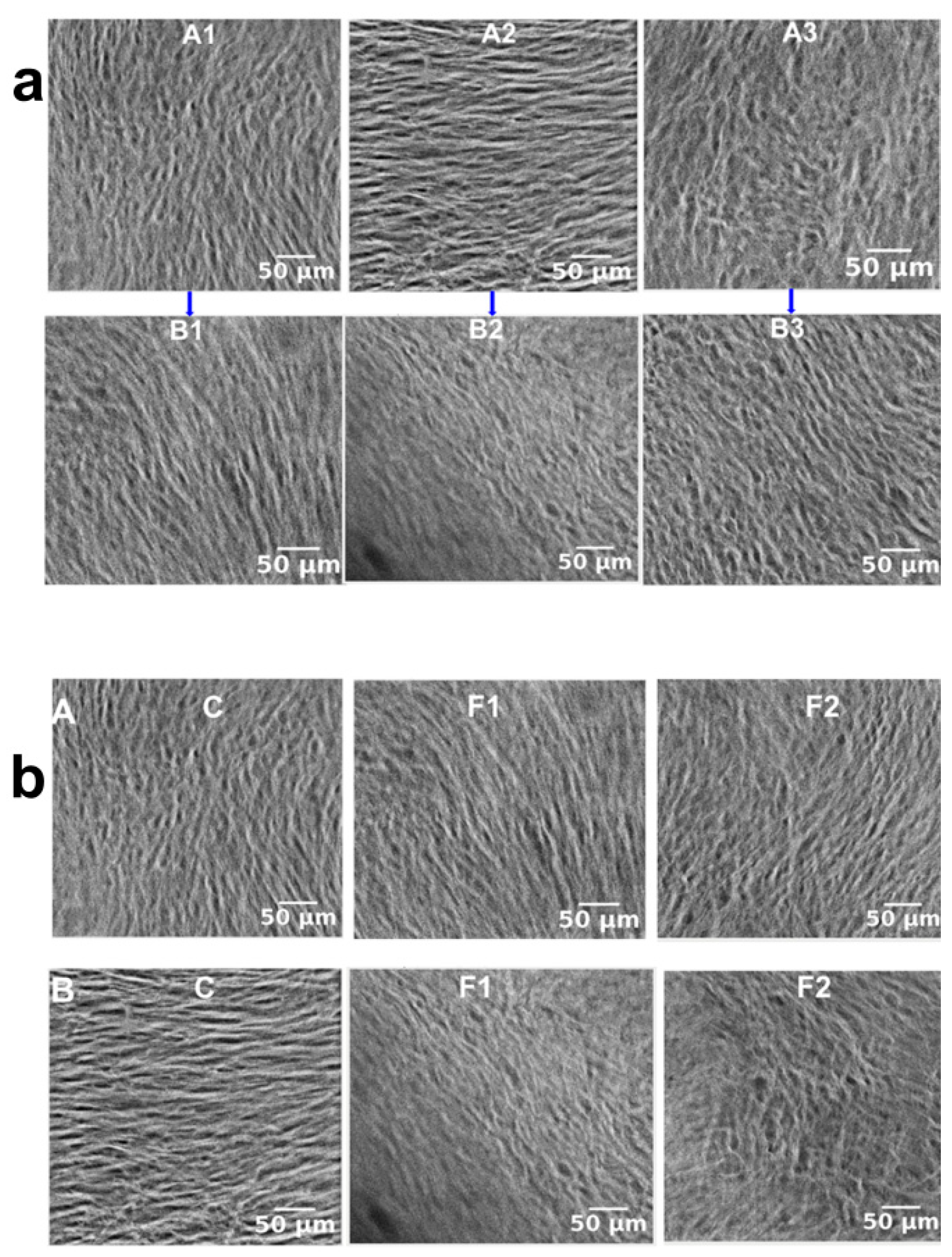
In the FG-labelled CLSM photomicrographs, the untreated HEFT-SM specimens exhibited distinct patterns in collagen fibril orientation and density. In the unwounded (control) skin, collagen fibrils were vertically aligned and exhibited a less dense arrangement, reflecting the typical structure of healthy dermis (
Figure 5a). In contrast, wounded HEFT-SM tissues displayed notable alterations in collagen fibril organisation. The punch-wounded samples exhibited a horizontal orientation with densely arranged collagen fibrils, consistent with early wound healing stages where fibroblasts actively migrate to the wound site and deposit a new extracellular matrix. Meanwhile, UV-wounded samples demonstrated highly cross-linked collagen fibrils, suggesting a disorganised repair response during the initial phases of healing (
Figure 5a).
The collagen architecture in the treated HEFT-SM specimens presented a markedly different profile. In the unwounded tissues treated with retinol micelles, the collagen maintained a vertical orientation like the control group, though the fibrils appeared slightly denser, possibly indicating an effect of the treatment (
Figure 5b).
In the retinol micelle-treated punch-wounded tissues, a vertical fibril orientation was observed alongside a less dense arrangement compared to the untreated punch wounds, suggesting that the treatment may modulate collagen deposition to promote a more organised repair. In addition, retinol micelle-treated UV-wounded samples revealed cross-linked collagen fibrils with a para-vertical orientation that were better organised than those in the untreated UV wounds. A similar pattern emerged with retinaldehyde micelles treatment, reinforcing the idea that both retinol and retinaldehyde can enhance collagen organisation during wound healing (
Figure 5b). Comparing the treated and untreated EFT skin models, the unwounded tissues exhibited similar collagen fibril orientations and structural architectures, indicating that the treatments did not disrupt the baseline dermal structure (
Figure 5a,b). However, in wounded tissues, treated samples revealed a more organised collagen fibril arrangement than their untreated counterparts. The presence of highly dense or excessively cross-linked fibrils in some samples may indicate dysregulated fibroblast migration or altered enzymatic activity responsible for collagen organisation, which could potentially lead to fibrosis or scar formation if not properly controlled [
3]. Moreover, the variations in collagen orientation and arrangement between unwounded and wounded human skin equivalents may be attributed to the dynamic biochemical environment present during tissue repair [
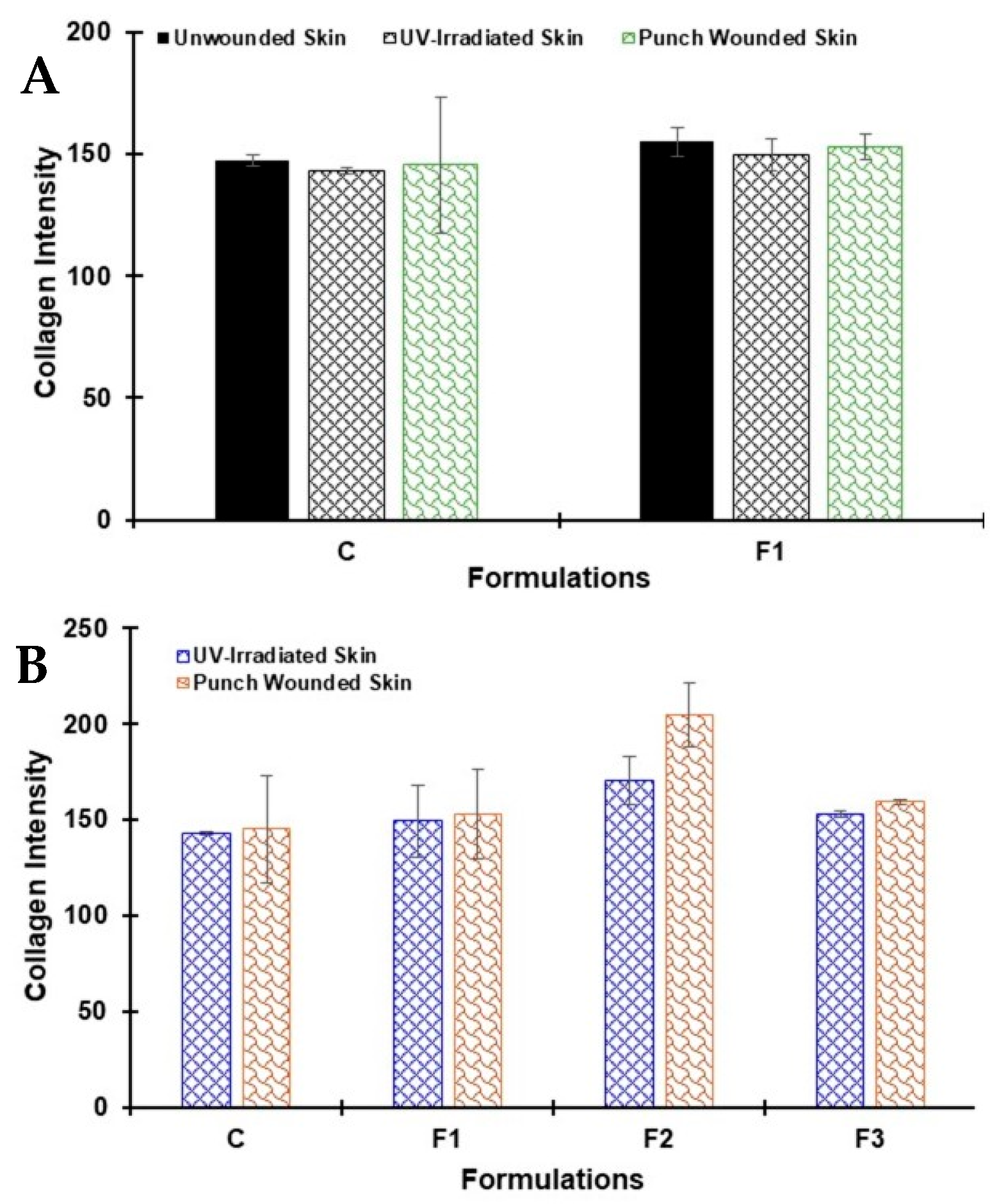
3]. The collagen fluorescence intensities in unwounded, UV-irradiated, and punch-wounded tissues were observed to increase in the tissues that were treated with the retinoid micellar formulations compared to the untreated control groups (using F1 as an example;
Figure 6A). Moreover, comparative analysis of the untreated and RMF-treated UV-irradiated and punch-wounded specimens revealed that F1–F3 demonstrated higher fluorescence intensities when compared to the control, which suggests their potential in stimulating collagen production. Particularly, F2, which incorporated both retinaldehyde and TPGS (a vitamin E derivative), displayed the highest fluorescence intensity. This indicates that F2 may possess a more potent ability to stimulate collagen synthesis than the other formulations, as shown in
Figure 5. This observed pattern could be attributed to retinaldehyde’s role as a metabolic precursor to retinoic acid in human keratinocytes, potentially leading to an accelerated stimulation of collagen compared to retinol [
17]. Consequently, the fluorescence intensities of the treated samples were not very high, and this is consistent with the literature which suggests that net collagen production increase could take up to 4–5 weeks after wounding [
3]. Retinoids are well-documented with known irritation and sensitisation risks, specifically retinoic acid, and the micellar delivery strategy employed here has direct relevance to mitigating such effects through controlled release and reduced free retinoid availability at the tissue surface due to the role of micellar encapsulation in modulating skin-penetration kinetics [
13,
15,
16,
17,
18,
19].
5. Conclusions
At applied doses of 0.3% retinol, 0.3% retinaldehyde, and 0.03% retinoic acid, all micellar retinoid formulations demonstrated rapid wound repair compared to the untreated controls. Moreover, retinol and retinaldehyde demonstrated strong efficacy and potential lower irritation compared to retinoic acid with known potent biological activity but comparatively lower performance at applied doses and likely higher irritation risk.
H&E staining confirmed accelerated re-epithelialisation, improved epidermal differentiation, and enhanced tissue stratification in treated HEFT-SM specimens. Masson’s trichrome staining and confocal laser scanning microscopy (CLSM) revealed preservation of collagen integrity with appearance of likely reorganised collagen deposition with well-organised fibrillar architecture, consistent with structured extracellular matrix remodelling. Quantitative and spatial analyses further confirmed elevated collagen production across all treatment groups at the tested concentrations. The application of FG-labelled CLSM to assess the collagen morphology of (un)treated HEFT-SM marks a novel use of this technique in the evaluation of collagen within organotypic tissues like HEFT-SM.
These findings underscore the therapeutic promise of TPGS-based micellar retinoid formulations for accelerating wound closure and enhancing collagen generation and organisation during wound repair. While the study demonstrates potential in preclinical applications, the sample size was limited, and the HEFT skin model, though physiologically relevant, does not fully replicate the complexities of in vivo wound healing, particularly systemic immune responses. Although relative equivalent applied doses (0.3% retinol, 0.3% retinaldehyde, and 0.03% retinoic acid) were chosen to reflect potency, receptor-level activation and intracellular conversion efficiency were not directly quantified. Furthermore, collagen assessment primarily utilised histochemical and imaging analyses; complementary biochemical quantification such as gene expression profiling would further bolster mechanistic interpretation. Additionally, irritation potential and inflammatory biomarkers were not thoroughly characterised, which is especially important when comparing retinoid derivatives. In sum, future in vivo validation and expanded mechanistic studies are necessary to confirm translational applicability.