Targeting ABL Tyrosine Kinase in Chronic Myeloid Leukemia: Design, Synthesis, Biological Evaluation, and Computational Studies of Novel Thiazolone Derivatives



Abstract
1. Introduction
2. Materials and Methods
2.1. Chemistry
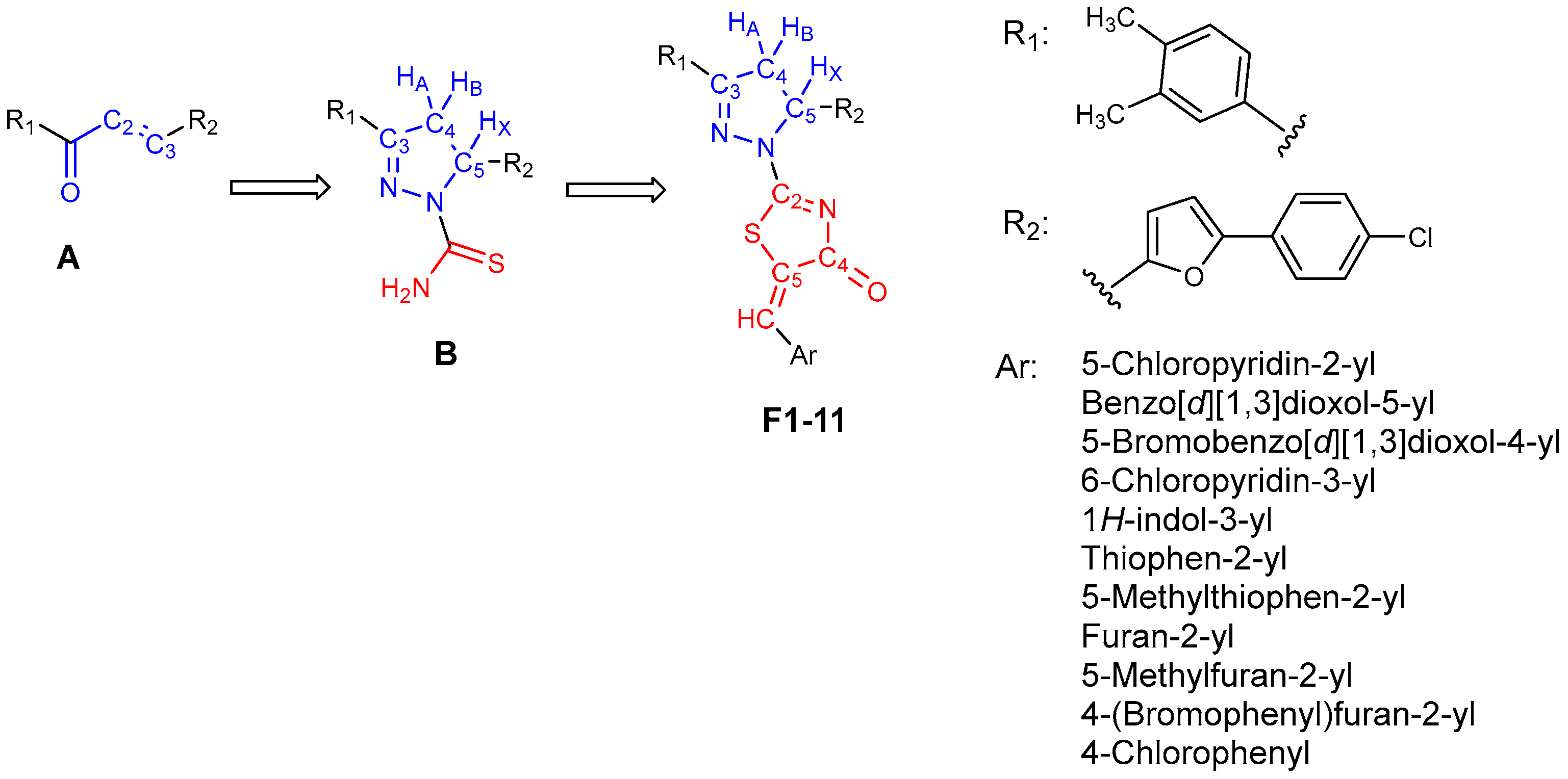
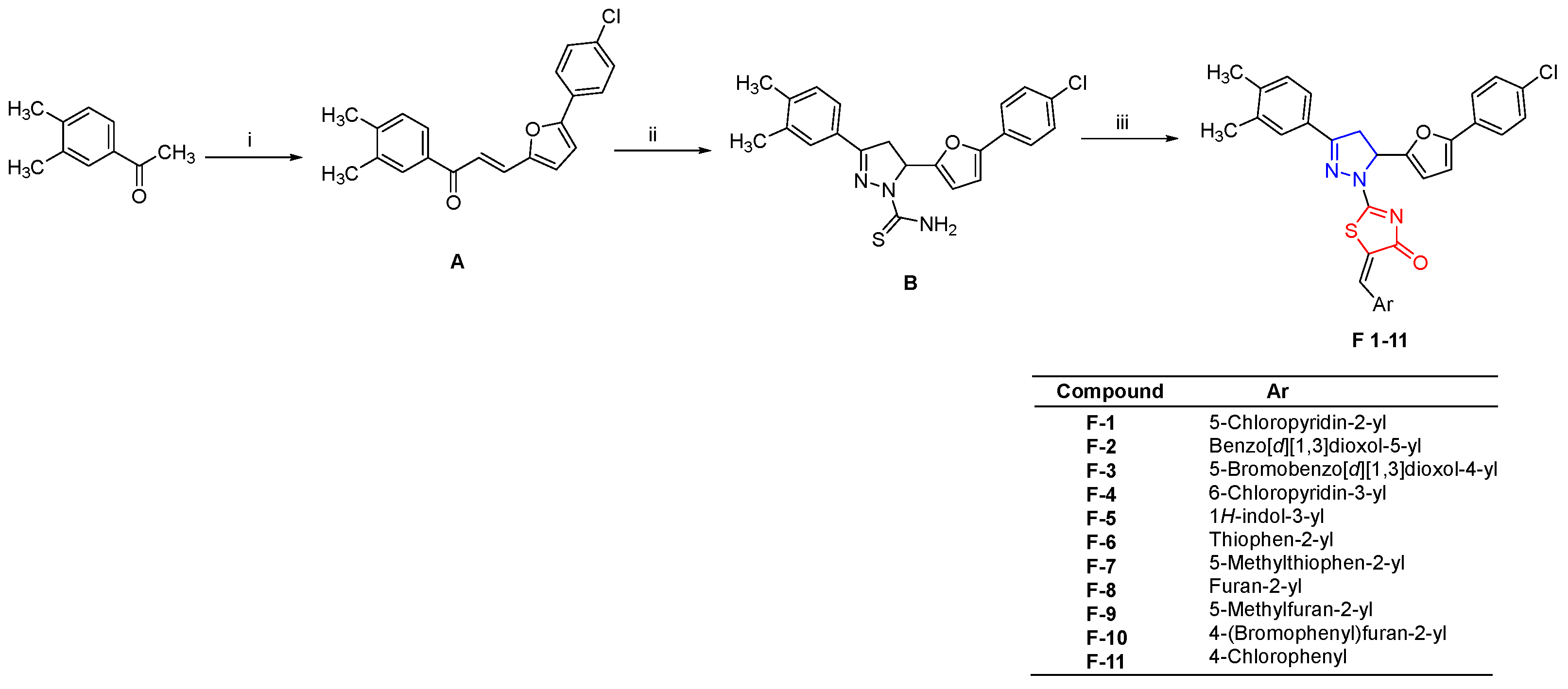
2.1.1. Synthesis of (E)-3-(5-(4-Chlorophenyl)furan-2-yl)-1-(3,4-dimethylphenyl)prop-2-en-1-one (A)
2.1.2. Synthesis of 5-(5-(4-Chlorophenyl)furan-2-yl)-3-(3,4-dimethylphenyl)-4,5-dihydro-1H-pyrazole-1-carbothioamide (B)
2.1.3. Synthesis of (Z)-2-(5-(5-(4-Chlorophenyl)furan-2-yl)-3-(3,4-dimethylphenyl)-4,5-dihydro-1H-pyrazol-1-yl)-5-(aryl)methylene)thiazol-4(5H)-one (F1-11)
2.2. Biological Evaluation
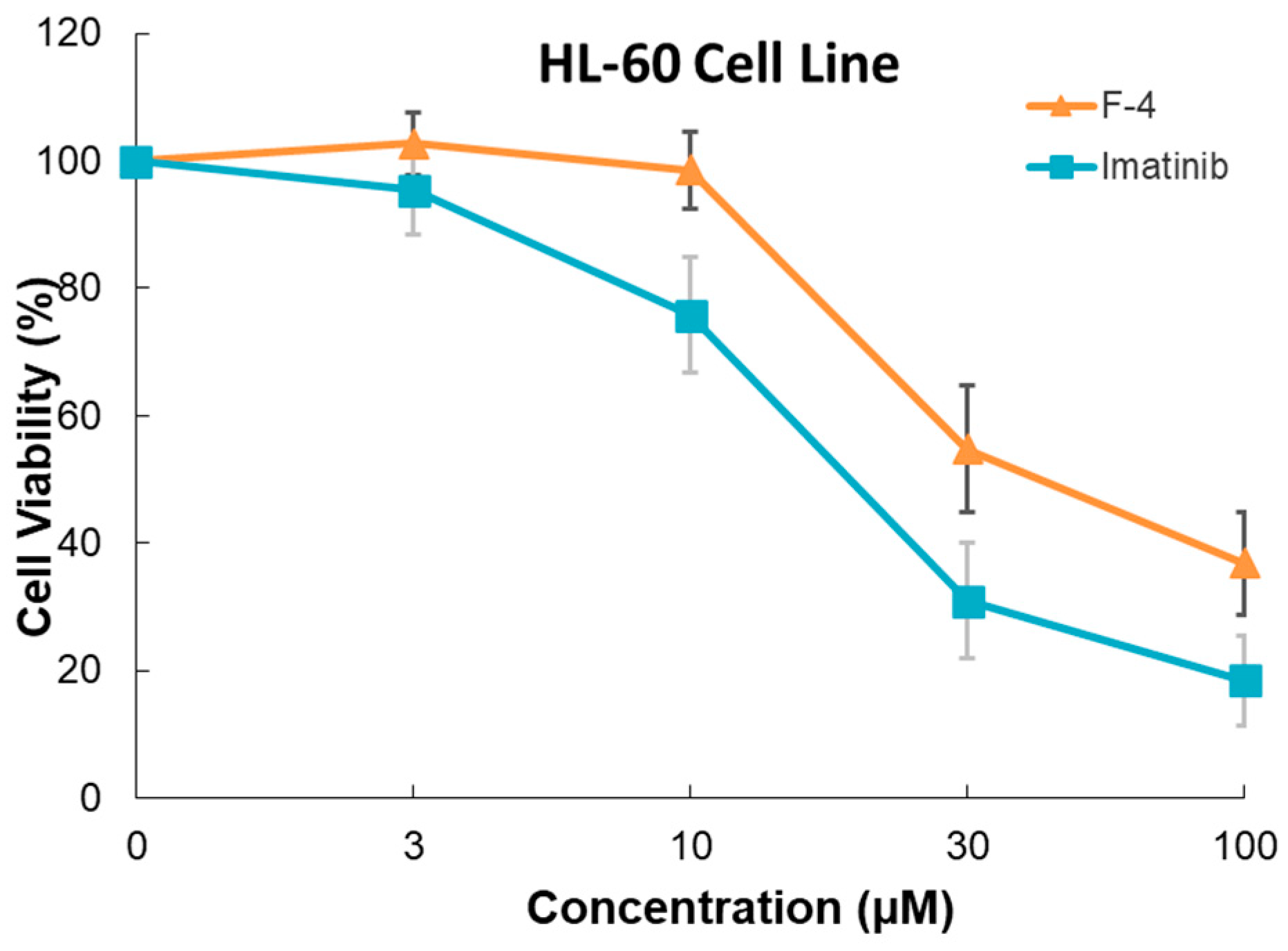
2.2.1. Cytotoxicity Assay
2.2.2. Apoptosis Assay
2.2.3. ABL TK Inhibition Assay
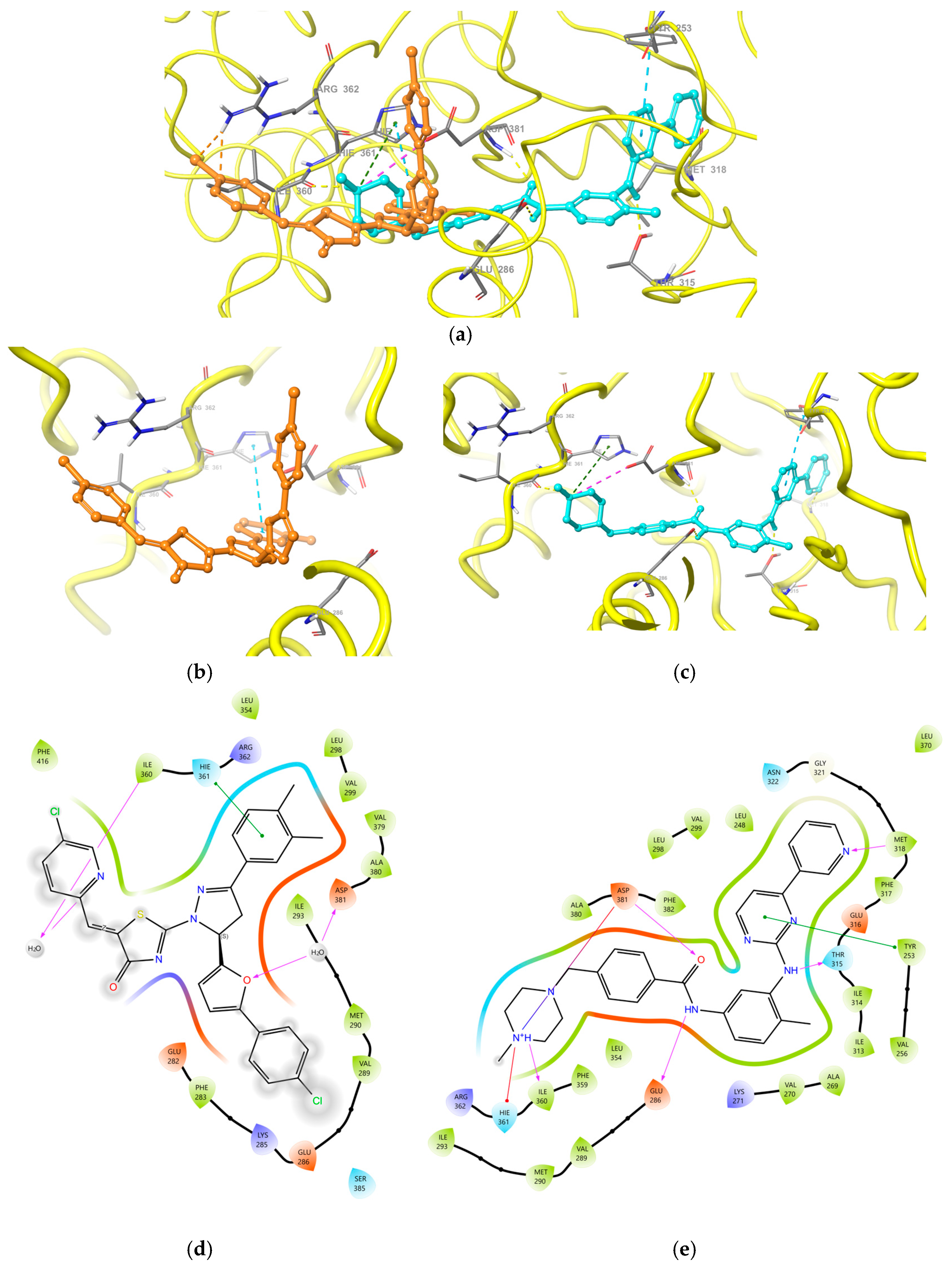
2.3. In Silico Studies
3. Results
4. Discussion
5. Conclusions
Supplementary Materials
Author Contributions
Funding
Institutional Review Board Statement
Informed Consent Statement
Data Availability Statement
Acknowledgments
Conflicts of Interest
References
- Bavaro, L.; Martelli, M.; Cavo, M.; Soverini, S. Mechanisms of disease progression and resistance to tyrosine kinase inhibitor therapy in chronic myeloid leukemia: An update. Int. J. Mol. Sci. 2019, 20, 6141. [Google Scholar] [CrossRef]
- Chopra, M.; Bohlander, S.K. The cell of origin and the leukemia stem cell in acute myeloid leukemia. Genes Chromosomes Cancer 2019, 58, 850–858. [Google Scholar] [CrossRef] [PubMed]
- Flis, S.; Chojnacki, T. Chronic myeloid leukemia: Pitfalls and new therapeutic possibilities. Drug Des. Devel. Ther. 2019, 13, 825–843. [Google Scholar] [CrossRef]
- Jabbour, E.; Kantarjian, H. Chronic myeloid leukemia: 2020 update on diagnosis, therapy and monitoring. Am. J. Hematol. 2020, 95, 691–709. [Google Scholar] [CrossRef] [PubMed]
- Jabbour, E.; Kantarjian, H. Chronic myeloid leukemia: 2025 update on diagnosis, therapy, and monitoring. Am. J. Hematol. 2024, 99, 2191–2212. [Google Scholar] [CrossRef]
- Kreipe, H.H.; Schlegelberger, B. Cytogenetics and genomics in CML and other myeloproliferative neoplasms. Best Pract. Res. Clin. Haematol. 2024, 37, 101552. [Google Scholar] [CrossRef]
- Wang, L.; Li, J.; Arbitman, L.; Zhang, H.; Shao, H.; Martin, M.; Moscinski, L.; Song, J. Current advances in the diagnosis and treatment of major myeloproliferative neoplasms. Cancers 2025, 17, 1834. [Google Scholar] [CrossRef]
- Burke, B.A.; Carroll, M. BCR–ABL: A multi-faceted promoter of DNA mutation in chronic myelogeneous leukemia. Leukemia 2010, 24, 1105–1112. [Google Scholar] [CrossRef]
- Bernardo, P.S.; Lemos, L.G.T.; de Moraes, G.N.; Maia, R.C. Unraveling survivin expression in chronic myeloid leukemia: Molecular interactions and clinical implications. Blood Rev. 2020, 43, 100671. [Google Scholar] [CrossRef]
- Bonifacio, M.; Stagno, F.; Scaffidi, L.; Krampera, M.; Di Raimondo, F. Management of chronic myeloid leukemia in advanced phase. Front. Oncol. 2019, 9, 1132. [Google Scholar] [CrossRef] [PubMed]
- Kantarjian, H.; Breccia, M.; Haddad, F.G.; Hehlmann, R.; Issa, G.C.; Malhotra, H.; Nicolini, F.E.; Sasaki, K.; Stenke, L.; Jabbour, E. Management of chronic myeloid leukemia in 2025. Cancer 2025, 131, e35953. [Google Scholar] [CrossRef] [PubMed]
- Carofiglio, F.; Trisciuzzi, D.; Gambacorta, N.; Leonetti, F.; Stefanachi, A.; Nicolotti, O. Bcr-Abl allosteric inhibitors: Where we are and where we are going to. Molecules 2020, 25, 4210. [Google Scholar] [CrossRef] [PubMed]
- Wu, A.; Liu, X.; Fruhstorfer, C.; Jiang, X. Clinical insights into structure and targeting of ABL kinases. Int. J. Mol. Sci. 2024, 25, 3307. [Google Scholar] [CrossRef]
- Ren, R. Mechanisms of BCR-ABL in the pathogenesis of chronic myelogenous leukaemia. Nat. Rev. Cancer 2005, 5, 172–183. [Google Scholar] [CrossRef]
- Brehme, M.; Hantschel, O.; Colinge, J.; Kaupe, I.; Planyavsky, M.; Köcher, T.; Mechtler, K.; Bennett, K.L.; Superti-Furga, G. Charting the molecular network of the drug target Bcr-Abl. Proc. Natl. Acad. Sci. USA 2009, 106, 7414–7419. [Google Scholar] [CrossRef]
- Amarante-Mendes, G.P.; Rana, A.; Datoguia, T.S.; Hamerschlak, N.; Brumatti, G. BCR-ABL1 tyrosine kinase complex signaling transduction: Challenges to overcome resistance in chronic myeloid leukemia. Pharmaceutics 2022, 14, 215. [Google Scholar] [CrossRef] [PubMed]
- Irgit, A.; Kamıs, R.; Sever, B.; Tuyun, A.F.; Otsuka, M.; Fujita, M.; Demirci, H.; Ciftci, H. Structure and dynamics of the ABL1 tyrosine kinase and its important role in chronic myeloid leukemia. Arch. Pharm. 2025, 358, e70005. [Google Scholar] [CrossRef]
- Baccarani, M.; Rosti, G.; Soverini, S. Chronic myeloid leukemia: Resistance and persistence. Leukemia 2019, 33, 2358–2364. [Google Scholar] [CrossRef]
- Karatekin Arik, İ.; Gümüş, N.; Alcitepe, İ.; Gündüz, C.; Sever, B.; Ciftci, H.İ.; Saydam, G.; Tezcanli Kaymaz, B. Targeting leukemic stem cells: Enhanced eradication via tivantinib (ARQ197) and asciminib (ABL001) with molecular docking-guided screening of therapeutic derivatives. J. Chemother. 2025. Epub ahead of printing. [Google Scholar] [CrossRef]
- Loscocco, F.; Visani, G.; Galimberti, S.; Curti, A.; Isidori, A. BCR-ABL independent mechanisms of resistance in chronic myeloid leukemia. Front. Oncol. 2019, 9, 939. [Google Scholar] [CrossRef]
- Radich, J.; Yeung, C.; Wu, D. New approaches to molecular monitoring in CML (and other diseases). Blood 2019, 134, 1578–1584. [Google Scholar] [CrossRef]
- Westerweel, P.E.; Te Boekhorst, P.A.W.; Levin, M.-D.; Cornelissen, J.J. New approaches and treatment combinations for the management of chronic myeloid leukemia. Front. Oncol. 2019, 9, 665. [Google Scholar] [CrossRef] [PubMed]
- Rossari, F.; Minutolo, F.; Orciuolo, E. Past, present, and future of Bcr-Abl inhibitors: From chemical development to clinical efficacy. J. Hematol. Oncol. 2018, 11, 84. [Google Scholar] [CrossRef]
- Druker, B.J.; Talpaz, M.; Resta, D.J.; Peng, B.; Buchdunger, E.; Ford, J.M.; Lydon, N.B.; Kantarjian, H.; Capdeville, R.; Ohno-Jones, S.; et al. Efficacy and safety of a specific inhibitor of the BCR-ABL tyrosine kinase in chronic myeloid leukemia. N. Engl. J. Med. 2001, 344, 1031–1037. [Google Scholar] [CrossRef]
- Braun, T.P.; Eide, C.A.; Druker, B.J. Response and resistance to BCR-ABL1-targeted therapies. Cancer Cell 2020, 37, 530–542. [Google Scholar] [CrossRef]
- Roskoski, R., Jr. Properties of FDA-approved small molecule protein kinase inhibitors: A 2020 update. Pharmacol. Res. 2020, 200, 107059. [Google Scholar] [CrossRef]
- Alves, R.; Gonçalves, A.C.; Rutella, S.; Almeida, A.M.; De Las Rivas, J.; Trougakos, I.P.; Sarmento Ribeiro, A.B. Resistance to tyrosine kinase inhibitors in chronic myeloid leukemia: From molecular mechanisms to clinical relevance. Cancers 2021, 13, 4820. [Google Scholar] [CrossRef]
- Breccia, M.; Alimena, G. Activity and safety of dasatinib as second-line treatment or in newly diagnosed chronic phase chronic myeloid leukemia patients. BioDrugs 2011, 25, 147–157. [Google Scholar] [CrossRef] [PubMed]
- Brattås, M.K.; Reikvam, H.; Tvedt, T.H.A.; Bruserud, Ø. Dasatinib as an investigational drug for the treatment of Philadelphia chromosome-positive acute lymphoblastic leukemia in adults. Expert Opin. Investig. Drugs 2019, 28, 411–420. [Google Scholar] [CrossRef] [PubMed]
- Wolfe, H.R.; Rein, L.A.M. The evolving landscape of frontline therapy in chronic phase chronic myeloid leukemia (CML). Curr. Hematol. Malig. Rep. 2021, 16, 448–454. [Google Scholar] [CrossRef]
- Gambacorti-Passerini, C.; le Coutre, P.; Piazza, R. The role of bosutinib in the treatment of chronic myeloid leukemia. Future Oncol. 2019, 16, 4395–4408. [Google Scholar] [CrossRef]
- Pierro, F.; Stella, S.; Fazio, M.; Russo, S.; Massimino, M.; Mirabile, G.; Belletti, D.; Allegra, A.; Stagno, F. Chronic myeloid leukemia and the T315I BCR::ABL1 mutation. Int. J. Mol. Sci. 2025, 26, 11285. [Google Scholar] [CrossRef] [PubMed]
- Nascimento, M.; Moura, S.; Parra, L.; Vasconcellos, V.; Costa, G.; Leite, D.; Dias, M.; Fernandes, T.V.A.; Hoelz, L.; Pimentel, L.; et al. Ponatinib: A Review of the History of Medicinal Chemistry behind Its Development. Pharmaceuticals 2024, 17, 1361. [Google Scholar] [CrossRef]
- Hughes, T.P.; White, D.L.; Yeung, D.T. Asciminib for Philadelphia chromosome-positive leukemias. Haematologica 2025, 110, 2273–2280. [Google Scholar] [CrossRef]
- Sundaram, D.N.M.; Jiang, X.; Brandwein, J.M.; Valencia-Serna, J.; Remant, K.C.; Uludağ, H. Current outlook on drug resistance in chronic myeloid leukemia (CML) and potential therapeutic options. Drug Discov. Today 2019, 24, 1355–1369. [Google Scholar] [CrossRef]
- Hochhaus, A.; Breccia, M.; Saglio, G.; García-Gutiérrez, V.; Réa, D.; Janssen, J.; Apperley, J. Expert opinion—Management of chronic myeloid leukemia after resistance to second-generation tyrosine kinase inhibitors. Leukemia 2020, 34, 1495–1502. [Google Scholar] [CrossRef] [PubMed]
- Bansal, M.; Verma, M. Potential therapeutic targets in chronic myeloid leukemia. Med. Oncol. 2025, 42, 344. [Google Scholar] [CrossRef]
- García-Ferrer, M.; Wojnicz, A.; Mejía, G.; Koller, D.; Zubiaur, P.; Abad-Santos, F. Utility of Therapeutic Drug Monitoring of Imatinib, Nilotinib, and Dasatinib in Chronic Myeloid Leukemia: A Systematic Review and Meta-analysis. Clin. Ther. 2020, 41, 2558–2570.e7. [Google Scholar] [CrossRef]
- Rabian, F.; Lengline, E.; Rea, D. Towards a personalized treatment of patients with chronic myeloid leukemia. Curr. Hematol. Malig. Rep. 2019, 14, 492–500. [Google Scholar] [CrossRef] [PubMed]
- Sutanto, H.; Pratiwi, L.; Romadhon, P.Z.; Bintoro, S.U.Y. Advancing chronic myeloid leukemia research with next-generation sequencing: Potential benefits, limitations, and future clinical integration. Hum. Genet. 2025, 144, 481–503. [Google Scholar] [CrossRef]
- Shibata, N.; Ohoka, N.; Hattori, T.; Naito, M. Development of a potent protein degrader against oncogenic BCR-ABL protein. Chem. Pharm. Bull. 2019, 67, 165–172. [Google Scholar] [CrossRef]
- Zanforlin, E.; Zagotto, G.; Ribaudo, G. A chemical approach to overcome tyrosine kinase inhibitors resistance: Learning from chronic myeloid leukemia. Curr. Med. Chem. 2019, 26, 6033–6052. [Google Scholar] [CrossRef]
- Senapati, J.; Sasaki, K.; Issa, G.C.; Lipton, J.H.; Radich, J.P.; Jabbour, E.; Kantarjian, H.M. Management of chronic myeloid leukemia in 2023—Common ground and common sense. Blood Cancer J. 2023, 13, 58. [Google Scholar] [CrossRef]
- Nayak, S.; Gaonkar, S.L. A review on recent synthetic strategies and pharmacological importance of 1,3-thiazole derivatives. Mini Rev. Med. Chem. 2019, 19, 215–238. [Google Scholar] [CrossRef]
- Pathania, S.; Narang, R.K.; Rawal, R.K. Role of sulphur-heterocycles in medicinal chemistry: An update. Eur. J. Med. Chem. 2019, 180, 486–508. [Google Scholar] [CrossRef] [PubMed]
- Sharma, D.; Bansal, K.K.; Sharma, A.; Pathak, M.; Sharma, P.C. A brief literature and review of patents on thiazole related derivatives. Curr. Bioact. Compd. 2019, 15, 304–315. [Google Scholar] [CrossRef]
- Wan, Y.; Long, J.; Gao, H.; Tang, Z. 2-Aminothiazole: A privileged scaffold for the discovery of anti-cancer agents. Eur. J. Med. Chem. 2021, 210, 112953. [Google Scholar] [CrossRef]
- Zhang, Z.; Shu, B.; Zhang, Y.; Deora, G.S.; Li, Q.S. 2,4,5-Trisubstituted thiazole: A privileged scaffold in drug design and activity improvement. Curr. Top. Med. Chem. 2020, 20, 2535–2577. [Google Scholar] [CrossRef]
- Havrylyuk, D.; Roman, O.; Lesyk, R. Synthetic approaches, structure activity relationship and biological applications for pharmacologically attractive pyrazole/pyrazoline–thiazolidine-based hybrids. Eur. J. Med. Chem. 2016, 113, 145–166. [Google Scholar] [CrossRef]
- Havrylyuk, D.; Zimenkovsky, B.; Vasylenko, O.; Zaprutko, L.; Gzella, A.; Lesyk, R. Synthesis of novel thiazolone-based compounds containing pyrazoline moiety and evaluation of their anticancer activity. Eur. J. Med. Chem. 2009, 44, 1396–1404. [Google Scholar] [CrossRef] [PubMed]
- Havrylyuk, D.; Zimenkovsky, B.; Vasylenko, O.; Gzella, A.; Lesyk, R. Synthesis of new 4-thiazolidinone-, pyrazoline-, and isatin-based conjugates with promising antitumor activity. J. Med. Chem. 2012, 55, 8630–8641. [Google Scholar] [CrossRef]
- Khalil, N.A.; Ahmed, E.M.; El-Nassan, H.B. Synthesis, characterization, and biological evaluation of certain 1, 3-thiazolone derivatives bearing pyrazoline moiety as potential anti-breast cancer agents. Med. Chem. Res. 2013, 22, 1021–1027. [Google Scholar] [CrossRef]
- Avdieiev, S.; Gera, L.; Havrylyuk, D.; Hodges, R.S.; Lesyk, R.; Ribrag, V.; Vassetzky, Y.; Kavsan, V. Bradykinin antagonists and thiazolidinone derivatives as new potential anti-cancer compounds. Bioorg. Med. Chem. 2014, 22, 3815–3823. [Google Scholar] [CrossRef]
- Meleddu, R.; Petrikaite, V.; Distinto, S.; Arridu, A.; Angius, R.; Serusi, L.; Škarnulytė, L.; Endriulaitytė, U.; Paškevičiūtė, M.; Cottiglia, F.; et al. Investigating the anticancer activity of isatin/dihydropyrazole hybrids. ACS Med. Chem. Lett. 2019, 10, 571–576. [Google Scholar] [CrossRef]
- Pansare, D.N.; Shelke, R.N.; Khade, M.C.; Jadhav, V.N.; Pawar, C.D.; Jadhav, R.A.; Bembalkar, S.R. New thiazolone derivatives: Design, synthesis, anticancer and antimicrobial activity. Eur. Chem. Bull. 2019, 8, 7–14. [Google Scholar] [CrossRef]
- El-Sattar, N.E.A.A.; Badawy, E.H.K.; AbdEl-Hady, W.H.; Abo-Alkasem, M.I.; Mandour, A.A.; Ismail, N.S.M. Design and Synthesis of New CDK2 Inhibitors Containing Thiazolone and Thiazolthione Scafold with Apoptotic Activity. Chem. Pharm. Bull. 2021, 69, 106–117. [Google Scholar] [CrossRef] [PubMed]
- Ciftci, H.; Otsuka, M.; Fujita, M.; Sever, B. New naphthalene-linked pyrazoline-thiazole hybrids as prominent antilung and antibreast cancer inhibitors. Turk. J. Chem. 2024, 48, 856–866. [Google Scholar] [CrossRef]
- Reymova, F.; Sever, B.; Topalan, E.; Sevimli-Gur, C.; Can, M.; Tuyun, A.F.; Başoğlu, F.; Ece, A.; Otsuka, M.; Fujita, M.; et al. Design, Synthesis, and Mechanistic Anticancer Evaluation of New Pyrimidine-Tethered Compounds. Pharmaceuticals 2025, 18, 270. [Google Scholar] [CrossRef]
- Sever, B.; Otsuka, M.; Fujita, M.; Ciftci, H. Design, Synthesis, and Anticancer Evaluation of New Small-Molecule EGFR Inhibitors Targeting NSCLC and Breast Cancer. Int. J. Mol. Sci. 2025, 26, 7065. [Google Scholar] [CrossRef]
- Ciftci, H.I.; Bayrak, N.; Yıldız, M.; Sever, B.; Tateishi, H.; Otsuka, M.; Fujita, M.; Tuyun, A.F. Design, synthesis and investigation of the mechanism of action underlying anti-leukemic effects of the quinolinequinones as LY83583 analogs. Bioorg. Chem. 2021, 114, 105160. [Google Scholar] [CrossRef]
- Ulusoy, N.G.; Emirdağ, S.; Sözer, E.; Radwan, M.O.; Çiftçi, H.; Aksel, M.; Bölükbaşı, S.Ş.; Özmen, A.; Yaylı, N.; Karayıldırım, T.; et al. Design, semi-synthesis and examination of new gypsogenin derivatives against leukemia via Abl tyrosine kinase inhibition and apoptosis induction. Int. J. Biol. Macromol. 2022, 222, 1487–1499. [Google Scholar] [CrossRef] [PubMed]
- Sever, B.; Ciftci, H. Design, Synthesis, and Biological Evaluation of N,N-Diphenylaniline-Based Derivatives as Antiproliferative Agents and ABL TK Inhibitors Against CML. Pharmaceuticals 2026, 19, 416. [Google Scholar] [CrossRef]
- Mosmann, T. Rapid colorimetric assay for cellular growth and survival: Application to proliferation and cytotoxicity assays. J. Immunol. Methods 1983, 65, 55–63. [Google Scholar] [CrossRef] [PubMed]
- Cowan-Jacob, S.W.; Fendrich, G.; Floersheimer, A.; Furet, P.; Liebetanz, J.; Rummel, G.; Rheinberger, P.; Centeleghe, M.; Fabbro, D.; Manley, P.W. Structural biology contributions to the discovery of drugs to treat chronic myelogenous leukaemia. Acta Crystallogr. D. Biol. Crystallogr. 2007, 63, 80–93. [Google Scholar] [CrossRef] [PubMed]
- Schrödinger, version 2016-2; Schrödinger, L.L.C.: New York, NY, USA, 2016.
- ADMETlab, version 3.0; Central South University: Changsha, China, 2024; Available online: https://admetlab3.scbdd.com (accessed on 19 May 2026).
- SwissADME. Available online: http://www.swissadme.ch (accessed on 19 May 2026).





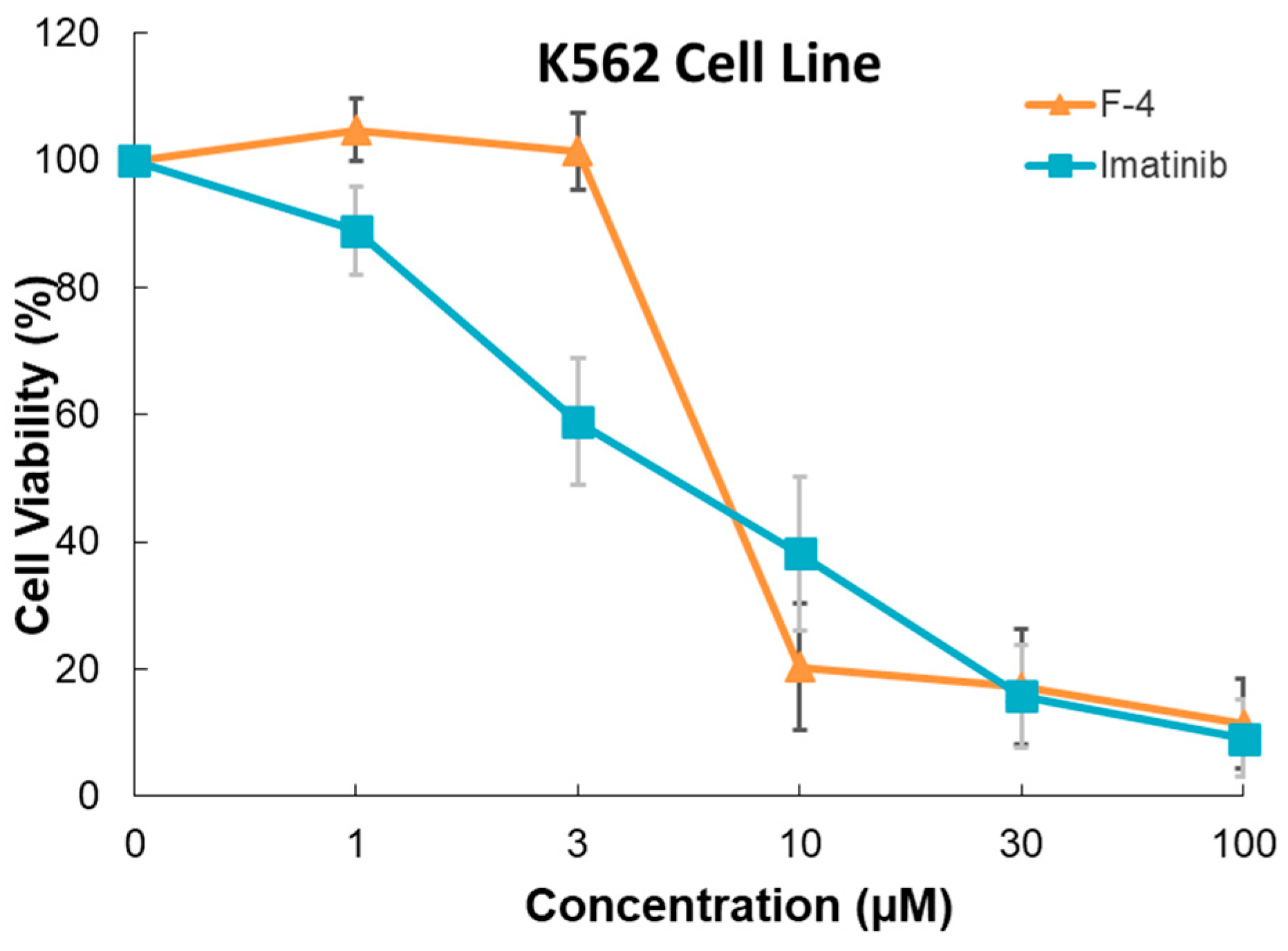
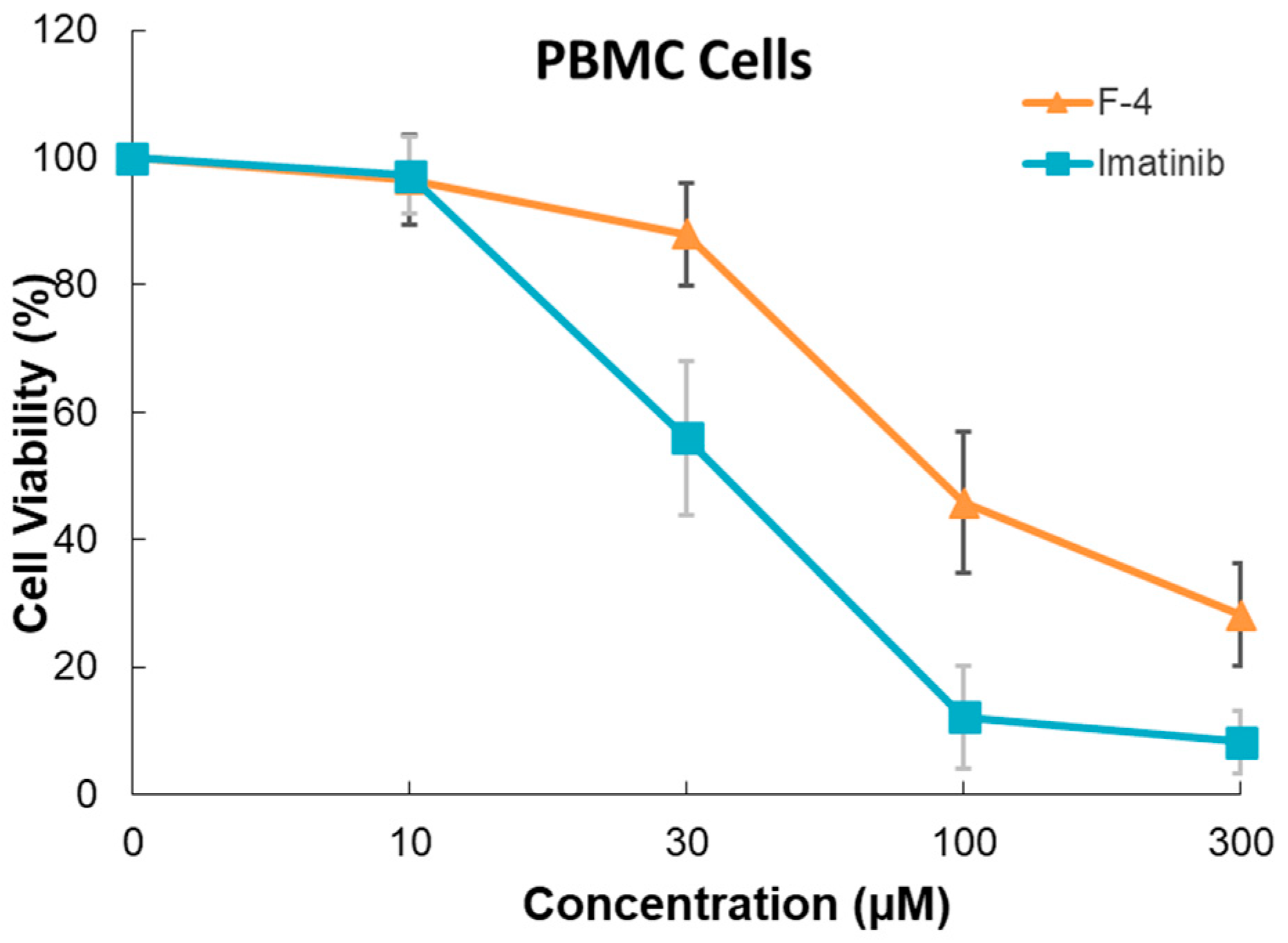
| Compound | IC50 Values (μM) | SI * | ||
|---|---|---|---|---|
| K562 | HL-60 | PBMCs | ||
| F-4 | 6.85 ± 1.36 | 33.44 ± 3.84 | 88.77 ± 10.08 | 13.0 |
| Imatinib | 5.20 ± 1.48 | 17.85 ± 2.55 | 32.92 ± 4.12 | 6.0 |
Disclaimer/Publisher’s Note: The statements, opinions and data contained in all publications are solely those of the individual author(s) and contributor(s) and not of MDPI and/or the editor(s). MDPI and/or the editor(s) disclaim responsibility for any injury to people or property resulting from any ideas, methods, instructions or products referred to in the content. |
© 2026 by the authors. Licensee MDPI, Basel, Switzerland. This article is an open access article distributed under the terms and conditions of the Creative Commons Attribution (CC BY) license.
Share and Cite
Sever, B.; Ciftci, H. Targeting ABL Tyrosine Kinase in Chronic Myeloid Leukemia: Design, Synthesis, Biological Evaluation, and Computational Studies of Novel Thiazolone Derivatives. Pharmaceutics 2026, 18, 709. https://doi.org/10.3390/pharmaceutics18060709
Sever B, Ciftci H. Targeting ABL Tyrosine Kinase in Chronic Myeloid Leukemia: Design, Synthesis, Biological Evaluation, and Computational Studies of Novel Thiazolone Derivatives. Pharmaceutics. 2026; 18(6):709. https://doi.org/10.3390/pharmaceutics18060709
Chicago/Turabian StyleSever, Belgin, and Halilibrahim Ciftci. 2026. "Targeting ABL Tyrosine Kinase in Chronic Myeloid Leukemia: Design, Synthesis, Biological Evaluation, and Computational Studies of Novel Thiazolone Derivatives" Pharmaceutics 18, no. 6: 709. https://doi.org/10.3390/pharmaceutics18060709
APA StyleSever, B., & Ciftci, H. (2026). Targeting ABL Tyrosine Kinase in Chronic Myeloid Leukemia: Design, Synthesis, Biological Evaluation, and Computational Studies of Novel Thiazolone Derivatives. Pharmaceutics, 18(6), 709. https://doi.org/10.3390/pharmaceutics18060709