Ion-Triggered In Situ Gel Combined with Melatonin Liposomes: Breaking Through the Dual Barriers of Nasal and Brain Delivery to Treat Insomnia

Abstract
1. Introduction
2. Materials and Methods
2.1. Materials
2.2. Animals
2.3. Preparation and Characterization of MEL-Lips
2.4. Formulation Screening of MEL-Lips-Gel
2.5. Rheological Analysis
2.6. Gel Formation and Coating Uniformity Experiment
2.7. In Vivo Nasal Retention Study in Mice
2.8. In Vitro Release Study
2.9. Brain Tissue Distribution Study
2.10. Induction of Insomnia Animal Model and Treatment
2.11. Open-Field Test
2.12. Sucrose Preference Test
2.13. Nasal Mucosa Safety Evaluation
2.14. Statistical Analysis
3. Results and Discussion
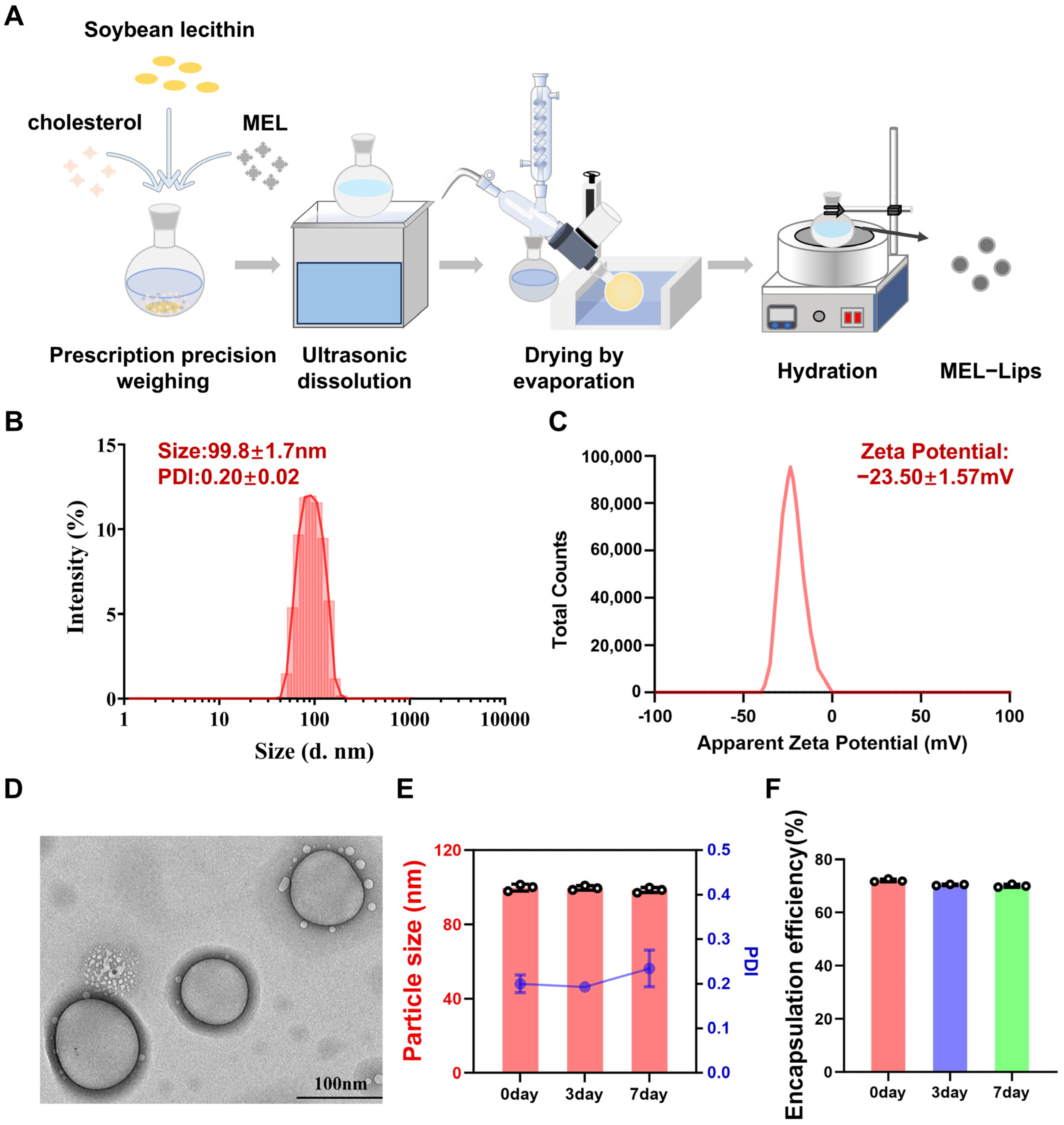
3.1. Characterization of MEL-Lips
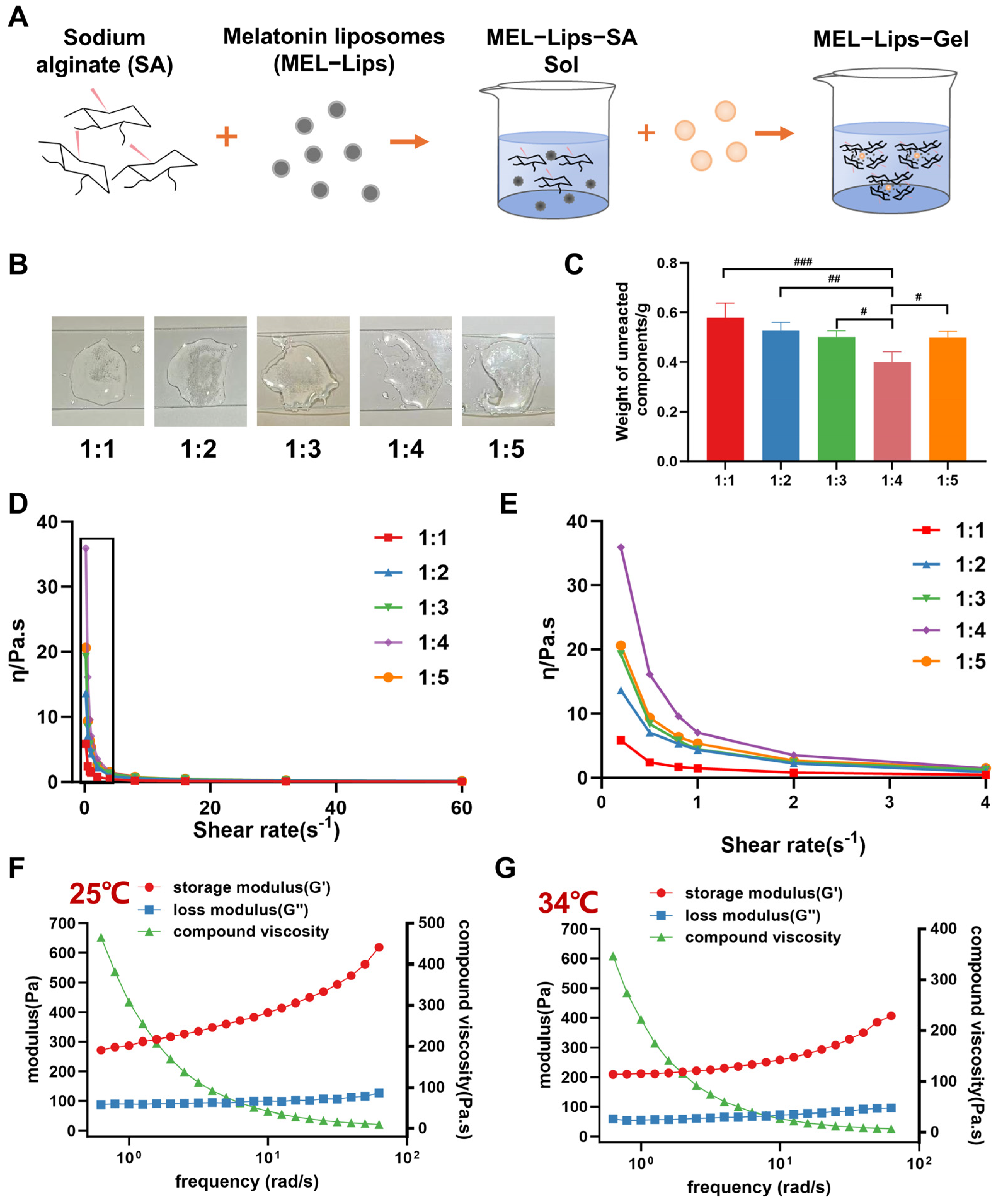
3.2. Formulation Optimization and Rheological Properties of the Gel System
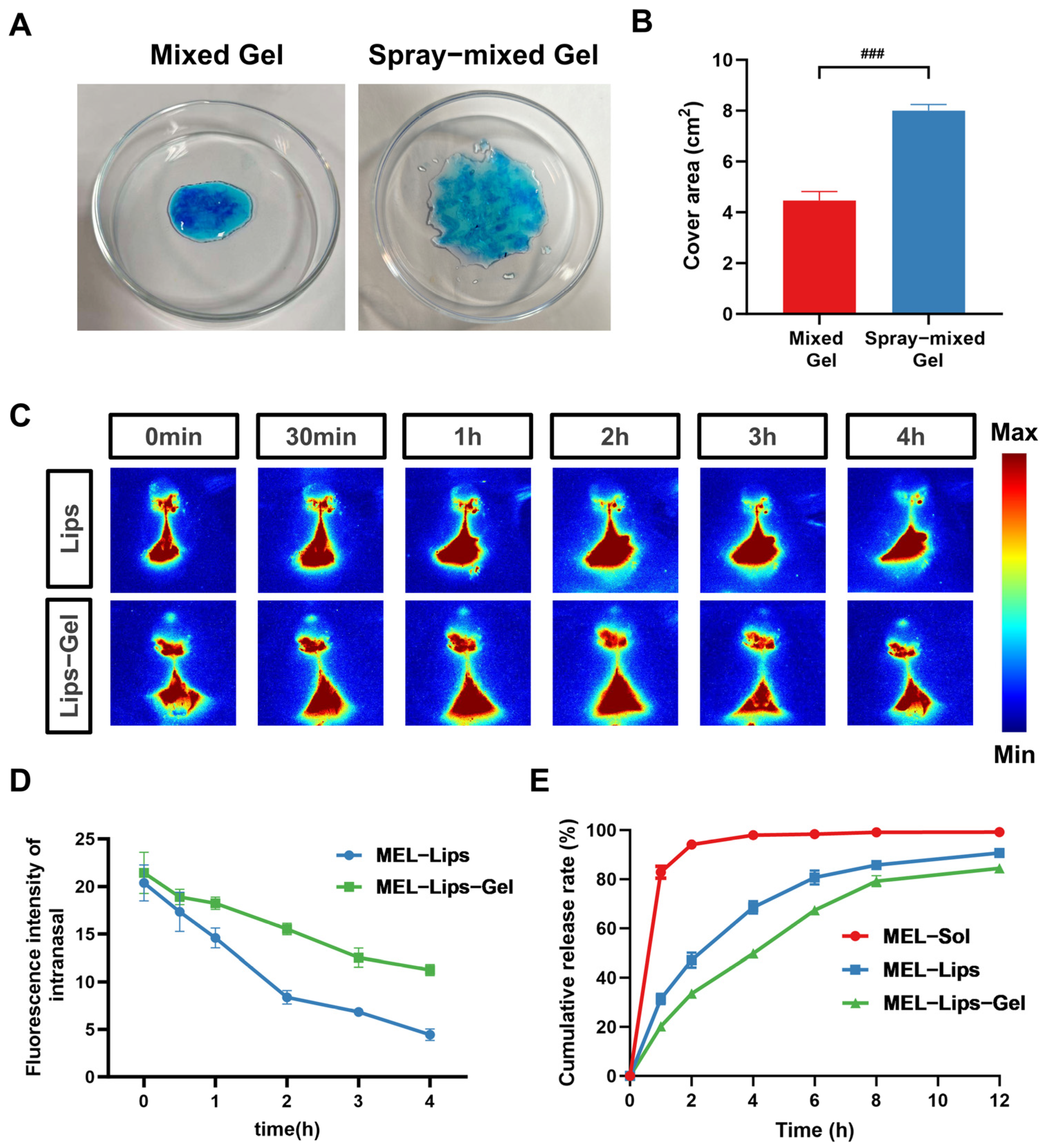
3.3. In Vivo Nasal Retention and Distribution
3.4. In Vitro Release Study
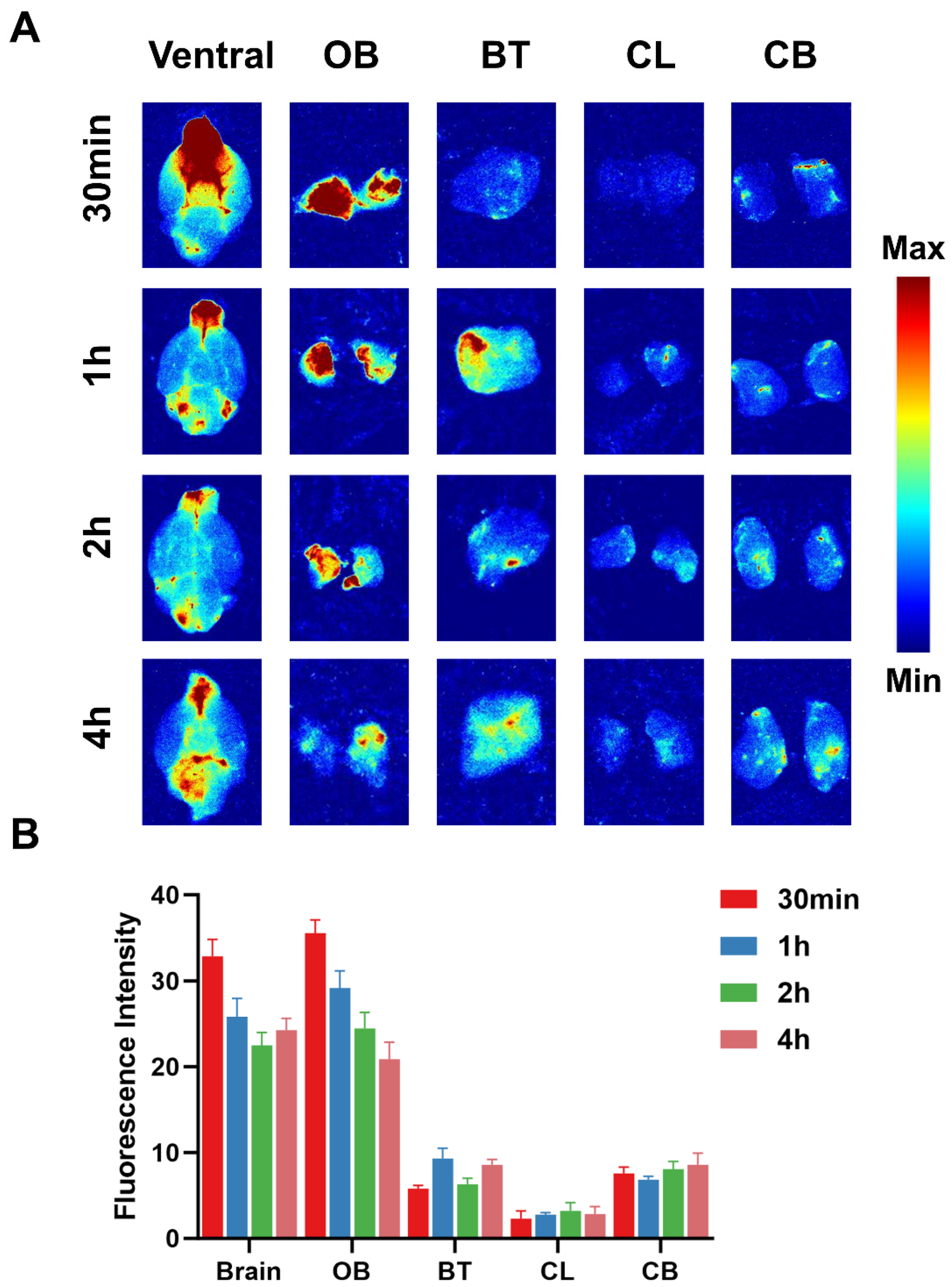
3.5. Brain Tissue Distribution Study
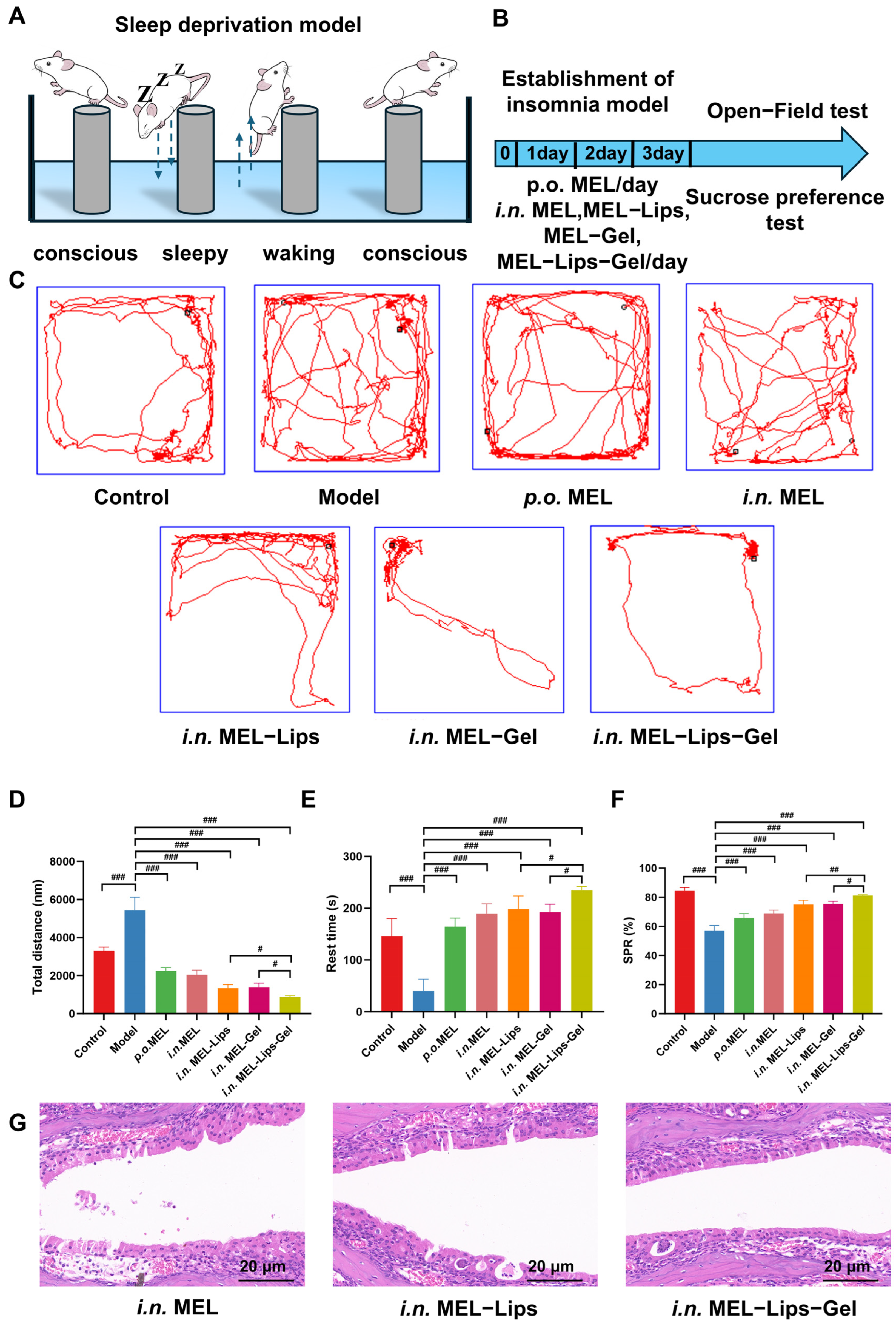
3.6. Pharmacodynamic Evaluation and Safety Assessment in the Insomnia Model
4. Conclusions
Supplementary Materials
Author Contributions
Funding
Institutional Review Board Statement
Informed Consent Statement
Data Availability Statement
Conflicts of Interest
References
- Yeom, J.W.; Kim, H.; Pack, S.P.; Lee, H.; Cheong, T.; Cho, C. Exploring the psychological and physiological insights through digital phenotyping by analyzing the discrepancies between subjective insomnia severity and activity-based objective sleep measures: Observational cohort study. JMIR Ment. Health 2025, 12, e67478. [Google Scholar] [CrossRef]
- Han, Z.; Wang, L.; Zhu, H.; Tu, Y.; He, P.; Li, B. Uncovering the effects and mechanisms of tea and its components on depression, anxiety, and sleep disorders: A comprehensive review. Food Res. Int. 2024, 197, 115191. [Google Scholar] [CrossRef]
- Zhou, X.; Kong, Y.; Yu, B.; Shi, S.; He, H. Effects of exercise on sleep quality in general population: Meta-analysis and systematic review. Sleep Med. 2025, 125, 1–13. [Google Scholar] [CrossRef] [PubMed]
- Gobetti, R.D.A.P.; Bueno, C.; Soster, L.M.S.F.; Monazzi, A.C.D.C.; Amaral, F.G.D.; Capellano, A.M.; Da Silva, N.S.; Cipolla-Neto, J. Sleep and rhythmic profile after pineal gland removal in humans. J. Sleep Res. 2025, 32, e70171. [Google Scholar] [CrossRef]
- Zambrano, C.; Garitaonaindia, M.T.; Salmerón, D.; Pérez-Sanz, F.; Tchio, C.; Picinato, M.C.; de Medina, F.S.; Luján, J.; Scheer, F.A.J.L.; Saxena, R.; et al. Melatonin decreases human adipose tissue insulin sensitivity. J. Pineal Res. 2024, 76, e12965. [Google Scholar] [CrossRef]
- Ortiz-Placín, C.; Salido, G.M.; González, A. Melatonin interplay in physiology and disease-the fountain of eternal youth revisited. Biomolecules 2025, 15, 682. [Google Scholar] [CrossRef]
- Abdellah, S.A.; Raverot, V.; Gal, C.; Guinobert, I.; Bardot, V.; Blondeau, C.; Claustrat, B. Bioavailability of melatonin after administration of an oral prolonged-release tablet and an immediate-release sublingual spray in healthy male volunteers. Drugs R D 2023, 23, 257–265. [Google Scholar] [CrossRef]
- Carloni, S.; Proietti, F.; Rocchi, M.; Longini, M.; Marseglia, L.; D’Angelo, G.; Balduini, W.; Gitto, E.; Buonocore, G. Melatonin pharmacokinetics following oral administration in preterm neonates. Molecules 2017, 22, 2115. [Google Scholar] [CrossRef]
- Jain, A.; Majee, C.; Mazumder, R.; Mazumder, A.; Singh, H.; Padhi, S.; Kumar, A.; Kapoor, B. Progress in synthetic approaches and pharmacological applications of melatonin and its derivatives: A comprehensive review. Curr. Top. Med. Chem. 2025, 25, 2215–2236. [Google Scholar] [CrossRef]
- Liu, S.; Jin, X.; Ge, Y.; Dong, J.; Liu, X.; Pei, X.; Wang, P.; Wang, B.; Chang, Y.; Yu, X. Advances in brain-targeted delivery strategies and natural product-mediated enhancement of blood-brain barrier permeability. J. Nanobiotechnol. 2025, 23, 382. [Google Scholar] [CrossRef]
- Gong, Z.; Zhou, D.; Wu, D.; Han, Y.; Yu, H.; Shen, H.; Feng, W.; Hou, L.; Chen, Y.; Xu, T. Challenges and material innovations in drug delivery to central nervous system tumors. Biomaterials 2025, 319, 123180. [Google Scholar] [CrossRef]
- Chauhan, A.; Jain, S. Development of brain permeable drugs and novel strategies to overcome the brain barriers for treatment purposes. Curr. Pharm. Des. 2025, 31, 2594–2610. [Google Scholar] [CrossRef]
- Vuillemenot, B.R.; Korte, S.; Wright, T.L.; Adams, E.L.; Boyd, R.B.; Butt, M.T. Safety evaluation of cns administered biologics-study design, data interpretation, and translation to the clinic. Toxicol. Sci. Off. J. Soc. Toxicol. 2016, 152, 3–9. [Google Scholar] [CrossRef]
- Ryan, R.; Leslie, M.N.; He, P.; Young, P.M.; Hoyos, C.M.; Ong, H.X.; Traini, D. Intranasal and inhaled delivery systems for targeting circadian dysfunction in neurodegenerative disorders, perspective and future outlook. Adv. Drug Deliv. Rev. 2025, 220, 115575. [Google Scholar] [CrossRef]
- Huang, Q.; Chen, Y.; Zhang, W.; Xia, X.; Li, H.; Qin, M.; Gao, H. Nanotechnology for enhanced nose-to-brain drug delivery in treating neurological diseases. J. Control. Release Off. J. Control. Release Soc. 2024, 366, 519–534. [Google Scholar] [CrossRef] [PubMed]
- Dsouza, A.A.; Kahan, M.; Yang, A.; Padmakumar, S.; Bleier, B.S.; Amiji, M.M. Formulation considerations in enhancing olfactory mucosal deposition for nose-to-brain drug delivery. Drug Deliv. Transl. Res. 2026, 10-1007. [Google Scholar] [CrossRef] [PubMed]
- Gänger, S.; Schindowski, K. Tailoring formulations for intranasal nose-to-brain delivery: A review on architecture, physico-chemical characteristics and mucociliary clearance of the nasal olfactory mucosa. Pharmaceutics 2018, 10, 116. [Google Scholar] [CrossRef] [PubMed]
- Bahadur, S.; Pardhi, D.M.; Rautio, J.; Rosenholm, J.M.; Pathak, K. Intranasal nanoemulsions for direct nose-to-brain delivery of actives for cns disorders. Pharmaceutics 2020, 12, 1230. [Google Scholar] [CrossRef]
- Kou, D.; Gao, Y.; Li, C.; Zhou, D.; Lu, K.; Wang, N.; Zhang, R.; Yang, Z.; Zhou, Y.; Chen, L.; et al. Intranasal pathway for nanoparticles to enter the central nervous system. Nano Lett. 2023, 23, 5381–5390. [Google Scholar] [CrossRef]
- Lu, Y.; Wang, J.T.; Li, N.; Zhu, X.; Li, Y.; Bansal, S.; Wang, Y.; Al-Jamal, K.T. Intranasal administration of edaravone nanoparticles improves its stability and brain bioavailability. J. Control. Release Off. J. Control. Release Soc. 2023, 359, 257–267. [Google Scholar] [CrossRef]
- Awad, R.; Avital, A.; Sosnik, A. Polymeric nanocarriers for nose-to-brain drug delivery in neurodegenerative diseases and neurodevelopmental disorders. Acta Pharm. Sin. B 2023, 13, 1866–1886. [Google Scholar] [CrossRef]
- Ferlenghi, F.; Mari, M.; Gobbi, G.; Elisi, G.M.; Mor, M.; Rivara, S.; Vacondio, F.; Bartolucci, S.; Bedini, A.; Fanini, F.; et al. N-(anilinoethyl)amide melatonergic ligands with improved water solubility and metabolic stability. Chemmedchem 2021, 16, 3071–3082. [Google Scholar] [CrossRef]
- Abdelbari, M.A.; Mosallam, S. Liposomes incorporating cyclodextrins as a promising drug delivery system to augment the bioavailability of poorly soluble drugs. J. Liposome Res. 2025, 35, 312–320. [Google Scholar] [CrossRef]
- Loredo-Tovias, M.; Duran-Meza, A.L.; Villagrana-Escare, O.M.V.; Vega-Acosta, R.; Reynaga-Hernández, E.; Flores-Tandy, L.M.; Valdes-Resendiz, O.E.; Cadena-Nava, R.D.; Alvizo-Paez, E.R.; Ruiz-Garcia, J. Encapsidated ultrasmall nanolipospheres as novel nanocarriers for highly hydrophobic anticancer drugs. Nanoscale 2017, 9, 11625–11631. [Google Scholar] [CrossRef]
- Peng, T.; Xu, W.; Li, Q.; Ding, Y.; Huang, Y. Pharmaceutical liposomal delivery-specific considerations of innovation and challenges. Biomater. Sci. 2022, 11, 62–75. [Google Scholar] [CrossRef]
- Pandey, M.; Choudhury, H.; Aziz, A.B.A.; Bhattamisra, S.K.; Gorain, B.; Su, J.S.T.; Tan, C.L.; Chin, W.Y.; Yip, K.Y. Potential of stimuli-responsive in situ gel system for sustained ocular drug delivery: Recent progress and contemporary research. Polymers 2021, 13, 1340. [Google Scholar] [CrossRef]
- Vigani, B.; Rossi, S.; Sandri, G.; Bonferoni, M.C.; Caramella, C.M.; Ferrari, F. Recent advances in the development of in situ gelling drug delivery systems for non-parenteral administration routes. Pharmaceutics 2020, 12, 859. [Google Scholar] [CrossRef]
- Sonawane, S.; Shelke, H.; Bonde, S. A comprehensive review on natural polysaccharides based in situ gels for nasal drug delivery. Int. J. Biol. Macromol. 2025, 320, 145987. [Google Scholar] [CrossRef]
- Singh, M.; Kumar, S.; Vinayagam, R.; Samivel, R. Thermosensitive mucoadhesive intranasal in situ gel of risperidone for nose-to-brain targeting: Physiochemical and pharmacokinetics study. Pharmaceuticals 2025, 18, 871. [Google Scholar] [CrossRef]
- Yu, L.; She, K.; He, R.; Xu, Q. Application and progress of temperature-sensitive hydrogels in cartilage injury repair. Front. Bioeng. Biotechnol. 2025, 13, 1602303. [Google Scholar] [CrossRef]
- Tanga, S.; Aucamp, M.; Ramburrun, P. Injectable thermoresponsive hydrogels for cancer therapy: Challenges and prospects. Gels 2023, 9, 418. [Google Scholar] [CrossRef]
- Habib, M.; Berthalon, S.; Leclercq, L.; Tourrette, A.; Sharkawi, T.; Blanquer, S. Dual cross-linked stimuli-responsive alginate-based hydrogels. Biomacromolecules 2024, 25, 1660–1670. [Google Scholar] [CrossRef]
- Tan, J.; Luo, Y.; Guo, Y.; Zhou, Y.; Liao, X.; Li, D.; Lai, X.; Liu, Y. Development of alginate-based hydrogels: Crosslinking strategies and biomedical applications. Int. J. Biol. Macromol. 2023, 239, 124275. [Google Scholar] [CrossRef]
- Zhang, T.; Zhang, Y.; Hao, R.; Huang, D.; Li, H.; Zhang, B.; Li, G.; Jiang, Y.; Li, D. Dual network interpenetration emulsion gels based on alginate and coffee cherry-derived polysaccharides: Preparation, characterization, and curcumin delivery. Food Chem. 2025, 494, 146186. [Google Scholar] [CrossRef]
- Zhao, Q.; Chen, X.; Ji, W.; Zhang, J.; Li, X.; Liu, Z.; Wang, W.; Liu, H.; Wang, Y.; Nan, B.; et al. From lab to table: Recent advances in the application of sodium alginate-based hydrogel beads in the food industry. Food Res. Int. 2025, 217, 116843. [Google Scholar] [CrossRef]
- Sipos, B.; Budai-Szűcs, M.; Katona, G.; Csóka, I. Gellan gum-based in situ hydrogels for nasal delivery of polymeric micelles loaded with risperidone. Gels 2025, 11, 404. [Google Scholar] [CrossRef]
- Hafner, A. Advances in development, characterisation and application of nasal drug delivery systems. Pharmaceutics 2022, 14, 1562. [Google Scholar] [CrossRef]
- Ling, Z.; Yonghong, L.; Changqing, S.; Junfeng, L.; Li, Z.; Chunyu, J.; Xianqiang, L. Preparation, characterization, and pharmacokinetics of tilmicosin- and florfenicol-loaded hydrogenated castor oil-solid lipid nanoparticles. J. Vet. Pharmacol. Ther. 2017, 40, 293–303. [Google Scholar] [CrossRef]
- Zhang, H.; Liu, Y.; Yuan, Q.; Xu, N.; Ma, W.; Xu, C.; Sun, X.; Jin, Y.; Wu, S. Shear-thinning hydrogel precursors for high-loading x-ray shielding coatings with superior mechanical performance. ACS Appl. Mater. Interfaces 2025, 17, 61198–61207. [Google Scholar] [CrossRef]
- Bezold, M.G.; Dollinger, B.R.; Dejulius, C.R.; Keech, M.C.; Hanna, A.R.; Kittel, A.R.; Yu, F.; Gupta, M.K.; D’Arcy, R.; Brunger, J.M.; et al. Shear-thinning hydrogel for allograft cell transplantation and externally controlled transgene expression. Biomaterials 2025, 314, 122812. [Google Scholar] [CrossRef]
- Pang, L.; Zhu, S.; Ma, J.; Zhu, L.; Liu, Y.; Ou, G.; Li, R.; Wang, Y.; Liang, Y.; Jin, X.; et al. Intranasal temperature-sensitive hydrogels of cannabidiol inclusion complex for the treatment of post-traumatic stress disorder. Acta Pharm. Sin. B 2021, 11, 2031–2047. [Google Scholar] [CrossRef]
- Chen, Q.; Xie, J.; Zhong, Q.; Wang, J.; Lin, J.; Lu, J.; Cao, L.; Lin, M.; Tu, R.; Huang, Z.; et al. Safety and efficacy of indocyanine green tracer-guided lymph node dissection during laparoscopic radical gastrectomy in patients with gastric cancer: A randomized clinical trial. JAMA Surg. 2020, 155, 300–311. [Google Scholar] [CrossRef]
- Bechgaard, E.; Lindhardt, K.; Martinsen, L. Intranasal absorption of melatonin in vivo bioavailability study. Int. J. Pharm. 1999, 182, 1–5. [Google Scholar] [CrossRef]
- Ni, I.L.; Pota, J.; Winnicka, K.; Szekalska, M.; Erak, I.; Greti, M.; Jug, M.; Hafner, A. Development, characterisation and nasal deposition of melatonin-loaded pectin/hypromellose microspheres. Eur. J. Pharm. Sci. Off. J. Eur. Fed. Pharm. Sci. 2020, 141, 105115. [Google Scholar] [CrossRef]
- de Oliveira Junior, E.R.; Nascimento, T.L.; Salomão, M.A.; Da Silva, A.C.G.; Valadares, M.C.; Lima, E.M. Increased nose-to-brain delivery of melatonin mediated by polycaprolactone nanoparticles for the treatment of glioblastoma. Pharm. Res. 2019, 36, 131. [Google Scholar] [CrossRef]
- van den Berg, M.P.; Merkus, P.; Romeijn, S.G.; Verhoef, J.C.; Merkus, F.W.H.M. Uptake of melatonin into the cerebrospinal fluid after nasal and intravenous delivery: Studies in rats and comparison with a human study. Pharm. Res. 2004, 21, 799–802. [Google Scholar] [CrossRef]
- Zhang, S.; Gan, L.; Cao, F.; Wang, H.; Gong, P.; Ma, C.; Ren, L.; Lin, Y.; Lin, X. The barrier and interface mechanisms of the brain barrier, and brain drug delivery. Brain Res. Bull. 2022, 190, 69–83. [Google Scholar] [CrossRef]
- Nguyen, T.; Duong, V. Advancements in nanocarrier systems for nose-to-brain drug delivery. Pharmaceuticals 2025, 18, 615. [Google Scholar] [CrossRef]
- Liu, T.; Zhang, M.; Zhang, J.; Kang, N.; Zheng, L.; Ding, Z. Targeted delivery of macrophage membrane biomimetic liposomes through intranasal administration for treatment of ischemic stroke. Int. J. Nanomed. 2024, 19, 6177–6199. [Google Scholar] [CrossRef]
- Yang, G.; Zhu, D.; Zhang, K. Nose-brain axis: A bridge from the nasal cavity to the central nervous system. Neural Regen. Res. 2026, 21, 4012–4019. [Google Scholar] [CrossRef]
- Ji, S.; Dong, Y.; Wang, Z.; Zhu, R.; Jiang, Y.; Li, S.; Ma, X. Edaravone attenuates sleep deprivation-induced memory deficits by inhibiting oxidative stress and neuroinflammation in murine models. Biomedicines 2025, 13, 1047. [Google Scholar] [CrossRef]
- Zhang, M.; Zhang, M.; Kou, G.; Li, Y. The relationship between gut microbiota and inflammatory response, learning and memory in mice by sleep deprivation. Front. Cell. Infect. Microbiol. 2023, 13, 1159771. [Google Scholar] [CrossRef] [PubMed]
- Guimarães, A.T.B.; Freitas, Í.N.; Mubarak, N.M.; Rahman, M.M.; Rodrigues, F.P.; Rodrigues, A.S.D.L.; Barceló, D.; Islam, A.R.M.T.; Malafaia, G. Exposure to polystyrene nanoplastics induces an anxiolytic-like effect, changes in antipredator defensive response, and dna damage in swiss mice. J. Hazard. Mater. 2023, 442, 130004. [Google Scholar] [CrossRef]
- Dang, R.; Wang, M.; Li, X.; Wang, H.; Liu, L.; Wu, Q.; Zhao, J.; Ji, P.; Zhong, L.; Licinio, J.; et al. Edaravone ameliorates depressive and anxiety-like behaviors via sirt1/nrf2/ho-1/gpx4 pathway. J. Neuroinflamm. 2022, 19, 41. [Google Scholar] [CrossRef]
- Yin, C.; Li, L.; Xu, C.; Du, Z.; Wu, J.; Chen, X.; Xia, T.; Huang, S.; Meng, F.; Zhang, J.; et al. A novel method for automatic pharmacological evaluation of sucrose preference change in depression mice. Pharmacol. Res. 2021, 168, 105601. [Google Scholar] [CrossRef] [PubMed]
- Tao, C.; Zhang, G.; Huang, J.J.; Li, Z.; Tao, H.W.; Zhang, L.I. The medial preoptic area mediates depressive-like behaviors induced by ovarian hormone withdrawal through distinct gabaergic projections. Nat. Neurosci. 2023, 26, 1529–1540. [Google Scholar] [CrossRef] [PubMed]
- Baek, J.; Lee, D.; Han, S.; Kim, D. A probiotic nvp1704 alleviates stress-induced sleeplessness/depression-like symptoms in mice by upregulating serotonergic and gabaergic systems and downregulating nf-κb activation. Lett. Appl. Microbiol. 2024, 77, e65. [Google Scholar] [CrossRef]


Disclaimer/Publisher’s Note: The statements, opinions and data contained in all publications are solely those of the individual author(s) and contributor(s) and not of MDPI and/or the editor(s). MDPI and/or the editor(s) disclaim responsibility for any injury to people or property resulting from any ideas, methods, instructions or products referred to in the content. |
© 2026 by the authors. Licensee MDPI, Basel, Switzerland. This article is an open access article distributed under the terms and conditions of the Creative Commons Attribution (CC BY) license.
Share and Cite
Dong, Z.; Dong, X.; Wang, H.; Pan, Y.; Yang, M.; Zhao, S.; Deng, W.; Han, M.; Ye, T.; Wang, S. Ion-Triggered In Situ Gel Combined with Melatonin Liposomes: Breaking Through the Dual Barriers of Nasal and Brain Delivery to Treat Insomnia. Pharmaceutics 2026, 18, 656. https://doi.org/10.3390/pharmaceutics18060656
Dong Z, Dong X, Wang H, Pan Y, Yang M, Zhao S, Deng W, Han M, Ye T, Wang S. Ion-Triggered In Situ Gel Combined with Melatonin Liposomes: Breaking Through the Dual Barriers of Nasal and Brain Delivery to Treat Insomnia. Pharmaceutics. 2026; 18(6):656. https://doi.org/10.3390/pharmaceutics18060656
Chicago/Turabian StyleDong, Zhewen, Xinxin Dong, He Wang, Yujie Pan, Meiqi Yang, Sihan Zhao, Wanxian Deng, Mengshan Han, Tiantian Ye, and Shujun Wang. 2026. "Ion-Triggered In Situ Gel Combined with Melatonin Liposomes: Breaking Through the Dual Barriers of Nasal and Brain Delivery to Treat Insomnia" Pharmaceutics 18, no. 6: 656. https://doi.org/10.3390/pharmaceutics18060656
APA StyleDong, Z., Dong, X., Wang, H., Pan, Y., Yang, M., Zhao, S., Deng, W., Han, M., Ye, T., & Wang, S. (2026). Ion-Triggered In Situ Gel Combined with Melatonin Liposomes: Breaking Through the Dual Barriers of Nasal and Brain Delivery to Treat Insomnia. Pharmaceutics, 18(6), 656. https://doi.org/10.3390/pharmaceutics18060656