



BPC-157 as an Investigational Peptide Therapeutic: Biopharmaceutical Challenges, Formulation Strategies, and Translational Development Barriers

 , , , and
Abstract
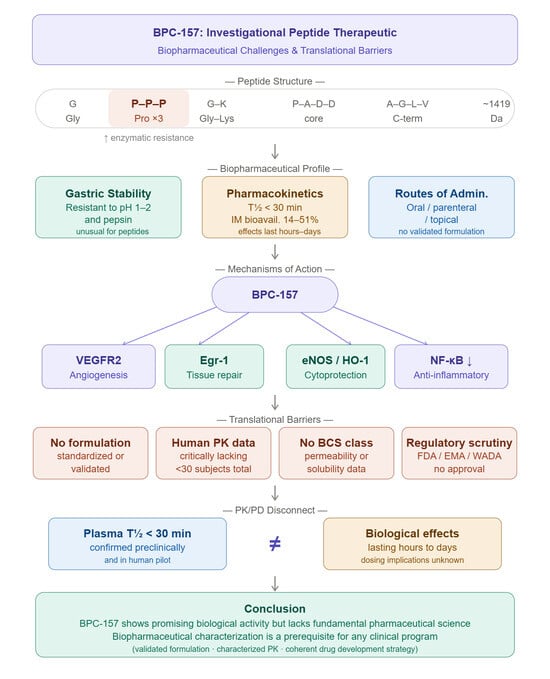
1. Introduction
2. BPC-157: Physicochemical Profile and Structural Basis of Stability
3. Pharmacological Background: Mechanisms and Organ-Specific Effects
3.1. Molecular Mechanisms of Action
3.2. Organ-Specific Effects: A Summary
3.3. Methodological Limitations of the Preclinical Evidence Base
4. Pharmacokinetic Profile and the Pharmacokinetic–Pharmacodynamic Disconnect
4.1. Overview of Peptide Pharmacokinetics: A Developmental Framework
4.2. Available Pharmacokinetic Data
4.3. The Pharmacokinetic–Pharmacodynamic Disconnect
4.4. Allometric Scaling and the Absence of Human Dose Justification
4.5. Implications for Clinical Development
5. Biopharmaceutical Classification and Route-of-Administration Analysis
5.1. Biopharmaceutical Classification of BPC-157: A Framework for Hypothesis Generation
5.2. Oral Administration: Opportunities, Barriers, and Comparators
5.3. Parenteral Administration: Pharmacokinetic Considerations and Formulation Requirements
5.4. Topical and Local Administration: Niche Opportunities
5.5. Comparative Positioning Among Peptide Therapeutics
5.6. Therapeutic-Class Positioning: BPC-157 Versus Established Regenerative and Anti-Inflammatory Agents
6. Formulation Challenges and Development Opportunities
6.1. The Absence of a Standardized Pharmaceutical Formulation: Implications and Consequences
6.2. Stability Considerations in Pharmaceutical Formulation
6.3. Oral Formulation Strategies: Opportunities and Feasibility Assessment
6.4. Parenteral Formulation Strategies: Modified Release and Half-Life Extension
6.5. Formulation Considerations for Local and Topical Delivery
6.6. Analytical Development Requirements
7. Preclinical Safety and Clinical Evidence
7.1. Preclinical Safety Profile: Strengths and Limitations
7.2. Theoretical Safety Considerations: Pro-Angiogenic and Neuropharmacological Risks
7.3. Clinical Evidence: A Critical Appraisal
7.4. The Evidence Hierarchy and Its Implications
8. Regulatory Landscape and Translational Development Barriers
8.1. Current Regulatory Status: A Comparative Overview
8.2. Requirements for an Investigational New Drug Application
8.3. The Abandoned Phase I Trial: Lessons and Consequences
8.4. Intellectual Property Landscape and Commercial Development Incentives
8.5. Proposed Translational Development Roadmap
9. Discussion
9.1. The Paradox of BPC-157: Pharmacological Richness Versus Pharmaceutical Poverty
9.2. The Biopharmaceutical Gap as the Primary Translational Barrier
9.3. Contextualizing BPC-157 Within the Current Peptide Therapeutics Landscape
9.4. The Scientific Controversy and Its Implications for Development
9.5. Indication Selection Strategy: A Biopharmaceutical Perspective
9.6. The Regulatory Opportunity: Expedited Pathways
9.7. Limitations of This Review
10. Conclusions
Author Contributions
Funding
Institutional Review Board Statement
Informed Consent Statement
Data Availability Statement
Acknowledgments
Conflicts of Interest
Abbreviations
| BPC-157 | Body Protection Compound 157 |
| ADME | Absorption, Distribution, Metabolism, and Excretion |
| BCS | Biopharmaceutical Classification System |
| PK | Pharmacokinetics |
| PD | Pharmacodynamics |
| PK/PD | Pharmacokinetic–Pharmacodynamic |
| VEGF | Vascular Endothelial Growth Factor |
| VEGFR2 | Vascular Endothelial Growth Factor Receptor 2 |
| Egr-1 | Early Growth Response 1 |
| NO | Nitric Oxide |
| eNOS | Endothelial Nitric Oxide Synthase |
| HO-1 | Heme Oxygenase-1 |
| TNF-α | Tumor Necrosis Factor Alpha |
| IL | Interleukin |
| NF-κB | Nuclear Factor Kappa B |
| LC-MS/MS | Liquid Chromatography–Tandem Mass Spectrometry |
| Cmax | Maximum Plasma Concentration |
| AUC | Area Under the Curve |
| IM | Intramuscular |
| IV | Intravenous |
| SC | Subcutaneous |
| CNS | Central Nervous System |
| PLGA | Poly(lactic-co-glycolic acid) |
| SNAC | Sodium N-[8-(2-hydroxybenzoyl)amino]caprylate |
| ICH | International Council for Harmonisation |
| FDA | Food and Drug Administration |
| EMA | European Medicines Agency |
| WADA | World Anti-Doping Agency |
| cGMP | Current Good Manufacturing Practice |
| GLP | Good Laboratory Practice |
References
- Józwiak, M.; Bauer, M.; Kamysz, W.; Kleczkowska, P. Multifunctionality and Possible Medical Application of the BPC 157 Peptide—Literature and Patent Review. Pharmaceuticals 2025, 18, 185. [Google Scholar] [CrossRef]
- Sikiric, P.; Boban Blagaic, A.; Strbe, S.; Beketic Oreskovic, L.; Oreskovic, I.; Sikiric, S.; Staresinic, M.; Sever, M.; Kokot, A.; Jurjevic, I.; et al. The Stable Gastric Pentadecapeptide BPC 157: Pleiotropic Beneficial Activity and Its Possible Relations with Neurotransmitter Activity. Pharmaceuticals 2024, 17, 461. [Google Scholar] [CrossRef]
- Drucker, D.J. Advances in Oral Peptide Therapeutics. Nat. Rev. Drug Discov. 2020, 19, 277–289. [Google Scholar] [CrossRef]
- Kralj, T.; Kokot, A.; Zlatar, M.; Masnec, S.; Kasnik Kovac, K.; Milkovic Perisa, M.; Batelja Vuletic, L.; Giljanovic, A.; Strbe, S.; Sikiric, S.; et al. Stable Gastric Pentadecapeptide BPC 157 Therapy of Rat Glaucoma. Biomedicines 2022, 10, 89. [Google Scholar] [CrossRef]
- Sikiric, P.; Seiwerth, S.; Skrtic, A.; Staresinic, M.; Strbe, S.; Vuksic, A.; Sikiric, S.; Bekic, D.; Soldo, D.; Grizelj, B.; et al. Stable Gastric Pentadecapeptide BPC 157—Possible Novel Therapy of Glaucoma and Other Ocular Conditions. Pharmaceuticals 2023, 16, 1052. [Google Scholar] [CrossRef]
- Bruno, B.J.; Miller, G.D.; Lim, C.S. Basics and Recent Advances in Peptide and Protein Drug Delivery. Ther. Deliv. 2013, 4, 1443–1467. [Google Scholar] [CrossRef]
- Vasireddi, N.; Hahamyan, H.; Salata, M.J.; Karns, M.; Calcei, J.G.; Voos, J.E.; Apostolakos, J.M. Emerging Use of BPC-157 in Orthopaedic Sports Medicine: A Systematic Review. HSS J. 2025, 21, 4. [Google Scholar] [CrossRef]
- White, C.J.; Yudin, A.K. Contemporary Strategies for Peptide Macrocyclization. Nat. Chem. 2011, 3, 509–524. [Google Scholar] [CrossRef]
- Fosgerau, K.; Hoffmann, T. Peptide Therapeutics: Current Status and Future Directions. Drug Discov. Today 2015, 20, 122–128. [Google Scholar] [CrossRef]
- Lee, E.; Burgess, K. Safety of Intravenous Infusion of BPC-157 in Humans: A Pilot Study. Altern. Ther. Health Med. 2025, 31, 20–24. [Google Scholar] [PubMed]
- U.S. Food and Drug Administration. 503A Categories Update: Bulk Drug Substances Nominated for Use in Compounding Under Section 503A of the Federal Food, Drug, and Cosmetic Act. Available online: https://www.fda.gov/media/94155/download (accessed on 17 April 2026).
- World Anti-Doping Agency. The 2026 Prohibited List. Available online: https://www.wada-ama.org/en/prohibited-list (accessed on 17 April 2026).
- Muttenthaler, M.; King, G.F.; Adams, D.J.; Alewood, P.F. Trends in Peptide Drug Discovery. Nat. Rev. Drug Discov. 2021, 20, 309–325. [Google Scholar] [CrossRef]
- Zheng, B.; Wang, X.; Guo, M.; Tzeng, C.-M. Therapeutic Peptides: Recent Advances in Discovery, Development, and Clinical Applications. Int. J. Mol. Sci. 2025, 26, 5131. [Google Scholar] [CrossRef]
- Chen, G. Advances in the Oral Delivery of Protein and Peptide Drugs. Pharmaceutics 2025, 17, 616. [Google Scholar] [CrossRef]
- Uhlig, T.; Kyprianou, T.; Martinelli, F.G.; Oppici, C.A.; Heiligers, D.; Hills, D.; Calvo, X.R.; Verhaert, P. The Emergence of Peptides in the Pharmaceutical Business. EuPA Open Proteom. 2014, 4, 58–69. [Google Scholar] [CrossRef]
- Di, L. Strategic Approaches to Optimizing Peptide ADME Properties. AAPS J. 2015, 17, 134–143. [Google Scholar] [CrossRef]
- Diao, L.; Meibohm, B. Pharmacokinetics and Pharmacokinetic–Pharmacodynamic Correlations of Therapeutic Peptides. Clin. Pharmacokinet. 2013, 52, 855–868. [Google Scholar] [CrossRef]
- Baral, K.C.; Choi, K.Y. Barriers and Strategies for Oral Peptide and Protein Therapeutics Delivery: Update on Clinical Advances. Pharmaceutics 2025, 17, 397. [Google Scholar] [CrossRef]
- Vlieghe, P.; Lisowski, V.; Martinez, J.; Khrestchatisky, M. Synthetic Therapeutic Peptides: Science and Market. Drug Discov. Today 2010, 15, 40–56. [Google Scholar] [CrossRef]
- He, L.; Feng, D.; Guo, H.; Zhou, Y.; Li, Z.; Zhang, K.; Zhang, W.; Wang, S.; Wang, Z.; Hao, Q.; et al. Pharmacokinetics, Distribution, Metabolism, and Excretion of Body-Protective Compound 157, a Potential Drug for Treating Various Wounds, in Rats and Dogs. Front. Pharmacol. 2022, 13, 1026182. [Google Scholar] [CrossRef]
- Ferrara, N.; Gerber, H.-P.; LeCouter, J. The Biology of VEGF and Its Receptors. Nat. Med. 2003, 9, 669–676. [Google Scholar] [CrossRef]
- Olsson, A.-K.; Dimberg, A.; Kreuger, J.; Claesson-Welsh, L. VEGF Receptor Signalling—In Control of Vascular Function. Nat. Rev. Mol. Cell Biol. 2006, 7, 359–371. [Google Scholar] [CrossRef]
- Eming, S.A.; Martin, P.; Tomic-Canic, M. Wound Repair and Regeneration: Mechanisms, Signaling, and Translation. Sci. Transl. Med. 2014, 6, 265sr6. [Google Scholar] [CrossRef]
- Gurtner, G.C.; Werner, S.; Barrandon, Y.; Longaker, M.T. Wound Repair and Regeneration. Nature 2008, 453, 314–321. [Google Scholar] [CrossRef]
- Deng, Z.; Fan, T.; Xiao, C.; Tian, H.; Zheng, Y.; Li, C.; He, J. TGF-β Signaling in Health, Disease, and Therapeutics. Signal Transduct. Target. Ther. 2024, 9, 61. [Google Scholar] [CrossRef]
- Bakalenko, N.; Kuznetsova, E.; Malashicheva, A. The Complex Interplay of TGF-β and Notch Signaling in the Pathogenesis of Fibrosis. Int. J. Mol. Sci. 2024, 25, 10803. [Google Scholar] [CrossRef]
- Förstermann, U.; Sessa, W.C. Nitric Oxide Synthases: Regulation and Function. Eur. Heart J. 2012, 33, 829–837. [Google Scholar] [CrossRef]
- Ryter, S.W.; Alam, J.; Choi, A.M.K. Heme Oxygenase-1/Carbon Monoxide: From Basic Science to Therapeutic Applications. Physiol. Rev. 2006, 86, 583–650. [Google Scholar] [CrossRef]
- Lundberg, J.O.; Gladwin, M.T.; Weitzberg, E. Strategies to Increase Nitric Oxide Signalling in Cardiovascular Disease. Nat. Rev. Drug Discov. 2015, 14, 623–641. [Google Scholar] [CrossRef]
- Wu, M.; Lu, Z.; Wu, K.; Nam, C.; Zhang, L.; Guo, J. Recent Advances in the Development of Nitric Oxide-Releasing Biomaterials and their application potentials in Wound Healing. J. Mater. Chem. B 2021, 9, 7063–7075. [Google Scholar] [CrossRef]
- Medzhitov, R. Origin and Physiological Roles of Inflammation. Nature 2008, 454, 428–435. [Google Scholar] [CrossRef]
- Lawrence, T. The Nuclear Factor NF-κB Pathway in Inflammation. Cold Spring Harb. Perspect. Biol. 2009, 1, a001651. [Google Scholar] [CrossRef]
- Wynn, T.A.; Vannella, K.M. Macrophages in Tissue Repair, Regeneration, and Fibrosis. Immunity 2016, 44, 450–462. [Google Scholar] [CrossRef]
- Gojkovic, S.; Krezic, I.; Vranes, H.; Zizek, H.; Drmic, D.; Batelja Vuletic, L.; Milavic, M.; Sikiric, S.; Stilinovic, I.; Simeon, P.; et al. Robert’s Intragastric Alcohol-Induced Gastric Lesion Model as an Escalated General Peripheral and Central Syndrome, Counteracted by the Stable Gastric Pentadecapeptide BPC 157. Biomedicines 2021, 9, 1300. [Google Scholar] [CrossRef]
- Rasic, D.; Zenko Sever, A.; Rasic, F.; Strbe, S.; Rasic, Z.; Djuzel, A.; Duplancic, B.; Boban Blagaic, A.; Skrtic, A.; Seiwerth, S.; et al. Stable Gastric Pentadecapeptide BPC 157 Heals Established Vesicovaginal Fistula and Counteracts Stone Formation in Rats. Biomedicines 2021, 9, 1206. [Google Scholar] [CrossRef]
- Madzarac, G.; Becejac, T.; Penovic, T.; Drazenovic, D.; Kralj, L.; Popovic Dolic, M.; Sikiric, S.; Beketic Oreskovic, L.; Oreskovic, I.; Strbe, S.; et al. Tracheocutaneous Fistula Resolved by Pentadecapeptide BPC 157 Therapy Through the NO-System—Triple NO-Agent Approach in Rats. Pharmaceuticals 2026, 19, 145. [Google Scholar] [CrossRef]
- Zemba Cilic, A.; Zemba, M.; Cilic, M.; Strbe, S.; Ilic, S.; Vukojevic, J.; Zoricic, Z.; Filipcic, I.; Kokot, A.; Smoday, I.M.; et al. BPC 157, L-NAME, L-Arginine, NO-Relation, in the Suited Rat Ketamine Models Resembling “Negative-like” Symptoms of Schizophrenia. Biomedicines 2022, 10, 1462. [Google Scholar] [CrossRef]
- Tan, H.; Su, W.; Zhang, W.; Wang, P.; Sattler, M.; Zou, P. Recent Advances in Half-Life Extension Strategies for Therapeutic Peptides and Proteins. Curr. Pharm. Des. 2018, 24, 4932–4946. [Google Scholar] [CrossRef]
- Zorzi, A.; Deyle, K.; Heinis, C. Cyclic Peptide Therapeutics: Past, Present and Future. Curr. Opin. Chem. Biol. 2017, 38, 24–29. [Google Scholar] [CrossRef]
- Carmeliet, P. Angiogenesis in Health and Disease. Nat. Med. 2003, 9, 653–660. [Google Scholar] [CrossRef]
- de la Torre, B.G.; Albericio, F. The Pharmaceutical Industry in 2020: An Analysis of FDA Drug Approvals from the Perspective of Molecules. Molecules 2021, 26, 627. [Google Scholar] [CrossRef]
- Lau, J.L.; Dunn, M.K. Therapeutic Peptides: Historical Perspectives, Current Development Trends, and Future Directions. Bioorg. Med. Chem. 2018, 26, 2700–2707. [Google Scholar] [CrossRef]
- Craik, D.J.; Fairlie, D.P.; Liras, S.; Price, D. The Future of Peptide-Based Drugs. Chem. Biol. Drug Des. 2013, 81, 136–147. [Google Scholar] [CrossRef]
- Zaman, R.; Islam, R.A.; Ibnat, N.; Othman, I.; Zaini, A.; Lee, C.Y.; Chowdhury, E.H. Current Strategies in Extending Half-Lives of Therapeutic Proteins. J. Control. Release 2019, 301, 176–189. [Google Scholar] [CrossRef]
- Bajramagic, S.; Sever, M.; Rasic, F.; Staresinic, M.; Skrtic, A.; Beketic Oreskovic, L.; Oreskovic, I.; Strbe, S.; Loga Zec, S.; Hrabar, J.; et al. Stable Gastric Pentadecapeptide BPC 157 and Intestinal Anastomoses Therapy in Rats—A Review. Pharmaceuticals 2024, 17, 1081. [Google Scholar] [CrossRef]
- Sikiric, P.; Seiwerth, S.; Skrtic, A.; Staresinic, M.; Strbe, S.; Vuksic, A.; Sikiric, S.; Bekic, D.; Soldo, D.; Grizelj, B.; et al. Fourier Transform Infrared Spectroscopic Characterization of Aortic Wall Remodeling by Stable Gastric Pentadecapeptide BPC 157 After Unilateral Adrenalectomy in Rats. Pharmaceuticals 2026, 19, 191. [Google Scholar] [CrossRef]
- Demirtaș, H.; Özer, A.; Yıldırım, A.K.; Dursun, A.D.; Sezen, Ş.C.; Arslan, M. Protective Effects of BPC 157 on Liver, Kidney, and Lung Distant Organ Damage in Rats with Experimental Lower-Extremity Ischemia-Reperfusion Injury. Medicina 2025, 61, 291. [Google Scholar] [CrossRef]
- Matek, D.; Matek, I.; Staresinic, E.; Japjec, M.; Bojanic, I.; Boban Blagaic, A.; Beketic Oreskovic, L.; Oreskovic, I.; Ziger, T.; Novinscak, T.; et al. Stable Gastric Pentadecapeptide BPC 157 as Therapy After Surgical Detachment of the Quadriceps Muscle from Its Attachments for Muscle-to-Bone Reattachment in Rats. Pharmaceutics 2025, 17, 119. [Google Scholar] [CrossRef]
- Matek, D.; Matek, I.; Japjec, M.; Matek, M.; Prenc, J.; Staresinic, B.; Staresinic, E.; Prtoric, A.; Sikiric, S.; Beketic Oreskovic, L.; et al. Tendon, Ligament, and Muscle Injury, Osteotendinous, Myotendinous, and Muscle-to-Bone Junction Therapy Perspectives with Growth Factors and Stable Gastric Pentadecapeptide BPC 157—A Review. Pharmaceuticals 2026, 19, 309. [Google Scholar] [CrossRef]
- Graff, L.A.; Walker, J.R.; Bernstein, C.N. Depression and anxiety in inflammatory bowel disease: A review of comorbidity and management. Inflamm. Bowel Dis. 2009, 15, 1105–1118. [Google Scholar] [CrossRef]
- Lee, E.; Walker, C.; Ayadi, B. Effect of BPC-157 on Symptoms in Patients with Interstitial Cystitis: A Pilot Study. Altern. Ther. Health Med. 2024, 30, 12–17. Available online: https://pubmed.ncbi.nlm.nih.gov/39325560/ (accessed on 17 April 2026). [PubMed]
- Knezevic, M.; Gojkovic, S.; Krezic, I.; Zizek, H.; Vranes, H.; Malekinusic, D.; Vrdoljak, B.; Knezevic, T.; Pavlov, K.H.; Drmic, D.; et al. Complex Syndrome of the Complete Occlusion of the End of the Superior Mesenteric Vein, Opposed with the Stable Gastric Pentadecapeptide BPC 157 in Rats. Biomedicines 2021, 9, 1029. [Google Scholar] [CrossRef]
- Sikiric, P.; Seiwerth, S.; Skrtic, A.; Staresinic, M.; Strbe, S.; Vuksic, A.; Sikiric, S.; Bekic, D.; Soldo, D.; Grizelj, B.; et al. BPC 157 Therapy: Targeting Angiogenesis and Nitric Oxide’s Cytotoxic and Damaging Actions, but Maintaining, Promoting, or Recovering Their Essential Protective Functions. Comment on Józwiak et al. Multifunctionality and Possible Medical Application of the BPC 157 Peptide—Literature and Patent Review. Pharmaceuticals 2025, 18, 1450. [Google Scholar] [CrossRef]
- Staresinic, M.; Japjec, M.; Vranes, H.; Prtoric, A.; Zizek, H.; Krezic, I.; Gojkovic, S.; Smoday, I.M.; Oroz, K.; Staresinic, E.; et al. Stable Gastric Pentadecapeptide BPC 157 and Striated, Smooth, and Heart Muscle. Biomedicines 2022, 10, 3221. [Google Scholar] [CrossRef]
- Begley, C.G.; Ioannidis, J.P.A. Reproducibility in Science: Improving the Standard for Basic and Preclinical Research. Circ. Res. 2015, 116, 116–126. [Google Scholar] [CrossRef]
- Landis, S.C.; Amara, S.G.; Asadullah, K.; Austin, C.P.; Blumenstein, R.; Bradley, E.W.; Crystal, R.G.; Darnell, R.B.; Ferrante, R.J.; Fillit, H.; et al. A Call for Transparent Reporting to Optimize the Predictive Value of Preclinical Research. Nature 2012, 490, 187–191. [Google Scholar] [CrossRef]
- Yellon, D.M.; Hausenloy, D.J. Myocardial Reperfusion Injury. N. Engl. J. Med. 2007, 357, 1121–1135. [Google Scholar] [CrossRef]
- Hausenloy, D.J.; Yellon, D.M. Myocardial Ischemia-Reperfusion Injury: A Neglected Therapeutic Target. J. Clin. Investig. 2013, 123, 92–100. [Google Scholar] [CrossRef]
- Danese, S.; Fiocchi, C. Ulcerative Colitis. N. Engl. J. Med. 2011, 365, 1713–1725. [Google Scholar] [CrossRef]
- Ungaro, R.; Mehandru, S.; Allen, P.B.; Peyrin-Biroulet, L.; Colombel, J.F. Ulcerative Colitis. Lancet 2017, 389, 1756–1770. [Google Scholar] [CrossRef]
- Józwiak, M.; Bauer, M.; Kamysz, W.; Kleczkowska, P. Reply to Sikiric et al. BPC 157 Therapy: Targeting Angiogenesis and Nitric Oxide’s Cytotoxic and Damaging Actions, but Maintaining, Promoting, or Recovering Their Essential Protective Functions. Pharmaceuticals 2025, 18, 1451. [Google Scholar] [CrossRef]
- Sikiric, P.; Seiwerth, S.; Skrtic, A.; Staresinic, M.; Strbe, S.; Vuksic, A.; Sikiric, S.; Bekic, D.; Soldo, D.; Grizelj, B.; et al. Stable Gastric Pentadecapeptide BPC 157 as a Therapy and Safety Key: A Special Beneficial Pleiotropic Effect Controlling and Modulating Angiogenesis and the NO-System. Pharmaceuticals 2025, 18, 928. [Google Scholar] [CrossRef]
- Sikiric, P.; Seiwerth, S.; Rucman, R.; Turkovic, B.; Rokotov, D.S.; Brcic, L.; Sever, M.; Klicek, R.; Radic, B.; Drmic, D.; et al. Stable Gastric Pentadecapeptide BPC 157 May Recover Brain-Gut Axis and Gut-Brain Axis Function. Pharmaceuticals 2023, 16, 676. [Google Scholar] [CrossRef]
- Jeppesen, P.B.; Gilroy, R.; Pertkiewicz, M.; Allard, J.P.; Messing, B.; O’Keefe, S.J. Randomised Placebo-Controlled Trial of Teduglutide in Reducing Parenteral Nutrition and/or Intravenous Fluid Requirements in Patients with Short Bowel Syndrome. Gut 2011, 60, 902–914. [Google Scholar] [CrossRef]
- Yuan, C.; Demers, A.; Silva-Ortiz, V.; Hasoon, J.J.; Lee, W.; Dave, K.; Amirdelfan, K.; Burke, H.W.; Christo, P.J.; Robinson, C.L. From Regeneration to Analgesia: The Role of BPC-157 in Tissue Repair and Pain Management. Int. J. Mol. Sci. 2026, 27, 2876. [Google Scholar] [CrossRef]
- Rodeo, S.A. Biologic Approaches to Cartilage Repair. J. Orthop. Res. 2019, 37, 1074–1086. [Google Scholar] [CrossRef]
- Cushman, C.J.; Ibrahim, A.F.; Smith, A.D.; Hernandez, E.J.; MacKay, B.; Zumwalt, M. Local and Systemic Peptide Therapies for Soft Tissue Regeneration: A Narrative Review. Yale J. Biol. Med. 2024, 97, 399–413. [Google Scholar] [CrossRef]
- Barisic, I.; Balenovic, D.; Udovicic, M.; Malekinusic, D.; Zizek, H.; Orct, T.; Krezic, I.; Gojkovic, S.; Drmic, D.; Knezevic, M.; et al. Stable Gastric Pentadecapeptide BPC 157 May Counteract Myocardial Infarction Induced by Isoprenaline in Rats. Biomedicines 2022, 10, 265. [Google Scholar] [CrossRef]
- Udovicic, M.; Sever, M.; Kavur, L.; Loncaric, K.; Barisic, I.; Balenovic, D.; Zivanovic Posilovic, G.; Strinic, D.; Uzun, S.; Batelja Vuletic, L.; et al. Stable Gastric Pentadecapeptide BPC 157 Therapy for Monocrotaline-Induced Pulmonary Hypertension in Rats Leads to Prevention and Reversal. Biomedicines 2021, 9, 822. [Google Scholar] [CrossRef]
- Knezevic, M.; Gojkovic, S.; Krezic, I.; Zizek, H.; Malekinusic, D.; Vrdoljak, B.; Vranes, H.; Knezevic, T.; Barisic, I.; Horvat Pavlov, K.; et al. Occlusion of the Superior Mesenteric Artery in Rats Reversed by Collateral Pathways Activation: Gastric Pentadecapeptide BPC 157 Therapy Counteracts Multiple Organ Dysfunction Syndrome; Intracranial, Portal and Caval Hypertension; and Aortal Hypotension. Biomedicines 2021, 9, 609. [Google Scholar] [CrossRef]
- Knezevic, M.; Gojkovic, S.; Krezic, I.; Zizek, H.; Malekinusic, D.; Vrdoljak, B.; Knezevic, T.; Vranes, H.; Drmic, D.; Staroveski, M.; et al. Occluded Superior Mesenteric Artery and Vein. Therapy with the Stable Gastric Pentadecapeptide BPC 157. Biomedicines 2021, 9, 792. [Google Scholar] [CrossRef]
- Sikiric, P.; Seiwerth, S.; Skrtic, A.; Staresinic, M.; Strbe, S.; Vuksic, A.; Sikiric, S.; Bekic, D.; Soldo, D.; Grizelj, B.; et al. Conventional Antiarrhythmics Class I–IV, Late INa Inhibitors, IKs Enhancers, RyR2 Stabilizers, Gap Junction Modulators, Atrial-Selective Antiarrhythmics, and Stable Gastric Pentadecapeptide BPC 157 as Useful Cytoprotective Therapy in Arrhythmias. Pharmaceuticals 2026, 19, 235. [Google Scholar] [CrossRef]
- Sikiric, P.; Seiwerth, S.; Skrtic, A.; Staresinic, M.; Strbe, S.; Vuksic, A.; Sikiric, S.; Bekic, D.; Soldo, D.; Grizelj, B.; et al. Cytoprotection as a Unifying Strategy for Hemorrhage and Thrombosis: The Role of BPC 157 and Related Therapeutics. Pharmaceuticals 2026, 19, 463. [Google Scholar] [CrossRef]
- Sikiric, P.; Udovicic, M.; Barisic, I.; Balenovic, D.; Zivanovic Posilovic, G.; Strinic, D.; Uzun, S.; Sikiric, S.; Krezic, I.; Zizek, H.; et al. Stable Gastric Pentadecapeptide BPC 157 as Useful Cytoprotective Peptide Therapy in Heart Disturbances, Myocardial Infarction, Heart Failure, Pulmonary Hypertension, Arrhythmias, and Thrombosis Presentation. Biomedicines 2022, 10, 2696. [Google Scholar] [CrossRef]



| Stability Domain | Parameter/Pathway | Status for BPC-157 | Mechanistic Basis | Pharmaceutical Implication | References |
|---|---|---|---|---|---|
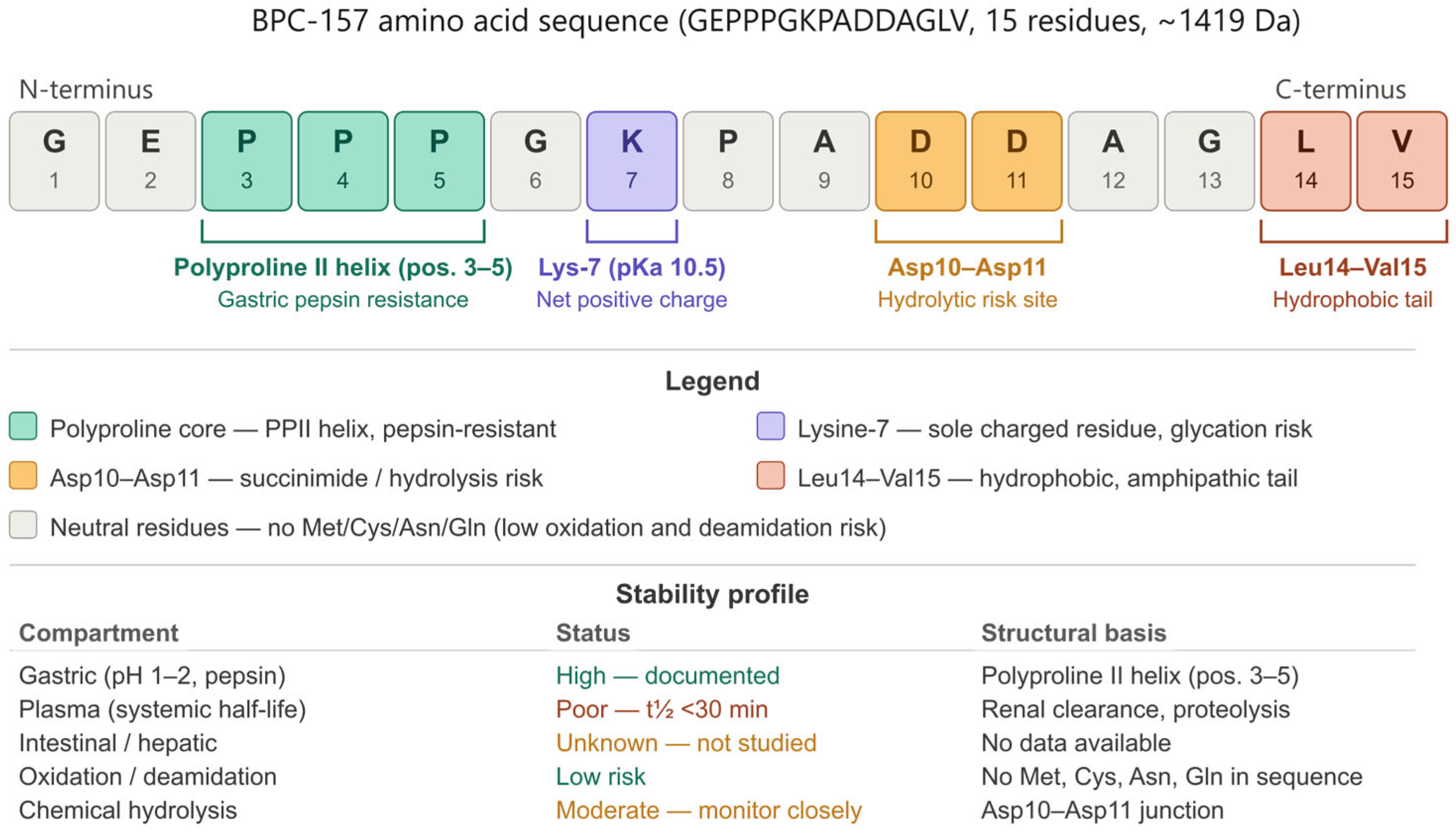
| Gastric stability | Resistance to pepsin and HCl (pH 1–2) | High—intact peptide recoverable after prolonged in vitro incubation | Conformational rigidity of N-terminal polyproline II helix sterically occludes proteolytic recognition sites | Oral delivery targeting the gastric absorption window is mechanistically justified; enteric coating not indicated | [1,2] |
| Plasma stability | Systemic elimination half-life | Poor—t½ < 30 min (IV: 15.2 min rat, 5.27 min dog; IV: <30 min human pilot) | Rapid renal filtration and systemic proteolytic hydrolysis to six peptide fragments (M1–M6) | Short dosing intervals or modified-release parenteral formulations required for sustained exposure; immediate-release may suffice if PK/PD disconnect reflects indirect mechanisms | [10,21] |
| Intestinal stability | Resistance to intestinal proteases and brush-border enzymes | Not determined | N/A | Critical uncharacterised gap; must be addressed before oral bioavailability can be predicted or formulation development initiated | — |
| Hepatic first-pass extraction | Hepatic metabolism foll owing oral absorption | Not determined | N/A | Unknown contribution to oral bioavailability loss; hepatic extraction study required as part of ADME characterisation programme | — |
| Oxidative degradation | Met oxidation; Cys disulfide formation; Trp oxidation | Minimal risk—sequence contains no Met, Cys, or Trp residues | Absence of oxidation-prone side chains | Antioxidants not required in formulation; packaging oxygen control may be simplified relative to most peptide drug products | [14,17] |
| Deamidation | Asn → Asp/isoAsp; Gln → Glu conversion | Not applicable—sequence contains no Asn or Gln residues | Absence of deamidation-susceptible residues | Deamidation monitoring not required in stability programme; pH control less critical than for Asn/Gln-containing peptides | [14,17] |
| Aspartyl-bond hydrolysis | Asp–X peptide bond cleavage; succinimide formation | Primary chemical liability—Asp10–Asp11–Ala12–Gly13 stretch represents principal hydrolytic risk under acidic and neutral conditions | Asp–Gly junction susceptible to succinimide-mediated isomerisation and hydrolysis; accelerated under PLGA matrix acidic microenvironment | Forced degradation programme must monitor Asp10–Asp11 cleavage products; PLGA compatibility requires dedicated assessment; pH optimisation of parenteral formulation critical | [14,17] |
| Glycation (Maillard reaction) | Lys7 ε-amino group reaction with reducing sugars | Potential liability in the presence of reducing-sugar excipients (e.g., lactose, glucose, maltose) | Lys7 pKa ~10.5; free ε-amino group reactive toward carbonyl groups under typical lyophilisation and storage conditions | Excipient selection must exclude reducing sugars; trehalose or mannitol preferred as lyoprotectants | [14] |
| Aggregation/fibrillation | β-sheet nucleation and fibril formation | Structural risk attenuated—three consecutive Pro residues at positions 3–5 disfavour β-sheet conformation; thermal/shear aggregation uncharacterised | Polyproline motif imposes conformational rigidity incompatible with β-sheet stacking; does not exclude stress-induced aggregation during manufacturing | Aggregation under manufacturing stresses (shear, freeze–thaw, thermal) must be characterised; SEC and DLS monitoring recommended in stability protocol | [14,17] |
| Adsorption to container surfaces | Peptide loss via adsorption to glass or polymer surfaces | Not determined; high risk anticipated at microgram-range doses | Low molecular weight and amphipathic character increase surface interaction probability; dose range (ng–µg/kg) amplifies relative impact of surface losses | Container surface adsorption study required; polysorbate 80 or human serum albumin as blocking agents should be evaluated; low-bind polymer vials or siliconised glass recommended | [14,17] |
| Property | BPC-157 | Semaglutide | Cyclosporine | Oxytocin | Desmopressin |
|---|---|---|---|---|---|
| MW (Da) | ~1419 | ~4114 | ~1203 | ~1007 | ~1069 |
| Structure | Linear | Linear + lipidation | Cyclic | Cyclic (disulfide) | Cyclic (disulfide) |
| Gastric stability | High (reported) | Low | Moderate | Low | Low |
| Oral bioavailability | Unknown | 0.4–1% (with SNAC) | ~30% | <1% | <1% |
| Half-life (human) | <30 min IV (human [8]); 15.2 min IV rats, 5.3 min IV dogs [31] | ~1 week | ~6–24 h | ~3–5 min | ~75 min |
| BCS classification | Tentative III | N/A (biologic) | Class II | Class III | Class III |
| Approved route | None | SC, oral | Oral, IV | IV, IM, intranasal | Oral, SC, intranasal |
| Class | Representative Agents | Mechanism | Route/Status | Differentiator vs. BPC-157 | Limiting Factor vs. BPC-157 |
|---|---|---|---|---|---|
| Recombinant growth factors | BMP-2 (Infuse®), PDGF-BB (Regranex®), rhVEGF | Direct receptor agonism (TK/Ser-Thr kinase) | Local implant/topical; approved (narrow indications) | Defined-pathway maximal stimulation; established regulatory pathway | Biologic-class manufacturing; heterotopic ossification, oedema, oncogenic-signal concerns |
| Anti-TNFα biologics | Infliximab, adalimumab | Cytokine neutralisation | IV/SC; approved for IBD, rheumatologic indications | Proven IBD efficacy; established reimbursement | Immunosuppression; infection/malignancy risk; immunogenicity; high cost |
| 5-ASA derivatives | Mesalazine, sulfasalazine | Local mucosal anti-inflammatory | Oral/rectal; approved generic (UC, CD) | First-line tolerability; generic availability | Modest efficacy in moderate-to-severe disease; no regenerative effect |
| Corticosteroids | Prednisolone, budesonide | Broad immunosuppression | Oral/IV/topical; approved generic | Rapid onset; very low cost | Chronic-use toxicity precludes maintenance therapy; no regenerative effect |
| Platelet-rich plasma | Autologous PRP preparations | Autologous growth-factor cocktail | Local intra-articular/intra-tendinous; minimally regulated | Autologous safety profile; widespread practitioner familiarity | Variable composition; single-injection logistics; no chronic-use evidence base |
| Mesenchymal stromal cells | Autologous/allogeneic MSC products | Paracrine immunomodulation; trophic support | Local injection; investigational/regional approvals | Broad regenerative repertoire | Manufacturing complexity; donor variability; regulatory burden |
| Intestinotrophic peptides | Teduglutide (Gattex®) | GLP-2 receptor agonism | SC daily; approved (short bowel syndrome) | Regulatory precedent for regenerative GI peptide | Narrow approved indication; immunogenicity; high cost |
| BPC-157 (proposed) | BPC-157 | Indirect cytoprotective/regenerative; Egr-1, NO-system, GH-receptor (target undefined) | Multi-route potential (oral, SC, IM, intra-articular, topical); investigational, no approval | Small-peptide manufacturing economics; route flexibility; regenerative without immunosuppression | Undefined molecular target; no validated human PK; no formulation; no controlled clinical data |
| Strategy | Route | Mechanism | Key Advantage | Development Status | Feasibility for BPC-157 |
|---|---|---|---|---|---|
| Absorption enhancer (e.g., SNAC) | Oral | Local pH elevation; transcellular permeation | Clinically validated (semaglutide) | Not investigated for BPC-157 | Highest |
| Chitosan nanoparticles | Oral | Mucoadhesion; tight junction opening | Dual permeation + protection | Not investigated | Moderate-to-high |
| PLGA microspheres | SC/IM depot | Sustained polymer erosion release | Weekly–monthly dosing | Not investigated | Lower (compatibility uncharacterised) |
| In situ forming gel | SC depot | Temperature/pH-triggered gelation | Simple manufacturing | Not investigated | Lower (compatibility uncharacterised |
| Hyaluronic acid hydrogel | Intra-articular | Extended synovial residence | Local delivery; approved excipient | Not investigated | High for local delivery |
| Enteric coating | Oral | Gastric bypass | Not indicated (gastric stable) | Not applicable | Not indicated |
| Study | Year | n | Route | Indication | Design | Key Finding | Evidence Level |
|---|---|---|---|---|---|---|---|
| Lee & Burgess [10] | 2025 | 2 | IV | Safety/PK (healthy) | Uncontrolled pilot | No AEs; T½ <30 min | Level V |
| Vasireddi et al. [7] | 2025 | 16 | Intra-articular | Chronic knee pain | Retrospective | 87.5% pain relief | Level IV |
| Lee et al. [52] | 2024 | 12 | Intravesical | Interstitial cystitis | Uncontrolled pilot | 80–100% symptom resolution | Level IV |
| Phase | Activities | Key Deliverables | Estimated Timeline |
|---|---|---|---|
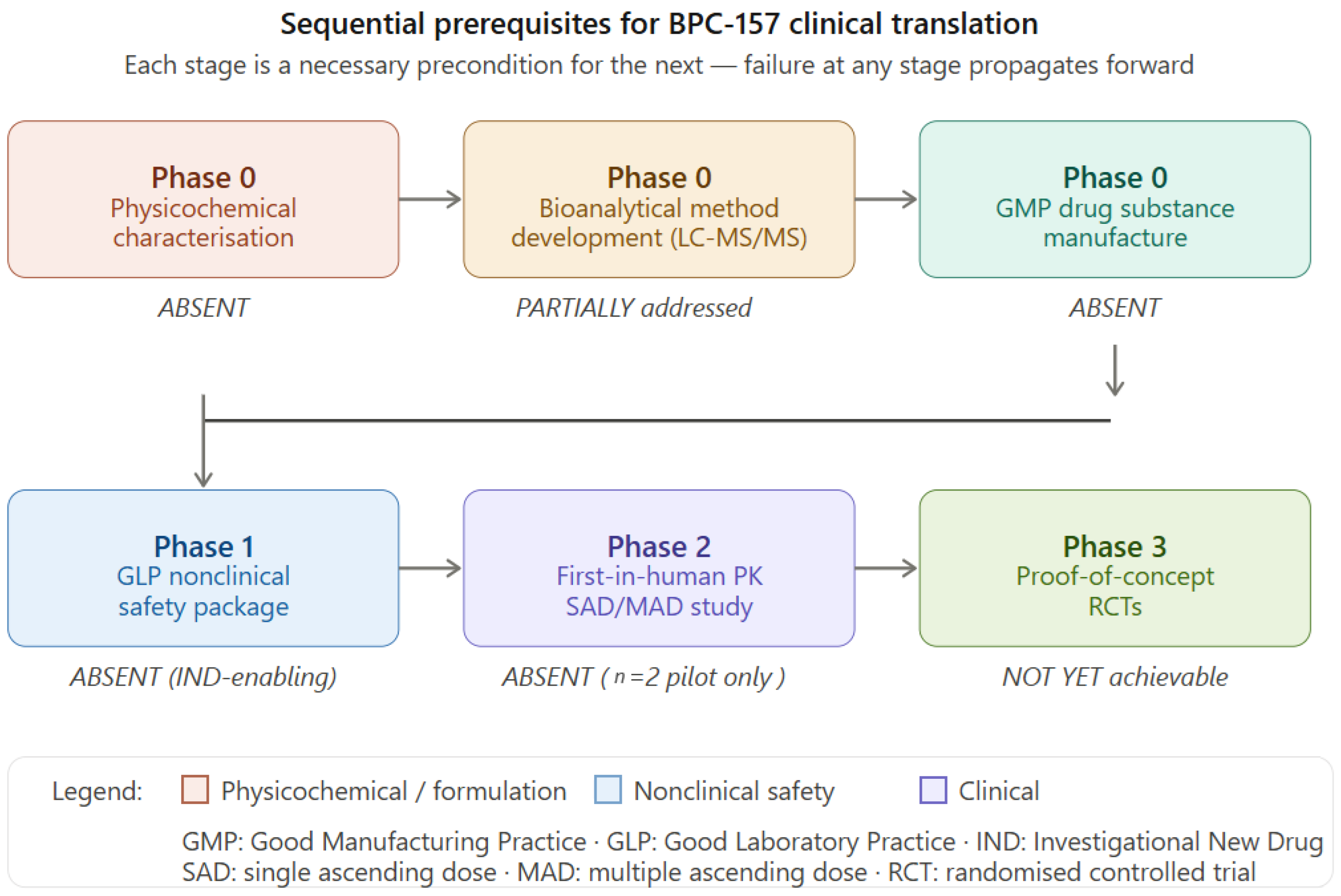
| Phase 0—Pharmaceutical foundation | LC-MS/MS bioanalytical method; ICH Q1A stress testing; solubility/permeability profiling; GMP drug substance manufacture | Validated bioanalytical method; drug substance specification; preliminary BCS classification | 12–18 months |
| Phase 1—Nonclinical safety | GLP repeat-dose toxicity (rat, dog); ICH S7A/S7B safety pharmacology; genotoxicity battery; local tolerance | IND-ready nonclinical package | 18–36 months |
| Phase 2—First-in-human PK | SAD/MAD study in healthy volunteers; full ADME; mass balance; pop-PK modeling | Human PK parameters; clinical dose justification | 12–18 months post-Phase 1 |
| Phase 3—Proof-of-concept | Phase IIa RCTs in 2–3 indications (e.g., NSAID enteropathy, Achilles tendinopathy, IBD) | Efficacy signal; dose–response; safety in patients | 24–36 months post-Phase 2 |
| Indication | Biopharmaceutical Justification | Development Priority |
|---|---|---|
| NSAID enteropathy/IBD | Oral route; local GI effect; no systemic absorption required | First priority |
| Achilles tendinopathy | Local IM/intra-tendinous; circumvents PK limitations | First priority |
| Intra-articular knee pain | Local intra-articular; synovial compartment retention | First priority |
| Perioperative organ protection | IV route; single-dose; defined PK window | Second priority |
| Cardiovascular/vascular | Systemic; requires validated human PK first | Second priority |
| CNS indications | Systemic or intranasal; most biopharmaceutically complex | Third priority |
Disclaimer/Publisher’s Note: The statements, opinions and data contained in all publications are solely those of the individual author(s) and contributor(s) and not of MDPI and/or the editor(s). MDPI and/or the editor(s) disclaim responsibility for any injury to people or property resulting from any ideas, methods, instructions or products referred to in the content. |
© 2026 by the authors. Licensee MDPI, Basel, Switzerland. This article is an open access article distributed under the terms and conditions of the Creative Commons Attribution (CC BY) license.
Share and Cite
Mateescu, D.-M.; Gavrilescu, D.-M.; Constantinescu, F.E.; Oancea, C.; Ilie, A.-C.; Folescu, R.; Popa, M.-D.; Iurciuc, S.; Muresan, C.-O.; Enache, A. BPC-157 as an Investigational Peptide Therapeutic: Biopharmaceutical Challenges, Formulation Strategies, and Translational Development Barriers. Pharmaceutics 2026, 18, 625. https://doi.org/10.3390/pharmaceutics18050625
Mateescu D-M, Gavrilescu D-M, Constantinescu FE, Oancea C, Ilie A-C, Folescu R, Popa M-D, Iurciuc S, Muresan C-O, Enache A. BPC-157 as an Investigational Peptide Therapeutic: Biopharmaceutical Challenges, Formulation Strategies, and Translational Development Barriers. Pharmaceutics. 2026; 18(5):625. https://doi.org/10.3390/pharmaceutics18050625
Chicago/Turabian StyleMateescu, Diana-Maria, Dragos-Mihai Gavrilescu, Florin Eugen Constantinescu, Cristian Oancea, Adrian-Cosmin Ilie, Roxana Folescu, Mihaela-Diana Popa, Stela Iurciuc, Camelia-Oana Muresan, and Alexandra Enache. 2026. "BPC-157 as an Investigational Peptide Therapeutic: Biopharmaceutical Challenges, Formulation Strategies, and Translational Development Barriers" Pharmaceutics 18, no. 5: 625. https://doi.org/10.3390/pharmaceutics18050625
APA StyleMateescu, D.-M., Gavrilescu, D.-M., Constantinescu, F. E., Oancea, C., Ilie, A.-C., Folescu, R., Popa, M.-D., Iurciuc, S., Muresan, C.-O., & Enache, A. (2026). BPC-157 as an Investigational Peptide Therapeutic: Biopharmaceutical Challenges, Formulation Strategies, and Translational Development Barriers. Pharmaceutics, 18(5), 625. https://doi.org/10.3390/pharmaceutics18050625