Sulfated Hyaluronan in Dermatology: What’s New? Overview of Evidence in Specific Dermatological Diseases
 ,
,  ,
, 
Abstract
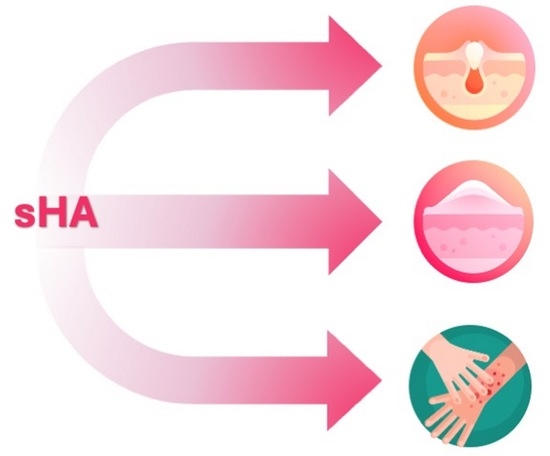
1. Introduction
2. Hyaluronic Acid: Biosynthesis and Role in Normal and Aged Skin
3. Sulfated GAGs: Biosynthesis and Role in Normal and Aged Skin

| Polymer | Sugar 1 | Sugar 2 | MW (kDa) | DS (mol) | R1 | R2,2,4 | Sulphation Ratio for Dimer | Reference |
|---|---|---|---|---|---|---|---|---|
| HS | GlcA/IdoA | GlcN | ~30 | 1–2 | Ac | -SO3Na/-H | 1/3~2/3 | [31] |
| Heparin | GlA/Ido | GlcN | ~15 | 2–3 | -SO3Na | -SO3Na/-H | 2/4~3/4 | [31] |
| KS | Gal | GlcNAc | 36–41 | 1–2 | -SO3Na/-H | -SO3Na/-H | 1/2~2/2; SO3Na; R1 ≠ R2 ≠ 3,4 | [32] |
| CS | GlcA | GalNAc | 50–100 | 1–2 | -SO3Na/-H | -SO3Na/-H | 1/4~2/4; -SO3Na; R1,2 > R3,4 | [33] |
| DS | IdoA | GalNAc | 30–92 | 1–2 | -SO3Na/-H | -SO3Na/-H | 1/3–2/3 | [34] |
| HA | GlcA | GlcNAc | 200–8000 | 0 | -H | -H | 0 | [35] |
| sHA1 | GlcA | GlcNAc | 15–43 | 0.5–1 | -SO3Na | -H | ~1/4 | [36] |
| sHA2 | GlcA | GlcNAc | ~1–20 | ~1/2.2 | -SO3Na | -SO3Sa | ~2/4 | [36] |
| sHA3 | SHA | GlcNAc | 15–43 | 2–3 | -SO3Na | -SO3Sa | ~3/4 | [36] |
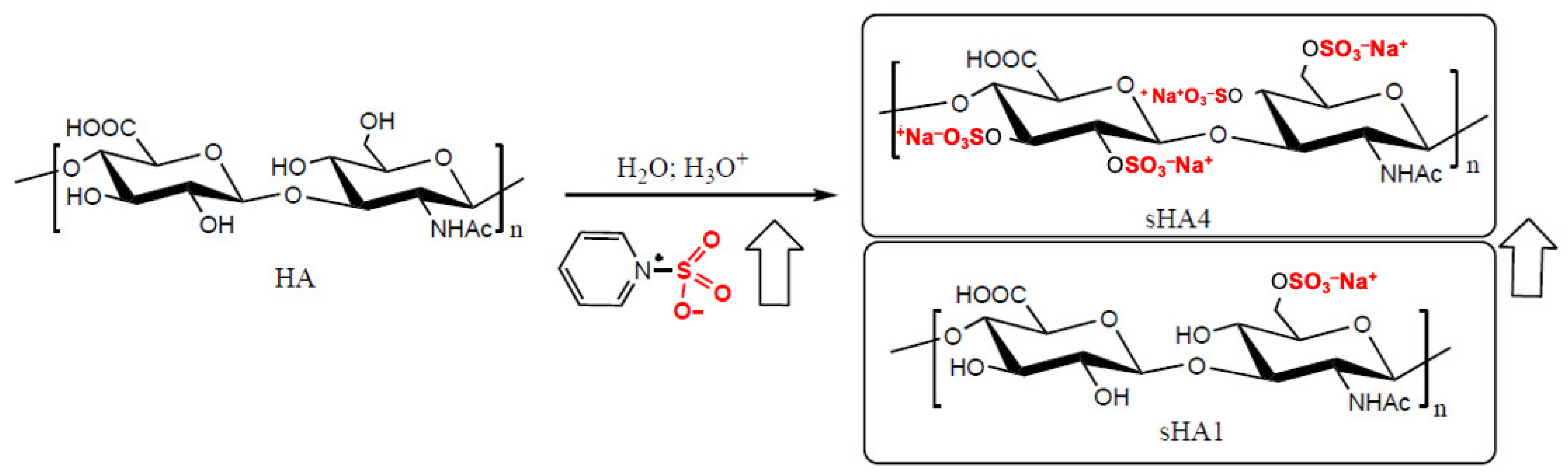
4. Sulfated Hyaluronan: Chemical Properties
5. Rationale for Using Sulfated Hyaluronan in Dermatology
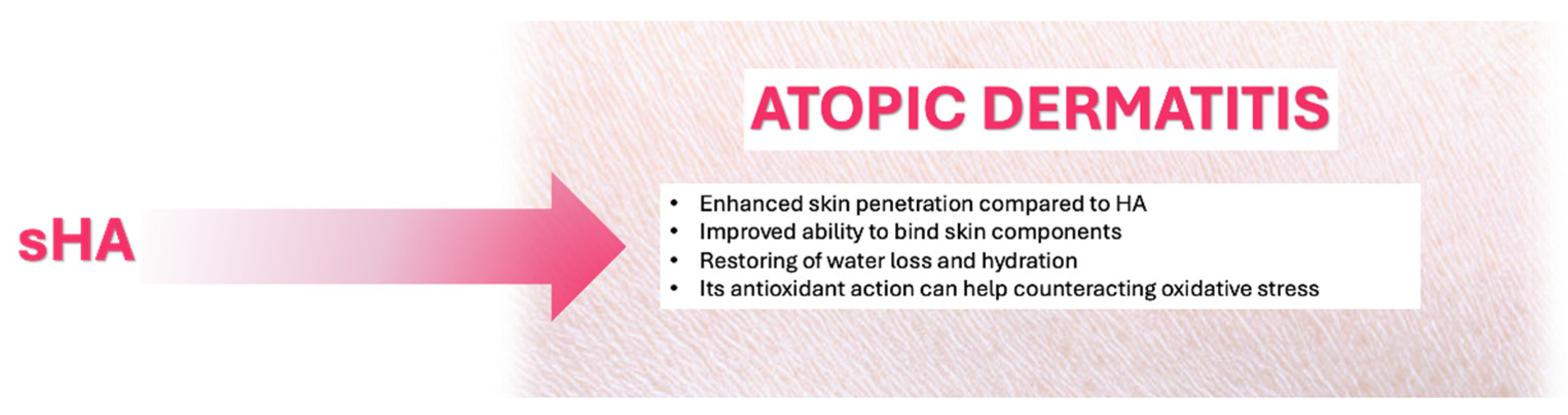
5.1. Atopic Dermatitis
5.2. Psoriasis
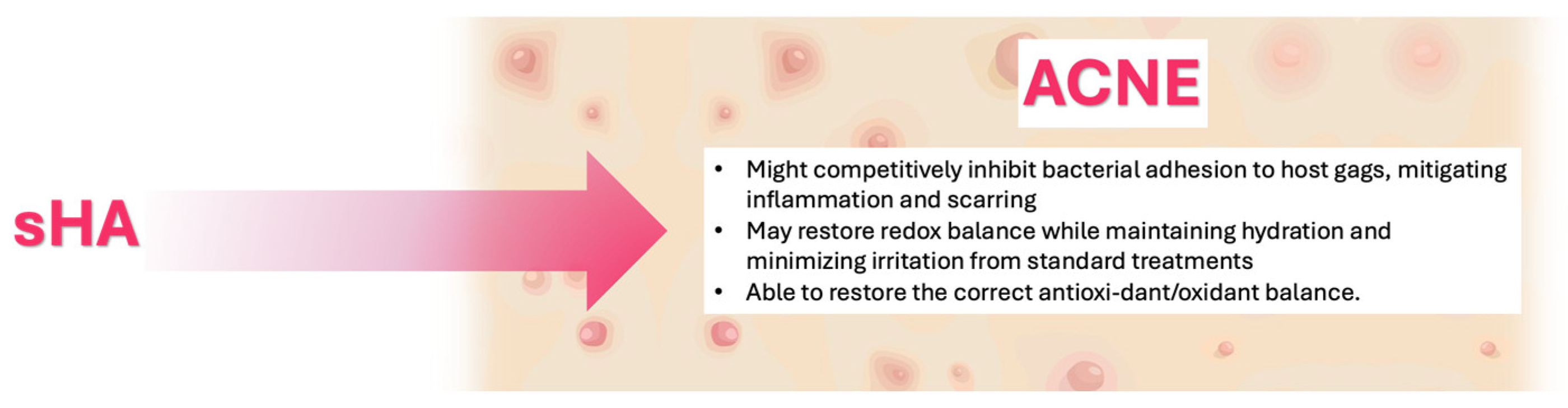
5.3. Acne
5.4. Other Conditions
6. Conclusions
Author Contributions
Funding
Institutional Review Board Statement
Informed Consent Statement
Data Availability Statement
Acknowledgments
Conflicts of Interest
References
- Carruthers, J.; Carruthers, A. Hyaluronic Acid Gel in Skin Rejuvenation. J. Drugs Dermatol. 2006, 5, 959–964. [Google Scholar]
- Abatangelo, G.; Vindigni, V.; Avruscio, G.; Pandis, L.; Brun, P. Hyaluronic Acid: Redefining Its Role. Cells 2020, 9, 1743. [Google Scholar] [CrossRef]
- Graça, M.F.P.; Miguel, S.P.; Cabral, C.S.D.; Correia, I.J. Hyaluronic Acid—Based Wound Dressings: A Review. Carbohydr. Polym. 2020, 241, 116364. [Google Scholar] [CrossRef]
- Iaconisi, G.N.; Lunetti, P.; Gallo, N.; Cappello, A.R.; Fiermonte, G.; Dolce, V.; Capobianco, L. Hyaluronic Acid: A Powerful Biomolecule with Wide-Ranging Applications—A Comprehensive Review. Int. J. Mol. Sci. 2023, 24, 10296. [Google Scholar] [CrossRef]
- Wu, G.T.; Kam, J.; Bloom, J.D. Hyaluronic Acid Basics and Rheology. Clin. Plast. Surg. 2023, 50, 391–398. [Google Scholar] [CrossRef] [PubMed]
- Bukhari, S.N.A.; Roswandi, N.L.; Waqas, M.; Habib, H.; Hussain, F.; Khan, S.; Sohail, M.; Ramli, N.A.; Thu, H.E.; Hussain, Z. Hyaluronic Acid, a Promising Skin Rejuvenating Biomedicine: A Review of Recent Updates and Pre-Clinical and Clinical Investigations on Cosmetic and Nutricosmetic Effects. Int. J. Biol. Macromol. 2018, 120, 1682–1695. [Google Scholar] [CrossRef] [PubMed]
- Lin, M.; Zhou, D.; Chen, K.; Jiang, H.; Chen, W.; Wu, J.; Zhu, G.; Xu, K.; Wei, P. Sulfated Hyaluronic Acid for Wound Repair: Mechanisms, Materials, and Translational Challenges. Regen. Ther. 2025, 30, 956–968. [Google Scholar] [CrossRef] [PubMed]
- Hong, C.-I.; Jung, E.-G.; Han, K.-I.; Kim, Y.H.; Lee, S.H.; Lee, H.S.; Han, M.-D. Structural Characteristics and Anti-Inflammatory Activities of Chemically Sulfated-Hyaluronic Acid from Streptococcus Dysgalactiae. J. Life Sci. 2016, 26, 545–554. [Google Scholar] [CrossRef]
- Chen, G.; Ito, Y.; Imanishi, Y.; Magnani, A.; Lamponi, S.; Barbucci, R. Photoimmobilization of Sulfated Hyaluronic Acid for Antithrombogenicity. Bioconjug. Chem. 1997, 8, 730–734. [Google Scholar] [CrossRef]
- Möller, S.; Schmidtke, M.; Weiss, D.; Schiller, J.; Pawlik, K.; Wutzler, P.; Schnabelrauch, M. Synthesis and Antiherpetic Activity of Carboxymethylated and Sulfated Hyaluronan Derivatives. Carbohydr. Polym. 2012, 90, 608–615. [Google Scholar] [CrossRef]
- Sturabotti, E.; Consalvi, S.; Tucciarone, L.; Macrì, E.; Di Lisio, V.; Francolini, I.; Minichiello, C.; Piozzi, A.; Vuotto, C.; Martinelli, A. Synthesis of Novel Hyaluronic Acid Sulfonated Hydrogels Using Safe Reactants: A Chemical and Biological Characterization. Gels 2022, 8, 480. [Google Scholar] [CrossRef]
- Garantziotis, S.; Savani, R.C. Hyaluronan biology: A complex balancing act of structure, function, location and context. Matrix Biol. 2019, 78–79, 1–10. [Google Scholar] [CrossRef]
- Koehler, L.; Ruiz-Gómez, G.; Balamurugan, K.; Rother, S.; Freyse, J.; Möller, S.; Schnabelrauch, M.; Köhling, S.; Djordjevic, S.; Scharnweber, D.; et al. Dual Action of Sulfated Hyaluronan on Angiogenic Processes in Relation to Vascular Endothelial Growth Factor-A. Sci. Rep. 2019, 9, 18143. [Google Scholar] [CrossRef] [PubMed]
- Marinho, A.; Nunes, C.; Reis, S. Hyaluronic Acid: A Key Ingredient in the Therapy of Inflammation. Biomolecules 2021, 11, 1518. [Google Scholar] [CrossRef] [PubMed]
- Fallacara, A.; Baldini, E.; Manfredini, S.; Vertuani, S. Hyaluronic Acid in the Third Millennium. Polymers 2018, 10, 701. [Google Scholar] [CrossRef] [PubMed]
- Baggenstoss, B.A.; Harris, E.N.; Washburn, J.L.; Medina, A.P.; Nguyen, L.; Weigel, P.H. Hyaluronan Synthase Control of Synthesis Rate and Hyaluronan Product Size Are Independent Functions Differentially Affected by Mutations in a Conserved Tandem B-X7-B Motif. Glycobiology 2017, 27, 154–164. [Google Scholar] [CrossRef]
- Nagira, T.; Nagahata-Ishiguro, M.; Tsuchiya, T. Effects of Sulfated Hyaluronan on Keratinocyte Differentiation and Wnt and Notch Gene Expression. Biomaterials 2007, 28, 844–850. [Google Scholar] [CrossRef]
- Tzellos, T.G.; Klagas, I.; Vahtsevanos, K.; Triaridis, S.; Printza, A.; Kyrgidis, A.; Karakiulakis, G.; Zouboulis, C.C.; Papakonstantinou, E. Extrinsic Ageing in the Human Skin Is Associated with Alterations in the Expression of Hyaluronic Acid and Its Metabolizing Enzymes. Exp. Dermatol. 2009, 18, 1028–1035. [Google Scholar] [CrossRef]
- Oh, J.-H.; Kim, Y.K.; Jung, J.-Y.; Shin, J.; Kim, K.H.; Cho, K.H.; Eun, H.C.; Chung, J.H. Intrinsic Aging- and Photoaging-Dependent Level Changes of Glycosaminoglycans and Their Correlation with Water Content in Human Skin. J. Dermatol. Sci. 2011, 62, 192–201. [Google Scholar] [CrossRef]
- Passi, A. (Data on file) Why Low Molecular Weight HA in Wound Healing? In Hyaluronic Acid Biological Activity vs. Molecular Weight; Insubria University: Varese, Italy, 2017; pp. 1–4. [Google Scholar]
- D’Agostino, A.; Stellavato, A.; Busico, T.; Papa, A.; Tirino, V.; Papaccio, G.; La Gatta, A.; De Rosa, M.; Schiraldi, C. In Vitro Analysis of the Effects on Wound Healing of High- and Low-Molecular Weight Chains of Hyaluronan and Their Hybrid H-HA/L-HA Complexes. BMC Cell Biol. 2015, 16, 19. [Google Scholar] [CrossRef]
- Fang, R.; Jiang, Q.; Guan, Y.; Gao, P.; Zhang, R.; Zhao, Z.; Jiang, Z. Golgi Apparatus-Synthesized Sulfated Glycosaminoglycans Mediate Polymerization and Activation of the CGAMP Sensor STING. Immunity 2021, 54, 962–975.e8. [Google Scholar] [CrossRef]
- Felz, S.; Neu, T.R.; van Loosdrecht, M.C.M.; Lin, Y. Aerobic Granular Sludge Contains Hyaluronic Acid-like and Sulfated Glycosaminoglycans-like Polymers. Water Res. 2020, 169, 115291. [Google Scholar] [CrossRef] [PubMed]
- Zerbinati, N.; Mocchi, R.; Galadari, H.; MacCario, C.; Maggi, M.; Rauso, R.; Passi, A.; Esposito, C.; Sommatis, S. In Vitro Evaluation of the Biological Availability of Hyaluronic Acid Polyethylene Glycols-Cross-Linked Hydrogels to Bovine Testes Hyaluronidase. Biomed. Res. Int. 2019, 2019, 3196723. [Google Scholar] [CrossRef]
- McCarty, M.F.; Russell, A.L.; Seed, M.P. Sulfated Glycosaminsglycan and Glucosamine May Synergize in Promoting Synovial Hyaluronic Acid Synthesis. Med. Hypotheses 2000, 54, 798–802. [Google Scholar] [CrossRef] [PubMed]
- Uribe-Gomez, J.; Farina, P.P.; Srinath, P.; Russo, L.; Pandit, A. Exploring the Extracellular Matrix: Engineering Native Glycosaminoglycans to Modulate Host Responses. Cell Biomater. 2025. [Google Scholar] [CrossRef]
- Nishikawa, H.; Mori, I.; Umemoto, J. Influences of Sulfated Glycosaminoglycans on Biosynthesis of Hyaluronic Acid in Rabbit Knee Synovial Membrane. Arch. Biochem. Biophys. 1985, 240, 146–153. [Google Scholar] [CrossRef]
- Lee, D.H.; Oh, J.-H.; Chung, J.H. Glycosaminoglycan and Proteoglycan in Skin Aging. J. Dermatol. Sci. 2016, 83, 174–181. [Google Scholar] [CrossRef]
- Carrino, D.A.; Calabro, A.; Darr, A.B.; Dours-Zimmermann, M.T.; Sandy, J.D.; Zimmermann, D.R.; Sorrell, J.M.; Hascall, V.C.; Caplan, A.I. Age-Related Differences in Human Skin Proteoglycans. Glycobiology 2011, 21, 257–268. [Google Scholar] [CrossRef] [PubMed][Green Version]
- Li, Y.; Liu, Y.; Xia, W.; Lei, D.; Voorhees, J.J.; Fisher, G.J. Age-Dependent Alterations of Decorin Glycosaminoglycans in Human Skin. Sci. Rep. 2013, 3, 2422. [Google Scholar] [CrossRef]
- Shriver, Z.; Capila, I.; Venkataraman, G.; Sasisekharan, R. Heparin and Heparan Sulfate: Analyzing Structure and Microheterogeneity. In Handbook of Experimental Pharmacology; Springer: Berlin/Heidelberg, Germany, 2012; Volume 207, pp. 159–176. ISBN 9783642230554. [Google Scholar]
- Fu, L.; Sun, X.; He, W.; Cai, C.; Onishi, A.; Zhang, F.; Linhardt, R.J.; Liu, Z. Keratan Sulfate Glycosaminoglycan from Chicken Egg White. Glycobiology 2016, 26, 693–700. [Google Scholar] [CrossRef]
- Martel-Pelletier, J.; Farran, A.; Montell, E.; Vergés, J.; Pelletier, J.-P. Discrepancies in Composition and Biological Effects of Different Formulations of Chondroitin Sulfate. Molecules 2015, 20, 4277–4289. [Google Scholar] [CrossRef]
- Volpi, N. Dermatan Sulfate: Recent Structural and Activity Data. Carbohydr. Polym. 2010, 82, 233–239. [Google Scholar] [CrossRef]
- Cowman, M.K.; Lee, H.-G.; Schwertfeger, K.L.; McCarthy, J.B.; Turley, E.A. The Content and Size of Hyaluronan in Biological Fluids and Tissues. Front. Immunol. 2015, 6, 261. [Google Scholar] [CrossRef]
- Behera, D.P.; Subadini, S.; Freudenberg, U.; Sahoo, H. Sulfation of Hyaluronic Acid Reconfigures the Mechanistic Pathway of Bone Morphogenetic Protein-2 Aggregation. Int. J. Biol. Macromol. 2024, 263, 130128. [Google Scholar] [CrossRef] [PubMed]
- Pavan, M.; Fanti, C.D.; Di Lucia, A.; Canato, E.; Acquasaliente, L.; Sonvico, F.; Delgado, J.; Hicks, A.; Torrelles, J.B.; Kulkarni, V.; et al. Aerosolized Sulfated Hyaluronan Derivatives Prolong the Survival of K18 ACE2 Mice Infected with a Lethal Dose of SARS-CoV-2. Eur. J. Pharm. Sci. 2023, 187, 106489. [Google Scholar] [CrossRef] [PubMed]
- Yasin, A.; Ren, Y.; Li, J.; Sheng, Y.; Cao, C.; Zhang, K. Advances in Hyaluronic Acid for Biomedical Applications. Front. Bioeng. Biotechnol. 2022, 10, 910290. [Google Scholar] [CrossRef] [PubMed]
- Tumova, S.; Woods, A.; Couchman, J.R. Heparan sulfate proteoglycans on the cell surface: Versatile coordinators of cellular functions. Int. J. Biochem. Cell Biol. 2000, 32, 269–288. [Google Scholar] [CrossRef]
- Gantumur, M.A.; Jia, X.; Hui, J.H.; Barber, C.; Wan, L.; Furenlid, L.R.; Martin, D.R.; Hui, M.; Liu, Z. Characterization, Bioactivity, and Biodistribution of 35 kDa Hyaluronan Fragment. Life 2024, 14, 97. [Google Scholar] [CrossRef] [PubMed]
- Hintze, V.; Schnabelrauch, M.; Rother, S. Chemical Modification of Hyaluronan and Their Biomedical Applications. Front. Chem. 2022, 10, 830671. [Google Scholar] [CrossRef]
- Hintze, V.; Moeller, S.; Schnabelrauch, M.; Bierbaum, S.; Viola, M.; Worch, H.; Scharnweber, D. Modifications of Hyaluronan Influence the Interaction with Human Bone Morphogenetic Protein-4 (HBMP-4). Biomacromolecules 2009, 10, 3290–3297. [Google Scholar] [CrossRef]
- Guarise, C.; Barbera, C.; Pavan, M.; Pluda, S.; Celestre, M.; Galesso, D. Dopamine-Functionalized Sulphated Hyaluronic Acid as a Titanium Implant Coating Enhances Biofilm Prevention and Promotes Osseointegration. Biofouling 2018, 34, 719–730. [Google Scholar] [CrossRef]
- Khan, A.Q.; Agha, M.V.; Sheikhan, K.S.A.M.; Younis, S.M.; Tamimi, M.A.; Alam, M.; Ahmad, A.; Uddin, S.; Buddenkotte, J.; Steinhoff, M. Targeting Deregulated Oxidative Stress in Skin Inflammatory Diseases: An Update on Clinical Importance. Biomed. Pharmacother. 2022, 154, 113601. [Google Scholar] [CrossRef]
- Hintze, V.; Miron, A.; Moeller, S.; Schnabelrauch, M.; Wiesmann, H.-P.; Worch, H.; Scharnweber, D. Sulfated Hyaluronan and Chondroitin Sulfate Derivatives Interact Differently with Human Transforming Growth Factor-Β1 (TGF-Β1). Acta Biomater. 2012, 8, 2144–2152. [Google Scholar] [CrossRef]
- Barbucci, R.; Benvenuti, M.; Casolaro, M.; Lamponi, S.; Magnani, A. Sulfated Hyaluronic Acid as Heparin-like Material: Physicochemical and Biological Characterization. J. Mater. Sci. Mater. Med. 1994, 5, 830–833. [Google Scholar] [CrossRef]
- Xing, F.; Zhou, C.; Hui, D.; Du, C.; Wu, L.; Wang, L.; Wang, L.; Pu, W.; Gu, X.; Zhang, X.; et al. Hyaluronic acid as a bioactive component for bone tissue regeneration: Fabrication, modification, properties, and biological functions. Nanotechnol. Rev. 2020, 9, 1059–1079. [Google Scholar] [CrossRef]
- Miura, T.; Kawano, M.; Takahashi, K.; Yuasa, N.; Habu, M.; Kimura, F.; Imamura, T.; Nakayama, F. High-Sulfated Hyaluronic Acid Ameliorates Radiation-Induced Intestinal Damage Without Blood Anticoagulation. Adv. Radiat. Oncol. 2022, 7, 100900. [Google Scholar] [CrossRef] [PubMed]
- Lemmnitzer, K.; Schiller, J.; Becher, J.; Möller, S.; Schnabelrauch, M. Improvement of the Digestibility of Sulfated Hyaluronans by Bovine Testicular Hyaluronidase: A UV Spectroscopic and Mass Spectrometric Study. Biomed. Res. Int. 2014, 2014, 986594. [Google Scholar] [CrossRef]
- Cen, L.; Neoh, K.G.; Marinda, L.W.; Kang, E.T. Assessment of in Vitro Bioactivity of Hyaluronic Acid and Sulfated Hyaluronic Acid Functionalized Electroactive Polymer. Biomacromolecules 2004, 5, 2238–2246. [Google Scholar] [CrossRef]
- Miura, T.; Yuasa, N.; Ota, H.; Habu, M.; Kawano, M.; Nakayama, F.; Nishihara, S. Highly Sulfated Hyaluronic Acid Maintains Human Induced Pluripotent Stem Cells under Feeder-Free and BFGF-Free Conditions. Biochem. Biophys. Res. Commun. 2019, 518, 506–512. [Google Scholar] [CrossRef]
- Schmaus, A.; Rothley, M.; Schreiber, C.; Möller, S.; Roßwag, S.; Franz, S.; Garvalov, B.K.; Thiele, W.; Spataro, S.; Herskind, C.; et al. Sulfated Hyaluronic Acid Inhibits the Hyaluronidase CEMIP and Regulates the HA Metabolism, Proliferation and Differentiation of Fibroblasts. Matrix Biol. 2022, 109, 173–191. [Google Scholar] [CrossRef]
- Barbucci, R.; Magnani, A.; Chiumiento, A.; Pasqui, D.; Cangioli, I.; Lamponi, S. Fibroblast Cell Behavior on Bound and Adsorbed Fibronectin onto Hyaluronan and Sulfated Hyaluronan Substrates. Biomacromolecules 2005, 6, 638–645. [Google Scholar] [CrossRef]
- Satoh, T.; Nishiyama, K.; Nagahata, M.; Teramoto, A.; Abe, K. The Research on Physiological Property of Functionalized Hyaluronan: Interaction between Sulfated Hyaluronan and Plasma Proteins. Polym. Adv. Technol. 2004, 15, 720–725. [Google Scholar] [CrossRef]
- Volpi, N. Chondroitin Sulfate Safety and Quality. Molecules 2019, 24, 1447. [Google Scholar] [CrossRef] [PubMed] [PubMed Central]
- Weidinger, S.; Novak, N. Atopic dermatitis. Nat. Rev. Dis. Primers 2018, 4, 1. [Google Scholar] [CrossRef]
- Murota, H.; Koike, Y.; Morisaki, H.; Matsumoto, M.; Takenaka, M. Exacerbating Factors and Disease Burden in Patients with Atopic Dermatitis. Allergol. Int. 2022, 71, 25–30. [Google Scholar] [CrossRef] [PubMed]
- Li, H.; Zhang, Z.; Zhang, H.; Guo, Y.; Yao, Z. Update on the Pathogenesis and Therapy of Atopic Dermatitis. Clin. Rev. Allergy Immunol. 2021, 61, 324–338. [Google Scholar] [CrossRef] [PubMed]
- Kvedariene, V.; Vaskovic, M.; Semyte, J.B. Role of Oxidative Stress and Antioxidants in the Course of Atopic Dermatitis. Int. J. Mol. Sci. 2025, 26, 4210. [Google Scholar] [CrossRef] [PubMed]
- Evrard, C.; Lambert de Rouvroit, C.; Poumay, Y. Epidermal Hyaluronan in Barrier Alteration-Related Disease. Cells 2021, 10, 3096. [Google Scholar] [CrossRef]
- Chajra, H.; Auriol, D.; Joly, F.; Pagnon, A.; Rodrigues, M.; Allart, S.; Redziniak, G.; Lefevre, F. Reactivating the Extracellular Matrix Synthesis of Sulfated Glycosaminoglycans and Proteoglycans to Improve the Human Skin Aspect and Its Mechanical Properties. Clin. Cosmet. Investig. Dermatol. 2016, 9, 461–472. [Google Scholar] [CrossRef]
- Luger, T.; Amagai, M.; Dreno, B.; Dagnelie, M.-A.; Liao, W.; Kabashima, K.; Schikowski, T.; Proksch, E.; Elias, P.M.; Simon, M.; et al. Atopic Dermatitis: Role of the Skin Barrier, Environment, Microbiome, and Therapeutic Agents. J. Dermatol. Sci. 2021, 102, 142–157. [Google Scholar] [CrossRef]
- Lugović-Mihić, L.; Meštrović-Štefekov, J.; Potočnjak, I.; Cindrić, T.; Ilić, I.; Lovrić, I.; Skalicki, L.; Bešlić, I.; Pondeljak, N. Atopic Dermatitis: Disease Features, Therapeutic Options, and a Multidisciplinary Approach. Life 2023, 13, 1419. [Google Scholar] [CrossRef]
- Gatmaitan, J.G.; Lee, J.H. Challenges and Future Trends in Atopic Dermatitis. Int. J. Mol. Sci. 2023, 24, 11380. [Google Scholar] [CrossRef] [PubMed]
- Vasvani, S.; Kulkarni, P.; Rawtani, D. Hyaluronic Acid: A Review on Its Biology, Aspects of Drug Delivery, Route of Administrations and a Special Emphasis on Its Approved Marketed Products and Recent Clinical Studies. Int. J. Biol. Macromol. 2020, 151, 1012–1029. [Google Scholar] [CrossRef]
- Zheng, B.W.; Wang, B.Y.; Xiao, W.L.; Sun, Y.J.; Yang, C.; Zhao, B.T. Different Molecular Weight Hyaluronic Acid Alleviates Inflammation Response in DNFB-Induced Mice Atopic Dermatitis and LPS-Induced RAW 264.7 Cells. Life Sci. 2022, 301, 120591. [Google Scholar] [CrossRef] [PubMed]
- Leite, M.N.; Frade, M.A.C. Efficacy of 0.2% Hyaluronic Acid in the Healing of Skin Abrasions in Rats. Heliyon 2021, 7, e07572. [Google Scholar] [CrossRef]
- Farokh Forghani, S.; Bagheri, T.; Naderi Gharahgheshlagh, S.; Hoveidamanesh, S.; Ghadimi, T.; Ghorbanian Kelachayeh, S.; Irilouzadian, R. The effect of hyaluronic acid and iodine complex gel compared to Vaseline on deep second-degree burn wound in rats. Int. Wound J. 2024, 21, e14738. [Google Scholar] [CrossRef]
- Fujikawa, M.; Sugimoto, H.; Tamura, R.; Fujikawa, K.; Yamagishi, A.; Ueda, Y. Effects of Mucopolysaccharide Polysulphate on Tight Junction Barrier in Human Epidermal Keratinocytes. Exp. Dermatol. 2022, 31, 1676–1684. [Google Scholar] [CrossRef] [PubMed]
- Cilurzo, F.; Vistoli, G.; Gennari, C.G.M.; Selmin, F.; Gardoni, F.; Franzè, S.; Campisi, M.; Minghetti, P. The Role of the Conformational Profile of Polysaccharides on Skin Penetration: The Case of Hyaluronan and Its Sulfates. Chem. Biodivers. 2014, 11, 551–561. [Google Scholar] [CrossRef]
- Jouy, F.; Lohmann, N.; Wandel, E.; Ruiz-Gómez, G.; Pisabarro, M.T.; Beck-Sickinger, A.G.; Schnabelrauch, M.; Möller, S.; Simon, J.C.; Kalkhof, S.; et al. Sulfated Hyaluronan Attenuates Inflammatory Signaling Pathways in Macrophages Involving Induction of Antioxidants. Proteomics 2017, 17, 1700082. [Google Scholar] [CrossRef]
- Raharja, A.; Mahil, S.K.; Barker, J.N. Psoriasis: A Brief Overview. Clin. Med. 2021, 21, 170–173. [Google Scholar] [CrossRef]
- Armstrong, A.W.; Read, C. Pathophysiology, Clinical Presentation, and Treatment of Psoriasis: A Review. J. Am. Med. Assoc. 2020, 323, 1945–1960. [Google Scholar] [CrossRef] [PubMed]
- Puig, L.; Choon, S.E.; Gottlieb, A.B.; Marrakchi, S.; Prinz, J.C.; Romiti, R.; Tada, Y.; von Bredow, D.; Gooderham, M. Generalized Pustular Psoriasis: A Global Delphi Consensus on Clinical Course, Diagnosis, Treatment Goals and Disease Management. J. Eur. Acad. Dermatol. Venereol. 2023, 37, 737–752. [Google Scholar] [CrossRef] [PubMed]
- Pellacani, G.; Peris, K.; Argenziano, G.; Bianchi, L.; Conti, A.; Dattola, A.; Falcone, R.; Gisondi, P.; Greco, M.E.; Marchetti, P.; et al. Practical recommendations for oncological psoriatic patients: Flow chart and statement. Ital. J. Dermatol. Venerol. 2025, 160, 377–379. [Google Scholar] [CrossRef]
- Priestley, G.C. Urinary Excretion of Glycosaminoglycans in Psoriasis. Arch. Dermatol. Res. 1988, 280, 77–82. [Google Scholar] [CrossRef] [PubMed]
- Lerner, I.; Zcharia, E.; Neuman, T.; Hermano, E.; Rubinstein, A.M.; Vlodavsky, I.; Elkin, M. Heparanase Is Preferentially Expressed in Human Psoriatic Lesions and Induces Development of Psoriasiform Skin Inflammation in Mice. Cell. Mol. Life Sci. 2014, 71, 2347–2357. [Google Scholar] [CrossRef]
- Seyger, M.; Van den Born, J.; Schalkwijk, J.; Van de Kerkhof, P.; De Jong, E.M. Altered Distribution of Heparan Sulfate Proteoglycans in Psoriasis. Acta Derm. Venereol. 1997, 77, 105–109. [Google Scholar] [CrossRef]
- Dobrică, E.-C.; Cozma, M.-A.; Găman, M.-A.; Voiculescu, V.-M.; Găman, A.M. The Involvement of Oxidative Stress in Psoriasis: A Systematic Review. Antioxidants 2022, 11, 282. [Google Scholar] [CrossRef]
- Torregrossa, M.; Kakpenova, A.; Simon, J.C.; Franz, S. Modulation of macrophage functions by ECM-inspired wound dressings—A promising therapeutic approach for chronic wounds. Biol. Chem. 2021, 402, 1289–1307. [Google Scholar] [CrossRef]
- Iqbal, M.; Yasin, A.; Akram, A.; Li, J.-A.; Zhang, K. Advances of Sulfonated Hyaluronic Acid in Biomaterials and Coatings—A Review. Coatings 2023, 13, 1345. [Google Scholar] [CrossRef]
- Heng, A.H.S.; Chew, F.T. Systematic Review of the Epidemiology of Acne Vulgaris. Sci. Rep. 2020, 10, 5754. [Google Scholar] [CrossRef]
- Dreno, B.; Martin, R.; Moyal, D.; Henley, J.B.; Khammari, A.; Seité, S. Skin Microbiome and Acne Vulgaris: Staphylococcus, a New Actor in Acne. Exp. Dermatol. 2017, 26, 798–803. [Google Scholar] [CrossRef]
- Ramos-e-Silva, M.; Ramos-e-Silva, S.; Carneiro, S. Acne in Women. Br. J. Dermatol. 2015, 172, 20–26. [Google Scholar] [CrossRef] [PubMed]
- Conforti, C.; Chello, C.; Giuffrida, R.; di Meo, N.; Zalaudek, I.; Dianzani, C. An Overview of Treatment Options for Mild-to-moderate Acne Based on American Academy of Dermatology, European Academy of Dermatology and Venereology, and Italian Society of Dermatology and Venereology Guidelines. Dermatol. Ther. 2020, 33, e13548. [Google Scholar] [CrossRef] [PubMed]
- Kavasi, R.-M.; Berdiaki, A.; Spyridaki, I.; Corsini, E.; Tsatsakis, A.; Tzanakakis, G.; Nikitovic, D. HA Metabolism in Skin Homeostasis and Inflammatory Disease. Food Chem. Toxicol. 2017, 101, 128–138. [Google Scholar] [CrossRef]
- Martín, C.; Ordiales, H.; Vázquez, F.; Pevida, M.; Rodríguez, D.; Merayo, J.; Vázquez, F.; García, B.; Quirós, L.M. Bacteria Associated with Acne Use Glycosaminoglycans as Cell Adhesion Receptors and Promote Changes in the Expression of the Genes Involved in Their Biosynthesis. BMC Microbiol. 2022, 22, 65. [Google Scholar] [CrossRef] [PubMed]
- Ordiales, H.; Vázquez-López, F.; Pevida, M.; Vázquez-Losada, B.; Vázquez, F.; Quirós, L.M.; Martín, C. Glycosaminoglycans Are Involved in the Adhesion of Candida albicans and Malassezia Species to Keratinocytes But Not to Dermal Fibroblasts. Actas Dermosifiliogr. 2021, 112, 619–624. [Google Scholar] [CrossRef]
- Yu, J. Fibronectin Binding by Propionibacterium acnes. FEMS Immunol. Med. Microbiol. 1997, 19, 247–253. [Google Scholar] [CrossRef]
- Nazipi, S.; Stødkilde, K.; Scavenius, C.; Brüggemann, H.; Nazipi, S.; Stødkilde, K.; Scavenius, C.; Brüggemann, H. The Skin Bacterium Propionibacterium Acnes Employs Two Variants of Hyaluronate Lyase with Distinct Properties. Microorganisms 2017, 5, 57. [Google Scholar] [CrossRef]
- Su, Z.; Zhang, Y.; Cao, J.; Sun, Y.; Cai, Y.; Zhang, B.; He, L.; Zhang, Z.; Xie, J.; Meng, Q.; et al. Hyaluronic Acid-FGF2-Derived Peptide Bioconjugates for Suppression of FGFR2 and AR Simultaneously as an Acne Antagonist. J. Nanobiotechnol. 2023, 21, 55, Erratum in J. Nanobiotechnol. 2024, 22, 70. https://doi.org/10.1186/s12951-024-02327-5. [Google Scholar] [CrossRef]
- Cao, C.K.; Shi, Z.Y.; Chen, C.B.; Li, X.K.; Su, Z.J. Fibroblast Growth Factor-Derived Peptides: Sources, Functions, and Applications. Bioengineering 2025, 12, 1019. [Google Scholar] [CrossRef]
- Popa, G.L.; Mitran, C.I.; Mitran, M.I.; Tampa, M.; Matei, C.; Popa, M.I.; Georgescu, S.R. Markers of Oxidative Stress in Patients with Acne: A Literature Review. Life 2023, 13, 1433. [Google Scholar] [CrossRef] [PubMed]
- Hurst, J.R.; Shannon, B.A.; Craig, H.C.; Rishi, A.; Tuffs, S.W.; McCormick, J.K. The Streptococcus Pyogenes Hyaluronic Acid Capsule Promotes Experimental Nasal and Skin Infection by Preventing Neutrophil-Mediated Clearance. PLoS Pathog. 2022, 18, e1011013. [Google Scholar] [CrossRef] [PubMed]
- Starr, C.R.; Engleberg, N.C. Role of Hyaluronidase in Subcutaneous Spread and Growth of Group A Streptococcus. Infect. Immun. 2006, 74, 40. [Google Scholar] [CrossRef] [PubMed]
- Cosmile Europe. INCI Database. Available online: https://cosmileeurope.eu/inci/ (accessed on 5 May 2025).


| Property/Function | HMW-HA | LMW-HA | References |
|---|---|---|---|
| Average molecular weight | >1000 kDa | 50–500 kDa | [15,16,17,18,19,20] |
| Diffusion through epidermis | Low | High | [16,17] |
| Enzymatic degradation rate | Slow | Fast | [19] |
| Water-binding capacity | Very high | Moderate | [1,2,3,4,5,6] |
| Biological activity | Anti-inflammatory, space-filling | Pro-healing, pro-angiogenic | [9,21] |
| Receptor interaction (CD44, RHAMM) | Moderate | Stronger (higher mobility) | [14] |
| Effect on fibroblasts | ECM organization | Migration and proliferation | [21] |
| Role in wound healing | Structural support | Re-epithelialization and ECM remodeling | [3,9,21] |
| Typical applications | Fillers, moisturizers | Healing gels, regenerative formulations | [5,6] |
| Parameter | Native HA (Non-Sulfated) | Sulfated HA (sHA) |
|---|---|---|
| Stability to hyaluronidase | Low | High (slower enzymatic degradation) |
| Charge density | Negative (COO−) | More negative (COO− + SO3−) |
| Growth factor binding (VEGF, FGF, TGF-β) | Limited | Increased (stronger sequestration and retention) |
| Receptor affinity (e.g., CD44) | Moderate | Modified or enhanced (depending on degree and pattern of sulfation) |
| Antioxidant capacity | Limited | Improved (preclinical evidence) |
| Skin penetration/absorption | Dependent on molecular weight | Influenced by both molecular weight and degree of sulfation; favorable electrostatic interactions |
| Dermatological implications | Hydration, barrier support | Barrier repair, anti-inflammatory effects, ECM remodeling |
| Reference | Model/Method | System Studied | Main Findings | Relevance to Dermatology |
|---|---|---|---|---|
| [61] | Hydrogel delivery (in vitro/ex vivo) | Degradable hydrogels with sHA macromers | Sustained release of heparin-binding growth factors (e.g., HB-EGF); improved retention vs. non-sulfated HA | Controlled growth factor delivery and prolonged wound-healing response |
| [60] | Human outer-root-sheath keratinocytes and melanocytes (in vitro) | Artificial ECM containing sHA | ↑ Keratinocyte proliferation and migration; support of melanocytic phenotype; excellent cytocompatibility | Cutaneous regeneration and re-epithelialization |
| [63] | Surface plasmon resonance (SPR) and computational modeling | sHA vs. chondroitin sulfate derivatives interacting with TGF-β1 | sHA interferes with TGF-β1:TβRI/TβRII complex formation; sulfation-dependent binding | Mechanistic basis for anti-fibrotic and anti-scarring potential |
| [62] | SPR and molecular modeling | sHA derivatives with TGF-β1 and its receptors | Modulation of TGF-β1 signaling and receptor binding in a sulfation-dependent manner | Regulation of fibroblast activation and ECM remodeling |
| [64] | Human macrophages (in vitro) | Inflammatory signaling assays | sHA attenuates NF-κB activation and induces antioxidant response (HO-1, SOD) | Anti-inflammatory and antioxidative potential in inflamed skin |
| [48] | Mouse model (in vivo) | High-sulfated HA administration post-radiation | Amelioration of radiation-induced tissue injury without systemic anticoagulation | Demonstrates in vivo safety and cytoprotective effects of sHA |
Disclaimer/Publisher’s Note: The statements, opinions and data contained in all publications are solely those of the individual author(s) and contributor(s) and not of MDPI and/or the editor(s). MDPI and/or the editor(s) disclaim responsibility for any injury to people or property resulting from any ideas, methods, instructions or products referred to in the content. |
© 2025 by the authors. Licensee MDPI, Basel, Switzerland. This article is an open access article distributed under the terms and conditions of the Creative Commons Attribution (CC BY) license (https://creativecommons.org/licenses/by/4.0/).
Share and Cite
Pellacani, G.; Michelini, S.; Trovato, F.; Rallo, A.; Gemma, G.; Chello, C.; Pavan, M.; Guarise, C.; Passi, A.G. Sulfated Hyaluronan in Dermatology: What’s New? Overview of Evidence in Specific Dermatological Diseases. Pharmaceutics 2025, 17, 1600. https://doi.org/10.3390/pharmaceutics17121600
Pellacani G, Michelini S, Trovato F, Rallo A, Gemma G, Chello C, Pavan M, Guarise C, Passi AG. Sulfated Hyaluronan in Dermatology: What’s New? Overview of Evidence in Specific Dermatological Diseases. Pharmaceutics. 2025; 17(12):1600. https://doi.org/10.3390/pharmaceutics17121600
Chicago/Turabian StylePellacani, Giovanni, Simone Michelini, Federica Trovato, Alessandra Rallo, Giuseppe Gemma, Camilla Chello, Mauro Pavan, Cristian Guarise, and Alberto Giuseppe Passi. 2025. "Sulfated Hyaluronan in Dermatology: What’s New? Overview of Evidence in Specific Dermatological Diseases" Pharmaceutics 17, no. 12: 1600. https://doi.org/10.3390/pharmaceutics17121600
APA StylePellacani, G., Michelini, S., Trovato, F., Rallo, A., Gemma, G., Chello, C., Pavan, M., Guarise, C., & Passi, A. G. (2025). Sulfated Hyaluronan in Dermatology: What’s New? Overview of Evidence in Specific Dermatological Diseases. Pharmaceutics, 17(12), 1600. https://doi.org/10.3390/pharmaceutics17121600