Article

New Strategies for Improving Budesonide Skin Retention
by
Cristina Padula
1,
Ian Pompermayer Machado
2,
Aryane Alves Vigato
3 and
Daniele Ribeiro de Araujo
3,*
1
Department of Food and Drug, University of Parma, 43100 Parma, Italy
2
Department of Fundamental Chemistry, Institute of Chemistry, University of São Paulo, Sao Paulo 01000-000, SP, Brazil
3
Drug and Bioactives Delivery Systems Research Group (SISLIBIO), Human and Natural Sciences Center, Federal University of ABC, Av. dos Estados 5001, Bl A, T 3, Lab 503-3, Bangu, Saint Andrew 090210-580, SP, Brazil
*
Author to whom correspondence should be addressed.
Pharmaceutics 2022, 14(1), 30; https://doi.org/10.3390/pharmaceutics14010030

Submission received: 2 December 2021 / Revised: 16 December 2021 / Accepted: 21 December 2021 / Published: 24 December 2021
(This article belongs to the Special Issue Topical Drug Delivery: Innovative Controlled Release Systems)

Abstract

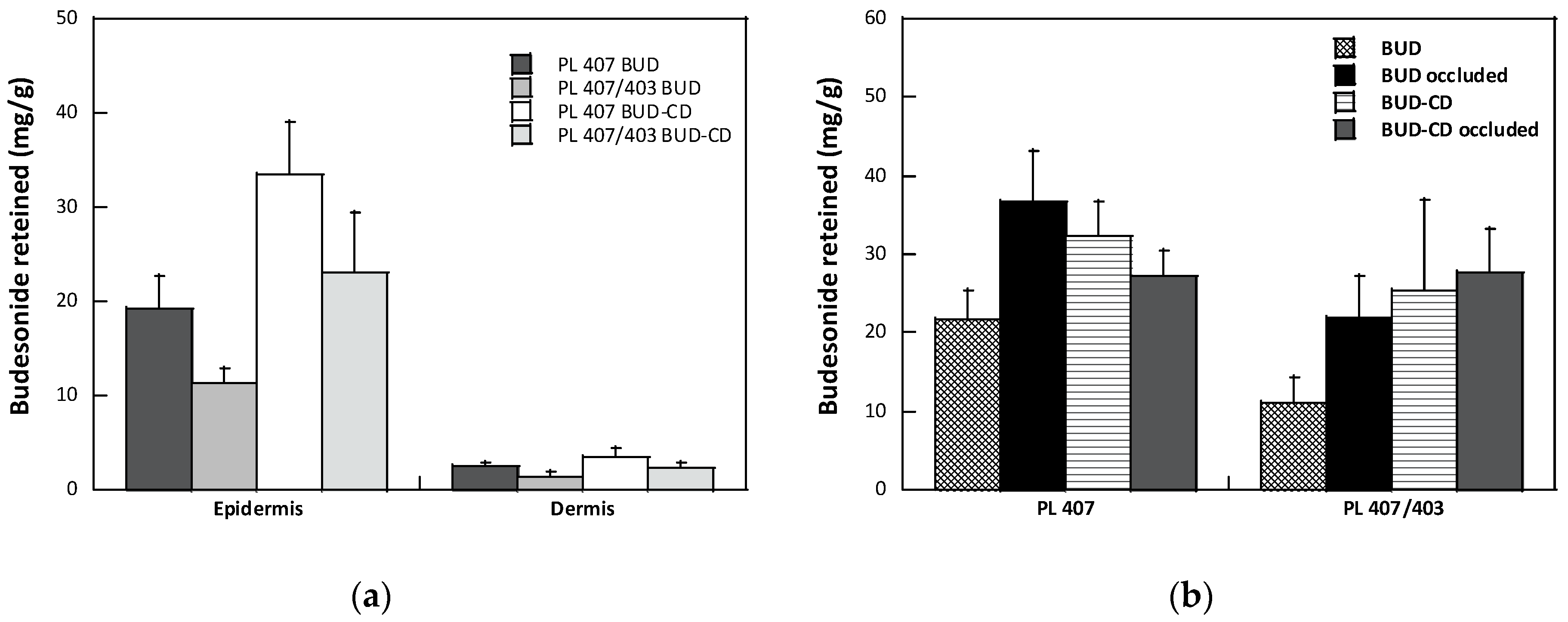
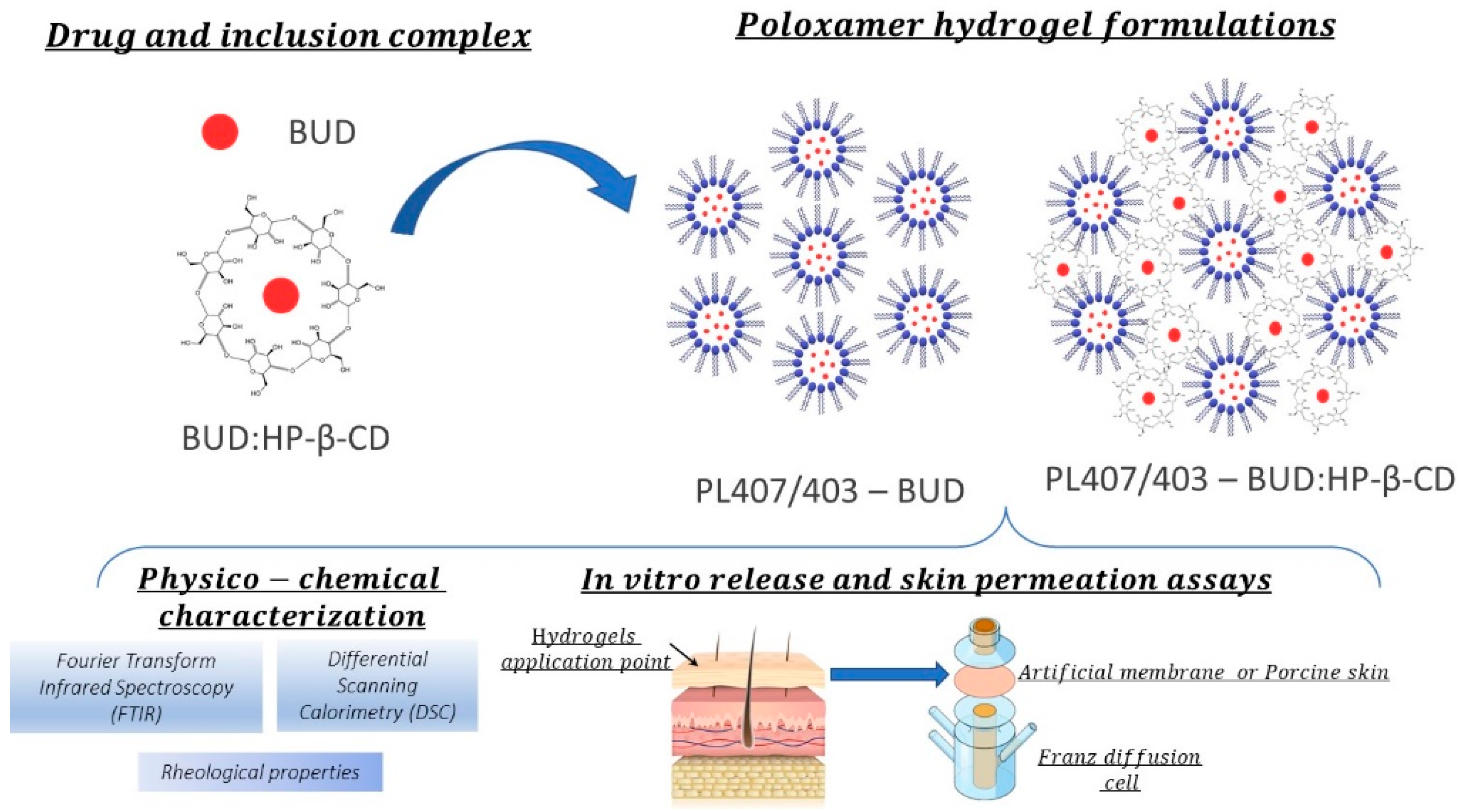
The aim of this work was to evaluate the ex vivo effect of the combination of two strategies, complexation with cyclodextrin, and poloxamer hydrogels, for improving water solubility in the dermal absorption of budesonide. Two hydrogels containing 20% poloxamer 407, alone or in combination with poloxamer 403, were prepared. Each formulation was loaded with 0.05% budesonide, using either pure budesonide or its inclusion complex with hydroxypropyl-β-cyclodextrin, and applied in finite dose conditions on porcine skin. The obtained results showed that for all formulations, budesonide accumulated preferentially in the epidermis compared to the dermis. The quantity of budesonide recovered in the receptor compartment was, in all cases, lower than the LOQ of the analytical method, suggesting the absence of possible systemic absorption. The use of a binary poloxamer mixture reduced skin retention, in line with the lower release from the vehicle. When the hydrogels were formulated with the inclusion complex, an increase in budesonide skin retention was observed with both hydrogels. Poloxamer hydrogel proved to be a suitable vehicle for cutaneous administration of budesonide.
Keywords: budesonide; poloxamers; dermal; skin delivery; atopic dermatitis budesonide; poloxamers; dermal; skin delivery; atopic dermatitis