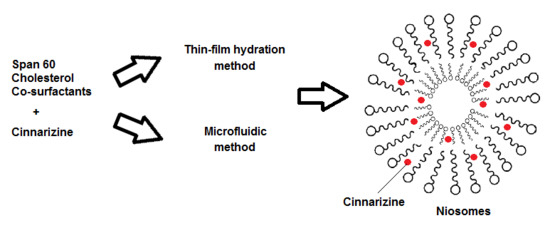
Brief Effect of a Small Hydrophobic Drug (Cinnarizine) on the Physicochemical Characterisation of Niosomes Produced by Thin-Film Hydration and Microfluidic Methods



Abstract
Share and Cite
Yeo, L.K.; Olusanya, T.O.B.; Chaw, C.S.; Elkordy, A.A. Brief Effect of a Small Hydrophobic Drug (Cinnarizine) on the Physicochemical Characterisation of Niosomes Produced by Thin-Film Hydration and Microfluidic Methods. Pharmaceutics 2018, 10, 185. https://doi.org/10.3390/pharmaceutics10040185
Yeo LK, Olusanya TOB, Chaw CS, Elkordy AA. Brief Effect of a Small Hydrophobic Drug (Cinnarizine) on the Physicochemical Characterisation of Niosomes Produced by Thin-Film Hydration and Microfluidic Methods. Pharmaceutics. 2018; 10(4):185. https://doi.org/10.3390/pharmaceutics10040185
Chicago/Turabian StyleYeo, Li Key, Temidayo O. B. Olusanya, Cheng Shu Chaw, and Amal Ali Elkordy. 2018. "Brief Effect of a Small Hydrophobic Drug (Cinnarizine) on the Physicochemical Characterisation of Niosomes Produced by Thin-Film Hydration and Microfluidic Methods" Pharmaceutics 10, no. 4: 185. https://doi.org/10.3390/pharmaceutics10040185
APA StyleYeo, L. K., Olusanya, T. O. B., Chaw, C. S., & Elkordy, A. A. (2018). Brief Effect of a Small Hydrophobic Drug (Cinnarizine) on the Physicochemical Characterisation of Niosomes Produced by Thin-Film Hydration and Microfluidic Methods. Pharmaceutics, 10(4), 185. https://doi.org/10.3390/pharmaceutics10040185