HHV-6A Drives Epigenetic Reprogramming via an EZH2–SIRT1 Axis to Sustain Mutant p53 and Reshape Oncogenic Inflammatory Signaling

 , , , ,
  , and
, and
Abstract
1. Introduction
2. Materials and Methods
2.1. Cell Cultures, Infection, and Treatments
2.2. Quantitative Real-Time Polymerase Chain Reaction (qRT-PCR)
2.3. Cell Viability Assay
2.4. Western Blot Analysis
2.5. Chemiluminescent Immunometric Assay (Luminex Assay)
2.6. Densitometric Analysis
2.7. Statistical Analysis
3. Results
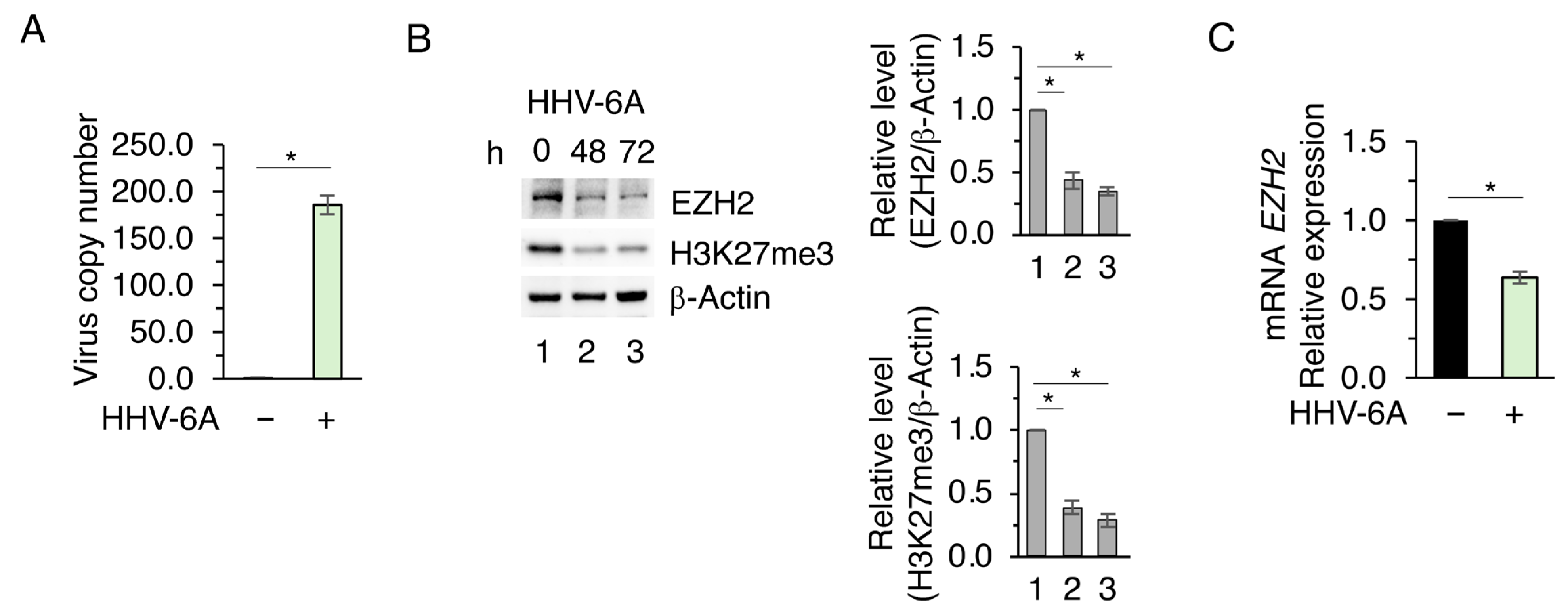
3.1. HHV-6A Infection of BCPAP Downregulates EZH2 and Induces a Global Reduction of H3K27me3
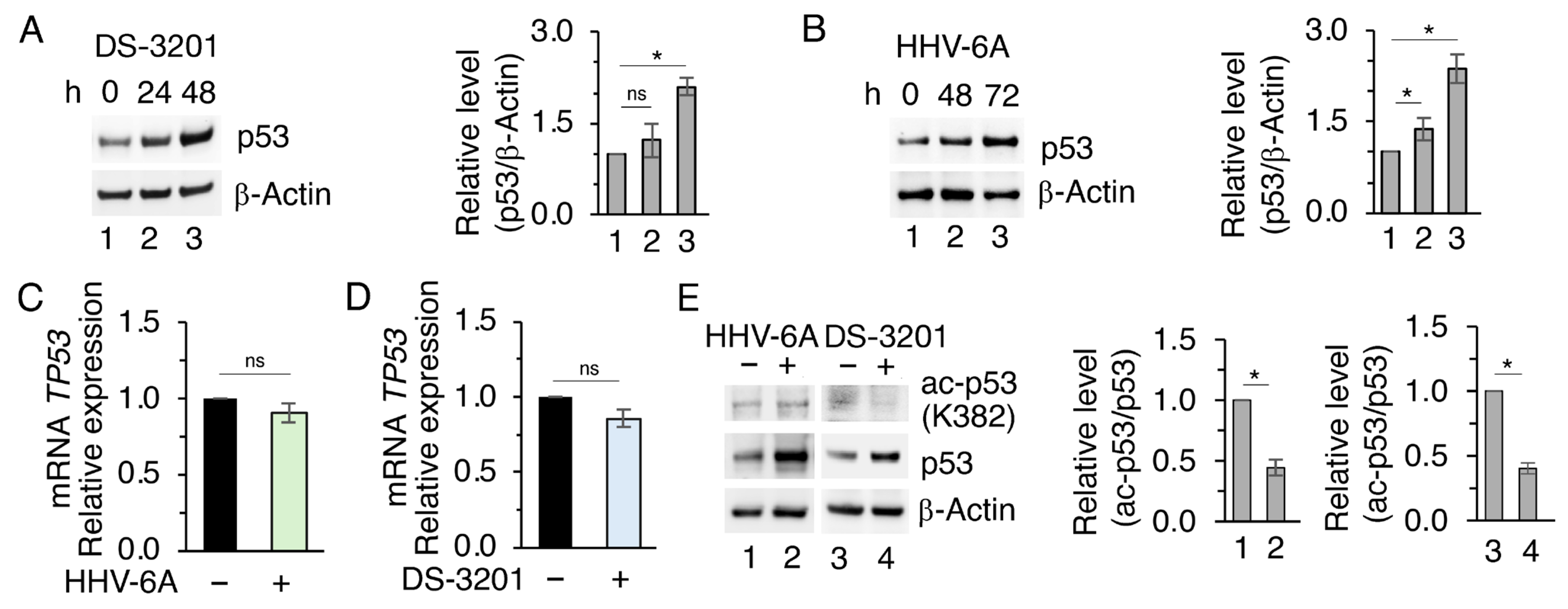
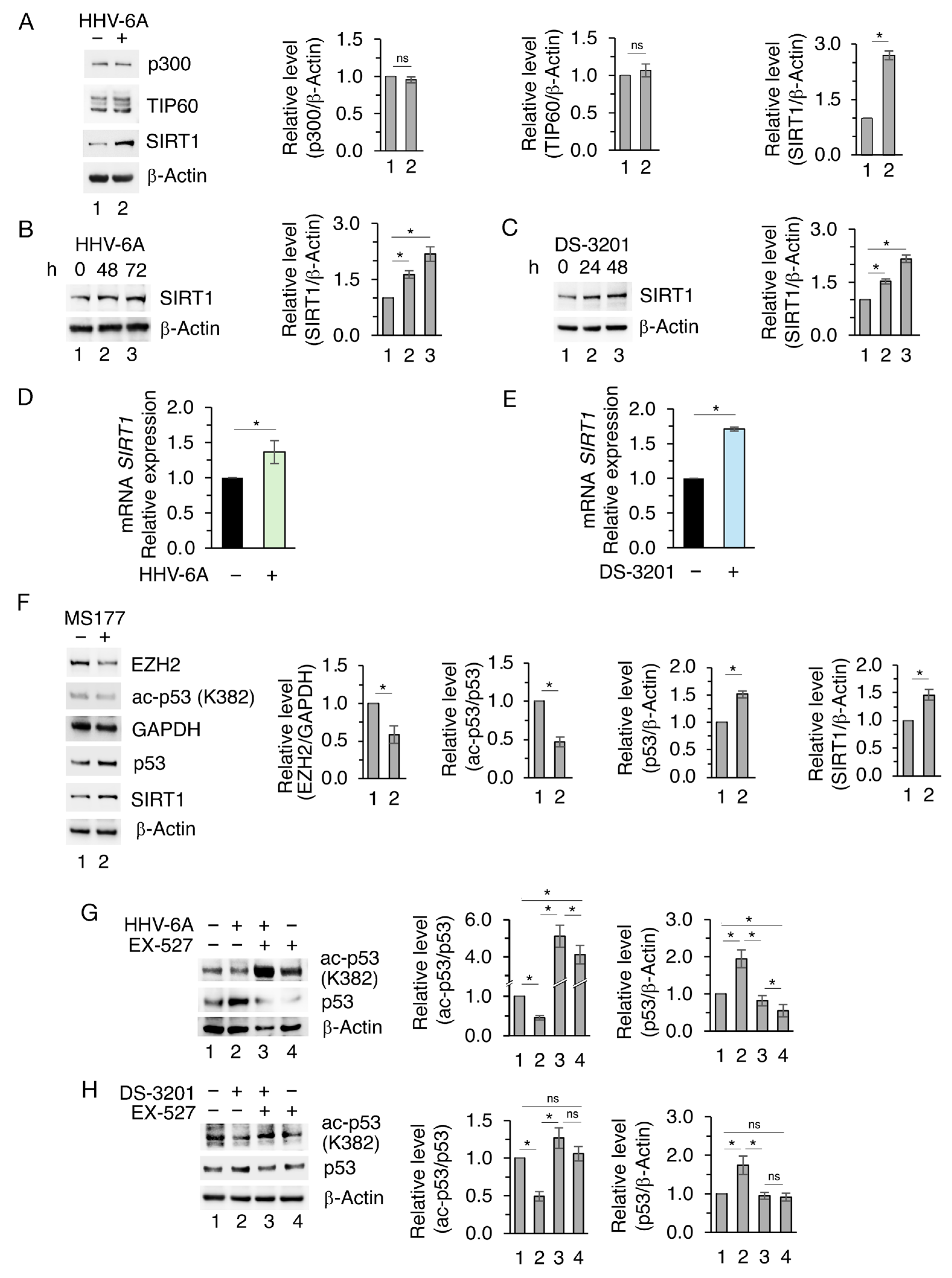
3.2. HHV-6A and EZH2 Inhibitor Valemetostat (DS-3201) Stabilize Mutp53 Through SIRT1-Upregulation
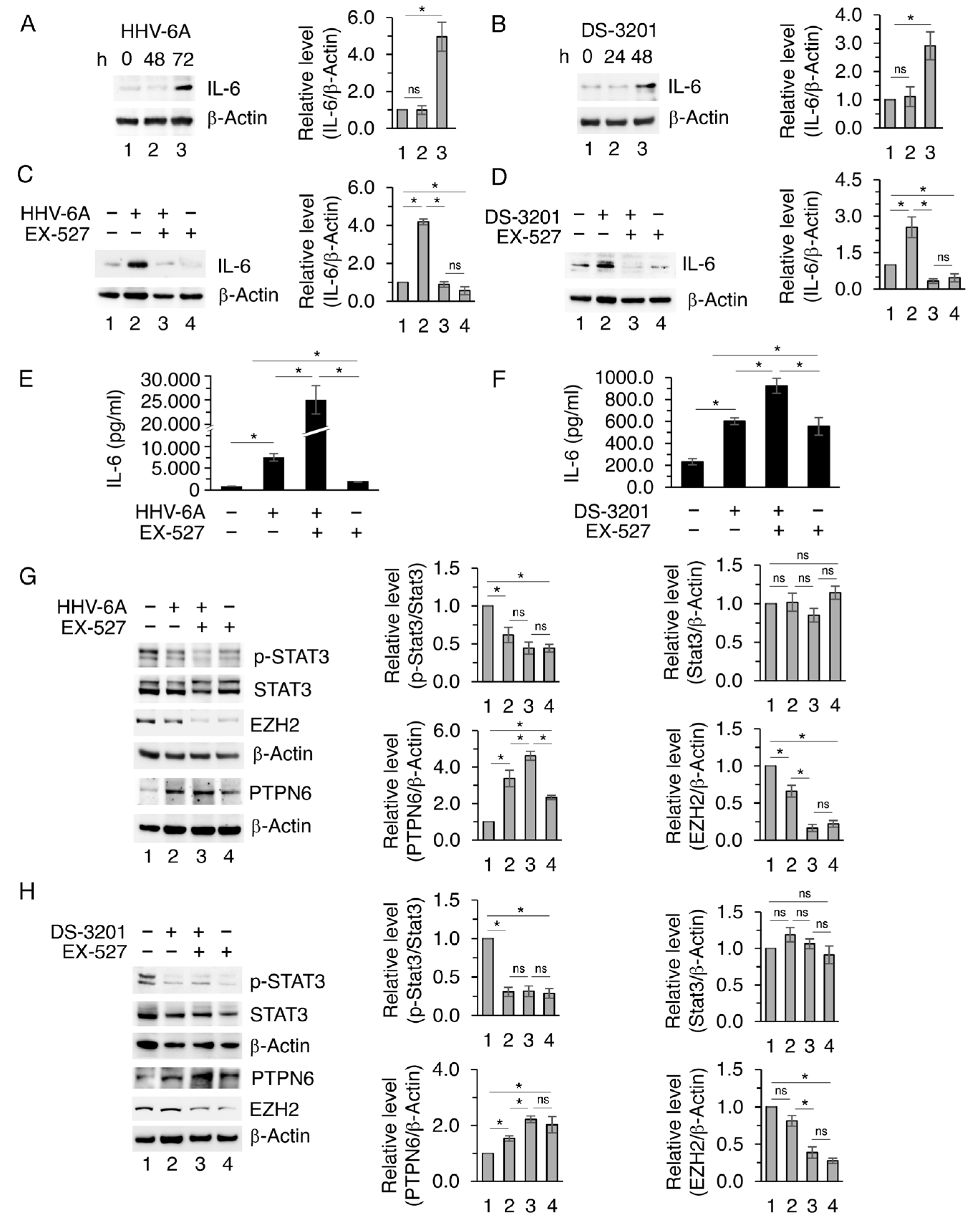
3.3. The Inhibition of SIRT1 Enhances the Release of IL-6 Without Activating STAT3 in HHV-6A-Infected or DS-3201-Treated Cells
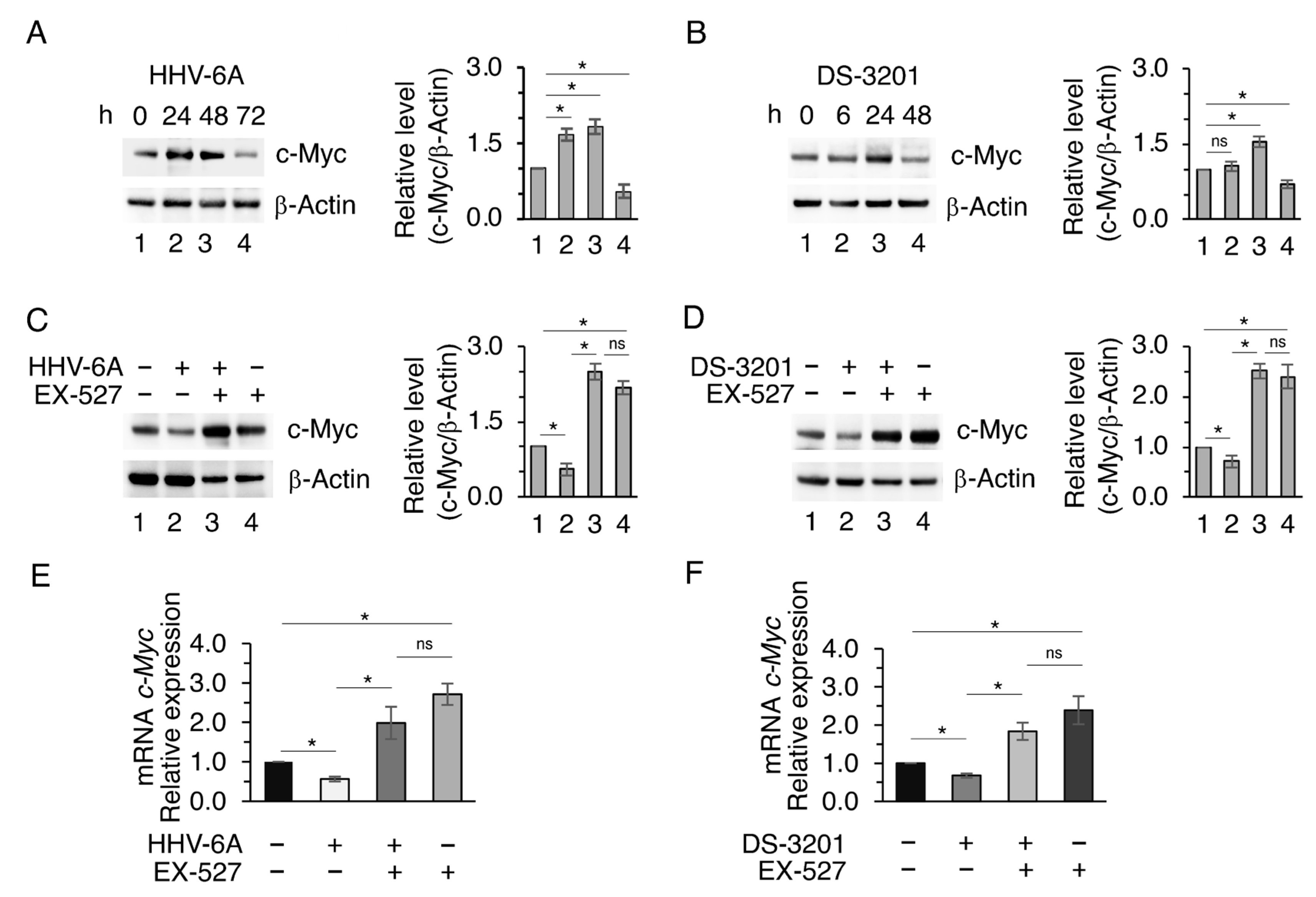
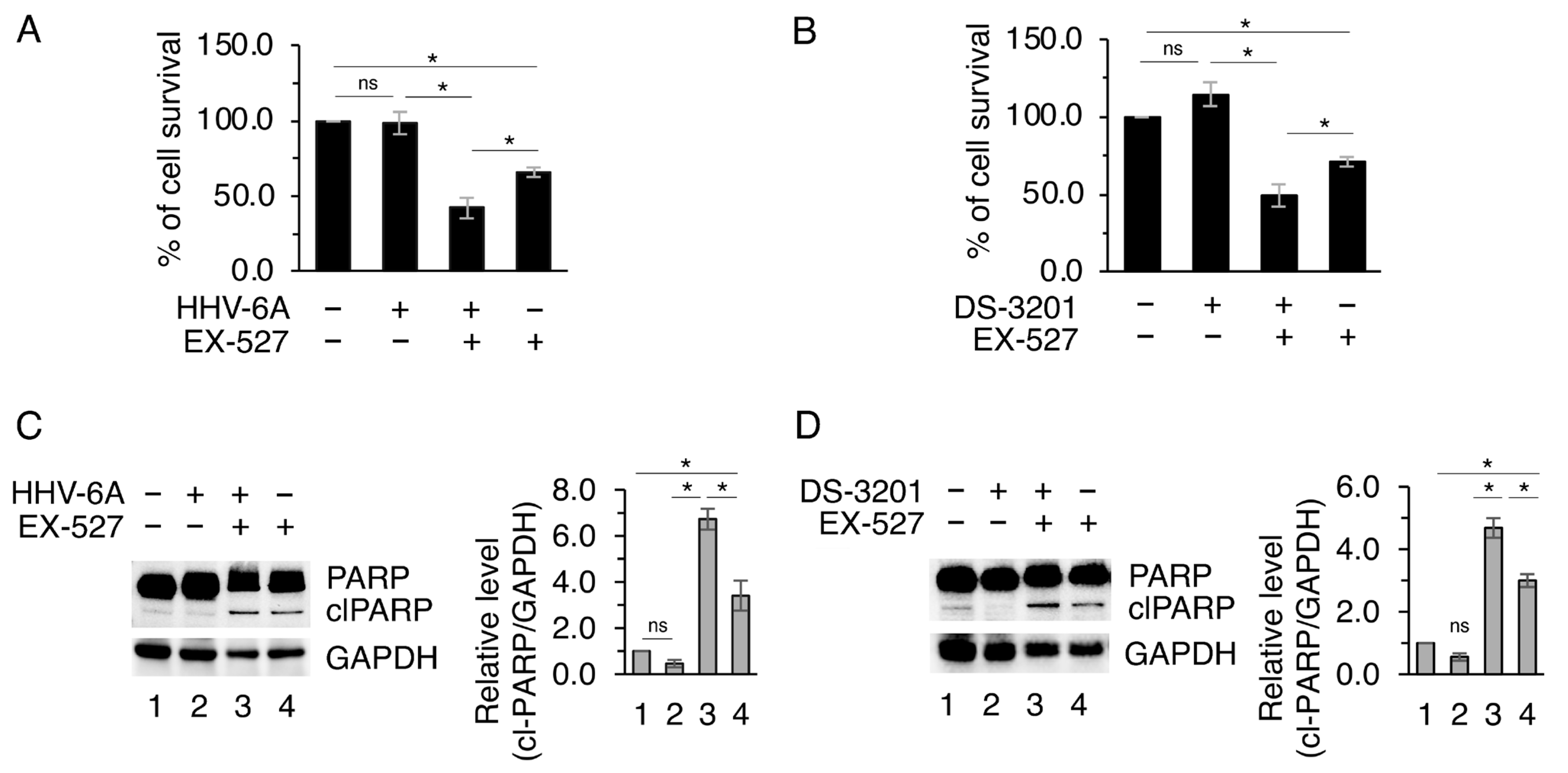
3.4. EZH2-SIRT1 Axis Regulates c-Myc Expression and Cell Survival
4. Discussion
5. Conclusions
Supplementary Materials
Author Contributions
Funding
Data Availability Statement
Acknowledgments
Conflicts of Interest
Abbreviations
| HHV-6A | Human herpesvirus 6 A |
| FTC | follicular carcinoma |
| ATC | anaplastic carcinoma |
| NF-κB | Nuclear Factor kappa-light-chain-enhancer of activated B cells |
| STAT3 | Signal Transducer and Activator of Transcription 3 |
| AP-1 | Activating Protein-1 |
| IL-6 | Interleukin-6 |
| EZH2 | Enhancer of zeste 2 |
| SIRT1 | Sirtuin 1 |
| PTM | Post-translational modification |
| HAT | Acetyltransferases |
| IFN | Interferon |
| PARP | Poly (ADP-ribose) polymerase |
References
- Spurbeck, R.R. Altered epigenetic landscape as infectious disease diagnostics. Epigenomics 2024, 16, 1269–1272. [Google Scholar] [CrossRef]
- Bautista, J.; Lopez-Cortes, A. Oncogenic viruses rewire the epigenome in human cancer. Front. Cell Infect. Microbiol. 2025, 15, 1617198. [Google Scholar] [CrossRef] [PubMed]
- Caselli, E.; Zatelli, M.C.; Rizzo, R.; Benedetti, S.; Martorelli, D.; Trasforini, G.; Cassai, E.; degli Uberti, E.C.; Di Luca, D.; Dolcetti, R. Virologic and immunologic evidence supporting an association between HHV-6 and Hashimoto’s thyroiditis. PLoS Pathog. 2012, 8, e1002951. [Google Scholar] [CrossRef] [PubMed]
- Sokolovska, L.; Cistjakovs, M.; Matroze, A.; Murovska, M.; Sultanova, A. From Viral Infection to Autoimmune Reaction: Exploring the Link between Human Herpesvirus 6 and Autoimmune Diseases. Microorganisms 2024, 12, 362. [Google Scholar] [CrossRef] [PubMed]
- Sultanova, A.; Cistjakovs, M.; Gravelsina, S.; Chapenko, S.; Roga, S.; Cunskis, E.; Nora-Krukle, Z.; Groma, V.; Ventina, I.; Murovska, M. Association of active human herpesvirus-6 (HHV-6) infection with autoimmune thyroid gland diseases. Clin. Microbiol. Infect. 2017, 23, 50.E1–50.E5. [Google Scholar] [CrossRef]
- Eliassen, E.; Lum, E.; Pritchett, J.; Ongradi, J.; Krueger, G.; Crawford, J.R.; Phan, T.L.; Ablashi, D.; Hudnall, S.D. Human Herpesvirus 6 and Malignancy: A Review. Front. Oncol. 2018, 8, 512. [Google Scholar] [CrossRef]
- Arbuckle, J.H.; Medveczky, P.G. The molecular biology of human herpesvirus-6 latency and telomere integration. Microbes Infect. 2011, 13, 731–741. [Google Scholar] [CrossRef]
- Engdahl, E.; Dunn, N.; Niehusmann, P.; Wideman, S.; Wipfler, P.; Becker, A.J.; Ekstrom, T.J.; Almgren, M.; Fogdell-Hahn, A. Human Herpesvirus 6B Induces Hypomethylation on Chromosome 17p13.3, Correlating with Increased Gene Expression and Virus Integration. J. Virol. 2017, 91, e02105-16. [Google Scholar] [CrossRef]
- Mardente, S.; Romeo, M.A.; Asquino, A.; Po, A.; Gilardini Montani, M.S.; Cirone, M. HHV-6A Infection of Papillary Thyroid Cancer Cells Induces Several Effects Related to Cancer Progression. Viruses 2023, 15, 2122. [Google Scholar] [CrossRef]
- Kobawala, T.P.; Trivedi, T.I.; Gajjar, K.K.; Patel, D.H.; Patel, G.H.; Ghosh, N.R. Significance of Interleukin-6 in Papillary Thyroid Carcinoma. J. Thyroid. Res. 2016, 2016, 6178921. [Google Scholar] [CrossRef]
- Gilardini Montani, M.S.; Benedetti, R.; Cirone, M. Targeting EZH2 in Cancer: Mechanisms, Pathways, and Therapeutic Potential. Molecules 2024, 29, 5817. [Google Scholar] [CrossRef]
- Jin, R.; Zhang, J.; Wang, Y.; Chen, Z.; He, X.; Zhang, X.; Tan, Z.; Kleer, C.G.; Li, Y.; Wang, D.; et al. EZH2 in non-cancerous diseases: Expanding horizons. Protein Cell 2025, 16, 764–781. [Google Scholar] [CrossRef] [PubMed]
- El Baba, R.; Herbein, G. EZH2-Myc Hallmark in Oncovirus/Cytomegalovirus Infections and Cytomegalovirus’ Resemblance to Oncoviruses. Cells 2024, 13, 541. [Google Scholar] [CrossRef] [PubMed]
- Bosch-Presegue, L.; Vaquero, A. Sirtuin-dependent epigenetic regulation in the maintenance of genome integrity. FEBS J. 2015, 282, 1745–1767. [Google Scholar] [CrossRef] [PubMed]
- Kim, H.M.; Zheng, X.; Lee, E. Experimental Insights into the Interplay between Histone Modifiers and p53 in Regulating Gene Expression. Int. J. Mol. Sci. 2023, 24, 11032. [Google Scholar] [CrossRef]
- Guo, Y.; Cheng, R.; Wang, Y.; Gonzalez, M.E.; Zhang, H.; Liu, Y.; Kleer, C.G.; Xue, L. Regulation of EZH2 protein stability: New mechanisms, roles in tumorigenesis, and roads to the clinic. eBioMedicine 2024, 100, 104972. [Google Scholar] [CrossRef]
- Benedetti, R.; Romeo, M.A.; Arena, A.; Gilardini Montani, M.S.; D’Orazi, G.; Cirone, M. ATF6 supports lysosomal function in tumor cells to enable ER stress-activated macroautophagy and CMA: Impact on mutant TP53 expression. Autophagy 2024, 20, 1854–1867. [Google Scholar] [CrossRef]
- Eich, M.L.; Athar, M.; Ferguson, J.E., 3rd; Varambally, S. EZH2-Targeted Therapies in Cancer: Hype or a Reality. Cancer Res. 2020, 80, 5449–5458. [Google Scholar] [CrossRef]
- Xu, D.; Qian, W.; Yang, Z.; Zhang, Z.; Sun, P.; Wan, Q.; Yin, Y.; Hu, Y.; Gong, L.; Zhang, B.; et al. Acetylation halts missense mutant p53 aggregation and rescues tumor suppression in non-small cell lung cancers. iScience 2023, 26, 107003. [Google Scholar] [CrossRef]
- Di Crosta, M.; Ragone, F.C.; Benedetti, R.; D’Orazi, G.; Santarelli, R.; Gonnella, R.; Gilardini Montani, M.S.; Cirone, M. Acetylation promotes mutant (MUT) TP53-HSPA8 and HSPA8-BAG3 interactions, facilitating MUT TP53 lysosomal degradation preferentially via CASA. Autophagy 2025, 21, 3304–3312. [Google Scholar] [CrossRef]
- Di Crosta, M.; Ragone, F.C.; Benedetti, R.; D’Orazi, G.; Santarelli, R.; Gilardini Montani, M.S.; Cirone, M. Valemetostat-SAHA-Driven Acetylation of p53 via SET/TAF-Ibeta Displacement and p300 Activation Modulates Cell Cycle Regulators in Pancreatic Cancer Cells. Biomedicines 2025, 13, 2279. [Google Scholar] [CrossRef]
- Di Crosta, M.; Ragone, F.C.; Benedetti, R.; D’Orazi, G.; Gilardini Montani, M.S.; Cirone, M. SAHA/5-AZA Enhances Acetylation and Degradation of mutp53, Upregulates p21 and Downregulates c-Myc and BRCA-1 in Pancreatic Cancer Cells. Int. J. Mol. Sci. 2024, 25, 7020. [Google Scholar] [CrossRef]
- Nagasaka, M.; Miyajima, C.; Aoki, H.; Aoyama, M.; Morishita, D.; Inoue, Y.; Hayashi, H. Insights into Regulators of p53 Acetylation. Cells 2022, 11, 3825. [Google Scholar] [CrossRef] [PubMed]
- Benedetti, R.; Di Crosta, M.; D’Orazi, G.; Cirone, M. Post-Translational Modifications (PTMs) of mutp53 and Epigenetic Changes Induced by mutp53. Biology 2024, 13, 508. [Google Scholar] [CrossRef] [PubMed]
- Dai, H.; Sinclair, D.A.; Ellis, J.L.; Steegborn, C. Sirtuin activators and inhibitors: Promises, achievements, and challenges. Pharmacol. Ther. 2018, 188, 140–154. [Google Scholar] [CrossRef]
- Margulies, L.; Sehgal, P.B. Modulation of the human interleukin-6 promoter (IL-6) and transcription factor C/EBP beta (NF-IL6) activity by p53 species. J. Biol. Chem. 1993, 268, 15096–15100. [Google Scholar]
- Demosthenous, C.; Han, J.J.; Hu, G.; Stenson, M.; Gupta, M. Loss of function mutations in PTPN6 promote STAT3 deregulation via JAK3 kinase in diffuse large B-cell lymphoma. Oncotarget 2015, 6, 44703–44713. [Google Scholar] [CrossRef]
- Hou, S.; Yi, Y.W.; Kang, H.J.; Zhang, L.; Kim, H.J.; Kong, Y.; Liu, Y.; Wang, K.; Kong, H.S.; Grindrod, S.; et al. Novel carbazole inhibits phospho-STAT3 through induction of protein-tyrosine phosphatase PTPN6. J. Med. Chem. 2014, 57, 6342–6353. [Google Scholar] [CrossRef]
- Liu, S.; Liu, S.; Yu, Z.; Zhou, W.; Zheng, M.; Gu, R.; Hong, J.; Yang, Z.; Chi, X.; Guo, G.; et al. STAT3 regulates antiviral immunity by suppressing excessive interferon signaling. Cell Rep. 2023, 42, 112806. [Google Scholar] [CrossRef]
- Lu, L.; Li, L.; Lu, X.; Wu, X.S.; Liu, D.P.; Liang, C.C. Inhibition of SIRT1 increases EZH2 protein level and enhances the repression of EZH2 on target gene expression. Chin. Med. Sci. J. 2011, 26, 77–84. [Google Scholar] [CrossRef]
- Huo, X.; Xia, S.; Cheng, B.; Xiong, W.; Li, Q.; Yang, X.; Ran, Y.; Li, H.; Chen, J. Interplay mechanism of virus latency-reactivation by human cytomegalovirus UL82 protein with the host core histone H3K27 methyltransferase EZH2 of polycomb repressive complex 2. Int. J. Biol. Macromol. 2025, 322, 146753. [Google Scholar] [CrossRef]
- Ichikawa, T.; Okuno, Y.; Sato, Y.; Goshima, F.; Yoshiyama, H.; Kanda, T.; Kimura, H.; Murata, T. Regulation of Epstein-Barr Virus Life Cycle and Cell Proliferation by Histone H3K27 Methyltransferase EZH2 in Akata Cells. mSphere 2018, 3, e00478-18. [Google Scholar] [CrossRef] [PubMed]
- Santarelli, R.; Pascucci, G.R.; Presti, S.L.; Di Crosta, M.; Benedetti, R.; Neri, A.; Gonnella, R.; Cirone, M. EBV infection alters DNA methylation in primary human colon cells: A path to inflammation and carcinogenesis? Biochim. Biophys. Acta Gene Regul. Mech. 2024, 1867, 195064. [Google Scholar] [CrossRef] [PubMed]
- Moraitis, S.; Piperi, C. Multi-Faceted Role of Histone Methyltransferase Enhancer of Zeste 2 (EZH2) in Neuroinflammation and Emerging Targeting Options. Biology 2025, 14, 749. [Google Scholar] [CrossRef]
- Kitchen, G.B.; Hopwood, T.; Gali Ramamoorthy, T.; Downton, P.; Begley, N.; Hussell, T.; Dockrell, D.H.; Gibbs, J.E.; Ray, D.W.; Loudon, A.S.I. The histone methyltransferase Ezh2 restrains macrophage inflammatory responses. FASEB J. 2021, 35, e21843. [Google Scholar] [CrossRef] [PubMed]
- Gan, L.; Yang, Y.; Li, Q.; Feng, Y.; Liu, T.; Guo, W. Epigenetic regulation of cancer progression by EZH2: From biological insights to therapeutic potential. Biomark. Res. 2018, 6, 10. [Google Scholar] [CrossRef]
- D’Orazi, G.; Cirone, M. Mutant p53 and Cellular Stress Pathways: A Criminal Alliance That Promotes Cancer Progression. Cancers 2019, 11, 614. [Google Scholar] [CrossRef]
- Mantovani, F.; Collavin, L.; Del Sal, G. Mutant p53 as a guardian of the cancer cell. Cell Death Differ. 2019, 26, 199–212. [Google Scholar] [CrossRef]
- Efe, G.; Cunningham, K.; Rustgi, A.K.; Prives, C.; Manfredi, J.J.; Sanchez-Rivera, F.J. Mutant p53: Evolving perspectives. Genes. Dev. 2026, 40, 4–25. [Google Scholar] [CrossRef]
- D’Orazi, G.; Cordani, M.; Cirone, M. Oncogenic pathways activated by pro-inflammatory cytokines promote mutant p53 stability: Clue for novel anticancer therapies. Cell Mol. Life Sci. 2021, 78, 1853–1860. [Google Scholar] [CrossRef]


Disclaimer/Publisher’s Note: The statements, opinions and data contained in all publications are solely those of the individual author(s) and contributor(s) and not of MDPI and/or the editor(s). MDPI and/or the editor(s) disclaim responsibility for any injury to people or property resulting from any ideas, methods, instructions or products referred to in the content. |
© 2026 by the authors. Licensee MDPI, Basel, Switzerland. This article is an open access article distributed under the terms and conditions of the Creative Commons Attribution (CC BY) license.
Share and Cite
Benedetti, R.; Di Crosta, M.; Stirparo, A.; Aron, G.A.; Mardente, S.; Santarelli, R.; Gonnella, R.; Gilardini Montani, M.S.; Cirone, M. HHV-6A Drives Epigenetic Reprogramming via an EZH2–SIRT1 Axis to Sustain Mutant p53 and Reshape Oncogenic Inflammatory Signaling. Viruses 2026, 18, 409. https://doi.org/10.3390/v18040409
Benedetti R, Di Crosta M, Stirparo A, Aron GA, Mardente S, Santarelli R, Gonnella R, Gilardini Montani MS, Cirone M. HHV-6A Drives Epigenetic Reprogramming via an EZH2–SIRT1 Axis to Sustain Mutant p53 and Reshape Oncogenic Inflammatory Signaling. Viruses. 2026; 18(4):409. https://doi.org/10.3390/v18040409
Chicago/Turabian StyleBenedetti, Rossella, Michele Di Crosta, Alessia Stirparo, George Alexandru Aron, Stefania Mardente, Roberta Santarelli, Roberta Gonnella, Maria Saveria Gilardini Montani, and Mara Cirone. 2026. "HHV-6A Drives Epigenetic Reprogramming via an EZH2–SIRT1 Axis to Sustain Mutant p53 and Reshape Oncogenic Inflammatory Signaling" Viruses 18, no. 4: 409. https://doi.org/10.3390/v18040409
APA StyleBenedetti, R., Di Crosta, M., Stirparo, A., Aron, G. A., Mardente, S., Santarelli, R., Gonnella, R., Gilardini Montani, M. S., & Cirone, M. (2026). HHV-6A Drives Epigenetic Reprogramming via an EZH2–SIRT1 Axis to Sustain Mutant p53 and Reshape Oncogenic Inflammatory Signaling. Viruses, 18(4), 409. https://doi.org/10.3390/v18040409