


Abstract
The ongoing panzootic of the highly pathogenic avian influenza (HPAI) H5N1 virus, dominated by clade 2.3.4.4b, constitutes a significant global threat to wildlife, animal health, and public health. Once characterized by sporadic outbreaks, H5N1 has evolved into a sustained, year-round infection with an expanded host range that now includes numerous mammalian species. Its high pathogenicity is primarily driven by the acquisition of a polybasic haemagglutinin cleavage site, enabling systemic viral spread, alongside emerging endothelial and neurotropic properties that contribute to severe disease and high mortality in mammals. Although zoonotic transmission remains limited, H5N1 continues to accumulate mutations associated with mammalian adaptation, particularly within the haemagglutinin and polymerase complex. Notably, recent outbreaks in U.S. dairy cattle highlight the emergence of novel mammalian reservoirs with increased human exposure risk. Concurrently, vaccination strategies are advancing beyond traditional adjuvanted inactivated vaccines toward next-generation platforms, including mRNA and virus-like particle vaccines, designed for rapid deployment and broader immune protection. However, ongoing viral evolution, constrained vaccine availability, and gaps in coordinated surveillance underscore the urgent need for an integrated One Health approach to reduce panzootic risk.
Keywords:
HPAI virus; H5N1; zoonosis; panzootic; molecular determinants; vaccination; bird flu; One Health; clade 2.3.4.4b; biosecurity 1. Introduction
Highly Pathogenic Avian Influenza (HPAI) virus subtype H5N1 stands as a prominent example of a continuously evolving zoonotic pathogen at the volatile interface of animal, human, and environmental health. Since its initial recognition as a direct threat to human health in 1997 [1], the epidemiological landscape of the virus has been rewritten. Dominated by clade 2.3.4.4b, the current era has traded sporadic cases for a persistent, global panzootic. This shift represents a ‘new normal’ where the virus maintains a constant presence in animal populations, stretching its ecological footprint further than ever recorded [2,3]. This shift represents a fundamental change in the virus’s behavior, moving beyond agricultural systems to cause mass mortality in wild birds and recurrent spillover into an expanding roster of mammalian hosts, including, most recently, dairy cattle [4].
The context and relevance of HPAI H5N1 research have become progressively urgent. The virus is a member of the Orthomyxoviridae family, possessing a segmented, negative-sense RNA genome that facilitates rapid evolution through mutation and reassortment [5]. Its pathogenicity and host range are primarily dictated by two surface glycoproteins: hemagglutinin (HA), responsible for host cell attachment and entry, and neuraminidase (NA), essential for viral egress [6]. The cardinal molecular feature distinguishing HPAI from low-pathogenic strains is the presence of a polybasic cleavage site (PCS) within the HA protein. This motif allows proteolytic activation by universal furin-like proteases present in most host tissues, enabling systemic, multi-organ infection rather than localized respiratory or enteric disease, and underpinning the extreme virulence observed in poultry [7].
Beyond its virological characteristics, HPAI H5N1 is a transboundary animal disease of the highest order, with cascading implications for global food security, economic stability, and public health [8]. The agricultural impact is staggering; control efforts have necessitated the culling of hundreds of millions of birds worldwide, causing severe supply chain disruptions and economic losses measured in billions of dollars. From a public health perspective, H5N1 remains one of the most concerning influenza viruses with pandemic potential [9]. While human infections remain sporadic and largely tied to direct animal contact, the case fatality rate (CFR) historically exceeds 50%, a stark contrast to seasonal influenza. The virus’s unchecked circulation in diverse animal reservoirs provides relentless opportunities for adaptation [10], increasing the risk of it acquiring the genetic changes necessary for efficient, sustained human-to-human transmission. Consequently, HPAI H5N1 serves as a critical model system for elucidating the principles of viral virulence, cross-species adaptation, and pandemic preparedness, demanding analysis through an integrated One Health framework that connects wildlife, agriculture, and human medicine [11].
The historical emergence and evolution of HPAI H5N1 trace a clear arc of increasing global threat. The progenitor of all contemporary viruses is the A/goose/Guangdong/1/1996 (Gs/Gd) lineage. While earlier H5 viruses were documented (e.g., in Scotland, 1959), the Gs/Gd lineage marked a novel, highly pathogenic evolutionary branch [12]. The virus catapulted onto the global health stage during the 1997 Hong Kong outbreak, which provided the first unequivocal evidence that a purely avian influenza virus could cause severe, fatal respiratory illness in humans without requiring passage through an intermediate host [1]. Aggressive poultry culling contained this initial event, but the virus re-emerged endemically in Asia in 2003, embarking on a wave of spread across continents via migratory bird flyways [13].
This period of geographic expansion was accompanied by intense genetic diversification. Through antigenic drift and shift, the original lineage splintered into multiple clades (0–9) and subclades, adapting to local avian populations and occasionally spilling over into humans, as seen persistently in Egypt [14]. A pivotal evolutionary leap occurred with the emergence of clade 2.3.4.4b in late 2020. This clade exhibited distinct traits including a propensity for efficient transmission among wild waterfowl and a characteristic long NA stalk that fueled an explosive and persistent panzootic. In late 2021 [15], these viruses traversed the Atlantic, likely via migratory birds, initiating North America’s most severe poultry outbreak. The spread continued unabated, reaching South America and, in a landmark event, Antarctica in late 2023, signifying its presence on all inhabited continents [16].
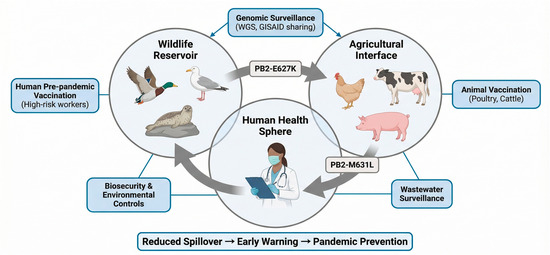
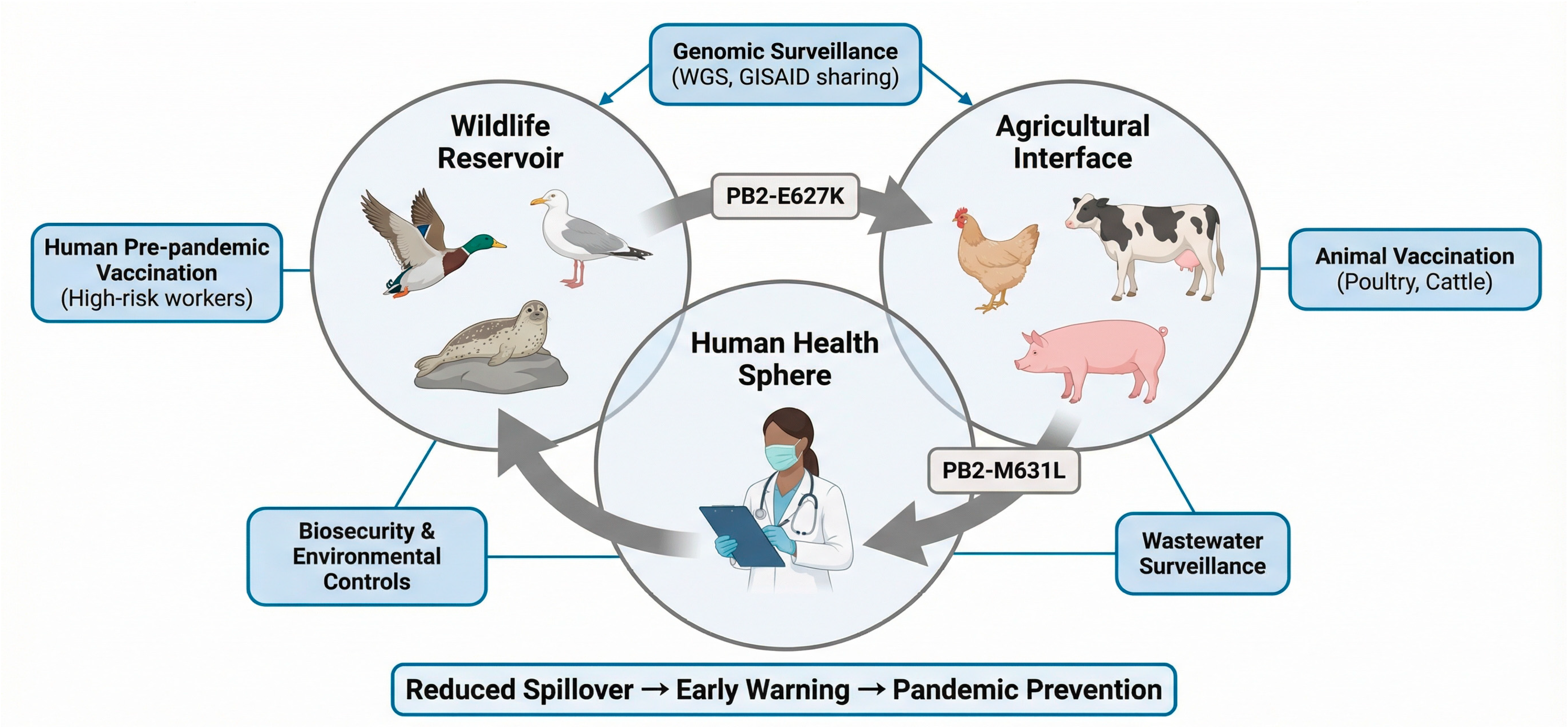
The 2024 epizootic of HPAI H5N1 in U.S. dairy cattle (genotype B3.13) represents the most significant and recent development, signaling a dangerous new phase. (Note: This event post-dates many provided citations; expert analysis from USDA/CDC reports in 2024 would be cited here [17]). This outbreak, affecting over 200 herds, demonstrated efficient cow-to-cow transmission via milking equipment and revealed high viral loads in milk [17]. It clearly established cattle as a susceptible mammalian host, creating a novel and concerning interface for human exposure (e.g., among farm workers) and offering the virus a new environment in which to adapt to mammalian physiology. Concurrently, detections in over 70 wild and domestic mammalian species, from foxes to marine mammals, underscore a broadening host range that challenges existing surveillance and control paradigms [18,19]. The interconnected nature of this panzootic and the required integrated response are illustrated in Figure 1.
Figure 1.
Integrated One Health Framework for HPAI H5N1 Surveillance and Mitigation. Note: Integrated One Health Framework for HPAI H5N1 Surveillance and Mitigation. Schematic representation of the interconnected spheres requiring coordinated action: Wildlife Reservoir (wild birds, marine mammals), Agricultural Interface (poultry, dairy cattle, swine), and Human Health. Gray arrows indicate viral spillover pathways, with key mammalian-adaptive mutations (PB2-E627K, PB2-M631L) noted at relevant interfaces. Blue intervention boxes represent core strategies: Genomic Surveillance (including whole-genome sequencing [WGS] and data sharing via GISAID), Animal Vaccination, Human Pre-pandemic Vaccination (for high-risk groups), and Biosecurity/Environmental Controls. Effective implementation of this framework aims to reduce viral amplification at source, detect adaptations early, and prevent pandemic emergence. Abbreviations: WGS, whole-genome sequencing; GISAID, Global Initiative on Sharing All Influenza Data.
Leading experts now warn that HPAI H5N1 has transitioned from an agricultural crisis to an enduring ecological and zoonotic threat. The “emerging reality of the virus” is characterized by endemic circulation in wild bird reservoirs, constant pressure on poultry sectors, and recurrent, unpredictable spillover into mammals. This reality demands a paradigm shift in preparedness, moving from reactive culling towards proactive, science-driven strategies encompassing enhanced genomic surveillance, next-generation vaccine development for animals and high-risk humans, and robust One Health coordination. This review synthesizes the latest molecular insights into H5N1 pathogenicity and host adaptation, critically evaluates advances and challenges in vaccination, and frames these findings within the urgent context of contemporary panzootic risk mitigation [19].
2. Global Impact on Poultry, Livestock, and Public Health: An Escalating Multisectoral Crisis
HPAI H5N1 clade 2.3.4.4b virus has transcended its original ecological niche, triggering a persistent panzootic a pandemic in animals with profound and cascading consequences for global agriculture, wildlife ecosystems, and public health security. This transition from sporadic outbreaks to continuous, widespread circulation represents a fundamental shift in the virus’s epidemiology, demanding a reassessment of its long-term economic and zoonotic threat [20].
2.1. Catastrophic Impact on Poultry and Agricultural Systems
The poultry industry has borne the most immediate and severe economic brunt. In North America, the incursion that began in late 2021 is the largest and most severe on record. While initial reports cited substantial losses of domestic poultry in the United States by early 2023 (see Table 1 for detailed figures) [21,22], the cumulative impact in Canada, as of late 2025, has reached millions of birds affected across the country—underscoring the prolonged nature of the crisis [23].
In Europe, the 2021–2022 season saw over 40 million birds culled across 37 countries, leading to severe market disruptions. The scale of infection has caused significant volatility in global food commodity markets, with instability in the price of poultry and eggs, exposing critical vulnerabilities in centralized production systems and international supply chains [24,25].
The use of vaccination in poultry, as practiced in several countries including China, Egypt, and parts of Europe, presents a complex trade-off. While it can reduce clinical illness and mortality in flocks, it often does not confer sterilizing immunity, potentially allowing for “silent” circulation of the virus in vaccinated populations. This complicates surveillance, delays outbreak detection, and may create conditions for ongoing viral evolution, posing a significant challenge to long-term control strategies [26].
Table 1.
Epidemiological, Molecular, and Public Health Features of the HPAI H5N1 Clade 2.3.4.4b Panzootic.
2.2. Significant Expansion into Livestock and Mammalian Wildlife
A defining and alarming feature of the current panzootic is the virus’s expanding host plasticity. H5N1 has now been confirmed in over 70 wild and domestic mammalian species, including red foxes, striped skunks, domestic cats, and marine mammals like seals and sea lions [43]. These repeated spillover events indicate the virus is successfully infecting a broad range of new hosts, with mass mortality events in South American marine mammals highlighting its devastating ecological impact [27].
The 2024 spillover into North American dairy cattle marked a fundamental shift in the virus’s behavior, moving it from a seasonal avian threat to a year-round livestock challenge. This epizootic affected over 200 herds across multiple states, where the outbreak (primarily genotype B3.13) revealed efficient cow-to-cow transmission linked to milking procedures. Critically, the virus demonstrated a distinct mammary gland tropism, replicating to high titers in milk [28,29]. This high concentration in raw milk suggests that the infection was being spread via contaminated milking equipment rather than traditional respiratory pathways. These findings established cattle as a significant new mammalian reservoir and a novel, high-volume pathway for potential human exposure [37,44].
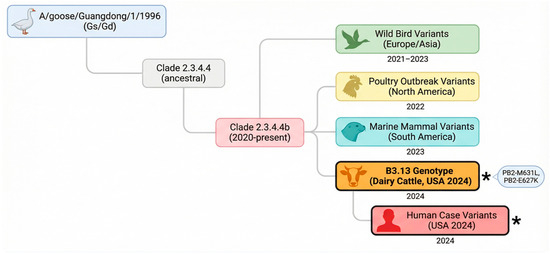
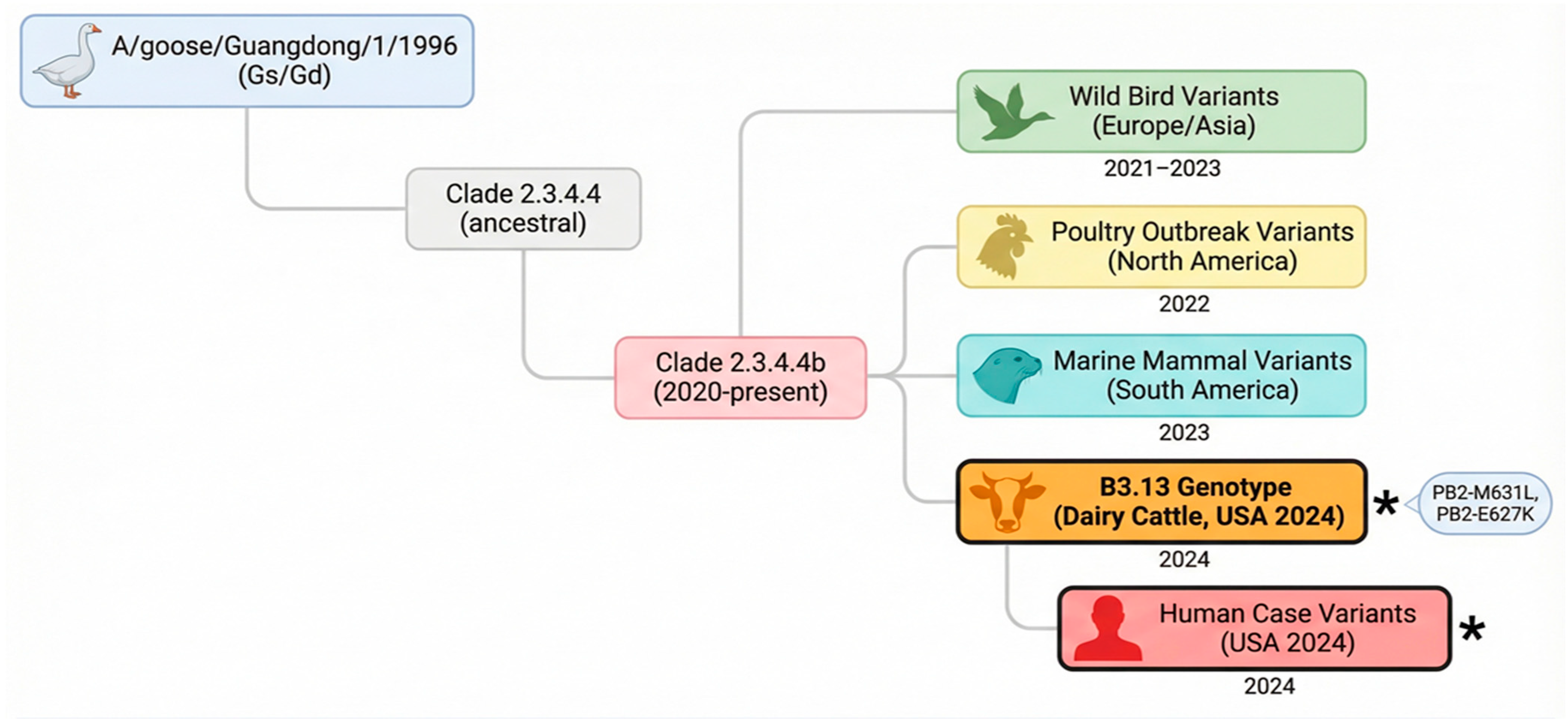
From a public health standpoint, the human infections associated with these dairy farms have been equally telling. Most patients identified during this period presented with mild conjunctivitis, a localized infection likely caused by direct mucosal contact with infected milk, rather than severe respiratory disease [38]. While these cases have remained mild so far, the presence of the PB2-E627K mutation in some isolates is a clear warning sign (Figure 2). It shows the virus is actively ‘retooling’ its machinery to replicate more efficiently in mammalian cells, making the dairy sector a critical frontline for both genomic surveillance and One Health coordination [19].
Figure 2.
Simplified Phylogenetic Tree of HPAI H5N1 Clade 2.3.4.4b Evolution. Note: Simplified Phylogenetic Tree of HPAI H5N1 Clade 2.3.4.4b Evolution. Phylogenetic relationships of major HPAI H5N1 clade 2.3.4.4b variants circulating during the current panzootic. The tree highlights the emergence of the B3.13 genotype responsible for the 2024 dairy cattle outbreak in the United States and subsequent human infections. Branch lengths are schematic and not to scale. Asterisks (*) denote isolates in which specific mammalian-adaptive mutations have been detected: PB2-M631L (cattle-associated) in B3.13 genotype isolates, and PB2-E627K (broad mammalian adaptation) in human case isolates linked to cattle exposure. The tree illustrates the viral lineage diversification accompanying host range expansion and the acquisition of adaptive mutations at key nodes.
Further detections in species like goats and alpacas, along with the ever-present risk of infection in pigs—the classic ‘mixing vessel’ hosts due to their co-expression of avian and human-type influenza receptors—continuously raise the threat of viral reassortment. Such an event could combine the high virulence of H5N1 with the efficient transmissibility of human seasonal strains, generating a potential pandemic virus [29].
2.3. Evolving Public Health and Zoonotic Threat
Human infections remain sporadic but concerning. As of March 2025, the World Health Organization (WHO) has documented nearly 1000 confirmed human cases across two dozen countries since 2003, with an approximate case fatality rate (CFR) of 50% [44]. Most cases are linked to direct contact with infected birds or contaminated environments, though the 2024 cattle outbreak has added exposure to sick cattle or unpasteurized (raw) milk as a significant new risk factor [28,37].
Human clinical presentation appears increasingly diverse in the clade 2.3.4.4b era. Some recent cases in the U.S. and Europe, often linked to specific exposure routes (e.g., ocular splash), have presented as mild conjunctivitis [38], while severe and fatal pneumonia cases continue to be reported in other regions.
These observations may reflect localized reporting biases and active surveillance of exposed workers rather than a global shift in virulence. Meanwhile, severe pneumonia cases continue to be reported in regions like Cambodia and Chile, indicating that severity remains highly contingent on viral sub-lineage, inoculation route, and host factors. This variability necessitates more nuanced risk communication and flexible clinical preparedness.
A major biological constraint on a pandemic remains the virus’s receptor-binding preference. Most circulating H5N1 strains retain a strong affinity for α2,3-linked sialic acid receptors, prevalent in the human lower respiratory tract, rather than the α2,6-linked receptors dominant in the upper airway, which are necessary for efficient human-to-human transmission [45]. However, the virus’s widespread circulation in mammals increases opportunities for it to acquire the mutations needed to overcome this barrier. The key epidemiological and molecular features are summarized in Table 1.
3. Molecular Determinants of H5N1 Pathogenicity and Host Adaptation
The high virulence and expanding host range of HPAI H5N1 are orchestrated by a complex interplay of viral gene products that dictate host cell entry, replication efficiency, and evasion of immune defenses. Understanding these molecular mechanisms is critical for risk assessment, therapeutic design, and pandemic preparedness.
3.1. Hemagglutinin (HA): The Gatekeeper of Infection
The HA surface glycoprotein is the primary determinant of tissue tropism and systemic spread.
- Polybasic Cleavage Site (PCS): The hallmark of HPAI viruses is a polybasic cleavage site (e.g., RERRRKR/G) in the HA protein. Unlike LPAI strains, which require trypsin-like proteases found only in specific tissues, the H5 PCS is cleaved by ubiquitous furin-like proteases present throughout the host body. This enables systemic viral replication, leading to disseminated infection and multi-organ failure in birds [30,32].
- Receptor Binding Domain Structure: The HA receptor binding site is configured to preferentially accommodate sialic acid (SA) receptors with α2,3 linkages. Key amino acid positions (residues 222 and 224 in H5 numbering) form the binding pocket that determines this specificity. Mutations at these positions (Q222L, G224S) can alter the binding pocket conformation to favor α2,6-linked receptors, though such changes may compromise HA stability [31].
- HA Stability and Membrane Fusion: The pH threshold at which HA undergoes conformational change to trigger membrane fusion is determined by specific residues. Mutations that lower this pH threshold (e.g., T318I) enhance the acid stability of the HA protein, which is necessary for survival in acidic environments such as the human upper respiratory tract [33].
3.2. Polymerase Complex: The Engine of Replication and Adaptation
The viral RNA-dependent RNA polymerase (composed of subunits PB2, PB1, and PA) is a major driver of host range restriction and adaptation.
- Key Mammalian-Adaptive Mutations:
- ○
- PB2-E627K: This is the most recognized marker, dramatically enhancing polymerase activity at the cooler temperatures (~33 °C) of the mammalian upper respiratory tract [46].
- ○
- PB2-D701N: This mutation improves the binding of the viral ribonucleoprotein complex to mammalian importin-α isoforms, facilitating nuclear import and replication in human cells [34].
- ○
- PB2-M631L: Notably identified in >99% of sequences from the 2024 U.S. dairy cattle outbreak, this mutation is strongly associated with viral adaptation in this novel mammalian host and has been found in subsequent human cases linked to cattle exposure [35].
- Host Cofactor Interaction: New research into host cofactors has shed light on why it is so difficult for this virus to jump between species. Essentially, the bird flu virus needs a specific host protein called ANP32A to copy itself. However, the bird version of this protein has an extra 33-amino acid ‘tail’ that the human version lacks. This structural difference acts like a lock that an unadapted virus cannot open. For the virus to replicate in humans, it usually needs a specific mutation PB2-E627K which reshapes the viral machinery to work with the shorter human version of the protein [36].
Furthermore, human cells express intrinsic restriction factors such as BTN3A3, which can inhibit replication of avian-origin influenza viruses. Surveillance studies have identified mutations in circulating H5N1 strains (e.g., N52D in the nucleoprotein) that may confer evasion of BTN3A3 restriction, representing another layer of adaptive evolution requiring close monitoring [36,47].
3.3. Non-Structural Proteins: Masters of Immune Evasion
Proteins NS1 and PB1-F2 are crucial for subverting the host’s first line of defense, the innate immune system.
- NS1—Interferon Antagonism: The NS1 protein is a potent multifunctional interferon (IFN) antagonist. It inhibits the production and signaling of type I IFNs, crippling the host’s antiviral state. Specific mutations, such as D92E, enhance this function by conferring resistance to the antiviral effects of both IFNs and TNF-α [48,49].
- PB1-F2—Pro-apoptotic Activity: The PB1-F2 protein, particularly with the N66S mutation, contributes to virulence by inducing apoptosis in immune cells like macrophages and lymphocytes, thereby depleting the host’s immune response capacity and exacerbating inflammation [50].
3.4. Neuraminidase (NA) and Accessory Factors
- NA’s Role in Viral Fitness: NA facilitates viral egress by cleaving sialic acids from the host cell and nascent virions. An optimal functional balance between HA binding and NA cleavage is required for efficient replication. The long NA stalk characteristic of clade 2.3.4.4b viruses is associated with increased fitness in wild birds and may facilitate infection in mammals [51,52].
- Accessory Protein Contributions: Other viral components support adaptation. Mutations in the Nucleoprotein (NP), such as N319K, synergize with PB2 mutations to enhance vRNP import, while others (e.g., N52D) help the virus evade human-specific restriction factors like BTN3A3 [47,53].
3.5. Host-Driven Pathogenesis: The Cytokine Storm
A critical determinant of severe disease in mammals is the dysregulated host immune response. H5N1 infection of respiratory epithelial and endothelial cells can trigger a hyper-cytokinemia (“cytokine storm”), characterized by an excessive release of pro-inflammatory cytokines like IL-6, TNF-α, and IFN-γ [54,55]. This excessive inflammation, more so than direct viral cytopathic effect, is a primary driver of the severe alveolar damage, acute respiratory distress syndrome (ARDS), and multi-organ failure observed in fatal human cases. This pathogenesis underscores why broad-spectrum immunomodulatory therapies are being investigated as adjuncts to antiviral treatment [56].
5. Advances in Vaccination Strategies: Bridging Preparedness and Reality
Vaccination remains the cornerstone of pandemic preparedness, but the rapid evolution and ecological spread of H5N1 demand a re-evaluation of traditional strategies. The goal has shifted from simply stockpiling a matched vaccine to developing agile platforms capable of rapid deployment and eliciting broad, durable immunity against a moving target.
5.1. Traditional and Stockpiled Human Vaccines
Current preparedness relies on inactivated, adjuvanted vaccines, which are proven safe and form the basis of national stockpiles.
- Licensed Platforms: Vaccines like AUDENZ® (approved by the U.S. FDA in 2020 for persons 6 months and older) and Adjupanrix® (EU-approved) are matched to older H5N1 clades but can provide a priming immune response [19]. Their production uses established egg- or cell-based technologies, but a switch to a new strain still requires 4–6 months for significant dose production [74].
- The Scale Challenge: A critical vulnerability is insufficient global manufacturing capacity. For example, the U.S. stockpile of pre-pandemic H5 vaccine would only cover a fraction of the population, highlighting a major gap between preparedness plans and production reality [75].
5.2. Next-Generation Vaccine Platforms
The evolving landscape of H5N1 vaccine development encompasses multiple technological platforms, each with distinct advantages and limitations (Table 2). Traditional egg-based vaccines remain the backbone of pandemic stockpiles but face constraints in speed and scalability. Next-generation platforms, particularly mRNA-LNP (mRNA-lipid nanoparticle) vaccines, offer unprecedented rapid response capabilities potentially reducing vaccine development timelines from months to weeks though challenges in thermostability and delivery infrastructure persist [76,77]. The optimal preparedness strategy likely involves a ‘portfolio approach’ maintaining diverse platform capabilities.
Table 2.
Comparison of H5N1 Vaccine Platforms: Advantages, Limitations, and Current Status.
Innovation focuses on speed, breadth of protection, and dose-sparing.
- mRNA-LNP Vaccines: Building on COVID-19 successes, nucleoside-modified mRNA platforms offer the fastest potential response. The U.S. HHS has invested heavily (e.g., $176 million to Moderna in 2024) to advance these vaccines, which can be redesigned and produced at scale within weeks [76]. Early candidates against 2.3.4.4b show promise in animal models, but their efficacy in humans against avian influenza remains unproven [77].
- Virus-Like Particles (VLPs) and Recombinant Proteins: VLPs, which mimic the virus structure without its genetic material, are highly immunogenic. Produced in insect cells or plants, they offer scalable and safe manufacturing alternatives [78].
- Broadly Protective Strategies: Research is actively pursuing universal vaccine targets, such as the conserved stalk region of HA or the M2e peptide, to provide protection across diverse H5N1 clades and even other influenza subtypes, potentially overcoming the problem of antigenic drift [79].
5.3. Animal Vaccination: Controlling the Source
Vaccination of animal reservoirs is a critical One Health strategy to reduce viral load at the source and minimize human exposure.
- Poultry: China’s mandatory bivalent H5/H7 poultry vaccination program successfully suppressed the H7N9 virus and eliminated human cases, demonstrating proof of concept [80]. However, sub-optimal vaccination that reduces disease without preventing infection can lead to “silent circulation,” driving antigenic drift and complicating surveillance a major concern for ongoing programs [81].
- Livestock: The 2024 cattle outbreak spurred urgent research. The USDA is evaluating H5N1 vaccine candidates for dairy cattle, aiming to reduce mammary gland infection, milk shedding, and economic loss. Key challenges include demonstrating efficacy, securing a viable vaccine market, and establishing a feasible delivery system for a previously unvaccinated livestock sector [39].
- High-Risk Human Groups: Some nations have begun proactive vaccination of at-risk individuals. Finland’s 2024 voluntary program for poultry and fur farm workers, using a vaccine matched to 2.3.4.4b, reported high immunogenicity but low uptake, underscoring the profound challenge of vaccine acceptance even among those with the highest exposure risk [40].
5.4. Comparative Analysis of Vaccine Platforms and Challenges
Several H5N1 vaccine candidates are progressing through clinical evaluation, reflecting intensified pandemic preparedness efforts following the 2024 panzootic expansion (Table 3). Notably, mRNA-1010 (Moderna) represents the first mRNA-based H5N1 candidate to enter Phase 1/2 trials, with interim results expected in 2025 [76]. Concurrently, established platforms continue to advance, with Seqirus’s adjuvanted inactivated vaccine completing Phase 3 immunobridging studies to support regulatory authorization for new clades [19]. This diversified pipeline underscores the global commitment to reducing the timeline from virus identification to vaccine availability.
Table 3.
Select H5N1 Vaccine Candidates in Clinical Development (2024–2025).
6. Molecular Surveillance and Predictive Modeling: The Digital Front Line
The modern response to H5N1 is increasingly data-driven, relying on advanced genomics and computational modeling to anticipate threats and guide interventions [41].
6.1. Genomic Surveillance and Open Data
- Whole-Genome Sequencing (WGS): WGS is indispensable for tracking transmission pathways, identifying reassortment events, and detecting adaptive mutations like PB2-E627K or HA receptor-binding changes in near real time [42].
- Bioinformatics Pipelines: Tools like INSaFLU automate the workflow from sequence data to actionable reports, enabling public health labs to perform detailed genomic surveillance [82].
- Global Data Sharing: Platforms like GISAID provide the essential infrastructure for the rapid, open sharing of virus sequences with attribution. This collaborative model, which accelerated during COVID-19, is vital for tracking the global movement and evolution of H5N1 and for selecting appropriate Candidate Vaccine Viruses (CVVs) [83].
Deploying Innovative Surveillance: We can significantly sharpen our early warning systems by utilizing wastewater-based surveillance (WWS). This approach was a game-changer during the COVID-19 pandemic, and it is now proving to be a high-potential frontier for H5N1 monitoring [19]. Because it is non-invasive and cost-effective, WWS allows us to ‘listen’ for viral signals in human communities and near high-risk sites like dairy processing plants before outbreaks even become visible. While we have already seen that detecting H5N1 fragments in environmental runoff is entirely feasible, the method is currently in a transition phase moving from promising research to a validated, standardized tool within our national biosecurity frameworks [19].
6.2. Risk Assessment and Predictive Analytics
- Standardized Risk Frameworks: Tools like the WHO’s Tool for Influenza panzootic Risk Assessment (TIPRA) use standardized criteria (e.g., virus properties, population immunity, ecology) to assign risk scores to emerging viruses, helping prioritize resources [84].
- In silico Phenotype Prediction: Computational methods, including machine learning and algorithms like the Informational Spectrum Method (ISM), can analyze sequence data to predict functional traits such as increased human receptor binding, offering early warnings from genomic data alone [85].
- Transmission and Intervention Modeling: Mathematical models simulate outbreak dynamics to answer critical policy questions. For example, models can project the course of an outbreak in dairy cattle or compare the potential efficacy of vaccination versus culling in poultry, informing cost-effective control strategies [86].
7. Critical Knowledge Gaps and Future Research Priorities
Despite advances, persistent uncertainties hinder optimal preparedness and require targeted research.
- Pathogenesis in Novel Hosts: The pathogenic mechanisms in cattle and the drivers of the severe neurotropism observed in cats and marine mammals are poorly understood and require urgent study [29].
- Quantifying Reassortment Risk: The probability of a pandemic strain emerging via reassortment in a “mixing vessel” like mink or cattle is considered high but is difficult to quantify. Enhanced surveillance at animal–human interfaces is needed to detect such events early [87].
- Improving Preclinical Models: The predictive value of ferret models for human vaccine efficacy and transmission remains imperfect. Developing more accurate models, including organoids and advanced in vitro systems, is crucial for reliable evaluation of countermeasures [88].
- Equity in Global Surveillance: Surveillance and sequencing capacity are overwhelmingly concentrated in high-income nations, creating dangerous blind spots in low- and middle-income regions where the virus may be evolving undetected. Building equitable, global genomic surveillance networks is a fundamental priority for pandemic prevention [89,90].
Critical Synthesis: Bridging Molecular Insights to Public Health Action
The molecular determinants of H5N1 pathogenicity and adaptation discussed herein must translate into actionable public health strategy. The detection of specific mutations serves as more than academic observation it provides an early warning system. For instance, surveillance programs should prioritize sequencing for PB2-M631L in livestock and PB2-E627K in mammals as sentinel markers of increased zoonotic risk. Similarly, the identification of HA mutations affecting receptor binding (Q222L/G224S) or stability (T318I) should trigger enhanced vigilance at animal–human interfaces [32,33].
9. Conclusions
The Highly Pathogenic Avian Influenza (HPAI) H5N1 virus, particularly the clade 2.3.4.4b lineage, has undergone an ecological and epidemiological paradigm shift. It has evolved from a severe poultry disease managed through localized culling to a persistent global panzootic, now endemically circulating in wild bird populations across six continents and spilling over with alarming frequency into a vast and growing range of mammals [20,21]. The 2024 multi-state epizootic in U.S. dairy cattle a species previously considered an unlikely host serves as the most definitive signal that the traditional boundaries separating avian [90], wildlife, livestock, and human health spheres have fundamentally eroded [23]. As noted by global health agencies, this marks a transition to a more complex phase where managing endemic animal disease is directly synonymous with pandemic prevention [29].
While sustained human-to-human transmission has not been observed, the risk profile has demonstrably increased. The virus is now replicating in tens of millions of novel mammalian host cells daily, providing some significant incentive to acquire adaptive mutations. The detection of classic mammalian-adaptive markers like PB2-E627K in human cases linked to cattle exposure confirms that pre-adapted viruses are already reaching people through new interfaces [36]. The primary panzootic risk is no longer a single, sudden genetic leap in birds, but the cumulative probability of the virus piecing together the necessary adaptive traits from within a broad mammalian reservoir, a process experts describe as “evolution in real time” at an expanded animal–human interface [41].
Author Contributions
I.M. conceived and designed the study, performed the literature review and data analysis, prepared all figures and tables, drafted the original manuscript, and coordinated revisions in response to peer review. A.A., M.I.H., M.R.A., A.M.R.A., M.H.E.-B., M.S., M.R., M.K.W. and N.H. contributed to data interpretation and critical manuscript review. M.I.H. assisted with methodological and public health perspectives. M.A.K. provided senior supervision, critical revisions, and final approval of the manuscript. All authors have read and agreed to the published version of the manuscript.
Funding
Prince Sattam Bin Abdulaziz University: Project no. (PSAU/2025/03/37151).
Institutional Review Board Statement
Not applicable.
Informed Consent Statement
Not applicable.
Data Availability Statement
No new data were created or analyzed in this study. Data sharing is not applicable to this article.
Acknowledgments
The author extends their appreciation to Prince Sattam bin Abdulaziz University for funding this research work through project number (PSAU/2025/03/37151).
Conflicts of Interest
The authors declare no conflicts of interest.
References
- Wong, S.Y.H. Highly Pathogenic Avian Influenza (H5N1) in Hong Kong, 1997–2014: Towards an Urban Biopolitical Immunology. Ph.D. Thesis, The University of Manchester, Manchester, UK, 2015. [Google Scholar]
- Guan, Y.; Peiris, J.S.; Lipatov, A.S.; Ellis, T.M.; Dyrting, K.C.; Krauss, S.; Zhang, L.J.; Webster, R.G.; Shortridge, K.F. Emergence of multiple genotypes of H5N1 avian influenza viruses in Hong Kong SAR. Proc. Natl. Acad. Sci. USA 2002, 99, 8950–8955. [Google Scholar]
- Pohlmann, A.; King, J.; Fusaro, A.; Zecchin, B.; Banyard, A.C.; Brown, I.H.; Byrne, A.M.P.; Beerens, N.; Liang, Y.; Heutink, R.; et al. Has epizootic become enzootic? Evidence for a fundamental change in the infection dynamics of highly pathogenic avian influenza in Europe, 2021. mBio 2022, 13, e0060922. [Google Scholar] [CrossRef] [Scilit]
- Caserta, L.C.; Frye, E.A.; Butt, S.L.; Laverack, M.; Nooruzzaman, M.; Covaleda, L.M.; Thompson, A.C.; Prarat Koscielny, M.; Cronk, B.; Johnson, A.; et al. From birds to mammals: Spillover of highly pathogenic avian influenza H5N1 virus to dairy cattle led to efficient intra-and interspecies transmission. bioRxiv 2024. [Google Scholar] [CrossRef] [Scilit]
- Everest, H.; Hill, S.C.; Daines, R.; Sealy, J.E.; James, J.; Hansen, R.; Iqbal, M. The evolution, spread and global threat of H6Nx avian influenza viruses. Viruses 2020, 12, 673. [Google Scholar] [CrossRef] [Scilit]
- Gaymard, A.; Le Briand, N.; Frobert, E.; Lina, B.; Escuret, V. Functional balance between neuraminidase and haemagglutinin in influenza viruses. Clin. Microbiol. Infect. 2016, 22, 975–983. [Google Scholar] [CrossRef] [Scilit]
- de Bruin, A.C.; Funk, M.; Spronken, M.I.; Gultyaev, A.P.; Fouchier, R.A.; Richard, M. Hemagglutinin subtype specificity and mechanisms of highly pathogenic avian influenza virus genesis. Viruses 2022, 14, 1566. [Google Scholar] [CrossRef] [Scilit]
- Cairns Queensland Australia. Abstracts of papers presented at the Asia-Pacific forum on tropical health innovation, incorporating the annual scientific meeting of the ACTM, and the Australian centre for international and tropical health and nutritiona. Ann. ACTM Int. J. Trop. Travel Med. 2004, 5, 24–38. [Google Scholar]
- Gashaw, M. A review on avian influenza and its economic and public health impact. Int. J. Vet. Sci. Technol. 2020, 4, 15–27. [Google Scholar]
- Greger, M. The human/animal interface: Emergence and resurgence of zoonotic infectious diseases. Crit. Rev. Microbiol. 2007, 33, 243–299. [Google Scholar] [CrossRef] [Scilit]
- Brüssow, H. Avian influenza virus cross-infections as test case for pandemic preparedness: From epidemiological hazard models to sequence-based early viral warning systems. Microb. Biotechnol. 2024, 17, e14389. [Google Scholar] [CrossRef] [Scilit]
- Suttie, A.; Tok, S.; Yann, S.; Keo, P.; Horm, S.V.; Roe, M.; Kaye, M.; Sorn, S.; Holl, D.; Tum, S.; et al. Diversity of A (H5N1) clade 2.3. 2.1 c avian influenza viruses with evidence of reassortment in Cambodia, 2014–2016. PLoS ONE 2019, 14, e0226108. [Google Scholar] [CrossRef] [Scilit]
- Trampuz, A.; Prabhu, R.M.; Smith, T.F.; Baddour, L.M. Avian influenza: A new pandemic threat? In Mayo Clinic Proceedings; Elsevier: Amsterdam, The Netherlands, 2004; Volume 79, pp. 523–530. [Google Scholar]
- Kayali, G.; Kandeil, A.; El-Shesheny, R.; Kayed, A.S.; Maatouq, A.M.; Cai, Z.; McKenzie, P.P.; Webby, R.J.; El Refaey, S.; Kandeel, A.; et al. Avian Influenza A(H5N1) Virus in Egypt. Emerg. Infect. Dis. 2016, 22, 379–388. [Google Scholar] [CrossRef] [Scilit]
- El-Shesheny, R.; Kandeil, A.; Mostafa, A.; Ali, M.A.; Webby, R.J. H5 Influenza Viruses in Egypt. Cold Spring Harb. Perspect. Med. 2021, 11, a038745. [Google Scholar] [CrossRef] [Scilit]
- Bennison, A.; Adlard, S.; Banyard, A.C.; Blockley, F.; Blyth, M.; Browne, E.; Day, G.; Dunn, M.J.; Falchieri, M.; Fitzcharles, E.; et al. A case study of highly pathogenic avian influenza (HPAI) H5N1 at Bird Island, South Georgia: The first documented outbreak in the subantarctic region. Bird Study 2024, 71, 380–391. [Google Scholar] [CrossRef] [Scilit]
- Mostafa, A.; Nogales, A.; Martinez-Sobrido, L. Highly pathogenic avian influenza H5N1 in the United States: Recent incursions and spillover to cattle. NPJ Viruses 2025, 3, 54. [Google Scholar] [CrossRef] [Scilit]
- Fabrizio, T.P.; Kandeil, A.; Harrington, W.N.; Jones, J.C.; Jeevan, T.; Andreev, K.; Seiler, P.; Fogo, J.; Davis, M.L.; Crumpton, J.C.; et al. Genotype B3. 13 influenza A (H5N1) viruses isolated from dairy cattle demonstrate high virulence in laboratory models, but retain avian virus-like properties. Nat. Commun. 2025, 16, 6771. [Google Scholar] [CrossRef] [Scilit]
- El-Bidawy, M.H.; Mohammad, I.; Ansari, M.R.; Hajelbashir, M.I.; Khan, M.S.; Poyil, M.M.; Bari, M.N.; Arafah, A.M.; Kamal, M.A.; Ahsan, S.T.M. Highly Pathogenic Avian Influenza: Tracking the Progression from IAV (H5N1) to IAV (H7N9) and Preparing for Emerging Challenges. Microorganisms 2026, 14, 12. [Google Scholar] [CrossRef] [Scilit]
- Claes, F.; Morzaria, S.P.; Donis, R.O. The highly pathogenic avian influenza A (H5N1) virus of clade 2.3.4.4b in Europe: A narrative review. Eurosurveillance 2023, 28, 2300201. [Google Scholar]
- Xie, R.; Edwards, K.M.; Wille, M.; Wei, X.; Wong, S.S.; Zanin, M.; El-Shesheny, R.; Ducatez, M.; Poon, L.L.M.; Kayali, G.; et al. The episodic resurgence of highly pathogenic avian influenza H5 virus. Nature 2023, 622, 810–817. [Google Scholar] [CrossRef] [Scilit]
- Youk, S.; Torchetti, M.K.; Lantz, K.; Lenoch, J.B.; Killian, M.L.; Leyson, C.; Bevins, S.N.; Dilione, K.; Ip, H.S.; Stallknecht, D.E.; et al. H5N1 highly pathogenic avian influenza clade 2.3. 4.4 b in wild and domestic birds: Introductions into the United States and reassortments, December 2021–April 2022. Virology 2023, 587, 109860. [Google Scholar] [CrossRef] [Scilit]
- US Department of Agriculture, Animal and Plant Health Inspection Service (USDA APHIS). 2022–2023 Confirmations of Highly Pathogenic Avian Influenza in Commercial and Backyard Flocks; USDA: Washington, DC, USA, 2023.
- Canadian Food Inspection Agency (CFIA). 2025 Report: HPAI in Canada—Epidemiology and Impact; CFIA: Ottawa, ON, Canada, 2025.
- European Food Safety Authority (EFSA); European Centre for Disease Prevention and Control (ECDC); European Union Reference Laboratory for Avian Influenza. Scientific report: Avian influenza overview December 2022–March 2023. EFSA J. 2023, 21, 7917. [Google Scholar]
- Kuchler, F.; Risdon, R. Economic and Market Impacts of HPAI Outbreaks in the United States; U.S. Department of Agriculture, Economic Research Service: Washington, DC, USA, 2023.
- Agüero, M.; Monne, I.; Sánchez, A.; Zecchin, B.; Fusaro, A.; Ruano, M.J.; Arrojo, M.d.V.; Fernández-Antonio, R.; Souto, A.M.; Tordable, P.; et al. Highly pathogenic avian influenza A(H5N1) virus infection in farmed minks, Spain, October 2022. Eurosurveillance 2023, 28, 2300001. [Google Scholar] [CrossRef] [Scilit] [PubMed]
- Leguia, M.; Garcia-Glaessner, A.; Muñoz-Saavedra, B.; Juarez, D.; Barrera, P.; Calvo-Mac, C.; Jara, J.; Silva, W.; Ploog, K.; Amaro, L.; et al. Highly pathogenic avian influenza A (H5N1) in marine mammals and seabirds in Peru. Nat. Commun. 2023, 14, 5489. [Google Scholar] [CrossRef] [Scilit] [PubMed]
- Burrough, E.R.; Magstadt, D.R.; Petersen, B.; Timmermans, S.J.; Gauger, P.C.; Zhang, J.; Siepker, C.; Mainenti, M.; Li, G.; Thompson, A.C.; et al. Highly Pathogenic Avian Influenza A(H5N1) Clade 2.3.4.4b Virus Infection in Domestic Dairy Cattle and Cats, United States, 2024. Emerg. Infect. Dis. 2024, 30, 1335–1343. [Google Scholar] [CrossRef] [Scilit] [PubMed]
- Steinhauer, D.A. Role of hemagglutinin cleavage for the pathogenicity of influenza virus. Virology 1999, 258, 1–20. [Google Scholar] [CrossRef] [Scilit]
- Horimoto, T.; Kawaoka, Y. Pandemic threat posed by avian influenza A viruses. Clin. Microbiol. Rev. 2001, 14, 129–149. [Google Scholar] [CrossRef] [Scilit]
- Shi, Y.; Zhang, W.; Wang, F.; Qi, J.; Wu, Y.; Song, H.; Gao, F.; Bi, Y.; Zhang, Y.; Fan, Z.; et al. Structures and receptor binding of hemagglutinins from human-infecting H7N9 influenza viruses. Science 2013, 342, 243–247. [Google Scholar] [CrossRef] [Scilit]
- Herfst, S.; Schrauwen, E.J.; Linster, M.; Chutinimitkul, S.; de Wit, E.; Munster, V.J.; Sorrell, E.M.; Bestebroer, T.M.; Burke, D.F.; Smith, D.J.; et al. Airborne transmission of influenza A/H5N1 virus between ferrets. Science 2012, 336, 1534–1541. [Google Scholar] [CrossRef] [Scilit]
- Subbarao, E.K.; London, W.; Murphy, B.R. A single amino acid in the PB2 gene of influenza A virus is a determinant of host range. J. Virol. 1993, 67, 1761–1764. [Google Scholar] [CrossRef] [Scilit]
- Gabriel, G.; Dauber, B.; Wolff, T.; Planz, O.; Klenk, H.D.; Stech, J. The viral polymerase mediates adaptation of an avian influenza virus to a mammalian host. Proc. Natl. Acad. Sci. USA 2005, 102, 18590–18595. [Google Scholar] [CrossRef] [Scilit]
- Kandeil, A.; Patton, C.; Jones, J.C.; Jeevan, T.; Harrington, W.N.; Trifkovic, S.; Seiler, J.P.; Fabrizio, T.; Woodard, K.; Turner, J.C.; et al. Rapid evolution of A (H5N1) influenza viruses after intercontinental spread to North America. Nat. Commun. 2023, 14, 3082. [Google Scholar] [CrossRef] [Scilit] [PubMed]
- World Health Organization (WHO). Cumulative Number of Confirmed Human Cases for Avian Influenza A(H5N1) Reported to WHO, 2003–2025; WHO: Geneva, Switzerland, 2025.
- Uyeki, T.M.; Milton, S.; Abdul Hamid, C.; Reinoso Webb, C.; Presley, S.M.; Shetty, V.; Rollo, S.N.; Martinez, D.L.; Rai, S.; Gonzales, E.R.; et al. Highly pathogenic avian influenza A(H5N1) virus infection in a dairy farm worker. N. Engl. J. Med. 2024, 390, 2028–2029. [Google Scholar] [CrossRef] [Scilit] [PubMed]
- Robinson-McCarthy, L.R.; Simmons, H.C.; Graber, A.L.; Marble, C.N.; Graudin, G.W.; McCarthy, K.R. Dairy cattle herds mount a characteristic antibody response to highly pathogenic H5N1 avian influenza viruses. J. Virol. 2025, 99, e00621-25. [Google Scholar] [CrossRef] [Scilit] [PubMed]
- Finnish Institute for Health and Welfare (THL). Vaccination Against Avian Influenza for At-Risk Groups Began—Good Protection Achieved; Finnish Institute for Health and Welfare (THL): Helsinki, Finland, 2024.
- Grubaugh, N.D.; Ladner, J.T.; Lemey, P.; Pybus, O.G.; Rambaut, A.; Holmes, E.C.; Andersen, K.G. Tracking virus outbreaks in the twenty-first century. Nat. Microbiol. 2019, 4, 10–19. [Google Scholar] [CrossRef] [Scilit]
- Nunez, I.A.; Ross, T.M. A review of H5Nx avian influenza viruses. Ther. Adv. Vaccines Immunother. 2019, 7, 2515135518821625. [Google Scholar] [CrossRef] [Scilit]
- Swayne, D.E. Impact of vaccines and vaccination on global control of avian influenza. Avian Dis. 2012, 56, 818–828. [Google Scholar] [CrossRef] [Scilit]
- Neumann, G.; Kawaoka, Y. Transmission of influenza A viruses. Virology 2015, 479–480, 234–246. [Google Scholar] [CrossRef] [Scilit]
- European Food Safety Authority; European Centre for Disease Prevention and Control; European Union Reference Laboratory for Avian Influenza; Fusaro, A.; Gonzales, J.L.; Kuiken, T.; Mirinavičiūtė, G.; Niqueux, É.; Ståhl, K.; Staubach, C.; et al. Avian influenza overview December 2023–March 2024. EFSA J. 2024, 22, 8754. [Google Scholar] [CrossRef] [Scilit]
- Russier, M.; Yang, G.; Rehg, J.E.; Wong, S.S.; Mostafa, H.H.; Fabrizio, T.P.; Barman, S.; Krauss, S.; Webster, R.G.; Webby, R.J.; et al. Molecular requirements for a pandemic influenza virus: An acid-stable hemagglutinin protein. Proc. Natl. Acad. Sci. USA 2016, 113, 1636–1641. [Google Scholar] [CrossRef] [Scilit]
- Gabriel, G.; Klingel, K.; Otte, A.; Thiele, S.; Hudjetz, B.; Arman-Kalcek, G.; Sauter, M.; Shmidt, T.; Rother, F.; Baumgarte, S.; et al. Differential use of importin-α isoforms governs cell tropism and host adaptation of influenza virus. Nat. Commun. 2011, 2, 156. [Google Scholar] [CrossRef] [Scilit]
- Long, J.S.; Giotis, E.S.; Moncorgé, O.; Frise, R.; Mistry, B.; James, J.; Morisson, M.; Iqbal, M.; Vignal, A.; Skinner, M.A.; et al. Species difference in ANP32A underlies influenza A virus polymerase host restriction. Nature 2016, 529, 101–104. [Google Scholar] [CrossRef] [Scilit] [PubMed]
- Garcia-Sastre, A.; Egorov, A.; Matassov, D.; Brandt, S.; Levy, D.E.; Durbin, J.E.; Palese, P.; Musterbc, T. Influenza A virus lacking the NS1 gene replicates in interferon-deficient systems. Virology 1998, 252, 324–330. [Google Scholar] [CrossRef] [Scilit] [PubMed]
- Seo, S.H.; Hoffmann, E.; Webster, R.G. Lethal H5N1 influenza viruses escape host anti-viral cytokine responses. Nat. Med. 2002, 8, 950–954. [Google Scholar] [CrossRef] [Scilit] [PubMed]
- Zamarin, D.; Garcia-Sastre, A.; Xiao, X.; Wang, R.; Palese, P. Influenza virus PB1-F2 protein induces cell death through mitochondrial ANT3 and VDAC1. PLoS Pathog. 2005, 1, e4. [Google Scholar] [CrossRef] [Scilit]
- Zhou, H.; Yu, Z.; Hu, Y.; Tu, J.; Zou, W.; Peng, Y.; Zhu, J.; Li, Y.; Zhang, A.; Yu, Z. The special neuraminidase stalk of highly pathogenic avian influenza virus H5N1 is critical for its biological properties. J. Virol. 2009, 83, 843–850. [Google Scholar]
- Blagodatski, A.; Trutneva, K.; Glazova, O.; Mityaeva, O.; Shevkova, L.; Kegeles, E.; Onyanov, N.; Fede, K.; Maznina, A.; Khavina, E.; et al. Avian influenza in wild birds and poultry: Dissemination pathways, monitoring methods, and virus ecology. Pathogens 2021, 10, 630. [Google Scholar] [CrossRef] [Scilit]
- Smith, D.J.; Lapedes, A.S. The role of nucleoprotein in influenza A virus host adaptation. J. Virol. 2009, 83, 12804–12809. [Google Scholar]
- de Jong, M.D.; Simmons, C.P.; Thanh, T.T.; Hien, V.M.; Smith, G.J.; Chau, T.N.; Hoang, D.M.; Chau, N.V.V.; Khanh, T.H.; Dong, V.C.; et al. Fatal outcome of human influenza A (H5N1) is associated with high viral load and hypercytokinemia. Nat. Med. 2006, 12, 1203–1207. [Google Scholar] [CrossRef] [Scilit]
- Peiris, J.S.; Hui, K.P.; Yen, H.L. Host response to influenza virus: Protection versus immunopathology. Curr. Opin. Immunol. 2010, 22, 475–481. [Google Scholar] [CrossRef] [Scilit]
- Claes, F.; Morzaria, S.P.; Donis, R.O. Emergence and dissemination of clade 2.3.4.4b H5N1 highly pathogenic avian influenza virus. Rev. Sci. Tech. 2023, 42, 320–333. [Google Scholar]
- Wille, M.; Holmes, E.C. The ecology and evolution of influenza viruses. Cold Spring Harb. Perspect. Med. 2020, 10, a038489. [Google Scholar]
- Shinya, K.; Ebina, M.; Yamada, S.; Ono, M.; Kasai, N.; Kawaoka, Y. Avian flu: Influenza virus receptors in the human airway. Nature 2006, 440, 435–436. [Google Scholar] [CrossRef] [Scilit]
- Stevens, J.; Blixt, O.; Tumpey, T.M.; Taubenberger, J.K.; Paulson, J.C.; Wilson, I.A. Structure and receptor specificity of the hemagglutinin from an H5N1 influenza virus. Science 2006, 312, 404–410. [Google Scholar] [CrossRef] [Scilit] [PubMed]
- Connor, R.J.; Kawaoka, Y.; Webster, R.G.; Paulson, J.C. Receptor specificity in human, avian, and equine H2 and H3 influenza virus isolates. Virology 1994, 205, 17–23. [Google Scholar] [CrossRef] [Scilit] [PubMed]
- Belser, J.A.; Bridges, C.B.; Katz, J.M.; Tumpey, T.M. Past, present, and possible future human infection with influenza virus A subtype H7. Emerg. Infect. Dis. 2009, 15, 859–865. [Google Scholar] [CrossRef] [Scilit] [PubMed]
- Imai, M.; Watanabe, T.; Hatta, M.; Das, S.C.; Ozawa, M.; Shinya, K.; Zhong, G.; Hanson, A.; Katsura, H.; Watanabe, S.; et al. Experimental adaptation of an influenza H5 HA confers respiratory droplet transmission to a reassortant H5 HA/H1N1 virus in ferrets. Nature 2012, 486, 420–428. [Google Scholar] [CrossRef] [Scilit]
- Ma, W.; Kahn, R.E.; Richt, J.A. The pig as a mixing vessel for influenza viruses: Human and veterinary implications. J. Mol. Genet. Med. 2008, 3, 158–166. [Google Scholar]
- Kuchipudi, S.V.; Nissly, R.H. Novel influenza A viruses in pigs, cattle, and other livestock species: A One Health perspective on cross-species transmission and pandemic risk. Annu. Rev. Anim. Biosci. 2023, 11, 447–470. [Google Scholar]
- Ren, H.; Jin, Y.; Hu, M.; Zhou, J.; Song, T.; Huang, Z.; Li, B.; Li, K.; Zhou, W.; Dai, H.; et al. Ecological dynamics of influenza A viruses: Cross-species transmission and global migration. Sci. Rep. 2016, 6, 36839. [Google Scholar] [CrossRef] [Scilit]
- Restori, K.H.; Septer, K.M.; Field, C.J.; Patel, D.R.; VanInsberghe, D.; Raghunathan, V.; Lowen, A.C.; Sutton, T.C. Risk assessment of a highly pathogenic H5N1 influenza virus from mink. Nat. Commun. 2024, 15, 4112. [Google Scholar] [CrossRef] [Scilit]
- Puryear, W.; Sawatzki, K.; Hill, N.; Foss, A.; Stone, J.J.; Doughty, L.; Walk, D.; Gilbert, K.; Murray, M.; Cox, E. Outbreak of highly pathogenic avian influenza H5N1 in New England seals. Emerg. Infect. Dis. 2023, 29, 786–791. [Google Scholar] [CrossRef] [Scilit] [PubMed]
- Linster, M.; van Boheemen, S.; de Graaf, M.; Schrauwen, E.J.A.; Lexmond, P.; Mänz, B.; Bestebroer, T.M.; Baumann, J.; van Riel, D.; Rimmelzwaan, G.F. Identification, characterization, and natural selection of mutations driving airborne transmission of A/H5N1 virus. Cell 2014, 158, 329–339. [Google Scholar]
- Long, J.S.; Mistry, B.; Haslam, S.M.; Barclay, W.S. Host and viral determinants of influenza A virus species specificity. Nat. Rev. Microbiol. 2019, 17, 67–81. [Google Scholar] [PubMed]
- Wu, J.; Lu, J.; Faria, N.R.; Zeng, X.; Song, Y.; Zou, L.; Yi, L.; Liang, L.; Ni, H.; Kang, M.; et al. Effect of live poultry market interventions on influenza A(H7N9) virus, Guangdong, China. Emerg. Infect. Dis. 2019, 22, 2104–2112. [Google Scholar]
- Kirby, A.E.; Walters, M.S.; Jennings, W.C.; Fugitt, R.; LaCross, N.; Mattioli, M.; Marsh, Z.A.; Roberts, V.A.; Mercante, J.W.; Yoder, J.; et al. Using wastewater surveillance data to support the COVID-19 response United States, 2020–2021. MMWR Morb. Mortal. Wkly. Rep. 2021, 70, 1242–1244. [Google Scholar] [CrossRef] [Scilit]
- World Health Organization. Global Influenza Strategy 2019–2030; WHO: Geneva, Switzerland, 2019.
- Paules, C.I.; Marston, H.D.; Eisinger, R.W.; Baltimore, D.; Fauci, A.S. The pathway to a universal influenza vaccine. Immunity 2017, 47, 599–603. [Google Scholar] [CrossRef] [Scilit]
- US Department of Health and Human Services. HHS Influenza Pandemic Plan; US Department of Health and Human Services: Washington, DC, USA, 2017.
- Moderna, Inc. Moderna Awarded $176 Million to Accelerate Development of mRNA-Based Avian Influenza Vaccine; Moderna, Inc.: Cambridge, MA, USA, 2024. [Google Scholar]
- Freyn, A.W.; Ramos da Silva, J.; Rosado, V.C.; Bliss, C.M.; Pine, M.; Mui, B.L.; Tam, Y.K.; Madden, T.D.; Ferreira, L.C.d.S.; Weissman, D.; et al. A multi-targeting, nucleoside-modified mRNA influenza virus vaccine provides broad protection in mice. Mol. Ther. 2020, 28, 1569–1584. [Google Scholar]
- Pushko, P.; Tretyakova, I. Influenza virus-like particles as pandemic vaccines. Curr. Top. Microbiol. Immunol. 2021, 433, 1–38. [Google Scholar]
- Krammer, F.; Palese, P. Advances in the development of influenza virus vaccines. Nat. Rev. Drug Discov. 2015, 14, 167–182. [Google Scholar]
- Shi, J.; Zeng, X.; Cui, P.; Yan, C.; Chen, H. Alarming situation of emerging H5 and H7 avian influenza and effective control strategies. Emerg. Microbes Infect. 2023, 12, 2155072. [Google Scholar]
- Swayne, D.E.; Kapczynski, D. Strategies and challenges for eliciting immunity against avian influenza virus in birds. Immunol. Rev. 2008, 225, 314–331. [Google Scholar] [CrossRef] [Scilit] [PubMed]
- Borges, V.; Pinheiro, M.; Pechirra, P.; Guiomar, R.; Gomes, J.P. INSaFLU: An automated open web-based bioinformatics suite for next-generation sequencing data analysis of influenza viruses. J. Clin. Microbiol. 2018, 56, e00588-18. [Google Scholar]
- Shu, Y.; McCauley, J. GISAID: Global initiative on sharing all influenza data—From vision to reality. Eurosurveillance 2017, 22, 30494. [Google Scholar] [CrossRef] [Scilit] [PubMed]
- World Health Organization. Tool for Influenza Pandemic Risk Assessment (TIPRA); WHO: Geneva, Switzerland, 2016.
- Klingen, T.R.; Reimering, S.; Guzmán, C.A.; McHardy, A.C. In silico vaccine prediction: A pipeline for identifying candidate vaccine antigens. Methods Mol. Biol. 2022, 2410, 295–307. [Google Scholar]
- Prosser, D.J.; Hungerford, L.L.; Erwin, R.M.; Ottinger, M.A.; Takekawa, J.Y.; Ellis, E.C. Mapping avian influenza transmission risk at the interface of domestic poultry and wild birds. Front. Public Health 2013, 1, 28. [Google Scholar] [CrossRef] [Scilit]
- Herfst, S.; Böhringer, M.; Karo, B.; Lawrence, P.; Lewis, N.S.; Mina, M.J.; Russell, C.J.; Steel, J.; de Swart, R.L.; Menge, C.; et al. Drivers of airborne human-to-human pathogen transmission. Curr. Opin. Virol. 2017, 22, 22–29. [Google Scholar] [CrossRef] [Scilit]
- Belser, J.A.; Barclay, W.; Barr, I.; Fouchier, R.A.M.; Matsuyama, R.; Nishiura, H.; Peiris, M.; Russell, C.J.; Subbarao, K.; Zhu, H.; et al. Ferrets as models for influenza virus transmission studies and pandemic risk assessments. Emerg. Infect. Dis. 2018, 24, 965–971. [Google Scholar] [CrossRef] [Scilit]
- Gardy, J.L.; Loman, N.J. Towards a genomics-informed, real-time, global pathogen surveillance system. Nat. Rev. Genet. 2018, 19, 9–20. [Google Scholar] [CrossRef] [Scilit]
- CDC (Centers for Disease Control and Prevention). Technical Report: Multi-State Outbreak of Highly Pathogenic Avian Influenza A(H5N1) Virus in Dairy Cattle and Reported Human Cases; CDC: Atlanta, GA, USA, 2025.
- Kong, H.; Yang, J.; Shi, J.; Cui, P.; Zeng, X.; Liu, W.; He, X.; Zhang, X.; Chen, L.; Zhuang, Y.; et al. Protective Efficacy of a Hemagglutinin-Based mRNA Vaccine Against H5N1 Influenza Virus Challenge in Lactating Dairy Cows. Research 2026, 9, 1104. [Google Scholar] [CrossRef] [Scilit]

Disclaimer/Publisher’s Note: The statements, opinions and data contained in all publications are solely those of the individual author(s) and contributor(s) and not of MDPI and/or the editor(s). MDPI and/or the editor(s) disclaim responsibility for any injury to people or property resulting from any ideas, methods, instructions or products referred to in the content. |
© 2026 by the authors. Licensee MDPI, Basel, Switzerland. This article is an open access article distributed under the terms and conditions of the Creative Commons Attribution (CC BY) license.