Case Report

Chordoma Spontaneous Regression After COVID-19

by
Luis Fernando Moura da Silva Junior
1,
Gyl Eanes Barros Silva
1,
Marcos Adriano Garcia Campos
2,*,
Antonio Augusto Lima Teixeira Júnior
3,
Ramon Moura Santos
4,
Orlando José dos Santos
1 and
Natalino Salgado Filho
1
1
University Hospital of UFMA, Federal University of Maranhao, São Luís 65080-805, Maranhão, Brazil
2
Duke Global Health Institute, Duke University, Durham, NC 27710, USA
3
Postgraduate Program in Genetics, Faculty of Medicine of Ribeirao Preto, University of São Paulo, Ribeirão Preto 14049-900, São Paulo, Brazil
4
Dr. Carlos Macieira Hospital, São Luís 65075-441, Maranhão, Brazil
*
Author to whom correspondence should be addressed.
Viruses 2025, 17(1), 10; https://doi.org/10.3390/v17010010
Submission received: 13 October 2024 / Revised: 26 November 2024 / Accepted: 2 December 2024 / Published: 25 December 2024
(This article belongs to the Section Coronaviruses)

Abstract

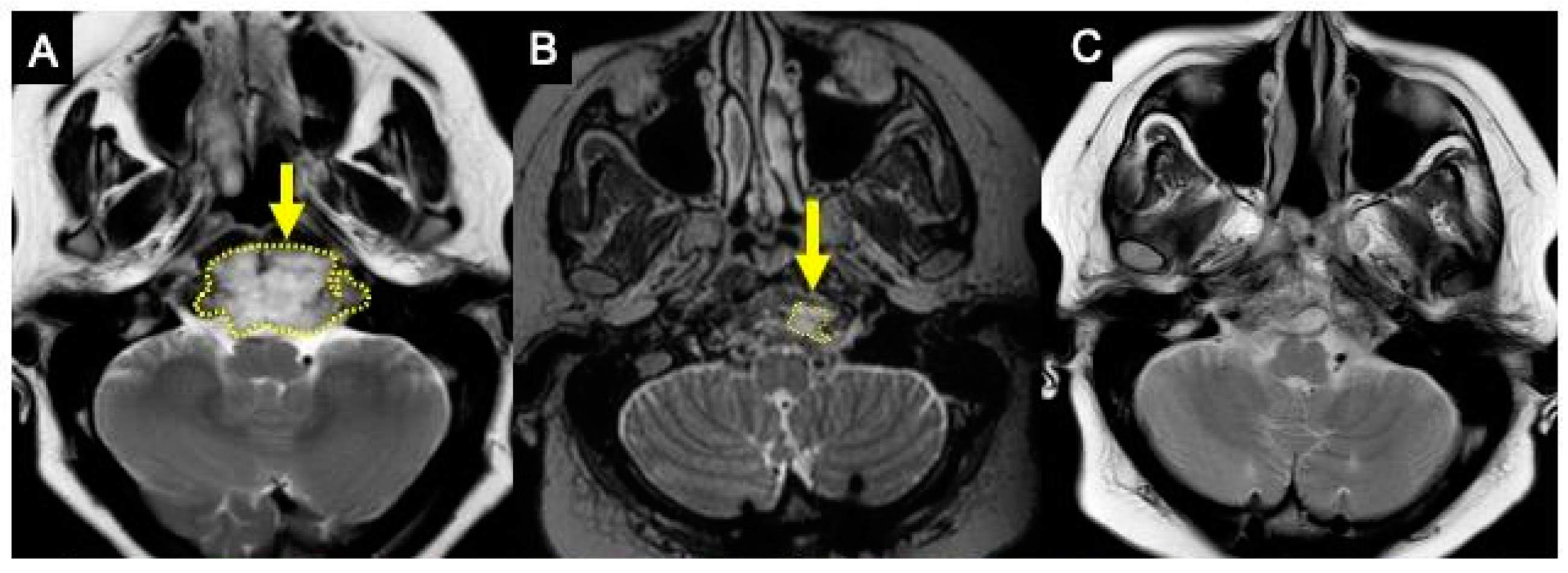
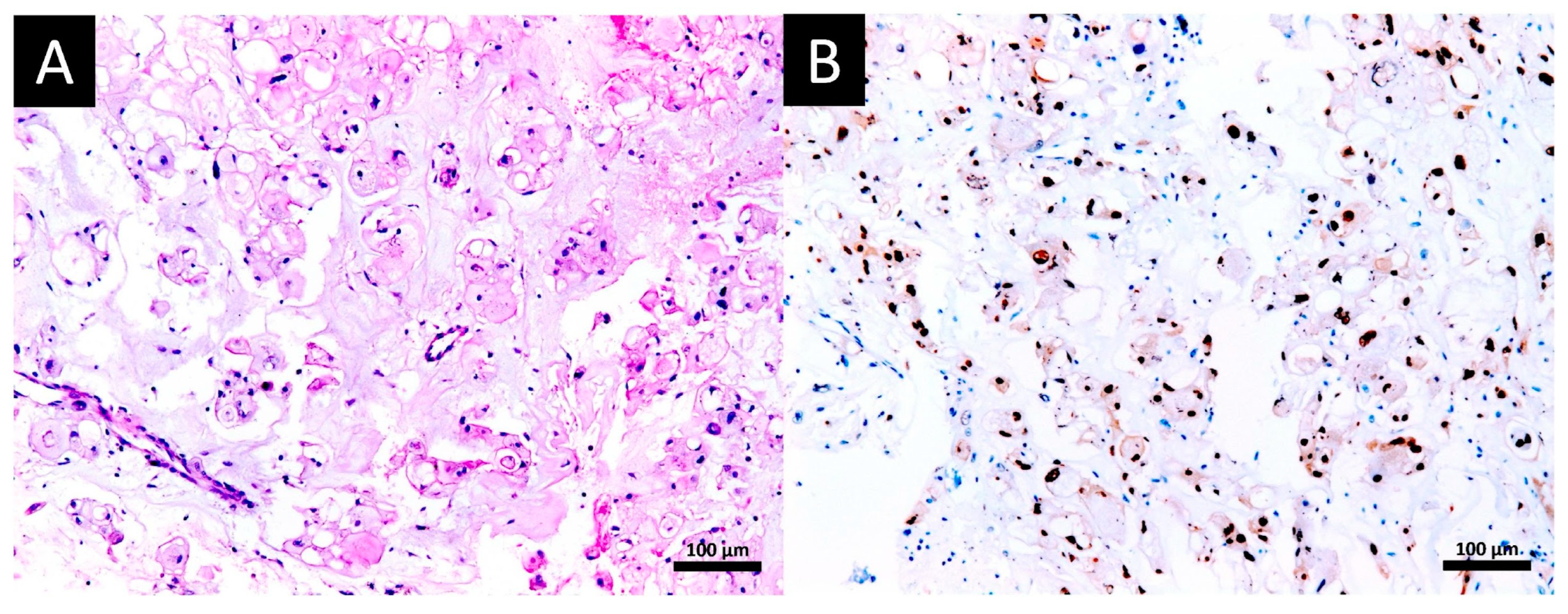
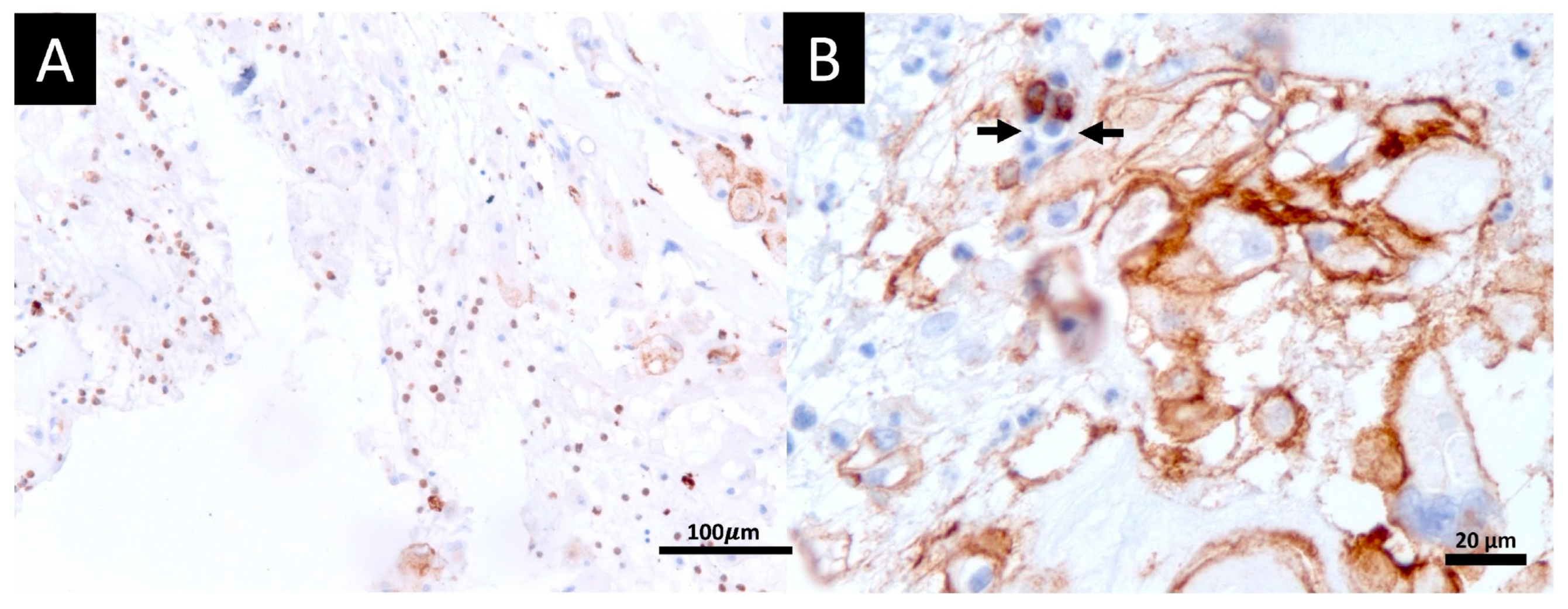
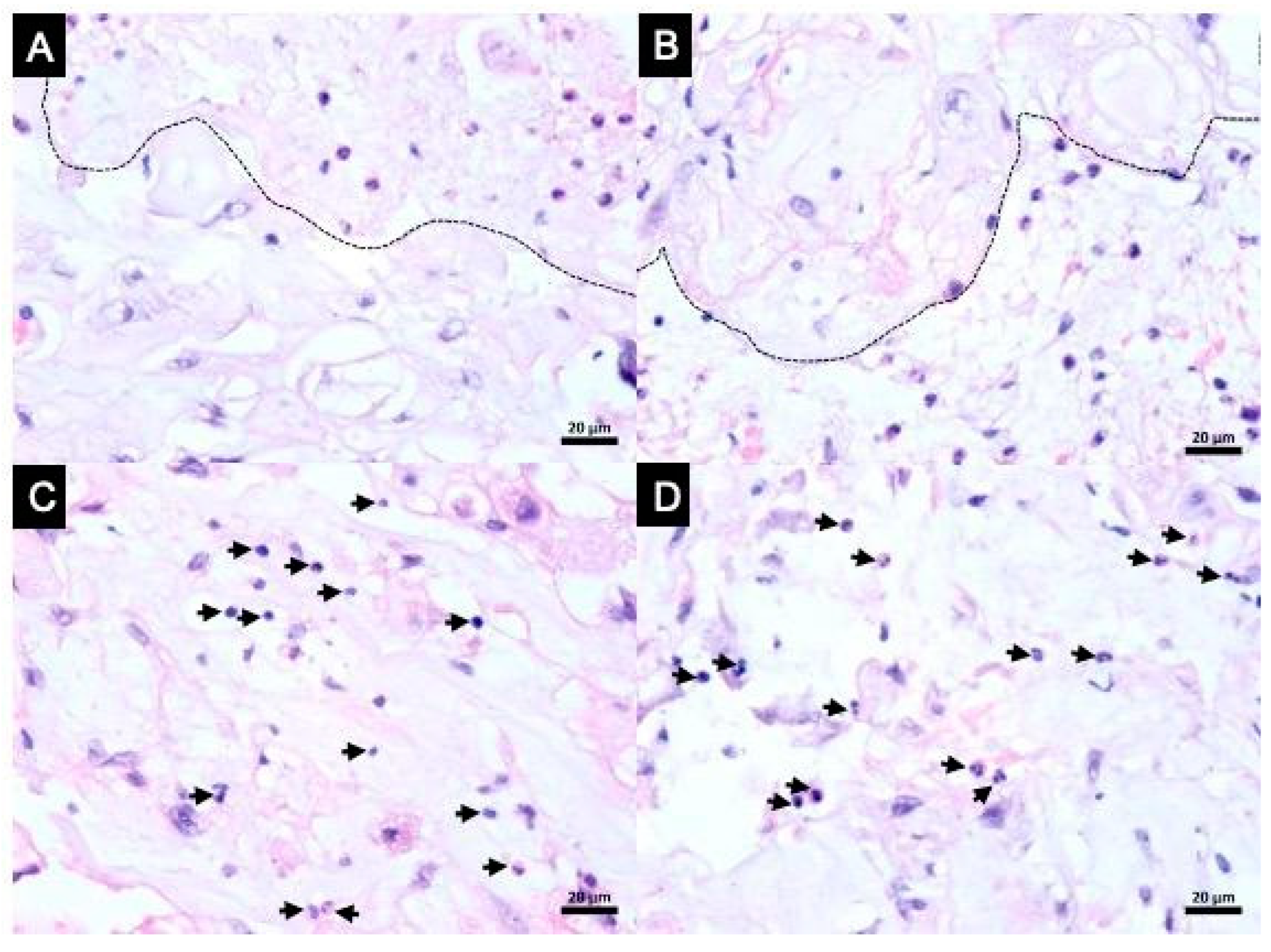
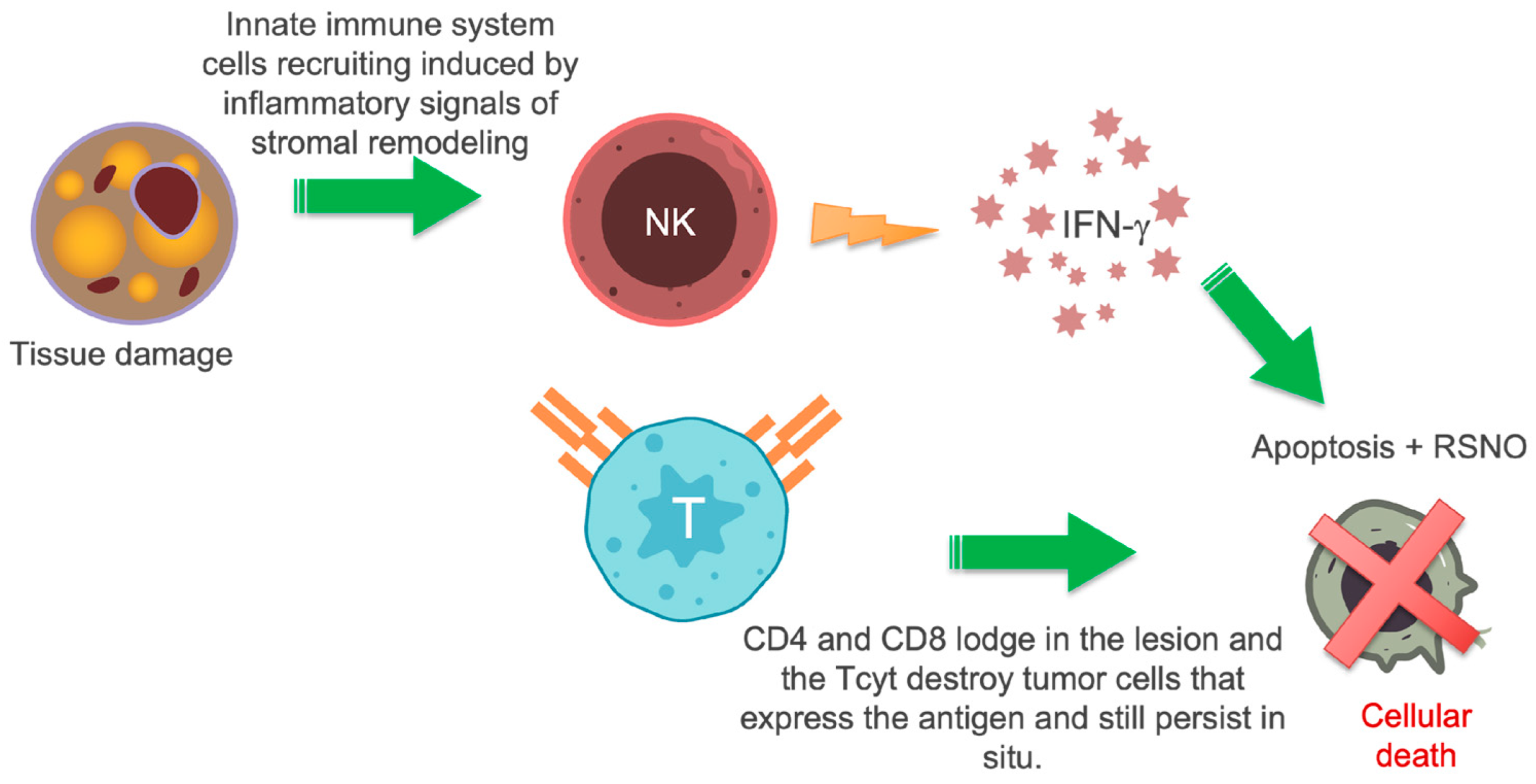
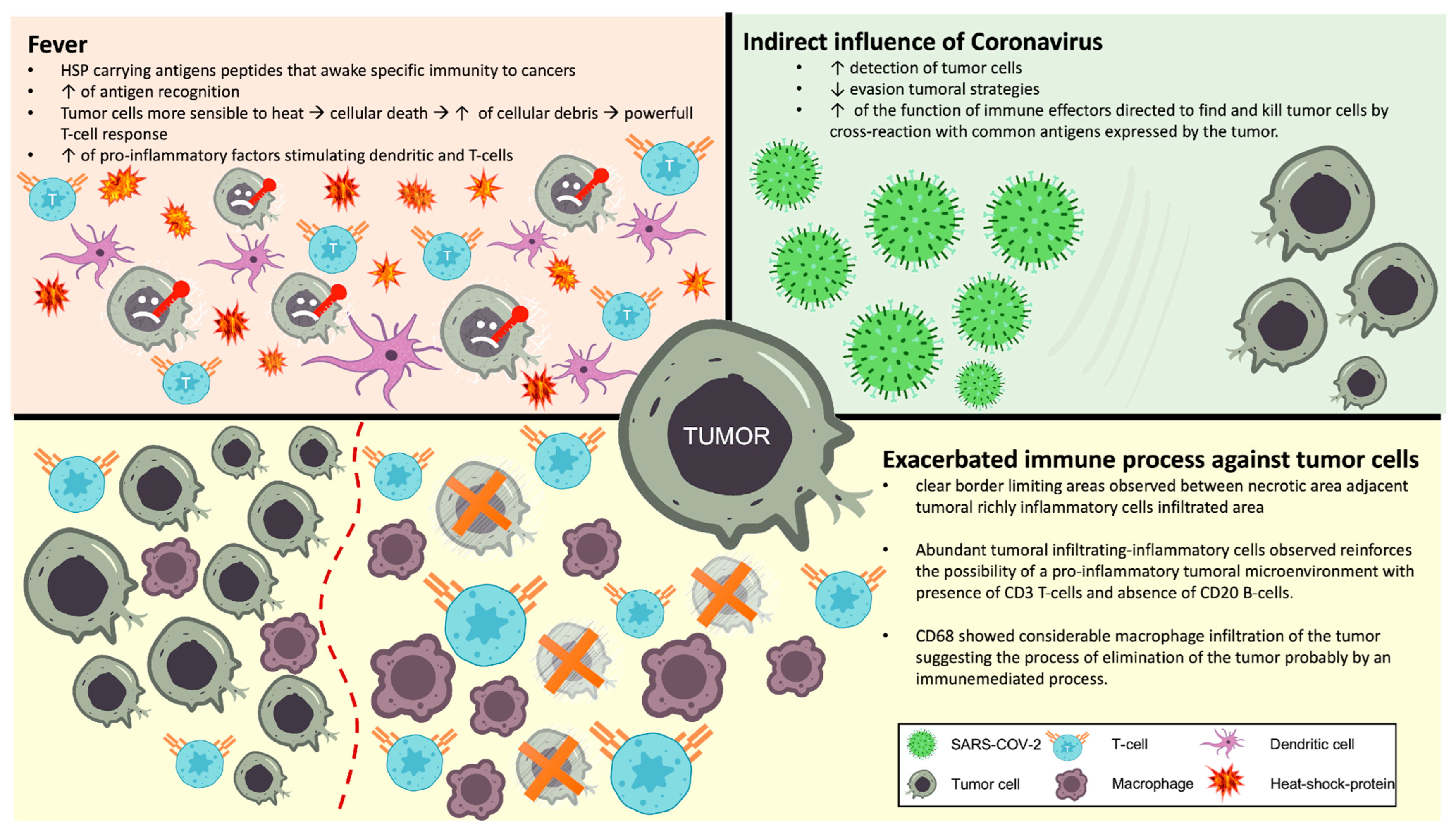
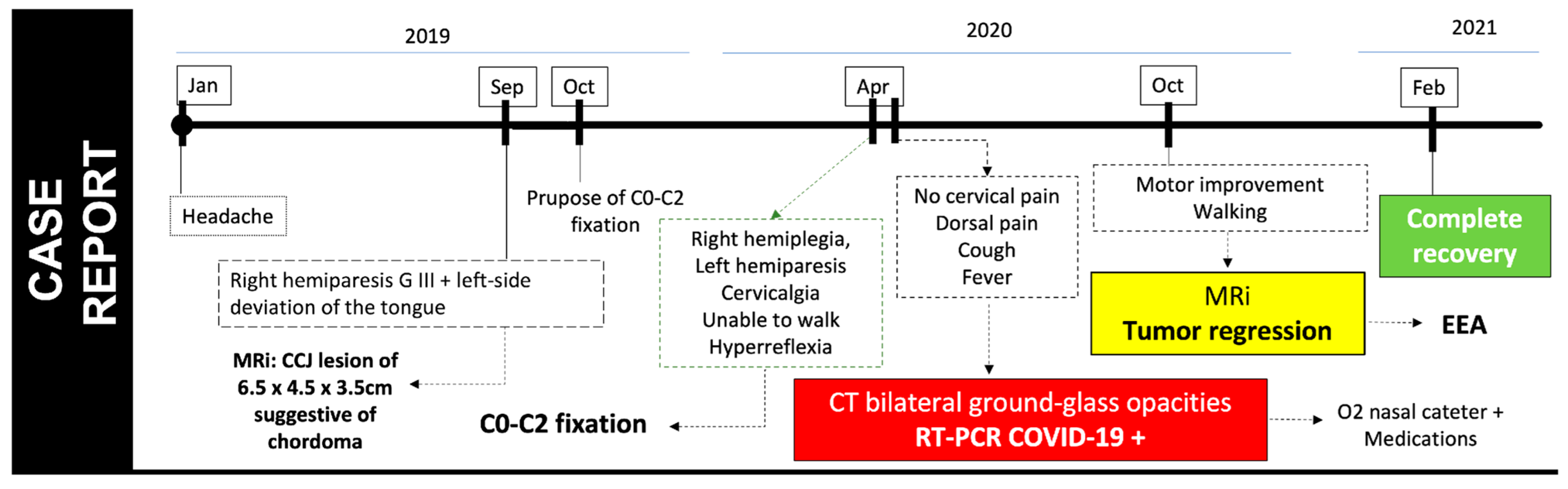
Chordomas are a low-to-intermediate-grade slow-growing subtype of sarcoma, but show propensity to grow and invade locally with recurrence and metastasis in 10–40% of cases. We describe the first case of spontaneous regression of a solid tumor (histologically and immunohistochemically proven chordoma) after COVID-19. A female patient with clival chordoma underwent occipitocervical fixation prior to tumor resection. In the early post-operative stage following the arthrodesis procedure, she was diagnosed with COVID-19. Six months after COVID-19, she finally came back for endoscopic endonasal resection of the tumor and pre-operative MRI surprisingly showed 98.9% regression of the tumor volume. Tumor resection was performed, and both histopathological and immunohistochemistry confirmed diagnosis of chordoma with positive brachyury levels. She showed improvement of right hemiparesis and left-sided tongue palsy. The tumor was comprised of tumor-infiltrating inflammatory cells. CD3 and CD68 were positive, suggesting the presence of T-lymphocytes and macrophages. CD20 and CD56 were negative, suggesting the absence of B-lymphocytes and NK-cells. The authors believe that the onset of COVID-19 exacerbated the patient’s immune response and improved anti-tumor immunity. It was concluded that T-cells, which are involved in the COVID-19 immune response and were found infiltrating the tumor, acted as a critical pathway to this event. Further studies are encouraged in order to gain a better understanding of the SARS-CoV-2–chordoma interaction.
Keywords: spontaneous neoplastic regression; coronavirus infection; notochord; sarcoma spontaneous neoplastic regression; coronavirus infection; notochord; sarcoma