Article

The Virome of Cocoa Fermentation-Associated Microorganisms

by
João Pedro Nunes Santos
1,
Gabriel Victor Pina Rodrigues
2,
Lucas Yago Melo Ferreira
2,
Gabriel Pereira Monteiro
2,
Paula Luize Camargo Fonseca
2,3,
Ícaro Santos Lopes
4,
Brenno Santos Florêncio
5,
Aijalon Brito da Silva Junior
5,
Paulo Eduardo Ambrósio
5,
Carlos Priminho Pirovani
2 and
Eric Roberto Guimarães Rocha Aguiar
5,*
1
Department of Health Sciences, Universidade Estadual de Santa Cruz, Ilhéus 45662-900, BA, Brazil
2
Department of Biological Science, Center of Biotechnology and Genetics, Universidade Estadual de Santa Cruz, Ilhéus 45662-900, BA, Brazil
3
Department of Biochemistry and Immunology, Universidade Federal de Minas Gerais, Belo Horizonte 31270-901, MG, Brazil
4
Department of Genetics, Institute of Biological Sciences, Universidade Federal de Minas Gerais, Belo Horizonte 31270-901, MG, Brazil
5
Department of Engineering and Computing, Universidade Estadual de Santa Cruz, Ilhéus 45662-900, BA, Brazil
*
Author to whom correspondence should be addressed.
Viruses 2024, 16(8), 1226; https://doi.org/10.3390/v16081226
Submission received: 29 June 2024 / Revised: 27 July 2024 / Accepted: 30 July 2024 / Published: 31 July 2024
(This article belongs to the Section Viruses of Plants, Fungi and Protozoa)

Abstract

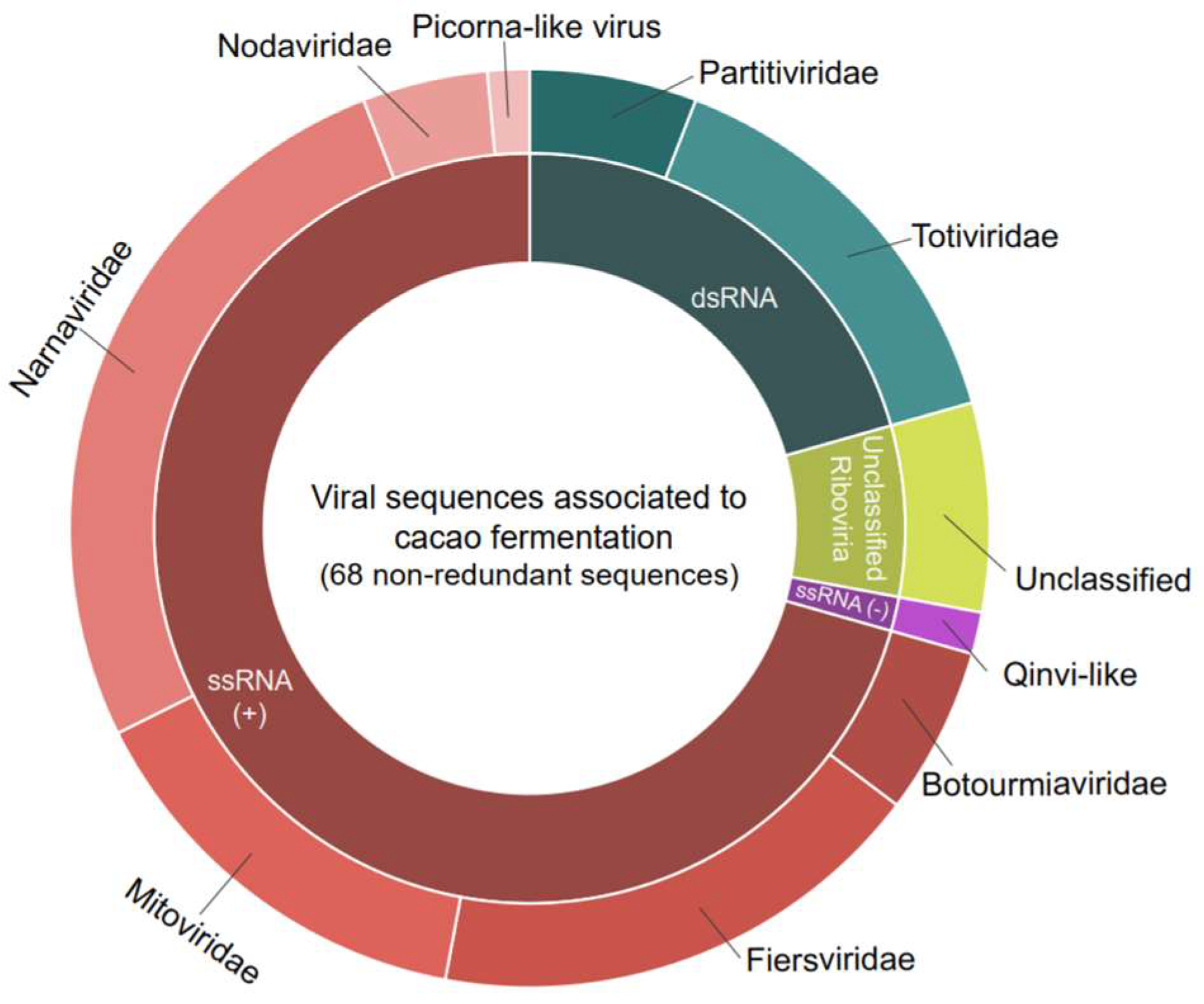
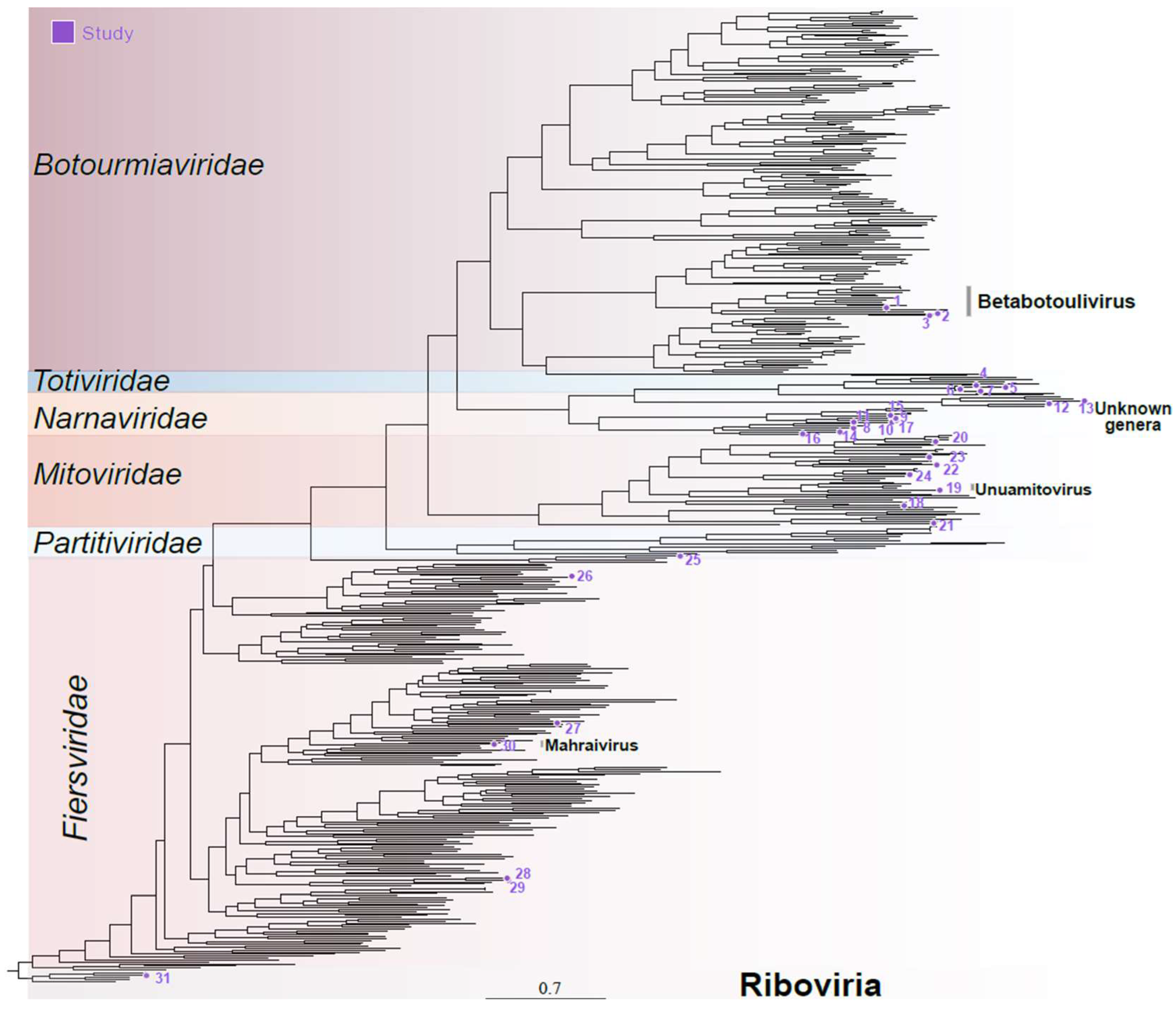
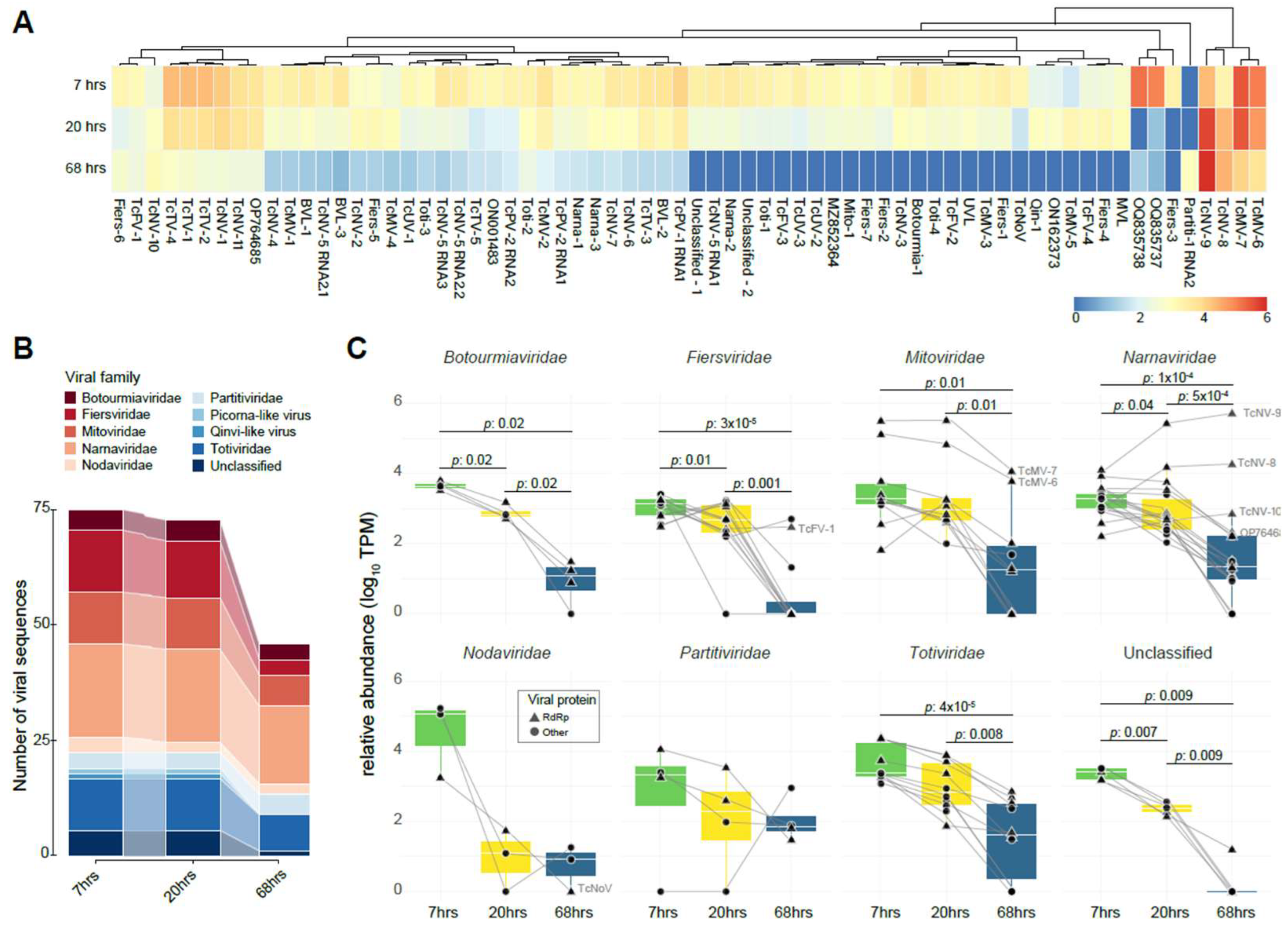
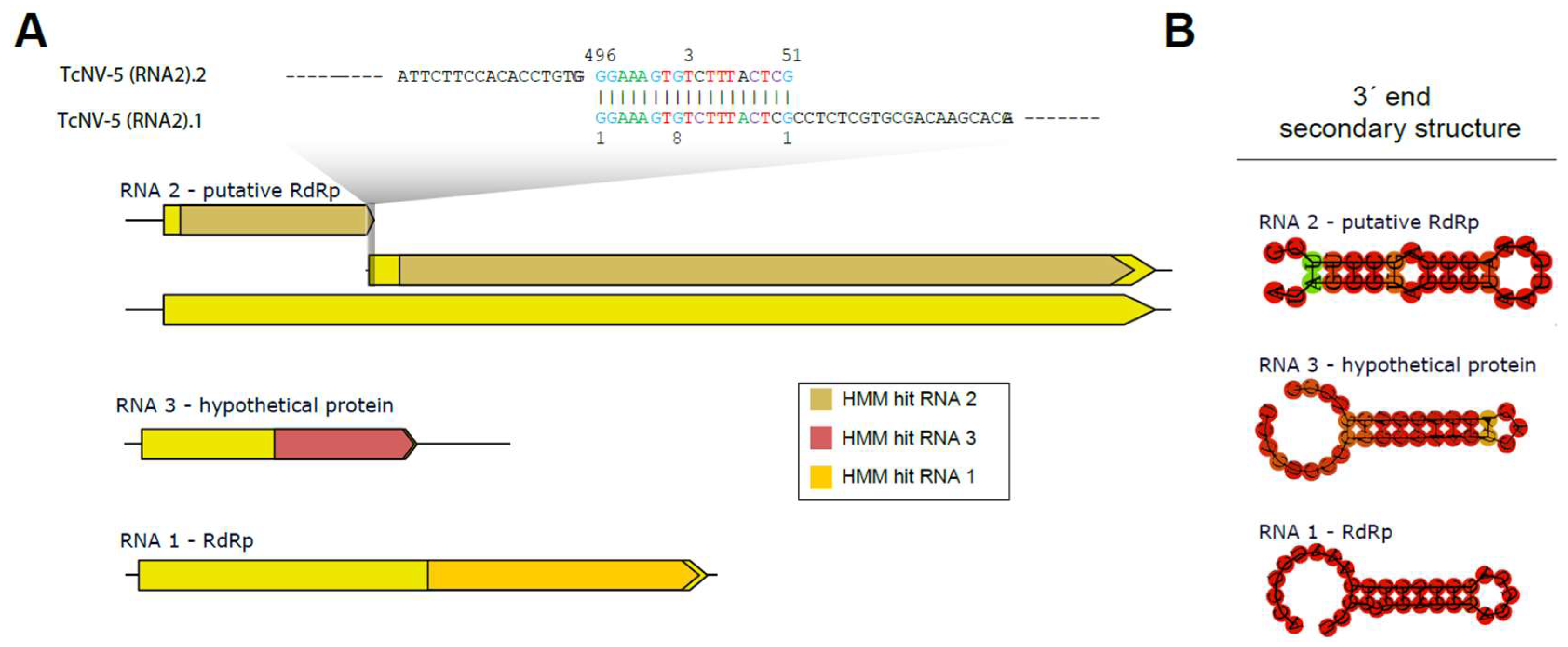
Theobroma cacao plantations are of significant economic importance worldwide, primarily for chocolate production. During the harvest and processing of cocoa beans, they are subjected to fermentation either by microorganisms present in the environment (spontaneous fermentation) or the addition of starter cultures, with different strains directly contributing distinct flavor and color characteristics to the beans. In addition to fungi and bacteria, viruses are ubiquitous and can affect the quality of the fermentation process by infecting fermenting organisms, destabilizing microbial diversity, and consequently affecting fermentation quality. Therefore, in this study, we explored publicly available metatranscriptomic libraries of cocoa bean fermentation in Limon Province, Costa Rica, looking for viruses associated with fermenting microorganisms. Libraries were derived from the same sample at different time points: 7, 20, and 68 h of fermentation, corresponding to yeast- and lactic acid bacteria-driven phases. Using a comprehensive pipeline, we identified 68 viral sequences that could be assigned to 62 new viral species and 6 known viruses distributed among at least nine families, with particular abundance of elements from the Lenarviricota phylum. Interestingly, 44 of these sequences were specifically associated with ssRNA phages (Fiersviridae) and mostly fungi-infecting viral families (Botourmiaviridae, Narnaviridae, and Mitoviridae). Of note, viruses from those families show a complex evolutionary relationship, transitioning from infecting bacteria to infecting fungi. We also identified 10 and 3 viruses classified within the Totiviridae and Nodaviridae families, respectively. The quantification of the virus-derived RNAs shows a general pattern of decline, similar to the dynamic profile of some microorganism genera during the fermentation process. Unexpectedly, we identified narnavirus-related elements that showed similarity to segmented viral species. By exploring the molecular characteristics of these viral sequences and applying Hidden Markov Models, we were capable of associating these additional segments with a specific taxon. In summary, our study elucidates the complex virome associated with the microbial consortia engaged in cocoa bean fermentation that could contribute to organism/strain selection, altering metabolite production and, consequently, affecting the sensory characteristics of cocoa beans.
Keywords: cocoa fermentation; virome; microorganisms; metatranscriptome; Lenarviricota; Narnaviridae cocoa fermentation; virome; microorganisms; metatranscriptome; Lenarviricota; Narnaviridae