Article

Genomic Bootstrap Barcodes and Their Application to Study the Evolution of Sarbecoviruses
Institut de Systématique, Évolution, Biodiversité (ISYEB), Sorbonne Université, Centre National de la Recherche Scientifique, École Pratique des Hautes Études, Muséum national d’Histoire naturelle, Université des Antilles, 75231 Paris, France
*
Author to whom correspondence should be addressed.
Viruses 2022, 14(2), 440; https://doi.org/10.3390/v14020440
Submission received: 5 January 2022 / Revised: 7 February 2022 / Accepted: 18 February 2022 / Published: 21 February 2022
(This article belongs to the Section General Virology)

Abstract

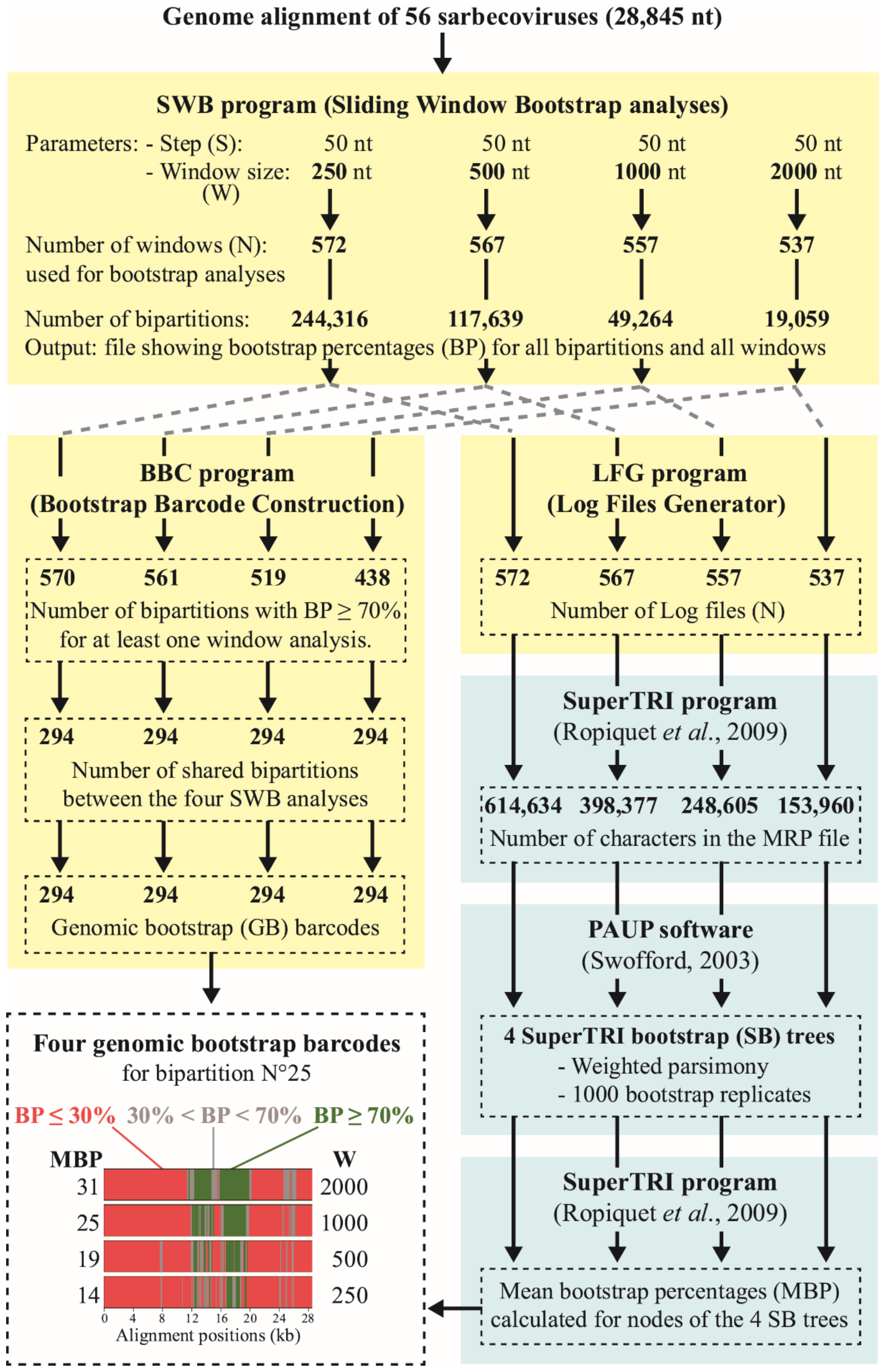
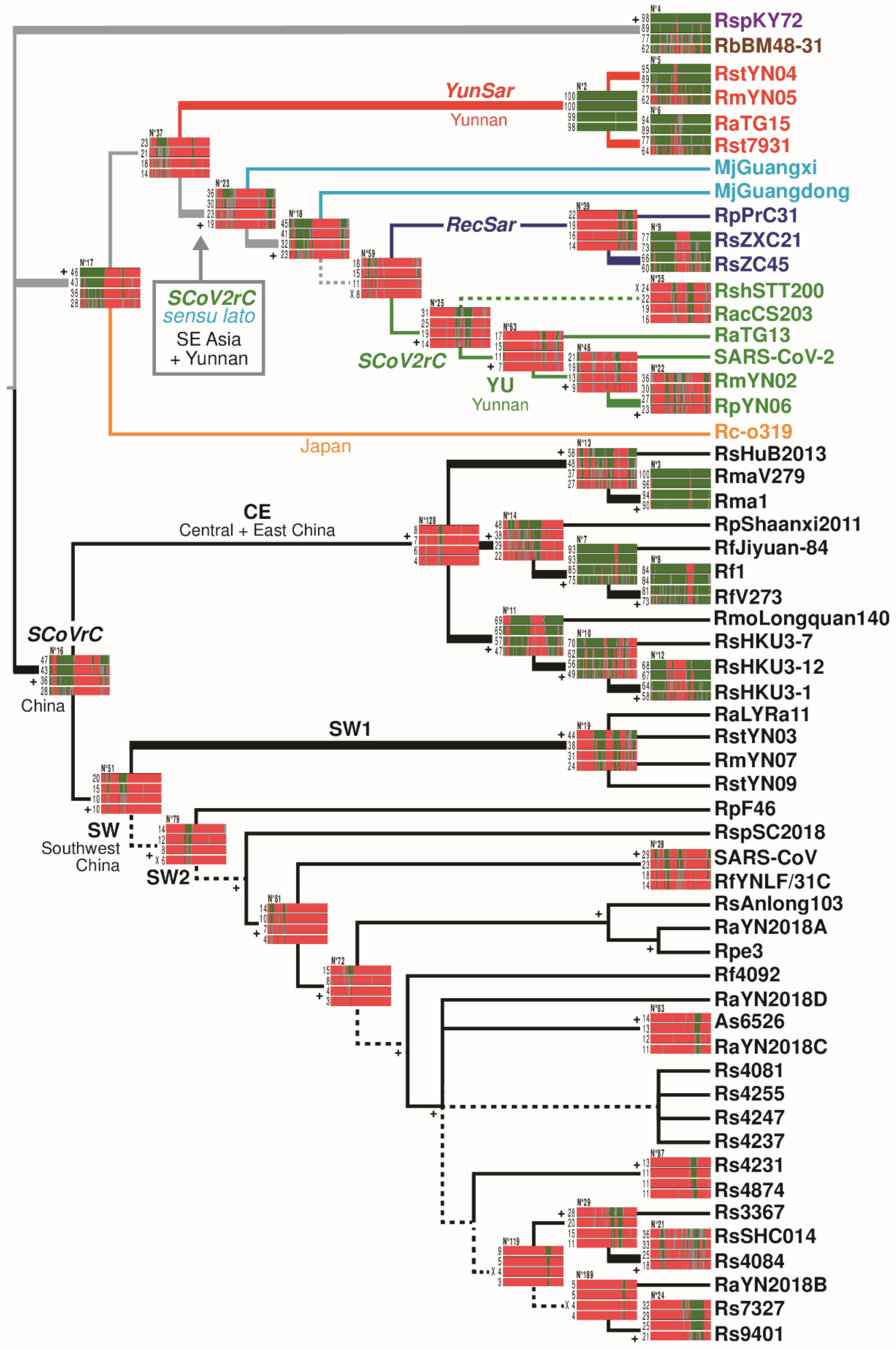
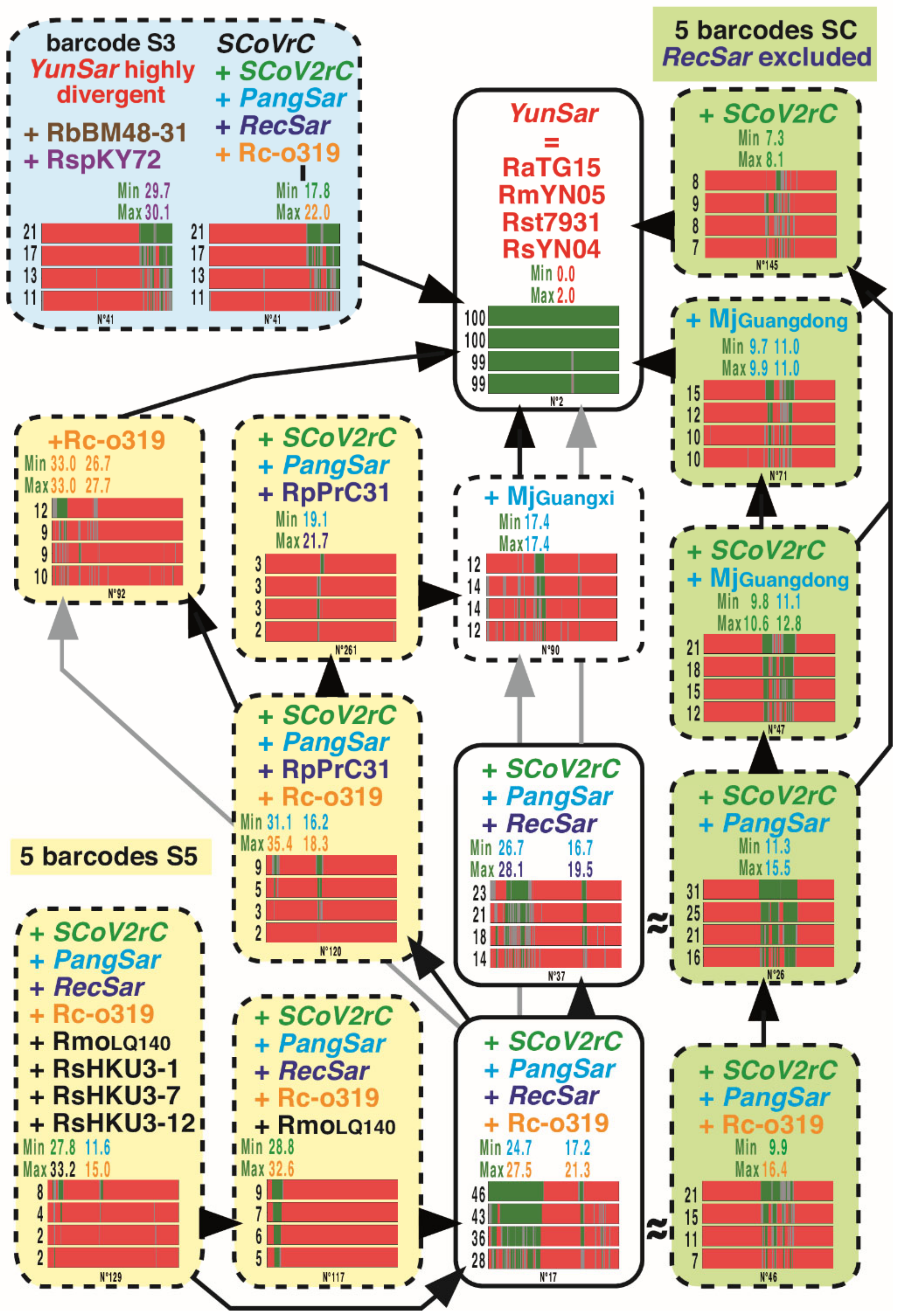
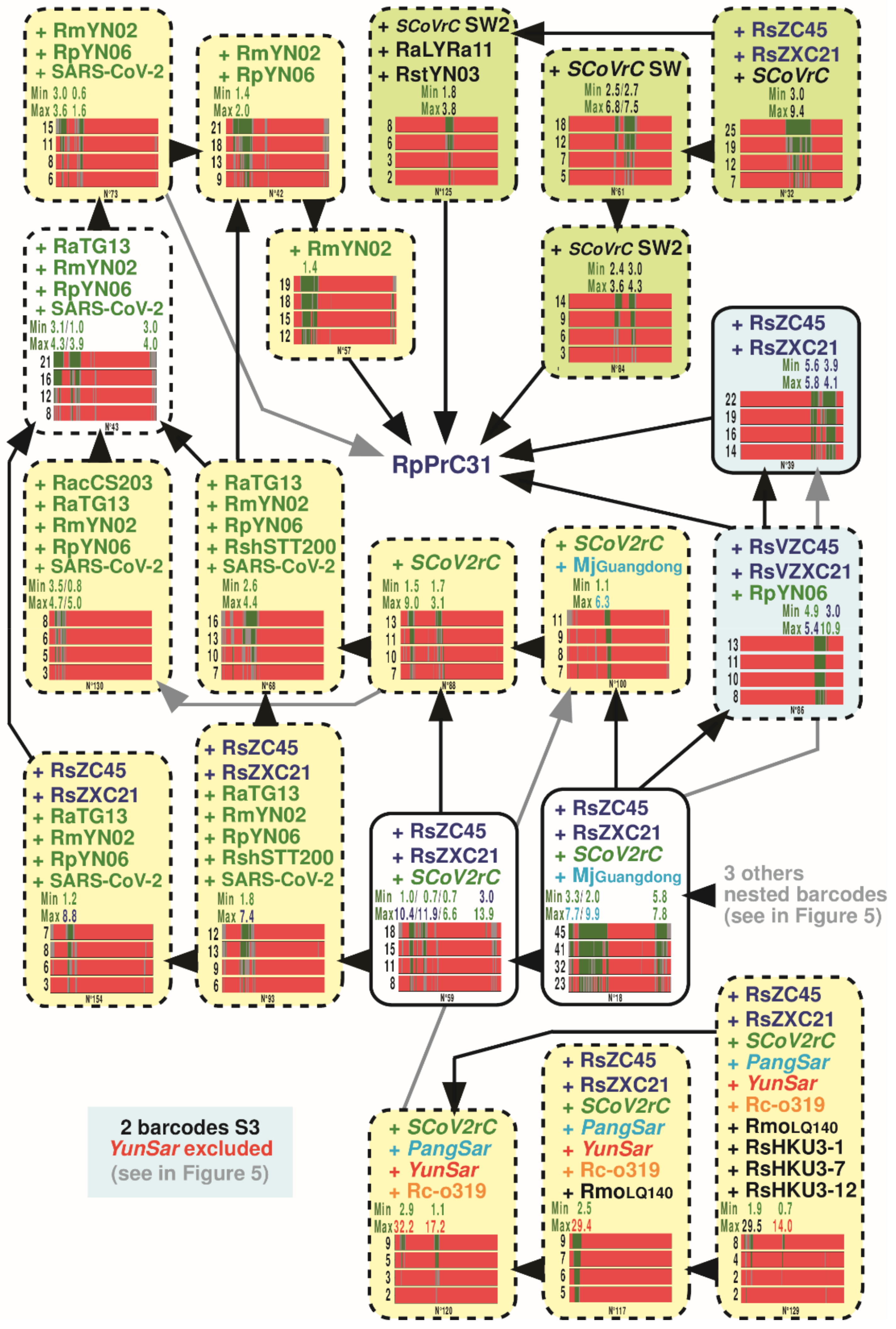
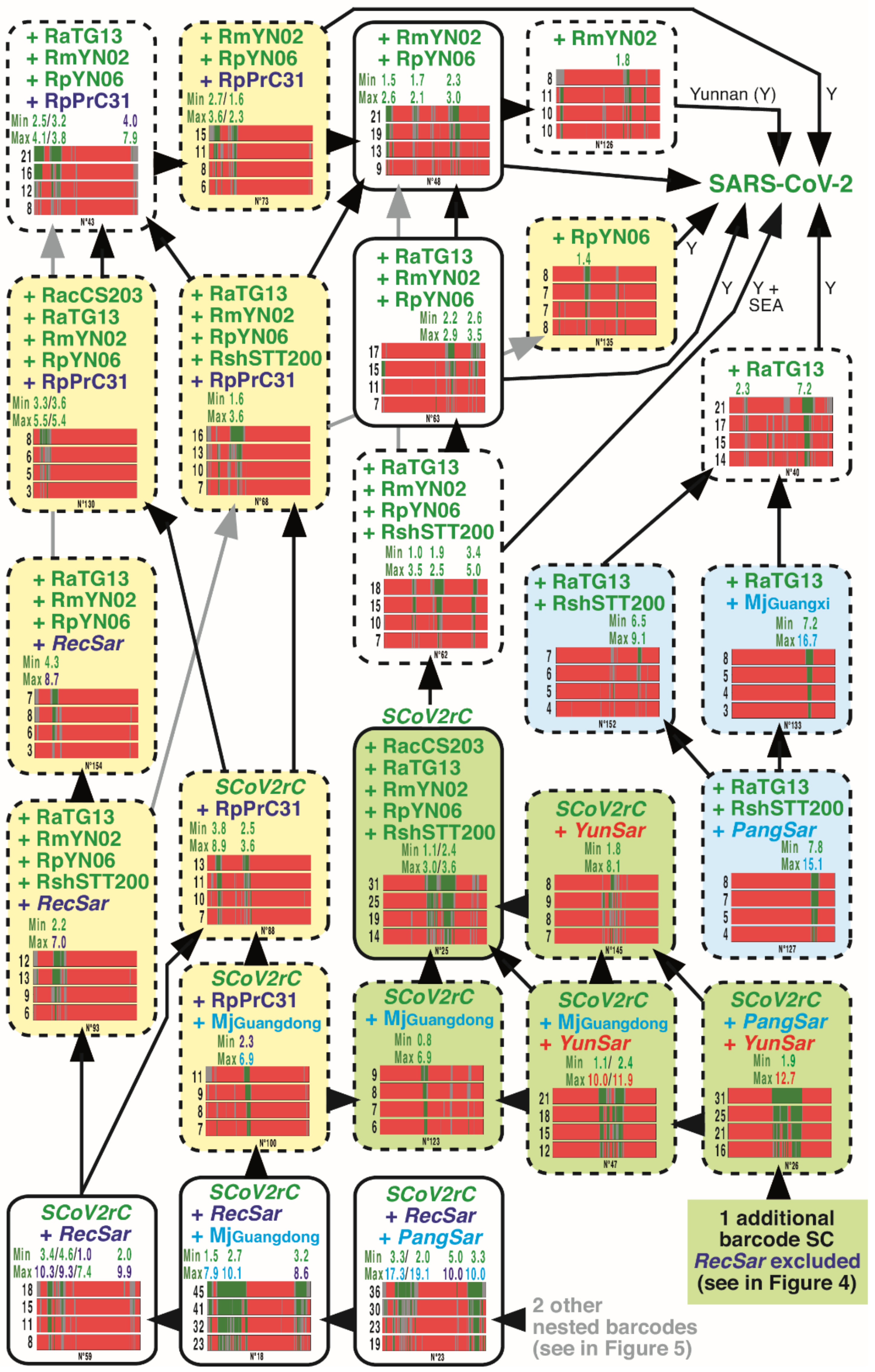
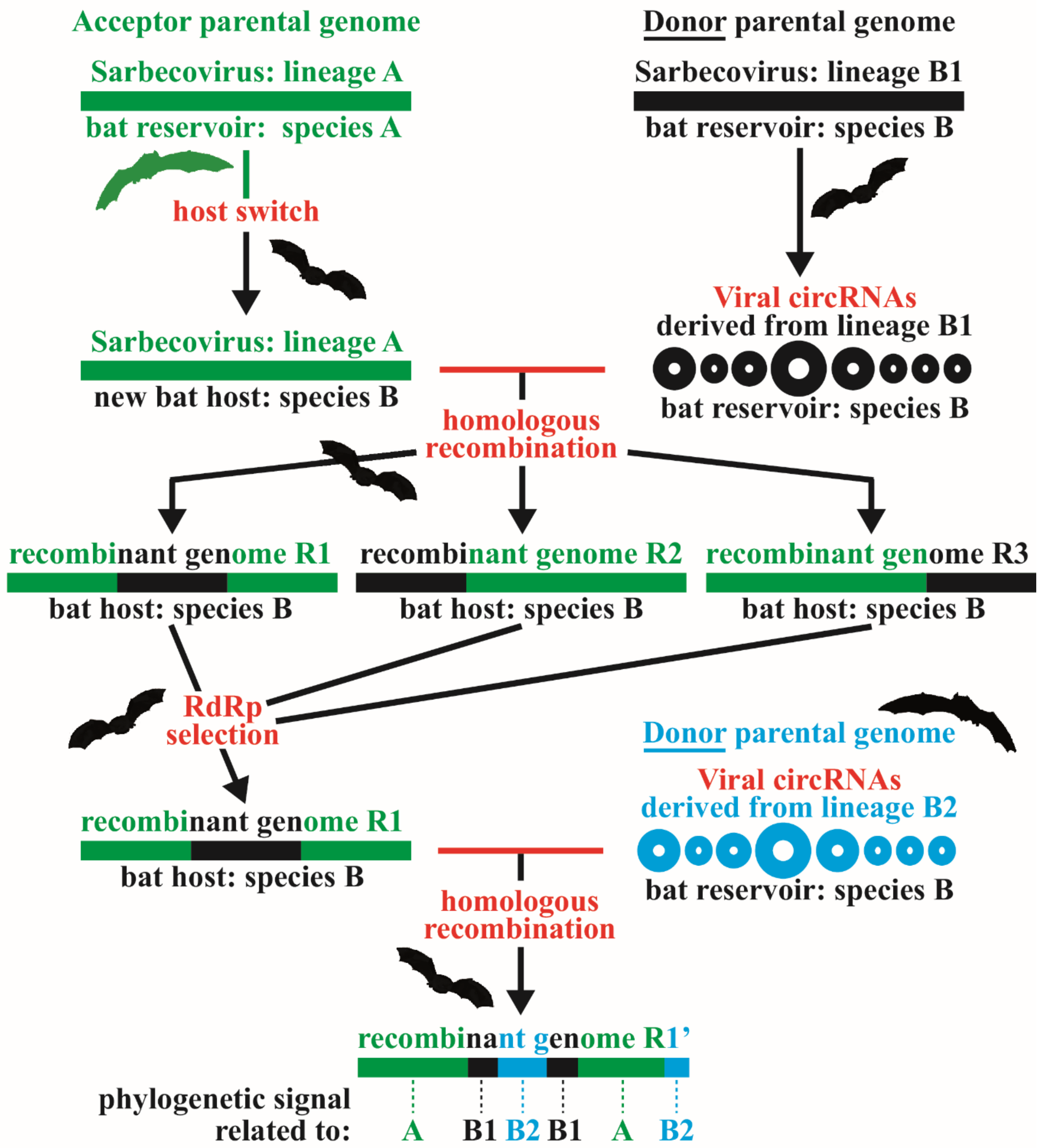
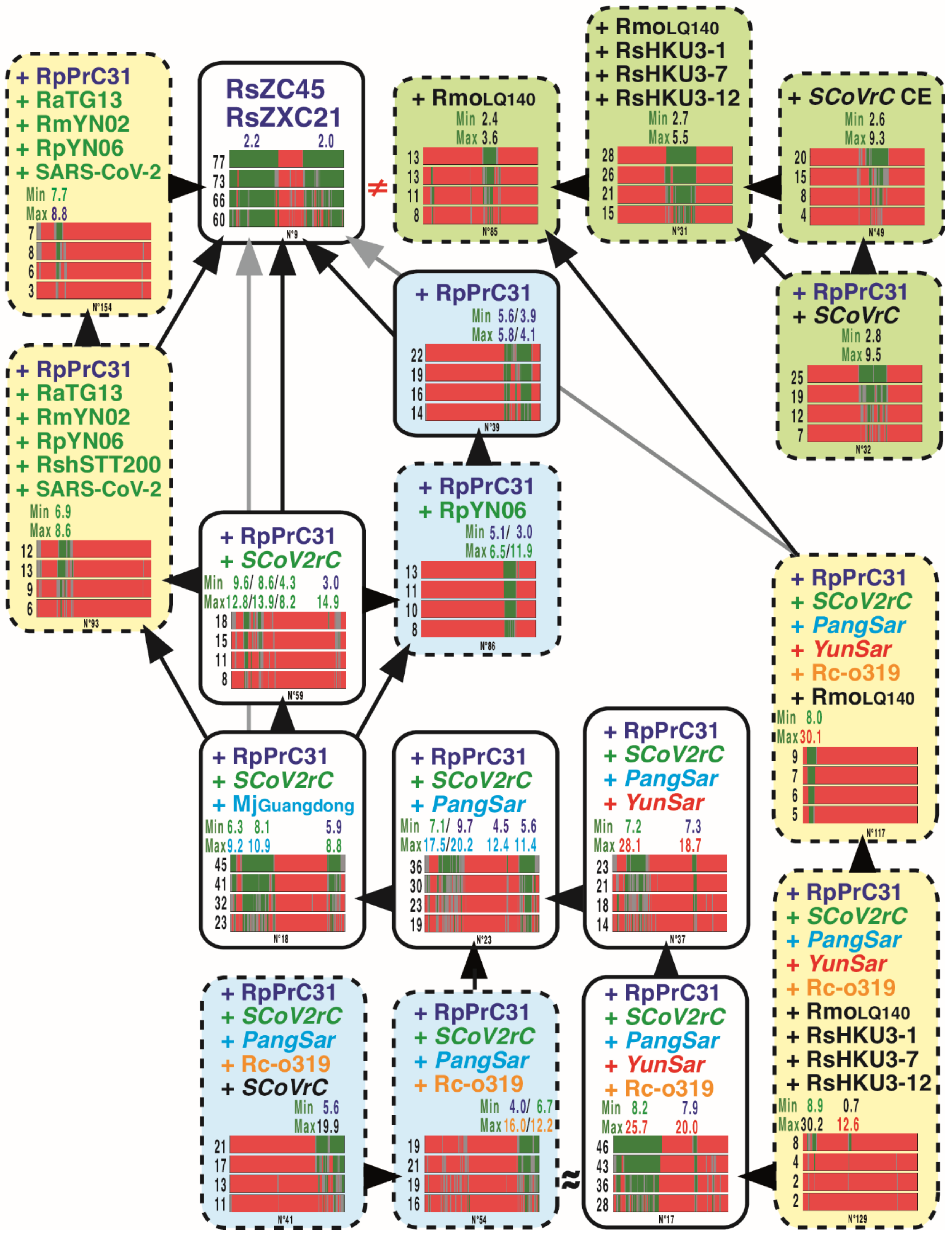
Recombination creates mosaic genomes containing regions with mixed ancestry, and the accumulation of such events over time can complicate greatly many aspects of evolutionary inference. Here, we developed a sliding window bootstrap (SWB) method to generate genomic bootstrap (GB) barcodes to highlight the regions supporting phylogenetic relationships. The method was applied to an alignment of 56 sarbecoviruses, including SARS-CoV and SARS-CoV-2, responsible for the SARS epidemic and COVID-19 pandemic, respectively. The SWB analyses were also used to construct a consensus tree showing the most reliable relationships and better interpret hidden phylogenetic signals. Our results revealed that most relationships were supported by just a few genomic regions and confirmed that three divergent lineages could be found in bats from Yunnan: SCoVrC, which groups SARS-CoV related coronaviruses from China; SCoV2rC, which includes SARS-CoV-2 related coronaviruses from Southeast Asia and Yunnan; and YunSar, which contains a few highly divergent viruses recently described in Yunnan. The GB barcodes showed evidence for ancient recombination between SCoV2rC and YunSar genomes, as well as more recent recombination events between SCoVrC and SCoV2rC genomes. The recombination and phylogeographic patterns suggest a strong host-dependent selection of the viral RNA-dependent RNA polymerase. In addition, SARS-CoV-2 appears as a mosaic genome composed of regions sharing recent ancestry with three bat SCoV2rCs from Yunnan (RmYN02, RpYN06, and RaTG13) or related to more ancient ancestors in bats from Yunnan and Southeast Asia. Finally, our results suggest that viral circular RNAs may be key molecules for the mechanism of recombination.
Keywords: RNA recombination; COVID-19 origin; reservoir host; viral circRNA; phylogenetic support; tree reconstruction RNA recombination; COVID-19 origin; reservoir host; viral circRNA; phylogenetic support; tree reconstruction