Article

Functional Characterization of Replication-Associated Proteins Encoded by Alphasatellites Identified in Yunnan Province, China
1
State Key Laboratory of Rice Biology, Institute of Biotechnology, Zhejiang University, Hangzhou 310058, China
2
Biotechnology and Germplasm Resources Institute, Yunnan Academy of Agricultural Sciences, Kunming 650223, China
3
Key Laboratory of Vector Biology and Pathogen Control of Zhejiang Province, College of Life Sciences, Huzhou University, Huzhou 313000, China
4
Key Laboratory for Biology of Plant Diseases and Insect Pests, Institute of Plant Protection, Chinese Academy of Agricultural Sciences, Beijing 100193, China
*
Author to whom correspondence should be addressed.
Viruses 2022, 14(2), 222; https://doi.org/10.3390/v14020222
Submission received: 22 December 2021 / Revised: 17 January 2022 / Accepted: 21 January 2022 / Published: 24 January 2022
(This article belongs to the Section Viruses of Plants, Fungi and Protozoa)

Abstract

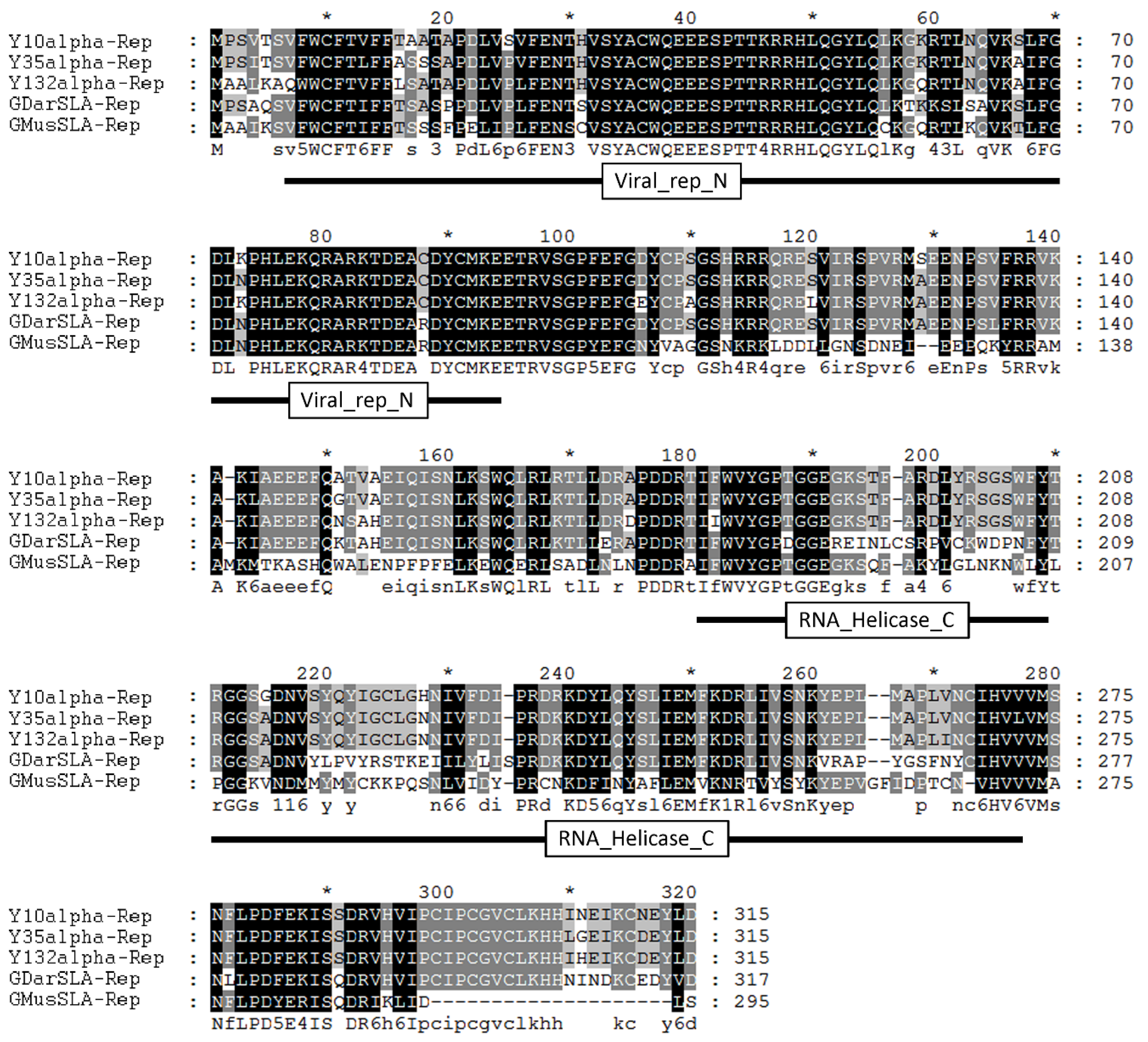
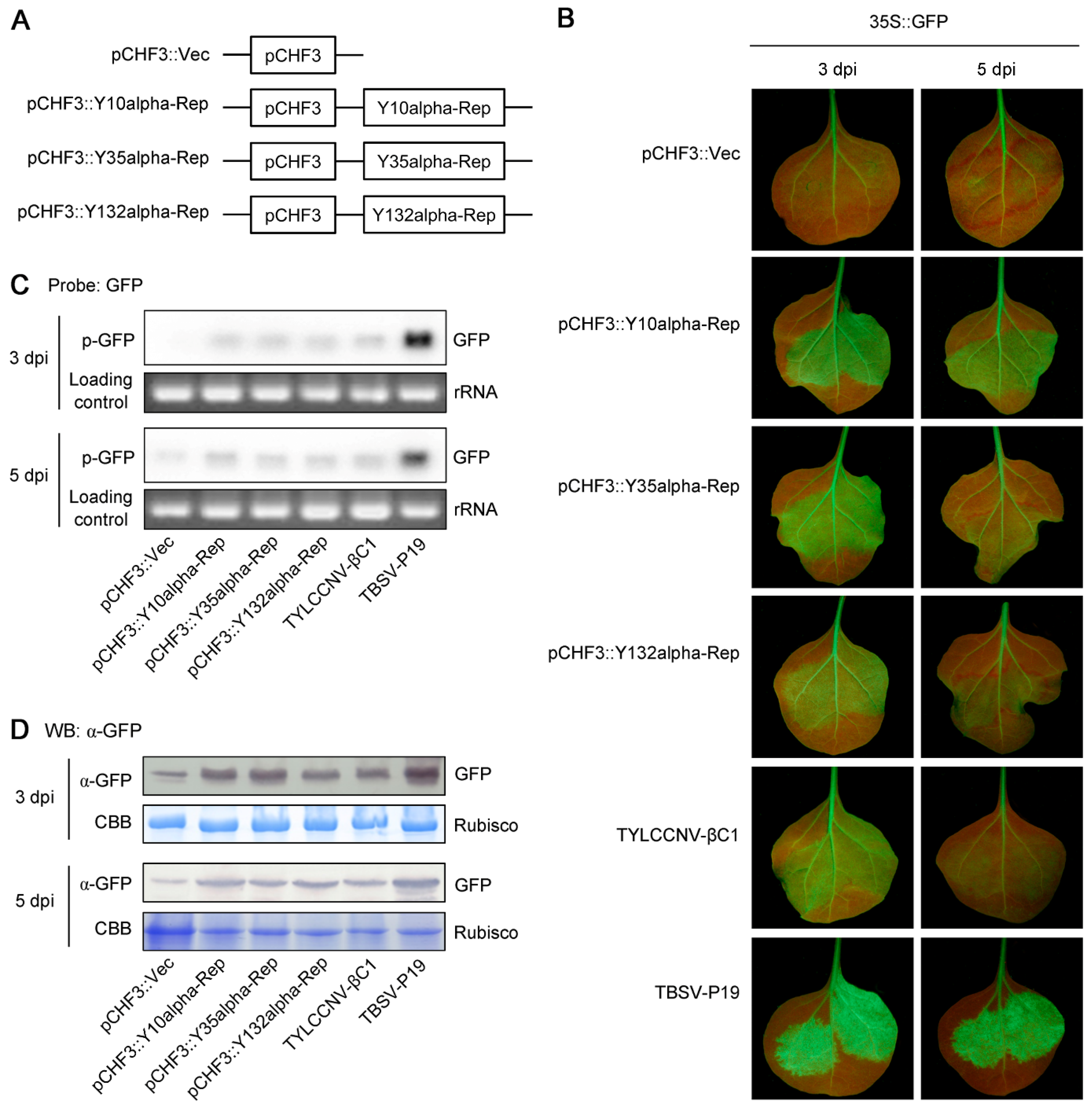
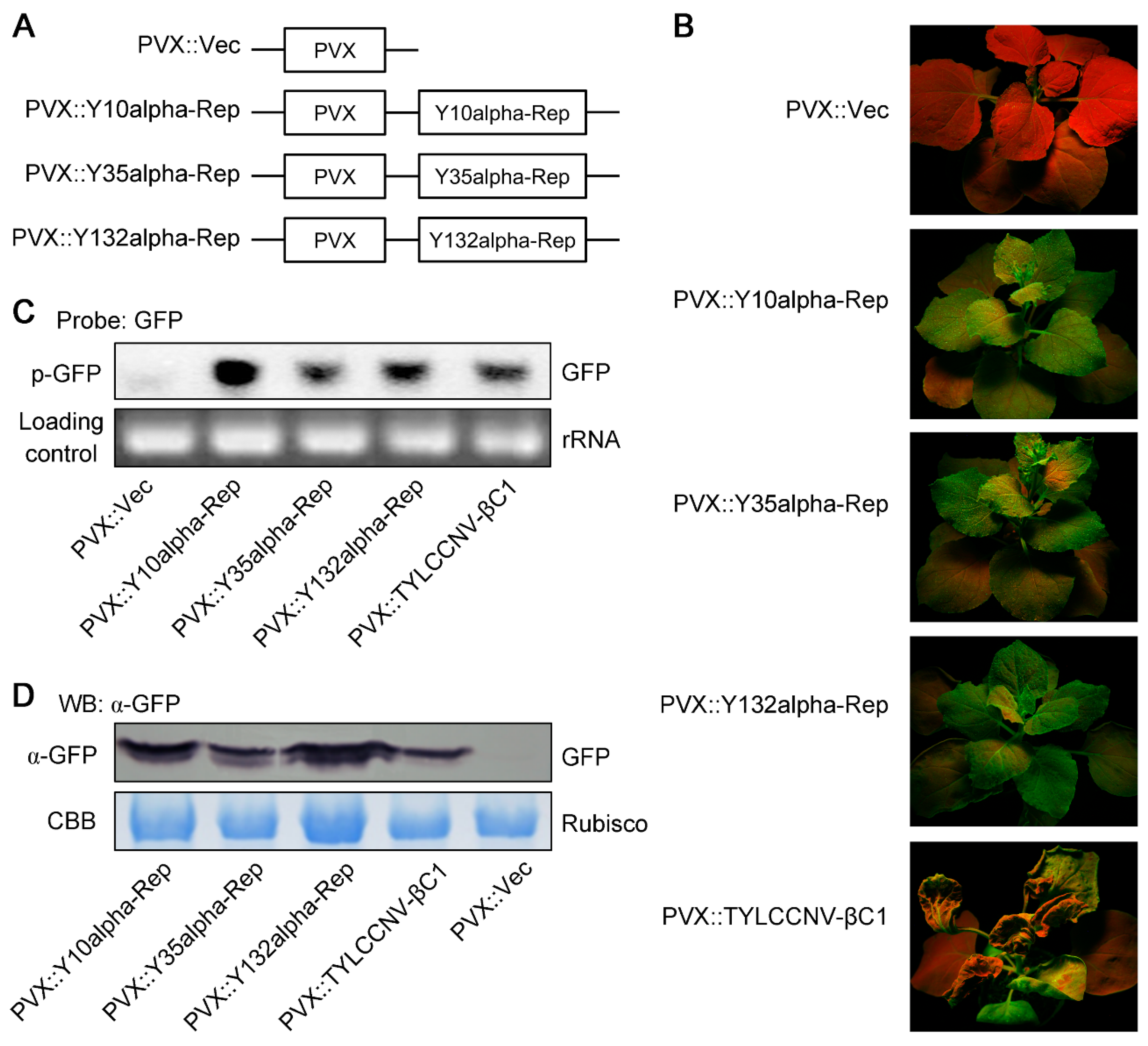
Alphasatellites, which encode only a replication-associated protein (alpha-Rep), are frequently found to be non-essential satellite components associated with begomovirus/betasatellite complexes, and their presence can modulate disease symptoms and/or viral DNA accumulation during infection. Our previous study has shown that there are three types of alphasatellites associated with begomovirus/betasatellite complexes in Yunnan province in China and they encode three corresponding types of alpha-Rep proteins. However, the biological functions of alpha-Reps remain poorly understood. In this study, we investigated the biological functions of alpha-Reps in post-transcriptional gene silencing (PTGS) and transcriptional gene silencing (TGS) using 16c and 16-TGS transgenic Nicotiana benthamiana plants. Results showed that all the three types of alpha-Rep proteins were capable of suppressing the PTGS and reversing the TGS. Among them, the alpha-Rep of Y10DNA1 has the strongest PTGS and TGS suppressor activities. We also found that the alpha-Rep proteins were able to increase the accumulation of their helper virus during coinfection. These results suggest that the alpha-Reps may have a role in overcoming host defense, which provides a possible explanation for the selective advantage provided by the association of alphasatellites with begomovirus/betasatellite complexes.
Keywords: alphasatellite; replication-associated protein; geminivirus complex; PTGS; TGS alphasatellite; replication-associated protein; geminivirus complex; PTGS; TGS