Article

A Replication-Competent HIV Clone Carrying GFP-Env Reveals Rapid Env Recycling at the HIV-1 T Cell Virological Synapse

1
Department of Medicine, Division of Infectious Disease, Immunology Institute, Icahn School of Medicine at Mount Sinai, New York, NY 10029, USA
2
Biomolecular Photonics, Department of Physics, University of Bielefeld, 33615 Bielefeld, Germany
*
Author to whom correspondence should be addressed.
Viruses 2022, 14(1), 38; https://doi.org/10.3390/v14010038
Submission received: 23 July 2021 / Revised: 8 October 2021 / Accepted: 17 December 2021 / Published: 25 December 2021
(This article belongs to the Special Issue HIV Infection and Spread between T Cells)

Abstract

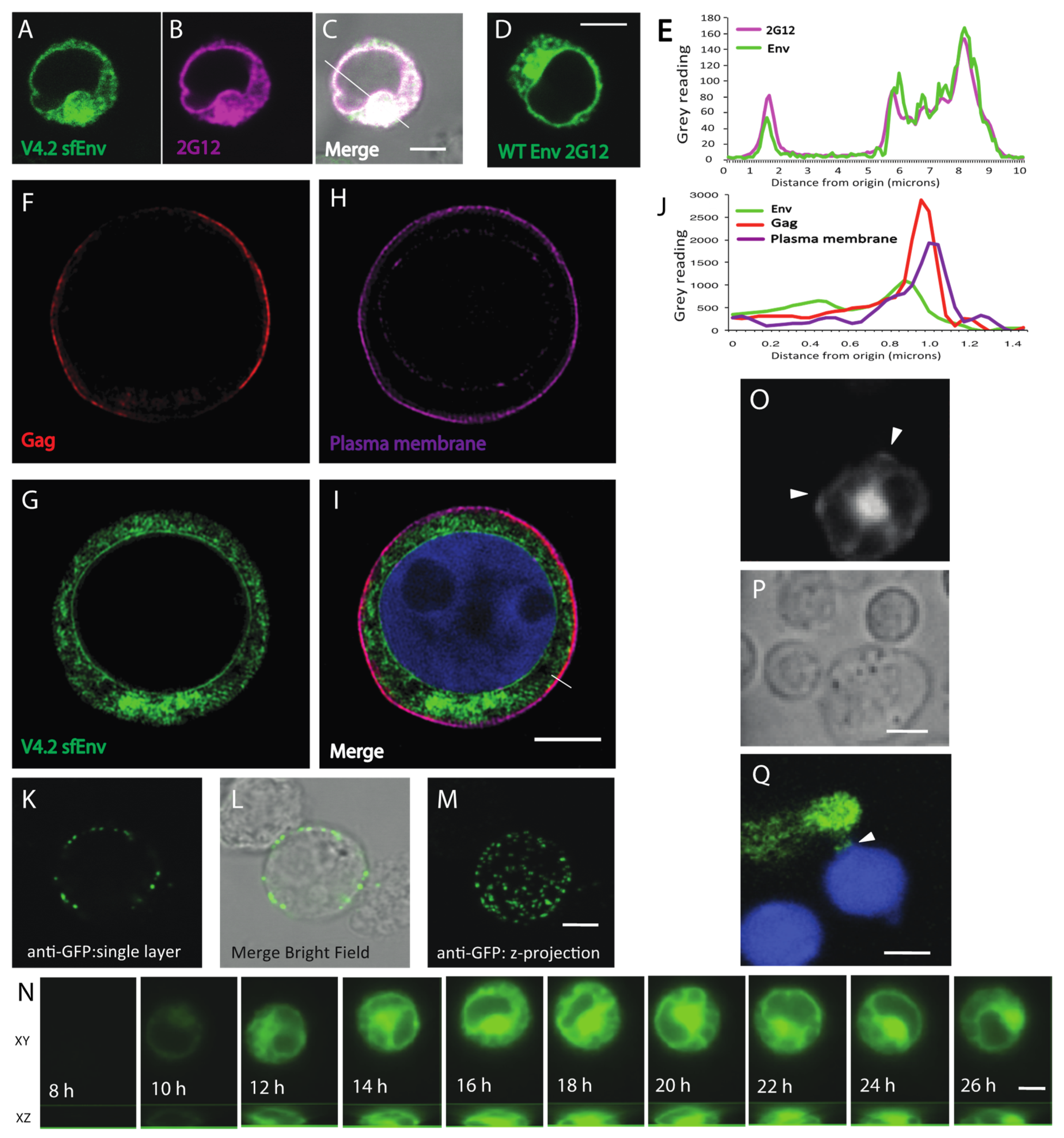
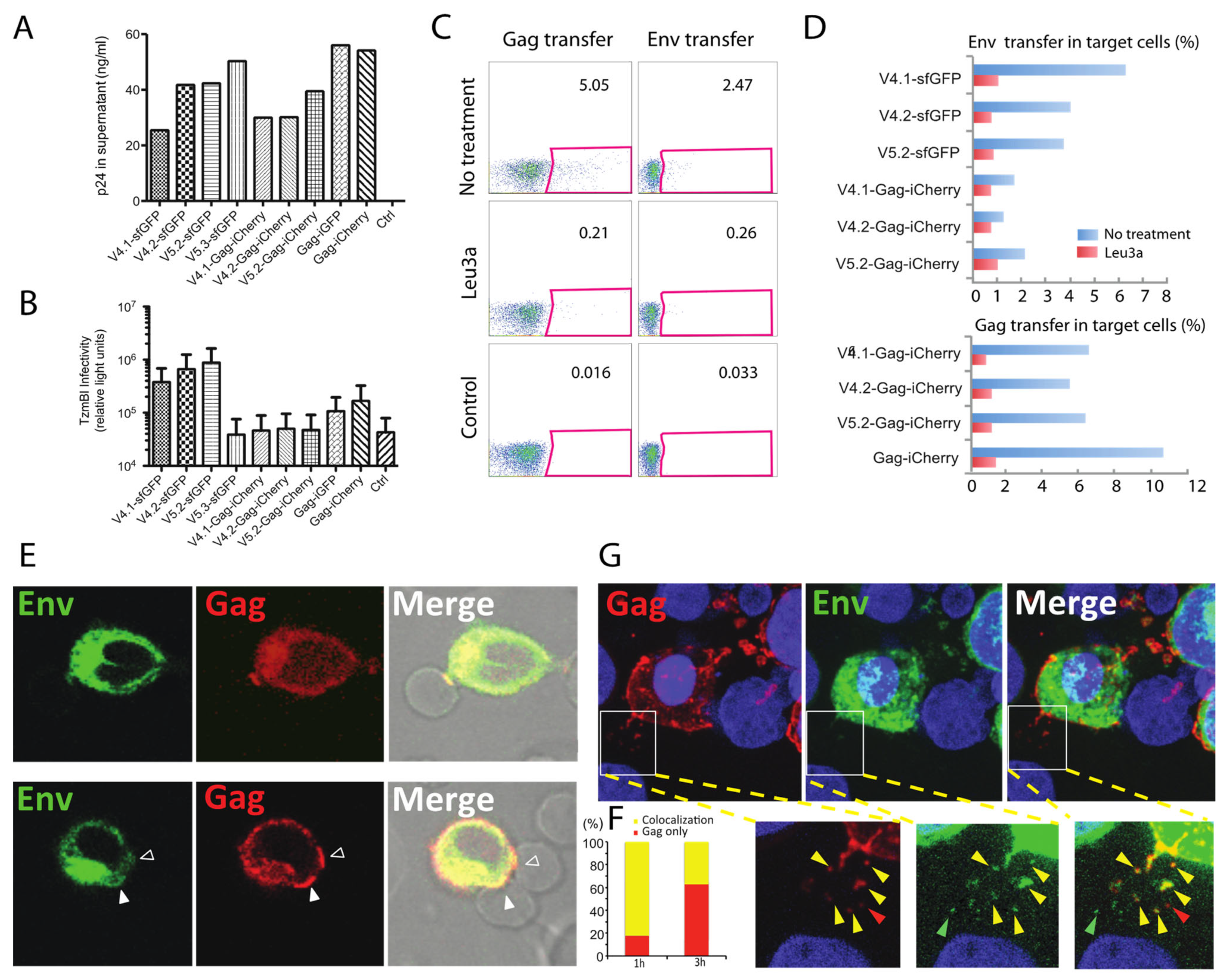
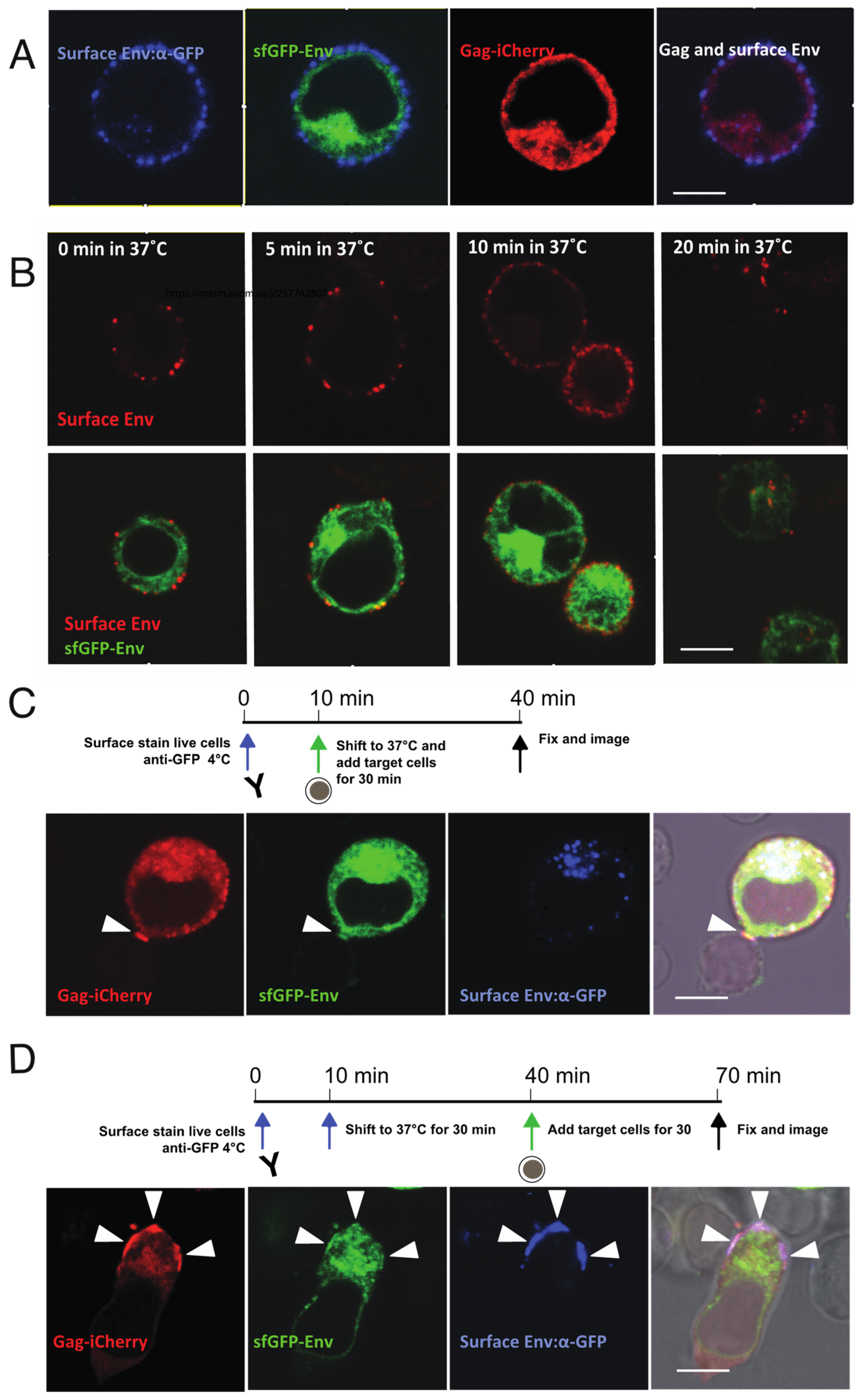
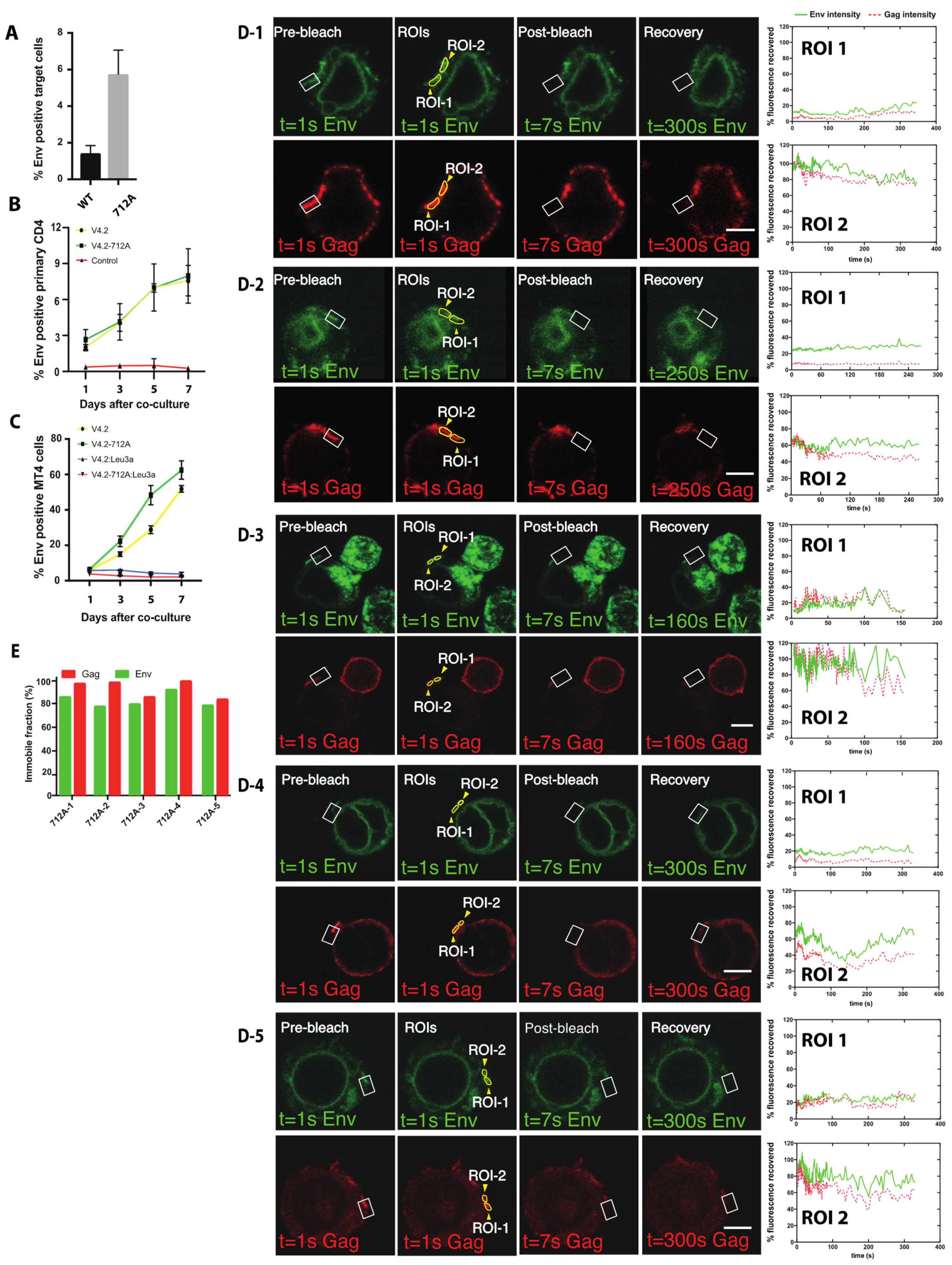
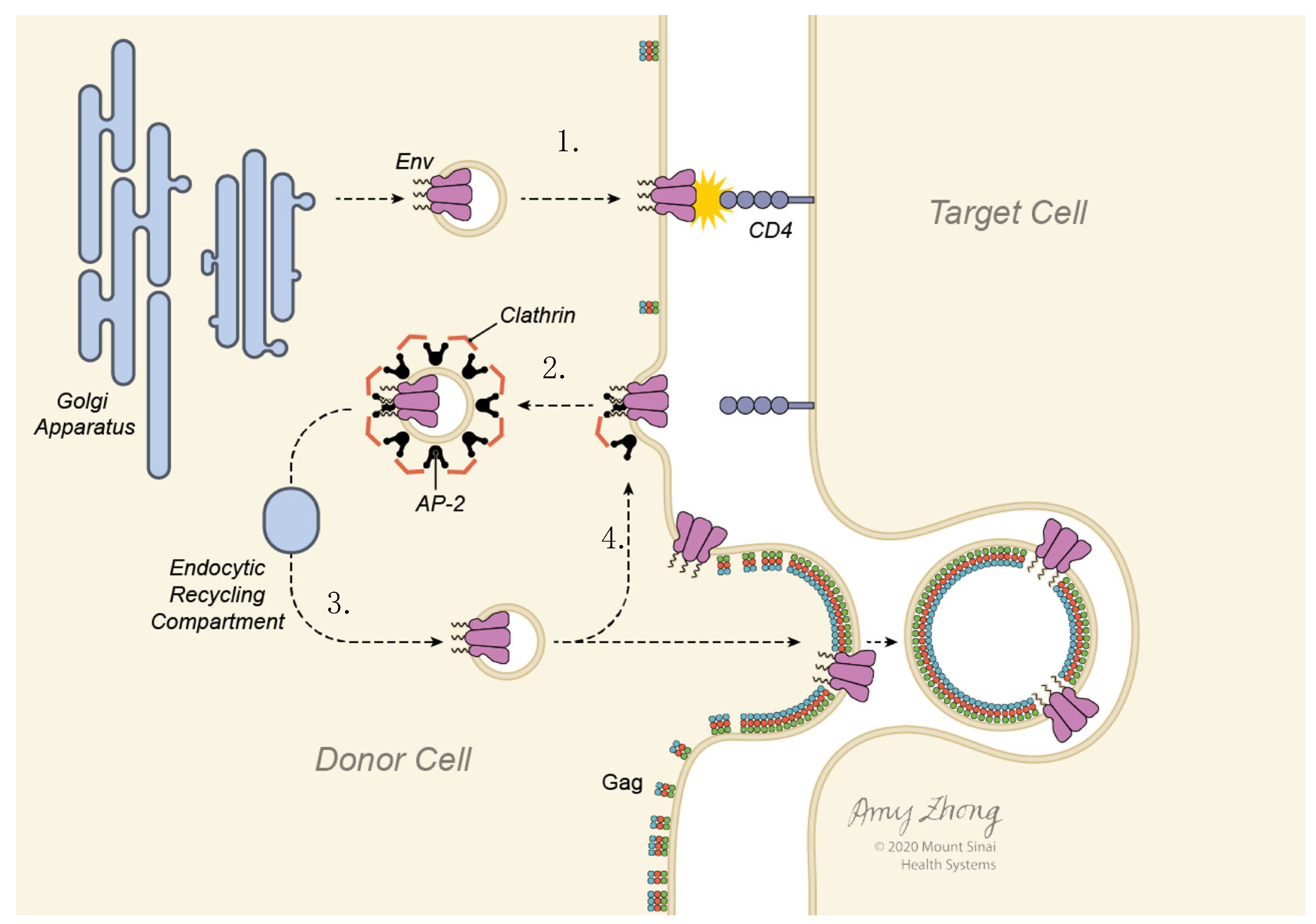
HIV-1 infection is enhanced by cell–cell adhesions between infected and uninfected T cells called virological synapses (VS). VS are initiated by the interactions of cell-surface HIV-1 envelope glycoprotein (Env) and CD4 on target cells and act as sites of viral assembly and viral transfer between cells. To study the process that recruits and retains HIV-1 Env at the VS, a replication-competent HIV-1 clone carrying an Env-sfGFP fusion protein was designed to enable live tracking of Env within infected cells. Combined use of surface pulse-labeling of Env and fluorescence recovery after photobleaching (FRAP) studies, enabled the visualization of the targeted accumulation and sustained recycling of Env between endocytic compartments (EC) and the VS. We observed dynamic exchange of Env at the VS, while the viral structural protein, Gag, was largely immobile at the VS. The disparate exchange rates of Gag and Env at the synapse support that the trafficking and/or retention of a majority of Env towards the VS is not maintained by entrapment by a Gag lattice or immobilization by binding to CD4 on the target cell. A FRAP study of an Env endocytosis mutant showed that recycling is not required for accumulation at the VS, but is required for the rapid exchange of Env at the VS. We conclude that the mechanism of Env accumulation at the VS and incorporation into nascent particles involves continuous internalization and targeted secretion rather than irreversible interactions with the budding virus, but that this recycling is largely dispensable for VS formation and viral transfer across the VS.
Keywords: HIV-1; virological synapse; Env; GFP; fluorescence recovery after photobleaching FRAP; Gag; endocytosis HIV-1; virological synapse; Env; GFP; fluorescence recovery after photobleaching FRAP; Gag; endocytosis