Article

Breeding for Virus Resistance and Its Effects on Deformed Wing Virus Infection Patterns in Honey Bee Queens

Laboratory of Molecular Entomology and Bee Pathology, Ghent University, Krijgslaan 281, B-9000 Ghent, Belgium
*
Author to whom correspondence should be addressed.
Viruses 2021, 13(6), 1074; https://doi.org/10.3390/v13061074
Submission received: 12 May 2021 / Revised: 28 May 2021 / Accepted: 31 May 2021 / Published: 4 June 2021
(This article belongs to the Special Issue Insect Viruses and Pest Management 2.0)

Abstract

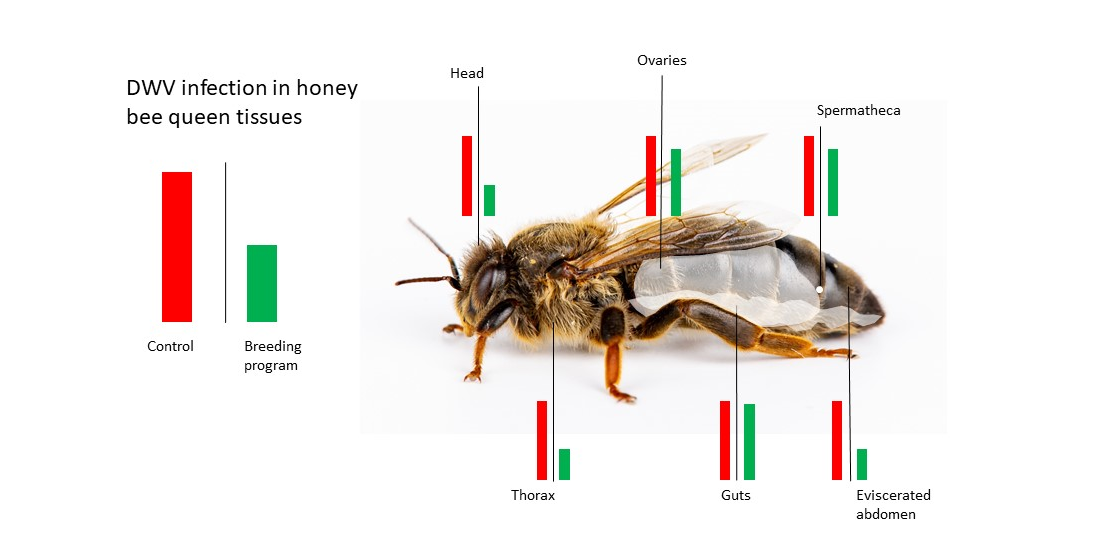
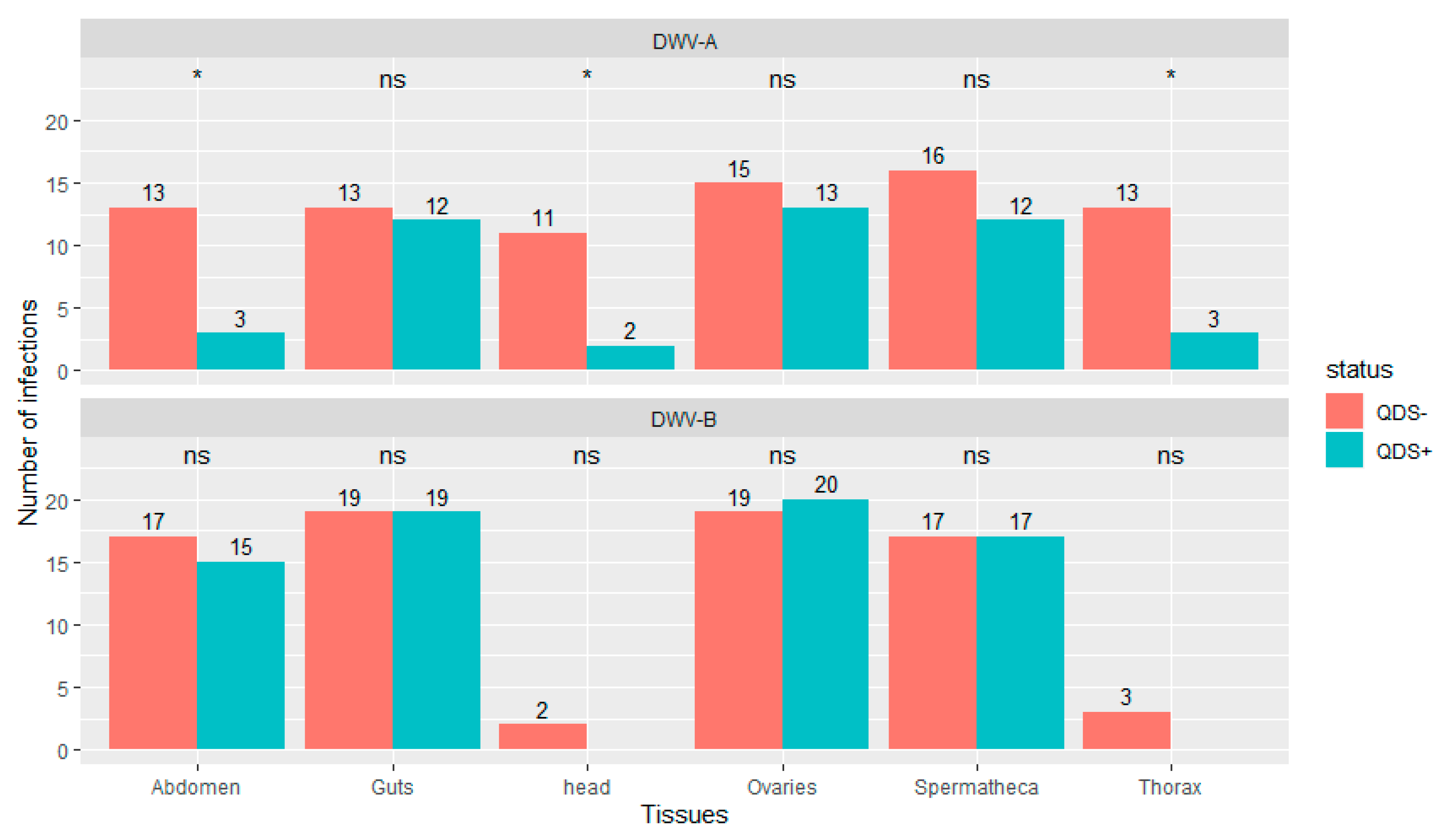
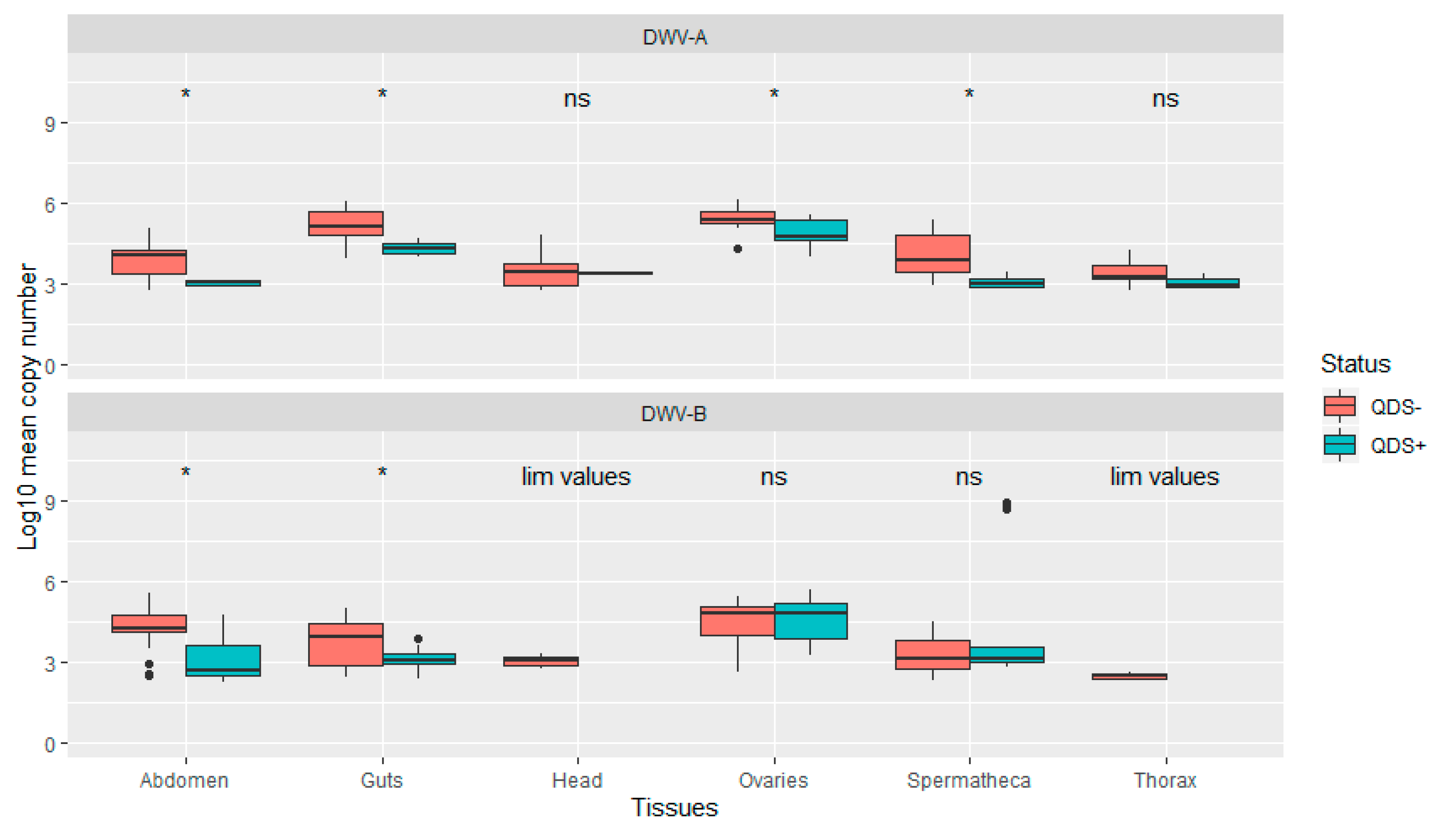
Viruses, and in particular the deformed wing virus (DWV), are considered as one of the main antagonists of honey bee health. The ‘suppressed in ovo virus infection’ trait (SOV) described for the first time that control of a virus infection can be achieved from genetically inherited traits and that the virus state of the eggs is indicative for this. This research aims to explore the effect of the SOV trait on DWV infections in queens descending from both SOV-positive (QDS+) and SOV-negative (QDS–) queens. Twenty QDS+ and QDS– were reared from each time four queens in the same starter–finisher colony. From each queen the head, thorax, ovaries, spermatheca, guts and eviscerated abdomen were dissected and screened for the presence of the DWV-A and DWV-B genotype using qRT-PCR. Queens descending from SOV-positive queens showed significant lower infection loads for DWV-A and DWV-B as well as a lower number of infected tissues for DWV-A. Surprisingly, differences were less expressed in the reproductive tissues, the ovaries and spermatheca. These results confirm that selection on the SOV trait is associated with increased virus resistance across viral genotypes and that this selection drives DWV towards an increased tissue specificity for the reproductive tissues. Further research is needed to explore the mechanisms underlying the interaction between the antiviral response and DWV.
Keywords: honey bee; suppressed in ovo virus infection; virus resistance; deformed wing virus honey bee; suppressed in ovo virus infection; virus resistance; deformed wing virus
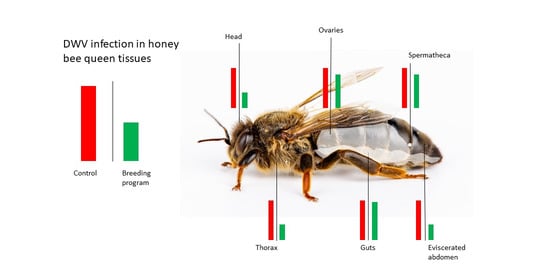
Graphical Abstract