Article

Ontogenetic, Anatomical, and Plastome Characteristics of Three Rare Plants from the Northern Tian Shan

by
Gulbanu Sadyrova
1,
Aisha Taskuzhina
2,3,4,
Nazym Kerimbek
2,3,
Alexandr Pozharskiy
2,
Akmaral Nurmakhanova
1,
Kusaev Shaganbek
1,
Kuralai Orazbekova
5,
Yeraliyeva Zhanar
6 and
Dilyara Gritsenko
2,3,4,*
1
Faculty of Geography and Environmental Management, Al-Farabi Kazakh National University, Almaty 050040, Kazakhstan
2
Laboratory of Molecular Biology, Institute of Plant Biology and Biotechnology, Almaty 050040, Kazakhstan
3
Faculty of Biology and Biotechnology, Al-Farabi Kazakh National University, Almaty 050040, Kazakhstan
4
Research Center AgriBioTech, Almaty 050040, Kazakhstan
5
Institute of Geography and Water Security, Almaty 050000, Kazakhstan
6
Faculty of Biology, Abai Kazakh National Pedagogical University, Almaty 050010, Kazakhstan
*
Author to whom correspondence should be addressed.
Forests 2026, 17(8), 921; https://doi.org/10.3390/f17080921
Submission received: 16 June 2026 / Revised: 27 July 2026 / Accepted: 30 July 2026 / Published: 5 August 2026
(This article belongs to the Special Issue Genetic Diversity and Conservation of Forest Trees)

Abstract

Mountain ecosystems of the Northern Tian Shan harbor rare endemic plant species that are increasingly vulnerable to environmental change. This study assessed the ontogenetic stage composition, selected anatomical characteristics, and chloroplast genome features of Malus sieversii, Ribes janczewskii, and Ikonnikovia kaufmanniana. Field surveys included five populations and 971 recorded individuals: two populations of M. sieversii, one population of R. janczewskii, and two populations of I. kaufmanniana. Individuals were assigned to juvenile, immature, vegetative adult, and generative stages. The proportion of juvenile and immature individuals varied from 23.78% to 41.89% among populations, indicating substantial differences in the representation of early ontogenetic stages. Comparative anatomical analysis identified structural traits associated with adaptation to local environmental conditions. Complete chloroplast genomes were assembled and annotated, with sizes of 160,192 bp (M. sieversii), 157,432 bp (R. janczewskii), and 162,624 bp (I. kaufmanniana). All plastomes exhibited a conserved quadripartite structure and contained 131–132 genes and SSR loci with species-specific composition. Phylogenomic analysis placed M. sieversii within a well-supported wild apple clade, confirmed the distinct lineage of R. janczewskii, and supported the separation of I. kaufmanniana from Limonium. These findings provide new data and lay a basis for further studies to better understand the evolutionary distinctiveness and conservation relevance of endemic plant species in the Northern Tian Shan.

1. Introduction

Mountain ecosystems represent global hotspots of biodiversity and endemism while simultaneously supporting a disproportionately high number of threatened plant species. Habitat fragmentation, land-use change, biological invasions, and ongoing climate change increasingly threaten mountain flora, highlighting the urgent need for robust baseline information to support evidence-based conservation and management strategies [1,2,3,4]. Modern conservation biology increasingly integrates field observations with genomic data because understanding population status, evolutionary history, and genetic resources requires complementary ecological and molecular evidence rather than either approach alone.
Complete chloroplast genomes have become an important genomic resource for plant systematics, comparative genomics, and conservation research [5,6,7,8,9,10,11,12,13,14,15]. Their highly conserved quadripartite organization, predominantly maternal inheritance in angiosperms, and relatively slow evolutionary rate make plastomes particularly useful for investigating genome evolution, inferring phylogenetic relationships, and developing chloroplast-derived molecular markers such as simple sequence repeats (cpSSRs) [5,6,7,8,9,10,11,12,13,14,15,16]. At the same time, plastid genomes represent only a single genomic compartment and therefore complement, rather than replace, information obtained from nuclear genomes when addressing evolutionary or conservation questions.
Although plant genomic resources have expanded rapidly during the past decade, they remain strongly biased toward model organisms and economically important crops. In contrast, many rare species of Central Asia are represented only by taxonomic descriptions, morphological studies, or short DNA barcode sequences, whereas complete plastome assemblies and standardized ecological datasets remain unavailable or extremely limited [2,3,17,18,19]. Moreover, ecological field investigations and genomic studies have generally been conducted independently, resulting in a lack of integrated baseline datasets that combine standardized field observations with genomic characterization [2,3]. Such datasets are essential for establishing genomic reference resources, designing future conservation genetic studies, implementing long-term monitoring programs, and developing molecular tools for conservation management.
The Northern Tian Shan of southeastern Kazakhstan harbors numerous rare and conservation-priority plant species, including Malus sieversii (Ledeb.) M. Roem., Ribes janczewskii Pojark., and Ikonnikovia kaufmanniana (Regel) Lincz. These species represent three distantly related eudicot lineages and contrasting life forms—a tree, a shrub, and a perennial subshrub—and are listed in the Red Book of Kazakhstan. M. sieversii is widely recognized as the primary wild progenitor of the cultivated apple and constitutes one of the world’s most valuable wild fruit genetic resources [4,20,21,22]. Recent whole-genome studies have substantially advanced understanding of apple domestication and the nuclear genomic diversity of M. sieversii; however, comparatively few complete plastome sequences from natural Central Asian populations are currently available [5,9,20,21]. Ribes janczewskii is a rare Central Asian currant for which recent studies have established protocols for ex situ conservation and reported DNA barcode sequences, whereas complete plastome resources remain extremely limited [10,11,17]. Likewise, the phylogenetic position of I. kaufmanniana, traditionally regarded as the sole representative of the genus Ikonnikovia, remains incompletely resolved because previous phylogenetic studies have relied primarily on a limited number of plastid and nuclear loci rather than complete chloroplast genome sequences [12,13,14,15].
Consequently, an important knowledge gap remains for rare plants of the Northern Tian Shan. There is currently no integrated dataset combining standardized field assessment of natural populations, anatomical characterization of vegetative organs, and complete plastome analysis for these conservation-priority taxa. Such baseline information is particularly important for species that remain poorly represented in public genomic databases and will facilitate future comparative genomic studies, conservation genetic analyses, and long-term monitoring of natural populations.
Accordingly, the objectives of this study were to (1) characterize the ontogenetic stage composition of natural populations of M. sieversii, R. janczewskii, and I. kaufmanniana; (2) describe selected anatomical characteristics of their vegetative organs; (3) assemble, annotate, and compare their complete chloroplast genomes; and (4) infer plastome phylogenetic relationships and identify candidate chloroplast SSR loci for future conservation genetic studies. Rather than testing broad ecological or evolutionary hypotheses, this study establishes a standardized regional baseline integrating field observations, anatomical evidence, and plastome resources for three conservation-priority species of the Northern Tian Shan.

2. Results

2.1. Ontogenetic Stage Composition and Anatomical Characteristics of Malus sieversii, Ribes janczewskii, and Ikonnikovia kaufmanniana

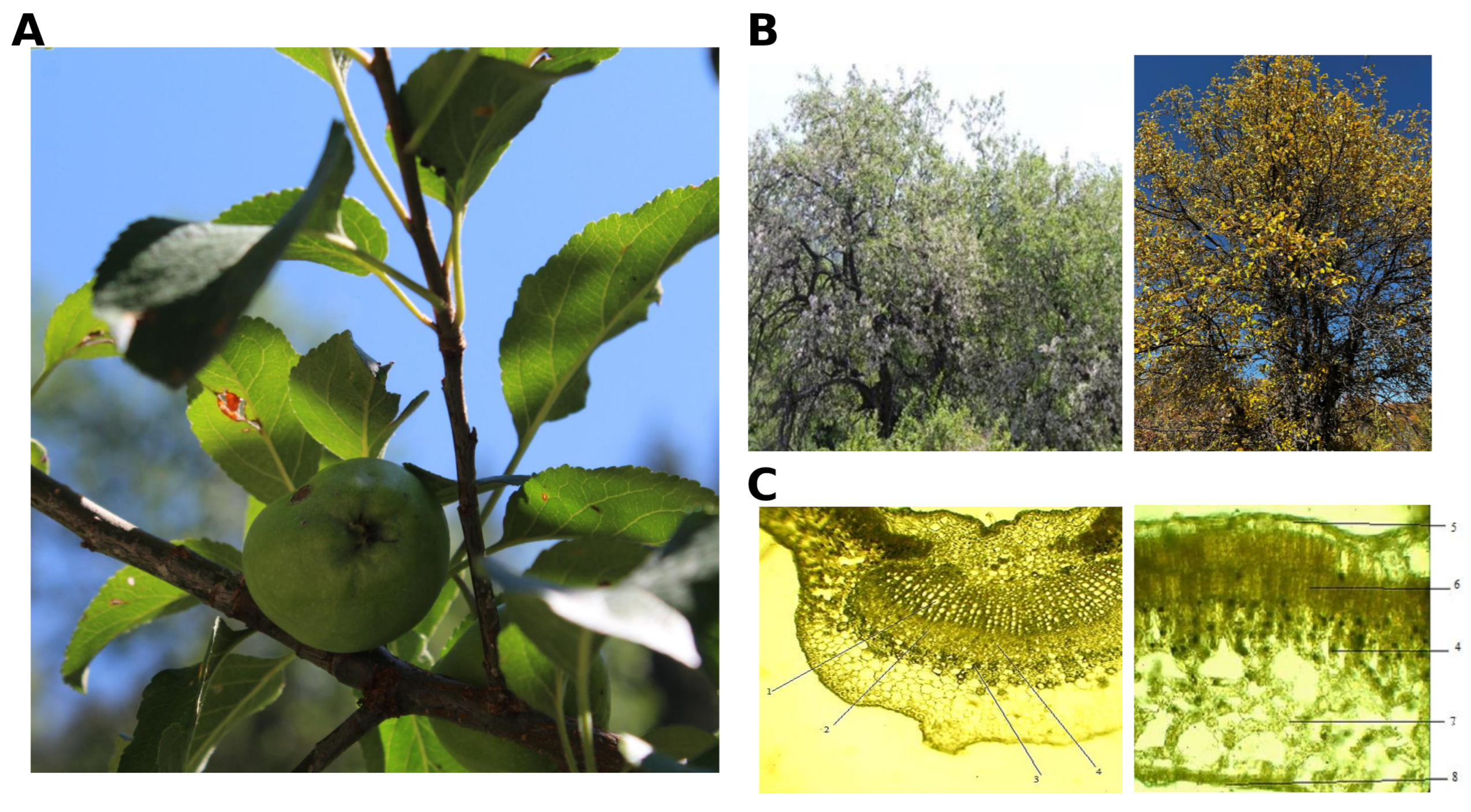
Malus sieversii populations were observed on the southwestern slopes and in the floodplains of mountain rivers in the lower part of the middle belt of the Uzynkara Ridge (Figure 1). Within Ile Alatau National Park, the species is widespread and occurs in almost all major gorges. The trees reached 2–10 m in height, with a broad crown and dark gray bark. Leaves are broadly lanceolate, measuring 6–11 cm in length and 3–5.5 cm in width. Flowers are relatively large, pale pink to white, and 5–6 cm in diameter. Fruits display variability in size, shape, coloration, pulp characteristics, aroma, and taste. Seeds are brown, and flowering occurs in April–May. Reproduction by seed is limited, whereas vegetative propagation is well developed. Fruiting begins at 6–8 years of age, in some cases up to 12 years, and may continue for around 125 years, while the overall lifespan can reach 150 years.
According to the age spectrum, populations of M. sieversii were represented by several ontogenetic groups ranging from young to old senile trees exceeding 130 years of age. Young generative individuals accounted for 20%–35% of the population and middle-aged generative trees (45–60 years) with maximum fruiting intensity represented about 25%, while aging generative individuals made up 10%–15%. The proportion of subsenile individuals was 1.9% and senile trees 6%, indicating that older age categories are also present within the studied populations.
The calculated regeneration metrics were consistent with the observed ontogenetic structure. The Small Almaty Gorge population exhibited a higher regeneration index (RI = 2.62) and early stage regeneration coefficient (RC = 39.26%) than the Arlyksay Gorge population (RI = 1.34; RC = 23.78%), indicating a greater relative representation of juvenile and immature individuals in the former population.
Morphological parameters of different ontogenetic groups are presented in Table 1. In the Small Almaty Gorge population, the number of juvenile individuals was 25, with leaves averaging 2.33 ± 0.58 cm in length and a plant height of 40.00 ± 10.00 cm. Immature individuals reached an average leaf length of 3.50 ± 0.71 cm and a height of 83.00 ± 11.27 cm, virginal plants had leaves 6.00 ± 1.00 cm long and a height of 330.00 ± 72.11 cm, and generative individuals exhibited the largest dimensions, with a leaf length of 8.67 ± 0.58 cm and a height of 456.67 ± 51.32 cm. Similar patterns were observed in Arlyksay Gorge, where generative individuals predominated (79 plants), reaching a mean height of 533.33 ± 76.38 cm.
The leaves of M. sieversii exhibited a dorsiventral structure with a uniseriate epidermis, well-developed palisade and spongy mesophyll, and distinct vascular bundles (Figure 1C). The palisade tissue formed two compact layers beneath the upper epidermis, whereas the spongy mesophyll consisted of loosely arranged chlorenchyma cells with intercellular spaces. Vascular bundles were clearly differentiated into xylem and phloem and reinforced by sclerenchyma. Thickened supporting tissues and the presence of idioblast cells were also observed.
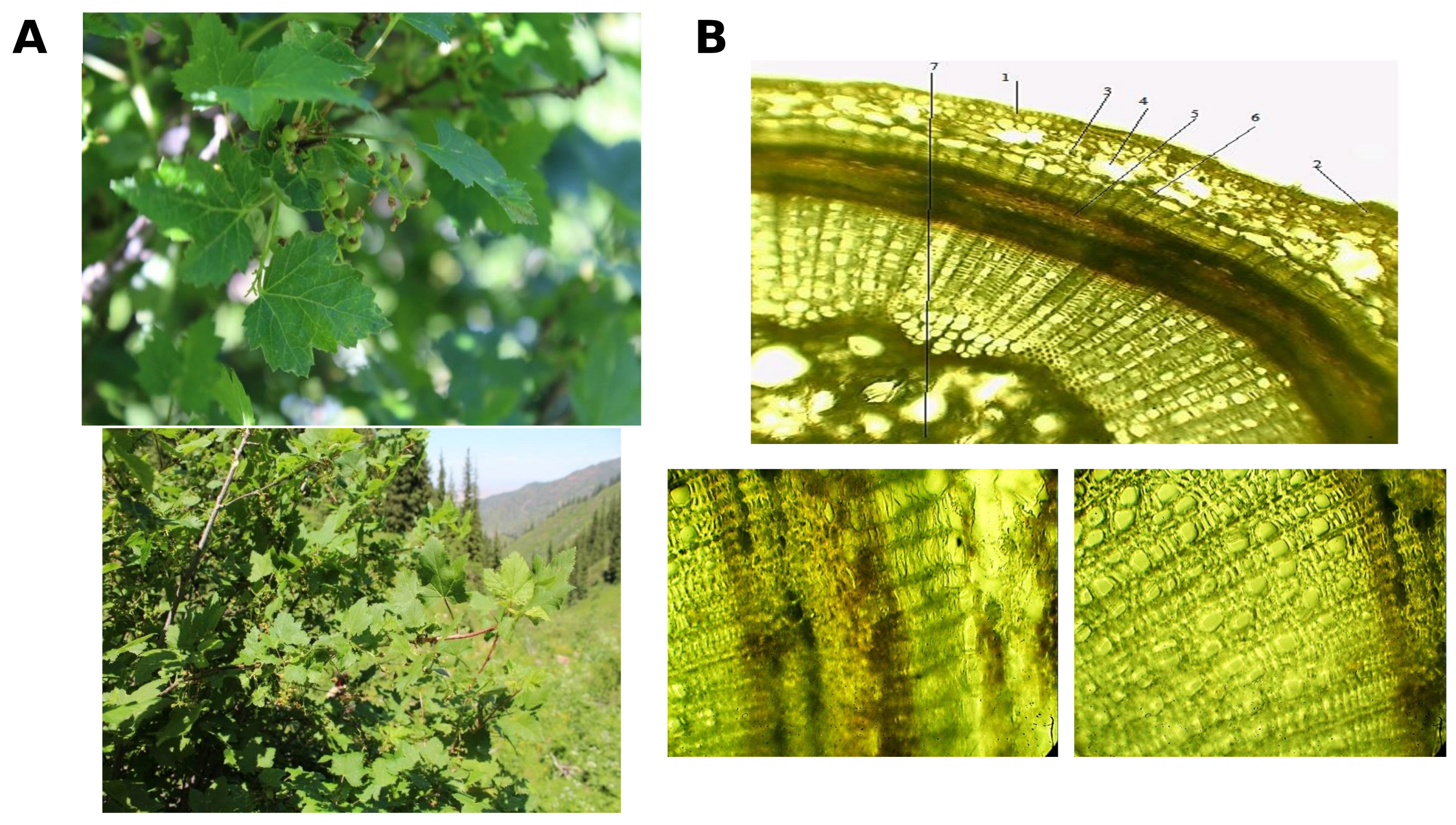
The population of R. janczewskii was recorded in the forest belt of the Ketpen Ridge (Kayraktysay Gorge) within a shrub–forb community on a northwestern slope (Figure 2A). The species occurred as solitary plants or in small clumps, with a projective cover of 55%–60%. Individuals reached 100–150 cm in height and were characterized by erect branches, thin cordate leaves with odorous glands on the abaxial surface, and 5–10-flowered racemes bearing pale-yellow flowers. Fruiting was observed in August, with spherical black berries up to 13 mm in diameter. The species was found to reproduce both generatively and vegetatively, colonizing rocky slopes, screes, river valleys, and spruce forest margins.
The distribution of individuals across these groups demonstrated a predominance of vegetative and immature plants, while juvenile and generative individuals were less represented (Table 2).
The population of Ribes janczewskii showed the highest regeneration metrics among the studied taxa RI = 2.89 and RC = 41.89%. Nevertheless, the small total population size and restricted distribution indicate that these values should be interpreted together with the species’ limited geographic occurrence.
Morphological measurements indicated a progressive increase in leaf length, brush length, and plant height with advancing ontogenetic stages. Juvenile plants exhibited the smallest values (mean height 22.0 ± 1.5 cm, leaf length 1.13 ± 0.05 cm), while generative individuals were the largest (mean height 133.3 ± 15.3 cm, leaf length 8.33 ± 0.58 cm). Raceme length increased from 2.0 ± 0.10 cm in juveniles to 4.67 ± 0.58 cm in generative individuals.
The stem of R. janczewskii showed a slightly angular outline with collenchyma concentrated at the corners and a distinct sclerenchyma layer beneath the epidermis (Figure 2B). The primary cortex consisted of several layers of thick-walled parenchyma cells, while the vascular cylinder contained well-developed xylem and phloem tissues. Air cavities and secondary conducting tissues were also observed, indicating active tissue differentiation and internal structural heterogeneity.
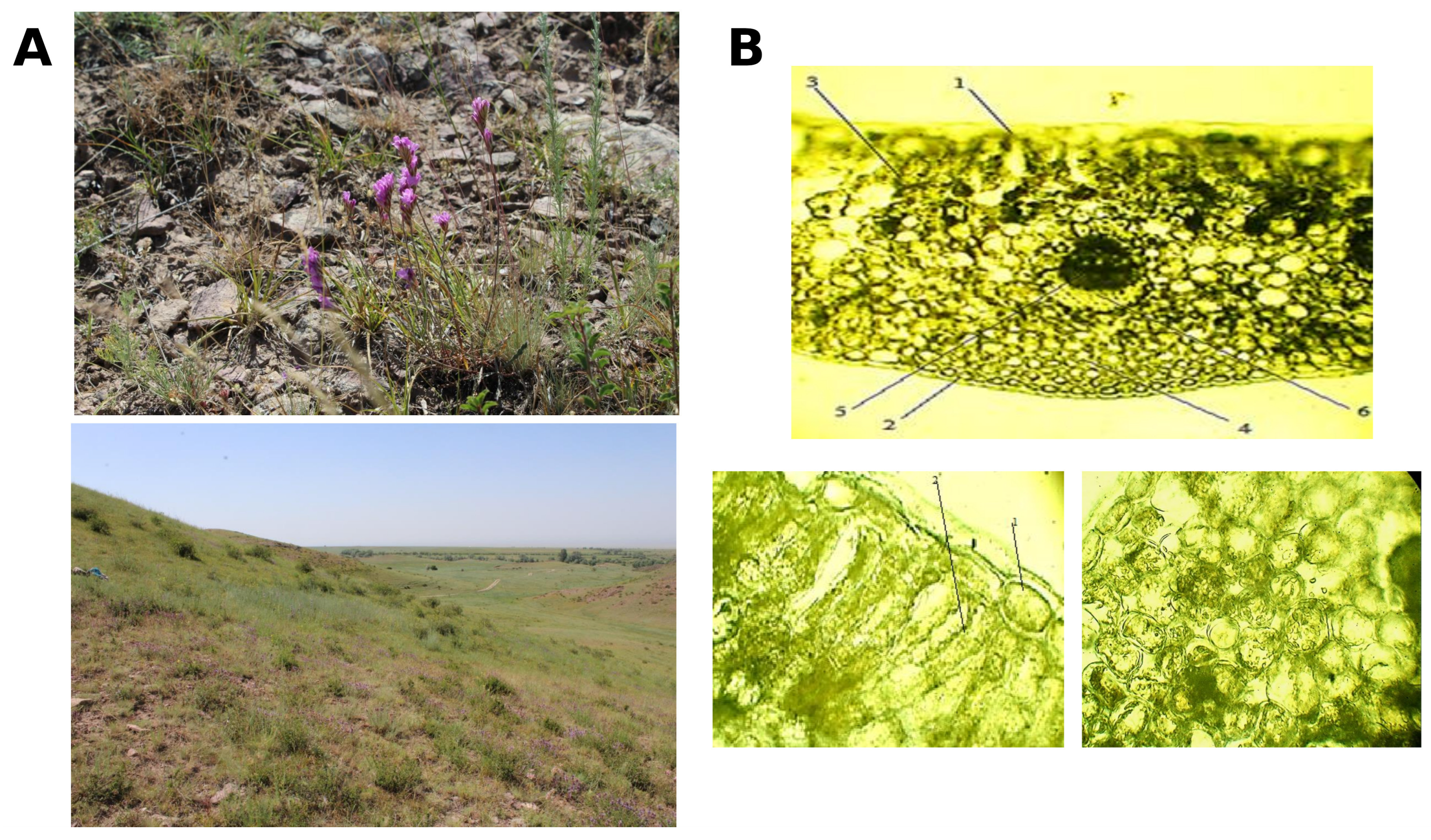
The Ikonnikovia kaufmanniana population is found on rocky and gravelly slopes in the lower montane belt of the western Uzynkara Ridge at 1300–1500 m a.s.l (Figure 3A). We examined two populations in Tokai Gorge representing contrasting microhabitats. The species is a small chamaephyte (15–30 cm) with shortened, thick branches densely bearing persistent petiole bases; leaves form compact rosettes and are coriaceous, green to glaucous-green, oblong-ovate with a short rigid apical mucro, glabrous, and coarsely undulate. Peduncles (1–2 per shoot) are erect and robust; flowers are relatively large, arranged in dense, one-sided clusters of 3–4 flowers on lateral branches; and petals are purple red.
Age–structure analysis revealed complete ontogenetic spectra (juvenile to senile) in both populations, except that senile individuals were absent in Population 1. Virginal plants predominated (35% in Population 1; 49% in Population 2), and in Population 2, the generative cohort was dominated by young generatives (68.5%). The calculated regeneration metrics also differed between the two populations. Population 1 exhibited the lowest regeneration index among all examined populations (RI = 1.08; RC = 25.93%), whereas Population 2 showed higher values (RI = 1.47; RC = 34.41%), indicating relatively greater representation of juvenile and immature individuals. Morphometric profiles indicated rapid height increase and crown expansion during the virginal stage, peak reproductive output in mid-generatives, and a subsequent decline in old generatives.
Morphological profiles across the two populations indicate a canonical ontogenetic progression, with size and reproductive output increasing from juvenile to mid-generative stages and declining thereafter (Table 3). Juvenile plants were 1–4 cm tall, with crown diameters of ~0.8–1.5 cm and 2–3 leaves per rosette. Immature individuals reached ~5 cm (crown 1.5–3 cm; 5–6 leaves). Virginal plants showed rapid growth (height 10–15.5 cm; crown 6–11 cm; 10–13 leaves). Young generatives produced 1–2 peduncles and reached 15–30 cm (crown 12–14 cm; ~10 leaves per shortened shoot). Mid-generatives had 8–10 peduncles, 35–43 cm height, and 25–33 cm crown diameter. Old generatives exhibited reduced reproductive and vegetative traits (2–5 peduncles; 20–30 cm height; 15–26 cm crown; 6–8 leaves per shortened shoot).
The leaves of I. kaufmanniana exhibited a dorsiventral organization with thickened epidermal tissues and differentiated palisade and spongy mesophyll (Figure 3B). Palisade cells were compactly arranged beneath the upper epidermis, whereas the spongy tissue contained loosely organized cells with intercellular spaces. Small vascular bundles surrounded by sclerenchyma were distributed along the veins, with xylem oriented toward the adaxial side and phloem toward the abaxial side.

2.2. Chloroplast Genome Sequencing of Malus sieversii, Ribes janczewskii, and Ikonnikovia kaufmannii

The complete chloroplast genomes of Malus sieversii, Ribes janczewskii, and Ikonnikovia kaufmannii were successfully assembled and annotated, resulting in circular molecules of about 160,000 bp, which is within the size range of most plant chloroplast genomes, with the typical quadripartite structure of angiosperm chloroplasts consisting of a large single-copy region (LSC), a small single-copy region (SSC), and two inverted repeat regions (IRa and IRb) each.
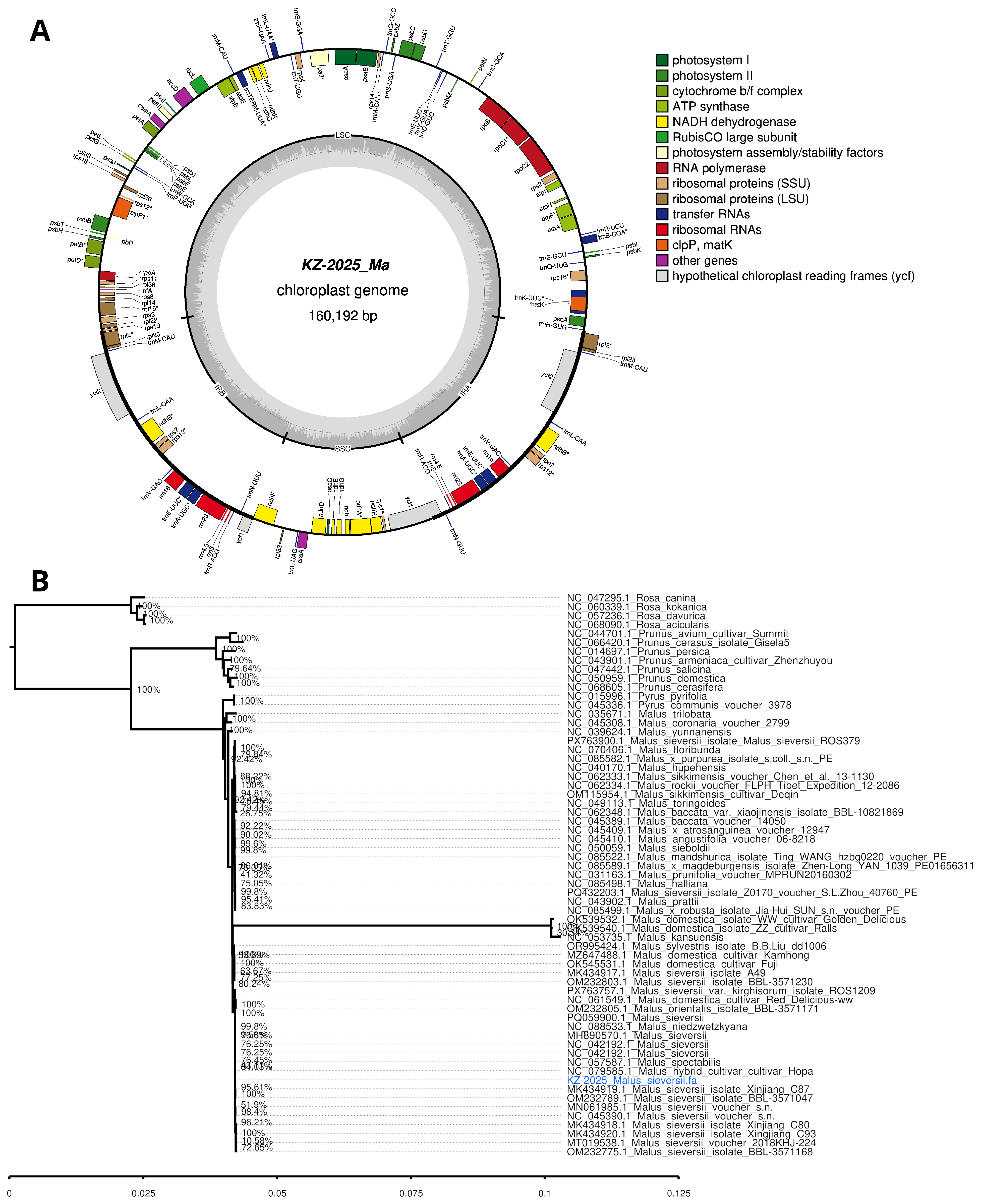
The plastid genome of M. sieversii had a length of 160,192 bp, LSC of 88,292 bp, SSC of 19,178 bp, and IRa and IRb of 26,361 bp each (Figure 4A). The plastome contained 132 genes, including 88 protein-coding genes, 37 tRNA genes, four rRNA genes, and three pseudogenes (Supplementary Table S1). Several genes contained introns, including rpoC1, atpF, rps16, rpl2, ndhB, clpP1, pafI, and ndhA, while rps12 exhibited trans-splicing. Functional gene composition was dominated by tRNA genes, ribosomal proteins, and photosystem-related genes. Complete annotations are provided in Supplementary File S1. SSR analysis identified 74 chloroplast SSRs, representing the highest SSR abundance among the three studied taxa (Table 4, Supplementary Table S2). Mononucleotide repeats predominated (96.0%), with a strong A/T bias. The plastome also contained three dinucleotide and eleven compound SSRs, resulting in an SSR density of 0.46 SSRs/kb.
The general structure of the chloroplast genome was consistent with other available M. sieversii plastid genomes from Xinjiang, China, as well as M. domestica and other Malus species (such as, for example, M. niedzwetskiana in Figure S1). No global changes within the main genome domains were observed. The boundaries between the LSC, SSC, and IRs also were not variable within compared sequences.
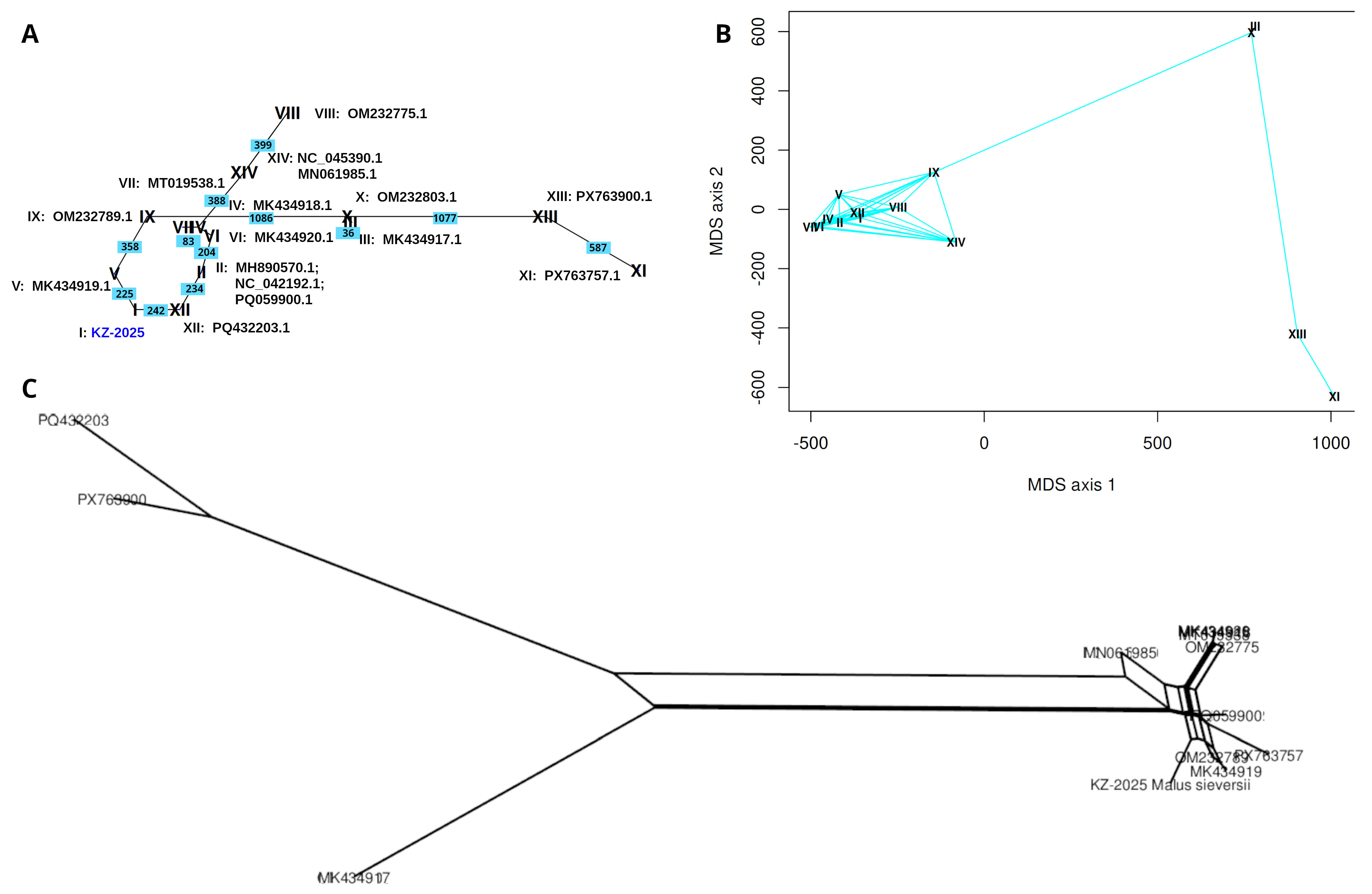
Phylogenetic analysis based on complete chloroplast genomes grouped the newly sequenced M. sieversii plastome within a well-supported wild apple clade together with previously published M. sieversii accessions from Xinjiang, China, a region that is included in the habitat of M. sieversii along with the Almaty region (Figure 4B). The same set of chloroplast genomes represented 14 distinct haplotypes with relatively low numbers of mutual variations (Figure 5A,B). The sequence KZ-2025 (haplotype I) was placed within a dense cluster among the Xinjiang haplotypes. The neighbor network (Figure 6B) also supports close placement of KZ-2025 among the Xinjiang genomes.
The analysis of variation within the aligned M. sieversii plastome (relative to the reference sequence NC_042192.1) showed similarity from ~99% (sequences MK434917.1, OM232803.1, PQ432203.1, and PX763900.1) to ~100% (all other sequencing including KZ-2025); only 325 SNPs were identified across all chloroplast genomes; the remaining variable sites represented variations in the repeated sequences. However, considering that all of the sequences were derived from independent experiments, the variations associated with the repeating sequences may be artifacts from the different conditions of the sequencing experiments and plastome assembly and thus cannot be confidently considered real biological variants. Therefore, the real within-species variability of the analyzed sequences may be lower.
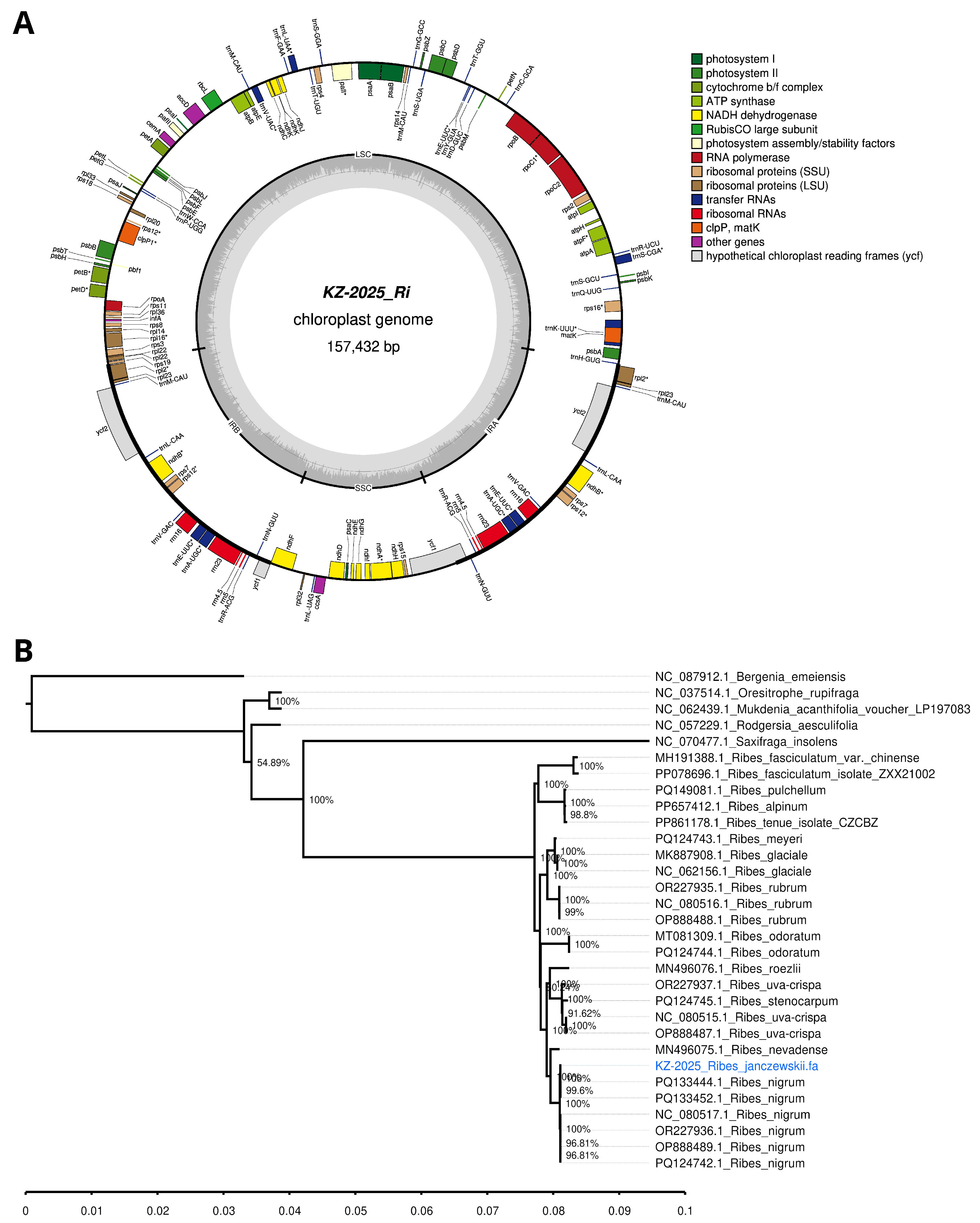
The assembled chloroplast genome of R. janczewskii had a length of 157,432 bp, including an LSC region of 87,059 bp, an SSC region of 18,361 bp, and two IR regions of 26,006 bp each (Figure 6A). The general plastome structure and domain boundaries were consistent with other Ribes species (Figure S2). The plastome contained 131 genes, including 87 protein-coding genes, 37 tRNA genes, four rRNA genes, and three pseudogenes (Supplementary Table S2). Gene organization and intron-containing genes were generally consistent with those expected for angiosperm chloroplasts, e.g., observed in M. sieversii. Functional gene composition was highly conserved relative to the other species, with tRNA genes, ribosomal proteins, and photosystem-related genes representing the major functional categories. Detailed annotations are provided in Supplementary File S2. A total of 53 chloroplast SSRs were identified, representing the lowest SSR abundancy among the three taxa (Table 5). Only mononucleotide repeats were detected, all of which consisted of A/T motifs and only one compound SSR was identified, resulting in an SSR density of 0.34 SSRs/kb.
Phylogenetic analysis placed R. janczewskii within the genus Ribes together with previously published blackcurrant (R. nigrum) plastomes (Figure 6B), confirming its taxonomic placement within Grossulariaceae. The close clustering of R. janczewskii with R. nigrum raises a question about delimitation of these species.
Table 5. Characteristics of chloroplast simple sequence repeats (SSRs) in R. janczewskii.
CharacteristicRibes janczewskii
Genome size (bp)157,432
Total SSRs53
Mononucleotide53 (100%)
Dinucleotide0 (0%)
Trinucleotide0 (0%)
Tetra-/Penta-/Hexa-0 (0%)
A/T mononucleotides53 (100%)
C/G mononucleotides0 (0%)
Compound SSRs1
SSR density (SSRs/kb)0.34
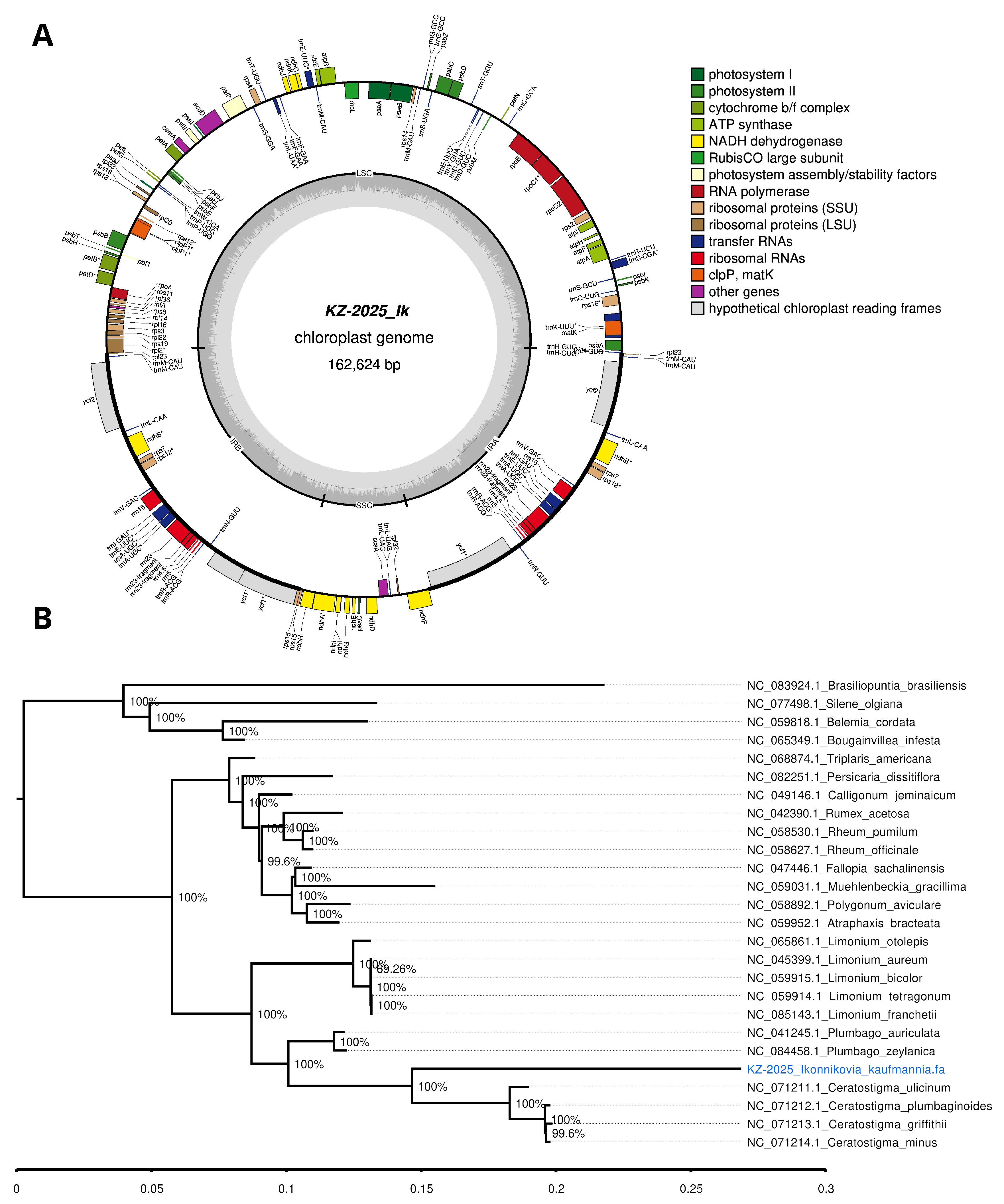
The chloroplast genome of I. kaufmanniana was assembled as a circular molecule of 162,624 bp and displayed the conserved quadripartite structure typical of angiosperm plastomes (Figure 7A). Compared with species of the Plumbaginaceae family and the Caryophyllales order, the boundaries between the plastome domains and the distribution of genes were moderately variable (Figure S3, Table 6, Supplementary Table S2), highlighting inter-genera variability within the family. The plastome contained genes distributed across several major functional categories, with tRNA genes, ribosomal proteins, and photosystem-related genes representing the dominant groups. Complete genome annotations are presented in Supplementary File S3. SSR analysis identified 69 chloroplast SSRs (Table 7). Although mononucleotide repeats remained predominant (75.4%), I. kaufmanniana differed from the other taxa by exhibiting a comparatively high proportion of trinucleotide repeats (21.7%), primarily represented by AAG/CTT motifs. The plastome also contained two dinucleotide and six compound SSRs, resulting in an SSR density of 0.42 SSRs/kb.
Phylogenetic reconstruction resolved I. kaufmanniana within the Caryophyllales assemblage together with representatives of Plumbaginaceae (Figure 7B). Closely related genera formed distinct lineages, supporting the phylogenetic distinctiveness of I. kaufmanniana within the group. The lack of available sequences for the genus Ikonnikovia limits more detailed phylogenetic conclusions.

3. Discussion

Our study provides novel data on the chloroplast genome sequences of three endemic species of Northern Tian Shan in Southeast Kazakhstan. The sequences of R. janczewskii and I. kaufmanniana are presented for the first time and contribute to the data on the regional diversity. Although M. sieversii has been attracting excessive research interest both as a historical predecessor of the domestic apple tree and a valuable resource for apple germplasm improvement, the available plastome sequences are limited to Chinese haplotypes and thus the sequence presented here is the first one from Kazakhstan. The chloroplast genomic data have particular importance for understanding plant adaptation and evolutionary history, as plastomes are affected by both physiological constraints (e.g., selection for photosynthetic efficiency) and maternally inherited evolutionary signals influenced by historical isolation and seed-mediated gene flow within populations of rare endemic species. [2,3]. Although the obtained data are, for now, limited by single representatives of each species, these genomes will become referent for further population-level research and will help to elucidate the genetic diversity of the endemics on the chloroplast level. Such studies are particularly important as endemic species with limited habitat are especially vulnerable to negative biotic, abiotic, and anthropic factors. In light of this, the molecular genetic data including plastid genomics are an important tool to monitor the population processes within these species.
The anatomical observations complement the population and chloroplast genomic analyses by providing information on structural traits potentially associated with adaptation to mountain environments. Whereas chloroplast genomes provide insights into evolutionary history and maternal lineages, anatomical characteristics reflect the structural phenotype through which plants respond to environmental conditions. Together, these complementary datasets provide a more comprehensive understanding of the biology, adaptive potential, and conservation status of rare endemic species of the Northern Tian Shan.
Although the three investigated species belong to different taxonomic families and represent distinct evolutionary lineages, their joint analysis provides an opportunity to distinguish ecological patterns associated with the shared mountain environment from lineage-specific genomic characteristics. Across all taxa, field observations revealed limited natural regeneration and demographic imbalance despite substantial differences in life form, ecology, and evolutionary history. This convergence suggests that habitat fragmentation, anthropogenic disturbance, and ongoing climate change may impose similar demographic constraints on geographically restricted endemic species of the Northern Tian Shan. In contrast, chloroplast genome analyses highlighted lineage-specific differences in plastome organization, SSR composition, and phylogenetic placement, reflecting their independent evolutionary trajectories. Together, these findings demonstrate that comparative analyses of phylogenetically unrelated endemic species can simultaneously reveal common conservation challenges and species-specific evolutionary characteristics.
The population surveys demonstrated that, despite marked differences in taxonomy and ecology, all three endemic species exhibited evidence of demographic imbalance, indicating that restricted distribution alone does not explain their vulnerability. Instead, the observed ontogenetic stage compositions suggest that common environmental pressures may influence the persistence of phylogenetically unrelated mountain endemics throughout the Northern Tian Shan. Populations of M. sieversii were dominated by mature and senescent trees, with very few juvenile plants. Similar patterns have been documented by long-term demographic monitoring in China, which reported a collapse of regeneration, absence of saplings over extended periods, and high mortality among juvenile trees, indicating an ongoing demographic decline. These trends have been linked to habitat degradation, grazing pressure, and human disturbance [20,21]. In addition, climate modeling predicts substantial range contraction for M. sieversii under future warming and land-use intensification, accompanied by upward and northward shifts and the loss of a large proportion of suitable habitats by the end of the 21st century [21]. Collectively unbalanced ontogenetic stage composition and projected habitat loss may pose a threat to the species and emphasize the importance of focused in situ conservation and long-term restoration planning within its native Central Asian range.
Ribes janczewskii was characterized by highly restricted population sizes, forming small and fragmented clusters with minimal evidence of natural regeneration. This poorly studied species is confined to a limited number of isolated sites on stony slopes and moist gullies of the Northern Tian Shan, where populations are dominated by mature shrubs. In the studied population, the prevalence of vegetative propagation and the scarcity of juveniles suggest limited sexual reproduction and weak regeneration, likely exacerbated by habitat fragmentation and environmental instability. Recent studies demonstrated that in vitro micropropagation and slow-growth culture using mannitol are effective tools for conserving its gene pool and support future restoration of natural populations [17]. Given its rarity and genetic potential as a donor of cold tolerance and disease resistance traits, R. janczewskii would benefit from a combination of in situ protection and complementary ex situ conservation approaches.
Ikonnikovia kaufmanniana displayed an incomplete ontogenetic spectrum, with a predominance of virginal plants but limited numbers of juvenile and senescent individuals. Similar discontinuous ontogenetic structures have been reported in previous surveys, where virginal plants accounted for 40%–60% of individuals and seedlings were absent, indicating episodic regeneration events and limited recruitment [18]. Analysis of the population in the Toraigyr Mountains also showed a predominance of virginal individuals and the absence of juveniles, suggesting an incomplete ontogenetic spectrum and relatively stable yet non-reproductive population structure [19]. The recurrent absence of seedlings highlights the species’ sensitivity to grazing pressure and climatic extremes, which may periodically disrupt successful regeneration and may lead to long-term population decline.
The regeneration metrics calculated from the ontogenetic structure provided additional quantitative support for the observed differences among populations. Although regeneration indices exceeded 1.0 in all examined populations, indicating that the total number of pre-generative individuals was greater than the number of generative plants, the recruitment coefficient varied considerably (23.78%–41.89%). This variation reflects substantial differences in the relative contribution of juvenile and immature individuals among populations. Lower RC values in the Arlyksay population of Malus sieversii and Population 1 of Ikonnikovia kaufmanniana suggest comparatively weaker recent recruitment, whereas higher values recorded for Ribes janczewskii and the Small Almaty Gorge population of M. sieversii indicate a greater representation of early ontogenetic stages. Nevertheless, these indices should be interpreted as descriptors of ontogenetic stage composition obtained from a single survey rather than direct measures of demographic performance or long-term population viability, which require repeated monitoring of survival, recruitment, and stage transitions over multiple years.
Several anatomical features observed in the studied taxa, including thickened epidermal tissues, well-developed sclerenchyma, compact mesophyll organization, and reduced intercellular spaces, are commonly associated with adaptation to mountain environments characterized by periodic water deficit, high solar irradiance, strong temperature fluctuations, and persistent wind exposure. Thick epidermal tissues may reduce transpirational water loss and protect photosynthetic tissues from excessive radiation, whereas sclerenchyma contributes to mechanical stability under wind and snow loads. Similarly, compact mesophyll and reduced intercellular spaces may improve water-use efficiency while limiting extensive transpiration under periodically dry conditions. Although these traits are consistent with xeromorphic adaptations reported for numerous alpine and mountain species, the present study did not include physiological measurements; therefore, their adaptive significance should be interpreted cautiously. The anatomical observations complement the population and chloroplast genomic analyses by providing information on structural traits potentially associated with adaptation to mountain environments. In contrast, chloroplast genomes provide insights into evolutionary history and maternal lineages, whereas anatomical characteristics reflect the structural phenotype through which plants respond to environmental conditions. Together, these complementary datasets provide a more comprehensive understanding of the biology, adaptive potential, and conservation status of rare endemic species of the Northern Tian Shan.
At a deeper evolutionary timescale, chloroplast genome analyses provide insights into the species’ evolutionary history and the structural conservation of plastid genomes. All obtained chloroplast genomes exhibited the typical quadripartite structure (LSC, SSC, and two IRs) conserved among angiosperms [5,6]. For M. sieversii, the gene content was highly consistent with earlier plastome reports from M. domestica, M. baccata, and M. prunifolia, comprising 132 genes in total, including 88 protein-coding genes, 37 tRNA genes, four rRNA genes, and three pseudogenes [6,7]. The absence of structural rearrangements or gene losses, together with conserved gene order, indicates a high level of plastome stability within Malus, consistent with previous observations for the genus [8]. The phylogenetic tree based on complete chloroplast genome sequences placed the newly sequenced M. sieversii plastome within a well-defined group of other M. sieversii accessions from Xinjiang, China, and in close proximity to cultivated M. domestica lineages, suggesting that their plastomes share a recent common maternal ancestor [9]. These results are in agreement with previous studies identifying M. sieversii as the primary wild progenitor of cultivated apple. The genetic integrity of wild M. sieversii populations underscores their value for conservation and breeding, as they harbor alleles of potential relevance for improving disease resistance and stress adaptation in modern apple cultivars. However, we see here the limitations of the available data, as the data from Xinjiang populations do not allow a full assessment of the within-species diversity of M. sieversii. For this reason, the presented first M sieversii plastome from Kazakhstan is an important start to move further towards filling this knowledge gap.
The structure of the chloroplast genome of R. janczewskii was consistent with previously published Ribes plastomes [10,11]. High levels of synteny and sequence similarity indicate strong evolutionary conservation, with minor variation primarily associated with IR/SSC boundary shifts and pseudogene formation, including ycf1. Plastome-based phylogenetic placement of R. janczewskii within the blackcurrant lineage (section Coreosma of subgenus Ribes) agrees with its morphological characteristics and earlier sectional classifications [10]. At the same time, plastid phylogenies of Ribes increasingly suggest incongruence between traditional subgeneric divisions and chloroplast evolutionary history, including the placement of gooseberries within the broader currant lineage [11]. In this context, the newly characterized plastome of R. janczewskii contributes to a growing body of evidence highlighting both evolutionary conservatism and taxonomic complexity within the genus and provides a valuable reference for future systematic and conservation genetic studies.
The complete chloroplast genome of I. kaufmanniana revealed a conserved quadripartite structure characteristic of angiosperms, consistent with plastomes of related genera such as Limonium and Plumbago [12,13] and other Plumbaginaceae species [14]. Plastome-based phylogenetic analyses place I. kaufmanniana within Plumbaginaceae but do not fully resolve generic boundaries, highlighting the limitations of chloroplast data alone for addressing taxonomic relationships within the family. Previous studies using nuclear and plastid markers have suggested that I. kaufmanniana may be nested within Goniolimon, in contrast to morphology-based classifications recognizing Ikonnikovia as a distinct genus [15]. As no Goniolimon chloroplast genome sequences are available in databases, we were not able to check the relations between these genera here. Based on the available data, Ceratostigma was the closest genus. In this context, the plastome data presented here provide complementary evidence relevant to ongoing discussions of lineage relationships within Plumbaginaceae and underscore the need for integrative analyses combining nuclear genomic data and broader taxon sampling.
Chloroplast SSR analysis revealed species-specific patterns of microstructural variation among the three taxa. While SSR markers have been extensively developed for widely cultivated Malus species [5,22] and Rubus cultivars [23], geographically restricted wild relatives like M. sieversii and R. janczewskii have received limited molecular attention. Malus sieversii exhibited the highest number of chloroplast SSRs. Ribes janczewskii displayed a comparatively conserved SSR profile dominated by mononucleotide repeats.
For I. kaufmanniana, the chloroplast SSRs were characterized for the first time and showed an elevated proportion of trinucleotide repeats, a feature rarely reported in angiosperm plastomes. The unusually elevated proportion of trinucleotide SSRs in I. kaufmanniana may indicate lineage-specific plastome evolution or long-term evolutionary isolation, although broader comparative analyses across Plumbaginaceae are required to evaluate this hypothesis.
As maternally inherited markers [16], chloroplast SSRs offer useful tools for future studies aimed at assessing seed-mediated gene flow, evaluating genetic diversity across fragmented populations, and supporting germplasm authentication in ex situ collections [24]. Importantly, once validated across multiple natural populations, these markers may also facilitate future investigations of population differentiation and potential relationships between genetic variation and environmental gradients, including climatic and edaphic factors. However, evaluation of such associations requires population-level sampling and was beyond the scope of the present study, which focused on generating reference chloroplast genomes and identifying candidate chloroplast SSR loci. Taken together, the comparative analysis of three phylogenetically independent endemic species demonstrates that geographically restricted plants inhabiting the same mountain ecosystem may exhibit convergent demographic responses despite substantial differences in their evolutionary history, taxonomy, and ecological specialization. While chloroplast genome analyses revealed lineage-specific patterns of plastome organization, SSR composition, and phylogenetic relationships, field surveys identified common demographic challenges associated with limited regeneration and fragmented populations. These findings highlight the value of integrating comparative ecological assessments with plastome genomics across phylogenetically distant taxa, providing a broader framework for understanding both shared conservation challenges and lineage-specific evolutionary characteristics of mountain endemics.
In this broader biogeographic context, the Northern Tian Shan represents an important refugial region harboring genetically and ecologically distinct lineages that are increasingly exposed to similar anthropogenic and environmental pressures. The plastome resources generated in this study provide a valuable foundation for future conservation genetics, population monitoring, and the development of evidence-based conservation strategies for rare endemic species of Central Asia.
Several limitations should nevertheless be acknowledged. Population sampling was necessarily restricted to a limited number of localities because of the rarity and protected status of the studied taxa, and chloroplast genome analyses were conducted at the species rather than population level. Consequently, population-level genetic diversity, demographic history, and patterns of seed-mediated gene flow could not be comprehensively evaluated. Future studies integrating broader geographic sampling, nuclear genomic data, and long-term ecological monitoring will be essential for disentangling lineage-specific evolutionary processes from shared ecological responses and for refining conservation strategies for rare mountain endemics of the Northern Tian Shan.


4. Materials and Methods

4.1. Plant Sampling and Geobotanical Analyses

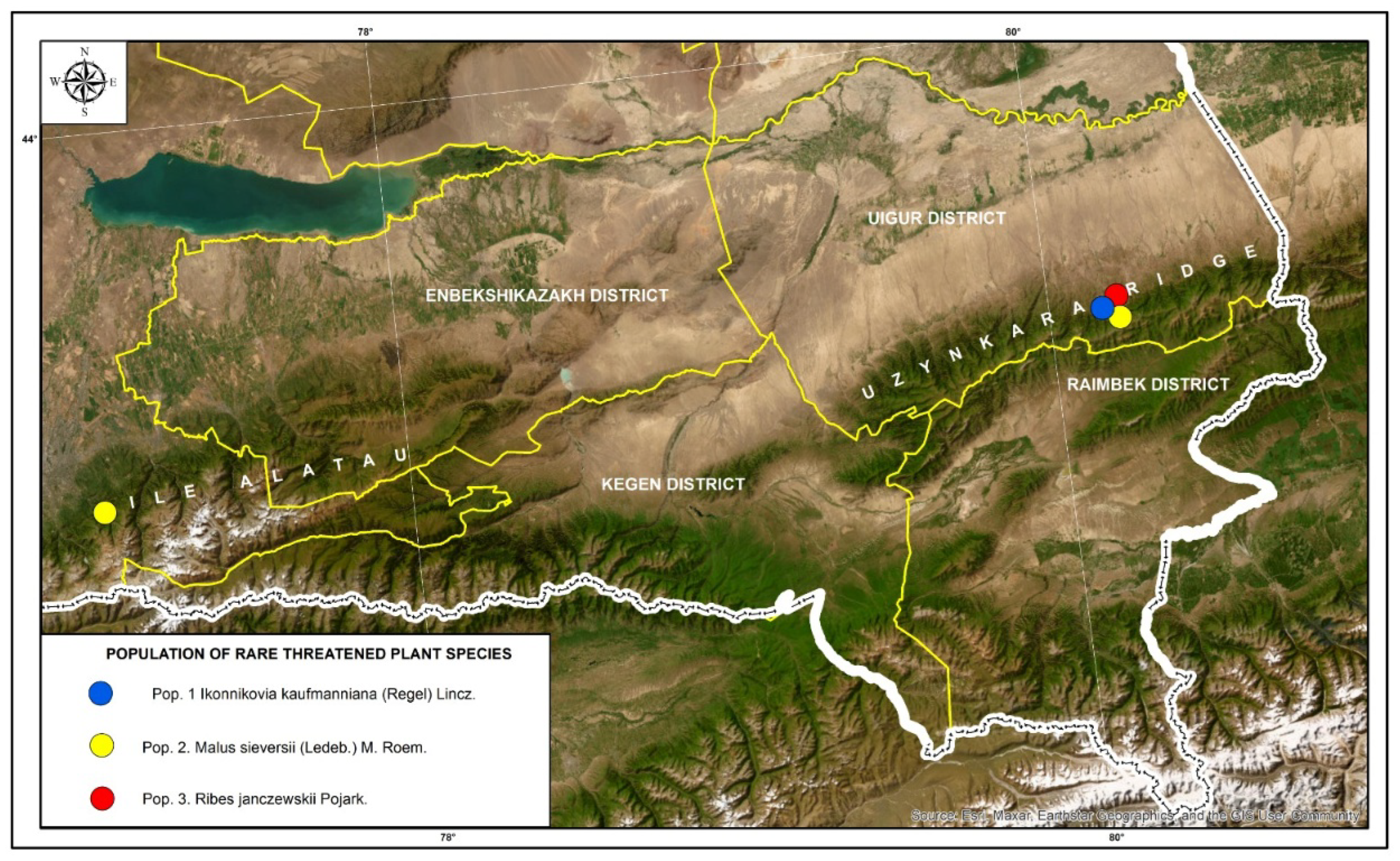
The field studies were carried out on the Ile Alatau and Uzynkara ridges of the Northern Tian Shan using standard expeditionary survey and stationary methods. Field assessment included five natural populations and 971 recorded individuals. Two populations of Malus sieversii were surveyed: 163 individuals in the Small Almaty Gorge (1840 m a.s.l.) population and 185 individuals in the Arlyksay Gorge (1896 m a.s.l.) population, giving a total of 348 individuals. One population of Ribes janczewskii was surveyed in Kayraktysay Gorge (1853 m a.s.l) and included 74 individuals. Two populations of Ikonnikovia kaufmanniana were surveyed in Uyghur district on the Uzynkara Ridge at an altitude of 1162 m a.s.l., comprising 270 and 279 individuals, respectively, for a total of 549 individuals. All recorded individuals were assigned to one of four ontogenetic categories—juvenile, immature, vegetative adult, or generative—and these counts were used to calculate the regeneration index and early stage regeneration coefficient. The ecological survey was independent from the chloroplast genome analysis. Chloroplast genome sequencing was performed using one representative individual per species. The investigation covered high-mountain and mid-mountain regions of both ranges, allowing assessment of species occurrence across different altitudinal zones (Figure 8). Sampling was conducted within the Ile-Alatau State National Park under official permits issued by the Forestry and Wildlife Committee of the Ministry of Ecology, Geology and Natural Resources of the Republic of Kazakhstan. The sampling included all Voucher specimens deposited in the herbarium collection of the Institute of Plant Biology and Biotechnology, Almaty, Kazakhstan (inventory No. IPBB-2025-0010). Species identification was performed based on morphological characteristics using the Flora of Kazakhstan [25], Identifier of Plants of Central Asia [26], and Illustrated Identifier of Plants of Kazakhstan [27]. Generic classification followed Abdullina [28], and species nomenclature was standardized according to Cherepanov [29].
Figure 8. Sample collection sites of rare, threatened plant species (Malus sieversii, Ribes janczewskii and Ikonnikovia kaufmanniana) in the Ile Alatau and Uzynkara Ridge, southeastern Kazakhstan.
Forests 17 00921 g008
The Drude scale was applied to estimate species abundance in plant communities and ontogenetic stages were determined from morphological traits following established criteria [26,29]. Individuals were classified into four ontogenetic categories based on morphological and developmental traits: juvenile (seedlings and young plants with poorly developed root systems and no reproductive organs), immature (vegetative individuals with more developed structures but not yet reproductive), vegetative adult (mature plants capable of reproduction but not observed flowering or fruiting during the study period), and generative (individuals producing flowers or fruits). In large populations, three 1 × 1 m plots were randomly selected for sampling, while in small populations, all individuals were recorded. For each site, vegetation cover, floristic composition, topography, elevation, and GPS coordinates were documented, with life forms classified according to Raunkiaer and Serebryakov [30,31]. Data were analyzed in R v.4.03 using Welsch’s t-test and ANOVA, with significance set at p < 0.05.

4.2. Assessment of Population Regeneration

To provide a quantitative assessment of the ontogenetic structure of the studied populations, two complementary regeneration metrics were calculated from the number of individuals assigned to juvenile, immature, vegetative adult, and generative stages. The regeneration index (RI) was calculated as the ratio of all pre-generative individuals to generative individuals:
RI = (N_j + N_i + N_v)/N_g
where (N_j), (N_i), (N_v), and (N_g) represent the numbers of juvenile, immature, vegetative adult, and generative individuals, respectively. An RI value greater than 1 indicates that pre-generative individuals collectively outnumber generative individuals, whereas a value below 1 indicates the predominance of the generative fraction.
In addition, an early stage regeneration coefficient (RC) was calculated as the proportion of juvenile and immature individuals in the total number of recorded individuals:
RC (%) = ((N_j + N_i) / N) × 100,
where (N) is the total number of individuals recorded in the population. RC was used to characterize the relative representation of the earliest established ontogenetic stages. Because the study was based on a single-period field survey, RI and RC were interpreted as cross-sectional indicators of ontogenetic stage composition and recruitment status rather than direct estimates of population growth, survival, or long-term viability.

4.3. Morphological and Anatomical Analysis

Morphological traits were documented using standard botanical descriptive methods. Microscopic examinations were performed on plant material fixed in a mixture of alcohol, glycerin, and water (1:1:1). Standard protocols in plant anatomy were followed for the preparation and description of samples [32,33]. Anatomical features of roots, stems, and leaves were analyzed. For stem studies, sections were boiled in 5% sodium hydroxide, rinsed thoroughly, and the epidermis was removed with a scalpel. The samples were then examined in surface view to identify diagnostic features, first under low, and subsequently, under high magnification. Anatomical sections were prepared using an OL-ZSO freezing microtome (Inmedprom, Yaroslavl, Russia). Morphometric measurements were obtained with an MOV-1-15 eyepiece micrometer (objective ×10, magnification ×40.10.7). Microphotographs of anatomical sections were captured using an MC 300 microscope (Micros, Hunnenbrunn, Austria) equipped with a CAM V400/1.3M video camera (jProbe, Yokohama, Japan).

4.4. DNA Extraction, Chloroplast Genome Assembly, and Phylogenetic Analysis

Genomic DNA was isolated from 100 mg of leaf tissue using a CTAB-based extraction method with modifications [34]. DNA concentration and purity were evaluated using a NanoDrop One spectrophotometer (Thermo Fisher, MA, USA) and a Qubit fluorometer (Thermo Fisher, MA, USA). Whole-genome sequencing was performed on the SurfSeq 5000 platform (Genemind, Shenzhen, China). Raw paired-end sequencing reads were quality-filtered and trimmed using fastp with a minimum Phred quality score of 30, minimum read length of 100 bp, and sliding window trimming to remove low-quality bases [35]. The complete chloroplast genome was assembled using GetOrganelle v1.7.5 targeting the embryophyte plastid database (-F embplant_pt) with multiple k-mer sizes ranging from 21 to 127 bp [36]. The assembled chloroplast genome was comprehensively annotated using GeSeq, which employed multiple complementary approaches including BLAT nucleotide searches (BLASTN) and BLAT translated searches (BLASTX) with a minimum sequence identity threshold of 90% for both protein and RNA searches [37,38]. Transfer RNA genes were predicted using tRNAscan-SE v2.0.7 with organellar tRNA models. The annotation pipeline incorporated plastid-specific features including automatic detection of inverted repeat (IR) regions and annotation of the trans-spliced rps12 gene. The circular genome map was subsequently generated using OGDRAW v1.3.1 to provide a comprehensive visualization of gene distribution, structural organization, and genomic features across the quadripartite chloroplast genome structure [39].
Chloroplast SSR loci identified from sequences of M. sieversii, R. janczewskii, and I. kaufmanniana were detected using MISA (MIcroSAtellite identification tool) software (https://webblast.ipk-gatersleben.de/misa/index.php, accessed on 14 June 2026) [40]. Microsatellites containing 1–6 nucleotide repeat units were identified using the following criteria: mononucleotides with ≥10 repeats, dinucleotides with ≥6 repeats, and trinucleotides through hexanucleotides with ≥5 repeats. Two SSRs separated by ≤100 bp were classified as compound microsatellites.
For phylogenetic reconstruction, chloroplast genome sequences were collected from closely related species and outgroup taxa retrieved from the NCBI GenBank database. The accession numbers of all plastid genome sequences used for comparative analyses are provided in Table S2. The data for M. sieversii included available chloroplasts genomes of M. sieversii and the genera Pyrus, Prunus, and Rosa of Rosaceae as an outgroup. The data for R. janczewskii included the Ribes genus and several species from the Saxifragales order as an outgroup. The chloroplast genome of I. kaufmanniana was compared with the species of the Caryophyllales order. Multiple sequence alignment of complete chloroplast genomes was performed using MAFFT v7.490 [41]; the multiple alignments were then examined and trimmed manually to ensure consistency between sequences. The maximum likelihood trees with an adaptive bootstrap (threshold for branch error 1%) were calculated using MEGA12 [42] using the Tamura–Nei substitution model, uniform rates among sites, and pairwise deletion of gaps/missing sites. Phylogenetic trees were visualized using FigTree [43].
Additionally, the chloroplast genome of M. sieversii was compared to other available complete sequences of the same species (16 genomes). The haplotype network was calculated using the R package pegas [44]. The neighbor network based on Hamming distance was calculated using the phangorn package [45]. The identification of polymorphisms in the aligned genome sequences was performed using the snp-sites tool [46].
R v. 4.3.3 [47] and Unipro UGENE v. 53.0 [48] were used for general data handling and visualization.

5. Conclusions

This study presents ecological, morphological, anatomical, and chloroplast genome data on three rare endemic plant species from the Northern Tian Shan. Field-based population surveys revealed unbalanced ontogenetic structures with reduced representation of juvenile stages, indicating constraints on natural regeneration across all three taxa. Morphological and anatomical analyses documented clear developmental differentiation and species-specific structural traits. Complete chloroplast genome sequencing provides new data on plastome organization and gene content among species. The plastome-based phylogenetic framework confirmed the placement of M. sieversii within the wild apple lineage, resolved R. janczewskii as a distinct member of the blackcurrant group, and highlighted the phylogenetic distinctiveness of I. kaufmanniana within Caryophyllales. Notably, the unusually high proportion of trinucleotide chloroplast SSRs detected in I. kaufmanniana represents a rare plastome feature and may reflect its evolutionary isolation; however, additional investigation is required. Together, these findings provide genomic and ecological reference data for poorly studied Central Asian endemics and offer a foundation for future population-level genetic analyses, long-term monitoring, and conservation-oriented studies aimed at preserving the evolutionary and biological diversity of mountain floras in the Northern Tian Shan.
More broadly, this study demonstrates that integrating ecological surveys with plastome genomics across phylogenetically independent endemic taxa provides a valuable framework for identifying both common conservation challenges and lineage-specific evolutionary characteristics in mountain ecosystems.

Supplementary Materials

The following supporting information can be downloaded at https://www.mdpi.com/article/10.3390/f17080921/s1: Supplementary Files S1–S3: Results of annotation of the plastid genomes of Malus sieversii, Ribes janczewskii, and Ikonnikovia kaufmanniana; Table S1: Predicted SSR loci in the plastid genomes of Malus sieversii, Ribes janczewskii, and Ikonnikovia kaufmanniana; Table S2: LSC, SSC, and IR boundaries in the plastid genomes of Malus sieversii, Ribes janczewskii, and Ikonnikovia kaufmanniana; Figures S1–S3: Diagrams of the plastid genome boundaries of Malus sieversii, Ribes janczewskii, and Ikonnikovia kaufmanniana in comparisom with the related species.

Author Contributions

Conceptualization and methodology, G.S. and D.G.; software, A.P. and A.N.; validation, formal analysis and investigation, A.T., N.K. and A.P.; investigation, K.S.; resources, A.N. and Y.Z.; data curation, G.S. and D.G.; writing—original draft preparation, A.T. and N.K.; writing—review and editing, G.S., A.P., and D.G.; visualization, A.P. and K.O.; supervision and project administration, G.S. and D.G.; funding acquisition, G.S. All authors have read and agreed to the published version of the manuscript.

Funding

This work was carried out with the support and funding of the Science Committee of the Ministry of Science and Higher Education of the Republic of Kazakhstan within the framework of the project “Assessment of the impact of natural and anthropogenic factors on the degree of degradation of pasture ecosystems in the southeast of Kazakhstan for the implementation of Sustainable Development Goal 15” (IRN grant No. AP23490247).

Data Availability Statement

The chloroplast genome data generated in the article are available in the NCBI Nucleotide database (https://www.ncbi.nlm.nih.gov/nucleotide/, accessed on 14 June 2026) under accession numbers PZ629008, PZ629009, and PZ629010.

Acknowledgments

The authors acknowledge the valuable support provided by the staff of the Ile-Alatau State National Park in facilitating field expeditions and access to sampling sites. We further thank the Forestry and Wildlife Committee of the Ministry of Ecology, Geology and Natural Resources of the Republic of Kazakhstan for granting official permission for plant material collection.

Conflicts of Interest

The authors declare no conflicts of interest.

References

  1. Dragonetti, C.; Daskalova, G.; Di Marco, M. The Exposure of the World’s Mountains to Global Change Drivers. iScience 2024, 27, 109734. [Google Scholar] [CrossRef]
  2. Sadyrova, G.; Taskuzhina, A.; Pozharskiy, A.; Orazbekova, K.; Yanin, K.; Kerimbek, N.; Zhamilova, S.; Kamiyeva, G.; Tanybaeva, A.; Gritsenko, D. Insights into Biological and Ecological Features of Four Rare and Endemic Plants from the Northern Tian Shan (Kazakhstan). Plants 2025, 14, 2305. [Google Scholar] [CrossRef] [PubMed]
  3. Sadyrova, G.; Taskuzhina, A.; Yanin, K.; Kerimbek, N.; Nurmakhanova, A.; Shaganbek, K.; Bekenova, N.; Orazbekova, K.; Gritsenko, D. Ecological, Anatomical, and Genomic Insights into the Rare Tree Species Fraxinus Sogdiana, Celtis Caucasica, and Betula Jarmolenkoana from the Northern Tien Shan. Forests 2025, 16, 1340. [Google Scholar] [CrossRef]
  4. Chen, W.; Zhang, Y.; Lv, H.; Tao, Y.; Ding, Y.; Yang, X.; Tian, Z.; Li, J. Dramatic Decline of Wild Apple Population: Evidence from Long-Term Monitoring and Modelling. Glob. Ecol. Conserv. 2025, 62, e03861. [Google Scholar] [CrossRef]
  5. Li, X.; Ding, Z.; Miao, H.; Bao, J.; Tian, X. Complete Chloroplast Genome Studies of Different Apple Varieties Indicated the Origin of Modern Cultivated Apples from Malus Sieversii and Malus Sylvestris. PeerJ 2022, 10, e13107. [Google Scholar] [CrossRef] [PubMed]
  6. Bao, L.; Li, K.; Liu, Z.; Han, M.; Zhang, D. Characterization of the Complete Chloroplast Genome of the Chinese Crabapple Malus Prunifolia (Rosales: Rosaceae: Maloideae). Conserv. Genet. Resour. 2016, 8, 227–229. [Google Scholar] [CrossRef]
  7. Qin, X.; Hao, Q.; Wang, X.; Liu, Y.; Yang, C.; Sui, M.; Zhang, Y.; Hu, Y.; Chen, X.; Mao, Z. Complete Chloroplast Genome of the Malus baccata Var. Gracilis Provides Insights into the Evolution and Phylogeny of Malus Species. Funct. Integr. Genom. 2024, 24, 13. [Google Scholar] [CrossRef] [PubMed]
  8. Wang, X.; Zhang, R.; Wang, D.; Yang, C.; Zhang, Y.; Sui, M.; Quan, J.; Sun, Y.; You, C.; Shen, X. Molecular Structure and Variation Characteristics of the Plastomes from Six Malus baccata (L.) Borkh. Individuals and Comparative Genomic Analysis with Other Malus Species. Biomolecules 2023, 13, 962. [Google Scholar] [CrossRef] [PubMed]
  9. Naizaier, R.; Qu, Z.; Wu, S.; Tian, X. The Complete Chloroplast Genome of Malus Sieversii (Rosaceae), a Wild Apple Tree in Xinjiang, China. Mitochondrial DNA Part B 2019, 4, 983–984. [Google Scholar] [CrossRef]
  10. Sun, X.; Zhan, Y.; Li, S.; Liu, Y.; Fu, Q.; Quan, X.; Xiong, J.; Gang, H.; Zhang, L.; Qi, H. Complete Chloroplast Genome Assembly and Phylogenetic Analysis of Blackcurrant (Ribes Nigrum), Red and White Currant (Ribes Rubrum), and Gooseberry (Ribes Uva-Crispa) Provide New Insights into the Phylogeny of Grossulariaceae. PeerJ 2023, 11, e16272. [Google Scholar] [CrossRef] [PubMed]
  11. Pikunova, A.; Goryunova, S.; Golyaeva, O.; Dolzhikova, M.; Pavlenko, A.; Kurashev, O.; Sotnikova, E.; Polivanova, O.; Sivolapova, A.; Kazakov, O. Plastome Data of Red Currant and Gooseberry Reveal Potential Taxonomical Issues within the Ribes Genus (Grossulariaceae). Horticulturae 2023, 9, 972. [Google Scholar] [CrossRef]
  12. Zhou, H.; Zhang, H. The Complete Chloroplast Genome of the Medicinally Important Plant Plumbago zeylanica L. (Plumbaginaceae) and Phylogenetic Analysis. Mitochondrial DNA Part B 2024, 9, 428–431. [Google Scholar] [CrossRef] [PubMed]
  13. Kim, Y.; Xi, H.; Park, J. The Complete Chloroplast Genome of Limonium Tetragonum (Plumbaginaceae) Isolated in Korea. Korean J. Plant Taxon. 2021, 51, 337–344. [Google Scholar] [CrossRef]
  14. Darshetkar, A.M.; Maurya, S.; Lee, C.; Bazarragchaa, B.; Batdelger, G.; Janchiv, A.; Jeong, E.J.; Choi, S.; Choudhary, R.K.; Kim, S.-Y. Plastome Analysis Unveils Inverted Repeat (IR) Expansion and Positive Selection in Sea Lavenders (Limonium, Plumbaginaceae, Limonioideae, Limonieae). PhytoKeys 2021, 175, 89. [Google Scholar] [CrossRef] [PubMed]
  15. Koutroumpa, K.; Theodoridis, S.; Warren, B.H.; Jiménez, A.; Celep, F.; Doğan, M.; Romeiras, M.M.; Santos-Guerra, A.; Fernández-Palacios, J.M.; Caujapé-Castells, J.; et al. An Expanded Molecular Phylogeny of Plumbaginaceae, with Emphasis on Limonium (Sea Lavenders): Taxonomic Implications and Biogeographic Considerations. Ecol. Evol. 2018, 8, 12397–12424. [Google Scholar] [CrossRef] [PubMed]
  16. Ebert, D.; Peakall, R. Chloroplast Simple Sequence Repeats (cpSSRs): Technical Resources and Recommendations for Expanding cpSSR Discovery and Applications to a Wide Array of Plant Species. Mol. Ecol. Resour. 2009, 9, 673–690. [Google Scholar] [CrossRef] [PubMed]
  17. Nurtaza, A.; Dyussembekova, D.; Islamova, S.; Samatova, I.; Zhanybekova, Z.; Umirzakova, A.; Magzumova, G.; Muranets, A.; Kakimzhanova, A. In Vitro Conservation and Genetic Diversity Analysis of Rare Species Ribes Janczewskii. Sci. Rep. 2024, 14, 31117. [Google Scholar] [CrossRef] [PubMed]
  18. Karime, A.; Nashtay, M.; Abibulla, A.; Alibek, Y.; Nurgul, K. The Age Structure of the Coenopopulations of Rare Endemic Plant Ikonnikovia Kaufmanniana from Kazakhstan. In Proceedings of the 7th Planta Europa Conference Book of Abstracts, Ortodox Academy of Crete, Kolympary, Greece, 21–25 May 2014. [Google Scholar]
  19. Mukhitdinov, N.; Inelova, Z.; Nesterova, S.; Alibek, Y.; Tynybekov, B.; Meruyert, K. The Characteristics and Morphometric Features of Plant Communities in the Toraigyr Mountains of Kazakhstan with an Occurrence of Ikonnikovia Kaufmanniana (Regel) Lincz. Res. J. Pharm. Biol. Chem. Sci. 2017, 8, 848–858. [Google Scholar]
  20. Omasheva, M.Y.; Flachowsky, H.; Ryabushkina, N.A.; Pozharskiy, A.S.; Galiakparov, N.N.; Hanke, M.-V. To What Extent Do Wild Apples in Kazakhstan Retain Their Genetic Integrity? Tree Genet. Genomes 2017, 13, 52. [Google Scholar] [CrossRef]
  21. Tian, Z.; Song, H.; Wang, Y.; Li, J.; Maimaiti, M.; Liu, Z.; Zhang, H.; Zhang, J. Wild Apples Are Not That Wild: Conservation Status and Potential Threats of Malus Sieversii in the Mountains of Central Asia Biodiversity Hotspot. Diversity 2022, 14, 489. [Google Scholar] [CrossRef]
  22. Cornille, A.; Gladieux, P.; Smulders, M.J.; Roldán-Ruiz, I.; Laurens, F.; Le Cam, B.; Nersesyan, A.; Clavel, J.; Olonova, M.; Feugey, L. New Insight into the History of Domesticated Apple: Secondary Contribution of the European Wild Apple to the Genome of Cultivated Varieties. PLoS Genet. 2012, 8, e1002703. [Google Scholar] [CrossRef] [PubMed]
  23. Graham, J.; Smith, K.; MacKenzie, K.; Jorgenson, L.; Hackett, C.; Powell, W. The Construction of a Genetic Linkage Map of Red Raspberry (Rubus Idaeus Subsp. Idaeus) Based on AFLPs, Genomic-SSR and EST-SSR Markers. Theor. Appl. Genet. 2004, 109, 740–749. [Google Scholar] [CrossRef] [PubMed]
  24. Kalia, R.K.; Rai, M.K.; Kalia, S.; Singh, R.; Dhawan, A. Microsatellite Markers: An Overview of the Recent Progress in Plants. Euphytica 2011, 177, 309–334. [Google Scholar] [CrossRef]
  25. Flora of Kazakhstan; Academy of Sciences of the Kazakh SSR: Almaty, Kazakhstan, 1956; Volume 1–9.
  26. Opredelitel’ Rastenii Srednei Azii (Key to Identification of the Plants of Central Asia); Fan: Tashkent, Uzbekistan, 1968; Volume 1–10.
  27. Illustrated Identifier of Plants of Kazakhstan; Academy of Sciences of the Kazakh SSR: Almaty, Kazakhstan, 1962; Volume 1–2.
  28. Abdulina, S. Spisok Sosudistykh Rasteniy Kazakhstana [The List of Vascular Plants of Kazakhstan]; Academy of Sciences: Almaty, Kazakhstan, 1999. (In Russian) [Google Scholar]
  29. Cherepanov, S.K. Vascular Plants of Russia and Neighboring States (Within the Former USSR); Mir i Semya: St. Petersburg, Russia, 1995. [Google Scholar]
  30. Raunkiaer, C. The Life Forms of Plants and Statistical Plant Geography; Being the Collected Papers of C. Raunkiær; Clarendon Press: Oxford, UK, 1934. [Google Scholar]
  31. Serebryakov, I.G. Ecological Morphology of Plants; Vyssh. shk.: Moscow, Russia, 1962. [Google Scholar]
  32. Prozina, M.N. Botanical Microtechnics; Moscow State University: Moscow, Russia, 1960. [Google Scholar]
  33. Barykina, R.; Veselova, T.; Devyatov, A. Spravochnik Po Botanicheskoy Mikrotekhnike [Handbook of Botanical Microtechnology] (Fundamentals and Methods); –M.; Moscow State University: Moscow, Russia, 2004; 313p. [Google Scholar]
  34. Li, J.-L.; Yu, S.; Yu, J.; Yu, L.; Zhou, S.-L. A Modified CTAB Protocol for Plant DNA Extraction. Chin. Bull. Bot. 2013, 48, 72–78. [Google Scholar] [CrossRef]
  35. Chen, S.; Zhou, Y.; Chen, Y.; Gu, J. Fastp: An Ultra-Fast All-in-One FASTQ Preprocessor. Bioinformatics 2018, 34, i884–i890. [Google Scholar] [CrossRef] [PubMed]
  36. Jin, J.-J.; Yu, W.-B.; Yang, J.-B.; Song, Y.; DePamphilis, C.W.; Yi, T.-S.; Li, D.-Z. GetOrganelle: A Fast and Versatile Toolkit for Accurate de Novo Assembly of Organelle Genomes. Genome Biol. 2020, 21, 241. [Google Scholar] [CrossRef] [PubMed]
  37. Tillich, M.; Lehwark, P.; Pellizzer, T.; Ulbricht-Jones, E.S.; Fischer, A.; Bock, R.; Greiner, S. GeSeq–Versatile and Accurate Annotation of Organelle Genomes. Nucleic Acids Res. 2017, 45, W6–W11. [Google Scholar] [CrossRef] [PubMed]
  38. Chan, P.P.; Lowe, T.M. tRNAscan-SE: Searching for tRNA Genes in Genomic Sequences; Springer: Berlin/Heidelberg, Germany, 2019. [Google Scholar]
  39. Greiner, S.; Lehwark, P.; Bock, R. OrganellarGenomeDRAW (OGDRAW) Version 1.3. 1: Expanded Toolkit for the Graphical Visualization of Organellar Genomes. Nucleic Acids Res. 2019, 47, W59–W64. [Google Scholar] [CrossRef] [PubMed]
  40. Beier, S.; Thiel, T.; Münch, T.; Scholz, U.; Mascher, M. MISA-Web: A Web Server for Microsatellite Prediction. Bioinformatics 2017, 33, 2583–2585. [Google Scholar] [CrossRef] [PubMed]
  41. Katoh, K.; Standley, D.M. MAFFT Multiple Sequence Alignment Software Version 7: Improvements in Performance and Usability. Mol. Biol. Evol. 2013, 30, 772–780. [Google Scholar] [CrossRef] [PubMed]
  42. Tamura, K.; Stecher, G.; Kumar, S. MEGA11: Molecular Evolutionary Genetics Analysis Version 11. Mol. Biol. Evol. 2021, 38, 3022–3027. [Google Scholar] [CrossRef] [PubMed]
  43. Rambaut, A. FigTree (Version 1.4.4) [Computer Software]. Institute of Evolutionary Biology, University of Edinburgh. Available online: http://github.com/rambaut/figtree/ (accessed on 10 July 2025).
  44. Paradis, E. Pegas: An R Package for Population Genetics with an Integrated–Modular Approach. Bioinformatics 2010, 26, 419–420. [Google Scholar] [CrossRef] [PubMed]
  45. Schliep, K.P. Phangorn: Phylogenetic Analysis in R. Bioinformatics 2011, 27, 592–593. [Google Scholar] [CrossRef] [PubMed]
  46. Page, A.J.; Taylor, B.; Delaney, A.J.; Soares, J.; Seemann, T.; Keane, J.A.; Harris, S.R. SNP-Sites: Rapid Efficient Extraction of SNPs from Multi-FASTA Alignments. Microb. Genom. 2016, 2, e000056. [Google Scholar] [CrossRef] [PubMed]
  47. R: A Language and Environment for Statistical Computing; R Foundation for Statistical Computing: Vienna, Austria, 2025.
  48. Okonechnikov, K.; Golosova, O.; Fursov, M.; the UGENE Team. Unipro UGENE: A Unified Bioinformatics Toolkit. Bioinformatics 2012, 28, 1166–1167. [Google Scholar] [CrossRef] [PubMed]
Figure 1. Morphological and anatomical features of M. sieversii; (A) Wild apple (M. sieversii) branch with fruit and leaves. (B) General appearance of trees during flowering (left) and in autumn (right). (C) Transverse sections of leaf showing vascular tissue (left) and mesophyll structure (right) under light microscopy: 1—xylem; 2—vascular bundle; 3—phloem; 4—idioblast; 5—upper epidermis; 6—columnar mesophyll; 7—spongy mesophyll; 8—lower epidermis.
Forests 17 00921 g001
Figure 2. Morphological and anatomical features of R. janczewskii. (A) Vegetative habit and foliage of R. janczewskii in its natural montane habitat, with developing fruits visible on upper branches. (B) Transverse sections of R. janczewskii stems under light microscopy, showing detailed tissue organization: 1—epidermis; 2—angular collenchyma; 3—primary cortex; 4—cavity; 5—central cylinder; 6—endoderm; 7—stem parenchyma;
Forests 17 00921 g002
Figure 3. Habitat and leaf anatomical features of I. kaufmanniana. (A) Natural populations of I. kaufmanniana in rocky and foothill-steppe habitats of the Tokai Gorge, Uzynkara Ridge (Kazakhstan). The upper image shows a flowering individual; the lower image shows a broader landscape view of the natural distribution area. (B) Leaf anatomical structure under light microscopy. Top: transverse section showing 1—upper epidermis, 2—lower epidermis, 3—palisade (columnar) mesophyll, 4—spongy parenchyma, 5—vascular bundle, and 6—sclerenchyma sheath. Bottom left: epidermis and columnar mesophyll. Bottom right: spongy mesophyll cells.
Forests 17 00921 g003
Figure 4. Structural annotation and phylogenetic analysis of the M. sieversii chloroplast genome. (A) Circular genome map of the M. sieversii chloroplast genome. The map displays the quadripartite structure including the large single-copy region (LSC), small single-copy region (SSC), and two inverted repeat regions (IRa and IRb). Genes marked by an asterisk contain introns (B) Maximum likelihood phylogenetic tree based on complete chloroplast genome sequences of Malus species, with representatives of Pyrus, Prunus, and Rosa included as an outgroup. The newly sequenced M. sieversii plastome generated in this study is highlighted in blue. The scale bar indicates substitutions per site (Hamming distance).
Forests 17 00921 g004
Figure 5. Network analysis of the intraspecific variability of chloroplast genomes of Malus sieversii. (A) Haplotype network with the corresponding sequence accessions; the numbers in blue boxes indicate the estimated differences (mutations) between haplotypes (Roman numbers) 0. (B) Multidimensional scaling (MDS) of the haplotype networks. (C) Neighbor network of chloroplast genomes based on Hamming distances.
Forests 17 00921 g005
Figure 6. Structural annotation and phylogenetic placement of the R. janczewskii chloroplast genome. (A) Circular genome map of the R. janczewskii chloroplast genome. The map displays the quadripartite structure including the large single-copy region (LSC), small single-copy region (SSC), and two inverted repeat regions (Ira and Irb). Genes marked by an asterisk contain introns. (B) Maximum likelihood phylogenetic tree based on complete chloroplast genome sequences of Ribes species, with representatives of the order Saxifragales included as outgroups. The newly sequenced R. janczewskii sample is highlighted in blue. Scale bar indicates substitutions per site.
Forests 17 00921 g006
Figure 7. Structural annotation and phylogenetic position of the Ikonnikovia kaufmanniana chloroplast genome. (A) Circular map of the I. kaufmanniana chloroplast genome showing the typical quadripartite structure, including the large single-copy (LSC), small single-copy (SSC), and inverted repeat (IRa and IRb) regions. Genes marked by an asterisk contain introns. (B) Maximum likelihood phylogenetic tree based on complete chloroplast genome sequences. The newly sequenced I. kaufmanniana sample is highlighted in blue. Scale bar indicates substitutions per site.
Forests 17 00921 g007
Table 1. Comparative morphological characteristics of Malus sieversii.
NameAge GroupTotal NumberLeaf Length (cm) ± SDPlant Height (cm) ± SD
Population 1 (Small Almaty Gorge)Juvenile (j)252.33 ± 0.5840.00 ± 10.00
Immature (i)393.50 ± 0.7183.00 ± 11.27
Vegetative adult (v)546.00 ± 1.00330.00 ± 72.11
Generative (g)458.67 ± 0.58456.67 ± 51.32
Population 2 ( Arlyksay Gorge )Juvenile (j)152.50 ± 0.7129.00 ± 1.73
Immature (i)294.33 ± 0.58130.00 ± 17.32
Vegetative adult (v)625.00 ± 1.00413.33 ± 32.15
Generative (g)798.00 ± 1.00533.33 ± 76.38
Juvenile (j)Between population statistical tests (t-test; ANOVA); p < 0.050.0135; 0.01020.1781; 0.729
Immature (i)4.636 × 10⁻¹⁷; 1.53 × 10−172.2 × 10⁻¹⁶; 2 × 10⁻¹⁶
Vegetative adult (v)2.959 × 10⁻⁷; 1.44 × 10−72.582 × 10−13; 1.44 × 10⁻¹⁵
Generative (g)0.0042; 0.01441.219 × 10−9; 3.52 × 10⁻⁸
Table 2. Morphological characteristics of Ribes janczewskii Pojark. across age groups.
Population (Location)Age GroupTotal NumberLeaf Length (cm) ± SDRaceme Length (cm) ± SDPlant Height (cm) ± SD
Population 1 (Kayraktysay Gorge)Juvenile (j)101.13 ± 0.052.00 ± 0.1022.00 ± 1.50
Immature (i)211.80 ± 1.003.00 ± 1.0070.00 ± 10.00
Vegetative adult(v) 243.47 ± 0.473.67 ± 0.56125.00 ± 3.23
Generative (g)198.33 ± 0.584.67 ± 0.54133.33 ± 15.28
Table 3. Comparative morphological characteristics of Ikonnikovia kaufmanniana (Regel) Lincz.
Population Age GroupTotal Number Leaf Length (cm) ± SDLeaf Width (cm) ± SDPlant Height (cm) ± SD
Population 1 (Arlyksay Gorge, Uzynkara Ridge)Juvenile (j)252.33 ± 0.581.33 ± 0.582.67 ± 1.52
Immature (i)45 4.00 ± 1.001.67 ± 0.585.47 ± 2.08
Vegetative adult (v)70 3.17 ± 1.531.50 ± 0.2035.67 ± 5.13
Generative (g)130 11.33 ± 1.153.00 ± 0.3041.00 ± 3.61
Population 2 (Arlyksay Gorge, Uzynkara Ridge)Juvenile (j)401.50 ± 0.711.50 ± 0.713.67 ± 1.21
Immature (i)562.00 ± 0.401.50 ± 0.7115.00 ± 4.00
Vegetative adult (v)701.75 ± 0.581.50 ± 0.5825.65 ± 5.13
Generative (g)1133.00 ± 0.40 3.00 ± 0.3041.33 ± 3.21
Juvenile (j)Between population statistical tests (t-test; ANOVA); p < 0.050.0007; 0.00160.0002; 0.00020.419; 0.52
Immature (i)2.2 × 10⁻¹⁶; 2 × 10−162.2 × 10⁻¹⁶; 2 × 10−160.0056; 0.007
Vegetative adult (v)1.766 × 10⁻¹⁶; 5.04 × 10−94.358 × 10−16; 4.13 × 10−1609276; 0.927
Generative (g)2.2 × 10⁻¹⁶; 2 × 10−160.4621; 0.4640.367; 0.4621
Table 4. Characteristics of chloroplast simple sequence repeats (SSRs) in M. sieversii.
CharacteristicMalus sieversii
Genome size (bp)160,192
Total SSRs74
Mononucleotide71 (96.0%)
Dinucleotide3 (4.0%)
Trinucleotide0 (0%)
Tetra-/Penta-/Hexa-0 (0%)
A/T mononucleotides69 (97.2%)
C/G mononucleotides2 (2.8%)
Compound SSRs11
SSR density (SSRs/kb)0.46
Table 6. General structure characteristics of the chloroplast genome of Ikonnikovia kaufmanniana in comparison with the species of the Caryophyllales order.
SequenceLSCIRbSSCIRa
KZ-2025_Ikonnikovia_kaufmannia84,01632,82512,95532,825
NC_041245.1_Plumbago_auriculata91,90731,76013,33031,760
NC_042390.1_Rumex_acetosa85,83930,65013,12730,650
NC_045399.1_Limonium_aureum84,54528,56712,97928,567
NC_047446.1_Fallopia_sachalinensis87,70331,10713,56531,107
NC_049146.1_Calligonum_jeminaicum88,16030,52713,31830,527
NC_058530.1_Rheum_pumilum87,42431,02212,74231,022
NC_058627.1_Rheum_officinale106,03521,21213,10121,212
NC_058892.1_Polygonum_aviculare88,00931,06613,30431,066
NC_059031.1_Muehlenbeckia_gracillima88,00124,82025,52224,820
NC_059818.1_Belemia_cordata85,93225,21118,10525,211
NC_059914.1_Limonium_tetragonum84,56828,56212,99628,562
NC_059915.1_Limonium_bicolor84,54028,55512,96428,555
NC_059952.1_Atraphaxis_bracteata88,85430,94413,51930,944
NC_065349.1_Bougainvillea_infesta85,59625,38518,01625,385
NC_065861.1_Limonium_otolepis84,35828,52913,10128,529
NC_068874.1_Triplaris_americana101,28322,00425,66022,004
NC_071211.1_Ceratostigma_ulicinum89,00932,91413,51532,914
NC_071212.1_Ceratostigma_plumbaginoides89,65030,77913,53330,779
NC_071213.1_Ceratostigma_griffithii88,87731,00613,45631,006
NC_071214.1_Ceratostigma_minus89,56930,85013,51730,850
NC_077498.1_Silene_olgiana85,87233,155899933,155
NC_082251.1_Persicaria_dissitiflora85,62931,17413,00231,174
NC_083924.1_Brasiliopuntia_brasiliensis87,37935,319439035,319
NC_084458.1_Plumbago_zeylanica100,34322,06724,69622,067
NC_085143.1_Limonium_franchetii84,57828,55812,97628,558
Table 7. Characteristics of chloroplast simple sequence repeats (SSRs) in Ikonnikovia kaufmanniana.
CharacteristicIkonnikovia kaufmanniana
Genome size (bp)162,624
Total SSRs69
Mononucleotide52 (75.4%)
Dinucleotide2 (2.9%)
Trinucleotide15 (21.7%)
Tetra-/Penta-/Hexa-0 (0%)
A/T mononucleotides50 (96.2%)
C/G mononucleotides2 (3.8%)
Compound SSRs6
SSR density (SSRs/kb)0.42
Disclaimer/Publisher’s Note: The statements, opinions and data contained in all publications are solely those of the individual author(s) and contributor(s) and not of MDPI and/or the editor(s). MDPI and/or the editor(s) disclaim responsibility for any injury to people or property resulting from any ideas, methods, instructions or products referred to in the content.