Article

Water-Holding Characteristics of Forestry Residues for Urban Bare Soil Mulching

1
School of Environmental and Life Sciences, Nanning Normal University, Nanning 530001, China
2
University Engineering Research Center of “Satellite +” Space AI Intelligent Governance of Natural Resources in Guangxi, Nanning 530001, China
3
School of Geography Science and Planning, Nanning Normal University, Nanning 530001, China
4
School of Chemistry and Materials, Nanning Normal University, Nanning 530001, China
5
School of Natural Resources and Surveying, Nanning Normal University, Nanning 530001, China
6
Guangxi Jingpeng Technology Co., Ltd., Nanning 530200, China
*
Author to whom correspondence should be addressed.
These authors contributed equally to this work.
Forests 2026, 17(8), 866; https://doi.org/10.3390/f17080866
Submission received: 29 June 2026 / Revised: 17 July 2026 / Accepted: 23 July 2026 / Published: 24 July 2026
(This article belongs to the Special Issue Ecological Functions of Urban Green Spaces)

Abstract

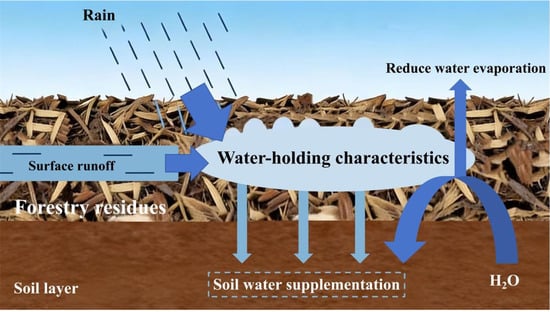
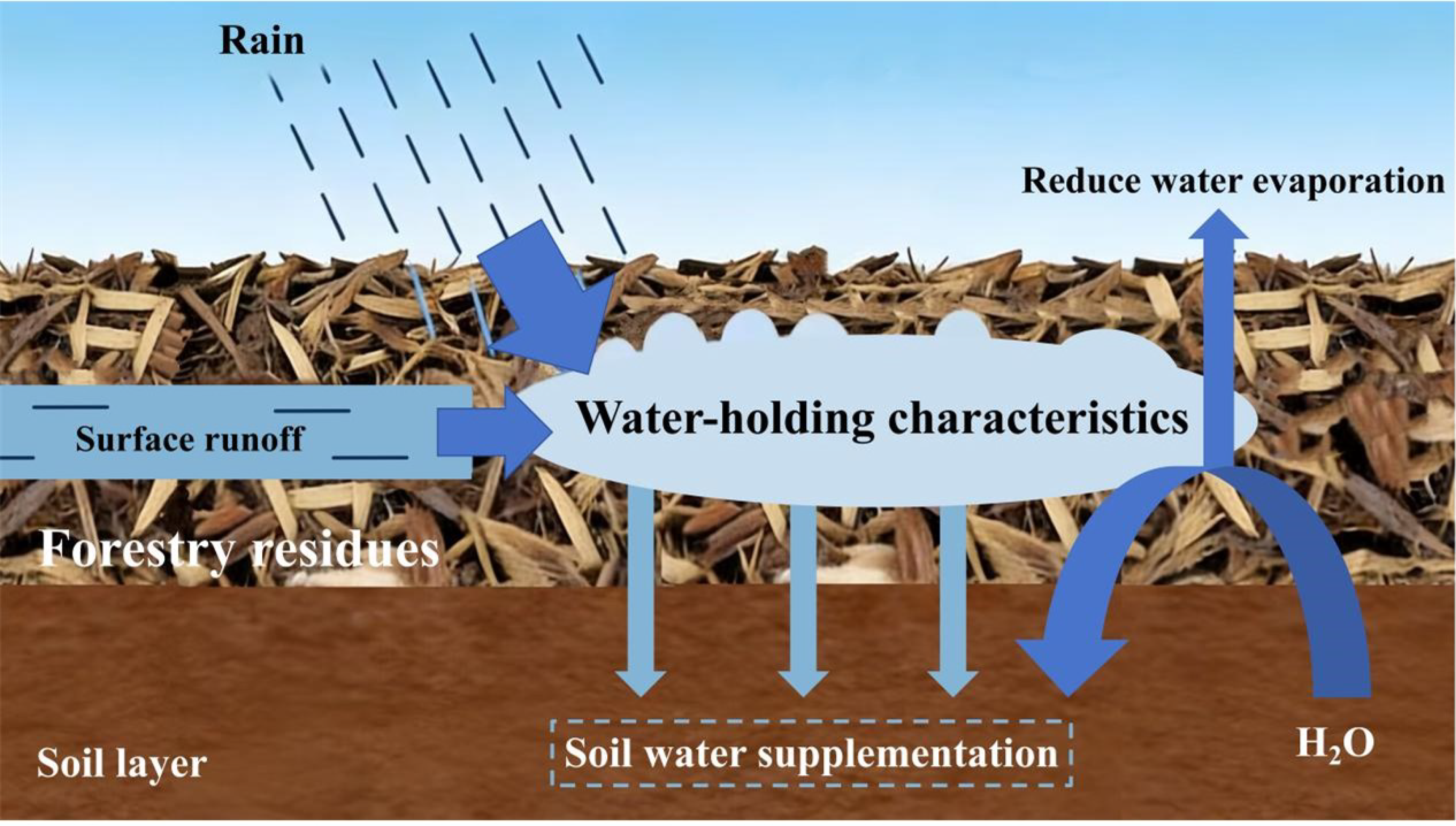
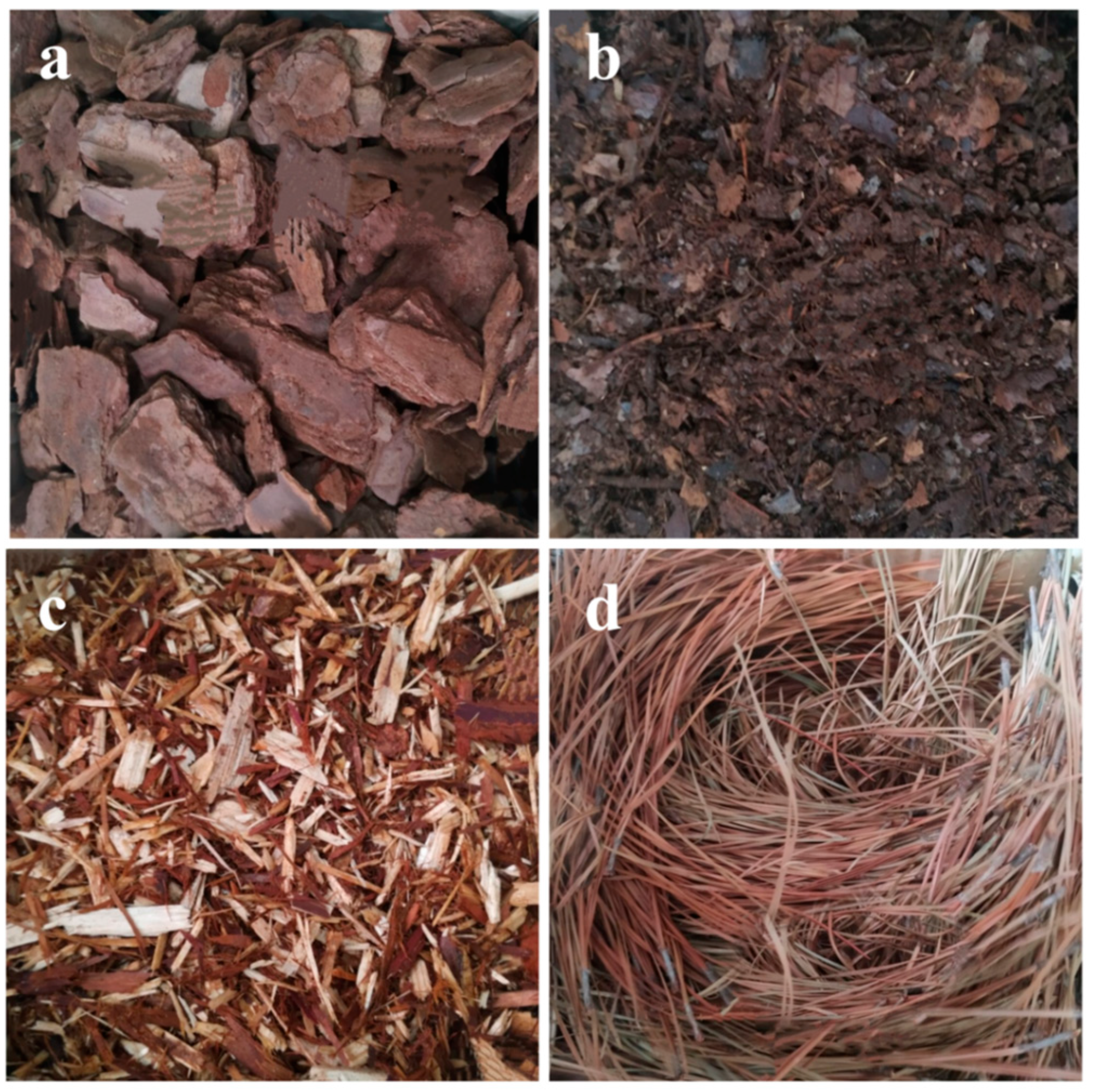
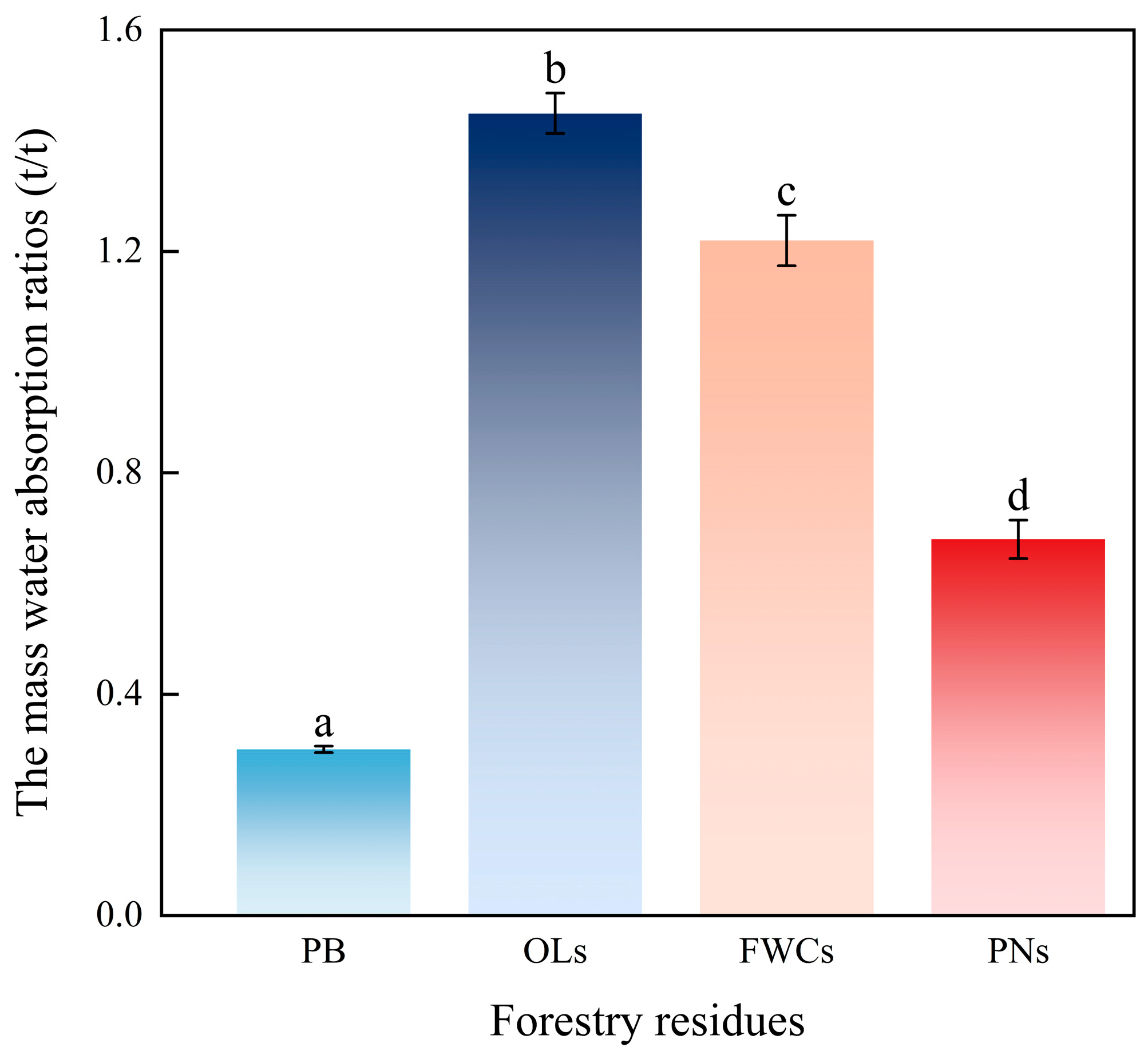
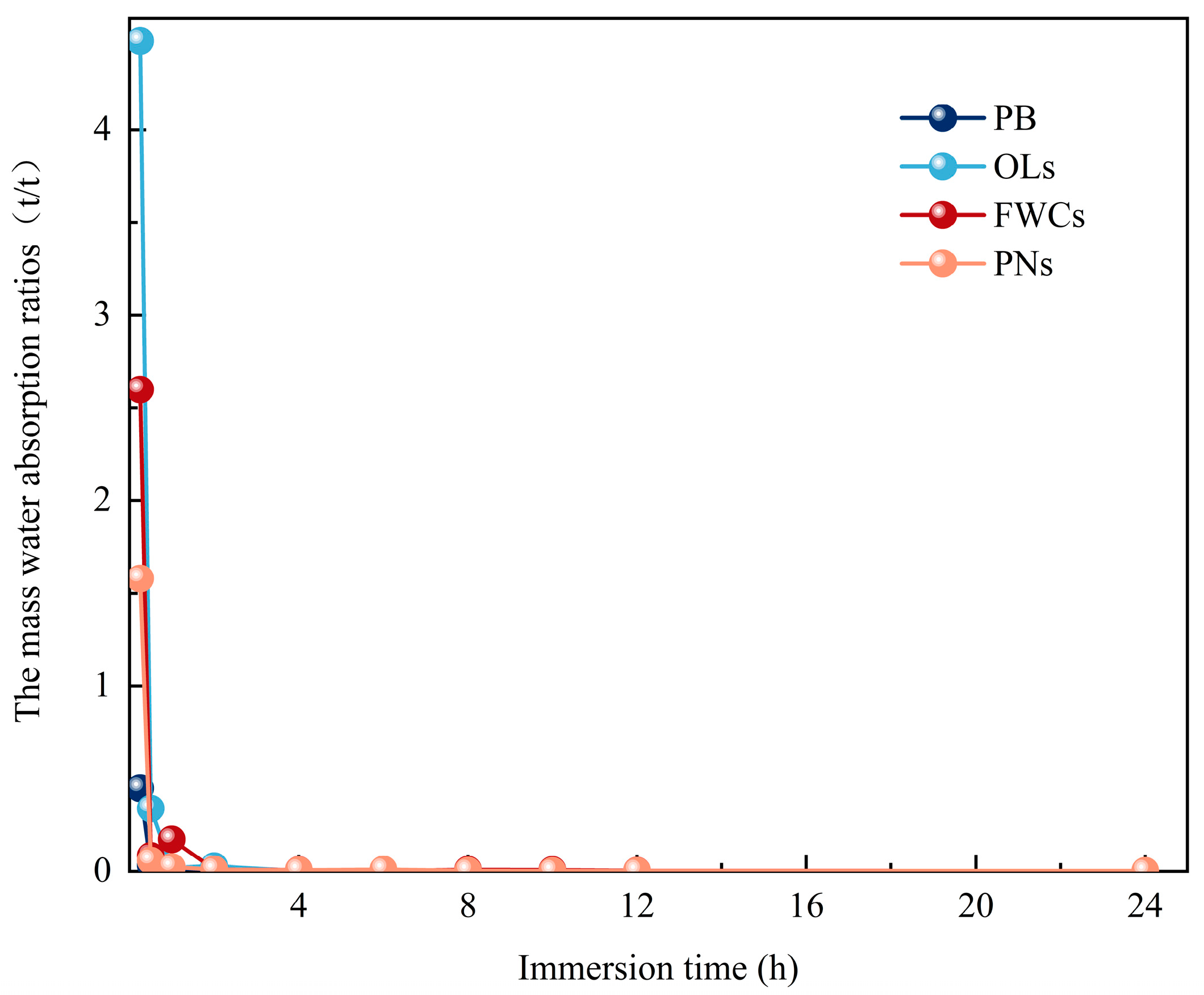
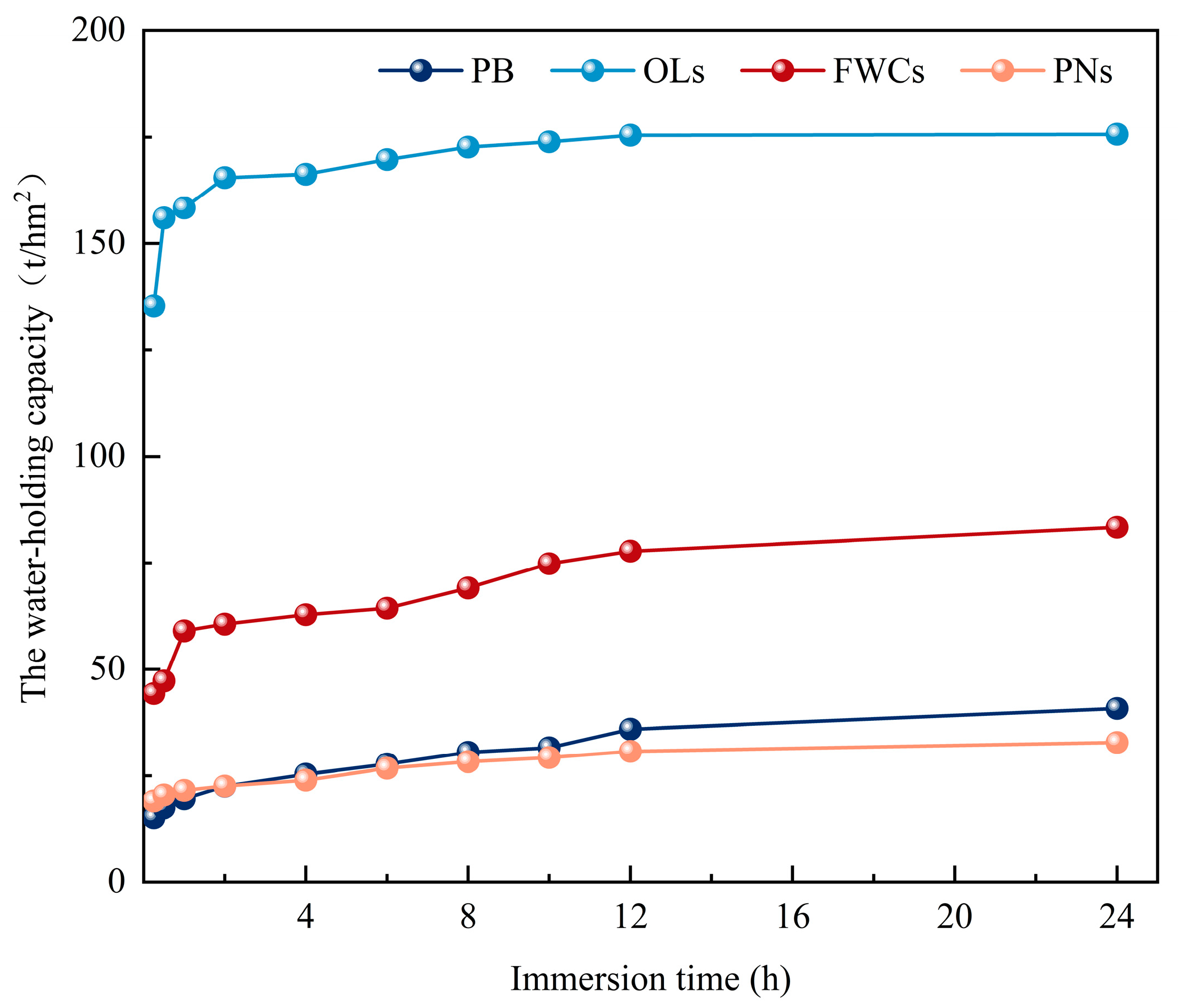
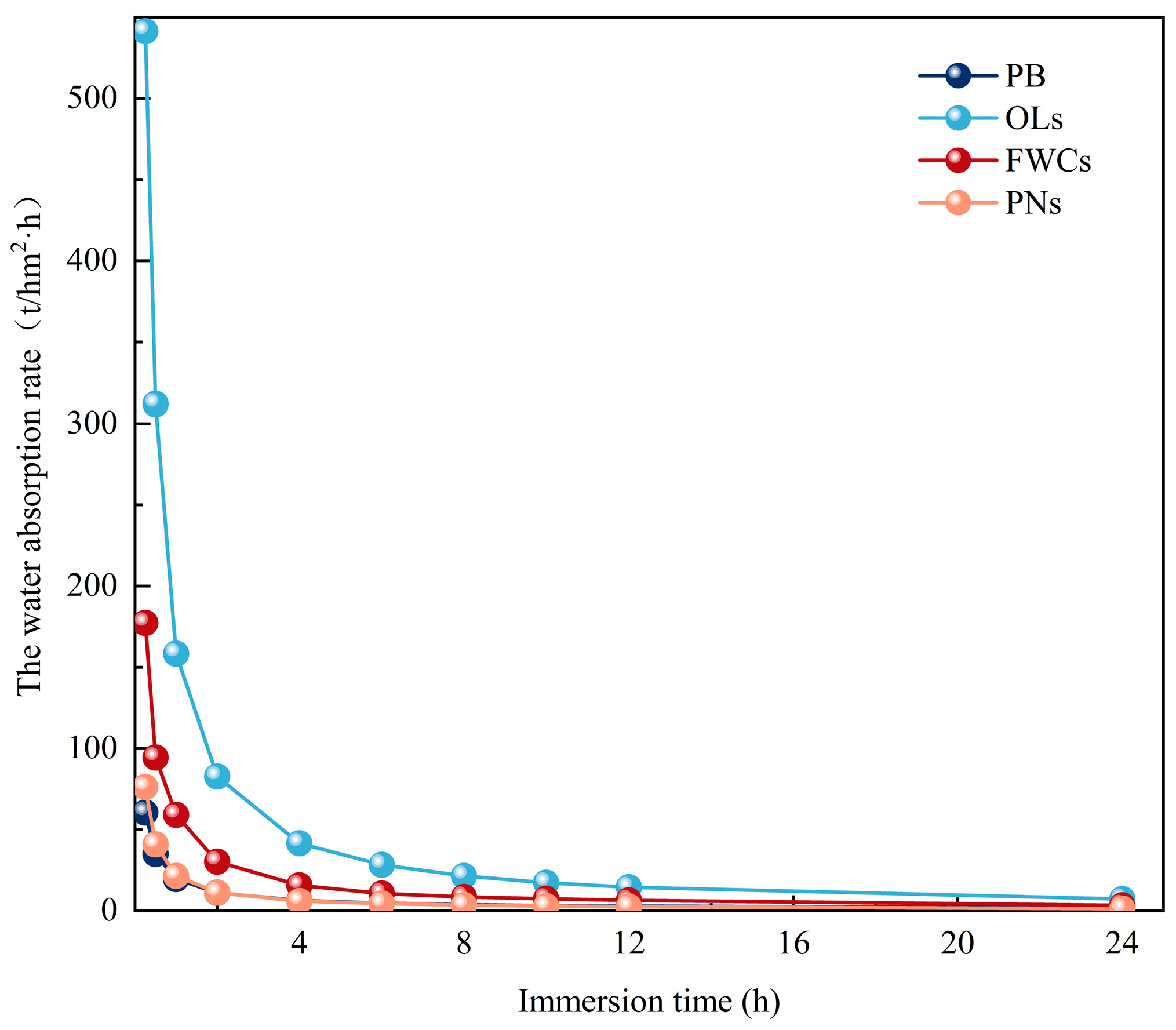
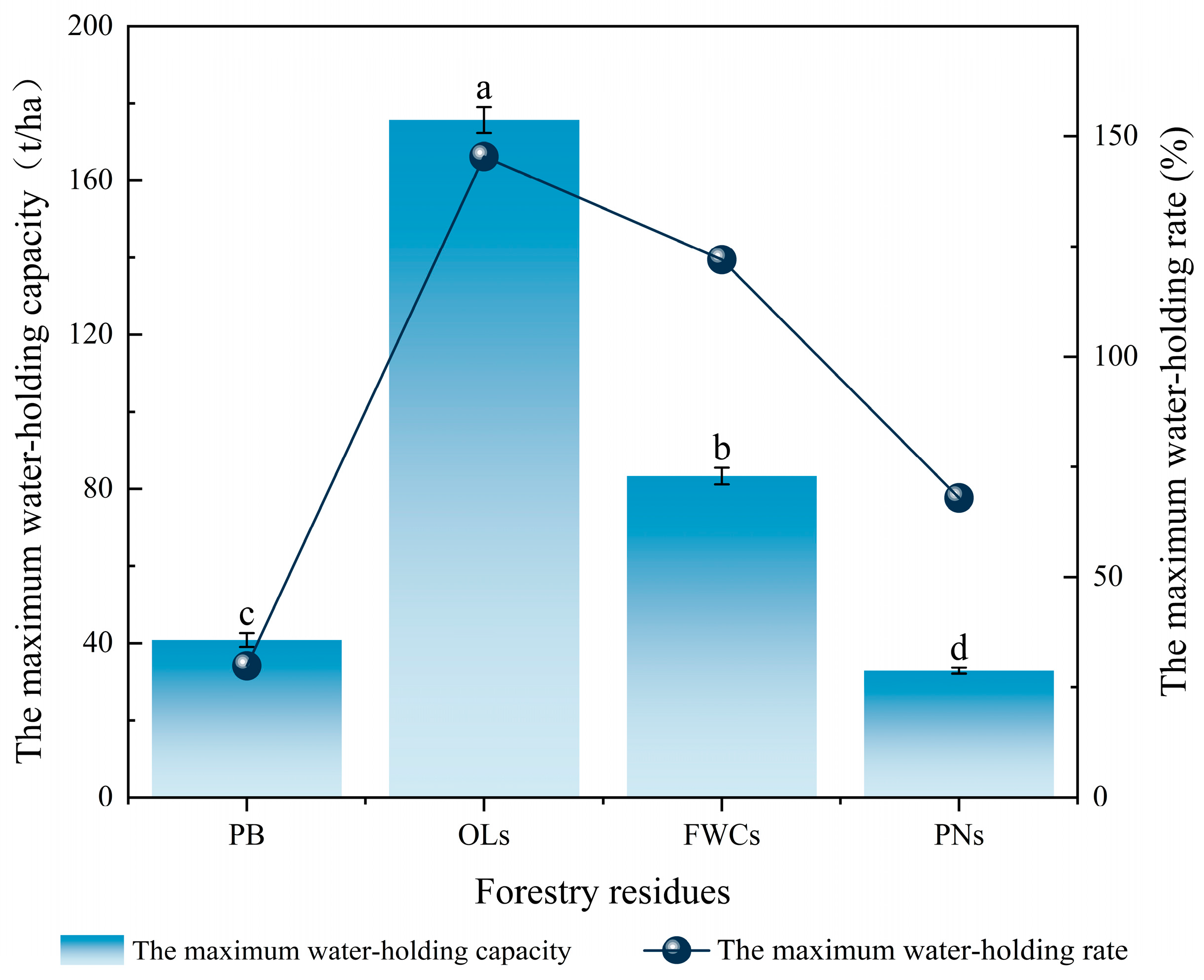
Objective: Forestry management produces abundant residues including wood chips, fallen leaves and bark. Reusing them as urban organic mulches improves soil quality, mitigates soil erosion and optimizes urban green space ecology. This study analyzed the water-holding characteristics of four typical forestry residues to guide urban mulch selection. Methods: Soaking lab tests were conducted on pine bark (PB), oak leaves (OLs), pine needles (PNs), and fir wood chips (FWCs) to monitor dynamic variations in water-holding capacity and absorption rate over soaking time, with data fitted by mathematical models. Results: All forestry residues exhibited considerable water-holding capacity, with OLs showing the highest water-retention performance (175.67 t/ha, 145.42%), effective interception capacity (119.83 t/ha) and interception rate (99.19%) among all tested materials, followed by FWCs. The water-holding capacity increased rapidly and then leveled off with prolonged soaking time, and this trend conformed to a logarithmic equation, expressed as Q = a·ln(t) + b. Water absorption peaked at 15 min before declining slowly until equilibrium, and this dynamic process was well fitted by a power function, expressed as V = k·tn. Conclusions: Given their superior water-holding characteristics, OLs and FWCs are highly recommended as preferred organic mulches for urban soil applications.
Keywords: forestry residues; water-holding characteristics; organic mulch; urban soil forestry residues; water-holding characteristics; organic mulch; urban soil
Graphical Abstract