


Abstract
Urbanization is increasingly limiting daily human exposure to natural forest environments, highlighting the growing importance of urban green infrastructure and nature-based solutions in supporting human health and well-being. Among the mechanisms underlying the beneficial effects of forests, biogenic volatile organic compounds (BVOCs), particularly terpenes, are recognized as key contributors due to their bioactive properties and role in cultural ecosystem services related to human well-being. This study explores the potential of urban and natural trees of Pinus nigra J. F. Arnold to serve as sources of health-relevant BVOCs by examining seasonal and spatial variability in needle terpene profiles. Needle samples were collected from trees growing in an urban park and a protected natural area across three seasons (spring, summer, and autumn), and analyzed using headspace GC/MS. The study was designed as an exploratory assessment aimed at identifying general patterns of terpene variability across contrasting environments. Across all seasons and locations, α- and β-pinene consistently dominated the terpene profile, together accounting for the majority of detected compounds, and showed no significant variation in relation to site or season. In contrast, secondary monoterpenes and sesquiterpenes exhibited greater variability, contributing to context-dependent differences between environments. Despite these variations, the overall terpene composition remained relatively stable, particularly with respect to compounds previously associated with health-related effects. These preliminary findings provide insights into the potential role of Pinus nigra within urban and natural green infrastructure associated with nature-based health-oriented practices. The observed stability of health-related terpenes suggests that urban Austrian pine trees can represent a consistent source of compounds previously associated with health-related effects, although their relevance requires further investigation involving total and individual BVOC emissions measurements and human exposure assessments.
1. Introduction
Forests have played a fundamental role in human survival and well-being throughout history by providing food, shelter, fuel, and medicinal resources. Beyond these direct provisioning functions, forests contribute to human health through a wide range of regulating and cultural ecosystem services, including climate regulation, air purification, stress reduction, and psychological restoration [1,2]. However, rapid industrialization and urbanization have profoundly altered human–nature relationships, distancing modern societies from forest environments. As urbanization intensifies globally, with more than 60% of the world’s population projected to live in urban areas by 2050 [3,4,5], interest in nature-based solutions that support human health and well-being in both natural and urban settings has increased.
A growing body of evidence demonstrates that exposure to forest environments can produce measurable physiological and psychological benefits. Activities such as walking or resting in forests have been associated with reductions in heart rate, blood pressure, and cortisol levels, enhancement of immune function through increased natural killer (NK) cell activity, and improvements in mood and cognitive performance [6,7,8,9,10]. These findings underpin the development of structured practices such as forest therapy and forest bathing (Shinrin-Yoku), which emphasize mindful immersion in forest environments as a preventive or complementary health intervention [11,12]. Although forest therapy has been formally integrated into healthcare systems in countries such as Japan and South Korea, in many regions, particularly in Europe, cultural ecosystem services related to human health and well-being remain insufficiently incorporated into forest management and urban planning frameworks [13,14]. This gap is especially relevant in urban contexts, where accessible green spaces may represent the primary opportunity for regular contact with forest environments.
Among the forest characteristics linked to health benefits, the chemical composition of leaves, particularly biogenic volatile organic compounds (BVOCs) stored within leaf tissues, when emitted in the air, is considered an important factor. BVOCs include a wide range of secondary metabolites—such as terpenes, aldehydes, alcohols, and ketones—that play important roles in plant defense and ecological interactions [15,16]. Many of these compounds, particularly mono- and sesquiterpenes, exhibit bioactive properties including anti-inflammatory, antimicrobial, antioxidant, and neurophysiological effects relevant to human health [17]. Terpenes are especially abundant in coniferous needles and represent a key component of a plant’s potential to influence human well-being [18,19,20]. Compounds such as α-pinene, β-pinene, limonene, and linalool often referred to as phytoncides have been associated with stress reduction, immune modulation, and improved psychological well-being during forest exposure [21,22]. α-Pinene and β-pinene are major monoterpenes found in many conifers including Pinus nigra J. F. Arnold, exhibiting significant pharmacological activities such as anti-inflammatory, antimicrobial, and neuroprotective effects [23]. These compounds, when found in the air, play a key role in forest therapy by contributing to the antioxidant and relaxation benefits of forest aerosols, enhancing mental well-being and stress relief during forest bathing [22,24]. Although existing studies emphasize the importance of various factors influencing the release of plant-produced phytoncides into the atmosphere and their positive effects on human health, multiple other factors must also be considered. For example, authors [25] showed that BVOCs, including phytocides emitted by trees, can, under certain conditions, contribute to forming a tropospheric ozone, negatively affect urban air quality and potentially harm human health. Recent research has further emphasized additional urban environmental factors beyond phytoncides and tropospheric ozone that influence human health, such as PM2.5 [26], while also introducing a new integrative human health pathway framework [27]. This framework synthesizes multiple key elements, including plant diversity, aesthetics, microenvironmental conditions, and BVOCs.
By analyzing the terpene content directly in leaves, it is possible to characterize the phytochemical composition of tree species and identify compounds previously associated with health-related effects, both positive and negative. However, leaf terpene content should not be interpreted as a direct measure of atmospheric exposure or human health-related outcomes. Although numerous studies have investigated the chemical composition of Pinus nigra needles, relatively little attention has been given to comparing seasonal terpene variability between urban and natural populations within the context of health-oriented urban green infrastructure. This study therefore adopts a phytochemical approach and explores the potential relevance of these patterns for future ecosystem services applications. The present work examines terpenes stored in needle tissues, representing a more stable biochemical reservoir relevant for characterizing the phytochemical basis that may inform future forest therapy research. Previous studies have primarily focused on BVOC emissions or terpene composition in natural forest ecosystems, while direct comparisons of stored terpene profiles between urban and natural individuals of the same species (Pinus nigra) across seasons are still limited. Importantly, BVOC content in leaves varies with species, individuals, environmental conditions, and seasonal dynamics [28,29]. On the other hand, the content of these compounds measured in the air is highly characteristic for each time and space, as they are described as highly reactive, and their lifetime in the air is highly dependent on the environmental conditions [15,28,30] that are characteristic of each specific time and place. This study therefore addresses an important knowledge gap by investigating whether urban trees retain their phytoncide patterns, relevant for forest therapy despite urban stressors. Moreover, the extent to which urban trees maintain phytochemical characteristics relevant to health-related ecosystem services despite exposure to urban environmental stressors is still poorly understood. Addressing this knowledge gap is important because urban forests often represent the most accessible opportunity for regular exposure to forest environments. While we acknowledge that human exposure in forest therapy primarily occurs through the inhalation of atmospheric biogenic volatile organic compounds (BVOCs), we consider evaluating the internal tissue reservoir to be a necessary first step toward characterizing the baseline chemical potential of trees growing in stressed environments.
In this context, the present study has two closely related objectives. From an ecological perspective, it aims to assess spatial and seasonal differences in terpene profiles of Pinus nigra individuals growing in an urban park and a protected natural area. Specifically, we examine needle-stored terpene composition across three seasons (spring, summer, and autumn) to identify major patterns of variability and to determine whether urban trees retain a similar phytochemical profile to those in natural environments.
From a health-oriented perspective, the study evaluates whether P. nigra growing in urban environments maintains a phytochemical potential related to key phytoncides (particularly α-pinene and β-pinene) at levels comparable to trees in natural forests. We hypothesize that (i) urban trees will retain a terpene profile dominated by health-relevant monoterpenes despite urban stressors, and (ii) the season with the highest abundance of phytoncide-related compounds (likely summer) will be similar between the two environments. By linking these ecological patterns with health-relevant implications, this study provides insights into the possibility of using urban P. nigra for health-oriented ecosystem services, and was designed as an exploratory rather than a confirmatory one, with the goal of identifying major patterns of spatial and seasonal variability of phytoncides.
2. Materials and Methods
2.1. Location Description
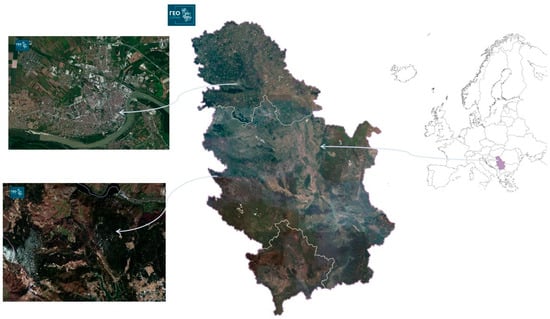
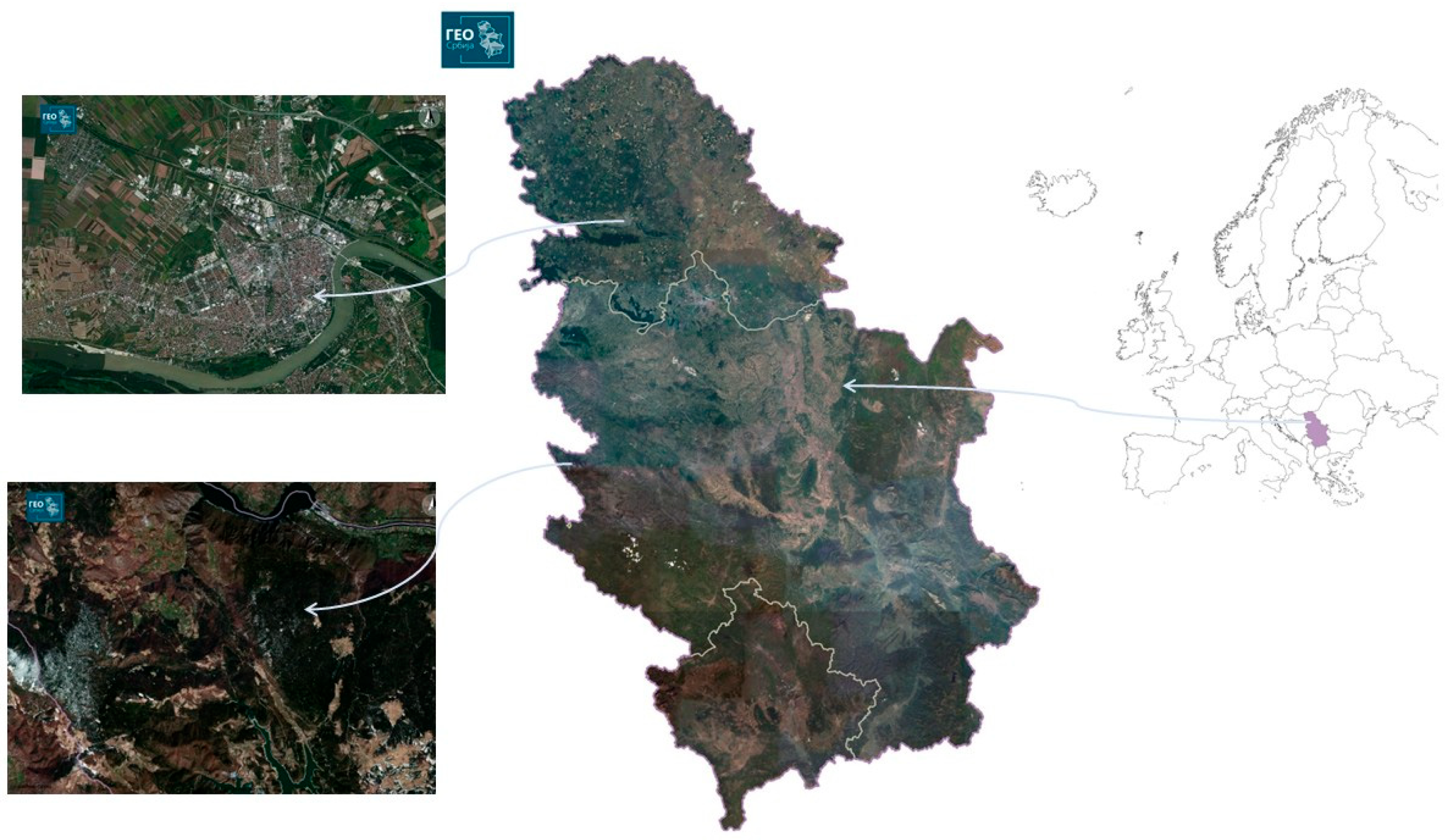
Plant material, specifically needles of P. nigra Arnold, was collected in the territory of the Republic of Serbia from two types of sites: urban environment (Futoški Park, Novi Sad, 45.249958° N, 19.827169° E, ~90 m a.s.l.) and a natural environment (Tara National Park, 43.89811° N, 19.41203° E, ~1.100 m a.s.l.) (Figure 1). Samples from the urban environment were collected from individuals growing in Futoški Park, located in the city of Novi Sad, the second largest city in Serbia, with approximately 500,000 inhabitants. The park currently covers an area of 8.13 ha, including both public and private land. It was originally developed to organize the area surrounding the Jodna Banja (rehabilitation center), built in the early 20th century. The park contains over 100 tree species, making it unique within the urban structure of the city, while also providing an important sanitary and hygienic function due to its proximity to the Institute for the Protection of Children and Youth of Vojvodina and other medical institutions [31]. This specific micro-location was selected precisely because of its historical and functional connection to healthcare and rehabilitation, making it a prime urban candidate for evaluating nature-based health solutions within a densely populated city.
Figure 1.
Location of urban (Futoški Park) and natural (Tara National Park) sampling sites (adapted from: vemaps.com and geosrbija.rs).
The natural site was situated within Tara National Park, located in the western part of Serbia, in a remote, sparsely populated rural area. Tara National Park encompasses the Tara Mountain, the Drina River canyon, Zvezda Mountain, and Perućac Lake, and is subject to varying levels of protection. Established in 1981, the park has been recognized by UNESCO as a biosphere reserve, emphasizing its ecological significance and its crucial role in biodiversity and ecosystem conservation. Dense forests cover a significant portion of the park, supporting diverse flora, including several endemic plant species specific to the area. The park covers a total area of 24,991.82 ha, of which 13,589.54 ha (54.3%) are state-owned forests. Overall, forest cover in Tara National Park is approximately 60%, with mixed forests dominated by beech, fir, and spruce (Piceo-Abieti-Fagetum Čolić, 1965) representing 85% of the forested area.
Needles of P. nigra were collected during three different seasons—spring, summer, and autumn—to investigate the potentially optimal season for forest-based applications aimed at improving human health. Samples were collected from both urban and natural environments to explore the potential of green areas in enhancing human well-being in these different settings. Sampling was performed during rain-free days, around midday. Needles were taken from the tips of branches positioned on the southern side of the canopy at three canopy heights: top, middle, and bottom [32]. Three individual trees per environment were sampled in each season. Each tree was a distinct, mature individual, fully developed, and showing no visible signs of pathogen presence or mechanical damage. Trees were selected to be representative of the local population and to cover spatial variability within each site. From each tree, representative mature needles, reflecting the current season’s growth, were collected and stored under controlled conditions until analysis.
2.2. Lab Analysis
Qualitative and semi-quantitative analysis of volatile organic compounds was performed using headspace gas chromatography coupled with mass spectrometry (HS/GC-MS). The applied HS/GC–MS approach targets terpenes released from needle tissues during incubation and therefore reflects internal terpene reservoirs rather than in situ emission fluxes. Immediately prior to analysis, plant material was placed into 20 mL headspace vials, which were sealed using a manual crimper. The vials were incubated at 100 °C for 20 min in a headspace sampler (HSS, 7697A Headspace Sampler, Agilent Technologies, Santa Clara, CA, USA). Following incubation, the headspace was injected into a gas chromatograph (7890B GC System, Agilent Technologies) in splitless mode at an inlet temperature of 220 °C. Samples were injected over a period of one minute, and chromatographic separation of target compounds was achieved on an HP-5MS capillary column (30 m × 0.25 mm × 0.25 μm, Agilent Technologies, Santa Clara, CA, USA) using the following temperature program: initial temperature of 60 °C with a constant ramp of 3 °C/min up to a final temperature of 246 °C. Helium was used as the carrier gas at a constant flow rate of 1 mL/min. The transfer line temperature was set to 250 °C. Mass spectra of the analyzed compounds were recorded in scan mode (m/z = 50–550), and compound identification was performed using the NIST spectral database (National Institute of Standards and Technology, USA, v.14, Gaithersburg, MD, USA) and literature data [33].
2.3. Statistical Analysis
Initial visualization of volatile organic compound profiles was performed using heatmaps to display the relative content of detected terpenes across different environments (urban vs. natural) and seasons (spring, summer, autumn). Multivariate differences in terpene composition were assessed using permutational multivariate analysis of variance (PERMANOVA) based on Bray–Curtis dissimilarity, using 999 permutations. Principal component analysis (PCA) was conducted to explore and visualize multivariate patterns in terpene profiles across samples and to assess compositional separation among seasons and locations. Effects of Season, Location, and their interaction on individual terpene compounds, including α- and β-pinene, were evaluated using analysis of variance (ANOVA). All statistical analyses were conducted using R software (version 4.1.3; R Foundation for Statistical Computing, Vienna, Austria) using packages vegan, ggplot2, devtools, and factoextra [34,35,36]. These methods included compounds with detected contents greater than 0.5%, whereas compounds present at less than 0.5% or only in trace amounts were excluded from the statistical analyses [37].
3. Results
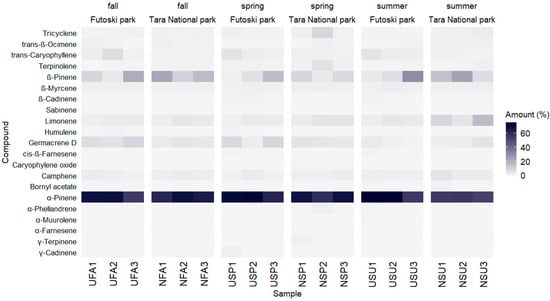
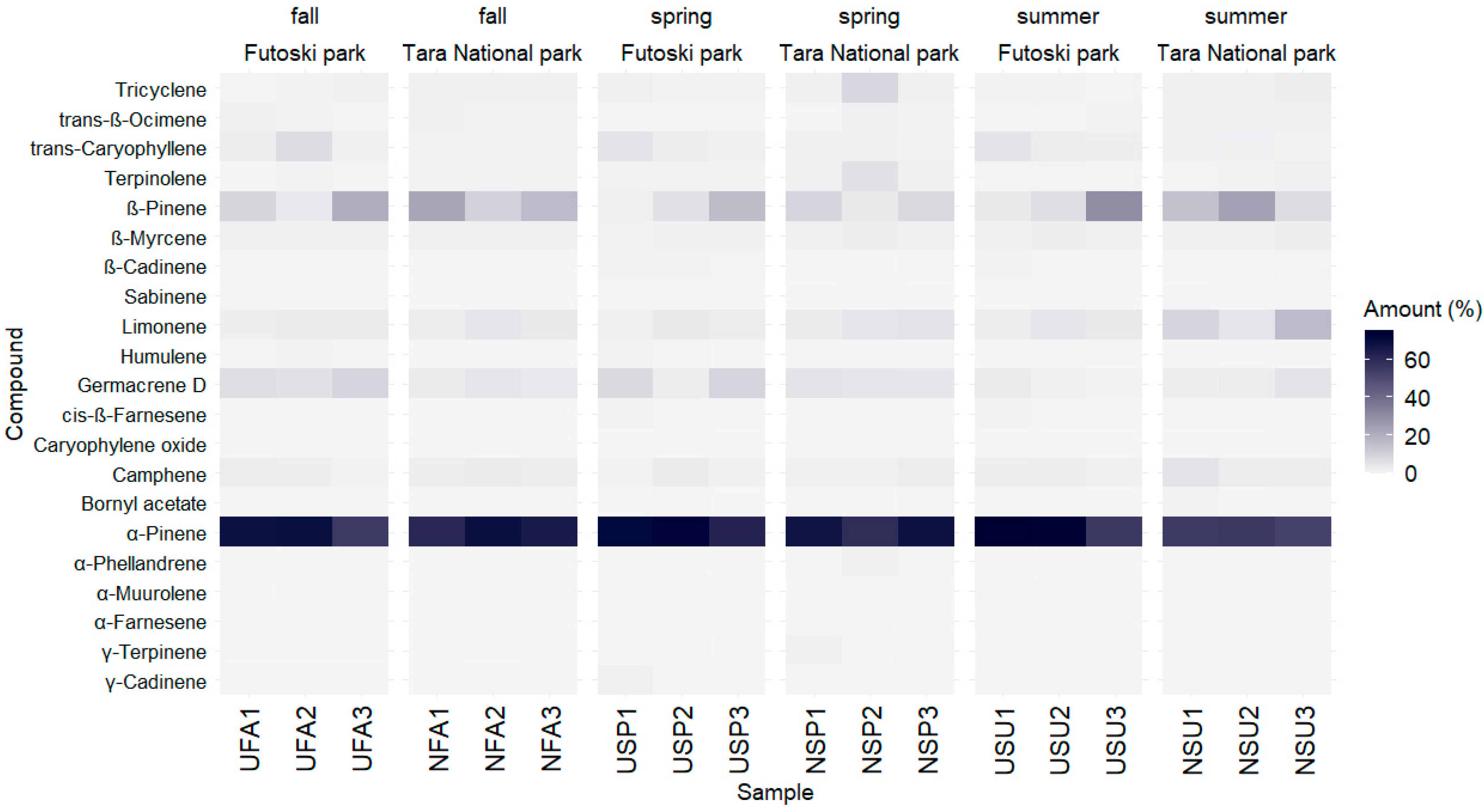
Analysis of terpene content in tree needles of P. nigra from Futoški Park (urban area) and Tara National Park (natural area) revealed clear terpene patterns across seasons. Across all samples, α-pinene was the dominant compound, consistently representing between 52% and 75% of total terpene composition, with the highest levels observed during summer in both locations (Figure 2, Tables S1 and S2). Other monoterpenes, including β-pinene and terpinolene, were present at lower proportions, but their relative contribution varied between sites and seasons. β-pinene showed seasonal variability, ranging from 3.7% to 30%, with the highest value observed in summer (USU3: 30.3%), suggesting occasional dominance of secondary monoterpenes in individual trees. Other BVOCs, including camphene, sabinene, and limonene, remained below 5% among most samples. In Tara National Park, α-pinene levels were slightly lower than in the urban site, ranging from 52% to 68%, while β-pinene exhibited higher proportions, particularly in autumn and summer, reaching up to 24% (NSU2, summer). Minor monoterpenes such as terpinolene and trans-β-ocimene showed modest seasonal increases, particularly during spring and summer, reflecting subtle shifts in terpene composition during the seasons. Across both areas, samples within each season displayed consistent BVOC profiles, indicating low intra-site variability for dominant compounds. Despite overall similarity between locations, Tara NP showed higher β-pinene and a slightly more diverse minor BVOC composition compared to the more uniform profile observed in Futoški Park. Overall, α-pinene dominated the terpene profile across all seasons and locations, while β-pinene represented the second most abundant compound. Differences between environments were primarily associated with variation in minor mono- and sesquiterpenes rather than shifts in the dominant terpene constituents.
Figure 2.
Heatmap showing relative abundance (%) of BVOCs in P. nigra needles in all samples across six experimental groups: UFA1-3 (samples from urban environment taken during fall); NFA1-3 (samples from natural environment taken during fall); USP1-3 (samples from urban environment taken during spring); NSP1-3 (samples from natural environment taken during spring); USU1-3 (samples from urban environment taken during summer); NSU1-3 (samples from natural environment taken during summer).
The ANOVA results (Table 1) demonstrated that the terpene composition stored in needle tissues was influenced by season, location, and their combined interaction, although the strength and statistical significance of these effects varied among individual compounds. Several sesquiterpenes showed pronounced seasonal variability. Germacrene D and α-muurolene exhibited statistically significant seasonal differences (p < 0.05), while cis-β-farnesene showed an extremely strong seasonal signal (p < 0.001), indicating substantial temporal changes in internal terpene accumulation. A number of compounds, including α-farnesene, humulene, and α-phellandrene, displayed trend-level seasonal effects (p between 0.05 and 0.1), suggesting seasonal influence that did not reach strict statistical significance. In contrast, α-pinene and β-pinene, which are among the most abundant monoterpenes in investigated needles, did not exhibit statistically significant effects of season, location, or their interaction (p > 0.1). This indicates a high degree of temporal and spatial stability in their needle content across the studied conditions. Similarly, β-myrcene and γ-terpinene showed no significant variation. Sabinene, tricyclene, and trans-caryophyllene showed highly significant location-dependent differences (p < 0.001), pointing to a strong environmental or site-related control over their accumulation. Statistically significant but more moderate location effects (p < 0.05) were observed for α-muurolene, α-phellandrene, limonene, and camphene. For several compounds, including β-cadinene and α-farnesene, location did not show a statistically significant influence (p > 0.1). The interaction between season and location was particularly pronounced for several compounds. Sabinene, humulene, cis-β-farnesene, α-phellandrene, and trans-caryophyllene exhibited very high to extremely high significance for the interaction term (p < 0.01 to p < 0.001), indicating that seasonal changes in terpene content were strongly site-dependent. No significant interaction effects were detected for α-pinene or β-pinene, confirming their consistent accumulation pattern across both seasons and locations. Other compounds, such as trans-β-ocimene and limonene, also showed no significant interaction effects.
Table 1.
ANOVA results for individual BVOCs.
Permutational multivariate analysis of variance (Table 2) revealed significant effects of Season (R2 = 0.22, p = 0.001) and Location (R2 = 0.24, p = 0.001) on overall terpene composition, while the interaction term was marginally significant (p = 0.067). Together, these results indicate that both spatial and seasonal factors contributed substantially to variation in needle terpene profiles.
Table 2.
Results of permutational multivariate analysis of variance (PERMANOVA) based on Bray–Curtis dissimilarity.
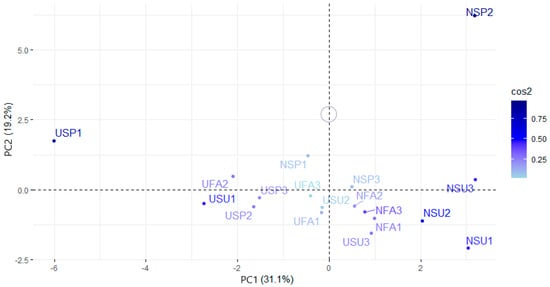
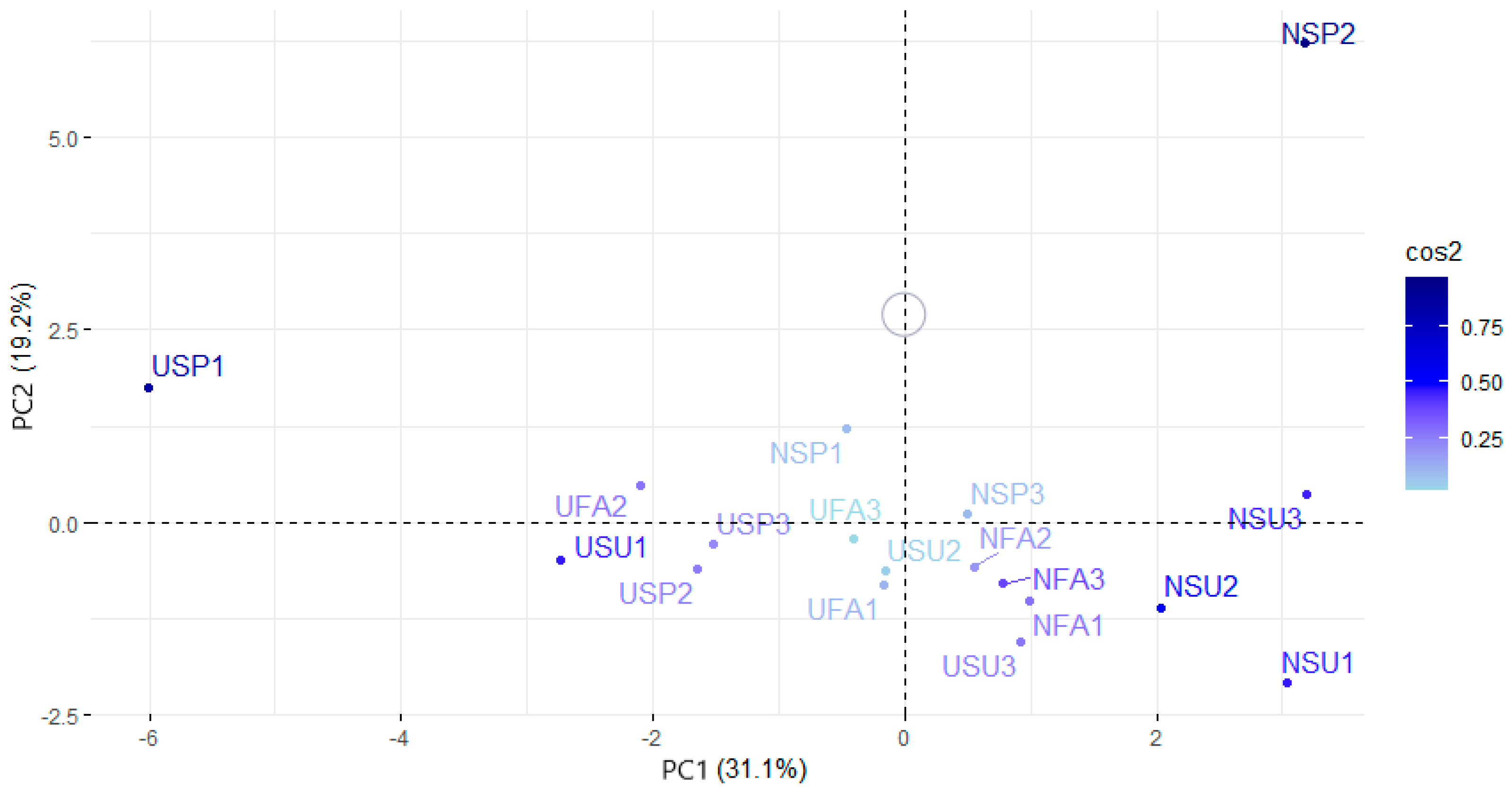
The PCA score plot (Figure 3) revealed clear patterns in terpene composition among needle samples across different seasons and locations. The first two principal components (PC1 and PC2) explained 31.1% and 19.2% of the total variance, respectively. Samples from the urban environment in fall (UFA1-3) clustered closely along the negative side of PC1, indicating a similar terpene profile within this group. In contrast, natural environment samples in fall (NFA1-3) were positioned near the origin, suggesting moderate variation in terpene composition compared with urban fall samples. Spring samples showed more divergence between locations. Urban spring samples (USP1-3) were distributed along the negative side of PC1, whereas natural spring samples (NSP1-3) occupied the positive side of PC1 and higher values along PC2, reflecting a distinct seasonal and locational terpene signature. Summer samples displayed clear separation between urban (USU1-3) and natural (NSU1-3) environments. Natural summer samples (NSU1-3) clustered strongly in the positive PC1 quadrant, indicating higher differentiation in terpene composition compared with their urban counterparts, which were closer to the origin. Overall, the PCA suggests that both season and location influence needle terpene profiles, with urban and natural environments exhibiting more pronounced differences during spring and summer, while fall samples were more similar across locations.
Figure 3.
Principal component analysis (PCA) score plot showing the distribution of needle samples based on terpene composition across seasons and locations. UFA1-3 (samples from urban environment taken during fall); NFA1-3 (samples from natural environment taken during fall); USP1-3 (samples from urban environment taken during spring); NSP1-3 (samples from natural environment taken during spring); USU1-3 (samples from urban environment taken during summer); NSU1-3 (samples from natural environment taken during summer).
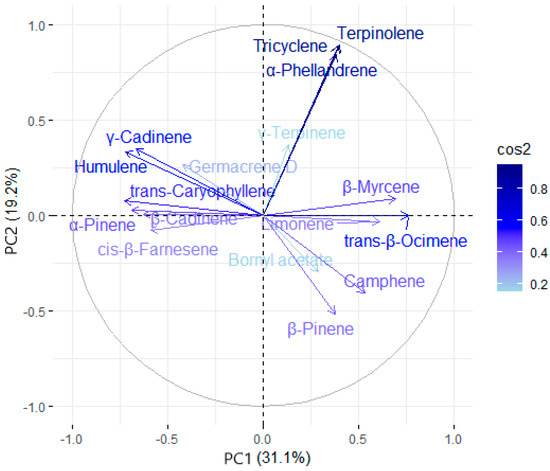
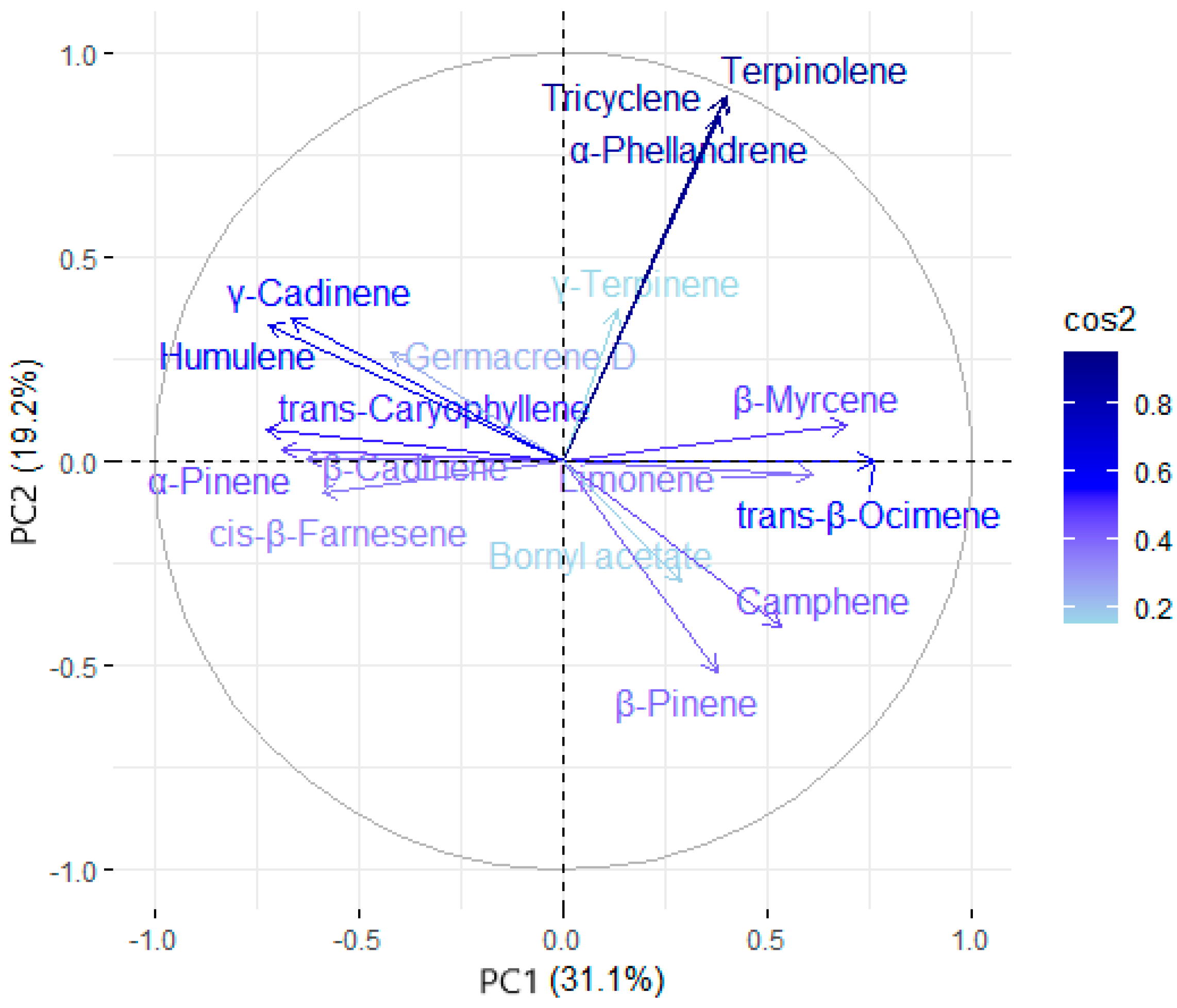
Figure 4 illustrates the loading plot of individual terpene compounds on the first two principal components, providing insight into the chemical drivers of the ordination structure observed in Figure 3. Several compounds exhibit long vectors and high cos2 values, indicating a strong contribution to the principal components. Terpinolene, tricyclene, and α-phellandrene show strong positive loadings along PC 2, suggesting that this axis is primarily associated with variation in these monoterpenes. PC 1 is characterized by contrasting contributions of monoterpenes and sesquiterpenes. Positive loadings along PC 1 are associated with β-myrcene, trans-β-ocimene, camphene, and β-pinene, whereas negative loadings are linked to γ-cadinene, humulene, trans-caryophyllene, and cis-β-farnesene. This opposition indicates that PC 1 reflects a gradient from profiles dominated by certain monoterpenes to those characterized by higher relative contributions of sesquiterpenes. Notably, α-pinene and β-pinene are positioned relatively close to the center of the ordination space, with moderate vector lengths and lower cos2 values compared to more variable compounds. This positioning indicates that variation in α- and β-pinene content contributes only weakly to the principal gradients captured by the first two components. Their limited influence on both PC 1 and PC 2 suggests comparatively stable profiles across samples. In contrast, compounds such as γ-cadinene, humulene, terpinolene, and α-phellandrene exhibit stronger directional loadings and higher cos2 values, highlighting their key role in shaping the multivariate structure of needle terpene composition.
Figure 4.
Principal component analysis (PCA) loading plot illustrating the contribution of individual terpene compounds to the first two principal components.
4. Discussion
4.1. Patterns of Terpene Variability Across Season and Site
The present study provides insight into the seasonal and spatial variability of terpenes, stored in needles of P. nigra growing in contrasting environments, an urban park and a protected natural area, and offers important implications for the forest therapy potential of this species.
The results of the presented research showed that across all seasons and locations, α-pinene was consistently the dominant compound, representing between 52% and 75% of the total BVOC in the needles, with the highest level observed during summer in both locations. Together with β-pinene, these compounds formed a stable core of the needle terpene profile. Notably, neither α-pinene (p = 0.4024 for season; p = 0.1200 for location) nor β-pinene (p = 0.2815 for season; p = 0.3212 for location) exhibited statistically significant effects of season, location, or their interaction (p > 0.1). While statistical non-significance does not automatically imply full ecological equivalence, the multivariate analyses support the interpretation of relative stability: the season × location interaction explained only a small portion of variance (PERMANOVA, R2 = 0.1281), with most variation residing among individual trees (residuals, R2 = 0.4115). Moreover, both compounds contributed weakly to the main gradients in PCA, indicating that observed fluctuations represent minor physiological adjustments within a stable core terpene signature rather than fundamentally different ecological compositions [38,39].
Although samples from the natural area exhibited slightly higher proportions of β-pinene and a more diverse minor terpene composition, these differences were primarily driven by less abundant compounds and did not alter the dominance pattern of α- and β-pinene. The multivariate analyses further support this interpretation. The PERMANOVA analysis revealed that both Location (R2 = 0.24, p = 0.001) and Season (R2 = 0.22, p = 0.001) significantly structured the overall terpene profile. However, the PCA revealed that separation between samples across seasons and locations was mainly driven by variation in secondary monoterpenes and sesquiterpenes, such as terpinolene, γ-cadinene, humulene, and cis-β-farnesene, while α- and β-pinene were positioned close to the center of the ordination space, contributing weakly to the main gradients of variability. This central positioning reflects their conservative behaviors and reinforces the concept of a stable core terpene signature in P. nigra needles. This interpretation is consistent with previous phytochemical studies showing that P. nigra is characterized by a monoterpene framework dominated by α-pinene and β-pinene, although their relative abundance may vary according to genotype, geographic origin, environmental conditions, and analytical methodology [29,40]. Rather than indicating chemical instability, location, and provenance-dependent contexts appear to modulate the contribution of less abundant constituents, particularly sesquiterpenes and oxygenated terpenes [40,41,42].
Seasonal effects were more pronounced for several sesquiterpenes, including germacrene D (p = 0.0177), α-muurolene (p = 0.0119), and cis-β-farnesene which showed an extremely strong seasonal signal (p = 0.0151). Furthermore, location had a highly significant influence on compounds like sabinene, tricyclene, and trans-caryophyllene (p < 0.001). The interaction effects between season and location were also extremely pronounced for cis-β-farnesene (p = 4.42 × 10⁻¹³), α-phellandrene (p = 1.38 × 10⁻¹⁰) and humulene (p = 1.02 × 10⁻⁹). These findings likely reflect physiological responses to environmental conditions, such as temperature, light, or stress, and may be ecologically relevant for plant defense and atmospheric chemistry [43,44]. Detected sesquiterpenes are known mediators in biotic interactions, often acting as direct chemical deterrents against herbivores and pathogens, or as volatile signals. The strong spatial and interaction effects for these compounds may indicate localized acclimation to differing environmental pressures [45]. In stressed environments, such as urban habitats, characterized by elevated oxidative stress and anthropogenic pollution, these volatile shifts are used by plants to defend [29]. Furthermore, from an atmospheric perspective, even minor emissions of highly reactive sesquiterpenes and secondary monoterpenes play a disproportionately large role in atmospheric chemistry as important precursors of ozone and secondary organic aerosols (SOAs) [46,47,48,49].
4.2. Implications for Forest Therapy
Forest therapy is traditionally practiced in natural forest settings, offering significant health benefits through immersion in green environments [50]. However, to make this approach more accessible to a broader population, urban parks may serve as effective alternative venues. Urban green spaces can provide opportunities for stress relief and wellbeing enhancement like forests, especially when designed to maximize natural elements and sensory engagement [51]. Utilizing urban parks for forest therapy can bridge the gap between nature and city living, promoting mental and physical health for diverse urban communities [52].
Conifers play a pivotal role in forest therapy due to the calming scents of coniferous trees, rich in certain terpenes, classified as phytoncides that can contribute to stress reduction, improved mood, and immune system support [53]. Studies have shown that exposure to managed conifer forests can amplify these restorative effects, making them particularly therapeutic environments for forest bathing and nature-based interventions [54,55,56]. P. nigra is recognized as a major natural source of α-pinene and β-pinene, monoterpenes with diverse biological activities [23,40]. These compounds contribute significantly to the phytochemical profile of P. nigra, playing a key role in its ecological interactions and potential therapeutic applications. The high content of α- and β-pinene in P. nigra needles underscores its importance in producing bioactive substances with antimicrobial, anti-inflammatory, and anxiolytic effects [23,57]. α- and β-pinene are among the terpenes most frequently associated with the health-related benefits reported in the forest therapy studies, known for their anxiolytic, anti-inflammatory, and neuroprotective properties [23]. These monoterpenes, predominantly emitted by pine trees, have been shown to enhance relaxation, reduce stress, and improve mood by modulating GABAA-benzodiazepine receptors and exerting antioxidant effects. Their presence in forest aerosols plays a pivotal role in the mental and physical health benefits experienced during forest bathing and therapy sessions [23,24].
Beyond the chemical characterization of terpene variability, the results of this study also provide insight into the potential applied relevance of P. nigra in the context of forest therapy and health-oriented use of green spaces. By demonstrating a stable core terpene signature across contrasting environments, the findings allow a more applied interpretation of how phytochemical traits of urban trees may translate into ecosystem services related to human well-being. Importantly, the absence of significant differences in α- and β-pinene content between urban and natural environments has direct implications for the use of urban green spaces in health-oriented forest management [23,24]. From a phytochemical perspective, this stability may provide useful baseline information for future forest therapy studies. Nevertheless, despite the widely acknowledged beneficial effects of trees on human health, well-being, and quality of life, there remains a substantial lack of information on well-characterized and systematically studied tree species and genotypes. In addition, there is also limited knowledge regarding specific locations that could be effectively used to promote human health through diverse therapeutic approaches and the design of targeted green spaces. These knowledge gaps are consistently identified as major limitations to advancing our understanding of the relationships between trees, forests, and human health [38,39]. While natural areas are often assumed to provide superior conditions for forest therapy, the present results indicate that P. nigra trees in urban parks can store comparable levels of key health-related terpenes. This suggests that, provided that other conditions are favorable, including comfort and security [58], urban pine trees may retain terpene compositions comparable to those associated with natural forest environments.
Urban green infrastructure plays a pivotal role in enhancing human health and well-being by providing diverse ecosystem services such as air purification, temperature regulation, and opportunities for physical activity and social interaction [59,60]. Exposure to well-designed green spaces has been linked to reduced mortality rates, improved mental health, and increased social cohesion, although these benefits can vary depending on socio-economic context and accessibility [61,62,63]. Therefore, integrating multifunctional green infrastructure thoughtfully into urban planning is essential to maximize equitable health benefits across communities [60,64]. In cities where access to large natural forests is limited, well-managed urban parks containing terpene-rich conifers such as P. nigra could be considered candidates for future nature-based health interventions. The stability of α- and β-pinene across seasons further suggests the potential feasibility of year-round use of such spaces for forest therapy activities, without a strong dependence on specific sampling periods or phenological stages, although this remains to be validated through human exposure studies.
4.3. Study Limitations
It should be noted that this study focuses exclusively on terpenes stored in needle tissues, which serve as an indicator of the plant’s baseline phytochemical capacity. However, since forest therapy exposure and its associated health benefits are primarily mediated by atmospheric terpene concentrations and inhalation exposure, direct extrapolations from needle content to ambient air composition must be made with caution. Stored terpene profiles do not account for daily emission fluxes, volatilization rates under varying microclimatic conditions, or canopy structure dynamics, which are highly variable across both time and space. Furthermore, a key limitation of this exploratory study is the comparison of only one urban park and one protected natural area, which may limit immediate generalizations across all urban and natural environments. However, Futoški Park was specifically selected due to its long-standing therapeutic role and proximity to medical facilities, while Tara National Park represents a pristine, legal baseline for natural habitats. To account for this, the study was strictly designed as an exploratory assessment aimed at identifying general patterns of terpene variability across contrasting environments, rather than providing exhaustive population-level estimates.
5. Conclusions
This exploratory study indicates that Pinus nigra maintains a relatively stable terpene profile in needles across urban and natural environments and throughout the growing season, with α-pinene and β-pinene consistently dominating the composition. These two major monoterpenes showed no statistically significant effects of season, location, or their interaction. Although secondary monoterpenes and sesquiterpenes exhibited greater variability, the core profile dominated by α- and β-pinene remained largely consistent. These preliminary findings suggest that urban P. nigra trees can preserve a phytochemical signature comparable to natural populations with respect to the major health-associated terpenes. The results point to the potential suitability of P. nigra for health-oriented urban green infrastructure. However, given the limited sample size and the fact that only stored needle terpenes were analyzed, these observations should be interpreted with caution. Therefore, future studies should combine stored terpene analysis with direct total and individual BVOC emission measurements, atmospheric exposure assessments, and physiological responses in participants to develop integrative indicators of therapeutic potential.
Supplementary Materials
The following supporting information can be downloaded at: https://www.mdpi.com/article/10.3390/f17070785/s1, Table S1: Composition of volatile organic compounds in needles of Pinus nigra from an urban environment (Futoški Park, Novi Sad, Serbia); Table S2: Composition of volatile organic compounds in needles of Pinus nigra from a natural environment (Tara National Park, Serbia).
Author Contributions
Conceptualization, M.Z.; methodology, M.Z.; validation, M.Z., L.K., M.I., V.K., V.V. and E.V.; formal analysis, M.Z.; investigation, M.Z.; resources, L.K., M.I., V.K., V.V. and E.V.; data curation, M.Z.; writing—original draft preparation, M.Z.; writing—review and editing, M.Z., L.K., M.I., V.K., V.V. and E.V.; visualization, M.Z.; supervision, S.O.; project administration, M.Z. and S.O.; funding acquisition, M.Z. and S.O. All authors have read and agreed to the published version of the manuscript.
Funding
This research was funded by the Ministry of Science, Technological Development and Innovation of the Republic of Serbia under contract number 451-03-33/2026-03/200197 and the Provincial Secretariat for Higher Education and Scientific Research of Vojvodina, Serbia (Project No. 003830502 2025 09418 003 000 000 001 04 002).
Data Availability Statement
The data presented in this study are available in Supplementary Materials.
Conflicts of Interest
The authors declare no conflicts of interest.
References
- Park, S.; Kim, E.; Kim, G.; Kim, S.; Choi, Y.; Paek, D. What Activities in Forests Are Beneficial for Human Health? A Systematic Review. Int. J. Environ. Res. Public Health 2022, 19, 2692. [Google Scholar] [CrossRef] [Scilit] [PubMed]
- Rajasugunasekar, D.; Patel, A.K.; Devi, K.B.; Singh, A.; Selvam, P.; Chandra, A. An Integrative Review for the Role of Forests in Combating Climate Change and Promoting Sustainable Development. Int. J. Environ. Clim. Change 2023, 13, 4331–4341. [Google Scholar] [CrossRef] [Scilit]
- World Health Organization. Noncommunicable Diseases; No. WHO/EURO: 2011-4337-44100-62202; World Health Organization: Geneva, Switzerland, 2011. [Google Scholar]
- Moore, M.; Gould, P.; Keary, B.S. Global urbanization and impact on health. Int. J. Hyg. Environ. Health 2003, 206, 269–278. [Google Scholar] [CrossRef] [Scilit] [PubMed]
- Kotte, D.; Li, Q.; Shin, W.S.; Michalsen, A. International Handbook of Forest Therapy; Cambridge Scholars Publishing: Newcastle upon Tyne, UK, 2019. [Google Scholar]
- Li, Q. Effect of forest bathing trips on human immune function. Environ. Health Prev. Med. 2010, 15, 9–17. [Google Scholar] [CrossRef] [Scilit] [PubMed]
- Park, B.J.; Tsunetsugu, Y.; Kasetani, T.; Kagawa, T.; Miyazaki, Y. The physiological effects of Shinrin-yoku (taking in the forest atmosphere or forest bathing): Evidence from field experiments in 24 forests across Japan. Environ. Health Prev. Med. 2010, 15, 18–26. [Google Scholar] [CrossRef] [Scilit] [PubMed]
- Lee, J.; Park, B.J.; Tsunetsugu, Y.; Ohira, T.; Kagawa, T.; Miyazaki, Y. Effect of forest bathing on physiological and psychological responses in young Japanese male subjects. Public Health 2011, 125, 93–100. [Google Scholar] [CrossRef] [Scilit] [PubMed]
- Han, J.W.; Choi, H.; Jeon, Y.H.; Yoon, C.H.; Woo, J.M.; Kim, W. The effects of forest therapy on coping with chronic widespread pain: Physiological and psychological differences between participants in a forest therapy program and a control group. Int. J. Environ. Res. Public Health 2016, 13, 255. [Google Scholar] [CrossRef] [Scilit] [PubMed]
- Song, C.; Ikei, H.; Miyazaki, Y. Sustained effects of a forest therapy program on the blood pressure of office workers. Urban For. Urban Green. 2017, 27, 246–252. [Google Scholar] [CrossRef] [Scilit]
- Tsunetsugu, Y.; Park, B.J.; Miyazaki, Y. Trends in research related to “shinrin-yoku” (taking in the forest atmosphere or forest bathing) in Japan. Environ. Health Prev. Med. 2010, 15, 27–37. [Google Scholar] [CrossRef] [Scilit] [PubMed]
- Zorić, M.; Karaklić, V.; Ilić, M.; Novčić, Z.; Vasić, S.; Kalozi, O.; Kesić, L. Biogenic volatile organic compounds as mediators of forest ecosystem services for human health. Topola 2025, 216, 27–40. [Google Scholar] [CrossRef] [Scilit]
- Nilsson, K.; Sangster, M.; Gallis, C.; Hartig, T.; Vries, S.; Seeland, K.; Schipperijn, J. Forests, Trees and Human Health; Springer: Dordrecht, The Netherlands, 2011; pp. 1–427. [Google Scholar] [CrossRef] [Scilit]
- Dodev, Y.; Zhiyanski, M.; Glushkova, M.; Shin, W.S. Forest welfare services-the missing link between forest policy and management in the EU. For. Policy Econ. 2020, 118, 102249. [Google Scholar] [CrossRef] [Scilit]
- Kesselmeier, J.; Staudt, M. Biogenic Volatile Organic Compounds (VOC): An Overview on Emission, Physiology and Ecology. J. Atmos. Chem. 1999, 33, 23–88. [Google Scholar] [CrossRef] [Scilit]
- Dudareva, N.; Klempien, A.; Muhlemann, J.K.; Kaplan, I. Biosynthesis, function and metabolic engineering of plant volatile organic compounds. New Phytol. 2013, 198, 16–32. [Google Scholar] [CrossRef] [Scilit] [PubMed]
- Narayanankutty, A.; Famurewa, A.C.; Oprea, E. Natural Bioactive Compounds and Human Health. Molecules 2024, 29, 3372. [Google Scholar] [CrossRef] [Scilit] [PubMed]
- Cho, K.S.; Lim, Y.R.; Lee, K.; Lee, J.; Lee, J.H.; Lee, I.S. Terpenes from forests and human health. Toxicol. Res. 2017, 33, 97–106. [Google Scholar] [CrossRef] [PubMed]
- Šimpraga, M.; Ghimire, R.P.; Van Der Straeten, D.; Blande, J.D.; Kasurinen, A.; Sorvari, J.; Holopainen, T.; Adriaenssens, S.; Holopainen, J.K.; Kivimäenpää, M. Unravelling the functions of biogenic volatiles in boreal and temperate forest ecosystems. Eur. J. For. Res. 2019, 138, 763–787. [Google Scholar] [CrossRef] [Scilit]
- Papada, E. The effects of terpenes on metabolism: A comprehensive review on recent updates. Curr. Opin. Clin. Nutr. Metab. Care 2025, 28, 323–329. [Google Scholar] [CrossRef] [Scilit] [PubMed]
- Park, B.-J.; Tsunetsugu, Y.; Kasetani, T.; Morikawa, T.; Kagawa, T.; Miyazaki, Y. Physiological effects of forest recreation in a young conifer forest in Hinokage Town, Japan. Silva Fenn. 2009, 43, 291–301. [Google Scholar] [CrossRef] [Scilit]
- Kim, T.; Song, B.; Cho, K.S.; Lee, I.-S. Therapeutic Potential of Volatile Terpenes and Terpenoids from Forests for Inflammatory Diseases. Int. J. Mol. Sci. 2020, 21, 2187. [Google Scholar] [CrossRef] [Scilit] [PubMed]
- Salehi, B.; Upadhyay, S.; Orhan, I.E.; Jugran, A.K.; Jayaweera, S.L.D.; Dias, D.A.; Sharopov, F.; Taheri, Y.; Martins, N.; Baghalpour, N.; et al. Therapeutic potential of α-and β-pinene: A miracle gift of nature. Biomolecules 2019, 9, 738. [Google Scholar] [CrossRef] [Scilit] [PubMed]
- Antonelli, M.; Donelli, D.; Barbieri, G.; Valussi, M.; Maggini, V.; Firenzuoli, F. Forest volatile organic compounds and their effects on human health: A state-of-the-art review. Int. J. Environ. Res. Public Health 2020, 17, 6506. [Google Scholar] [CrossRef] [Scilit] [PubMed]
- Calfapietra, C.; Fares, S.; Manes, F.; Morani, A.; Sgrigna, G.; Loreto, F. Role of Biogenic Volatile Organic Compounds (BVOC) emitted by urban trees on ozone concentration in cities: A review. Environ. Pollut. 2013, 183, 71–80. [Google Scholar] [CrossRef] [Scilit] [PubMed]
- Meng, F.; Wu, Y.; Ma, D.; Yang, B.; Diao, H.; Dong, D.; Zhang, J.; Jin, X.; Jin, X.; Chen, J.; et al. Environmental justice at a crossroads: Examining the impact of vegetation and building patterns on road-sourced PM2.5 dispersion and population exposure. Ecol. Front. 2025, 45, 667–677. [Google Scholar] [CrossRef] [Scilit]
- Yang, B.; Zhou, Y.; He, S.; Hu, J.; Ma, D.; He, Y.; Dong, W.; Liu, Y.; Dong, D.; Shi, Y.; et al. Unveiling the mechanisms linking urban plant diversity to human physiology health. Cities 2026, 172, 106858. [Google Scholar] [CrossRef] [Scilit]
- Hellén, H.; Praplan, A.P.; Tykkä, T.; Ylivinkka, I.; Vakkari, V.; Bäck, J.; Petäjä, T.; Kulmala, M.; Hakola, H. Long-term measurements of volatile organic compounds highlight the importance of sesquiterpenes for the atmospheric chemistry of a boreal forest. Atmos. Chem. Phys. 2018, 18, 13839–13863. [Google Scholar] [CrossRef] [Scilit]
- Kopaczyk, J.M.; Warguła, J.; Jelonek, T. The variability of terpenes in conifers under developmental and environmental stimuli. Environ. Exp. Bot. 2020, 180, 104197. [Google Scholar] [CrossRef] [Scilit]
- Wang, M. Characteristics of BVOC Emissions from a Swedish Boreal Forest Using Chambers to Capture Biogenic Volatile Organic Compounds (BVOCs) from Trees and Forest Floor. Ph.D. Thesis, Lund University, Lund, Sweden, 2018. [Google Scholar]
- Ninic-Todorovic, J. Futoski Park [in Novi Sad town, Serbia] as the preserved nature heritage. Letop. Naucn. Rad. 2008, 61, 51–60. [Google Scholar] [CrossRef] [Scilit]
- Zorić, M.; Kostić, S.; Kebert, M.; Kladar, N.; Božin, B.; Orlović, S. Volatile organic compounds of Tilia cordata Mill. from Serbia, in terms of ecosystem services. Topola/Poplar 2020, 216, 21–28. [Google Scholar] [CrossRef] [Scilit]
- Adams, R.P. Identification of Essential Oil Components by Gas Chromatograpy/Mass Spectrometry, 4th ed.; Allured Publishing Corporation: Carol Stream, IL, USA, 2007; pp. 804–806. [Google Scholar]
- Wickham, H.; Hester, J.; Chang, W.; Bryan, J. Package ‘Devtools’, R Package Version 2.5.2; Posit Software, PBC: Boston, MA, USA, 2025.
- Oksanen, J.; Blanchet, F.G.; Friendly, M.; Kindt, R.; Legendre, P.; McGlinn, D.; Minchin, P.R.; O’Hara, R.B.; Simpson, G.L.; Solymos, P.; et al. Package ‘Vegan’, R Package Version 2.6-4; CRAN: Vienna, Austria, 2025.
- Kassambara, A.; Mundt, F. factoextra: Extract and Visualize the Results of Multivariate Data Analyses. R Package Version 2.1.0.9000. With Contributions from Laszlo Erdey (Faculty of Economics and Business, University of Debrecen, Hungary). 2026. Available online: https://CRAN.R-project.org/package=factoextra (accessed on 28 June 2026).
- Lieutier, F.; Berryman, A.; Millstein, J. Preliminary study of the monoterpene response of three pines to Ophiostoma clavigerum (Ascomycetes: Ophiostomatales) and two chemical elicitors. In Annales des Sciences Forestières; EDP Sciences: Les Ulis, France, 1991; Volume 48, pp. 377–388. [Google Scholar] [CrossRef] [Scilit]
- Pagès, A.B.; Peñuelas, J.; Clarà, J.; Llusià, J.; López, F.C.I.; Maneja, R. How should forests be characterized in regard to human health? Evidence from existing literature. Int. J. Environ. Res. Public Health 2020, 17, 1027. [Google Scholar] [CrossRef] [Scilit] [PubMed]
- Doimo, I.; Masiero, M.; Gatto, P. Forest and wellbeing: Bridging medical and forest research for effective forest-based initiatives. Forests 2020, 11, 791. [Google Scholar] [CrossRef] [Scilit]
- Nikolić, B.M.; Ballian, D.; Mitić, Z.S.S. Diversity of Needle Terpenes Among Pinus Taxa. Forests 2025, 16, 623. [Google Scholar] [CrossRef] [Scilit]
- Mitić, Z.S.; Nikolić, B.M.; Stojković, J.P.; Jevtović, S.Č.; Stojanović, G.S.; Zlatković, B.K.; Marin, P.D. Morpho-Anatomical Characteristics and Volatile Profiles of Pinus nigra J.F.Arnold from the Balkan Peninsula and Southern Carpathians. Forests 2024, 15, 739. [Google Scholar] [CrossRef] [Scilit]
- Alicandri, E.; Covino, S.; Sebastiani, B.; Paolacci, A.R.; Badiani, M.; Sorgonà, A.; Ciaffi, M. Monoterpene Synthase Genes and Monoterpene Profiles in Pinus nigra subsp. laricio. Plants 2022, 11, 449. [Google Scholar] [CrossRef] [Scilit] [PubMed]
- Rosenkranz, M.; Chen, Y.; Zhu, P.; Vlot, A.C. Volatile terpenes–mediators of plant-to-plant communication. Plant J. 2021, 108, 617–631. [Google Scholar] [CrossRef] [Scilit] [PubMed]
- Li, C.; Zha, W.; Li, W.; Wang, J.; You, A. Advances in the Biosynthesis of Terpenoids and Their Ecological Functions in Plant Resistance. Int. J. Mol. Sci. 2023, 24, 11561. [Google Scholar] [CrossRef] [Scilit] [PubMed]
- Semmar, N. Secondary Metabolites in Plant Stress Adaptation; Springer Nature: Cham, Switzerland, 2024. [Google Scholar] [CrossRef] [Scilit]
- Barreira, L.M.F.; Ylisirniö, A.; Pullinen, I.; Buchholz, A.; Li, Z.; Lipp, H.; Junninen, H.; Hõrrak, U.; Noe, S.M.; Krasnova, A.; et al. The importance of sesquiterpene oxidation products for secondary organic aerosol formation in a springtime hemiboreal forest. Atmos. Chem. Phys. Discuss. 2021, 21, 11781–11800. [Google Scholar] [CrossRef] [Scilit]
- Cao, J.; Situ, S.; Hao, Y.; Xie, S.; Li, L. Enhanced summertime ozone and SOA from biogenic volatile organic compound (BVOC) emissions due to vegetation biomass variability during 1981–2018 in China. Atmos. Chem. Phys. 2022, 22, 2351–2364. [Google Scholar] [CrossRef] [Scilit]
- Lee, A.; Goldstein, A.H.; Keywood, M.D.; Gao, S.; Varutbangkul, V.; Bahreini, R.; Ng, N.L.; Flagan, R.C.; Seinfeld, J.H. Gas-phase products and secondary aerosol yields from the ozonolysis of ten different terpenes. J. Geophys. Res. Atmos. 2006, 111. [Google Scholar] [CrossRef] [Scilit]
- Bonn, B.; Moortgat, G.K. Sesquiterpene ozonolysis: Origin of atmospheric new particle formation from biogenic hydrocarbons. Geophys. Res. Lett. 2003, 30, 11. [Google Scholar] [CrossRef] [Scilit]
- Mazzoleni, E.; Donelli, D.; Zabini, F.; Meneguzzo, F.; Antonelli, M. Forest therapy research in Europe: A scoping review of the scientific literature. Forests 2024, 15, 848. [Google Scholar] [CrossRef] [Scilit]
- Lin, B.B.; Andersson, E. A Transdisciplinary Framework to Unlock the Potential Benefits of Green Spaces for Urban Communities Under Changing Contexts. Bioscience 2023, 73, 196–205. [Google Scholar] [CrossRef] [Scilit] [PubMed]
- Tesler, R.; Endevelt, R.; Plaut, P. Urban Forest Health Intervention Program to promote physical activity, healthy eating, self-efficacy and life satisfaction: Impact on Israeli at-risk youth. Health Promot. Int. 2022, 37, daab145. [Google Scholar] [CrossRef] [Scilit] [PubMed]
- Bhardwaj, K.; Silva, A.S.; Atanassova, M.; Sharma, R.; Nepovimova, E.; Musilek, K.; Sharma, R.; Alghuthaymi, M.A.; Dhanjal, D.S.; Nicoletti, M.; et al. Conifers Phytochemicals: A Valuable Forest with Therapeutic Potential. Molecules 2021, 26, 3005. [Google Scholar] [CrossRef] [Scilit] [PubMed]
- Hansen, M.M.; Jones, R.; Tocchini, K. Shinrin-yoku (Forest bathing) and nature therapy: A state-of-the-art review. Int. J. Environ. Res. Public Health 2017, 14, 851. [Google Scholar] [CrossRef] [Scilit] [PubMed]
- Simkin, J.; Ojala, A.; Tyrväinen, L. The Perceived Restorativeness of Differently Managed Forests and Its Association with Forest Qualities and Individual Variables: A Field Experiment. Int. J. Environ. Res. Public Health 2021, 18, 422. [Google Scholar] [CrossRef] [Scilit] [PubMed]
- Heo, S.-J.; Park, S.-K.; Jee, Y.-S. Effects of phytoncide on immune cells and psychological stress of gynecological cancer survivors: Randomized controlled trials. J. Exerc. Rehabil. 2023, 19, 170–180. [Google Scholar] [CrossRef] [Scilit] [PubMed]
- Dhar, P.; Chan, P.; Cohen, D.T.; Khawam, F.; Gibbons, S.; Snyder-Leiby, T.; Dickstein, E.; Rai, P.K.; Watal, G. Synthesis, Antimicrobial Evaluation, and Structure–Activity Relationship of α-Pinene Derivatives. J. Agric. Food Chem. 2014, 62, 3548–3552. [Google Scholar] [CrossRef] [Scilit] [PubMed]
- Zorić, M.; Farkić, J.; Kebert, M.; Mladenović, E.; Karaklić, D.; Isailović, G.; Orlović, S. Developing Forest Therapy Programmes Based on the Health Benefits of Terpenes in Dominant Tree Species in Tara National Park (Serbia). Int. J. Environ. Res. Public Health 2022, 19, 5504. [Google Scholar] [CrossRef] [Scilit] [PubMed]
- Kabisch, N.; van den Bosch, M.A. Urban Green Spaces and the Potential for Health Improvement and Environmental Justice in a Changing Climate; Springer Nature: Cham, Switzerland, 2017; pp. 207–220. [Google Scholar] [CrossRef] [Scilit]
- Andersson, E.; Langemeyer, J.; Borgström, S.; McPhearson, T.; Haase, D.; Kronenberg, J.; Barton, D.N.; Davis, M.; Naumann, S.; Röschel, L.; et al. Enabling Green and Blue Infrastructure to Improve Contributions to Human Well-Being and Equity in Urban Systems. Bioscience 2019, 69, 566–574. [Google Scholar] [CrossRef] [Scilit] [PubMed]
- Callaghan, A.; McCombe, G.; Harrold, A.; McMeel, C.; Mills, G.; Moore-Cherry, N.; Cullen, W. The impact of green spaces on mental health in urban settings: A scoping review. J. Ment. Health 2021, 30, 179–193. [Google Scholar] [CrossRef] [Scilit] [PubMed]
- Geary, R.S.; Thompson, D.A.; Garrett, J.K.; Mizen, A.; Rowney, F.M.; Song, J.; White, M.P.; Lovell, R.; Watkins, A.; Lyons, R.A.; et al. Green–blue space exposure changes and impact on individual-level well-being and mental health: A population-wide dynamic longitudinal panel study with linked survey data. Public Health Res. 2023, 11, 176. [Google Scholar] [CrossRef] [Scilit] [PubMed]
- Revich, B.A. The significance of green spaces for protecting health of urban population. Health Risk Anal. 2023, 2, 168–185. [Google Scholar] [CrossRef] [Scilit]
- Kim, D.; Song, S.-K. The Multifunctional Benefits of Green Infrastructure in Community Development: An Analytical Review Based on 447 Cases. Sustainability 2019, 11, 3917. [Google Scholar] [CrossRef] [Scilit]

Disclaimer/Publisher’s Note: The statements, opinions and data contained in all publications are solely those of the individual author(s) and contributor(s) and not of MDPI and/or the editor(s). MDPI and/or the editor(s) disclaim responsibility for any injury to people or property resulting from any ideas, methods, instructions or products referred to in the content. |
© 2026 by the authors. Licensee MDPI, Basel, Switzerland. This article is an open access article distributed under the terms and conditions of the Creative Commons Attribution (CC BY) license.