Article

Evaluating Cultural Ecosystem Services of Nature-Based Solutions in Urban Renewal Using Social Media Data


1
Department of Landscape Architecture, Xihua University, Chengdu 610039, China
2
Research Institute for Nature and Forest (INBO), 1000 Brussels, Belgium
*
Author to whom correspondence should be addressed.
Forests 2026, 17(7), 749; https://doi.org/10.3390/f17070749 (registering DOI)
Submission received: 10 May 2026 / Revised: 18 June 2026 / Accepted: 24 June 2026 / Published: 27 June 2026

Abstract

Urban renewal increasingly adopts Nature-Based Solutions (NBSs) to address environmental challenges and enhance social well-being. However, it remains unclear whether and to what extent NBSs contribute to cultural ecosystem services (CESs), which reflect people’s perceptions, values, and experiences of urban nature. This study develops an integrated framework combining text and image mining of social media data to evaluate the CES outcomes of NBS in regenerated urban districts in Chengdu, China. The comment data were analyzed for CES using Jieba word segmentation and dictionary matching, while images were categorized into NBS types by manual classification. By integrating these multimodal data, the framework effectively clarifies the relationship between NBSs and CESs from the perspective of public perception. Results indicate that recreation and leisure, inspiration, and spiritual values are the most prominent aspects of public perception, with linear green infrastructure and pocket parks being the most frequently identified NBS types. Correspondence analysis further reveals significant associations between specific NBS interventions and CES categories. By integrating textual and visual data, this study offers a practical and real-time approach for capturing public perceptions of CESs and provides actionable insights for the design and management of NBS-driven urban regeneration.

1. Introduction

Urban development faces numerous challenges that lead to the degradation of ecosystem services, which threaten both environmental sustainability and social well-being. In this context, urban renewal has emerged as a critical pathway to sustainable development [1,2]. Unlike previous large-scale demolition and reconstruction, recent strategies emphasize organic renewal and micro-regeneration to restore the distinctive value of urban spaces [3]. Older urban districts often struggle with distinct crises: the erosion of cultural roots, the fraying of social bonds, and the degradation of the environment. To counter these challenges, countries like China advocate for an approach centered on community-led renewal and the adaptive repurposing of existing structures. This initiative seeks to embed ecological principles directly into the city’s foundation [4]. Although the renewal of old urban districts is imperative, conventional regeneration strategies have often relied on top-down, infrastructure-heavy approaches that overlook ecological and cultural dimensions [5,6].
In this context, Nature-Based Solutions (NBSs) have emerged as an innovative solutions, offering cost-effective, multifunctional benefits that enhance environmental resilience, social well-being, and economic viability [7]. NBS are interventions that rely on natural processes and features. They are designed to tackle societal, environmental, and economic challenges sustainably and resource-efficiently [8]. As context-specific interventions operating across multiple spatial scales, NBS redefine the role of nature across diverse landscapes and deliver a suite of ecosystem services, including micro-climate regulation, air purification, runoff mitigation, food provision, and enhanced recreational value [9,10,11]. In the context of China, for instance, NBS are operationalized through specific interventions such as rain gardens, ecological corridors, and community pocket parks. These interventions function not only as ecological buffers for micro-climate regulation and runoff prevention but also as social anchors. However, among the multiple benefits provided by NBS, cultural ecosystem services (CESs) remain underexplored, particularly in the context of urban regeneration in developing countries [12,13].
Research suggests that specific ecosystem services can serve as indicators of NBS value, and emphasizes the need for policymakers and urban planners to carefully consider the type and attributes of NBSs in order to enhance service supply for addressing context-specific urban challenges [14]. Among the multiple benefits provided by NBSs, CESs are critical for understanding human–nature interactions. CES refer to the non-material benefits people obtain from ecosystems through spiritual enrichment, cognitive development, reflection, recreation, and esthetic experiences [15]. Unlike regulating or provisioning services, CESs are deeply relational and intangible, depending heavily on human perception and lived experience. There is growing policy interest in CESs, as their integration is seen as key to promoting public engagement and empowering communities in ecosystem conservation [16,17]. Therefore, integrating CESs into urban renewal is essential for promoting public engagement and ensuring that NBS interventions align with local cultural values. A growing body of literature has explored the cultural benefits of green and blue infrastructure elements implemented as NBS in urban areas [18,19]. For instance, urban forests and parks provide esthetic enjoyment and spiritual enrichment [20,21], while community gardens reinforce cultural heritage by reconnecting residents with traditional practices [22]. Similarly, urban parks serve as venues for collective cultural activities, such as traditional opera performances [23]. Despite growing evidence on NBS-derived ecosystem services, research on CESs in urban renewal remains underexplored [24]. While the recreational and esthetic values of green infrastructure have been wildly studied [25], other CES types remain under-researched as they are difficult to evaluate [15,23,26]. CESs are widely recognized as being strongly dependent on people’s perceptions and are often assessed through social surveys such as interviews and questionnaires, which are both time-consuming and labor-intensive [27,28].
Recent advances in big data analytics have enabled the use of social media (e.g., Instagram, Flickr) to evaluate CES by extracting user-generated content (text and images) that reflects lived experiences and emotional responses [29,30,31]. For instance, Oteros-Rozas et al. [32] analyzed social media photographs to explore the relationship between CES and landscape features across five European sites. While image-based analyses are effective for documenting tangible landscape elements, such as buildings and vegetation, they often fail to capture intangible cultural values without the support of accompanying textual context [33]. Hence, Fox et al. [31], for example, employed text mining and sentiment analysis to uncover landscape preferences embedded in user narratives. An even more comprehensive assessment of CES is presented by Havinga et al. [34], who integrated multimodal social media data by combining visual and textual content. This integration is significance because images typically possess clear spatial features that are easy to observe, while the accompanying text reveals the deep emotional and interactive relationships between the users and the NBS intervention measures. Therefore, this study proposes a multi-source data framework that integrates image and text mining, for evaluating the CESs generated in the urban renewal context under the influence of NBSs. By combining visual and comment data, this framework can provide a more detailed and comprehensive understanding of CES, thereby enhancing the methodological rigor of the assessment of urban ecosystem services.
Overall, despite the rapidly expanding literature on NBS and CES, several key research gaps remain: (I) the existing research mainly focuses on the biophysical and economic benefits of NBS, while the research on CES in the context of urban renewal is relatively scarce; (II) in terms of methodology, the existing methodologies for assessing CES mostly rely on traditional social surveys or isolated social media indicators, and fail to integrate pictures and texts to obtain a more comprehensive understanding; (III) in terms of research scope, most of the case studies are still limited to specific situations, and its research results are difficult to be extended to other areas of urban environmental management and policy-making. In addition, given the urgent urbanization challenges faced by low- and middle-income developing countries, scientific attention is required on their urban renewal contexts. Expanding this scope is essential to support urban resilience, regeneration, and well-being in diverse global contexts [35].
In order to address these gaps, this study selected Chengdu Yulin community as a representative case. As a pilot area of Chengdu’s renewal policy, Yulin has a highly concentrated community of diversified NBS interventions and high social media participation, which provides ideal conditions for analyzing the coupling relationship between NBS and CES. To achieve this, this study focuses on two main objectives: (I) to develop a comprehensive framework combining text and image mining that captures public perceptions of CES in urban renewal contexts; (II) to quantify and map the statistical associations between specific NBS intervention types and CES dimensions, thereby offering practical guidance for future design strategies and urban renewal policies. To address these objectives, this paper formulates three core research questions:
RQ1: How can multimodal social media data be integrated to assess urban cultural ecosystem services?
RQ2: In urban renewal areas, which types of NBS interventions contribute most significantly to residents’ perception of CES?
RQ3: What are the associations between different types of NBS interventions and categories of CES?

2. Materials and Methods

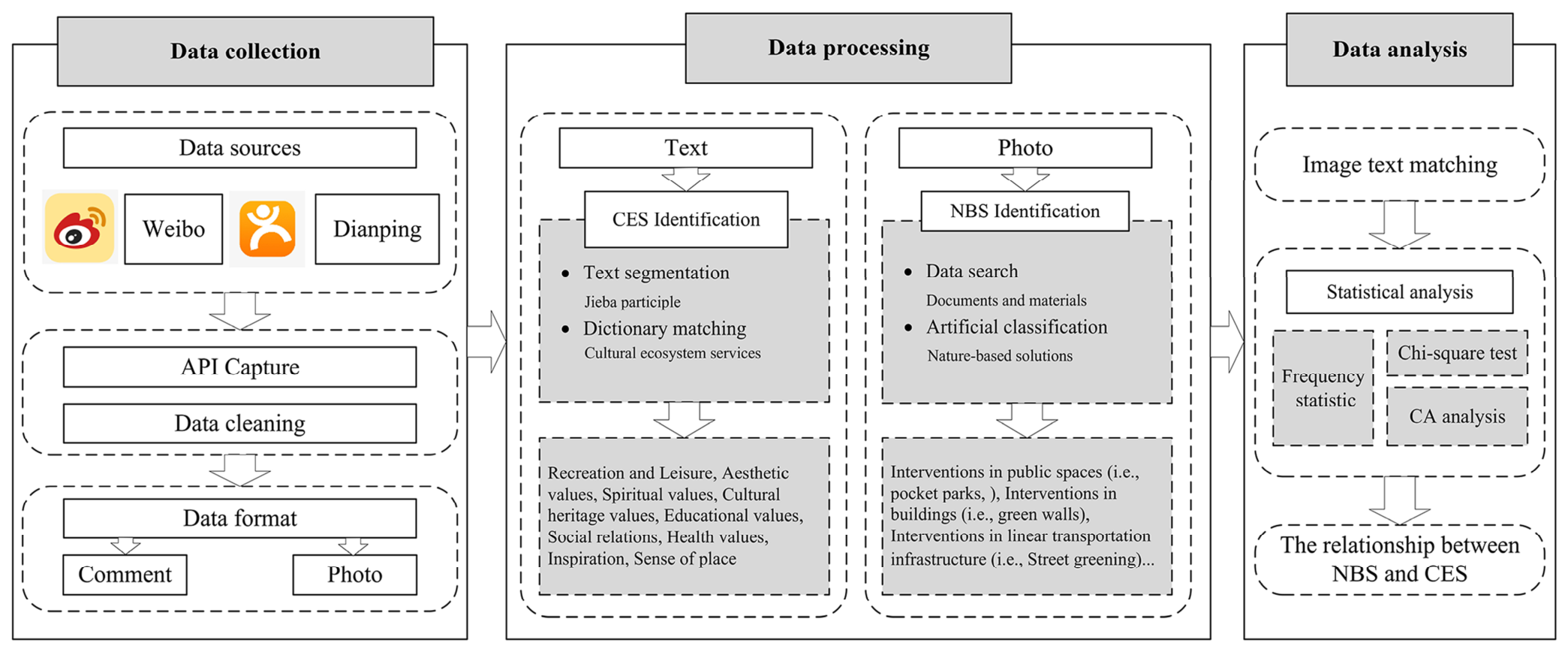
To address the limitations of previous CES assessment methods, this study proposes a comprehensive framework that integrates text and image mining of social media data to assess how citizens perceive and experience NBS interventions in urban renewal areas (Figure 1). First, user-generated content (text and photos) from social media platforms was collected. Secondly, organize an expert group of landscape architecture and urban renewal to identify the CES type through keyword analysis of the text. NBS interventions, meanwhile, were categorized directly from the NBS elements contained within the associated user photos. Finally, the relationship between CES and NBS classification is discussed by using statistical methods. This multimodal framework provides an effective and comprehensive method for CES assessment in urban renewal environment.

2.1. Study Area

Chengdu (30°05′–31°26′ N, 102°54′–104°53′ E), the capital of Sichuan province, is located in the central Sichuan Basin and spans approximately 14,335 km2. As one of China’s megacities with a population exceeding 20 million, Chengdu has prioritized ecological livability and urban sustainability in recent years. Under the guidance of its “Park City” policy, Chengdu, unlike first-tier cities like Beijing and Shanghai, has constructed over 1500 parks and 6500 km of greenways to enhance ecological resilience and resident well-being. This initiative simultaneously drives urban renewal, focusing on environmental restoration, public space enhancement, and cultural preservation.
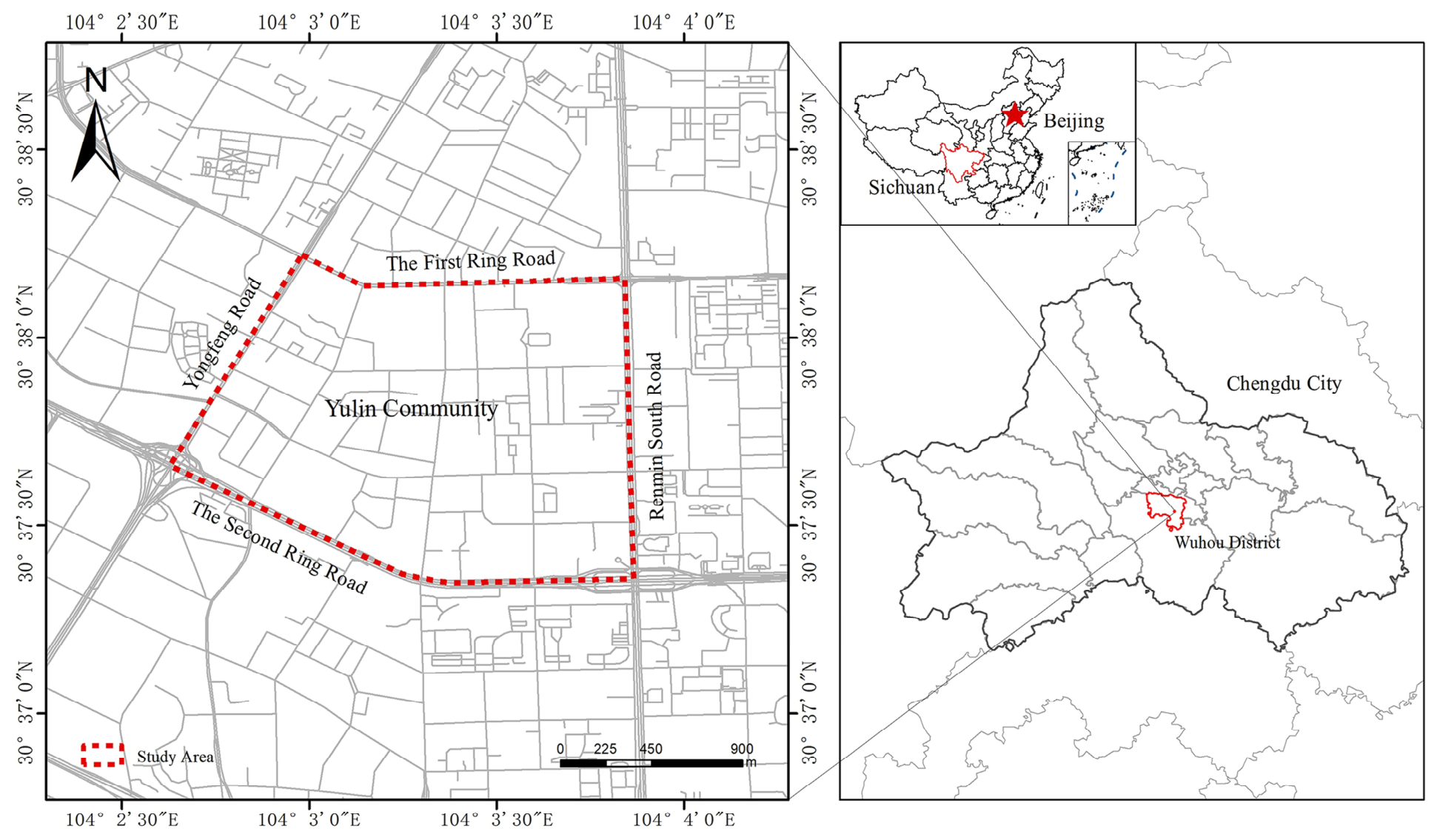
To address the issues of aging infrastructure and inefficient use of space in the city center, Chengdu has shifted from large-scale renovations to a refined and community-oriented approach to urban renewal [36]. The Yulin neighborhood, located in the core area of Wuhou District, is bounded by Renmin South Road to the east, Yongfeng Road to the west, the Second Ring Road to the south, and the First Ring Road to the north (see Figure 2). Yulin spans approximately 2.5 km2 and houses a resident population of around 73,500. As one of Chengdu’s most iconic and densely populated old neighborhoods, Yulin is characterized by strong community vitality and active public life. Originally a workers’ housing area from the 1980s, Yulin has undergone government-led, small-scale regeneration since 2021, focusing on enhancing green infrastructure, improving public spaces, and promoting community participation. Through interventions such as pocket parks, pedestrian-friendly street, public art installations and ecological drainage systems, Yulin has become a model for inclusive and sustainable regeneration rooted in local identity. As a demonstration area of the urban renewal plan of Chengdu, its high mobile network coverage, extensive social media engagement, and rich volume of user-generated data make it an ideal site for studying CESs influenced by NBSs in urban renewal.

2.2. Data Processing

2.2.1. Data Acquisition

This study selects Weibo (https://www.weibo.com) and Dianping (https://www.dianping.com) as the main data sources, as both platforms are widely used in China and provide access to large volumes of user-generated content related to urban life. Weibo, as China’s leading microblogging platform with over 590 million monthly active users (Weibo 2024 Q4 report), functions as a public forum where citizens spontaneously share real-time experiences and perceptions of urban spaces through geotagged texts and images. Its open discourse environment enables systematic analysis of public sentiment toward neighborhood renewal outcomes. Dianping is a leading review platform with over 290 million active users, who regularly post evaluations of urban spaces such as parks, recreational facilities, and tourist attractions. In addition to written comments, users frequently upload photos, which offer visual records of their experiences. The platform’s structured rating mechanism can systematically collect and analyze public feedback on specific locations. Based on this mechanism, this study leverages social media data as a key source for understanding citizens’ reactions to the urban environment. Although other platforms, like Xiaohongshu (Rednote) and Douyin (TikTok), also contain user-generated content, they are more oriented toward lifestyle sharing and entertainment, relying heavily on video content and personalized algorithms. These characteristics make them less suitable for time-based, location-based data extraction. In addition, the strict data privacy protocols and API capture restrictions of these platforms hinder the system extraction of public data and reduce the accessibility of data. In contrast, Weibo and Dianping offer more stable and comprehensive content with clearer spatial references, making them more suitable for studying public perception and preferences regarding urban renewal outcomes.
This study uses python3.9 (version 3.9; Python Software Foundation, Wilmington, DE, USA) and the open application programming interface (API) system to collect user-generated content, including user ID, timestamp, picture and text description. In order to ensure the accuracy of the search and minimize noise, Boolean search strategies combined with location and topic keywords are adopted: (“Chengdu” and “Yulin”) and (“Update” or “Login” or “Street” or “City Update”). The search time span is from November 2021 to April 2025, which corresponds to the stage after the urban renewal of Yulin City. This time period is selected to collect public opinions and feedback on the completion of the urban renewal project. In the process of data collection, this study adhered to strict ethical standards for user privacy protection. According to the data protection agreement, all personally identifiable information (such as user IDs and facial images) will be anonymized or blurred during the extraction process, and only publicly published text comments and NBS photos will be retained for analysis. In order to ensure the accuracy of the script for crawling data, 5% of the data set was randomly selected and manually cross-checked with the original platform, and the retrieval accuracy rate exceeded 98%. A total of 1523 comments and 3008 photos have been collected.
In order to ensure the availability and relevance of data, all retrieved posts (including text content and images) were manually screened. In view of the explanatory nature of qualitative data, manual screening is a key quality control step. The process was carried out by five experts in landscape architecture and urban renewal, ensuring the professional effectiveness of the research. In order to control subjective bias, each post was independently reviewed by at least two researchers. Items are excluded according to predefined criteria: (1) duplicate content; (2) commercial advertising; (3) content unrelated to the NBS interventions. The differences in the screening shall be resolved through consensus meeting.
For text data, special characters and content with nonstandard format were removed to ensure uniformity. For image material, images with blurred subject, poor resolution or other quality problems are excluded, and only those clearly related to NBS interventions (as defined in Table 1) were retained. After strict screening, 1283 unique user comments and 378 valid pictures were left. Although the final sample size accounts for only a small part of the original data, it represents a highly accurate data set verified by experts.

2.2.2. Text Analysis: Extracting Perceived Cultural Ecosystem Services

This study employs semantic analysis of social media text data to uncover public perceptions of CES associated with the Yulin neighborhood. The analysis follows a three-step procedure:
First of all, text divisions were carried out to extract high-frequency words. Unlike English words that are usually separated by spaces, Chinese needs to divide sentences to separate vocabulary unit. Text segmentation is completed by using Jieba Word Segmentation tool (https://github.com/fxsjy/jieba, accessed on 1 May 2025), which is a widely used efficient and accurate tool, suitable for processing large-scale Chinese text. The researchers divided each user-generated post into discrete words and deleted words that were unrelated or indicative to the research topic. In order to ensure that the extracted words represent the collective cognition of the public rather than individual special expressions, the researchers set the word frequency threshold. After testing multiple thresholds, 15 was finally selected as the threshold, because it can preserve the diversity of vocabulary to the greatest extent while reducing noise. Therefore, the researchers identified words with a frequency of more than 15 words as high-frequency words for subsequent analysis, and finally extracted 200 words.
Secondly, based on literature research, a CES classification framework covering key CES types has been built. There are different CES classifications, such as the Millennium Ecosystem Assessment (MEA), Ecosystem and Biodiversity Economics (TEEB) and the General International Classification of Ecosystem Services (CICES). In addition, various alternative classification systems have been developed by scholars to address specific research objectives, such as studies by La Rosa et al. [37], Cheng et al. [27], Kosanic and Petzold [38], and Xia et al. [39]. Given this diversity, and to suit the specific context of urban renewal, this study identified nine CES categories (see Table 1), which were selected as the theoretical basis for subsequent word matching.
Third, the expert-based evaluation method is used to match the terms extracted from the comment text with the relevant CES categories, so as to achieve the systematic classification of perceived data. A team of designated experts participated in the vocabulary matching process. The experts identified the high-frequency perception terms, and each expert independently assigns these terms to the corresponding CES categories. For terms with vague or unclassified meanings, they need to go through multiple rounds of group discussion and repeated improvement. Through this consensus-building process, a glossary containing 188 perceptual terms was finally formed. Each term is systematically matched with one of the nine CES categories. This classified glossary provides an analytical basis for quantifying the public’s perception of CES under the background of urban renewal in Yulin Community.

2.2.3. Image Analysis: Identifying Visible NBS Interventions

Based on previous studies by Cohen-Shacham, et al. [7], Antuña-Rozado, et al. [40], Cohen-Shacham, et al. [41], Frantzeskaki [11], Dushkova and Haase [42], Castellar et al. [43], Pinto et al. [44], and Fang et al. [45], this study identified six primary types of NBS interventions in urban design. In view of the complexity and environmental specificity of NBS intervention in urban renewal, automatic image recognition algorithms are often unable to capture the necessary technical details. Therefore, this study uses the manual classification method based on experts to ensure high classification accuracy.
Subsequently, the expert group reviewed social media photos to identify and group NBS interventions. In order to ensure the reliability of the program, the cross-validation protocol is implemented. Each image is initially classified independently. Carry out a round of group discussion on the differences in the classification and combine similar items to reach a final consensus, so as to minimize subjective bias and ensure the accuracy of identifying different NBS interventions (see Table 2). Finally, six independent image sets are sorted out, and each image set corresponds to a recognized NBS type.

2.2.4. Integrating Text and Image Analysis

This section examines the relationship between public perceptions of CES and NBS interventions based on social media data. Building on the textual and visual processes described in Section 2.2.2 and Section 2.2.3, this subsection explores the associations between CES-related terms and corresponding NBS interventions. Due to the characteristics of non-normal distribution and high deviation of social media data, this study uses SPSS 26 (IBM SPSS Statistics, version 26.0; IBM Corp., Armonk, NY, USA) to conduct Spearman rank correlation analysis to determine the intensity and direction of the monotonous relationship between each different CES category.
Given that individual comments may correspond to multiple CES categories, and that a single publisher may upload several images related to NBS, this study utilized the unique “Post ID” as the key to link textual and visual data. On the Weibo and Dianping platforms, a user submission (Post) is a unified data container including text, images, and timestamps. Therefore, the timestamp of images and text is essentially synchronized with the author’s information. By establishing a one-to-one mapping relationship based on the post ID rather than the user ID, this method helps to build a structured data set.
In order to evaluate the relationship between NBS interventions and CES from a statistical perspective, this study has built a column table with CES categories as rows and NBS types as columns. Then it performed a chi-square independence test (χ2) to determine whether there are significant differences in the distribution of CES between different NBS interventions. The results indicated a statistically significant association between CES categories and NBS interventions (χ2 = 139.498074, df = 40, p < 0.05). Moreover, this study used correspondence analysis (CA) to further investigate and visually present the relationship between the NBS interventions depicted in the image and the CES categories inferred from user comments. CA is a multivariate statistical technique, which is specifically used to classify data. It projects the complex associations in the column table to the low-dimensional space, so that specific associations between different NBS interventions and CES types can be identified according to geometric proximity [46,47]. The CA results provide spatial mapping of category relationships, thus gaining an in-depth understanding of how specific NBS interventions are considered to provide different CESs.

3. Results

3.1. Distribution of Perceived Cultural Ecosystem Services in Urban Renewal

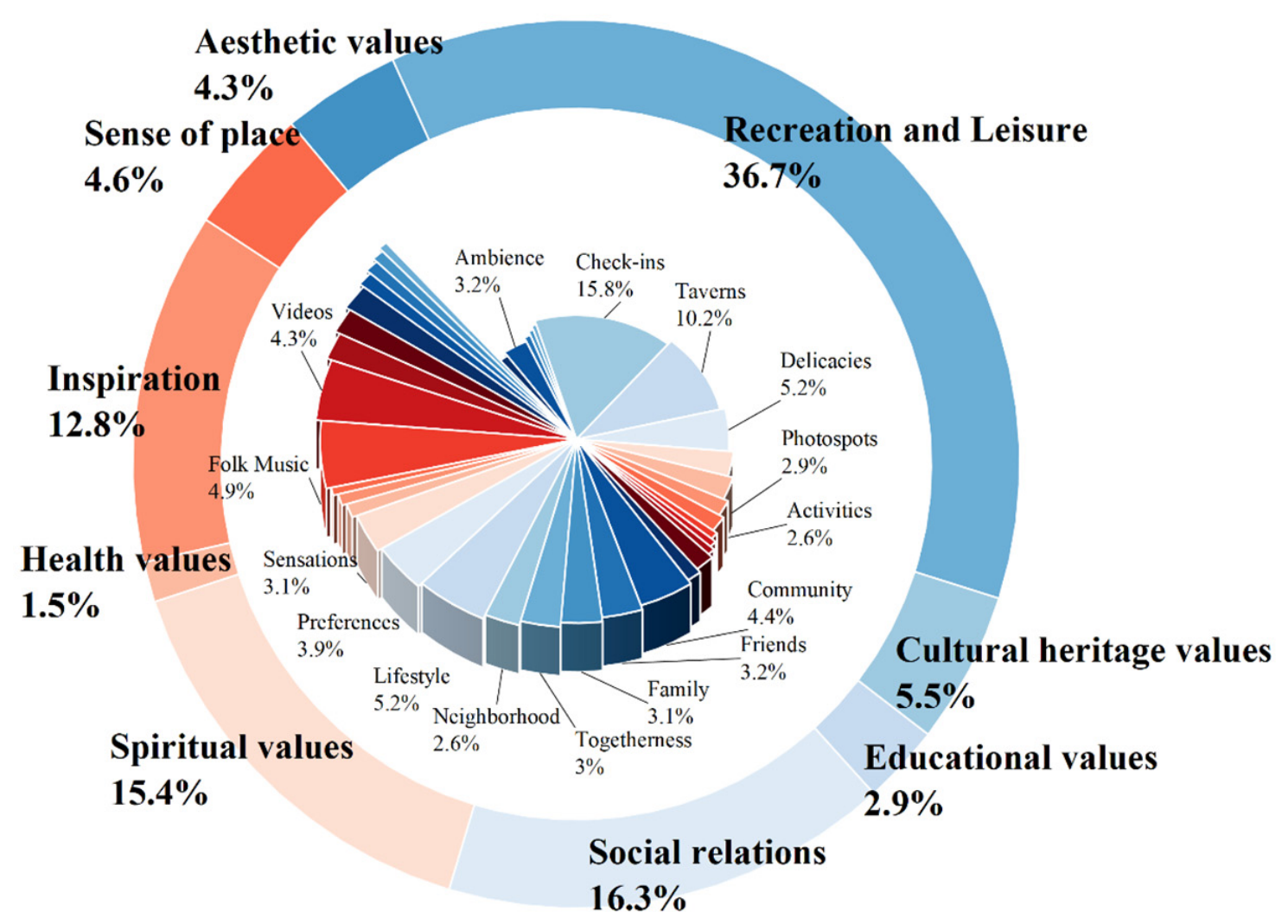
The results show that among the 1283 comments, 990 clearly reflect people’s perception of the community environment. There are also significant differences in the perceived CES category distribution (Figure 3). In the Yulin community, recreation and leisure is the most frequently mentioned category, accounting for 45.26% of the comment text, such as “check-in”, “tavern” and “photo spots”. This was followed by inspiration (19.98%) and spiritual values (14.22%). Other categories such as social relations (7.87%), sense of place (3.9%), and esthetic values (3.5%) had similar proportions but each accounted for less than 10% of the total. Cultural heritage values (2.51%), health values (1.58%), and educational values (1.12%) were the least represented, together making up less than 6% of the dataset.
Qualitative analysis of user narratives reinforces these quantitative findings. For instance, regarding recreation and leisure, comments frequently highlight concrete physical interventions. As one Dianping user noted: “The brick walls are still covered in vines, and there’s a nice little pocket park now, full of pretty flowers and plants. Even the stream looks cleaner. It’s all really nice to have a walk here and good for photo spot…” These excerpts suggest that public engagement is predominantly driven by tangible, experiential interactions. In general, these findings show that public engagement with the Yulin neighborhood is predominantly driven by recreational and inspirational experiences, whereas cultural heritage and scientific or educational values are perceived by only a small proportion of visitors.
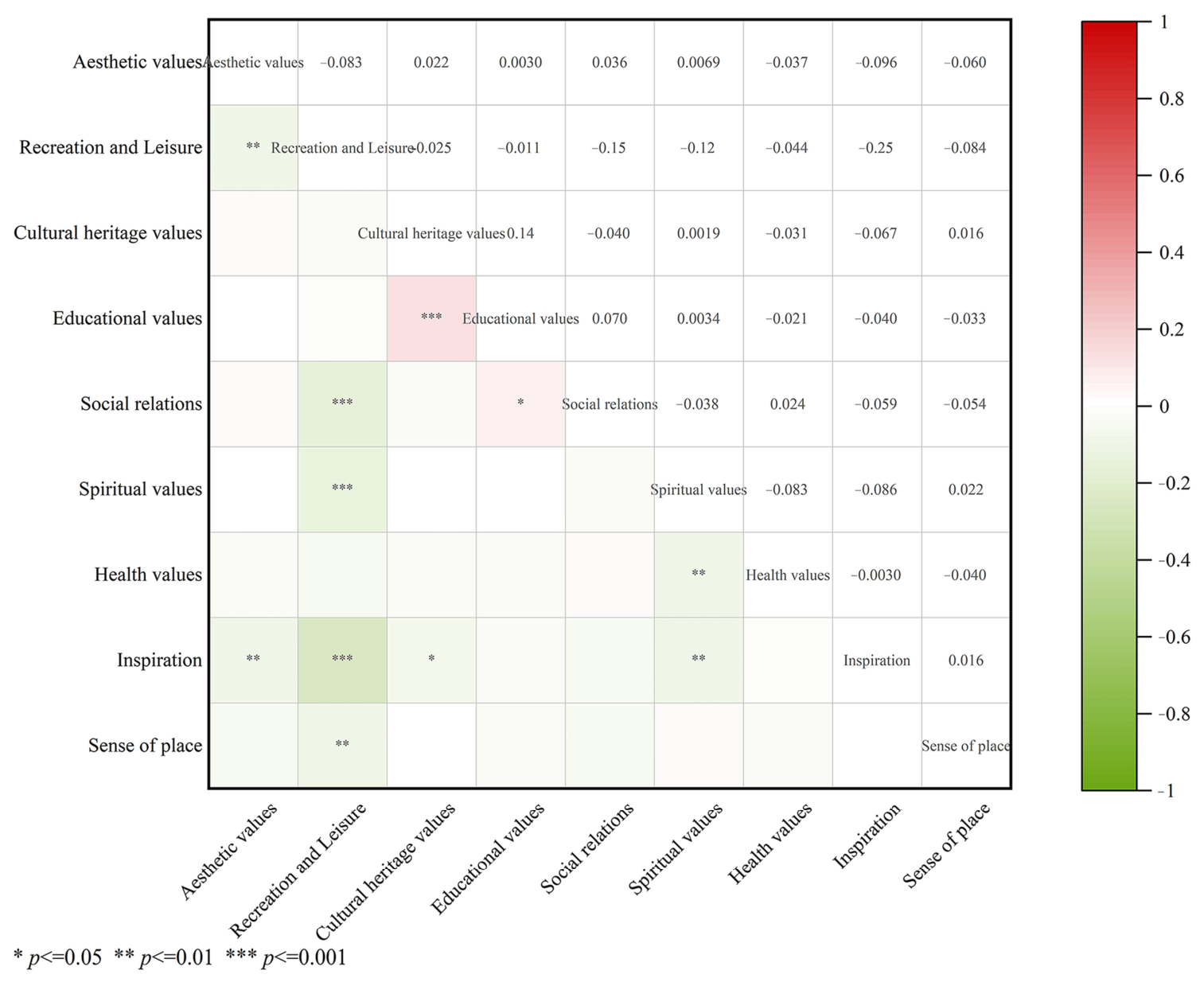
In order to explore the nonlinear dependence between the different CES types, Spearman correlation analysis was used in this study (Figure 4). The analysis results (N = 990) show that the main factor is perceived independence rather than a high degree of collaborative aggregation, and most of the correlation coefficients (R) are low (|R| < 0.3). This shows that in the context of user-generated content, different cultural services are often experienced or described as independent dimensions.
Specifically, recreation and leisure were significantly negatively correlated with inspiration (R = −0.25, p < 0.001), social relations (R = −0.15, p < 0.001), and spiritual values (R = −0.12, p < 0.001). In contrast, there is a significant positive correlation between cultural heritage values and educational values (R = 0.14, p < 0.001).

3.2. Identification of NBS Interventions in Urban Renewal

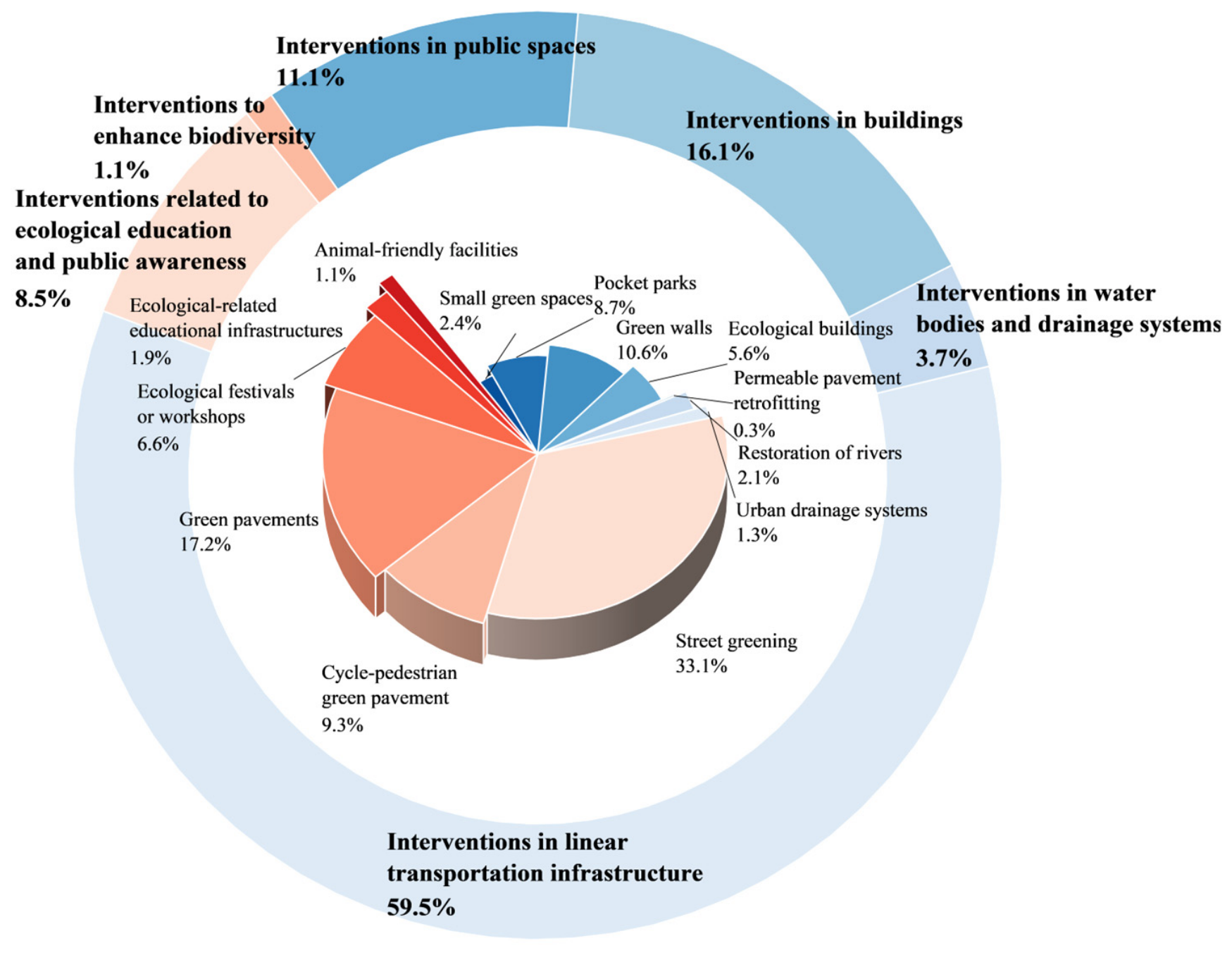
According to the frequency analysis, the 378 social media images were collected, covering six categories of NBS interventions. Moreover, substantial disparities were observed in the frequency of visual perception across different NBS interventions (Figure 5). Among them, interventions in linear transportation infrastructure accounted for the largest proportion (59.52%), far exceeding other categories. This was followed by interventions in buildings (16.13%) and interventions in public spaces (11.11%). In contrast, interventions related to ecological education and public awareness, interventions in water bodies and drainage systems, and interventions to enhance biodiversity accounted for 8.46%, 3.7%, and 1.05%, respectively. In addition, variations in the frequency of occurrence were also evident within each category of NBS interventions. For example, among interventions in linear transportation infrastructure, “street greening” accounted for 33.1%, significantly higher than “green pavements” (17.2%) and “cycle-pedestrian green pavement” (9.3%). In the category of building-related interventions, “green walls” constituted 10.6%, followed by “ecological buildings” at 5.6%. For interventions in public spaces, “pocket parks” represented the vast majority at 8.7%, approximately four times the proportion of “small green spaces” (2.4%).

3.3. Relationships Between NBS Interventions and CES in Urban Renewal

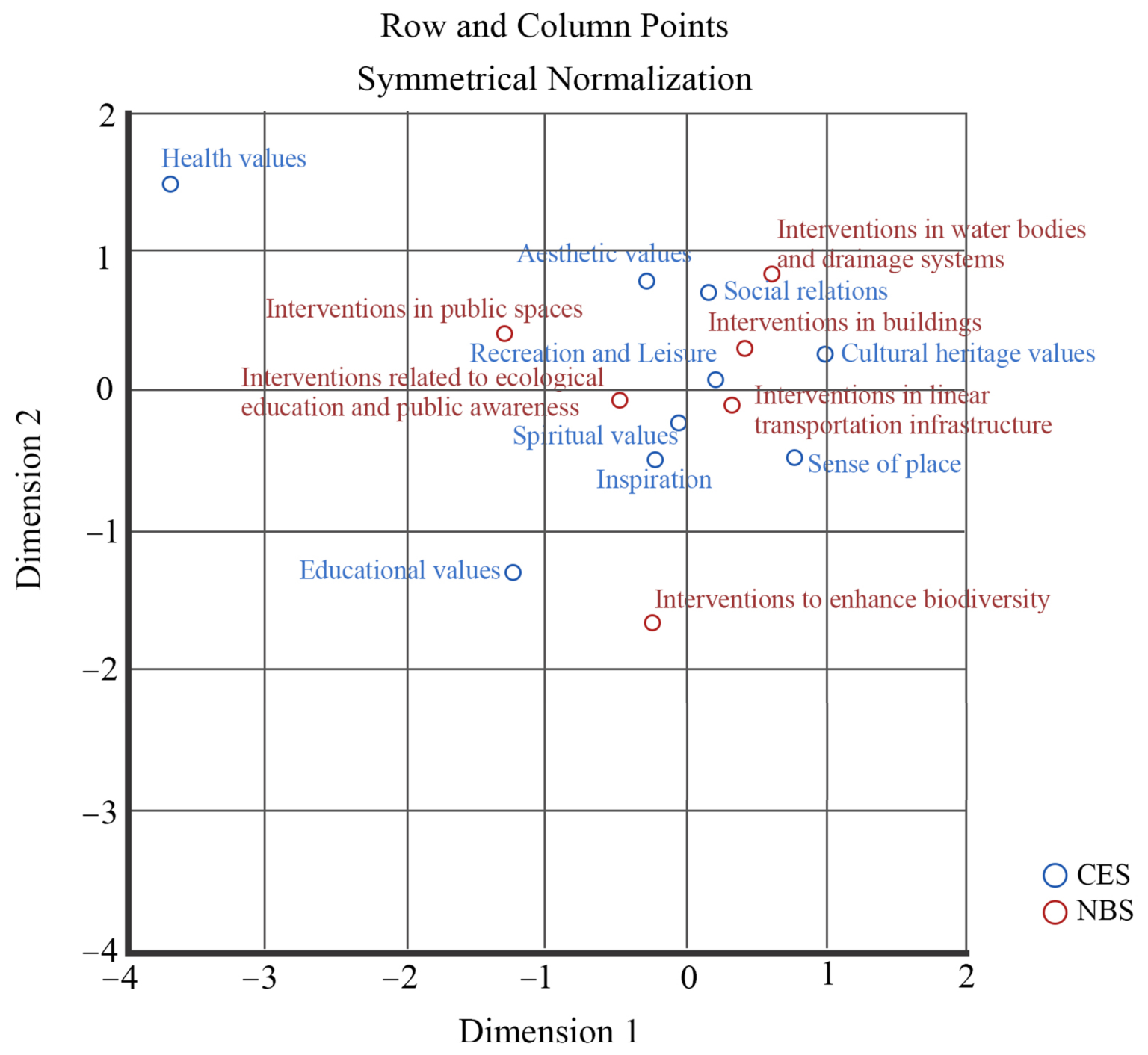
In exploring the relationship between NBS interventions and CES perceptions, the degree of association can be interpreted by examining the proximity to the origin in the CA biplot (Figure 6). According to the geometric distribution of variables in the biplot, dimension one mainly reveals the difference between explicit and implicit interventions, while dimension two reflects the difference between experiential and functional perception. The results indicate that recreation and leisure, spiritual values, and inspiration are closely associated with NBS interventions in public spaces, buildings, linear transportation infrastructure, and water bodies and drainage systems. Additionally, NBS interventions aimed at enhancing biodiversity are found to be more strongly linked to educational values.
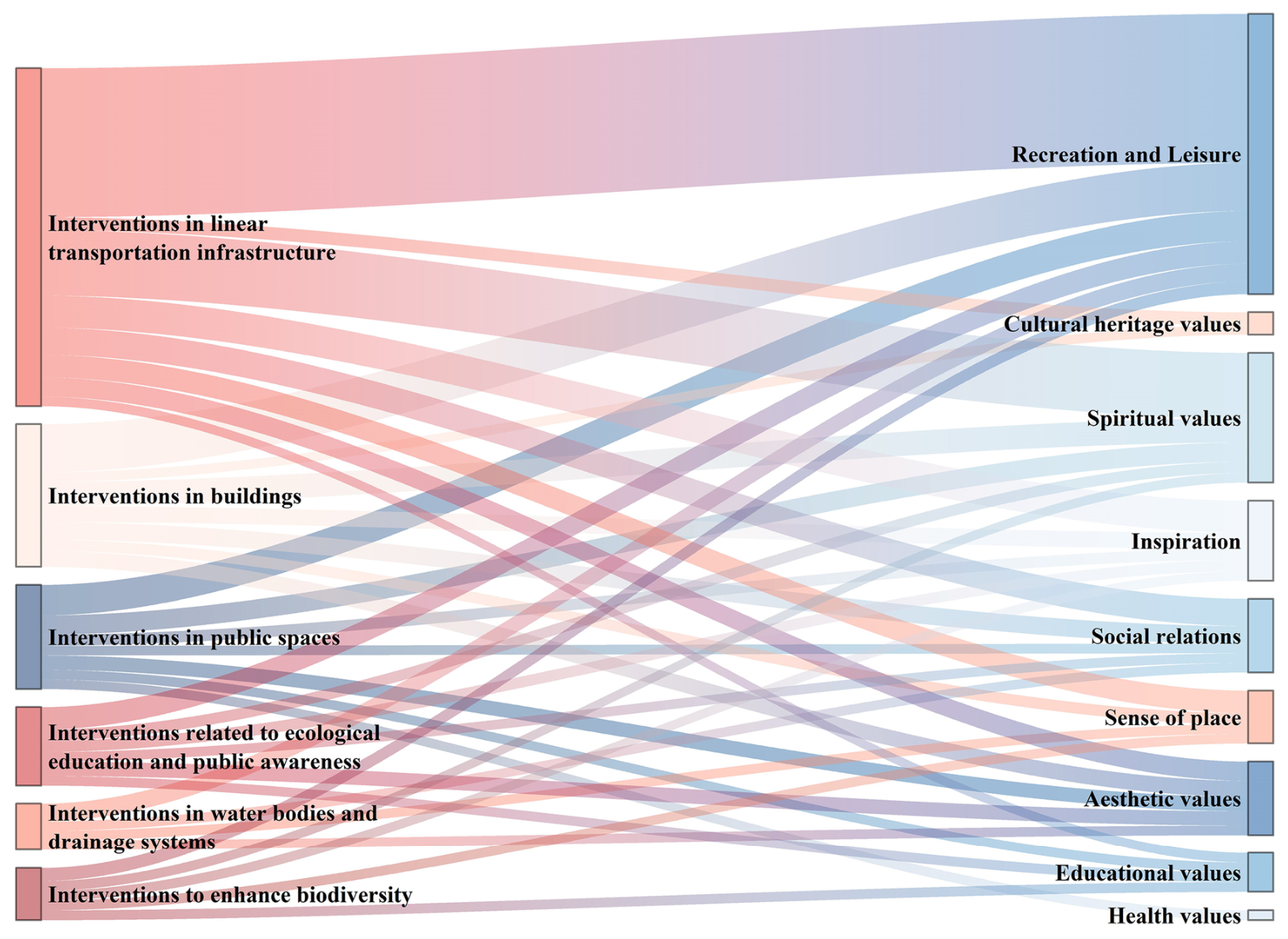
To further illustrate these relationships, a Sankey diagram was constructed to visually map the flow from each type of NBS intervention to the corresponding CES categories. As shown in Figure 7, NBS interventions in linear transportation infrastructure made the most substantial contributions to CES perceptions, spanning across all service categories. In contrast, NBS interventions in public spaces and buildings contributed predominantly to recreation and leisure, with relatively lower associations with other CES types. Interventions involving water bodies and drainage systems, as well as those enhancing biodiversity, showed the lowest connection with CES.

4. Discussion

4.1. Reframing CES in Urban Renewal

In urban transformation, CES have emerged as critical but often overlooked dimensions of urban livability [48]. The study in Yuling community reveals that recreation and leisure dominate users’ perception, followed by inspiration and spiritual values, which shows that the public strongly prefers spaces that can support daily leisure and emotional comfort. This also confirms that urban renewal has increasingly shifted from physical reconstruction to the revival of social, environmental and cultural systems [49]. Meanwhile, the value of cultural heritage, education and health reflects the transformation of the urban development model from practical infrastructure to experiential and social relation facilities, in which public spaces can stimulate people’s physical and mental participation. However, the low frequency of cultural heritage, education, and health values indicates that, despite their policy-level importance, they remain underrepresented in the practice of urban renewal. Hence, a comprehensive urban renewal strategy should integrate CESs as key performance indicators, ensuring that the renewal process preserves cultural identity, promotes learning and inclusivity, and strengthens community attachment to place.
Furthermore, the generally low correlation coefficients (R) among most CES types suggest that cultural experiences in Yulin are often compartmentalized rather than holistic. This singular experience may result from urban renewal designs that prioritize single-theme spaces, isolating different cultural functions. Notably, negative correlations are observed between recreation and leisure and several other CESs (e.g., inspiration, social relations, spiritual values), indicating that high-intensity entertainment activities may inhibit deep spiritual thinking and inspiration. When people are immersed in material consumption, their perception of the environment often stays on the surface, and it is difficult to produce deep emotional resonance or artistic impulses. This also indicates that the current urban renewal in Yulin may suffer from uncoordinated functional distribution.

4.2. The NBS in Urban Renewal

With the rapid urbanization, limited space and complex community structures such as Chengdu, NBSs provide a strategic solution to meet the multi-dimensional challenges of urban renewal. Yulin case study shows that combining NBS with the actual local situation can solve a variety of problems such as ecological restoration, social rejuvenation and cultural reconstruction at the same time.
The result reveals that linear infrastructure interventions (e.g., street greening and green pavements) are the most perceived. This dominance seems plausible because they are easily perceived and directly experienced by the public in daily life. Similarly, green walls and pocket parks exemplify Chengdu’s “micro-renewal” policy [50], deploying small-scale, dispersed elements to catalyze perceptual and ecological shifts.
However, the public’s awareness of biodiversity and water protection measures is still insufficient, which reflects the imbalance between ecological function and visibility [51], because these measures often lack esthetic value, explanation content or interactive function to attract community participation [52]. This shows that successful NBS interventions should coordinate CES and other services, such as regulating services, in urban renewal to ensure that these interventions bring common benefits.

4.3. Interpreting the Relationships Between NBS and CES

The observed correlation between specific NBS types and CES categories provides meaningful insights into the evidence-based design of cities. Street greening, pocket parks and green walls are most closely related to leisure, spiritual and esthetic value, which shows that spatial proximity, usability and visual quality are the key intermediary factors of CES perception, which is similar to the findings by Shafray and Kim [53], Speak et al. [54], and Anujan et al. [55]. On the contrary, cultural experiences such as education and cultural heritage values are less relevant to NBS, especially those that focus on biodiversity and water resources-related interventions. This suggests that the cultural potential of these NBSs is not fully realized, likely due to insufficient interpretative framing and participatory design. This aligns with studies by Riechers et al. [56] and Magdziak [57], who emphasize that cultural benefits often depend on symbolic representation, contextual framing, and social interaction, not simply ecological presence.

4.4. Implications for Design and Policy

This study provides a key basis for enhancing CES delivery in urban renewal. It reveals that the public prefers visual, practical, and accessible NBS. Although ecological resilience depends on functional effectiveness, this study highlights that planners and designers should adopt a more targeted design logic to predict the cultural impact of different types of NBS in advance to truly integrate NBS into urban design and maximum CES. For example, pairing ecological drainage systems with interpretive signage or artistic elements could add educational and esthetic values. The renewal strategy should also give priority to the quality of the microenvironment, focusing on street scenes and pocket parks that can foster spiritual value and inspiration. This means to go beyond the standard green configuration and create a sense of place by integrating local cultural elements and humanized details. In addition, this framework enables urban planners and designers to identify the optimal NBS for delivering certain CES combinations, monitor changes in public perception over time, and prioritize interventions that balance ecological, social, and cultural considerations.
At a broader policy scale, this framework demonstrates how social media analytics can serve as a real-time management tool, enabling urban authorities to detect public preferences, evaluate project performance, and adjust NBS strategies dynamically. In the case of Chengdu, the decision-makers can use this strategy to monitor which NBS has successfully attracted public participation, effectively provided cultural services, and failed. This data-driven approach helps to achieve a shift from top-down infrastructure planning to bottom-up, and ensures that urban renewal takes into account both environmental sustainability and social benefits. The approach offers transferable lessons for global cities seeking to align ecological restoration with social inclusion, reinforcing the dual goals of resilience and livability in urban transformation.

4.5. Methodological Contributions and Future Directions

This study proposes a replicable method framework, which combines text and image mining of social media data to evaluate the CES influenced by NBS in urban renewal. Compared with traditional surveys or field research, this method captures the dynamics of user participation and emotional responses in real time. The data are both location-specific and organically generated, offering a rich, cost-effective resource for urban researchers and practitioners [58].
Nevertheless, there are still some limitations. First of all, there are potential sampling biases from platform preferences (favoring younger, technical users) and inconsistencies in the spatial metadata of social media data [59]. Secondly, due to narrative complexity or lack of visual expression, some CESs, such as spiritual values or sense of place, may be underestimated in image and text data. In order to overcome these limitations, future research can adopt a hybrid method to combine social media analysis with participatory GIS (PPGIS) or environmental sensing. For example, PPGIS can bring the voice of elderly residents who rarely use social media in the community to ensure a more balanced representation of public opinion. At the same time, environmental sensors can record the physical changes in urban renewal sites, such as the actual amount of greenery or shadow rate. Linking these objective environmental indicators with subjective social media feedback will help us better understand how NBS intervention can be directly transformed into cultural interests and provide more reliable evidence for future urban renewal.

5. Conclusions

This study promotes an understanding of how NBS contributes to CES in the context of urban renewal. In terms of method integration, it successfully demonstrates the analysis method that combines text and image analysis of social media, effectively unifying multi-pattern data. It facilitates the evaluation of urban CES and provides a replicable method for understanding how citizens experience and interpret urban–natural measures. In practice, the research results show that small and dispersed interventions, such as green corridors, pocket parks and vertical greening, have become the most important driving force to effectively promote inclusive and experience-based urban renewal. In addition, the study shows a detailed relationship between specific NBS types and CES categories. The relatively low visibility of CES, which is related to biodiversity and water, highlights the importance of participatory design to raise public awareness and participation. For urban planners and decision-makers, this study emphasizes the importance of incorporating CES indicators into NBS planning and governance, which can guide cities to achieve further people-oriented and culturally sustainable development.

Author Contributions

X.C.: Conceptualization, methodology, formal analysis, data curation, writing—original draft, and supervision. P.X.: methodology, software, formal analysis, data curation, and visualization. S.V.D.: Conceptualization, methodology, and writing—review and editing. All authors have read and agreed to the published version of the manuscript.

Funding

This research was funded by the Sichuan Landscape and Recreation Center, grant number JGYQ2024012; the Department of Science and Technology of Sichuan Province, grant number 2025ZNSFSC1305; and the Sichuan Modern Design and Culture Research Center, grant number MD24E018.

Data Availability Statement

The data presented in this study are available within the article.

Acknowledgments

The authors acknowledge the public social media data contributors whose shared content enabled this analysis.

Conflicts of Interest

The authors declare no conflicts of interest. The funders had no role in the design of the study; in the collection, analyses, or interpretation of data; in the writing of the manuscript; or in the decision to publish the results.

References

  1. Huang, L.; Zheng, W.; Hong, J.; Liu, Y.; Liu, G. Paths and strategies for sustainable urban renewal at the neighbourhood level: A framework for decision-making. Sustain. Cities Soc. 2020, 55, 102074. [Google Scholar] [CrossRef]
  2. Zheng, H.W.; Shen, G.Q.; Wang, H. A review of recent studies on sustainable urban renewal. Habitat Int. 2014, 41, 272–279. [Google Scholar] [CrossRef]
  3. Mareeva, V.M.; Ahmad, A.M.; Ferwati, M.S.; Garba, S.B. Sustainable Urban Regeneration of Blighted Neighborhoods: The Case of Al Ghanim Neighborhood, Doha, Qatar. Sustainability 2022, 14, 6963. [Google Scholar] [CrossRef]
  4. Mehanna, W.A.; Mehanna, W.A. Urban renewal for traditional commercial streets at the historical centers of cities. Alex. Eng. J. 2019, 58, 1127–1143. [Google Scholar] [CrossRef]
  5. Joaquim, R.-U.; Ricardo, K. From top-down urban planning to culturally sensitive planning? Urban renewal and artistic activism in a neo-bohemian district in Barcelona. J. Urban Aff. 2020, 44, 524–544. [Google Scholar] [CrossRef]
  6. Lu, X. Exploration of green index system from the perspective of urban renewal. Adv. Comput. Eng. Technol. Res. 2024, 1, 270. [Google Scholar] [CrossRef]
  7. Cohen-Shacham, E.; Walters, G.; Janzen, C.; Maginnis, S. Nature-Based Solutions to Address Global Societal Challenges; IUCN-2016-036; IUCN: Gland, Switzerland, 2016; 97p. [Google Scholar]
  8. Kolokotsa, D.; Lilli, A.A.; Lilli, M.A.; Nikolaidis, N.P. On the impact of nature-based solutions on citizens’ health & well being. Energy Build. 2020, 229, 110527. [Google Scholar] [CrossRef]
  9. Langergraber, G.; Pucher, B.; Simperler, L.; Kisser, J.; Katsou, E.; Buehler, D.; Mateo, M.C.G.; Atanasova, N. Implementing nature-based solutions for creating a resourceful circular city. Blue-Green Syst. 2020, 2, 173–185. [Google Scholar] [CrossRef]
  10. Longato, D.; Cortinovis, C.; Balzan, M.; Geneletti, D. A method to prioritize and allocate nature-based solutions in urban areas based on ecosystem service demand. Landsc. Urban Plan. 2023, 235, 104743. [Google Scholar] [CrossRef]
  11. Frantzeskaki, N. Seven lessons for planning nature-based solutions in cities. Environ. Sci. Policy 2019, 93, 101–111. [Google Scholar] [CrossRef]
  12. Fan, P.; Ouyang, Z.; Basnou, C.; Pino, J.; Park, H.; Chen, J. Nature-based solutions for urban landscapes under post-industrialization and globalization: Barcelona versus Shanghai. Environ. Res. 2017, 156, 272–283. [Google Scholar] [CrossRef] [PubMed]
  13. Xiang, P.; Wang, Y.; Deng, Q. Inclusive nature-based solutions for urban regeneration in a natural disaster vulnerability context: A case study of Chongqing, China. Sustainability 2017, 9, 1205. [Google Scholar] [CrossRef]
  14. Almenar, J.B.; Elliot, T.; Rugani, B.; Philippe, B.; Gutierrez, T.N.; Sonnemann, G.; Geneletti, D. Nexus between nature-based solutions, ecosystem services and urban challenges. Land Use Policy 2021, 100, 22. [Google Scholar] [CrossRef]
  15. Cheng, X.; Van Damme, S.; Uyttenhove, P. A review of empirical studies of cultural ecosystem services in urban green infrastructure. J. Environ. Manag. 2021, 293, 112895. [Google Scholar] [CrossRef]
  16. Lingua, F.; Coops, N.C.; Griess, V.C. Valuing cultural ecosystem services combining deep learning and benefit transfer approach. Ecosyst. Serv. 2022, 58, 101487. [Google Scholar] [CrossRef]
  17. Fish, R.; Church, A.; Winter, M. Conceptualising cultural ecosystem services: A novel framework for research and critical engagement. Ecosyst. Serv. 2016, 21, 208–217. [Google Scholar] [CrossRef]
  18. Chiara, C.; Grazia, Z.; Davide, G. Assessing Nature-Based Recreation to Support Urban Green Infrastructure Planning in Trento (Italy). Land 2018, 7, 112. [Google Scholar] [CrossRef]
  19. Johannes, L.; Francesc, B. Nature-based solutions as nodes of green-blue infrastructure networks: A cross-scale, co-creation approach. Nat.-Based Solut. 2021, 1, 100006. [Google Scholar] [CrossRef]
  20. Weber, F.; Kowarik, I.; Säumel, I. A walk on the wild side: Perceptions of roadside vegetation beyond trees. Urban For. Urban Green. 2014, 13, 205–212. [Google Scholar] [CrossRef]
  21. Shackleton, S.; Chinyimba, A.; Hebinck, P.; Shackleton, C.; Kaoma, H. Multiple benefits and values of trees in urban landscapes in two towns in northern South Africa. Landsc. Urban Plan. 2015, 136, 76–86. [Google Scholar] [CrossRef]
  22. Dieleman, H. Urban agriculture in Mexico City; balancing between ecological, economic, social and symbolic value. J. Clean. Prod. 2017, 163, S156–S163. [Google Scholar] [CrossRef]
  23. Dou, Y.; Zhen, L.; De Groot, R.; Du, B.; Yu, X. Assessing the importance of cultural ecosystem services in urban areas of Beijing municipality. Ecosyst. Serv. 2017, 24, 79–90. [Google Scholar] [CrossRef]
  24. Tandarić, N.; Ives, C.D.; Watkins, C. Can we plan for urban cultural ecosystem services? J. Urban Ecol. 2020, 6, juaa016. [Google Scholar] [CrossRef]
  25. da Rocha, S.M.; Almassy, D.; Pinter, L. Social and Cultural Values and Impacts of Nature-Based Solutions and Natural Areas; NATURVATION Deliverable: Durham, UK, 2017; Volume 1. [Google Scholar]
  26. Vollmer, D.; Prescott, M.F.; Padawangi, R.; Girot, C.; Grêt-Regamey, A. Understanding the value of urban riparian corridors: Considerations in planning for cultural services along an Indonesian river. Landsc. Urban Plan. 2015, 138, 144–154. [Google Scholar] [CrossRef]
  27. Cheng, X.; Van Damme, S.; Li, L.; Uyttenhove, P. Evaluation of cultural ecosystem services: A review of methods. Ecosyst. Serv. 2019, 37, 100925. [Google Scholar] [CrossRef]
  28. Hirons, M.; Comberti, C.; Dunford, R. Valuing Cultural Ecosystem Services. Annu. Rev. Environ. Resour. 2016, 41, 545–574. [Google Scholar] [CrossRef]
  29. Wang, Z.F.; Miao, Y.L.; Xu, M.; Zhu, Z.W.; Qureshi, S.; Chang, Q. Revealing the differences of urban parks’ services to human wellbeing based upon social media data. Urban For. Urban Green. 2021, 63, 10. [Google Scholar] [CrossRef]
  30. Zhang, H.; Huang, R.; Zhang, Y.; Buhalis, D. Cultural ecosystem services evaluation using geolocated social media data: A review. Tour. Geogr. 2022, 24, 646–668. [Google Scholar]
  31. Fox, N.; Graham, L.J.; Eigenbrod, F.; Bullock, J.M.; Parks, K.E. Enriching social media data allows a more robust representation of cultural ecosystem services. Ecosyst. Serv. 2021, 50, 101328. [Google Scholar] [CrossRef]
  32. Oteros-Rozas, E.; Martín-López, B.; Fagerholm, N.; Bieling, C.; Plieninger, T. Using social media photos to explore the relation between cultural ecosystem services and landscape features across five European sites. Ecol. Indic. 2018, 94, 74–86. [Google Scholar] [CrossRef]
  33. Li, J.; Gao, J.; Zhang, Z.; Fu, J.; Shao, G.; Zhao, Z.; Yang, P. Insights into citizens’ experiences of cultural ecosystem services in urban green spaces based on social media analytics. Landsc. Urban Plan. 2024, 244, 104999. [Google Scholar] [CrossRef]
  34. Havinga, I.; Marcos, D.; Bogaart, P.; Tuia, D.; Hein, L. Understanding the sentiment associated with cultural ecosystem services using images and text from social media. Ecosyst. Serv. 2024, 65, 101581. [Google Scholar] [CrossRef]
  35. Li, L.; Cheshmehzangi, A.; Chan, F.K.S.; Ives, C.D. Mapping the Research Landscape of Nature-Based Solutions in Urbanism. Sustainability 2021, 13, 3876. [Google Scholar] [CrossRef]
  36. Li, Y.; Hu, M. Study on Urban Renewal Strategy of Chengdu: -- Take the MENGZHUIWAN Renewal Project as an Example. Acad. J. Manag. Soc. Sci. 2023, 3, 110–113. [Google Scholar] [CrossRef]
  37. La Rosa, D.; Spyra, M.; Inostroza, L. Indicators of Cultural Ecosystem Services for urban planning: A review. Ecol. Indic. 2016, 61, 74–89. [Google Scholar] [CrossRef]
  38. Kosanic, A.; Petzold, J. A systematic review of cultural ecosystem services and human wellbeing. Ecosyst. Serv. 2020, 45, 101168. [Google Scholar] [CrossRef]
  39. Xia, Z.; Wang, Y.; Lu, Q.; Shen, Z.; Liu, K.; Wei, X.; Yuan, C.; Gao, Y.; Liu, L. Understanding residents’ perspectives on cultural ecosystem service supply, demand and subjective well-being in rapidly urbanizing landscapes: A case study of peri-urban Shanghai. Landsc. Ecol. 2024, 39, 22. [Google Scholar] [CrossRef]
  40. Antuña-Rozado, C.; Herzog, C.P.; Freitas, T.; Cagnin, C.; Wiedman, G. Nature based solutions (NBS) for sustainable and resilient cities: Experiences from Europe and Brazil. In IOP Conference Series: Earth and Environmental Science; IOP Publishing: Bristol, UK, 2019. [Google Scholar]
  41. Cohen-Shacham, E.; Andrade, A.; Dalton, J.; Dudley, N.; Jones, M.; Kumar, C.; Maginnis, S.; Maynard, S.; Nelson, C.R.; Renaud, F.G. Core principles for successfully implementing and upscaling Nature-based Solutions. Environ. Sci. Policy 2019, 98, 20–29. [Google Scholar] [CrossRef]
  42. Dushkova, D.; Haase, D. Not simply green: Nature-based solutions as a concept and practical approach for sustainability studies and planning agendas in cities. Land 2020, 9, 19. [Google Scholar] [CrossRef]
  43. Castellar, J.A.; Popartan, L.A.; Pueyo-Ros, J.; Atanasova, N.; Langergraber, G.; Säumel, I.; Corominas, L.; Comas, J.; Acuna, V. Nature-based solutions in the urban context: Terminology, classification and scoring for urban challenges and ecosystem services. Sci. Total Environ. 2021, 779, 146237. [Google Scholar] [CrossRef] [PubMed]
  44. Pinto, L.V.; Inácio, M.; Pereira, P. Green and blue infrastructure (GBI) and urban nature-based solutions (NbS) contribution to human and ecological well-being and health. Oxf. Open Infrastruct. Health 2023, 1, ouad004. [Google Scholar] [CrossRef]
  45. Fang, X.; Li, J.; Ma, Q.; Zhou, R.; Du, S. A quantitative review of nature-based solutions for urban sustainability (2016–2022): From science to implementation. Sci. Total Environ. 2024, 927, 172219. [Google Scholar] [CrossRef] [PubMed]
  46. Bachi, L.; Ribeiro, S.C.; Hermes, J.; Saadi, A. Cultural Ecosystem Services (CES) in landscapes with a tourist vocation: Mapping and modeling the physical landscape components that bring benefits to people in a mountain tourist destination in southeastern Brazil. Tour. Manag. 2020, 77, 104017. [Google Scholar] [CrossRef]
  47. Huai, S.; Chen, F.; Liu, S.; Canters, F.; Van de Voorde, T. Using social media photos and computer vision to assess cultural ecosystem services and landscape features in urban parks. Ecosyst. Serv. 2022, 57, 101475. [Google Scholar] [CrossRef]
  48. Dickinson, D.C.; Hobbs, R.J. Cultural ecosystem services: Characteristics, challenges and lessons for urban green space research. Ecosyst. Serv. 2017, 25, 179–194. [Google Scholar] [CrossRef]
  49. Chen, X.; Zhu, H.; Yuan, Z. Contested memory amidst rapid urban transition: The cultural politics of urban regeneration in Guangzhou, China. Cities 2020, 102, 102755. [Google Scholar] [CrossRef]
  50. Tang, Q.; Cao, J.; Yin, C.; Cheng, J. Examining the nonlinear relationships between park attributes and satisfaction with pocket parks in Chengdu. Urban For. Urban Green. 2024, 101, 128548. [Google Scholar] [CrossRef]
  51. Bele, A.; Chakradeo, U. Public perception of biodiversity: A literature review of its role in urban green spaces. J. Landsc. Ecol. 2021, 14, 1–28. [Google Scholar] [CrossRef]
  52. Wang, Y.; Lin, Y.-S. Public participation in urban design with augmented reality technology based on indicator evaluation. Front. Virtual Real. 2023, 4, 1071355. [Google Scholar] [CrossRef]
  53. Shafray, E.; Kim, S. A study of walkable spaces with natural elements for urban regeneration: A focus on cases in Seoul, South Korea. Sustainability 2017, 9, 587. [Google Scholar] [CrossRef]
  54. Speak, A.; Usher, M.; Solly, H.; Zerbe, S. # urbanforest: Cultural ecosystem services of urban trees through the lens of Instagram. J. Place Manag. Dev. 2021, 14, 497–513. [Google Scholar]
  55. Anujan, K.; Velho, N.; Kuriakose, G.; Ebin, P.; Pandi, V.; Nagendra, H. Beyond the metropolis: Street tree communities and resident perceptions on ecosystem services in small urban centers in India. J. Urban Ecol. 2024, 10, juae004. [Google Scholar] [CrossRef]
  56. Riechers, M.; Barkmann, J.; Tscharntke, T. Perceptions of cultural ecosystem services from urban green. Ecosyst. Serv. 2016, 17, 33–39. [Google Scholar] [CrossRef]
  57. Magdziak, M. Social Participation and Experimental Spatial Interventions as Effective Methods of Activating Problematic Urban Areas. In IOP Conference Series: Materials Science and Engineering; IOP Publishing: Bristol, UK, 2019. [Google Scholar]
  58. Zhang, H.; Yu, J.; Dong, X.; Zhai, X.; Shen, J. Rethinking Cultural Ecosystem Services in Urban Forest Parks: An Analysis of Citizens’ Physical Activities Based on Social Media Data. Forests 2024, 15, 1633. [Google Scholar] [CrossRef]
  59. AlAfnan, M.A. Social Media Personalities in Asia: Demographics, Platform Preferences, and Behavior Based Analysis. Stud. Media Commun. 2024, 12, 349. [Google Scholar] [CrossRef]
Figure 1. The study process.
Forests 17 00749 g001
Figure 2. Location of the case study.
Forests 17 00749 g002
Figure 3. CESs in urban renewal based on social media text. The figure is presented as a double-ring chart. The outer ring displays the categories and frequencies of CESs, while the inner ring shows the representative words and their corresponding frequencies for each CES category from the social media data.
Forests 17 00749 g003
Figure 4. The relations between CESs.
Forests 17 00749 g004
Figure 5. NBS interventions in urban renewal based on social media photos. The figure is presented as a double-ring chart and illustrates the classification and frequency of NBS interventions identified in this study, while the inner ring displays the representative measures and their corresponding frequencies for each NBS category.
Forests 17 00749 g005
Figure 6. Correspondence Analysis (CA) biplot of CES and NBS interventions. CA diagram shows the position of CES (blue font) and NBS (red font) in the two-dimensional factor plane.
Forests 17 00749 g006
Figure 7. Sankey diagram of relationships between NBS interventions and CES. Sankey diagram shows the visual flow relationship between NBSs (left) and CESs (right).
Forests 17 00749 g007
Table 1. Perceived categories of cultural ecosystem services in Yulin neighborhood.
CES TypesExplanationCorresponding Words (Examples)
Esthetic valuesExpressions of visual appreciation for the improved beauty or design of urban spaces, including natural and cultural elements.Cuteness, style, florals, charm, atmosphere, lighting, nature, beauty, fashion
Recreation and LeisureMentions of engaging in leisure or recreational activities in public spaces.Check-ins, taverns, delicacies, photospots, activity, shopping, exploration, citywalk
Cultural heritage valuesReflections on renewed urban areas that preserve or highlight local culture, traditions, or historical features.Culture, panda, tradition, architecture, civilization, ruins
Educational valuesMentions of opportunities for learning, awareness, or informal education provided by landscapes, signage, or design features.Experience, museum, introduction, knowledge
Social relationsDescriptions of urban spaces that support gathering, interaction, or community bonding.Community, friends, family, neighborhood, market, studio, interaction
Spiritual valuesExpressions of emotional or spiritual experience in renewed urban environments.Comfort, preferences, ambience, liveliness, happiness, friendliness, surprise, enjoyment
Health valuesMentions of physical activity, stress relief, or health improvements associated with renewed greenways, plazas, or exercise-friendly infrastructure.Fitness equipment, bicycles, table tennis, cycling
InspirationDescriptions of how the renewed urban setting sparks creativity, imagination, or artistic expression.Folk music, videos, arts, influencers, wall murals, design, record, craft, location, performance
Sense of placeExpressions of attachment, belonging, or emotional resonance with renewed or revitalized urban neighborhoods.Memories, space, environment, stories, scene, alley, childhood, city
Table 2. Classification of NBS interventions and cases in Yulin neighborhood.
Classification According to Intervention TargetsThe Main Purpose of the InterventionsNBS Interventions
Interventions in public spacesRegeneration of public spaces and urban land redevelopmentSmall green spaces, pocket parks, community gardens, edible gardens
Interventions in buildingsGreening of existing buildings and development of sustainable architectural typologies (e.g., arcology) Green walls, green roofs, ecological buildings
Interventions in water bodies and drainage systemsConstruction of sponge cities and enhancement of drainage systems through the restoration of natural water bodiesRestoration of rivers, urban drainage systems, permeable pavement retrofitting, rain gardens, ecological parking lots
Interventions in linear transportation infrastructureDevelopment of environmentally friendly linear transportation infrastructureStreet greening, green pavements, cycle-pedestrian green pavement, urban tree planting
Interventions related to ecological education and public awarenessRaising environmental awareness, promoting stakeholder and citizen engagement, and facilitating knowledge exchangeEcological festivals or workshops, ecological-related educational infrastructures, green volunteering projects
Interventions to enhance biodiversityConservation and enhancement of biodiversity in urban environmentsAnimal-friendly facilities
Disclaimer/Publisher’s Note: The statements, opinions and data contained in all publications are solely those of the individual author(s) and contributor(s) and not of MDPI and/or the editor(s). MDPI and/or the editor(s) disclaim responsibility for any injury to people or property resulting from any ideas, methods, instructions or products referred to in the content.