Article

SNP-Based Analysis of Genetic Diversity and Genetic Structure in Bursaphelenchus xylophilus Populations from Guizhou Province, China

1
Zunyi Academy of Forestry, Zunyi 563000, China
2
Zunyi Forestry Bureau, Zunyi 563000, China
3
Guangdong Provincial Key Laboratory of Conservation and Precision Utilization of Characteristic Agricultural Resources in Mountainous Areas, School of Life Sciences, Jiaying University, Meizhou 514015, China
*
Author to whom correspondence should be addressed.
Forests 2026, 17(6), 722; https://doi.org/10.3390/f17060722
Submission received: 18 May 2026 / Revised: 15 June 2026 / Accepted: 16 June 2026 / Published: 22 June 2026
(This article belongs to the Section Forest Biodiversity)

Abstract

The pinewood nematode (PWN, Bursaphelenchus xylophilus (Steiner & Buhrer) Nickle)), first introduced into China in 1982, has since spread rapidly, posing a serious threat to forest resource security and ecological balance. This study aimed to analyze the genetic diversity and genetic structure of PWN in eight geographic populations (60 individuals) of Guizhou Province using single nucleotide polymorphisms (SNPs). Results revealed low genetic diversity (Ho values varied from 0.123 to 0.229; He values ranged between 0.117 and 0.212) across the eight sampled populations, along with low levels of genetic differentiation (pairwise Fst values varied from 0.005 to 0.183) among them. Gene flow was generally high between populations, and no clear geographical clustering was observed based on ADMIXTURE, PCA and phylogenetic analysis. These findings provided a scientific basis for tracking the dispersal and identifying the origins of PWN infestations in China.

1. Introduction

Biological invasion represents a major global environmental concern [1,2]. Pine wilt disease, a severe forest disease caused by the pinewood nematode (PWN, Bursaphelenchus xylophilus (Steiner & Buhrer) Nickle)), leads to massive mortality of Pinaceae plants [3,4,5]. Recognized as a complex and rapidly spreading invasive species, the PWN is widely believed to have originated in North America [6,7]. It was introduced to Japan in the early 20th century and subsequently spread to China and Korea, eventually reaching Europe in the 21st century [8,9,10]. In China, PWN was first detected in Jiangsu Province in 1982 [11]. Since then, it has also been found in other provinces, including Anhui (1988), Guangdong (1988), Shandong (1991), Zhejiang (1991), Hubei (1999), Guizhou (2001), and Chongqing (2003) [11,12]. According to the No. 7 announcement of the National Forestry and Grassland Administration in 2024, PWN has now affected 663 counties across 18 provinces in China, spanning from south to north. Having invaded China for four decades, PWN stands as the most destructive forestry disease in the country [11]. To date, it has caused the death of billions of pine trees, resulting in economic losses estimated at hundreds of billions of dollars [12,13]. Therefore, knowledge on the dispersal and the transmission routes of the PWN are important for conservation and management of the forestry ecosystem.
Epidemic tracing plays a crucial role in understanding the dispersal and controlling the transmission routes of the PWN [14,15]. Investigating the genetic diversity and genetic structure of PWN is essential for elucidating its spread and transmission mechanisms [15]. Numerous studies have examined the genetic variation and geographic origins of PWN using various molecular markers, including restriction fragment length polymorphism (RFLP), random amplification polymorphic DNA (RAPD), simple sequence repeat (SSR), sequence characterized amplified regions (SCARs), inter-simple sequence repeat (ISSR), and amplified fragment length polymorphism (AFLP) [16,17,18,19,20,21,22,23]. For example, Vieira et al. (2007) [17] revealed lack of genetic variation in PWN in Portugal using RAPD-PCR analyses. Aikawa et al. (2012) [16] revealed that ITS-RFLP pattern of PWN does not reflect nematode virulence. Jung et al. (2010) [21] revealed AFLP patterns, which were similar to the microsatellite patterns from a previous study, indicated high genetic variability and cryptic genetic structure, yet showed no peculiar geographic structure in China, Japan, and South Korea. These works provide valuable insights into the relationship between PWN population variation and its geographical distribution, as well as the process of disease transmission. However, as the geographical distribution of PWN becomes increasingly complex, these traditional molecular markers are often insufficient to explain the changes in its genetic diversity and genetic structure [24,25].
With advances in genomics, single-nucleotide polymorphisms (SNPs) have emerged as highly promising molecular markers and are now widely applied in population genetics research [24,25]. For instance, SNP-based analyses using short-read sequencing and genome assembly have been employed to identify potential origins and pathogenic characteristics of PWN [26,27,28]. In Guangdong Province, the genetic structure of PWN was categorized into three distinct groups [29]. Studies across six provinces in East China revealed variations in SNP numbers among different populations, which could be classified into three major clusters, suggesting possible reinvasion events from external sources in some regions [30]. Further research divided PWN populations in China into four genetic groups [24], while another study on isolates from Guangdong, Guangxi, and Jiangsu Provinces classified them into five groups, revealing significant genetic differentiation among them [31]. Therefore, the genetic diversity and genetic structure of PWN can be more accurately determined by the analysis based on single-nucleotide polymorphisms (SNPs).
Most provinces in China fall within the suitable range for PWN [11], yet its transmission pathways remain unclear. Some studies have suggested that Guangdong Province serves as the original colonization and dispersal center of PWN, while Jiangsu Province acts as a more recent dispersal center [32]. Therefore, further research is needed to elucidate the genetic structure and variation in PWN across different regions. In addition, although many studies have focused on large-scale genetic structure analysis of PWN, the genetic diversity and structure at smaller geographical scales were still not well understood. The genetic diversity and genetic structure of the PWN population at smaller geographical scales from Guizhou Province were also not clear. Here, this study aimed to analyze the genetic diversity and genetic structure of eight geographic populations of PWN in Guizhou Province using single nucleotide polymorphisms (SNPs), in order to provide a theoretical basis for tracking the dispersal and tracing the origin of PWN disease in China. We hypothesized that the PWN in eight geographic populations exhibited low genetic diversity and low levels of genetic differentiation in Guizhou Province, China.

2. Materials and Methods

2.1. Sample Collection

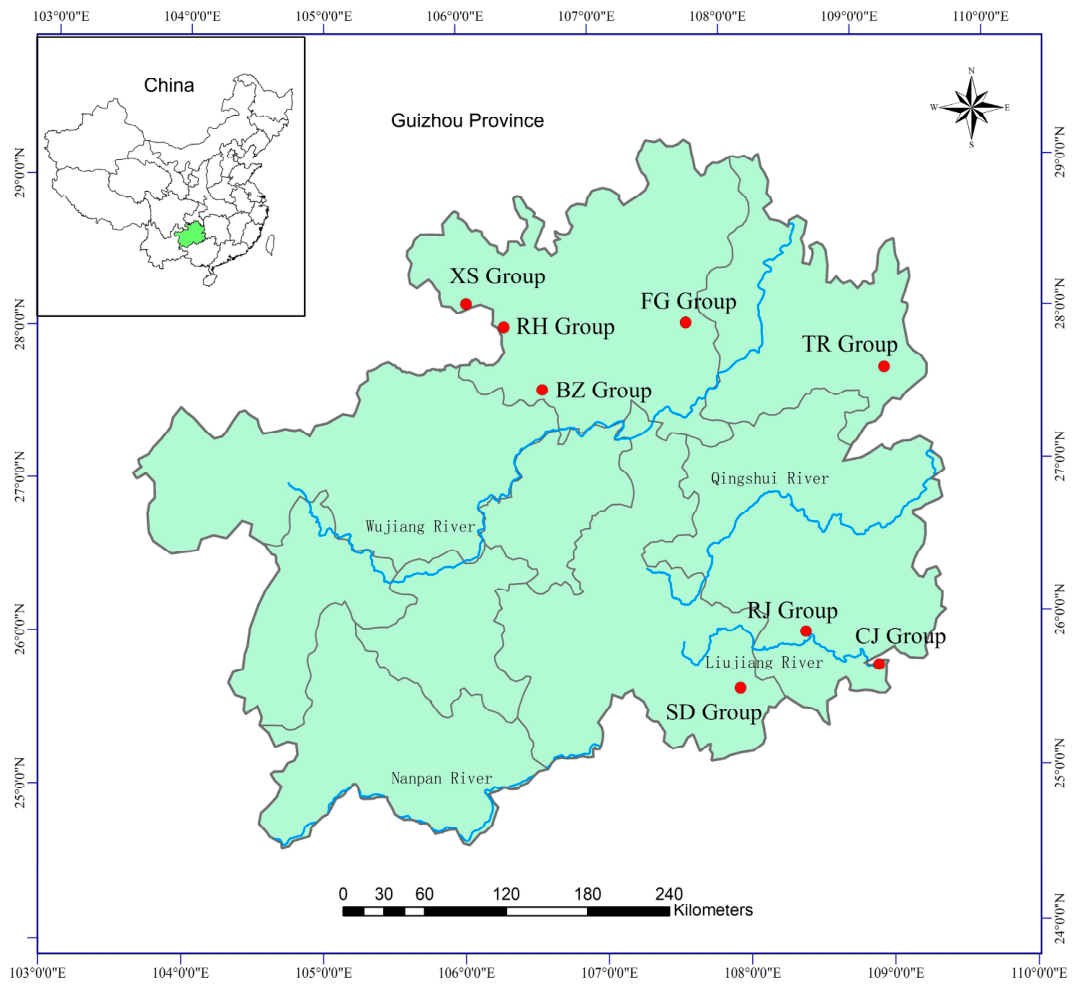
Pine wood nematode (PWN) samples were collected infected trees by local forestry departments from Guizhou Province using the Baermann funnel technique [33]. Morphological identification of the nematodes was performed under a microscope [34]. A total of 60 individual PWNs were obtained from eight sampling locations in Guizhou Province (Figure 1), including Tongren City (TR, 6 individuals), Congjiang County (CJ, 10 individuals), Rongjiang County (RJ, 6 individuals), Fenggang County (FG, 5 individuals), Bozhou City (BZ, 8 individuals), Renhuai City (RH, 12 individuals), Xishui County (XS, 8 individuals), and Sandu County (SD, 5 individuals). PWN samples in Tongren City, Congjiang County, Rongjiang County and Sandu County were collected in November 2023. Samples in Fenggang County and Bozhou City were collected in March and September of 2025, respectively. Samples in Renhuai City were collected in September of 2023, March of 2024 and February of 2025. Samples in Xishui County were collected in August of 2023 and February of 2025. PWN samples in each individual from eight sampling locations were collected from different trees. Host tree species of each individual from eight sampling locations was Pinus massoniana Lambert.

2.2. DNA Extraction and High Throughput Genome Resequencing

PWN specimens were preserved in 95% ethanol and stored at −20 °C until DNA extraction. Genomic DNA was extracted using the Rapid Animal Genomic DNA Isolation Kit, and its quality was assessed with a Nanodrop 2000 spectrophotometer (Thermo Scientific, Waltham, MA, USA).
High-quality DNA samples (the total amount is ≥2 μg, the concentration is ≥20 ng/μL, OD260/280 is between 1.8 and 1.95) were subsequently submitted to Sangon Biotech (Shanghai) Co., Ltd. (Shanghai, China), for high-throughput genome sequencing on the Illumina HiSeq 4000 platform (San Diego, CA, USA), which generated 150 bp paired-end reads with approximately 40× coverage. Approximately 8 Gb of raw data were produced for each PWN.

2.3. Sequencing Data Processing

The quality of the raw sequencing data was evaluated using FastQC (http://www.bioinformatics.babraham.ac.uk/projects/fastqc/, accessed on 1 March 2023). Filtered reads were aligned to the PWN reference genome (https://www.ncbi.nlm.nih.gov/datasets/genome/GCA_904066235.2/, accessed on 20 August 2021) from NCBI [24] with BWA (http://bio-bwa.sourceforge.net/bwa.shtml, accessed on 8 March 2013) using the command mem-t 4-k 32-m. Duplicate reads were removed with SAMtools (http://samtools.sourceforge.net/samtools.shtml, accessed on 16 December 2025) and Picard (http://broadinstitute.github.io/picard/, accessed on 1 January 2026). Putative SNPs were called using FreeBayes (https://github.com/ekg/freebayes, accessed on 1 January 2026) under the criterion of a minimum coverage greater than 10, and SNP sites were subsequently analyzed with VCFtools (https://github.com/vcftools, accessed on 1 January 2026).

2.4. Data Analysis

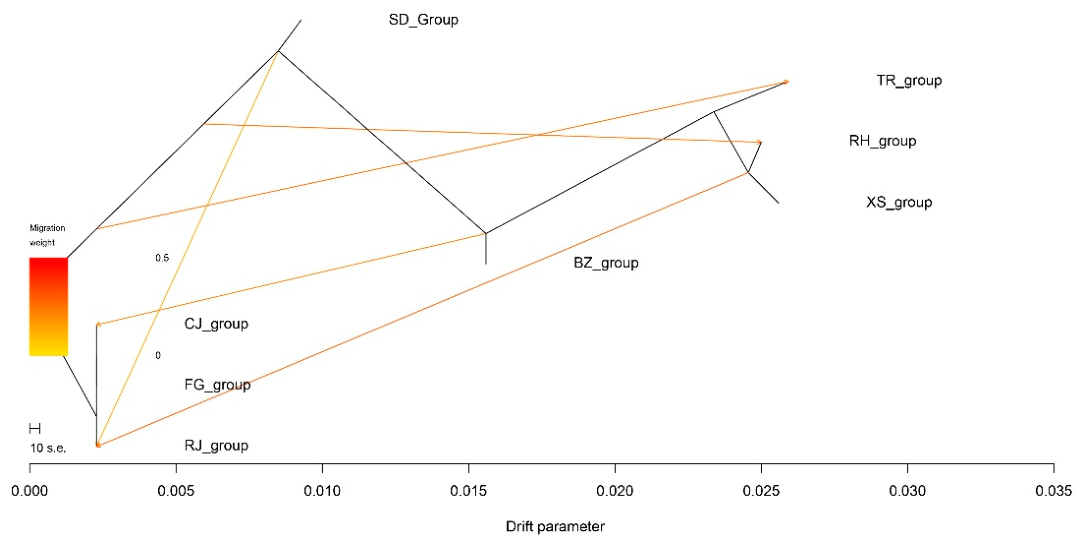
The R package SNPRelate (version 1.14.0) was used for filtering based on minor allele frequency (MAF), missing rate, and linkage disequilibrium (LD) filtering [35]. A SNP was retained if it met the following criteria: coverage depth greater than 2 and less than 30, minor allele frequency (MAF) less than 0.01, and missing rate (MISS) greater than 0.05. LD filtering was further processed with the PLINK (v1.90b6.1) [36] to remove linkage loci with the parameter “-indep-pairwise 50 10 0.2”. The remaining SNPs were used to perform analysis of genetic structure. Admixture v1.22 [37] was employed to assess the genetic structure of PWN and determine the optimal K-value. The number of genetic clusters, k, was evaluated from one to ten, and the optimal k was selected based on the lowest cross-validation (CV) error. Principal component analysis (PCA) was conducted using EIGENSOFT v6.0 [38] to examine the genetic structure of PWN. A phylogenetic tree was constructed with MEGA X [39]. Genetic diversity indices, including expected heterozygosity (He), observed heterozygosity (Ho), Nei’s gene diversity, polymorphism information content (PIC), and the number of polymorphic loci (A), were analyzed from the inclusion of 95% confidence intervals using the snpReady package [40]. Nucleotide diversity (PI), the genetic differentiation coefficient (Fst), and the inbreeding coefficient (Fis) were calculated from the inclusion of 95% confidence intervals with vcftools. We used one-way analysis of variance (ANOVA) performed in SPSS 22.0 to test for significant differences among PWN populations in the total number of SNPs, the counts of homozygous SNPs, unique SNPs, Ho, and He (* p < 0.05; ** p < 0.01; *** p < 0.001). Analysis of molecular variance (AMOVA) was used to assess partitioning of genetic variation among PWN populations based on R poppr package [41]. We used TreeMix v.1.12 (parameter: -m from 0 to 6) to assess gene flow among PWN populations [42]. The optimal number of migration events was determined using the R package “OptM” [43]. Visualization of gene flow directions was performed with the R.utils “plotting_funcs.R” [42]. To further estimate gene flow between populations, we employed MIGRATE v.4.4.3 [44] under the following settings: 10,000 recorded steps per chain, a burn-in of 100,000 steps per chain, and three replicate runs.

3. Results

A total of 965,623 SNPs were identified, averaging 295,628 SNPs per PWN. The PWN with the highest number of SNPs was RJ (518,538), while the PWN with the lowest SNPs was XS (448). In terms of SNP homozygosity, the RJ had the highest count, followed by FJ, and XS had the lowest. The number of unique SNPs was also greatest in RJ, followed by FJ, and lowest in XS. Significant differences were observed among the eight populations in Guizhou Province regarding the total number of SNPs, the counts of homozygous and unique SNPs (ANOVA, p < 0.05).
The Nei’s gene diversity ranged from 0.078 to 0.183, with FG showing the highest value, followed by SD, while RH had the lowest (Table 1). Similarly, the PIC varied between 0.144 and 0.296, and was highest in FG, followed by SD, with RH being the lowest (Table 1). Likewise, the PI values ranged from 0.163 to 0.407, with FG having the highest, followed by SD, and RH the lowest (Table 1). The Ho values varied from 0.123 to 0.229, again highest in FG, followed by SD, and lowest in RH (Table 1). The A also fell within the range of 12.460 to 60,315.200, exhibiting the greatest in CJ, then RJ, and lowest in XS (Table 1). For He, values ranged between 0.117 and 0.212, with FG showing the highest, RH and SD intermediate, and XS the lowest (Table 1). The Fis varied between −0.102 and 0.352, and was highest in RH, followed by BZ, with FG being the lowest (Table 1). Significant differences were observed in both Ho and He among PWN populations (ANOVA, p < 0.05).
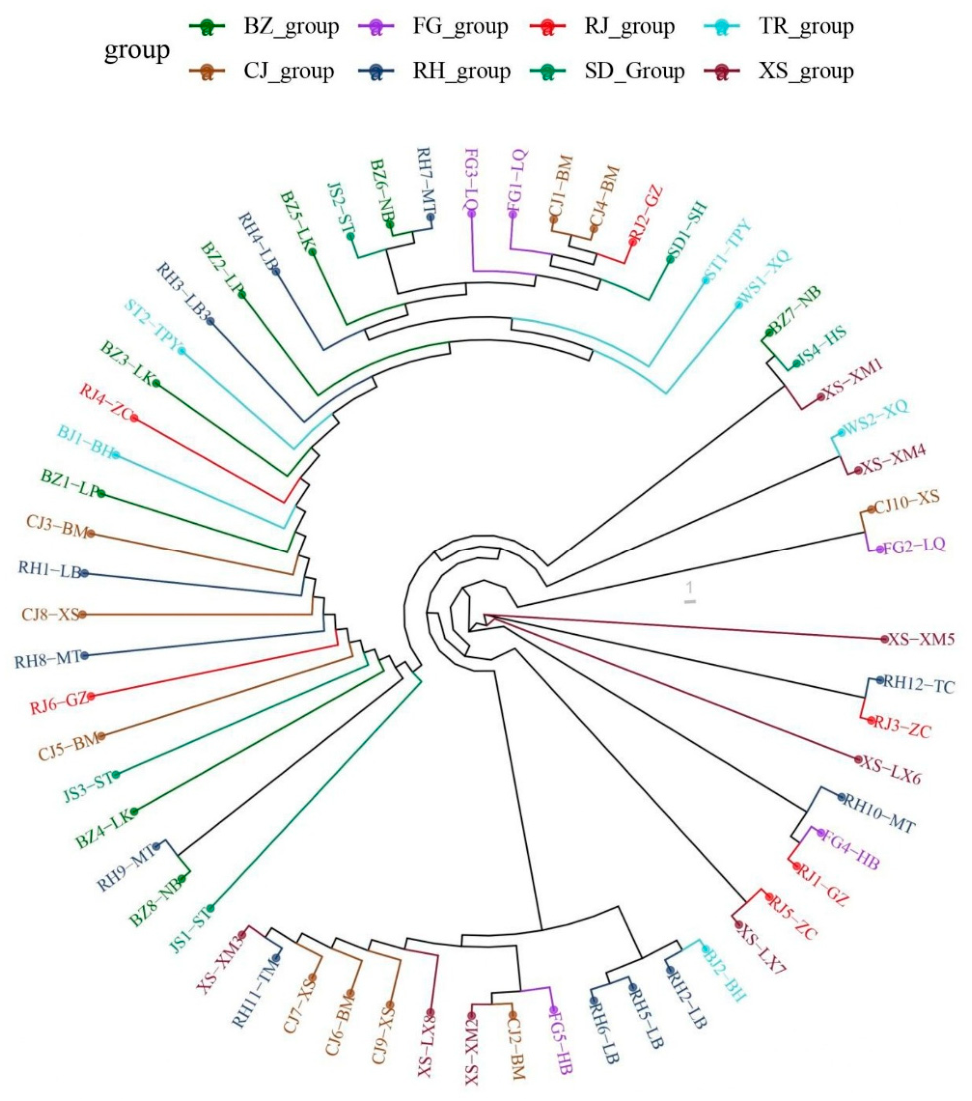
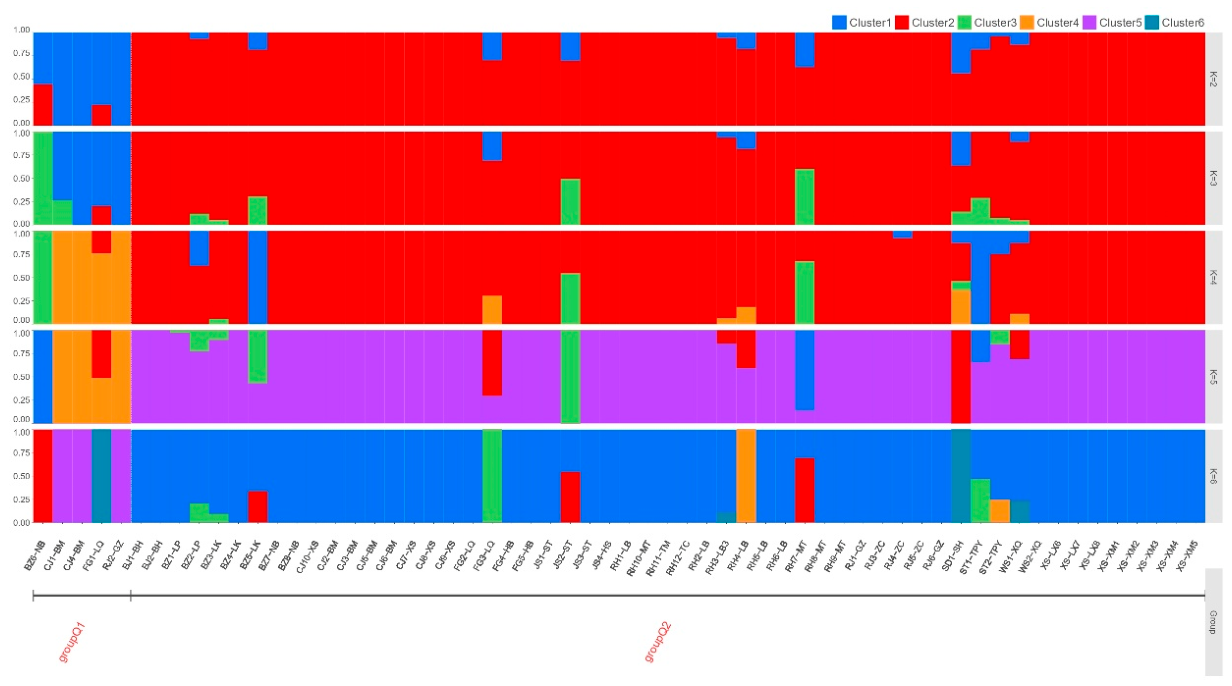
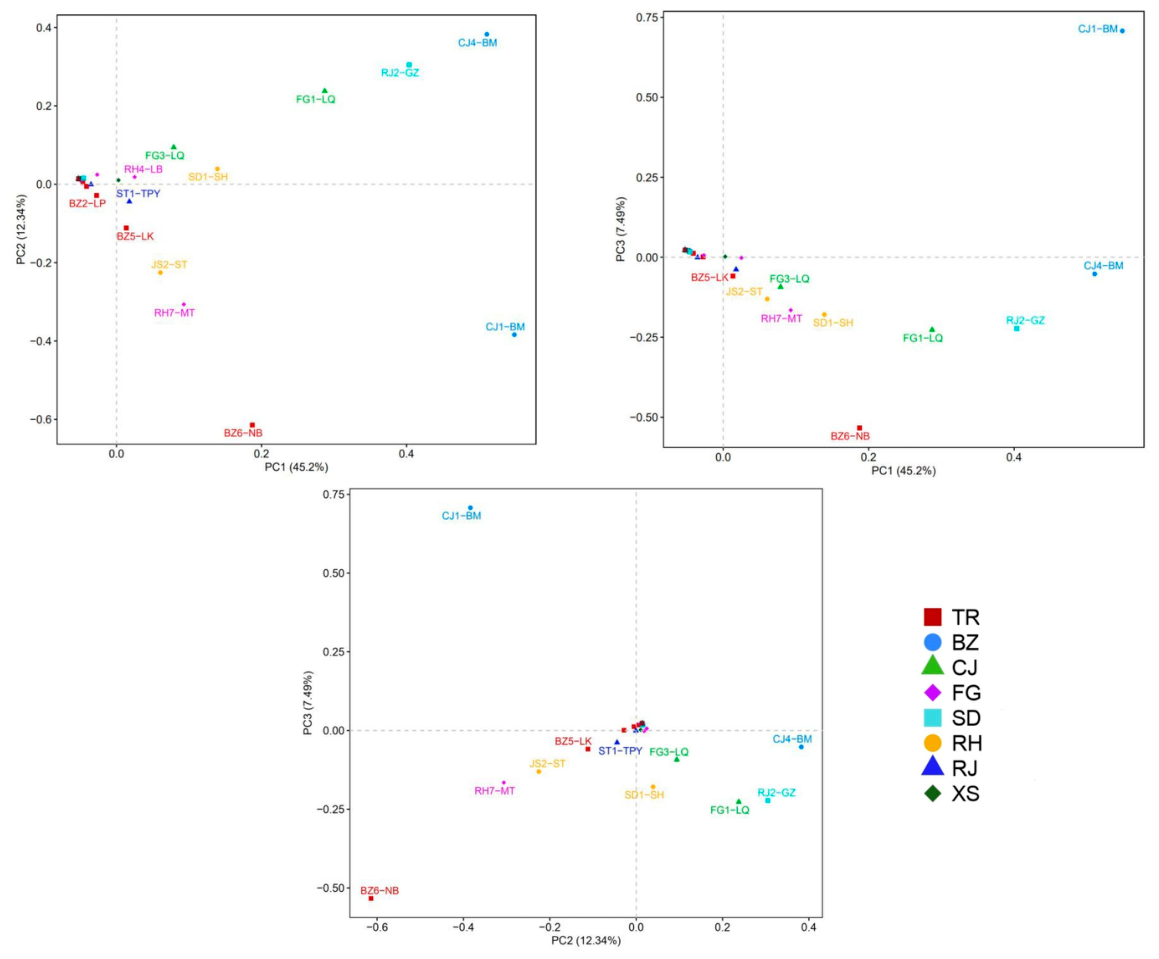
The phylogenetic analysis showed that the genetic structure among PWN individuals was not well resolved (Figure 2). The 60 PWN individuals formed six clusters: the eight individuals from BZ (BZ1−LP, BZ2−LP, BZ3−LK, BZ4−LK, BZ5−LK, BZ6−NB, BZ7−NB, BZ8−NB), five individuals from SD (JS1−ST, JS2−ST, JS3−ST, JS4−HS, SD1−SH), six individuals from RH (RH1−LB, RH3−LB3, RH4−LB, RH7−MT, RH8−MT, RH9−MT), five individuals from CJ (CJ1−BM, CJ3−BM, CJ4−BM, CJ5−BM, CJ8−XS), three individuals from RJ (RJ6−GZ, RJ2−GZ, RJ4−ZC), four individuals from TR (BJ1−BH, ST2−TPY, ST1−TPY, WS1−XQ), two individuals from FG (FG3−LQ, FG1−LQ) and one individual from XS (XS−XM1) formed the first cluster; the one individual from CJ (CJ10−XS) and one individual from FG (FG2−LQ) formed a second cluster; the one individual from XS (XS−LX7) and one individual from RJ (RJ5−ZC) formed a third cluster; the one individual form FG (FG4−HB), two individuals from XS (XS−XM5, XS−LX6), two individuals from RH (RH10−MT, RH12−TC) and two individuals from RJ (RJ3−ZC, RJ1−GZ,) formed a fourth cluster; the one individual from TR (WS2−XQ) and one individual from XS (XS−XM4) formed a fifth cluster, and the four individuals from CJ (CJ2−BM, CJ9−XS, CJ6−BM, CJ7−XS), three individuals from XS (XS−XM2, XS−LX8, XS−XM3), one individual from FG (FG5−HB), one individual from TR (BJ2−BH), RJ and four individuals from RH (RH2−LB, RH5−LB, RH6−LB, RH11−TM) formed a sixth cluster. Based on the ADMIXTURE analysis of SNPs (Figure 3), the optimal genetic clustering was achieved at K = 6. Under this model, the two individuals from BZ, one individual from SD, and one individual from RH formed first genetic cluster; two individuals from CJ and one individual from RJ constituted a second cluster; one individual from FG, one individual from XS, one individual from RH and one individual from SD formed the third cluster; while the two individuals from BZ, one individual from TR and one individual from FG formed a distinct fourth cluster, the one individual from TR and one individual from RH formed a distinct fifth cluster, and the four individuals from BZ, three individuals from SD, eight individuals from CJ, seven individuals from XS, three individuals from FG, four individuals from TR, nine individuals from RJ and RH formed a distinct sixth cluster (Figure 3). A similar ADMIXTURE result of genetic structure pattern was observed in the PCA (Figure 4).
AMOVA revealed that 0.02% of the total genetic variation was attributed to differences among populations, and no significant population differentiation was detected based on SNP data (Fst = 0.019, p > 0.05). Pairwise Fst values were not significant in population comparisons (Table 2), with lower genetic differentiation observed among populations. Gene flow estimates (Nm) were generally higher between the populations (Figure 5). Gene flow had occurred from the RH, BZ, and SD to the CJ, FG, and RJ, with stronger gene flow to CJ and RJ and weaker gene flow to FG. Additionally, the SD showed significant gene flow to the TR and RH. In contrast, gene flow between the XS and other populations was relatively low.

4. Discussion

Understanding genetic diversity is essential for guiding the prevention and management of invasive species dispersal [24,45,46]. Higher genetic diversity within populations can improve evolutionary potential to cope with environmental changes, pathogen infections, and other selective pressures [47,48]. The PWN significantly affects forest ecosystems and induces widespread mortality in Pinaceae plants [3,4,5]. In China, the distribution of PWN has been shifting northward due to environmental changes and human activities [11]. The Nei’s gene diversity, polymorphism information content (PIC), nucleotide diversity (PI), observed heterozygosity (Ho) in Fenggang County were the highest, followed by Sandu County, while Renhuai City had the lowest, which indicated that genetic diversity in Fenggang County was higher and the population status was relatively stable [24,30,45,46]. The inbreeding coefficient (Fis) in Renhuai City was higher than those in other PWN populations, which indicated the effective population of PWN is small and should be alert to the loss of genetic diversity and inbreeding decline [24,30]. The number of SNP of PWN across eight populations in Guizhou Province (295,628) was lower than that of ancestral populations in North America (3,582,068) and in China (455,754), but higher than Anhui (235,453), Fujian (186,645), Hubei (266,438), Jiangsu (166,309), Jiangxi (175,007), Shandong (224,630), Shaanxi (277,210) and Yunnan (292,635) Provinces [24]. The genetic diversity of PWN (Ho values varied from 0.123 to 0.229; He values ranged between 0.117 and 0.212) were lower in Guizhou Province. The genetic diversity of Chinese PWN populations (value of Nei’s gene diversity was 0.1331) were slightly higher than that of American populations (value of Nei’s gene diversity was 0.1247) based on amplified fragment length polymorphism (AFLP), and Chinese PWN populations were no obvious change in genetic diversity [49]. The value of Nei’s gene diversity (0.065) in this study was lower than those Chinese and American PWN populations and no significant differences in genetic diversity among the studied populations. The values of nucleotide diversity in Guangxi Province (0) [50], Chongqing City (0.00215) [51] based on Mitochondrial Cytochrome c Oxidase Subunit I, and Shandong Province [52] based on SNPs were lower than those in this study (0.132). These studies indicated that SNPs was an effective to study the genetic diversity of the PWN population [24]. The lower genetic diversity and no significant differences among the studied populations can likely be explained by genetic bottlenecks, genetic drift, and initial founder events [24,30,31]. Moreover, introductions of alien species into non-native regions may not originate directly from their native ranges, but rather from previously established invasive populations elsewhere [24,30,31]. Thus, the genetic diversity of PWN observed in this study may reflect multiple introduction events and cryptic invasions, insights that contribute to improved control and management of PWN introduction.
Phylogenetic analysis, PCA and ADMIXTURE clustering analysis showed that 60 PWN individuals formed six clusters, and eight PWN populations exhibit no clear geographical structure, which indicated that there was a specific correlation between different clusters and their geographical origin. This pattern may be attributed to the relatively uniform and suitable climatic conditions, host plants, and vector insects in the region, which facilitate the survival and reproduction of PWN [11,31]. Upon introduction into new environments, most populations experienced little to no environmental stress, enabling rapid colonization [11,31]. The lower genetic differentiation was observed among PWN populations in Guizhou Province, and pairwise genetic differentiation coefficient (Fst) values varied from 0.005 to 0.183. The genetic differentiation coefficients (Fst) between Xishui County population and Tongren City population (0.120), Xishui County population and Sandu County population (0.155), Fenggang County population and Xishui County population (0.183), Fenggang County population and Renhuai City population (0.131) were higher than those pairwise populations, which indicated that the management of the epidemic area in these regions was relatively good and the circulation of epidemic trees was controlled [24,30].
The gene flow in this study had occurred from Renhuai City, Bozhou City, and Sandu County to Congjiang County, Fenggang County, and Rongjiang County, with stronger gene flow to Congjiang County and Rongjiang County and weaker gene flow to Fenggang County. Sandu County showed stronger gene flow to Tongren City and Renhuai City. Gene flow between Xishui County and other populations was relatively low. These results further indicated that multiple invasions of PWN may have occurred in Guizhou Province, with frequent genetic exchange among populations from different geographical origins [24,30,45]. Such gene flow may likely counteract the effects of genetic drift [24,30]. Given the evidence for repeated introductions, it is essential to strengthen quarantine measures to restrict the movement of infected wood. Therefore, the genetic structure of PWN described in this study may likely be a consequence of human-mediated jump dispersal, a finding that can inform more targeted strategies for controlling and managing the spread of PWN populations.
Biological invasions have caused ecological and economic impacts around the world [2,53]. This study showed that genetic diversity of PWN was lower and genetic differentiation minimal across the eight populations, with higher gene flow and a lack of geographical structure. Precision quarantine and regional control strategies are essential for preventing the introduction and spread of pine wilt disease based on genetic diversity and structure [15,24,25]. To support this goal, a genetic database specific to Guizhou Province should be developed. Using SNP molecular markers for rapid lineage analysis at infection sites will help trace the sources and pathways of disease introduction, thereby identifying key priorities for containment. Control measures should be adapted according to regional differences in genetic diversity and structure across Guizhou, following a zoned and categorized management framework. It is also important to establish joint inspection stations at critical points, such as regional borders and major transportation hubs, to enhance cross-regional coordination and prevention. Moreover, strict quarantine protocols must be rigorously implemented. This includes comprehensive oversight of all pine wood products, such as cable reels and wooden packaging materials, to cut off long-distance human-mediated transmission routes. These measures are crucial to ensure that infested wood does not move out of designated quarantine zones. Additionally, while this study provides important insights into tracking the dispersal and tracing the origin of PWN disease in China, we must acknowledge the uncertainty of our findings due to small and unbalanced sample sizes (5 to 10 individuals) in each population, lack of molecular identification of Bursaphelenchus xylophilus which may affect the analysis of genetic diversity and genetic structure.

5. Conclusions

The pinewood nematode (PWN) has caused ecological and economic impacts [3,4,5]. Knowledge of the transmission routes of PWN is important for managing forest ecosystems. Our results showed that the total genetic diversity of PWN was lower in Guizhou Province. Among the sampled locations, Fenggang County exhibited the highest genetic diversity, followed by Sandu County, while Renhuai City had the lowest. Phylogenetic, PCA, and ADMIXTURE clustering analyses revealed that the 60 PWN individuals formed six clusters, and the eight populations exhibited no clear geographical structure. Low genetic differentiation was observed among PWN populations, with pairwise genetic differentiation coefficient values ranging from 0.005 to 0.183 in Guizhou Province. Gene flow was detected from Renhuai City, Bozhou City, and Sandu County to Congjiang County, Fenggang County, and Rongjiang County. Notably, gene flow into Congjiang County and Rongjiang County was stronger, whereas that into Fenggang County was weaker. Additionally, Sandu County exhibited stronger gene flow to Tongren City and Renhuai City. In contrast, gene flow between Xishui County and the other populations remained relatively low. These results provide an important information for tracking the transmission routes of PWN disease.

Author Contributions

Y.Z.: Conceptualization, Methodology, Data curation, Writing—original draft preparation, Writing—review and editing; J.Z.: Data curation; X.L.: Conceptualization, Methodology, Data curation, Writing—original draft preparation, Writing—review and editing. All authors have read and agreed to the published version of the manuscript.

Funding

This study was supported by the Science and Technology Support “Millions of projects” Project of Guangdong Province (KTP20240240), Project of Double Hundred Initiative (jyxysbxdzx202405), Science and Technology Support “Millions of projects” Project of Guangdong Province in Meizhou 2025 (2025A03011011), Guizhou Provincial Science and Technology Projects [2023] General 258, Decision Consulting Project of Guizhou Association for Science and Technology (QKX2026-ZX-043).

Institutional Review Board Statement

Not applicable.

Data Availability Statement

All raw sequences were deposited in the NCBI Sequence Read Archive (https://www.ncbi.nlm.nih.gov/; accessed on 1 January 2026) under accession number SRA Accession: No. SRR37915530.

Conflicts of Interest

The authors declare no conflicts of interest.

References

  1. Anton, A.; Geraldi, N.R.; Lovelock, C.E.; Apostolaki, E.; Bennett, S.; Cebrian, J.; Krause-Jensen, D.; Marba, N.; Martinetto, P.; Pandolfi, J.M.; et al. Global ecological impacts of marine exotic species. Nat. Ecol. Evol. 2019, 3, 787–800. [Google Scholar] [CrossRef] [PubMed]
  2. Pyšek, P.; Hulme, P.E.; Simberloff, D.; Bacher, S.; Blackburn, T.M.; Carlton, J.T.; Dawson, W.; Essl, F.; Foxcroft, L.C.; Genovesi, P.; et al. Scientists’ warning on invasive alien species. Biol. Rev. 2020, 95, 1511–1534. [Google Scholar] [CrossRef] [PubMed]
  3. Wang, Z.; Wang, C.Y.; Fang, Z.M.; Zhang, D.L.; Liu, L.; Lee, M.R.; Li, Z.; Li, J.J.; Sung, C.K. Advances in research of pathogenic mechanism of pine wilt disease. Afr. J. Microbiol. Res. 2010, 4, 437–442. [Google Scholar]
  4. Li, Y.L.; Fan, C.J.; Jiang, X.H.; Tian, X.Y.; Han, Z.M. Bursaphelenchus xylophilus: An Important Pathogenic Factor of Pine Wilt Disease and Its Relationship with Bursaphelenchus mucronatus. Plant Dis. 2021, 105, 3055–3062. [Google Scholar] [CrossRef] [PubMed]
  5. Hirao, T.; Matsunaga, K.; Shirasawa, K. Quantitative Trait Loci Analysis Based on High-Density Mapping of Single-Nucleotide Polymorphisms by Genotyping-by-Sequencing Against Pine Wilt Disease in Japanese Black Pine (Pinus thunbergii). Front. Plant Sci. 2022, 13, 850660. [Google Scholar] [PubMed]
  6. Mamiya, Y. History of pine wilt disease in Japan. J. Nematol. 1988, 20, 219–226. [Google Scholar] [PubMed]
  7. Kishi, Y. The Pine Wood Nematode and the Japanese Pine Sawyer; Thomas Company Ltd.: Tokyo, Japan, 1995; p. 302. [Google Scholar]
  8. Jung, J.K.; Kim, M.; Nam, Y.; Koh, S.H. Changes in spatial and temporal distributions of Monochamus beetles along the fire severity in burned Pinus densiflora forests. J. Asia-Pac. Entomol. 2020, 23, 404–410. [Google Scholar] [CrossRef]
  9. Zamora, P.; Rodríguez, V.; Renedo, F.; Sanz, A.V.; Domínguez, J.C.; Pérez-Escolar, G.; Miranda, J.; Alvarez, B.; González-Casas, A.; Mayor, E.; et al. First Report of Bursaphelenchus xylophilus Causing PineWilt Disease on Pinus radiata in Spain. Plant Dis. 2015, 99, 1449. [Google Scholar]
  10. Soliman, T.; Mourits, M.C.; van derWerf, W.; Hengeveld, G.M.; Robinet, C.; Lansink, A.G. Framework for Modelling Economic Impacts of Invasive Species, Applied to Pine Wood Nematode in Europe. PLoS ONE 2012, 7, e45505. [Google Scholar] [CrossRef] [PubMed]
  11. Ye, J.R. Epidemic Status of PineWilt Disease in China and Its Prevention and Control Techniques and Counter Measures. Sci. Silvae Sin. 2019, 55, 1–10. [Google Scholar]
  12. Li, Y.X.; Zhang, X.Y. Analysis on the trend of invasion and expansion of Bursaphelenchus xylophilus. For. Pest Dis. 2018, 37, 1–4. [Google Scholar]
  13. Gao, R.H.; Liu, L.; Li, R.J.; Fan, S.M.; Dong, J.H.; Zhao, L.J. Predicting potential distributions of Monochamus saltuarius, a novel insect vector of pine wilt disease in China. Front. For. 2023, 6, 1243996. [Google Scholar] [CrossRef]
  14. Simberloff, D.; Martin, J.L.; Genovesi, P.; Maris, V.; Wardle, D.A.; Aronson, J.; Courchamp, F.; Galil, B.; García-Berthou, E.; Pascal, M. Impacts of biological invasions: What’s what and the way forward. Trends Ecol. Evol. 2013, 28, 58–66. [Google Scholar] [PubMed]
  15. Estoup, A.; Guillemaud, T. Reconstructing routes of invasion using genetic data: Why, how and so what? Mol. Ecol. 2010, 19, 4113–4130. [Google Scholar] [CrossRef] [PubMed]
  16. Aikawa, T.; Kanzaki, N.; Maehara, N. ITS-RFLP pattern of Bursaphelenchus xylophilus (Nematoda: Aphelenchoididae) does not reflect nematode virulence. J. For. Res. 2012, 18, 384–388. [Google Scholar]
  17. Vieira, P.; Burgermeister, W.; Mota, M.; Metge, K.; Silva, G. Lack of genetic variation of Bursaphelenchus xylophilus in Portugal revealed by RAPD-PCR analyses. J. Nematol. 2007, 39, 118–126. [Google Scholar] [PubMed]
  18. Valadas, V.; Laranjo, M.; Barbosa, P.; Espada, M.; Mota, M.; Oliveira, S. The pine wood nematode, Bursaphelenchus xylophilus, in Portugal: Possible introductions and spread routes of a serious biological invasion revealed by molecular methods. Nematology 2012, 14, 899–911. [Google Scholar] [CrossRef]
  19. Mallez, S.; Castagnone, C.; Espada, M.; Vieira, P.; Eisenback, J.D.; Harrell, M.; Mota, M.; Aikawa, T.; Akiba, M.; Kosaka, H. Worldwide invasion routes of the pinewood nematode: What can we infer from population genetics analyses? Biol. Invasions 2015, 17, 1199–1213. [Google Scholar]
  20. Chen, F.; Ye, J.; Wu, X.; Huang, L.; Tang, J. SCAR Marker and Detection Technique of Bursaphelenchus xylophilus. Sci. Silvae Sin. 2012, 48, 88–94. [Google Scholar]
  21. Jung, J.; Han, H.; Ryu, S.; Kim, W. Amplified fragment length polymorphism analysis and genetic variation of the pinewood nematode Bursaphelenchus xylophilus in South Korea. Anim. Cells Syst. 2010, 14, 31–36. [Google Scholar]
  22. Shinya, R.; Takeuchi, Y.; Ichimura, K.; Takemoto, S.; Futai, K. Establishment of a set of inbred strains of the pine wood nematode, Bursaphelenchus xylophilus (Aphelenchida: Aphelenchoididae), and evidence of their varying levels of virulence. Appl. Entomol. Zool. 2012, 47, 341–350. [Google Scholar] [CrossRef]
  23. Zhou, L.F.; Chen, F.M.; Xie, L.Y.; Pan, H.Y.; Ye, J.R. Genetic diversity of pine-parasitic nematodes Bursaphelenchus xylophilus and Bursaphelenchus mucronatus in China. For. Pathol. 2017, 47, e12334. [Google Scholar]
  24. Ding, X.L.; Guo, Y.F.; Ye, J.R.; Wu, X.Q.; Lin, S.X.; Chen, F.M.; Zhu, L.H.; Huang, L.; Song, X.F.; Zhang, Y.; et al. Population differentiation and epidemic tracking of Bursaphelenchus xylophilus in China based on chromosome-level assembly and wholegenome sequencing data. Pest Manag. Sci. 2022, 78, 1213–1226. [Google Scholar] [PubMed]
  25. Yang, A.X.; Ding, X.L.; Feng, Y.; Chen, T.T.; Ye, J.R. Genetic Diversity and Population Structure of Bursaphelenchus xylophilus in Central China Based on SNP Markers. Forests 2023, 14, 1443. [Google Scholar] [CrossRef]
  26. Figueiredo, J.; Simoes, M.J.; Gomes, P.; Barroso, C.; Pinho, D.; Conceicao, L.; Fonseca, L.; Abrantes, I.; Pinheiro, M.; Egas, C. Assessment of the geographic origins of pinewood nematode isolates via single nucleotide polymorphism in effector genes. PLoS ONE 2013, 8, e83542. [Google Scholar] [CrossRef] [PubMed]
  27. Palomares-Rius, J.E.; Tsai, I.J.; Karim, N.; Akiba, M.; Kato, T.; Maruyama, H.; Takeuchi, Y.; Kikuchi, T. Genome-wide variation in the pinewood nematode Bursaphelenchus xylophilus and its relationship with pathogenic traits. BMC Genom. 2015, 16, 845. [Google Scholar] [CrossRef] [PubMed]
  28. Kikuchi, T.; Cotton, J.A.; Dalzell, J.J.; Hasegawa, K.; Kanzaki, N.; McVeigh, P.; Takanashi, T.; Tsai, I.J.; Assefa, S.A.; Cock, P.J.; et al. Genomic insights into the origin of parasitism in the emerging plant pathogen Bursaphelenchus xylophilus. PLoS Pathog. 2011, 7, e1002219. [Google Scholar] [CrossRef] [PubMed]
  29. Huang, J.S.; Xi, X.T.; Ding, X.L.; Ye, J.R. Study on the population differentiation of Bursaphelenchus xylophilus in Guangdong Province by SNP markers. J. Nanjing For. Univ. (Nat. Sci. Ed.) 2019, 43, 25–31. [Google Scholar]
  30. Wang, Q.T.; Ding, X.L.; Ye, J.R.; Shi, X.F. Genetic differentiation of Bursaphelenchus xylophilus in east China based on single nucleotide polymorphisms (SNP) markers. J. Nanjing For. Univ. (Nat. Sci. Ed.) 2022, 46, 21–28. [Google Scholar]
  31. Feng, Y.; Jian, W.J.; Ding, X.L.; Ye, J.R. Genetic Diversity and Population Structure of Bursaphelenchus xylophilus in Guangdong, Guangxi, and Jiangsu Provinces in China. Forests 2024, 15, 934. [Google Scholar] [CrossRef]
  32. Xie, B.Y.; Cheng, X.Y.; Shi, J.; Zhang, Q.W.; Dai, S.M.; Cheng, F.X.; Luo, Y.Q. Mechanisms of invasive population establishment and spread of pinewood nematodes in China. Sci. China Ser. C-Life Sci. 2009, 52, 587–594. [Google Scholar] [CrossRef] [PubMed]
  33. Viglierchio, D.R.; Schmitt, R.V. On the methodology of nematode extraction from field samples: Baermann funnel modifications. J. Nematol. 1983, 15, 438–444. [Google Scholar] [PubMed]
  34. Futai, K. Pine Wood Nematode, Bursaphelenchus xylophilus. Annu. Rev. Phytopathol. 2013, 51, 61–83. [Google Scholar] [CrossRef] [PubMed]
  35. Zheng, X.; Levine, D.; Shen, J.; Gogarten, S.M.; Laurie, C.; Weir, B.S. A highperformance computing toolset for relatedness and principal component analysis of SNP data. Bioinformatics 2012, 28, 3326–3328. [Google Scholar] [CrossRef] [PubMed]
  36. Chang, C.C.; Chow, C.C.; Tellier, L.C.; Vattikuti, S.; Purcell, S.M.; Lee, J.J. Second-generation PLINK: Rising to the challenge of larger and richer datasets. GigaScience 2015, 4, 7. [Google Scholar] [CrossRef] [PubMed]
  37. Alexander, D.H.; Novembre, J.; Lange, K. Fast model-based estimation of ancestry in unrelated individuals. Genome Res. 2009, 19, 1655–1664. [Google Scholar] [CrossRef] [PubMed]
  38. Price, A.L.; Patterson, N.J.; Plenge, R.M.; Weinblatt, M.E.; Shadick, N.A.; Reich, D. Principal components analysis corrects for stratification in genome-wide association studies. Nat. Genet. 2006, 38, 904–909. [Google Scholar] [CrossRef] [PubMed]
  39. Kumar, S.; Stecher, G.; Li, M.; Knyaz, C.; Tamura, K. MEGA X: Molecular Evolutionary Genetics Analysis across Computing Platforms. Mol. Biol. Evol. 2018, 35, 1547–1549. [Google Scholar] [CrossRef] [PubMed]
  40. Granato, I.S.; Galli, G.; de Oliveira Couto, E.G.; e Souza, M.B.; Mendonça, L.F.; Fritsche-Neto, R. snpReady: A tool to assist breeders in genomic analysis. Mol. Breeding 2018, 38, 102. [Google Scholar] [CrossRef]
  41. Kamvar, Z.N.; Tabima, J.F.; Grünwald, N.J. Poppr: An R package for genetic analysis of populations with clonal, partially clonal, and/or sexual reproduction. PeerJ 2014, 2, e281. [Google Scholar] [CrossRef] [PubMed]
  42. Pickrell, J.K.; Pritchard, J.K. Inference of population splits and mixtures from genome-wide allele frequency data. PLoS Genet. 2012, 8, e1002967. [Google Scholar] [CrossRef] [PubMed]
  43. Fitak, R.R. OptM: Estimating the optimal number of migration edges on population trees using Treemix. Biol. Methods 2021, 6, bpab017. [Google Scholar] [CrossRef] [PubMed]
  44. Beerli, P. Comparison of tesian and maximum-likelihood inference of population genetic parameters. Bioinformatics 2006, 22, 341–345. [Google Scholar] [PubMed]
  45. Hayes, K.A.; Joshi, R.C.; Thiengo, S.C.; Cowie, R.H. Out of South America: Multiple origins of non-native apple snails in Asia. Divers. Distrib. 2008, 14, 701–712. [Google Scholar]
  46. Lv, S.; Zhang, Y.; Liu, H.X.; Hu, L.; Liu, Q.; Wei, F.R.; Guo, Y.H.; Steinmann, P.; Hu, W.; Zhou, X.N. Phylogenetic evidence for multiple and secondary introductions of invasive snails: Pomacea species in the People’s Republic of China. Divers. Distrib. 2013, 19, 147–156. [Google Scholar]
  47. Afonso Silva, A.C.; Maliet, O.; Aristide, L.; Nogués-Bravo, D.; Upham, N.; Jetz, W.; Morlon, H. Negative global-scale association between genetic diversity and speciation rates in mammals. Nat. Commun. 2025, 16, 1796. [Google Scholar] [CrossRef] [PubMed]
  48. Shaw, R.E.; Farquharson, K.A.; Bruford, M.W.; Coates, D.J.; Elliott, C.P.; Mergeay, J.; Ottewell, K.M.; Segelbacher, G.; Hoban, S.; Hvilsom, C.; et al. Global meta-analysis shows action is needed to halt genetic diversity loss. Nature 2025, 638, 704–710. [Google Scholar] [CrossRef] [PubMed]
  49. Cheng, X.Y.; Cheng, F.X.; Xu, R.M.; Xie, B.Y. Genetic variation in the invasive process of Bursaphelenchus xylophilus (Aphelenchida: Aphelenchoididae) and its possible spread routes in China. Heredity 2008, 100, 356–365. [Google Scholar] [PubMed]
  50. Meng, L.; He, Z.; Zhang, Y.; Li, K.; Wu, J.; Wu, Y.; Luo, M.; Hu, P. Genetic diversity and genetic differentiation of Bursaphelenchus xylophilus in Guangxi based on mt COI sequences. J. Trop. Biol. 2026, 17, 101–107. [Google Scholar]
  51. Jiang, L. Occurrence Investigation and Genetic Diversity of Bursaphelenchus xylophilus in Chongqing. Master’s Thesis, Southwest University, Chongqing, China, 2022. [Google Scholar]
  52. Xiong, X.; Li, J.; Zhao, X.; Huang, J.; Gao, F.; Yu, C.M.; Liu, H.X. Population differentiation of Bursaphelenchus xylophilus in Shandong Province based on SNP markers. Tree Health 2025, 2, 62–69. [Google Scholar]
  53. Redding, D.W.; Pigot, A.L.; Dyer, E.E.; Şekercioğlu, Ç.H.; Kark, S.; Blackburn, T.M. Location-level processes drive the establishment of alien bird populations worldwide. Nature 2019, 571, 103–106. [Google Scholar] [CrossRef] [PubMed]
Figure 1. Map showing the sample collection of Bursaphelenchus xylophilus in Guizhou Province, China. TR: Tongren City, CJ: Congjiang County, RJ: Rongjiang County, FG: Fenggang County, BZ: Bozhou City, RH: Renhuai City, XS: Xishui County, SD: Sandu County.
Forests 17 00722 g001
Figure 2. Phylogenetic tree of Bursaphelenchus xylophilus based on single nucleotide polymorphisms (SNPs) from the Guizhou Province. TR: Tongren City, CJ: Congjiang County, RJ: Rongjiang County, FG: Fenggang County, BZ: Bozhou City, RH: Renhuai City, XS: Xishui County, SD: Sandu County.
Forests 17 00722 g002
Figure 3. ADMIXTURE clustering analysis results for Bursaphelenchus xylophilus populations based on single nucleotide polymorphisms (SNPs) from the Guizhou Province. TR: Tongren City, CJ: Congjiang County, RJ: Rongjiang County, FG: Fenggang County, BZ: Bozhou City, RH: Renhuai City, XS: Xishui County, SD: Sandu County.
Forests 17 00722 g003
Figure 4. Principal component analysis results for Bursaphelenchus xylophilus populations based on single nucleotide polymorphisms (SNPs) from the Guizhou Province. TR: Tongren City, CJ: Congjiang County, RJ: Rongjiang County, FG: Fenggang County, BZ: Bozhou City, RH: Renhuai City, XS: Xishui County, SD: Sandu County.
Forests 17 00722 g004
Figure 5. The TreeMIX was used to evaluate gene flow between eight populations of Bursaphelenchus xylophilus based on single nucleotide polymorphisms (SNPs) from the Guizhou Province. TR: Tongren City, CJ: Congjiang County, RJ: Rongjiang County, FG: Fenggang County, BZ: Bozhou City, RH: Renhuai City, XS: Xishui County, SD: Sandu County.
Forests 17 00722 g005
Table 1. Collection locations and genetic diversity of Bursaphelenchus xylophilus populations based on single nucleotide polymorphisms (SNPs) from the Guizhou Province. N: number of sample; He: expected heterozygosity; Ho: observed heterozygosity; Fis: the inbreeding coefficient; A: the number of polymorphic loci; PI: nucleotide diversity; PIC: polymorphism information content.
Collection LocationCodeNNumber of SNPHeHoFisAPIPICNei’s Gene Diversity
Tongren CityTR6139,1000.2040.207−0.0671328.3300.3640.2730.164
Congjiang CountyCJ10342,0460.1410.139−0.02360,315.2000.2000.1700.095
Rongjiang CountyRJ6518,5380.1560.167−0.08220,778.5600.3030.2380.139
Fenggang CountyFG5433,2970.2120.229−0.10214,419.6300.4070.2960.183
Xishui CountyXS84480.1170.125−0.06712.4600.2330.1940.109
Bozhou CityBZ8340,4630.1490.139−0.0067894.1000.2720.2200.128
Renhuai CityRH12259,9340.2090.1230.352704.6300.1630.1440.078
Sandu CountySD5331,1950.2090.221−0.0858130.4400.3840.2840.173
Total60965,6230.0540.0360.15963,010.2900.1320.1200.065
Table 2. Analysis of genetic differentiation coefficient (Fst) of Bursaphelenchus xylophilus populations based on single nucleotide polymorphisms (SNPs) from the Guizhou Province. *: indicated significant Fst between PWN populations.
0.BZSDCJXSRJRHFG
TR        
BZ0.028       
SD0.0330.043      
CJ0.0120.0320.014     
XS0.1200.0470.1550.053    
RJ0.0070.0280.0150.0050.057   
RH0.0420.0430.0990.0540.0080.063  
FG0.0560.0700.0310.0060.1830.0070.131 
Disclaimer/Publisher’s Note: The statements, opinions and data contained in all publications are solely those of the individual author(s) and contributor(s) and not of MDPI and/or the editor(s). MDPI and/or the editor(s) disclaim responsibility for any injury to people or property resulting from any ideas, methods, instructions or products referred to in the content.