Article

Aggregate-Associated Soil Nutrients and Enzyme Activities Across Different Forest Types on the Loess Plateau, China

State Key Laboratory of Eco-Hydraulics in Northwest Arid Region of China, Xi’an University of Technology, Xi’an 710048, China
*
Author to whom correspondence should be addressed.
Forests 2026, 17(6), 693; https://doi.org/10.3390/f17060693 (registering DOI)
Submission received: 12 May 2026 / Revised: 9 June 2026 / Accepted: 9 June 2026 / Published: 11 June 2026

Abstract

Forest stand composition can regulate soil nutrient cycling by altering aggregate formation, nutrient partitioning and microbial extracellular enzyme activity. Here, we examined pure Pinus tabuliformis forest (YS), pure Quercus acutissima forest (ML) and mixed coniferous–broadleaved forest (HJ) in the Ziwuling forest region of the Chinese Loess Plateau. Soil aggregate composition, soil organic carbon (SOC), total nitrogen (TN), total phosphorus (TP) and extracellular enzyme activities were quantified across different aggregate-size fractions in the 0–100 cm soil profile. Except for the >5 mm aggregate fraction, the proportions of all other aggregate-size classes followed the order ML > HJ > YS, with ML and HJ showing increases of 19.94%–66.98% and 8.76%–35.01%, respectively, relative to YS. Mixed forest significantly promoted SOC content, with SOC contents 46.9% and 76.1% higher than those in YS and ML, respectively. In contrast, TN content was highest in YS and was 20.3% higher than that in HJ, whereas TP showed only small differences among forest types. SOC and TN were mainly enriched in smaller aggregate fractions, accounting for 49.7%–79.1% and 44.7%–81.3% of their total stocks, respectively, while TP was preferentially associated with larger aggregates, accounting for 54.9%–82.1%. Compared with YS, HJ increased EG, LAP, NAG and ACP activities by 42.2%, 14.9%, 18.0% and 42.5%, respectively. Compared with ML, HJ also showed generally higher extracellular enzyme activities, indicating that mixed forest favored the enhancement of most enzyme-mediated nutrient acquisition processes. Overall, forest stand type regulated extracellular enzyme activity by reshaping soil aggregate composition and aggregate-associated nutrient distribution. These findings help improve our understanding of aggregate-associated nutrient cycling processes in restored forest soils on the Loess Plateau and may provide a reference for future comparative studies on restoration effects among different forest types.

1. Introduction

Large-scale ecological restoration programs, such as the Grain for Green Project, have substantially changed vegetation cover and forest–grassland patterns across the Loess Plateau [1]. Accordingly, restoration evaluation has shifted from a sole focus on vegetation cover to broader consideration of soil and water conservation, soil nutrient cycling, and soil functional recovery [2]. In restored forest management, mixed forests composed of coniferous and broadleaved species are often considered an option for optimizing stand structure and ecosystem functions [3]. However, their soil ecological effects are context-dependent and may be influenced by species composition, stand age, topography, and local soil properties [4]. Therefore, relationships between forest type and soil structural and functional indicators need to be evaluated under specific species combinations and site conditions.
Tree species composition can influence soil nutrient cycling through litter input, root distribution, rhizosphere processes, and soil microenvironmental conditions. Tree spatial arrangement can affect forest ecosystem functions and resource-use processes [5]. Species mixing has been reported to alter fine-root biomass and root architecture, with potential implications for belowground carbon input and resource acquisition [6]. Tree functional traits, forest biomass, species diversity, and site conditions may jointly influence forest soil carbon fractions [7]. Different forest types may alter the relative contributions of litter and roots to soil organic carbon fractions [8]. On the Loess Plateau, vegetation restoration can change soil aggregate composition and the distribution of soil organic carbon and nitrogen [9]. Vegetation restoration may also affect soil microbial communities and related functional processes [10]. These studies indicate that forest type may be associated with soil structure, nutrient distribution, and potential microbial functions, but these relationships require further examination under specific regional and stand conditions.
Soil aggregates are important structural units for organic matter protection, nutrient distribution, and microbial activity. Classic aggregate theory suggests that organic matter is an important binding agent for soil aggregate formation and stability [11]. Soil organic matter stabilization is also influenced by physical protection, mineral association, and aggregate occlusion [12]. Aggregates and pores form heterogeneous soil microhabitats, and aggregate-size fractions differ in pore structure, organic matter association, and microbial habitat conditions [13]. Therefore, SOC, TN, and TP concentrations may vary among aggregate-size fractions. On the Loess Plateau, forest restoration type can influence the distribution pattern of aggregate-associated organic carbon [14]. Different forest types may also be associated with differences in soil carbon content within aggregate fractions [15]. Land-use change can further affect soil organic carbon distribution and aggregate-size composition [16]. However, previous studies have mainly focused on bulk soil properties or aggregate-associated organic carbon, while the concurrent distribution of SOC, TN, TP, and extracellular enzyme activities across aggregate-size fractions and soil profiles under different forest types remains insufficiently understood.
Soil extracellular enzyme activity is an important functional indicator of microbial involvement in organic matter decomposition and nutrient cycling [17], and it can reflect the potential microbial acquisition of carbon, nitrogen, and phosphorus resources [18]. In this study, BG and EG were considered C-acquiring enzymes, NAG and LAP were considered N-acquiring enzymes, and ACP and ALP were considered P-acquiring enzymes [19]. Forest soil extracellular enzyme activity is commonly influenced by substrate supply and soil nutrient status [20]. Species mixing has been reported to alter soil properties and extracellular enzyme activities in some plantation forests [21]. Soil pH may regulate extracellular enzyme activity in forest soils [22]. Soil depth can influence the vertical distribution of extracellular enzyme activity [23]. Stand age may also affect extracellular enzyme activity in forest soils [24]. Tree functional identity may further modify extracellular enzyme activity and its allocation among C-, N-, and P-acquiring processes [25]. These studies suggest that extracellular enzyme activities under different forest types may be associated with soil nutrient distribution, aggregate-size composition, and local environmental conditions.
Although previous studies have shown that forest type can influence soil nutrients and extracellular enzyme activity, it remains unclear how these indicators vary among soil depths and aggregate-size fractions in restored forests on the Loess Plateau. In particular, systematic understanding is limited regarding the associations between aggregate-associated SOC, TN, and TP concentrations and C-, N-, and P-acquiring enzyme activities under different forest types. This study aimed to determine the associations of forest type with soil aggregate-size distribution, aggregate-associated nutrient concentrations, extracellular enzyme activities, and their interrelationships in the Ziwuling forest region of the Chinese Loess Plateau. Specifically, we compared pure Pinus tabuliformis forest, pure Quercus acutissima forest, and P. tabuliformisQ. acutissima mixed forest to achieve the following objectives: (1) to characterize aggregate-size distribution and the distribution of SOC, TN, and TP among aggregate fractions across soil depths; (2) to evaluate variations in BG, EG, NAG, LAP, ACP, and ALP activities among forest types, soil depths, and aggregate fractions; and (3) to assess the associations between aggregate-associated nutrient concentrations and extracellular enzyme activities.

2. Materials and Methods

2.1. Study Area

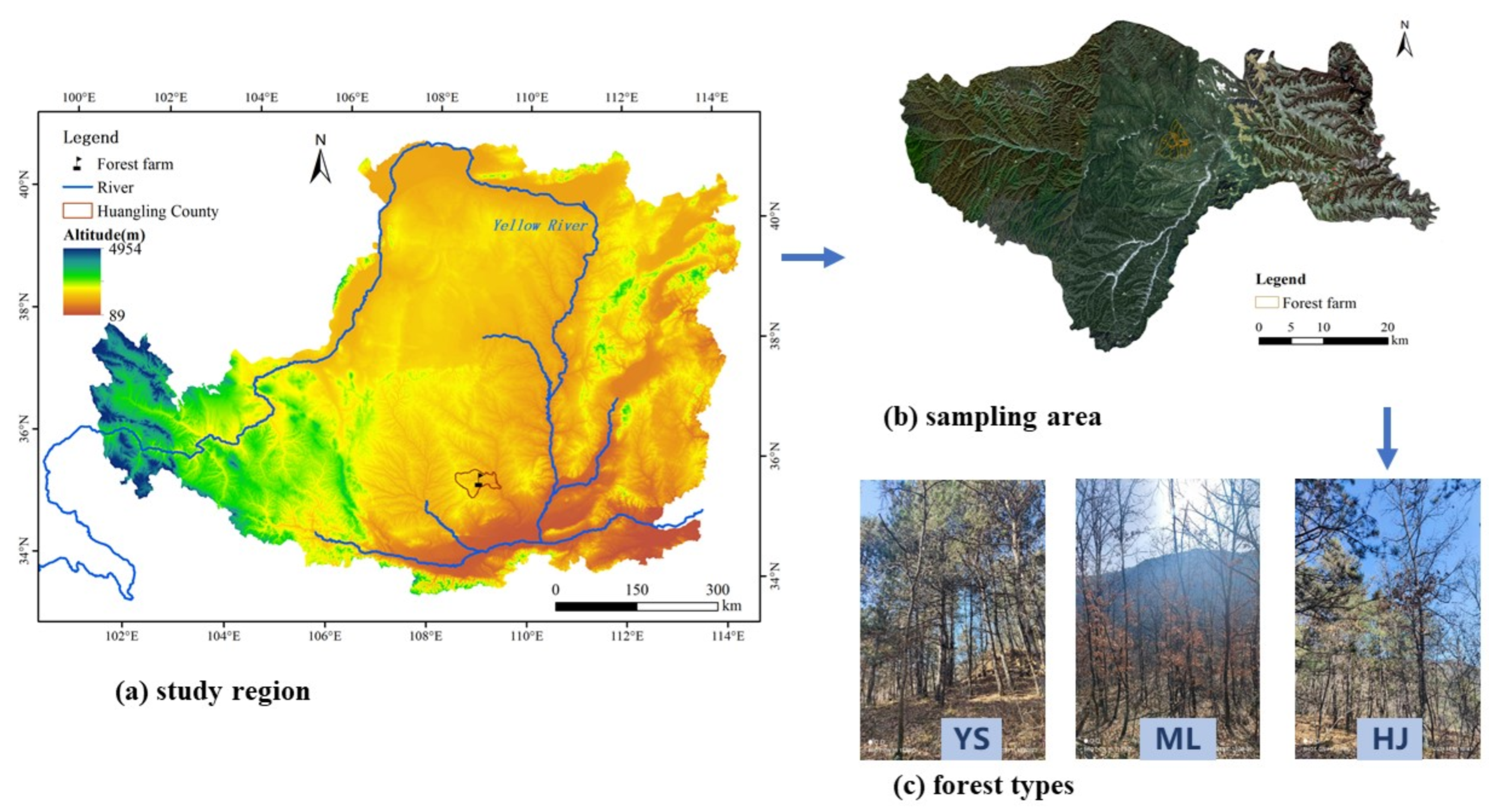
The study was conducted at the Shuanglong State-owned Ecological Experimental Forest Farm in Huangling County, Shaanxi Province, China (108°45′32″–109°1′21″ E, 35°33′7″–35°49′30″ N). The site is located in the central Loess Plateau, with elevations ranging from 900 to 1400 m above sea level. The terrain is dominated by mountains and hills. The region has a warm-temperate continental monsoon climate, with a long-term mean annual precipitation of 609.5 mm, most of which occurs from July to September. The mean annual temperature ranges from 3.42 to 11.90 °C, and the mean annual evaporation is approximately 1202 mm. The relative humidity ranges from 60% to 71%. The dominant soil type in the study area is gray cinnamon soil, and the main vegetation types include Pinus tabuliformis forests, broadleaved forests, and mixed coniferous–broadleaved forests.The location of the study area and the overview of the selected forest stands are shown in Figure 1.
Figure 1. Location of the study area and overview of the forest stands. YS, ML and HJ represent pure Pinus tabuliformis forest, pure Quercus acutissima forest and mixed coniferous–broadleaved forest, respectively.
Forests 17 00693 g001

2.2. Preparation of the Experimental Site and Soil Sampling

Soil profile sampling was conducted in November 2021 in three typical forest types, including pure Pinus tabuliformis forest, pure Quercus acutissima forest, and mixed coniferous–broadleaved forest. For each forest type, three replicate plots were established with the same slope aspect, comparable stand age, and relatively similar site conditions. The plots were non-adjacent and separated by more than 100 m. Each plot covered an area of 10 m × 10 m, resulting in a total of nine plots. The basic stand characteristics and soil physicochemical properties of the sampling plots are shown in Table 1 and Table 2.
The slope angle reported in Table 1 represents the mean value of the three replicate plots within each forest type. The three forest types were naturally restored stands rather than experimentally established stands under identical topographic conditions. During plot establishment, we attempted to reduce site heterogeneity by selecting plots with the same slope aspect, comparable stand age, and relatively similar stand and site conditions. However, complete matching of slope angle among forest types was not possible because of the natural distribution pattern of the restored forest stands.
Within each plot, five sampling points were selected using an S-shaped sampling scheme [26]. Before soil collection, surface litter, visible roots, stones, and other plant residues were carefully removed. Soil samples were collected from the 0–100 cm soil profile at 20 cm intervals, corresponding to five soil depths: 0–20, 20–40, 40–60, 60–80, and 80–100 cm. Samples collected from the same soil depth within each plot were thoroughly mixed to obtain one representative composite sample per depth for each plot. The composite samples were placed in sealed polyethylene bags and transported to the laboratory as soon as possible.
After arrival at the laboratory, each composite sample was divided into two subsamples. One fresh subsample was stored at 4 °C and used as soon as possible for aggregate fractionation and extracellular enzyme activity assays. The other subsample was air-dried at room temperature, gently broken apart along natural planes, and used for soil aggregate-size distribution and physicochemical analyses.

2.3. Soil Aggregate Fractionation

Soil aggregate-size fractions were separated using the dry-sieving method. For the determination of extracellular enzyme activities in different aggregate-size fractions, fresh soil samples stored at 4 °C were gently separated by dry sieving without water immersion. For the determination of aggregate-size distribution and physicochemical properties, air-dried soil samples were separated using the same dry-sieving procedure.
Before aggregate fractionation, soil samples were naturally air-dried until the moisture content reached approximately 3%–5%. Then, 1.5 kg of air-dried soil was passed through a nested sieve set with mesh sizes of 5, 2, 1, 0.5, and 0.25 mm. Six aggregate-size fractions were obtained: >5, 2–5, 1–2, 0.5–1, 0.25–0.5, and <0.25 mm. Each aggregate-size fraction was weighed separately, and the mass percentage of each dry-sieved aggregate fraction was calculated as the mass of the corresponding fraction divided by the total mass of all aggregate fractions. The aggregate fractionation procedure was based on commonly used methods for soil aggregate-size distribution analysis [27]. The mass percentage of each aggregate-size fraction was calculated on an air-dried mass basis.

2.4. Soil Nutrient and Extracellular Enzyme Activity Measurements

Soil samples from each aggregate-size fraction were pretreated before chemical analysis. Samples used for soil organic carbon (SOC), total nitrogen (TN), and total phosphorus (TP) analyses were finely ground and passed through a 0.149 mm sieve. SOC was determined using a multi N/C 3100 analyzer (Analytik, Jena, Germany) after removing inorganic carbon with 1 mol L−1 HCl for 24 h [28]. TN was determined using the sulfuric acid digestion method. Briefly, 1.000 g of air-dried soil was placed into a 100 mL digestion tube, mixed with 1.86 g of catalyst mixture and 5 mL of concentrated H2SO4, and digested at 380 °C for 2 h. Quartz sand was used as the blank control and treated using the same procedure. After digestion, TN was determined using a SmartChem 200 SmartChem 200, AMS Alliance, Italy discrete analyzer.
TP was determined using the acid digestion–molybdenum antimony colorimetric method. Briefly, 0.2000–0.5000 g of air-dried soil was mixed with 5 mL of concentrated H2SO4 and 10 drops of HClO4, and then digested on a digestion block for 2 h. After cooling, the digest was diluted to a fixed volume, and TP was determined using a SmartChem 200 discrete analyzer [29].
Soil extracellular enzyme activities were determined using fresh aggregate-size fractions that had been separated from fresh soil samples stored at 4 °C. The enzyme activities of β-glucosidase (BG), endoglucanase (EG), β-1,4-N-acetylglucosaminidase (NAG), leucine aminopeptidase (LAP), acid phosphatase (ACP), and alkaline phosphatase (ALP) were measured using a microplate fluorometric assay [19]. Briefly, 3.00 g of fresh soil was accurately weighed and mixed with 125 mL of 50 mmol L−1 sodium acetate buffer. The mixture was shaken at 200 rpm for 5 min to prepare a soil slurry. At the beginning of the assay, 150 μL of the soil slurry was transferred into a 2 mL deep 96-well microplate using a pipette, followed by the addition of 50 μL of substrate solution at a concentration of 200 μmol L−1. The prepared microplates were incubated in the dark at 25 °C for 2 h or 4 h, depending on the enzyme assayed. The activities of the six enzymes were then measured using a microplate reader (SpectraMax iD3). SpectraMax iD3, Molecular Devices, USA BG and EG were considered C-acquiring enzymes, NAG and LAP were considered N-acquiring enzymes, and ACP and ALP were considered P-acquiring enzymes. Enzyme activities were expressed as nmol g−1 h−1 [30].

2.5. Statistical Analysis

Statistical analyses were performed using IBM SPSS Statistics 26.0 and RR 4.5.3. Differences in soil aggregate composition and nutrient contents among forest types, aggregate-size fractions, and soil depths were evaluated using ANOVA-based multiple comparisons where appropriate. Before ANOVA-based comparisons, residual normality and homogeneity of variance were examined using the Shapiro–Wilk test and Levene’s test, respectively. When significant differences were detected, multiple comparisons were conducted using the least significant difference test at p < 0.05. The values shown in the tables and figures are presented as means ± standard deviations.
Pearson correlation analysis was used to examine the relationships among soil nutrient variables and extracellular enzyme activities within each forest type. The correlation results were visualized using heatmaps, and statistical significance was indicated at p < 0.05, p < 0.01, and p < 0.001.
Redundancy analysis (RDA) was performed using the vegan package in R as an exploratory constrained ordination method to examine the multivariate associations between soil nutrient variables and extracellular enzyme activity patterns. In the RDA, SOC, TN, and TP were used as constraining soil nutrient variables, and BG, EG, NAG, LAP, ACP, and ALP activities were included as the enzyme activity matrix. RDA was used only to summarize the covariation between soil nutrient status and enzyme activity patterns, rather than to infer causal relationships. The significance of the RDA models was tested using permutation tests.

3. Results

3.1. Soil Aggregate Composition

Across the three forest types, the >5 mm and <0.25 mm aggregate fractions accounted for 35.72%–70.23% and 4.86%–14.65% of total soil aggregates, respectively. For the >5 mm fraction, the mean proportion followed the order YS (58.07%) > HJ (48.78%) > ML (41.60%). In contrast, the <0.25 mm fraction showed the opposite pattern, with ML (13.31%) > HJ (8.99%) > YS (8.26%). The combined proportion of the intermediate aggregate fractions, 0.25–5 mm, also followed the order ML (45.09%) > HJ (42.24%) > YS (33.66%).
With increasing soil depth, the proportion of the >5 mm aggregate fraction increased across all forest types, with more pronounced differences below 60 cm. For the <0.25 mm fraction, YS showed a decreasing trend with increasing soil depth, whereas ML and HJ showed no clear depth-dependent pattern. The combined proportion of the intermediate aggregate fractions, 0.25–5 mm, generally decreased with soil depth, and the differences became more evident below 60 cm. The full aggregate-size distribution under different forest types and soil depths is presented in Table 3.

3.2. Nutrient Contents in Different Aggregate-Size Fractions

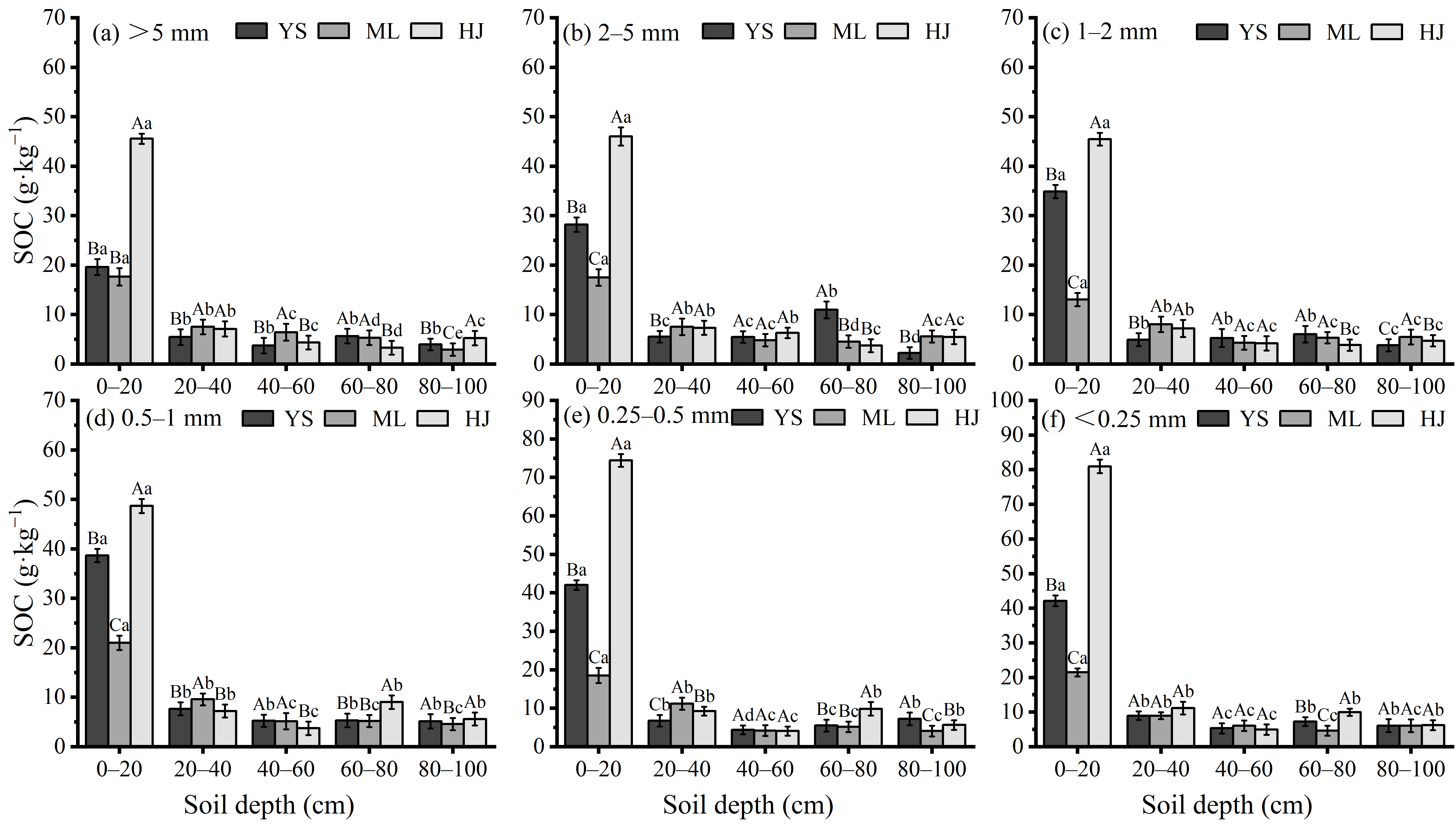
For SOC, the mean content followed the order HJ (16.19 g kg−1) > YS (11.33 g kg−1) > ML (8.54 g kg−1). SOC content decreased with increasing aggregate size, with the highest SOC content observed in the <0.25 mm fraction and the lowest in the >5 mm fraction. Across soil depths, differences in SOC among forest types were mainly concentrated in the 0–40 cm soil layer (Figure 2).
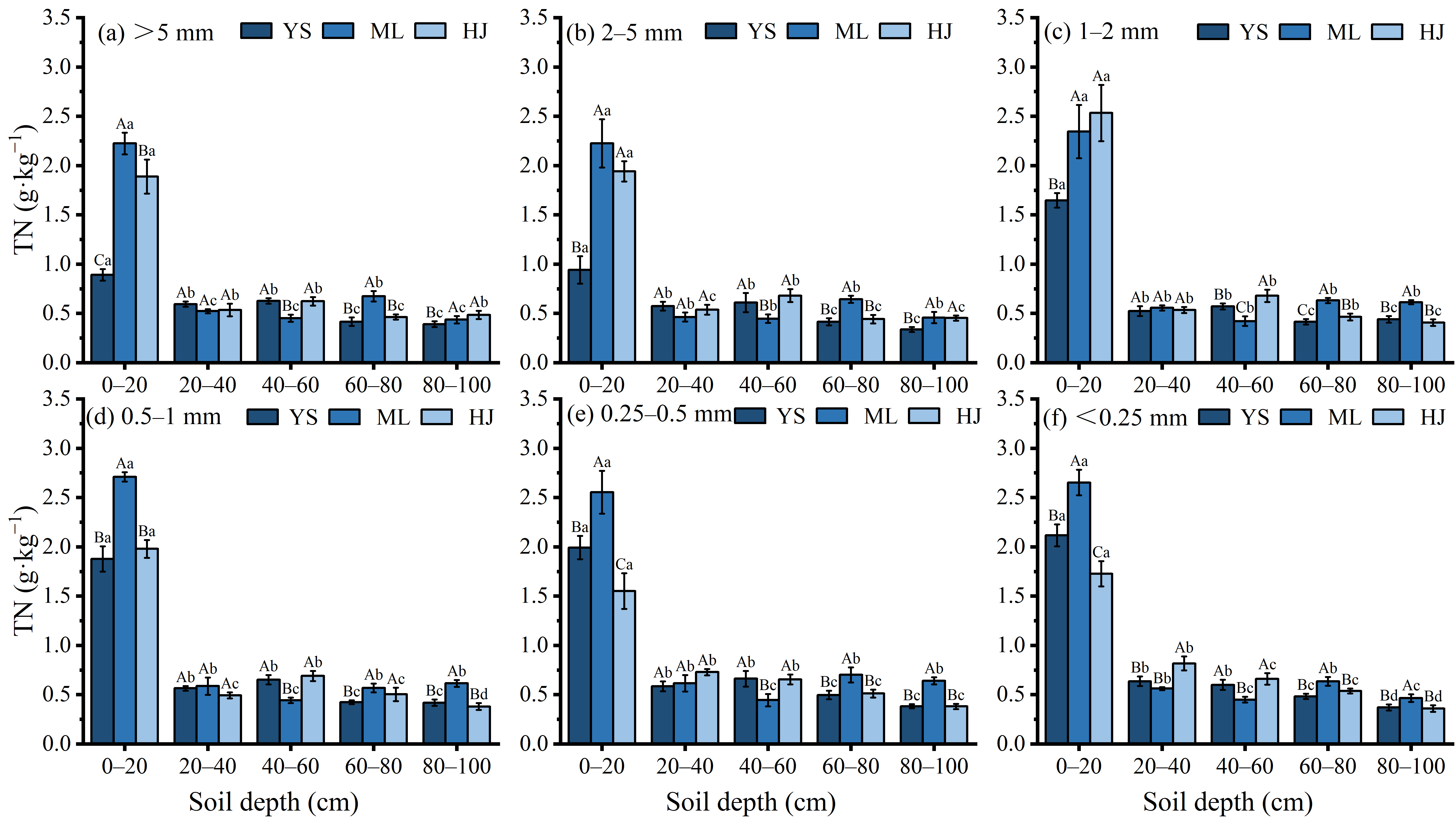
For TN, the mean content followed the order YS (0.95 g kg−1) > ML (0.90 g kg−1) > HJ (0.79 g kg−1). The mean TN content in YS was 20.3% higher than that in HJ. Similar to SOC, TN content decreased with increasing aggregate size and was mainly enriched in aggregate fractions smaller than 1 mm. Along the soil profile, TN was primarily concentrated in the 0–20 cm layer, where differences among forest types were most evident. Below 20 cm, TN differences among forest types were not pronounced (Figure 3).
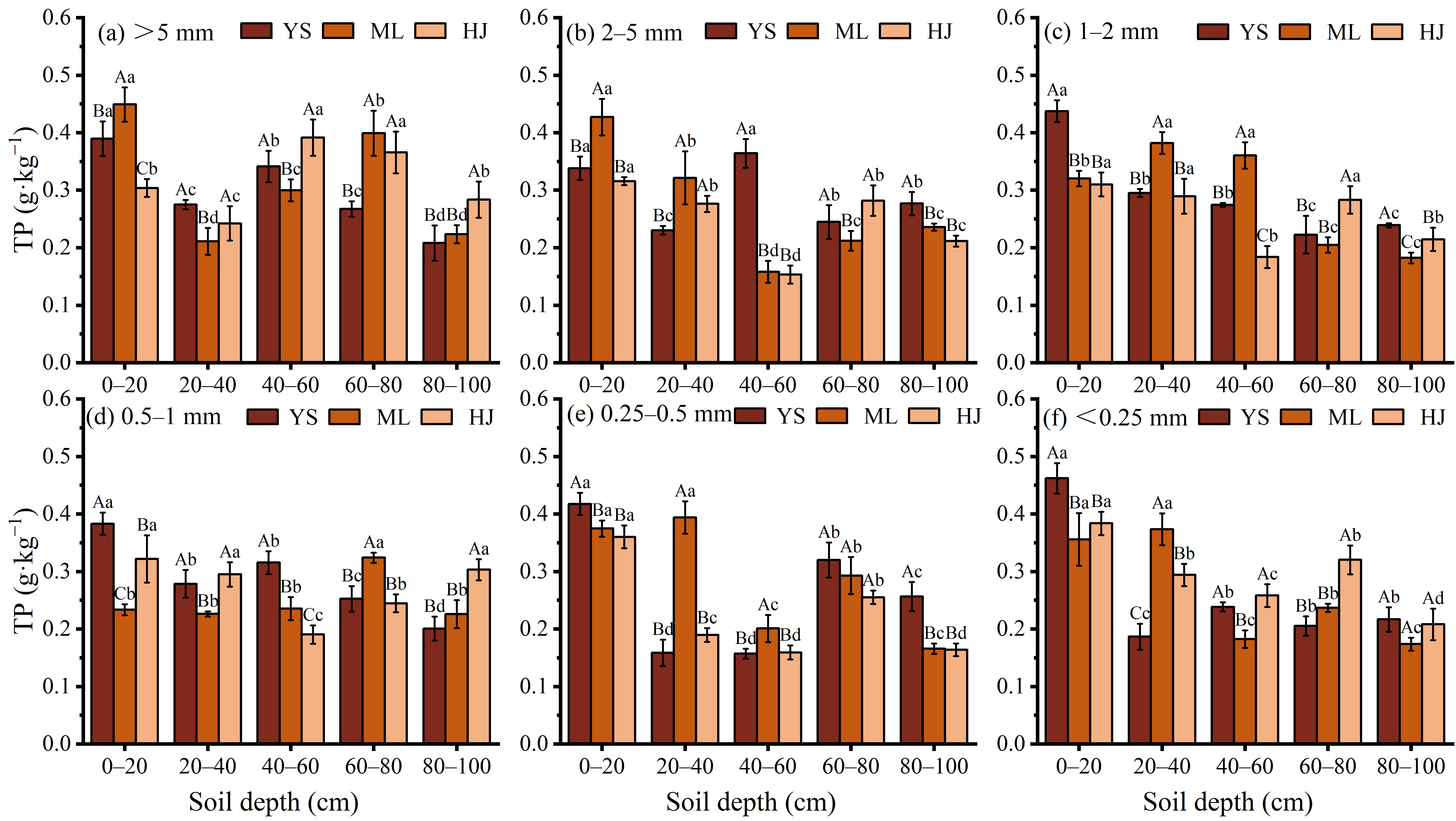
For TP, the mean content followed the order YS (0.283 g kg−1) > ML (0.281 g kg−1) > HJ (0.271 g kg−1). In contrast to SOC and TN, TP content increased with increasing aggregate size and was mainly enriched in the >5 mm fraction. Across soil depths, TP showed no significant differences among forest types (Figure 4).

3.3. Distribution of Soil Aggregate-Associated Enzyme Activities

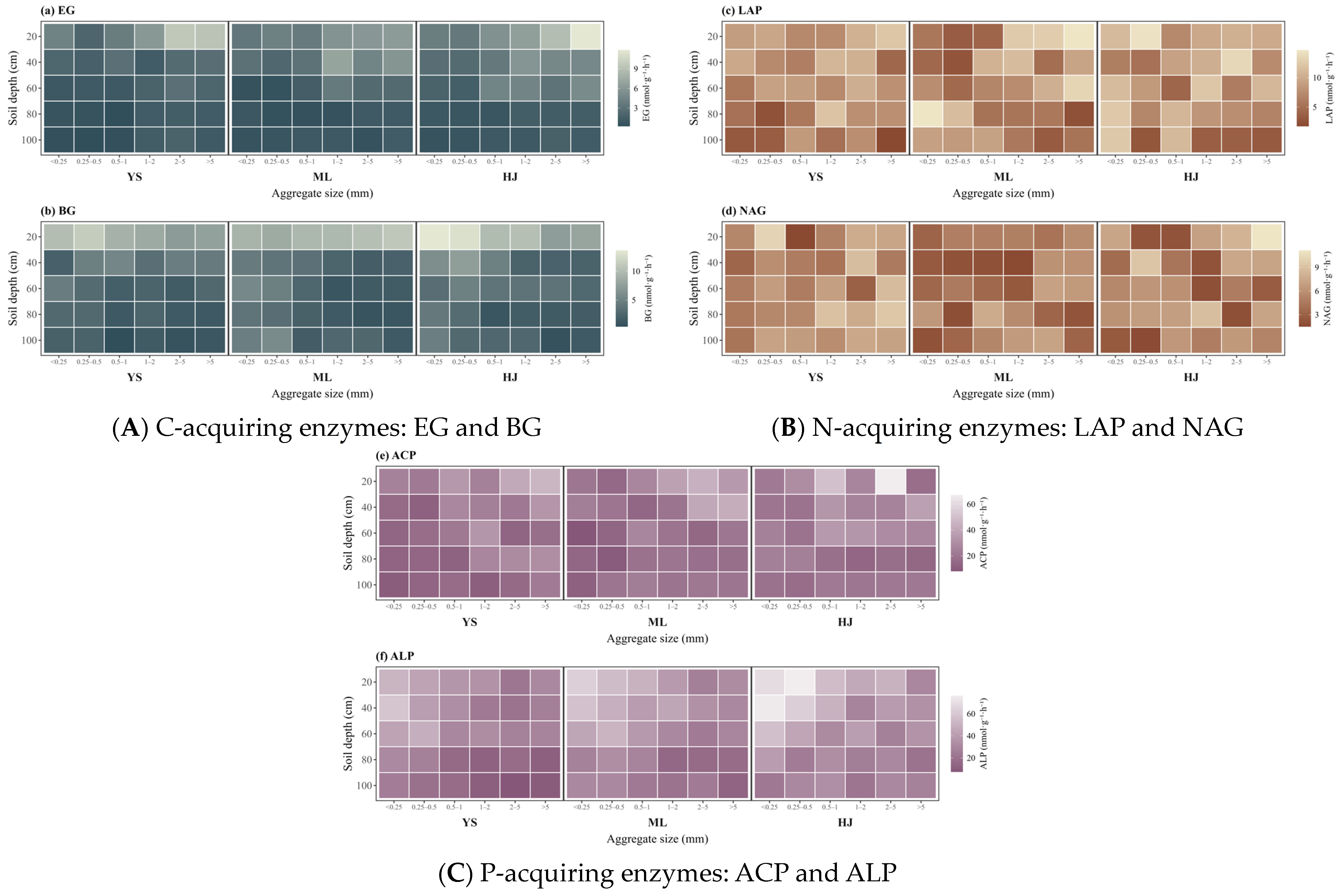
The distribution patterns of C-, N-, and P-acquiring enzyme activities across aggregate-size fractions and soil depths are shown in Figure 5A–C. All extracellular enzyme activities in this section are reported in nmol g−1 h−1. For C-acquiring enzymes, EG activity differed among forest types in the order HJ (4.49) > ML (3.90) > YS (3.68), with significantly higher EG activity in HJ than in YS and ML. Across aggregate-size fractions, EG activity showed no clear directional pattern, although the highest values were generally observed in the >5 mm fraction. EG activity decreased with increasing soil depth. The increase in EG activity in HJ relative to ML and YS was mainly concentrated in the 0–20 cm soil layer, whereas differences among forest types were relatively small below 40 cm. For BG activity, the forest-type pattern was HJ (4.99) < ML (5.01) < YS (5.75). Its variation across aggregate-size fractions was similar to that of EG. With increasing soil depth, BG activity first decreased and then remained relatively stable, and differences among forest types were mainly concentrated in the 0–20 cm soil layer.
For N-acquiring enzymes, LAP activity followed the order HJ (7.39) > ML (7.34) > YS (7.28). LAP activity showed no significant linear trend with increasing aggregate size, although relatively higher values were observed in the >5 mm and 0.5–1 mm fractions. Along the soil profile, LAP activity first decreased and then stabilized. The increase in LAP activity in HJ relative to ML and YS was mainly observed in the 0–60 cm soil layer. For NAG activity, the forest-type pattern was HJ (6.25) > ML (6.08) > YS (5.73). NAG activity first increased and then decreased with increasing aggregate size, reaching its maximum in the 1–2 mm fraction. The enhancement of NAG activity in HJ relative to ML and YS was mainly concentrated in the 0–40 cm soil layer.
For P-acquiring enzymes, ACP activity followed the order HJ (29.45) > ML (23.11) > YS (21.10), with significantly higher ACP activity in HJ than in YS and ML. With increasing aggregate size, ACP activity first increased and then decreased, reaching the highest value in the 0.5–1 mm fraction. ACP activity decreased gradually with increasing soil depth, and HJ showed higher ACP activity than ML and YS across all soil layers. For ALP activity, the forest-type pattern was HJ (23.94) < ML (29.86) < YS (39.07). Across aggregate-size fractions, ALP activity showed an increase–decrease–increase pattern, with the highest value observed in the 0.5–1 mm fraction. ALP activity decreased approximately linearly with increasing soil depth, and HJ showed lower ALP activity than ML and YS across all soil layers.

3.4. Relationships Between Soil Nutrients and Extracellular Enzyme Activities

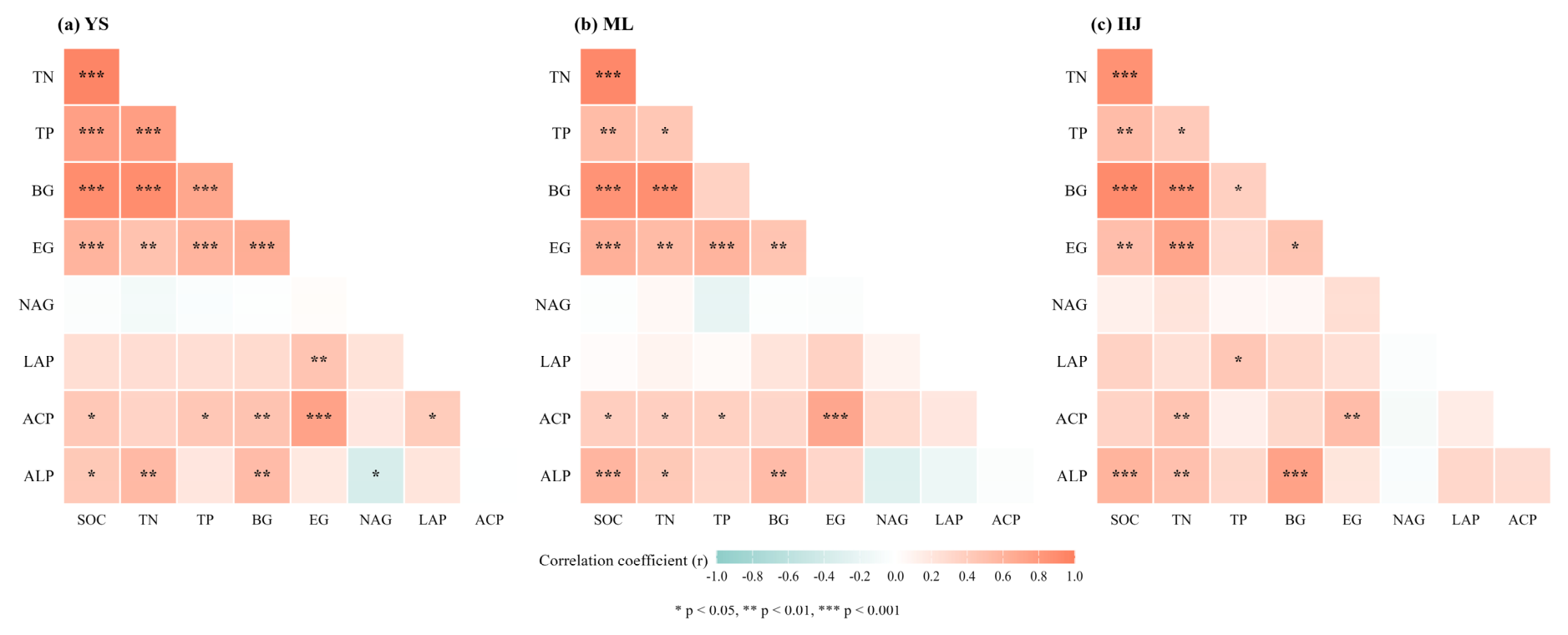
Correlation analysis showed that SOC, TN, and TP were significantly and positively correlated across the three forest types, indicating synchronous variation in basic soil C, N, and P nutrient status (Figure 6). Overall, extracellular enzyme activities were mainly positively correlated with soil nutrient variables, although the strength of these correlations varied among forest types and enzyme classes.
In YS, BG and EG showed the most consistent correlations with SOC, TN, and TP, suggesting close associations between C-acquiring enzyme activities and soil nutrient status. ACP and ALP were significantly correlated only with selected nutrient variables or enzyme activities, whereas NAG and LAP showed relatively weak correlations with nutrient variables. In ML, BG and EG remained significantly correlated with SOC, TN, or TP, but the overall correlation pattern was more scattered than that in YS, indicating a relatively weaker nutrient–enzyme association. In HJ, BG and EG maintained significant positive correlations with SOC, TN, and TP. ACP and ALP were also significantly correlated with selected nutrient variables and C-acquiring enzymes, suggesting closer associations between soil nutrient status and multiple extracellular enzyme activities in the mixed forest. These relationships may reflect coordinated changes between nutrient supply and potential microbial nutrient acquisition.
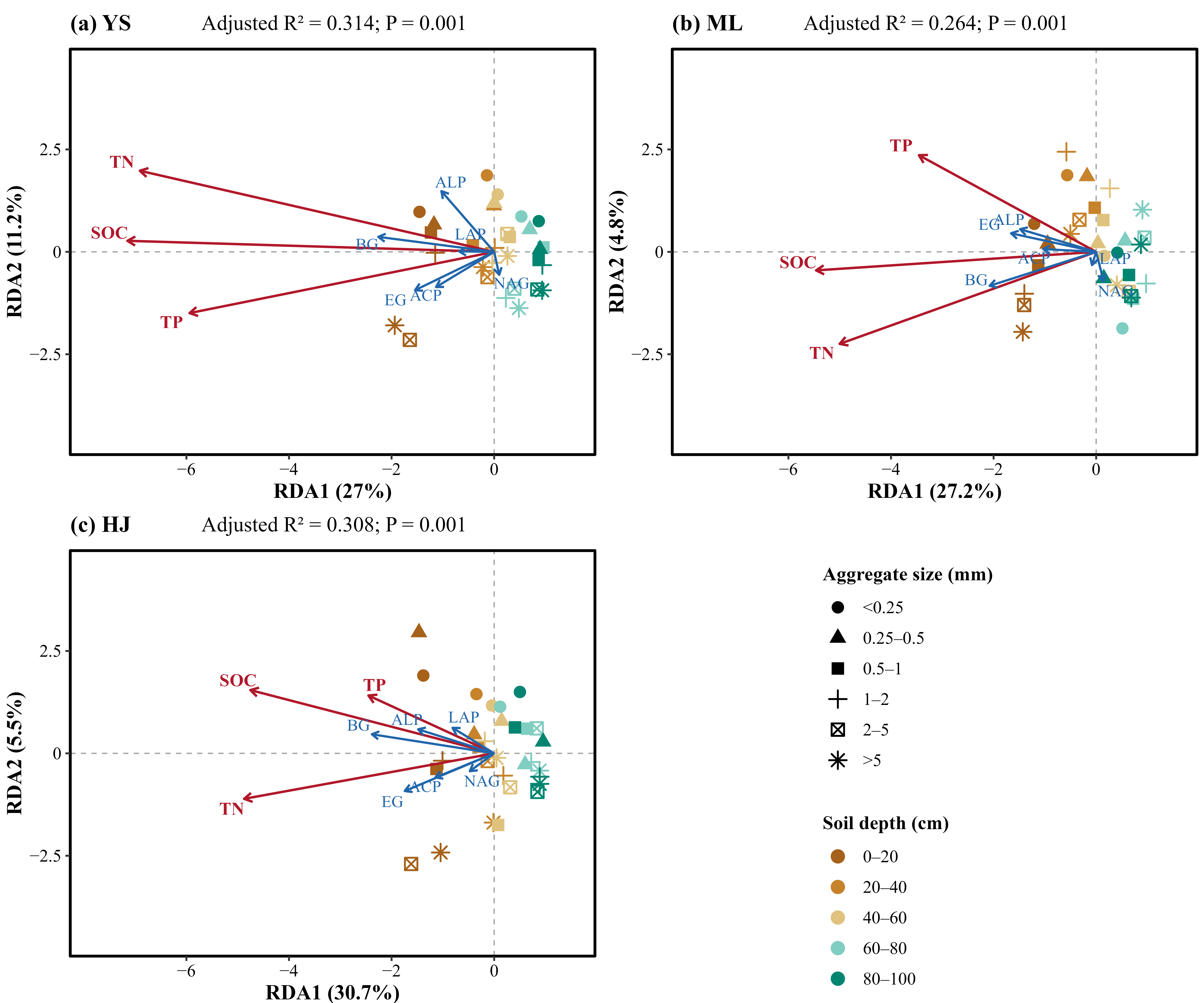
Redundancy analysis (RDA) further showed that extracellular enzyme activity patterns were significantly associated with SOC, TN, and TP across the three forest types (Figure 7). The constrained ordination captured 31.4%, 26.4%, and 30.8% of the variation in enzyme activity patterns for YS, ML, and HJ, respectively, and all models were statistically significant. In all three forest types, RDA1 was the dominant constrained axis, accounting for 27.0%, 27.2%, and 30.7% of the variation in enzyme activity patterns in YS, ML, and HJ, respectively.
Overall, the correlation heatmaps and RDA results jointly indicated consistent associations between soil nutrients and extracellular enzyme activities across the three forest types (Figure 6 and Figure 7). Among these relationships, SOC, TN, and TP showed the most consistent associations with BG and EG, suggesting that C-acquiring enzymes were relatively sensitive to variations in aggregate-associated nutrient status. In contrast, the associations of P-acquiring enzymes, including ACP and ALP, were forest-type specific, whereas N-acquiring enzymes, including NAG and LAP, showed weaker associations with basic nutrient variables. Across the three forest types, nutrient–enzyme associations were relatively stronger in YS and HJ, but weaker in ML.

4. Discussion

4.1. Differences in Aggregate-Associated Nutrient Contents Among Forest Types

This study showed that forest type significantly affected soil SOC and TN contents, whereas its effect on TP was relatively weak. Specifically, SOC content was highest in HJ (16.19 g kg−1), being 42.9% higher than that in YS (11.33 g kg−1) and 89.6% higher than that in ML (8.54 g kg−1). This result suggests that, under the present site conditions, the mixed coniferous–broadleaved forest was associated with higher soil organic carbon content. In contrast, TN content was highest in YS (0.95 g kg−1), followed by ML (0.90 g kg−1) and HJ (0.79 g kg−1), with YS being 20.3% higher than HJ. This indicates that SOC and TN contents did not vary synchronously among forest types. By contrast, TP showed only small differences among YS, ML, and HJ, with the largest difference being approximately 4.4% between YS and HJ, suggesting that forest type was only weakly associated with soil total phosphorus content.
The relatively high SOC content observed in HJ is broadly consistent with previous studies on mixed forests and vegetation restoration. Xiang et al. [31], based on 427 observations across China, found that SOC in mixed plantations was, on average, higher than that in monocultures. The meta-analysis by Guo et al. [21] also showed that mixed planting was associated with improvements in soil physicochemical properties, enzyme activities, and SOC in Chinese fir plantations. These studies provide useful context for interpreting the higher SOC content observed in HJ. However, because the present study was observational and the three forest types were not fully matched in topography and soil chemical properties, our results should be interpreted as stand-associated differences rather than evidence that tree species mixing directly caused higher SOC concentration or improved soil structure.
The asynchronous responses of SOC and TN to forest type observed in this study are consistent with previous findings on differences in SOC and TN distribution during vegetation restoration on the Loess Plateau. Wang et al. [9] found that vegetation restoration could alter aggregate composition, aggregate stability, and the distribution of aggregate-associated SOC and TN. Dong et al. [15] also showed that different forest types were associated with changes in SOC, particulate organic carbon, hyphal length density, and glomalin-related soil protein, which may further influence aggregate stability. In the present study, these processes may partly explain the different responses of SOC and TN among forest types. However, because litter chemistry, root traits, soil organic N fractions, microbial communities, and mineral-associated organic matter were not measured, the mechanism underlying the relatively higher TN content in YS remains uncertain and requires further investigation.
Unlike SOC and TN, TP showed only small differences among the three forest types. This may be because soil phosphorus is more strongly controlled by parent material, mineral composition, pH, soil development, and long-term pedogenic processes. Yang et al. [32] showed that the distribution of total phosphorus in mountain soils across China was strongly influenced by soil development, and that SOC, pH, and Fe could regulate phosphorus accumulation in specific soil layers. Based on a global dataset of natural soil phosphorus pools, He et al. [33] found that different phosphorus fractions were jointly controlled by total phosphorus, pH, soil development, climate, and soil depth. Therefore, compared with SOC and TN, TP may respond more weakly to forest-type differences, and changes in forest stands may affect phosphorus cycling mainly through phosphorus fractions and availability rather than through marked changes in total TP.
After analyzing the overall nutrient differences among forest types, we further examined the distribution of SOC, TN, and TP among different aggregate-size fractions. The results show that SOC and TN contents generally decreased with increasing aggregate size and were mainly enriched in smaller aggregate fractions. Specifically, SOC content was highest in the <0.25 mm fraction, TN was mainly concentrated in the <1 mm fractions, whereas TP was mainly distributed in the >5 mm fraction. These results indicate that C, N, and P had different distribution patterns among aggregate-size fractions.
The enrichment of SOC and TN in smaller aggregate fractions may be related to stronger physical protection and mineral association of organic matter in these fractions. Shi et al. [34] found that plant-derived carbon can be redistributed among aggregate-size fractions during long-term forest succession, with fine-root inputs making an important contribution to organic carbon accumulation within aggregates. However, our results are not fully consistent with some studies emphasizing the contribution of macroaggregates or >0.25 mm aggregates to SOC and TN stocks. Wang et al. [35] suggested that increases in SOC stocks and stability during vegetation restoration were related to SOC concentration in macroaggregates and enhanced chemical stability of SOC in the silt–clay fraction. This discrepancy may arise because previous studies mainly focused on aggregate-associated SOC and TN stocks or their proportional contributions, whereas the present study primarily analyzed nutrient contents within different aggregate-size fractions. These two metrics are not equivalent. Therefore, the enrichment of SOC and TN in smaller aggregate fractions observed in this study should be interpreted as a distribution pattern of nutrient contents among aggregate-size fractions, rather than being directly equated with the contribution of each fraction to total soil C and N stocks.
In summary, under the present site conditions, HJ was associated with higher SOC content, whereas YS showed relatively higher TN content. This indicates that SOC and TN did not vary synchronously among forest types. The relatively weak differences in TP among forest types may reflect the stronger control of parent material and pedogenic processes on total phosphorus. At the aggregate-size scale, SOC and TN were mainly enriched in smaller aggregate fractions, while TP was mainly distributed in the >5 mm fraction. However, litter quality, root biomass, root exudates, microbial communities, mineral-associated organic carbon, and phosphorus fractions were not directly measured in this study. Therefore, the proposed explanations should be regarded as plausible interpretations rather than direct evidence of causal mechanisms. Future studies should combine litter decomposition experiments, root input measurements, microbial community analysis, mineral-associated organic carbon determination, and Hedley phosphorus fractionation to further test how forest type is associated with soil C, N, and P distribution across aggregate-size fractions.

4.2. Enzyme Activities in Soil Aggregates Among Forest Types

Soil extracellular enzymes are important indicators of potential microbial involvement in organic matter decomposition and nutrient transformation, and they reflect the potential capacity of microorganisms to acquire C, N and P resources [17]. In this study, forest type was associated with distinct patterns of aggregate-associated C-, N- and P-acquiring enzyme activities, indicating differences in potential microbial resource acquisition among forest types and aggregate-size fractions.
Among C-acquiring enzymes, EG activity was significantly higher in HJ than in YS and ML, whereas BG activity followed the order YS > ML > HJ. β-glucosidase is mainly involved in the hydrolysis of cellulose-derived products, while EG is closely related to the degradation of structural carbon components such as cellulose [19]. Therefore, the contrasting BG and EG patterns suggest that different C-acquiring enzymes responded differently to forest type. Higher EG activity in HJ may indicate greater potential enzyme activity related to cellulose-derived structural carbon degradation, whereas higher BG activity in YS may reflect stronger potential activity related to the hydrolysis of cellulose-derived products. However, these patterns should not be interpreted as direct evidence of faster carbon decomposition or greater labile carbon availability, because litter chemistry, labile carbon fractions, microbial biomass and microbial community composition were not directly measured. Chen et al. [36] suggested that extracellular enzymes link microbial carbon use processes with soil organic carbon storage, but their effects are jointly regulated by substrate type, microbial metabolism and environmental conditions. Gillespie et al. [37] showed that tree species mixing can influence soil microbial functions indirectly through litter traits, absorptive root traits and soil physicochemical properties. Wan et al. [38] further found that litter carbon content, litter water-holding capacity and root nitrogen content were important predictors of soil microbial biomass and C-, N- and P-acquiring enzyme activities. Men et al. [39] also showed that enzyme responses to litter input changes differed among forest types and that root inputs had strong regulatory effects on enzyme activities.
Among N-acquiring enzymes, LAP and NAG activities both followed the order HJ > ML > YS, suggesting stronger potential enzyme activities related to organic N acquisition in the mixed forest. LAP is associated with the degradation of protein- and peptide-derived substrates, whereas NAG is related to the degradation of chitin-derived organic N substrates. Therefore, the higher LAP and NAG activities in HJ may indicate stronger potential microbial investment in the acquisition of different organic N sources. Men et al. [39] showed that changes in litter and root inputs affected BG, NAG, LAP and ACP activities in forest soils. Guo et al. [21] reported that tree species mixing increased soil carbon pools, water-holding capacity, microbial biomass C and N, and soil enzyme activities. Wu et al. [40] found higher soil enzyme activities and microbial biomass in mixed forests on the Loess Plateau, providing regional evidence that vegetation restoration type can influence soil enzyme activity and microbial nutrient limitation dynamics.
Among P-acquiring enzymes, ACP activity was significantly higher in HJ than in YS and ML, whereas ALP activity followed the order YS > ML > HJ. This contrasting pattern indicates that ACP and ALP responded differently among forest types. However, this differentiation should not be interpreted simply as a forest-type-driven shift in P acquisition, because the three forest soils differed in pH and all soils were slightly to moderately alkaline. In this study, soil pH was lowest in YS (7.58), but higher in ML (8.11) and HJ (8.06). Therefore, the higher ALP activity in YS cannot be explained by a simple positive relationship with soil pH. Instead, the contrasting ACP and ALP patterns may reflect the combined effects of soil pH background, enzyme sources, organic P substrate supply, microbial community composition and enzyme stabilization within aggregates.
The higher ACP activity in HJ may be associated with greater organic matter input, microbial activity, or organic P substrate availability in the mixed forest. However, because organic P fractions, phosphatase-producing microbial groups, and root-derived phosphatase activity were not directly measured, this explanation remains inferential. In contrast, the higher ALP activity in YS may be related to forest-specific microbial sources, substrate conditions, or enzyme stabilization rather than soil alkalinity alone. Previous studies have shown that phosphatase activities are jointly regulated by soil properties, nutrient availability and related microbial communities [41]. ALP activity is also closely associated with soil organic P mineralization and background nutrient conditions such as total N and total C [42]. In addition, forest type can affect soil organic P transformation by altering organic P-mineralizing microorganisms and their community interactions [43]. Soil pH may also contribute to the contrasting patterns of ACP and ALP activities among forest types. ACP generally exhibits greater activity under acidic conditions, whereas ALP tends to be more active in neutral to alkaline soils. Thus, the alkaline soil background may provide generally suitable conditions for ALP activity, but the among-stand ranking of ALP, especially the highest ALP activity in YS despite its relatively lower pH, is likely related to additional factors such as enzyme sources, substrate conditions, microbial communities, and enzyme stabilization within aggregates. Therefore, the opposite responses of ACP and ALP suggest that P-acquiring enzyme activity patterns were shaped by both forest type and soil chemical background, especially pH-related differences, rather than by forest type alone.
At the aggregate-size scale, enzyme activities showed inconsistent peak positions among nutrient cycles, indicating spatial heterogeneity in substrate availability, microbial colonization and enzyme stabilization within aggregates. BG and EG activities were generally higher in the >5 mm fraction, suggesting that larger aggregate fractions may provide favorable microenvironments for C-acquiring enzymes. LAP activity was relatively higher in the >5 mm and 0.5–1 mm fractions, whereas NAG activity peaked in the 1–2 mm fraction, indicating possible differences in the distribution of organic N substrates among aggregate-size fractions. In contrast, ACP and ALP activities first increased and then decreased across aggregate-size fractions, with peak values in the 0.5–1 mm fraction, suggesting that this fraction may be an important functional unit for P-acquiring enzyme activity. Liu et al. [44] showed that C and N contents and extracellular enzyme activities in macroaggregates are sensitive to environmental changes. Wang et al. [45] found that BG, NAG and phosphatase activities can show distinct distribution patterns among aggregate-size fractions. Tian et al. [46] indicated that aggregate-size fractions can influence soil functioning by modifying nutrient distribution, microbial communities and enzyme activities. Feyissa et al. [47] further showed that aggregate-associated C-, N- and P-acquiring enzyme activities are jointly regulated by plant inputs, soil properties, organic matter and microbial characteristics.
Overall, forest type was associated with differentiated aggregate-associated enzyme activity patterns. HJ showed higher EG, LAP, NAG and ACP activities, suggesting stronger potential enzymatic capacity for the acquisition of structural carbon, organic nitrogen and organic phosphorus. In contrast, YS showed higher BG and ALP activities, indicating that some C- and P-acquiring enzymes still showed strong responses under pure forest conditions. At the aggregate-size scale, the >5 mm fraction may be more favorable for maintaining C-acquiring enzyme activities, whereas the 0.5–1 mm and 1–2 mm fractions may represent important aggregate-size fractions with stronger P- and N-acquiring enzyme activities, respectively. Overall, forest type may regulate microbial resource-acquisition strategies by altering substrate inputs and aggregate-scale microenvironments.

4.3. Relationships Between Aggregate-Associated Nutrients and Enzyme Activities

This study showed that SOC, TN, and TP were generally positively correlated with extracellular enzyme activities, indicating that aggregate-associated nutrient status was related to enzyme activity patterns. However, these relationships were not consistent among different enzyme types. BG and EG showed more stable relationships with the measured nutrient variables, suggesting that carbon-acquiring enzymes may be more sensitive to changes in organic matter and substrate conditions within soil aggregates. In contrast, nitrogen- and phosphorus-acquiring enzymes showed weaker and less consistent relationships with total nutrient indicators, indicating that their variations cannot be explained solely by SOC, TN, and TP.
BG and EG are mainly involved in the decomposition of cellulose and its degradation products; therefore, their activities are usually closely related to the supply of organic carbon substrates [48]. In this study, the close relationships between BG, EG, and SOC may reflect the influence of organic matter content within aggregates on carbon-acquiring enzyme activities. Meanwhile, the correlations of BG and EG with TN and TP may partly result from the covariation among SOC, TN, and TP, rather than from the direct regulation of enzyme activities by TN or TP. Previous studies have indicated that extracellular enzyme activities can be used to characterize microbial investment in C, N, and P acquisition [19]. In addition, enzyme activities are generally influenced by substrate quality and availability, microbial biomass and community composition, soil structure, and environmental conditions [17]. Therefore, the correlations between nutrients and enzyme activities should be interpreted as coordinated variations under the joint influence of multiple factors, rather than as direct control by a single nutrient factor.
Unlike BG and EG, NAG, LAP, ACP, and ALP showed weaker relationships with SOC, TN, and TP or exhibited differences among forest types. This result is understandable because TN and TP represent total nitrogen and total phosphorus pools, respectively, and do not directly reflect microbial-available nitrogen and phosphorus substrates. Nitrogen-acquiring enzymes may be more strongly influenced by organic nitrogen substrates, inorganic nitrogen forms, and microbial nitrogen demand, whereas phosphatase activities may be more closely related to organic phosphorus availability, microbial phosphorus demand, rhizosphere processes, and soil chemical conditions [49]. Therefore, there are clear limitations in using TN and TP alone to explain the activities of N- and P-acquiring enzymes. Differences in nutrient–enzyme relationships among forest types may be related to differences in litter inputs, root distribution, and aggregate microenvironments. Previous studies have shown that species mixing can affect soil physicochemical properties and enzyme activities [21]. In addition, litter inputs under different forest types may influence the distribution of organic carbon and enzyme activities by altering substrate supply within aggregates [50]. However, because litter quality, root traits, microbial biomass, microbial community composition, and phosphorus fractions were not measured in this study, these explanations should still be regarded as possible mechanisms rather than direct evidence.
The RDA results further indicated an overall relationship between SOC, TN, TP, and enzyme activity patterns, but their explanatory power was limited. SOC, TN, and TP collectively explained 31.4%, 26.4%, and 30.8% of the variation in enzyme activities in YS, ML, and HJ, respectively. Therefore, the RDA results should be interpreted as descriptive patterns of coordinated variation, rather than as evidence that nutrient status directly controlled extracellular enzyme activities. The remaining unexplained variation may be related to unmeasured factors, such as labile organic substrates, microbial biomass, microbial community composition, soil moisture, pH, root inputs, and aggregate-scale microhabitats. Overall, aggregate-associated nutrients were correlated with extracellular enzyme activities, especially carbon-acquiring enzymes, but these relationships should not be interpreted as direct causal effects.

5. Conclusions

This study compared soil aggregate composition, aggregate-associated nutrient contents, and extracellular enzyme activities across different aggregate-size fractions in the 0–100 cm soil profile of three typical forest stands on the Loess Plateau. The results show that forest type was associated with clear differences in aggregate distribution, aggregate-associated nutrient contents, and enzyme activity patterns. Except for the >5 mm fraction, the proportions of the other aggregate-size fractions generally followed the order ML > HJ > YS, with more pronounced differences below 60 cm. SOC content was highest in HJ and generally decreased with increasing aggregate size, whereas TN and TP contents were highest in YS and showed different aggregate-size patterns. Extracellular enzyme activities also varied with forest type and aggregate-size fraction. HJ showed higher EG, NAG, LAP, and ACP activities, whereas YS showed higher BG and ALP activities. Correlation analysis and RDA further indicated that the relationships between soil nutrients and enzyme activities varied among forest types, with SOC, TN, and TP showing relatively stable associations with BG and EG. However, the explanatory power of SOC, TN, and TP was limited, indicating that nutrient–enzyme relationships should be interpreted as descriptive covariation. Overall, these findings indicate that, under the studied site conditions, the mixed coniferous–broadleaved forest was associated with higher aggregate-associated SOC content and higher potential activities of selected enzymes, particularly EG, NAG, LAP, and ACP. Further verification of the mechanisms underlying these patterns requires additional measurements of litter chemistry, root traits, microbial biomass and community composition, substrate availability, soil moisture, pH, phosphorus fractions, wet aggregate stability, and bulk density-based nutrient stock estimates.

Author Contributions

Conceptualization, J.H., J.M. and Z.L.; methodology, J.H., J.M., P.L., Z.S., L.P. and N.G.; software, J.H.; validation, J.M., P.L. and Z.L.; formal analysis, J.H.; investigation, J.H., Z.S., L.P. and N.G.; resources, P.L. and Z.L.; data curation, J.H., Z.S., L.P. and N.G.; writing—original draft preparation, J.H.; writing—review and editing, J.H., J.M., P.L. and Z.L.; visualization, J.H.; supervision, Z.L.; project administration, Z.L.; funding acquisition, Z.L. All authors have read and agreed to the published version of the manuscript.

Funding

This research was funded by the National Natural Science Foundation of China, grant number U2443212.

Data Availability Statement

The datasets generated for this study are available on request to the corresponding author.

Acknowledgments

The authors thank all colleagues who assisted with field sampling and laboratory analyses.

Conflicts of Interest

The authors declare no conflicts of interest.

References

  1. Yu, Y.; Zhao, W.; Martinez-Murillo, J.F.; Pereira, P. Loess Plateau: From Degradation to Restoration. Sci. Total Environ. 2020, 738, 140206. [Google Scholar] [CrossRef]
  2. Liu, Y.; Kong, C.; Zhang, Y.; Liu, G.; Huang, J.; Li, G.; Du, S. Monitoring and Evaluation of the Effects of Grain for Green Project on the Loess Plateau: A Case Study of Wuqi County in China. Int. J. Appl. Earth Obs. Geoinf. 2024, 132, 104006. [Google Scholar] [CrossRef]
  3. Li, Q.; Liu, Z.; Jin, G. Mixed Forests Provide Higher Levels of Growth and Yield than Monocultures across a Broad Range of Conditions. For. Ecol. Manag. 2024, 566, 122083. [Google Scholar] [CrossRef]
  4. Pardos, M.; Del Río, M.; Pretzsch, H.; Jactel, H.; Bielak, K.; Bravo, F.; Brazaitis, G.; Defossez, E.; Engel, M.; Godvod, K.; et al. The Greater Resilience of Mixed Forests to Drought Mainly Depends on Their Composition: Analysis along a Climate Gradient across Europe. For. Ecol. Manag. 2021, 481, 118687. [Google Scholar] [CrossRef]
  5. Beugnon, R.; Albert, G.; Hähn, G.; Yu, W.; Haider, S.; Hättenschwiler, S.; Davrinche, A.; Rosenbaum, B.; Gauzens, B.; Eisenhauer, N. Improving Forest Ecosystem Functions by Optimizing Tree Species Spatial Arrangement. Nat. Commun. 2025, 16, 6286. [Google Scholar] [CrossRef]
  6. Li, M.; Huang, L.; Meng, M.; Ding, X.; Chen, M.; Cao, Y. Species Mixing Increases Biomass and Alters Architecture of Fine Roots, but Does Not Affect Their Morphological Traits: A Meta-Analysis of Forest Plantations in China. J. Environ. Manag. 2025, 392, 126899. [Google Scholar] [CrossRef] [PubMed]
  7. Augusto, L.; Boča, A. Tree Functional Traits, Forest Biomass, and Tree Species Diversity Interact with Site Properties to Drive Forest Soil Carbon. Nat. Commun. 2022, 13, 1097. [Google Scholar] [CrossRef]
  8. Sun, D.; Qiu, X.; Feng, J.; Ru, J.; Song, J.; Wan, S. Forest Types Control the Contribution of Litter and Roots to Labile and Persistent Soil Organic Carbon. Biogeochemistry 2024, 167, 1609–1617. [Google Scholar] [CrossRef]
  9. Wang, B.; Xu, G.; Ma, T.; Chen, L.; Cheng, Y.; Li, P.; Li, Z.; Zhang, Y. Effects of Vegetation Restoration on Soil Aggregates, Organic Carbon, and Nitrogen in the Loess Plateau of China. CATENA 2023, 231, 107340. [Google Scholar] [CrossRef]
  10. Sha, G.; Chen, Y.; Wei, T.; Guo, X.; Yu, H.; Jiang, S.; Xin, P.; Ren, K. Responses of Soil Microbial Communities to Vegetation Restoration on the Loess Plateau of China: A Meta-Analysis. Appl. Soil Ecol. 2023, 189, 104910. [Google Scholar] [CrossRef]
  11. Tisdall, J.M.; Oades, J.M. Organic Matter and Water-stable Aggregates in Soils. J. Soil Sci. 1982, 33, 141–163. [Google Scholar] [CrossRef]
  12. Six, J.; Conant, R.T.; Paul, E.A.; Paustian, K. Stabilization Mechanisms of Soil Organic Matter: Implications for C-Saturation of Soils. Plant Soil 2002, 241, 155–176. [Google Scholar] [CrossRef]
  13. Yudina, A.; Kuzyakov, Y. Dual Nature of Soil Structure: The Unity of Aggregates and Pores. Geoderma 2023, 434, 116478. [Google Scholar] [CrossRef]
  14. Zhao, Q.; Xu, D.; Qian, J.; Yan, Y.; Guo, F.; Liu, W.; Liu, Y. Effects of Forest Restoration Structure on Soil Aggregate-associated Organic Carbon in the Loess Plateau. Land Degrad. Dev. 2025, 36, 5899–5910. [Google Scholar] [CrossRef]
  15. Dong, X.; Zhao, K.; Wang, J.; Gui, H.; Xiao, Y.; Chen, Z.; Miao, Y.; Han, S. Effects of Forest Types on Soil Carbon Content in Aggregate Faction under Climate Transition Zone. Front. Environ. Sci. 2023, 10, 1052175. [Google Scholar] [CrossRef]
  16. Pan, Z.; Cai, X.; Bo, Y.; Guan, C.; Cai, L.; Haider, F.U.; Li, X.; Yu, H. Response of Soil Organic Carbon and Soil Aggregate Stability to Changes in Land Use Patterns on the Loess Plateau. Sci. Rep. 2024, 14, 31775. [Google Scholar] [CrossRef]
  17. Burns, R.G.; DeForest, J.L.; Marxsen, J.; Sinsabaugh, R.L.; Stromberger, M.E.; Wallenstein, M.D.; Weintraub, M.N.; Zoppini, A. Soil Enzymes in a Changing Environment: Current Knowledge and Future Directions. Soil Biol. Biochem. 2013, 58, 216–234. [Google Scholar] [CrossRef]
  18. Nannipieri, P.; Giagnoni, L.; Renella, G.; Puglisi, E.; Ceccanti, B.; Masciandaro, G.; Fornasier, F.; Moscatelli, M.C.; Marinari, S. Soil Enzymology: Classical and Molecular Approaches. Biol. Fertil. Soils 2012, 48, 743–762. [Google Scholar] [CrossRef]
  19. Sinsabaugh, R.L.; Lauber, C.L.; Weintraub, M.N.; Ahmed, B.; Allison, S.D.; Crenshaw, C.; Contosta, A.R.; Cusack, D.; Frey, S.; Gallo, M.E.; et al. Stoichiometry of Soil Enzyme Activity at Global Scale. Ecol. Lett. 2008, 11, 1252–1264. [Google Scholar] [CrossRef]
  20. Zhou, L.; Liu, S.; Shen, H.; Zhao, M.; Xu, L.; Xing, A.; Fang, J. Soil Extracellular Enzyme Activity and Stoichiometry in China’s Forests. Funct. Ecol. 2020, 34, 1461–1471. [Google Scholar] [CrossRef]
  21. Guo, J.; Feng, H.; McNie, P.; Liu, Q.; Xu, X.; Pan, C.; Yan, K.; Feng, L.; Adehanom Goitom, E.; Yu, Y. Species Mixing Improves Soil Properties and Enzymatic Activities in Chinese Fir Plantations: A Meta-Analysis. CATENA 2023, 220, 106723. [Google Scholar] [CrossRef]
  22. Wu, L.; Zou, B.; Wang, S.; Zhou, L.; Zheng, Y.; Huang, Z.; He, J.-Z. Effects of Multispecies Restoration on Soil Extracellular Enzyme Activity Stoichiometry in Pinus Massoniana Plantations of Subtropical China. Soil Biol. Biochem. 2023, 178, 108967. [Google Scholar] [CrossRef]
  23. Walkiewicz, A.; Bieganowski, A.; Rafalska, A.; Khalil, M.I.; Osborne, B. Contrasting Effects of Forest Type and Stand Age on Soil Microbial Activities: An Analysis of Local Scale Variability. Biology 2021, 10, 850. [Google Scholar] [CrossRef]
  24. Błońska, E.; Lasota, J.; Prażuch, W.; Ilek, A. Vertical Variations in Enzymatic Activity and C:N:P Stoichiometry in Forest Soils under the Influence of Different Tree Species. Eur. J. For. Res. 2025, 144, 83–94. [Google Scholar] [CrossRef]
  25. Fan, Y.; Wu, F.; Yang, Y.; Wang, Y.; Liu, T.; Yang, T.; Mao, C.; Huang, W.; Zhou, S. Tree Functional Identity Drives Soil Enzyme Stoichiometric Ratios and Microbial Nutrient Limitation Responses to Artificial Forest Conversion. Forests 2025, 16, 1327. [Google Scholar] [CrossRef]
  26. Wang, W.; Duan, M.; Zhang, X.; Song, X.; Liu, X.; Cui, D. Determining Optimal Sampling Numbers to Investigate the Soil Organic Matter in a Typical County of the Yellow River Delta, China. Appl. Sci. 2022, 12, 6062. [Google Scholar] [CrossRef]
  27. Kemper, W.D.; Rosenau, R.C. Aggregate Stability and Size Distribution. In Methods of Soil Analysis: Part 1 Physical and Mineralogical Methods; American Society of Agronomy, Inc.: Madison, WI, USA, 1986; Volume 5, pp. 425–442. [Google Scholar] [CrossRef]
  28. Nelson, D.W.; Sommers, L.E. Total Carbon, Organic Carbon, and Organic Matter. In Methods of Soil Analysis: Part 2 Chemical and Microbiological Properties; American Society of Agronomy, Inc.: Madison, WI, USA, 1996; Volume 5, pp. 961–1010. [Google Scholar] [CrossRef]
  29. Sparks, D.L.; Page, A.L.; Helmke, P.A.; Loeppert, R.H.; Soltanpour, P.N.; Tabatabai, M.A.; Johnston, C.T.; Sumner, M.E. (Eds.) Methods of Soil Analysis: Part 3 Chemical Methods; American Society of Agronomy, Inc.: Madison, WI, USA, 1996; Volume 5. [Google Scholar] [CrossRef]
  30. Xiao, L.; Min, X.; Li, Z.; Li, P.; Yu, S.; Ma, J.; Wang, Z. The Impact of Seasonal Variation and Forest Type on Soil Organic Carbon Mineralization in Typical Forest Ecosystems on the Chinese Loess Plateau. Ecol. Indic. 2025, 179, 114176. [Google Scholar] [CrossRef]
  31. Xiang, Y.; Li, Y.; Luo, X.; Liu, Y.; Huang, P.; Yao, B.; Zhang, L.; Li, W.; Xue, J.; Gao, H.; et al. Mixed Plantations Enhance More Soil Organic Carbon Stocks than Monocultures across China: Implication for Optimizing Afforestation/Reforestation Strategies. Sci. Total Environ. 2022, 821, 153449. [Google Scholar] [CrossRef] [PubMed]
  32. Yang, W.; Bing, H.; Tian, X.; Liu, Y.; Zhu, H.; Fang, L.; Wu, Y. Unearthing the Importance of Soil Development in Total Phosphorus Distribution in China’s Mountains. CATENA 2023, 228, 107193. [Google Scholar] [CrossRef]
  33. He, X.; Augusto, L.; Goll, D.S.; Ringeval, B.; Wang, Y.-P.; Helfenstein, J.; Huang, Y.; Hou, E. Global Patterns and Drivers of Phosphorus Fractions in Natural Soils. Biogeosciences 2023, 20, 4147–4163. [Google Scholar] [CrossRef]
  34. Shi, J.; Deng, L.; Gunina, A.; Alharbi, S.; Wang, K.; Li, J.; Liu, Y.; Shangguan, Z.; Kuzyakov, Y. Carbon Stabilization Pathways in Soil Aggregates during Long-Term Forest Succession: Implications from δ13C Signatures. Soil Biol. Biochem. 2023, 180, 108988. [Google Scholar] [CrossRef]
  35. Wang, A.; Zha, T.; Zhang, Z. Variations in Soil Organic Carbon Storage and Stability with Vegetation Restoration Stages on the Loess Plateau of China. CATENA 2023, 228, 107142. [Google Scholar] [CrossRef]
  36. Chen, X.; Cao, J.; Sinsabaugh, R.L.; Moorhead, D.L.; Bardgett, R.D.; Fanin, N.; Nottingham, A.T.; Zheng, X.; Chen, J. Soil Extracellular Enzymes as Drivers of Soil Carbon Storage under Nitrogen Addition. Biol. Rev. 2025, 100, 1716–1733. [Google Scholar] [CrossRef] [PubMed]
  37. Gillespie, L.M.; Hättenschwiler, S.; Milcu, A.; Wambsganss, J.; Shihan, A.; Fromin, N. Tree Species Mixing Affects Soil Microbial Functioning Indirectly via Root and Litter Traits and Soil Parameters in European Forests. Funct. Ecol. 2021, 35, 2191–2204. [Google Scholar] [CrossRef]
  38. Wan, X.; Yu, Z.; Wang, M.; Zhang, Y.; Huang, Z. Litter and Root Traits Control Soil Microbial Composition and Enzyme Activities in 28 Common Subtropical Tree Species. J. Ecol. 2022, 110, 3012–3022. [Google Scholar] [CrossRef]
  39. Men, X.; Bao, Y.; Wu, M.; Liao, C.; Cheng, X. Soil Enzyme Activities Responded Differently to Short-Term Litter Input Manipulation under Coniferous and Broad-Leaved Forests in the Subalpine Area of Southwest China. For. Ecol. Manag. 2023, 546, 121360. [Google Scholar] [CrossRef]
  40. Wu, R.; Wang, Y.; Huo, X.; Chen, W.; Wang, D. Drought and Vegetation Restoration Patterns Shape Soil Enzyme Activity and Nutrient Limitation Dynamics in the Loess Plateau. J. Environ. Manag. 2025, 374, 123846. [Google Scholar] [CrossRef]
  41. Zheng, M.M.; Wang, C.; Li, W.X.; Guo, L.; Cai, Z.J.; Wang, B.R.; Chen, J.; Shen, R.F. Changes of Acid and Alkaline Phosphatase Activities in Long-Term Chemical Fertilization Are Driven by the Similar Soil Properties and Associated Microbial Community Composition in Acidic Soil. Eur. J. Soil Biol. 2021, 104, 103312. [Google Scholar] [CrossRef]
  42. Li, J.; Xie, T.; Zhu, H.; Zhou, J.; Li, C.; Xiong, W.; Xu, L.; Wu, Y.; He, Z.; Li, X. Alkaline Phosphatase Activity Mediates Soil Organic Phosphorus Mineralization in a Subalpine Forest Ecosystem. Geoderma 2021, 404, 115376. [Google Scholar] [CrossRef]
  43. Pan, C.; Sun, C.; Qu, X.; Yu, W.; Guo, J.; Yu, Y.; Li, X. Microbial Community Interactions Determine the Mineralization of Soil Organic Phosphorus in Subtropical Forest Ecosystems. Microbiol. Spectr. 2024, 12, e01355-23. [Google Scholar] [CrossRef]
  44. Liu, X.J.A.; Pold, G.; Domeignoz-Horta, L.A.; Geyer, K.M.; Caris, H.; Nicolson, H.; Kemner, K.M.; Frey, S.D.; Melillo, J.M.; DeAngelis, K.M. Soil Aggregate-Mediated Microbial Responses to Long-Term Warming. Soil Biol. Biochem. 2021, 152, 108055. [Google Scholar] [CrossRef]
  45. Wang, R.; Dorodnikov, M.; Yang, S.; Zhang, Y.; Filley, T.R.; Turco, R.F.; Zhang, Y.; Xu, Z.; Li, H.; Jiang, Y. Responses of Enzymatic Activities within Soil Aggregates to 9-Year Nitrogen and Water Addition in a Semi-Arid Grassland. Soil Biol. Biochem. 2015, 81, 159–167. [Google Scholar] [CrossRef]
  46. Tian, S.; Zhu, B.; Yin, R.; Wang, M.; Jiang, Y.; Zhang, C.; Li, D.; Chen, X.; Kardol, P.; Liu, M. Organic Fertilization Promotes Crop Productivity through Changes in Soil Aggregation. Soil Biol. Biochem. 2022, 165, 108533. [Google Scholar] [CrossRef]
  47. Feyissa, A.; Raza, S.T.; Gomez-Casanovas, N.; Timilsina, A.; Cheng, X. Linking Extracellular Enzyme Activities in Soil Aggregates to Carbon Stabilization along an Elevational Gradient in Alpine Forest and Grassland Ecosystems. CATENA 2025, 250, 108702. [Google Scholar] [CrossRef]
  48. German, D.P.; Weintraub, M.N.; Grandy, A.S.; Lauber, C.L.; Rinkes, Z.L.; Allison, S.D. Optimization of Hydrolytic and Oxidative Enzyme Methods for Ecosystem Studies. Soil Biol. Biochem. 2011, 43, 1387–1397. [Google Scholar] [CrossRef]
  49. Uwituze, Y.; Nyiraneza, J.; Fraser, T.D.; Dessureaut-Rompré, J.; Ziadi, N.; Lafond, J. Carbon, Nitrogen, Phosphorus, and Extracellular Soil Enzyme Responses to Different Land Use. Front. Soil Sci. 2022, 2, 814554. [Google Scholar] [CrossRef]
  50. Wang, S.; Wang, Z.; Fan, B.; Mao, X.; Luo, H.; Jiang, F.; Liang, C.; Chen, J.; Qin, H.; Xu, Q.; et al. Litter Inputs Control the Pattern of Soil Aggregate-Associated Organic Carbon and Enzyme Activities in Three Typical Subtropical Forests. Forests 2022, 13, 1210. [Google Scholar] [CrossRef]
Figure 2. Distribution of soil organic carbon among soil aggregates in experimental plots.Changes in soil organic carbon (SOC) contents in different aggregate-size fractions across soil depths and forest types: (a) >5 mm; (b) 2–5 mm; (c) 1–2 mm; (d) 0.5–1 mm; (e) 0.25–0.5 mm; (f) <0.25 mm. Different uppercase letters indicate significant differences among forest types within the same soil depth and aggregate-size fraction (p < 0.05); different lowercase letters indicate significant differences among soil depths within the same forest type and aggregate-size fraction (p < 0.05).
Forests 17 00693 g002
Figure 3. Distribution of total nitrogen among soil aggregates in experimental plots.Changes in total nitrogen (TN) contents in different aggregate-size fractions across soil depths and forest types: (a) >5 mm; (b) 2–5 mm; (c) 1–2 mm; (d) 0.5–1 mm; (e) 0.25–0.5 mm; (f) <0.25 mm. Different uppercase letters indicate significant differences among forest types within the same soil depth and aggregate-size fraction (p < 0.05); different lowercase letters indicate significant differences among soil depths within the same forest type and aggregate-size fraction (p < 0.05).
Forests 17 00693 g003
Figure 4. Changes in total phosphorus (TP) contents in different aggregate-size fractions across soil depths and forest types: (a) >5 mm; (b) 2–5 mm; (c) 1–2 mm; (d) 0.5–1 mm; (e) 0.25–0.5 mm; (f) <0.25 mm. Different uppercase letters indicate significant differences among forest types within the same soil depth and aggregate-size fraction (p < 0.05); different lowercase letters indicate significant differences among soil depths within the same forest type and aggregate-size fraction (p < 0.05).
Forests 17 00693 g004
Figure 5. Distribution patterns of extracellular enzyme activities in soil aggregates under different forest types. Enzyme activities are expressed as nmol g−1 h−1. (A) C-acquiring enzymes, including EG and BG; (B) N-acquiring enzymes, including LAP and NAG; (C) P-acquiring enzymes, including ACP and ALP. EG, BG, LAP, NAG, ACP, and ALP represent endoglucanase, β-glucosidase, leucine aminopeptidase, β-1,4-N-acetylglucosaminidase, acid phosphatase, and alkaline phosphatase, respectively.
Forests 17 00693 g005
Figure 6. Pearson correlation heatmaps among soil nutrients and extracellular enzyme activities across different forest types: (a) YS; (b) ML; (c) HJ. The color scale represents Pearson correlation coefficients. *, **, and *** indicate significance at p < 0.05, p < 0.01, and p < 0.001, respectively.
Forests 17 00693 g006
Figure 7. Redundancy analysis of the relationships among SOC, TN, TP, and extracellular enzyme activities in soil aggregate fractions under different forest types.
Forests 17 00693 g007
Table 1. Basic characteristics of the sampling plots.
Forest
Type
Slope (°)Elevation (m)Stand Density (Trees·ha−1)Mean Tree Height (m)Mean DBH
(cm)
Canopy ClosureMean Stand Age (Year)
YS18.41158 ± 34.98759.17 ± 1.7119.89 ± 5.860.6829
ML21.71096 ± 21.38508.23 ± 1.2317.45 ± 5.100.6228
HJ25.61142 ± 15.49509.84 ± 1.5914.77 ± 2.870.7228
Note: YS, pure Pinus tabuliformis forest; ML, pure Quercus acutissima forest; HJ, mixed coniferous–broadleaved forest. Values are presented as mean ± standard deviation where applicable.
Table 2. Basic soil properties of the sampling plots.
Forest
Type
pHBulk Density
(g cm−3)
Clay
(%)
Silt
(%)
Sand
(%)
YS7.58 ± 0.011.38 ± 0.1436.27 ± 1.2660.59 ± 1.093.24 ± 1.11
ML8.11 ± 0.011.35 ± 0.1939.26 ± 0.7756.77 ± 0.973.87 ± 0.36
HJ8.06 ± 0.021.41 ± 0.1238.56 ± 0.6457.08 ± 0.674.16 ± 0.08
Note: YS, pure Pinus tabuliformis forest; ML, pure Quercus acutissima forest; HJ, mixed coniferous–broadleaved forest. Values are presented as mean ± standard deviation.
Table 3. Soil aggregate-size distribution under different forest types and soil depths.
Soil DepthForest
Type
Aggregate Size
>5 mm2–5 mm1–2 mm0.5–1 mm0.25–0.5 mm<0.25 mm
0–20 cmYS42.60 ± 4.45 Aa20.38 ± 1.51 Ab12.28 ± 0.72 Ac8.49 ± 1.38 Acd4.41 ± 0.51 Ad11.84 ± 3.54 Ac
ML35.72 ± 4.91 Ba22.59 ± 1.21 Ab14.93 ± 3.51 Abc9.76 ± 1.69 Acd4.43 ± 0.71 Ad12.58 ± 5.01 Acd
HJ36.41 ± 7.25 Ba22.68 ± 2.09 Ab17.26 ± 4.31 Abc9.82 ± 1.25 Acd4.64 ± 1.43 Ad9.19 ± 2.68 Bcd
20–40 cmYS50.25 ± 4.24 Aa17.77 ± 1.74 Bb10.05 ± 1.15 Ac7.24 ± 0.62 Ac4.29 ± 0.78 Ac10.39 ± 2.88 Ac
ML43.82 ± 12.61 Ba19.32 ± 2.02 Ab11.45 ± 1.98 Ab8.72 ± 1.77 Ab4.78 ± 1.30 Ab11.91 ± 5.80 Ab
HJ44.49 ± 5.90 Ba19.83 ± 2.68 Ab12.18 ± 3.04 Abc8.91 ± 2.00 Ac4.61 ± 0.58 Ac9.98 ± 2.81 Bc
40–60 cmYS61.32 ± 10.18 Aa15.06 ± 2.55 Ab8.03 ± 2.18 Ab5.54 ± 1.87 Bb2.94 ± 1.30 Ab7.11 ± 2.96 Bb
ML44.10 ± 9.74 Ca17.58 ± 2.30 Ab10.35 ± 0.32 Ab8.25 ± 1.65 Ab5.07 ± 1.93 Ab14.64 ± 8.46 Ab
HJ54.01 ± 18.62 Ba17.10 ± 6.75 Ab9.56 ± 4.56 Ab7.46 ± 4.12 Ab3.86 ± 1.96 Ab8.01 ± 4.04 Bb
60–80 cmYS65.97 ± 9.05 Aa13.20 ± 2.91 Bb6.70 ± 1.58 Ab4.59 ± 1.38 Cb2.42 ± 0.96 Ab7.12 ± 3.30 Bb
ML40.94 ± 10.52 Ca18.41 ± 2.82 Ab11.17 ± 0.35 Ab10.17 ± 3.57 Ab6.56 ± 3.04 Ab12.76 ± 7.37 Ab
HJ53.43 ± 17.46 Ba16.89 ± 5.41 Ab9.29 ± 3.49 Ab7.00 ± 2.96 Bb4.15 ± 2.15 Ab9.23 ± 5.18 ABb
80–100 cmYS70.23 ± 7.31 Aa12.33 ± 2.13 Bb6.41 ± 2.14 Abc4.19 ± 1.49 Cbc1.98 ± 0.64 Ac4.86 ± 1.16 Cbc
ML43.42 ± 16.36 Ca16.56 ± 1.41 Ab10.31 ± 1.43 Ab9.12 ± 3.53 Ab5.94 ± 3.59 Ab14.65 ± 8.09 Ab
HJ55.54 ± 11.46 Ba15.40 ± 2.76 Ab9.22 ± 2.78 Ab7.38 ± 2.75 Bb3.92 ± 1.59 Ab8.53 ± 1.87 Bb
Note: Values are presented as mean ± SD. Different uppercase letters indicate significant differences among forest types within the same soil depth and aggregate-size fraction. Different lowercase letters indicate significant differences among aggregate-size fractions within the same soil depth and forest type (p < 0.05).
Disclaimer/Publisher’s Note: The statements, opinions and data contained in all publications are solely those of the individual author(s) and contributor(s) and not of MDPI and/or the editor(s). MDPI and/or the editor(s) disclaim responsibility for any injury to people or property resulting from any ideas, methods, instructions or products referred to in the content.