Global Warming Drives Adaptive Distribution Dynamics and Habitat Fragmentation of Castanea seguinii in China



Abstract
1. Introduction
2. Materials and Methods
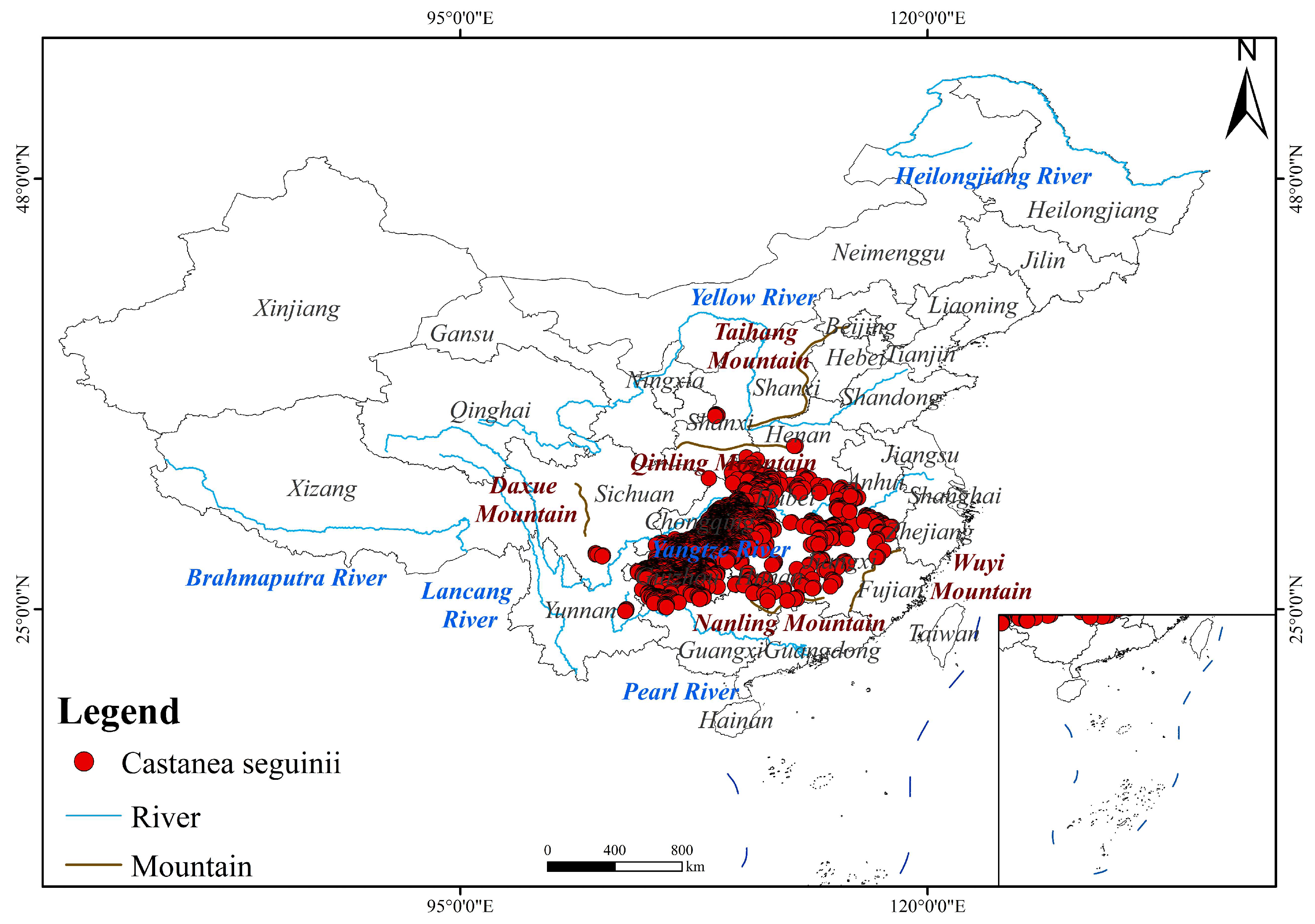
2.1. Data Screening and Processing
2.2. Identification of Driving Variables and Calculation of Ranges
2.3. Computational Model
2.4. Calculation of the Adaptive Distribution
2.5. Calculation of Centroid Migration and Altitude Changes
2.6. Calculation of Fragmentation for Highly Adaptive Distribution
3. Results
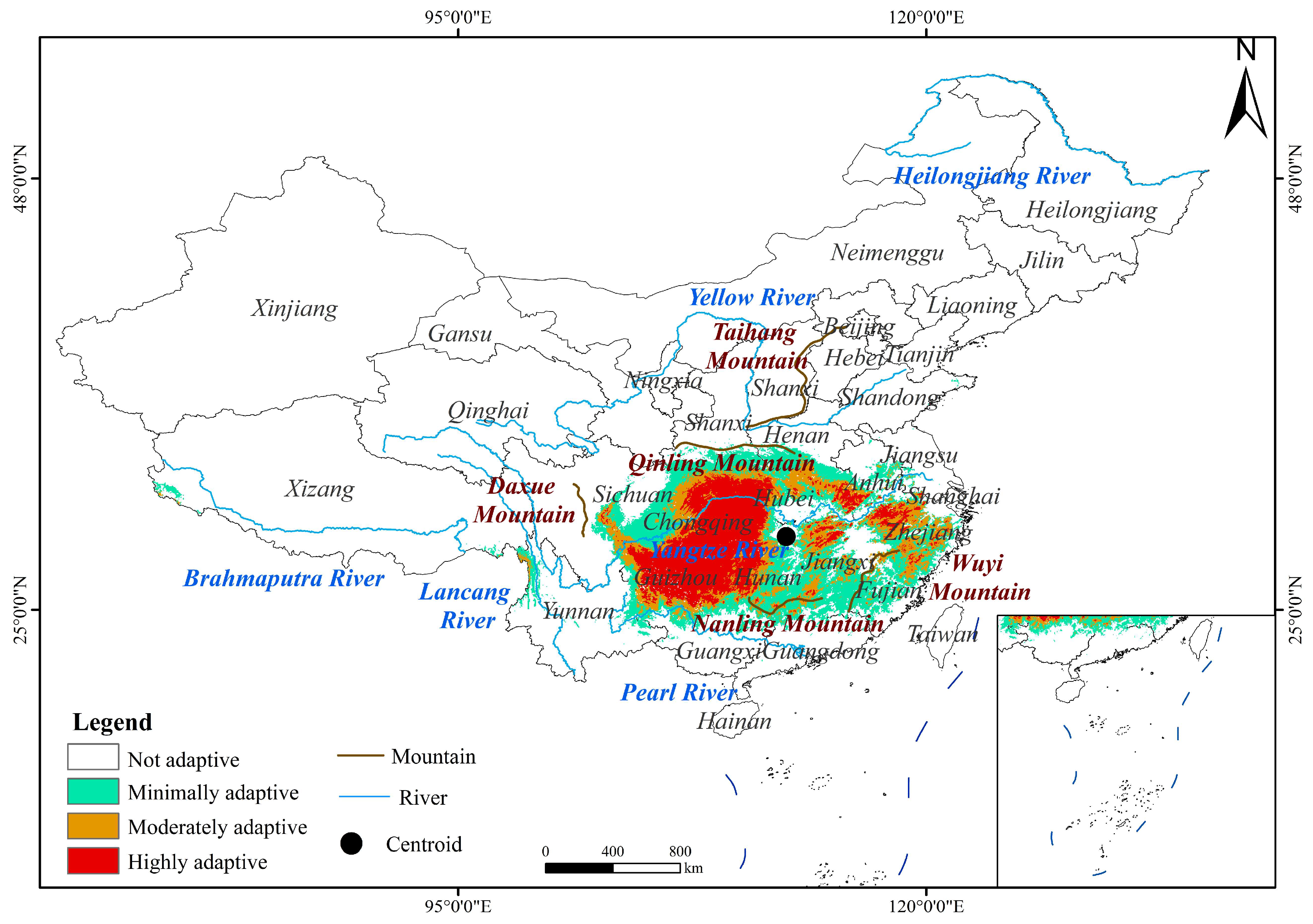
3.1. Adaptive Distribution and Driving Variables
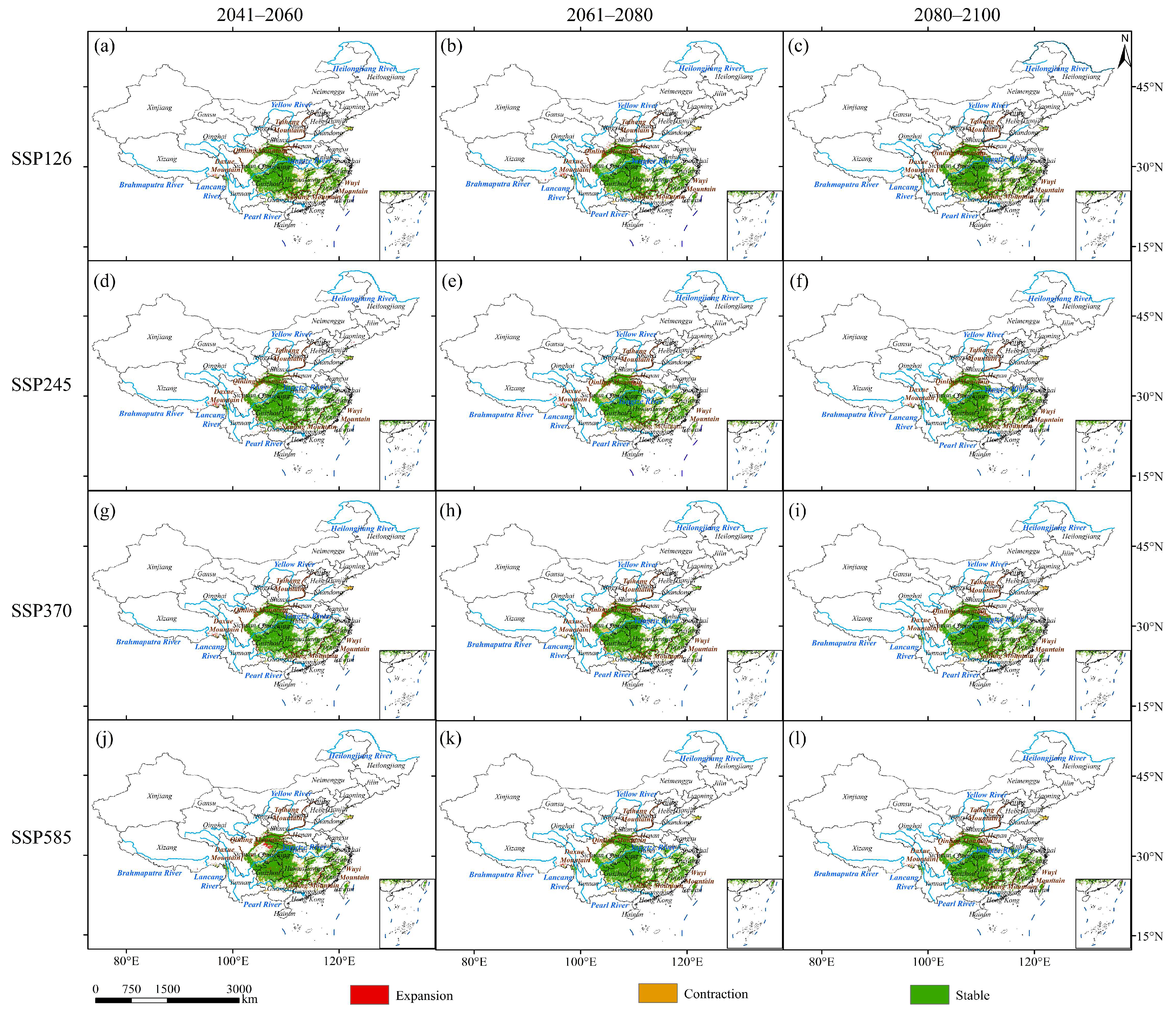
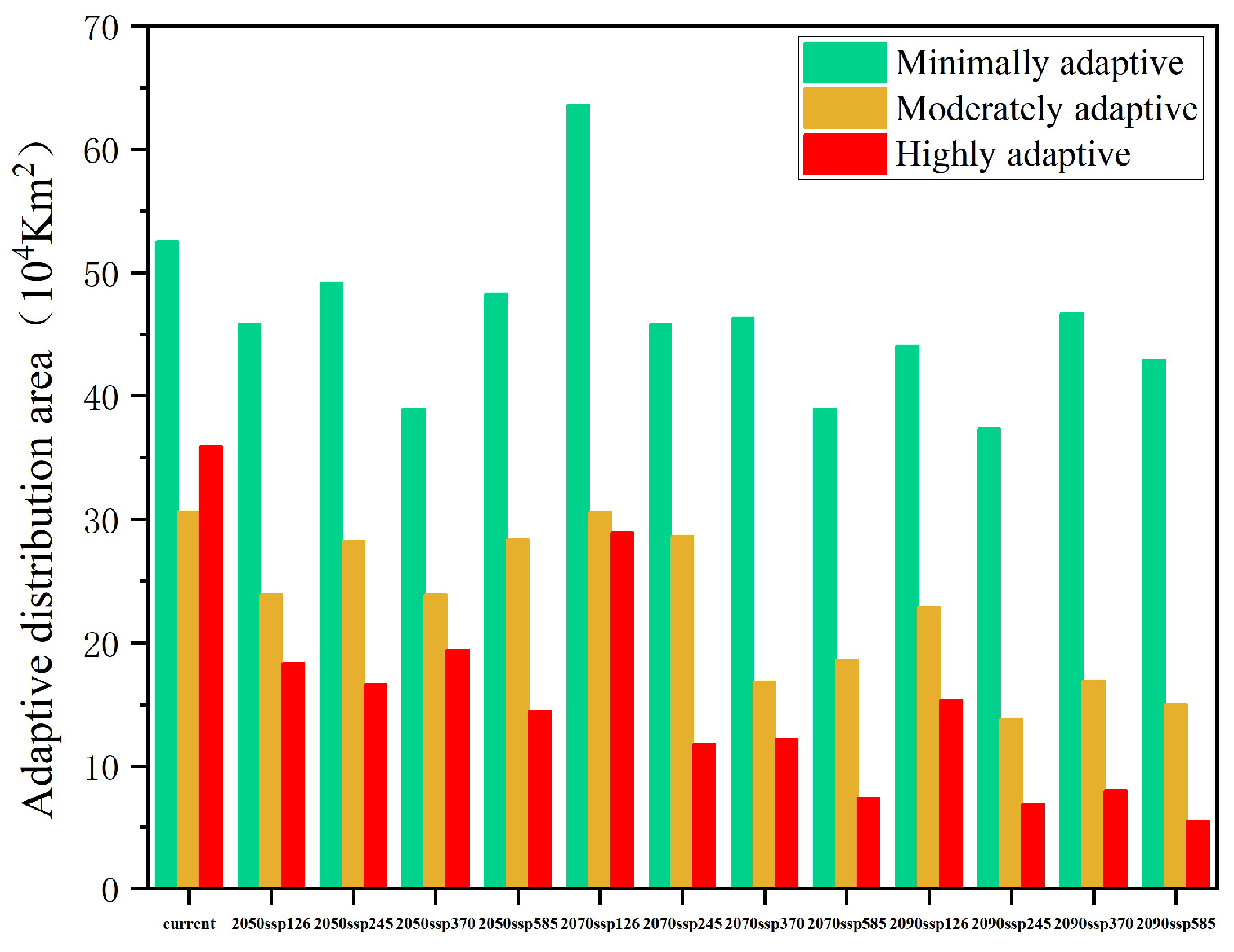
3.2. Expansion and Contraction of the Adaptive Distribution
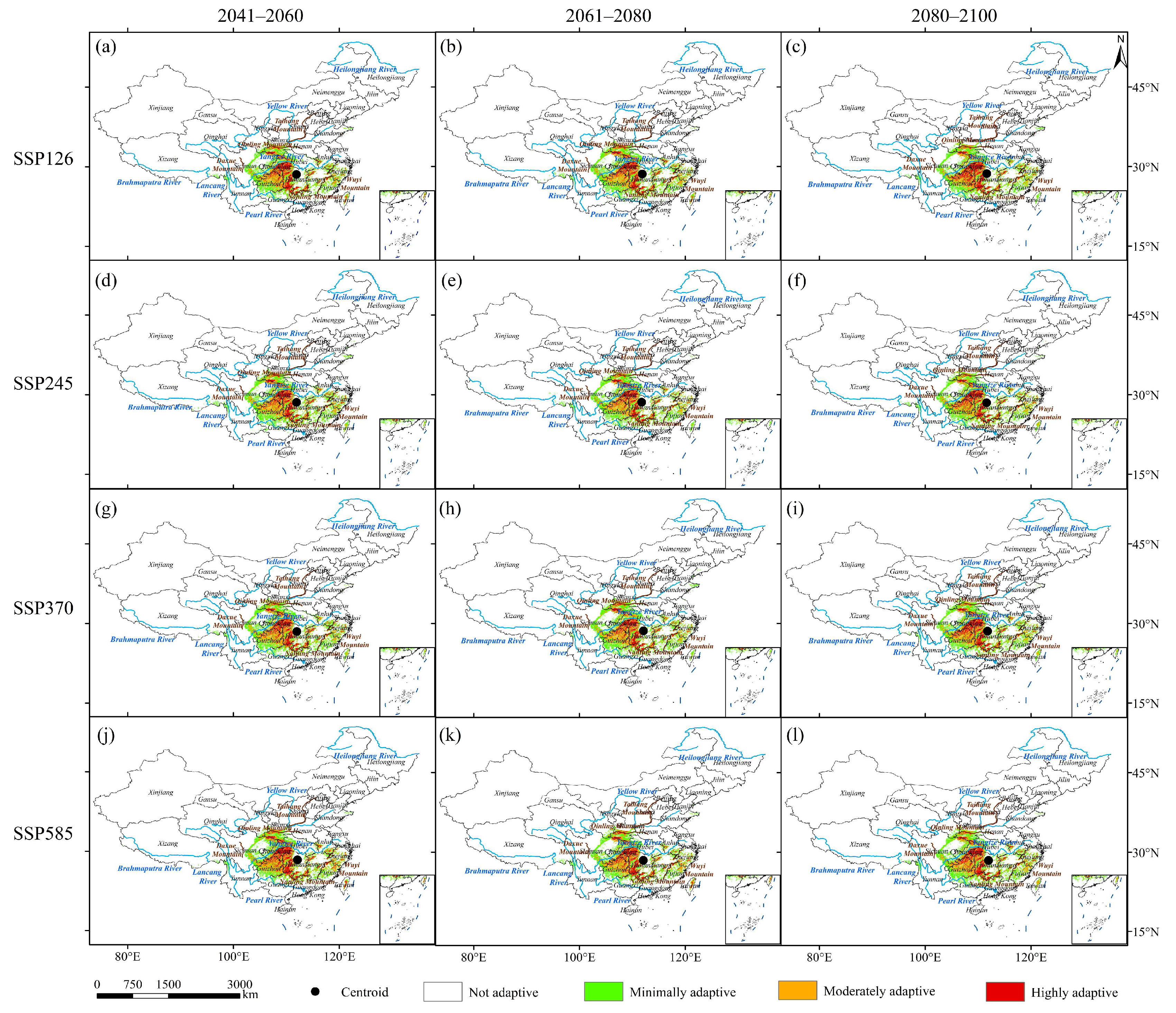
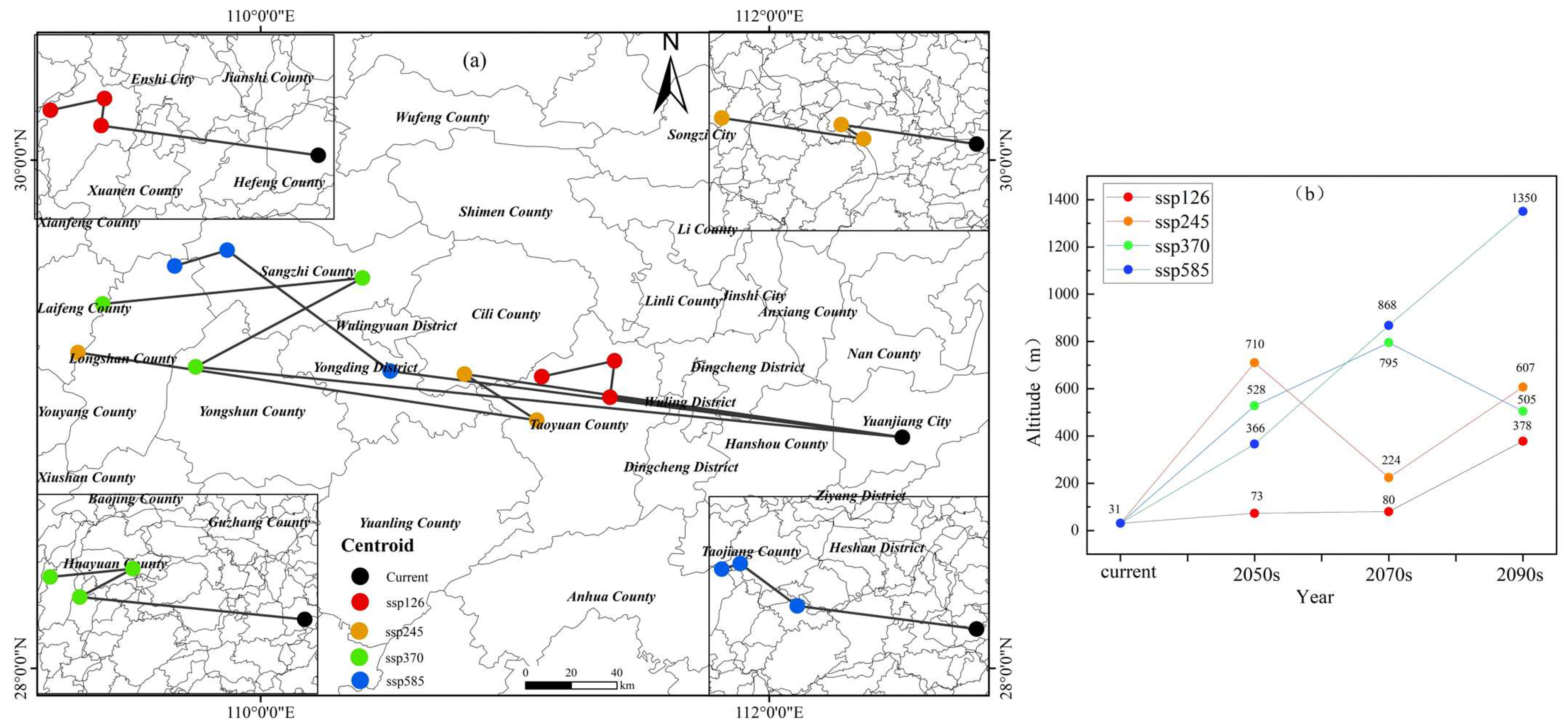
3.3. Centroid Migration and Altitude Change
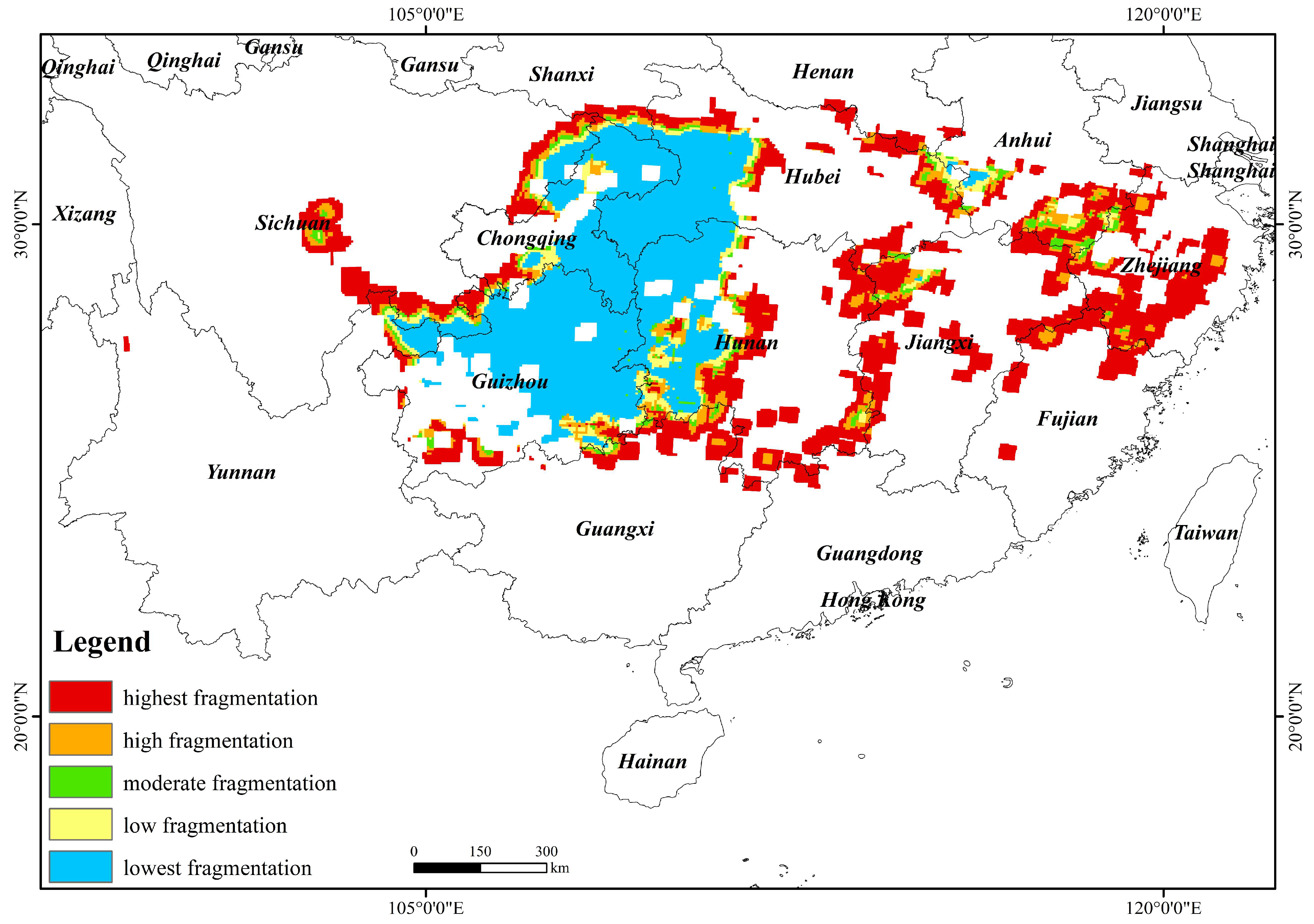
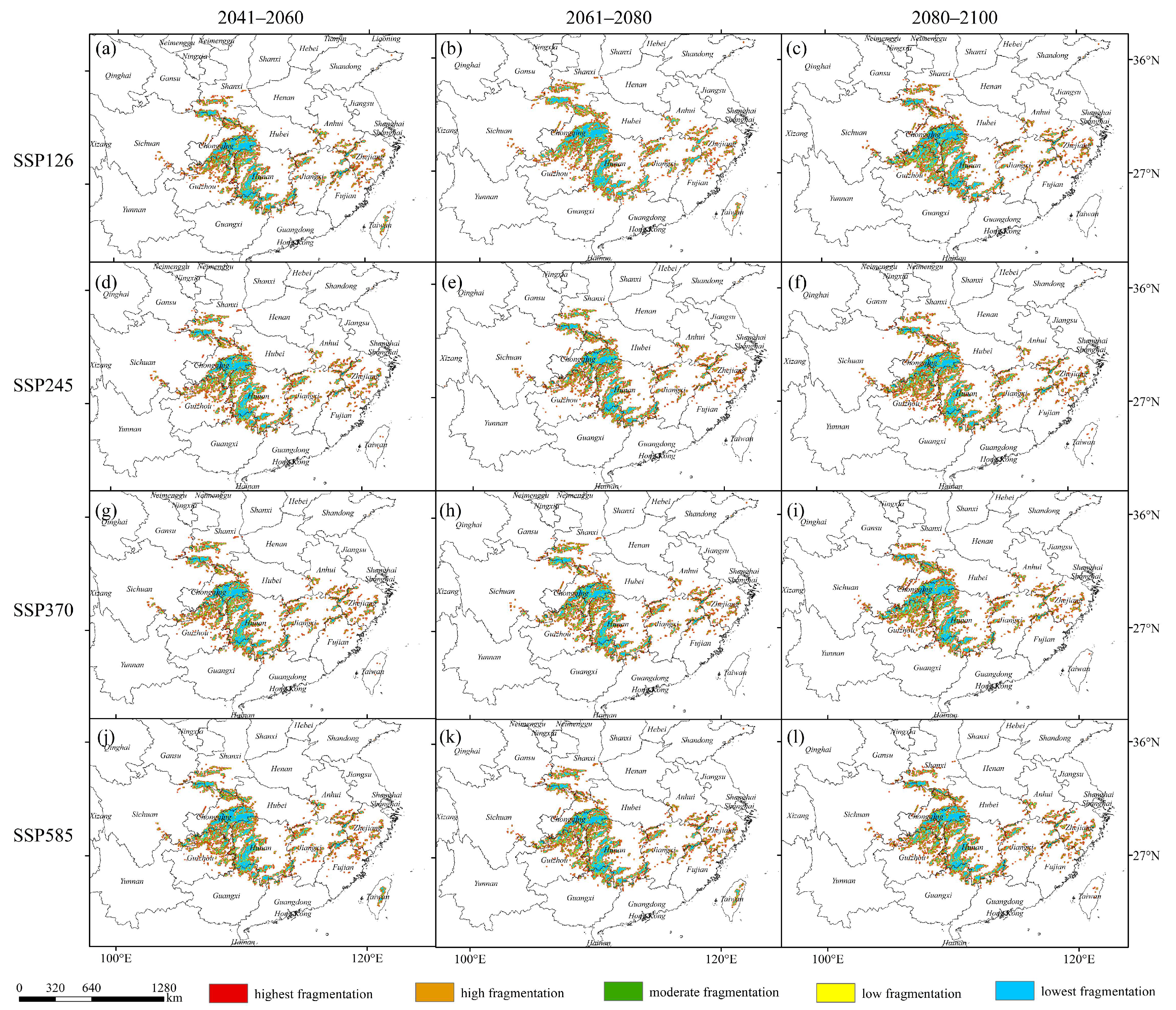
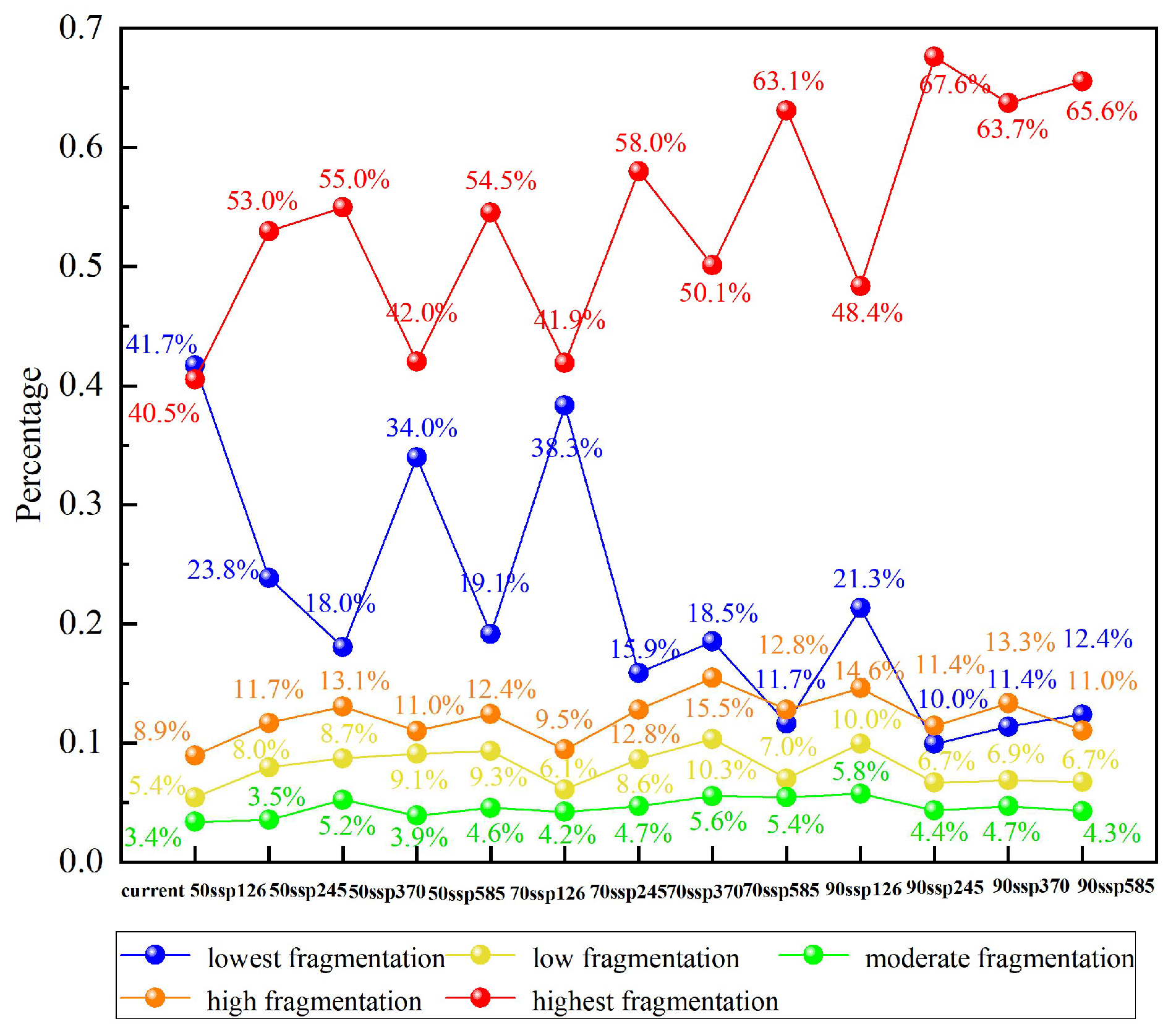
3.4. Climate-Change-Driven Fragmentation of High Adaptive Areas
4. Discussion
5. Conclusions
Author Contributions
Funding
Data Availability Statement
Conflicts of Interest
References
- Ullah, S.; Wu, J.; Shah, J.A.; Wang, X.; Lyu, Y.; Guo, Z.; Ali, K.; Chen, D.; Sun, H. Tree diversity drives understory carbon storage rather than overstory carbon storage across forest types. J. For. Res. 2024, 35, 125. [Google Scholar] [CrossRef]
- Wu, F.; Jia, J.W.; Li, C.; Cao, Y.; Zhao, J.F.; Yan, X.D.; Cui, X.F. Climate changes have alleviated constraints on forest carbon storage capacity since 1970 in most of the Northern Hemisphere. Ecol. Indic. 2024, 169, 112925. [Google Scholar] [CrossRef]
- Zhang, Y.Q.; Fei, X.H.; Liu, F.; Chen, J.X.; You, X.L.; Huang, S.J.; Wang, M.H.; Dong, J.W. Advances in forest management research in the context of carbon neutrality: A bibliometric analysis. Forests 2022, 13, 1810. [Google Scholar] [CrossRef]
- Canadell, J.G.; Raupach, M.R. Managing forests for climate change mitigation. Science 2008, 320, 1456–1457. [Google Scholar] [CrossRef] [PubMed]
- Urban, M.C. Climate change extinctions. Science 2024, 386, 1123–1128. [Google Scholar] [CrossRef] [PubMed]
- Xi, Y.B.; Zhang, W.M.; Wei, F.L.; Fang, Z.X.; Fensholt, R. Boreal tree species diversity increases with global warming but is reversed by extremes. Nat. Plants 2024, 10, 1473–1483. [Google Scholar] [CrossRef] [PubMed]
- Zhao, Y.H.; Xu, L.; Zhang, Y.; Wen, Y.F.; Zhang, D.L. Climate-change impacts on distribution, habitats, sustainability and cultivation planning of two economically and ecologically important forest trees (China fir and Masson pine) in China. Glob. Ecol. Conserv. 2025, 57, e03349. [Google Scholar] [CrossRef]
- Yong, J.; Duan, G.S.; Chen, S.Z.; Lei, X.D. Environmental response of tree species distribution in Northeast China with the joint species distribution model. Forests 2024, 15, 1026. [Google Scholar] [CrossRef]
- Nie, X.; Zhang, Y.; Chu, S.; Yu, W.; Liu, Y.; Yan, B.; Zhao, S.; Gao, W.; Li, C.; Shi, X.; et al. New insights into the evolution and local adaptation of the genus Castanea in east Asia. Hortic. Res. 2024, 11, uhae147. [Google Scholar] [CrossRef]
- Mellano, M.G.; Beccaro, G.L.; Donno, D.; Marinoni, D.T.; Boccacci, P.; Canterino, S.; Cerutti, A.K.; Bounous, G. Castanea spp. biodiversity conservation: Collection and characterization of the genetic diversity of an endangered species. Genet. Resour. Crop Evol. 2012, 59, 1727–1741. [Google Scholar] [CrossRef]
- Wang, Y.; Liu, C.; Fang, Z.; Wu, Q.; Xu, Y.; Gong, B.; Jiang, X.; Lai, J.; Fan, J. A review of the stress resistance, molecular breeding, health benefits, potential food products, and ecological value of Castanea mollissima. Plants 2022, 11, 2111. [Google Scholar] [CrossRef] [PubMed]
- Freitas, T.R.; Santos, J.A.; Silva, A.P.; Fraga, H. Influence of climate change on chestnut trees: A review. Plants 2021, 10, 1463. [Google Scholar] [CrossRef] [PubMed]
- Jacobs, D.F.; Selig, M.F.; Severeid, L.R. Aboveground carbon biomass of plantation-grown American chestnut (Castanea dentata) in absence of blight. For. Ecol. Manag. 2009, 258, 288–294. [Google Scholar] [CrossRef]
- Aitken, S.N.; Yeaman, S.; Holliday, J.A.; Wang, T.; Curtis-McLane, S. Adaptation, migration or extirpation: Climate change outcomes for tree populations. Evol. Appl. 2008, 1, 95–111. [Google Scholar] [CrossRef]
- Beauregard, F. Potential for Northern Range Expansion of the Understory Flora of Temperate Québec: Edaphic, Climatic and Biotic Factors. Ph.D. Thesis, McGill University, Montreal, QC, Canada, 2016. [Google Scholar]
- Lenoir, J.; Gégout, J.C.; Marquet, P.A.; de Ruffray, P.; Brisse, H. A significant upward shift in plant species optimum elevation during the 20th century. Science 2008, 320, 1768–1771. [Google Scholar] [CrossRef]
- Dyderski, M.K.; Paź, S.; Frelich, L.E.; Jagodziński, A.M. How much does climate change threaten European forest tree species distributions? Glob. Chang. Biol. 2018, 24, 1150–1163. [Google Scholar] [CrossRef] [PubMed]
- Phillips, S.J.; Anderson, R.P.; Schapire, R.E. Maximum entropy modeling of species geographic distributions. Ecol. Model. 2006, 190, 231–259. [Google Scholar] [CrossRef]
- He, Y.; Ma, J.; Chen, G. Potential geographical distribution and its multi-factor analysis of Pinus massoniana in China based on the maxent model. Ecol. Indic. 2023, 154, 110790. [Google Scholar] [CrossRef]
- Li, G.; Du, S.; Wen, Z. Mapping the climatic suitable habitat of oriental arborvitae (Platycladus orientalis) for introduction and cultivation at a global scale. Sci. Rep. 2016, 6, 30009. [Google Scholar] [CrossRef]
- Zhang, L.; Jing, Z.; Li, Z.; Liu, Y.; Fang, S. Predictive modeling of suitable habitats for Cinnamomum Camphora (L.) presl using maxent model under climate change in China. Int. J. Environ. Res. Public Health 2019, 16, 3185. [Google Scholar] [CrossRef]
- Yao, Y.; Cheng, T.; Sun, Z.; Li, L.; Chen, D.; Chen, Z.; Wei, J.; Guan, Q. VecLI: A framework for calculating vector landscape indices considering landscape fragmentation. Environ. Model. Softw. 2022, 149, 105325. [Google Scholar] [CrossRef]
- Kupfer, J.A. Landscape ecology and biogeography: Rethinking landscape metrics in a post-FRAGSTATS landscape. Prog. Phys. Geogr. 2012, 36, 400–420. [Google Scholar] [CrossRef]
- Wang, X.; Sun, Y.; Jia, W.; Wang, H.; Zhu, W. Coupling of Forest Carbon Densities with Landscape Patterns and Climate Change in the Lesser Khingan Mountains, Northeast China. Sustainability 2023, 15, 14981. [Google Scholar] [CrossRef]
- Roy, P.S.; Murthy, M.S.R.; Roy, A.; Kushwaha, S.P.S.; Singh, S.; Jha, C.S.; Behera, M.D.; Joshi, P.K.; Jagannathan, C.; Karnatak, H.C.; et al. Forest fragmentation in India. Curr. Sci. 2013, 105, 774–780. [Google Scholar]
- Liu, Y.W.; Zhao, L.; Tan, G.R.; Shen, X.Y.; Nie, S.P.; Li, Q.Q.; Zhang, L. Evaluation of multidimensional simulations of summer air temperature in China from CMIP5 to CMIP6 by the BCC models: From trends to modes. Adv. Clim. Chang. Res. 2022, 13, 28–41. [Google Scholar] [CrossRef]
- Wu, T.; Lu, Y.; Fang, Y.; Xin, X.; Li, L.; Li, W.; Jie, W.; Zhang, J.; Liu, Y.; Zhang, L.; et al. The Beijing climate center climate system model (BCC-CSM): The main progress from CMIP5 to CMIP6. Geosci. Model Dev. 2019, 12, 1573–1600. [Google Scholar] [CrossRef]
- Shamloo, N.; Sattari, M.T.; Kamran, K.V.; Apaydin, H. An integrated artificial intelligence-deep learning approach for vegetation canopy assessment and monitoring through satellite images. Stoch. Environ. Res. Risk Assess. 2025, 39, 1623–1645. [Google Scholar] [CrossRef]
- Díaz-Vallejo, M.; Peña-Peniche, A.; Mota-Vargas, C.; Piña-Torres, J.; Valencia-Rodríguez, D.; Rangel-Rivera, C.E.; Gaviria-Hernández, J.; Rojas-Soto, O. Analyses of the variable selection using correlation methods: An approach to the importance of statistical inferences in the modelling process. Ecol. Model. 2024, 498, 110893. [Google Scholar] [CrossRef]
- Elith, J.; Phillips, S.J.; Hastie, T.; Dudík, M.; Chee, Y.E.; Yates, C.J. A statistical explanation of MaxEnt for ecologists. Divers. Distrib. 2011, 17, 43–57. [Google Scholar] [CrossRef]
- Warren, D.L.; Seifert, S.N. Ecological niche modeling in Maxent: The importance of model complexity and the performance of model selection criteria. Ecol. Appl. 2011, 21, 335–342. [Google Scholar] [CrossRef]
- Merow, C.; Smith, M.J.; Silander, J.A., Jr. A practical guide to MaxEnt for modeling species’ distributions: What it does, and why inputs and settings matter. Ecography 2013, 36, 1058–1069. [Google Scholar] [CrossRef]
- Gao, M.; Zhao, G.; Zhang, S.; Wang, Z.; Wen, X.; Liu, L.; Zhang, C.; Tie, N.; Sa, R. Priority conservation area of Larix gmelinii under climate change: Application of an ensemble modeling. Front. Plant Sci. 2023, 14, 1177307. [Google Scholar] [CrossRef]
- Hou, J.; Xiang, J.; Li, D.; Liu, X. Prediction of potential suitable distribution areas of Quasipaa spinosa in China based on MaxEnt optimization model. Biology 2023, 12, 366. [Google Scholar] [CrossRef] [PubMed]
- de Oliveira Sousa, J.B.; de Sousa Conceição Benathar, I.; Ebling, A.A.; Kohler, S.V.; de Oliveira, X.M.; de Paula Protásio, T.; Rodrigues, M.; Goulart, S.L. Using maximum entropy modeling to predict the potential distributions of genus Copaifera L. in a conservation unit in the Brazilian Amazon. Plant Ecol. 2025, 226, 185–196. [Google Scholar] [CrossRef]
- Zhong, X.; Zhang, L.; Zhang, J.; He, L.; Sun, R. Maxent modeling for predicting the potential geographical distribution of Castanopsis carlesii under various climate change scenarios in China. Forests 2023, 14, 1397. [Google Scholar] [CrossRef]
- Koldasbayeva, D.; Tregubova, P.; Gasanov, M.; Zaytsev, A.; Petrovskaia, A.; Burnaev, E. Challenges in data-driven geospatial modeling for environmental research and practice. Nat. Commun. 2024, 15, 10700. [Google Scholar] [CrossRef]
- Rong, Z.; Zhao, C.; Liu, J.; Gao, Y.; Zang, F.; Guo, Z.; Mao, Y.; Wang, L. Modeling the effect of climate change on the potential distribution of Qinghai spruce (Picea crassifolia Kom.) in Qilian Mountains. Forests 2019, 10, 62. [Google Scholar] [CrossRef]
- Deng, F.; Li, X.B.; Wang, H.; Zhang, M.; Li, X.; Li, R.H. The suitability of geographic distribution and the dominant factors of alfalfa based on MaxEnt model in Xilin Gol. Pratacult. Sci. 2014, 31, 1840–1847. [Google Scholar]
- Zhang, Y.B.; Liu, Y.L.; Qin, H.; Meng, Q.X. Prediction on spatial migration of suitable distribution of Elaeagnus mollis under climate change conditions in Shanxi Province, China. Ying Yong Sheng Tai Xue Bao J. Appl. Ecol. 2019, 30, 496–502. [Google Scholar]
- Yang, G.; Liu, N.; Zhang, X.; Zhou, H.; Hou, Y.; Wu, P.; Zhang, X. Prediction of the potential distribution of Chimonobambusautilis (Poaceae, Bambusoideae) in China, based on the MaxEnt model. Biodivers. Data J. 2024, 12, e126620. [Google Scholar] [CrossRef]
- Mahmoud, A.R.; Farahat, E.A.; Hassan, L.M.; Halmy, M.W.A. Towards optimizing conservation planning: A performance evaluation of modeling techniques for predicting Mediterranean native species distribution. J. Nat. Conserv. 2024, 82, 126733. [Google Scholar] [CrossRef]
- Morales, N.S.; Fernández, I.C. Land-cover classification using MaxEnt: Can we trust in model quality metrics for estimating classification accuracy? Entropy 2020, 22, 342. [Google Scholar] [CrossRef] [PubMed]
- Wang, Y.; Liu, H.; Xu, J.; Yu, S.; Huang, Y.; Zhang, Y.; He, X.; Chen, W. Prediction of suitable planting areas of Rubia cordifolia in China based on a species distribution model and analysis of specific secondary metabolites. Ind. Crops Prod. 2023, 206, 117651. [Google Scholar] [CrossRef]
- Lv, Z.; Jiu, S.; Wang, L.; Xu, Y.; Wang, J.; Liu, X.; Xu, J.; Wang, Y.; Haider, M.S.; Liu, R.; et al. Climate change affects the suitability of Chinese cherry (Prunus pseudocerasus Lindl.) in China. Mol. Hortic. 2025, 5, 26. [Google Scholar] [CrossRef]
- Zhang, F.G.; Zhang, S.; Wu, K.; Zhao, R.; Zhao, G.; Wang, Y. Potential habitat areas and priority protected areas of Tilia amurensis Rupr in China under the context of climate change. Front. Plant Sci. 2024, 15, 1365264. [Google Scholar] [CrossRef]
- Jin, S.; Chi, Y.; Li, X.; Shu, P.; Zhu, M.; Yuan, Z.; Liu, Y.; Chen, W.; Han, Y. Predicting the response of three common subtropical tree species in China to climate change. Front. For. Glob. Chang. 2023, 6, 1299120. [Google Scholar] [CrossRef]
- Liang, J.; Peng, Y.; Zhu, Z.; Li, X.; Xing, W.; Li, X.; Yan, M.; Yuan, Y. Impacts of changing climate on the distribution of migratory birds in China: Habitat change and population centroid shift. Ecol. Indic. 2021, 127, 107729. [Google Scholar] [CrossRef]
- Ma, J.; Li, J.; Wu, W.; Liu, J. Global forest fragmentation change from 2000 to 2020. Nat. Commun. 2023, 14, 3752. [Google Scholar] [CrossRef]
- Rubenstein, M.A.; Weiskopf, S.R.; Bertrand, R.; Carter, S.L.; Comte, L.; Eaton, M.J.; Johnson, C.G.; Lenoir, J.; Lynch, A.J.; Miller, B.W.; et al. Climate change and the global redistribution of biodiversity: Substantial variation in empirical support for expected range shifts. Environ. Evid. 2023, 12, 7. [Google Scholar] [CrossRef]
- Hamann, A.; Wang, T. Potential effects of climate change on ecosystem and tree species distribution in British Columbia. Ecology 2006, 87, 2773–2786. [Google Scholar] [CrossRef]
- Shi, J.; Xia, M.; He, G.; Gonzalez, N.C.T.; Zhou, S.; Lan, K.; Yang, L.; Shen, X.; Jiang, X.; Cao, F.; et al. Predicting Quercus gilva distribution dynamics and its response to climate change induced by GHGs emission through MaxEnt modeling. J. Environ. Manag. 2024, 357, 120841. [Google Scholar] [CrossRef]
- McDowell, W.G.; Benson, A.J.; Byers, J.E. Climate controls the distribution of a widespread invasive species: Implications for future range expansion. Freshw. Biol. 2014, 59, 847–857. [Google Scholar] [CrossRef]
- Yuan, Y.; Zuo, J.; Zhang, H.; Tang, X.; Zu, M. Climate change on potential suitable areas for typical Pinaceae species on the Western Sichuan Plateau. Geocarto Int. 2022, 37, 14739–14757. [Google Scholar] [CrossRef]
- Feeley, K.J.; Zuleta, D. Changing forests under climate change. Nat. Plants 2022, 8, 984–985. [Google Scholar] [CrossRef] [PubMed]
- Zhao, D.; Wu, S. Responses of vegetation distribution to climate change in China. Theor. Appl. Climatol. 2014, 117, 15–28. [Google Scholar] [CrossRef]
- Bai, M.; Dong, Z.; Chen, D.; Zheng, H.; Zhou, F.; Cao, X.; Ou, T.; Fang, K. Different responses of the radial growth of the planted and natural forests to climate change in humid subtropical China. Geogr. Ann. Ser. A Phys. Geogr. 2020, 102, 235–246. [Google Scholar] [CrossRef]
- O’Donnel, M.S.; Ignizio, D.A. Bioclimatic Predictors for Supporting Ecological Applications in the Conterminous United States; US Geological Survey: Reston, VA, USA, 2012. [Google Scholar]
- Kriticos, D.J.; Webber, B.L.; Leriche, A.; Ota, N.; Macadam, I.; Bathols, J.; Scott, J.K. CliMond: Global high-resolution historical and future scenario climate surfaces for bioclimatic modelling. Methods Ecol. Evol. 2012, 3, 53–64. [Google Scholar] [CrossRef]
- Stephenson, N. Actual evapotranspiration and deficit: Biologically meaningful correlates of vegetation distribution across spatial scales. J. Biogeogr. 1998, 25, 855–870. [Google Scholar] [CrossRef]
- Bede-Fazekas, Á.; Somodi, I. Precipitation and temperature timings underlying bioclimatic variables rearrange under climate change globally. Glob. Change Biol. 2024, 30, e17496. [Google Scholar] [CrossRef]
- Li, W.X.; Liu, S.B. Large scaled cedar DBH growth models including climatic variables. J. Cent. South Universlity For. Technol. 2015, 3, 74–77. [Google Scholar]
- Li, W.; Zhang, H.; Xin, Q.; Gu, X.; Ma, H.; Cao, H.; Bao, Z.; Ye, L.; Huai, X. Analysis of extreme precipitation under nonstationary conditions in the Yangtze River Basin. J. Hydrol. Eng. 2025, 30, 05024025. [Google Scholar] [CrossRef]
- Crivova, O. Spatio-temporal analysis of temperature’s variability on the example of mean temperature of the wettest and driest quarter for Republic of Moldova’s territory. In Proceedings of the Integrare Prin Cercetare și Inovare, Chișinău, Moldova, 9–10 November 2023; pp. 151–159. [Google Scholar]
- Gao, C.; Liu, F.; Zhang, C.; Feng, D.; Li, K.; Cui, K. Germination responses to water potential and temperature variation among provenances of Pinus yunnanensis. Flora 2021, 276, 151786. [Google Scholar] [CrossRef]
- Zhang, X.; Rademacher, T.; Liu, H.; Wang, L.; Manzanedo, R.D. Fading regulation of diurnal temperature ranges on drought-induced growth loss for drought-tolerant tree species. Nat. Commun. 2023, 14, 6916. [Google Scholar] [CrossRef]
- Wang, Q.; Wang, C.J.; Wan, J.Z. Relationships between topographic variation and plant functional trait distribution across different biomes. Flora 2022, 293, 152116. [Google Scholar] [CrossRef]
- Giuliani, L.M.; Hallett, P.D.; Loades, K.W. Effects of soil structure complexity to root growth of plants with contrasting root architecture. Soil Tillage Res. 2024, 238, 106023. [Google Scholar] [CrossRef]
- Gxasheka, M.; Gajana, C.S.; Dlamini, P. The role of topographic and soil factors on woody plant encroachment in mountainous rangelands: A mini literature review. Heliyon 2023, 9, e20615. [Google Scholar] [CrossRef] [PubMed]
- Yao, W.; Wang, Z.; Fan, Y.; Liu, D.; Ding, Z.; Zhou, Y.; Hu, S.; Zhang, W.; Ou, J. Prediction of potential habitat distributions and climate change impacts on the rare species Woonyoungia septentrionalis (Magnoliaceae) in China based on MaxEnt. Plants 2024, 14, 86. [Google Scholar] [CrossRef] [PubMed]
- Ao, Q.; Li, H.; Yang, L.; Li, Q.; Long, F.; Xiao, Y.; Zuo, W. Projecting the global potential distribution of nine Rhododendron Subgenus Hymenanthes species under different climate change scenarios. Sci. Rep. 2025, 15, 3459. [Google Scholar] [CrossRef] [PubMed]
- Dyderski, M.K.; Paź-Dyderska, S.; Jagodziński, A.M.; Puchałka, R. Shifts in native tree species distributions in Europe under climate change. J. Environ. Manag. 2025, 373, 123504. [Google Scholar] [CrossRef]
- Thomas, C.D.; Cameron, A.; Green, R.E.; Bakkenes, M.; Beaumont, L.J.; Collingham, Y.C.; Erasmus, B.F.N.; de Siqueira, M.F.; Grainger, A.; Hannah, L.; et al. Extinction risk from climate change. Nature 2004, 427, 145–148. [Google Scholar] [CrossRef]
- Wang, W.J.; Thompson, F.R., III; He, H.S.; Fraser, J.S.; Dijak, W.D.; Jones-Farrand, J. Climate change and tree harvest interact to affect future tree species distribution changes. J. Ecol. 2019, 107, 1901–1917. [Google Scholar] [CrossRef]
- Román-Palacios, C.; Wiens, J.J. Recent responses to climate change reveal the drivers of species extinction and survival. Proc. Natl. Acad. Sci. USA 2020, 117, 4211–4217. [Google Scholar] [CrossRef] [PubMed]
- Braunisch, V.; Coppes, J.; Arlettaz, R.; Suchant, R.; Zellweger, F.; Bollmann, K. Temperate mountain forest biodiversity under climate change: Compensating negative effects by increasing structural complexity. PLoS ONE 2014, 9, e97718. [Google Scholar] [CrossRef] [PubMed]
- Engler, R.; Randin, C.F.; Thuiller, W.; Dullinger, S.; Zimmermann, N.E.; Araujo, M.B.; Pearman, P.B. 21st century climate change threatens mountain flora unequally across Europe. Glob. Change Biol. 2011, 17, 2330–2341. [Google Scholar] [CrossRef]
- Tang, X.; Zhao, J.; Zhou, J.; Zhu, Q.; Sheng, X.; Yue, C. Elevated CO2 shifts photosynthetic constraint from stomatal to biochemical limitations during induction in Populus tomentosa and Eucalyptus robusta. Plants 2024, 14, 47. [Google Scholar] [CrossRef]
- Chang-Sheng, L.; Tao, L.; Rui-wen, Z.; Chao, W.; Xing-le, Q.; Da-qing, L. Growth characteristics and biomass model of Cupressus gigantea sapling. Trees 2024, 38, 27–35. [Google Scholar] [CrossRef]
- Lyu, J.; Wang, J.; Chen, M. Effects of Heat Treatment on the Chemical Composition and Microstructure of Cupressus funebris Endl. Wood. Forests 2024, 15, 1370. [Google Scholar] [CrossRef]
- Yang, J.; Wu, Q.; Dakhil, M.A.; Halmy, M.W.A.; Bedair, H.; Fouad, M.S. Towards forest conservation planning: How temperature fluctuations determine the potential distribution and extinction risk of cupressus funebris conifer trees in China. Forests 2023, 14, 2234. [Google Scholar] [CrossRef]
- Xu, W.; Rhemtulla, J.M.; Luo, D.; Wang, T. Common drivers shaping niche distribution and climate change responses of one hundred tree species. J. Environ. Manag. 2024, 370, 123074. [Google Scholar] [CrossRef]
- Zhu, K.; Song, Y.; Lesage, J.C.; Luong, J.C.; Bartolome, J.W.; Chiariello, N.R.; Dudney, J.; Field, C.B.; Hallett, L.M.; Hammond, M.; et al. Rapid shifts in grassland communities driven by climate change. Nat. Ecol. Evol. 2024, 8, 2252–2264. [Google Scholar] [CrossRef]
- Chakraborty, D.; Ciceu, A.; Ballian, D.; Garzón, M.B.; Bolte, A.; Bozic, G.; Buchacher, R.; Čepl, J.; Cremer, E.; Ducousso, A.; et al. Assisted tree migration can preserve the European forest carbon sink under climate change. Nat. Clim. Chang. 2024, 14, 845–852. [Google Scholar] [CrossRef]
- Kumar, S.; Khanduri, V.P. Impact of climate change on the Himalayan alpine treeline vegetation. Heliyon 2024, 10, e40797. [Google Scholar] [CrossRef]
- Wilson, M.C.; Chen, X.Y.; Corlett, R.T.; Didham, R.K.; Ding, P.; Holt, R.D.; Holyoak, M.; Hu, G.; Hughes, A.C.; Jiang, L.; et al. Habitat fragmentation and biodiversity conservation: Key findings and future challenges. Landsc. Ecol. 2016, 31, 219–227. [Google Scholar] [CrossRef]
- Bruna, E.M.; Fiske, I.J.; Trager, M.D. Habitat fragmentation and plant populations: Is what we know demographically irrelevant? J. Veg. Sci. 2009, 20, 569–576. [Google Scholar] [CrossRef]
- Lemordant, L.; Gentine, P. Vegetation response to rising CO2 impacts extreme temperatures. Geophys. Res. Lett. 2019, 46, 1383–1392. [Google Scholar] [CrossRef]
- Masuda, K.; Setoguchi, H.; Nagasawa, K.; Ishihara, M.I.; Sawa, K.; Horie, K.; Tsuboi, H.; Fukumoto, S.; Tango, T.; Sakaguchi, S. Rear-edge daylily populations show legacies of habitat fragmentation due to the holocene climate warming. J. Biogeogr. 2023, 50, 551–563. [Google Scholar] [CrossRef]


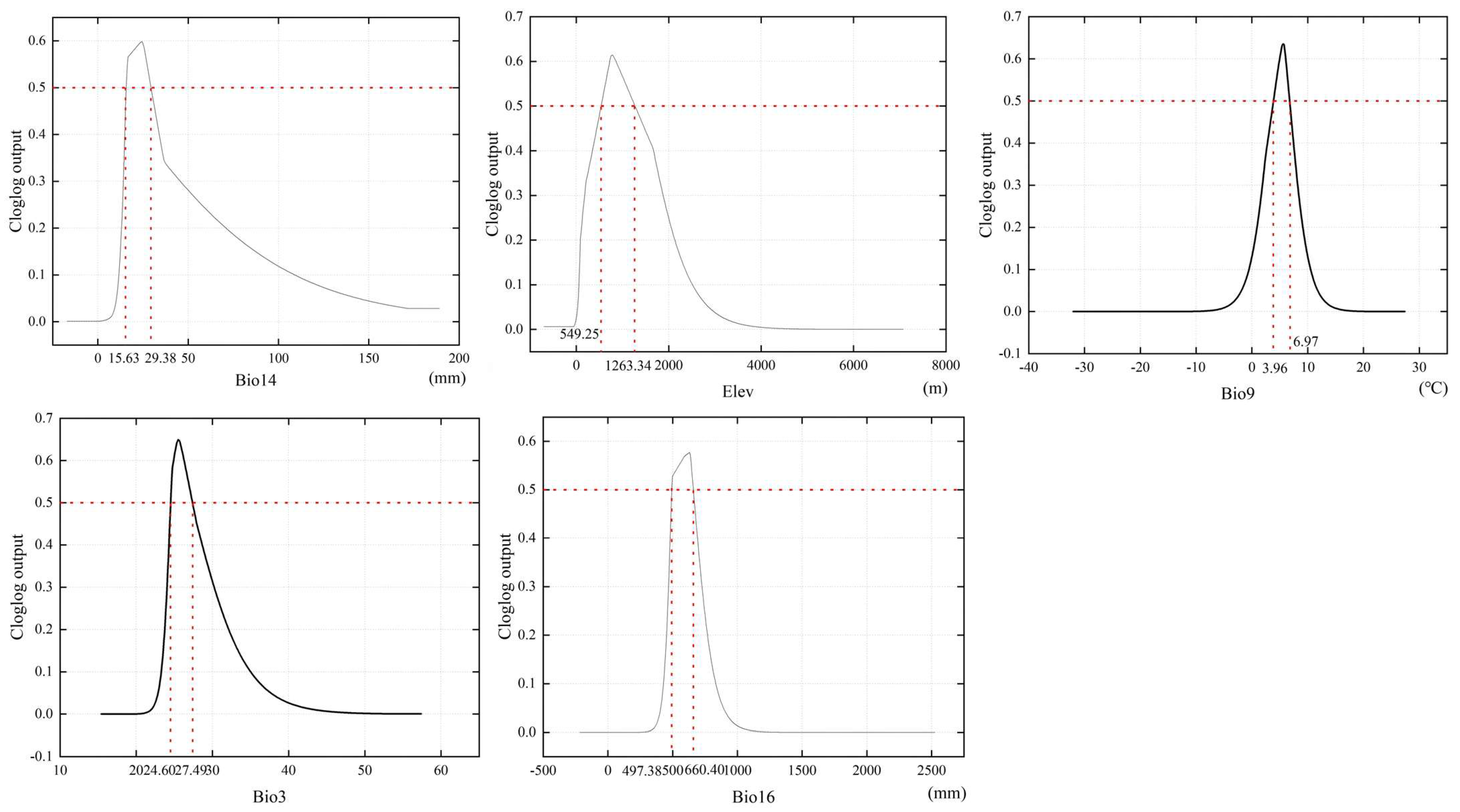



| Variable | Environment Variable | Unite | Percent Contribute | Permutation Importance |
|---|---|---|---|---|
| Bio14 | Precipitation of the driest month | mm | 74.4 | 36.1 |
| Elev | Altitude | m | 10.7 | 15.8 |
| Bio9 | Mean temperature of driest quarter | °C | 10 | 15.3 |
| Bio3 | Isothermality | - | 2.3 | 3.9 |
| Bio16 | Precipitation of the wettest quarter | mm | 1.5 | 14.3 |
| Bio2 | Mean diurnal range | °C | 0.4 | 4.8 |
| Bio15 | Precipitation seasonality | % | 0.3 | 6.3 |
| Bio4 | Temperature seasonality | - | 0.2 | 3.2 |
| T_cec_clay | Cation exchange capacity of cohesive layer soil | cmol/kg | 0.1 | 0.1 |
| T_bs | Basic saturation | % | 0.1 | 0.1 |
Disclaimer/Publisher’s Note: The statements, opinions and data contained in all publications are solely those of the individual author(s) and contributor(s) and not of MDPI and/or the editor(s). MDPI and/or the editor(s) disclaim responsibility for any injury to people or property resulting from any ideas, methods, instructions or products referred to in the content. |
© 2026 by the authors. Licensee MDPI, Basel, Switzerland. This article is an open access article distributed under the terms and conditions of the Creative Commons Attribution (CC BY) license.
Share and Cite
Ma, W.; Zhang, H. Global Warming Drives Adaptive Distribution Dynamics and Habitat Fragmentation of Castanea seguinii in China. Forests 2026, 17, 684. https://doi.org/10.3390/f17060684
Ma W, Zhang H. Global Warming Drives Adaptive Distribution Dynamics and Habitat Fragmentation of Castanea seguinii in China. Forests. 2026; 17(6):684. https://doi.org/10.3390/f17060684
Chicago/Turabian StyleMa, Wenjun, and Huayong Zhang. 2026. "Global Warming Drives Adaptive Distribution Dynamics and Habitat Fragmentation of Castanea seguinii in China" Forests 17, no. 6: 684. https://doi.org/10.3390/f17060684
APA StyleMa, W., & Zhang, H. (2026). Global Warming Drives Adaptive Distribution Dynamics and Habitat Fragmentation of Castanea seguinii in China. Forests, 17(6), 684. https://doi.org/10.3390/f17060684