1. Introduction
Escalating consumer preference for clean label, naturally derived food ingredients has stimulated renewed interest in plant essential oils as multifunctional preservative and antioxidant agents. Unlike synthetic additives, essential oils are generally recognised as safe (GRAS) by regulatory authorities and can simultaneously target microbial spoilage and oxidative deterioration in food matrices [
1,
2]. Their efficacy, however, is intrinsically linked to chemical composition, which is shaped by species identity, plant organ, extraction protocol, and—critically—the environmental conditions prevailing during crop growth and at the time of harvest [
3,
4,
5].
Melaleuca bracteata (
M. bracteata) F. Muell. “Revolution Gold” (golden tea tree;
Myrtaceae) is a perennial ornamental shrub of Australian origin that has been extensively cultivated in subtropical southern China, where it represents an underutilised source of aromatic biomass [
6]. The leaf essential oil is dominated by the phenylpropanoid methyl eugenol, a compound with documented analgesic, anaesthetic, anti-inflammatory, and antioxidant properties [
7,
8]. Despite growing industrial interest in
M. bracteata as a fragrance and cosmetic feedstock [
9,
10], quantitative data linking field climatic conditions to both its chemical composition and food-relevant bioactivities remain absent from the literature. Previous investigations have been largely descriptive and cross-sectional, providing limited guidance for rational harvest management.
Several studies have characterised the essential oil of
M. bracteata, consistently identifying methyl eugenol as the overwhelmingly dominant constituent. Goswami et al. [
11] reported 25 constituents accounting for 97.3–99.7% of the oil from Indian material, with methyl eugenol at 87.2–89.5% and (E)-methyl cinnamate at 2.8–5.4% as the principal secondary component, alongside antibacterial activity against several pathogenic strains [
11]. Li et al. [
12] identified 42 constituents in leaf oil obtained by ultrasound-assisted extraction, again with methyl eugenol (86.5%) and methyl cinnamate (4.33%) as the main compounds, and reported pronounced DPPH and ABTS radical-scavenging activity [
12]. Studies optimising extraction approaches have likewise confirmed methyl eugenol as the target high-value compound [
9]. Together, these reports establish
M. bracteata as a reliable natural source of methyl eugenol, but they have generally treated chemical composition as relatively fixed and have not quantitatively resolved how field-scale climatic variability shapes oil yield or compositional structure—the gap addressed in the present study.
Seasonal variation in essential oil yield and composition is well documented across aromatic species in the Myrtaceae, Lamiaceae, and Apiaceae families [
13,
14,
15,
16,
17], but attributing these changes to specific climatic drivers (temperature, precipitation, relative humidity, wind speed) is methodologically challenging because of intercorrelation among environmental variables and small field sample sizes [
18]. Permutation-based statistical approaches offer a robust solution: they provide valid inference without relying on distributional assumptions that may be violated under low-
n conditions [
19]. Equally important is the translation of compositional data into bioactivity outcomes: understanding how climate-driven compositional shifts propagate into changes in antioxidant capacity is essential for quality assurance and value-added applications [
20].
The present study addresses this gap by characterising M. bracteata leaf essential oil across four seasons and four diurnal time points at a fixed field site in Meizhou, Guangdong. A fixed individual sampling design was adopted to eliminate between plant genetic variance, thereby isolating temporal and climatic effects on oil quality. GC-MS compositional profiling was combined with DPPH and ABTS antioxidant assays, climate-resolved quantitative modelling via permutation regression, and multivariate ordination (NMDS, PERMANOVA, RDA). The specific objectives were: (i) to quantify seasonal and diurnal variation in essential oil yield and composition; (ii) to evaluate how these compositional changes translate into antioxidant bioactivity; and (iii) to establish quantitative relationships between climatic predictors, key chemical constituents, and antioxidant outcomes—thereby defining the optimal harvest window for M. bracteata in a subtropical cultivation context.
2. Materials and Methods
2.1. Plant Material, Sampling Design, and Essential Oil Extraction
A single
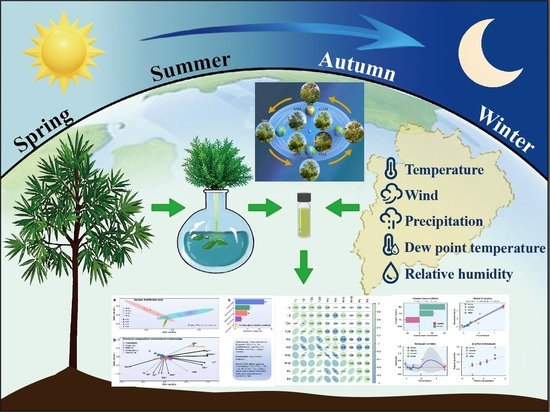
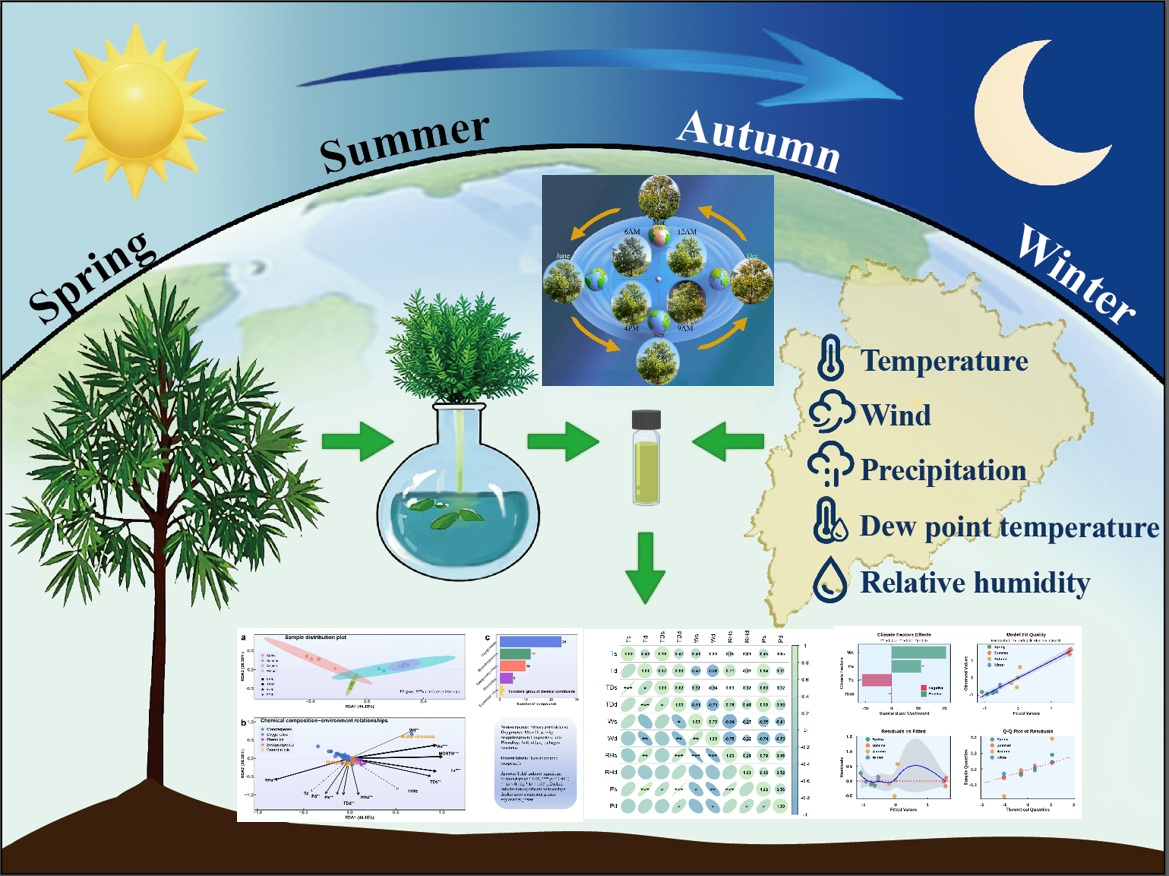
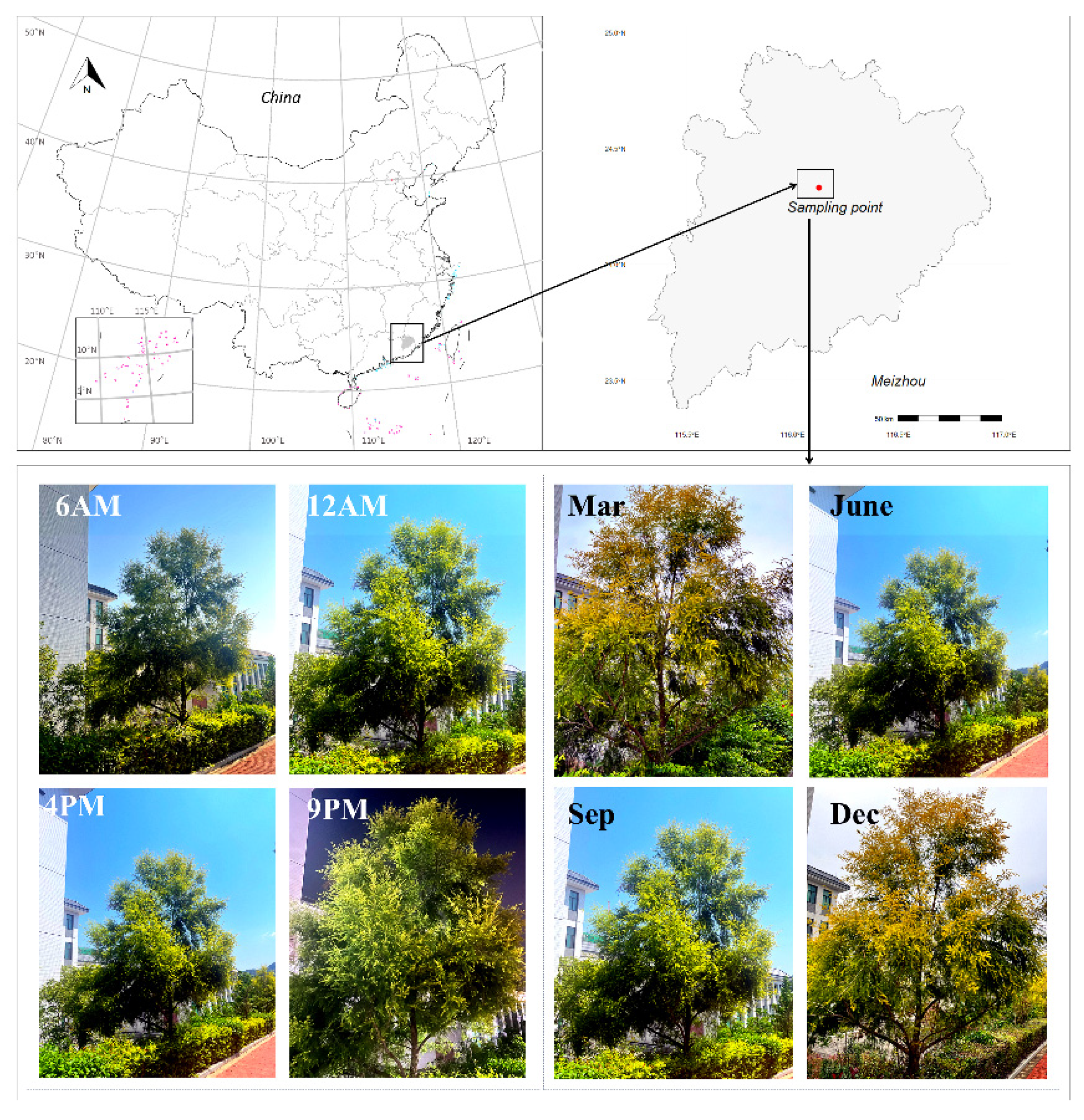
Melaleuca bracteata F. Muell. “Revolution Gold” individual (24.33° N, 116.13° E, elevation 91.90 m) on the campus of Jiaying University, Meizhou, Guangdong, China, was selected as the study organism (
Figure 1). This fixed plant design eliminates between individual genetic variation, allowing temporal and climatic signals to be isolated. Leaf samples (200 g fresh weight per event) were harvested at four seasonal time points—spring (March), summer (June), autumn (September), and winter (December)—and at four diurnal time points within each season (dawn 06:00 h, midday 12:00 h, afternoon 16:00 h, and night 21:00 h), yielding 16 samples in total. All 16 samples derive from repeated observations on the same individual. It should be noted that the patterns reported here reflect within-tree temporal variation at this particular site, and generalisation to population-level responses would therefore be premature. For clarity, the term “diurnal” here refers to the four times of day (06:00, 12:00, 16:00, and 21:00 h) at which leaves were sampled on a single representative day within each season, rather than to sampling repeated across multiple days. This within-day design was adopted deliberately to capture short-term, time-of-day variation while holding the sampling date and individual plant constant, thereby isolating diurnal effects from seasonal and between-plant genetic variation. Consistent with the reviewer’s expectation, diurnal variation was found to be minimal relative to the pronounced seasonal signal (see
Section 3.2). We acknowledge that sampling across multiple days within each season (or across the full month defining each season) would provide a more robust estimate of seasonal means and is a valuable direction for future work.
Fresh leaves were shade-dried to constant weight under light-protected conditions. Essential oil was extracted by steam distillation using a Clevenger type apparatus (Tianbo Co., Ltd., Chuzhou, China) for 2 h at a leaf to water ratio of 1:3 (
w/
v), following the established procedure widely applied for
Melaleuca and other Myrtaceae essential oils [
6,
9]. Oil volume was recorded immediately after collection and yield expressed as mL kg
−1 dry weight. Extracted oils were sealed under nitrogen and stored at 4 °C in the dark until analysis. All extraction parameters (sample mass, solid to liquid ratio, distillation duration, and temperature programme) were held constant across all 16 sampling events.
2.2. GC-MS Analysis
Essential oil chemical composition was determined via GC-MS using an Agilent 7890B/5977B system (Agilent Technologies, Inc., Santa Clara, CA, USA) equipped with an HP-5MS capillary column (30 m × 0.25 mm i.d., 0.25 μm film thickness). Samples (0.1 mL) were diluted 1:500 (
v/
v) in n-hexane; injection volume was 1 μL (split ratio 50:1). Oven temperature programme: 60 °C (held 2 min) ramped to 250 °C at 5 °C min
−1 (held 10 min). Carrier gas: helium at 1.0 mL min
−1; ionisation energy: 70 eV. Compound identification was achieved by comparison of mass spectra with the NIST 2017 library (match factor ≥ 80%) and by comparison of calculated retention indices (relative to C
8–C
24 n-alkanes) with published values, following standard previously published GC-MS procedures for plant essential oil analysis [
9,
10]. Relative percentages were calculated from peak areas without correction factors. All 51 identified constituents and their relative abundances across all 16 sampling conditions are reported in
Table S1.
2.3. Antioxidant Activity Assays
DPPH radical-scavenging activity was assessed following the method of Brand Williams et al. [
21]. Essential oil samples were serially diluted in ethanol (0.0625–64 mg mL
−1) and mixed with 0.1 mM DPPH• solution; absorbance was measured at 517 nm after 30 min incubation at 25 °C in the dark. Scavenging activity (%) was calculated as [1 − (A
sample/A
blank)] × 100. IC
50 values (mg mL
−1) were derived from sigmoidal Hill equation fits to the dose–response data using nonlinear least squares regression. Vitamin C (L ascorbic acid) was used as the reference standard under identical conditions.
ABTS radical cation scavenging was determined by the ABTS•+ decolorisation assay. ABTS•+ was generated by reacting ABTS (7 mM) with potassium persulfate (2.45 mM) for 16 h in the dark. Essential oil samples were diluted in ethanol (3.125–50 mg mL−1) and mixed with ABTS•+ working solution; absorbance was recorded at 734 nm after 10 min. Scavenging activity (%) was calculated as described above. IC50 for the essential oil was derived from Hill equation fitting; the Vitamin C IC50 was estimated by linear interpolation between zero and the lowest test concentration (3.125 mg mL−1), at which scavenging already exceeded 89%. All assays were performed in triplicate. The DPPH and ABTS assays were selected because, although both are radical-scavenging assays, they are not mechanistically identical: the DPPH radical is a stable, lipophilic nitrogen-centred radical evaluated in alcoholic media, whereas ABTS•+ is a nitrogen-centred radical cation applicable across both lipophilic and hydrophilic media. The two assays therefore probe radical-scavenging behaviour under different polarity and solubility regimes, a relevant consideration for a strongly lipophilic essential oil dominated by the phenylpropanoid methyl eugenol. Both are also the most widely reported antioxidant assays for plant essential oils, enabling direct quantitative comparison of our IC50 values with published Myrtaceae essential oil data. Reducing-power assays such as FRAP and CUPRAC are optimised for hydrophilic, aqueous-phase antioxidants; their direct application to a largely water-immiscible essential oil introduces solubility and reaction-medium artefacts that would compromise comparability, and they were therefore not adopted here. As the present objective was to track relative, season-dependent changes in radical-scavenging capacity and correlate them with compositional shifts rather than to construct a complete mechanistic antioxidant profile, the concordant DPPH and ABTS results were considered sufficient; complementary reducing-power (FRAP, CUPRAC) and hydrogen-atom-transfer (e.g., ORAC) assays are identified as a direction for future work.
2.4. Statistical Analysis
Non-metric multidimensional scaling (NMDS) and permutational multivariate analysis of variance (PERMANOVA, 999 permutations) were applied to Bray–Curtis dissimilarity matrices of the 51 compound composition data using the vegan package in R 4.3.1. Redundancy analysis (RDA) was used to relate compositional variation to climatic predictors. Pearson correlation coefficients (r) were computed for pairwise relationships among climate variables and between methyl eugenol content and antioxidant IC50. A permutation-based multiple regression model (999 permutations; lmPerm package) was fitted with essential oil yield as the response and eight climatic predictors (seasonal and diurnal temperature, precipitation, relative humidity, dew point temperature, and wind speed) as explanatory variables; standardised regression coefficients (β) were used to rank predictor importance. Climatic data were sourced from the NOAA NCEI Global Surface Summary of the Day (GSOD 1.0) dataset for the Meizhou meteorological station. All statistical analyses and figures were produced in R 4.3.1.
3. Results and Discussion
3.1. Essential Oil Yield and Overall Compositional Profile
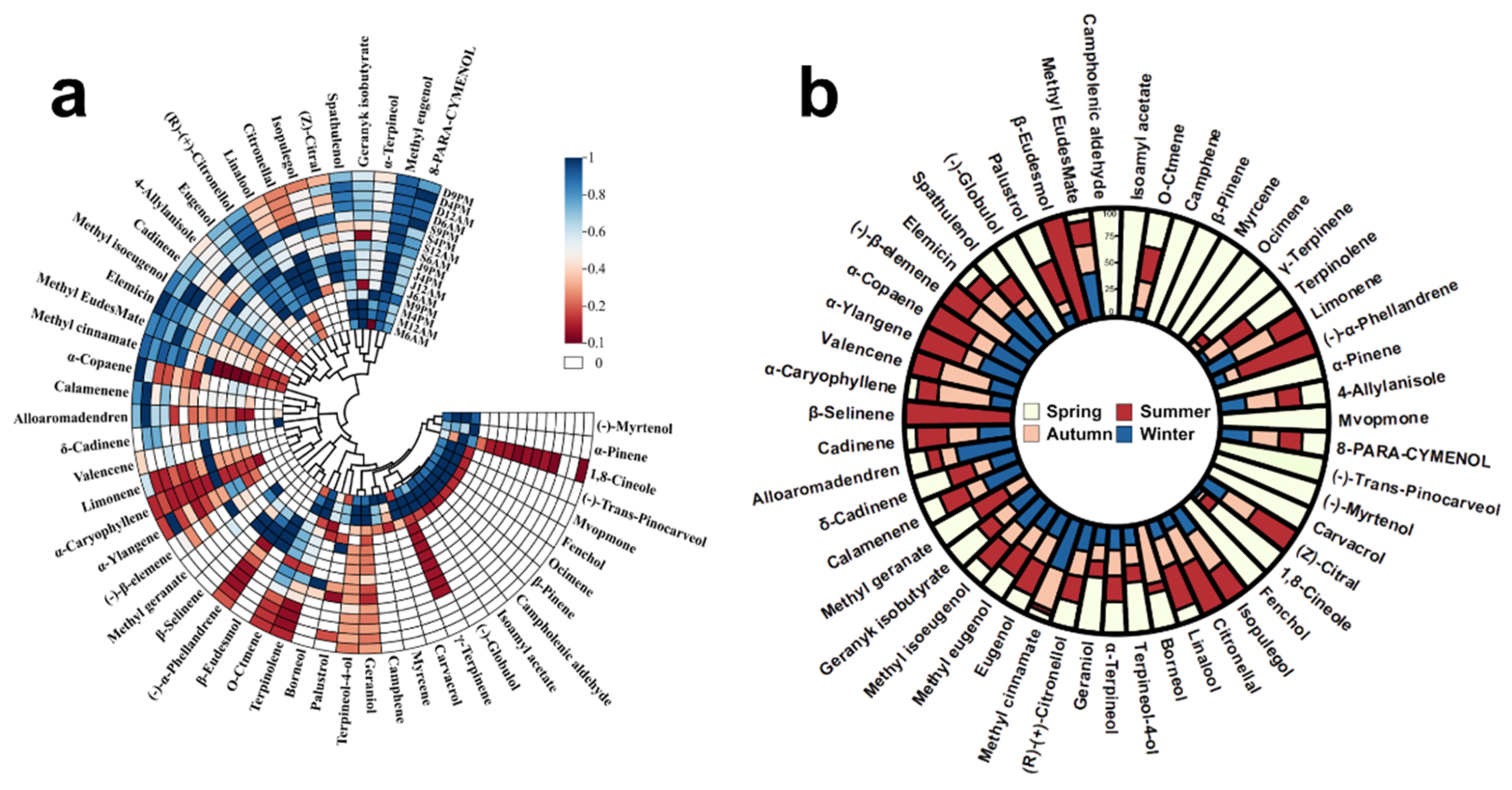
A total of 51 volatile constituents were identified across all 16 sampling events, collectively accounting for 95.26–99.81% of the total ion chromatogram area (
Table S1 and
Figure 2). Identified compounds comprised 19 terpenes, 14 oxygenated monoterpene alcohols, 5 esters, 3 aldehydes, and 3 phenolic compounds, together with minor ketones and other volatiles. Methyl eugenol was the dominant constituent in every sample, reaching its highest relative content of 93.67% in summer (June, 06:00 h) and its lowest of 82.46% in autumn (September, 06:00 h). Methyl cinnamate was the second most abundant compound (up to 10.59%) and exhibited an inverse seasonal trend relative to methyl eugenol, peaking in autumn and winter. Spring samples contained the greatest number of identified compounds (43), including a wider variety of monoterpenes and sesquiterpenes, possibly reflecting lower temperature induction of diverse secondary metabolic pathways [
22].
The dominance of methyl eugenol observed here (up to 93.67%) is consistent with previous reports for
M. bracteata, which identified methyl eugenol at 87.2–89.5% among 25 constituents and at 86.5% among 42 constituents, with methyl cinnamate as the principal secondary compound in both cases [
11,
12]. Our somewhat higher methyl eugenol proportion and larger number of detected constituents (51) likely reflect differences in plant provenance, extraction protocol, and the multi-temporal sampling adopted here. The secondary status of methyl cinnamate in our samples agrees closely with these earlier findings, although we additionally resolve a pronounced seasonal inversion between methyl eugenol and methyl cinnamate not previously reported for this species. At the genus level, the contrast with the commercially dominant tea tree,
M. alternifolia—whose oil is characterised by terpinen-4-ol (typically 30–40%) and which exhibits well-documented chemotypic and environmentally driven variation—underscores that essential oil composition across
Melaleuca is strongly shaped by both genetic background and growing conditions. This broader pattern supports the central premise of our study: that field-scale climatic variability is an important and quantifiable driver of essential oil yield and composition in aromatic
Melaleuca species.
Essential oil yield showed pronounced seasonal variation (
Table S1 and
Figure 2a). Summer sampling yielded the highest average output (peak: 2.43 mL kg
−1 DW at June 12:00 h), approximately 1.9-fold higher than the spring minimum (1.28 mL kg
−1 DW at March 16:00 h). Winter produced the lowest seasonal mean yield (average 1.39 mL kg
−1 DW). Within seasons, diurnal variation was comparatively minor, a pattern consistent with the predominance of methyl eugenol—a constitutively accumulated storage metabolite—relative to rapidly cycling monoterpenes. These seasonal patterns align with reports in other Myrtaceae species in which warm, wet growing conditions promote terpene biosynthesis and reduced volatilisation losses [
23,
24].
3.2. Seasonal Clustering of Compositional Profiles: NMDS and PERMANOVA
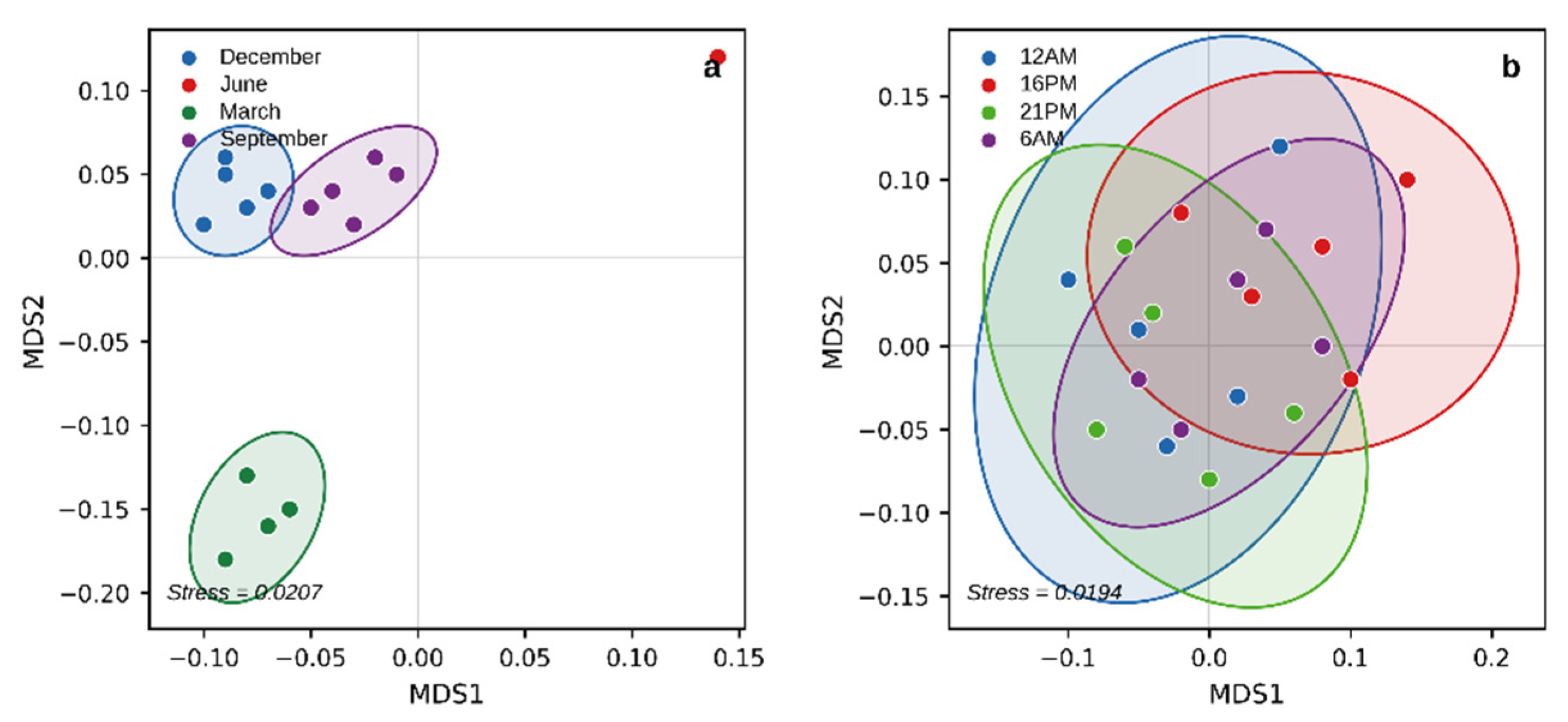
NMDS ordination of the 51 compound composition matrix revealed clearly separated seasonal clusters (stress = 0.0207, indicating good two-dimensional fit;
Figure 3a). Spring (March) samples were concentrated in the lower left quadrant of the ordination space, summer (June) samples formed a distinct independent cluster, and autumn (September) and winter (December) samples occupied separate but partially overlapping regions. In contrast, samples grouped by diurnal time point showed extensively overlapping ellipses (stress = 0.0194;
Figure 3b), confirming the minor influence of time of day on compositional structure.
PERMANOVA confirmed that seasonal grouping was highly significant (
F = 15.258,
p = 0.001), whereas the diurnal factor was not (
F = 0.178,
p = 0.991). These results indicate that broad seasonal environmental shifts are the primary determinant of compositional variation in
M. bracteata essential oil, a conclusion consistent with findings in other perennial Myrtaceae species [
23,
25] and with the mechanistic expectation that seasonal light integrals, temperatures, and water availability drive the regulation of phenylpropanoid and terpenoid biosynthetic pathways [
26].
3.3. Climate–Composition Relationships: RDA and Permutation Regression
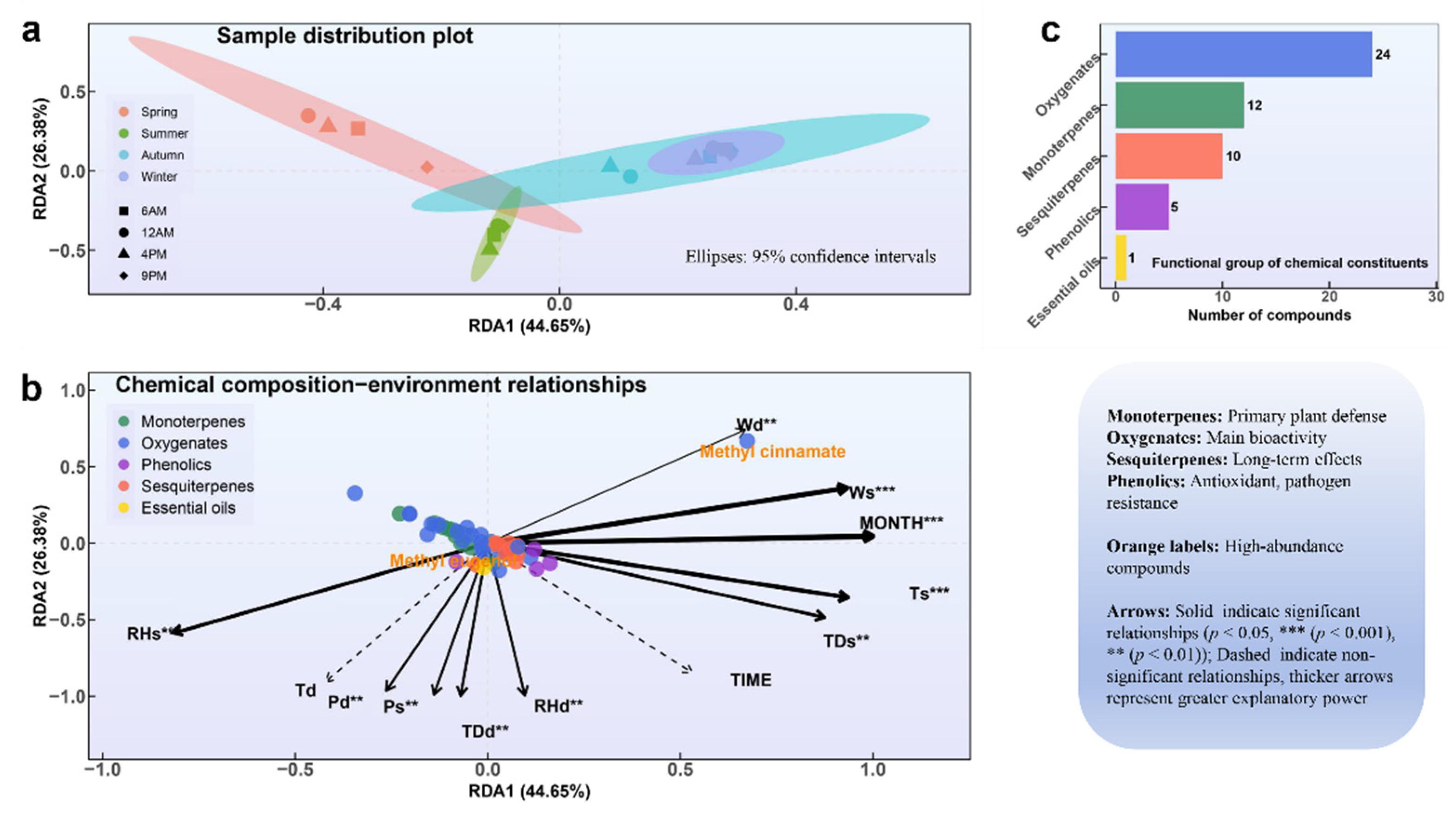
RDA explained 71.03% of total compositional variance across the first two axes (RDA1: 44.65%; RDA2: 26.38%;
Figure 4). On RDA1, seasonal temperature (T
s), dew point (TD
s), and wind speed (W
s) were the dominant environmental vectors, effectively separating warm season (summer, spring) from cool season (autumn, winter) samples. The RDA2 axis was primarily associated with diurnal scale climate fluctuations. Oxygenated compounds were concentrated in the positive RDA2 region and positively correlated with diurnal temperature variation, consistent with the sensitivity of their enzymatic biosynthesis to short-term thermal cycles. Monoterpenes were negatively associated with temperature and positively with relative humidity on RDA1, reflecting enhanced defence-oriented secondary metabolism under cool, humid conditions [
27].
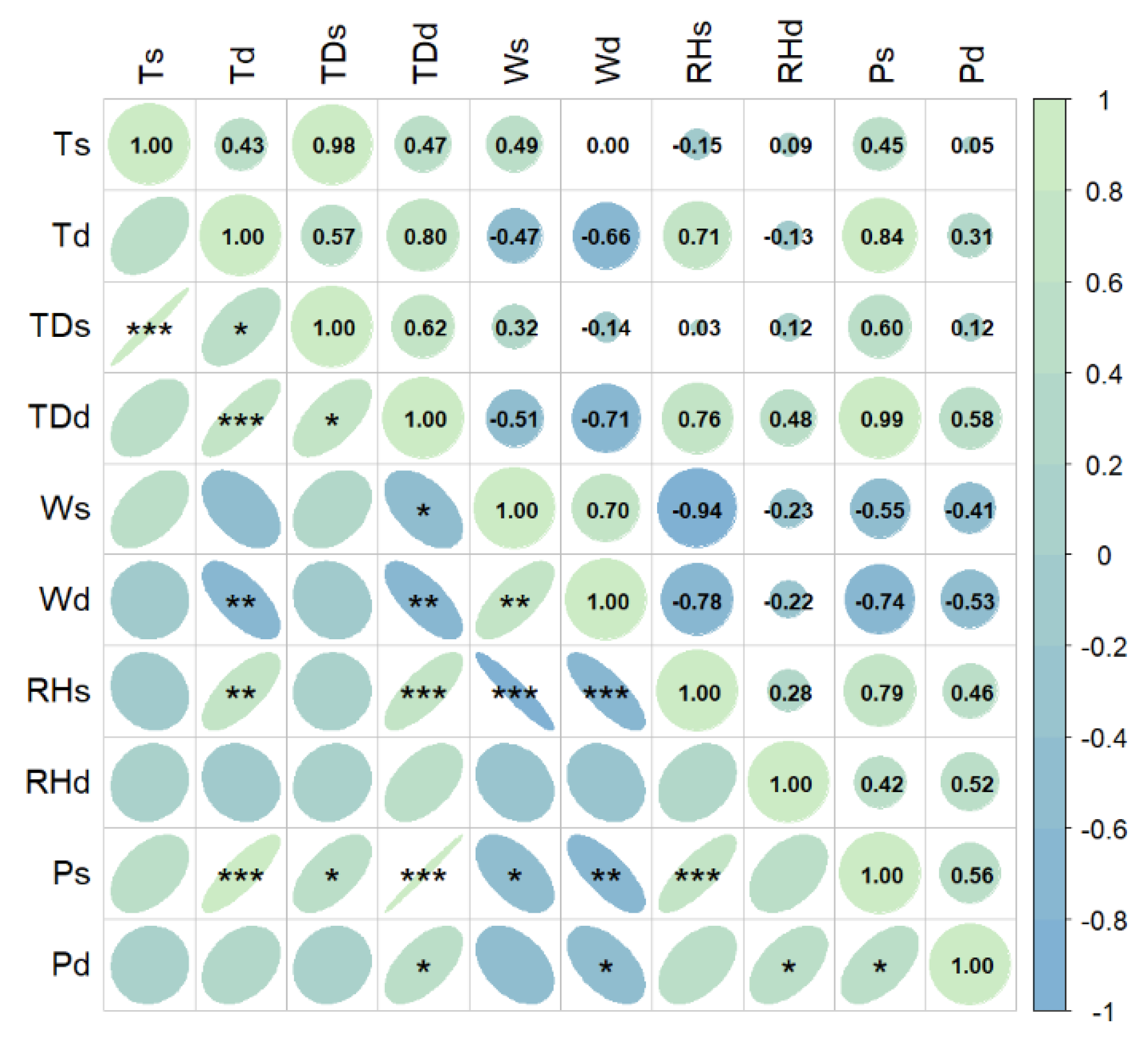
The Pearson correlation matrix (
Figure 5) revealed strong collinearity among seasonal variables: T
s and TD
s were nearly collinear (
r = 0.98), and W
s and RH
s were strongly inversely correlated (
r = −0.94), consistent with basic atmospheric dynamics. Given this collinearity, four predictors were retained for regression modelling, T
s, W
s, RH
d, and P
s, selected to capture both seasonal climate background and diurnal fluctuations while minimising multicollinearity.
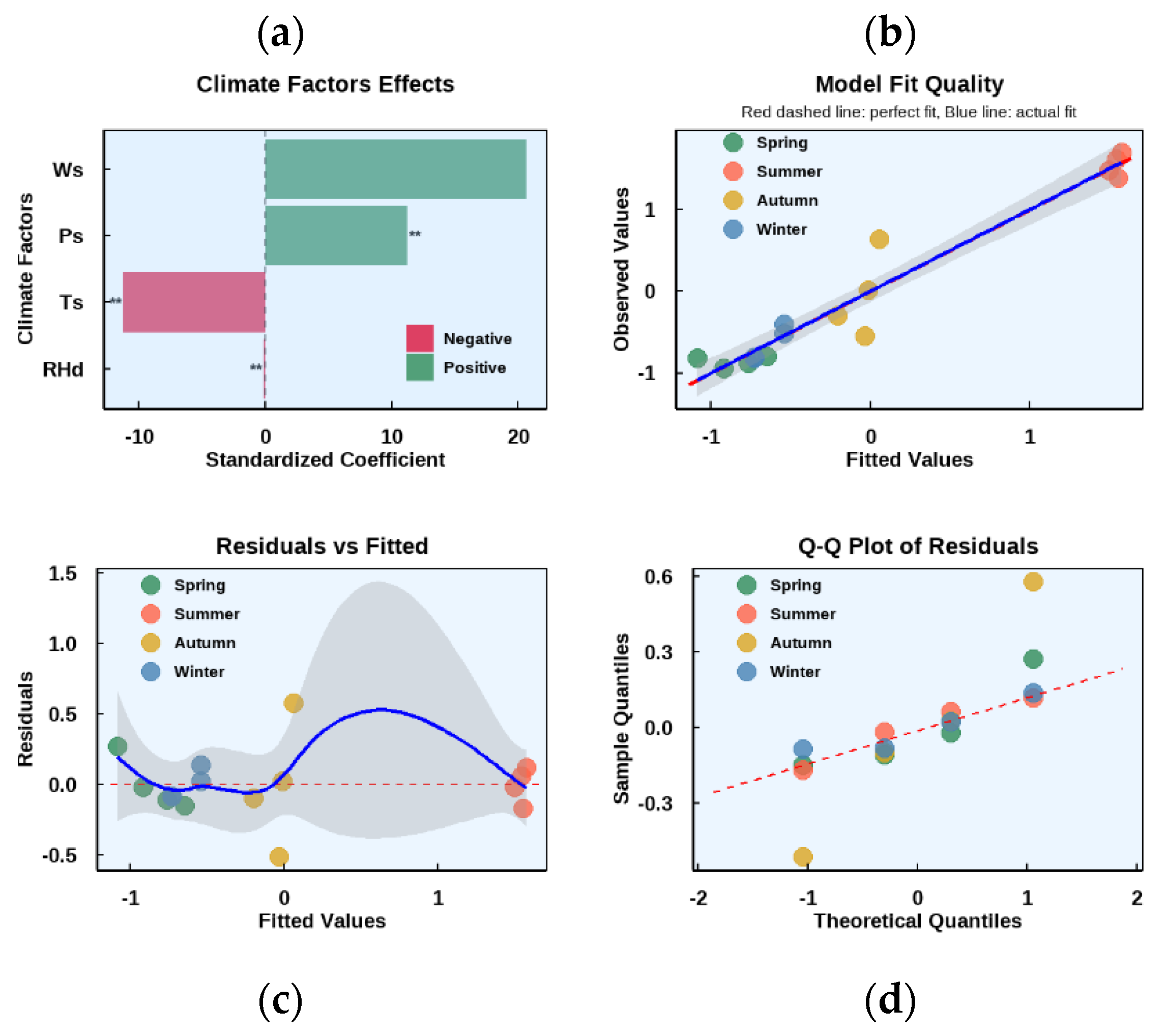
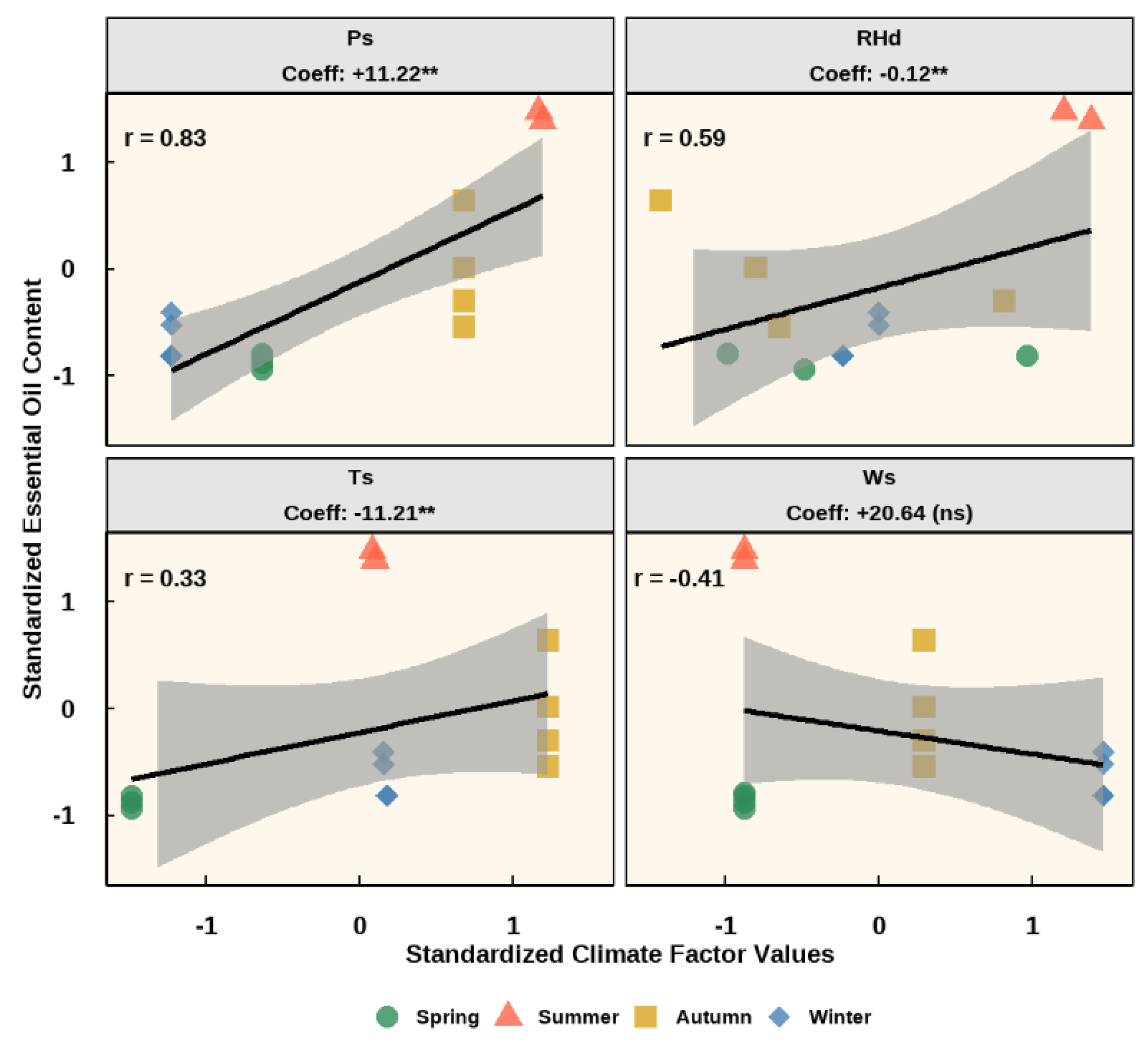
Permutation regression (
Figure 6) identified seasonal precipitation (P
s) as the strongest positive predictor of oil yield (β = 11.22,
p < 0.05;
Figure 7), consistent with the established role of soil moisture in supporting turgor dependent secondary metabolite synthesis [
28]. Seasonal temperature exerted a significant negative effect (β = −11.21,
p < 0.05), potentially reflecting enhanced volatilisation losses from oil storage glands under elevated temperature or temperature-mediated inhibition of key biosynthetic enzymes. Diurnal relative humidity showed a marginal but significant inhibitory influence (β = −0.12,
p < 0.05), possibly through stomatal closure limiting carbon assimilation available for secondary metabolism. Wind speed displayed the largest standardised coefficient (20.64) but did not reach significance, suggesting its effect is highly context-dependent and masked by dominant precipitation and temperature signals. Model fit was high (R
2 = 0.947;
Figure 6b–d), although this should be interpreted with caution given the single-site, single-plant design (
n = 16); independent multi-site validation is required to assess generalisability.
3.4. Antioxidant Activity and Composition–Activity Relationships
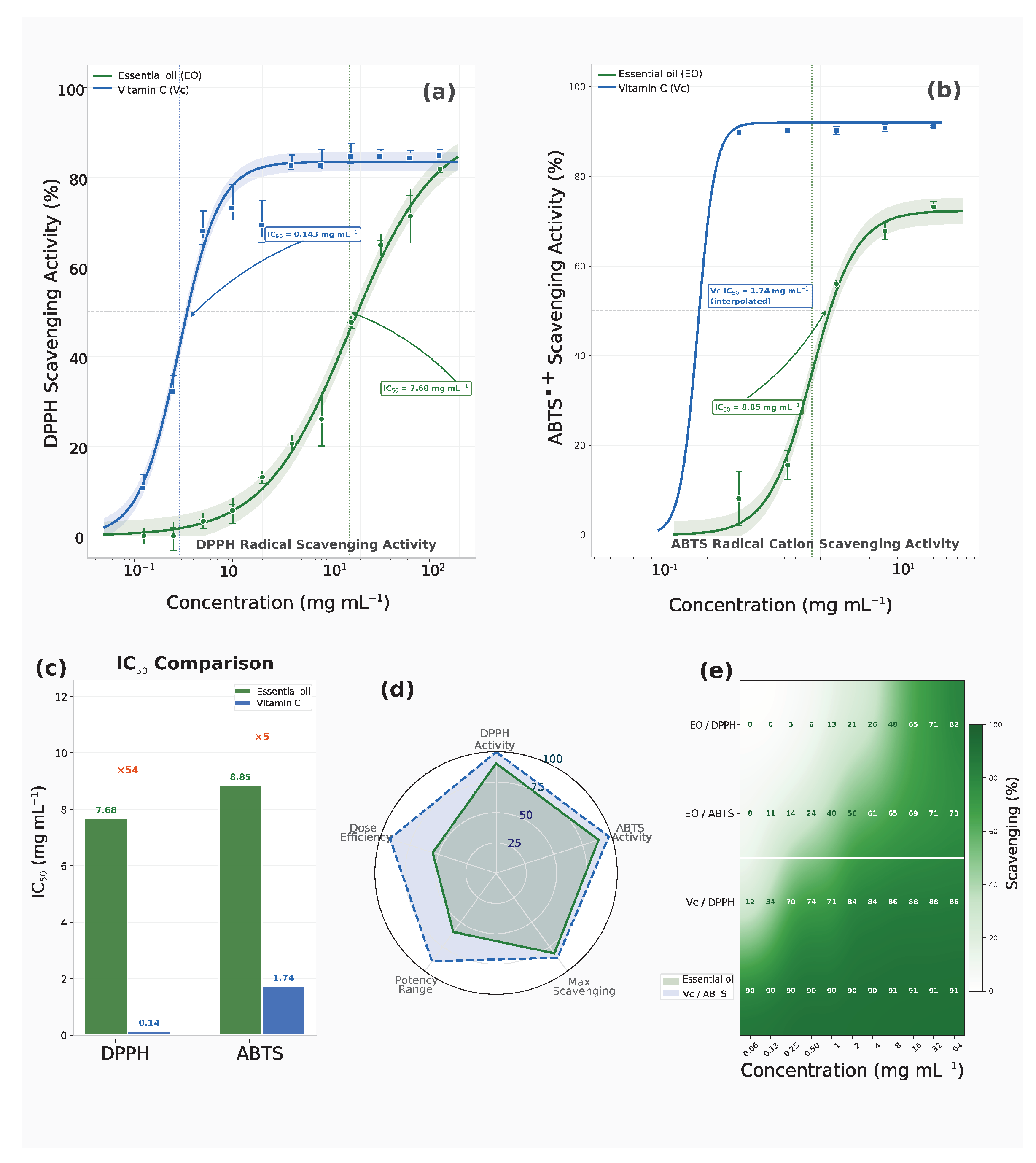
DPPH and ABTS radical scavenging activities of the
M. bracteata essential oil were characterised using comprehensive dose–response curves spanning 0.0625–64 mg mL
−1 (DPPH) and 3.125–50 mg mL
−1 (ABTS). Hill equation fitting yielded IC
50 values of 7.68 mg mL
−1 (DPPH) and 8.85 mg mL
−1 (ABTS) for the essential oil, compared with 0.14 mg mL
−1 (DPPH) and approximately 1.74 mg mL
−1 (ABTS; interpolated) for Vitamin C as the reference antioxidant (
Figure 8 and
Table 1). The approximately 54-fold difference between EO and Vitamin C DPPH IC
50 values is consistent with literature values for Myrtaceae essential oils, which derive antioxidant capacity predominantly from phenylpropanoid constituents rather than from ascorbic acid-type electron donors [
29,
30].
The Vitamin C ABTS data merit particular note: scavenging exceeded 89.9% at the lowest tested concentration (3.125 mg mL
−1), placing the true IC
50 below the experimental concentration range. The interpolated value of approximately 1.74 mg mL
−1 should therefore be treated as an upper bound estimate; this finding highlights the substantially greater per mass antioxidant efficiency of ascorbic acid relative to the complex essential oil mixture, as expected from mechanistic considerations of hydrogen atom transfer and electron transfer kinetics [
31].
Pearson correlation analysis established significant positive associations between methyl eugenol content and DPPH IC
50 (
r > 0.80,
p < 0.05) and between methyl eugenol content and ABTS scavenging activity (
r > 0.78,
p < 0.05), confirming methyl eugenol as the primary antioxidant driver within the oil matrix. This is mechanistically plausible: the methoxyphenol moiety of methyl eugenol readily donates hydrogen atoms to quench DPPH• and ABTS•
+ radicals, analogously to eugenol and other 4-alkyl guaiacols [
32]. The seasonal co-variation in methyl eugenol content and antioxidant potency therefore reinforces the identification of the summer harvest window as optimal for both yield and functional quality. It should be noted, however, that methyl eugenol is subject to ongoing regulatory scrutiny as a potential genotoxic carcinogen at high exposure levels [
33]; any food application of
M. bracteata essential oil must therefore consider effective concentrations relative to established acceptable daily intake thresholds.
3.5. Integrated Framework and Harvest Implications
The convergent evidence from GC-MS profiling, antioxidant bioassays, and climate-resolved modelling supports a coherent mechanistic interpretation. In the subtropical Meizhou climate, summer is characterised by peak precipitation and moderate temperatures relative to the hottest period, conditions that collectively promote terpene and phenylpropanoid biosynthesis while limiting volatilisation losses from glandular trichomes. The resulting summer essential oil thus simultaneously maximises yield, methyl eugenol content, and antioxidant potency, presenting a triple advantage for commercial aromatic crop management. Autumn and winter, by contrast, are associated with declining precipitation, lower temperatures, and a compositional shift toward methyl cinnamate accumulation, which may serve distinct ecological functions but reduces the phenylpropanoid-driven antioxidant capacity.
From an applied perspective, these findings provide a data-driven rationale for scheduling M. bracteata harvests in the June–July window in Meizhou and analogous subtropical cultivation zones of southern China. The climate-resolved quantitative framework developed here—combining permutation regression with RDA on a multiscale climate descriptor matrix—is methodologically transferable to other aromatic species where small sample field constraints preclude conventional parametric modelling. Future work should extend the single-plant, single-site design to multi-individual, multi-site and multi-year sampling to enable population-level inference and to disentangle climatic from genotypic and site-specific effects.
4. Conclusions
This study provides the first integrated, climate-resolved characterisation of Melaleuca bracteata leaf essential oil spanning seasonal, diurnal, and compositional–bioactivity dimensions. GC MS analysis identified 51 volatile constituents dominated by methyl eugenol (up to 93.67%), with pronounced seasonal (but not diurnal) variation in yield and composition confirmed by NMDS, PERMANOVA, and RDA. Permutation regression (R2 = 0.947) identified seasonal precipitation as the primary positive predictor (β = 11.22) and temperature as the primary negative predictor (β = −11.21) of oil yield. DPPH and ABTS antioxidant assays yielded IC50 values of 7.68 mg mL−1 and 8.85 mg mL−1, respectively, with antioxidant potency positively correlated with methyl eugenol content (r >0.80). Summer-harvested oils simultaneously delivered the highest yield, the richest methyl eugenol content, and the strongest antioxidant activity, establishing June–July as the strategically optimal harvest window for yield and bioactive quality in the Meizhou cultivation context. These results advance the quantitative basis for climate-adaptive harvest scheduling of M. bracteata and establish a methodological template for integrated climate–composition–bioactivity analysis in aromatic crops more broadly.