


Abstract
Tropical forest restoration has increased in the past decades, with possible advancements given the UN declaration of the “Decade of Ecosystem Restoration”. However, robust assessments to compare ecosystem functions among restored forest stages are essential. We evaluated 13 actively restored forest stands ranging from 3 to 21 years of age and compared measures of forest biodiversity, structure, and ecosystem function to four 70+ year old “reference” stands that serve as restoration “targets” in the study region of the Premontane wet forest of Costa Rica. The restored stands were planted with an average of 13 tree species on abandoned pastures that were fallow for at least two years. Sixteen tree-stand attributes and six ecosystem function estimates were assessed, including: annual biomass (C) accumulation, N-fixation potential, threatened species conservation, and the provision of avian frugivore forage, insect habitat, and insect pollination. Using Principal Component Analysis, linear modeling, and Mahalanobis distance analyses, we learned that planting a diversity of tree species sets the stage for forest recovery at early restoration ages, with an inflection point at 15 years towards older reference forest characteristics and functions. Given that all restoration ages provided tree diversity and some level of ecosystem functions, the value of all restored stands in the landscape is notable. The assessment methods are easily employed, thereby providing an accessible tool to restoration practitioners.
1. Introduction
Tropical forests are complex ecosystems that harbor immense amounts of biomass, host high levels of biodiversity, and are considered one of the most critical zones for biogeochemical cycles [1]. Even with many calls to halt forest destruction over the past 30 years, tropical deforestation increased by 10% in 2022 [2]. According to the Food and Agriculture Organization (FAO) and United Nations Environmental Programme (UNEP) [3], 420 million hectares of forest have been lost through conversion to other land uses in the past 30 years, and another 100 million hectares are at risk. However, the call for restoration is being addressed by multiple global initiatives, especially the United Nations Environment Programme (UNEP)’s global declaration of the “Decade on Ecosystem Restoration”, which aims to prevent and reverse the degradation of ecosystems worldwide.
At the same time, active-planting restoration of tropical forests has increased over the last decade [3], including the promotion of natural regeneration and other strategies to restore these important ecosystems. Specific restoration goals include biodiversity maintenance or enhancement, habitat recuperation, water regulation, carbon sequestration, crop protection, resource extraction, and heritage site preservation, among others [4]. For example, the primary regional objectives to reforest lands in the Bellbird Biological Corridor of Costa Rica are water protection, habitat restoration for plants and animals, and fruit and timber production [5]. Carbon offset programs focus on biomass (C) accumulation, and crop protection from wind damage is another common motivation.
From a conservation viewpoint, forest restoration seeks to match the forest integrity of mature forests or regional equivalents; that is, to attain the same levels of ecosystem functions and services as their adaptive natural forest counterparts by supporting forest and ecological structure, biodiversity, species composition, and ecosystem processes [6]. Additionally, the restored forest should enhance landscape connectivity and habitat matrices while not negatively impacting the functioning of surrounding biotic and abiotic ecosystems [7]. Here, we define and evaluate the forest integrity of actively restored tropical forest stands as a measure of how well the stand matches a mature, nearby “reference” forest in terms of forest composition, structure, and ecosystem function, where composition refers to the diversity of tree species and factors that affect its overall richness and community distribution, structure refers to tree and forest stand structure (such as basal area, canopy height, etc.), and function refers to key ecosystem functions such as biomass accumulation, nitrogen (N) fixation, habitat and forage provision, threatened species conservation, and ecological functions such as pollination.
Assessments are fundamental in determining whether any given restoration effort successfully attained the desired outcome [8,9], and meta-analyses can reveal practices that lead to success [10,11]. While traditional evaluations focused on forest composition and structure, the evaluation of ecosystem functional recovery and service outputs is now being promoted as a valuable test of restoration success [12]. Some studies have incorporated such evaluations into their restoration programs, including the examination of erosion control, soil improvement, carbon and nutrient cycling, biodiversity, habitat provision, water quality, secondary forest succession, and specific taxa-driven functions [13,14,15,16]. Plant functional traits are being analyzed as surrogates for ecosystem services to assess (and direct) restoration success [11] with stand-level tree functional traits as the focus of new studies [17], although most studies are in temperate areas or in restoration actions less than five years of age [18]. In general, ecological assessments are still lacking [19,20], highly variable [4], and evaluate subsets of variables over relatively short time periods of <10 years [12]. Evaluations of the socio-economic indicators and landscape-level impacts are lacking [21].
For restoration efforts aimed at matching the forest integrity of original forests, three key questions are of interest and could be addressed in the context of the applied restoration strategy: Do reforestation stands attain the compositional, structural, and functional levels of target, older forests? If so, what is the overall trajectory over time to reestablish its integrity, and how does the applied restoration strategy influence this timeline? Finally, are there ecosystem contributions at younger restoration stages that complement the landscape mosaic of ecosystem services? To address these questions, assessments of different types of restoration actions in attaining the desired ecosystem structure and function, and at different ages and sizes, need to be done in parallel [8,9]. Ecosystem functions result from the interactions among biodiversity, forest structural components, and abiotic factors. As such, the restoration of species communities and forest stature are key restoration considerations, where multiple forest characteristics are linked and lend themselves to simultaneous evaluation. Such comprehensive studies can provide robust assessments of restoration outcomes [10,11,21,22].
Lastly, while the recovery of forest integrity is a laudable restoration goal, evaluating success can be time- and resource-intensive, posing challenges to many grassroots and conservation organizations that perform this work. The development of succinct and accessible evaluations of biodiversity, forest stand characteristics, and the estimation of ecosystem function to advance our knowledge of effective restoration practices would be more widely employed if available to the same people who restore forests.
Here, we add to the growing knowledge base of best practices for tropical restoration by assessing the forest integrity of an active, multi-species planting restoration effort in the Premontane Wet Life Zone, Monteverde, Costa Rica. We compared 13 actively restored forest stands planted 3 to 21 years prior on abandoned pastures to nearby reference stands of altered mature forests that were at least 70 years old (actual age unknown). These forests are altered with some human interference and edge effects, yet represent the best examples of pre-existing forests in the region. The restoration effort was led by the Fundación Conservacionista Costarricense (FCC) in their efforts to replicate natural forests in the region, expand the landscape matrix of forest and open lands, and provide socio-ecological benefits for the communities within the restoration areas [23]. For each restoration and reference stand, we used a suite of easily measurable tree species traits to determine the multivariate distance of forest species composition, structure, and specific ecosystem functions to older reference forests. Our framework is rooted in ecological community composition and multivariate and linear modeling analyses of forest traits, but the application utilizes basic forestry and tree species knowledge, forest/tree measurements, requires little training, and is cost-effective. Our assessment addresses the following specific objectives:
- Compare the forest composition (diversity and similarities) along age-based succession gradients of restored forests and examine the effect of actively planting a diversity of species on richness over time.
- Compare the structural characteristics of different-aged stands to the target, reference forest (>70 years).
- Determine levels of six ecosystem functions (biomass (C) accumulation, nitrogen (N) fixation, insect habitat and pollination potential, avian frugivore forage provision, and threatened species conservation) along a gradient of different-aged, restored stands, and compare those levels to the reference forests (altered mature forests >70 years).
2. Methods
2.1. Study Site and Stand Descriptions
This study strived to represent possible outcomes for small-scale plantings (landowner) reforestation efforts. Therefore, certain similarities among stands exist, such as life zone (regional climate and elevation), and prior land use history (abandoned pasture left fallow for at least 2 years). All sites were planted with species native to the region that were nursery-raised by the FCC. However, variations by stand included the planted species composition, year of planting, and seedling weeding protocols, as occurs in real-life situations and most time-based tropical forest restoration studies.
We surveyed 13 restored forest stands that were planted between 2002 and 2020 in Monteverde, Costa Rica (Table 1) with 8 100 m2 plots each, 1 additional plot in the 15-year stands, and 12 plots total in the 12-year stands. The stands ranged in time since planting (forest age) from 3 to 21 years at the time of this study. We also surveyed 19 plots in four corresponding altered primary forest stands (hereafter referred to as “reference” forests) that were used as our target reference to assess restoration success (Table 1).
Table 1.
Stand descriptions of 13 restored forest stands and four mature altered primary (reference) forests. Data include the elevation, stand size, and the years fallow before planting. A summary of the year and number of species planted, the current species richness (spp_2023), and the number of new species from recruits that were not planted (new_spp) is shown. The number (#) of plots in each stand is provided. The years of maintenance (weeding) are listed since this may influence the establishment of new recruits, especially in the younger stands.
All stands were in the Premontane Wet Life Zone on the Pacific side of the Tilarán mountain range in Costa Rica at elevations between 1200 m and 1440 m asl (10° 18′ 55.3″ N and 84° 50′ 29.8″ W; Figure 1). Average annual precipitation in this region is 2883.6 mm, based on data collections between 1981 and 2023, with a pronounced dry season from February through April (<100 m per month) and a windy, misty transition period from November to January after the five-month rainy season [24]. Temperatures ranged between lows of 15 C and highs of 26 C. Clear-sky solar irradiance at midday was estimated to be between 875 and 1085 W/m2 with great variation due to cloud cover amount and types [25]. Soils were classified as Andisols, formed under wet (udic) conditions from volcanic parent material with moderate clay content [25].
Figure 1.
Pacific slope of Monteverde, Costa Rica—study sites in Premontane Wet Life Zone. Three sites and both restored and reference forests (CALA—La Calandria, CRRE—Crandell Reserve, and REFR—Finca Rodriguez). Nacimiento y Vida (RENV) was the site of restored stands only, and KANE was an older reference forest only.
The 13 restored forest stands were located close to the reference forests (average of 93 m) with a distance between stands ranging from 75 m to 7 km. The restored stands were established on pasture previously grazed by cattle and horses; three stands had been converted to coffee post-grazing. All sites were abandoned at least two years before planting (Table 1). Due to the high winds the area experiences from November to April, the individual pastures had been protected by windbreaks comprising the introduced tree species Cupressus lusitanica or Casuarina equisetifolia, or a planted mix of one coniferous species with native species of Montanoa guatemalensis, Croton niveus, and/or Zanthoxylum fagara. Two sites were quickly colonized by “guayaba” (Psidium guajava), a common weedy tree in abandoned pastures in Monteverde, after the removal of horses. Each restored stand was manually cleared (with a machete) before planting, including the cutting of Psidium guajava trees.
The four older reference forests ranged in size from 7.6 to 35+ ha and were natural compositions of nearly 100 tree species (the regional tree diversity throughout five life zones in Monteverde is 755 species). Unaltered primary forest is scarce in this study’s region of the Premontane Wet Life Zone, and human alterations from >30 years ago within the reference forests were evident with some large tree removals. Natural blowdowns and light gaps added to the natural diversity of species, and edge effects were apparent where higher solar irradiance and wind effects occur. Lauraceae was a dominant plant family in these forests, where the region holds approximately 96 species [26].
2.2. Seedling Planting and Diversity
Seedlings were planted approximately 1.75–2 m apart for 25–33 seedlings per 100 m2 per plot with an average of 2900 stems ha−1, similar to other tropical planting densities [27] The FCC reforestation methods focus on replacing forests with native species compositions representative of the area, and a total of 48 species of 19 tree families were planted in the restored forests (Appendix A Table A1). Each restored forest stand was planted with combinations of multiple species (average of 13 per stand) in a random nurse cropping method [28] where one-third of the species were fast-growing colonizing “nurse” species. Aside from growth rates, these taxa also varied in seedling survival [29] and traits at maturity, including fruit size and type. Of the 7494 individual trees planted in the stands, the most abundantly planted species were Inga punctata (Fabaceae), Mauria heterophylla (Anacardiaceae), Citharexylum costarricensis (Verbenaceae), Myrcianthes “black fruit” (Myrtaceae), and multiple species of Lauraceae (examples: Ocotea monteverdensis, floribunda, tenera, whitei, and sinuata, Aiouea brenesii and costaricana, Damburneya salicina, and Nectandra membranacea) (Appendix A Table A1; Supplementary Table S1). Most stands were maintained (weeded) within 1 m around seedlings for a minimum of two years.
2.3. Tree/Stand Metrics, Traits, and Calculations
A total of 64 plots of 100 m2 in the 17 stands were sampled (Table 1). Each restored forest stand age had between 8 and 12 plots each. Reference forests, to which the restored forests were compared, were more heavily sampled (22 total) than restored stands in order to provide a more accurate representation of older forests, resulting in a more conservative comparison between restored and reference stands. Plots were randomly selected in ordinal directions and paces from the center of the stand. If the selection fell within a previously established plot used in prior bird studies [30], it was used in this study. Tree identification and measurements of the trees, understory vegetation, and stand characteristics were gathered in a two-year period of 2023–2024 from stands that ranged from 3, 8, 12, 15, to 21 years since planting (with each “age” class a 1-year possible difference if measured after June of 2024) and the 70-year reference forests.
Forest structure. In each plot, we collected data to assess the forest composition and structure and key variables related to selected ecosystem functions (Table 2). For each tree > 150 cm in height, we identified the tree taxa and measured tree height (tree_ht), diameter at breast height (dbh; up to 4 boles for multi-trunk trees: dbh1–dbh4), and height from the ground to the lowest branch (lowest_branch_ht). We estimated the branching depth (branching_depth) of each tree as the height of the tree minus the lowest branch height. From these data, we calculated two plot level datum: basal area per m2 (basal_area_m2) and ratio of large (>10 cm) to small (<10 cm dbh) trees in the plot (ratio). The sum of the tree basal area represents the area covered by tree trunks and was used in place of stem density.
Table 2.
Description of variables assessed in this study by research objective, identified by category (species richness, tree measurements, tree ecosystem function traits, stand measurements, and derived ecosystem traits.
Other plot characteristics of note included average canopy height (canopy_ht; measured with clinometer and drone), number of strata including the lower shrub layer (strata), percent canopy cover from 1.5 m above the ground (canopy_cvr; using Canopy % iOS app by Public Interest Enterprises), number of snags and dead logs > 10 cm dbh (snags_logs), the count of key understory plants (palms and Psychotria species, labeled palms and psyc, respectively), and the number of trees hosting vines or lianas (vines_lianas) (Table 2).
We measured understory traits in four 1 m2 sub-plots within each 10 m × 10 m plot at 1 m distances diagonal within the four corners (Table 2). The plants at each corner of the 1 m sub-plot were measured for height (veg_understory_ht) and identified by taxa for a total of 16 plants per plot, and also used to calculate ground cover of plots (ground_veg_cover). The percentage covered by grass species (grass_covr) was visually estimated in each sub-plot. Of note, due to high levels of precipitation during this study, we were not able to accurately measure leaf litter, yet we recognize its ecosystem importance.
Tree species traits. In addition to the direct measurements of tree characteristics, we compiled tree species traits applicable to this study from the literature [26,32,33,34]: wood density (wood_density), light flower color (flower_light; binary), fruit characteristics, and insect pollination characteristics (Table 2; Appendix A Table A1). The wood density metric was obtained through a global tree species database for tropical trees [32]. As all species are not yet listed, the wood density was estimated in the following order: (1) the species’ wood density as sampled from Central American (CA) trees, (2) the species’ wood density from a South American (SA) sample, (3) if no species, the average of the wood density from the same genera in CA (1st choice) or SA, or (4) if no congeneric, the standard wood density of trees at 0.60 g cm3 as presented in Chave et al. [3] was used. In terms of fruit characteristics, we compiled fruit size (fruit_size), fruit type (fruit_type: berry, capsule, drupe, arillate seed, pod), fruit accumulation on the ground (fallen_fruit), and records of avian frugivory on each tree taxa. The variable “fallen fruit” applied to trees with a diameter > 10 cm as a designation of maturity. The assigned value was 0 if the tree did not produce fleshy fruit. Exceptions included trees with arillate seeds inside of capsules or pods. Trees with fruits < 1 cm in diameter received a rating of “1”, above that size received a rating of “2”. The variables bird_fruit and ES_prov provided the total number of avian species and the number of threatened species recorded feeding on a tree taxon, respectively [35]. In terms of insect pollination potential for each tree taxa, we tallied the macro-morphic insect groups that are known to visit the flowers of the tree species (pollinators), including Hymenoptera (w-wasps, b-bees, f-flies, a-ants), Lepidoptera (bfl-butterflies, m-moths), Coleoptera (c-beetles), and other (i-other) in cases where unspecified insects were cited as potential pollinators, according to Haber et al. [26]. In addition to these variables, we obtained the International Union for the Conservation of Nature (IUCN) Red List status of each tree taxon (https://www.iucnredlist.org). Because not all tropical trees have been fully assessed, we assigned a value of “near threatened (2)” for locally identified species of concern. Taxonomic names and authorities were verified with the Catalogue of Life [36], Tropicos [37], and World Flora Online [38].
2.4. Ecosystem Functions
We aimed to evaluate the integrity of the restoration actions in this study by determining if the levels of ecosystem functions in the restored forests are advancing toward the levels of the reference forests. To avoid circularity and reduce confounding with measured forest characteristics, we estimated ecosystem functions as independently as possible from our collected metric data, which constrained the set of functions we could estimate. Specifically, we based function estimates on published ecological relationships, such as the number of frugivorous bird species feeding on each tree species [35], documented use of tree species by pollinating insects [26], counts of trees with distinct functional traits (e.g., nitrogen-fixing symbionts or light-colored flowers), and IUCN Red List categories for identifying threatened species [39]. In the case of biomass(C) accumulation, we selected a formula, adapted to the country of study, which used only one measurement (tree dbh), rather than algorithms that utilize up to three traits [40]. All sites were measured with the same formula, creating a comparable estimation among forest stands; estimates are presented at the 100 m2 plot level. We describe the estimation methods of each ecosystem function as follows.
Average annual biomass(C) accumulation was calculated using an algorithm developed in Costa Rica by Fonseca et al. [31] that incorporates calculated coefficients and tree dbh (cm), of which we included up to the largest three boles for multi-trunk trees in the calculation of the biomass (C).
The tree’s calculated biomass(C) was converted to Mg−1 ha−1, summed for each 100 m2 plot, and divided by the number of years of growth to calculate the average annual plot level of biomass(C) Mg−1 ha−1 yr−1
For nitrogen fixation (N_fixation_potential), we assigned a yes/no value of “1” to each species that is a nitrogen-fixing symbiont and “0” to each species that did not (Appendix A Table A1). We included the tree age as an inverse value of N-fixation potential, as a previous study of Inga punctata in these plots found the mean percent detection of nitrogen-fixing DNA decreased steadily with tree age at an approximate magnitude of 60% higher for 4-year old trees than mature I. punctata trees, 40% higher for 8-year trees, and 20% higher for 11-year trees [41]. Therefore, the presence value of each N-fixing symbiont tree was 1 and then multiplied by 1 if mature (>70-years), 1.2 if 12 to 21 years, 1.4 if 8 years, or 1.6 if 3 years. The N fixation potential estimation was a sum of these scores by tree plot, then averaged by stand.
To quantify insect pollination potential in each plot (insect_pollinator_potential), we tallied the number of macro-groups of insect visitors reported for each tree and treelet species and summed that number for each tree with a dbh ≥ 10 cm (combined total of 3 ramets in the case of multiple boles) or treelet. Since bees are of particular importance to the region due to honey and coffee production, an additional point was given to each tree that is bee-pollinated.
A basic insect habitat provision (insect_habitat potential) was calculated for each plot using the sum of trees having light colored flowers (as potential nectar and pollen sources), the sum of the fallen fleshy fruit variable (as an insect forage and reproductive source), and the number of snags/logs as reproductive areas for insects. Leaf litter, an important forest component for insect habitat, was not included due to difficulty in data collection during this time period.
We estimated the avian frugivore forage potential (avian_frugivore_forage) in each plot as the number of birds per fruiting tree species that was recorded by Wheelwright et al. [35] in Monteverde. For example, the study recorded 16 species of birds eating Trema micrantha and 10 species eating Cecropia obtusifolia. For 8 of the 98 species with fleshy fruit, no data were found, so we applied the average of bird species using trees in this study to those taxa. The bird frugivory estimate was summed for the corresponding tree species if it had a combined multiple ramet dbh ≥ 10 cm. Understory fruiting species were always included (e.g., Psychotria, Erythroxylum, Solanum, Hamelia spp).
Finally, we estimated each plot’s threatened species protection (threatened_spp_protection) by categorizing each tree species on a scale of 1 to 5 (1 = least concern, 2 = near threatened, 3 = vulnerable, 4 = endangered, 5 = critically endangered). We added the number of threatened bird species that the tree supports through forage provision using information provided by Wheelwright et al. [35].
2.5. Data Analysis
All statistical analyses were performed in the R programming language [42], and the analyses were selected, coded, and verified by the authors. To assist in identifying coding errors in R, OpenAI ChatGPT (version 5.3) was consulted, and the output was verified.
- Objective 1. Compare the Forest Composition (Diversity and similarities) Along Succession Gradients of Restored Stands
We examined forest composition in two ways. First, we used linear mixed-effect modeling approaches, based on likelihood estimates, to estimate species richness (total species per plot) as a function of forest age. As each of the 13 restored stands had different planting regimes (with different numbers of individuals and taxa planted), we included the number of species planted (spp_planted) as an interactive term in the model, specifically testing if the effects of forest age on species richness depended on the initial number of species planted. We used the package, lme4 [43], to fit the model: spp_richness ~ forest_age + spp_planted + forest_age × spp_planted + (1|stand_id), where spp_richness was the species richness at time of measurement (2023–24) and 1|stand_id was a random factor to account for dependencies of plots that were nested within stands and unmeasured stand-level factors. We used the R package DHARMA [44] to evaluate the fit of the linear mixed model, including QQ plots of residuals, tests of uniformity, and tests of over- and under-dispersion.
Second, we used the R package, vegan [45], to evaluate Bray–Curtis [46] community dissimilarities among stands, based on the maximum count of each tree species observed across plots within a stand. Then, we tested the homogeneity of multivariate dispersion between forest age classes using the betadisper function in the package vegan. Finally, we used the adonis2 function in vegan to conduct an analysis of variance of the Bray dissimilarity distance matrix, testing if the means varied by forest age.
We then used NMDS (non-metric multidimensional scaling) ordination analysis, an iterative, rank-based technique to visualize non-linear similarities, to plot Bray–Curtis community dissimilarity among stands, which focused on the rank order of dissimilarities.
- Objective 2. Compare Stand Structural Characteristics Measured at Different Ages as Compared to a Target Goal of Similarity to Altered Primary Forests (>70 Years)
To identify the overall patterns (variation) in the structural characteristics of the forest stands and ages, we performed a Principal Component Analysis (PCA) with the package FactoMineR [47] on 16 metrics related to tree size, stand characteristics, and understory vegetation (Table 2). We used the FactoMineR::fviz_contrib function to identify those metrics that made above-average contributions to the first two principal components.
Of key interest was how each stand (at the time of its last measurement, 2023) compared to the reference forest stand. We computed PC scores of each forest age stand. To create a global “reference forest”, we calculated the averages of each PC axis with eigenvalues > 1 (n = 3) for reference forests only. We then computed the Mahalanobis distance between each of the 17 stands and the average reference forest [48]. We used linear model approaches to model the Mahalanobis distance as a function of stand age. We used Spearman’s rank correlation to understand how each forest metric was associated with Mahalanobis distance to the reference forest, where metrics with negative correlations indicated that as the variable value increased in value, the Mahalanobis distance to the reference forest decreased (e.g., more similar to the reference forest), while metrics with positive correlations indicated that as the variable increased in value, distance to the Mahalanobis distance increased (i.e., less similar than the reference forest).
- Objective 3. Determine Levels of Six Ecosystem Services Along a Succession Gradient of Restored Forests, and Compare Those to the Levels Occurring in Altered Primary (Reference) Forests (>70 Years)
Each of the six ecosystem functions was estimated at the plot level to analyze the specific ecosystem function and is reported as estimates per 100 m2. We repeated the same series of analyses as employed in Objective 2 to evaluate how ecosystem functions varied among stands of different ages. That is, we used PCA to identify patterns of ecosystem function estimates by forest age, followed by estimates of Mahalanobis distances between each age class and the reference forest.
3. Results
3.1. Species Richness and Composition
A total of 1591 trees were measured in the 64,100 m2 plots within the 17 forest stands, of which 1538 were identifiable species. Overall, 98 tree species of 40 families were recorded. The naturally dominant Lauraceae family was the most diverse with 15 species represented and was the most abundant in all forest ages (18.9% in the 70-year reference forests and 26.8% in restored stands, as is included in the FCC restoration program). Fabaceae was the second most diverse tree family with nine species; Inga punctata was the most abundant Fabaceae species in the restored stands, while also abundant in reference forests. Sapindaceae was the third most represented family with six species. The rest of the 37 families comprised one to five species in each.
Species richness. The results of the linear mixed model analysis (LMER: spp_richness ~ forest_age × spp_planted + (1|stand_id)) showed that a greater tree species diversity is achieved by planting a diverse set of species at the outset (Figure 2A; see Appendix B Table A2 for model coefficients). The model adequately fit the data, and there was no evidence of assumption violations as indicated by non-significant tests, including the KS test of QQ plot residuals, outlier test, dispersion test, and test of uniformity (all p > 0.05). The model results indicated that species richness increased both with the age of the forest and with the number of species planted (p < 0.01). However, the interaction term forest age × spp_planted was marginally significant (p = 0.082), indicating a loss of species in the first 3–8 years followed by a continued increase in species richness, attaining reference forest levels in 15 years (if initially planted with 15 species) and 21 years if planted with 10 species. Planting with a few species (5 or fewer) showed a declining species richness over time, yet maintained more species than the original planting due to natural recruitment. However, uncertainty was greatest with both the youngest (3 years) and the oldest (21 years) restored forest.
Figure 2.
Linear mixed-effect model (lmer) model results of species richness of 100 m2 plots at 3, 8, 12, 15, and 21 years after planting as a function of forest age, initial planting species richness, and a random effect of stand to account for dependencies of plots nested within stands (A) in a Premontane Wet tropical restoration program in Costa Rica using between 4 and 24 native species. The dashed horizontal line represents the mean species richness of the reference forest (>70 years). The non-metric multi-dimensional scaling (NMDS) representation (B) shows a separation in multivariate space of the species composition where the younger restored forests (3–12 years) in the right elipse shows a distinction in composition from the older restored and reference forests (in the elipse on the left).
Species composition. Twenty-one (21) of the 74 species found in the reference forests were exclusive to the reference forest. The restored stands had 78 species (47 surviving species that were planted and 31 new recruits) across all ages, of which 25 were exclusive to the restored stands. The recruited species included typical colonizing edge species and treelets (genera of Conostegia/Miconia (Melastomaceae), Iochroma (Solanaceae), Psidium (Myrtaceae), Trema (Ulmaceae), Cecropia (Cecropiaceae), and multiple treelets of the Asteraceae, Piperaceae, and Rubiaceae families).
The analysis of variance of the Bray dissimilarity distance matrix found that the means varied by forest age (adonis, df = 16, F = 4.4032, p < 0.01). The test of dispersion of the Bray–Curtis dissimilarity between forest age classes was not significant (betadisp, p = 0.30).
A non-metric multidimensional scaling (NMDS) analysis of ranked Bray–Curtis dissimilarity showed that stands separated by the two NMDS axes, where the reference stands (age 70+) had negative NMDS1 values and younger stands had positive NMDS1 values (Figure 2B). The stress was 0.14, indicating a fair fit to the ranked Bray–Curtis data (a linear analysis of the observed similarity and the ordination distance had an R2 value of 0.98). The NMDS analysis indicated that the 15- and 21-year forest stands were more similar to the reference forests than the younger forests (Figure 2B). This appears to be associated with the recruitment of 13 shade-tolerant species found in the 15–21-year restoration plots that are typical of older forests of the following families/genera: Arialaceae (Dendropanax, Oreopanax), Bignoniaceae (Trichlia), Boraginaceae (Cordia), Euphorbiaceae (Sapium), Flacourtaceae (Hasseltia), Moraceae (Sorocea), Myrtaceae (Myrcianthes), Sapindaceae (Billia, Cupania, Matayba), and treelets of Clusiaceae (Symphonia) and Rutaceae (Zanthoxylum). Only 4 of these 13 recruited mature forest species were found in forests less than 15 years of age.
3.2. Forest Structure
We measured 16 forest characteristics among stands, and 10 of 16 had the greatest values in the reference forest (Figure 3). Of note, the reference forest had the highest average tree height, dbh, lowest branch height, basal area m2, canopy height, strata, and the number of Psychotria plants. Apart from the latter, there was an evident shift toward reference forest levels in these variables once the forest stand reached 15 years of age (Figure 3).
Figure 3.
Average of forest structure metrics by tree size, stand characteristics, and understory vegetation by forest age. The first row represents the average tree size (m) (tree_ht), diameter at breast height (cm) (dbh1), the height of the lowest branch from the ground (m) (lowest_branch), and the overall branch_depth (m) (branching depth). The mean ratio of trees with a dbh > 10 cm versus smaller trees (ratio), the sum basal area per m2 (basal_sum), the number of strata layers (strata), canopy height (m) (canopy_ht), canopy cover at 1.5 m off the forest floor (%) (canopy_cvr), and the number of snags/logs describe stand conditions (see Table 2 for variable definitions). The percentage of ground vegetation cover (groundveg_cvr), vegetation height (m) (veg_ht), and counts of specific vegetation types (palm and Psychotria species plants) provide information about the understory.
The PCA indicated that PC1 and PC2 explained a large proportion (71.8%) of the overall variation in the 16 forest structure metrics for each of the assessed stands Figure 4 (A; see Appendix B Table A3 for PCA loadings and eigenvectors). Across both components, 10 variables contributed more than the expected average contribution. Nearly all variables were significantly correlated with PC1 (p < 0.05), with lowest_branch, dbh, tree height, basal area, canopy height and cover, psyc, and the presence of palms with positive correlations > 0.71, while ground cover and grass cover had negative correlations < −0.68. Four variables were significantly and positively correlated with PC2, including branching depth, ratio, snags and logs, and ground cover (R-square > 0.53).
Figure 4.
Structural recovery of different ages of restored forests as compared to the average of the reference forests in Monteverde, Costa Rica (forest ages are represented by the symbols in the legend above). (A) Principal Component Analysis (PCA) biplot of forest structure of 13 restored and 4 reference forest stands. (B) Mapping of forest stands by age within the PCA biplot, where Dim1 aligns forest age, with older forests having positive Dim1 values and younger forests having negative values. (C) Polynomial regression of forest stand age and Mahalanobis distance (MD) to the mean of the reference forest, with the standard error shaded in gray. (D) Composite graph of the Spearman rank correlation between each stand metric and the stand’s Mahalanobis distance to the average reference forest (see Table 2 for variable information).
The reference forests had high values of PC1 and low values of PC2, and the youngest forests had low values of PC1 and slightly negative PC2 values; intermediate ages had high values of PC2 and slightly positive values of PC1 (Figure 4B). Generally speaking, the younger forests scored low on PC1 and were characterized by higher values of ground vegetation and grass cover, as expected. The reference forests were characterized by high levels of stratification, canopy height, total basal area, Psychotria plant abundance, and the average height of the lowest branch on trees. The intermediate forest stands lost understory vegetation and grass cover and were characterized by specific attributes such as larger trees (both height and dbh) with deeper branching depths. The ratio of tree size changed to larger than smaller trees, snags and logs appeared, and palms were recolonizing the stands.
The Mahalanobis distance calculation included PC1, PC2, and PC3 (accounting for over 95% of the total variation in the data) and provided a measure of the multivariate distance of each stand to the average reference forest, with distances decreasing as a general function of forest age (Figure 4C) and where the 15-year and 21-year old stands begin to approximate the reference forest. The linear model fit to the distances was significant (y = 280.31 − −683 · forest age + 349 · forest age2; Adj R2 = 0.59; 2, 14 DF, F = 12.8, p < 0.001). A pairwise Spearman rank correlation between Mahalanobis distance (MD) to the average reference forest and each forest metric identified those traits most closely aligned with MD (Figure 4D), with the canopy height, height of the lowest branch, tree height, stratification layers, and the presence of palms as the most indicative of closeness to the reference forest (as these variables increase, MD decreases).
3.3. Forest Function
We measured 6 forest ecosystem functions among stands, which show a general transition toward the reference forest levels, yet with variation (Figure 5). The estimates of four of the five ecosystem functions (average annual biomass(C) accumulation, avian frugivore forage, insect habitat potential, and N-fixation) reached or exceeded the reference forest by 15 years. Three functions, frugivore forage potential, threatened species protection, and N-fixation were notable in the young stand ages and most likely influenced by species that were planted in the reforestation stands. This was also true for biomass(C) accumulation in the youngest-aged forests due to fast-growing trees, both planted and natural recruits. The 21-year forest estimates showed less variation due to a smaller sample size in that age group.
Figure 5.
Ecosystem function estimates by forest age using identical criteria for each forest age. The units for each ecosystem function are: biomass_C = Mg−1 ha−1 yr−1, frugivore forage = average number of bird species that feed on the tree species in the forest samples, insect habitat potential = rating based on various environmental characteristics (light colored flowers, fallen fruit, snags/logs), N_fixation = number of N-fixing symbiont trees in each stand age, pollinator potential = number of macro-groups of insects that feed on pollen or nectar of the trees in each stand age, and threatened species is the sum of the International Union for the Conservation of Nature (IUCN) Red List categories of trees in the stand age.
The PCA showed that PC1 and PC2 explained a large proportion (73.1%) of the overall variation in the 6 forest ecosystem metrics for each of the assessed stands (Figure 6A; see Appendix B Table A3 for PCA loadings and eigenvectors). Four functions contributed more than the expected average contribution in PC1: frugivore forage potential, annual biomass(C) accumulation, insect pollination, and insect habitat potential. Five functions were positively correlated with PC1, with R2 values > 0.60 (p < 0.05), except for nitrogen fixation, which was null (neither positive nor negative). Two functions contributed more than average to PC2: nitrogen fixation and insect pollination potential, yet only nitrogen fixation potential was significantly correlated with PC2 (R2 = 0.88).
Figure 6.
Ecosystem functional recovery of different ages of restored forests planted between 2002 and 2020 as compared to the average of older reference forests in Monteverde, Costa Rica (forest ages are represented by the symbols in the legend above). (A) Principal Component Analysis biplot of forest functions of 13 restored and four reference forest stands. (B) Mapping of forest stands by age within the PCA biplot, where the youngest restored forests (ages 3 to 12) have negative Dim1 scores of −1.5 while forests above age 12 have Dim1 scores > −1. (C) Polynomial regression of forest stand age and Mahalanobis distance (MD) to the mean of the reference forest with the standard error in gray shading. (D) Composite graph of the Spearman rank correlation between each stand functional metric and the stand’s Mahalanobis distance to the average reference forest (see Table 2 for variable information).
The reference and 15-year forests had high values of PC1, while the youngest forests had low values of PC1; PC2 scores did not differentiate by age as clearly as PC1, where the intermediate stage forests tended to have the higher scores (Figure 6B). Generally speaking, the youngest forests were characterized by low values of the ecosystem functions. Intermediate forests were characterized by high levels of nitrogen fixation potential and began to take on characteristics of the reference forests. The reference forests were characterized by high levels of all ecosystem functions except for nitrogen fixation potential and, to a lesser extent, threatened species protection.
The Mahalanobis distance calculation included PC1, PC2, and PC3 (accounting for over 95% of the total variation in the data), and provided a measure of the multivariate distance of each stand to the average reference forest, with distances decreasing as a general function of forest age (Figure 6C) and where the 15-year and 21-year old stands begin to approximate the reference forest. The linear model fit to the distances was significant (y = 18.5 − 24.9 × forest age + 17.0 × forest age2; Adj R2 = 0.295; 2, 14 DF, F = 4.35, p < 0.005). A pairwise Spearman rank correlation between Mahalanobis distance (MD) to the average reference forest and each forest metric identified those traits most closely aligned with MD (Figure 6D), with the pollinator potential, annual biomass (C), and insect habitat potential as the most indicative of closeness to the reference forest (as these variables increase, MD decreases).
4. Discussion and Conclusions
In response to the growing call for rigorous evaluations of tropical forest restoration actions, we employed a comprehensive assessment strategy to evaluate the “forest integrity” of a restoration effort in terms of similarity of its forest composition, structure, and ecosystem function to nearby mature “reference” forests. We evaluated a diverse-species, active planting strategy on 13 small-scale restored stands (<3600 m2) of five distinct ages (3–21 years) in Monteverde, Costa Rica. Between 4 and 24 native tree species were planted to restore abandoned pastures, where natural regeneration of herbaceous and tree growth was mostly retained except within a 50 cm radius around the seedlings for two to five years after planting. Active planting restoration efforts can promote natural succession by limiting maintenance, thereby allowing other species and forest features, such as vines, lianas, palms, shrubs, etc., to recolonize the planted stands [29]. Natural recruits are especially important given that certain tree species do not tolerate transplanting or are difficult to germinate and require ecological seed dispersal to colonize areas. Using this collaboration with nature, the restored stands showed encouraging results in their successful transitions into forests with varying levels of diversity, structure, and ecosystem functionality.
Our first general result indicates that planting a greater diversity of tree species begets greater diversity over time. This may seem obvious, but there was an initial loss of species after planting due to seedling mortality and weeding [29], as well as nutrient and light limitations by planted seedlings that may reduce colonization by natural recruits [49]. However, our results showed a quick reversal of this trend with reforested stands reaching a richness level nearly equivalent to the reference forest at 12–15 years of age, depending on the number of species planted (15 or 10 species, respectively). On the other hand, if a plot is planted with only five species, the full recovery is not reached by 20 years. Our observed data from this study align with this finding, as restored stands that were planted with an average of 11 species attained 85.1% of the reference forest species richness by 15 years. On the other hand, several plots with minimal diversity plantings (<5 species) were dissimilar to the reference forests after 12 years. These results contrast with multiple other studies of planted and natural regeneration that included small trees (with <10 cm dbh) in their analyses, which indicated a longer time period of 30–50 years for species recuperation [49,50,51]. While our results show planting a large diversity of trees as beneficial (averaging 13 species per site in our study), it is important to note that many restoration efforts are limited in their ability to do so [52], particularly because the availability of a selection of native tree seedlings at no or low cost is a widespread issue even in countries with well-established nursery systems [53].
Secondly, our analysis of the structural complexity of the different restored stands indicated a distinct shift towards reference forest conditions at the 15-year mark (Figure 3). At this tipping point, over 50% of the 16 observed structural components shifted to the same range as the reference forests: tree height, dbh, canopy cover, branching depth, understory vegetation height, and the presence of palms, vines/lianas, dead logs, and snags. Grass and ground cover decreased, and older forest understory species, such as Psychotria and palm plants, appeared. Other studies have modeled results showing greater stand and individual tree basal area [54], tree density, and canopy cover [49] over time when planted with a diversity of species rather than natural regeneration or secondary succession. Direct seeding strategies with multiple species can result in canopy closure within eight years [55].
Third, regarding ecosystem function recovery, the 15-year stage was associated with distinct increases in five of the six estimated functions, aligning with the results of recent functional tree trait studies that report a recovery at 20 years when assisted or active planting strategies are employed [17,56]. Our estimates of biomass (C) accumulation, avian frugivore forage, insect pollination, insect habitat provision, and N-fixation showed an increasing convergence level to the reference forests at this stage. Nitrogen fixing by symbionts slows with age [57]; therefore, a decrease in this activity aligns more closely with reference forests. Biomass (C) studies show almost 50% recovery of above-ground biomass(C) in less than 15 years [58] or improvement at 15-years [29,59].
The ecosystem contributions of young forest stands should be noted and may depend largely on the number and composition of the seedlings planted. First, planting tree species with specific effective traits, such as planting N-fixing symbionts (I. punctata and other leguminous species), or by planting species with response-traits, such as planting threatened species (e.g., O. monteverdensis, Q. insignis), led to successful outcomes of these two functions. As we identify specific tree and forest traits that are the key drivers of other ecosystem functions, as suggested by Carlucci et al. [11] and Loureino et al. [15], we will also be able to intentionally plant for those results, keeping in mind that landscape functional diversity is key and a diversity of species plantings is intuitively beneficial to promote the collaborative recovery by non-anthropogenic sources.
Additionally, young forests substantially contributed to avian frugivore forage, and are heavily utilized by neotropical migratory birds from November to March [29]. At eight years, the forest was providing insect pollination sources similar to 21-year-old forests, and the N-fixation and threatened species protection capabilities were in place at early stages. While our restoration target is typically to reach older forest levels, which is sensible given the loss of mature forest, forest mosaics of multiple ages may provide a more comprehensive landscape-level functionality and provide an array of ecosystem services necessary for biotic communities. We are encouraged to see the contribution that restoration is making to the landscape.
While our results pertain to active planting restoration efforts only, we fully recognize the debate over active planting versus natural regeneration [60]. Several studies indicate that active planting favors carbon pool and density accumulation faster than natural regeneration [17,61,62]. In addition to planting, a greater biomass accumulation may be helped by complementary resource requirements, method of acquisition, and use-efficiency among the assembly of planted species and their individual trait differences [63]. However, others have shown greater recovery with natural regeneration when time, annual precipitation, landscape scale, and previous land use were controlled [64]. Additional studies show near equivalent recovery of soil carbon stock and microbial communities, including complex carbon degraders, in both natural regeneration and active planting with a diversity of species [41]. However, it is important to note that diverse species plantings are uncommon in active planting restoration studies [52], limiting the ability to determine how this effect plays out in active versus natural regeneration in terms of achieving forest integrity.
Several limitations of the study are worth consideration. First, our sampling was limited to replicates of small plots where multiple variables were held constant (previous land use, soil conditions, seed sources, nursery conditions, and climatic variables). Recognizing that small sample sizes can limit inferences [65] (although some variables appear valid with small samples, such as canopy cover and vegetation height [66]), we compared our stands to reference forests using the same sampling techniques and employed modeling tools useful with smaller and unequal sample sizes. The reference forests were sampled more than the restored forests, as we deemed greater sampling would provide a more valid representation of the older forest systems, to which the younger restored forests were compared, thus providing a more conservative comparison of the two. Secondly, the reference forests were altered primary forests, as there are no remaining primary forests in the study area, with the exception of these fragments that were purposefully left on farms as wind protection and for resource extraction. Thus, the restoration efforts of this region would be considered successful in reaching the characteristics of these altered primary forests.
Third, we used a space-for-time approach in evaluating the effects of age and number of species planted on forest integrity due to the lack of available continuous plot measurements, yet we recognize that greater depth would be attained with a time series repeated measures. Fourth, site-specific caveats are known to influence restoration [51], and this study’s location in the Premontane Wet–Humid Life Zone transition region of Monteverde, Costa Rica, has unique climatic and abiotic conditions. For example, tropical forest succession may be heavily influenced by macroclimatic characteristics [13], and the abundant rainfall, short dry season, and reduced temperature fluctuations are factors specific to this study versus other regions.
A final caveat is both a strength and a weakness. Our study results pertain to a suite of forest metrics and functions that were available to measure across stands, and results may have varied if we had selected a different suite of metrics or functions. In spite of that, our approach of assessing forest structure relies on easily obtainable forest metrics that most practitioners routinely collect. In this light, a recent study is promoting the use of traditional survey methods, which validate a low-cost, manual method of gathering forest measurements [60]. Further, our approach of assessing ecosystem structure rests on published ecological relationships and knowledge of tree traits that pertain to specific functions, which were obtained from independent, literature-based sources and were not duplicated in the forest structure analyses. This avoided circularity with our measured forest metrics but did not produce an absolute value of ecosystem function (e.g., amount of fruit forage or insect habitat use). However, by using the same estimation method for each forest-aged stand, we posit that we can provide a valid comparison across ages. Our location, Monteverde, has a 50-year, rich research history; we have used regional studies, published literature, and open-access databases. These last criteria might be difficult in some regions where multi-taxa and cross-disciplinary studies are not readily available.
Reestablishing a complex forest ecosystem from grass pastures to functioning forests seems daunting, yet our results indicate that active restoration can be successful and we may be able to recover a substantial portion of species diversity, forest structure, and function in relatively short time frames (while recognizing that the attainment of old forest stature, biodiversity, and biomass accumulation truly takes time). The interesting shift in tree structure from an “adolescent” status towards a more mature state at the 15-year mark, and thereby increasing biodiversity, stand characteristics, and ecosystem functions, shows a quick initial recovery towards mature tropical forests when planted with a diversity of species. At the same time, we learned that each forest stage contributes to the overall landscape ecosystem capability, where each forest age had some level of contribution to each of the six studied ecosystem functions, with some functions quite significant for young forests considering their smaller stature. As landscape heterogeneity has been shown to favor the maintenance and enhancement of biodiversity and ecosystem functions [67,68], we show that even when restoration is not rapidly approaching mature forest capabilities, restoration actions at all ages are providing important services to the overall ecosystem well-being.
Lastly, we were able to measure restoration outcomes with standard approaches, thereby promoting participation with on-site restoration practitioners. With a growing database of studies, we will further our ability to either intentionally plant to achieve specific ecosystem functions, restore forests to assist the recovery of biodiversity, or simply to set a solid initial stage for natural, hands-off forest recovery, all of which requires collaboration with nature.
Supplementary Materials
The following supporting information can be downloaded at: https://www.mdpi.com/article/10.3390/f17050617/s1. Table S1: Planting data showing the number of each species initially planted in each stand.
Author Contributions
Conceptualization, design, data curation, original draft preparation, and manuscript writing were done by D.A.H., methodology, software selection, validation, and formal analysis were done by D.A.H. and T.M.D., investigation in the field was done by V.M.R. and D.A.H., manuscript review and editing were done by T.M.D. All authors have read and agreed to the published version of the manuscript.
Funding
The Fundacion Conservacionista Costarricense provided financial and in-kind support. The Vermont Cooperative Fish and Wildlife Research Unit—jointly supported by the U.S. Geological Survey, the University of Vermont, the Vermont Department of Fish and Wildlife, the U.S. Fish and Wildlife Service, and the Wildlife Management Institute—provided funding for this research.
Data Availability Statement
Data requests may be made to Debra Hamilton, and data is available at the USGS government repository www.ScienceBase.gov, https://doi.org/10.5066/P1PJGCNP. R code release is in process at code.usgs.gov.
Acknowledgments
We thank Liam Bosques Hamilton, Bill Eaton, Elan Badmitton, Jane Toyber, Elenter Cubero Campos, and Pablo Gutierrez Campos for plot establishment and field data collection support, Carlos Guindon and Eladio Cruz for tree species identification, Anthony D’Amato and Taylor Ricketts for manuscript review, Laurie Kutner for data review, Larry Carfeld for scientific name review, Randy Chinchilla for the site map presentation, and Terri Mallory, Ward Kane, and Moira Thiele for permission to establish study plots on their lands. A huge thank you to Lorenzo Vargas Berocal, Rodrigo Alvarado Mendez, and January Delgado for their long-term efforts in tropical forest restoration. The authors acknowledge the use of OpenAI ChatGPT (version 5.3) only for R code processing and debugging when needed. The authors have reviewed and edited the output and take full responsibility for the content of this publication. Any use of trade, firm, or product names is for descriptive purposes only and does not imply endorsement by the U.S. Government.
Conflicts of Interest
The authors declare that they have no known competing financial interests or personal relationships that could have influenced the work reported in this paper. While two authors, Debra Hamilton and Victorino Molina Rojas, have a working relationship with the Fundación Conservacionista Costarricense, the results of this research are of no financial or other benefit to the organization, nor have these relationships influenced the research results. All research related to the restoration of tropical habitats is to advance the collective knowledge of this topic. The funders had no role in the design of the study; in the collection, analyses, or interpretation of data; in the writing of the manuscript; or in the decision to publish the results.
Appendix A
Table A1.
Tree species names and traits of the 98 taxa included in this study. The column spp_planted gives the total number of each species that was planted in restoration stands. Traits include the International Union for the Conservation of Nature categories of world status (1—least concern, 2—near-threatened, 3—vulnerable, 4—endangered, and 5—critically endangered), wood_density (g/cm3 according to Zanne et al. [32]), N-fixer category, the number of threatened bird species that the tree supports (ES_prov), light flower producer (binary), the number of macro-morph insect groups that visit the tree’s flowers (insect_pollinators), pollinated by bees (binary), fruit size and type (A-aril, B-berry, C-capsule, D-drupe, FL-large fleshy, NF-no fruit, P-pod, S-spike, the number of birds that feed on those fruits (bird_fruit), and the presence of fallen fruit that the tree provides (based on fruit size and fruit type, ranging from 0 to 2). Data sources include the following citations: [26,32,33,35] and [34] via the R package, BIEN. Names and authorities were verified with Catalogue of Life [36,37,38].
Appendix B
Table A2.
Beta coefficients and significance for the linear mixed model. Fixed effects include forest age and the number of species planted per plot, and their interaction. Random effects included the reforestation stand in which plots were situated.
Table A3.
Principle Component Analysis (PCA) on structural metrics of forest stands. The top section includes eigenvalues and cumulative variation explained for the first 5 components. The middle section provides the principal coordinates, while the bottom section provides standard component loadings.
Table A4.
Principle Component Analysis (PCA) on functional metrics of forest stands. The top section includes eigenvalues and cumulative variation explained for the first 5 components. The middle section provides the principal coordinates, while the bottom section provides standard component loadings.
References
- Jobbágy, E.G.; Jackson, R.B. The Vertical Distribution of Soil Organic Carbon and Its Relation to Climate and Vegetation. Ecol. Appl. 2000, 10, 423436. [Google Scholar] [CrossRef]
- Weisse, M.; Goldman, E.; Carter, S. Tropical Primary Forest Loss Worsened in 2022, Despite International Commitments to End Deforestation. World Resour. Inst. 2023, 1. Available online: https://www.globalforestwatch.org/blog/forest-insights/global-tree-cover-loss-data-2022/ (accessed on 13 May 2026).
- FAO. State of the Worlds Forests; FAO: Rome, Italy, 2020. [Google Scholar]
- Holl, K. Primer of Ecological Restoration; Island Press: Washington, DC, USA, 2020. [Google Scholar]
- Powlen, K.A.; Jones, K.W. Identifying the Determinants of and Barriers to Landowner Participation in Reforestation in Costa Rica. Land Use Policy 2019, 84, 216225. [Google Scholar] [CrossRef] [Scilit]
- Miller-ter Kuile, A.; Sanderlin, J.S.; Ayars, J.; Chmura, H.E.; Dressen, M.; Golding, J.D.; Jones, G.M.; Kirby, R.; Norman, K.E.; Steel, Z.L.; et al. Functionalizing Ecological Integrity: Using Functional Ecology to Monitor Animal Communities. Front. Ecol. Environ. 2025, 23, e2852. [Google Scholar] [CrossRef] [Scilit]
- Burke, D.J.; Knisely, C.; Watson, M.L.; Carrino-Kyker, S.R.; Mauk, R.L. The Effects of Agricultural History on Forest Ecological Integrity as Determined by a Rapid Forest Assessment Method. For. Ecol. Manag. 2016, 378, 113. [Google Scholar] [CrossRef] [Scilit]
- Nichols, J.D.; Williams, B.K. Monitoring for Conservation. Trends Ecol. Evol. 2006, 21, 668673. [Google Scholar] [CrossRef] [Scilit]
- Holl, K.D. Restoring Tropical Forests from the Bottom Up. Science 2017, 355, 455–456. [Google Scholar] [CrossRef] [Scilit]
- Kollmann, J.; Meyer, S.T.; Bateman, R.; Conradi, T.; Gossner, M.M.; de Souza Mendonça, M., Jr.; Fernandes, G.W.; Hermann, J.-M.; Koch, C.; Müller, S.C.; et al. Integrating Ecosystem Functions into Restoration Ecologyrecent Advances and Future Directions. Restor. Ecol. 2016, 24, 722730. [Google Scholar] [CrossRef] [Scilit]
- Carlucci, M.B.; Brancalion, P.H.; Rodrigues, R.R.; Loyola, R.; Cianciaruso, M.V. Functional Traits and Ecosystem Services in Ecological Restoration. Restor. Ecol. 2020, 28, 1372–1383. [Google Scholar] [CrossRef] [Scilit]
- Gatica-Saavedra, P.; Echeverrıá, C.; Nelson, C.R. Ecological Indicators for Assessing Ecological Success of Forest Restoration: A World Review. Restor. Ecol. 2017, 25, 850857. [Google Scholar] [CrossRef] [Scilit]
- Derhé, M.A.; Murphy, H.; Monteith, G.; Menéndez, R. Measuring the Success of Reforestation for Restoring Biodiversity and Ecosystem Functioning. J. Appl. Ecol. 2016, 53, 17141724. [Google Scholar] [CrossRef] [Scilit]
- Poorter, L.; Rozendaal, D.M.; Bongers, F.; Almeida, d.J.S.; Álvarez, F.S.; Andrade, J.L.; Arreola Villa, L.F.; Becknell, J.M.; Bhaskar, R.; Boukili, V.; et al. Functional Recovery of Secondary Tropical Forests. Proc. Natl. Acad. Sci. USA 2021, 118, e2003405118. [Google Scholar] [CrossRef] [Scilit]
- Murcia, C.; Guariguata, M.R. La Restauración Ecológica En Colombia: Tendencias, Necesidades y Oportunidades; CIFOR: Bogor, Indonesia, 2014; Volume 107. [Google Scholar]
- Brancalion, P.H.; Niamir, A.; Broadbent, E.; Crouzeilles, R.; Barros, F.S.; Zambrano, A.M.A.; Baccini, A.; Aronson, J.; Goetz, S.; Reid, J.L.; et al. Global Restoration Opportunities in Tropical Rainforest Landscapes. Sci. Adv. 2019, 5, eaav3223. [Google Scholar] [CrossRef] [Scilit] [PubMed]
- Werden, L.K.; Zarges, S.; Holl, K.D.; Oliver, C.L.; Oviedo-Brenes, F.; Rosales, J.A.; Zahawi, R.A. Assisted Restoration Interventions Drive Functional Recovery of Tropical Wet Forest Tree Communities. Front. For. Glob. Change 2022, 5, 935011. [Google Scholar] [CrossRef] [Scilit]
- Loureiro, N.; Mantuano, D.; Manhães, A.; Sansevero, J. Use of the Trait-Based Approach in Ecological Restoration Studies: A Global Review. Trees 2023, 37, 12871297. [Google Scholar] [CrossRef] [Scilit]
- Coppus, R.; Romijn, J.E.; Méndez-Toribio, M.; Murcia, C.; Thomas, E.; Guariguata, M.R.; Herold, M.; Verchot, L. What Is Out There? A Typology of Land Restoration Projects in Latin America and the Caribbean. Environ. Res. Commun. 2019, 1, 041004. [Google Scholar] [CrossRef] [Scilit]
- Mazón, M.; Aguirre, N.; Echeverrıá, C.; Aronson, J. Monitoring Attributes for Ecological Restoration in Latin America and the Caribbean Region. Restor. Ecol. 2019, 27, 992999. [Google Scholar] [CrossRef] [Scilit]
- César, R.G.; Belei, L.; Badari, C.G.; Viani, R.A.; Gutierrez, V.; Chazdon, R.L.; Brancalion, P.H.; Morsello, C. Forest and Landscape Restoration: A Review Emphasizing Principles, Concepts, and Practices. Land 2020, 10, 28. [Google Scholar] [CrossRef] [Scilit]
- Flynn, D.F.; Gogol-Prokurat, M.; Nogeire, T.; Molinari, N.; Richers, B.T.; Lin, B.B.; Simpson, N.; Mayfield, M.M.; DeClerck, F. Loss of Functional Diversity Under Land Use Intensification Across Multiple Taxa. Ecol. Lett. 2009, 12, 2233. [Google Scholar] [CrossRef] [Scilit]
- Burlingame, L.J. Conservation in the Monteverde Zone: Contributions of Conservation Organizations update 2014. In Monteverde: Ecology and Conservation of a Tropical Cloud Forest 2014 Updated Chapters; Bowdoin Scholars’ Bookshelf; Nadkarni, N.M., Wheelwright, N.T., Eds.; Bowdoin College Library: Brunswick, ME, USA, 2014. [Google Scholar]
- LaVal, R. Datos Casa LaVal. Available online: https://monteverde-institute.org/research-and-innovation-2/#Biblioteca1 (accessed on 15 October 2023).
- Clark, K.L.; Nadkarni, N.M.; Schaefer, D.; Gholz, H.L. Atmospheric Deposition and Net Retention of Ions by the Canopy in a Tropical Montane Forest, Monteverde, Costa Rica. J. Trop. Ecol. 1998, 14, 27–45. [Google Scholar] [CrossRef] [Scilit]
- Haber, W.; Zuchowski, W.; Bello, E. An Introduction to Cloud Forest Trees, Monteverde, Costa Rica; Mountain Gem Publications: Monteverde de Puntarenas, Costa Rica, 2000. [Google Scholar]
- Li, L.; Cadotte, M.W.; Martıńez-Garza, C.; de la Peña-Domene, M.; Du, G. Planting Accelerates Restoration of Tropical Forest but Assembly Mechanisms Appear Insensitive to Initial Composition. J. Appl. Ecol. 2018, 55, 986996. [Google Scholar] [CrossRef] [Scilit]
- Löf, M.; Bolte, A.; Jacobs, D.F.; Jensen, A.M. Nurse Trees as a Forest Restoration Tool for Mixed Plantations: Effects on Competing Vegetation and Performance in Target Tree Species. Restor. Ecol. 2014, 22, 758765. [Google Scholar] [CrossRef] [Scilit]
- Hamilton, D.A. Evaluation of Outcomes and Strategies to Achieve Tropical Forest Restoration Goals and Ecosystem Integrity Across Forest Ages. Doctoral Dissertation, University of Vermont, Burlington, VT, USA, 2026. [Google Scholar]
- Hamilton, D.; Singleton, R.; Joslin, J.D. Resource Tracking and Its Conservation Implications for an Obligate Frugivore (Procnias tricarunculatus, the Three-Wattled Bellbird). Biotropica 2018, 50, 146156. [Google Scholar]
- Fonseca, W.; Benayas, J.M.R.; Alice, F.E. Carbon Accumulation in the Biomass and Soil of Different Aged Secondary Forests in the Humid Tropics of Costa Rica. For. Ecol. Manag. 2011, 262, 14001408. [Google Scholar] [CrossRef] [Scilit]
- Zanne, A.E.; Lopez-Gonzalez, G.; Coomes, D.A.; Ilic, J.; Jansen, S.; Lewis, S.L.; Miller, R.B.; Swenson, N.G.; Wiemann, M.C.; Chave, J. Data from: Towards a worldwide wood economics spectrum [Dataset]. Dryad. 2009. Available online: https://datadryad.org/dataset/doi:10.5061/dryad.234 (accessed on 11 November 2025).
- Enquist, B.J.; Condit, R.; Peet, R.K.; Schildhauer, M.; Thiers, B.M.; McGill, B.; Boyd, D.S.; Chen, B.; Moorcroft, P.; Punyasena, S.W.; et al. The Botanical Information and Ecology Network (BIEN): Cyberinfrastructure for an Integrated Botanical Information Network to Investigate the Ecological Impacts of Global Climate Change on Plant Biodiversity. Glob. Ecol. Biogeogr. 2016, 25, 691701. [Google Scholar] [CrossRef] [Scilit]
- Maitner, B.S.; Boyle, B.; Casler, N.; Condit, R.; Donoghue, J.C.; Durán, S.M.; Guaderrama, D.; Hinchliff, C.E.; Jørgensen, P.M.; Kraft, N.J.B.; et al. The BIEN r Package: A Tool to Access the Botanical Information and Ecology Network (BIEN) Database. Methods Ecol. Evol. 2018, 9, 373379. [Google Scholar] [CrossRef] [Scilit]
- Wheelwright, N.T.; Haber, W.A.; Murray, K.G.; Guindon, C. Tropical Fruit-Eating Birds and Their Food Plants: A Survey of a Costa Rican Lower Montane Forest. Biotropica 1984, 16, 173192. [Google Scholar] [CrossRef] [Scilit]
- Catalogue of Life. 2026. Available online: www.catalogueoflife.org (accessed on 1 May 2026).
- Missouri Botanical Garden. 2026. Available online: https://www.Tropicos.org (accessed on 31 January 2026).
- World Flora Online Consortium. World Flora Online. 2026. Available online: https://www.worldfloraonline.org/ (accessed on 31 January 2026).
- International Union for Conservation of Nature. The IUCN Red List of Threatened Species. 2024. Available online: https://www.iucnredlist.org/ (accessed on 1 December 2025).
- Chave, J.; Réjou-Méchain, M.; Búrquez, A.; Chidumayo, E.; Colgan, M.S.; Delitti, W.B.; Duque, A.; Eid, T.; Fearnside, P.M.; Goodman, R.C.; et al. Improved Allometric Models to Estimate the Aboveground Biomass of Tropical Trees. Glob. Change Biol. 2014, 20, 31773190. [Google Scholar]
- Eaton, W.D.; Hamilton, D.A. Enhanced Carbon, Nitrogen and Associated Bacterial Community Compositional Complexity, Stability, Evenness, and Differences Within the Tree-Soils of Inga Punctata Along an Age Gradient of Planted Trees in Reforestation Plots. Plant Soil 2023, 484, 327–346. [Google Scholar] [CrossRef] [Scilit]
- R Core Team. R: A Language and Environment for Statistical Computing; R Foundation for Statistical Computing: Vienna, Austria, 2026; Available online: https://www.R-project.org/ (accessed on 1 September 2025).
- Bates, D.; Mächler, M.; Bolker, B.; Walker, S. Fitting Linear Mixed-Effects Models Using lme4. J. Stat. Softw. 2015, 67, 1–48. [Google Scholar] [CrossRef] [Scilit]
- Hartig, F. DHARMa: Residual Diagnostics for Hierarchical (Multi-Level/Mixed) Regression Models. 2024. Available online: https://florianhartig.github.io/DHARMa/ (accessed on 15 January 2026).
- Oksanen, J.; Simpson, G.L.; Blanchet, F.G.; Kindt, R.; Legendre, P.; Minchin, P.R.; O’Hara, R.B.; Solymos, P.; Stevens, M.H.H.; Szoecs, E.; et al. Vegan: Community Ecology Package. 2025. Available online: https://github.com/vegandevs/vegan (accessed on 1 December 2025).
- Bray, J.R.; Curtis, J.T. An Ordination of the Upland Forest Communities of Southern Wisconsin. Ecol. Monogr. 1957, 27, 325–349. [Google Scholar] [CrossRef] [Scilit]
- Lê, S.; Josse, J.; Husson, F. FactoMineR: A Package for Multivariate Analysis. J. Stat. Softw. 2008, 25, 1–18. [Google Scholar] [CrossRef] [Scilit]
- Mahalanobis, P.C. On the Generalized Distance in Statistics. Proc. Natl. Inst. Sci. India 1936, 2, 49–55. [Google Scholar]
- Wang, C.; Zhang, W.; Li, X.; Wu, J. A Global Meta-Analysis of the Impacts of Tree Plantations on Biodiversity. Glob. Ecol. Biogeogr. 2022, 31, 576–587. [Google Scholar] [CrossRef] [Scilit]
- Aide, T.M.; Zimmerman, J.K.; Pascarella, J.B.; Rivera, L.; Marcano-Vega, H. Forest Regeneration in a Chronosequence of Tropical Abandoned Pastures: Implications for Restoration Ecology. Restor. Ecol. 2000, 8, 328338. [Google Scholar] [CrossRef] [Scilit]
- Letcher, S.G.; Chazdon, R.L. Rapid Recovery of Biomass, Species Richness, and Species Composition in a Forest Chronosequence in Northeastern Costa Rica. Biotropica 2009, 41, 608617. [Google Scholar] [CrossRef] [Scilit]
- Shimamoto, C.Y.; Padial, A.A.; Da Rosa, C.M.; Marques, M.C. Restoration of Ecosystem Services in Tropical Forests: A Global Meta-Analysis. PLoS ONE 2018, 13, e0208523. [Google Scholar] [CrossRef] [Scilit]
- Clark, P.W.; D’Amato, A.W.; Palik, B.J.; Woodall, C.W.; Dubuque, P.A.; Edge, G.J.; Hartman, J.P.; Fitts, L.A.; Janowiak, M.K.; Harris, L.B.; et al. A Lack of Ecological Diversity in Forest Nurseries Limits the Achievement of Tree-Planting Objectives in Response to Global Change. BioScience 2023, 73, 575–586. [Google Scholar] [CrossRef]
- Erskine, P.D.; Lamb, D.; Bristow, M. Tree Species Diversity and Ecosystem Function: Can Tropical Multi-Species Plantations Generate Greater Productivity? For. Ecol. Manag. 2006, 233, 205210. [Google Scholar] [CrossRef] [Scilit]
- Freitas, M.G.; Rodrigues, S.B.; Campos-Filho, E.M.; Carmo, G.H.P.d.; Veiga, J.M.d.; Junqueira, R.G.P.; Vieira, D.L.M. Evaluating the Success of Direct Seeding for Tropical Forest Restoration over Ten Years. For. Ecol. Manag. 2019, 438, 224232. [Google Scholar] [CrossRef] [Scilit]
- Brouwer, R.; Peña-Claros, M.; Bongers, F.; Poorter, L.; Guillemot, J.; Almeida, D.R.; Almeida, C.T.d.; Resende, A.F.; Simões, L.H.; Ivanauskas, N.M.; et al. Functional Recovery of Tropical Forests: The Role of Restoration Methods and Environmental Conditions. Biol. Conserv. 2025, 309, 111269. [Google Scholar] [CrossRef] [Scilit]
- Eaton, W.D.; Hamilton, D.A.; Chen, W.; Lemenze, A.; Soteropoulos, P. Use of High Throughput DNA Analysis to Characterize the Nodule-Associated Bacterial Community from Four Ages of Inga Punctata Trees in a Costa Rican Cloud Forest. AIMS Microbiol. 2024, 10, 572. [Google Scholar] [CrossRef] [Scilit]
- Suwannarat, W.; Elliott, S.; Takaew, W.; Laohasom, P.; Khokthong, W. Assessing the Recovery of Tropical Forest Structure, Canopy Closure and Above-Ground Carbon During Restoration: Comparing Conventional with Instrument-Based Metrics. Trees For. People 2025, 21, 100928. [Google Scholar] [CrossRef] [Scilit]
- Hamilton, D.A. Offsetting Destruction: The Important Functional Contribution of Carbon Sequestration in the Restoration of a Tropical Forest in Monteverde, Costa Rica; DellaSala, D.A., Goldstein, M.I., Eds.; Elsevier: Amsterdam, The Netherlands, 2022; Volume 3, p. 125138. [Google Scholar]
- Chazdon, R.L.; Uriate, M. Natural Regeneration in the Context of Large-Scale Forest and Landscape Restoration in the Tropics. Biotropica 2016, 48, 709–715. [Google Scholar] [CrossRef] [Scilit]
- Banin, L.F.; Raine, E.H.; Rowland, L.M.; Chazdon, R.L.; Smith, S.W.; Rahman, N.E.B.; Butler, A.; Philipson, C.; Applegate, G.G.; Axelsson, E.P.; et al. The Road to Recovery: A Synthesis of Outcomes from Ecosystem Restoration in Tropical and Sub-Tropical Asian Forests. Philos. Trans. R. Soc. B 2023, 378, 20210090. [Google Scholar] [CrossRef] [Scilit]
- Nascimento, A.F.d.; Isernhagen, I.; Lulu, J.; Okada, A.; Antunes, J.A.F.d.; Farias Neto, A.L. de Native Species Seedlings in Forest Restoration in the Southern Amazon Rapidly Increase Soil Carbon Stocks. For. Ecol. Manag. 2026, 603, 123467. [Google Scholar] [CrossRef] [Scilit]
- Forrester, D.I. Ecological and Physiological Processes in Mixed Versus Monospecific Stands; Pretzsch, H., Forrester, D.I., Bauhus, J., Eds.; Springer: Berlin/Heidelberg, Germany, 2017; p. 73115. [Google Scholar]
- Crouzeilles, R.; Ferreira, M.S.; Chazdon, R.L.; Lindenmayer, D.B.; Sansevero, J.B.; Monteiro, L.; Iribarrem, A.; Latawiec, A.E.; Strassburg, B.B. Ecological Restoration Success Is Higher for Natural Regeneration Than for Active Restoration in Tropical Forests. Sci. Adv. 2017, 3, e1701345. [Google Scholar] [CrossRef] [Scilit]
- Chazdon, R.L.; Norden, R.L.; Colwell, R.K.; Chao, A. Monitoring recovery of tree diversity during tropical forest restoration: Lessons from long-term trajectories of natural regeneration. Philos. Trans. R. Soc. B Biol. Sci. 2023, 378, 1867. [Google Scholar] [CrossRef] [Scilit]
- Viani, R.A.; Barreto, T.E.; Farah, F.T.; Rodrigues, R.R.; Brancalion, P.H. Monitoring Young Tropical Forest Restoration Sites: How Much to Measure? Trop. Conserv. Sci. 2018, 11, 194008291878091. [Google Scholar] [CrossRef] [Scilit]
- Cottee-Jones, H.E.W.; Matthews, T.J.; Bregman, T.P.; Barua, M.; Tamuly, J.; Whittaker, R.J. Are protected areas required to maintain functional diversity in human-modified landscapes? PLoS ONE 2015, 10, e0123952. [Google Scholar] [CrossRef] [Scilit]
- Larken, D.J.; Bruland, G.L.; Zedler, J.B. Heterogeneity theory and ecological restoration. In Foundations of Restoration Ecology; Island Press/Center for Resource Economics: Washington, DC, USA, 2016; pp. 271–300. [Google Scholar]
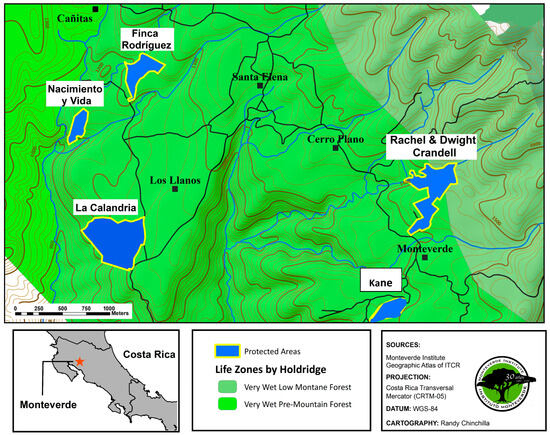
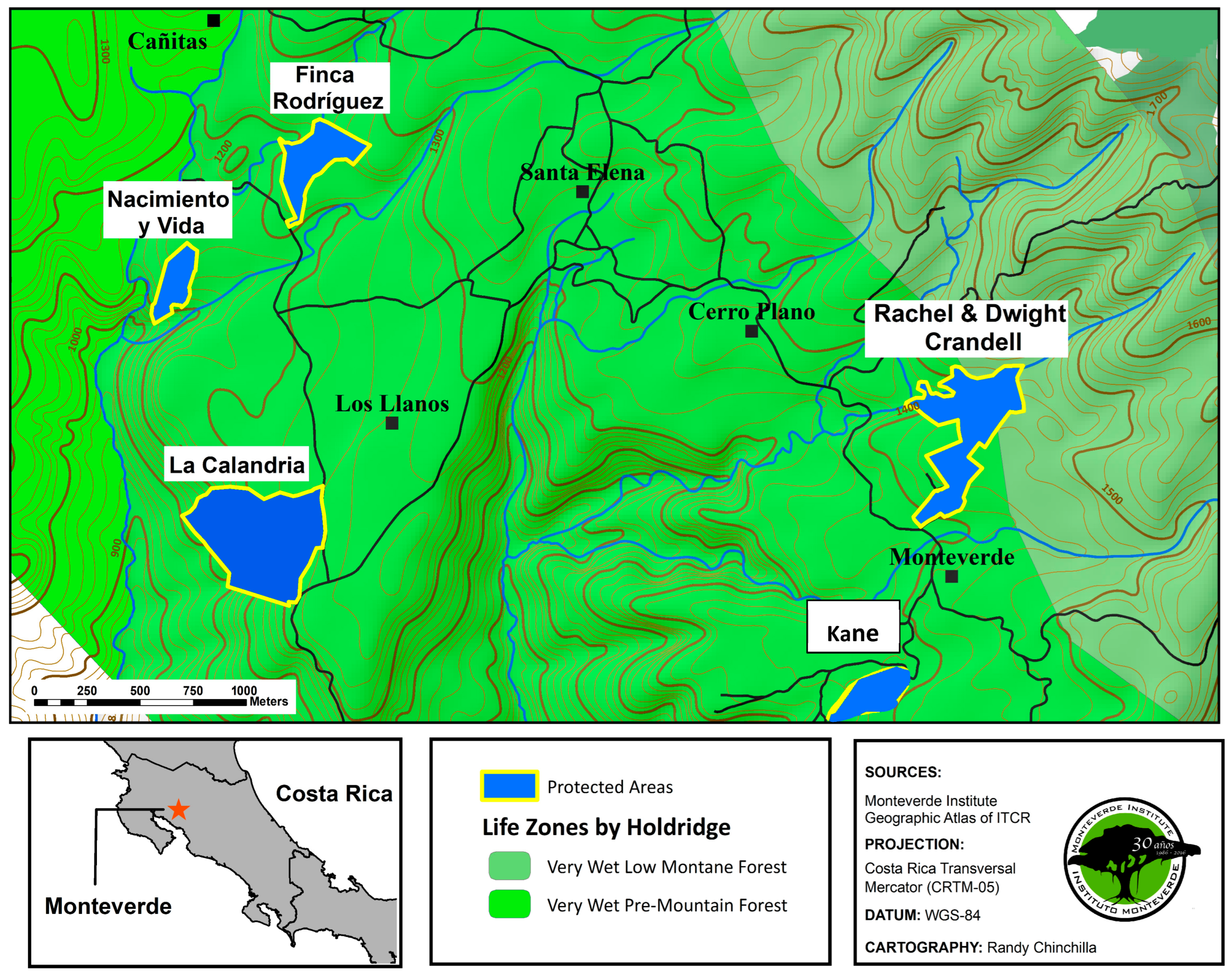
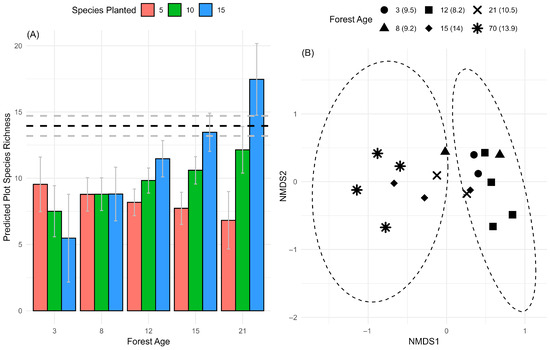
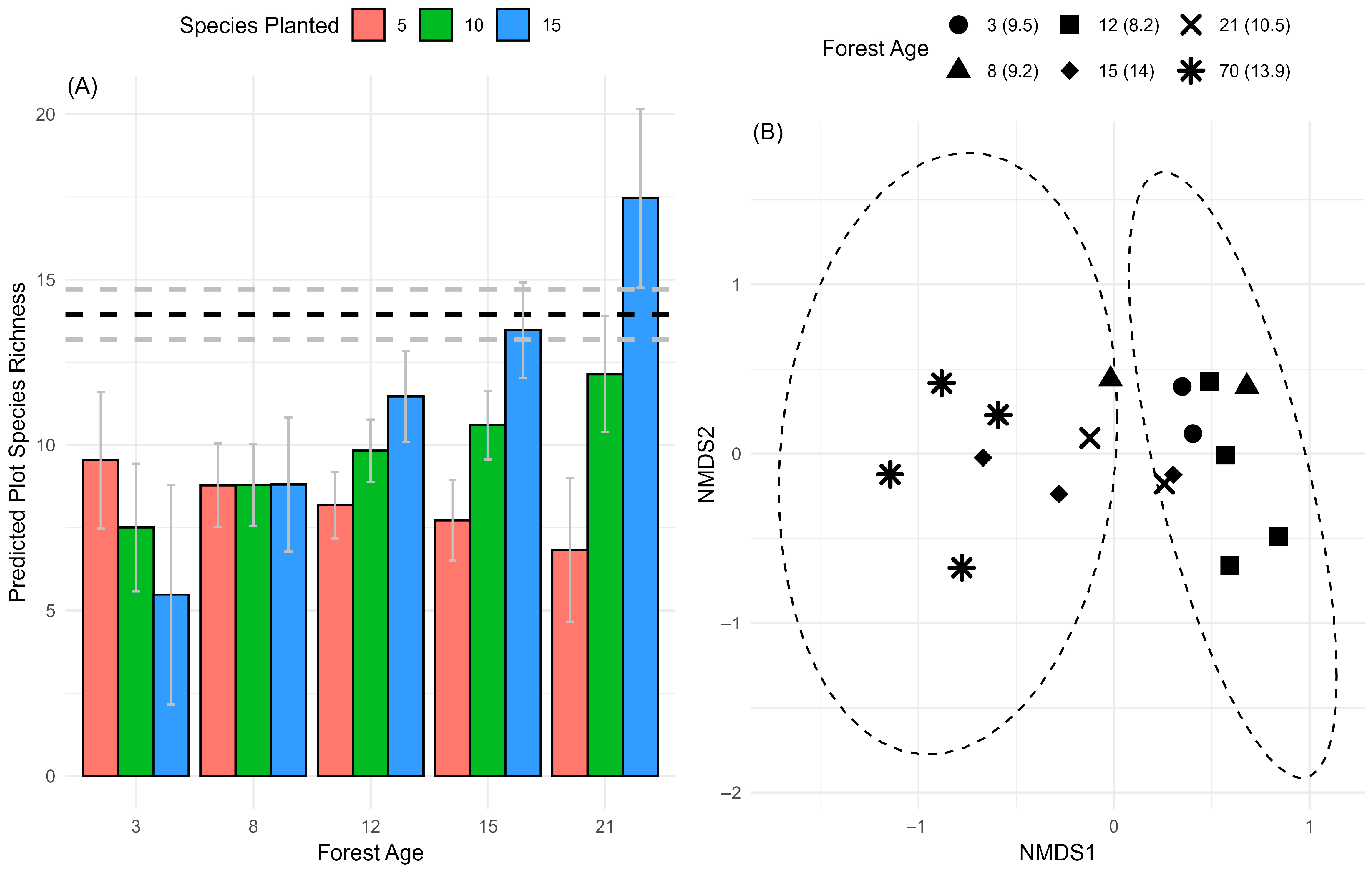
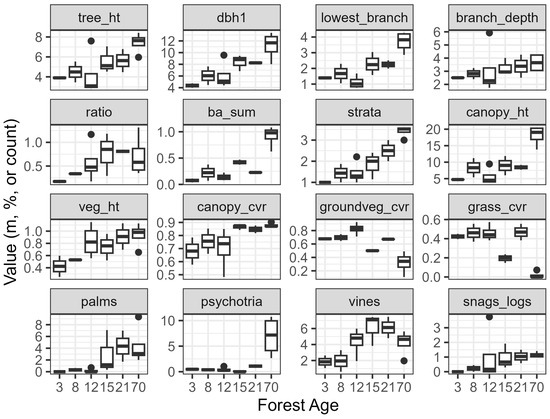
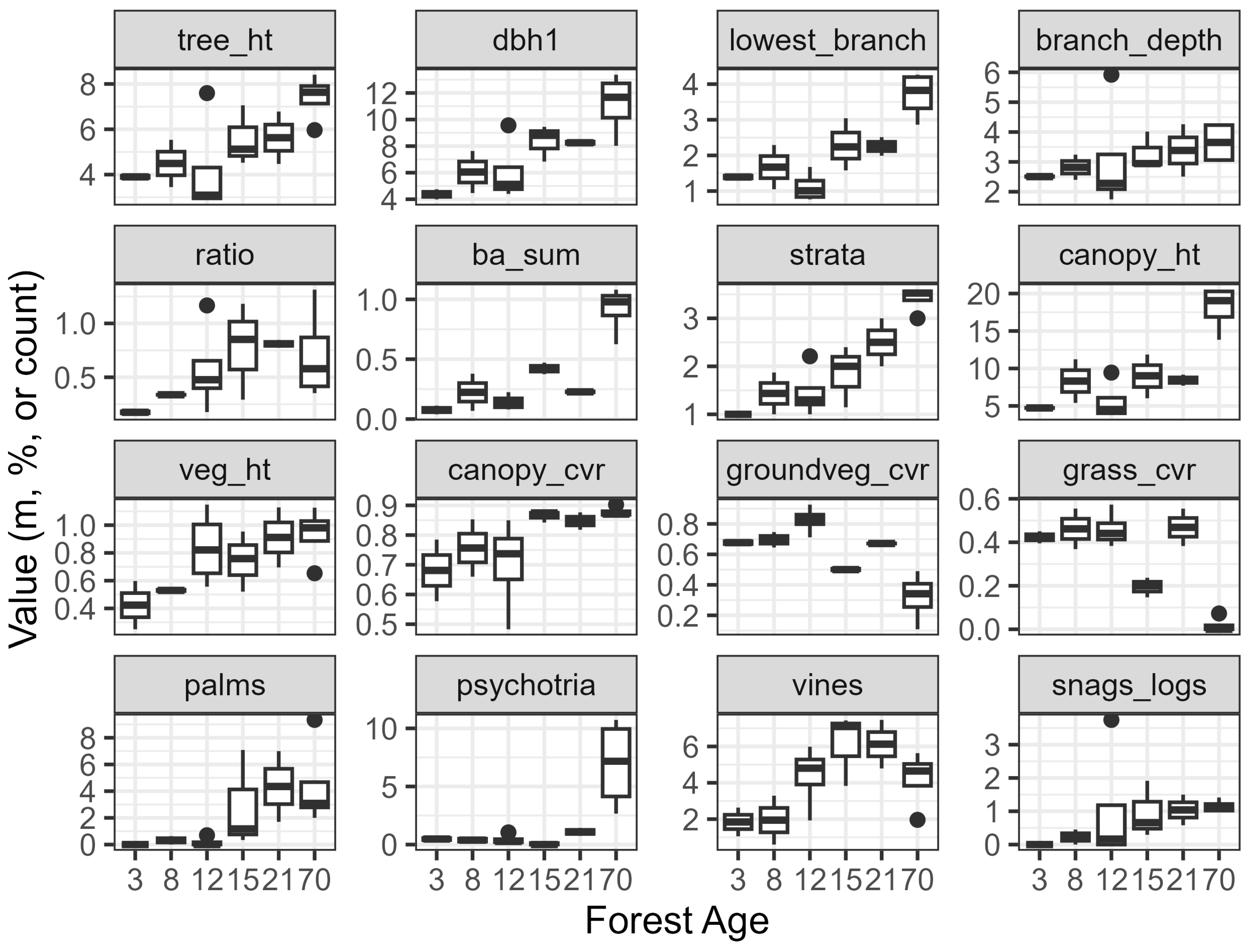
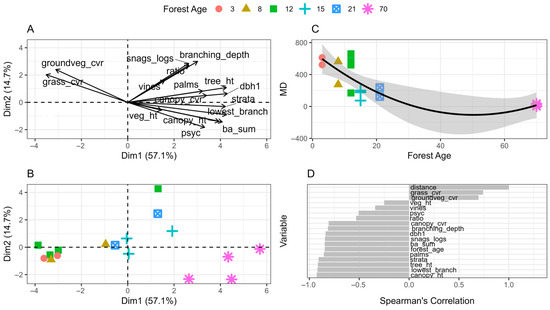
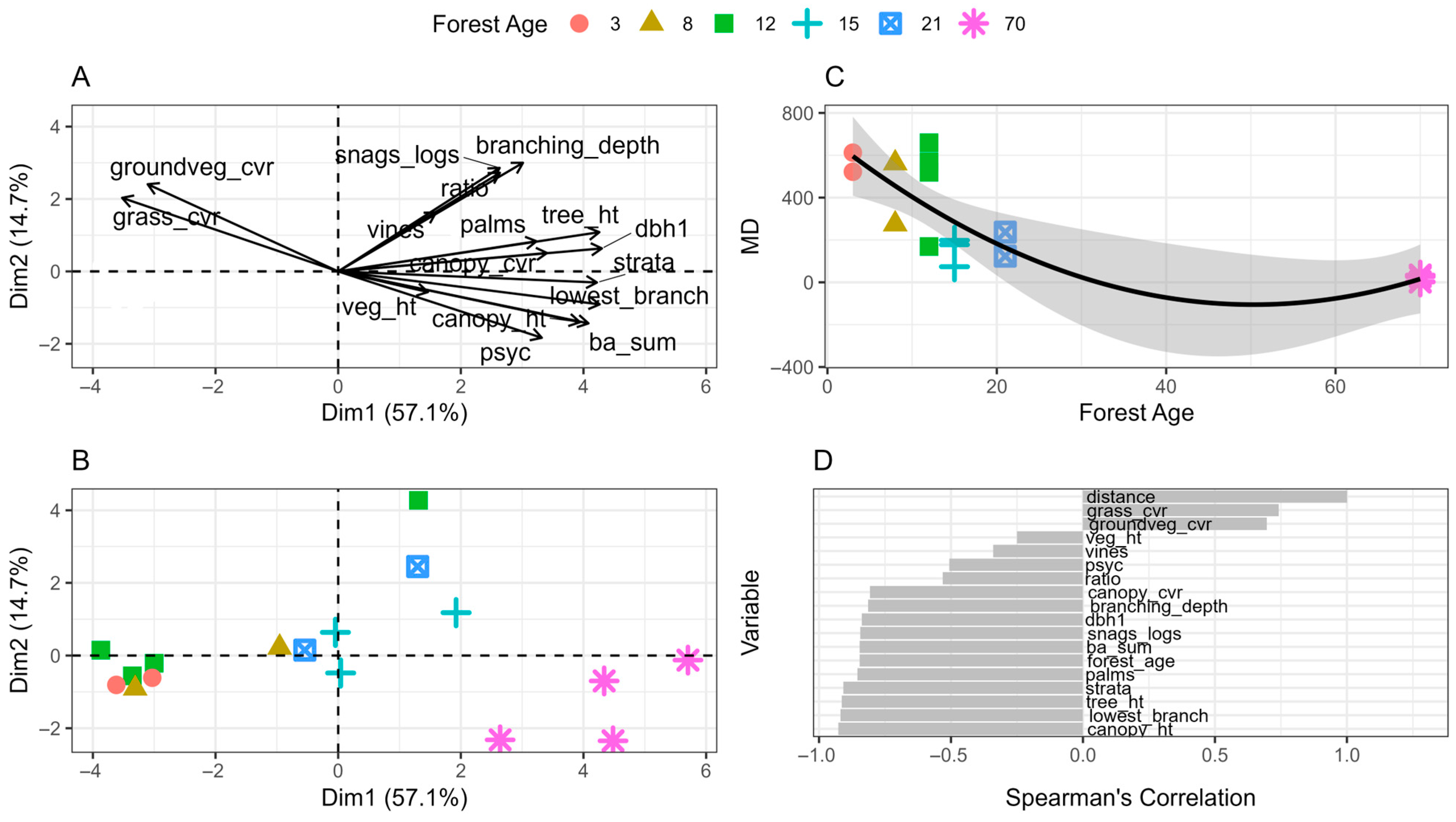
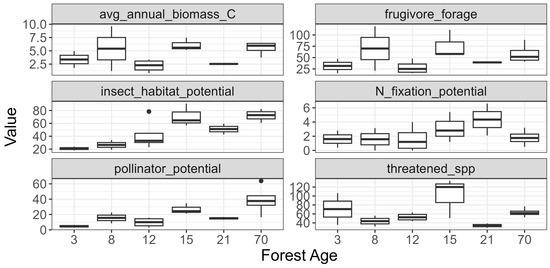
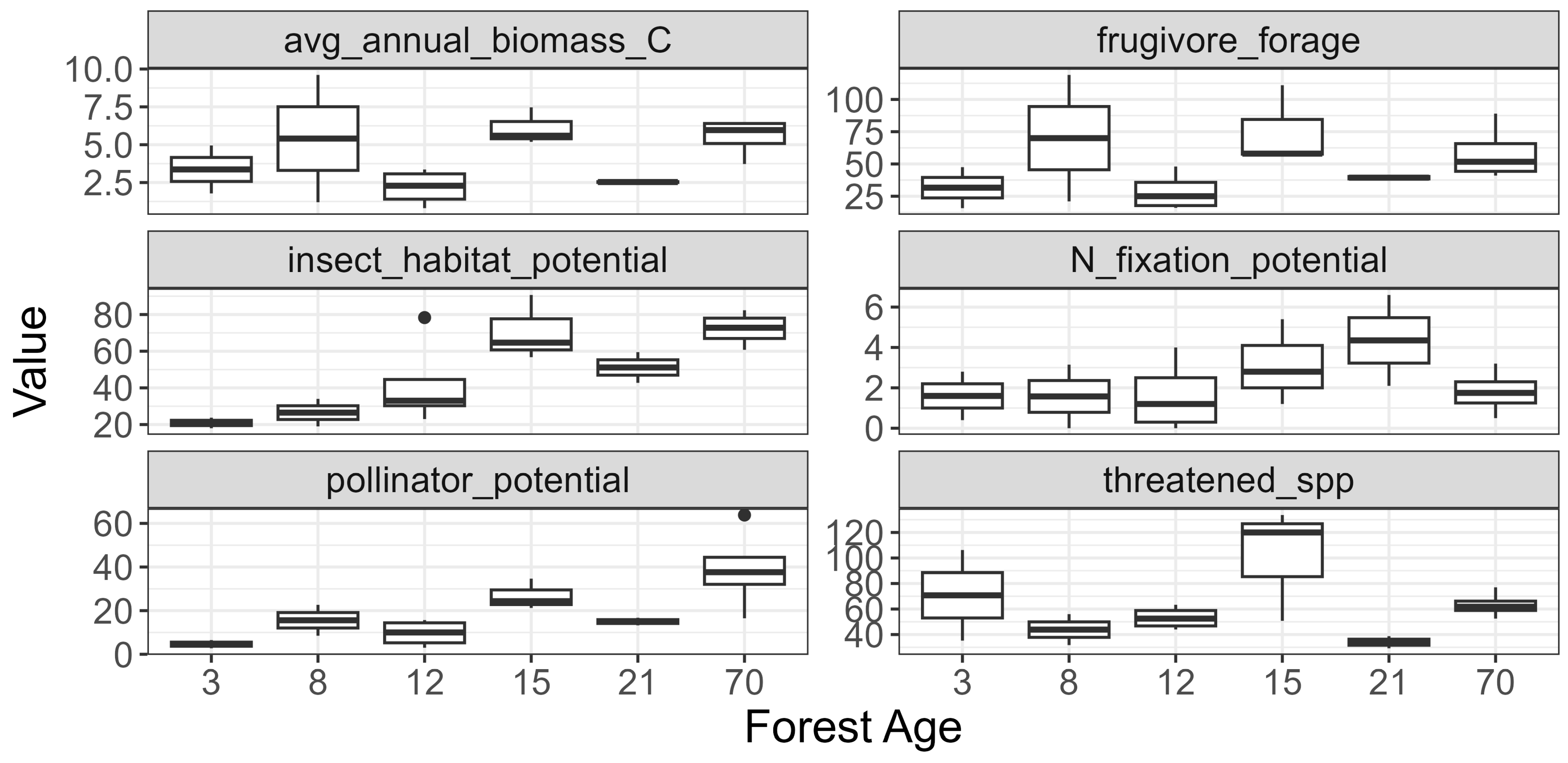
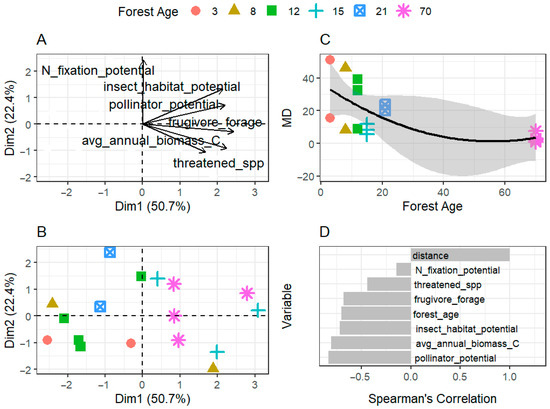
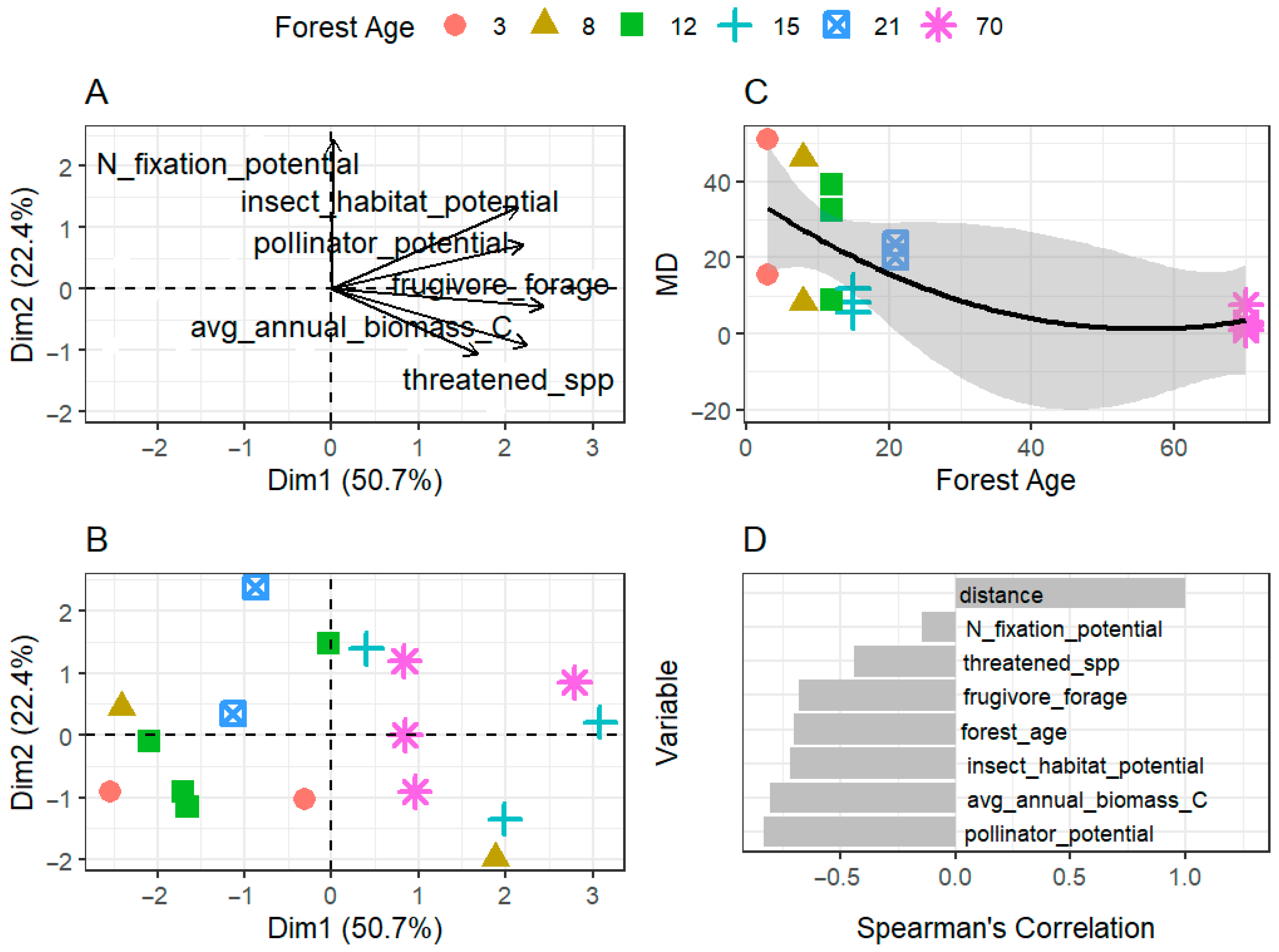

Disclaimer/Publisher’s Note: The statements, opinions and data contained in all publications are solely those of the individual author(s) and contributor(s) and not of MDPI and/or the editor(s). MDPI and/or the editor(s) disclaim responsibility for any injury to people or property resulting from any ideas, methods, instructions or products referred to in the content. |
© 2026 by the authors. Licensee MDPI, Basel, Switzerland. This article is an open access article distributed under the terms and conditions of the Creative Commons Attribution (CC BY) license.