Article

Identification and Expression Analysis of the SBP Gene Family in Phoebe bournei Under Drought Stress


1
College of Life Sciences, Fujian Agriculture and Forestry University, Fuzhou 350002, China
2
College of Forestry, Fujian Agriculture and Forestry University, Fuzhou 350002, China
3
Fujian Academy of Forestry, Fuzhou 350012, China
4
Fujian Provincial Key Laboratory of Haixia Applied Plant Systems Biology, Fujian Agriculture and Forestry University, Fuzhou 350002, China
5
Synthetic Biology Center, Haixia Institute of Science and Technology, Fujian Agriculture and Forestry University, Fuzhou 350002, China
6
College of Art, Hebei GEO University, Shijiazhuang 052161, China
*
Authors to whom correspondence should be addressed.
Forests 2026, 17(5), 573; https://doi.org/10.3390/f17050573
Submission received: 9 April 2026 / Revised: 4 May 2026 / Accepted: 6 May 2026 / Published: 8 May 2026
(This article belongs to the Section Genetics and Molecular Biology)

Abstract

Phoebe bournei is a rare and economically valuable tree species native to China that plays an important ecological role. In this study, we conducted a genome-wide identification of the SQUAMOSA promoter-binding protein (SBP) transcription factor family in Phoebe bournei and characterized 19 PbSBP genes distributed across 10 chromosomes. Phylogenetic analysis grouped these genes into five distinct subfamilies, each of which showed homology to SBP genes in Arabidopsis thaliana and Oryza sativa, indicating strong evolutionary conservation within the family. All identified PbSBP proteins contain the conserved SBP domain, and some members also harbor additional motifs such as the ANK domain, which may mediate protein–protein interactions. Tissue-specific expression profiling revealed that several PbSBP genes are predominantly expressed in root bark and leaves, suggesting their potential roles in defense responses and developmental regulation. Moreover, qPCR validation showed that PbSBP2, PbSBP9, and PbSBP16 were significantly upregulated under PEG-induced drought stress, implying their involvement in abiotic stress responses. This study provides a foundational understanding of the SBP gene family in P. bournei and highlights candidate genes for future genetic improvement and breeding for stress resistance.

1. Introduction

Transcriptional regulation serves as a key regulatory mechanism in plant development, enabling fine-tuned control of gene expression through a series of complex processes [1]. In this process, transcription factors act as central executors by specifically recognizing and binding to defined DNA sequences [2], thereby activating or repressing transcription and regulating diverse biological processes such as cell growth, development, and stress responses [3,4]. Among these, the SQUAMOSA promoter binding protein-like (SBP or SPL) genes constitute a family of plant-specific transcription factors that modulate target gene expression by binding to DNA [5]. Members of this family share a conserved SBP domain of approximately 75 amino acids, which contains two characteristic zinc finger motifs (Zn1: Cys-Cys-Cys-His; Zn2: Cys-Cys-His-Cys) and a nuclear localization signal (NLS) [6]. The zinc finger motifs mediate specific binding to the SQUAMOSA promoter, while the C-terminal NLS facilitates nuclear import, enabling transcriptional regulation [7,8].
Since the first SBP gene was identified in Antirrhinum majus inflorescences in 1995 [9], this family has been extensively characterized in diverse species, including Arabidopsis thaliana, Paulownia, and tea plants [10,11,12]. These studies have established SBP-box genes as key regulators of plant development, forming multi-layered networks that orchestrate critical processes such as floral organogenesis and leaf morphogenesis [8,13,14,15,16]. Mechanistically, their function is often integrated with the miR156-mediated plant-age pathway while also participating in other physiological programs like photoperiod response and gibberellin metabolism [17].
A striking feature of the SBP gene family is its functional diversification across species, reflecting its recruitment for various developmental and agronomic traits. In Arabidopsis, for instance, AtSPL3 promotes flowering by activating floral integrators such as LFY and FUL [18]; AtSPL8 is involved in anther development [19,20]; and AtSPL1 and AtSPL12 contribute to reproductive thermotolerance [21]. In tomato, the SlSPL-CNR transcription factor plays a critical role in fruit ripening and in regulating cell death [22]. In maize, SBP-box genes influence key agronomic traits, including leaf morphology, inflorescence architecture, and grain development [14,23,24]. Similarly, in rice, OsSPL14 enhances grain yield by promoting panicle branching [25], while OsSPL16 regulates grain size and shape [26], underscoring the family’s importance in crop improvement.
Beyond development, a growing body of evidence indicates that SBP genes are broadly involved in plant responses to environmental stresses. For example, under salt stress, BpSPL9 is significantly induced in the roots and leaves of Betula platyphylla, whereas BpSPL8 enhances stress tolerance by boosting reactive oxygen species (ROS) scavenging capacity [27]. In Arabidopsis, the miR156-SPL module serves as a central hub integrating stress signals with developmental adaptation. This module modulates responses to abiotic stresses such as salinity, drought, and heat through multiple mechanisms, including direct regulation of targets by SPL3, signal integration via the miR156-SPL9-DFR pathway, and control of anthocyanin accumulation [28,29,30].
Collectively, these findings highlight the SBP gene family as a master coordinator of both developmental programming and environmental adaptation, underscoring its significance in the evolutionary success of plants [13,31].
Phoebe bournei (Hemsl.) Yang, commonly known as Minnan nanmu, is a precious tree species endemic to China. Valued for its straight bole, fine texture, durability, and distinctive fragrance, it is highly sought after for construction, furniture, and fine carving [32,33]. As a Class II nationally protected plant, P. bournei not only holds significant economic value but also plays an essential role in water conservation and maintaining ecosystem stability [33,34]. However, as global climate change intensifies, trees like P. bournei are increasingly exposed to combined environmental stresses, including drought, high temperatures, and excessive light. Transcription factors are key regulators that enable plants to perceive and respond to such adverse conditions at the molecular level [2]. Therefore, investigating transcription factor families is fundamental to understanding the gene expression and metabolic regulatory networks that underlie stress adaptation in plants [35,36]. The SBP-box (or SPL) gene family is a plant-specific transcription factor family with well-documented roles in development and stress responses. While SBP family members have been systematically identified in numerous plant species, no comprehensive study has yet been reported for this gene family in P. bournei.
In this study, we conducted a genome-wide identification of SBP transcription factors in P. bournei and subsequently performed detailed bioinformatic characterization. A total of 19 PbSBP genes were identified and analyzed. Our findings provide a foundational resource for further functional studies of these genes and offer theoretical support for their potential application in genetic improvement and stress-resistance breeding of this valuable tree species.

2. Materials and Methods

2.1. Identification and Analysis of the SBP Gene Families in P. bournei

The genome sequences of Phoebe bournei were retrieved from the Sequence Archive of the China National GeneBank database (https://db.cngb.org/search/project/CNP0002030/ (accessed on 28 January 2024)) [32]. The SBP domain (PF03110) was queried from the Pfam protein family database (http://pfam.xfam.org/ (accessed on 28 January 2024)) for Hidden Markov Model (HMM) analysis, and HMMER (Version V3.0) was used to search for corresponding gene family members containing the target domain. The amino acid sequences of Arabidopsis SPL gene family members were obtained from the PlantTFDB database (https://planttfdb.gao-lab.org/ (accessed on 28 January 2024)), and BLASTP (E-value = 1 × 10⁻⁵) was performed between these sequences and the amino acid sequences of Phoebe bournei using TBtools (Version V2.142) to further confirm the PbSBP gene family. Genes aligned with AtSPLs and harboring the specific domain were identified, followed by verification using the NCBI-CDD search tool (https://www.ncbi.nlm.nih.gov/Structure/bwrpsb/bwrpsb.cgi (accessed on 6 July 2024)). A total of 19 genes were identified as members of the SBP gene family in Phoebe bournei, and they were renamed PbSBP1-PbSBP19 based on their chromosomal localization. The amino acid sequences of these genes were submitted to the online analysis tool Expasy ProtParam (https://web.expasy.org/protparam/ (accessed on 6 July 2024)) to calculate the physicochemical properties of PbSBP proteins, and the online tool Cell-PLoc (http://www.csbio.sjtu.edu.cn/bioinf/Cell-PLoc/ (accessed on 6 July 2024)) was used for subcellular localization prediction.

2.2. Cis-Regulatory Elements Prediction of Promoters in PbSBP Genes

The 2000 bp sequences upstream of the start codon for each member of the gene family were extracted from the genome sequence of Phoebe bournei. The PlantCARE online software (https://bioinformatics.psb.ugent.be/webtools/plantcare/html/ (accessed on 6 July 2024)) was employed to analyze cis-acting elements in the promoter regions, and self-compiled R scripts were used for data visualization.

2.3. Analysis of the Phylogenetic Tree, Motif, Domain, and Gene Structure of the P. bournei SBP Gene Family

The complete amino acid sequences of PbSBPs were analyzed using the online tool MEME (https://meme-suite.org/meme/tools/meme/ (accessed on 6 July 2024)) with 10 motifs to predict the conserved motifs of PbSBP proteins, and the results were visualized using TBtools (Version V2.142). Based on the gene annotation file of Phoebe bournei, the schematic diagrams of gene structures (including untranslated regions, coding regions, and introns) of the Phoebe bournei SBP gene family were generated in TBtools (Version V2.142).
Based on the MEGA11 platform, multiple sequence alignment and phylogenetic analysis were performed on the amino acid sequences of 19 PbSBP proteins from Phoebe bournei, 30 AtSPLs from Arabidopsis thaliana, and 20 OsSBPs from Oryza sativa. A phylogenetic tree was constructed using the Neighbor-Joining method with the JTT + G model, and branch reliability was assessed via 1000 bootstrap replicates. The results were visualized using the online beautification tool iTOL (https://itol.embl.de/upload.cgi (accessed on 10 July 2024)).

2.4. Collinearity and Duplication Events Analysis of SBP

Based on the positional information for PbSBP gene family members in the Phoebe bournei gene annotation file, a chromosomal localization map was generated using TBtools(Version V2.142). To systematically analyze the duplication patterns of the Phoebe bournei SBP gene family, the OneStepMcScanX-SuperFast plugin of TBtools (Version V2.142) was used to detect tandem duplication and segmental duplication events among family members. Furthermore, to explore the cross-species evolutionary characteristics of this gene family, a collinearity network of SBP genes between Phoebe bournei and model plants (Arabidopsis thaliana and Oryza sativa) was constructed based on the principle of homologous gene alignment using the above tools, and the distribution characteristics of conserved gene clusters among species were presented via visualization technology.

2.5. Abiotic Stress Treatment

One-year-old Phoebe bournei seedlings cultivated by the Fujian Academy of Forestry Sciences were used as experimental material. Seedlings with consistent growth status were randomly divided into two groups: the control group (3 seedlings) and the stress treatment group (15 seedlings). Drought stress was simulated using a 10% polyethylene glycol (PEG-6000) solution, and the treatment conditions were controlled in an artificial climate chamber with the following parameters: photoperiod of 12 h/d, LED light source, photosynthetically active radiation (PAR) intensity of 1200 μmol·m−2·s−1, constant temperature of 25 ± 1 °C, and relative humidity of 75 ± 5%. Leaf samples were collected at 0, 4, 8, 12, 24, and 48 h after treatment. All leaf samples were immediately frozen in liquid nitrogen after collection and stored in an ultra-low-temperature refrigerator at −80 °C for subsequent RNA extraction.

2.6. RNA Extraction and Statistical Analysis

Total RNA was extracted from the control and treatment groups using an RNA extraction kit from Omega Bio-Tek (Omega Bio-tek, Inc., Shanghai, China). cDNA synthesis was performed with the EasyScript One-Step gDNA Removal and cDNA Synthesis SuperMix kit produced by Transgen (Beijing, China). Quantitative real-time PCR (qRT-PCR) was performed using the TransStart Top Green qPCR SuperMix reagent (Transgen, Beijing, China), and all experimental steps were performed strictly in accordance with the manufacturer’s standard operating procedures. The qRT-PCR reaction mixture (20 µL) contained 10 µL of SYBR® Premix Ex Taq™ (2×, Lot #DRR041A, TaKaRa, Beijing, China), 1 µL of cDNA template (equivalent to 5 ng of starting total RNA used for reverse transcription), 1 µL of each gene-specific primer (5 µM stock), and 7 µL of nuclease-free ddH2O. The PCR amplification program was set as follows: pre-denaturation at 95 °C for 30 s, followed by 40 cycles of amplification (denaturation at 95 °C for 5 s, annealing/extension at 60 °C for 30 s), and a final melting curve analysis (95 °C for 5 s, 60 °C for 60 s, and 50 °C for 30 s). The internal reference gene used was PbEF1α (GenBank No. KX682032). GraphPad Prism 9.0 (https://www.graphpad.com/) was used for statistical analysis of the data, and the relative gene expression levels were calculated using the 2−ΔΔCT method. To ensure the reliability of experimental results, three biological replicates were set for each group, and each biological replicate included three technical replicates.

3. Results

3.1. Physicochemical Properties of the PbSBP Family Members in Phoebe bournei

In the genome of Phoebe bournei, 19 gene sequences related to PbSBP were identified and named PbSBP1 to PbSBP19 based on their chromosomal positions (Table 1). The number of amino acids in the identified PbSBP proteins in these proteins ranges from 185 (PbSBP17) to 1103 (PbSBP2), with an average of 472 amino acids per protein. The molecular weights vary from 20,797.26 Da (PbSBP17) to 122,028.30 Da (PbSBP2). The theoretical isoelectric point (pI) ranges from 5.38 (PbSBP16) to 9.98 (PbSBP8). Proteins with an isoelectric point (pI) below 7 are classified as acidic; this includes five members: PbSBP1, PbSBP3, PbSBP14, PbSBP16, and PbSBP18. The remaining 14 proteins are alkaline. All PbSBP proteins exhibit instability indices greater than 39, suggesting they may be relatively unstable. The aliphatic index ranges from 46.58 (PbSBP4) to 84.71 (PbSBP14). The grand average of hydropathicity values ranges from −1.334 to −0.340, indicating that all these proteins are strongly hydrophilic. Subcellular localization predictions indicate that all PbSBP proteins are localized to the nucleus, suggesting they may play significant roles in gene expression regulation and participate in processes such as transcription and translation.

3.2. Analysis of Motif Sequences in the PbSBP Family Members of Phoebe bournei

All members of the Phoebe bournei PbSBP family contain the conserved motifs Motif1, Motif2, and Motif4, as identified by MEME online analysis (Figure 1). These motifs, either collectively or individually, encode the SBP domain, indicating a high level of conservation. Phylogenetic analysis showed that closely related PbSBP proteins, such as PbSBP15, PbSBP8, and PbSBP12, share similar motif compositions, whereas members from different subgroups, such as PbSBP3 and PbSBP14, exhibit clear differences. Notably, Motif8 is unique to PbSBP18, and Motif9 and Motif10 only appear in the three longest protein sequences. Furthermore, the number of motifs positively correlates with protein length. Domain prediction confirmed that all identified SBP family members in Phoebe bournei contain the characteristic SBP domain. Notably, three genes—PbSBP2, PbSBP14, and PbSBP18—were found to additionally harbor ANK domains. The identified ANK domains encompass subtypes such as Ank_2 and the ANKYR superfamily, which are structurally associated with mediating protein–protein interactions [37]. Given that plant ANK proteins predominantly function in defense responses and occasionally in growth and development, the presence of these domains suggests that the corresponding PbSBP proteins may play specialized roles in related biochemical processes. These findings underscore the structural and functional diversity within the PbSBP gene family.

3.3. Chromosome Location and Collinearity Analysis of PbSBP Family Members in Phoebe bournei

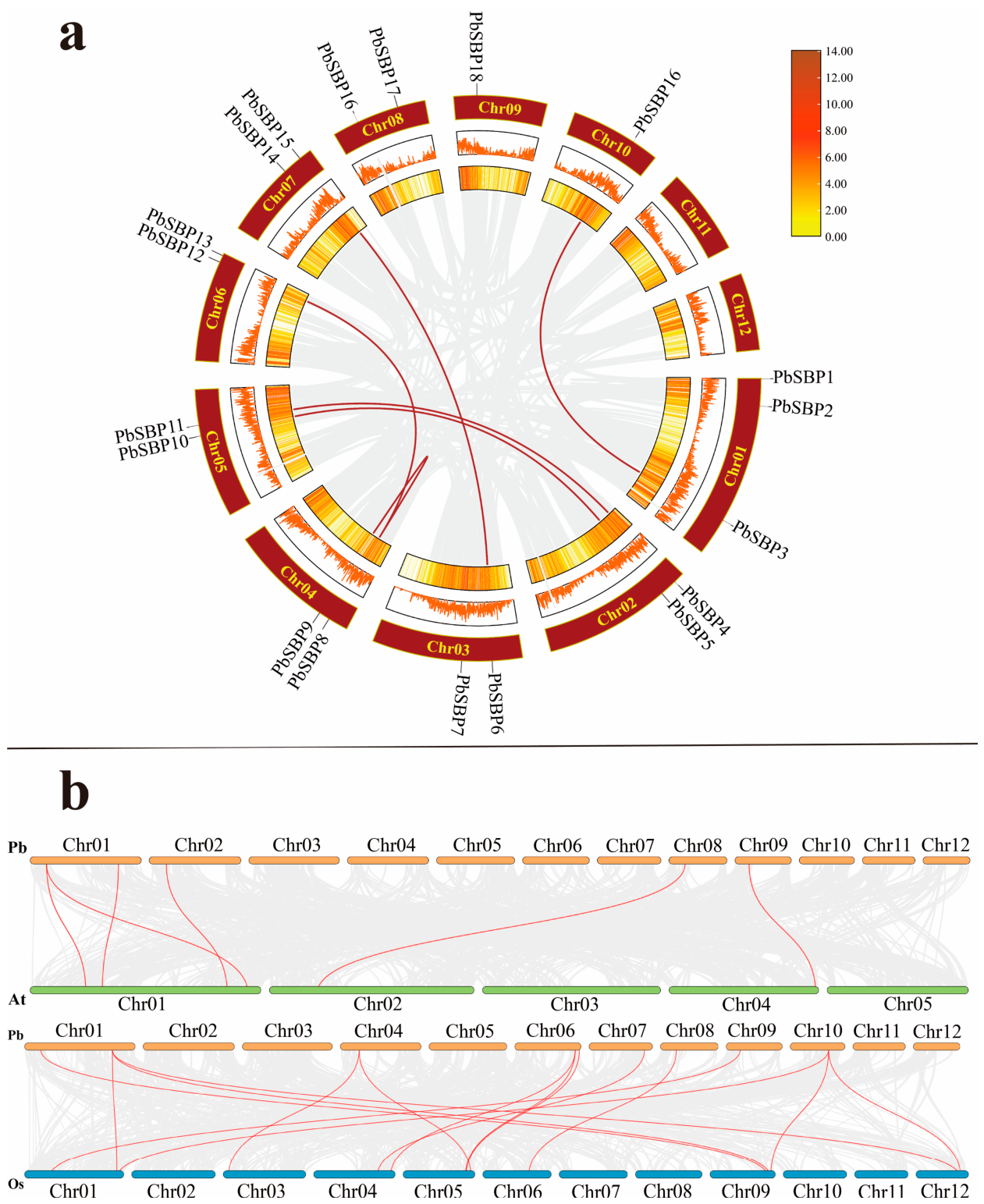
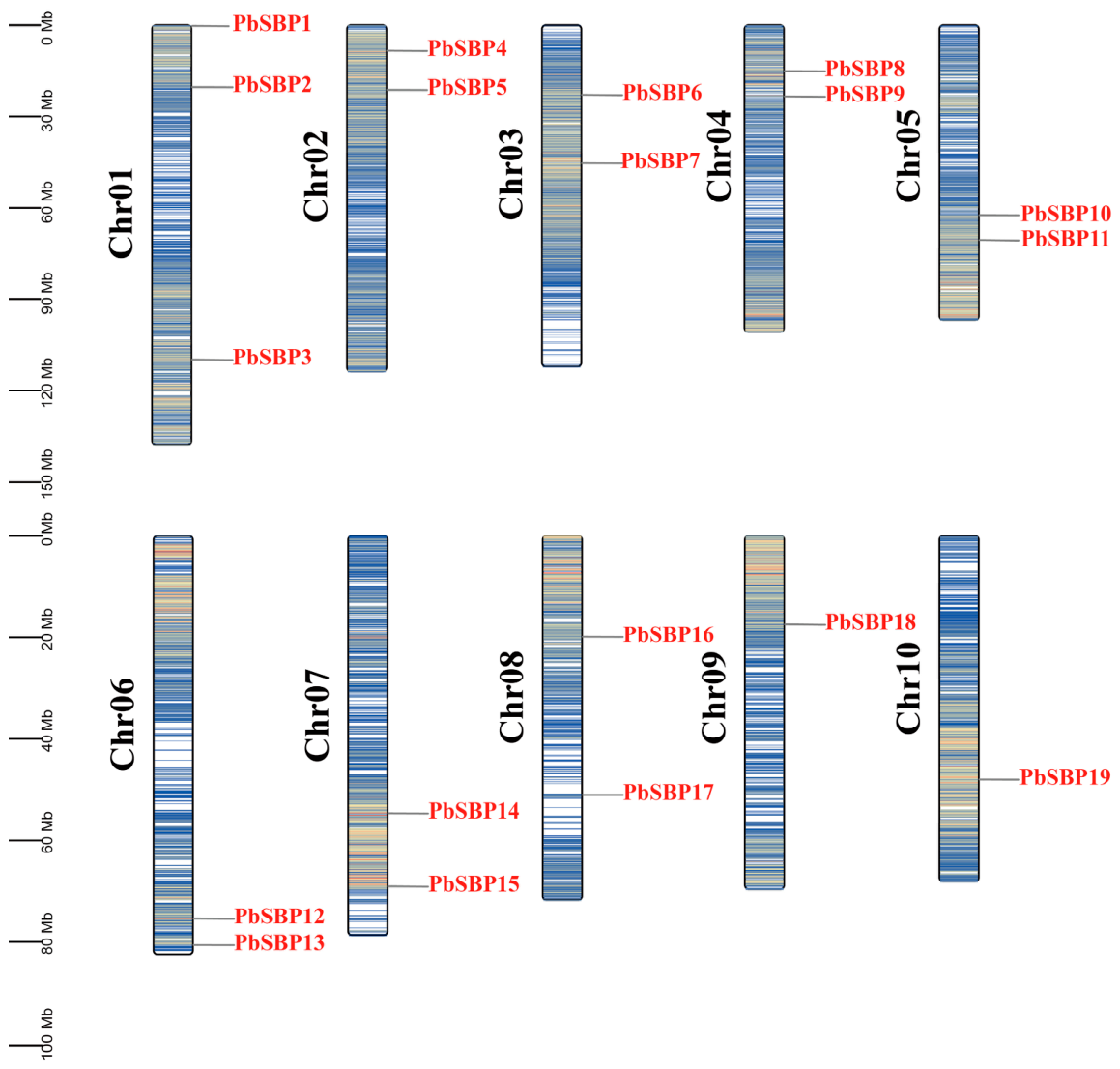
Chromosomal mapping revealed that the 19 identified PbSBP genes are distributed across all 10 chromosomes of Phoebe bournei (Figure 2). Their distribution was uneven: chromosome 1 harbored the most genes (3), while chromosomes 9 and 10 each contained only 1 gene. The remaining chromosomes (2–8) each carried two genes. Intraspecific collinearity analysis identified evidence of segmental duplications contributing to family expansion. Specifically, six segmentally duplicated gene pairs were identified: PbSBP3 and PbSBP16, PbSBP4 and PbSBP11, PbSBP5 and PbSBP10, PbSBP6 and PbSBP15, PbSBP8 and PbSBP9, and PbSBP8 and PbSBP13 (Figure 3a). In addition, PbSBP12 showed collinearity with both PbSBP8 and PbSBP9, suggesting its potential involvement in a more complex duplication pattern with these loci. Notably, the neighboring genes PbSBP4 and PbSBP5 showed collinearity with another linked pair, PbSBP10 and PbSBP11, located on a different chromosome, suggesting that these two genomic segments, each containing a PbSBP gene pair, may have been duplicated as a block and could potentially function in a coordinated manner. Interspecific collinearity comparisons indicated that this gene family has been relatively conserved during evolution. We identified 6 collinear gene pairs between P. bournei and Arabidopsis and 15 pairs between P. bournei and rice (Figure 3b). Chromosome 1 of P. bournei displayed the highest level of synteny, sharing 3 and 4 collinear pairs with Arabidopsis and rice, respectively. In total, 21 orthologous genes were identified across the three species.

3.4. Heatmap of PbSBP Family Members in Phoebe bournei

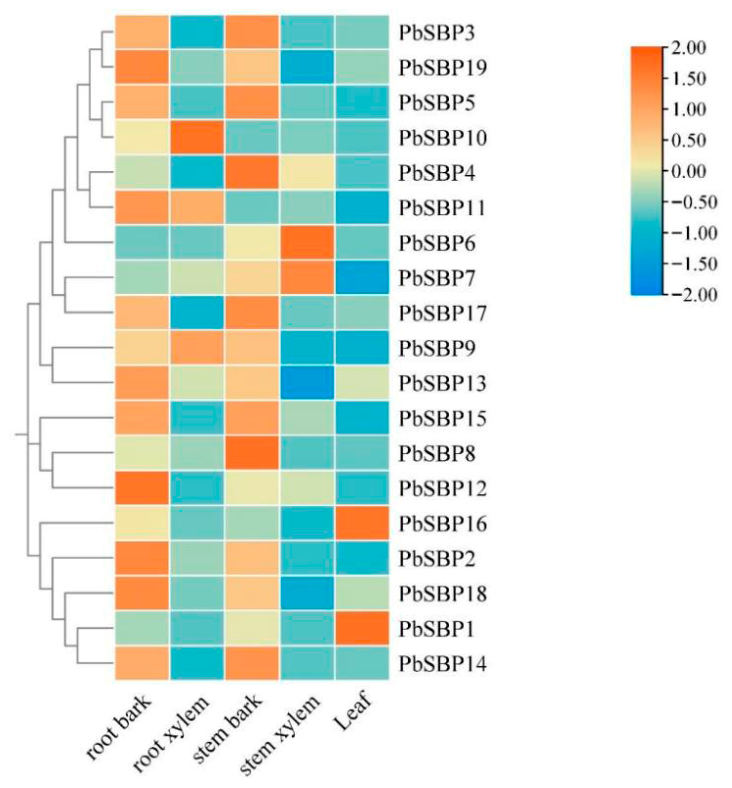
Figure 4 shows the expression levels of 19 SBP genes in Phoebe bournei across different plant tissues, including root bark, root xylem, stem bark, stem xylem, and leaves. PbSBP12 and PbSBP19 are significantly highly expressed in root bark, while PbSBP9, PbSBP10, and PbSBP11 showed high expression in root xylem. These expression patterns raise the hypothesis that these genes may be associated with root bark defense responses in Phoebe bournei, potentially contributing to resistance against external biotic or abiotic stresses. PbSBP4 and PbSBP8 are highly expressed in the stem bark. Since the stem bark is closely associated with physiological processes such as plant signal transduction, these two genes could be hypothesized to correlate with signal transduction in the stem bark of Phoebe bournei. PbSBP6 exhibits significantly high expression in the stem xylem, which may imply a potential association with regulating water balance and mineral distribution. PbSBP1 and PbSBP16 are highly expressed in leaves. Since leaves are the main sites for photosynthesis and transpiration, it is presumed that these two genes may be involved in processes such as light energy capture, carbon fixation, oxygen release, and water evaporation in Phoebe bournei leaves. PbSBP9 and PbSBP12 show relatively high expression in stems and roots, respectively, and are speculated to be relevant to regulating various physiological functions, such as structural support and water and mineral transport, in Phoebe bournei.

3.5. Phylogenetic Analysis of the SBP Gene Family in Phoebe bournei

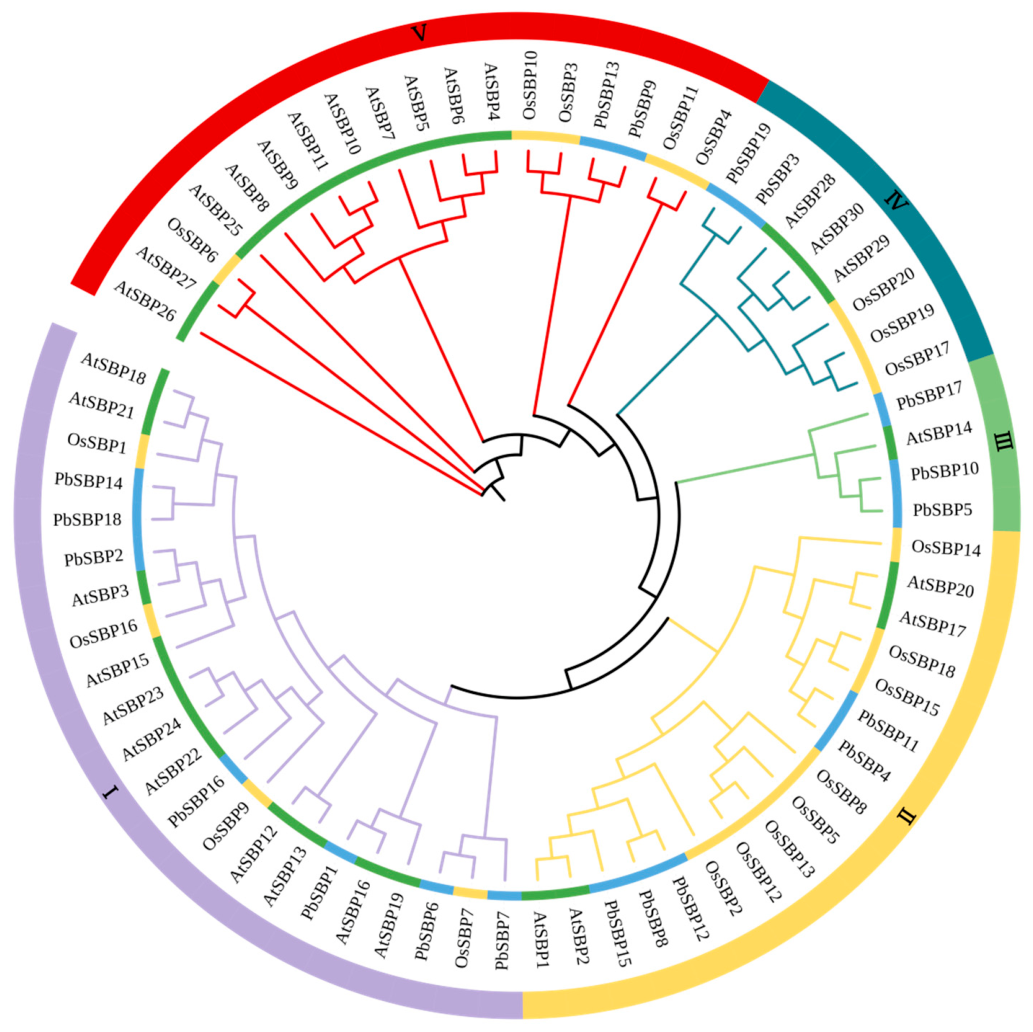
In this study, Arabidopsis thaliana and Oryza sativa were used as reference species to build multiple sequence alignments and a phylogenetic tree for members of the SBP gene family in Phoebe bournei. We identified 19 SBP members in Phoebe bournei, while Arabidopsis thaliana and Oryza sativa have 30 and 20 members, respectively, with a total of 69 genes included in the analysis. The phylogenetic analysis revealed that the SBP gene families of Phoebe bournei, Arabidopsis thaliana, and Oryza sativa are all divided into five subfamilies (I–V) (Figure 5). The subfamily division was primarily based on the topological structure of the neighbor-joining phylogenetic tree with 1000 bootstrap replicates and further validated by conserved motif patterns and consistency with the established classification system of model plants. In Figure 5, each subfamily is distinguished by a different color: purple for subfamily I, yellow for subfamily II, cyan for subfamily III, green for subfamily IV, and red for subfamily V. The inner circle differentiates the SBP members of the three species using yellow (Oryza sativa), green (Arabidopsis thaliana), and blue (Phoebe bournei). The analysis shows an uneven distribution of SBP genes across the three species, with the following numbers per subfamily: subfamily I: 10 genes; subfamily II: 5 genes; subfamily III: 4 genes; subfamily IV: 2 genes; subfamily V: 2 genes.
Previous studies have shown that Arabidopsis SBP genes are broadly expressed in flowers, leaves, roots, and seeds, while rice SBP genes are mainly active in flowers and callus tissues [38]. In the phylogenetic analysis of this study, PbSBP2 from Phoebe bournei forms a direct homologous relationship with AtSBP3 of Arabidopsis thaliana, indicating that PbSBP2 may perform functions similar to those of AtSBP3 during Phoebe bournei development. These functions might include roles in processes such as flowering and fruiting, spore formation, hormone response, and resistance to fungal infection. Additionally, in other homologous pairs, PbSBP1 and AtSBP16, as well as PbSBP6 and OsSBP7, also show direct homology. In subfamily V, PbSBP3 and PbSBP10 cluster with OsSBP9 and OsSBP13 in rice. Therefore, SBP genes could be involved in regulatory pathways like those in Arabidopsis thaliana and Oryza sativa, playing vital roles in the growth, development, and environmental responses of Phoebe bournei.

3.6. Comparative Analysis of Cis-Acting Elements in the PbSBP Gene Family

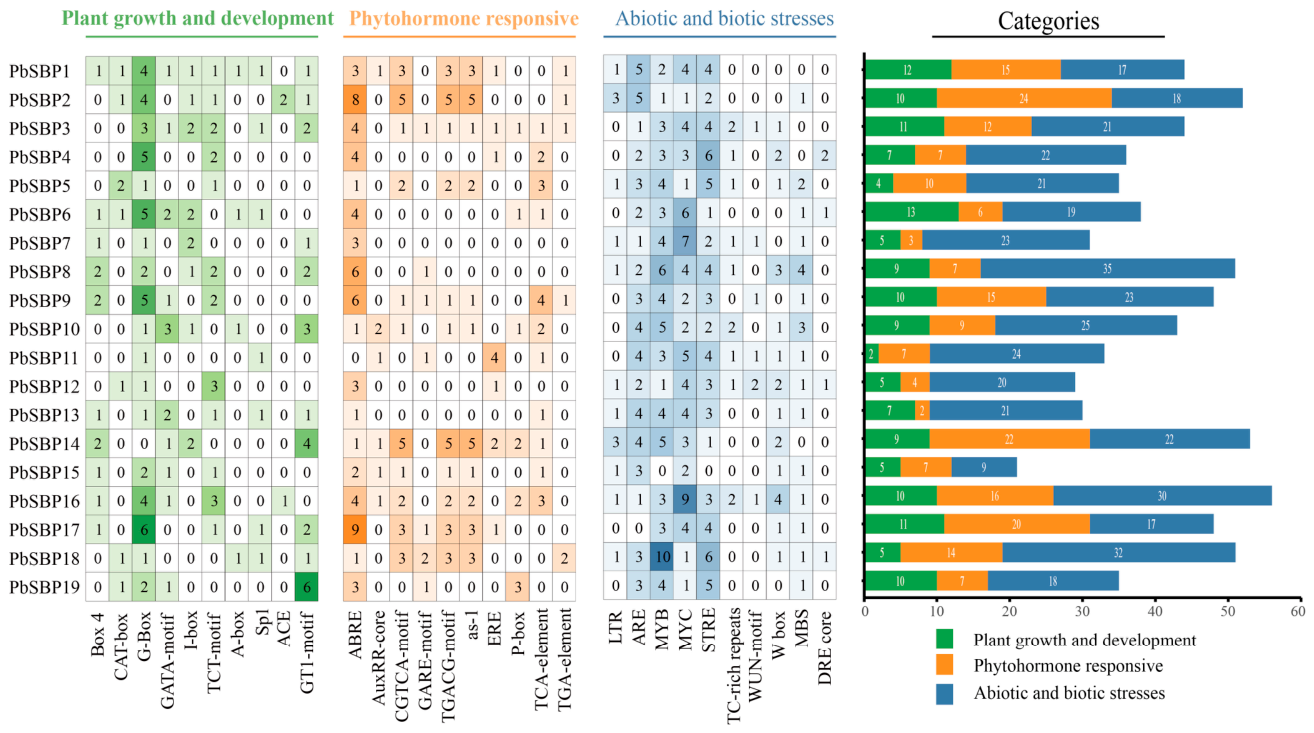
Analysis of the cis-acting elements within the promoter regions of the PbSBP gene family in Phoebe bournei revealed that they can be divided into three functional categories: growth and development, hormone response, and environmental stress (Figure 6). Regarding stress-responsive elements, the PbSBP family collectively contains several types involved in environmental stress regulation. Notably, PbSBP16 and PbSBP14 have a relatively higher number of these elements in their promoter regions, indicating their possible role in transcriptional regulation through enriched cis-acting elements in response to external stress signals.
Regarding drought-stress response, MYB transcription factor binding sites linked to drought were identified in 18 of the 19 PbSBP family members (Figure 6). Among these, PbSBP18 has the most such binding sites (Figure 6). Previous research has shown that MYB transcription factors play a broad role in various abiotic stress responses, including drought [39]. This suggests that PbSBP18 may be a key regulator of drought resistance in Phoebe bournei, making it a promising target for further study on the molecular mechanisms behind its adaptation to dry conditions.

3.7. Expression Patterns of PbSBP Genes in Response to Drought Stress Induced by PEG

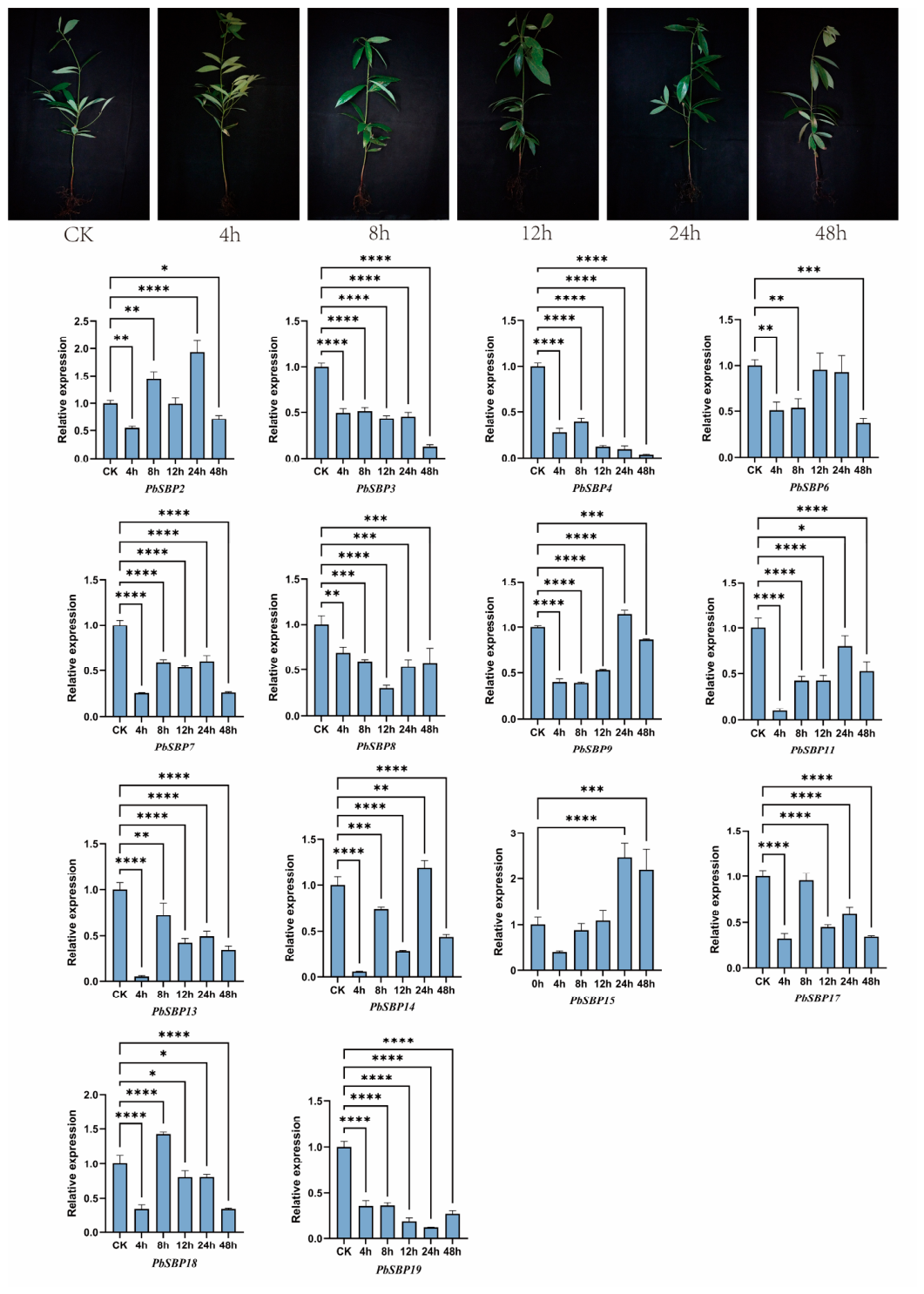
Cis-acting element analysis revealed that, in addition to hormone-responsive motifs, multiple stress-related regulatory elements are widely distributed in the promoter regions of PbSBP family members. To further explore their potential roles in drought response, we systematically examined the expression profiles of 15 PbSBP genes (excluding members 1, 5, 10, and 16 with non-normal distribution) in Phoebe bournei seedlings under simulated drought stress induced by 10% polyethylene glycol (PEG-6000), using qRT-PCR (Figure 7).
The results showed that all PbSBP genes exhibited significant transcriptional alterations under PEG-simulated drought stress, with distinct expression patterns compared with the control group. A considerable subset of PbSBP genes was remarkably induced by drought stress, among which PbSBP2, PbSBP9, PbSBP14, and PbSBP15 reached their expression peaks at 24 h, suggesting these genes may participate in the medium and late stages of drought adaptation.
Strikingly, the quantity of PbSBP genes with repressed expression was higher than that of induced genes, including PbSBP2, PbSBP4, PbSBP6, PbSBP7, PbSBP8, and other family members, whose transcript abundances were observably reduced at multiple time points after drought treatment. Meanwhile, 9 PbSBP genes showed the highest expression levels under normal growth conditions and were rapidly downregulated at 4–8 h of stress treatment, followed by a slight recovery during the middle stress period, exhibiting a typical biphasic expression pattern.
The heterogeneous expression profiles of PbSBP genes under drought stress revealed that different members of this family exhibit inconsistent responses to drought stimulation. The coexistence of upregulated and downregulated PbSBP genes indicated clear functional differentiation within the PbSBP gene family, and distinct PbSBP genes may exert divergent regulatory roles in the drought response and adaptation of Phoebe bournei.

4. Discussion

Phoebe bournei is mainly found in the subtropical monsoon climate zone and is one of the rare native tree species in eastern Chinese subtropical forests [40,41]. It has straight trunks and dense, tough wood, making it ideal for producing high-quality furniture. As a result, it holds significant economic and ecological value and is currently listed as a National Grade II Protected Plant in China. However, global warming and drought are increasingly threatening the survival and development of P. bournei, with projections showing rising temperatures and more frequent droughts in its natural habitats [42]. These environmental stresses may disrupt its normal growth, reducing both timber yield and quality. In the context of accelerating climate change and changing habitat conditions, an in-depth study of P. bournei’s stress-tolerance mechanisms is critically important. Understanding the physiological and molecular responses underlying its adaptation to environmental stresses—especially its ability to cope with periodic drought—could provide a crucial scientific basis for its conservation and enhanced resilience.
Previous studies have confirmed that SBP-box genes play crucial roles in plant development, especially in floral development, signal transduction, and the transition from vegetative to reproductive growth [43,44,45]. Different members of this gene family exhibit distinct functional divisions and cooperative regulatory mechanisms. In Arabidopsis thaliana, for example, SPL9 and SPL13 control leaf maturation and petiole development [46], while SPL2, SPL10, and SPL11 are closely linked to resistance regulation during the shift from seedling to mature stages [47]. Additionally, multiple lines of evidence suggest that SBP genes are involved in responses to both biotic and abiotic stresses across various plant species [48]. For example, overexpression of VpSBP16 in Arabidopsis increases tolerance to salt and drought stress at the seed germination, seedling, and mature plant stages by modulating the Salt Overly Sensitive (SOS) pathway and reactive oxygen species (ROS) signaling cascades [10]. In P. bournei, the upstream regulatory regions of PbSBP genes are enriched for cis-acting elements responsive to drought and light stress; combined with expression profiling, this suggests a potentially positive role for PbSBP genes in abiotic stress resistance. Building on these findings, this study employs phylogenetic analysis, expression profiling, and trait association analyses to hypothesize that the PbSBP gene family plays a vital role in P. bournei’s biological response to drought stress.
A total of 19 PbSBP genes were identified in the P. bournei genome. Compared to other species, the number of PbSBP genes varies from that of Arabidopsis (30 members) and rice (20 members) [38]; differences in SBP gene numbers between species may result from whole-genome duplication events and subsequent gene loss over the course of evolution. Among the 19 identified PbSBP genes, all encode proteins with instability indices greater than 39, indicating relatively low protein stability. Subcellular localization predictions indicate that all PbSBP proteins are exclusively nuclear, suggesting a role in transcriptional regulation, including control of gene transcription and translation.
A phylogenetic tree built from SBP protein sequences of P. bournei, Arabidopsis, and rice classified the 19 PbSBP proteins into five subfamilies (I–V). Except for Subfamily III—which contains no rice OsSBP members—each subfamily includes orthologous genes from all three species. Subfamilies I and II have the most members, indicating they may be more functionally important in P. bournei. Generally, proteins that cluster together in the same phylogenetic group and share high sequence similarity are likely to have conserved functions [38]. Therefore, evolutionary conservation within the SBP family can be used to predict the drought-resistance potential of PbSBP proteins. Phylogenetic analysis shows that PbSBP genes often cluster with Arabidopsis AtSBP genes—implying functional conservation between PbSBP and AtSBP (Figure 5). Notably, miR156—a key upstream regulator—is strongly induced under stress conditions [28]; in Arabidopsis, miR156 improves tolerance to salt and drought by specifically repressing its target gene AtSPL9. Loss-of-function mutants of miR156 are more sensitive to salt/drought stress, while miR156-overexpressing lines show significantly enhanced tolerance. This highlights the miR156–SBP module as a central system linking stress responses with developmental processes. Based on phylogenetic clustering with AtSPL9, some PbSBP members are predicted to be direct targets of miR156 and likely participate in drought resistance and developmental regulation in P. bournei through this conserved pathway.
Regarding conserved motifs, the motif composition and arrangement are very similar across all 19 PbSBP proteins: each contains Motif1, Motif2, and Motif4—three motifs that together form the canonical SBP domain—indicating that this domain is the core functional unit of the family. All PbSBP proteins include a complete SBP domain. Notably, PbSBP2, PbSBP14, and PbSBP18 also harbor ANK domains, suggesting potential roles in protein–protein interactions [37]. Interestingly, these three proteins are also the longest in sequence, and—apart from PbSBP18-specific Motif8—they all have Motif9 and Motif10, creating a distinctive motif architecture. These structural and sequence features might explain their more complex functional roles. Additionally, gene structure analysis shows that PbSBP family members generally contain many introns, reflecting high structural complexity—likely the result of directed evolutionary refinement over time. Synteny analysis identified 6 orthologous gene pairs between P. bournei and Arabidopsis and 15 between P. bournei and rice (Figure 3b)—further confirming the high evolutionary conservation of the SBP gene family.
Additionally, based on the prior identification of all PbSBP genes, their expression profiles were thoroughly analyzed. qRT-PCR was used to examine the expression dynamics of PbSBP genes under PEG-induced drought stress (Figure 7). Several PbSBP genes showed significant upregulation under PEG treatment, indicating their potential role in enhancing P. bournei’s stress resilience. This suggests that PbSBP genes function as transcriptional activators, coordinating adaptive physiological and molecular responses to environmental stressors. Notably, PbSBP2 and PbSBP9 displayed the most notable changes in expression upon drought exposure. These findings imply that the SBP gene family plays critical roles in P. bournei’s growth, development, and recovery from drought-induced stress. Overall, SBP genes are likely crucial for both developmental regulation and abiotic stress responses in P. bournei, providing promising genetic targets for improving drought tolerance and supporting functional validation and breeding efforts.

5. Conclusions

This study identified 19 SBP family members in Phoebe bournei, a number comparable to those reported in Arabidopsis and rice. This finding supports the prevailing view that the SBP transcription factor family maintains a relatively conserved size across angiosperms. Under drought stress, several PbSBP genes were significantly upregulated, with PbSBP2, PbSBP9, and PbSBP15 showing the most pronounced responses. These results align with observations from previous cross-species studies, such as the enhanced drought tolerance associated with VpSBP16 overexpression in grapevine and the involvement of OsSPL genes in stomatal regulation in rice, further indicating that the SBP family may play functionally conserved roles in plant stress adaptation.
Given the increasing severity of drought in the natural habitats of P. bournei, driven by ongoing climate change, this study not only advances our understanding of SBP-mediated stress response mechanisms but also offers valuable genetic targets to enhance stress tolerance in this nationally protected species. Future efforts should focus on the functional characterization of key drought-responsive PbSBP genes, the elucidation of their regulatory networks, and the exploration of naturally occurring allelic variants. Such work will help develop stress-tolerant germplasm and support the broader cultivation of P. bournei.

Supplementary Materials

The following supporting information can be downloaded at: https://www.mdpi.com/article/10.3390/f17050573/s1.

Author Contributions

Conceptualization, visualization, investigation, formal analysis, and writing—original draft, Q.L.; methodology, writing—original draft and writing—review and editing, Y.W. (Yingxin Wen); methodology and investigation, C.T. and Y.W. (Yifan Wu); writing—review and editing, Z.L., S.L., Z.D., Y.Z. and Z.Z.; resources, X.T. and Y.Z.; supervision and project administration, Z.Z., S.C. and Y.Z.; conceptualization, Y.Z.; funding acquisition, X.T. All authors have read and agreed to the published version of the manuscript.

Funding

This research was funded by the Seed Industry Innovation and Industrialization Project in Fujian Province (ZYCX-LY-2021005) to X.T. and the Subtopic of Fujian Province Forestry Seedling Technology Research Project (ZMGG-0809-1) to X.T.

Data Availability Statement

All data generated or analyzed during this study are presented in the Supplementary Materials or are accessible via the websites indicated in the text.

Conflicts of Interest

The authors declare no conflicts of interest.

References

  1. Strader, L.; Weijers, D.; Wagner, D. Plant transcription factors—Being in the right place with the right company. Curr. Opin. Plant Biol. 2022, 65, 102136. [Google Scholar] [CrossRef] [Scilit]
  2. Blanc-Mathieu, R.; Dumas, R.; Turchi, L.; Lucas, J.; Parcy, F. Plant-TFClass: A structural classification for plant transcription factors. Trends Plant Sci. 2024, 29, 40–51. [Google Scholar] [CrossRef] [Scilit]
  3. Wang, Z.; Dane, F. NAC (NAM/ATAF/CUC) transcription factors in different stresses and their signaling pathway. Acta Physiol. Plant 2013, 35, 1397–1408. [Google Scholar] [CrossRef] [Scilit]
  4. Journot-Catalino, N.; Somssich, I.E.; Roby, D.; Kroj, T. The transcription factors WRKY11 and WRKY17 act as negative regulators of basal resistance in Arabidopsis thaliana. Plant Cell 2006, 18, 3289–3302. [Google Scholar] [CrossRef] [Scilit] [PubMed]
  5. Tang, Y.; Xu, H.; Yu, R.; Lu, L.; Zhao, D.; Meng, J.; Tao, J. The SBP-box transcription factor PlSPL2 negatively regulates stem development in herbaceous peony. Plant Cell Rep. 2024, 43, 275. [Google Scholar] [CrossRef] [Scilit]
  6. Birkenbihl, R.P.; Jach, G.; Saedler, H.; Huijser, P. Functional dissection of the plant-specific SBP-domain: Overlap of the DNA-binding and nuclear localization domains. J. Mol. Biol. 2005, 352, 585–596. [Google Scholar] [CrossRef] [Scilit]
  7. Yamasaki, K.; Kigawa, T.; Inoue, M.; Tateno, M.; Yamasaki, T.; Yabuki, T.; Aoki, M.; Seki, E.; Matsuda, T.; Nunokawa, E.; et al. A Novel Zinc-binding Motif Revealed by Solution Structures of DNA-binding Domains of Arabidopsis SBP-family Transcription Factors. J. Mol. Biol. 2004, 337, 49–63. [Google Scholar] [CrossRef] [Scilit]
  8. Chen, X.; Zhang, Z.; Liu, D.; Zhang, K.; Li, A.; Mao, L. SQUAMOSA Promoter-Binding Protein-Like Transcription Factors: Star Players for Plant Growth and Development. J. Integr. Plant Biol. 2010, 52, 946–951. [Google Scholar] [CrossRef] [Scilit] [PubMed]
  9. Mandel, M.A.; Gustafson-Brown, C.; Savidge, B.; Yanofsky, M.F. Molecular characterization of the Arabidopsis floral homeotic gene APETALA1. Nature 1992, 360, 273–277. [Google Scholar] [CrossRef] [Scilit] [PubMed]
  10. Cardon, G.; Höhmann, S.; Klein, J.; Nettesheim, K.; Saedler, H.; Huijser, P. Molecular characterisation of the Arabidopsis SBP-box genes. Gene 1999, 237, 91–104. [Google Scholar] [CrossRef] [Scilit]
  11. Yang, H.; Zhai, X.; Zhao, Z.; Fan, G. Comprehensive analyses of the SPL transcription factor family in Paulownia fortunei and their responses to biotic and abiotic stresses. Int. J. Biol. Macromol. 2023, 226, 1261–1272. [Google Scholar] [CrossRef] [Scilit]
  12. Zhang, D.; Han, Z.; Li, J.; Qin, H.; Zhou, L.; Wang, Y.; Zhu, X.; Ma, Y.; Fang, W. Genome-wide analysis of the SBP-box gene family transcription factors and their responses to abiotic stresses in tea (Camellia sinensis). Genomics 2020, 112, 2194–2202. [Google Scholar] [CrossRef] [Scilit] [PubMed]
  13. Wang, J.; Czech, B.; Weigel, D. miR156-regulated SPL transcription factors define an endogenous flowering pathway in Arabidopsis thaliana. Cell 2009, 138, 738–749. [Google Scholar] [CrossRef] [Scilit]
  14. Chuck, G.; Whipple, C.; Jackson, D.; Hake, S. The maize SBP-box transcription factor encoded by tasselsheath4 regulates bract development and the establishment of meristem boundaries. Development 2010, 137, 1243–1250. [Google Scholar] [CrossRef] [Scilit] [PubMed]
  15. Wang, S.; Li, S.; Liu, Q.; Wu, K.; Zhang, J.; Wang, S.; Wang, Y.; Chen, X.; Zhang, Y.; Gao, C.; et al. The OsSPL16-GW7 regulatory module determines grain shape and simultaneously improves rice yield and grain quality. Nat. Genet. 2015, 47, 949–954. [Google Scholar] [CrossRef] [Scilit]
  16. Yao, T.; Park, B.S.; Mao, H.; Seo, J.S.; Ohama, N.; Li, Y.; Yu, N.; Mustafa, N.F.B.; Huang, C.; Chua, N. Regulation of flowering time by SPL10/MED25 module in Arabidopsis. New Phytol. 2019, 224, 493–504. [Google Scholar] [CrossRef] [Scilit] [PubMed]
  17. Bahmani, R.; Prithiviraj, B. A Plant biostimulant prepared from Ascophyllum nodosum Induces Flowering by Regulating the MIR156-mediated Age Pathway in Arabidopsis. Physiol. Plant. 2024, 176, e14531. [Google Scholar] [CrossRef] [Scilit]
  18. Yamaguchi, A.; Wu, M.; Yang, L.; Wu, G.; Poethig, R.S.; Wagner, D. The microRNA-regulated SBP-Box transcription factor SPL3 is a direct upstream activator of LEAFY, FRUITFULL, and APETALA1. Dev. Cell 2009, 17, 268–278. [Google Scholar] [CrossRef] [Scilit]
  19. Unte, U.S.; Sorensen, A.; Pesaresi, P.; Gandikota, M.; Leister, D.; Saedler, H.; Huijser, P. SPL8, an SBP-box gene that affects pollen sac development in Arabidopsis. Plant Cell 2003, 15, 1009–1019. [Google Scholar] [CrossRef] [Scilit]
  20. Zhang, W.; Sun, Y.; Timofejeva, L.; Chen, C.; Grossniklaus, U.; Ma, H. Regulation of Arabidopsis tapetum development and function by DYSFUNCTIONAL TAPETUM1 (DYT1) encoding a putative bHLH transcription factor. Development 2006, 133, 3085–3095. [Google Scholar] [CrossRef] [Scilit]
  21. Chao, L.; Liu, Y.; Chen, D.; Xue, X.-Y.; Mao, Y.-B.; Chen, X.-Y. Arabidopsis Transcription Factors SPL1 and SPL12 Confer Plant Thermotolerance at Reproductive Stage. Mol. Plant 2017, 10, 735–748. [Google Scholar] [CrossRef] [Scilit]
  22. Lai, T.; Wang, X.; Ye, B.; Jin, M.; Chen, W.; Wang, Y.; Zhou, Y.; Blanks, A.M.; Gu, M.; Zhang, P.; et al. Molecular and functional characterization of the SBP-box transcription factor SPL-CNR in tomato fruit ripening and cell death. J. Exp. Bot. 2020, 71, 2995–3011. [Google Scholar] [CrossRef] [Scilit]
  23. Zhang, W.; Li, B.; Yu, B. Genome-wide identification, phylogeny and expression analysis of the SBP-box gene family in maize (Zea mays). J. Integr. Agr. 2016, 15, 29–41. [Google Scholar] [CrossRef] [Scilit]
  24. Kong, D.; Li, C.; Xue, W.; Wei, H.; Ding, H.; Hu, G.; Zhang, X.; Zhang, G.; Zou, T.; Xian, Y.; et al. UB2/UB3/TSH4-anchored transcriptional networks regulate early maize inflorescence development in response to simulated shade. Plant Cell 2023, 35, 717–737. [Google Scholar] [CrossRef] [Scilit]
  25. Miura, K.; Ikeda, M.; Matsubara, A.; Song, X.-J.; Ito, M.; Asano, K.; Matsuoka, M.; Kitano, H.; Ashikari, M. OsSPL14 promotes panicle branching and higher grain productivity in rice. Nat. Genet. 2010, 42, 545–549. [Google Scholar] [CrossRef] [Scilit]
  26. Wang, S.; Wu, K.; Yuan, Q.; Liu, X.; Liu, Z.; Lin, X.; Zeng, R.; Zhu, H.; Dong, G.; Qian, Q.; et al. Control of grain size, shape and quality by OsSPL16 in rice. Nat. Genet. 2012, 44, 950–954. [Google Scholar] [CrossRef] [Scilit] [PubMed]
  27. Ning, K.; Chen, S.; Huang, H.; Jiang, J.; Yuan, H.; Li, H. Molecular characterization and expression analysis of the SPL gene family with BpSPL9 transgenic lines found to confer tolerance to abiotic stress in Betula platyphylla Suk. Plant Cell Tissue Organ Cult. 2017, 130, 469–481. [Google Scholar] [CrossRef] [Scilit]
  28. Cui, L.G.; Shan, J.X.; Shi, M.; Gao, J.; Lin, H. miR156-SPL9-DFR pathway coordinates the relationship between development and abiotic stress tolerance in plants. Plant J. Cell Mol. Biol. 2014, 80, 1108–1117. [Google Scholar] [CrossRef] [Scilit] [PubMed]
  29. Stief, A.; Altmann, S.; Hoffmann, K.; Pant, B.D.; Scheible, W.-R.; Bäurle, I. Arabidopsis miR156 Regulates Tolerance to Recurring Environmental Stress through SPL Transcription Factors. Plant Cell 2014, 26, 1792–1807. [Google Scholar] [CrossRef] [Scilit] [PubMed]
  30. Yuan, J.; Wang, X.; Qu, S.; Shen, T.; Li, M.; Zhu, L. The roles of miR156 in abiotic and biotic stresses in plants. Plant Physiol. Biochem. 2023, 204, 108150. [Google Scholar] [CrossRef] [Scilit]
  31. Preston, J.C.; Hileman, L.C. Functional Evolution in the Plant Squamosa-Promoter Binding Protein-Like (SPL) Gene Family. Front. Plant Sci. 2013, 4, 80. [Google Scholar] [CrossRef] [Scilit]
  32. Han, X.; Zhang, J.; Han, S.; Chong, S.L.; Meng, G.; Song, M.; Wang, Y.; Zhou, S.; Liu, C.; Lou, L.; et al. The chromosome-scale genome of Phoebe bournei reveals contrasting fates of terpene synthase (TPS)-a and TPS-b subfamilies. Plant Commun. 2022, 3, 100410. [Google Scholar] [CrossRef] [Scilit] [PubMed]
  33. Chen, S.; Sun, W.; Xiong, Y.; Jiang, Y.-T.; Liu, X.-D.; Liao, X.-Y.; Zhang, D.-Y.; Jiang, S.-Z.; Li, Y.; Liu, B.; et al. The Phoebe genome sheds light on the evolution of magnoliids. Hortic. Res.-Engl. 2020, 7, 146. [Google Scholar] [CrossRef] [Scilit] [PubMed]
  34. Yang, Z.; He, G.; Yang, Q.; Zhang, D.; Zhang, Y.; Wen, S.; Yang, X.; Yang, L.; Ji, L. Nitrogen enrichment stimulates nutrient cycling genes of rhizosphere soil bacteria in the Phoebe bournei young plantations. J. Environ. Manag. 2024, 371, 123101. [Google Scholar] [CrossRef] [Scilit]
  35. Li, J.; Hou, H.; Li, X.; Xiang, J.; Yin, X.; Gao, H.; Zheng, Y.; Bassett, C.L.; Wang, X. Genome-wide identification and analysis of the SBP-box family genes in apple (Malus × domestica Borkh.). Plant Physiol. Biochem. 2013, 70, 100–114. [Google Scholar] [CrossRef] [Scilit]
  36. Stone, J.M.; Liang, X.; Nekl, E.R.; Stiers, J.J. Arabidopsis AtSPL14, a plant-specific SBP-domain transcription factor, participates in plant development and sensitivity to fumonisin B1. Plant J. Cell Mol. Biol. 2005, 41, 744–754. [Google Scholar] [CrossRef] [Scilit]
  37. Vo, K.T.X.; Kim, C.; Chandran, A.K.N.; Jung, K.-H.; An, G.; Jeon, J.-S. Molecular insights into the function of ankyrin proteins in plants. J. Plant Biol. Singmul. Hakhoe Chi 2015, 58, 271–284. [Google Scholar] [CrossRef] [Scilit]
  38. Yang, Z.; Wang, X.; Gu, S.; Hu, Z.; Xu, H.; Xu, C. Comparative study of SBP-box gene family in Arabidopsis and rice. Gene 2008, 407, 1–11. [Google Scholar] [CrossRef] [Scilit]
  39. Wu, X.; Xia, M.; Su, P.; Zhang, Y.; Tu, L.; Zhao, H.; Gao, W.; Huang, L.; Hu, Y. MYB transcription factors in plants: A comprehensive review of their discovery, structure, classification, functional diversity and regulatory mechanism. Int. J. Biol. Macromol. 2024, 282, 136652. [Google Scholar] [CrossRef] [Scilit] [PubMed]
  40. Ding, X.; Xiao, J.H.; Li, L.; Conran, J.G.; Li, J. Congruent species delimitation of two controversial gold-thread nanmu tree species based on morphological and restriction site-associated DNA sequencing data. J. Syst. Evol. 2019, 57, 234–246. [Google Scholar] [CrossRef] [Scilit]
  41. Tabari, H.; Willems, P. Trivariate Analysis of Changes in Drought Characteristics in the CMIP6 Multimodel Ensemble at Global Warming Levels of 1.5, 2, and 3 °C. J. Clim. 2022, 35, 5823–5837. [Google Scholar] [CrossRef] [Scilit]
  42. Zhang, Y.; Schwarz, S.; Saedler, H.; Huijser, P. SPL8, a local regulator in a subset of gibberellin-mediated developmental processes in Arabidopsis. Plant Mol. Biol. 2007, 63, 429–439. [Google Scholar] [CrossRef] [Scilit] [PubMed]
  43. Jung, J.; Seo, P.J.; Kang, S.K.; Park, C.-M. miR172 signals are incorporated into the miR156 signaling pathway at the SPL3/4/5 genes in Arabidopsis developmental transitions. Plant Mol. Biol. 2011, 76, 35–45. [Google Scholar] [CrossRef] [Scilit]
  44. Gandikota, M.; Birkenbihl, R.P.; Hohmann, S.; Cardon, G.H.; Saedler, H.; Huijser, P. The miRNA156/157 recognition element in the 3’ UTR of the Arabidopsis SBP box gene SPL3 prevents early flowering by translational inhibition in seedlings. Plant J. 2007, 49, 683–693. [Google Scholar] [CrossRef] [Scilit]
  45. Hu, T.; Manuela, D.; Xu, M. Squamosa Promoter Binding Protein-Like 9 and 13 repress Blade-on-Petiole 1 and 2 directly to promote adult leaf morphology in Arabidopsis. J. Exp. Bot. 2023, 74, 1926–1939. [Google Scholar] [CrossRef] [Scilit]
  46. Hu, L.; Qi, P.; Peper, A.; Kong, F.; Yao, Y.; Yang, L. Distinct function of SPL genes in age-related resistance in Arabidopsis. PLoS Pathog. 2023, 19, e1011218. [Google Scholar] [CrossRef] [Scilit] [PubMed]
  47. Hou, H.; Li, J.; Gao, M.; Singer, S.D.; Wang, H.; Mao, L.; Fei, Z.; Wang, X. Genomic organization, phylogenetic comparison and differential expression of the SBP-box family genes in grape. PLoS ONE 2013, 8, e59358. [Google Scholar] [CrossRef] [Scilit] [PubMed]
  48. Hou, H.; Jia, H.; Yan, Q.; Wang, X. Overexpression of a SBP-Box Gene (VpSBP16) from Chinese Wild Vitis Species in Arabidopsis Improves Salinity and Drought Stress Tolerance. Int. J. Mol. Sci. 2018, 19, 940. [Google Scholar] [CrossRef] [Scilit]
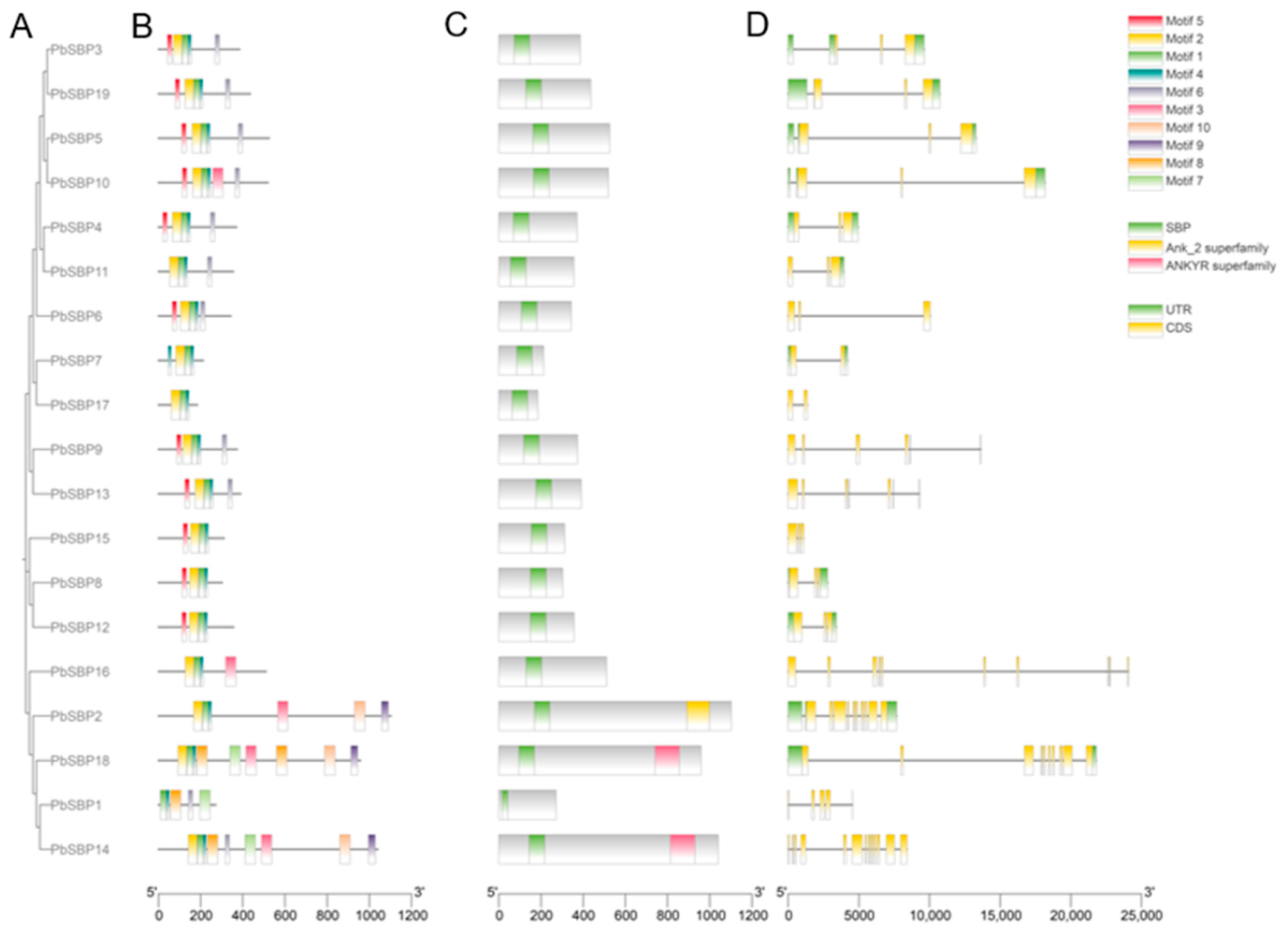
Figure 1. Protein motifs, domains, and gene structures of the SBP gene family in P. bournei. Note: (A) A phylogenetic tree was constructed in MEGA using the Neighbor-Joining algorithm with a bootstrap value of 1000. (B) The colorful boxes represent distinct motifs within the protein sequences of PbSBP genes. (C) Functionally conserved domains were performed in the CDD database. (D) The gene organization of the PbSBP family is illustrated, where the coding sequence (CDS) is represented by yellow rectangles and the untranslated region (UTR) by green rectangles. Introns are denoted by black lines.
Forests 17 00573 g001
Figure 2. The chromosomal localization of the SBP gene family members in P. bournei. In the figure, the blue regions within the chromosomes indicate areas with low gene density, meaning that the number of genes in these regions (each stripe representing approximately 10,000 bp) is relatively low. The yellow regions indicate areas with high gene density, where the number of genes is higher. The white regions indicate the absence of genes. The chromosome sequence number is shown on the left of each chromosome, with a ratio provided on the far left to assess chromosome length and gene position.
Forests 17 00573 g002
Figure 3. (a) The distribution of duplicate gene pairs of P. bournei. The outermost orange bars represent the 12 chromosomes of P. bournei (Chr01–Chr12), with PbSBP gene names labeled on the periphery. The internal heatmap (color bar: 0–14) indicates gene density along each chromosome (yellow = low density, red = high density). Red lines connecting two PbSBP genes represent intragenomic duplicated gene pairs. (b) Synteny analysis of SBP genes among Phoebe bournei (Pb), Arabidopsis thaliana (At), and Oryza sativa (Os). The upper panel shows syntenic relationships between P. bournei (orange chromosome bars) and A. thaliana (green chromosome bars). The lower panel shows syntenic relationships between P. bournei (orange chromosome bars) and O. sativa (blue chromosome bars). Red lines indicate collinear SBP gene pairs between P. bournei and the other two species, while gray lines represent background collinear genomic blocks not associated with SBP genes.
Forests 17 00573 g003
Figure 4. The expression of the SBP gene family in various tissues of Phoebe bournei. The vertical axis represents the PbSBP gene family members. The horizontal axis shows the examined tissues, including root bark, root xylem, stem bark, stem xylem, and leaf. The color scale on the right indicates Z-score normalized gene expression values, with red indicating high expression and blue indicating low expression. The dendrogram on the left shows the hierarchical clustering of gene expression patterns.
Forests 17 00573 g004
Figure 5. Phylogenetic analysis of SBP proteins from Phoebe bournei (Pb), Arabidopsis thaliana (At), and Oryza sativa (Os). Both the outer ring and the branches are color-coded to indicate the five major subfamilies (I–V) of the SBP gene family, while the inner ring denotes the species origin of each protein: yellow for Oryza sativa, green for Arabidopsis thaliana, and blue for Phoebe bournei.
Forests 17 00573 g005
Figure 6. Schematic distribution of cis-acting element positions in each PbSBP. The color intensity represents the number of elements, categorized into three groups: green for plant growth and development, orange for phytohormone response, and blue for abiotic and biotic stresses.
Forests 17 00573 g006
Figure 7. Expression of members of the PbSBP gene family under drought stress. Note: One-way ANOVA was employed to determine significant differences, with the number of asterisks indicating the significance level as follows: * for p ≤ 0.05, ** for p ≤ 0.005, *** for p ≤ 0.0005, and **** for p ≤ 0.0001.
Forests 17 00573 g007
Table 1. Physicochemical properties of the SBP gene family in Phoebe bournei.
Gene IDGene NameNumber of Amino AcidMolecular WeightTheoretical pIInstability IndexAliphatic IndexGrand Average of HydropathicityPredicted Location
OF12158PbSBP127230,708.276.3977.5673.53−0.722Nucleus
OF19905PbSBP21103122,028.307.5257.3275.58−0.504Nucleus
OF11445PbSBP338641,936.636.9055.7665.13−0.472Nucleus
OF04693PbSBP437140,054.419.4160.6346.58−0.731Nucleus
OF04014PbSBP552656,926.438.1746.1064.28−0.474Nucleus
OF12748PbSBP634438,146.207.2769.2153.87−0.734Nucleus
OF25781PbSBP721325,198.549.8082.8057.65−1.334Nucleus
OF21927PbSBP830334,386.589.9857.6949.27−0.891Nucleus
OF29254PbSBP937441,751.028.5552.4469.87−0.551Nucleus
OF11312PbSBP1052057,274.548.8539.3077.92−0.412Nucleus
OF10911PbSBP1135639,886.039.5265.8662.16−0.559Nucleus
OF29581PbSBP1235740,241.808.6567.2656.30−0.728Nucleus
OF26359PbSBP1339142,864.929.2047.1864.37−0.637Nucleus
OF27260PbSBP141041117,347.506.9256.8584.71−0.366Nucleus
OF24409PbSBP1531235,090.598.5176.1848.21−0.839Nucleus
OF25270PbSBP1651157,465.035.3859.1474.46−0.432Nucleus
OF15380PbSBP1718520,797.269.3868.1548.65−1.169Nucleus
OF03044PbSBP18959106,001.706.3350.0981.65−0.340Nucleus
OF06286PbSBP1943647,930.658.8955.2757.68−0.683Nucleus
Disclaimer/Publisher’s Note: The statements, opinions and data contained in all publications are solely those of the individual author(s) and contributor(s) and not of MDPI and/or the editor(s). MDPI and/or the editor(s) disclaim responsibility for any injury to people or property resulting from any ideas, methods, instructions or products referred to in the content.