Article

Larch (Larix sibirica) and Poplar (Populus laurifolia) in Refugia: Growth and Migration into the Mongolian Desert


by
Viacheslav I. Kharuk
1,2,*,
Il’ya A. Petrov
1,2,
Sergei T. Im
1,3,4,
Alexander S. Shushpanov
1,4,
Sergei O. Ondar
5 and
Andrey M. Samdan
5
1
Sukachev Institute of Forest, Federal Scientific Center, Siberian Branch of the Russian Academy of Sciences, Academgorodok 50/28, Krasnoyarsk 660036, Russia
2
Institute of Space and Information Technologies, Siberian Federal University, Academic Kirensky Street. 26/1, Krasnoyarsk 660074, Russia
3
Institute of Ecology and Geography, Siberian Federal University, Svobodny Street 79, Krasnoyarsk 660041, Russia
4
Institute of Space Research and High Technologies, Reshetnev Siberian State University of Science and Technology, Krasnoyarsky Rabochy Street 31, Krasnoyarsk 660014, Russia
5
Department of Biology and Ecology, Tuvan State University, Lenina Street 36, Kyzyl 667000, Russia
*
Author to whom correspondence should be addressed.
Forests 2026, 17(5), 564; https://doi.org/10.3390/f17050564
Submission received: 17 March 2026 / Revised: 23 April 2026 / Accepted: 29 April 2026 / Published: 5 May 2026
(This article belongs to the Section Forest Ecology and Management)

Abstract

Changing hydrothermal regime leads to pronounced changes in growth and ranges of Siberian tree species that are mostly negative at the southern part of the trees’ habitat. Here we analyzed the response of Larix sibirica and Populus laurifolia to moisture changes in unique refugia that border the Mongolian desert in Southern Siberia. The great age of old-growth larch trees (>500 years) suggests that the refugia have existed throughout the Holocene. We aimed to (1) analyze larch and poplar growth and range response to the changing temperature and moisture regime, (2) explore the potential migration of trees into the desert, and (3) analyze Gross Primary Productivity (GPP) dynamics within the refugia and adjacent desert. We used on-ground surveys, remote sensing data, and dendroecological analysis. We found that since the warming onset (c. 1980), larch and poplar trees have increased their growth and population within and beyond the refugia (+300% for poplar and +45% for larch). Both species’ growth has been controlled by atmospheric and soil droughts (measured by the Standardized Precipitation Evapotranspiration Index (SPEI) and Self-Calibrating Palmer Drought Severity Index (scPDSI)) and by microtopography-dependent moistening. Summer winds impair trees’ growth via increased evapotranspiration. Both species were migrating to the southern sandy dunes. Although poplar is less drought-resistant than larch, it was shifting ahead of larch (5.6 m/year vs. 0.8 m/year). The mean and maximum treeline shifts were 260 and 450 m for poplar and 35 m and 70 m for larch. P. laurifolia occupied new climate-caused niches ahead of drought-resistant L. sibirica due to its higher prolificacy. We found a “desert greening” phenomenon, i.e., a significantly increasing GPP trend (R2 = 0.31) in both refugia and sandy dunes. The GPP increase correlated with tree growth increase (r2 = 0.36–0.39). The larch and poplar migration to the desert contradicts the predicted shrinkage of the tree ranges within their southern boundary. However, the projected increase in the moisture deficit by 2080–2100 may impair this phenomenon. Nevertheless, current changes in the hydrology regime are favorable for larch and poplar growth and expansion into the adjacent Mongolian desert.

1. Introduction

Larch (Larix spp.) is the dominant conifer species in Siberia. Larch-dominant communities (Larix sibirica Ledeb., L. gmelinii Rupr., and L. cajanderi Mayr.) are the largest forest formations in Russia, which cover more than 40% of the forested area. The majority of these larch-dominant forests (>95%) are located in Siberia and cover about 70% of the permafrost zone. In severe climatic habitats, they form pure stands.
Larches are anemochoric species with a lifespan of up to 600–700 years (up to more than 1000 year in the north of Eastern Siberia). Larches are the most photophilous, shade-intolerant, and fast-growing conifer species. These species are also well adapted to wildfires and populate post-fire burns with abundant seedlings [1]. In a warmer and drier climate, larch is considered a potential substitute for precipitation-sensitive Abies sibirica Ledeb., Pinus sibirica Du Tour, and Picea obovata Ledeb. in the Southern Siberian lowlands, where these species experience decline and mortality [2].
Due to its high cold resistance, larch forms treelines in northern and alpine forest-tundra ecotones. Larch is highly drought-resistant due to its high efficiency of water use [3]. This allows larch to grow at a semi-desert level of precipitation and to populate forest-steppe ecotones. A deep and well-developed root system allows larch to grow on drained soils with poor water and mineral content. However, within the permafrost zone, the root system of larch is shallow (up to 30 cm or less).
Observed climate changes are mostly favorable for larch species within the majority of their range. Thus, since the warming onset, L. sibirica tree growth has increased and larch forest densification has been observed in the Ural and Siberian Mountains [4,5,6]. With air temperature increase, larch trees are moving uphill in the mountains and northward into the polar tundra [7,8]. Permafrost melt stimulates larch growth beyond the Arctic Circle [8,9]. However, the changing hydrothermal regime is worsening larch growth and vigor within some parts of its habitat. Thus, within the forest-steppe ecotone (the Trans-Baikal zone), larch stands undergo thinning and mortality due to an increased fire rate [1]. Permafrost melt has led to a L. gmelinii growth decrease in the mountains of Northern China [10]. A larch growth decrease was documented on the southwest slopes in Northern Siberia [8]. Climate-driven pest outbreaks and an increased fire rate led to larch growth decrease within the southern larch range [1,5,10,11]. Although globally Larix spp. respond to the changing climate by extending their range northward, a southern retraction of the larch range has been observed [12]. Similar to larch, conifers in the boreal biome have experienced range retraction at their southern boundary [13]. A rare exception is Pinus sylvestris L. growth and population increase at its southern edge in Siberia [14,15]. Although the larch southern boundary length in Siberia is over a thousand kilometers, there are still no observations opposing the phenomenon of larch range retraction.
In this paper, we aimed to analyze larch growth and range changes in unique larch refugia located at the northern boundary of the Mongolian desert. On the very edge of the larch range, Populus laurifolia Ledeb. also grows in larch refugia, although poplar is less drought resistant. P. laurifolia is native to central Asian regions, including Mongolia, and grows mostly on riverbanks. Trees are medium-sized (up to 15 m), have narrow leaves, and are able to produce root suckers. The species is characterized by rapid growth, high prolificacy, genetic variation, and winter hardiness. Our preliminary analysis indicated a potential growth increase for both species and, moreover, tree migration into the sandy dunes of the Mongolian desert. This may be a potential novelty in the studies of climate-driven impact on tree species within their southern ranges.
Tested hypothesis: since the warming onset, the changing hydrological regime might stimulate the growth of Larix sibirica and Populus laurifolia and facilitate their migration into the desert. We seek answers to the following questions:
What are the larch and poplar growth and population dynamics in the refugia since the warming onset?
What are the ecological and climatic variables that control larch and poplar growth and population?
Did larch and poplar trees migrate from refugia to the desert?
If so, what were the larch and poplar migration rate and distance?
How has the changing climate influenced GPP (Gross Primary Productivity) within the refugia and adjacent desert?

2. Materials and Methods

The study was based on field survey data, Terra/MODIS and high-resolution satellite time series, as well as UAV (Unmanned Aerial Vehicle) data, tree growth index (GI) data, and regression analysis between GI and eco-climate variables. In addition, we modeled the moisture deficit for the periods 2051–2070 and 2081–2100.

2.1. Study Area

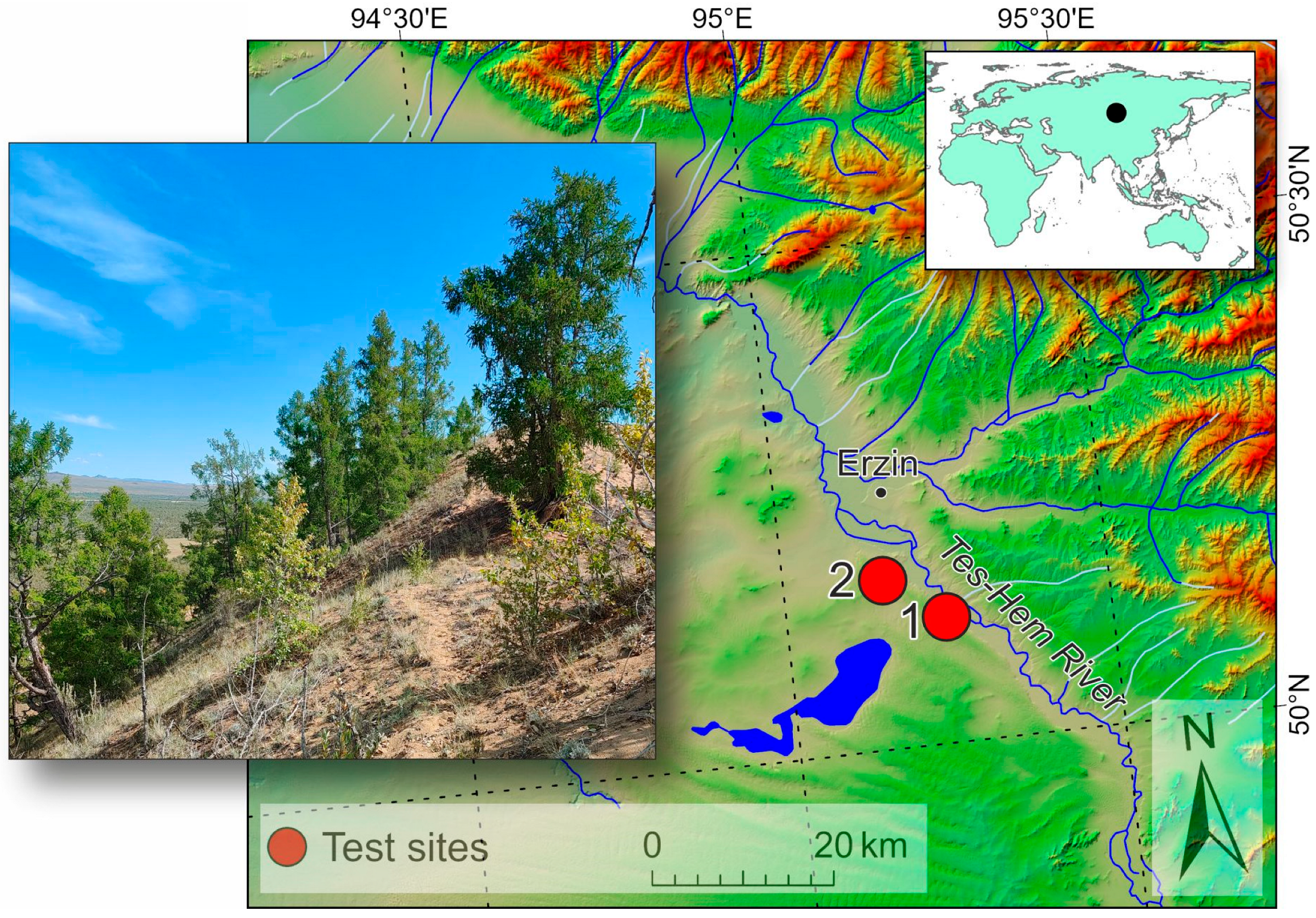
The study sites are located at the northern boundary of the Mongolian desert. They include two larch refugia, i.e., “Tes-Hem” (the main site) and “Kara-Haya” (supplementary site; Figure 1).
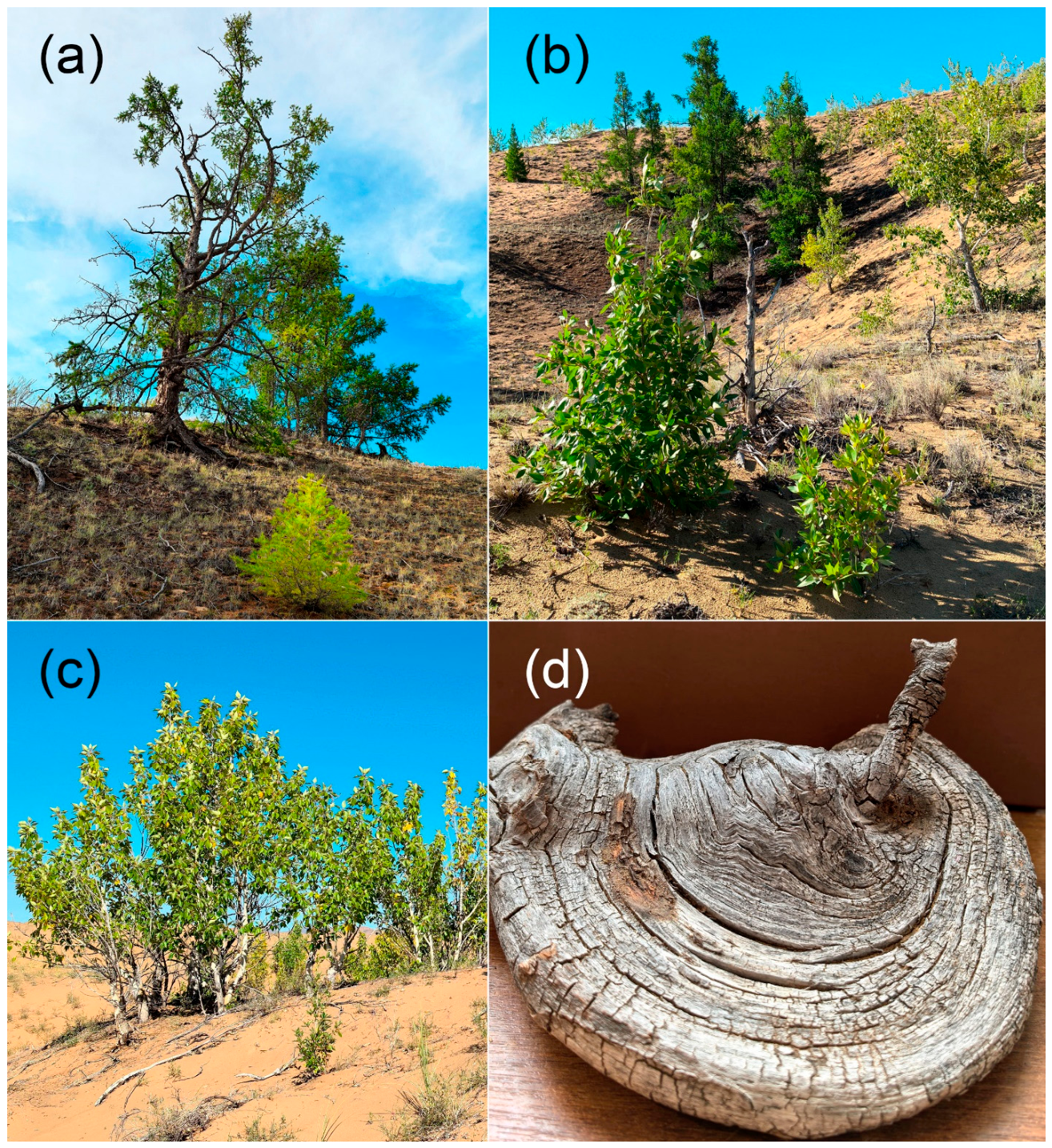
Larch and poplar form clusters with a canopy closure up to 40%, as well as grow as separate single trees. The mean crown closure in the refugia is about 10%. Old-growth larches are also present in multi-stem forms. The mean height of the larches is about 13 m, and the maximal one is about 18 m; the mean and maximum diameters are 27 and 38 cm. The mean and maximum heights of the poplar trees are about 2 m and 4 m; the mean diameter is 6.5 cm. Both species grow on nutrient-poor sandy soils (Figure 2).
On-ground vegetation is formed by shrubs and a few grass species. The projective cover is about 10%–15%. It is composed of Berberis sibirica Pall., Cotoneaster melanocarpus Fisch., Caragana bungei Ledeb., Artemisia spp., Agropyron spp., Oxytropis tragacanthoides Fisch., Hedysarum fruticosum Pall., and Thesium tuvinense Krasnob. Rare small moss communities (Rhytidium rugosum (Hedw.) Kindb. + Polytrichum sp.) are located in the larch shade.

2.2. Ground Survey Data

Fieldwork was conducted in 2025. Temporary sample plots (N = 12) with a radius of 9.8 m (area ~ 0.03 ha) were established within the elevation range of 1100–1240 m a.s.l. We described relief features (elevation a.s.l., aspect, and slope steepness) and obtained geobotanical and soil type data. We measured tree height and DBH (diameter at breast height, 1.3 m), and described tree physiognomy, stand closure, regeneration density, and vitality. For dendrochronological analysis, trees were randomly selected within an area of approximately 1.0 ha. Samples (cores) were taken at the DBH or at the root collar level with an increment borer. In total, 78 larch and 17 poplar trees were sampled.

2.3. Climatic Variables

Air temperature and precipitation data were obtained from the ERA5-Land database and from the nearest weather station, Erzin (WMO index #36307, 50°16′ N, 95°10′ E, H = 1102 m, distance to the study sites is 10–20 km), using the AISORI online database [16]. Atmospheric and soil droughts were estimated based on the Standardized Precipitation Evapotranspiration Index (SPEI) [17], and the Self-Calibrated Palmer Drought Severity Index (scPDSI) [18].
The SPEI is a proxy for atmospheric drought [19]. An increase in the SPEI indicates a decrease in atmospheric drought, and vice versa. The SPEI was calculated based on precipitation and evaporation data extracted from the ERA5-Land database using the SPEI library (v. 1.8.1) [19,20] within the RStudio environment (v.2025.09.1, build 375) [21].
The scPDSI was calculated in RStudio using the R programming language (v. 4.5.1) [22] and the scPDSI library (v. 0.1.3) [23]. The input parameters were total monthly precipitation and potential evapotranspiration, which were extracted from the ERA5-Land database [24]. Negative values of the scPDSI indicate drought conditions, and positive ones indicate wet conditions [18].
We estimated the terrestrial water content below ground by using equivalent water thickness anomalies (EWTAs) obtained from GRACE (Gravity Recovery and Climate Experiment). The monthly EWTA data were downloaded using the NASA GRACE(-FO) Data Analysis Tool [25] for the period 2002–2024 with a spatial resolution of one degree. EWTA is a measure that quantifies changes in the amount of water stored on land, including soil moisture, snow, and groundwater, relative to the 2004–2009 baseline [26]. These gravimetric data represent the vertical thickness of a layer of water that would result from the measured change in terrestrial water mass [27]. In this paper, the coarse resolution of the GRACE measurement is applicable because the study area is located within a plain and relatively uniform area. Its validity is also supported by earlier results that indicate EWTAs as a valuable tool for monitoring droughts [28,29], the water cycle [30], and their impact on vegetation [9,31,32]. Hereafter, we use the term “terrestrial water content” (TWC) instead of EWTA.

2.4. Moisture Deficit Prognosis

Moisture deficit (MD), i.e., the difference (Δ) between precipitation (PRE) and potential evaporation (PEV) during the growing period, is a valuable variable controlling tree growth in arid areas. While multi-model ensembles of the Coupled Model Intercomparison Project Phase 6 (CMIP6) are widely used to account for inter-model variability, the selection of a specific high-resolution global climate model is often preferred for regional impact studies, including forest hydrology and evapotranspiration modeling. To estimate PRE and PEV, we applied monthly climate data extracted from CMIP6, based on the CNRM-CM6-1-HR model with a spatial resolution of ~0.5° × 0.5° [33]. This model was chosen because its values are close to the average of all models presented in the IPCC WGI Interactive Atlas tool [34]. We analyzed data corresponding to the climatic scenarios SSP2-4.5, SSP3-7.0, and SSP5-8.5 [35,36]. We fitted the forecast data (PRE and PEV) to the historical data extracted from the ERA5-Land database using the simple shift method. For this, forecasted monthly MD values were shifted by an amount equal to the average difference between the forecast and actual data for 2015–2024 (the overlap period between the prognostic and historical data). We calculated and compared ΔMD between the periods 2000–2024 and 2081–2100. We used median values instead of means due to non-Gaussian distributions. Based on the CMIP6 multi-model ensemble extracted from the IPCC WGI Interactive Atlas [34], we calculated the 25th and 75th percentiles for projected average, minimum, and maximum temperatures, as well as total precipitation. These percentiles were then used to estimate the 25th and 75th percentiles of potential evapotranspiration using the Hargreaves method [37] and, subsequently, uncertainties were calculated as the 25th and 75th percentiles of the moisture deficit.

2.5. Remote Sensing Data

Remote sensing data were used to determine treeline locations and count trees. For this purpose, we used a UAV DJI Mavic 3 Multispectral, which provided scenes with 5 cm resolution. Scenes with 50% overlap were obtained during fieldwork in September 2025. In total, 1300 scenes were obtained. The scenes were preprocessed using Agisoft Metashape software 1.8.4 [38]. We also analyzed high-resolution satellite scenes (QuickBird, WorldView-3, and Pleiades Neo4 with resolutions of 2.0–3.7 m) obtained from freely available web services [39]. The latest best-quality scene was dated to 2024. The analysis of the scenes was based on ESRI ArcGIS software 9.3, together with expert interpretation and semi-automatic classification procedures.

2.6. Dendroclimatic Analysis

The total sample size included cores from 78 larches (73 at the Tes-Hem site and five at the Kara-Haya site) and 17 poplars (Tes-Hem site). Tree-ring widths were measured with a precision of 0.01 mm. Missing rings were detected using the cross-dating method. The quality of cross-dating was checked using COFECHA 6.02 software [40]. Age trends were eliminated by negative exponential or negative linear regression methods using the ARSTAN 6.02 software [41]. The ARSTAN program automatically selects the most suitable age-related growth trend curve (e.g., exponential or negative linear regression) for each raw chronology. Standard and residual tree-ring chronologies were generated. Tree-ring chronologies (in mm) are a proxy of the annual radial increment. We used the unitless growth index (GI) as the metric of tree growth increment. The GI is a normalized tree-ring chronology with an average of 1.0 and relatively constant variance. Standard chronologies are biweight robust mean values of indexed raw chronologies. Residual chronologies were generated from standard chronologies by eliminating the autoregressive component using autoregressive modeling. Growth chronologies of L. sibirica for the Tes-Hem and Kara-Haya sites were merged because both of these chronologies were strongly correlated (r = 0.68). Alongside that, climate responses of merged chronologies were very similar. For example, correlation between GI and July precipitation was 0.36 for Tes-Hem site and 0.40 for Kara-Haya site. Similarly, correlation with July scPDSI was 0.42 for both sites. We used the residual chronologies in the dendroclimatic analysis [42]. We analyzed correlations between the trees’ GI and climate variables (air temperature, precipitation, wind speed, SPEI, and scPDSI).

2.7. Treeline Shift Analysis

The treeline shift was measured based on field studies, satellite, and UAV scenes. The shift was measured as the distance between the southern refugia boundary and the current treeline location. To estimate the treeline evolution, we tried to analyze the age classes as a function of distance from the refugia. However, there was no explicit dependence between poplar age and distance from the refugia. Poplar trees are highly prolific: a single mature tree can release tens of millions of seeds in a season. Seeds are lightweight and attached to hairs that act as parachutes. They parachute through the air, often swept hundreds of meters or even kilometers from the parent tree. Therefore, seedling establishment may occur annually within the entire distance between the refugia and the treeline boundaries. Because of this, a proxy of the mean treeline migration rate was estimated. For the onset of tree migration, we assume the year of the warming onset (c. 1980). This was supported by the fact that the age of all trees beyond the refugia boundary was less than 50 years, i.e., approximately coinciding with the year of the warming onset. (See also the Section 4).

2.8. Vegetation Productivity Data

Gross primary productivity (GPP) of the vegetation cover was estimated using the MODIS MOD17A3HGF product (2001–2025) [43]. These data represent raster composites of annual GPP values (kg C/m2) with a spatial resolution of 500 m [44]. Time series data were obtained from the EarthData geoportal [45]. The original GPP data were converted into multi-band images. The average values were determined for specific areas within the 250 m buffer zones around the study sites using the exactextract algorithm [46]. This algorithm was implemented into Python (v. 13.3) for extracting and summarizing raster dataset values [47].
GPP trends were calculated for each pixel based on the Theil–Sen algorithm using the pyMannKendall library (v.1.4.2) [48]. This is a non-parametric method based on the Mann–Kendall test used to analyze time series data for consistently increasing or decreasing trends [49]. Spatial changes in GPP values between 2022 and 2024 and 2001–2003 were estimated using the Mann–Whitney U test implemented in the SciPy Python library [50].

2.9. Statistical Analysis

We used StatSoft Statistica (v. 10) [51], R (v. 4.5.1) [52] along with RStudio (v. 2025) [53], and Microsoft Excel for the statistical analysis. Geospatial analysis was performed using ESRI ArcGIS software and Python. The GPP trends were calculated based on the Theil–Sen algorithm [49] using Python. Changes in GPP were estimated using the Mann–Whitney U test. Trends in the terrestrial water content (EWTA) and the growth index were assessed based on simple linear regression using standard methods. The difference between projected and historical climate variables was estimated using the t-test.

3. Results

3.1. Eco-Climate Variables Dynamics

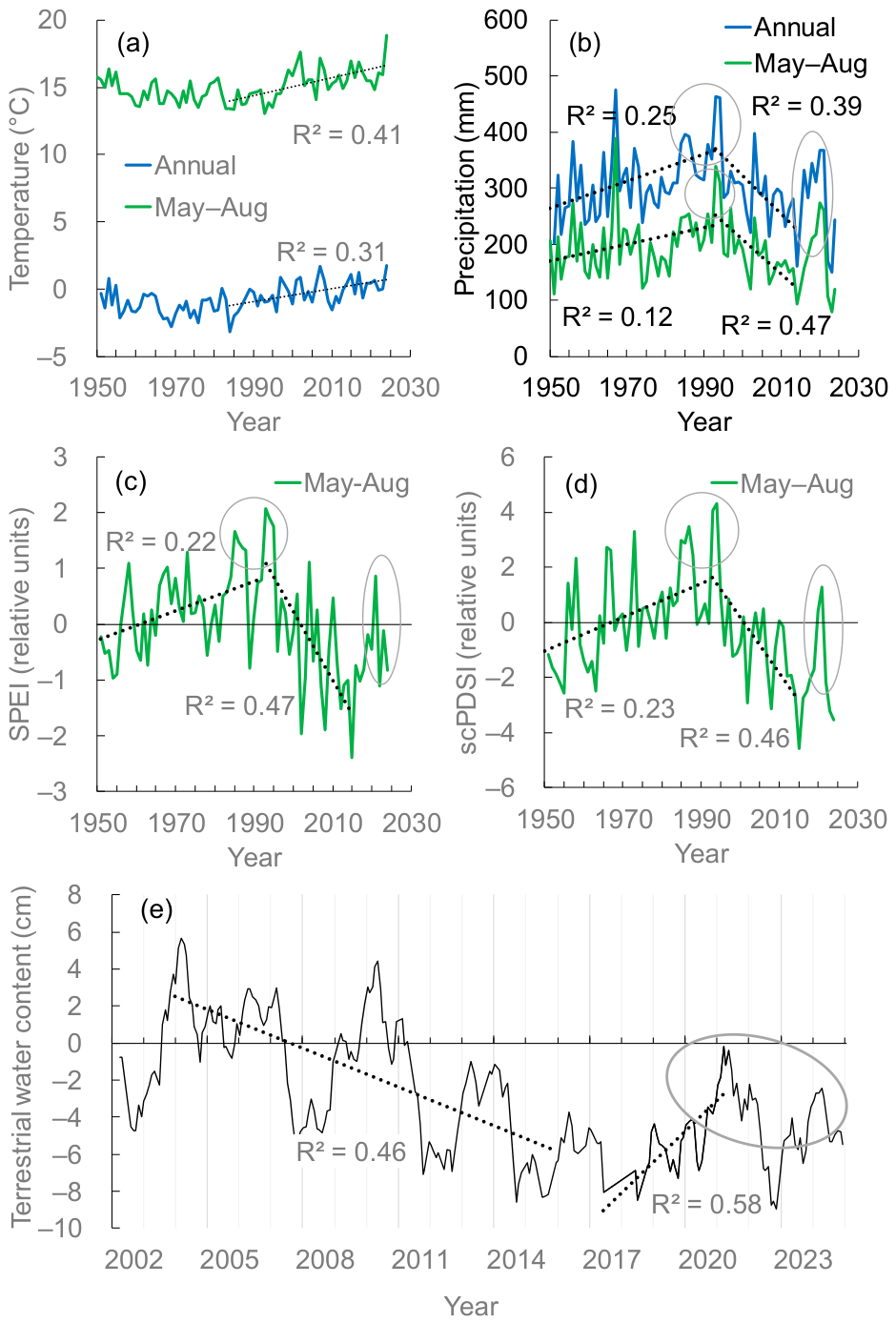
Within the study area, a continuous increase in both summer (R2 = 0.41, n = 25, p < 0.01) and annual (R2 = 0.31, n = 25, p < 0.01) air temperatures has been observed since c. 1980 (Figure 3a). A continuous increase in precipitation and a decrease in atmospheric and soil droughts have been observed since the 1950s. These reached a maximum in 1985–1990 (Figure 3b–d). Since then, drought increased until c. 2010, with a local decrease in the last decade (Figure 3b–d). Terrestrial water content has also been decreasing since the 2000s, with an increase in the last decade (Figure 3e).
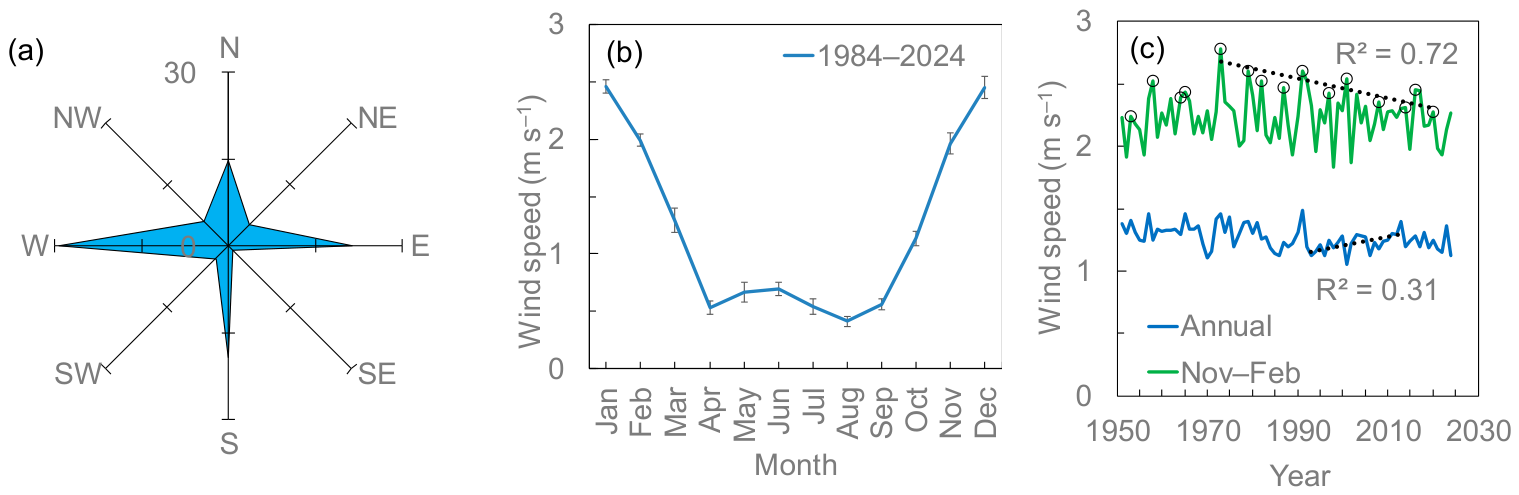
The prevailing winds blow from the west (Figure 4a). Maximum wind speed occurs in December–January (3.2 m s−1) and decreases to 0.6 ± 0.1 m s−1 during the growing season (May–September) (Figure 4b). Since the warming onset, the winter wind speed has been gradually decreasing (Figure 4c).

3.2. Tree Growth Dependance on Climate Variables

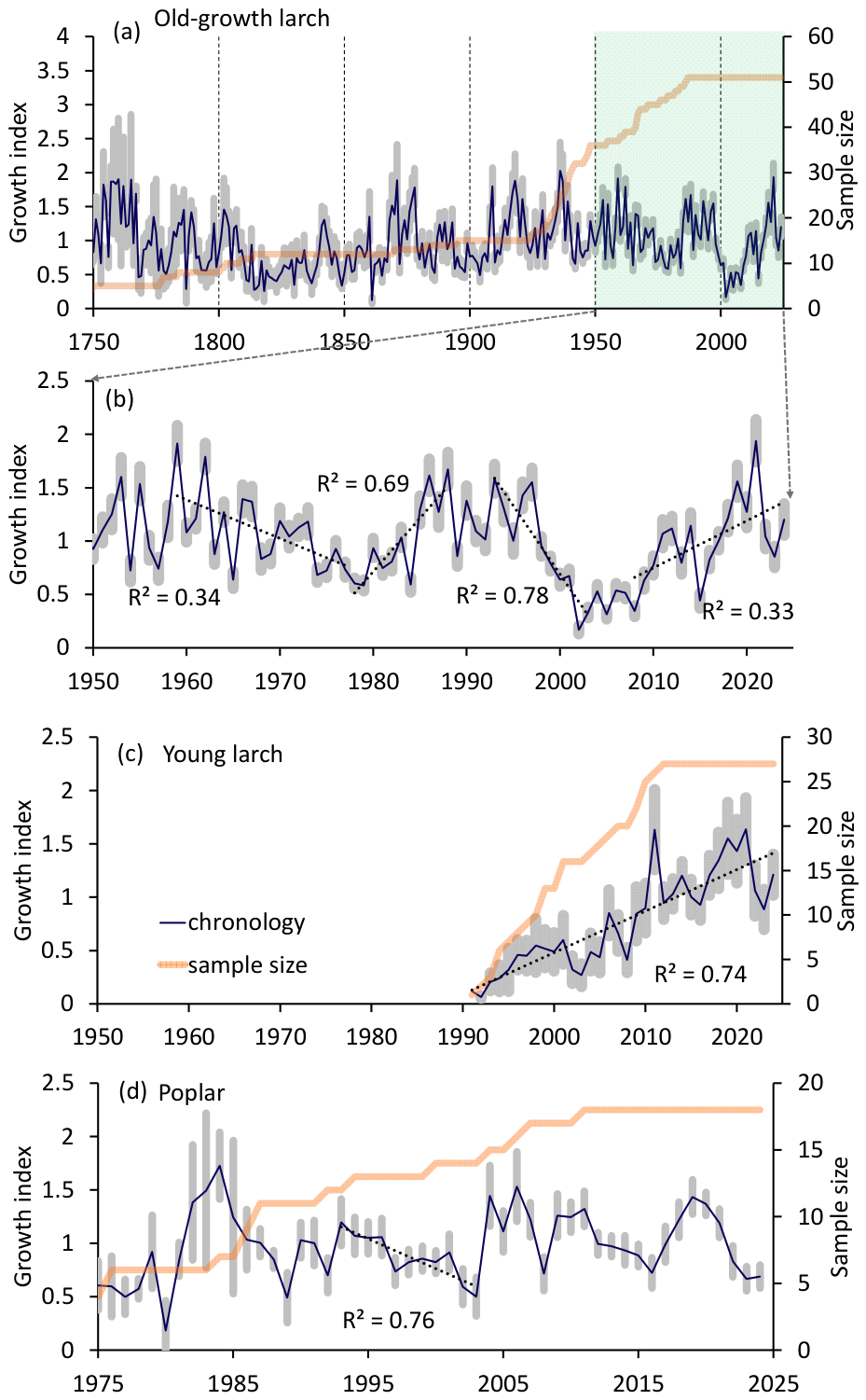
The larch population included old-growth (age up to 500+ years) and young (up to 50 years) cohorts. Growth chronologies showed consecutive periods of warming and cooling (Figure 5a). The young larch cohort formed when the moisture supply was maximal (1980–1990; Figure 3b–e; Figure 5c). The growth of both cohorts was similar (Figure 5b,c; r = 0.61, n = 30, p < 0.001, common period 1995–2024). An increase in the moisture supply in the last decade stimulated tree growth (Figure 5b,c).
Similar to larch, poplar growth decreased in the 1990s, with a subsequent growth increase in the 21st century (Figure 5d).
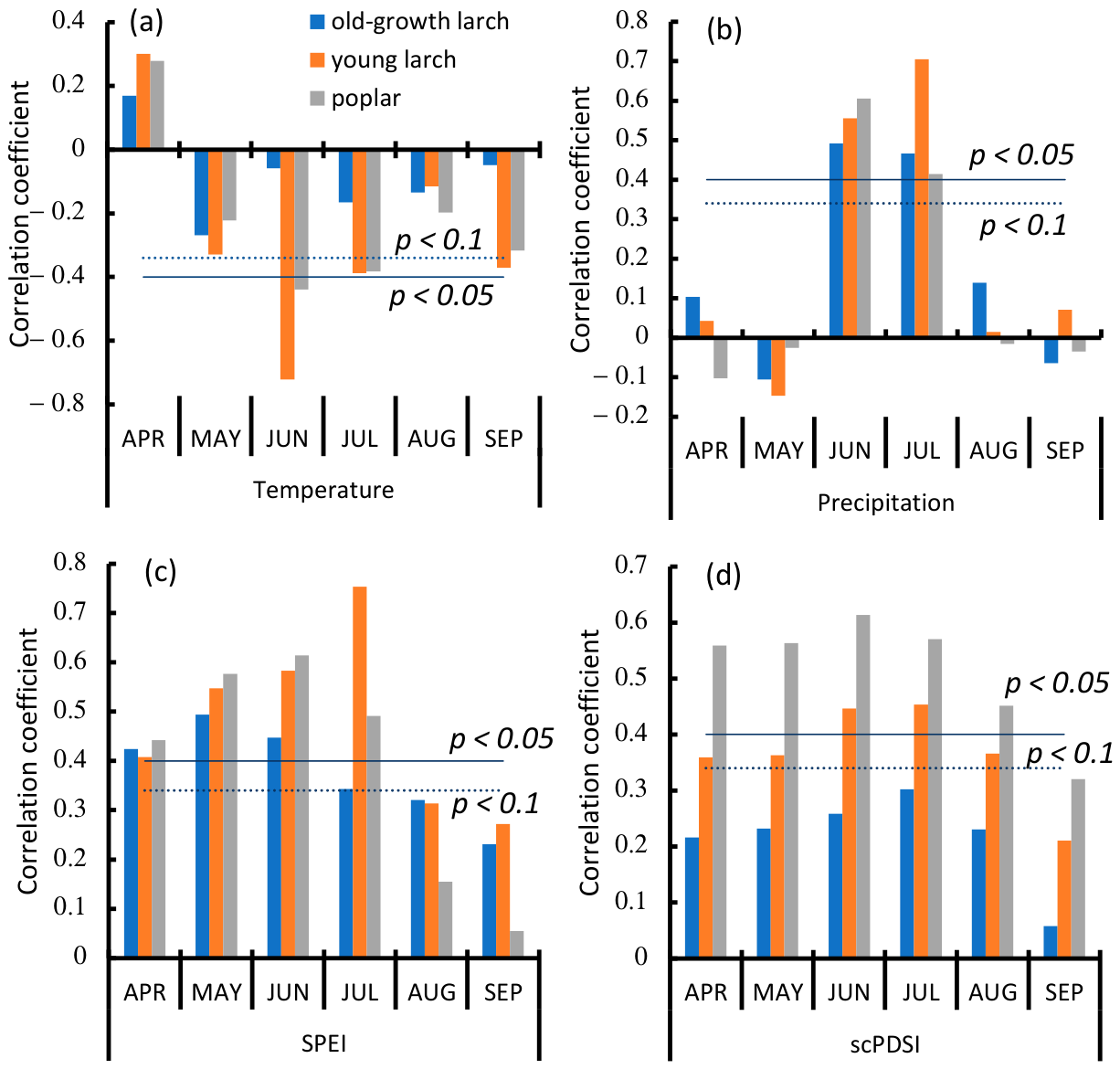
Air temperature impairs the growth of young larch and poplar trees (mostly in June), whereas old larches are less sensitive (Figure 6a). The growth of both species is controlled by moisture variables, i.e., by precipitation, atmospheric and soil droughts, although old larches are less sensitive (r = 0.30–0.49 versus 0.45–0.75) (Figure 6b–d).
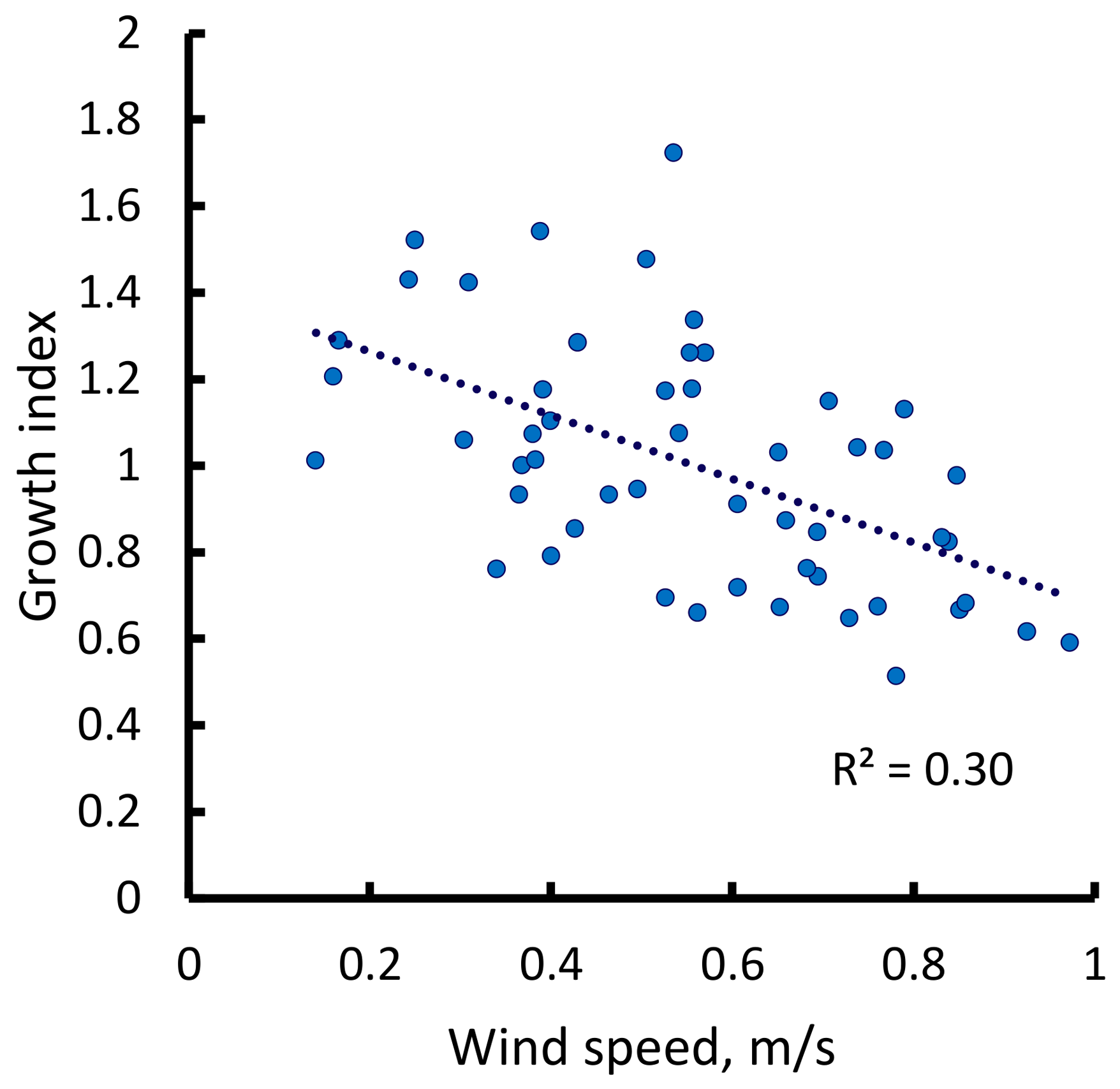
Summer (July) winds impair larch growth. Presumably, this is due to water loss via increased evapotranspiration (Figure 7), whereas the impact of winter wind insignificant.

3.3. GPP Dynamics of On-Ground Vegetation

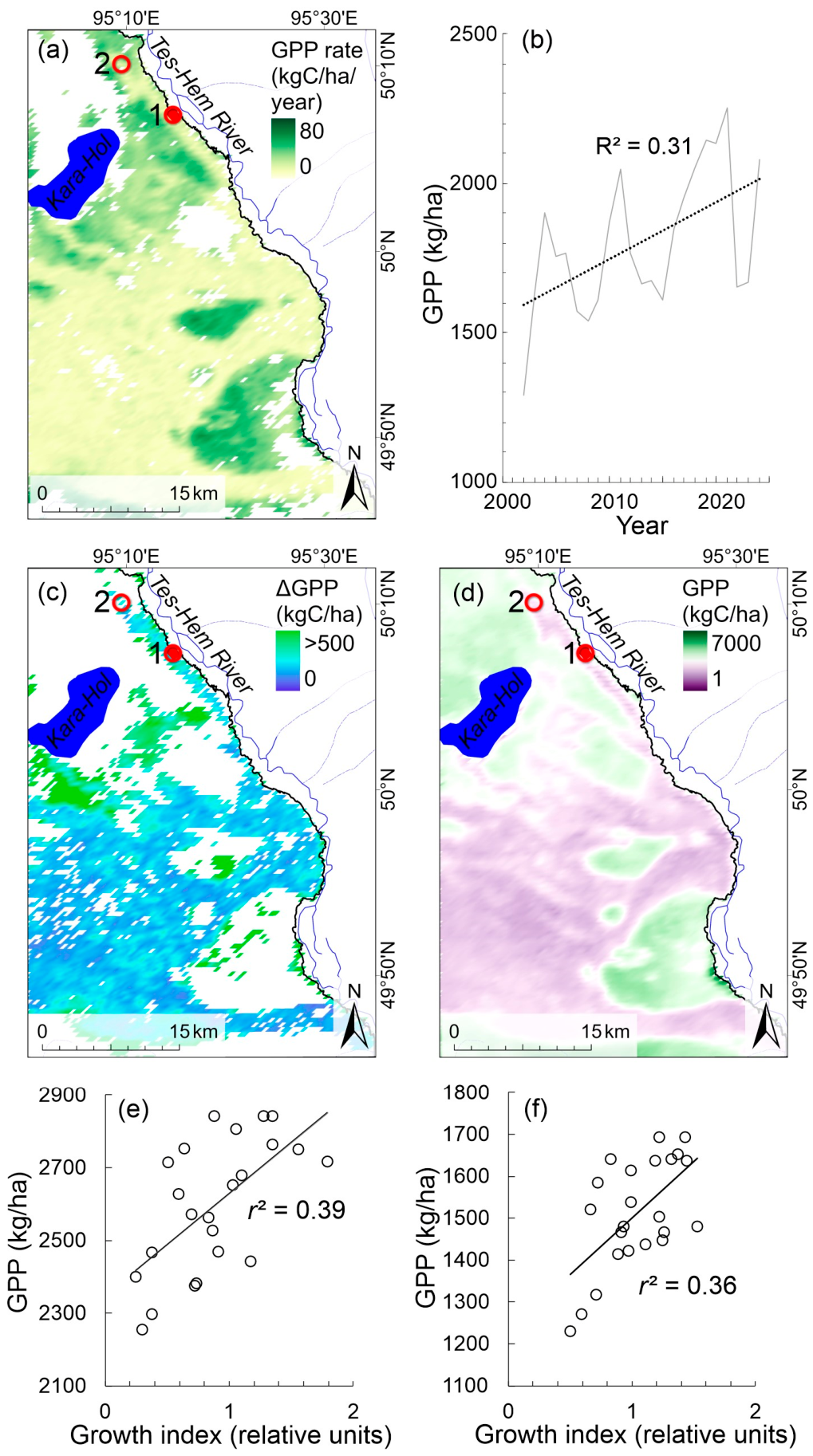
Desert vegetation (small shrubs) have increased their GPP in the 21st century (Figure 8). The mean increase (ΔGPP) is 250 kg C/ha since the beginning of the century. The rate of GPP increase is about 19 kg C/ha/year. Currently, the mean vegetation GPP is 2080 kg C/ha (with maximum values around 6000 kg C/ha).

3.4. Tres Migration into Desert

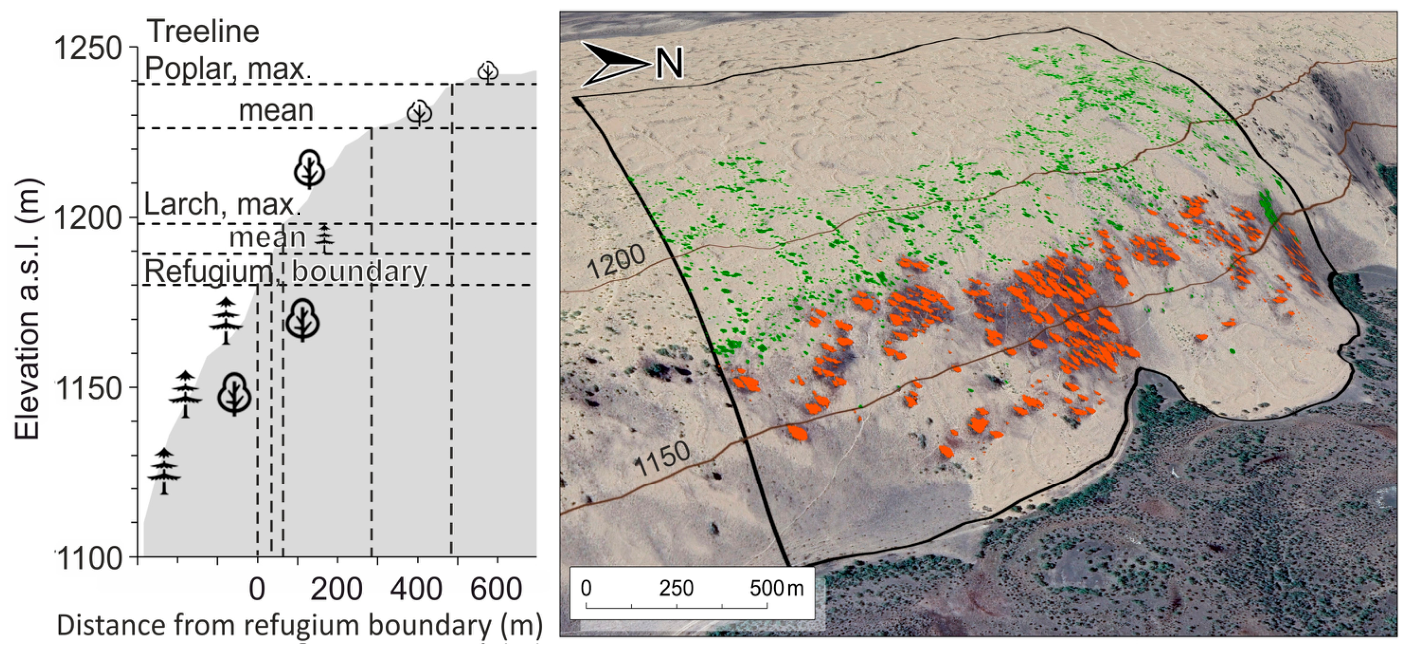
Since the warming onset (c. 1980), the mean treeline shifts for larch and for poplar have been 35 ± 5 m (max. = 70 m) and 260 ± 10 m (max. = 450 m), respectively (Figure 9). The mean rates of treeline shift were 0.8 m/year and 5.6 m/year for larch and poplar, respectively. Based on the on-ground studies, the age of larch and poplar trees beyond the refugia boundary was <50 years.

3.5. Moisture Deficit Projections

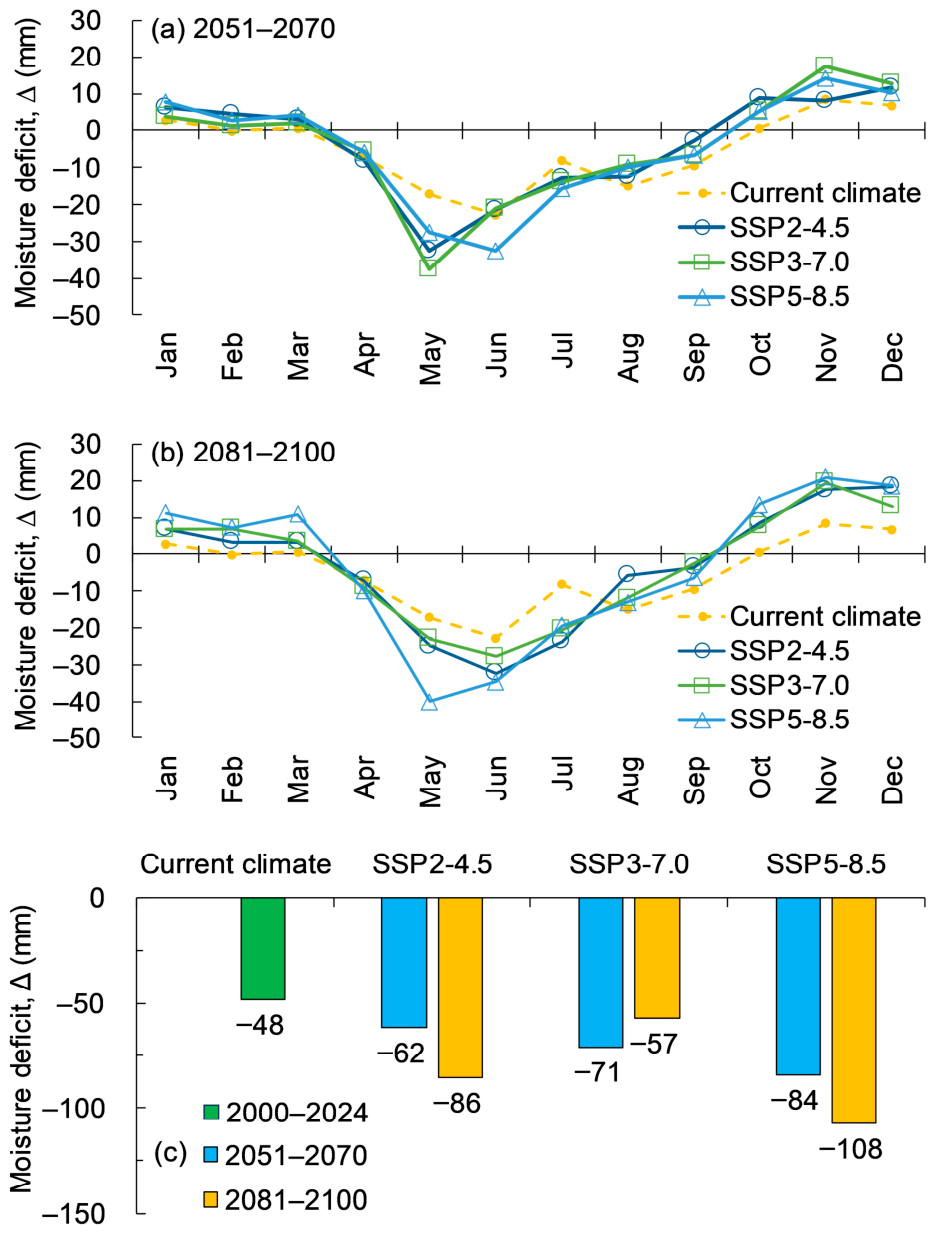
The growth of both species is controlled by the hydrological regime, i.e., by atmospheric and soil droughts (Figure 6). An important indicator of the hydrological regime is the moisture deficit (MD), i.e., the difference (∆) between precipitation and potential evaporation. Based on the climate scenarios SSP2-4.5, SSP3-7.0, and SSP5-8.5 [34,35,36], we estimated moisture deficit values for the years 2051–2070 and 2081–2100. According to all scenarios, the moisture deficit will increase, especially at the beginning of the growth period (Figure 10).

4. Discussion

Under a changing moisture regime, the most significant changes in tree growth, vigor, and range are expected (and observed) within forest–non-forest ecotones. In this work, we focused on larch and poplar growth and treeline evolution since the warming onset within the refugia–sandy dunes ecotone or, in a broader view, at the northern boundary of the Mongolian desert. These unique refugia are located at the edge of the larch habitat along the geographical meridian. The age of the oldest larches exceeds 500 years, which suggests the existence of this “last larch frontier” throughout the Holocene. Relief features in the refugia facilitate tree survival and establish regeneration. Namely, trees grow on sheltered downwind northeast slopes and within local depressions, the zones of snow accumulation and lower evaporation (Figure 2; Figures S1–S3). Together with larch, a few old (age up to 200+ years) poplar trees are sheltered in the refugia.
Since the warming onset, both drought-resistant larch and less-resistant poplar have been slowly migrating into the adjacent desert (Figure 9). The moisture optimum in 1980–1990 (i.e., the period with minimal atmospheric and soil droughts (Figure 3b–d)) stimulated tree establishment and growth. The latest local moisture optimum during the last decade has promoted a modern wave of seedling establishment. Alongside that, the decrease in moisture availability after the 1990s (Figure 3b–d) has influenced the observed expansion patterns by reducing reproductive output following peak periods.
Unexpectedly, the less-resistant poplar migrated ahead of the drought-resistant larch (the mean and max. treeline shifts were 260 and 450 m for poplar and 35 m and 70 m for larch). The principal cause of this phenomenon was the species’ seed production and the distance of dissemination. It is known that seed availability, alongside climate variables, is a key factor that limits tree establishment and migration. Mature larch may produce millions of seeds, although over 50% of larch seeds may be empty. In addition, larch produce cones every 3–4 years on average. Larch is an anemochorous species; however, the regular radius of dissemination is about 30–40 m from the parent tree. Poplar is much more prolific: a mature tree can release tens of millions of seeds annually. Seeds are attached to hairs that act as parachutes and may be swept kilometers away from the parent tree. In addition, poplar lateral roots radiate out more than 30 m from the parent tree and establish sucker shoots. Regeneration density (i.e., trees with age < 10 years) for poplar reached 900 seedlings ha−1, whereas larch regeneration was sporadic. The maximal shift in the poplar treeline was approximately 400+ m, which is within the radius of seed dispersal.
It is appropriate to indicate the significance of non-leaf (i.e., bark) photosynthesis in tree species survival in harsh areas. According to measurements, bark photosynthesis provides about a 10%–15% contribution to Populus tremuloides Michx. carbon balance under typical growth conditions, and suggest that a larger fraction might be attributed to bark under environmental conditions where leaf contributions are limited [54]. Taking into account the much lower leaf area index of P. laurifolia and its extreme habitat, bark photosynthesis should play an essential, although still undetermined, role in P. laurifolia growth and survival. This also provides a competitive advantage in comparison with larch, because the bark contribution to the conifer carbon balance is about one order of magnitude lower [54].
The growth of both species is controlled by moisture variables, i.e., atmospheric (SPEI) and soil (scPDSI) droughts, which are derivatives of precipitation and air temperature. Air humidity is known to be a vital water resource. Poplar trees are comparatively more sensitive to available moisture (Figure 6c,d). Old-growth larch is less sensitive to moisture stress than young larch, which is evidently related to its deeper roots. Younger trees are also more sensitive to negative temperature influences (Figure 6a). However, in the mountains (Southern Siberian and Northern China), temperature stimulates larch growth [5,10].
Winds are a significant variable that influence tree vigor, especially in harsh habitats [55]. Within the study area, the impact of winter winds on growth was insignificant, whereas summer winds impaired larch growth (Figure 7). Typically, winter winds impact tree growth via desiccation and snow abrasion [55]. However, in the study area, the winter wind speed is low (~3.0 m s−1; Figure 4b,c).
Alongside improvement in the moisture regime, elevated atmospheric CO2 concentration also facilitates tree growth and productivity. For example, the rise in CO2 mitigated drought-induced productivity losses by 5.7  ±  0.9% [56]. This issue requires further research.
Seedling establishment is strongly controlled by microsite conditions. Most of the regeneration is located within local micro-depressions with a better moister regime (Figures S1–S3). The maximum age of both tree species beyond the refugia does not exceed 50 years, which approximates the period since the warming onset (c. 1980). Thus, we assume that tree colonization of the dunes occurred during the last 50 years. In favorable years, poplar seeds spread over hundreds of meters. Once proper climate-driven niches arise, seed germination may result in seedling establishment within a few years. This is why there is no explicit dependence between the poplar or larch age structure and the distance from the refugia. Consequently, the classical method of migration rate estimation, based on age class analysis as a function of distance from mother trees, hardly works in this case. Therefore, the average migration rate of both species was estimated based on the beginning of sand colonization since the warming onset. The estimated poplar mean migration rate was about 5.6 m year−1, whereas the larch rate was one order lower (0.8 m year−1). However, the latter was about triple as high as the larch migration rate into the alpine tundra [55].
Contrary to the reported shrinkage of the larch range at its southern edge (e.g., in the Trans-Baikal zone, the Western Sayan Mountains, and the Mongolian Mountains [1,5,57]), larch is expanding its range into the Mongolian desert. Similarly, Scots pine (Pinus sylvestris L.) at its southern edge in Central Siberia has increased in growth and regeneration density in the 21st century [14,15]. Meanwhile, in general, larch and Scots pine have showed a decrease in growth in the Asian arid zone in the 21st century [58,59].
Together with the larch and poplar growth increase, an increasing trend of vegetation GPP within the sandy dunes is observed (Figure 8a,b). This vegetation is represented mostly by small bushes, including Berberis sibirica Pall., Caragana bungei Ledeb., Artemisia spp., Oxytropis tragacanthoides Fisch., and Hedysarum fruticosum Pall. species (Figure S4). Increasing trends of GPP occurred over about 75% of the dune area (Figure 8a). In fact, we observed a “greening phenomenon” on the northern boundary of the Mongolian desert. A similar “steppe greening” phenomenon has been reported in the nearby Tuva Hollow [14,15]. It is noteworthy that increased vegetation growth facilitated sand stabilization and suppressed northward desert migration (Figure S3).
Although currently larch and poplar are increasing both their growth and range, the predicted increase in moisture deficit will damage the trees’ habitat (Figure 10). This prognosis is based on the CNRM-CM6-1-HR model over a broad CMIP6 ensemble, which allows for an accurate representation of topographically induced climate variations and mesoscale atmospheric processes compared to standard low-resolution CMIP6 models [60]. Previous studies have demonstrated that CNRM-CM6-1-HR exhibits superior performance in simulating surface air temperature and precipitation patterns across various regions [61]. Furthermore, the model incorporates the advanced SURFEX land surface scheme, which is suitable for assessing potential evapotranspiration and moisture deficits in forest ecosystems [62]. Despite the uncertainties in the projected moisture deficit, the results suggest the high probability of a persistent moisture deficit through the end of the 21st century.
In general, we observed a unique event of the southward migration of trees at the edge of their range, whereas a number of studies have described northward shifts in tree habitats (e.g., [13,63]). For example, P. tremuloides has experienced negative climate-driven changes in North American forests [64]. Larix gmelinii decline and mortality have been described in the Trans-Baikal zone [11,12]. Betula spp. decline was reported in Northern Mongolia and the Trans-Baikal zone [65]. Conifer mortality at their southern range has been described in Europe and the Americas [66,67,68]. However, the predicted increase in the moisture deficit (i.e., worsening of the hydrological regime) suggests a potential reduction in the larch and poplar range within the study area. Nevertheless, the currently changing climate is favorable for tree growth and southward migration into the Mongolian desert.

5. Conclusions

Since the warming onset, we have observed an increase in larch and poplar growth and population at the southern edge of their ranges in Siberia, while throughout the boreal biome, studies have revealed a shrinkage of tree species at their southern ranges. Moreover, trees are migrating from the refugia into sandy dunes. Surprisingly, the less drought-resistant Populus laurifolia migrated much faster due to its higher prolificacy than Larix sibirica (5.6 vs. 0.8 m year−1). The mean treeline shifts in polar and larch were 260 m and 35 m, respectively. During the warming period, poplar and larch populations increased by +300% and +45%. Alongside this, sandy dunes have been “greening” due to a GPP increase observed in over 75% of the dunes (Figure 8a, Figure S4), and this greening significantly correlates with tree growth. Currently, the changing hydrology regime is favorable for larch and poplar growth and populations at the northern boundary of the Mongolian desert.

Supplementary Materials

The following supporting information can be downloaded at: https://www.mdpi.com/article/10.3390/f17050564/s1, Figure S1: The upper boundary of larch refugia. Larches and seedling located in the local depression, which accumulated snow. Once trees established and grow, they are themselves improving its habitat by facilitation of snow accumulation; Figure S2: Larch and poplar are migrating from the refugia boundary (left photo) to the sandy dunes (right photo); Figure S3: Poplar mother tree and regeneration. Moving sands are burying the trees. However, trees mitigate sand propagation; Figure S4: Bushes within sandy dunes of Mongolian desert.

Author Contributions

Conceptualization, V.I.K. and I.A.P.; methodology, V.I.K., I.A.P., S.T.I. and A.S.S.; validation, V.I.K., I.A.P., S.T.I. and A.S.S.; formal analysis, I.A.P., A.S.S. and S.T.I.; investigation, V.I.K., I.A.P.; S.T.I. and A.S.S.; resources, A.S.S., S.T.I. and S.O.O.; data curation, I.A.P., A.S.S., S.T.I. and A.M.S.; writing—original draft preparation, V.I.K., I.A.P. and S.T.I.; visualization, I.A.P., A.S.S. and S.T.I.; supervision, V.I.K. and I.A.P.; project administration, V.I.K.; funding acquisition, V.I.K. All authors have read and agreed to the published version of the manuscript.

Funding

The research was funded by the Basic Project of the Federal Research Center “Krasnoyarsk Science Center of the Siberian Branch of the Russian Academy of Sciences”, no. FWES-2024-0023.

Data Availability Statement

The data presented in this study are openly available: climate data at https://cds.climate.copernicus.eu/cdsapp (accessed on 21 January 2026) and from the AISORI web-service (http://aisori-m.meteo.ru/waisori/; accessed on 21 January 2026); GPP data at https://lpdaac.usgs.gov/products/mod17a2hv006 (accessed on 21 January 2026); EWTA data at NASA GRACE(-FO). Data Analysis Tool (https://grace.jpl.nasa.gov/data/data-analysis-tool/; accessed on 21 January 2026); CMIP6 data at IPCC WGI Interactive Atlas service (https://interactive-atlas.ipcc.ch/; accessed on 21 January 2026).

Conflicts of Interest

The authors declare no conflicts of interest.

Abbreviations

The following abbreviations are used in this manuscript:
UAVUnmanned Aerial Vehicle
GIGrowth Index
GPPGross Primary Production
PEVPotential Evaporation
MDMoisture Deficit
SSPShared Socioeconomic Pathway
scPDSISelf-Calibrated Palmer Drought Severity Index
SPEIStandardized Precipitation Evapotranspiration Index
DBHDiameter at Breast Height
WMOWorld Meteorological Organization
TWCTotal Water Content
GRACEGravity Recovery And Climate Experiment
EWTAEquivalent Water Thickness Anomalies
PREPrecipitation
CMIP6Coupled Model Intercomparison Project Phase 6

References

  1. Kharuk, V.I.; Shvetsov, E.G.; Buryak, L.V.; Golyukov, A.S.; Dvinskaya, M.L.; Petrov, I.A. Wildfires in the Larch Range within Permafrost, Siberia. Fire 2023, 6, 301. [Google Scholar] [CrossRef]
  2. Kharuk, V.I.; Im, S.T.; Petrov, I.A.; Dvinskaya, M.L.; Shushpanov, A.S.; Golyukov, A.S. Climate-driven Conifer Mortality in Siberia. Glob. Ecol. Biogeogr. 2021, 30, 543–556. [Google Scholar] [CrossRef]
  3. Kloeppel, B.D.; Treichel, I.W.; Kharuk, S.; Gower, S.T. Foliar Carbon Isotope Discrimination in Larix Species and Sympatric Evergreen Conifers: A Global Comparison. Oecologia 1998, 114, 153–159. [Google Scholar] [CrossRef]
  4. Shiyatov, S.G.; Terent’ev, M.M.; Fomin, V.V.; Zimmermann, N.E. Altitudinal and Horizontal Shifts of the Upper Boundaries of Open and Closed Forests in the Polar Urals in the 20th Century. Russ. J. Ecol. 2007, 38, 223–227. [Google Scholar] [CrossRef]
  5. Kharuk, V.I.; Petrov, I.A.; Golyukov, A.S.; Dvinskaya, M.L.; Im, S.T.; Shushpanov, A.S. Larch Growth across Thermal and Moisture Gradients in the Siberian Mountains. J. Mt. Sci. 2023, 20, 101–114. [Google Scholar] [CrossRef]
  6. Kirdyanov, A.V.; Prokushkin, A.S.; Tabakova, M.A. Tree-Ring Growth of Gmelin Larch under Contrasting Local Conditions in the North of Central Siberia. Dendrochronologia 2013, 31, 114–119. [Google Scholar] [CrossRef]
  7. Grigoriev, A.A.; Shalaumova, Y.V.; Vyukhin, S.O.; Balakin, D.S.; Kukarskikh, V.V.; Vyukhina, A.A.; Camarero, J.J.; Moiseev, P.A. Upward Treeline Shifts in Two Regions of Subarctic Russia Are Governed by Summer Thermal and Winter Snow Conditions. Forests 2022, 13, 174. [Google Scholar] [CrossRef]
  8. Kharuk, V.I.; Ranson, K.J.; Petrov, I.A.; Dvinskaya, M.L.; Im, S.T.; Golyukov, A.S. Larch (Larix dahurica Turcz) Growth Response to Climate Change in the Siberian Permafrost Zone. Reg. Environ. Change 2019, 19, 233–243. [Google Scholar] [CrossRef]
  9. Kharuk, V.I.; Im, S.T.; Petrov, I.A.; Shvetsov, E.G. Permafrost Degradation and Vegetation Growth Beyond the Polar Circle in Siberia. Forests 2024, 16, 47. [Google Scholar] [CrossRef]
  10. Zhang, X.; Bai, X.; Chang, Y.; Chen, Z. Increased Sensitivity of Dahurian Larch Radial Growth to Summer Temperature with the Rapid Warming in Northeast China. Trees 2016, 30, 1799–1806. [Google Scholar] [CrossRef]
  11. Buryak, L.V.; Kalenskaya, O.P.; Kukavskaya, E.A.; Luzganov, A.G. Zonal and Geographical Features of the Impact of Fires on Forest Formation of Light Coniferous Stands in the South of Siberia; Nauka: Novosibirsk, Russia, 2022; ISBN 978-5-02-041502-7. [Google Scholar]
  12. Mamet, S.D.; Brown, C.D.; Trant, A.J.; Laroque, C.P. Shifting Global Larix Distributions: Northern Expansion and Southern Retraction as Species Respond to Changing Climate. J. Biogeogr. 2019, 46, 30–44. [Google Scholar] [CrossRef]
  13. Anderegg, W.R.L.; Wu, C.; Acil, N.; Carvalhais, N.; Pugh, T.A.M.; Sadler, J.P.; Seidl, R. A Climate Risk Analysis of Earth’s Forests in the 21st Century. Science 2022, 377, 1099–1103. [Google Scholar] [CrossRef]
  14. Petrov, I.A.; Kharuk, V.I.; Shushpanov, A.S.; Im, S.T.; Ondar, D.S. Scots Pine (Pinus sylvestris L.) on the Southern Border of Its Range in Siberia: Growth Dynamics under Changing Climate Conditions. Contemp. Probl. Ecol. 2025, 18, 617–630. [Google Scholar] [CrossRef]
  15. Kharuk, V.I.; Petrov, I.A.; Shushpanov, A.S.; Im, S.T.; Ondar, S.O. Scots Pine at Its Southern Range in Siberia: A Combined Drought and Fire Influence on Tree Vigor, Growth, and Regeneration. Forests 2025, 16, 819. [Google Scholar] [CrossRef]
  16. Specialized Arrays for Climate Research. Available online: http://aisori-m.meteo.ru/waisori/index.xhtml?idata=17 (accessed on 21 April 2026).
  17. Liu, Q.; Yang, S.; Li, S.; Zhang, H.; Zhang, J.; Fan, H. The Optimal Applications of scPDSI and SPEI in Characterizing Meteorological Drought, Agricultural Drought and Terrestrial Water Availability on a Global Scale. Sci. Total Environ. 2024, 952, 175933. [Google Scholar] [CrossRef]
  18. Wells, N.; Goddard, S.; Hayes, M.J. A Self-Calibrating Palmer Drought Severity Index. J. Clim. 2004, 17, 2335–2351. [Google Scholar] [CrossRef]
  19. Vicente-Serrano, S.M.; Beguería, S.; López-Moreno, J.I. A Multiscalar Drought Index Sensitive to Global Warming: The Standardized Precipitation Evapotranspiration Index. J. Clim. 2010, 23, 1696–1718. [Google Scholar] [CrossRef]
  20. Beguería, S.; Vicente-Serrano, S.M. SPEI: Calculation of the Standardized Precipitation-Evapotranspiration Index 2023. Available online: https://github.com/sbegueria/SPEI (accessed on 9 September 2025).
  21. Download RStudio Desktop|Open Source IDE for R & Python. Available online: https://posit.co/download/rstudio-desktop (accessed on 21 April 2026).
  22. The Comprehensive R Archive Network. Available online: https://cran.rstudio.com/ (accessed on 21 April 2026).
  23. scPDSI: [Software Repository]. Available online: https://github.com/Sibada/scPDSI (accessed on 21 January 2026).
  24. Muñoz Sabater, J. ERA5-Land Monthly Averaged Data from 1950 to Present. Copernicus Climate Change Service (C3S) Climate Data Store (CDS). 2019. Available online: https://cds.climate.copernicus.eu/datasets/reanalysis-era5-land-monthly-means?tab=overview (accessed on 21 January 2026).
  25. GRACE(-FO) Data Analysis Tool|Data. Available online: https://grace.jpl.nasa.gov/data/data-analysis-tool (accessed on 21 April 2026).
  26. Landerer, F.W.; Swenson, S.C. Accuracy of Scaled GRACE Terrestrial Water Storage Estimates. Water Resour. Res. 2012, 48, 2011WR011453. [Google Scholar] [CrossRef]
  27. Wahr, J.; Molenaar, M.; Bryan, F. Time Variability of the Earth’s Gravity Field: Hydrological and Oceanic Effects and Their Possible Detection Using GRACE. J. Geophys. Res. 1998, 103, 30205–30229. [Google Scholar] [CrossRef]
  28. Middendorf, K.; Dobslaw, H.; Jensen, L.; Eicker, A. Return Levels of Dry Extreme Events in Terrestrial Water Storage from Satellite Gravimetry and CMIP6 Global Coupled Climate Models. JGR Solid Earth 2025, 130, e2024JB031011. [Google Scholar] [CrossRef]
  29. Cheng, Y.; An, Q.; Liu, L.; Li, H.; Huang, G. Spatially Distinct Drought Patterns and Influencing Factors across China: A Machine Learning Approach with a Comprehensive Index. Ecol. Indic. 2025, 179, 114170. [Google Scholar] [CrossRef]
  30. Barbosa, S.A.; Jones, N.L.; Williams, G.P.; Teklu, H.; Yidana, S.M.; Pulla, S.T.; Sanchez, J.L.; Nelson, E.J.; Ames, D.P.; Miller, A.W. A Multi-Source Approach to Groundwater Storage and Recharge Assessment in the Volta Basin. Sci. Total Environ. 2025, 1001, 180421. [Google Scholar] [CrossRef]
  31. Wang, Z.; Bi, Y.; Yang, F.; Zheng, J.; Yang, Y.; Zhang, S. Research of Spatial-Temporal Variation and Correlation of Water Storage and Vegetation Coverage in the Loess Plateau. Remote Sens. 2025, 17, 2983. [Google Scholar] [CrossRef]
  32. Kharuk, V.I.; Im, S.T.; Dvinskaya, M.L.; Golukov, A.S.; Ranson, K.J. Climate-Induced Mortality of Spruce Stands in Belarus. Environ. Res. Lett. 2015, 10, 125006. [Google Scholar] [CrossRef]
  33. Voldoire, A.; Saint-Martin, D.; Sénési, S.; Decharme, B.; Alias, A.; Chevallier, M.; Colin, J.; Guérémy, J.-F.; Michou, M.; Moine, M.-P.; et al. Evaluation of CMIP6 DECK Experiments With CNRM-CM6-1. J. Adv. Model. Earth Syst. 2019, 11, 2177–2213. [Google Scholar] [CrossRef]
  34. IPCC AR6-WGI Atlas. Available online: https://interactive-atlas.ipcc.ch/atlas (accessed on 21 April 2026).
  35. Intergovernmental Panel on Climate Change (IPCC). Climate Change 2021—The Physical Science Basis: Working Group I Contribution to the Sixth Assessment Report of the Intergovernmental Panel on Climate Change, 1st ed.; Cambridge University Press: Cambridge, UK, 2023; ISBN 978-1-009-15789-6. [Google Scholar]
  36. Calvin, K.; Dasgupta, D.; Krinner, G.; Mukherji, A.; Thorne, P.W.; Trisos, C.; Romero, J.; Aldunce, P.; Barrett, K.; Blanco, G.; et al. IPCC, 2023: Climate Change 2023: Synthesis Report. Contribution of Working Groups I, II and III to the Sixth Assessment Report of the Intergovernmental Panel on Climate Change; Core Writing Team, Lee, H., Romero, J., Eds.; IPCC: Geneva, Switzerland, 2023. [Google Scholar]
  37. Hargreaves, G.H.; Allen, R.G. History and Evaluation of Hargreaves Evapotranspiration Equation. J. Irrig. Drain. Eng. 2003, 129, 53–63. [Google Scholar] [CrossRef]
  38. Agisoft Metashape: Agisoft Metashape. Available online: https://www.agisoft.com/ (accessed on 21 April 2026).
  39. Google Earth: [Web-Based Interactive Mapping Service]. Available online: https://earth.google.com/web/ (accessed on 21 January 2026).
  40. Holmes, R.L. Computer-Assisted Quality Control in Tree-Ring Dating and Measuring. Tree-Ring Bull. 1983, 43, 51–67. [Google Scholar]
  41. Cook, E.R.; Holmes, R.L. Chronology Development, Statistical Analysis; Guide for Computer Program ARSTAN; Laboratory of Tree-Ring Research, the University of Arizona: Tucson, AZ, USA, 1986; pp. 50–65. [Google Scholar]
  42. Speer, J.H. Fundamentals of Tree-Ring Research; The University of Arizona Press: Tucson, AZ, USA, 2010; ISBN 978-0-8165-2684-0. [Google Scholar]
  43. Running, S.W.; Zhao, M. User’s Guide Daily GPP and Annual NPP (MOD17A2H/A3H) and Year-End Gap-Filled (MOD17A2HGF/A3HGF) Products NASA Earth Observing System MODIS Land Algorithm (For Collection 6.1). 2021. Available online: https://lpdaac.usgs.gov/documents/972/MOD17_User_Guide_V61.pdf (accessed on 21 January 2026).
  44. MOD17A2H V006: [Data Product]. Available online: https://lpdaac.usgs.gov/products/mod17a2hv006 (accessed on 21 January 2026).
  45. Earth Science Data Systems. Your Gateway to NASA Earth Observation Data|NASA Earthdata. Available online: https://www.earthdata.nasa.gov/ (accessed on 21 April 2026).
  46. Exactextract: [Software Repository]. Available online: https://isciences.github.io/exactextract/ (accessed on 21 January 2026).
  47. Exactextract—Exactextract Documentation. Available online: https://pypi.org/project/exactextract/ (accessed on 21 April 2026).
  48. Pymannkendall [Python Package]. Available online: https://pypi.org/project/pymannkendall/ (accessed on 21 January 2026).
  49. Hussain, M.; Mahmud, I. pyMannKendall: A Python Package for Non Parametric Mann Kendall Family of Trend Tests. J. Open Source Softw. 2019, 4, 1556. [Google Scholar] [CrossRef]
  50. SciPy: [Scientific Computing Software]. Available online: https://scipy.org/ (accessed on 21 January 2026).
  51. StatSoft: [Statistical Software and Solutions Provider]. Available online: http://statsoft.ru/ (accessed on 21 January 2026).
  52. R: The R Project for Statistical Computing. Available online: https://www.r-project.org/ (accessed on 21 April 2026).
  53. Posit|Data Science Platform for Enterprise Teams. Available online: https://posit.co/ (accessed on 21 April 2026).
  54. Kharouk, V.I.; Middleton, E.M.; Spencer, S.L.; Rock, B.N.; Williams, D.L. Aspen Bark Photosynthesis and Its Significance to Remote Sensing and Carbon Budget Estimates in the Boreal Ecosystem. Water Air Soil Pollut. 1995, 82, 483–497. [Google Scholar] [CrossRef]
  55. Kharuk, V.I.; Petrov, I.A.; Im, S.T.; Golyukov, A.S.; Dvinskaya, M.L.; Shushpanov, A.S. Tree Clusters Migration into Alpine Tundra, Siberia. J. Mt. Sci. 2022, 19, 3426–3440. [Google Scholar] [CrossRef]
  56. Lyu, H.; Zhang, X.; Su, J.; Wårlind, D.; Knauer, J.; Teckentrup, L.; Chang, J.; Xu, X.; Chen, C.; Zhu, J.; et al. Warming Overwhelms CO2-Driven Drought Mitigation in Alpine Vegetation on the Qinghai-Tibetan Plateau. Commun. Earth Environ. 2026, 7, 293. [Google Scholar] [CrossRef]
  57. Juřička, D.; Novotná, J.; Houška, J.; Pařílková, J.; Hladký, J.; Pecina, V.; Cihlářová, H.; Burnog, M.; Elbl, J.; Rosická, Z.; et al. Large-Scale Permafrost Degradation as a Primary Factor in Larix sibirica Forest Dieback in the Khentii Massif, Northern Mongolia. J. For. Res. 2020, 31, 197–208. [Google Scholar] [CrossRef]
  58. Liu, H.; Park Williams, A.; Allen, C.D.; Guo, D.; Wu, X.; Anenkhonov, O.A.; Liang, E.; Sandanov, D.V.; Yin, Y.; Qi, Z.; et al. Rapid Warming Accelerates Tree Growth Decline in Semi-arid Forests of Inner Asia. Glob. Change Biol. 2013, 19, 2500–2510. [Google Scholar] [CrossRef]
  59. Wu, X.; Liu, H.; Guo, D.; Anenkhonov, O.A.; Badmaeva, N.K.; Sandanov, D.V. Growth Decline Linked to Warming-Induced Water Limitation in Hemi-Boreal Forests. PLoS ONE 2012, 7, e42619. [Google Scholar] [CrossRef]
  60. Haarsma, R.J.; Roberts, M.J.; Vidale, P.L.; Senior, C.A.; Bellucci, A.; Bao, Q.; Chang, P.; Corti, S.; Fučkar, N.S.; Guemas, V.; et al. High Resolution Model Intercomparison Project (HighResMIP v1.0) for CMIP6. Geosci. Model. Dev. 2016, 9, 4185–4208. [Google Scholar] [CrossRef]
  61. Lun, Y.; Liu, L.; Cheng, L.; Li, X.; Li, H.; Xu, Z. Assessment of GCMs Simulation Performance for Precipitation and Temperature from CMIP5 to CMIP6 over the Tibetan Plateau. Int. J. Climatol. 2021, 41, 3994–4018. [Google Scholar] [CrossRef]
  62. Al-Yaari, A.; Ducharne, A.; Thiery, W.; Cheruy, F.; Lawrence, D. The Role of Irrigation Expansion on Historical Climate Change: Insights From CMIP6. Earths Future 2022, 10, e2022EF002859. [Google Scholar] [CrossRef]
  63. Boonman, C.C.F.; Serra-Diaz, J.M.; Hoeks, S.; Guo, W.-Y.; Enquist, B.J.; Maitner, B.; Malhi, Y.; Merow, C.; Buitenwerf, R.; Svenning, J.-C. More than 17,000 Tree Species Are at Risk from Rapid Global Change. Nat. Commun. 2024, 15, 166. [Google Scholar] [CrossRef] [PubMed]
  64. Boyd, M.A.; Berner, L.T.; Doak, P.; Goetz, S.J.; Rogers, B.M.; Wagner, D.; Walker, X.J.; Mack, M.C. Impacts of Climate and Insect Herbivory on Productivity and Physiology of Trembling Aspen (Populus tremuloides) in Alaskan Boreal Forests. Environ. Res. Lett. 2019, 14, 085010. [Google Scholar] [CrossRef]
  65. Verhoeven, D.; De Boer, W.F.; Henkens, R.J.H.G.; Sass-Klaassen, U.G.W. Water Availability as Driver of Birch Mortality in Hustai National Park, Mongolia. Dendrochronologia 2018, 49, 127–133. [Google Scholar] [CrossRef]
  66. Martínez-Vilalta, J.; Lloret, F.; Breshears, D.D. Drought-Induced Forest Decline: Causes, Scope and Implications. Biol. Lett. 2012, 8, 689–691. [Google Scholar] [CrossRef] [PubMed]
  67. Millar, C.I.; Stephenson, N.L. Temperate Forest Health in an Era of Emerging Megadisturbance. Science 2015, 349, 823–826. [Google Scholar] [CrossRef] [PubMed]
  68. Davis, F.W.; Parkinson, A.-M.; Moritz, M.A.; Park, I.W.; D’Antonio, C.M. Increasing Vulnerability of an Endemic Mediterranean-Climate Conifer to Changing Climate and Fire Regime. Front. For. Glob. Change 2025, 8, 1516623. [Google Scholar] [CrossRef]
Figure 1. Location of the study sites: 1—“Tes-Hem”, 2—“Kara-Haya” (red circles). Inset picture: a view of the Tes-Hem site. Blue lines indicate rivers.
Forests 17 00564 g001
Figure 2. (a) Old-growth larch and seedling. Once established, trees facilitate moistening via snow accumulation. (b) Larch and poplar trees located mostly within topographic depressions with a better moisture regime. (c) Mature poplar and regeneration (root suckers); suckers are located mostly along the snow-accumulation area behind the mother tree. (d) A specimen of a fossil old-growth poplar tree; according to a conservative estimation, its age exceeds 300 years.
Forests 17 00564 g002
Figure 3. (a) Both summer and annual air temperatures have risen since c. 1980 (p < 0.01). (be) Since the 1950s, maximal precipitation (b) and minimal atmospheric ((c), SPEI) and soil ((d) scPDSI) drought levels have been observed in the 1985–1990 period (shown by ovals). Since then, the moisture supply worsened until c. 2015 (p < 0.05). Terrestrial water content has decreased since the 2000s (i.e., since the beginning of gravimetry measurements; dashed line), followed by an increase in the last decade (p < 0.05; dashed line); (e) The moisture supply has improved in the last decade (shown by ovals and circles in (be)) Note: a decrease in SPEI and scPDSI values indicates a drought increase.
Forests 17 00564 g003
Figure 4. (a) Prevailing winds blow from the west and northwest directions. (b) The maximum wind speed (up to 3.2 m s−1) occurs in December, whereas during May–September the speed falls to 0.6 ± 0.1 m s−1. (c) The maximum wind speed (circles) decreased from 2.8 m s−1 (1975) to 2.3 m s−1 in 2024. Dashed lines indicate trends (p < 0.05).
Forests 17 00564 g004
Figure 5. The growth chronologies of (a,b) old-growth and (c) young larches. (d) The poplar chronology is more stochastic in comparison with the larch ones. A growth increase since the warming onset (c. 1980) switched to a decrease, followed by a subsequent increase in growth. Trends (dashed lines) are significant at p < 0.05. Grey bars indicate 95% confidence intervals. Orange lines indicate sample sizes. The green period in (a) correspond to the period in (b).
Forests 17 00564 g005
Figure 6. (a) June–July temperatures impair young larch and poplar growth, whereas (b) June–July precipitation stimulates their growth. (c) Atmospheric and (d) soil droughts impair both species throughout the entire growth season. Old-growth larches are less sensitive to both drought and air temperature. Period: 2000–2024. Note: a decrease in SPEI and scPDSI values indicates a drought increase.
Forests 17 00564 g006
Figure 7. Larch growth responds negatively to wind speed in summer (July). Period: 1970–2024. The dashed line indicates trend (p > 0.05).
Forests 17 00564 g007
Figure 8. (a) Positive GPP trends cover about 75% of the study area (S = 140,700 ha) (p < 0.05). Test sites: 1—“Tes-Hem”, 2—“Kara-Haya”. (b) In the 21st century, on-ground GPP was increasing. The GPP rate was ~19 kg C/ha/year (p < 0.01; the dashed line indicates trend). (c) The mean ΔGPP increase was 250 kg C/ha (ΔGPP: 2020–2024 vs. 2002–2006). (d) The GPP map for 2024. Mean GPP is 2080 kg C/ha. Mean GPP significantly correlates (p < 0.05) with the GI of larch (e) and poplar (f) trees. Study period: 2002–2024. Simple linear regressions are shown by solid lines (p < 0.05).
Forests 17 00564 g008
Figure 9. Distribution of larch (red) and poplar (green) trees inside and beyond the refugia. (Left): Refugia and current treeline locations versus elevation (horizontal dashed lines) and distance (vertical dashed lines) from the refugia. Beyond the refugia, the age of both tree species is less than 60 years. Grey color indicates the elevation gradient along the slope. Forests 17 00564 i001—young poplar trees; Forests 17 00564 i002—old poplar trees; Forests 17 00564 i003—larch trees. “Poplar/larch max” and “mean” represent the maximum and mean elevations of the respective treelines. (Right): Overview of tree distribution within the Tes-Hem study site. The refugia are located on the downwind slope, i.e., in the wind-protected and snow-accumulation zone.
Forests 17 00564 g009
Figure 10. Monthly (a,b) and May–July (c) moisture deficit (median) under the current (2000–2024) and future (2051–2070, 2081–2100) climate (scenarios SSP2-4.5, SSP3-7.0, and SSP5-8.5). The moisture deficit in May–July will increase under all climate scenarios (with maximum values under SSP5-8.5) (p < 0.05).
Forests 17 00564 g010
Disclaimer/Publisher’s Note: The statements, opinions and data contained in all publications are solely those of the individual author(s) and contributor(s) and not of MDPI and/or the editor(s). MDPI and/or the editor(s) disclaim responsibility for any injury to people or property resulting from any ideas, methods, instructions or products referred to in the content.