Article

The bZIP Transcription Factor LkbZIP4 Enhances Drought Tolerance in Hybrid Larch (Larix kaempferi × L. gmelinii)

State Key Laboratory of Tree Genetics and Breeding, Northeast Forestry University, Harbin 150040, China
*
Authors to whom correspondence should be addressed.
These authors contributed equally to this work.
Forests 2026, 17(4), 507; https://doi.org/10.3390/f17040507
Submission received: 18 March 2026 / Revised: 15 April 2026 / Accepted: 17 April 2026 / Published: 19 April 2026
(This article belongs to the Special Issue Abiotic and Biotic Stress Responses in Trees Species—2nd Edition)

Abstract

Drought stress critically impacts plant growth and productivity. The bZIP transcription factor family is crucial for abiotic stress responses, yet its role in larch drought tolerance remains unclear. This study identified 19 bZIP genes in Larix kaempferi (Lamb.) Carr. and characterized LkbZIP4. Bioinformatics analysis classified it into the A subgroup. Subcellular localization and yeast two-hybrid assays confirmed that it is a nucleus-localized transactivator. Expression pattern analysis revealed that LkbZIP4 was highly specifically expressed in roots and was significantly induced by drought stress. A series of transgenic overexpression lines was successfully established through Agrobacterium tumefaciens-mediated method, using embryogenic callus of hybrid larch (L. kaempferi × L. gmelinii). Under 7% PEG-induced drought stress, LkbZIP4-overexpressing transgenic calli displayed enhanced drought tolerance relative to wild-type. This was evidenced by better growth, higher biomass, and reduced membrane damage, indicated by lower malondialdehyde content and relative electrolyte leakage. Meanwhile, these transgenic calli accumulated higher levels of osmoregulatory substances, including proline and soluble sugars, along with enhanced activities of antioxidant enzymes including superoxide dismutase and peroxidase. Our results indicate that LkbZIP4 functions to promote drought tolerance in larch, likely through the enhancement of osmotic adjustment and oxidative defense mechanisms.

1. Introduction

The escalating severity of global climate change in recent decades, marked by a rising frequency of extreme weather patterns like drought and heatwaves, poses a significant threat to the stability and sustainability of forest ecosystems. Under drought conditions, plant growth and biomass production are often suppressed, stomatal aperture is reduced, and vital physiological functions such as photosynthesis and water translocation are adversely affected [1,2]. When subjected to drought stress, plants adapt to water shortage by adjusting their morphological characteristics, including elevating the root-shoot ratio, abscising distal leaves and roots, as well as conducting hydraulic redistribution within the root system. This process involves the transport of water from deeper, moist soil layers to drier surface layers through the root xylem, helping to maintain the function of shallow roots and nutrient availability in the rhizosphere. Furthermore, the xylem alters its structure to prevent embolism, and leaves adjust their structural characteristics and stomatal movement [3,4]. Biochemically, the accumulation of proline, soluble sugars, glycine betaine and other compatible solutes contributes to osmotic adjustment, which alleviates oxidative stress caused by the overproduction of reactive oxygen species (ROS) [5,6,7]. During this process, the contents of membrane lipoproteins, DNA, and cellular proteins also decrease. Hormonal levels undergo significant changes under drought, with salicylic acid, gibberellin, cytokinin, abscisic acid (ABA) and other hormones showing strong responses, accompanied by alterations in their corresponding signaling pathways [8]. At the molecular level, plants activate adaptive mechanisms in response to drought stress, and drought-related genes are transcriptionally regulated [9]. These genes function in drought signal transduction, osmolyte biosynthesis and regulation, and other processes. In wheat, TaBZR2 enhances drought resistance, and its downstream gene TaPPR13 improves drought tolerance by strengthening the antioxidant defense system [10]. In Populus euphratica, PeABF3 increases drought tolerance by modulating ABA-triggered stomatal closure through directly controlling the transcript level of PeADF5 [11].
Larches (genus Larix) comprise large tree species within the Pinaceae family, are native to boreal and temperate regions throughout the Northern Hemisphere, with major populations in both Eurasia and North America. It exhibits strong adaptability and high productivity, thus boasting considerable economic value. Simultaneously, as a key foundational species in cold-temperate and other regions, it serves key functions in soil and water conservation and in sustaining regional climate stability [12]. However, during the growth of larch, its seedling and sapling stages are highly sensitive to drought. Prolonged drought can lead to reduced growth capacity or even large-scale mortality [13]. For example, in Pinus massoniana Lamb., drought stress not only affects its growth in the current year but also impairs growth over the next two to three years, resulting in a cumulative reduction in growth and direct losses in timber yield [14]. This indicates that research on the drought resistance of larch plays a crucial role in the breeding and cultivation of its elite varieties. Furthermore, the long breeding cycle and slow early growth of larch are unfavorable for genetic improvement. Therefore, the development of a rapid validation system that does not rely on intact plants is crucial. Song et al, 2020 demonstrated the feasibility of using larch embryonic tissues for genetic transformation, showing that this Agrobacterium tumefaciens-mediated stable transgene delivery system achieves higher transgenic manipulation efficiency and facilitates subsequent seedling cultivation compared to transient methods such as particle bombardment [15]. Recent transcriptome profiling of L. kaempferi (Lamb.) Carr. has revealed that these plants alleviate growth inhibition caused by drought stress via the coordinated actions of the antioxidant defense system, hormone signaling pathways, and carbon metabolic networks, ultimately strengthening their tolerance to adverse environments [16].
Transcription factors act as pivotal regulators in the transduction of drought stress signals and the modulation of downstream drought-responsive genes, functioning as crucial molecular regulators that enable plants to perceive, respond to, and tolerate drought stress. The basic leucine zipper (bZIP) family has numerous members with diverse functions. A total of 78 transcription factor family members have been identified and characterized in Arabidopsis thaliana (L.) Heynh., which are divided into 13 subfamilies, participating in multiple aspects such as plant development, signal transduction, and stress response [17]. In P. trichocarpa Torr. & A.Gray, 89 bZIP genes have been annotated, which are grouped into 10 subfamilies, each containing representative members [18]. bZIP transcription factors are characterized by a conserved bZIP domain. This domain has a length ranging from 60 to 80 amino acids and is organized into two critical sections, a highly conserved basic DNA-binding section and an adjoining leucine zipper section [19]. The basic section, encompassing about 20 amino acid residues, contains the definitive nuclear localization signature N-(X)7-R/K; this signature is key to their specific DNA-binding capability and subsequent gene regulation. The leucine zipper section functions as a dimerization domain whose structure is dictated by repeats of hydrophobic amino acids (often leucine) at every seventh position. These repeats enable the formation of an α-helical structure that drives and stabilizes dimerization, ensuring functional specificity [20]. Research on the cucumber bZIP family has shown that its members cluster clearly in phylogenetic trees with homologous proteins from model plants such as A. thaliana, and all identified proteins contain fully conserved DNA-binding and dimerization domains [21]. Confirmation at the sequence and structural levels preliminarily indicates that bZIP proteins can recognize similar cis-acting elements and perform functions across species, demonstrating structural conservation. Experimental evidence underscores the role of bZIP proteins in abiotic stress responses. Heterologous expression of the wheat TabZIP60 gene in A. thaliana was found to enhance drought tolerance in transgenic plants via the ABA signaling pathway [22]. This provides strong evidence for the conserved stress-response function within the bZIP family and offers a valuable reference for studying its function in Larix spp.
Drought resistance studies have revealed that bZIP transcription factors function through diverse molecular pathways. Several bZIP members, including AtAREB1/2, AtABF3, OsbZIP62, and CaADBZ1, mediate drought responses via the ABA signaling pathway [23,24,25]. Meanwhile, HvbZIP21 and PtrbZIP12 enhance drought tolerance by activating the ROS scavenging system to elevate SOD, POD, CAT activities and glutathione content [26]. Additionally, ZmbZIP89 and BpbZIP4 improve drought resistance by regulating root development [27,28]. Despite these advances, the role of LkbZIP4 in drought stress remains largely unknown.
Our study revealed that the expression level of LkbZIP4, a transcription factor from the bZIP family, was significantly upregulated under simulated drought stress. Although the precise drought tolerance mechanism mediated by LkbZIP4 in larch remains to be fully elucidated, our findings demonstrate that transgenic larch callus exhibited reduced membrane damage, higher accumulation of osmoregulatory substances, and stronger antioxidant enzyme activities under drought conditions. The present research establishes a theoretical foundation for further dissecting the functions and regulatory mechanisms of bZIP transcription factors in larch.

2. Materials and Methods

2.1. Plant Materials and Stress Treatment

This study employed hybrid larch (L. kaempferi × L. gmelinii) as the plant material. Cones were collected from a larch seed orchard at Qingshan Forest Farm in Linkou County, Mudanjiang City, Heilongjiang Province, on 15 July 2021. Immature zygotic embryos were aseptically isolated following surface sterilization of the cones. These embryos were cultured on an induction medium and subcultured at 6-week intervals. Subsequently, they were transferred to a medium supplemented with low concentrations of plant growth regulators for further proliferation until embryogenic callus was induced. The established embryogenic callus was then maintained on BM medium for subsequent experiments [29]. Callus of P. alba × P. berolinensis (Yinzhong poplar) was obtained from in vitro stock cultures maintained in our laboratory.
For the tissue-specific expression analysis, wild-type (WT) soil-grown seedlings were used. Seeds were sown into pots containing sterile peat soil. Their cultivation took place in a greenhouse with regulated conditions. These seedlings were then subjected to drought stress by applying a 7% PEG6000 solution for 0, 3, 6, and 15 h.
For the PEG6000 stress treatment of callus materials, overexpression lines and WT lines with uniform and healthy growth were selected. Embryogenic callus with a fresh weight of 1.5 g per plate was transferred onto subculture medium containing either 0% or 7% (w/v) PEG6000. Subsequently, all embryogenic calli were kept in darkness for 14 d to monitor their growth performance. Each treatment was performed with three biological replicates.

2.2. Extraction of RNA, Synthesis of Complementary DNA, and RT-qPCR Assay

RNA isolation was performed with a modified cetyltrimethylammonium bromide (CTAB) method [30]. Briefly, frozen samples were ground into a fine powder in a mortar pre-chilled with liquid nitrogen. The powdered tissue was combined with the extraction buffer, vortexed for one minute, and then heated at 65 °C for 10 min. The mixture was subsequently cooled on ice for 2 min and centrifuged (4 °C, 2 min). The clarified supernatant obtained was subjected to purification. An equal volume of chloroform: phenol was added, and the solution was mixed and centrifuged. The upper aqueous layer was retrieved, and the chloroform extraction procedure was performed two additional times. Next, the aqueous phase was further purified with two rounds of chloroform treatment. RNA was precipitated by adding 8 M LiCl and absolute ethanol to the final aqueous solution, inverting the tube gently, and placing it on ice for 20 min. The sample was then centrifuged (4 °C, 20 min) to pellet the RNA. The pellet was rinsed twice with 75% ethanol. After the ethanol had completely evaporated, the purified RNA was resuspended in DEPC-treated water [31].
cDNA was reverse transcribed from the obtained RNA using HiScript II Q RT SuperMix for qPCR (Vazyme Biotech Co., Ltd., Nanjing, China). Quantitative PCR assays were carried out on a qTOWER3G real-time PCR system (Analytik Jena, Jena, Germany) with ChamQ Universal SYBR qPCR Master Mix (Vazyme, Nanjing, China). The α-tubulin gene served as the endogenous control. Three independent biological replicates were included for each sample. Gene expression was quantified via the 2−ΔΔCT method. Data analysis was performed using SPSS27 software. One-way ANOVA followed by Duncan’s post hoc test (p < 0.05) was used for tissue-specific expression analysis. Two-way repeated-measures ANOVA with Duncan’s post hoc test (p < 0.05) was applied to analyze the relative expression levels in different tissues at different time points after PEG6000 stress treatment. The sequences of all primers utilized are provided in Table S1.

2.3. Bioinformatics Analysis

Transcriptomic data containing full-length sequences and expression profiles of drought-stressed L. kaempferi were acquired from the NCBI GEO database (GSE154534) (https://www.ncbi.nlm.nih.gov/geo/query/acc.cgi?acc=GSE154534 (accessed on 11 April 2025). The hidden Markov model (PF00170) corresponding to the bZIP family was retrieved from the Pfam database (Pfam: Home page [xfam.org] (accessed on 11 April 2025)). To identify candidate bZIP genes in L. kaempferi, we searched for its transcriptome coding sequences against this profile using hmmscan (http://hmmer.org (accessed on 13 April 2025)). For phylogenetic analysis, bZIP protein sequences from A. thaliana were downloaded from the TAIR database (https://www.arabidopsis.org (accessed on 24 January 2026)). Multiple sequence alignment of bZIP proteins from both species was conducted with MEGA 12, and a maximum likelihood phylogenetic tree was built. Branch support was evaluated with Bootstrap testing. Expression values (FPKM) of the identified larch bZIP genes were Z-score normalized, and a heatmap was plotted using Python 3.12.8.
For the LkbZIP4 gene, its conserved domain was predicted via the SMART online tool (https://smart.embl.de (accessed on 15 April 2025)). Nucleotide sequence translation and protein physicochemical property analysis were performed using the Translate and ProtParam tools on the ExPASy server (https://www.expasy.org/resources/translate (accessed on 15 April 2025)), respectively. Protein hydrophobicity was assessed with ProtScale (https://www.expasy.org/resources/protscale (accessed on 15 April 2025)). Secondary structure was predicted by SOPMA (https://npsa-prabi.ibcp.fr/cgi-bin/npsa_automat.pl?page=npsa_sopma.html (accessed on 24 January 2026)), and homology modeling for the tertiary structure was carried out with Swiss-Model (https://swissmodel.expasy.org/ (accessed on 24 January 2026)).

2.4. Analysis of Transcriptional Activation and Subcellular Localization

To verify whether the LkbZIP4 transcription factor possesses transactivation activity, the full coding sequence length of the LkbZIP4 gene, along with three different truncated fragments, was individually cloned into the yeast expression vector pGBKT7. Yeast competent cells were prepared using the Y2H Gold strain preserved in our laboratory. The constructed plasmids, pGBKT7 (negative control), pGBKT7-LkbZIP4, pGBKT7-LkbZIP4-1, pGBKT7-LkbZIP4-2, and pGBKT7-LkbZIP4-3, were separately transformed into yeast competent cells for the yeast two-hybrid assay. Transformed yeast cells were cultured on SD/-Trp, SD/-Ade/-His/-Trp, and SD/-Ade/-His/-Trp media, all containing X-α-Gal. The plates were incubated at 30 °C for three days, and subsequent colony growth was observed and documented. Primers designed and utilized in the present study are documented in Table S1.
To determine subcellular localization, the LkbZIP4 open reading frame (without the termination codon) was fused in-frame to the pUC19-GFP vector. The constructed pUC19-LkbZIP4-GFP plasmid, the empty pUC19-GFP vector (control), and the nuclear marker plasmid pUC19-mCherry were transiently transformed into protoplasts isolated from P. alba × P. berolinensis following a method adapted from Lin et al. [32] Fluorescence signals in the protoplasts were detected and visualized using a laser scanning confocal microscope. Primers designed and utilized in the present study are documented in Table S1.

2.5. Construction of Overexpression Vector and Genetic Transformation

An overexpression vector was constructed based on the pCAMBIA1300-35S-GFP vector available in our laboratory. The coding sequence of LkbZIP4, with the termination codon omitted, was cloned into this vector via digestion with BamHI and XbaI and subsequent ligation, resulting in the recombinant overexpression plasmid pCAMBIA1300-35S-LkbZIP4. For plant transformation, the resulting plasmid was mobilized into A. tumefaciens strain GV3101.
Based on the A. tumefaciens-mediated transformation method established by Song et al, 2020. for L. kaempferi, we optimized the protocol to achieve genetic transformation of embryogenic callus in hybrid larch [15]. The procedure is briefly described as follows. A single colony of A. tumefaciens harboring the recombinant plasmid was inoculated into liquid culture and grown to an OD600 of 0.6–0.8. The bacterial cells were collected by centrifugation, and the pellet was resuspended in liquid BM medium to a final OD600 of 0.3. Embryogenic tissues were first submerged in the bacterial suspension, then subjected to shaking at 100 rpm for 30 min to facilitate infection. A sterile filtration apparatus was prepared by placing a sterile filter paper on a sterilized funnel. The infected calli were transferred onto the filter paper, and vacuum filtration was applied to remove the excess bacterial suspension. After a two-day co-cultivation period in darkness, the calli were thoroughly washed six times using liquid BM medium containing 250 mg/L cefotaxime under gentle shaking to remove bacterial overgrowth. After washing, vacuum filtration was performed again. The calli were then placed on recovery medium and cultured in the dark for one week. Following recovery, individual callus pieces were transferred onto selection medium containing 4.0 mg/L hygromycin. Selection culture lasted for two weeks to one month, with the medium being replaced every ten days. Vigorously growing calli that survived selection were transferred back to recovery medium for one week, and subsequently to subculture medium for proliferation.
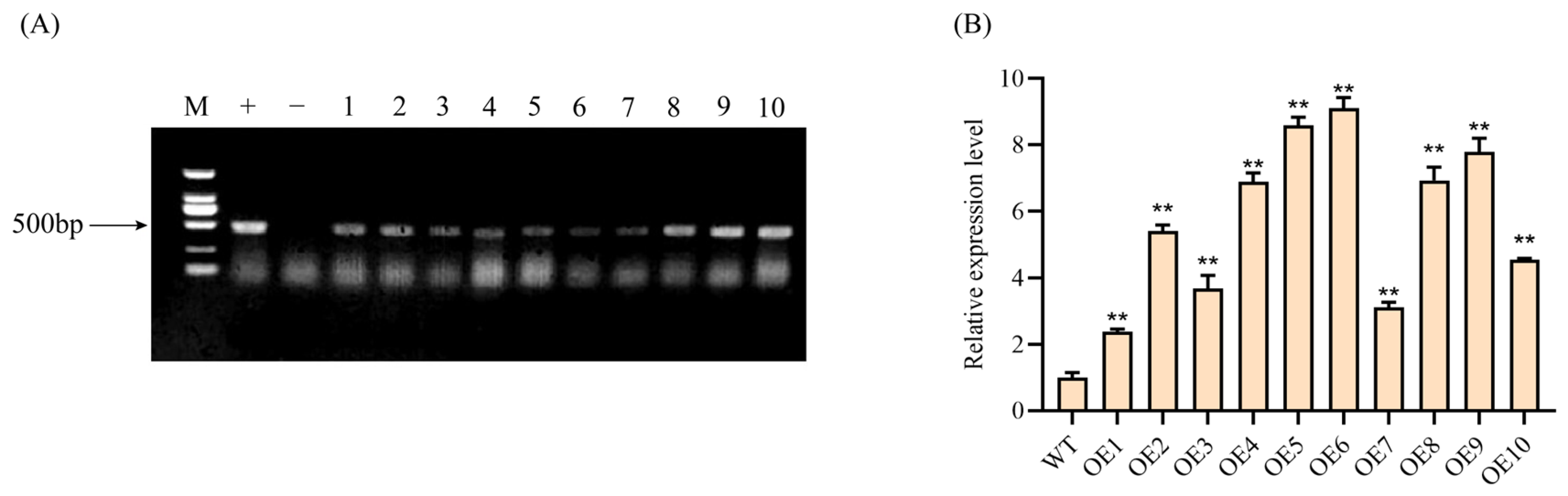
To confirm the integration of the LkbZIP4 gene into the hybrid larch genome, genomic DNA and total RNA were obtained from transgenic embryogenic calli for molecular analysis. Through this process, a total of 10 independent transgenic lines were identified. Primers designed and utilized in the present study are documented in Table S1.
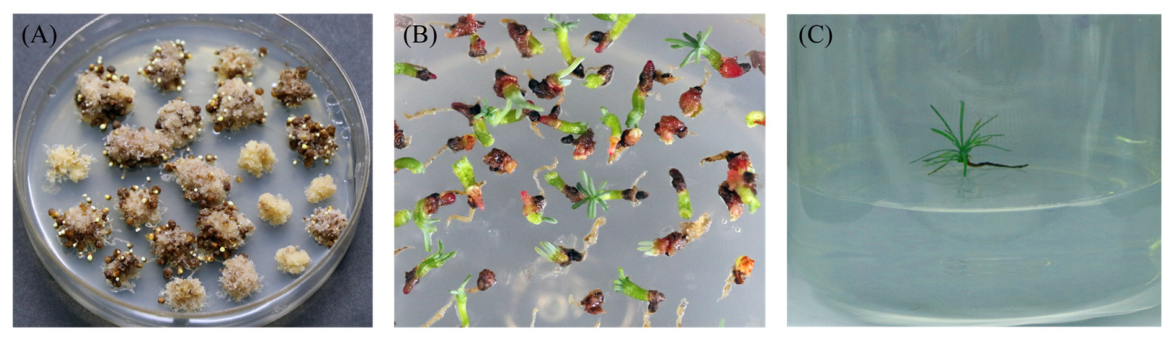
For the successfully transgenic embryogenic calli, maturation induction was performed as follows [29]. The calli were first transferred to a hormone-free transition medium to eliminate the influence of exogenous hormones. After one week, calli of appropriate size were selected and placed on maturation medium for culture in the dark. During the early induction stage, filamentous structures appeared on the surface of the embryogenic calli and gradually turned brown. By the mid-stage of dark culture, cylindrical proembryos formed at the sites of these growing filamentous structures, and their color gradually changed to a distinct yellow. Mature somatic embryos were collected after one month of development. Using forceps, embryos were carefully detached with the filamentous structures retained. Following dehydration treatment, the embryos were inoculated onto 1/2 MS medium formulated for rooting and cultured under light exposure. After one week, the somatic embryos resumed growth. By two weeks, red root tips emerged and elongated, the cotyledons greened and developed into needle-like leaves, eventually forming plantlets.

2.6. Measurement of Drought-Related Physiological Indices

Following 14 days of treatment with 0% or 7% PEG6000, phenotypic changes in the overexpression lines and WT calli were recorded. For each sample, approximately 1 g of tissue was cleaned, cut into small pieces, and immersed in deionized water. Following a 15 min vacuum infiltration, the initial conductance (S1) of the solution was recorded. Samples were subsequently heated in a water bath at 90 °C for 20 min. After cooling to ambient temperature, the conductance was measured again and designated as S2. The relative electrolyte leakage (REL) was calculated as (S1/S2) × 100%.
Malondialdehyde (MDA), proline, and soluble sugar contents, as well as POD and SOD activities, were analyzed using specific commercial kits (Nanjing Jiancheng Bioengineering Institute, Nanjing, China). Data were analyzed using SPSS software. The Shapiro–Wilk test was performed to examine the normality of data, and one-way ANOVA combined with Duncan’s multiple range test was used for multiple comparisons (p < 0.05).

3. Results

3.1. Isolation and Structural Characterization LkbZIP4

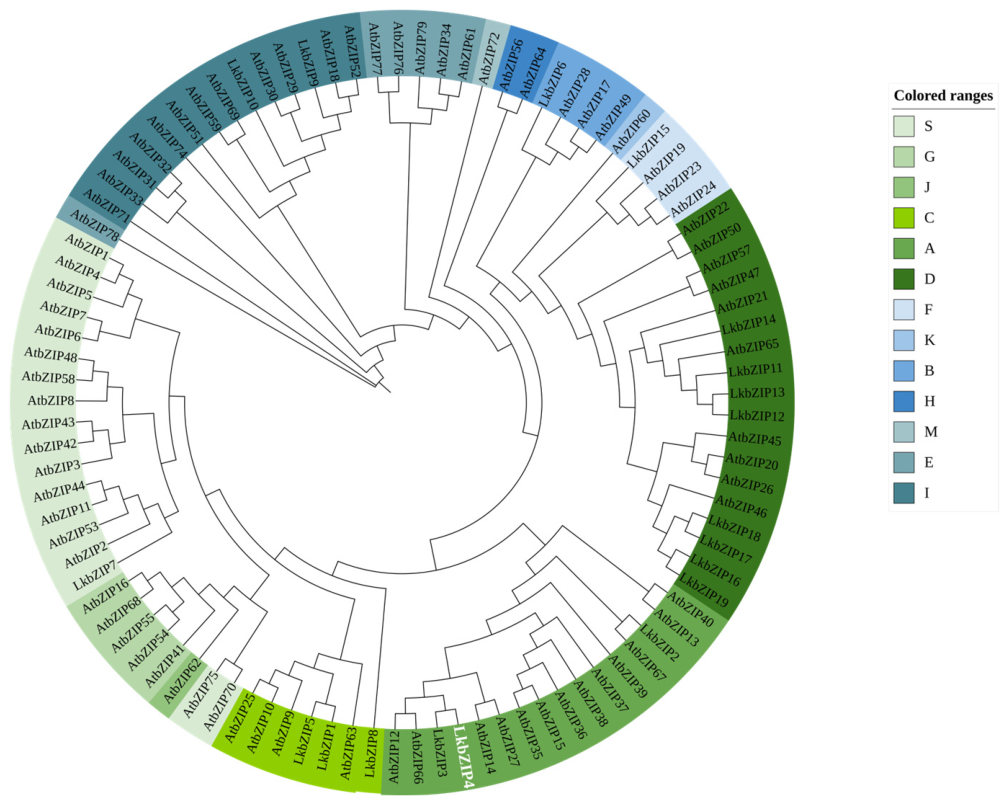
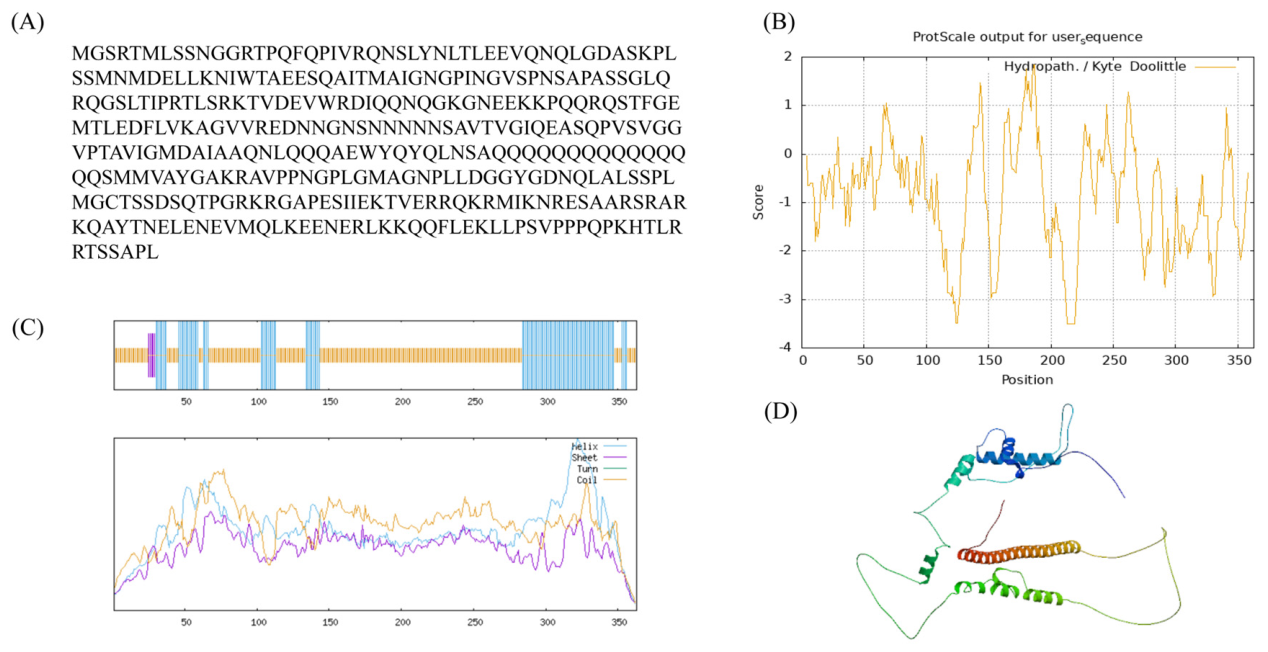
Conserved sequences were detected using MEGA12 software, and a phylogenetic tree was constructed based on the protein sequences of LkbZIP and AtbZIP family members (Figure 1). According to the established classification of Arabidopsis AtbZIPs, the evolutionary analysis revealed that LkbZIP4 belongs to the A subgroup of bZIP transcription factors. The LkbZIP4 gene was cloned from the total RNA of hybrid larch embryogenic callus. The gene contains an open reading frame of 1092 bp, which translates into a 363 amino acid (Figure 2A) polypeptide with a theoretical molecular mass of 39.965 kDa. A conserved eukaryotic bZIP domain was identified at the C-terminus.
The physicochemical properties of the LkbZIP4 protein were systematically analyzed using bioinformatics tools. First, the full-length amino acid sequence of LkbZIP4 was submitted to the ProtScale program, and the hydrophilicity/hydrophobicity was predicted using the Kyte-Doolittle (K-D) scale. As shown in Figure 2B, the overall distribution of the hydropathy scores revealed that the number of amino acid residues with negative scores was significantly higher than those with positive scores, indicating that LkbZIP4 is a hydrophilic protein, which is consistent with the characteristics of transcription factors that function in the nucleus. Subsequently, the secondary structure of LkbZIP4 was predicted using the SOPMA program. The results (Figure 2C) demonstrated that the secondary structure of LkbZIP4 is predominantly composed of alpha-helices 31.68% and random coils 66.67%, with a very small proportion of β-sheet and β-turns. The abundant random coils provide structural flexibility for the protein to bind to specific DNA sequences, while the alpha-helices form the core of the conserved bZIP functional domain, which is essential for the dimerization and DNA-binding activity of bZIP transcription factors. Finally, the tertiary structure of LkbZIP4 was modeled using the Swiss-Model program, and the predicted structure is presented in Figure 2D. The tertiary structure visualization further confirmed the presence of a prominent alpha-helical region corresponding to the bZIP domain, which is consistent with the secondary structure prediction results, laying a structural foundation for the functional verification of LkbZIP4 as a bZIP transcription factor.
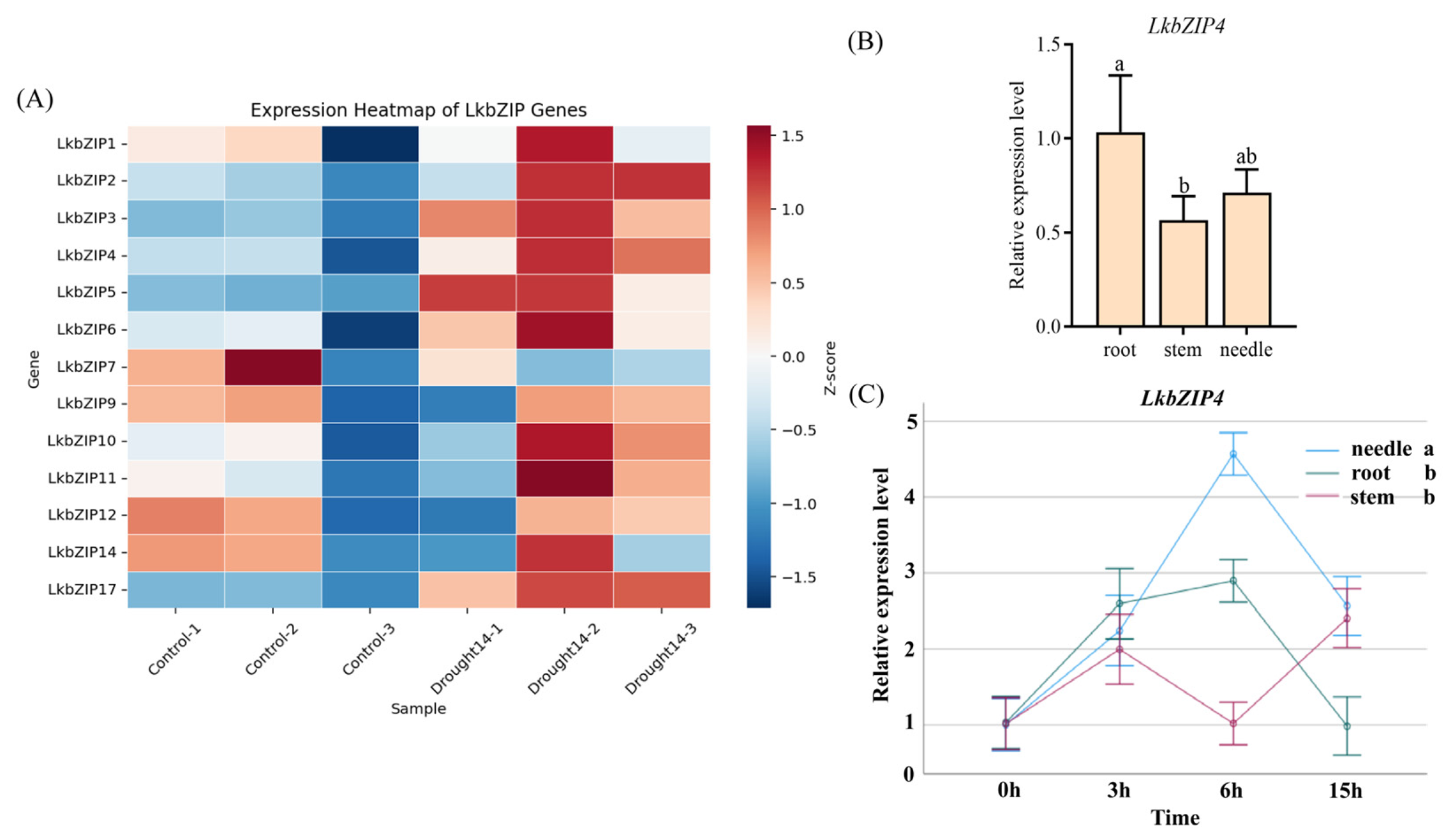
Based on the analysis of the laboratory’s previous drought transcriptome data of L. kaempferi, LkbZIP1 to LkbZIP19 genes were identified, and their upregulated fold changes under drought conditions were analyzed (Figure 3A). Using cDNA from the roots, stems and needles of L. kaempferi, RT-qPCR analysis revealed that the transcript level of LkbZIP4 was the highest in roots, followed by needles and stems (Figure 3B). Furthermore, under 7% PEG6000 osmotic stress, LkbZIP4 exhibited a distinct increase in expression level and was highest in the needles compared to the stems and roots. In stems, its expression peaked at 3 h post-treatment with a 2.59-fold increase. In roots and needles, expression peaked at 6 h, with increases of 2.9-fold and 4.57-fold, respectively (Figure 3C). These results collectively demonstrate that LkbZIP4 is significantly induced by 7% PEG6000 stress.

3.2. Subcellular Localization and Transcriptional Activation Activity of LkbZIP4

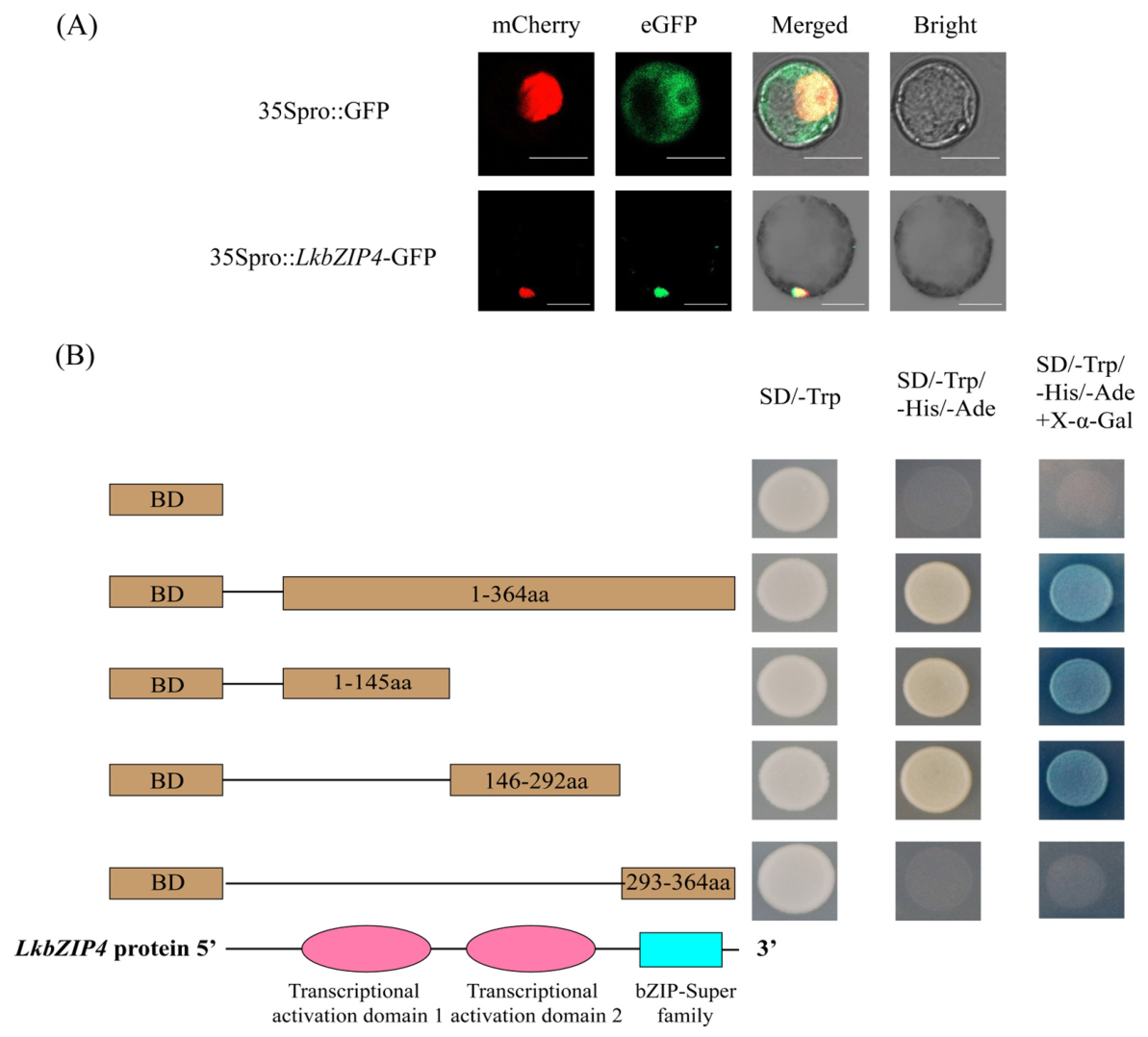
The pUC19-GFP (control) and pUC19-LkbZIP4-GFP plasmids were co-transfected with the nuclear marker plasmid pUC19-mCherry into protoplasts of P. alba × P. berolinensis. Following incubation at 30 °C for 12 h, subcellular localization was examined using a ZEISS LSM800 laser scanning confocal microscope. Fluorescence observation revealed that green fluorescence from pUC19-GFP was distributed throughout the protoplasts. In contrast, the fluorescence of pUC19-LkbZIP4-GFP was exclusively observed in the nucleus and completely overlapped with the red mCherry signal, a nuclear localization marker. These results indicate that LkbZIP4 is localized in the nucleus. (Figure 4A).
The empty pGBKT7 vector (negative control) and the pGBKT7-LkbZIP4 vector were separately transformed into prepared Y2H yeast competent cells, and colony growth was monitored. All transformants grew on SD/-Trp plates. As expected, the negative control (pGBKT7) failed to grow on both SD/-Ade/-His/-Trp and SD/-Ade/-His/-Trp plates supplemented with X-α-Gal, confirming the validity of the yeast transformation procedure. Through repeated experimental verification, yeast carrying pGBKT7-LkbZIP4 consistently grew on SD/-Ade/-His/-Trp plates and showed blue colonies on SD/-Ade/-His/-Trp plates with X-α-Gal, demonstrating that LkbZIP4 possesses transcriptional activation activity. To further delineate the region responsible for this activity, the full-length LkbZIP4 was divided into three fragments: LkbZIP4-1 (1–435 bp), LkbZIP4-2 (436–876 bp), and LkbZIP4-3 (877–1092 bp). Each fragment was cloned into the pGBKT7 vector. The resulting constructions, along with the negative controls, were transformed into yeast. After repeated verification, all three fragments were able to grow on SD/-Trp medium. Only the first fragment (1–145 aa) and the second fragment (146–292 aa) grew on SD/-Ade/-His/-Trp medium and turned blue on SD/-Ade/-His/-Trp medium supplemented with X-α-Gal. These results demonstrate that LkbZIP4 possesses transcriptional activation activity within the region of 1–292 aa (Figure 4B).

3.3. Determination of Drought-Related Physiological Indices

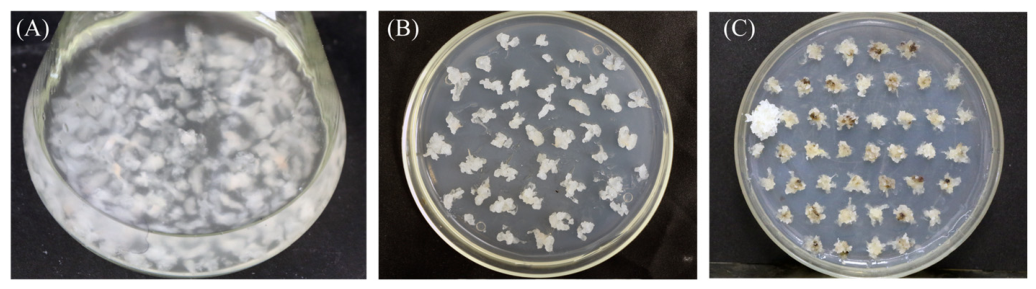
Transgenic experiments were conducted using stabilized, colorless, and transparent, bristly hybrid larch embryogenic callus with filamentous protrusions as the transformation material (Figure 5). Several transgenic lines were identified and selected at the DNA and RNA levels (Figure 6), followed by somatic embryo maturation and plant regeneration (Figure 7).
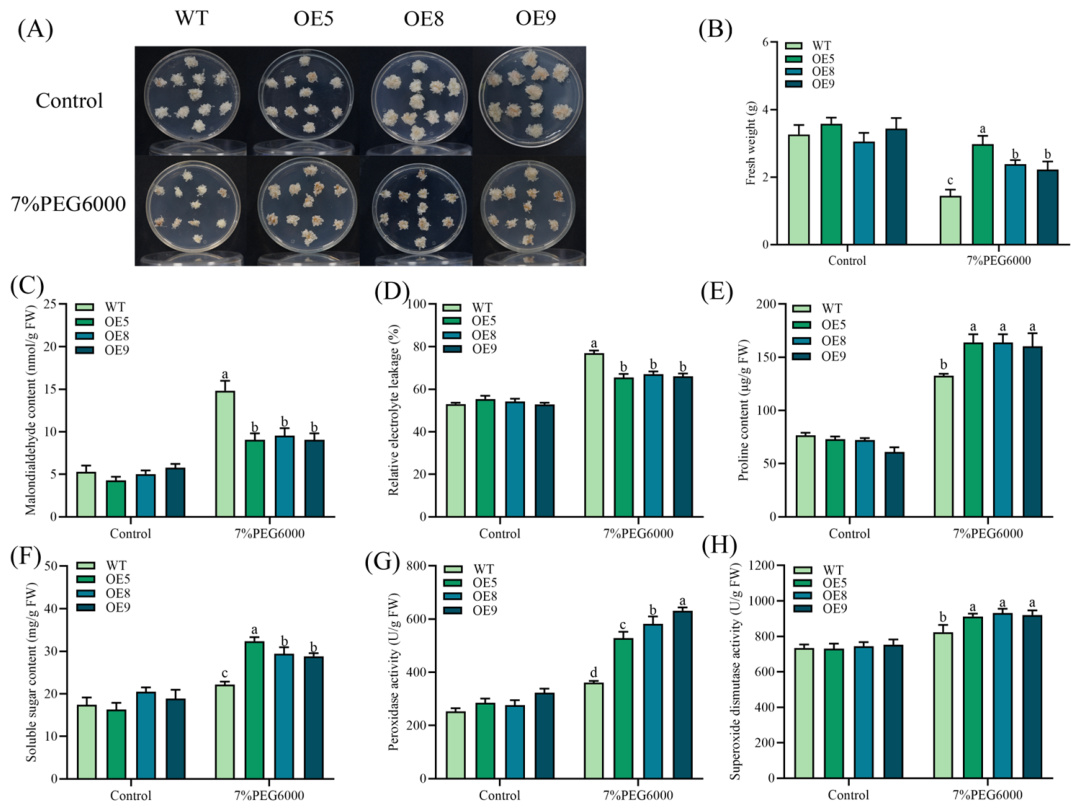
When analyzing the potential biological function of LkbZIP4, the insufficient number of regenerated plantlets in the overexpressing lines hampered further experimentation. So, callus pieces with similar growth status from both LkbZIP4 overexpression lines and WT were selected and cultured on standard subculture medium (without 7% PEG6000) and subculture medium supplemented with 7% PEG6000, respectively. As we can observe, the unstrained overexpression lines showed no significant growth difference compared to the WT. However, under 7% PEG6000-induced stress, the WT exhibited more severe growth inhibition than the overexpression lines. Following stress treatment, the overexpression lines demonstrated a more pronounced growth trend (Figure 8A). By comparing the fresh weight of callus before and after stress (Figure 8B), it can be preliminarily suggested that the pCAMBIA1300-LkbZIP4-GFP transgenic lines sustain less damage under drought stress and possess drought-resistant capacity.
Under drought stress, plants undergo excess ROS production including O2 and H2O2, which subsequently brings about peroxidative damage to membrane lipids. The content of MDA, a key byproduct of this process, acts as a reliable biomarker for evaluating the degree of membrane injury. This peroxidation disrupts the ordered structure of membranes, increases their permeability, and results in the leakage of intracellular electrolytes, thereby elevating the electrical conductivity of the solution. Consequently, REL is a key metric for assessing membrane integrity and plant drought tolerance; drought-tolerant varieties typically exhibit lower electrolyte leakage and a smaller increase in conductivity. Measurements of MDA content and REL were conducted under both 7% PEG6000 stress and normal growth conditions. Following simulated drought stress, both MDA levels and REL increased in both overexpression lines and WT. Nevertheless, the increment was notably lower in the overexpression lines (Figure 8C,D). The greater membrane damage observed in the WT indicates that overexpression of LkbZIP4 can mitigate cellular membrane damage and reduce the degree of membrane lipid peroxidation, thereby enhancing drought tolerance.
Under 7% PEG6000 treatment, the osmotic potential of plant cells undergoes significant changes. Intracellular organic osmolytes, such as free proline and soluble sugars, play a crucial role in osmotic adjustment. Under normal conditions, the proline and soluble sugar contents were largely consistent between the overexpression lines and the WT. Nevertheless, after exposure to 7% PEG600 stress, both proline and soluble sugar contents rose in all groups, and the overexpression lines exhibited markedly greater accumulation relative to WT. (Figure 8E,F). These findings suggest that under drought stress, the LkbZIP4 overexpression lines can enhance osmotic adjustment by accumulating more proline and soluble sugars, thereby improving drought tolerance.
SOD, a crucial antioxidant enzyme in plants, mitigates lipid peroxidation by efficiently scavenging ROS, thereby protecting membrane structures. Changes in its activity serve as an important indicator of a plant’s stress adaptability. POD is another protective enzyme that enhances stress resistance by eliminating intracellular ROS. Under normal growth conditions, the enzymatic activities of SOD and POD remained comparable between transgenic and WT plants. Following osmotic stress induced by 7% PEG6000, the activities of both enzymes were induced in all lines, but the overexpression lines showed a stronger induction compared to the WT (Figure 8G,H). From these findings, it can be inferred that the LkbZIP4 overexpression lines can enhance drought tolerance by improving their capacity for scavenging ROS.

4. Discussion

For global forest ecosystems, drought represents a primary abiotic stress that severely limits tree growth, afforestation success, and ecological restoration [33]. Larch, an important timber and ecological species known for its strong adaptability and rapid stand formation, serves as a key tree species for afforestation in arid and semi-arid regions. Members of the bZIP transcription factor family exert crucial regulatory functions in plant adaptation to various environmental stresses [34]. Extensive research has confirmed that bZIP transcription factors participate extensively in plant stress signaling and confer enhanced drought tolerance [35]. However, investigations into the functions of bZIP transcription factors in woody plant species are still relatively scarce [36], and their specific functions and mechanisms in drought resistance of larch are not yet fully elucidated.

4.1. LkbZIP4 Belongs to a Subgroup and Is a Key Regulator in Drought Stress Response

In this study, phylogenetic analysis assigned LkbZIP4 to group A of the bZIP transcription factor family. This classification carries important functional implications. In the model plant Arabidopsis, group A members have been well documented as central hubs in the ABA signaling pathway and drought stress responses [37]. They are typically activated via phosphorylation by SNF1-related protein kinase 2 (SnRK2) family members, which enables them to recognize ABRE cis-elements in the promoters of downstream genes, thereby forming a complete stress-responsive regulatory cascade and activating the expression of stress resistance-related genes [38]. The present study revealed that LkbZIP4 is specifically and highly expressed in roots and is induced by drought stress simulated with PEG6000. This expression pattern is consistent with the core function of group A bZIPs in sensing soil water deficit and mediating ABA-dependent stress responses. It also aligns with reports that group A bZIP genes in other tree species are highly expressed in roots or vegetative organs under drought and ABA treatments. For example, the maize group A members ZmbZIP4 and ZmbZIP89 are significantly upregulated under drought stress and participate in root water uptake and stress tolerance regulation [27,39].
Furthermore, our results confirmed that LkbZIP4 localizes to the nucleus and exhibits transcriptional activation activity. We therefore hypothesize that LkbZIP4 likely functions as an upstream transcriptional switch in the drought signaling pathway of L. kaempferi. By perceiving ABA and drought signals, it may trigger the expression of downstream defense gene networks, thereby contributing to osmoprotectant accumulation, antioxidant defense, and other stress-resistant processes. Notably, a recent study in rice demonstrated that OsbZIP23, a group A bZIP member, acts as a master regulator in ABA-dependent drought and salt tolerance. Upon activation by corresponding kinases, OsbZIP23 binds to ABRE elements in the promoters of target genes such as Rab16A, and activates the expression of downstream LEA proteins and antioxidant-related genes [40,41]. This enhances water retention and osmotic homeostasis in cells, thus forming a complete signaling cascade for stress resistance in rice. These findings provide a theoretical basis for further exploring the phosphorylation regulatory mechanism, target recognition characteristics, and related signaling pathways of LkbZIP4.

4.2. Overexpression of LkbZIP4 Enhances Drought Tolerance in Larch Through Synergistic Multi-Pathway Mechanisms

Genetic transformation experiments in this study directly demonstrate the positive regulatory role of LkbZIP4 in improving drought tolerance in hybrid larch. Transgenic lines exhibited a superior growth phenotype under drought stress, and the underlying physiological mechanisms may involve synergistic enhancement at multiple levels.
First, overexpression of LkbZIP4 significantly alleviated cellular membrane damage. Drought stress induces a burst of ROS, which triggers membrane lipid peroxidation. MDA content and REL are key indicators for assessing this process [42]. In our present study, transgenic lines exhibited distinctly lower MDA accumulation and reduced electrolyte leakage relative to WT, suggesting that LkbZIP4 may protect membrane integrity by enhancing the ROS scavenging system. Further assays revealed that transgenic lines displayed a more pronounced increase in SOD and POD activities under stress conditions. These antioxidant enzymes constitute the first line of defense against superoxide anions and hydrogen peroxide, and the enhancement of their activity is directly linked to the mitigation of cellular oxidative stress.
Second, LkbZIP4 contributes to the enhanced accumulation of osmotic adjustment compounds in plant cells. Proline and soluble sugars, as important compatible solutes, play crucial roles in maintaining cellular osmotic balance and protecting the structure and stability of biological macromolecules [43]. This study found that under drought stress, transgenic lines accumulate higher levels of proline and soluble sugars. These results imply that LkbZIP4 likely participates in the direct or indirect modulation of genes associated with proline biosynthesis and carbohydrate metabolic pathways, thereby enhancing cellular water retention capacity and dehydration tolerance.
In summary, LkbZIP4 likely orchestrates a core regulatory network that simultaneously upregulates both antioxidant defense and osmotic adjustment pathways, thereby conferring a more comprehensive drought tolerance capacity in larch. This type of pleiotropic regulation is a hallmark of transcription factors governing complex traits. Similarly, this mechanism has been verified in rice: OsbZIP68 is activated by OsGPX1-mediated oxidative modification in an ABA-independent manner, and simultaneously induces the expression of OsGSTU, OsCAT and other antioxidant genes, as well as OsP5CS, OsLEA and other osmotic adjustment genes. This balances ROS homeostasis and cellular osmotic potential, thereby enhancing drought tolerance in rice [44], which provides insights for our subsequent experiments.

4.3. Research Significance and Future Perspectives

This study not only cloned and identified a novel drought resistance-related gene, LkbZIP4, in woody plants but, more importantly, successfully validated its function using an embryogenic callus system of hybrid larch. This provides a feasible technical paradigm for gene functional research and molecular breeding in conifers, particularly within the genus Larix. The hybrid larch itself possesses inherent growth advantages and stress resistance potential [45]. The utilization of key stress resistance genes like LkbZIP4 holds promise for developing new cultivars with enhanced drought tolerance. This has positive practical significance for promoting larch afforestation in arid and semi-arid regions and addressing the challenges of climate change.
However, this study leaves several questions for further exploration. First, the specific upstream signal perception mechanism of LkbZIP4 and whether it is regulated by SnRK1 kinase or ABA signaling requires further investigation. Second, the underlying molecular mechanisms remain to be elucidated. Employing techniques, such as ChIP-seq or yeast one-hybrid assays to identify the cis-elements it binds and the gene networks it regulates, will be key to clarifying its molecular mode of action. Third, while functional validation was primarily conducted in callus tissues, the role of this gene in seedlings and mature trees in responding to long-term drought stress awaits experimental assessment.

5. Conclusions

LkbZIP4 is a nucleus-localized transcription activator whose expression is induced by drought stress and has been successfully cloned. Under drought stress conditions, its biomass was significantly increased compared with the wild type. It can improve drought resistance in larch by enhancing the osmoprotection system and ROS scavenging system. These findings establish a foundation for breeding new larch varieties with enhanced drought resistance and superior growth traits. It is anticipated that such drought-tolerant varieties will promote the effective utilization and vegetation restoration of arid and semi-arid regions, thereby expanding the potential cultivation area for larch.

Supplementary Materials

The following supporting information can be downloaded at: https://www.mdpi.com/article/10.3390/f17040507/s1, Supplemental Table S1. Primer sequences used in the analysis of LkbZIP4.

Author Contributions

Conceptualization, C.Z., X.W. and C.L.; methodology, C.Z. and X.W.; validation, C.Z., X.W. and Y.X.; formal analysis, C.Z. and R.L.; data curation, R.L. and L.Y.; writing—original draft preparation, C.Z.; writing—review and editing, C.Z., M.W. and C.L.; supervision, C.L. and M.W.; funding acquisition, C.L. All authors have read and agreed to the published version of the manuscript.

Funding

This research was funded by Biological Breeding-Major Projects (Grant No. 2023ZD0405803) to C.L.

Data Availability Statement

The data presented in this study are available on request from the corresponding authors.

Conflicts of Interest

The authors declare no conflicts of interest.

References

  1. Beyel, V.; Brüggemann, W. Differential Inhibition of Photosynthesis during Pre-flowering Drought Stress in Sorghum Bicolor Genotypes with Different Senescence Traits. Physiol. Plant. 2005, 124, 249–259. [Google Scholar] [CrossRef]
  2. Brodribb, T.J.; Holbrook, N.M. Stomatal Closure during Leaf Dehydration, Correlation with Other Leaf Physiological Traits. Plant Physiol. 2003, 132, 2166–2173. [Google Scholar] [CrossRef] [PubMed]
  3. Rai, G.K.; Kalsi, J.; Khanday, D.M.; Choudhary, S.M.; Kosser, R.; Kumar, R.R.; Rai, P.K.; More, S.J.; Kumar, P.; Gruda, N.S. Integrated physiological, molecular, and epigenetic strategies for drought-resilient crops. Crit. Rev. Plant Sci. 2025, 44, 422–448. [Google Scholar] [CrossRef]
  4. Song, Q.; Kong, L.; Yang, J.; Lin, M.; Zhang, Y.; Yang, X.; Wang, X.; Zhao, Z.; Zhang, M.; Pan, J.; et al. The Transcription Factor PtoMYB142 Enhances Drought Tolerance in Populus tomentosa by Regulating Gibberellin Catabolism. Plant J. 2024, 118, 42–57. [Google Scholar] [CrossRef]
  5. Hosseinifard, M.; Stefaniak, S.; Ghorbani Javid, M.G.; Soltani, E.; Wojtyla, L.; Garnczarska, M. Contribution of Exogenous Proline to Abiotic Stresses Tolerance in Plants: A Review. Int. J. Mol. Sci. 2022, 23, 5186. [Google Scholar] [CrossRef]
  6. Chen, T.H.H.; Murata, N. Glycinebetaine Protects Plants against Abiotic Stress: Mechanisms and Biotechnological Applications. Plant Cell Environ. 2011, 34, 1–20. [Google Scholar] [CrossRef]
  7. Keunen, E.; Peshev, D.; Vangronsveld, J.; Van Den Ende, W.; Cuypers, A. Plant Sugars Are Crucial Players in the Oxidative Challenge during Abiotic Stress: Extending the Traditional Concept. Plant Cell Environ. 2013, 36, 1242–1255. [Google Scholar] [CrossRef]
  8. Wahab, A.; Abdi, G.; Saleem, M.H.; Ali, B.; Ullah, S.; Shah, W.D.; Mumtaz, S.; Yasin, G.; Muresan, C.C.; Marc, R.A. Plants’ Physio-Biochemical and Phyto-Hormonal Responses to Alleviate the Adverse Effects of Drought Stress: A Comprehensive Review. Plants 2022, 11, 1620. [Google Scholar] [CrossRef] [PubMed]
  9. Singh, D.; Laxmi, A. Transcriptional regulation of drought response: A tortuous network of transcriptional factors. Front. Plant Sci. 2015, 6. [Google Scholar] [CrossRef]
  10. Hou, Z.H.; Zheng, W.J.; Zheng, L.; Wang, J.Y.; Zhang, S.X.; Wei, J.T.; Yang, S.H.; Jiao, Y.C.; Cheng, W.J.; Yu, T.F.; et al. TaPPR13, a Pentatricopeptide Repeat Protein Gene Activated by TaBZR2, Confers Drought Stress Tolerance by Enhancing the Antioxidant Defense System and Promoting Retrograde Signaling in Wheat (Triticum aestivum). Adv. Sci. 2025, 12, e02984. [Google Scholar] [CrossRef]
  11. Yang, Y.L.; Li, H.G.; Wang, J.; Wang, H.L.; He, F.; Su, Y.Y.; Zhang, Y.; Feng, C.H.; Niu, M.X.; Li, Z.H.; et al. ABF3 Enhances Drought Tolerance via Promoting ABA-Induced Stomatal Closure by Directly Regulating ADF5 in Populus euphratica. J. Exp. Bot. 2020, 71, 7270–7285. [Google Scholar] [CrossRef]
  12. Zhao, K.; Yue, Y.J.; Qin, F.C.; Hai, L.; Yi, L.X.; Zhao, P.W.; Hao, L.F.; Shu, Y.; Zheng, Y.X.; Li, L. Carbon storage and carbon pool characteristics of Larix gmelinii forest in Daxing’anling, Inner Mongolia, China. Front. For. Glob. Change 2024, 7, 1419023. [Google Scholar] [CrossRef]
  13. Zhang, X.T.; Gao, X.L.; Liu, B.; Wang, J.; Shan, J.Y.; Wang, J.X.; Zhang, Y.X.; Li, G.J.; Jia, Y.H.; Wang, R.G. Transcriptome and metabolome reveal the primary and secondary metabolism changes in Larix gmelinii seedlings under abiotic stress. BMC Plant Biol. 2015, 24, 1128. [Google Scholar] [CrossRef]
  14. Jing, M.D.; Zhu, L.J.; Liu, S.G.; Cao, Y.; Zhu, Y.; Yan, W.D. Warming-induced drought leads to tree growth decline in subtropics: Evidence from tree rings in central China. Front. Plant Sci. 2022, 13, 964400. [Google Scholar] [CrossRef] [PubMed]
  15. Song, Y.; Bai, X.M.; Dong, S.W.; Yang, Y.N.; Dong, H.; Wang, N.R.; Zhang, H.G.; Li, S.J. Stable and Efficient Agrobacterium-Mediated Genetic Transformation of Larch Using Embryogenic Callus. Front. Plant Sci. 2020, 11, 584492. [Google Scholar] [CrossRef] [PubMed]
  16. Li, W.L.; Lee, J.B.; Yu, S.; Wang, F.D.; Lv, W.Q.; Zhang, X.; Li, C.H.; Yang, J.L. Characterization and analysis of the transcriptome response to drought in Larix kaempferi using PacBio full-length cDNA sequencing integrated with de novo RNA-seq reads. Planta 2021, 253, 28. [Google Scholar] [CrossRef] [PubMed]
  17. Dröge-Laser, W.; Snoek, B.L.; Snel, B.; Weiste, C. The Arabidopsis bZIP Transcription Factor Family—An Update. Curr. Opin. Plant Biol. 2018, 45, 36–49. [Google Scholar] [CrossRef]
  18. Ji, Q.; Zhang, L.S.; Wang, J.F.; Wang, J. Genome-Wide Analysis of Basic Leucine Zipper Transcription Factor Families in Arabidopsis thaliana, Oryza sativa and Populus trichocarpa. J. Shanghai Univ. (Engl. Ed.) 2009, 13, 174–182. [Google Scholar] [CrossRef]
  19. Nijhawan, A.; Jain, M.; Tyagi, A.K.; Khurana, J.P. Genomic Survey and Gene Expression Analysis of the Basic Leucine Zipper Transcription Factor Family in Rice. Plant Physiol. 2008, 146, 323–324. [Google Scholar] [CrossRef]
  20. Jakoby, M.; Weisshaar, B.; Droge-Laser, W.; Carbajosa, J.V.; Tiedemann, J.; Kroj, T.; Parcy, F. bZIP transcription factors in Arabidopsis. Trends Plant Sci. 2002, 7, 106–111. [Google Scholar] [CrossRef]
  21. Baloglu, M.C.; Eldem, V.; Hajyzadeh, M.; Unver, T. Genome-Wide Analysis of the bZIP Transcription Factors in Cucumber. PLoS ONE 2014, 9, e96014. [Google Scholar] [CrossRef]
  22. Zhang, L.N.; Zhang, L.C.; Xia, C.; Gao, L.F.; Hao, C.Y.; Zhao, G.Y.; Jia, J.Z.; Kong, X.Y. A Novel Wheat C-bZIP Gene, TabZIP14-B, Participates in Salt and Freezing Tolerance in Transgenic Plants. Front. Plant Sci. 2017, 8, 710. [Google Scholar] [CrossRef]
  23. Yoshida, T.; Fujita, Y.; Sayama, H.; Kidokoro, S.; Maruyama, K.; Mizoi, J.; Shinozaki, K.; Yamaguchi-Shinozaki, K. AREB1, AREB2, and ABF3 Are Master Transcription Factors that Cooperatively Regulate ABRE-Dependent ABA Signaling Involved in Drought Stress Tolerance and Require ABA for Full Activation. Plant J. 2010, 61, 672–685. [Google Scholar] [CrossRef] [PubMed]
  24. Yang, S.Q.; Xu, K.; Chen, S.J.; Li, T.F.; Xia, H.; Chen, L.; Liu, H.Y.; Luo, L.J. A Stress-Responsive bZIP Transcription Factor OsbZIP62 Improves Drought and Oxidative Tolerance in Rice. BMC Plant Biol. 2019, 19, 260. [Google Scholar] [CrossRef]
  25. Choi, J.; Lim, C.W.; Lee, S.C. Role of Pepper bZIP Transcription Factor CaADBZ1 in Abscisic Acid Signalling and Drought Stress Response. Physiol. Plant. 2025, 177, e70159. [Google Scholar] [CrossRef]
  26. Pan, R.; Buitrago, S.; Feng, Z.; Abou-Elwafa, S.F.; Xu, L.; Li, C.D.; Zhang, W.Y. HvbZIP21, a Novel Transcription Factor from Wild Barley Confers Drought Tolerance by Modulating ROS Scavenging. Front. Plant Sci. 2022, 13, 878459. [Google Scholar] [CrossRef]
  27. Li, P.C.; Zhu, T.Z.; Wang, Y.Y.; Zhang, X.M.; Yang, X.Y.; Fang, S.; Li, W.; Rui, W.Y.; Yang, A.Q.; Duan, Y.M.; et al. Natural Variation in a Cortex/Epidermis-Specific Transcription Factor bZIP89 Determines Lateral Root Development and Drought Resilience in Maize. Sci. Adv. 2025, 11, eadt1113. [Google Scholar] [CrossRef]
  28. Sun, H.; Pang, K.X.; Zhou, X.M.; Wang, L.Y.; Li, B.R.; Wei, J.X.; Guo, H.Y.; Wang, Y.C. A BpbZIP4 Transcription Factor Enhances Drought Resistance and Root Development in Betula platyphylla: Insights from a Gene Regulatory Network. Hortic. Res. 2026, uhag002. [Google Scholar] [CrossRef]
  29. Zhang, S.F.; Yan, S.S.; An, P.Q.; Cao, Q.; Wang, C.; Wang, J.H.; Zhang, H.G.; Zhang, L. Embryogenic callus induction from immature zygotic embryos and genetic transformation of Larix kaempferi 3 × Larix gmelinii 9. PLoS ONE 2021, 16. [Google Scholar] [CrossRef] [PubMed]
  30. Jaakola, L.; Pirttilä, A.M.; Halonen, M.; Hohtola, A. Isolation of High Quality RNA from Bilberry (Vaccinium myrtillus L.) Fruit. Mol. Biotechnol. 2001, 19, 201–203. [Google Scholar] [CrossRef]
  31. Wei, M.; Zhang, M.Q.; Sun, J.L.; Zhao, Y.; Pak, S.; Ma, M.M.; Chen, Y.; Lu, H.; Yang, J.L.; Wei, H.R.; et al. PuHox52 Promotes Coordinated Uptake of Nitrate, Phosphate, and Iron under Nitrogen Deficiency in Populus ussuriensis. J. Integr. Plant Biol. 2023, 65, 791–809. [Google Scholar] [CrossRef]
  32. Lin, Y.C.; Li, W.; Chen, H.; Li, Q.Z.; Sun, Y.H.; Shi, R.; Lin, C.Y.; Wang, J.P.; Chen, H.C.; Chuang, L.; et al. A Simple Improved-Throughput Xylem Protoplast System for Studying Wood Formation. Nat. Protoc. 2014, 9, 2194–2205. [Google Scholar] [CrossRef]
  33. Allen, C.D.; Macalady, A.K.; Chenchouni, H.; Bachelet, D.; McDowell, N.; Vennetier, M.; Kitzberger, T.; Rigling, A.; Breshears, D.D.; Hogg, E.H.; et al. A Global Overview of Drought and Heat-Induced Tree Mortality Reveals Emerging Climate Change Risks for Forests. For. Ecol. Manag. 2010, 259, 660–684. [Google Scholar] [CrossRef]
  34. Zhou, L.X.; Yarra, R. Genome-Wide Identification and Expression Analysis of bZIP Transcription Factors in Oil Palm (Elaeis guineensis Jacq.) under Abiotic Stress. Protoplasma 2022, 259, 469–483. [Google Scholar] [CrossRef]
  35. Dong, W.F.; Wang, J.J.; Wang, X.Y.; Gao, W.S.; Liu, Z.Y.; Gao, C.Q. BpbZIP61 Negatively Regulates Drought Resistance in Birch by Reducing Ascorbic Acid Content. Plant Sci. 2026, 365, 113015. [Google Scholar] [CrossRef]
  36. Zhao, K.; Chen, S.; Yao, W.J.; Cheng, Z.H.; Zhou, B.R.; Jiang, T.B. Genome-Wide Analysis and Expression Profile of the bZIP Gene Family in Poplar. BMC Plant Biol. 2021, 21, 122. [Google Scholar] [CrossRef]
  37. Liu, J.; Shu, D.F.; Tan, Z.L.; Ma, M.; Guo, N.; Gao, S.; Duan, G.Y.; Kuai, B.K.; Hu, Y.X.; Li, S.P.; et al. The Arabidopsis IDD14 Transcription Factor Interacts with bZIP-type ABFs/AREBs and Cooperatively Regulates ABA-mediated Drought Tolerance. New Phytol. 2022, 236, 929–942. [Google Scholar] [CrossRef] [PubMed]
  38. Yoshida, T.; Fujita, Y.; Maruyama, K.; Mogami, J.; Todaka, D.; Shinozaki, K.; Yamaguchi-Shinozaki, K. Four Arabidopsis AREB/ABF Transcription Factors Function Predominantly in Gene Expression Downstream of SnRK2 Kinases in Abscisic Acid Signalling in Response to Osmotic Stress. Plant Cell Environ. 2015, 38, 35–49. [Google Scholar] [CrossRef]
  39. Ma, H.Z.; Liu, C.; Li, Z.X.; Ran, Q.J.; Xie, G.N.; Wang, B.M.; Fang, S.; Chu, J.F.; Zhang, J.R. ZmbZIP4 Contributes to Stress Resistance in Maize by Regulating ABA Synthesis and Root Development. Plant Physiol. 2018, 178, 753–770. [Google Scholar] [CrossRef] [PubMed]
  40. Xiang, Y.; Tang, N.; Du, H.; Ye, H.Y.; Xiong, L.Z. Characterization of OsbZIP23 as a Key Player of the Basic Leucine Zipper Transcription Factor Family for Conferring Abscisic Acid Sensitivity and Salinity and Drought Tolerance in Rice. Plant Physiol. 2008, 148, 1938–1952. [Google Scholar] [CrossRef] [PubMed]
  41. Zong, W.; Tang, N.; Yang, J.; Peng, L.; Ma, S.Q.; Xu, Y.; Li, G.L.; Xiong, L.Z. Feedback Regulation of ABA Signaling and Biosynthesis by a bZIP Transcription Factor Targets Drought-Resistance-Related Genes. Plant Physiol. 2016, 171, 2810–2825. [Google Scholar] [CrossRef] [PubMed]
  42. Mittler, R.; Zandalinas, S.I.; Fichman, Y.; Van Breusegem, F. Reactive Oxygen Species Signalling in Plant Stress Responses. Nat. Rev. Mol. Cell Biol. 2022, 23, 663–679. [Google Scholar] [CrossRef] [PubMed]
  43. Song, Q.; He, F.; Kong, L.F.; Yang, J.R.; Wang, X.J.; Zhao, Z.J.; Zhang, Y.Q.; Xu, C.Z.; Fan, C.F.; Luo, K.M. The IAA17.1/HSFA5a Module Enhances Salt Tolerance in Populus tomentosa by Regulating Flavonol Biosynthesis and ROS Levels in Lateral Roots. New Phytol. 2024, 241, 592–606. [Google Scholar] [CrossRef]
  44. Zhou, H.; Zhang, F.; Zhai, F.C.; Su, Y.; Zhou, Y.; Ge, Z.L.; Tilak, P.; Eirich, J.; Finkemeier, I.; Fu, L.; et al. Rice GLUTATHIONE PEROXIDASE1-Mediated Oxidation of bZIP68 Positively Regulates ABA-Independent Osmotic Stress Signaling. Mol. Plant 2022, 15, 651–670. [Google Scholar] [CrossRef]
  45. Philippe, G.; Buret, C.; Matz, S.; Paques, L.E. Composition of Hybrid Larch (Larix × eurolepis Henry) Forest Reproductive Materials: How Much Does Hybrid Percentage Affect Stand Performance? New For. 2016, 47, 541–564. [Google Scholar] [CrossRef]
Figure 1. Phylogenetic tree of bZIP family genes. A-K, M and S denote the individual subfamilies of the bZIP family. The white section indicates that LkbZIP4 belongs to Subfamily A.
Forests 17 00507 g001
Figure 2. Bioinformatics analysis of LkbZIP4. (A) The amino acid sequence of LkbZIP4. (B) Hydrophilicity of LkbZIP4 protein. (C) Predicted secondary structure of LkbZIP4. (D) Predicted tertiary structure of LkbZIP4.
Forests 17 00507 g002
Figure 3. Analysis of the gene expression pattern of Larix bZIP transcriptional factors. (A) Heatmap representation of transcript abundance for 19 LkbZIP genes in Larix. kaempferi (Lamb.) Carr.under control and drought conditions. (B) Tissue-specific expression patterns of LkbZIP4 in roots, stems, and needles of soil-grown hybrid larch seedlings. Statistical analysis was performed using one-way ANOVA and Duncan’s test, different letters indicate significant differences at the level of p < 0.05. (C) Temporal expression dynamics of LkbZIP4 in different tissues following 7% PEG6000 treatment. Expression levels were normalized to α-tubulin. Values represent the mean ± SD (n = 3).
Forests 17 00507 g003
Figure 4. Analysis of LkbZIP4 subcellular localization and transactivation potential. (A) Nuclear targeting of LkbZIP4. Fusion proteins (GFP alone or LkbZIP4-GFP) under the control of the 35S promoter were transiently expressed in P. alba × P. berolinensis protoplasts. mCherry served as a nuclear marker. Merged channels show exclusive nuclear fluorescence for LkbZIP4-GFP. Bar = 20 µm (B) Identification of activation domains. The transcriptional activation capability of full-length LkbZIP4 and its deletion mutants (BD-1 to BD-3) was tested in yeast. The Y2H Gold strain harboring the respective pGBKT7 constructs was grown on SD/-Trp (transformation control), SD/-Trp/X-α-Gal (blue color indicates activation), and SD/-Trp/-His (growth indicates activation) media.
Forests 17 00507 g004
Figure 5. Generation of transgenic embryogenic callus overexpressing the LkbZIP4 gene. (A) A. tumefaciens-mediated transformation of embryogenic callus. (B) Co-cultivation for 48 h post-transformation. (C) Hygromycin selection culture.
Forests 17 00507 g005
Figure 6. PCR and RT-qPCR analyses were performed to verify the successful establishment of the LkbZIP4 overexpression lines. (A) PCR confirmation of LkbZIP4-OE. M, 2K DNA markers; “−” indicates PCR product with wild type; “+” indicates PCR product with pCAMBIA1300-LkbZIP4 plasmid; 1 to 10 represent PCR products obtained from the genomic DNA of hygromycin-resistant callus tissue. (B) RT-qPCR analysis of the relative expression levels of the LkbZIP4 gene in LkbZIP4-OE, with WT as the control set to 1. Significant differences between groups were assessed using Student’s t-test (** p < 0.01).
Forests 17 00507 g006
Figure 7. Generation of Overexpressing Plants. (A) Induction of somatic embryos. (B) Germination of somatic embryos. (C) Development into plantlets.
Forests 17 00507 g007
Figure 8. Analysis of the drought resistance of LkbZIP4. (A) Phenotypic difference. (B) Determination of fresh weight. (C) Determination of MDA content. (D) Determination of relative electrolyte leakage. (E) Determination of proline content. (F) Determination of soluble sugar content. (G) Determination of POD activity. (H) Determination of SOD activity. Data are presented as mean ± SD of three independent biological replicates. Statistical analysis was performed using one-way ANOVA and Duncan’s test, different letters indicate significant differences at the level of p < 0.05.
Forests 17 00507 g008
Disclaimer/Publisher’s Note: The statements, opinions and data contained in all publications are solely those of the individual author(s) and contributor(s) and not of MDPI and/or the editor(s). MDPI and/or the editor(s) disclaim responsibility for any injury to people or property resulting from any ideas, methods, instructions or products referred to in the content.