Article

Genome-Wide Identification and Expression Analysis of the C3H Gene Family in Betula platyphylla

1
School of Agriculture, Food and Ecosystem Sciences, The University of Melbourne, Parkville, VIC 3010, Australia
2
School of Agriculture, Liaodong University, Dandong 118003, China
*
Author to whom correspondence should be addressed.
Forests 2026, 17(4), 491; https://doi.org/10.3390/f17040491
Submission received: 23 February 2026 / Revised: 26 March 2026 / Accepted: 14 April 2026 / Published: 16 April 2026
(This article belongs to the Section Genetics and Molecular Biology)

Abstract

C3H-type zinc finger proteins play essential roles in plant responses to abiotic stresses, as well as in the regulation of growth, development, and signal transduction. Birch (Betula platyphylla Suk.), an ecologically adaptable tree species widely distributed in northern regions, has not yet been systematically characterized for its C3H gene family. In this study, a total of 15 BpC3Hs were identified from a genome-wide analysis of birch. Their physiochemical properties, gene structures, conserved motifs and domains were systematically analyzed. Promoter analysis identified cis-acting elements associated with stress responses, hormone signaling, and developmental regulation. Transcriptome data further showed that most BpC3Hs were responsive to salt, drought, high/low-temperature stresses, and light/dark treatment, and showed differential expression patterns in tension wood and opposite wood. Additionally, they displayed stage-specific expression patterns during male inflorescence development. This study lays a foundation for future functional characterization of the C3H gene family in birch and its application in molecular breeding for stress resistance.

1. Introduction

Plants face various abiotic stresses during their growth, such as drought, salt stress, high-temperature stress and heavy metal pollution, which seriously affect plant growth and development [1,2]. These stresses can inhibit seed germination, reduce growth, decrease photosynthetic efficiency, alter root structure, and ultimately reduce yield and quality [2,3]. To meet these challenges, plants have evolved a variety of response mechanisms, and transcriptional regulation plays a central role [2,4]. Transcription factors recognize specific cis-acting elements, regulate the transcription of downstream genes, and participate in osmotic regulation, antioxidant defense, ion balance and other processes [4,5]. Studies have also found that transcription factors are widely involved in regulating plant growth and development, as well as circadian rhythm [6]. For perennial woody plants, these regulatory mechanisms are particularly critical, as their longer life cycles expose them to seasonal environmental fluctuations and multiple abiotic stresses over extended periods, thereby requiring more diverse regulatory networks to coordinate growth, development, and environmental adaptation [7]. Birch is an important tree species in temperate and cold regions, with strong cold tolerance and adaptability to poor soils, and has important value in ecological restoration, wood utilization, and medicinal development [8,9,10]. Meanwhile, with the accumulation of reference genome and transcriptome data for birch, the necessary foundation has been established for genome-wide systematic analyses of key gene families in this species, and birch has become an important material for elucidating key regulatory gene families and their environmental adaptation mechanisms in woody plants [11].
The proteins encoded by the C3H gene family, known as CCCH-type zinc finger proteins, belong to the zinc finger protein superfamily (ZFPs). This family is widely distributed in eukaryotes and viruses [12]. Its core structure is a C3H-type zinc finger domain, formed by the coordination of three cysteine residues and one histidine residue with a zinc ion, which enables recognition and binding of RNA or DNA [13,14]. The C3H gene family usually contains 1–6 conserved CCCH motifs [15]. Depending on whether the motifs occur in tandem, they can be further classified into tandem zinc finger (TZF) and non-TZF types [16,17]. TZF proteins in many plants contain arginine-rich regions, which enhance mRNA-binding capacity [18]. Some C3H proteins also carry RNA recognition domains, which further enhance the recognition of mRNA AU-rich elements (AREs) [19,20,21]. In addition, the N-terminal of some C3H proteins contains EELR or EELR-like domains, which serve as transcriptional activation domains. These domains, together with zinc finger structures, regulate the expression of target genes [22,23]. C3H proteins often carry nuclear localization signals and nuclear export signals, giving them the ability to shuttle between nucleus and cytoplasm [24,25]. This makes some C3H proteins not only act as transcription factors in the nucleus but also function as regulators of downstream gene expression [26,27]. They can also bind mRNA, localize in processing bodies (PBs) and stress granules (SGs), and mediate post-transcriptional regulation [28,29].
As a subgroup of transcription factors, C3H proteins play an important role in plant responses to adverse environmental conditions. Studies have shown that they can enhance plant tolerance to salt, drought, high temperature and low temperature. Under salt stress, AtC3H17 in Arabidopsis thaliana (L.) Heynh. can upregulate ABA-related genes (such as RAB18 and COR15A) and alleviate oxidative damage caused by salt stress [17]. AtZFP1 can enhance plant salt tolerance by maintaining a favorable Na+/K+ ratio and promoting proline and soluble sugars under salt stress. Similarly, GhZFP1 in cotton (Gossypium hirsutum L.) can also regulate Na+/K+ homeostasis to enhance salt tolerance [24,26]. Under drought stress, overexpression of PdC3H17 in Populus deltoides Marshall × Populus euramericana Guinier could promote the formation of xylem vessels, enhance ROS clearance and osmotic regulation, and maintain high photosynthetic efficiency and water potential. In contrast, the PdC3H17 transgenic plants lacking the CCCH domain did not show the same resistance [22]. In rice (Oryza sativa L.), overexpression of OsC3H10 also improved the survival rate under drought and activated drought resistance genes such as LEA, PR and GLP [28]. Under cold stress, the loss of OsTZF5 in rice not only reduces flavonoid accumulation and weakens antioxidant capacity, but also represses the expression of cold-responsive transcription factors such as OsDREB1A, OsDREB1B, OsDREB1E, and OsDREB1G, thereby increasing plant mortality [30]. Under heat stress, LlC3H18 in lily (Lilium longiflorum Thunb.) accumulated in SGs and PBs and combined with AREs to regulate mRNA. At the stress relief stage, the transcription factor returned to the nucleus and promoted the expression of heat response factor LlWRKY33. This protein, together with the upstream transcription factors and their downstream genes, forms the LlMYB305LlC3H18LlWRKY33 regulatory network to jointly cope with heat stress [31]. In addition to stress response, C3H proteins are also involved in the regulation of male inflorescence and pollen development. BcMF30a and BcMF30c in Chinese cabbage (Brassica rapa L.) play critical roles in maintaining cytoplasmic integrity during the mononuclear to trinuclear stages of pollen development. The double mutant exhibited a significantly increased pollen abortion rate [32]. In addition, the SAW1 gene in rice encodes a nuclear-localized C3H-type zinc finger protein, which can activate the expression of the gibberellin biosynthesis gene OsGA20ox3, thus maintaining the normal development of anther wall and pollen. The gene is specifically expressed in anthers. The SAW1 mutant showed anther enlargement and pollen abortion [33]. In addition to participating in stress response and reproductive development, CCCH-type zinc finger proteins also function in light-responsive regulation of seed germination. SOM is a seed-specific CCCH-type zinc finger protein in Arabidopsis. The expression of its encoding gene is regulated by the light signaling component PIL5. In darkness, PIL5 binds to the E-box elements in the SOM promoter and activates its transcription. SOM subsequently promotes ABA biosynthesis and represses GA biosynthesis, thereby inhibiting seed germination. Light activates the phytochromes phyB and phyA, which promote the degradation of the PIL5 protein, indirectly suppressing SOM expression and thus releasing the inhibition of seed germination [34]. CCCH-type zinc finger proteins also participate in the regulation of secondary growth and wood formation in woody plants. In Populus alba L. × Populus glandulosa Uyeki cv. ‘84K’, PaC3H17 was shown to promote cambial cell division and secondary cell wall thickening by interacting with the transcription factor PaMYB199. Exogenous auxin treatment enhanced the formation of the PaC3H17PaMYB199 complex and strengthened its regulatory effect on xylem development-related genes [35].
To date, C3H family members have been identified in a variety of plants, and their numbers vary significantly among different species, ranging from 29 to 155. In monocotyledonous plants, 67, 68, 53, 103, 89, 40, 88 and 119 C3H genes were identified in Oryza sativa, Zea mays L., Hordeum vulgare L., Panicum virgatum L., Musa acuminata Colla, Ananas comosus (L.) Merr., Triticum aestivum L. and Phyllostachys edulis (Carrière) J.Houz. [36,37,38,39,40,41,42,43]. In dicotyledonous plants, 91, 69, 62, 117, 49, 31, 68, 155, 103, 34, 58, 57, 38, 71, 61, 50, 38 and 29 C3H genes were identified in Populus trichocarpa Torr. & A.Gray ex Hook., Vitis vinifera L., Citrus clementina Hort. ex Tanaka, Pyrus betulaefolia Bunge, Dimocarpus longan Lour., Rosa chinensis Jacq., Arabidopsis thaliana, Brassica napus L., Brassica rapa, Medicago truncatula Gaertn., Cicer arietinum L., Capsicum annuum L., Cucumis melo L., Daucus carota L., Catalpa bungei C.A.Mey., Solanum tuberosum L., Cucumis sativus L. and Phaseolus vulgaris L. [41,44,45,46,47,48,49,50,51,52,53,54,55,56,57,58,59,60]. These cross-species comparisons indicate that the C3H family has undergone different degrees of expansion and diversification during plant evolution, which may be associated with species-specific requirements for growth, development, and environmental adaptation. Previous studies have shown that C3H proteins are involved in stress responses, developmental regulation, and secondary growth. Therefore, analysis of the composition and diversification characteristics of the C3H family in birch will not only help reveal the conservation and specificity of this family in woody plants, but also contribute to understanding the potential molecular basis by which birch maintains growth and development under adverse environmental conditions. However, the C3H gene family in birch has not yet been systematically identified. In this study, 15 BpC3Hs were identified at the whole-genome scale, and their amino acid sequence characteristics, chromosome distribution, phylogenetic relationships, physicochemical properties, and gene structures were comprehensively analyzed. Additionally, transcriptome data were used to examine the expression patterns of these genes under various conditions, including male inflorescence development, high temperature, low temperature, salt, drought, light/dark treatment, and wood mechanical stimulation. These findings provide a theoretical foundation for further elucidating the functions of C3H genes in developmental regulation, abiotic stress responses, light signaling, and wood formation in birch.

2. Results

2.1. Identification, Chromosomal Localization, and Physicochemical Characterization of C3H Gene Family Members in Betula platyphylla

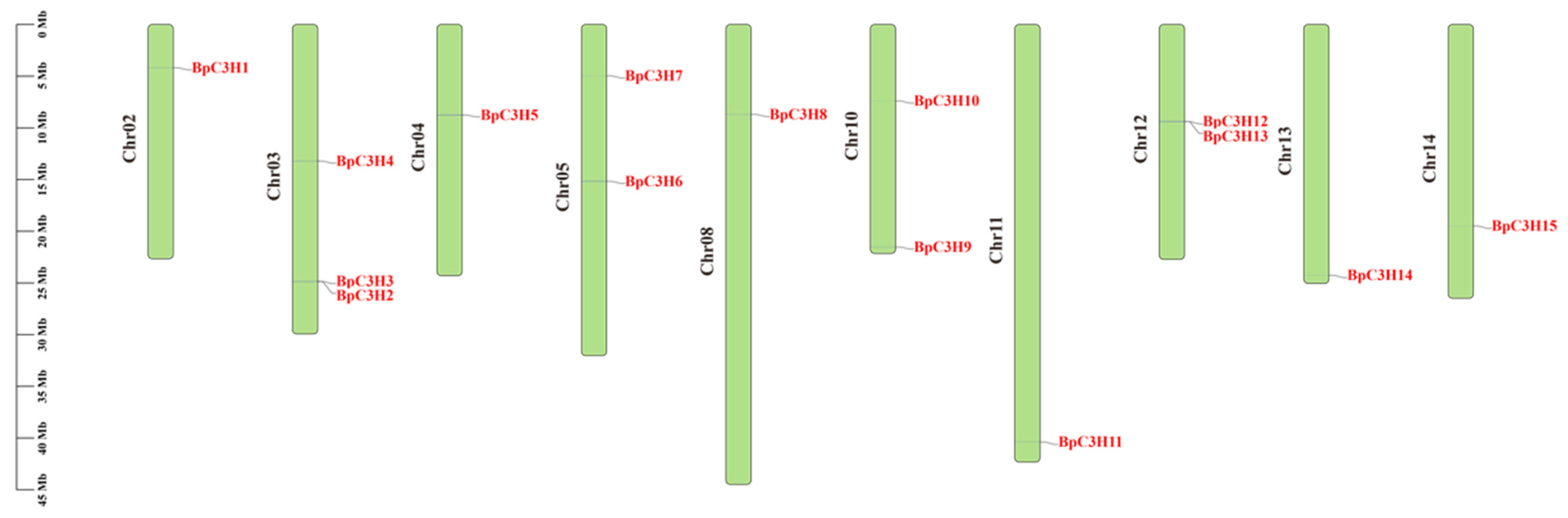
In this study, candidate C3H family members in Betula platyphylla were identified through combined HMMER and BLASTp searches against the birch protein database. After removing redundant candidate sequences and verifying the presence of the conserved C3H domain using the CDD database, a total of 15 BpC3Hs were identified. These genes were distributed across 10 chromosomes (Figure 1), with Chromosome 3 harboring the most members (BpC3H2, -3, and -4), while the remaining chromosomes contain only one or two BpC3Hs each.
The physiochemical properties of these 15 BpC3Hs were analyzed, and the results are shown in Table 1. The number of amino acids of BpC3Hs ranged from 202 to 2115aa, and their molecular weight ranged from 21,591.82 to 235,088.7. Isoelectric point analysis showed that under physiological conditions (pH ≈ 7.4), most BpC3Hs (11 out of 15) were positively charged. Three proteins (BpC3H2, -10, -12) were negatively charged. One protein (BpC3H1) had an isoelectric point close to 7.4, indicating a nearly neutral charge state. The grand average of hydropathicity (GRAVY) was negative (minimum −0.89, maximum −0.11), indicating that all BpC3Hs are overall hydrophilic. Subcellular localization prediction showed that all BpC3Hs were localized in the nucleus.

2.2. Phylogenetic Relationships and Gene Structure Analysis of BpC3Hs

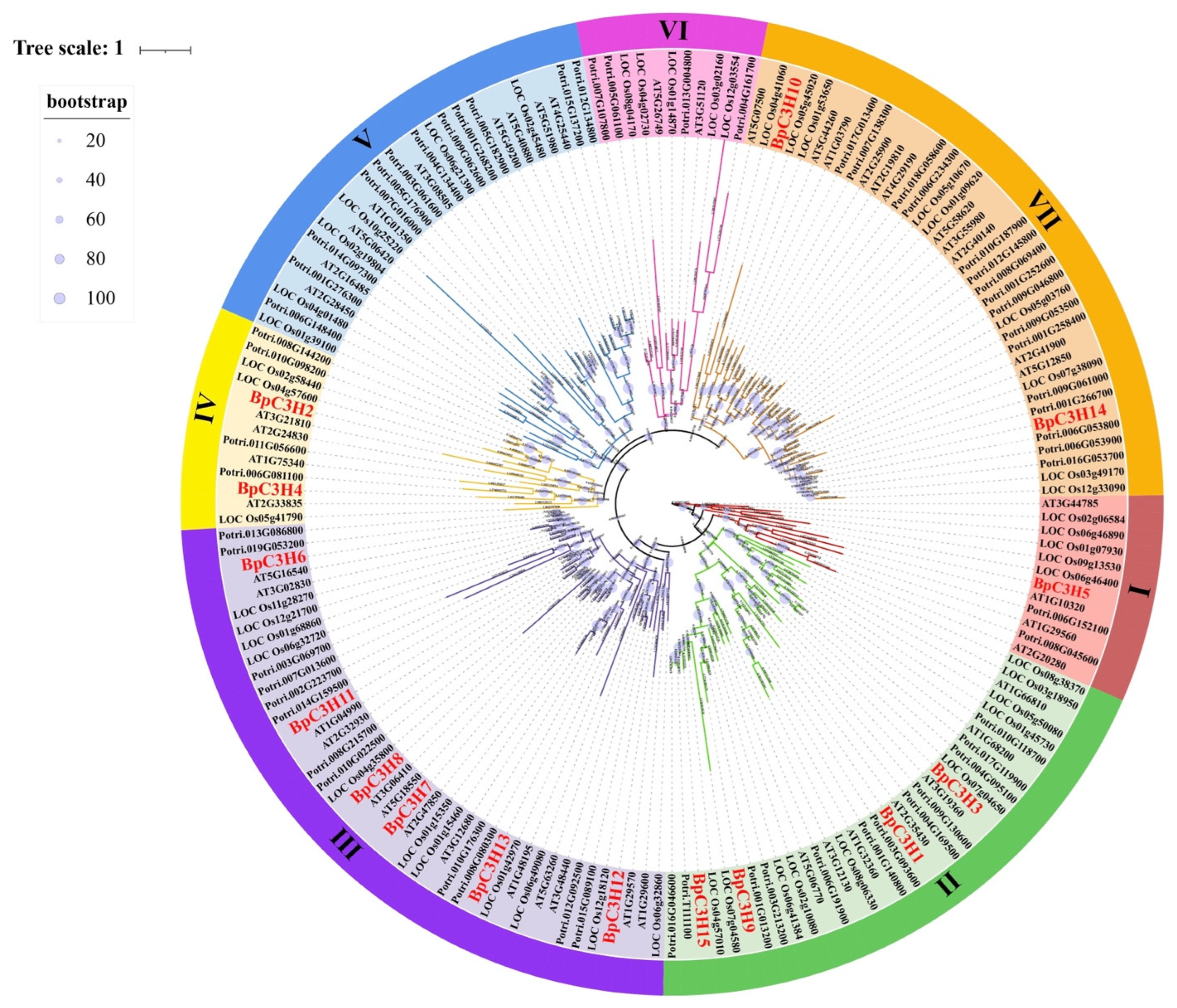
A phylogenetic tree of C3H family members from birch (Betula platyphylla), Arabidopsis thaliana, rice (Oryza sativa), and poplar (Populus trichocarpa) was constructed (Figure 2). The results showed that these members could be divided into seven subgroups. In Subgroup I, BpC3H5 clustered closely with AT1G10320, AT1G29560, and AT2G20280. In Subgroup II, BpC3H3 was closely related to AT3G19360, while BpC3H1 clustered with AT1G32360, and BpC3H9 and BpC3H15 with AT3G2170 and AT5G06770. In Subgroup IV, BpC3H4 clustered with AT1G75340, and BpC3H2 with AT3G21810 and AT2G24830. In Subgroup VII, BpC3H10 was closely related to AT5G07500, and BpC3H14 to AT5G12850 and AT2G41900. The remaining BpC3Hs were classified into Subgroup III, which contained the largest number of members (six in total).
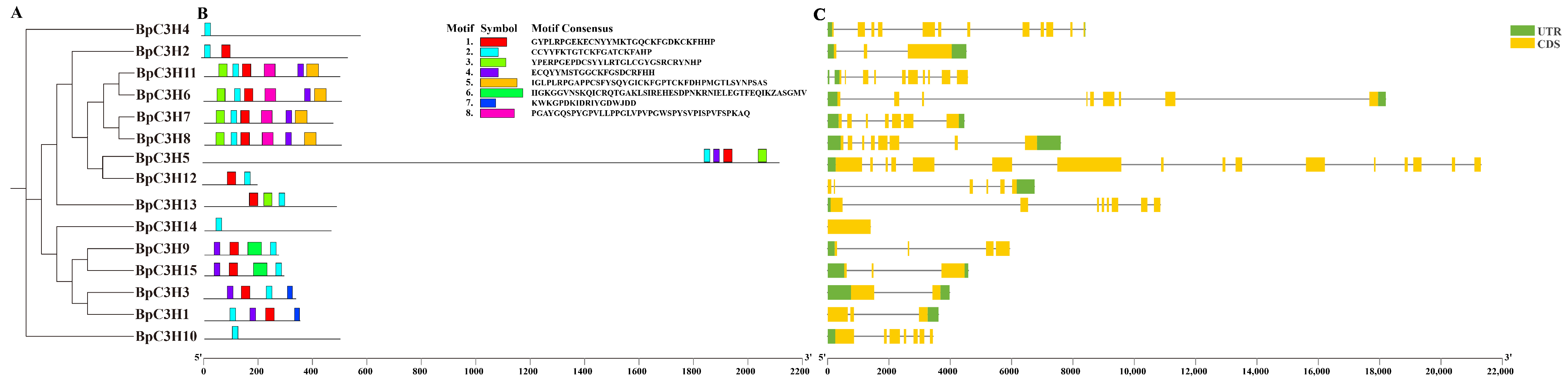
To further study the sequence characteristics of BpC3Hs, a phylogenetic tree was constructed based on the full-length sequences (Figure 3A), and the structural characteristics were visualized by combining the results of gene structure and conserved motif analyses. The number of conserved motifs was set to 8. The results showed that motif 2 was present in all family members, while motif 1 was absent in BpC3H4, -10 and -14. The structures of transcription factors of the same type were similar, such as BpC3H6, -7, -8 and -11 (Figure 3B). The results of gene structure analysis showed that 6 members of the family lacked 3′ UTR and 3 lacked 5′ UTR (Figure 3C). The structure of BpC3H14 was highly compact, consisting of only one exon without introns and UTRs. BpC3H6 and BpC3H13 contained long introns (>5 kb). The motif sequences are listed in Table S1.

2.3. Synteny Analysis of BpC3Hs

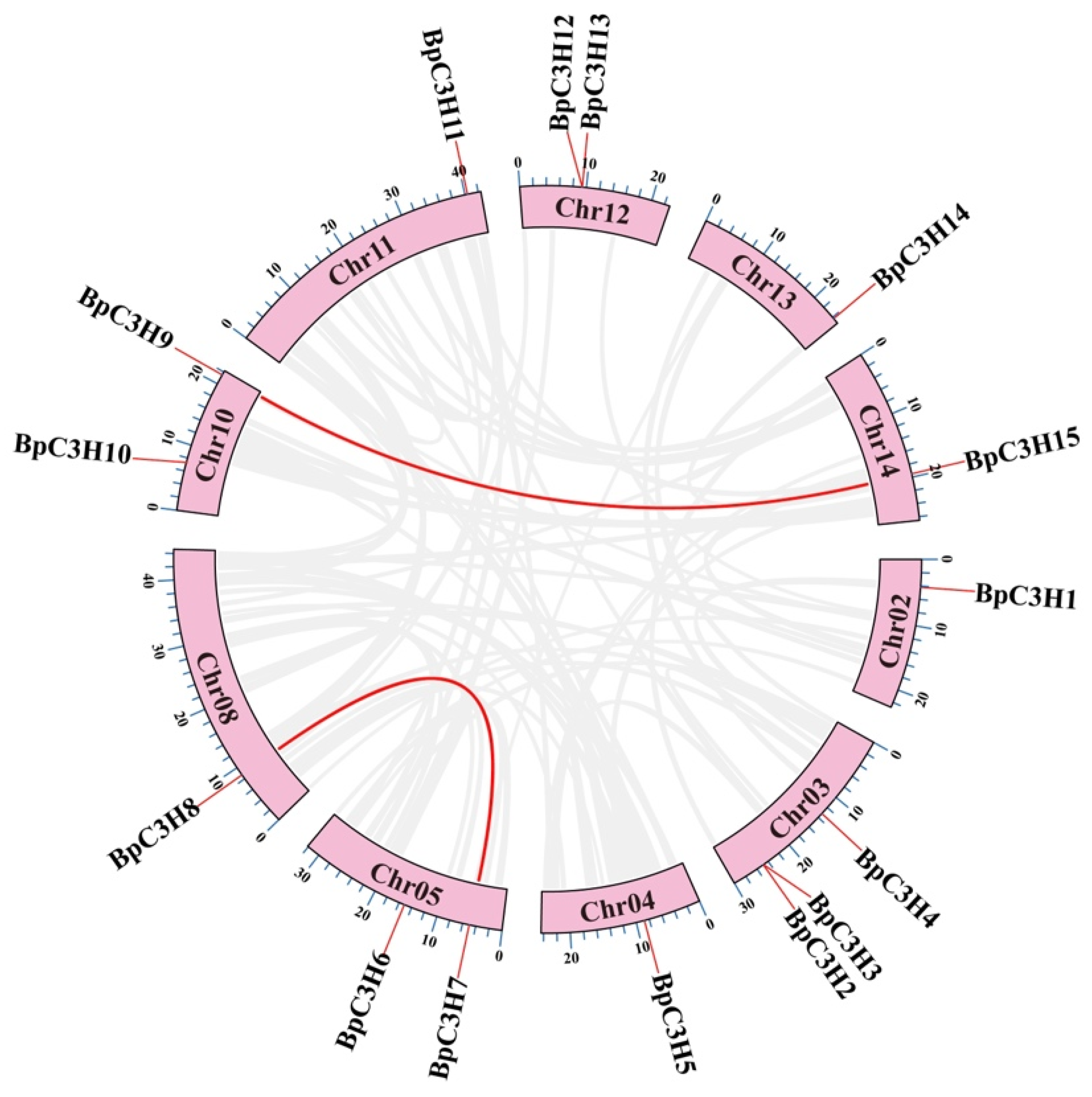
To explore the possible gene duplication events of BpC3Hs during evolution, the intraspecies collinearity was analyzed (Figure 4). Two collinear gene pairs were identified: BpC3H9-BpC3H15 and BpC3H8-BpC3H7. In addition, pairwise Ka/Ks analysis among BpC3Hs retained 57 gene pairs with valid estimates after excluding comparisons containing NaN values (Table S2). All retained gene pairs showed Ka/Ks values lower than 1.0, suggesting that the BpC3H family has mainly undergone purifying selection.
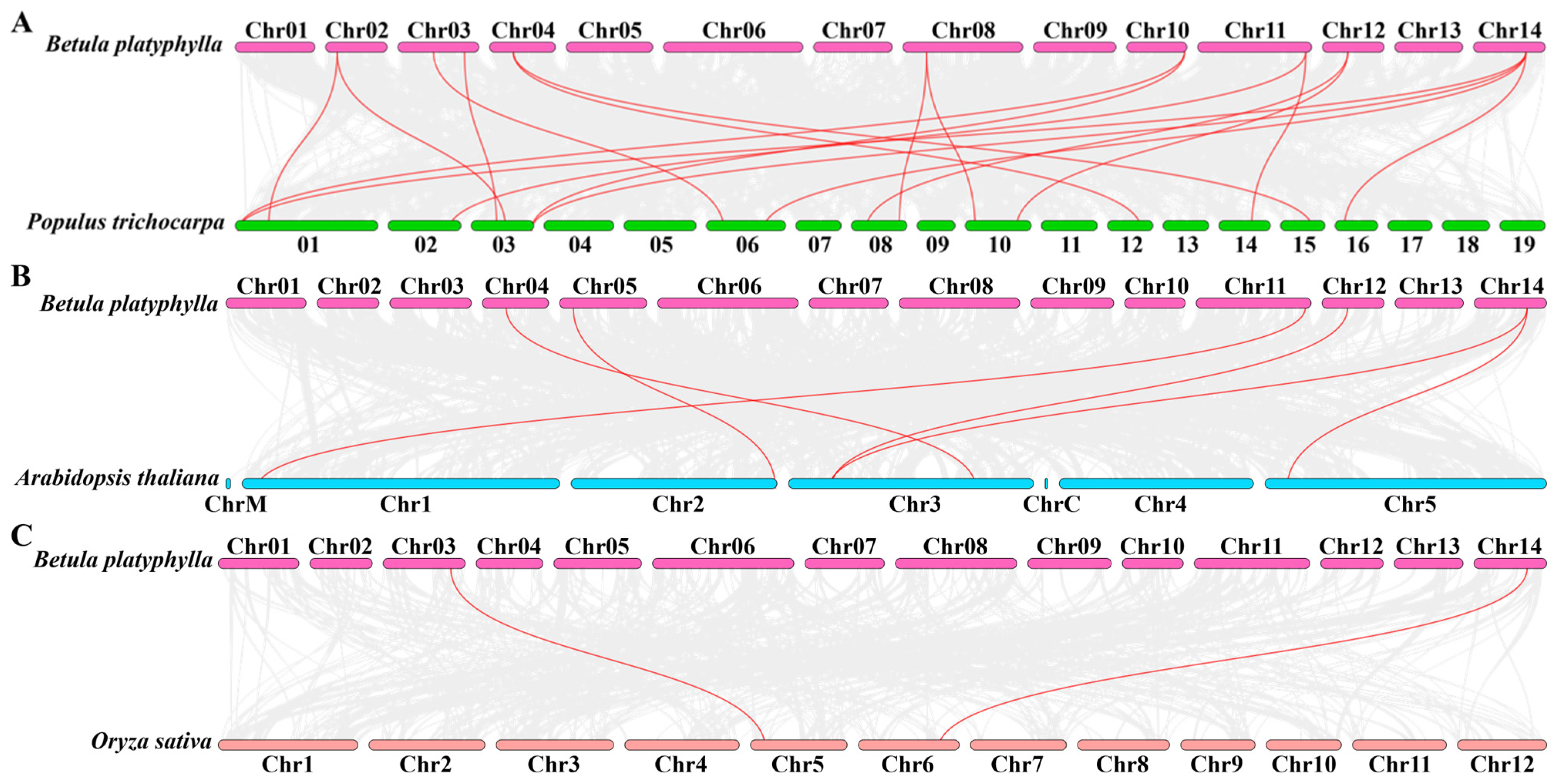
To investigate the duplication and evolutionary history of the BpC3H gene family, comparative synteny maps between birch and poplar, Arabidopsis and rice were constructed (Figure 5). The number of collinear gene pairs between birch and poplar was the highest (18 pairs), significantly exceeding those between birch and Arabidopsis (6 pairs) and rice (2 pairs). Notably, BpC3H15 had the highest number of syntenic homologs (7) across the three species and was the only gene showing collinearity with all of them. Detailed information on these syntenic gene pairs is provided in Tables S3–S5.

2.4. Cis-Acting Element Analysis in the Promoter Regions of BpC3Hs

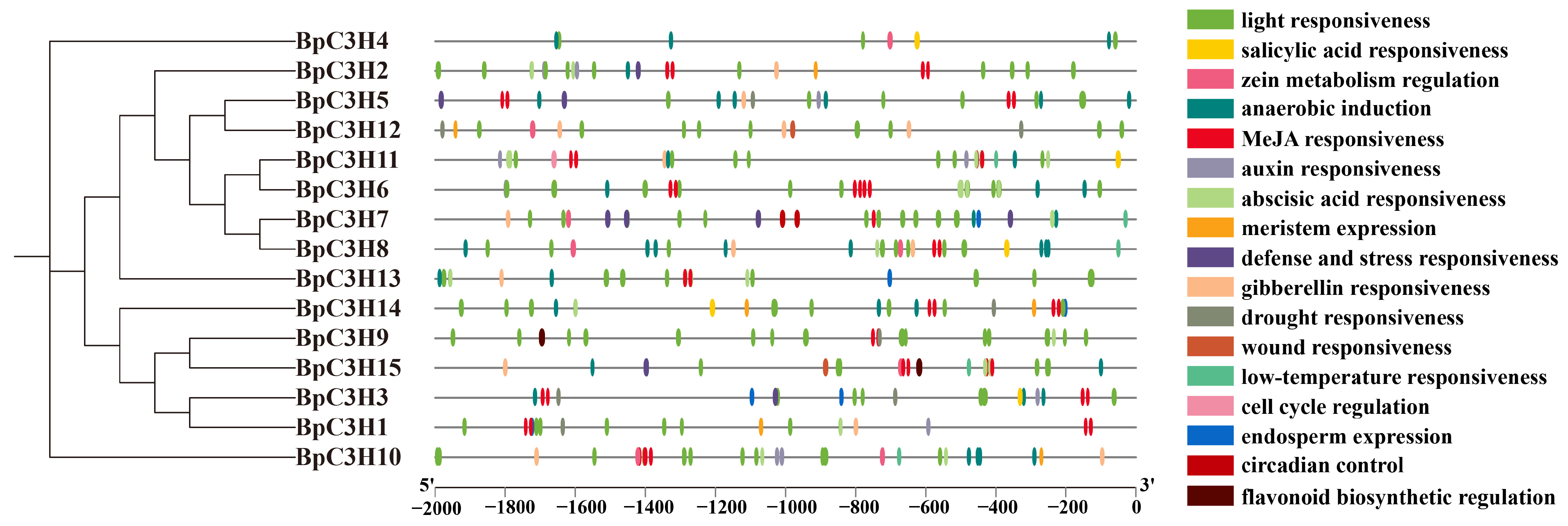
A total of 17 cis-acting elements were identified from the 2000 bp region upstream of the CDS of BpC3Hs (Figure 6). These elements were classified into three categories:
(1)
Stress response: Anaerobic induction, drought response, low-temperature response, wound responsiveness, defense and stress response.
(2)
Plant hormone signals: Abscisic acid responsiveness, salicylic acid responsiveness, MeJA responsiveness, auxin responsiveness, gibberellin responsiveness.
(3)
Growth and development: Light responsiveness, endosperm expression, meristem expression, cell cycle regulation, zein metabolism regulation, flavonoid biosynthesis regulation, circadian rhythm control.
Among them, light-responsive elements, anaerobic induction-responsive elements, MeJA-responsive elements, ABA-responsive elements, and GA-responsive elements were the most frequent. These genes are likely involved in both abiotic stress responses and the regulation of growth and development. The locations of these elements are shown in Table S6.

2.5. Expression Patterns of BpC3Hs in Male Catkin Development Stages

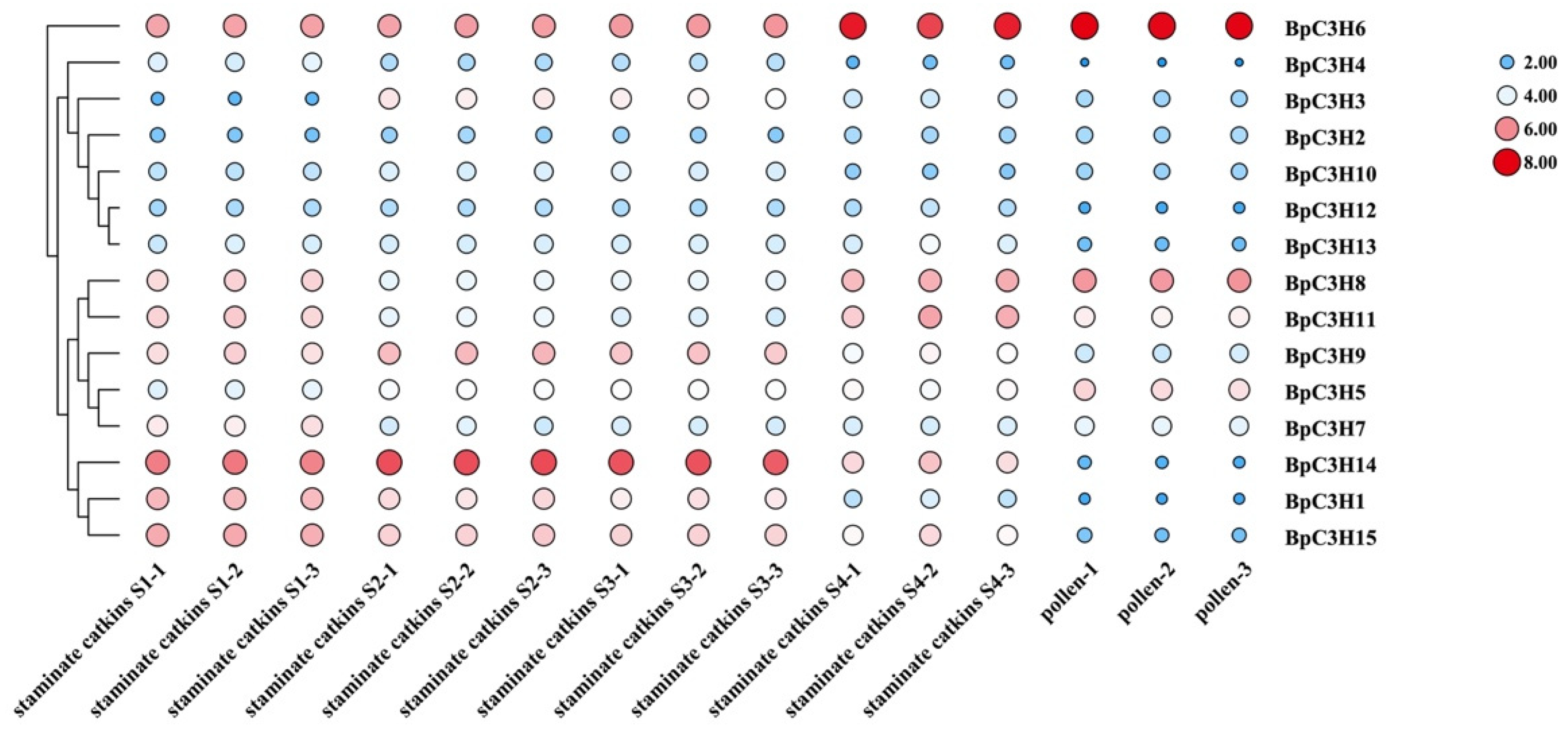
To explore the expression characteristics of BpC3Hs in male reproductive development, transcriptome data were analyzed across different stages of male inflorescence development: S1 (stamen primordium formation stage), S2 (organ differentiation stage), S3 (meiosis stage), S4 (mononuclear pollen grain stage), and mature pollen stage. The results showed that most genes exhibited significant expression changes throughout development (Figure 7, Table S7). At the S1 stage, BpC3H1, -4, -7, and -15 exhibited the highest expression levels, which gradually declined and reached a minimum at the pollen stage. BpC3H3, -9, -10, and -14 peaked during the S2 and S3 stages. BpC3H6, -8, and -11 showed the strongest expression at the S4 stage, while BpC3H5, -6, and -8 were most highly expressed during the pollen stage. The expression of BpC3H12 and -13 remained stable across the first four stages but decreased at the pollen stage. Notably, BpC3H8 and -11 showed high expression at S1, declined during S2 and S3, and increased again at S4. BpC3H6 exhibited high expression at all stages, with peaks at both S4 and the pollen stage.

2.6. Expression Patterns of BpC3Hs Under Salt, Cold, Heat, and Drought Stress

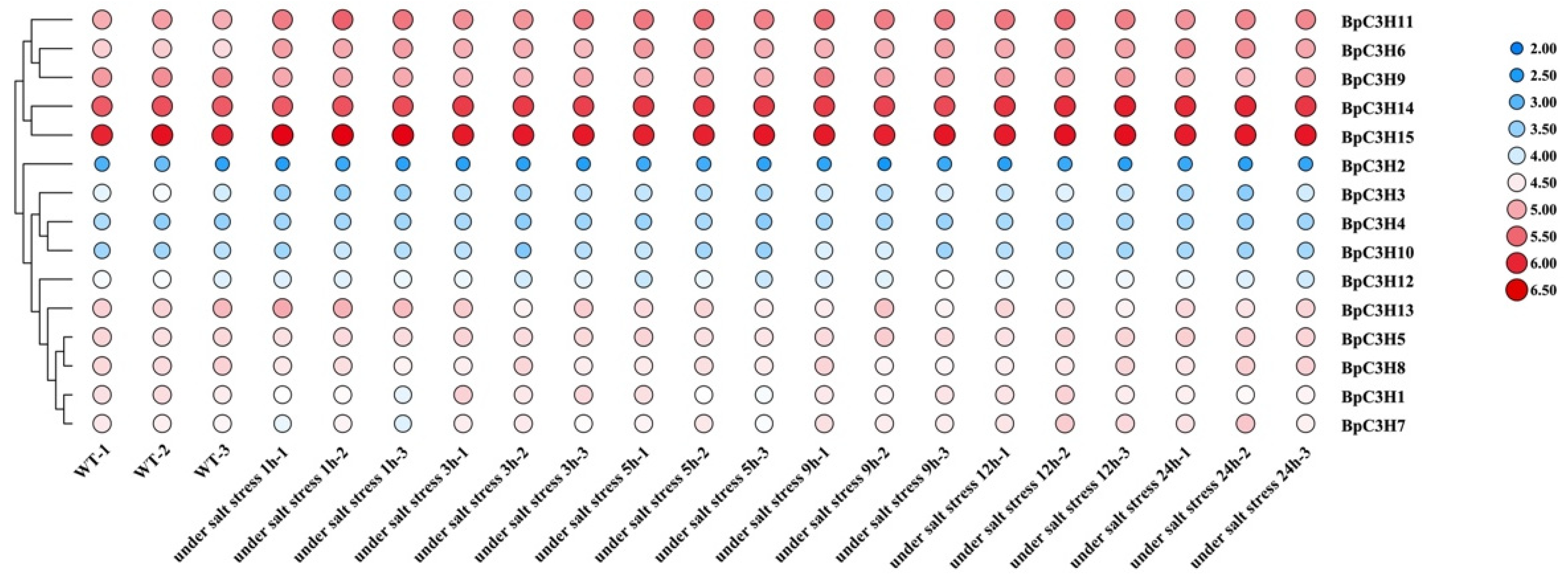
To explore the role of BpC3Hs in response to salt stress, their expression patterns in birch leaves were analyzed based on publicly available transcriptome data (Figure 8, Table S8). The results showed that about half of BpC3Hs responded to salt stress. The expression levels of BpC3H6, -11, and -14 were upregulated during salt stress, while BpC3H9 and -3 showed a decreasing trend. In addition, BpC3H13 reached its peak expression at 1 h after treatment and then declined. In contrast, BpC3H1 and BpC3H7 showed decreased expression at 1 h, followed by a gradual increase.
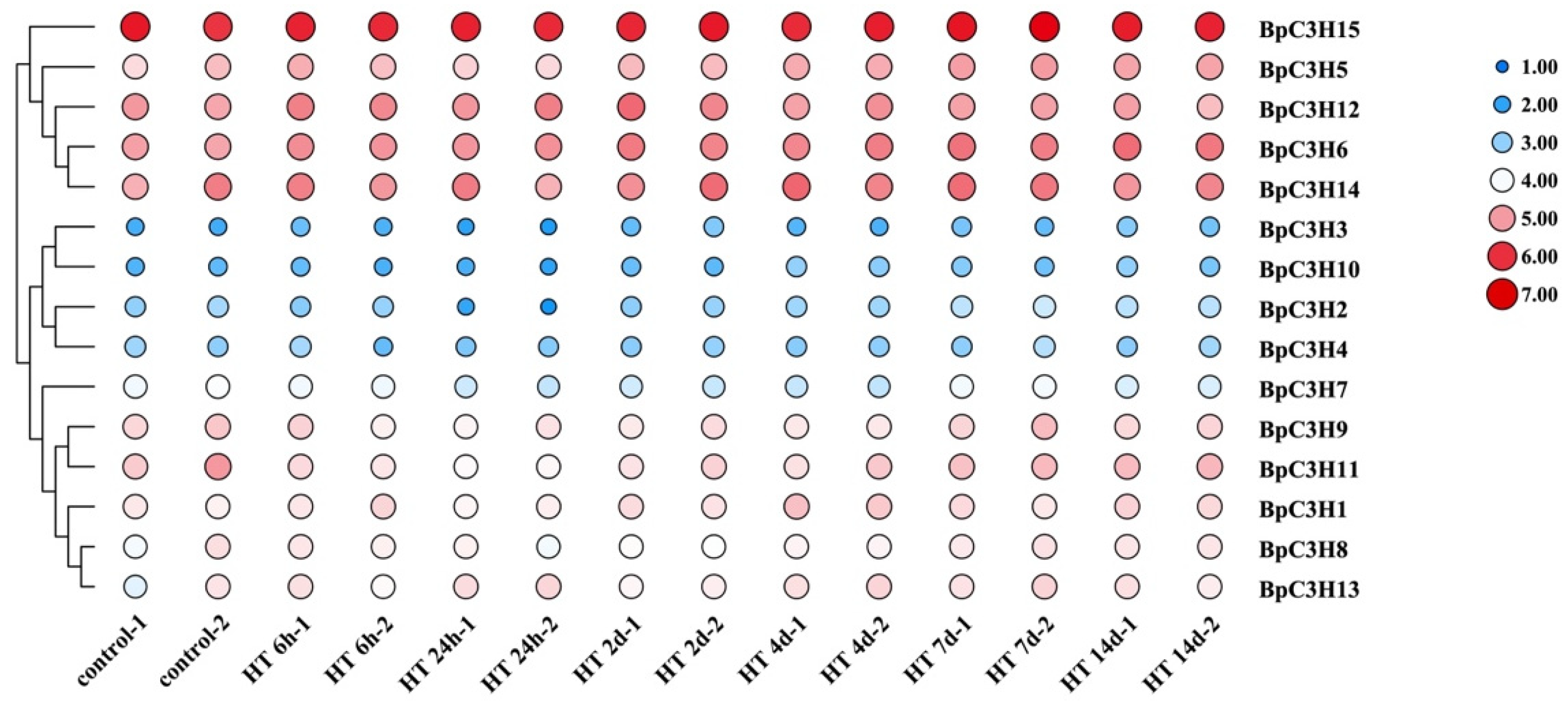
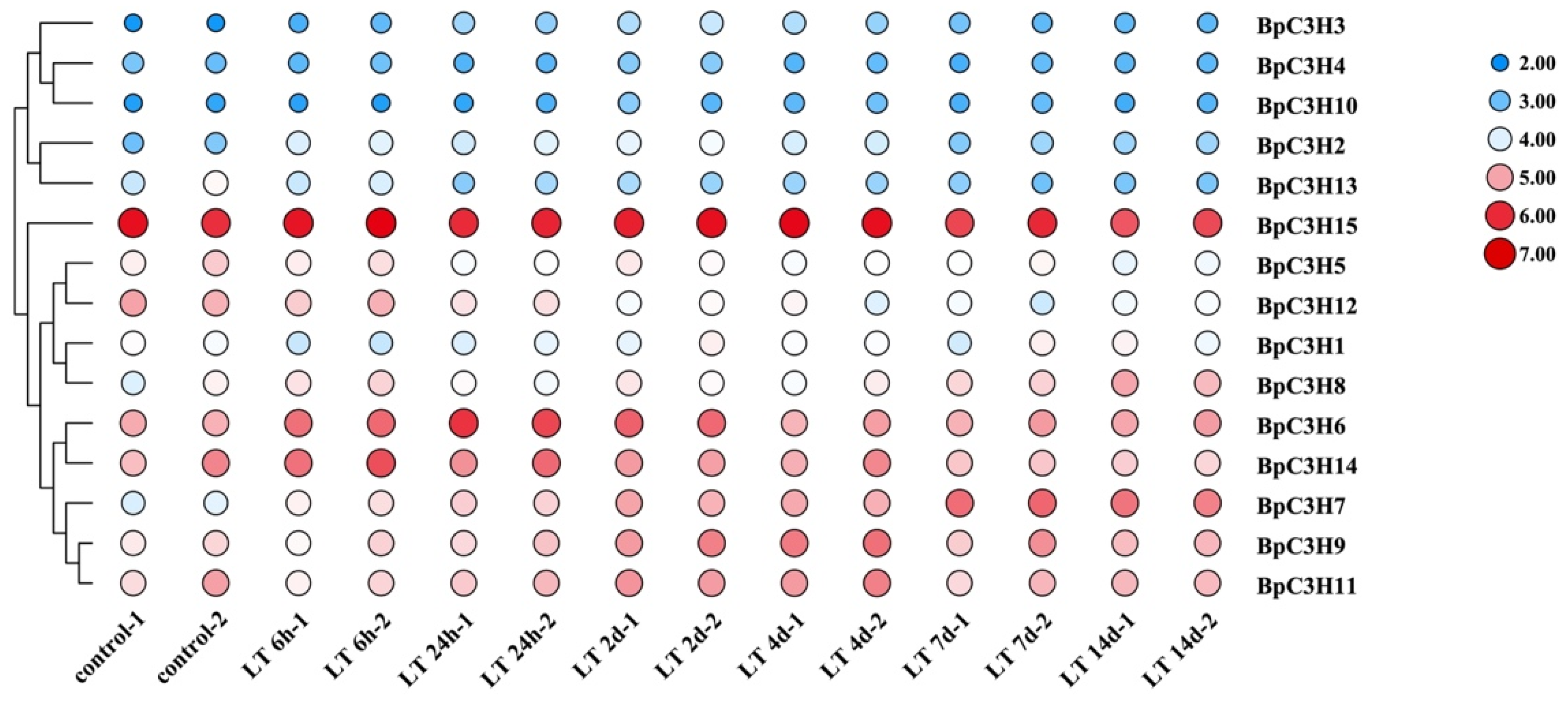
To further explore the expression patterns of BpC3Hs under heat and cold stress, transcriptome data from birch leaves were analyzed. The results showed that BpC3Hs exhibited diverse expression patterns under heat stress (Figure 9, Table S9). BpC3H1, -5, and -6 were upregulated under heat stress. BpC3H12 showed high expression from 6 h to 2 days and then gradually declined. BpC3H3, -2, -7, -9, -10, and -11 were downregulated at the early stage of heat stress, followed by a return to near-control levels. The remaining genes showed no obvious response to heat stress. For cold stress, the expression of most BpC3Hs peaked at different time points of cold stress treatment (Figure 10, Table S10). BpC3H14 reached its peak expression at 6 h, BpC3H6 at 24 h, BpC3H2 and -3 at 2 days, BpC3H9 and -11 at 4 days, and BpC3H7 at 7 days. Notably, BpC3H8 showed increased expression after 6 h of treatment, declined from 24 h to 4 days, and increased again from 7 to 14 days, reaching the highest level at day 14. BpC3H13, -5, and -12 exhibited a continuous decrease in expression over time under cold stress. BpC3H1 was downregulated at the early stage and gradually recovered. BpC3H15 showed decreased expression at day 14, with little change during other time points. The remaining genes remained relatively stable throughout the cold stress treatment.
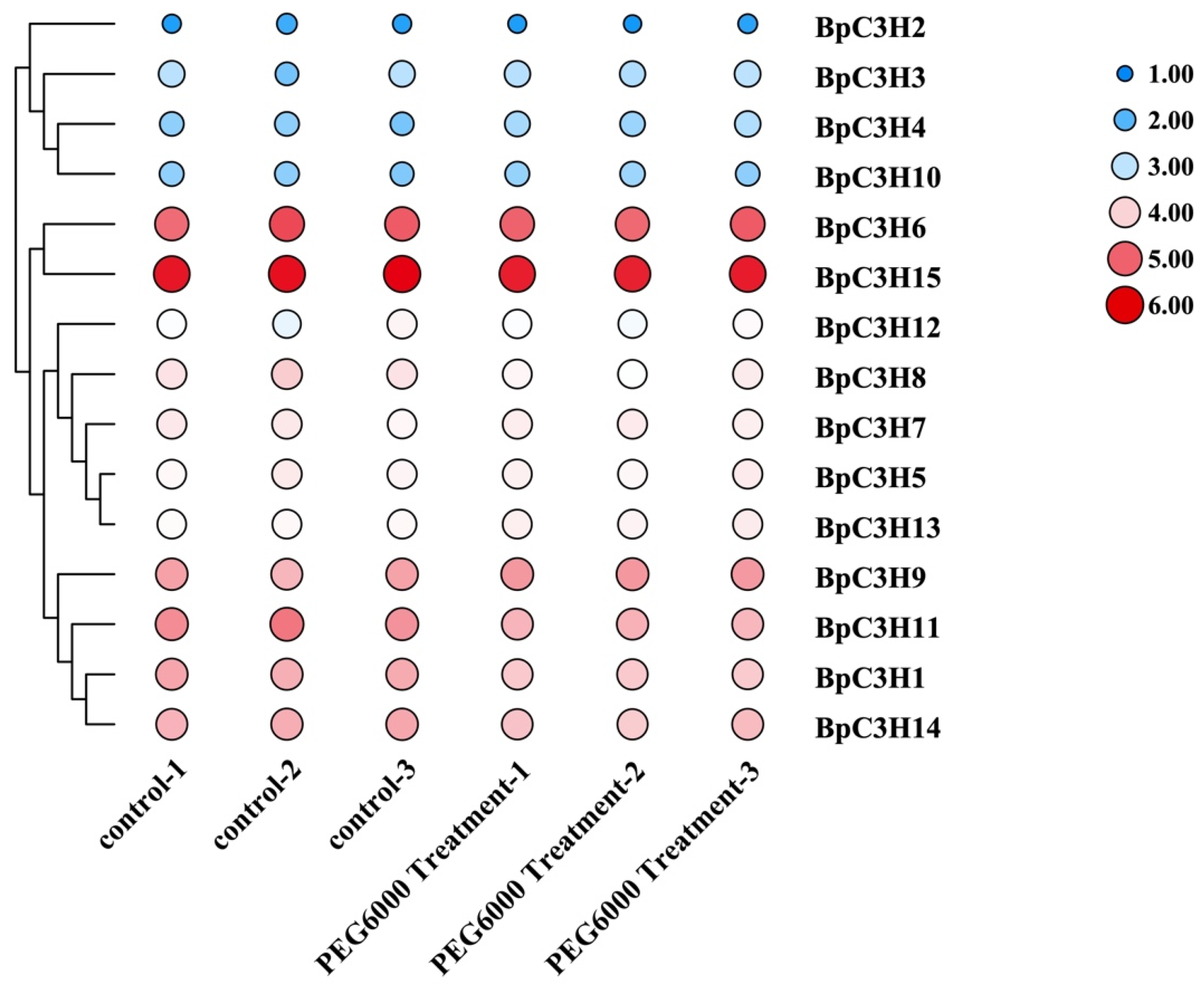
Based on transcriptome data, the expression patterns of BpC3Hs in the leaves of two-month-old birch plants treated with 20% PEG6000 for 12 h were analyzed (Figure 11, Table S11). The results showed that the expression levels of most BpC3Hs were not significantly affected under drought stress. Some genes were slightly downregulated—BpC3H8, -11, -1, and -14—while BpC3H13 and -9 were slightly upregulated.

2.7. Expression Patterns of BpC3Hs Under Light and Dark Treatments

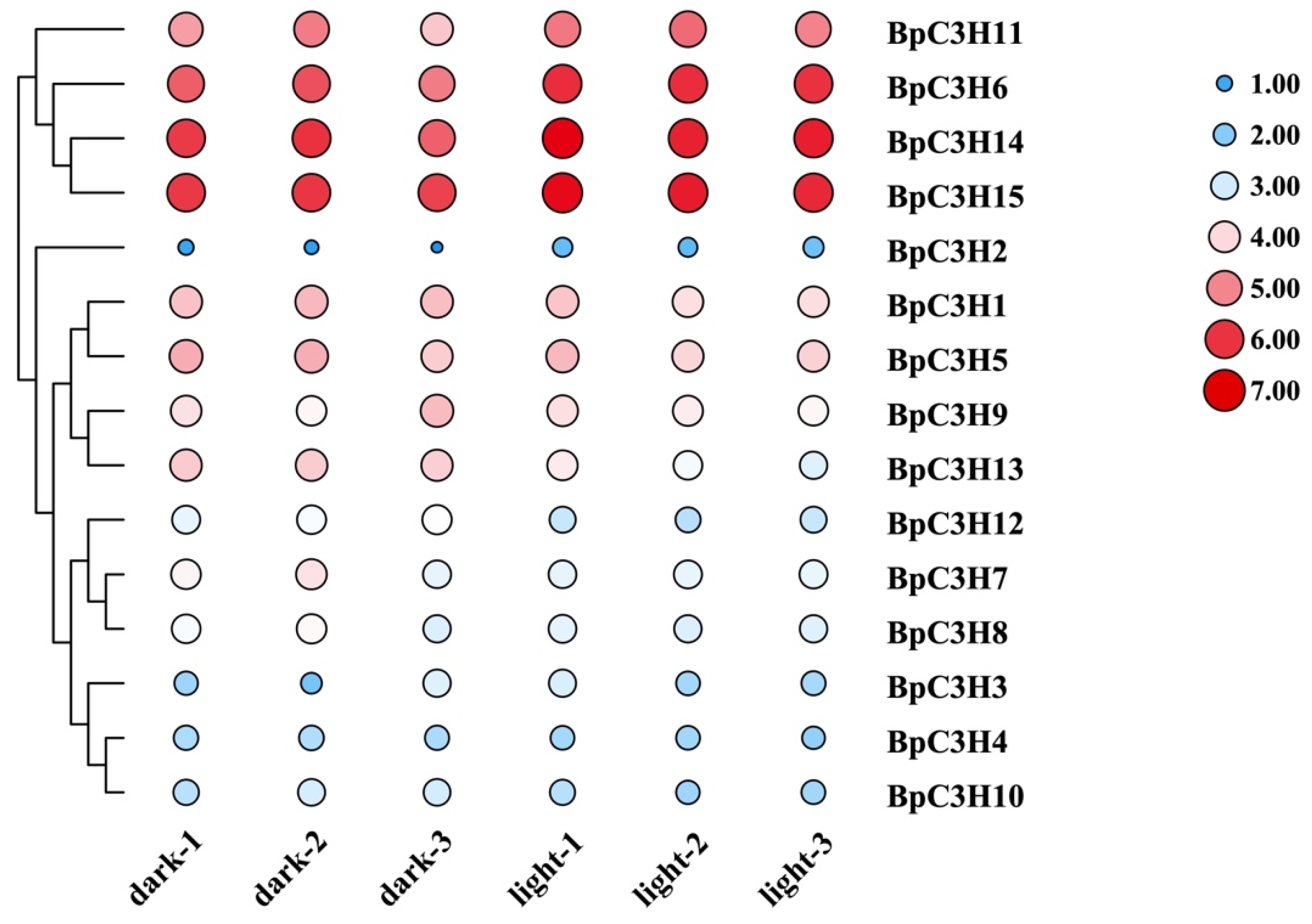
Transcriptome analysis showed that there were significant differences in the expression of BpC3Hs under light or dark treatment (Figure 12, Table S12). BpC3H6, -14, and -15 exhibited the highest expression levels, while BpC3H1, -5, -9, -11, and -13 displayed moderate expression. The remaining genes were expressed at relatively low levels. BpC3H2, -6, -11, -14, and -15 were expressed at higher levels under light conditions, whereas BpC3H1, -10, -12, and -13 were expressed at higher levels in darkness. The other genes did not show significant difference between light and dark treatments.

2.8. Expression Patterns of BpC3Hs in Tension, Opposite, and Normal Wood

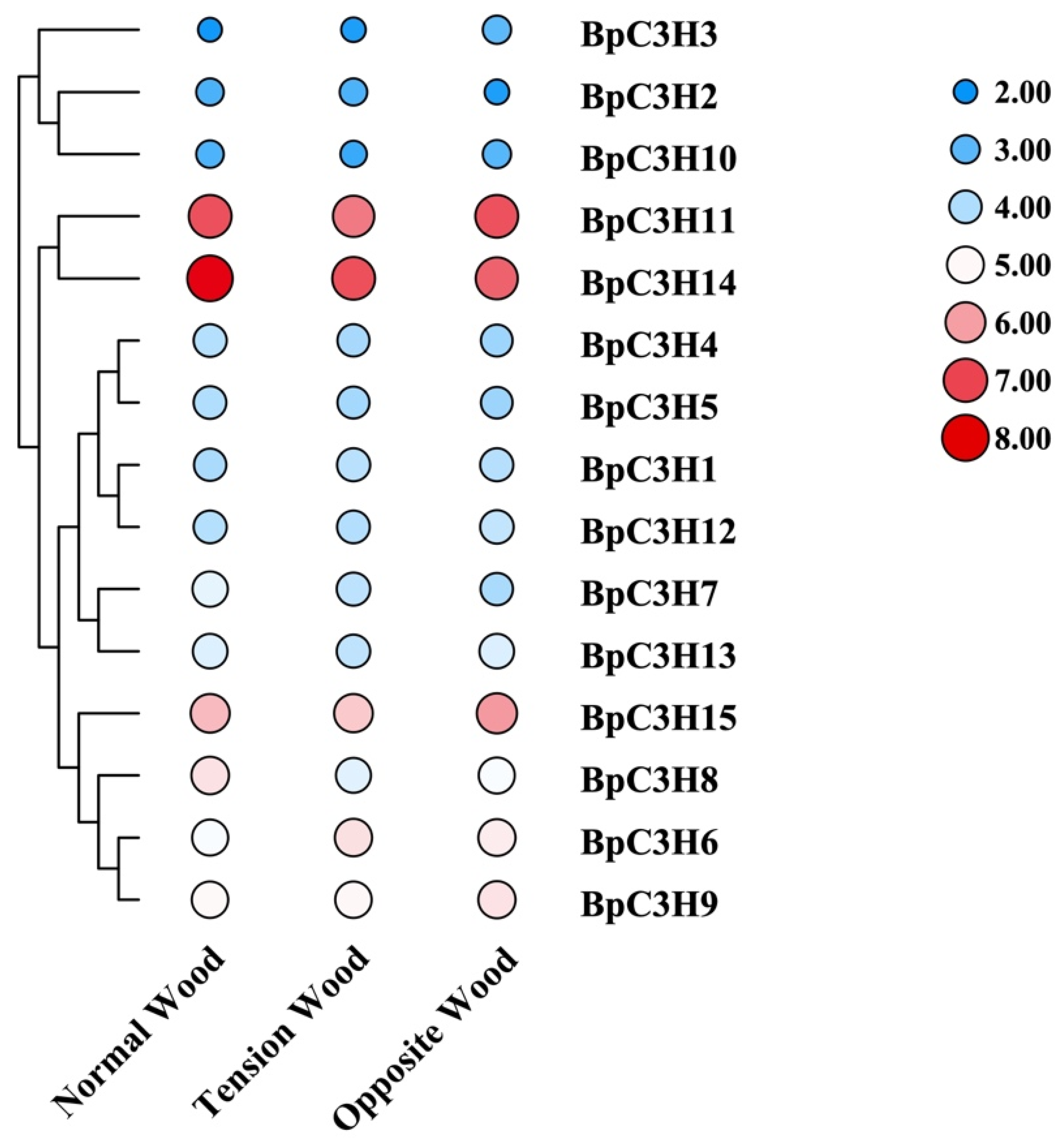
Based on transcriptome data, the expression levels of BpC3Hs in tension wood (TW), opposite wood (OW) and normal wood (NW) were analyzed (Figure 13, Table S13). BpC3H11 and -14 were highly expressed, BpC3H6, -8, -9, and -15 showed moderate expression, and the remaining genes had relatively low expression, with BpC3H2, -3, and -10 being the lowest. BpC3H6 showed higher expression in both TW and OW. BpC3H9 showed higher expression only in OW. BpC3H15 showed lower expression in TW and higher expression in OW. BpC3H4, -5, -7, -8, and -14 showed lower expression in both TW and OW. BpC3H11 and -13 showed lower expression only in TW. BpC3H1 and -12 exhibited similar expression patterns across all three wood types.

3. Discussion

Previous studies have confirmed that the C3H gene family plays an important regulatory role in many biological processes, such as abiotic stress response, male inflorescence and pollen development, light signal regulation and secondary growth of xylem. Such functions have been reported in Arabidopsis, poplar, rice, cotton, lily and other plants. In this study, 15 BpC3Hs were identified in the whole genome of birch through a combined screening using BLASTp, HMMER, and CDD. A total of 12 (80%) BpC3Hs were found to contain at least two CCCH motifs, which is similar to the proportion observed in poplar, where 69.2% of C3H genes contain two or more CCCH motifs [45]. The motif C-X7-8-C-X5-C-X3-H was found in all BpC3Hs and may represent the ancestor of other CCCH motifs [61]. Subcellular localization prediction showed that all BpC3Hs were predicted to be localized in the nucleus. This subcellular localization pattern is also highly conserved in other plants. For example, C3H family members in poplar have also been reported to localize in the nucleus [45]. Similarly, most C3H proteins in Arabidopsis and rice are localized in the nucleus [41].
Phylogenetic analysis showed that the C3H members from birch, poplar, Arabidopsis, and rice were classified into seven subgroups. Subgroups 5 and 6 did not contain any BpC3Hs. The number of BpC3Hs in subgroups 1, 2, 3, 4, and 7 was 1, 4, 6, 2, and 2, respectively. The phylogenetic relationships of most BpC3H members were closer to those of Arabidopsis and poplar, and more distant from rice. This may be attributed to the fact that birch, Arabidopsis, and poplar are all dicotyledonous plants with higher sequence homology, whereas rice is a monocot with a more distant evolutionary relationship. This distribution pattern suggests that the birch C3H family has retained representative members of multiple evolutionary lineages, while also showing a certain degree of lineage-specific differentiation. In addition, as the sole member of the first subclass, BpC3H5 may have undergone significant evolutionary divergence. The results of conserved domains showed that the protein sequence encoded by this gene was significantly longer than that of other members of the family, and most regions did not match any known conserved structures. This abnormal motif distribution may reflect its non-conserved nature or indicate the presence of functional regions that have not yet been annotated, suggesting that it may play a unique role. AT1G10320, which belongs to the same subclass as BpC3H5, has been shown to be involved in the formation of apical structure and light morphogenesis in Arabidopsis embryos. When the gene was inhibited, it showed cotyledon deletion and apical dysplasia, and significantly downregulated the expression of several photosynthesis-related genes [62]. In addition, in the third subclass, BpC3H6, -7, -8 and -11 exhibited highly similar motif compositions, all containing motif 5, which is absent in other BpC3H members. This suggests that they may be functionally different from other members. Sequence analysis revealed that BpC3H members within the same subclass shared similar motif distributions, although their exon–intron structures differed significantly. A similar pattern has also been observed in species such as barley (Hordeum vulgare L.), potato (Solanum tuberosum L.), and chili pepper (Capsicum annuum L.) [36,46,54]. Collinearity analysis is often used to reveal potential duplication events and evolutionary conservation in the genome. This study identified two collinear gene pairs within the BpC3H family: BpC3H9BpC3H15 and BpC3H7BpC3H8. They were similar in gene structure and conserved motifs, and had a collinear relationship, indicating that they may be generated by gene duplication events and have functional redundancy. 18, 6 and 2 collinear gene pairs were identified between BpC3Hs and PtC3Hs, AtC3Hs and OsC3Hs, respectively. There is greater collinearity between the C3H genes of birch and poplar, likely due to their closer evolutionary relationship as forest species. On chromosome 14 of birch, BpC3H15 showed the highest number of collinear gene pairs with C3H genes from the other three plant species, indicating that it is highly conserved in the evolution of the C3H family. The relatively small number of BpC3Hs and the limited number of intraspecific collinear gene pairs detected in this study may suggest that the C3H family has undergone limited expansion in birch or experienced gene loss after duplication during evolution. Moreover, the Ka/Ks values of all retained gene pairs were lower than 1, indicating that these duplicated genes were mainly subject to purifying selection.
A variety of cis-acting elements were identified in the BpC3H promoter region, including stress-responsive elements (e.g., hypoxia induction, drought, low-temperature, and wounding responses) and plant hormone signaling elements (e.g., ABA, MeJA, GA, IAA, and SA response elements), as well as growth and development-related elements such as light responsiveness, meristem-specific expression, regulation of flavonoid biosynthesis, and circadian rhythm control. These results suggest that BpC3Hs may be involved in various developmental processes and stress responses of birch. Transcriptome analysis revealed that most BpC3Hs were responsive to salt, heat, cold, and drought stress, with the most prominent changes observed under cold stress. During male inflorescence development, different BpC3Hs exhibited stage-specific expression peaks. For example, BpC3H14 showed the highest expression at the S2–S3 stage, while BpC3H6 peaked at the S4–pollen stage, suggesting that this family may be involved in the temporal development of male reproductive organs. BpC3Hs exhibited differential expression under light and dark treatments. A total of 9 members had different expression levels under the two conditions, possibly due to the high number of light-responsive elements in their promoter regions. This suggests that the gene family may be involved in light perception and signaling regulation. In addition, compared with normal wood, most BpC3Hs exhibited distinct expression patterns in tension wood or opposite wood, suggesting their possible association with wood formation and mechanical stress response. In conclusion, BpC3Hs may play diverse roles in stress responses, developmental regulation, light signaling, and wood formation. This reflects the characteristics of “promiscuity”, whereby a single transcription factor can intervene in multiple signaling pathways and participate in the regulation of a variety of physiological processes [63].
This study suggests that BpC3H transcription factors may be associated with multiple biological processes in birch, including stress responses, catkin development, light signaling, and wood formation. This not only expands the functional understanding of C3H zinc finger proteins in forest trees, but also provides a basis for subsequent functional verification and molecular breeding research. However, as this study is mainly based on genome-wide identification and publicly available transcriptome data, the lack of direct experimental validation, such as qRT-PCR or functional assays, remains a limitation. Further experimental studies will be needed to verify the specific biological functions of BpC3Hs in birch. As extreme climatic events become more frequent, understanding the complex regulatory mechanisms of these transcription factors is essential for improving tree stress tolerance.

4. Materials and Methods

4.1. Identification and Physicochemical Characterization of the C3H Gene Family in Betula platyphylla

A three-step strategy was employed to identify C3H family members in Betula platyphylla. First, the Hidden Markov Model (HMM) profile of the C3H domain (PF00642) was retrieved from the Pfam database (http://pfam.xfam.org/, accessed on 18 May 2025), and putative BpC3H family members were identified by searching the birch protein database from Phytozome v14 (https://phytozome.jgi.doe.gov/pz/portal.html, accessed on 18 May 2025) using HMMER v3.1 with default parameters. Second, the amino acid sequences of Arabidopsis thaliana C3H proteins were downloaded from the PlantTFDB v5.0 database (https://planttfdb.gao-lab.org/, accessed on 22 May 2025) and used as query sequences for BLASTp (version 2.17.0) searches against the birch protein database, with an E-value cutoff of 1 × 10⁻⁵ and other parameters set to default. Finally, the conserved domains of all candidate proteins were verified using the CDD database (https://www.ncbi.nlm.nih.gov/Structure/bwrpsb/bwrpsb.cgi, accessed on 24 May 2025) with an E-value threshold of 1 × 10⁻⁵, and only proteins containing the conserved C3H domain were retained as BpC3H family members. Physicochemical properties of the BpC3Hs, including molecular weight, isoelectric point, aromaticity, instability index, aliphatic index, GRAVY (Grand Average of Hydropathicity), and subcellular localization, were analyzed using the ExPASy tool (http://www.expasy.org/, accessed on 30 May 2025). Chromosomal location information of the BpC3Hs was obtained from the Phytozome database, and the results were visualized using Tbtools-II (v2.329).

4.2. Gene Structure and Conserved Motif Analysis

The exon–intron structure of the BpC3Hs was analyzed using the online tool GSDS 2.0 (http://gsds.cbi.pku.edu.cn/, accessed on 6 June 2025). Conserved motifs within the BpC3Hs were predicted using MEME Suite v5.0 (http://meme-suite.org/, accessed on 12 June 2025). The maximum number of motifs was set to 8, the motif width ranged from 16 to 50 amino acids, and the remaining parameters were kept at their default settings.

4.3. Phylogenetic Analysis of the C3H Gene Family

Protein sequence data of birch (Betula platyphylla), Arabidopsis (Arabidopsis thaliana), poplar (Populus trichocarpa), and rice (Oryza sativa) were retrieved from the Phytozome database. Multiple sequence alignment was performed using MUSCLE in Tbtools-II (v2.329). A phylogenetic tree of the C3H family members from these species was constructed using the Maximum Likelihood (ML) method, with automatic substitution model selection and 1000 bootstrap replicates.

4.4. Synteny Analysis and Calculation of Ka/Ks Values

The C3H gene sequences and corresponding GFF3 annotation files of birch, Arabidopsis, poplar, and rice were retrieved from the Phytozome database. Intraspecific synteny within birch and interspecific synteny between birch and each of the other three species (Arabidopsis, poplar, and rice) were analyzed using Tbtools-II (v2.329). Pairwise nonsynonymous (Ka) and synonymous (Ks) substitution rates among BpC3Hs were calculated, and only gene pairs with valid Ka, Ks, and Ka/Ks estimates were retained for further analysis.

4.5. Analysis of Cis-Acting Elements in Promoter Regions

The 2000 bp upstream sequences of the BpC3Hs were extracted from the birch genome using Tbtools-II (v2.329) based on the corresponding GFF3 annotation file, with only the upstream regions excluding the CDS retained, and these sequences were used to predict cis-acting regulatory elements via the PlantCARE database (http://bioinformatics.psb.ugent.be/webtools/plantcare/html/, accessed on 30 June 2025). The prediction results were visualized using Tbtools-II (v2.329).

4.6. Expression Analysis of BpC3Hs

Multiple publicly available transcriptome datasets of birch were downloaded from the NCBI database. The male catkin developmental transcriptome dataset (PRJNA994611) includes samples collected from birch grown under natural conditions, covering five developmental stages of male catkins (S1–S4 and mature pollen) [64]. Samples from each developmental stage were collected from three independent trees as biological replicates. The salt stress transcriptome dataset (PRJNA1269755) was generated from birch seedlings cultivated under controlled greenhouse conditions, followed by treatment with 200 mmol/L NaCl. Leaf tissues were harvested at seven time points: 0 h (control), 1 h, 3 h, 5 h, 9 h, 12 h, and 24 h [65]. Three biological replicates were included at each time point. The temperature stress dataset (PRJNA811313) comprises seedlings subjected to low (6 °C) and high (35 °C) temperature treatments. The first to fourth leaves were collected at six time points: 6 h, 24 h, 2 days, 4 days, 7 days, and 14 days [66]. Two biological replicates were analyzed for each condition, with each replicate consisting of a pool of 10 individual plants. The drought stress dataset (PRJNA779240) involved seedlings treated with 20% PEG6000 solution to simulate drought conditions, applied to the roots for 12 h, after which leaf tissues were harvested for transcriptome sequencing. Three biological replicates were included for this treatment. The light–dark treatment dataset (PRJNA759706) includes seedlings exposed to continuous light or continuous darkness for four consecutive days under greenhouse conditions, and leaf samples were collected for transcriptomic analysis [67]. Three biological replicates were included for each treatment. The tension wood xylem transcriptome dataset (PRJNA78683) was obtained from naturally grown trees. The stems were bent to approximately 45° to induce tension wood formation. After two weeks, xylem tissues were sampled from the tension wood (TW), opposite wood (OW), and normal wood (NW) regions [68]. TW and OW samples were derived from two bent trees, whereas NW samples were obtained from two control trees. RNA extracted from individual trees was pooled prior to library construction. FPKM expression values of BpC3H family members were extracted and visualized as a heatmap using Tbtools-II (v2.329).

5. Conclusions

In this study, 15 C3H transcription factors were identified in the genome of birch. Phylogenetic analysis revealed that the BpC3Hs could be divided into five subgroups, with members within the same subgroup exhibiting similar conserved motif compositions. Synteny analysis identified two pairs of duplicated genes within the birch genome, and 6, 2, and 18 collinear gene pairs between BpC3Hs and AtC3Hs, OsC3Hs, and PtC3Hs, respectively. Promoter analysis detected a variety of cis-acting elements associated with stress responses, hormone signaling, and developmental regulation. Transcriptome data further indicated that most BpC3Hs were responsive to high and low temperature, salt and drought stress, male catkin development, and light/dark treatments, and showed differential expression patterns in tension wood and opposite wood. This study not only expands the current understanding of the C3H gene family in birch, but also provides a theoretical foundation for future functional characterization and potential applications in stress-resilient tree breeding.

Supplementary Materials

The following supporting information can be downloaded at: https://www.mdpi.com/article/10.3390/f17040491/s1, Table S1: Predicted motif sequences of BpC3Hs; Table S2: Ka/Ks values for pairwise comparisons among BpC3Hs; Table S3: Synlinear C3Hs between Betula platyphylla and Populus trichocarpa; Table S4: Synlinear C3Hs between Betula platyphylla and Arabidopsis thaliana; Table S5: Synlinear C3Hs between Betula platyphylla and Oryza sativa; Table S6: Analysis of cis-acting elements in the promoters of BpC3Hs; Table S7: RNA-seq data of BpC3Hs in different stages of male catkin development; Table S8: RNA-seq data of BpC3Hs in birch leaves under salt stress; Table S9: RNA-seq data of BpC3Hs in birch leaves under heat stress; Table S10: RNA-seq data of BpC3Hs in birch leaves under cold stress; Table S11: RNA-seq data of BpC3Hs in birch leaves under drought stress; Table S12: RNA-seq data of BpC3Hs in birch leaves under light and dark treatments; Table S13: RNA-seq data of BpC3Hs in normal, tension, and opposite wood.

Author Contributions

Conceptualization, J.Y.; methodology, J.Y.; software, H.F.; validation, H.F. and J.Y.; formal analysis, H.F.; investigation, H.F.; data curation, H.F.; writing—original draft preparation, H.F.; writing—review and editing, J.Y.; visualization, H.F.; supervision, J.Y.; project administration, J.Y. All authors have read and agreed to the published version of the manuscript.

Funding

This research received no external funding.

Data Availability Statement

The transcriptome datasets analyzed in this study are publicly available from the NCBI database under BioProject accession numbers PRJNA994611, PRJNA1269755, PRJNA811313, PRJNA779240, PRJNA759706, and PRJNA78683.

Conflicts of Interest

The authors declare no conflicts of interest.

References

  1. Cramer, G.R.; Urano, K.; Delrot, S.; Pezzotti, M.; Shinozaki, K. Effects of abiotic stress on plants: A systems biology perspective. BMC Plant Biol. 2011, 11, 163. [Google Scholar] [CrossRef] [PubMed]
  2. Hatfield, J.L.; Prueger, J.H. Temperature extremes: Effect on plant growth and development. Weather Clim. Extrem. 2015, 10, 4–10. [Google Scholar] [CrossRef]
  3. Farooq, M.; Hussain, M.; Siddique, K.H. Drought stress in wheat during flowering and grain-filling periods. Crit. Rev. Plant Sci. 2014, 33, 331–349. [Google Scholar] [CrossRef]
  4. Hrmova, M.; Hussain, S.S. Plant transcription factors involved in drought and associated stresses. Int. J. Mol. Sci. 2021, 22, 5662. [Google Scholar] [CrossRef]
  5. Shahzad, R.; Jamil, S.; Ahmad, S.; Nisar, A.; Amina, Z.; Saleem, S.; Iqbal, M.Z.; Atif, R.M.; Wang, X. Harnessing the potential of plant transcription factors in developing climate resilient crops to improve global food security: Current and future perspectives. Saudi J. Biol. Sci. 2021, 28, 2323–2341. [Google Scholar] [CrossRef]
  6. Li, J.; Yang, M.-k.; Zeng, J.; Chen, L.; Huang, W. Transcriptional activation and repression in the plant circadian clock: Revisiting core oscillator feedback loops and output pathways. Plant Commun. 2025, 6, 101415. [Google Scholar] [CrossRef]
  7. Puglielli, G.; Laanisto, L.; Gori, A.; Cardoso, A.A. Woody plant adaptations to multiple abiotic stressors: Where are we? Flora 2023, 299, 152221. [Google Scholar] [CrossRef]
  8. Zhang, Q.; Pei, X.; Xu, L.; Lu, X.; Wen, B.; Li, Y.; Wang, L.; Dong, G.; Shi, W.; Hu, X. Genetic Improvement of Betula platyphylla Suk. in China: A Review. Phyton Int. J. Exp. Bot. 2022, 91, 1585–1599. [Google Scholar] [CrossRef]
  9. Erdene-Ochir, T.; Ishiguri, F.; Nezu, I.; Tumenjargal, B.; Baasan, B.; Chultem, G.; Ohshima, J.; Yokota, S. Modeling of radial variations of wood properties in naturally regenerated trees of Betula platyphylla grown in Selenge, Mongolia. J. Wood Sci. 2021, 67, 61. [Google Scholar] [CrossRef]
  10. Chen, H.; Xiao, H.; Pang, J. Parameter optimization and potential bioactivity evaluation of a betulin extract from white birch bark. Plants 2020, 9, 392. [Google Scholar] [CrossRef] [PubMed]
  11. Chen, S.; Wang, Y.; Yu, L.; Zheng, T.; Wang, S.; Yue, Z.; Jiang, J.; Kumari, S.; Zheng, C.; Tang, H.; et al. Genome sequence and evolution of Betula platyphylla. Hortic. Res. 2021, 8, 37. [Google Scholar] [CrossRef]
  12. Han, G.; Lu, C.; Guo, J.; Qiao, Z.; Sui, N.; Qiu, N.; Wang, B. C2H2 zinc finger proteins: Master regulators of abiotic stress responses in plants. Front. Plant Sci. 2020, 11, 115. [Google Scholar] [CrossRef]
  13. Pomeranz, M.C.; Hah, C.; Lin, P.-C.; Kang, S.G.; Finer, J.J.; Blackshear, P.J.; Jang, J.-C. The Arabidopsis tandem zinc finger protein AtTZF1 traffics between the nucleus and cytoplasmic foci and binds both DNA and RNA. Plant Physiol. 2010, 152, 151–165. [Google Scholar] [CrossRef]
  14. Hall, T.M.T. Multiple modes of RNA recognition by zinc finger proteins. Curr. Opin. Struct. Biol. 2005, 15, 367–373. [Google Scholar] [CrossRef]
  15. Blackshear, P. Tristetraprolin and other CCCH tandem zinc-finger proteins in the regulation of mRNA turnover. Biochem. Soc. Trans. 2002, 30, 945–952. [Google Scholar] [CrossRef] [PubMed]
  16. Bogamuwa, S.P.; Jang, J.-C. Tandem CCCH zinc finger proteins in plant growth, development and stress response. Plant Cell Physiol. 2014, 55, 1367–1375. [Google Scholar] [CrossRef] [PubMed]
  17. Seok, H.-Y.; Nguyen, L.V.; Park, H.-Y.; Tarte, V.N.; Ha, J.; Lee, S.-Y.; Moon, Y.-H. Arabidopsis non-TZF gene AtC3H17 functions as a positive regulator in salt stress response. Biochem. Biophys. Res. Commun. 2018, 498, 954–959. [Google Scholar] [CrossRef] [PubMed]
  18. D’Orso, F.; De Leonardis, A.M.; Salvi, S.; Gadaleta, A.; Ruberti, I.; Cattivelli, L.; Morelli, G.; Mastrangelo, A.M. Conservation of AtTZF1, AtTZF2, and AtTZF3 homolog gene regulation by salt stress in evolutionarily distant plant species. Front. Plant Sci. 2015, 6, 394. [Google Scholar]
  19. Xu, L.; Liu, T.; Xiong, X.; Liu, W.; Yu, Y.; Cao, J. AtC3H18L is a stop-codon read-through gene and encodes a novel non-tandem CCCH zinc-finger protein that can form cytoplasmic foci similar to mRNP granules. Biochem. Biophys. Res. Commun. 2020, 528, 140–145. [Google Scholar] [CrossRef]
  20. Jan, A.; Maruyama, K.; Todaka, D.; Kidokoro, S.; Abo, M.; Yoshimura, E.; Shinozaki, K.; Nakashima, K.; Yamaguchi-Shinozaki, K. OsTZF1, a CCCH-tandem zinc finger protein, confers delayed senescence and stress tolerance in rice by regulating stress-related genes. Plant Physiol. 2013, 161, 1202–1216. [Google Scholar] [CrossRef]
  21. Qu, J.; Kang, S.G.; Wang, W.; Musier-Forsyth, K.; Jang, J.C. The Arabidopsis thaliana tandem zinc finger 1 (AtTZF1) protein in RNA binding and decay. Plant J. 2014, 78, 452–467. [Google Scholar] [CrossRef]
  22. Zhuang, Y.; Wang, C.; Zhang, Y.; Chen, S.; Wang, D.; Liu, Q.; Zhou, G.; Chai, G. Overexpression of PdC3H17 confers tolerance to drought stress depending on its CCCH domain in Populus. Front. Plant Sci. 2020, 10, 1748. [Google Scholar] [CrossRef]
  23. Seok, H.-Y.; Woo, D.-H.; Park, H.-Y.; Lee, S.-Y.; Tran, H.T.; Lee, E.-H.; Vu Nguyen, L.; Moon, Y.-H. AtC3H17, a non-tandem CCCH zinc finger protein, functions as a nuclear transcriptional activator and has pleiotropic effects on vegetative development, flowering and seed development in Arabidopsis. Plant Cell Physiol. 2016, 57, 603–615. [Google Scholar] [CrossRef]
  24. Guo, Y.H.; Yu, Y.P.; Wang, D.; Wu, C.A.; Yang, G.D.; Huang, J.G.; Zheng, C.C. GhZFP1, a novel CCCH-type zinc finger protein from cotton, enhances salt stress tolerance and fungal disease resistance in transgenic tobacco by interacting with GZIRD21A and GZIPR5. New Phytol. 2009, 183, 62–75. [Google Scholar] [CrossRef] [PubMed]
  25. Murata, T.; Yoshino, Y.; Morita, N.; Kaneda, N. Identification of nuclear import and export signals within the structure of the zinc finger protein TIS11. Biochem. Biophys. Res. Commun. 2002, 293, 1242–1247. [Google Scholar] [CrossRef]
  26. Han, G.; Wang, M.; Yuan, F.; Sui, N.; Song, J.; Wang, B. The CCCH zinc finger protein gene AtZFP1 improves salt resistance in Arabidopsis thaliana. Plant Mol. Biol. 2014, 86, 237–253. [Google Scholar] [CrossRef] [PubMed]
  27. Wang, L.; Xu, Y.; Zhang, C.; Ma, Q.; Joo, S.-H.; Kim, S.-K.; Xu, Z.; Chong, K. OsLIC, a novel CCCH-type zinc finger protein with transcription activation, mediates rice architecture via brassinosteroids signaling. PLoS ONE 2008, 3, e3521. [Google Scholar] [CrossRef]
  28. Seong, S.Y.; Shim, J.S.; Bang, S.W.; Kim, J.-K. Overexpression of OsC3H10, a CCCH-zinc finger, improves drought tolerance in rice by regulating stress-related genes. Plants 2020, 9, 1298. [Google Scholar] [CrossRef] [PubMed]
  29. Jang, J.-C. Arginine-rich motif-tandem CCCH zinc finger proteins in plant stress responses and post-transcriptional regulation of gene expression. Plant Sci. 2016, 252, 118–124. [Google Scholar] [CrossRef]
  30. Wang, L.; Wang, R.; Cai, X.; Zheng, H.; Huang, Y.; Li, Y.; Cui, M.; Lin, M.; Tang, H. A loss-of-function mutation in OsTZF5 confers sensitivity to low temperature and effects the growth and development in rice. Plant Mol. Biol. 2024, 114, 116. [Google Scholar] [CrossRef]
  31. Wu, Z.; Liang, J.; Li, T.; Zhang, D.; Teng, N. A LlMYB305-LlC3H18-LlWRKY33 module regulates thermotolerance in lily. Mol. Hortic. 2023, 3, 15. [Google Scholar] [CrossRef]
  32. Xu, L.; Xiong, X.; Liu, W.; Liu, T.; Yu, Y.; Cao, J. BcMF30a and BcMF30c, two novel non-tandem CCCH zinc-Finger Proteins, Function in Pollen Development and Pollen Germination in Brassica campestris ssp. chinensis. Int. J. Mol. Sci. 2020, 21, 6428. [Google Scholar] [CrossRef]
  33. Wang, B.; Fang, R.; Chen, F.; Han, J.; Liu, Y.G.; Chen, L.; Zhu, Q. A novel CCCH-type zinc finger protein SAW1 activates OsGA20ox3 to regulate gibberellin homeostasis and anther development in rice. J. Integr. Plant Biol. 2020, 62, 1594–1606. [Google Scholar] [CrossRef]
  34. Kim, D.H.; Yamaguchi, S.; Lim, S.; Oh, E.; Park, J.; Hanada, A.; Kamiya, Y.; Choi, G. SOMNUS, a CCCH-type zinc finger protein in Arabidopsis, negatively regulates light-dependent seed germination downstream of PIL5. Plant Cell 2008, 20, 1260–1277. [Google Scholar] [CrossRef] [PubMed]
  35. Tang, X.; Wang, D.; Liu, Y.; Lu, M.; Zhuang, Y.; Xie, Z.; Wang, C.; Wang, S.; Kong, Y.; Chai, G. Dual regulation of xylem formation by an auxin-mediated PaC3H17-PaMYB199 module in Populus. New Phytol. 2020, 225, 1545–1561. [Google Scholar] [CrossRef]
  36. Ai, Q.; Pan, W.; Zeng, Y.; Li, Y.; Cui, L. CCCH Zinc finger genes in Barley: Genome-wide identification, evolution, expression and haplotype analysis. BMC Plant Biol. 2022, 22, 117. [Google Scholar]
  37. Chen, F.; Liu, H.-L.; Wang, K.; Gao, Y.-M.; Wu, M.; Xiang, Y. Identification of CCCH zinc finger proteins family in moso bamboo (Phyllostachys edulis), and PeC3H74 confers drought tolerance to transgenic plants. Front. Plant Sci. 2020, 11, 579255. [Google Scholar] [CrossRef]
  38. Cheng, X.; Cao, J.; Gao, C.; Gao, W.; Yan, S.; Yao, H.; Xu, K.; Liu, X.; Xu, D.; Pan, X. Identification of the wheat C3H gene family and expression analysis of candidates associated with seed dormancy and germination. Plant Physiol. Biochem. 2020, 156, 524–537. [Google Scholar] [CrossRef] [PubMed]
  39. Mazumdar, P.; Lau, S.-E.; Wee, W.Y.; Singh, P.; Harikrishna, J.A. Genome-wide analysis of the CCCH zinc-finger gene family in banana (Musa acuminata): An insight into motif and gene structure arrangement, evolution and salt stress responses. Trop. Plant Biol. 2017, 10, 177–193. [Google Scholar] [CrossRef]
  40. Peng, X.; Zhao, Y.; Cao, J.; Zhang, W.; Jiang, H.; Li, X.; Ma, Q.; Zhu, S.; Cheng, B. CCCH-type zinc finger family in maize: Genome-wide identification, classification and expression profiling under abscisic acid and drought treatments. PLoS ONE 2012, 7, e40120. [Google Scholar] [CrossRef] [PubMed]
  41. Wang, D.; Guo, Y.; Wu, C.; Yang, G.; Li, Y.; Zheng, C. Genome-wide analysis of CCCH zinc finger family in Arabidopsis and rice. BMC Genom. 2008, 9, 44. [Google Scholar] [CrossRef]
  42. Yang, Z.; Jiang, W.; Wang, L.; Lin, D. Genome-wide analysis of the CCCH zinc finger gene family in pineapple (Ananas comosus L.) and their involvement in fruit development and translucency. BMC Plant Biol. 2025, 25, 902. [Google Scholar] [CrossRef] [PubMed]
  43. Yuan, S.; Xu, B.; Zhang, J.; Xie, Z.; Cheng, Q.; Yang, Z.; Cai, Q.; Huang, B. Comprehensive analysis of CCCH-type zinc finger family genes facilitates functional gene discovery and reflects recent allopolyploidization event in tetraploid switchgrass. BMC Genom. 2015, 16, 129. [Google Scholar] [CrossRef] [PubMed]
  44. Bao, P.; Sun, J.; Qu, G.; Yan, M.; Cheng, S.; Ma, W.; Wang, J.; Hu, R. Identification and expression analysis of CCCH gene family and screening of key low temperature stress response gene CbuC3H24 and CbuC3H58 in Catalpa bungei. BMC Genom. 2024, 25, 779. [Google Scholar] [CrossRef] [PubMed]
  45. Chai, G.; Hu, R.; Zhang, D.; Qi, G.; Zuo, R.; Cao, Y.; Chen, P.; Kong, Y.; Zhou, G. Comprehensive analysis of CCCH zinc finger family in poplar (Populus trichocarpa). BMC Genom. 2012, 13, 253. [Google Scholar] [CrossRef]
  46. Deng, Z.; Yang, Z.; Liu, X.; Dai, X.; Zhang, J.; Deng, K. Genome-wide identification and expression analysis of C3H zinc finger family in potato (Solanum tuberosum L.). Int. J. Mol. Sci. 2023, 24, 12888. [Google Scholar] [CrossRef]
  47. Su, L.-y.; Xiao, X.-c.; Jiang, M.-q.; Huang, S.-q.; Xue, X.-d.; Li, X.; Lai, Z.-x.; Lin, Y.-l. Genome-wide analysis of the CCCH zinc finger family in longan: Characteristic identification and expression profiles in Dimocarpus longan Lour. J. Integr. Agric. 2022, 21, 113–130. [Google Scholar] [CrossRef]
  48. Li, C.-h.; Fang, Q.-x.; Zhang, W.-J.; Li, Y.-h.; Zhang, J.-z.; Chen, S.; Yin, Z.-G.; Li, W.-J.; Liu, W.-d.; Yi, Z. Genome-wide identification of the CCCH gene family in rose (Rosa chinensis Jacq.) reveals its potential functions. Biotechnol. Biotechnol. Equip. 2021, 35, 517–526. [Google Scholar] [CrossRef]
  49. Liu, C.; Xu, X.; Kan, J.; Cheng, Z.m.; Chang, Y.; Lin, J.; Li, H. Genome-wide analysis of the C3H zinc finger family reveals its functions in salt stress responses of Pyrus betulaefolia. PeerJ 2020, 8, e9328. [Google Scholar] [CrossRef]
  50. Liu, S.; Khan, M.R.G.; Li, Y.; Zhang, J.; Hu, C. Comprehensive analysis of CCCH-type zinc finger gene family in citrus (Clementine mandarin) by genome-wide characterization. Mol. Genet. Genom. 2014, 289, 855–872. [Google Scholar] [CrossRef]
  51. Pi, B.; He, X.; Ruan, Y.; Jang, J.-C.; Huang, Y. Genome-wide analysis and stress-responsive expression of CCCH zinc finger family genes in Brassica rapa. BMC Plant Biol. 2018, 18, 373. [Google Scholar] [CrossRef]
  52. Pi, B.; Pan, J.; Xiao, M.; Hu, X.; Zhang, L.; Chen, M.; Liu, B.; Ruan, Y.; Huang, Y. Systematic analysis of CCCH zinc finger family in Brassica napus showed that BnRR-TZF s are involved in stress resistance. BMC Plant Biol. 2021, 21, 555. [Google Scholar] [CrossRef]
  53. Pradhan, S.; Kant, C.; Verma, S.; Bhatia, S. Genome-wide analysis of the CCCH zinc finger family identifies tissue specific and stress responsive candidates in chickpea (Cicer arietinum L.). PLoS ONE 2017, 12, e0180469. [Google Scholar] [CrossRef] [PubMed]
  54. Tang, W.; Hao, Y.; Ma, X.; Shi, Y.; Dang, Y.; Dong, Z.; Zhao, Y.; Zhao, T.; Zhu, S.; Zhang, Z. Genome-wide analysis and identification of stress-responsive genes of the CCCH zinc finger family in Capsicum annuum L. Front. Plant Sci. 2023, 14, 1189038. [Google Scholar]
  55. Uddin, S.; Gull, S.; Hussain, H.A.; Mahmood, U.; Qasim, M.; Kamal, F.; Gaafar, A.-R.Z.; Aghayeva, S.; Iqbal, R.; Yang, X. Genome-wide identification, characterization and expression analysis of CsC3H gene family in cucumber (Cucumis sativus L) under various abiotic stresses. Plant Sci. 2025, 359, 112631. [Google Scholar] [CrossRef] [PubMed]
  56. Wang, X.L.; Zhong, Y.; Cheng, Z.M. Evolution and expression analysis of the CCCH zinc finger gene family in Vitis vinifera. Plant Genome 2014, 7, plantgenome2014.05.0019. [Google Scholar] [CrossRef]
  57. Yıldırım, B.Ş.; Öztürk, Z.N. Genome-Wide In Silico Identification, Classification, and Evolutionary Analysis of Putative Abiotic Stress-Related CCCH Genes in Carrot. Plant Mol. Biol. Report. 2025, 43, 1122–1143. [Google Scholar] [CrossRef]
  58. Zhang, C.; Zhang, H.; Zhao, Y.; Jiang, H.; Zhu, S.; Cheng, B.; Xiang, Y. Genome-wide analysis of the CCCH zinc finger gene family in Medicago truncatula. Plant Cell Rep. 2013, 32, 1543–1555. [Google Scholar] [CrossRef]
  59. Zhang, Q.; Zhang, W.-j.; Yin, Z.-g.; Li, W.-j.; Zhao, H.-h.; Zhang, S.; Zhuang, L.; Wang, Y.-x.; Zhang, W.-H.; Du, J.-D. Genome-and transcriptome-wide identification of C3Hs in common bean (Phaseolus vulgaris L.) and structural and expression-based analyses of their functions during the sprout stage under salt-stress conditions. Front. Genet. 2020, 11, 564607. [Google Scholar] [CrossRef]
  60. Zheng, L.; Dai, H.; Mu, Y.; Li, J.; Cheng, Y.; Han, J. Genome-wide identification and expression analysis of C3H gene family in melon. Front. Plant Sci. 2025, 16, 1500429. [Google Scholar] [CrossRef]
  61. Wang, D.; Yao, S.; Agassin, R.H.; Zhang, M.; Lou, X.; Huang, Z.; Zhang, J.; Ji, K. Transcriptome-Wide identification of CCCH-type zinc finger proteins family in Pinus massoniana and RR-TZF proteins in stress response. Genes 2022, 13, 1639. [Google Scholar] [CrossRef]
  62. Li, Z.; Thomas, T.L. PEI1, an embryo-specific zinc finger protein gene required for heart-stage embryo formation in Arabidopsis. Plant Cell 1998, 10, 383–398. [Google Scholar] [CrossRef]
  63. Laloum, T.; De Mita, S.; Gamas, P.; Baudin, M.; Niebel, A. CCAAT-box binding transcription factors in plants: Y so many? Trends Plant Sci. 2013, 18, 157–166. [Google Scholar] [CrossRef]
  64. Zhang, J.; Shi, J.; Zeng, K.; Cai, M.; Lan, X. Transcriptomic landscape of staminate catkins development during overwintering process in Betula platyphylla. Front. Plant Sci. 2024, 14, 1249122. [Google Scholar] [CrossRef] [PubMed]
  65. Wang, J.; Sun, X.; Wang, P.; Wu, S.; Wang, Y. Exploring Birch Salt Tolerance Using Gene Regulatory Network Highlighting Hormone Signaling, Reactive Oxygen Species Scavenging, and Ion Homeostasis. Physiol. Plant. 2025, 177, e70331. [Google Scholar] [CrossRef] [PubMed]
  66. Ritonga, F.N.; Chen, S.; Indriani, F.; Song, R.; Zhang, X.; Lan, X.; Chen, S. Comparative RNA-Seq analysis of Betula platyphylla under low and high temperature stresses. Cerne 2023, 29, e-103147. [Google Scholar] [CrossRef]
  67. Song, S.; Ge, M.; Wang, W.; Gu, C.; Chen, K.; Zhang, Q.; Yu, Q.; Liu, G.; Jiang, J. BpEIN3. 1 represses leaf senescence by inhibiting synthesis of ethylene and abscisic acid in Betula platyphylla. Plant Sci. 2022, 321, 111330. [Google Scholar] [CrossRef]
  68. Wang, C.; Zhang, N.; Gao, C.; Cui, Z.; Sun, D.; Yang, C.; Wang, Y. Comprehensive transcriptome analysis of developing xylem responding to artificial bending and gravitational stimuli in Betula platyphylla. PLoS ONE 2014, 9, e87566. [Google Scholar] [CrossRef]
Figure 1. The distribution of 15 BpC3Hs on birch chromosomes was visualized using TBtools. Green bars represent the chromosomes, the red labels indicate the positions and names of BpC3Hs, and the scale on the left indicates chromosome length (Mb).
Forests 17 00491 g001
Figure 2. Phylogenetic analysis of C3H family members from birch, Arabidopsis, poplar, and rice. The phylogenetic tree was constructed using the Maximum Likelihood method with 1000 bootstrap replicates. The label “tree scale: 1” refers to the branch length scale of the phylogenetic tree, representing evolutionary distance among sequences. The circles at the nodes indicate bootstrap support values, expressed as percentages (20–100), based on 1000 bootstrap replicates. BpC3Hs are highlighted in red.
Forests 17 00491 g002
Figure 3. Phylogenetic tree, motif patterns, and exon–intron structure of BpC3Hs. (A) Phylogenetic tree of BpC3Hs. (B) Motif patterns of BpC3Hs. Motifs 1–8 are shown in different colored boxes, predicted by MEME. (C) Exon–intron structure of BpC3Hs. Yellow boxes represent CDS, green boxes represent untranslated regions (UTRs), and black lines represent introns. The scale bar indicates gene length in kilobases (Kb).
Forests 17 00491 g003
Figure 4. Intraspecies collinear relationships between BpC3Hs. Red lines indicate collinear relationships, and grey lines indicate all collinear backgrounds in the birch genome.
Forests 17 00491 g004
Figure 5. Interspecies syntenic relationships of C3H genes between birch and poplar (A), Arabidopsis (B), and rice (C). Red lines represent syntenic gene pairs, and grey lines indicate syntenic blocks. Colored bars represent chromosomes of different species, and chromosome numbers are shown beside each chromosome.
Forests 17 00491 g005
Figure 6. Cis-acting elements in the promoters of BpC3Hs. Different colored boxes represent different types of cis-acting elements.
Forests 17 00491 g006
Figure 7. Expression patterns of BpC3Hs during different stages of male catkin development in birch. Transcriptome data were retrieved from NCBI (accession number: PRJNA994611). The expression levels of BpC3Hs were analyzed across five developmental stages: S1 (stamen primordium formation), S2 (organ differentiation), S3 (meiosis), S4 (mononuclear pollen grain), and mature pollen.
Forests 17 00491 g007
Figure 8. Expression patterns of BpC3Hs in birch leaves under salt stress. Transcriptome data were obtained from NCBI (accession number: PRJNA1269755). Birch seedlings were treated with 200 mmol/L NaCl, and leaf samples were collected at seven time points (0, 1, 3, 5, 9, 12, and 24 h).
Forests 17 00491 g008
Figure 9. Expression patterns of BpC3Hs under heat stress. Transcriptome data were obtained from NCBI (PRJNA811313). HT indicates high-temperature treatment. Birch seedlings were exposed to 35 °C, and leaf samples were collected at 6 h, 24 h, 2 d, 4 d, 7 d, and 14 d.
Forests 17 00491 g009
Figure 10. Expression patterns of BpC3Hs under cold stress. Transcriptome data were obtained from NCBI (PRJNA811313). LT indicates low-temperature treatment. Birch seedlings were treated at 6 °C, and leaf samples were collected at 6 h, 24 h, 2 d, 4 d, 7 d, and 14 d.
Forests 17 00491 g010
Figure 11. Expression patterns of BpC3Hs under drought stress in birch leaves. Transcriptome data were obtained from NCBI (accession number: PRJNA779240). Birch seedlings were treated with 20% PEG6000 for 12 h to simulate drought conditions. Leaves were collected for RNA-seq analysis.
Forests 17 00491 g011
Figure 12. Expression patterns of BpC3Hs under light and dark treatments. Transcriptome data were obtained from NCBI (accession number: PRJNA759706). Birch seedlings were exposed to continuous light or darkness for 4 days, and leaves were collected for RNA-seq analysis.
Forests 17 00491 g012
Figure 13. Expression patterns of BpC3Hs in tension wood (TW), opposite wood (OW), and normal wood (NW). Transcriptome data were obtained from NCBI (accession number: PRJNA78683). Tension wood was induced by bending stems to 45°, and xylem tissues were collected after two weeks.
Forests 17 00491 g013
Table 1. Physicochemical properties of BpC3H proteins.
Gene NameLocus NameAmino Acid No.Molecular Weight (Da)Isoelectric PointAromaticityInstability IndexAliphatic IndexGRAVYCellular Localization
BpC3H1BPChr02G2072235138,649.587.420.091254.4748.03−0.89Nucleus
BpC3H2BPChr03G0237053760,722.726.110.070865.5363.41−0.87Nucleus
BpC3H3BPChr03G0251733937,602.397.550.076750.2353.3−0.76Nucleus
BpC3H4BPChr03G1930458564,617.347.670.109446.8268.07−0.4Nucleus
BpC3H5BPChr04G004782115235,088.77.670.070951.7365.17−0.69Nucleus
BpC3H6BPChr05G0797150755,116.478.540.104557.7159.09−0.38Nucleus
BpC3H7BPChr05G2657747451,254.598.820.094967.5952.68−0.55Nucleus
BpC3H8BPChr08G0143050353,865.477.970.093469.450.42−0.52Nucleus
BpC3H9BPChr10G1516927229,025.439.470.055148.2575.66−0.26Nucleus
BpC3H10BPChr10G2403449954,615.055.010.050148.5366.03−0.72Nucleus
BpC3H11BPChr11G1840149954,416.368.180.100258.1456.23−0.51Nucleus
BpC3H12BPChr12G2912120221,591.825.380.069350.0162.77−0.11Nucleus
BpC3H13BPChr12G2919648652,744.857.840.098836.8371.11−0.24Nucleus
BpC3H14BPChr13G1726246551,258.627.890.075375.4262.3−0.5Nucleus
BpC3H15BPChr14G1283829230,437.759.50.058235.758.29−0.38Nucleus
Disclaimer/Publisher’s Note: The statements, opinions and data contained in all publications are solely those of the individual author(s) and contributor(s) and not of MDPI and/or the editor(s). MDPI and/or the editor(s) disclaim responsibility for any injury to people or property resulting from any ideas, methods, instructions or products referred to in the content.