Article

TreePS: Tree-Based Positioning in Forests Using Map Matching and Co-Registration of Lidar-Derived Stem Locations


1
Department of Forest, Rangeland and Fire Sciences, College of Natural Resources, University of Idaho, Moscow, ID 83844, USA
2
Rocky Mountain Research Station, United States Forest Service, Moscow, ID 83843, USA
*
Author to whom correspondence should be addressed.
Forests 2026, 17(4), 483; https://doi.org/10.3390/f17040483
Submission received: 5 February 2026 / Revised: 19 March 2026 / Accepted: 2 April 2026 / Published: 15 April 2026
(This article belongs to the Section Forest Operations and Engineering)

Abstract

Artificial intelligence (AI), cloud computing, robotics, automation, and remote sensing technologies are all contributing to digital transformation in forestry. Improving on low-accuracy Global Navigation Satellite Systems (GNSS) positioning affected by multipath error and interception under forest canopies is critical for integrating smart and digital technologies into equipment in forest operations. In an era where lidar-derived individual tree locations are now increasingly available in digital forest inventories, a possible alternative approach to positioning resources such as people or equipment accurately could be to match locally-measured tree positions and attributes in the forest with an existing global reference map based on prior remote sensing missions, effectively using the trees themselves as satellites to circumvent the need for GNSS-based positioning. We evaluated a lidar-based alternative to GNSS positioning using predicted tree positions from local terrestrial laser scanning (TLS) matched with a global stem map derived from prior airborne laser scanning (ALS), a methodology we refer to as TreePS. The horizontal error of the TreePS system was estimated using 154 permanent single-tree inventory plots on the University of Idaho Experimental Forest with two different workflows based on two common R packages (lidR v. 4.3.0, FORTLS v. 1.6.2) using either spatial coordinates or spatial plus stem DBH predicted using one or both segmentation routines and a custom matching algorithm. Mean TreePS error using lidR for below and above-canopy segmentation had mean error of 1.04 and 2.04 m with 93.5% and 91.6% of plots with viable match solutions on spatial and spatial plus DBH matching. The second workflow with both FORTLS (TLS point cloud) and lidR (ALS point cloud) had errors of 1.09 and 2.67 m but only 57.9% and 54.2% of plots with solutions using spatial and spatial plus DBH, respectively. There is room for improvement in the matching algorithm but the TreePS methodology and similar feature-matching solutions may be useful for below-canopy positioning of equipment, people or other resources under dense forests and other GNSS-degraded environments to help advance smart and digital forestry.

1. Introduction

The turn of the 21st century has seen rapid changes in the technology used by industry [1,2]. Industry 4.0 is the digitalization and increased connectivity of steps along industrial hierarchies [3,4]. Operational forestry lagged behind agriculture with adoption of precision equipment guidance and related technological advancements [5,6], in part because poor GNSS accuracy under forest canopies has delayed implementation of improved mechatronic navigation systems. Technological innovation in remote sensing lidar applications, networking, and mechanization of forest operations are becoming more prevalent [7] and are central to the global push to realize “Forestry 4.0”, the digital transformation of the forest industry creating more modern solutions to forest practices [6,8,9]. Achieving many Forestry 4.0 aspirational goals, such as identifying specific, known individual trees from lidar-derived digital inventories operationally in feller-bunchers and single-grip harvesters or teleoperation and automation of harvesting equipment, requires that the precise, real-time position of equipment is known and updated with high accuracy during harvesting operations [10].
Global Navigation Satellite Systems (GNSS) are global, multi-satellite positioning systems that encompass multiple satellite constellations such as GPS (USA), Galileo (Europe), GLONASS (Russia), and Beidou (China) [11,12,13]. GNSS is used to determine continuous, accurate point locations and navigation while working in remote locations [14,15,16]. Forestry equipment uses GNSS [17,18] and will increasingly rely on it for precision navigation and timing in teleoperated and fully autonomous operational systems. GNSS is now used to detect specific motions of components of forestry equipment, such as the boom or harvester head, to quantify work cycles and productivity, either positioning hydraulic components directly or in reference to the equipment cab position [19]. Despite the many advantages of GNSS, the horizontal accuracy of the system is often poor in forest environments due to multipath scattering, canopy interception, loss of signal, and device degradation [20,21,22]. This has made important smart forestry advances challenging. For example, Wempe [23] showed that the high level of GNSS horizontal error that occurs under mature canopies relative to clearcut stands is greater than an acceptable threshold needed for safety geofences around jobsite hazards to help protect ground workers.
As a possible alternative to GNSS-based positioning in dense forests, another possible methodology for locating resources such as people or heavy equipment could be achieved by matching localized tree positions and other attributes with those mapped previously using lidar or remotely sensed imagery as part of digital forest inventory programs. Map matching, in which locally measured features are aligned with a global map developed previously, could potentially provide a simple method for mapping tree or other object locations. This concept is similar to SLAM algorithms used in mobile lidar devices and previous studies with integrated SLAM/GNSS/INS [24] but instead could leverage previously acquired tree location data with much larger spatial coverage, e.g., over an entire forest landscape. By using an existing set of predicted tree positions and a small number of predicted tree attributes (e.g., DBH, height, species) from one or more prior remote sensing missions, computational demands of developing a global stand map or processing entire 3D point clouds in real-time as occurs with SLAM devices could be reduced considerably. Additionally, matching local tree locations and other attributes to an existing, global stem map has the advantage of integrating key digital forest inventory information (e.g., tree species, volumes, crown characteristics) with localized decision-making processes made by equipment operators or AI in ways that may be more intuitive for people interacting with forests in various contexts, working toward the human-centered AI goals of Forestry 5.0 [25].
Emerging technologies have led to further advancements in mapping systems, particularly with lidar accuracy [26,27,28]. Lidar devices are now routinely paired with self-driving vehicles and mechanized equipment to accurately map surrounding environments [29,30]. Terrestrial lidar systems are typically fixed location scanning systems that accurately capture three-dimensional point clouds [31,32,33]. Terrestrial lidar systems produce high accuracy maps from underneath the canopy [34,35]. Airborne Laser Scanning (ALS) systems are fixed scanners attached to aircraft or satellites and are typically used to scan large spatial extents efficiently [36,37]. Airborne lidar systems produce high accuracy canopy height models and can be used to predict individual tree attributes from above as part of long-term inventory programs [38,39]. The use of these single-tree data, coupled with AI and robotic machine vision is now increasing efficiency and precision in operational forestry [40,41,42]. Prabhu [39] created large-scale maps under the canopy in forested environments with an autonomous UAV system coupled with deep learning diameter profile estimation models, multi-robot metric semantic place recognition and map merging modules. Another example of merging technologies in forestry is navigation of forest robots using 2D lidar and gyroscopes [21] to map and maneuver through plantations to improve precision forest management and provide a legacy map for future, automated robots based on prior maps. Based on these studies, lidar-based systems coupled with other emerging technologies continue to advance mapping accuracy and aid in the development of autonomous navigation using previously established maps. As mentioned previously, this approach differs from SLAM in that the computational burden of mapping is fully separated from proximal sensing during equipment navigation. This conceptual difference is important and is only recently possible with the increasingly common availability of high-quality lidar forest inventory over regional to national extents.
Map matching involves GNSS point correction and feature matching to existing electronic maps to aid positioning and navigation [43,44,45]. Map matching aids advancement of intelligent vehicle navigation systems in complex road networks and is used in consumer-grade navigation systems like Google Maps [46,47,48]. Coupled with lidar and additional sensors, map matching is also being used to support autonomous driving in urban settings and more recently in agricultural environments [49,50,51]. Although tested in complex urban and farm settings, the concept of map matching has received little prior attention in forestry. Building on the concept of adhering vehicles to known, previously mapped road features, a novel approach to positioning equipment and people in forests is collocation of operational forestry resources with previously mapped tree locations derived from ALS lidar in single-tree inventories that are now becoming common [10]. This could be done independently of GNSS or as a supplement to GNSS. However, the accuracy of this new, theoretical positioning method is currently unknown. It is also unclear how to reconcile different vertical reference points used to characterize tree spatial positions in different lidar inventory workflows such as DBH, commonly used with TLS analysis, or the top of the tree, which is more commonly used with ALS workflows.
To estimate the horizontal accuracy of a simple tree-based positioning system adapting the map matching concept to single-tree inventory data, which we refer to as TreePS, we wrote an algorithm to match local (TLS) with global (ALS) derived tree locations. We evaluated the horizontal accuracy of TreePS by trilaterating resource locations on 154 permanent Single-Tree Inventory (STI) plots on the University of Idaho Experimental Forest (UIEF) in Princeton, Idaho, USA without GNSS (Figure 1). We hypothesized that there would be no difference between the horizontal error of TreePS when positioning resources based on stem maps using tree top and DBH-based methods for locating tree positions, the methods that correspond with TLS- and ALS-derived estimates of spatial pattern. We further evaluated the two methods with either spatial or spatial plus DBH matching solutions, including weighting the relative importance of spatial position and DBH for automated co-registration. If successful, TreePS could provide a simple alternative to GNSS positioning for machinery and other resources in mature forests where GNSS is most degraded, potentially yielding similar or even lower positioning error under forest canopies where existing ALS data or single-tree inventory feature layers exist.

2. Materials and Methods

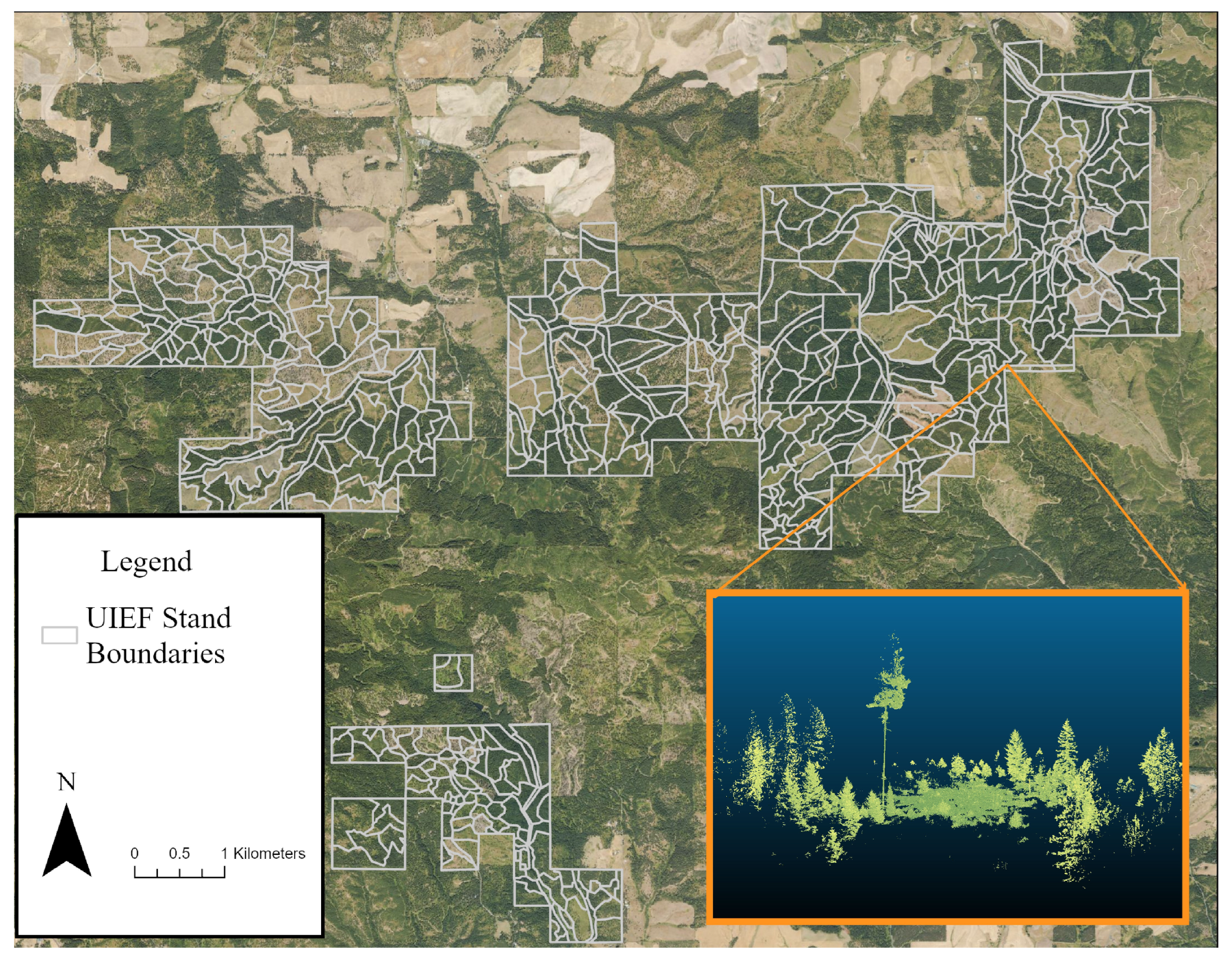
This experiment was conducted at the University of Idaho Experimental Forest (UIEF) using Single-Tree Inventory (STI) permanent plots established in 2024. The plot network was established using a non-uniform systematic random sample design. Each plot center was permanently marked using a six-foot metal pole placed in a 6-in diameter concrete post base that serves as a platform for local, multitemporal remote and proximal sensing from a fixed, known point. Plot centers were recorded using the mean of 300 points recorded with an EOS Arrow Gold RTK GNSS unit (EOS Positioning Systems, Terrebonne, QC, Canada) with satellite-based Real-Time Kinematic (RTK) correction. In fall 2024, a Leica BLK 360 TLS (Leica Geosystems, Heerbrug, Switzerland) was mounted to the top of the metal pole in each plot. Once mounted, the subject moved out of the TLS field of view while the plot was scanned. Each plot was scanned once from the center location. Plots were 706.9 square meters and TLS scans had an average of 21,841,505 points per plot, which equates to approximately 31,000 points per square meter. This process was repeated at all 154 UIEF STI plot locations (Figure 2). The aerial lidar used for comparison was funded by the Federal Emergency Management Agency (FEMA) and flown in October 2022. These files were clipped to the boundary of the UIEF in ArcGIS Pro Desktop version 3.1.0 (Redding, CA, USA). The ALS point clouds were then clipped to a 15 m radius around each plot center. ALS point clouds had an average of 20,502 total points per plot, or approximately 23 points per square meter. If the lidar files associated with individual plots were split due to flight lines, the two component files were merged using the merge function in the lidR package version 4.2.0 [52] in R version 4.4.2. This combined the two lidar .las files to generate a single, complete record for processing and segmentation with any plots separated across tiles.
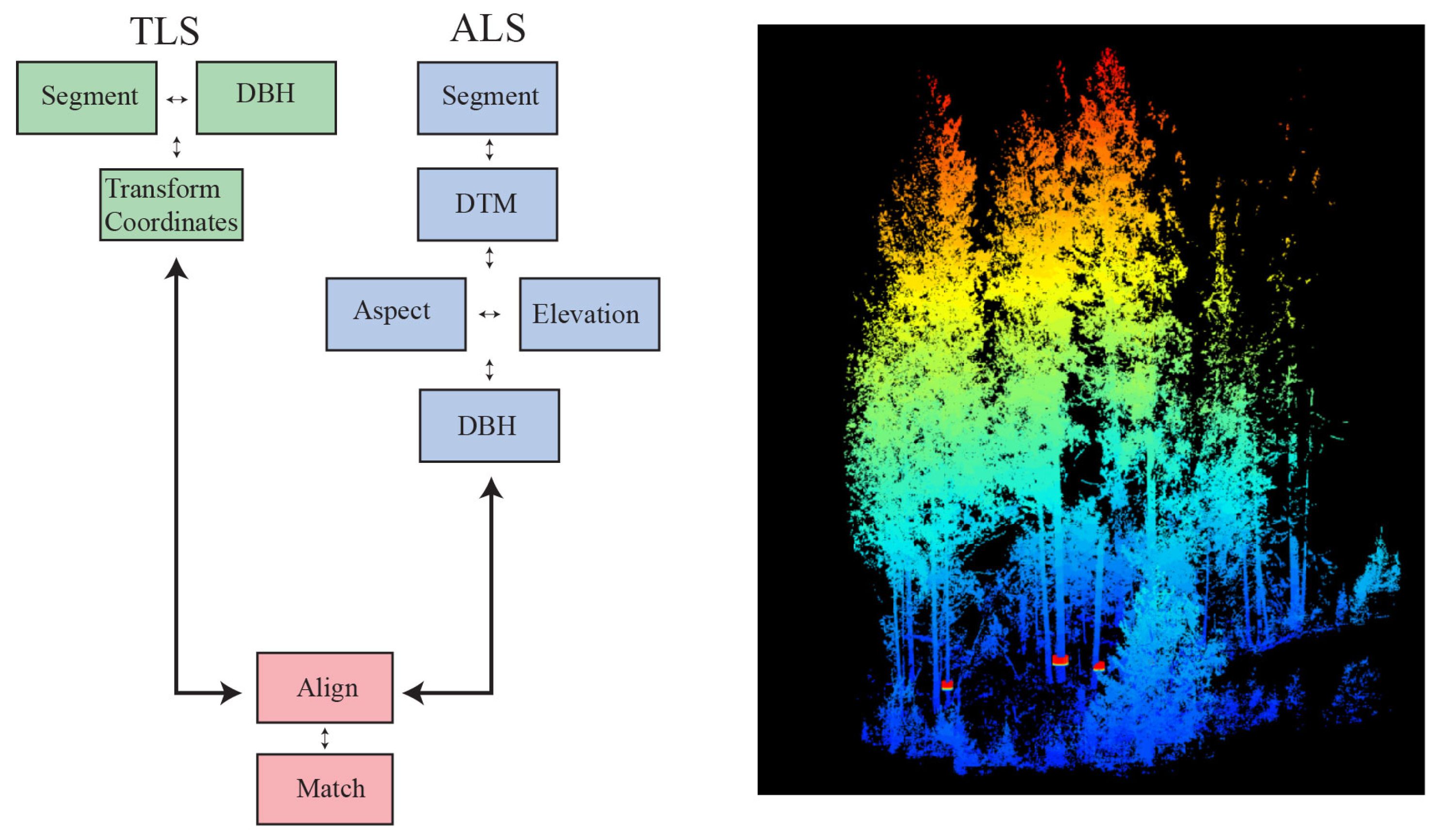
Two methods were used to process, align, and match the point cloud data. The first method only used the lidR package [52], while the second used two separate algorithms to segment trees and derive metrics. The first method determines the trees position based on the top of the tree in both the ALS and TLS point clouds. The second method determines the position of the TLS trees based on their DBH, while positioning the ALS trees based on the tops (Figure 3).
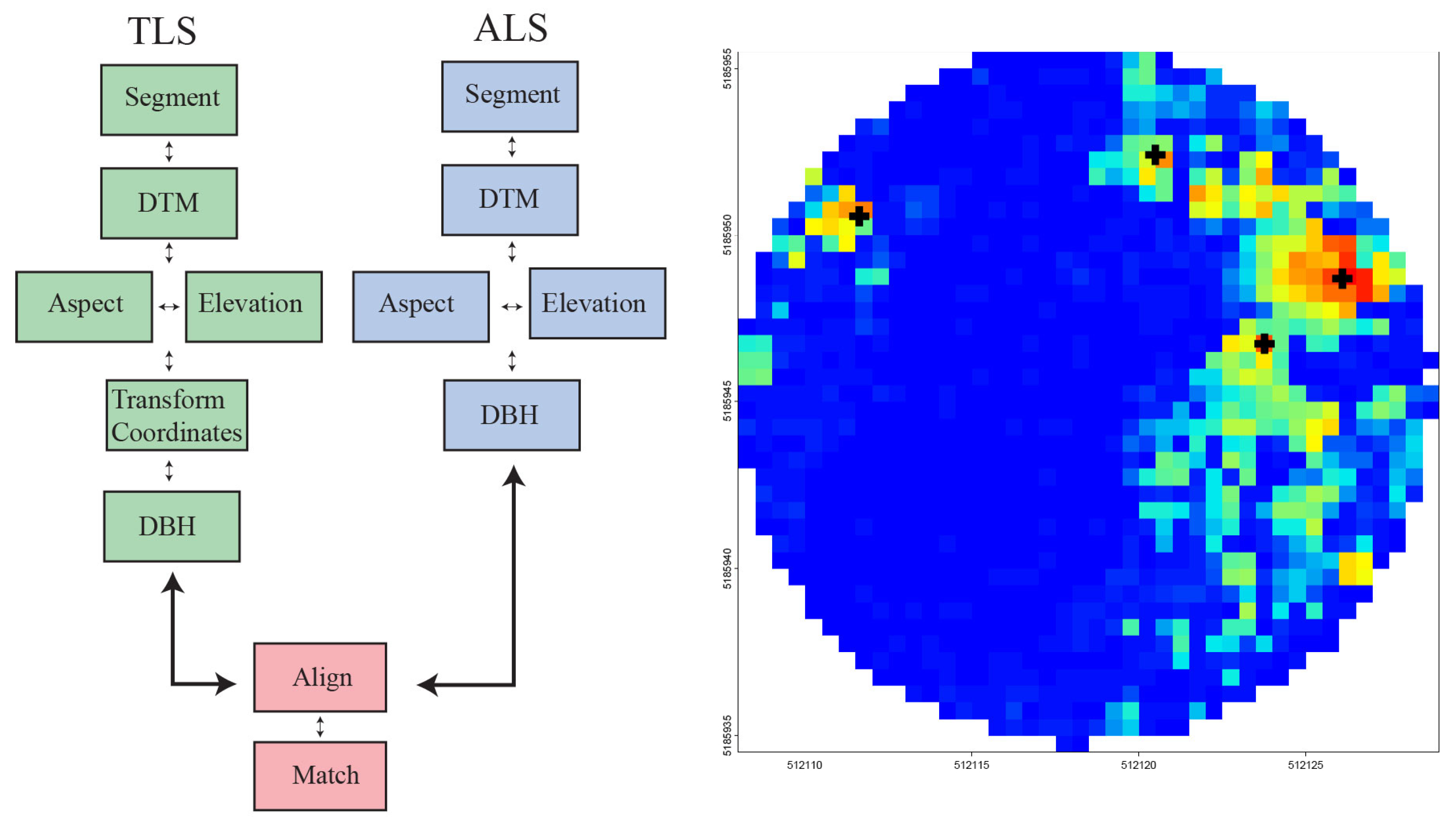
The first method reads in the TLS point clouds for tree top segmentation to be performed using the treetops (ttops) function in the lidR package (Figure 4). After the segmentation and normalization were completed, the plot level aspect and elevation were derived from a generated digital terrain model (DTM) and assigned to the identified tree locations. Once all data were derived and assigned to the correct tree locations, a coordinate conversion was conducted to transform the TLS point locations from a local coordinate system to NAD83 UTM ZONE 11. The same workflow was used to process the ALS acquisitions, but since the ALS was recorded in NAD83 UTM ZONE 11, the coordinates were not transformed. To estimate the DBH of the trees in each plot file, a model was trained in R using the randomForest package 4.7-1.2 [53]. The model predicted tree DBH based on the height, aspect, and elevation of the tree. The model had an RMSE of 6.63 cm when predicting the diameter at breast height for the segmented trees in the acquisition. After this process was conducted, the TLS and ALS tree location datasets were exported to comma-separated values (csv) files that contained the tree top position (latitude and longitude), aspect, elevation, and estimated DBH. When scanned, TLS measurements were not oriented in the cardinal directions; each scan was rotated at an arbitrary angle relative to the ALS data. The Kabsch algorithm [54] was used to align and rotate tree positions to match TLS- to ALS-derived tree locations. In this first method, only the lidR package was used to estimate tree position based on the top of the crown for both the TLS and ALS point clouds.
The second method used the FORTLS package version 1.6.1 [55] and lidR package in R to perform the matching workflow. FORTLS is a package that specializes in deriving tree metrics from TLS point cloud scans. This process normalizes, performs a statistical removal of points, and then segments the individual trees (Figure 5). During the segmentation portion, elliptical rings are fitted to each tree stem to estimate the diameter at breast height. Whereas lidR estimates tree position based on tree top, FORTLS estimates tree position based on DBH. Analysis of ALS data followed the same workflow as in the first method described above. After all the data were stored in individual csv files, the point locations were plotted and aligned. Using the Kabsch algorithm in R, the points were aligned and rotated. After this, the point patterns associated with each data set were matched based on horizontal location (UTM coordinates) and DBH. In the second method, both FORTLS and lidR were used to estimate tree locations. FORTLS was used to estimate tree locations based on DBH derived from TLS point clouds. LidR was used to estimate tree locations based on the tops of crowns derived from ALS point clouds.
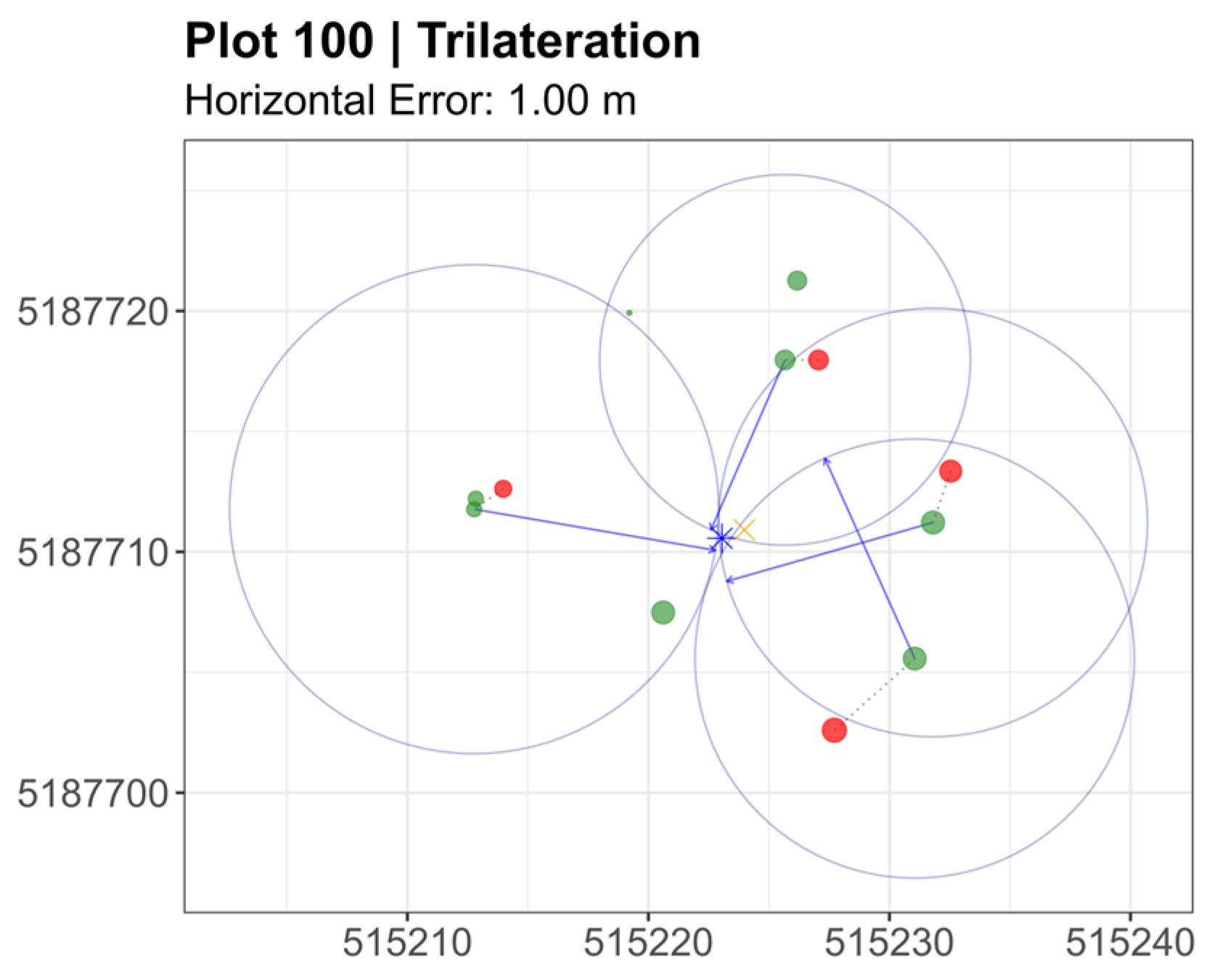
TLS-derived tree locations were matched to potential ALS tree candidates within a fixed horizontal distance and allowable range of predicted DBH error (Figure 6). A custom script was written in R for the matching to be conducted. The script began by reading two .csv files generated after the DBH and coordinate transformation were conducted for each plot. Stem maps were generated from the .csv files and overlaid. Once the files were overlaid, the TLS tree locations were transformed into the most optimal viable pattern that matched the overall plot of ALS tree locations using a 2-D Kabsch algorithm. The Kabsch algorithm builds a covariance matrix from the predicted tree positions and then applies a singular value decomposition to determine how the TLS-derived positions should be rotated to best fit the ALS. After the initial rotation and alignment were conducted, the trees were then refined with an additional brute force matching in a nested loop that varied both spatial horizontal distance and DBH tolerance. Only plots that had 3 or more successfully matched trees were included; all plots that had fewer than 3 trees matched were excluded. To estimate horizontal distances, a Euclidean distance was calculated between the position of the estimated TLS tree position and each predicted ALS tree position within a 15 m radius (Equation (1)). To derive the DBH difference, the absolute value was taken from the TLS-derived DBH minus the ALS-derived DBH. These values were taken from the segmented .las files and stored in a .csv. For method 1, a maximum radius of 5 m from the tree’s position, and a maximum difference in DBH of 5 cm was used for the matching. Trees that were within those tolerance values were considered for matching until the most optimal match was selected. For method 2, a maximum horizontal radius of 6 m neighbor distance from the target tree position and maximum DBH difference of 8 cm was used. In both methods, the matching trees were evaluated using a composite matching score, which was the weighted sum of the normalized spatial distance (70%) and the DBH difference (30%). The evaluation was conducted with this split because the spatial distance was generally a more accurately recorded metric than predicted DBH, which tends to vary by tree size. ALS trees, with the lowest scores, were selected as the best potential match. Once selected, the matched pair was saved to ensure that no trees had duplicate matches. This process was repeated for the matching based only on spatial pattern. When using only spatial pattern, method 1 had a maximum horizontal radius of 2.5 m, while method 2 used a maximum radius of 3 m horizontal difference. Relative weights for horizontal distance and DBH difference were estimated using a loop script in R that evaluated combinations of values from 1 to 10 m horizontal distance and 1–10 cm DBH difference when matching ALS and TLS tree locations and attributes. The brute force algorithm script read segmented files and implemented the matching workflow in a nested loop. The matching started at 1 m horizontal distance between potential tree matches and 1 cm DBH tolerance. DBH was increased incrementally by 1 cm in each loop until reaching 10 cm. After 10 cm, horizontal distance was increased. Equation (1) shows the spatial distance calculation between tree positions.
d i f f = x a l s x t l s 2 + y a l s y t l s 2
A mixed-effects model was used to test the hypothesis of no difference between the two separate location estimation methods and match types (spatial only, or spatial plus tree DBH). The response variable in the model was the difference between the true plot center from which TLS measurements were recorded and the predicted plot center based on trilateration from ALS-derived tree locations after map matching the two data sets. Fixed effects in the analysis were the method type used to derive tree locations and DBH, FORTLS or lidR, and the match type, which was either spatial information only or spatial information plus DBH. Finally, the random effect included was the management unit of each plot on the UIEF (Flat Creek, West Hatter, East Hatter, or Big Meadow). This was included to account for possible autocorrelation of sampling error within management units for the single-tree inventory plots. The four management units correspond to distinct watersheds. After the mixed effects model was fitted, the ANOVA function in R was used to determine the effect of lidar workflow (FORTLS, lidR) and matching method (spatial only or spatial plus DBH) on overall positioning error using TreePS.

3. Results

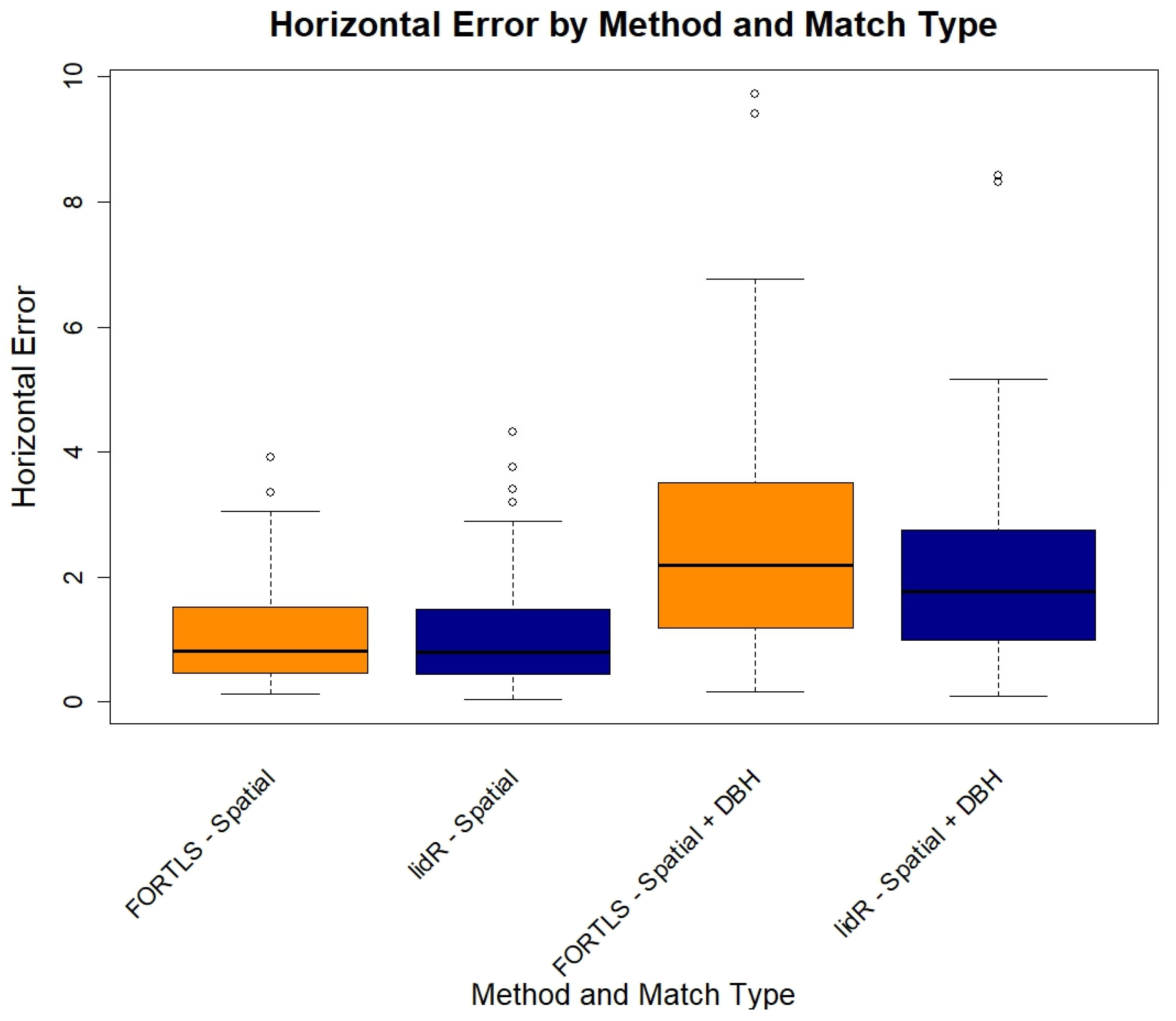
The total number of plots recorded was 154; out of these, 107 plots contained three or more trees. 107 were used for matching since it was required for the plot to have at least three trees to successfully match before performing trilateration. The method for identifying tree positions that successfully matched the most plots was lidR (Table 1). lidR matched 100 plots only using spatial characteristics, and 98 plots using both spatial and DBH characteristics. The FORTLS method of identifying tree positions had a lower rate of successful matches (Table 1). FORTLS successfully matched 62 plots using only spatial characteristics and matched 58 plots when using both spatial and DBH characteristics (Table 1). There was more horizontal error when positioning plot center when the matching algorithm used both spatial and DBH characteristics (Figure 7).

3.1. Mixed-Effects Model

The method used to segment and identify where trees were positioned (FORTLS or lidR) affected TreePS horizontal error. We therefore rejected the null hypothesis of no difference in horizontal localization error between the two methods (Table 2). There was a difference in the plot center horizontal error between the treetop-based method (lidR) and the DBH-based method (FORTLS) when using spatial-only attributes compared to using both spatial and DBH for matching (Table 2). There was no difference between method type and type of matching (Table 2).
Four datasets representing different combinations of segmentation methods (FORTLS or lidR) and matching criteria (Spatial or Spatial and DBH) were imported into a linear mixed-effects model using the lme4 version 1.1-36 [56] and lmerTest version 3.1-3 [57] packages in R. The mixed-effects model was fitted with plot center horizontal error as the response variable. Segmentation workflow method (FORTLS, lidR) and match type (spatial only, or spatial plus DBH) and their interactions were included in the model as fixed effects. Finally, the UIEF management unit was included as a random intercept to account for autocorrelation between similar plot conditions within each watershed.
Analysis of variance using Satterthwaite’s method was used to evaluate the mixed-effects model [57]. The ANOVA model indicated that both method and match type affected the plot center horizontal error (Table 2). This suggests that including additional variables may introduce additional complexities into the matching algorithm, causing increased horizontal error when positioning the plot center. Additionally, it showed that the method used to segment and identify tree positions, FORTLS or lidR, had a significant effect on horizontal error when positioning the plot center. Due to this, we rejected the null hypothesis because there was a significant difference (p = 0.03) between the two methods (Table 2). There was no difference between method and matching type (p = 0.07) (Table 2). Although there is no difference, this value is close to 0.05 which suggests that there could be some difference between using the treetops method (lidR) with DBH and spatial characteristics compared to using the same matching type as the DBH-method (FORTLS).
The mixed-effects model with random effects being management unit shows the relationships between error within the management districts. Five units were represented across the 4047 hectares sampled. Each management district has different environmental characteristics such as species presence, slope, and tree size. The horizontal error variation is mainly within the management units themselves rather than between them. The variance of the management districts was 0.0005, while the residual variance was 1.87 (Table 3). Overall, the horizontal error between watersheds is negligible.

3.2. Matching Characteristics

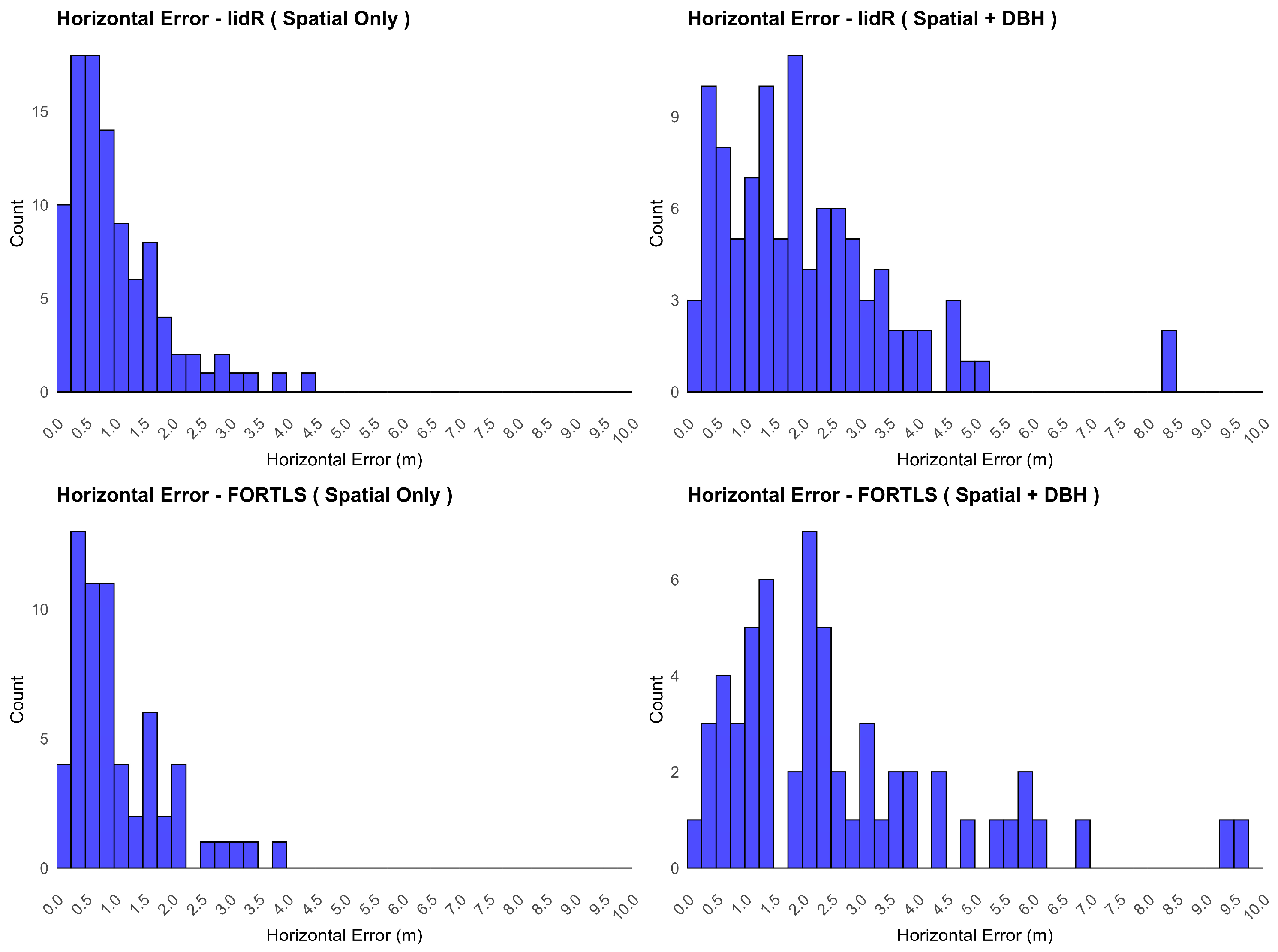
The distribution of horizontal error when the match type was only based on spatial characteristics was right-skewed, with low horizontal error (Figure 8). The distribution of horizontal error when the match type was based on both spatial and DBH characteristics followed a similar right skew pattern (Figure 8). When only using spatial characteristics, the lidR segmentation method had a mean horizontal error value of 1.04 m. This value increased to 2.04 m when DBH was included as an additional variable in the matching (Table 4). Results were similar when using the FORTLS segmentation method. The mean horizontal error when only using spatial characteristics was 1.04 m. This value increased to 2.67 m when DBH was included (Table 4).
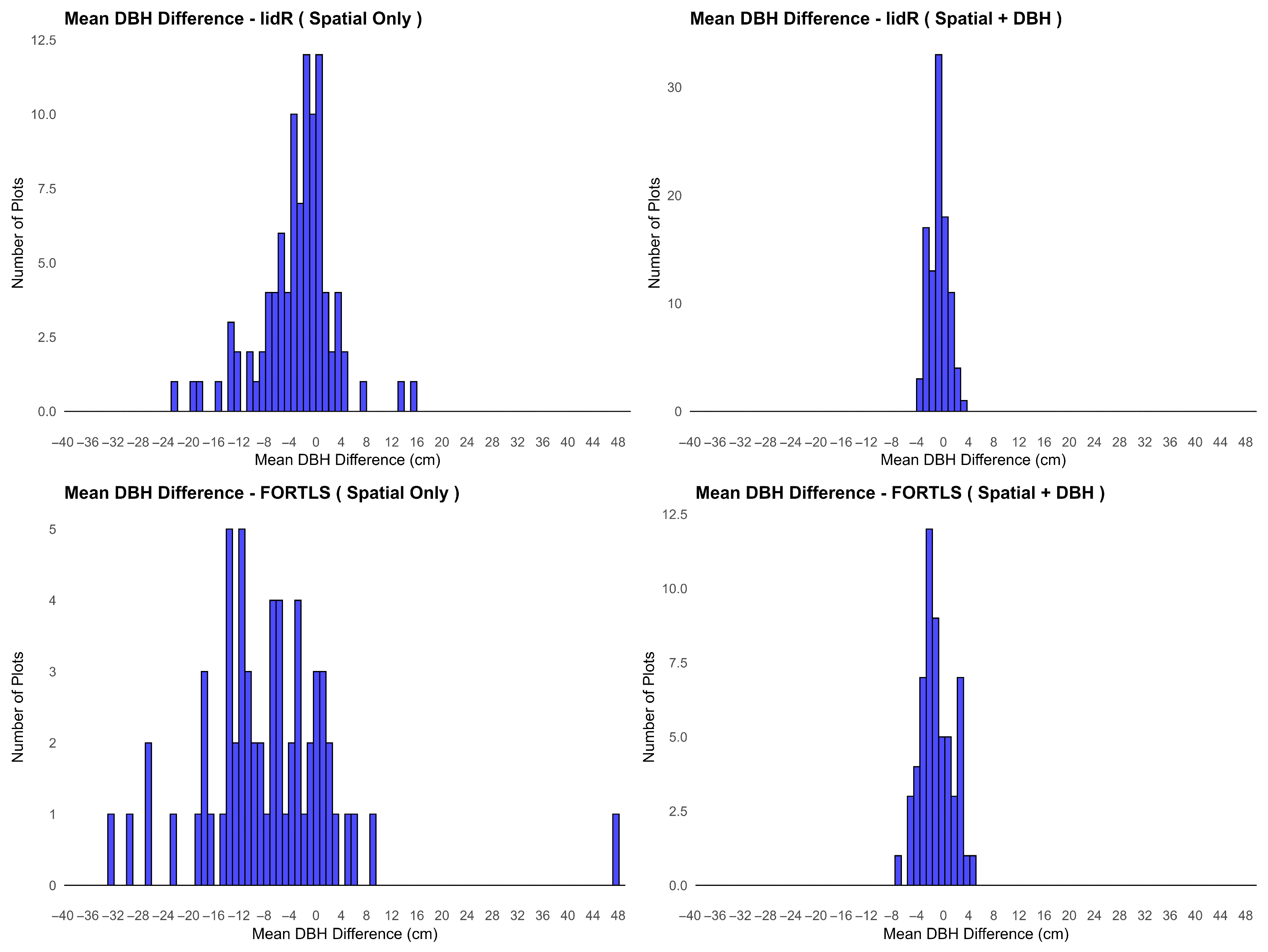
When matching tree locations using only spatial proximity of the subject tree and potential matches, the resulting differences in DBH for matched tree pairs identified when using the lidR method had a wide distribution (Figure 9). When DBH was factored into the matching algorithm, the DBH distribution for the lidR method was contained to a smaller range of values (Figure 9). The same result occurred when using the FORTLS method. When matching only using spatial proximity, the mean DBH difference spans a wide range of values (Figure 9). Matching based on proximity and DBH reduced error in the DBH difference between matched tree pairs.
Although matching stems based on spatial proximity only had a lower average horizontal error value, the value may not be as accurate as the value derived from matching algorithms that incorporated DBH to identify subject and neighbor tree pairs. Since the distribution of diameter differences for trees in the spatial plus DBH matching was not as widely distributed as the horizontal error from matching with spatial information only, trees matched with DBH information included were more likely to match the correct tree pairs (Figure 8 and Figure 9).
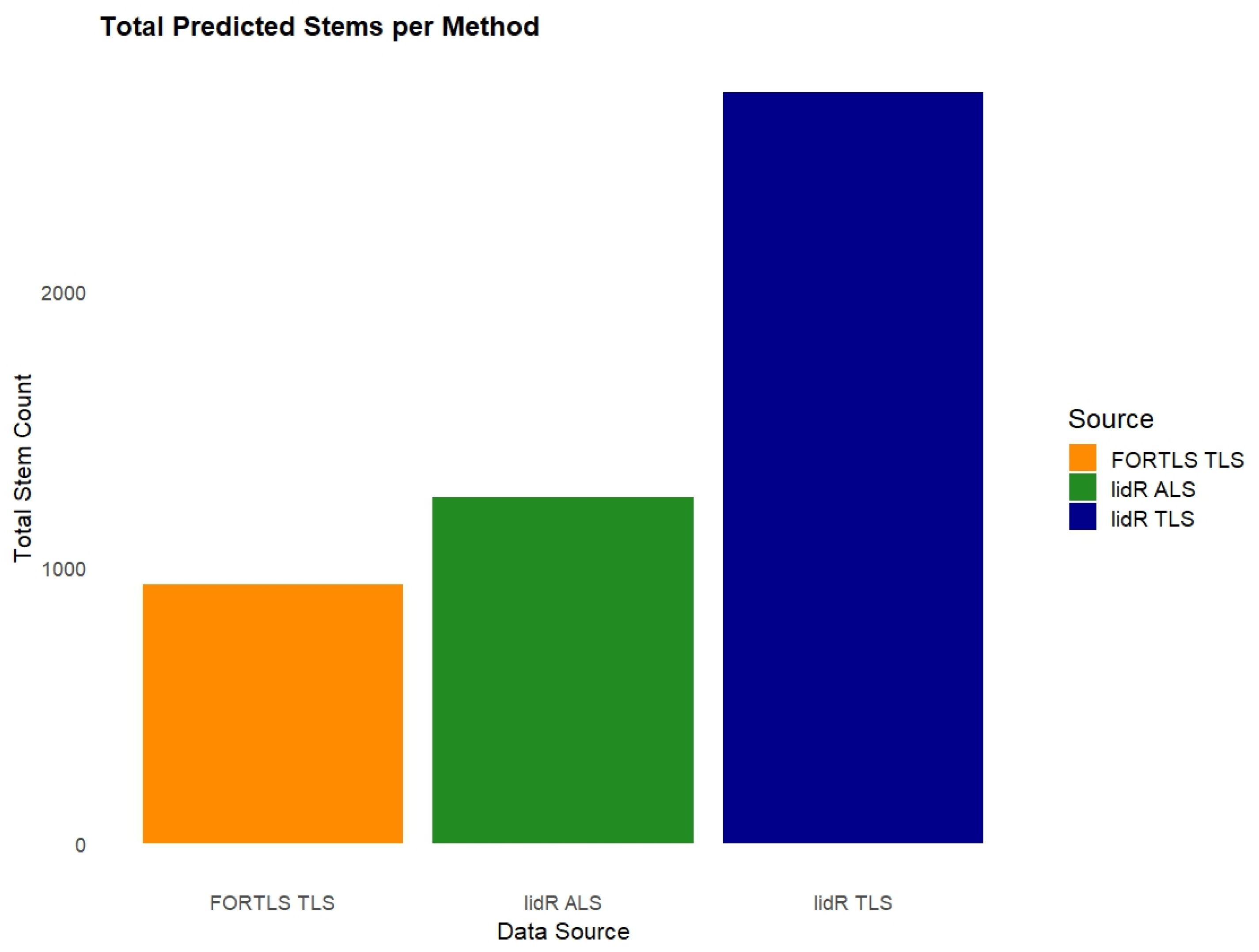
Co-registration of terrestrial laser scanning (TLS) and airborne laser scanning (ALS) derived tree positions to determine resource location was better when the same segmentation algorithm was used to match trees based on spatial and DBH characteristics (Figure 7). Using different algorithms to position a tree increased horizontal error when deriving plot center position. The lowest level of horizontal error occurred when the same algorithm and segmentation workflow (lidR) were used to derive tree positions and when they were matched using only spatial characteristics. While this was found to be the most accurate, the most impactful tree matches occurred when spatial and DBH characteristics were factored into the match. Due to there being more tree positions found in the lidR TLS segmentation than the FORTLS TLS segmentation, there could have been more potential spatially close matches around the segmented ALS tree positions (Figure 10).
The total number of trees measured over 5 inches in diameter in the field was 2054 trees across all 154 plots in the UIEF STI network. FORTLS segmented 940 total stems, lidR ALS segmented 1243 total stems, and lidR TLS segmented 2726 total stems. All algorithms either over or underestimated the correct number of trees, with the lidR TLS overestimating the most.
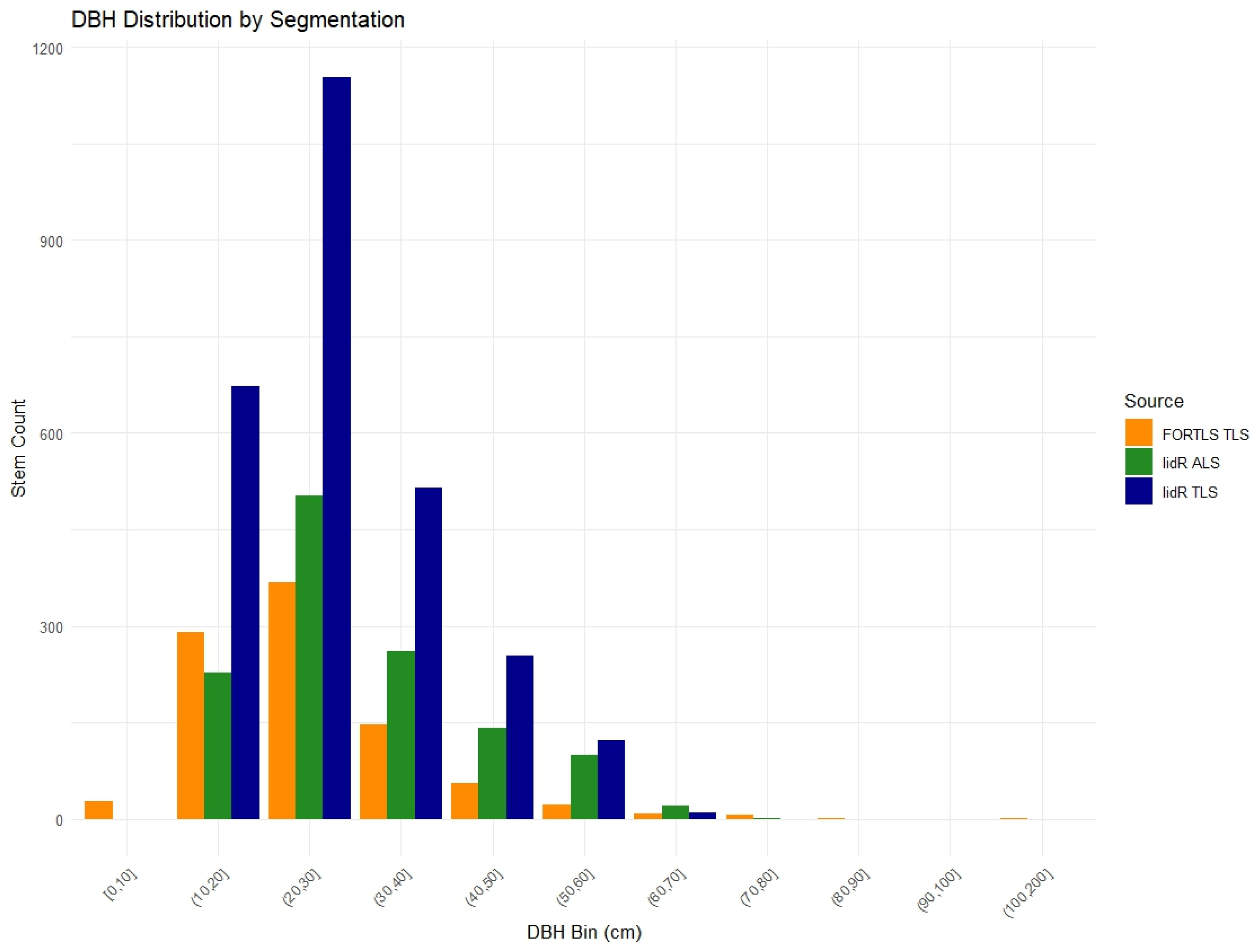
All algorithms had the highest number of predicted tree diameters between 20 and 30 cm in diameter (Figure 11). The predictions then gradually decreased as the diameter classes increased by 10 cm increments.

4. Discussion

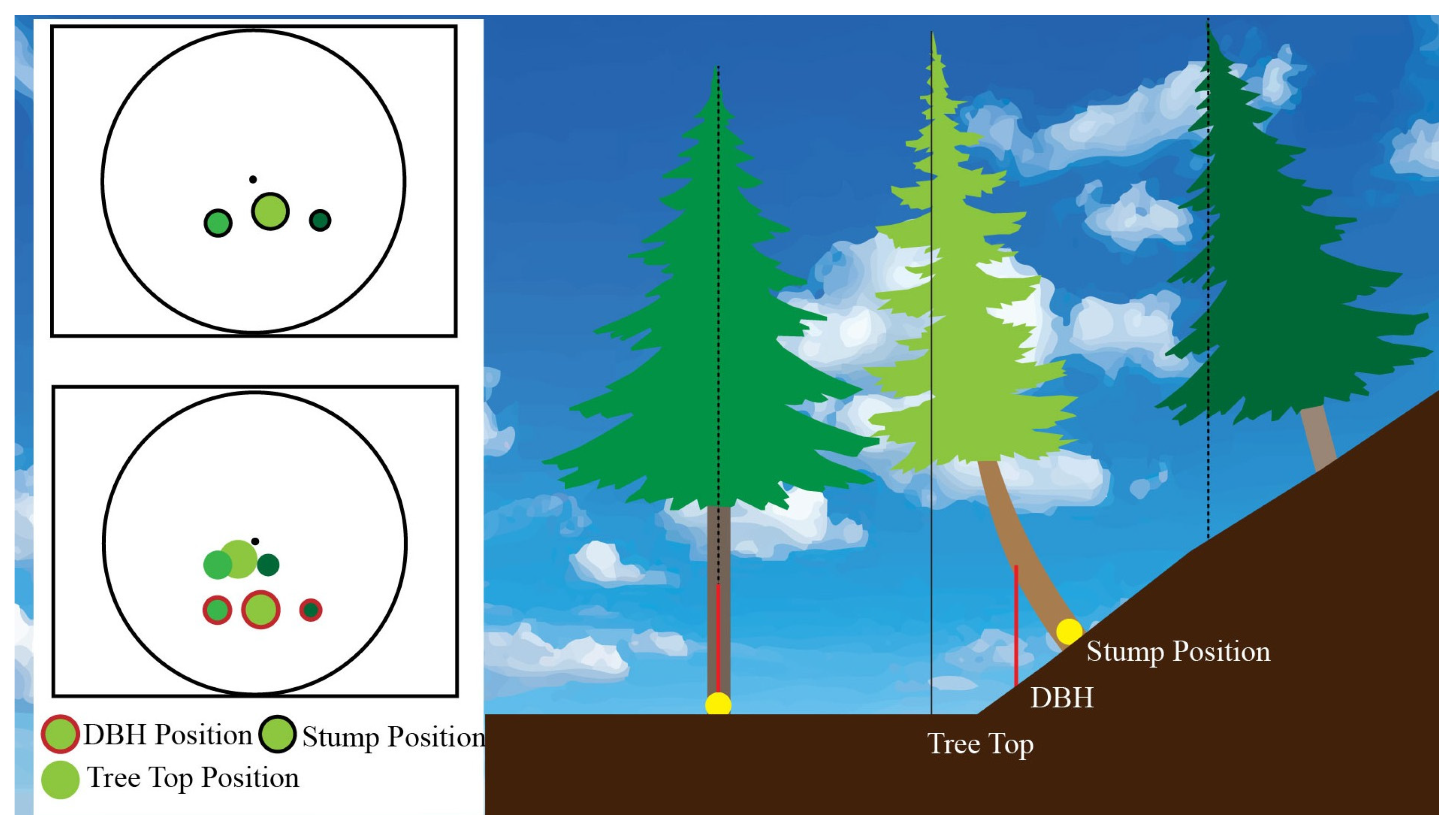
Our study was conducted with two separate, common lidar segmentation algorithms used in forestry to derive tree attributes, including their position. In the first method, lidR was used to position each tree based on the top of the tree stem for both local, below-canopy (TLS) and global, above-canopy (ALS) point clouds. In the second method, FORTLS was used to identify tree position based on DBH for only the local TLS files, while lidR was used to segment trees and identify their locations in the global ALS point cloud. Our results showed that when using map-matching methodology to identify tree pairs based on local TLS stem positions map-matched with global ALS-derived tree positions, the use of the same R package and segmentation algorithms above and below the canopy to estimate resource locations resulted in the best matches. Segmentation methods and algorithms that identify tree positions using the same reference point, either DBH or top height, seem to reduce horizontal error associated with tree lean, defect, or other data artifacts when matching like pairs. Although positioning trees with either DBH or the tree top is feasible if done consistently, use of a common reference point that is unlikely to change over time, such as the tree stump position, may be the most effective methodology for long-term single-tree inventory programs. Trees are susceptible to lean of varying degrees, offsetting the top, DBH, and stump positions due to wind, snow loading, breakage, and other factors (Figure 3), particularly in less intensive management. To reduce horizontal error in tree positions, the use of the reference point closest to the ground with the least susceptibility to lean or stem defect may make the most sense of a defensible, repeatable true position for long-term, multi-temporal map feature matching. An additional useful benefit of using the stump location is that as forest operations are conducted, the stump location is often the only remaining piece of the tree after harvesting, but stumps often persist on the landscape for decades post-harvest. Stumps therefore offer more consistent reference points as a tool for TreePS map matching, both before and after harvest. For example, they may be useful for other kinds of feature matching and map methods integrated into robotics during post-harvest stand regeneration or post-fire restoration.
Our study only used horizontal position error for the segmentation algorithms deployed in lidR and FORTLS. These positions were likely affected by tree lean, which could have impacted whether matched pairs were identified correctly. When possible, future studies and future iterations of TreePS may benefit from representing trees as 3D vertical vectors that account for stem lean from top to bottom. This facilitates estimation of stump position as a common reference point. Additionally, while our TreePS matching algorithm used spatial proximity or both the spatial-only and spatial plus DBH approaches to stem-matching below-canopy (TLS)- and above-canopy (ALS)-derived tree locations, map matching in mixed conifer forests could likely be improved through the use of tree species information or other single-tree attributes. Many UIEF STI plots used in this study have 3–8 species present. Algorithms that either incorporate species predictions for all individuals, or leverage trees with unique features that function as tie points developing unique fingerprints in the pattern of tree location, size and species, may help to improve the matching of local and global single-tree point patterns. For example, a single, large western larch or ponderosa pine seed tree, when surrounded by smaller diameter stems in a regenerating age class in a seed tree silvicultural system could carry more weight in matching algorithms, because the combined pattern may stand out with a distinct signature using both below- and above-canopy methods. Future development of TreePS may also benefit from incorporating additional factors such as high-resolution DEM or DSM into the map-matching algorithm. Site and location characteristics such as boulders, roads, or other distinct landscape features could also enhance positional accuracy locally, supplementing use of tree locations.
In this study, our map matching methods underlying TreePS focused on finding common patterns of tree position and DBH within a 15 m radius of the center of 154 inventory plots. Future studies should expand TreePS to match local tree position and size patterns to larger sample areas such as a 50–75 m radius or entire forest stands. Our intention is not that TLS be used exclusively in TreePS approaches, but that mobile lidar, UAS, mobile device apps, or even direct compass and tape field measurements could be used for local measurements, depending on the application.
There are several limitations of our study and ways the work can be broadened and improved in the future. Our lidar acquisitions were only captured during the late summer months from July–October after the growing season. Future research could evaluate how seasonal changes in shrubs and foliage may affect tree detection, particularly where hardwoods are present. Future studies should also quantify how stand characteristics, understory presence, and canopy closure affect TreePS match quality and accuracy. We also focused on estimating horizontal error estimation and consideration of vertical error and broadening testing to sources from a wide geographic extent, and a variety of stand management conditions will be important to ensure the generalizability of the methodology. Tree information was extracted via different R packages to estimate positioning as would occur with a person, animal, or machine being located with GNSS.
We did not derive a ground truth estimate for the accuracy of individual tree stems matched in each plot. This is because ‘true’ matches with certainty with data from multiple sources is not possible because of measurement error using either method. We relied on the weighting relative importance of spatial and DBH attributes, both of which have error. Future studies could also analyze and quantify how successfully correct stems are matched using, e.g., a total station. When the UIEF STI plot network was established in 2024, plot centers for all 154 plots were located using an EOS Arrow Gold RTK GNSS with satellite-based RTK service as the mean of 300 points logged using ArcGIS Field Maps. While most plot centers had accuracy <0.1 m using subscription RTK, it was not possible to achieve this number of points in plots in several of the densest, mature stands on the UIEF, and the overall accuracy was 0.247 m for all 154 plots and these ranged from less than 0.01 m to 0.96 m. So, by comparison, TreePS accuracy was definitely lower than what can be achieved by a high-end RTK GNSS using our initial methods. However, it is useful to note that even with full processing and segmentation of both TLS and ALS from scratch, the TreePS lidR method was generally faster than waiting for sufficient points with high accuracy to be obtained with an RTK subscription, which generally took > 1 h for most plots in more mature stands. While TreePS has clearly much lower accuracy in our initial attempt with a mean of approximately 1 m, we expect that refined methods building on these initial results can likely improve both accuracy and computation time.
Though early in development, the TreePS concept may be useful for development and implementation of teleoperated and autonomous equipment in forested settings. Use of ALS-derived tree locations is much less computationally intensive than co-registration of entire point clouds in real-time, simply because the number of points involved is significantly reduced. Although mobile lidar processing GeoSLAM provides on-the-fly mapping locally, these current approaches typically do not otherwise link local maps to the global, single-tree forest inventory information that is of most interest in smart and smart forestry analytics for digital transformation of the supply chain. TreePS bridges that gap efficiently, simplifying tree location and possibly other single-tree attributes, as the common identifier creating local and global database relations on-the-fly.
While equipment and human resources move through forested stands with degraded GNSS, computational time needed to identify resource positions is important. Method 1, which utilized the lidR package for both TLS and ALS analysis, took approximately 4 min to run through the entire process of segmenting, matching, and identifying position. Method 2, with FORTLS and TLS, took roughly 25 min to process each plot. However, for typical TreePS deployment, we assume above-canopy segmentation of ALS data will have been completed at an earlier time.
For practical field use, TreePS needs to be optimized to provide accurate, real-time positioning and future development of improved matching algorithms should focus on faster code solutions that isolate and prioritize rapid point pattern matching. Reducing this will aid in the effectiveness of TreePS in real world situations when achieving and maintaining a ‘fix’ during navigation. Once a preliminary fix is achieved, a secondary TreePS movement algorithm could be leveraged based on local IMU data in a smartphone or machine computer, independent of GNSS, building on prior work by Qian et al. [24] but with reduced computational demand.
This study demonstrated how resource positioning using feature matching was affected by choice of segmentation algorithms (DBH or tree top) and matching characteristics (spatial only, or both spatial and DBH). This system could be valuable for determining locations in forested areas with mature canopy and may also be useful in situations with otherwise degraded or denied GNSS use. In locations where there is no canopy or stem presence, GNSS can still be utilized. If no trees or stems are present to match, or stems are sparse or widely spaced, then GNSS error tends to be low. TreePS could complement GNSS in forested settings, particularly in mature forests. As TreePS methodology develops, we expect that GNSS may be used to isolate a general location on the landscape, which can then be refined quickly with TreePS. Because of distinct features in mixed conifer and mixed size stands, TreePS may be particularly well-suited to navigation in areas with variable stem diameter distributions and unique spatial patterns that create distinct patterns for feature matching.

5. Conclusions

We have shown that TreePS can be used to position resources, whether an inventory plot center, a person, or a piece of equipment, based on local measurements using TLS matched with prior ALS-derived tree locations. Treetops and DBH-based methods for referencing tree location were evaluated and were shown to influence the resulting horizontal error of the TreePS system. TreePS worked best when both local and global data were segmented using the same algorithm and relied on spatial characteristics to match trees between files. Although this had the highest positioning accuracy overall, including both spatial and DBH attributes increased the accuracy of correctly matched trees. TreePS works best when the same algorithm is used for segmentation of both TLS and ALS data, and when there are multiple unique characteristics that can be matched. High point density lidar acquisitions could provide more detailed information about tree characteristics. In ALS and TLS higher point density acquisitions provide more detailed imagery which can provide a more accurate estimation of tree height and diameter at breast height. Because there is more potential for stem matching error due to limited variability in tree attributes, TreePS may not be as effective in highly uniform industrial plantations. These locations are limited in unique feature patterns and mismatching of ALS and TLS stems may increase horizontal error. Additionally, this would not be effective in locations where there are widely spaced trees or no trees. However, GNSS work best in open areas, and matching based on stump locations, DEMs, and other geographic features also holds promise for map-matching. TreePS is a promising technique that can benefit from continued development and improvement.

Author Contributions

Conceptualization, M.P.S. and R.F.K.; methodology, M.P.S. and R.F.K.; software, M.P.S.; validation, M.P.S. and R.F.K.; formal analysis, M.P.S.; investigation, R.F.K.; resources, R.F.K.; data curation, M.P.S.; writing—original draft preparation, M.P.S., R.F.K., A.T.H. and R.M.B.; writing—review and editing, R.F.K.; visualization, M.P.S.; supervision, R.F.K.; project administration, R.F.K.; funding acquisition, R.F.K. and M.P.S. All authors have read and agreed to the published version of the manuscript.

Funding

The authors wish to thank the University of Idaho Experimental Forest, the University of Idaho Student Logging Crew, and the Idaho Forest Utilization Research (FUR) program for support of this project. This research was inspired by and leveraged equipment and supplies funded through National Institute of Occupational Safety and Health (NIOSH) Pacific Northwest Ag Safety and Health Center (PNASH) award U54OH007544 and also included equipment and staff time funded through USDA Forest Service R&D Bipartisan Infrastructure Law Project WCS9.

Data Availability Statement

After publication, data will be permanently archived and made available on the University of Idaho Research and Data Services (RCDS) archive.

Acknowledgments

The researchers would like to thank the University of Idaho Experimental Forest for providing supplies and curated spatial data, as well as UIEF student staff who provided support in the field. We would also like to thank Bruce Godfrey, GIS Librarian at the University of Idaho Library and Edward Flathers for their assistance with LiDAR data processing.

Conflicts of Interest

The authors declare no conflict of interest.

Abbreviations

The following abbreviations are used in this manuscript:
LEOLow Earth Orbit
ALSAerial Laser Scan
TLSTerrestrial Laser Scan
DBHDiameter at Breast Height
UIEFUniversity of Idaho Experimental Forest

References

  1. Ardito, L.; Petruzzelli, A.M.; Panniello, U.; Garavelli, A.C. Towards Industry 4.0: Mapping digital technologies for supply chain management-marketing integration. Bus. Process Manag. J. 2018, 25, 323–346. [Google Scholar] [CrossRef]
  2. Ghobakhloo, M. Industry 4.0, digitization, and opportunities for sustainability. J. Clean. Prod. 2020, 252, 119869. [Google Scholar] [CrossRef]
  3. Ghobakhloo, M. The future of manufacturing industry: A strategic roadmap toward Industry 4.0. J. Manuf. Technol. Manag. 2018, 29, 910–936. [Google Scholar] [CrossRef]
  4. Wójcicki, K.; Biegańska, M.; Paliwoda, B.; Górna, J. Internet of Things in Industry: Research Profiling, Application, Challenges and Opportunities—A Review. Energies 2022, 15, 1806. [Google Scholar] [CrossRef]
  5. D’Amours, S.; Ouhimmou, M.; Audy, J.-F.; Feng, Y. (Eds.) Forest Value Chain Optimization and Sustainability; CRC Press: Boca Raton, FL, USA, 2016. [Google Scholar] [CrossRef]
  6. Feng, Y.; Audy, J.-F. Forestry 4.0: A framework for the forest supply chain toward Industry 4.0. Gest. Produção 2020, 27, e5677. [Google Scholar] [CrossRef]
  7. Hoppen, M.; Chen, J.; Kemmerer, J.; Baier, S.; Bektas, A.R.; Schreiber, L.J.; Mayer, D.G.; Kaulen, A.; Ziesak, M.; Rossmann, J. Smart forestry—A forestry 4.0 approach to intelligent and fully integrated timber harvesting. Int. J. For. Eng. 2024, 35, 137–152. [Google Scholar] [CrossRef]
  8. Sahal, R.; Alsamhi, S.H.; Breslin, J.G.; Ali, M.I. Industry 4.0 towards Forestry 4.0: Fire Detection Use Case. Sensors 2021, 21, 694. [Google Scholar] [CrossRef]
  9. Singh, R.; Gehlot, A.; Vaseem Akram, S.; Kumar Thakur, A.; Buddhi, D.; Kumar Das, P. Forest 4.0: Digitalization of forest using the Internet of Things (IoT). J. King Saud Univ. Comput. Inf. Sci. 2022, 34, 5587–5601. [Google Scholar] [CrossRef]
  10. Keefe, R.F.; Zimbelman, E.G.; Picchi, G. Use of Individual Tree and Product Level Data to Improve Operational Forestry. Curr. For. Rep. 2022, 8, 148–165. [Google Scholar] [CrossRef]
  11. Hofmann-Wellenhof, B.; Lichtenegger, H.; Wasle, E. (Eds.) Data processing. In GNSS—Global Navigation Satellite Systems: GPS, GLONASS, Galileo, and More; Springer: Vienna, Austria, 2008; pp. 193–276. [Google Scholar] [CrossRef]
  12. Zimbelman, E.G.; Keefe, R.F. Real-time positioning in logging: Effects of forest stand characteristics, topography, and line-of-sight obstructions on GNSS-RF transponder accuracy and radio signal propagation. PLoS ONE 2018, 13, e0191017. [Google Scholar] [CrossRef]
  13. Keefe, R.F.; Zimbelman, E.G.; Wempe, A.M. Use of smartphone sensors to quantify the productive cycle elements of hand fallers on industrial cable logging operations. Int. J. For. Eng. 2019, 30, 132–143. [Google Scholar] [CrossRef]
  14. Bettinger, P.; Merry, K.; Bayat, M.; Tomaštík, J. GNSS use in forestry—A multi-national survey from Iran, Slovakia and southern USA. Comput. Electron. Agric. 2019, 158, 369–383. [Google Scholar] [CrossRef]
  15. Zimbelman, E.G.; Keefe, R.F. Lost in the woods: Forest vegetation, and not topography, most affects the connectivity of mesh radio networks for public safety. PLoS ONE 2022, 17, e0278645. [Google Scholar] [CrossRef]
  16. Rybansky, M.; Kratochvíl, V.; Dohnal, F.; Gerold, R.; Kristalova, D.; Stodola, P.; Nohel, J. GNSS Signal Quality in Forest Stands for Off-Road Vehicle Navigation. Appl. Sci. 2023, 13, 6142. [Google Scholar] [CrossRef]
  17. Cho, H.-M.; Park, J.-W.; Lee, J.-S.; Han, S.-K. Assessment of the GNSS-RTK for Application in Precision Forest Operations. Remote Sens. 2024, 16, 148. [Google Scholar] [CrossRef]
  18. Pierzchała, M.; Giguère, P.; Astrup, R. Mapping forests using an unmanned ground vehicle with 3D LiDAR and graph-SLAM. Comput. Electron. Agric. 2018, 145, 217–225. [Google Scholar] [CrossRef]
  19. Becker, R.M.; Keefe, R.F.; Anderson, N.M. Use of Real-Time GNSS-RF Data to Characterize the Swing Movements of Forestry Equipment. Forests 2017, 8, 44. [Google Scholar] [CrossRef]
  20. Karaim, M.; Elsheikh, M.; Noureldin, A. GNSS Error Sources. In Multifunctional Operation and Application of GPS; IntechOpen: London, UK, 2018. [Google Scholar] [CrossRef]
  21. Zhang, C.; Yong, L.; Chen, Y.; Zhang, S.; Ge, L.; Wang, S.; Li, W. A Rubber-Tapping Robot Forest Navigation and Information Collection System Based on 2D LiDAR and a Gyroscope. Sensors 2019, 19, 2136. [Google Scholar] [CrossRef] [PubMed]
  22. Aguiar, A.S.; dos Santos, F.N.; Cunha, J.B.; Sobreira, H.; Sousa, A.J. Localization and Mapping for Robots in Agriculture and Forestry: A Survey. Robotics 2020, 9, 97. [Google Scholar] [CrossRef]
  23. Wempe, A.M.; Keefe, R.F. Characterizing rigging crew proximity to hazards on cable logging operations using GNSS-RF: Effect of GNSS positioning error on worker safety status. Forests 2017, 8, 357. [Google Scholar] [CrossRef]
  24. Qian, C.; Liu, H.; Tang, J.; Chen, Y.; Kaartinen, H.; Kukko, A.; Zhu, L.; Liang, X.; Chen, L.; Hyyppä, J. An Integrated GNSS/INS/LiDAR-SLAM Positioning Method for Highly Accurate Forest Stem Mapping. Remote Sens. 2017, 9, 3. [Google Scholar] [CrossRef]
  25. Holzinger, A.; Schweier, J.; Gollob, C.; Nothdurft, A.; Hasenauer, H.; Kirisits, T.; Häggström, C.; Visser, R.; Cavalli, R.; Spinelli, R.; et al. From Industry 5.0 to Forestry 5.0: Bridging the gap with Human-Centered Artificial Intelligence. Curr. For. Rep. 2024, 10, 442–455. [Google Scholar] [CrossRef] [PubMed] [PubMed Central]
  26. Kucharczyk, M.; Hugenholtz, C.H.; Zou, X. UAV-LiDAR accuracy in vegetated terrain. Drone Syst. Appl. 2018, 6, 212–234. [Google Scholar] [CrossRef]
  27. Guan, Y.; Li, H.; Xue, L.; Yin, R.; Zhang, L.; Wang, H.; Zhu, G.; Kang, L.; Chen, J.; Wu, P. Lidar with superconducting nanowire single-photon detectors: Recent advances and developments. Opt. Lasers Eng. 2022, 156, 107102. [Google Scholar] [CrossRef]
  28. Elaksher, A.; Ali, T.; Alharthy, A. A Quantitative Assessment of LIDAR Data Accuracy. Remote Sens. 2023, 15, 442. [Google Scholar] [CrossRef]
  29. Mattamala, M.; Chebrolu, N.; Frey, J.; Freißmuth, L.; Oh, H.; Casseau, B.; Hutter, M.; Fallon, M. Building Forest Inventories with Autonomous Legged Robots—System, Lessons, and Challenges Ahead. arXiv 2025, arXiv:2506.20315. [Google Scholar] [CrossRef]
  30. Faitli, T.; Hyyppä, E.; Hyyti, H.; Hakala, T.; Kaartinen, H.; Kukko, A.; Muhojoki, J.; Hyyppä, J. Integration of a Mobile Laser Scanning System with a Forest Harvester for Accurate Localization and Tree Stem Measurements. Remote Sens. 2024, 16, 3292. [Google Scholar] [CrossRef]
  31. Åkerblom, M.; Kaitaniemi, P. Terrestrial laser scanning: A new standard of forest measuring and modelling. Ann. Bot. 2021, 128, 653–662. [Google Scholar] [CrossRef] [PubMed]
  32. Mokroš, M.; Mikita, T.; Singh, A.; Tomaštík, J.; Chudá, J.; Wężyk, P.; Kuželka, K.; Surový, P.; Klimánek, M.; Zięba-Kulawik, K.; et al. Novel low-cost mobile mapping systems for forest inventories as terrestrial laser scanning alternatives. Int. J. Appl. Earth Obs. Geoinf. 2021, 104, 102512. [Google Scholar] [CrossRef]
  33. Ao, Z.; Wu, F.; Hu, S.; Sun, Y.; Su, Y.; Guo, Q.; Xin, Q. Automatic segmentation of stem and leaf components and individual maize plants in field terrestrial LiDAR data using convolutional neural networks. Crop J. 2022, 10, 1239–1250. [Google Scholar] [CrossRef]
  34. Demol, M.; Verbeeck, H.; Gielen, B.; Armston, J.; Burt, A.; Disney, M.; Duncanson, L.; Hackenberg, J.; Kükenbrink, D.; Lau, A.; et al. Estimating forest above-ground biomass with terrestrial laser scanning: Current status and future directions. Methods Ecol. Evol. 2022, 13, 1628–1639. [Google Scholar] [CrossRef]
  35. Sparks, A.M.; Corrao, M.V.; Keefe, R.F.; Armstrong, R.; Smith, A.M.S. An Accuracy Assessment of Field and Airborne Laser Scanning–Derived Individual Tree Inventories using Felled Tree Measurements and Log Scaling Data in a Mixed Conifer Forest. For. Sci. 2024, 70, 228–241. [Google Scholar] [CrossRef]
  36. Popescu, S.C.; Zhao, K.; Neuenschwander, A.; Lin, C. Satellite lidar vs. small footprint airborne lidar: Comparing the accuracy of aboveground biomass estimates and forest structure metrics at footprint level. Remote Sens. Environ. 2011, 115, 2786–2797. [Google Scholar] [CrossRef]
  37. Salach, A.; Bakuła, K.; Pilarska, M.; Ostrowski, W.; Górski, K.; Kurczyński, Z. Accuracy Assessment of Point Clouds from LiDAR and Dense Image Matching Acquired Using the UAV Platform for DTM Creation. ISPRS Int. J. Geo-Inf. 2018, 7, 342. [Google Scholar] [CrossRef]
  38. Liao, K.; Li, Y.; Zou, B.; Li, D.; Lu, D. Examining the Role of UAV Lidar Data in Improving Tree Volume Calculation Accuracy. Remote Sens. 2022, 14, 4410. [Google Scholar] [CrossRef]
  39. Prabhu, A.; Liu, X.; Spasojevic, I.; Wu, Y.; Shao, Y.; Ong, D.; Lei, J.; Green, P.C.; Chaudhari, P.; Kumar, V. UAVs for forestry: Metric-semantic mapping and diameter estimation with autonomous aerial robots. Mech. Syst. Signal Process. 2024, 208, 111050. [Google Scholar] [CrossRef]
  40. Reis, R.; dos Santos, F.N.; Santos, L. Forest Robot and Datasets for Biomass Collection. In Robot 2019: Fourth Iberian Robotics Conference; Silva, M.F., Luís Lima, J., Reis, L.P., Sanfeliu, A., Tardioli, D., Eds.; Springer International Publishing: Cham, Switzerland, 2020; pp. 152–163. [Google Scholar] [CrossRef]
  41. Ferreira, J.F.; Portugal, D.; Andrada, M.E.; Machado, P.; Rocha, R.P.; Peixoto, P. Sensing and Artificial Perception for Robots in Precision Forestry: A Survey. Robotics 2023, 12, 139. [Google Scholar] [CrossRef]
  42. Malladi, M.V.R.; Chebrolu, N.; Scacchetti, I.; Lobefaro, L.; Guadagnino, T.; Casseau, B.; Oh, H.; Freißmuth, L.; Karppinen, M.; Schweier, J.; et al. DigiForests: A longitudinal LIDAR dataset for forestry robotics. In Proceedings of the 2025 IEEE International Conference on Robotics and Automation (ICRA), Atlanta, GA, USA, 19–23 May 2025; Available online: https://ora.ox.ac.uk/objects/uuid:82d3c222-ba89-4772-96d4-374adf9dac78 (accessed on 24 September 2025).
  43. Xu, Z.; Lin, Z.; Zhou, C.; Huang, C. Detecting traffic hot spots using vehicle tracking data. In Proceedings of the 2nd ISPRS International Conference on Computer Vision in Remote Sensing (CVRS 2015), Xiamen, China, 28–30 April 2015; Volume 9901, pp. 218–224. [Google Scholar] [CrossRef]
  44. Quddus, M.A.; Ochieng, W.Y.; Zhao, L.; Noland, R.B. A general map matching algorithm for transport telematics applications. GPS Solut. 2003, 7, 157–167. [Google Scholar] [CrossRef]
  45. Zhang, H.; Luo, Y.; Yu, Q.; Zheng, X.; Li, X. Map-matching approach based on link factor and hidden Markov model. J. Intell. Fuzzy Syst. 2021, 40, 5455–5471. [Google Scholar] [CrossRef]
  46. Li, W.; Chen, Y.; Wang, S.; Li, H.; Fan, Q. A Novel Map Matching Method Based on Improved Hidden Markov and Conditional Random Fields Model. Int. J. Digit. Earth 2024, 17, 2328366. [Google Scholar] [CrossRef]
  47. Zhi-Jun, T.; Zhao-Qiang, Q.U.; Su-Yang, G.U.O.; Ming, Y.U.; Rao, F.U.; Zi-Jian, J. Vehicle navigation map matching algorithm based on multiple-attribute integration strategy. J. Jiangsu Univ. 2018, 39, 14–18. [Google Scholar] [CrossRef]
  48. Qin, T.; Zheng, Y.; Chen, T.; Chen, Y.; Su, Q. A Light-Weight Semantic Map for Visual Localization towards Autonomous Driving. In Proceedings of the 2021 IEEE International Conference on Robotics and Automation (ICRA), Xi’an, China, 30 May–5 June 2021; pp. 11248–11254. [Google Scholar] [CrossRef]
  49. Zhang, Z.; Zhao, J.; Huang, C.; Li, L. Learning Visual Semantic Map-Matching for Loosely Multi-Sensor Fusion Localization of Autonomous Vehicles. IEEE Trans. Intell. Veh. 2023, 8, 358–367. [Google Scholar] [CrossRef]
  50. Zheng, S.; Wang, J.; Rizos, C.; Ding, W.; El-Mowafy, A. Simultaneous Localization and Mapping (SLAM) for Autonomous Driving: Concept and Analysis. Remote Sens. 2023, 15, 1156. [Google Scholar] [CrossRef]
  51. Silva, A.; Mendes-Moreira, J.; Ferreira, C.; Costa, N.; Dias, D. Map-matching methods in agriculture. Comput. Electron. Agric. 2024, 216, 108529. [Google Scholar] [CrossRef]
  52. Roussel, J.; Auty, D.; Coops, N.C.; Tompalski, P.; Goodbody, T.R.; Meador, A.S.; Bourdon, J.; de Boissieu, F.; Achim, A. lidR: An R package for analysis of Airborne Laser Scanning (ALS) data. Remote Sens. Environ. 2020, 251, 112061. [Google Scholar] [CrossRef]
  53. Liaw, A.; Wiener, M. Classification and Regression by randomForest. R News 2002, 2, 18–22. Available online: https://CRAN.R-project.org/doc/Rnews/ (accessed on 9 February 2024).
  54. Kabsch, W. A solution for the best rotation to relate two sets of vectors. Acta Crystallogr. Sect. A 1976, 32, 922–923. [Google Scholar] [CrossRef]
  55. Molina-Valero, J.A.; Martínez-Calvo, A.; Ginzo-Villamayor, M.J.; Pérez, M.A.N.; Álvarez-González, J.G.; Montes, F.; Pérez-Cruzado, C. Operationalizing the use of TLS in forest inventories: The R package FORTLS. Environ. Model. Softw. 2022, 150, 105337. [Google Scholar] [CrossRef]
  56. Bates, D.; Mächler, M.; Bolker, B.; Walker, S. Fitting Linear Mixed-Effects Models Using lme4. J. Stat. Softw. 2015, 67, 1–48. [Google Scholar] [CrossRef]
  57. Kuznetsova, A.; Brockhoff, P.B.; Christensen, R.H.B. lmerTest Package: Tests in Linear Mixed Effects Models. J. Stat. Softw. 2017, 82, 1–26. [Google Scholar] [CrossRef]
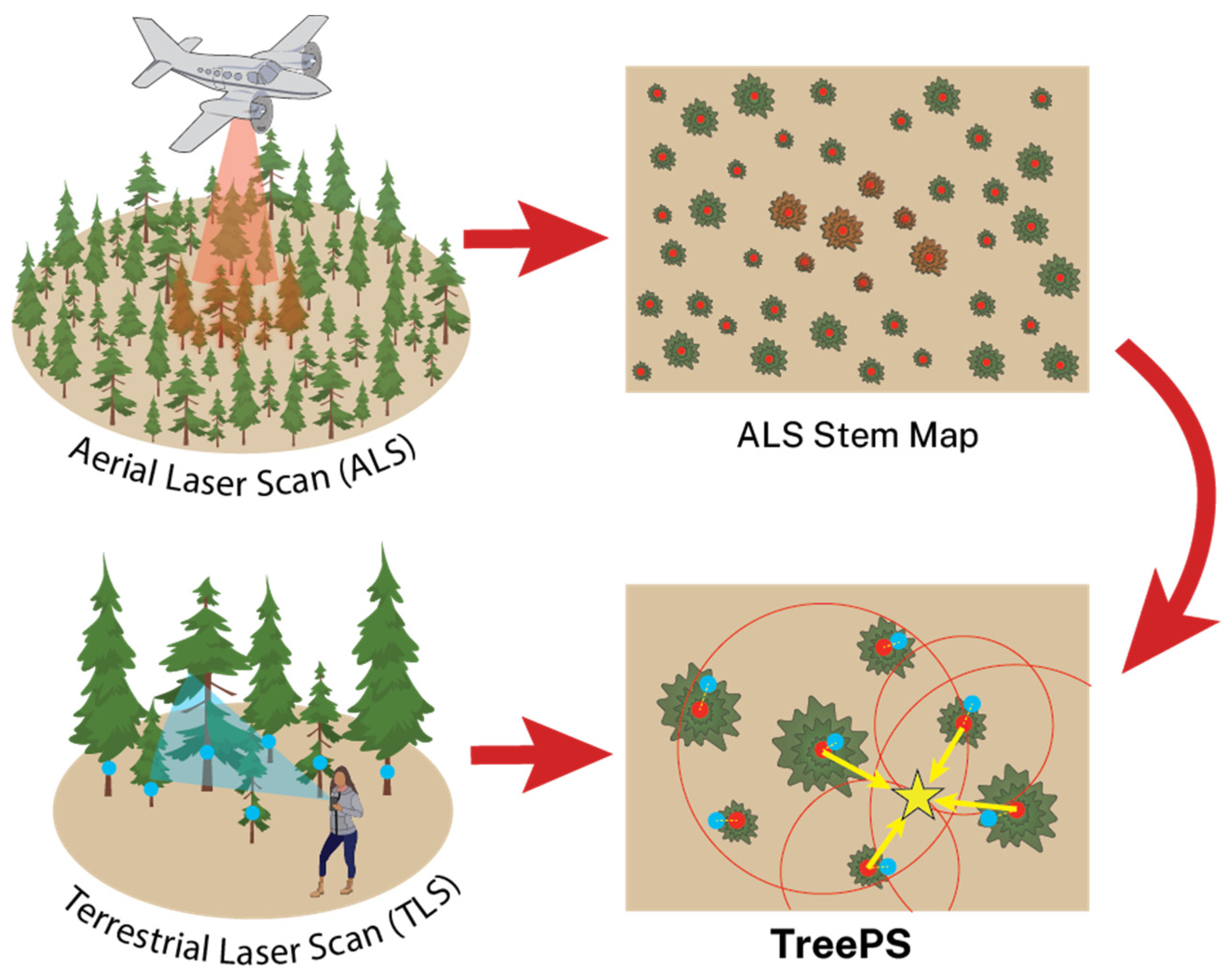
Figure 1. TreePS uses prior tree locations (red dots) derived from airborne lidar as a global map. Locations of trees derived from TLS, MLS, a smartphone, or other local measurement methods (blue dots) are then matched to the global stem map, proving a georeferenced but GNSS-free location of the individual, equipment or other resources.
Forests 17 00483 g001
Figure 2. Research sites in the University of Idaho Experimental Forest (46°54′49″ N 116°49′52″ W). Stand boundaries are outlined in light gray. Inset map: example of TLS captured at one UIEF Single-Tree Inventory permanent plot 88, one of 154 plots that cover the extent of the forest.
Forests 17 00483 g002
Figure 3. Differences in horizontal tree position based on the vertical point of measurement and lean. Dot size corresponds to stem diameter.
Forests 17 00483 g003
Figure 4. (Left): Workflow of method 1 using only the lidR package to estimate tree positions based on the tops of crowns for both TLS and ALS point clouds. (Right): Example plot with identified tree positions (black crosses) overlaid on Canopy Height Model (CHM) raster.
Forests 17 00483 g004
Figure 5. (Left): Workflow of method 2 using FORTLS to estimate tree positions based on DBH derived from TLS point clouds and lidR to estimate tree positions based on the top of tree crowns derived from ALS. (Right): Example output showing identified and segmented trees with red bands wrapped around stems at DBH height.
Forests 17 00483 g005
Figure 6. lidR-based segmentation with matching based on spatial and DBH characteristics. Red dots represent TLS-predicted tree positions, green dots represent ALS-predicted tree position with lines connecting the matches. Vectors in blue represent the distance and inverse azimuth from each TLS-identified tree applied to ALS-derived tree locations. A circle is drawn for each tree with radius equal to the distance of the vector to trilaterate a location based on prior ALS tree positions. The orange X represents the true plot center location, while the blue star represents the predicted location from map matching and trilateration.
Forests 17 00483 g006
Figure 7. Box and whisker plot showing distribution of horizontal error by method and match type.
Forests 17 00483 g007
Figure 8. Histogram showing the distribution of horizontal error between the two methods and two match types.
Forests 17 00483 g008
Figure 9. Histogram showing the distribution of mean DBH differences (per plot) in matches between the two segmentation workflow methods (lidR and FORTLS) and two match types.
Forests 17 00483 g009
Figure 10. Comparison of identified stems in different segmentation algorithms. FORTLS TLS (orange) identified 940 total stems, lidR ALS (green) identified 1253 total stems, and lidR TLS (blue) identified 2726 total stems.
Forests 17 00483 g010
Figure 11. Predicted diameter distribution of segmented stems in each algorithm in 10 cm bins. FORTLS TLS (orange), lidR ALS (green), and lidR TLS (blue).
Forests 17 00483 g011
Table 1. Successfully matched plots and plots that were not successfully matched based on method of identification and match type. 154 total plots were sampled; 107 plots had 3 or more trees present for matching to be performed.
VariableSuccessfully Matched PlotsPlots Without MatchesTotal Plots
lidR: Spatial Only100 (93.5%)7 (6.5%)107
lidR: Spatial and DBH98 (91.6%)9 (8.4%)107
FORTLS: Spatial Only62 (57.9%)45 (42.1%)107
FORTLS: Spatial and DBH58 (54.2%)49 (45.8%)107
Table 2. Results of analysis of variance on mixed-effects model.
VariableSum SqMean SqNum DFDen DFF ValuePr (>F)
Method8.698.691312.114.650.03
Match Type124.07124.071313.3366.339.14 × 10−15
Method: Match Type6.316.311312.993.370.07
Table 3. Results of mixed-effects model on random effects.
GroupNameVarianceStd. Dev.
Management District(Intercept)0.00050.02
Residual 1.871.37
Table 4. Range of horizontal errors when estimating the plot center.
VariableAverage ErrorMin ErrorMax ErrorRange of
Error
lidR: Spatial Only1.040.044.324.28
lidR: Spatial and DBH2.040.098.428.32
FORTLS: Spatial Only1.090.133.913.78
FORTLS: Spatial and DBH2.670.179.729.56
Disclaimer/Publisher’s Note: The statements, opinions and data contained in all publications are solely those of the individual author(s) and contributor(s) and not of MDPI and/or the editor(s). MDPI and/or the editor(s) disclaim responsibility for any injury to people or property resulting from any ideas, methods, instructions or products referred to in the content.