Article

The Effects of Different Container Types and Substrate Ratios on the Growth Characteristics of Zelkova schneideriana Hand.-Mazz. Seedlings


1
Hunan Provincial Academy of Forestry, Changsha 410007, China
2
State Key Laboratory of Woody Oil Resources Utilization, Changsha 410004, China
3
College of Forestry, Central South University of Forestry and Technology, Changsha 410004, China
4
Tongxing Forestry Co., Ltd., Zhuzhou 424400, China
5
School of Aeronautic Engineering, Changsha University of Science and Technology, Changsha 410114, China
*
Author to whom correspondence should be addressed.
These authors contributed equally to this work.
Forests 2026, 17(4), 473; https://doi.org/10.3390/f17040473
Submission received: 25 March 2026 / Revised: 8 April 2026 / Accepted: 10 April 2026 / Published: 12 April 2026
(This article belongs to the Special Issue Advances in Forest Tree Seedling Cultivation Technology—2nd Edition)

Abstract

To optimize container seedling cultivation of Chinese zelkova (Zelkova schneideriana Hand.-Mazz.), a three-factor completely randomized design was used to systematically evaluate the effects of container material, container size, and substrate composition on seedling growth, physiological traits, and root morphology. Different container materials, three container sizes, and multiple composite substrates were tested. Seedling height, biomass accumulation, photosynthetic characteristics, and root morphological indices were measured, and principal component analysis combined with comprehensive evaluation was applied to identify optimal treatments. The results showed that container size was one of the major factors affecting overall seedling quality, with large containers generally enhancing seedling height, biomass accumulation, photosynthetic capacity, and root development. Among container materials, B-type containers generally exhibited better overall performance under medium- and large-size conditions. Substrate composition showed a significant regulatory effect under appropriate container conditions, and the T3 composite substrate, composed of yellow soil (40%), peat (10%), sphagnum peat (15%), vermiculite (10%), rice husk (15%), and corn cob (10%), achieved the highest comprehensive score. According to the PCA-based comprehensive evaluation, the T3/A3 treatment ranked first, followed by T3/B2. Overall, the combination of B-type containers, appropriate medium-to-large container size, and the T3 substrate showed superior nursery performance. In particular, T3/A3 ranked first in the comprehensive evaluation, followed by T3/B2, indicating that both large black plastic containers and medium-sized B-type containers performed well under the T3 substrate.

1. Introduction

Chinese zelkova (Zelkova schneideriana Hand.-Mazz.), belonging to the family Ulmaceae and the genus Zelkova, is one of the rare and endemic broad-leaved tree species in China, widely distributed across Central China, East China, and parts of Southwest China [1,2]. This species is characterized by a stately growth form and pronounced seasonal variation in leaf coloration, conferring both high ornamental value and important ecological functions [3]. Its wood is hard, fine-grained, and highly resistant to decay, making it an important timber resource for high-grade furniture, construction, and landscape engineering [4]. In recent years, the wild populations of Z. schneideriana have declined continuously due to habitat fragmentation [5], intensified human disturbance, and limited natural regeneration capacity. Consequently, it has been listed as a Class II species in the National Key Protected Wild Plant List of China, highlighting the urgent need for effective conservation and sustainable utilization through artificial propagation and large-scale cultivation.
Container seedling cultivation has become an important technical approach for the artificial propagation of rare and native tree species owing to its advantages in root control and stimulation [6], precise water and nutrient management, and stable seedling quality. Compared with traditional bare-root seedlings [7], container-grown seedlings exhibit more intact root systems, shorter transplant shock periods, and higher survival rates after outplanting, making them particularly suitable for sites with complex environmental conditions or urgent ecological restoration demands [8]. Within container-based nursery systems, container type and substrate composition are key determinants of seedling quality [9]. The material, structure, and size of containers directly influence root spatial distribution, aeration and drainage conditions, and root architecture, while the physicochemical properties of substrates regulate water retention, aeration, and nutrient supply, thereby affecting seedling growth performance and physiological functioning.
Previous studies have demonstrated that different container types and substrate compositions exert significant effects on seedling growth. For example, appropriate pore structure can promote root extension [10] and improve water and nutrient use efficiency [11], while composite substrates rich in organic matter and with good aeration are conducive to root development and enhanced photosynthetic capacity [12,13]. However, most existing studies have focused on the effects of single factors, such as substrate composition or container size, whereas systematic investigations into the interactive effects of container type, container size, and substrate composition remain limited [14,15]. In particular, research on Z. schneideriana nursery practices has largely emphasized morphological traits such as seedling height and ground diameter, with relatively little attention paid to quantitative assessments of root morphology, physiological traits, and overall nursery performance [16,17,18].
Moreover, in practical production, the criteria for defining an “optimal treatment” vary depending on nursery objectives [19]. When rapid seedling production is prioritized, greater emphasis is placed on aboveground biomass accumulation and photosynthetic capacity; in contrast, when improving transplant survival is the primary goal, root system development and nutrient accumulation become more critical [20]. Therefore, a comprehensive, multi-indicator evaluation of the nursery performance of different container–substrate combinations is essential for establishing a scientific and widely applicable container seedling cultivation system for Z. schneideriana.
Based on these considerations, the present study investigated Z. schneideriana seedlings under different combinations of container type, container size, and substrate composition. Compared with previous studies focusing mainly on container size and substrate ratio [21], the present study further incorporated different container types and systematically analyzed the effects of these treatments on emergence rate, growth traits, physiological characteristics, root morphology, and nutrient accumulation. In addition, principal component analysis was employed to comprehensively evaluate the nursery performance of different treatments [22]. The objectives were to identify optimal container seedling cultivation schemes for Z. schneideriana and to provide a scientific basis and technical support for large-scale seedling production and ecological restoration projects in southern China [23].

2. Materials and Methods

2.1. Study Site

The experiment was conducted at the nursery base of Tongxing Forestry Co., Ltd., in Chaling County, Zhuzhou City, Hunan Province, China (26°59′ N, 113°54′ E). The study area is located in a humid subtropical monsoon climate zone, characterized by synchronous rainfall and heat and distinct seasonal variation. The long-term mean annual precipitation ranges from 1300 to 1500 mm, with most rainfall occurring from April to August. The long-term mean annual temperature is approximately 17.8 °C, and the average annual relative humidity is about 75%. These environmental conditions are suitable for the cultivation of container seedlings of Zelkova schneideriana Hand.-Mazz.

2.2. Experimental Materials

Seeds used in this study were collected in mid-November 2023 from mature mother trees of Zelkova schneideriana in the Qingshigang State-owned Forest Farm, Yanling County, Zhuzhou City, Hunan Province, China. The forest farm is located approximately within 26°06′45″–27°07′56″ N and 113°33′51″–114°07′07″ E, and the collection site was at an elevation of about 2000 m. After collection, the seeds were air-dried under shade conditions. Damaged, shriveled, and mechanically injured seeds were removed, and seeds with uniform size and good plumpness were selected for the experiment. The selected seeds were stored at 4 °C until sowing. Sowing was carried out in early April 2024.
The substrates were prepared from yellow soil, peat soil, grass peat, perlite, vermiculite, rice husk, and sawdust according to the volumetric ratios shown in Table 1. Three types of containers were used, namely black plastic pots, bicolor nursery pots, and nonwoven fabric bags. Three size classes were established for each container type, and the detailed specifications are listed in Table 2.
The nursery was equipped with an automatic sprinkler irrigation system with mist nozzles. During cultivation, all treatments were managed uniformly according to weather conditions and substrate moisture status. Under normal conditions, irrigation was applied every 3–5 days, and the irrigation frequency was appropriately increased during periods of high summer temperature.

2.3. Experimental Design

A three-factor completely randomized design was used in this study, with container type, container size, and substrate composition as the experimental factors. Five substrate treatments (CK and T1–T5, as applicable in the tables and figures) were established according to volumetric mixing ratios, and their compositions are listed in Table 1. The container treatments included three container types, each with three size classes, resulting in nine container treatments in total (Table 2).
The substrate and container treatments were combined factorially to generate all treatment combinations. Each treatment was replicated three times, and 10 seedlings were measured in each replicate. Therefore, 30 seedlings were used for each treatment in growth-related measurements. All treatments were randomly arranged within the nursery area and maintained under the same routine nursery management conditions.
The substrate treatments (T1–T5) were established on the basis of combining yellow soil with different proportions of locally available organic and inorganic amendments, including peat, sphagnum peat, vermiculite, perlite, rice husk, sawdust, and corn cob. The purpose of this design was to construct substrate formulations with contrasting structural and nutritional properties, so as to compare their suitability for container seedling cultivation of Zelkova schneideriana. Rather than representing arbitrary mixtures, the T1–T5 treatments were selected to form a gradient of substrate composition and practical nursery options under local material conditions.

2.4. Determination of Physicochemical Properties of Substrates

Before sowing, the physicochemical properties of each substrate treatment were determined. After thorough mixing, each substrate was homogenized and subsampled using the quartering method. For each substrate treatment, three samples were used for the determination of physical and chemical properties.
The physical properties measured included bulk density, capillary porosity, non-capillary porosity, and total porosity. Bulk density was determined using the core method, and the porosity indices were calculated based on substrate water content under saturated water absorption and free drainage conditions [24].
The chemical properties included total nitrogen, total phosphorus, and total potassium. Total nitrogen was determined using the Kjeldahl method [25], total phosphorus was measured using the molybdenum–antimony colorimetric method [26], and total potassium was determined by flame photometry [27]. Mean values for the three samples from each substrate type were used for subsequent analysis.

2.5. Measurement of Growth Parameters

From July to October 2024, the growth performance of the seedlings under different treatments was monitored. During the experimental period, emergence rate was recorded at 40-day intervals. For growth-related measurements, each treatment included three replicates, and 10 seedlings were measured in each replicate, giving a total of 30 seedlings per treatment. Seedling height was measured using a steel ruler with an accuracy of 0.01 cm, and ground diameter was measured using a digital vernier caliper with an accuracy of 0.01 mm.
At the end of the experiment, one representative seedling was selected from each replicate based on the mean values of seedling height and ground diameter. These representative seedlings were used for subsequent measurements of root morphology, dry mass, and physiological traits. Statistical analysis was conducted using the mean values for each of the three replicates, and the results are presented as mean ± standard error (SE).
After sampling, the roots were carefully washed with clean water to remove adhering substrate, and excess surface moisture was gently removed. Each seedling was then separated into roots, stems, and leaves at the root collar. Root systems were scanned and analyzed using WinRHIZO Pro software (v2004b; Regent Instruments Inc., Quebec, QC, Canada), and root morphological parameters, including total root length, root surface area, root volume, root tip number, and mean root diameter, were quantified accordingly [28].
The separated roots, stems, and leaves were placed in paper bags and heated at 120 °C for 10 min to deactivate enzymes, followed by oven drying at 60 °C to constant weight [29]. Dry mass was determined using an analytical balance with a precision of 0.001 g.
Emergence rate (%) was calculated as follows:
Emergence rate (%) = (Number of visible seedlings/Number of sown seeds) × 100.

2.6. Measurement of Physiological Parameters

In early October 2024, photosynthetic parameters were measured on clear and windless mornings between 08:30 and 11:30. Fully expanded, mature, and healthy functional leaves were selected from representative seedlings in each treatment. For each treatment, one representative seedling was selected from each of the three replicates, and the mean value of the three replicates was used for statistical analysis. Gas-exchange measurements were conducted using a portable photosynthesis system (LI-6400XT, LI-COR Biosciences, Lincoln, NE, USA) [30,31]. During measurement, photosynthetically active radiation was set to 1200 μmol·m−2·s−1, the reference CO2 concentration was set to 400 μmol·mol−1, the leaf chamber temperature was maintained at 28 °C, and the relative air humidity was controlled at approximately 65%. For each leaf, values were recorded only after the readings had stabilized. Net photosynthetic rate (Pn), transpiration rate (Tr), stomatal conductance (Gs), and intercellular CO2 concentration (Ci) were then recorded.
Chlorophyll content was determined using the 80% acetone extraction method [32]. Mature leaves from three biological replicates of each treatment were collected for analysis. Leaf nutrient contents were determined as follows: total nitrogen was measured using the Kjeldahl method [25], total phosphorus was determined using the molybdenum–antimony colorimetric method [33], and total potassium was measured by flame photometry [34]. All physiological and nutrient measurements were performed with three replicates for each treatment, and the results are presented as mean ± standard error (SE).

2.7. Data Analysis

All measured data were compiled and preliminarily processed using WPS Excel 2020 (Kingsoft Office Software Corporation Ltd., Beijing, China). Statistical analyses were conducted using IBM SPSS Statistics 27.0 (IBM Corp., Armonk, NY, USA). Analysis of variance (ANOVA) was used to evaluate the effects of container type, container size, substrate composition, and their interactions. To further clarify the factor-level effects in this three-factor experiment, three-way ANOVA was conducted for the major growth and physiological traits, with substrate composition, container type, and container size treated as fixed factors. When significant effects or interactions were detected, Tukey’s multiple comparison test was used for post hoc comparisons at the 0.05 significance level. For grouped figures, comparisons were performed among substrate treatments within each container treatment, whereas for tables, lowercase letters within the same column indicate significant differences among the listed treatment combinations. In all cases, the mean value for each replicate was used for statistical analysis, and the results are presented as mean ± standard error (SE). Figures and tables were prepared using Origin 2024 (OriginLab Corporation, Northampton, MA, USA).
In addition, principal component analysis (PCA) was employed to reduce data dimensionality and to comprehensively evaluate multiple indicators of growth and physiological performance in container-grown seedlings, with the aim of identifying the optimal substrate–container combinations based on overall seedling performance.

3. Results

To clarify the factor-level statistical effects in this three-factor experiment, a three-way ANOVA was performed for the major growth and physiological traits of Zelkova schneideriana Hand.-Mazz. seedlings, and the results are summarized in Table 3. Overall, substrate composition, container type, and container size exerted varying degrees of influence on the measured traits, and several interaction effects were also significant, indicating that seedling performance was jointly regulated by these experimental factors rather than by any single factor alone.
As shown in Table 3, three-way ANOVA indicated that substrate composition and container size significantly affected all measured traits, whereas the effect of container type differed among traits. Specifically, container type had no significant main effect on seedling height, but significantly affected ground diameter, dry mass accumulation, chlorophyll content, and nutrient contents. These results suggest that substrate composition and container size were more consistent determinants of seedling performance, whereas the influence of container type was more trait-dependent.
In addition, significant two-way and three-way interaction effects were detected for most traits, indicating that the influence of each experimental factor could not be interpreted independently. Instead, the effects of substrate composition, container type, and container size were interconnected, and the growth responses of Zelkova schneideriana Hand.-Mazz. seedlings were jointly shaped by these combined factors.

3.1. Physicochemical Properties of Substrates

Significant differences in nutrient contents and physical structural characteristics were observed among the different substrate treatments (Table 4). Overall, compared with the conventional control substrate (CK), all lightweight composite substrates exhibited varying degrees of improvement in nutrient supply capacity and pore structure, indicating that substrate formulation optimization can effectively enhance the physicochemical properties of substrates used in container seedling cultivation.
Regarding nutrient contents, total phosphorus and soil total nitrogen showed pronounced differences among treatments. The total phosphorus content of CK was the lowest (0.291 mg·g−1), whereas T3 exhibited the highest value (0.921 mg·g−1), approximately 3.16 times that of CK, indicating a markedly stronger phosphorus supply capacity. The total phosphorus contents of T1, T2, T4, and T5 were all higher than that of CK but lower than that of T3. A similar trend was observed for soil total nitrogen. T3 had the highest total nitrogen content (2.414 g·kg−1), which was significantly greater than those of the other treatments, while CK showed the lowest value (0.633 g·kg−1), demonstrating that lightweight composite substrates effectively enhanced nitrogen availability.
Potassium content varied only slightly among treatments, ranging from 1.449% to 1.713%. T3 exhibited a slightly higher potassium content, whereas T1 showed a relatively lower value. Overall, the differences were limited, suggesting that potassium availability was relatively stable among substrates and was not a primary limiting factor distinguishing substrate performance under the present experimental conditions.
In terms of physical properties, substrate bulk density and pore structure differed markedly among treatments. CK as well as T1 and T5 exhibited relatively high bulk densities (1.267–1.294 g·cm−3), whereas T2 and T3 showed significantly reduced bulk densities, with T2 being the lowest (1.044 g·cm−3), indicating that the incorporation of lightweight materials effectively reduced substrate compaction. Pore structure analysis revealed that T3 exhibited the highest non-capillary porosity (6.020%), capillary porosity (28.518%), and total porosity (34.538%) among all treatments, which were markedly higher than those of CK (26.466%). This indicates a favorable balance between aeration and water-holding capacity. The total porosity of T2 and T4 was also higher than that of CK, reaching 29.101% and 30.094%, respectively, reflecting improved structural properties.
Overall, substantial differences in nutrient supply capacity and pore structure were observed among the substrate formulations. Among them, T3 showed clear advantages in both nitrogen and phosphorus availability as well as pore structure optimization, combining relatively low bulk density with high total porosity. These characteristics provide a favorable physicochemical foundation for root development and water–air regulation in container-grown Zelkova schneideriana seedlings. T2 and T4 also performed well in reducing bulk density and improving pore structure, whereas CK was comparatively inferior in both nutrient availability and physical structure.

3.2. Effects of Different Container–Substrate Treatments on Seedling Emergence Rate

Under different container–substrate treatments, the emergence rate of Zelkova schneideriana seeds remained generally high (Table 5). Emergence rates ranged from 96% to 100% across all treatments, with most treatments exceeding 98% and several reaching 100%. These results indicate that Z. schneideriana seeds exhibit strong germination capacity under the experimental conditions and show good adaptability to different substrate formulations and container configurations.
From the perspective of substrate effects, differences in emergence rate among substrate treatments were relatively small under various container conditions. Neither the control substrate (CK) nor the lightweight composite substrates (T1–T5) showed any obvious inhibitory effects on seed emergence, suggesting that all substrate formulations were able to meet the basic requirements for water availability and aeration during the germination stage. Overall, emergence rate was not a key indicator for distinguishing the performance of different substrate treatments.
With respect to container effects, different container materials and sizes had limited influence on emergence rate; however, some differences in stability were observed. Compared with small containers (13 cm × 13 cm), medium and large containers (18 × 18 cm and 23 × 23 cm) generally exhibited slightly higher and more stable emergence rates, with most treatments reaching 98%–100%. This suggests that larger container volumes may buffer fluctuations in substrate moisture and temperature, thereby providing a more stable microenvironment for seed germination. No clear differences in emergence rate were observed among container materials, indicating that bicolor rigid pots, black plastic pots, and nonwoven fabric containers were all suitable during the germination stage.
Overall, the effects of different container–substrate treatments on the emergence rate of Z. schneideriana were relatively minor, and all treatments ensured a high level of seedling emergence. These results suggest that, under the present experimental conditions, container and substrate configurations exerted limited constraints during the germination stage. Consequently, a relatively uniform initial seedling establishment was achieved, providing a consistent foundation for subsequent differences in vegetative growth, biomass accumulation, and root morphological development.

3.3. Effects of Different Container–Substrate Treatments on Vegetative Growth of Zelkova schneideriana

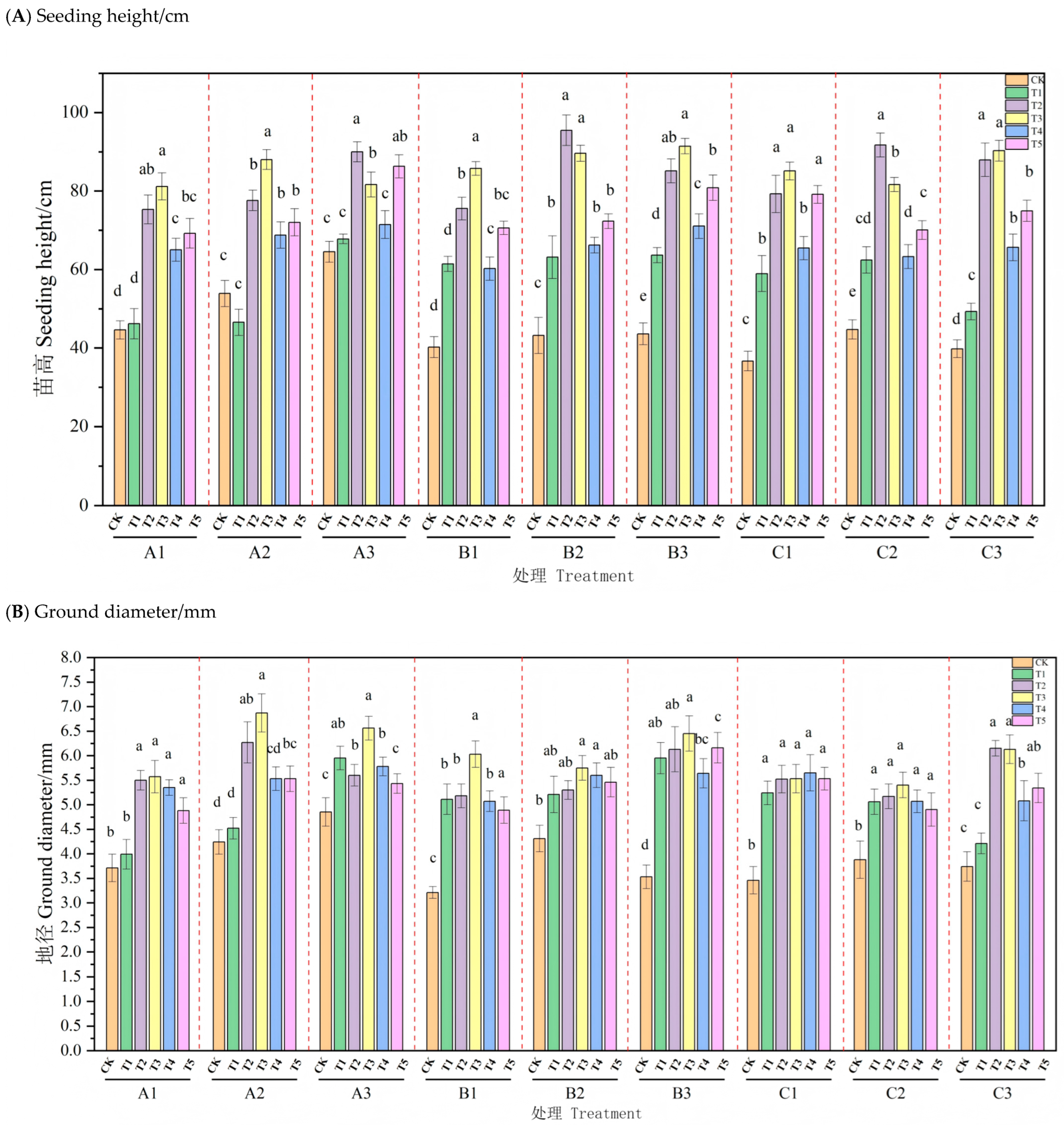
Significant differences in vegetative growth of container-grown Zelkova schneideriana seedlings were observed among treatments, mainly reflected by variations in seedling height and ground diameter (Figure 1). Overall, similar trends were observed for both traits across treatments; however, differences in growth level were more pronounced under different container conditions.
From the perspective of container effects, under identical substrate conditions, container size showed a clear influence on seedling height and ground diameter. As container size increased from small (13 cm × 13 cm) to medium and large sizes (18 cm × 18 cm and 23 cm × 23 cm), both seedling height and ground diameter generally showed an increasing trend. Seedlings grown in A2 and A3, B2 and B3, as well as C2 and C3 treatments generally exhibited higher values of seedling height and ground diameter, whereas vegetative growth was relatively restricted in A1, B1, and C1 treatments. These results suggest that limited container volume may restrict vegetative growth to some extent. Differences among container materials were also observed, with B-type containers under medium and large sizes generally showing greater seedling height and ground diameter, suggesting a relatively stronger growth-promoting tendency.
Based on the evident effects of container size and material, differences in vegetative growth among substrate treatments were further compared. Under the same container conditions, seedling height and ground diameter in all lightweight composite substrate treatments were generally higher than those in the control substrate (CK), indicating that substrate formulation played an important regulatory role in vegetative growth. Among the substrates, T3 consistently resulted in the highest or second-highest seedling height and ground diameter under most container conditions, showing a relatively stable growth-promoting effect. T2 and T4 ranked next, whereas the effects of T1 and T5 were comparatively weaker, although they still generally performed better than CK. Differences among substrate treatments were more pronounced in medium and large containers, while such differences were relatively reduced in small containers.
These results indicate that container size was an important structural factor affecting the vegetative growth of Z. schneideriana container seedlings. Differences among container materials were also observed, with B-type containers under medium and large sizes generally showing relatively better vegetative growth performance.

3.4. Effects of Different Container–Substrate Treatments on Aboveground and Belowground Dry Mass of Zelkova schneideriana

Significant differences in aboveground and belowground dry mass of container-grown Zelkova schneideriana seedlings were observed among treatments (Table 6). Overall, similar variation patterns were found for aboveground and belowground dry mass across treatments. Three-way ANOVA showed that substrate composition, container type, and container size all significantly affected aboveground and belowground dry mass (Table 3). In general, seedlings grown in lightweight composite substrates tended to exhibit greater dry mass accumulation than those grown in the control substrate (CK), although the magnitude of this effect varied with container type and container size.
From the perspective of container effects, under identical substrate conditions, container size had a significant influence on both aboveground and belowground dry mass. As container size increased from small (13 cm × 13 cm) to medium and large sizes (18 cm × 18 cm and 23 cm × 23 cm), aboveground and belowground dry mass showed a clear increasing trend. Higher levels of dry matter accumulation were generally observed in A2 and A3, B2 and B3, as well as C2 and C3 treatments, whereas relatively lower values were found in A1, B1, and C1 treatments. These results indicate that container volume imposes a pronounced limitation on dry matter formation. Differences among container materials were also detected, with B-type containers under medium and large sizes showing comparatively higher aboveground and belowground dry mass, reflecting a stronger promoting effect on biomass accumulation.
Based on the evident effects of container size and material, differences in dry matter accumulation among substrate treatments were further examined. Under the same container conditions, aboveground and belowground dry mass in all lightweight composite substrate treatments were significantly higher than those in CK, indicating that substrate formulation played an important regulatory role in biomass accumulation. Among the substrates, T3 consistently resulted in the highest or second-highest aboveground and belowground dry mass under most container conditions, demonstrating a relatively stable biomass-promoting effect. T2 and T5 ranked next, whereas the promoting effects of T1 and T4 were comparatively weaker, although still significantly superior to CK. Differences among substrate treatments were more pronounced in medium and large containers, while such differences were relatively reduced in small containers.
Overall, container size was identified as the primary structural factor affecting dry matter accumulation in Z. schneideriana container seedlings, whereas substrate formulation exerted an additional enhancing effect on both aboveground and belowground dry mass. When sufficient growing space was provided, the biomass-promoting advantages of lightweight composite substrates were more fully expressed, resulting in a significant improvement in seedling dry matter production.

3.5. Effects of Different Container–Substrate Treatments on Nutrient Contents of Zelkova schneideriana

Significant differences in total nitrogen (N), total phosphorus (P), and total potassium (K) contents in Zelkova schneideriana seedlings were observed among treatments (Table 7). Overall, similar variation patterns were detected for N, P, and K contents across treatments. Seedlings grown in lightweight composite substrates generally exhibited higher nutrient contents than those grown in the control substrate (CK), and marked differences in nutrient accumulation were observed under different container conditions.
From the perspective of container effects, under identical substrate conditions, container size had a significant influence on plant N, P, and K contents. As container size increased from small (13 cm × 13 cm) to medium and large sizes (18 cm × 18 cm and 23 cm × 23 cm), N, P, and K contents in plant tissues showed an overall increasing trend. Higher nutrient contents were generally observed in A2 and A3, B2 and B3, as well as C2 and C3 treatments, whereas relatively lower values occurred in A1, B1, and C1 treatments. These results indicate that container volume imposes a clear limitation on nutrient uptake and accumulation. Differences among container materials were also evident, with B-type containers under medium and large sizes exhibiting comparatively higher N, P, and K contents.
Based on the evident effects of container size and material, differences in nutrient contents among substrate treatments were further examined. Under the same container conditions, all lightweight composite substrates resulted in higher N, P, and K contents than CK, indicating that substrate formulation played an important regulatory role in nutrient uptake. Among the substrates, T3 consistently produced the highest or second-highest N, P, and K contents under most container conditions, showing a relatively stable promoting effect. T5 and T2 ranked next, whereas the effects of T1 and T4 were comparatively weaker, although still superior to CK. Differences among substrate treatments were more pronounced in medium and large containers, while such differences were relatively reduced in small containers.
Overall, container size was identified as the primary structural factor influencing nutrient accumulation in Z. schneideriana seedlings, whereas substrate formulation exerted an additional enhancing effect on nutrient uptake and accumulation. When sufficient growing space was provided, the nutrient supply advantages of lightweight composite substrates were more fully expressed, resulting in a significant increase in plant N, P, and K accumulation.

3.6. Effects of Different Container–Substrate Treatments on Chlorophyll Content and Photosynthetic Characteristics of Zelkova schneideriana

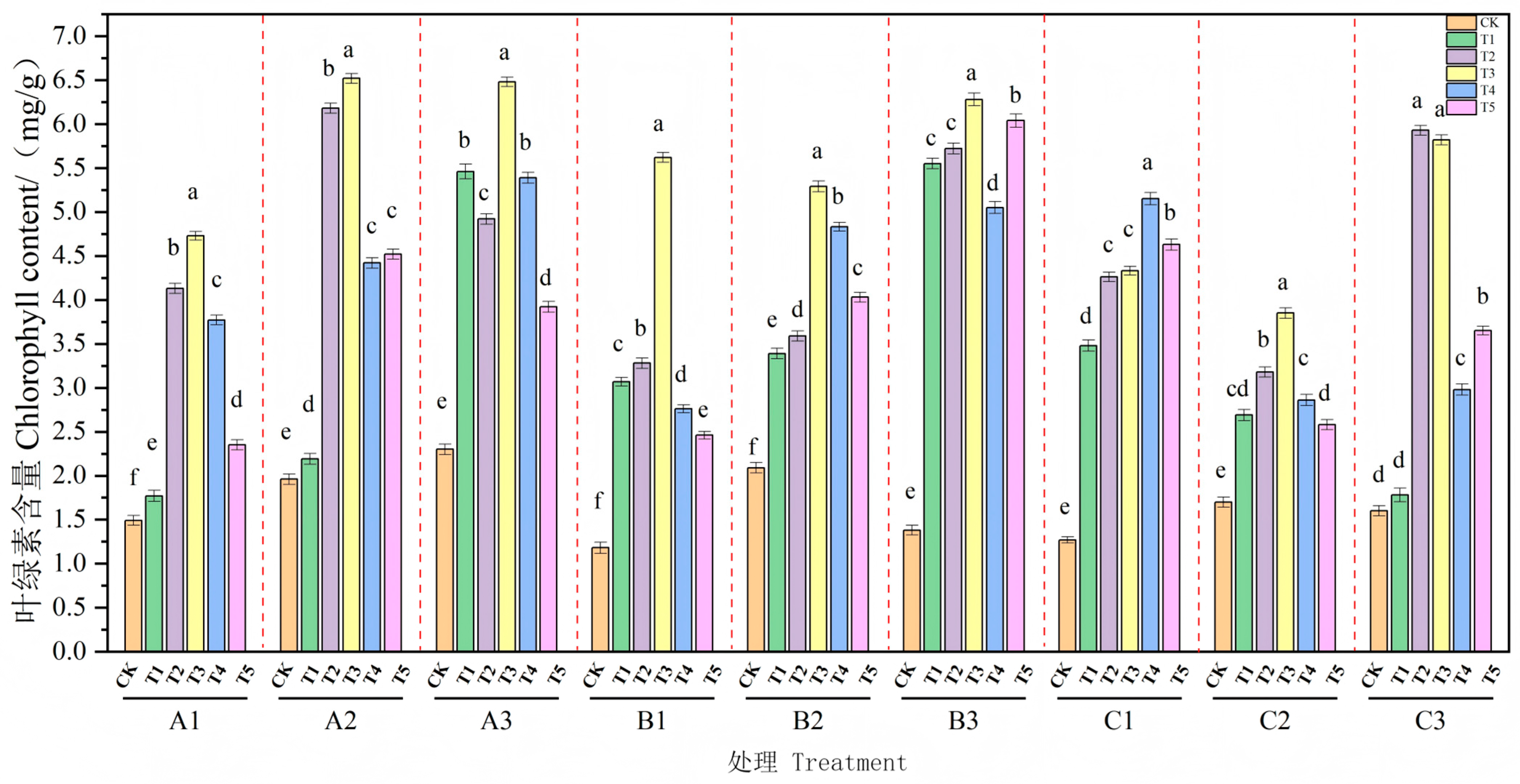
Significant differences in chlorophyll content and photosynthetic physiological parameters of Zelkova schneideriana were observed among treatments (Figure 2, Table 8). Overall, similar variation trends were observed among chlorophyll content, net photosynthetic rate (Pn), stomatal conductance (Gs), and transpiration rate (Tr). Seedlings grown in lightweight composite substrates generally exhibited higher values than those grown in the control substrate (CK), and such differences tended to be more evident under medium and large container conditions.
From the perspective of treatment combinations, chlorophyll content and photosynthetic parameters generally tended to be higher under medium and large container conditions than under small container conditions. Higher chlorophyll content and photosynthetic parameter values were often observed in A2 and A3, B2 and B3, as well as C2 and C3 treatments, whereas relatively lower values occurred in A1, B1, and C1 treatments. Differences among container materials were also observable, with B-type containers under medium and large sizes generally showing comparatively better photosynthetic performance.
Under the same container conditions, most lightweight composite substrates resulted in higher chlorophyll content and relatively higher Pn, Gs, and Tr values than CK, indicating that substrate formulation played an important regulatory role in leaf photosynthetic performance. Among the substrates, T3 generally produced the highest or second-highest chlorophyll content under most container conditions and showed relatively stable advantages in Pn, Gs, and Tr. T4 and T2 ranked next, whereas the promoting effects of T1 and T5 were comparatively weaker. Differences among substrate treatments were more pronounced in medium and large containers, while such differences were relatively reduced in small containers.
Overall, both container conditions and substrate formulation contributed to variation in chlorophyll content and photosynthetic physiological traits of Z. schneideriana seedlings. Under conditions with sufficient growing space, the promoting effects of lightweight composite substrates on leaf photosynthetic performance were more fully expressed.
As shown in Table 3, substrate composition, container type, and container size all significantly affected chlorophyll content, indicating that chlorophyll accumulation was jointly regulated by these three factors.

3.7. Effects of Different Container–Substrate Nursery Treatments on Root Morphological Traits of Zelkova schneideriana

Significant differences in root morphological traits of container-grown Zelkova schneideriana seedlings were observed among treatments (Table 9). Overall, clear differentiation was found among treatments in terms of total root length, root surface area, root volume, root tip number, and average root diameter, with generally consistent variation patterns across these indicators.
From the perspective of container effects, under identical substrate conditions, container size showed a clear influence on root morphological traits. As container size increased from small (13 cm × 13 cm) to medium and large sizes (18 cm × 18 cm and 23 cm × 23 cm), total root length, root surface area, root volume, and root tip number generally showed increasing trends. Higher root biomass and root quantity were generally observed in A2 and A3, B2 and B3, as well as C2 and C3 treatments, whereas root development was relatively restricted in A1, B1, and C1 treatments. These results indicate that container volume imposes a clear limitation on root system expansion. Differences among container materials were also evident, with B-type containers under medium and large sizes exhibiting overall superior root morphological performance.
Based on the evident effects of container size and material, differences in root morphological traits among substrate treatments were further examined. Under the same container conditions, all lightweight composite substrates resulted in higher total root length, root surface area, root volume, and root tip number than the control substrate (CK), indicating that substrate formulation played an important regulatory role in root growth. Among the substrates, T2 and T3 consistently produced the highest or second-highest values for most root morphological traits under the majority of container conditions, showing relatively stable promoting effects. The promoting effects of T1, T4, and T5 were comparatively weaker, although still superior to CK. Differences among substrate treatments were more pronounced in medium and large containers, while such differences were relatively reduced in small containers.
In terms of root architectural characteristics, seedlings grown in T2 and T3 substrates exhibited increased root quantity and root system volume while maintaining moderate average root diameter, forming a “fine and dense” root system architecture that is conducive to expanding the absorptive surface area. In contrast, seedlings grown in CK exhibited relatively lower root quantity and root biomass.
Overall, container size was identified as the primary structural factor influencing root morphological development of Z. schneideriana container seedlings, whereas substrate formulation exerted an additional enhancing effect on root growth. When sufficient growing space was provided, the promoting effects of lightweight composite substrates on root expansion and branching were more fully expressed.

3.8. Principal Component Analysis of 17 Traits of Zelkova schneideriana Under Different Container–Substrate Nursery Treatments

To comprehensively evaluate the growth quality and physiological–ecological characteristics of container-grown Zelkova schneideriana seedlings under different container and substrate conditions, principal component analysis (PCA) was performed based on 17 traits, including seedling height, ground diameter, aboveground and belowground dry mass, chlorophyll content, photosynthetic parameters, plant nutrient contents, and root morphological traits. The results showed that the first five principal components had eigenvalues greater than 1, with a cumulative variance contribution rate of 82.577%, indicating that these components adequately represented the information contained in the original variables (Table 10).
The first principal component (Factor 1) explained 33.215% of the total variance and exhibited high positive loadings for seedling height, ground diameter, aboveground and belowground dry mass, total chlorophyll content, and plant total nitrogen and total phosphorus contents. This component reflects the integrated characteristics of vegetative growth, biomass accumulation, and nutrient uptake and was therefore defined as the “comprehensive growth and nutrient uptake factor.” This result indicates that overall seedling quality of Z. schneideriana is primarily regulated by vegetative growth performance and nutrient supply status.
The second principal component (Factor 2) accounted for 20.111% of the total variance and showed high loadings for total root length, root surface area, root volume, root tip number, and average root diameter. This component mainly reflects root quantity and spatial expansion characteristics and was defined as the “root morphological structure factor.” These results suggest that root system development is an important component influencing the comprehensive quality of container-grown seedlings.
The third principal component (Factor 3), explaining 13.544% of the total variance, exhibited high positive loadings for stomatal conductance, transpiration rate, and intercellular CO2 concentration, reflecting leaf gas exchange and stomatal regulation characteristics. This component was defined as the “stomatal regulation and gas exchange factor.”
The fourth principal component (Factor 4) explained 8.298% of the total variance and was mainly associated with net photosynthetic rate, reflecting differences in instantaneous photosynthetic efficiency. This component was defined as the “photosynthetic efficiency factor.”
The fifth principal component (Factor 5) accounted for 7.409% of the total variance and was mainly related to plant total nitrogen and total phosphorus contents, reflecting supplementary characteristics of mineral nutrient status. This component was defined as the “mineral nutrient supplementation factor.”
Overall, the first two principal components together explained 53.326% of the total variance, indicating that vegetative growth and root morphological traits are the core factors determining the comprehensive quality of container-grown Z. schneideriana seedlings, while photosynthetic physiological traits and nutrient status act as important supplementary factors. The PCA results further corroborate the conclusions of the single-factor analyses, demonstrating that container size and substrate conditions have significant effects on seedling growth, nutrient uptake, and root system development.

3.9. Comprehensive Evaluation of 17 Traits of Zelkova schneideriana Under Different Container–Substrate Nursery Treatments

Based on the results of the single-factor analyses and principal component analysis, a comprehensive evaluation was conducted to quantitatively assess the overall growth quality of container-grown Zelkova schneideriana seedlings under different container and substrate conditions. According to the PCA results, a comprehensive evaluation function was constructed, and 17 traits—including seedling height, ground diameter, dry matter accumulation, chlorophyll content, photosynthetic characteristics, plant nutrient contents, and root morphological traits—were integrated to calculate comprehensive scores and rank different treatments (Table 11).
The comprehensive score (F) results revealed marked differences in overall seedling quality among treatments. From the perspective of container effects, under identical substrate conditions, container size showed a clear influence on comprehensive scores. Treatments with medium and large container sizes (A3, B2, B3, C2, and C3) generally exhibited higher comprehensive scores than those with small container sizes (A1, B1, and C1), and many of these treatments ranked among the top positions. These results indicate that container size was an important structural factor affecting the comprehensive quality of Z. schneideriana container seedlings. However, the comprehensive ranking was jointly determined by multiple traits, container type, and substrate formulation, rather than by pot size alone. Differences among container materials were also observed, with B-type containers under medium and large sizes showing relatively higher comprehensive scores.
Based on the evident effects of container size, comprehensive evaluation results under different substrate conditions were further compared. Under the same container conditions, all lightweight composite substrates generally achieved higher comprehensive scores than the control substrate (CK), indicating that substrate formulation plays an important regulatory role in overall seedling quality. Among the substrates, T3 consistently obtained higher comprehensive scores under most container conditions, demonstrating good stability and consistency. T2, T4, and T5 ranked next, whereas T1 and CK showed relatively lower comprehensive scores. Differences in ranking among substrate treatments were more pronounced under medium and large container conditions.
Overall, the comprehensive ranking results showed that top-performing treatments were mainly concentrated in combinations of medium and large containers with lightweight composite substrates, further validating the conclusions derived from the single-factor and principal component analyses. In general, container size plays a dominant role in the formation of comprehensive seedling quality of Z. schneideriana, while substrate formulation exerts an amplifying and optimizing effect on seedling growth performance. The comprehensive evaluation provides a quantitative basis for the selection of nursery techniques and their application in seedling production.

4. Discussion

4.1. Dominant Effects of Container Conditions on the Growth of Zelkova schneideriana Container Seedlings

The results of this study indicate that container conditions influenced vegetative growth, biomass accumulation, nutrient uptake, photosynthetic capacity, and root morphological traits of container-grown Zelkova schneideriana seedlings [35]. Based mainly on the trends observed for seedling height, ground diameter, chlorophyll content, photosynthetic parameters, and root morphological traits, container size appeared to be an important structural factor affecting seedling performance. In the comprehensive evaluation, medium and large container treatments also tended to achieve higher rankings overall, although some small-container treatments still performed better than certain medium-container treatments [36]. In the comprehensive evaluation, medium and large container treatments also tended to achieve higher rankings overall, although some small-container treatments still performed better than certain medium-container treatments. Recent studies on container-grown woody species have widely reported that limited container volume can lead to root confinement, altered root architecture, and reduced nutrient uptake efficiency, thereby constraining aboveground growth [37]. In contrast, increasing container volume can effectively alleviate spatial limitations on root growth, promote root expansion and biomass accumulation, and ultimately enhance overall seedling performance [38]. This pattern has been confirmed across a wide range of broadleaf and coniferous tree species [39].
Moreover, under the same container size, container material also influenced seedling growth [40]. Some container types exhibited relatively more stable performance in terms of root morphology, photosynthetic capacity, and nutrient accumulation, suggesting that container structural characteristics—such as aeration, drainage, and sidewall properties—may regulate seedling growth by modifying the rhizosphere microenvironment [41]. Recent and previous studies have further indicated that optimizing container structural design can improve root distribution patterns and enhance growth uniformity of container seedlings [5,42]. In the present study, some container types exhibited favorable performance under specific substrate and size combinations. In particular, B-type containers generally showed relatively better growth and comprehensive performance under medium- and large-size conditions, whereas nonwoven fabric containers may still provide potential advantages in rhizosphere aeration and drainage under certain nursery conditions. Therefore, the effects of container type should be interpreted in relation to both structural properties and their interactions with substrate formulation and container size.

4.2. Regulatory Effects of Substrate Formulation on Seedling Growth and Physiological Traits

With the dominant effect of container size clearly established, substrate formulation played an additional regulatory role in the growth performance of Z. schneideriana container seedlings. Compared with the control substrate, all lightweight composite substrates generally exhibited superior performance in biomass accumulation, plant nutrient status, photosynthetic capacity, and root morphological development, indicating that optimization of substrate physicochemical properties can significantly improve the seedling growth environment [43].
Recent studies on substrates for container nursery production have suggested that reducing substrate bulk density, increasing total porosity, and optimizing the air–water balance are key approaches for improving seedling quality [44]. Lightweight composite substrates can enhance rhizosphere aeration and water-holding capacity, thereby facilitating root growth and nutrient uptake and promoting aboveground development [45]. The present results showed that the growth-promoting effects of substrate formulation were more pronounced under medium and large container conditions, indicating that the effective expression of substrate effects depends on the availability of sufficient root growth space.

4.3. Integrated Analysis of Substrate Component Proportions and Seedling Growth Responses

In this study, seven materials—yellow soil, peat soil, turf peat, perlite, vermiculite, rice husk, and sawdust—were combined at different volumetric ratios to formulate composite substrates. By integrating substrate physicochemical properties, seedling growth traits, physiological parameters, and principal component analysis results, clear directional relationships between substrate component proportions and seedling growth performance were identified.
An increased proportion of peat-based materials was associated with higher organic matter and total nitrogen contents, increased total porosity, and reduced bulk density, which collectively improved rhizosphere water retention and nutrient supply [46,47]. These changes promoted chlorophyll accumulation, enhanced photosynthetic capacity, and increased plant nutrient uptake [48]. Recent studies have consistently indicated that moderate incorporation of peat-based materials is an effective strategy for improving the overall performance of substrates used in container nursery systems. In the present study, treatments with higher proportions of peat-based materials showed superior performance across multiple growth and physiological indicators, consistent with these findings.
The appropriate incorporation of inorganic porous materials such as perlite and vermiculite markedly improved substrate aeration and non-capillary porosity, facilitating root elongation, branching, and spatial expansion [49]. Consequently, seedlings developed a “fine and dense” root system architecture, which is favorable for expanding the absorptive surface area for water and nutrient uptake [50]. In contrast, although rice husk and sawdust contributed to improving substrate structure, excessive proportions may have constrained seedling growth due to limited nutrient availability or temporary nutrient immobilization [51]. Treatments containing higher proportions of these materials did not show clear advantages in comprehensive evaluation, suggesting that they are better suited as supplementary rather than dominant substrate components. Yellow soil served as a basic component providing mineral nutrients and buffering capacity; however, excessive proportions increased bulk density and reduced aeration, which was unfavorable for seedling growth [52].
Overall, composite substrates based on yellow soil, supplemented with appropriate proportions of peat-based materials and inorganic porous components, were more conducive to coordinated growth and improved comprehensive quality of Z. schneideriana container seedlings.

4.4. Production Implications of the Synergistic Effects of Containers and Substrates

Based on the combined results of the individual trait analyses, principal component analysis, and comprehensive evaluation, container size appeared to be an important factor influencing container seedling cultivation of Z. schneideriana, while substrate formulation exerted an additional regulatory and enhancing effect on seedling growth performance. However, the comprehensive ranking was determined jointly by multiple traits, container type, and substrate formulation, rather than by pot size alone. This conclusion is consistent with the widely accepted concept of “container priority and substrate modulation” reported in studies on container-grown woody species [53,54].
In practical nursery production, although some treatments achieved higher comprehensive scores, factors such as material cost, availability, and environmental sustainability should also be considered. From the perspective of experimental performance, B-type containers generally showed better growth promotion and higher comprehensive scores under medium- and large-size conditions. Meanwhile, nonwoven fabric containers may still offer advantages in aeration and sustainability, and thus could be considered as an alternative option in practical nursery management [55]. Accordingly, for container cultivation of Z. schneideriana, large containers generally showed the most favorable overall performance, whereas the relative suitability of medium and small containers depended on the specific combinations of container type and substrate formulation. Lightweight composite substrates dominated by peat-based materials and appropriately supplemented with inorganic porous components may represent suitable cultivation options for achieving good seedling performance and practical nursery applicability.

5. Conclusions

(1) B-type containers generally exhibited better overall performance among container materials under medium- and large-size conditions.
Under identical container size and substrate conditions, container material influenced the growth and physiological traits of Zelkova schneideriana seedlings. Based on seedling height, ground diameter, biomass accumulation, and comprehensive evaluation results, B-type containers generally showed stronger growth-promoting effects and relatively higher comprehensive scores under medium- and large-size conditions. This suggests that container material affected seedling performance, and that B-type containers were more advantageous for vegetative growth and biomass accumulation under suitable size conditions.
(2) Large container sizes generally showed the most pronounced advantages.
Under identical container material and substrate conditions, increasing container size from small to medium and large generally enhanced vegetative growth, biomass accumulation, nutrient contents, photosynthetic traits, and root development. Principal component analysis and comprehensive evaluation suggested that small containers could limit overall seedling quality due to restricted root growth space, whereas large containers ranked highest for most traits and comprehensive scores. Medium containers exhibited variable performance depending on the specific combination of container type and substrate formulation. Therefore, large containers may be considered the most favorable size for Z. schneideriana container seedling production under the conditions of this study.
(3) The T3 composite substrate was identified as the optimal substrate formulation.
Under identical container material and size conditions, substrate formulation significantly affected seedling growth, physiological traits, and root morphology. Treatments with the T3 composite substrate consistently achieved higher comprehensive scores under most container conditions, demonstrating good stability and coordination among growth, photosynthesis, and root development. T2, T4, and T5 showed moderate performance, whereas the control substrate performed relatively poorly. Accordingly, T3 is recommended as the optimal substrate formulation for Z. schneideriana container seedling cultivation.
(4) Integrated analysis and recommended optimal cultivation schemes.
Based on single-factor analyses, principal component analysis, and comprehensive evaluation, container size was an important factor determining seedling quality, whereas container material and substrate formulation played regulatory and enhancing roles. The combination of appropriate medium-to-large container size and the T3 composite substrate exhibited the best overall performance, while B-type containers generally showed superior performance among container materials under medium- and large-size conditions. According to the comprehensive evaluation, T3/A3 ranked first, followed by T3/B2. Medium containers combined with the same substrate and container material may still represent a feasible alternative under specific conditions, although their relative performance is dependent on the interaction between container type and substrate formulation.
(5) Future perspectives.
Future studies should evaluate the long-term performance of seedlings grown under these optimized container–substrate combinations, particularly after transplanting in field conditions. It will also be valuable to assess adaptability and survival stability under different environmental conditions. Further research could incorporate production cost, material accessibility, and management efficiency to improve practical applicability of container seedling cultivation systems.

6. Patents

The research reported in this manuscript has resulted in a related Chinese invention patent. The patent, entitled “A Method for Improving Seed Germination rate of Zelkova schneideriana”, has been filed with the China National Intellectual Property Administration (CNIPA). The patent application has been officially accepted and published. The applicant institutions include Hunan Academy of Forestry and Central South University of Forestry and Technology.

Author Contributions

Conceptualization, J.L. and X.Z.; methodology, X.Z.; software, X.Z.; validation, J.L., X.Z. and Z.L.; formal analysis, X.Z.; investigation, X.Z. and B.L.; resources, J.L. and J.Y.; data curation, X.Z.; writing—original draft preparation, X.Z.; writing—review and editing, J.L. and J.Y.; visualization, X.Z.; supervision, J.Y.; project administration, J.Y.; funding acquisition, J.Y. All authors have read and agreed to the published version of the manuscript.

Funding

This research was funded by the Hunan Provincial Forestry Science and Technology Innovation Program: XLK202408; Yuelushan Laboratory Breeding Project: YLS-2025-ZY04068; Central Government Forestry and Grassland Science and Technology Promotion and Demonstration Fund Project: [2026]XT202. The APC was funded by the Hunan Provincial Forestry Science and Technology Research and Innovation Fund.

Data Availability Statement

The data that support the findings of this study are available from the corresponding author upon reasonable request.

Acknowledgments

The authors would like to thank all those who provided support during the study.

Conflicts of Interest

Author Zhuping Li was employed by the company Tongxing Forestry Co., Ltd. The remaining authors declare that the research was conducted in the absence of any commercial or financial relationships that could be construed as a potential conflict of interest.

Abbreviations

The following abbreviations are used in this manuscript:
APCArticle Processing Charge
ANOVAAnalysis of Variance
CKControl Substrate
CNIPAChina National Intellectual Property Administration
CiIntercellular CO2 Concentration
GsStomatal Conductance
NTotal Nitrogen
PTotal Phosphorus
KTotal Potassium
PCAPrincipal Component Analysis
PnNet Photosynthetic Rate
SPSSStatistical Package for the Social Sciences
T1–T5Different Substrate Treatments
TNTotal Nitrogen
TPTotal Phosphorus
TKTotal Potassium
TrTranspiration Rate

References

  1. Yan, F.; Jiang, R.; Yang, C.; Yang, Y.; Luo, Z.; Jiang, Y. Response Mechanisms of Zelkova schneideriana Leaves to Varying Levels of Calcium Stress. Int. J. Mol. Sci. 2024, 25, 9293. [Google Scholar] [CrossRef] [PubMed]
  2. Sun, Y.; Wu, G.; Li, P. Evaluation of Ecological Service Functions of Urban Greening Tree Species in Northern China Based on the Species-Specific Air Purification Index. Forests 2024, 15, 1835. [Google Scholar] [CrossRef]
  3. Feng, X.; Chen, J.; Yu, S.; Wu, Z.; Huang, Q. Mild hydrothermal modification of beech wood (Zelkova schneideriana Hand-Mzt): Its physical, structural, and mechanical properties. Eur. J. Wood Wood Prod. 2022, 80, 933–945. [Google Scholar] [CrossRef]
  4. Davis, T.S.; Wilhelmi, N.; Meddens, A.J.; Fairweather, M.L. Mortality of a Foundation Tree Species Alters Forest Carbon Trajectories: A Long-Term Case Study of Aspen Decline in Northern Arizona. J. For. 2025. [Google Scholar] [CrossRef]
  5. Xu, Q.; Chen, H.; Liu, C.; Zhu, J.; Li, S.; Ye, M. Design of the filling device for citrus seedling pot based on turnover box. Int. J. Agric. Biol. Eng. 2025, 18, 97–104. [Google Scholar] [CrossRef]
  6. Matsushita, M.; Tamura, A.; Takashima, Y.; Kato, K. Planting advanced-generation seedlings improves growth and survival by mitigating competitive vegetation pressure. J. For. Res. 2025, 36, 90. [Google Scholar] [CrossRef]
  7. Reis, L.K.; Szabo, J.K.; Damasceno Junior, G.A.; Garcia, L.C. Reintroduction by transplanting seedlings from natural regeneration: An alternative for ecological restoration? Restor. Ecol. 2025, 33, e14289. [Google Scholar] [CrossRef]
  8. Lee, S.I.; Park, J.W.; Kwon, Y.E.; Kim, S.Y.; Cho, W.; Jeong, M.J. Effects of Seedling Container, Soil Composition, Seeding Rates and Fertilizer Conditions on Seedling Growth Characteristics of Elsholtzia byeonsanensis M. Kim. Korean J. Plant Resour. 2022, 35, 29–35. [Google Scholar] [CrossRef]
  9. Zhu, X.; Peng, W.; Xie, Q.; Ran, E. Effects of Soil Compaction Stress Combined with Drought on Soil Pore Structure, Root System Development, and Maize Growth in Early Stage. Plants 2024, 13, 3185. [Google Scholar] [CrossRef] [PubMed]
  10. Gao, C.; Liu, C.; Chen, C.; Liu, N.; Liu, F.; Su, X.; Huang, Q. Genetic Evaluation of Water Use Efficiency and Nutrient Use Efficiency in Populus deltoides Bartr. ex Marsh. Seedlings in China. Plants 2024, 13, 2228. [Google Scholar] [CrossRef] [PubMed]
  11. Frata, P.H.F.; Cruz, V.H.; Frias, Y.A.; Barretto, V.C.d.M.; Lopes, P.R.M. Vermicompost: A pathway to transform organic waste into substrate for seedling production. Discov. Agric. 2025, 3, 166. [Google Scholar] [CrossRef] [PubMed]
  12. Hsieh, C.-W.; Yeh, D.-M. Effects of Substrate Volumetric Water Content, Nutrient Solution Concentration, and Irrigation Method on Growth and Photosynthesis of Alocasia. HortScience 2025, 60, 1372–1378. [Google Scholar] [CrossRef]
  13. Zou, X.; Jiao, J.; Xu, G.; Cui, L.; Gao, X.; Lin, X.; Cai, G. Spudcan Reinstallation Close to Natural Footprints Considering Strength Reduction: Insights from Single-Factor and Orthogonal Experiments. Appl. Sci. 2025, 15, 11765. [Google Scholar] [CrossRef]
  14. Tian, Y.; Zou, W.; Xu, L.; Tang, H.; Qin, B.; Pan, X. The Effects of Substrate Types on Rainwater Control on a Container Green Roof. In Proceedings of the 2021 2nd International Conference on Sustainable Development and Energy Science and Technology, ICSE 2021, Xiamen, China, 9–11 April 2021; p. 012068. [Google Scholar]
  15. Yan, F.; Wei, T.; Yang, C.; Yang, Y.; Luo, Z.; Jiang, Y. Combined Analysis of Untargeted Metabolomics and Transcriptomics Revealed Seed Germination and Seedling Establishment in Zelkova schneideriana. Genes 2024, 15, 488. [Google Scholar] [CrossRef]
  16. Sun, N.; Sun, Y.; Liao, S.; Ding, J.; Li, C.; Zhou, M.; Li, H. Root restriction and water deficit irrigation enhance tomato fruit quality via altered root morphology and nutrient allocation. Sci. Hortic. 2025, 353, 114491. [Google Scholar] [CrossRef]
  17. Liu, Y.; Liu, J.; Cheng, H.; Luo, Y.; Oh, K.; Meng, X.; Zhang, H.; Liu, N.; Chang, M. Seedling Establishment Test for the Comprehensive Evaluation of Compost Phytotoxicity. Sustainability 2022, 14, 11920. [Google Scholar] [CrossRef]
  18. Heera, I.J. Problems Faced by the Nursery Owners in Seedling Production. Int. J. Agric. Vet. Sci. 2023, 5, 44–51. [Google Scholar] [CrossRef]
  19. Miyamoto, E.; Ohsumi, A.; Hwang, D.; Boonstra, K.; Cypel, M.; Martinu, T.; Keshavjee, S.; Juvet, S.C. Ex vivo lung perfusion-to-lung transplant rat survival model with reproducible development of acute lung injury and graft rejection. JHLT Open 2025, 9, 100299. [Google Scholar] [CrossRef] [PubMed]
  20. Zhu, J.; Zhao, J.; Lu, L.; Tan, P.; Zhu, K.; Peng, F. Comprehensive Evaluation of Five Pecan (Carya illinoinensis) Cultivars at Seedling Stage Based on Principal Component Analysis. Plants 2025, 14, 2705. [Google Scholar] [CrossRef]
  21. Liu, Z.M.; Yang, X.Y.; Wu, W.; Zhang, Y.H.; Yu, F.Y. Effects of different container types and substrate mixture ratios on the growth of Zelkova schneideriana container seedlings. J. Southwest For. Univ. (Nat. Sci.) 2022, 42, 68–75. [Google Scholar] [CrossRef]
  22. Liu, B.; Zhao, D.; Zhang, P.; Liu, F.; Jia, M.; Liang, J. Seedling evaluation of six walnut rootstock species originated in China based on principal component analysis and cluster analysis. Sci. Hortic. 2020, 265, 109212. [Google Scholar] [CrossRef]
  23. Wang, C.; Zhang, Y.; Sheng, Q.; Zhu, Z. Impacts of Climate Change on the Biogeography and Ecological Structure of Zelkova schneideriana Hand.-Mazz. in China. Plants 2024, 13, 798. [Google Scholar] [CrossRef] [PubMed]
  24. Yuan, C.; Yue, K.; Peng, C.; Wu, F.; Wu, Q.; Zhu, G.; Wang, Y.; Peng, Y. Former ecosystem type and soil organic matter regulate the effects of reforestation on soil bulk density, porosity, electrical conductivity, and texture. J. For. Res. 2025, 30, 419–428. [Google Scholar] [CrossRef]
  25. Soulaimani, A.; Gharous, M.E.; Mejahed, K.E.; Oulfakir, R.; Fathallah, S.; Gmouh, S. Validation of continuous flow analysis for determining total nitrogen in plants compared to the Kjeldahl method. Discov. Plants 2025, 2, 339. [Google Scholar] [CrossRef]
  26. Zhang, Z.X.; Shi, Y.L.; Cao, N.N.; Li, J.H.; Li, L.J.; Lu, T.T.; Su, F.F. Determination of total phosphorus in soil by rapid acid digestion inductively coupled plasma optical emission spectrometry. J. Anal. Sci. 2025, 41, 116–120. [Google Scholar] [CrossRef]
  27. Koziak, K.; Krasowska, M.; Piekut, J.; Obidzinski, S.; Cwalina, P.; Kowczyk-Sadowy, M.; Kowalewska, O. Evaluation of the Fertilising Properties of Composts Containing Herbal Waste. Econ. Environ. 2025, 92, 907. [Google Scholar] [CrossRef]
  28. Di Maggio, L.; Olsen, D.; Verrall, R. WinRHIZO (TM) software for evaluating effects of farming systems on sugarcane root systems. In Proceedings of the Annual Conference of the Australian-Society-of-Sugar-Cane-Technologists (ASSCT), Toowoomba, Australia, 30 April–3 May 2019; University of Southern Queensland: Toowoomba, Australia, 2019; pp. 698–701. [Google Scholar]
  29. Abiona, O.; Famuwagun, A.; Adeboye, A.; Ogunsade, O. Effect of drying on the bioactive compounds in the apical shoot of Sterculea tragacantha using gas chromatography-mass spectroscopic method. Discov. Plants 2025, 2, 95. [Google Scholar] [CrossRef]
  30. Budiarto, R.; Poerwanto, R.; Santosa, E.; Efendi, D.; Agusta, A. Comparative and Correlation Analysis of Young and Mature Kaffir Lime (Citrus hystrix DC) Leaf Characteristics. Int. J. Plant Biol. 2022, 13, 270–280. [Google Scholar] [CrossRef]
  31. Garen, J.C.; Branch, H.A.; Borrego, I.; Blonder, B.; Stinziano, J.R.; Michaletz, S.T. Gas exchange analysers exhibit large measurement error driven by internal thermal gradients. New Phytol. 2022, 236, 369–384. [Google Scholar] [CrossRef]
  32. Wu, G.; Lee, C.-H. Chlorophyll a/b Ratio as a Criterion for the Reliability of Absorbance Values Measured for the Determination of Chlorophyll Concentration. J. Life Sci. 2019, 29, 509–513. [Google Scholar] [CrossRef]
  33. Alam, S.; Biswas, S.; Anil, A.S.; Thakur, L.K.; Kumar, J. Total Phosphorous and Mineral Content Determination in Rock Phosphates using ICP-MS. Commun. Soil Sci. Plant Anal. 2024, 55, 944–958. [Google Scholar] [CrossRef]
  34. Lu, Q.; Wang, R.; Li, M.; Wei, L.; Chang, Y.; Guo, H.; Cao, Q.; Chen, X. A Portable Determination Method for the Soil Rapid Available Potassium via Enhanced NaBPh4 Turbidimetry. Commun. Soil Sci. Plant Anal. 2024, 55, 2478–2487. [Google Scholar] [CrossRef]
  35. Guimarães, Z.T.M.; de Lima Lopes, L.F.; Ferreira, M.J. Productivity and Stem Quality of Amazon Tree Species: Effects of Initial Seedling Size and Site Preparation methods. For. Sci. 2025, 71, 1–20. [Google Scholar] [CrossRef]
  36. Zhang, T.; Meng, F.; Yin, D.; Xu, T. Promotion of biomass, photosynthesis, and root growth of seedling biomass, photosynthesis, and root growth of Populus davidiana × P. bolleana by two species of ectomycorrhizal fungi. J. For. Res. 2024, 35, 101. [Google Scholar] [CrossRef]
  37. Yongzheng, M.A.; Shuhuai, H.E.; Yongjun, F.E.I. Study on Growth Rules and Photosynthetic Physiology of Biennial Container Seedlings and Bare Root Seedlings of Phoebe. Asian Agric. Res. 2017, 9, 59–63. [Google Scholar] [CrossRef]
  38. Evlakov, P.; Tseplyaev, A.; Popova, A.; Zapletin, V.; Ryzhkova, V.; Repnikova, L.; Zhuzhukin, K. Influence of Container Volume and Cuttings Size on the Growth Parameters of Seedlings with a Closed Root System of Two Poplar Genotypes in the Voronezh Region. Int. J. Plant Biol. 2025, 16, 49. [Google Scholar] [CrossRef]
  39. Ogasa, M.Y.; Fujii, S.; Tobita, H.; Yamashita, N.; Utsugi, H. Current status and future of cultivation in container-grown conifers for reforestation: Results of a questionnaire study of planting-stock producers nationwide. J. Jpn. For. Soc. 2021, 103, 105–116. [Google Scholar] [CrossRef]
  40. Tian, N.; Fang, S.; Yang, W.; Shang, X.; Fu, X. Influence of container type and growth medium on seedling growth and root morphology of Cyclocarya paliurus during nursery culture. Forests 2017, 8, 387. [Google Scholar] [CrossRef]
  41. Hamilton, G.J.; Bakker, D.; Akbar, G.; Hassan, I.; Hussain, Z.; McHugh, A.; Raine, S. Deep blade loosening increases root growth, organic carbon, aeration, drainage, lateral infiltration and productivity. Geoderma 2019, 345, 72–92. [Google Scholar] [CrossRef]
  42. De la Fuente, L.M.; Ovalle, J.F.; Arellano, E.C.; Ginocchio, R. Use of alternative containers for promoting deep rooting of native forest species used for dryland restoration: The case of Acacia caven. IForest-Biogeosci. For. 2017, 10, 776–782. [Google Scholar] [CrossRef]
  43. Laguna-Estrada, M.I.; Ruiz-Nieto, J.E.; Lopez-Nuñez, A.R.; Ramírez-Pimentel, J.G.; Raya-Pérez, J.C.; Aguirre-Mancilla, C.L. Biomass of Eichhornia crassipes as an Alternative Substrate for the Formation of Lettuce Seedlings. AgriEngineering 2024, 6, 2612–2622. [Google Scholar] [CrossRef]
  44. Gabira, M.M.; Gomes da Silva, R.B.; de Almeida Prado Bortolheiro, F.P.; D’Andrea Mateus, C.d.M.; Villas Boas, R.L.; Rossi, S.; Girona, M.M.; da Silva, M.R. Composted sewage sludge as an alternative substrate for forest seedlings production. IForest-Biogeosci. For. 2021, 14, 569–575. [Google Scholar] [CrossRef]
  45. Palencia, P.; Martinez, F.; Padua, D.; Oliveira, J.A. Effects of oxyfertigation on strawberry plant growth and fruit quality in a soilless growing system. In Proceedings of the 6th International Conference on Postharvest Unlimited, Madrid, Spain, 17–20 October 2017; pp. 512–519. [Google Scholar]
  46. Pijlman, J.; Holshof, G.; van den Berg, W.; Ros, G.H.; Erisman, J.W.; van Eekeren, N. Soil nitrogen supply of peat grasslands estimated by degree days and soil organic matter content. Nutr. Cycl. Agroecosyst. 2020, 117, 351–365. [Google Scholar] [CrossRef]
  47. Song, J.; Zhang, R.; Fu, B.; Chen, H.; Song, X.; Lv, G.; Zhang, R. Effects of Potassium Supply in Nutrient Solution on Water and Nutrient Absorption of Substrate-Grown Tomato Plants. Horticulturae 2025, 11, 629. [Google Scholar] [CrossRef]
  48. Jama-Rodzeńska, A.; Chohura, P.; Gałka, B.; Szuba-Trznadel, A.; Falkiewicz, A.; Białkowska, M. Effect of Different Doses of Phosgreen Fertilization on Chlorophyll, K, and Ca Content in Butterhead Lettuce (Lactuca sativa L.) Grown in Peat Substrate. Agriculture 2022, 12, 788. [Google Scholar] [CrossRef]
  49. Markoska, V.; Spalevic, V.; Gulaboski, R. A Research on the Influence of Porosity on Perlite Substrate and its Interaction on Porosity of Two Types of Soil and Peat Substrate. Agric. For. 2018, 64, 15–29. [Google Scholar] [CrossRef]
  50. Herben, T.; Balsankova, T.; Hadincova, V.; Krahulec, F.; Pechackova, S.; Skalova, H.; Krak, K. Fine-scale root community structure in the field: Species aggregations change with root density. J. Ecol. 2020, 108, 1738–1749. [Google Scholar] [CrossRef]
  51. Trujillo-Ramírez, D.; de Tamaulipas, U.A.; Bustos-Vázquez, M.; Rodríguez-Durán, L.; Santos, R.T.-D.L. Rice husk (Oryza sativa) as support in the immobilization of yeast cells. Rev. Mex. De Ing. Quim. 2022, 21, Bio2558. [Google Scholar] [CrossRef]
  52. Keshavarzi, A.; Tuffour, H.O.; Brevik, E.C.; Ertunc, G. Spatial variability of soil mineral fractions and bulk density in Northern Ireland: Assessing the influence of topography using different interpolation methods and fractal analysis. CATENA 2021, 207, 105646. [Google Scholar] [CrossRef]
  53. Park, B.B.; Han, S.H.; Hernandez, J.O.; An, J.Y.; Nyam-Osor, B.; Jung, M.H.; Lee, P.S.-H.; Lee, S.I. The use of deep container and heterogeneous substrate as potentially effective nursery practice to produce good quality nodal seedlings of Populus sibirica tausch. Forests 2021, 12, 418. [Google Scholar] [CrossRef]
  54. Pajak, K.; Malek, S.; Kormanek, M.; Jasik, M. The effect of peat substrate compaction on the macronutrient content of Scots pine Pinus sylvestris L. container seedlings. Sylwan 2022, 166, 211–223. [Google Scholar] [CrossRef]
  55. Vieira, L.M.; Gomes, E.N.; Brown, T.A.; Constantino, V.; Zanette, F. Growth and quality of Brazilian pine tree seedlings as affected by container type and volume. Ornam. Hortic. 2019, 25, 276–286. [Google Scholar] [CrossRef]
Figure 1. Seedling height (A) and ground diameter (B) of Zelkova schneideriana Hand.-Mazz. under different substrate-container treatments. Values are presented as mean ± SE (n = 3). Within each container treatment (A1–C3), different lowercase letters indicate significant differences among substrate treatments (CK and T1–T5) according to Tukey’s multiple comparison test at p < 0.05. CK indicates the control substrate treatment; T1–T5 represent different substrate treatments, and A1–C3 represent different container treatments.
Forests 17 00473 g001
Figure 2. Chlorophyll content of Zelkova schneideriana Hand.-Mazz. under different substrate-container treatments. Values are presented as mean ± SE (n = 3). Within each container treatment (A1–C3), different lowercase letters indicate significant differences among substrate treatments (CK and T1–T5) according to Tukey’s multiple comparison test at p < 0.05. CK indicates the control substrate treatment; T1–T5 represent different substrate treatments, and A1–C3 represent different container treatments.
Forests 17 00473 g002
Table 1. Composition and physicochemical properties of the substrate treatments used in this study.
SubstrateYellow Soil (%)Peat
(%)
Sphagnum Peat (%)Vermiculite
(%)
Perlite
(%)
Rice Husk (%)Sawdust
(%)
Corn Cob
(%)
CK1000000000
T15055055300
T2502010501050
T340101510015010
T44002001010020
T53020002020010
CK indicates the control treatment. All substrate components were mixed on a volume basis.
Table 2. Various container specification scenarios.
Container MaterialSpecification (Diameter × Height, cm)
Black plastic potA1 (13 × 13)A2 (18 × 18)A3 (23 × 23)
Bicolor nursery potB1 (13 × 13)B2 (18 × 18)B3 (23 × 23)
Non-woven fabric bagC1 (13 × 13)C2 (18 × 18)C3 (23 × 23)
Table 3. Summary of three-way ANOVA results for the major growth and physiological traits of Zelkova schneideriana Hand.-Mazz. seedlings under different substrate–container treatments.
TraitSubstrate Composition (S)Container Type (C)Container Size (Z)S × CS × ZC × ZS × C × Z
Seedling heightF = 350.93,
p < 0.001
F = 2.21,
p = 0.111
F = 30.02,
p < 0.001
F = 9.46,
p < 0.001
F = 2.42,
p = 0.008
F = 10.25,
p < 0.001
F = 3.58,
p < 0.001
Ground diameterF = 104.69,
p < 0.001
F = 5.58,
p = 0.004
F = 18.31,
p < 0.001
F = 2.16,
p = 0.019
F = 1.14,
p = 0.330
F = 6.78,
p < 0.001
F = 3.41,
p < 0.001
Aboveground dry massF = 6980.16,
p < 0.001
F = 50.84,
p < 0.001
F = 677.04,
p < 0.001
F = 84.23,
p < 0.001
F = 38.43,
p < 0.001
F = 165.91,
p < 0.001
F = 51.48,
p < 0.001
Belowground dry massF = 10,135.26,
p < 0.001
F = 48.04,
p < 0.001
F = 1393.89,
p < 0.001
F = 151.37,
p < 0.001
F = 163.26,
p < 0.001
F = 259.55,
p < 0.001
F = 161.39,
p < 0.001
Chlorophyll contentF = 4243.95,
p < 0.001
F = 568.85,
p < 0.001
F = 1761.21,
p < 0.001
F = 139.39,
p < 0.001
F = 93.78,
p < 0.001
F = 863.62,
p < 0.001
F = 279.94,
p < 0.001
N contentF = 1020.31,
p < 0.001
F = 97.01,
p < 0.001
F = 66.13,
p < 0.001
F = 68.11,
p < 0.001
F = 57.09,
p < 0.001
F = 26.65,
p < 0.001
F = 28.36,
p < 0.001
P contentF = 2923.50,
p < 0.001
F = 132.10,
p < 0.001
F = 189.73,
p < 0.001
F = 94.78,
p < 0.001
F = 76.71,
p < 0.001
F = 55.08,
p < 0.001
F = 52.84,
p < 0.001
K contentF = 1520.25,
p < 0.001
F = 54.04,
p < 0.001
F = 90.78,
p < 0.001
F = 66.09,
p < 0.001
F = 74.66,
p < 0.001
F = 51.58,
p < 0.001
F = 51.24,
p < 0.001
S, substrate composition; C, container type; Z, container size. Values are presented as F and p values from three-way ANOVA, with substrate composition, container type, and container size treated as fixed factors.
Table 4. Physicochemical properties of different substrate treatments.
Substrate TypeTotal P (mg·g−1)K Content (%)Bulk Density (g·cm−3)Non-Capillary Porosity (%)Capillary Porosity (%)Total Porosity (%)Total Nitrogen (g·kg−1)
CK0.29 ± 0.02c1.67 ± 0.15bc1.27 ± 0.11a3.62 ± 0.43c22.85 ± 1.91d26.47 ± 2.66d0.63 ± 0.04d
T10.47 ± 0.03b1.45 ± 0.13d1.29 ± 0.13a3.02 ± 0.39c24.52 ± 2.32bc27.54 ± 2.87cd1.34 ± 0.13b
T20.42 ± 0.02b1.48 ± 0.15d1.04 ± 0.14c5.02 ± 0.38b24.08 ± 1.83bc29.10 ± 2.64bc1.59 ± 0.11b
T30.92 ± 0.05a1.71 ± 0.17ab1.09 ± 0.12c6.02 ± 0.48a28.52 ± 2.54a34.54 ± 3.64a2.41 ± 0.23a
T40.39 ± 0.02b1.68 ± 0.14bc1.16 ± 0.13b2.02 ± 0.33c28.07 ± 2.46a30.09 ± 3.48bc1.52 ± 0.13b
T50.44 ± 0.03b1.57 ± 0.13cd1.27 ± 0.11a3.02 ± 0.40c23.93 ± 2.21cd26.95 ± 2.59d0.91 ± 0.07c
Values are presented as mean ± SE (n = 3). Different lowercase letters indicate significant differences among treatments according to the Tukey multiple comparison test at p < 0.05. CK indicates the control treatment.
Table 5. Emergence rate of Zelkova schneideriana Hand.-Mazz. under different substrate–container combinations.
Substrate–Container CombinationEmergence Rate (%)Substrate–Container CombinationEmergence Rate (%)Substrate–Container CombinationEmergence Rate (%)
CK/A196.12 ± 3.48bcT2/A1100.00 ± 0.00aT4/A199.23 ± 0.89a
CK/A298.38 ± 3.94abT2/A298.38 ± 1.83abT4/A298.23 ± 1.48ab
CK/A397.19 ± 3.99bT2/A396.94 ± 2.31bcT4/A399.47 ± 1.34a
CK/B199.33 ± 2.32aT2/B197.47 ± 2.93bT4/B196.25 ± 2.52bc
CK/B2100.00 ± 0.00aT2/B2100.00 ± 0.00aT4/B2100.00 ± 0.00a
CK/B398.47 ± 3.29abT2/B399.48 ± 1.23aT4/B399.54 ± 1.97a
CK/C196.37 ± 2.18bcT2/C198.29 ± 2.41abT4/C1100.00 ± 0.00a
CK/C2100.00 ± 0.00aT2/C299.85 ± 1.49aT4/C298.55 ± 1.57ab
CK/C399.48 ± 2.11aT2/C3100.00 ± 0.00aT4/C399.47 ± 2.34a
T1/A198.78 ± 2.94abT3/A1100.00 ± 0.00aT5/A196.34 ± 2.73bc
T1/A2100.00 ± 0.00aT3/A2100.00 ± 0.00aT5/A2100.00 ± 0.00a
T1/A399.64 ± 2.81aT3/A399.59 ± 1.49aT5/A399.46 ± 1.38a
T1/B1100.00 ± 0.00aT3/B199.82 ± 1.03aT5/B198.78 ± 3.87ab
T1/B2100.00 ± 0.00aT3/B298.36 ± 2.46abT5/B2100.00 ± 0.00a
T1/B3100.00 ± 0.00aT3/B396.21 ± 2.11bcT5/B3100.00 ± 0.00a
T1/C198.84 ± 2.11abT3/C197.32 ± 1.23bT5/C197.96 ± 3.25b
T1/C299.84 ± 1.38aT3/C299.39 ± 1.12aT5/C298.74 ± 2.73ab
T1/C3100.00 ± 0.00aT3/C3100.00 ± 0.00aT5/C397.73 ± 2.16b
Values are presented as mean ± SE (n = 3). Different lowercase letters within the same column indicate significant differences among the listed substrate–container treatment combinations according to Tukey’s multiple comparison test at p < 0.05. CK indicates the control substrate treatment; T1–T5 represent different substrate treatments, and A1–C3 represent different container treatments.
Table 6. Aboveground and belowground dry mass of Zelkova schneideriana Hand.-Mazz. seedlings under different substrate–container treatments.
Substrate–Container CombinationAboveground DM (g)Belowground DM (g)Substrate–Container CombinationAboveground DM (g)Belowground DM (g)
CK/A110.48 ± 0.52d0.31 ± 0.01bT1/A112.63 ± 0.55g0.43 ± 0.01h
CK/A215.73 ± 0.35b0.52 ± 0.01dT1/A213.81 ± 0.25fg0.46 ± 0.01gh
CK/A323.90 ± 0.42a0.92 ± 0.01aT1/A327.65 ± 0.53a1.18 ± 0.01a
CK/B17.35 ± 0.57ef0.22 ± 0.01fT1/B118.49 ± 0.59d0.66 ± 0.01e
CK/B28.35 ± 0.57e0.23 ± 0.01fT1/B220.24 ± 0.62c0.76 ± 0.01c
CK/B39.91 ± 0.32d0.26 ± 0.01eT1/B322.52 ± 0.60be0.85 ± 0.01b
CK/C15.38 ± 0.55g0.14 ± 0.01hT1/C116.47 ± 0.59cd0.55 ± 0.01f
CK/C211.70 ± 0.33c0.35 ± 0.01cT1/C219.73 ± 0.56f0.72 ± 0.01d
CK/C36.94 ± 0.24f0.18 ± 0.01gT1/C314.69 ± 0.730.48 ± 0.01g
T2/A137.35 ± 0.57f1.56 ± 0.01gT3/A141.82 ± 0.28f1.82 ± 0.01g
T2/A239.71 ± 0.34e1.63 ± 0.01fgT3/A245.64 ± 0.34bc2.21 ± 0.01c
T2/A346.86 ± 0.29b2.46 ± 0.02cT3/A342.52 ± 0.41ef1.86 ± 0.01fg
T2/B138.38 ± 0.54f1.59 ± 0.01gT3/B144.34 ± 0.60cd2.07 ± 0.02d
T2/B248.64 ± 0.33a2.96 ± 0.04aT3/B246.55 ± 0.41ab2.32 ± 0.09b
T2/B343.67 ± 0.32d2.02 ± 0.02eT3/B347.72 ± 0.30a2.56 ± 0.01a
T2/C140.86 ± 0.53e1.71 ± 0.01fT3/C143.58 ± 0.62de1.96 ± 0.02e
T2/C248.62 ± 0.75a2.82 ± 0.08bT3/C242.77 ± 0.31ef1.92 ± 0.02ef
T2/C345.51 ± 0.37c2.17 ± 0.01dT3/C347.53 ± 0.77a2.53 ± 0.01a
T4/A124.42 ± 0.54d0.96 ± 0.01gT5/A129.76 ± 0.47f1.24 ± 0.01i
T4/A229.07 ± 0.20b1.21 ± 0.01cT5/A234.63 ± 0.74d1.44 ± 0.01f
T4/A333.91 ± 0.38a1.40 ± 0.01aT5/A345.31 ± 0.33a2.13 ± 0.01a
T4/B117.70 ± 0.34f0.62 ± 0.01iT5/B132.37 ± 0.38e1.32 ± 0.01g
T4/B226.70 ± 0.39c1.16 ± 0.01dT5/B235.39 ± 0.58cd1.48 ± 0.01e
T4/B332.88 ± 0.77a1.36 ± 0.01bT5/B341.39 ± 0.61b1.77 ± 0.01b
T4/C125.86 ± 0.28c1.01 ± 0.01fT5/C140.39 ± 0.57b1.66 ± 0.01c
T4/C221.74 ± 0.32e0.81 ± 0.02hT5/C230.65 ± 0.50f1.27 ± 0.01h
T4/C326.37 ± 0.27c1.12 ± 0.01cT5/C336.77 ± 0.35c1.52 ± 0.01d
Values are presented as mean ± SE (n = 3). Different lowercase letters within the same column indicate significant differences among the listed substrate–container treatment combinations according to Tukey’s multiple comparison test at p < 0.05. CK indicates the control substrate treatment; T1–T5 represent different substrate treatments, and A1–C3 represent different container treatments. DM indicates dry mass.
Table 7. Nutrient contents of Zelkova schneideriana Hand.-Mazz. seedlings under different substrate–container treatments.
Substrate–Container CombinationN (g·kg−1)P (g·kg−1)K (g·kg−1)Substrate–Container CombinationN (g·kg−1)P (g·kg−1)K (g·kg−1)
CK/A126.05 ± 0.39a6.22 ± 0.09f28.16 ± 0.11cT1/A119.18 ± 0.26c5.41 ± 0.06b26.59 ± 0.08a
CK/A223.78 ± 0.13c6.50 ± 0.04e26.04 ± 0.34dT1/A220.33 ± 0.34b6.00 ± 0.07a23.71 ± 0.31c
CK/A325.53 ± 0.17a7.25 ± 0.10c29.69 ± 0.32bT1/A322.12 ± 0.25a5.18 ± 0.08c22.01 ± 0.38d
CK/B122.61 ± 0.31d7.92 ± 0.05a28.14 ± 0.21cT1/B120.34 ± 0.20b5.27 ± 0.06bc22.79 ± 0.01cd
CK/B224.69 ± 0.20b7.06 ± 0.07cd29.75 ± 0.29bT1/B218.18 ± 0.26de4.72 ± 0.03e25.09 ± 0.13b
CK/B322.79 ± 0.18d7.55 ± 0.02b31.16 ± 0.12aT1/B317.51 ± 0.30e4.91 ± 0.04d20.96 ± 0.27e
CK/C123.54 ± 0.19c7.05 ± 0.01d30.94 ± 0.27aT1/C118.37 ± 0.16d5.44 ± 0.06b23.71 ± 0.86c
CK/C221.86 ± 0.12e6.53 ± 0.08e28.02 ± 0.30cT1/C220.36 ± 0.34b4.39 ± 0.06f21.87 ± 0.32de
CK/C323.90 ± 0.12c7.12 ± 0.06cd31.01 ± 0.34aT1/C318.36 ± 0.26d4.84 ± 0.03de19.03 ± 0.32f
T2/A118.67 ± 0.26e6.62 ± 0.16a27.78 ± 0.16cT3/A125.43 ± 0.18b8.34 ± 0.11a32.33 ± 0.23c
T2/A219.50 ± 0.33d6.29 ± 0.06b23.68 ± 0.25eT3/A222.98 ± 0.19ef7.09 ± 0.15d35.16 ± 0.28a
T2/A321.37 ± 0.16b5.95 ± 0.10cd26.78 ± 0.33dT3/A323.52 ± 0.17de7.54 ± 0.07c32.90 ± 0.11c
T2/B118.75 ± 0.26e6.31 ± 0.14b23.15 ± 0.26eT3/B126.29 ± 0.17a7.74 ± 0.17b30.04 ± 0.30e
T2/B222.38 ± 0.33a5.12 ± 0.01f29.20 ± 0.40bT3/B224.71 ± 0.28c6.92 ± 0.04e28.64 ± 0.16f
T2/B321.10 ± 0.18b5.50 ± 0.11e22.42 ± 0.17fT3/B326.41 ± 0.15a5.97 ± 0.07g26.16 ± 0.28g
T2/C117.34 ± 0.21f6.10 ± 0.08c28.94 ± 0.29bT3/C122.46 ± 0.22f6.61 ± 0.10f25.67 ± 0.13g
T2/C218.56 ± 0.24e5.88 ± 0.09d26.29 ± 0.13dT3/C220.80 ± 0.12g7.42 ± 0.06c33.72 ± 0.01b
T2/C320.28 ± 0.27c5.03 ± 0.09f30.13 ± 0.24aT3/C324.00 ± 0.33d6.95 ± 0.04de31.44 ± 0.23d
T4/A124.20 ± 0.33a5.23 ± 0.14e26.83 ± 0.18aT5/A123.43 ± 0.17e8.25 ± 0.02bc35.98 ± 0.06b
T4/A220.59 ± 0.26c5.76 ± 0.08bc20.98 ± 0.23fT5/A222.60 ± 0.24f7.75 ± 0.06d34.17 ± 0.17c
T4/A319.39 ± 0.15d5.01 ± 0.08fg22.93 ± 0.09dT5/A325.30 ± 0.12c8.56 ± 0.15a32.23 ± 0.37d
T4/B122.06 ± 0.24b5.02 ± 0.11f22.37 ± 0.12eT5/B127.47 ± 0.19a8.34 ± 0.06b37.33 ± 0.16ab
T4/B220.08 ± 0.09c5.88 ± 0.03b25.67 ± 0.24bT5/B224.23 ± 0.17d7.80 ± 0.07d31.92 ± 0.63d
T4/B319.38 ± 0.21d4.87 ± 0.05g23.93 ± 0.19cT5/B325.42 ± 0.12c7.04 ± 0.12f29.62 ± 1.33e
T4/C120.17 ± 0.19c5.48 ± 0.07d23.99 ± 0.06cT5/C127.23 ± 0.05a8.14 ± 0.14c37.57 ± 0.27a
T4/C219.23 ± 0.22d5.95 ± 0.10a25.68 ± 0.26bT5/C224.44 ± 0.16d7.37 ± 0.07e32.49 ± 0.09d
T4/C320.54 ± 0.37c5.66 ± 0.09c19.07 ± 0.27gT5/C325.89 ± 0.14b7.70 ± 0.08d34.27 ± 0.20c
Values are presented as mean ± SE (n = 3). Different lowercase letters within the same column indicate significant differences among the listed substrate–container treatment combinations according to Tukey’s multiple comparison test at p < 0.05. CK indicates the control substrate treatment; T1–T5 represent different substrate treatments, and A1–C3 represent different container treatments. N, total nitrogen; P, total phosphorus; K, total potassium.
Table 8. Photosynthetic parameters of Zelkova schneideriana Hand.-Mazz. seedlings under different substrate–container treatments.
Substrate–Container CombinationPn (μmol·m−2·s−1)Ci (μmol·mol−1)Gs (mol·m−2·s−1)Tr (mmol·m−2·s−1)
CK/A110.66 ± 0.29c304.36 ± 0.53b0.19 ± 0.01bc9.31 ± 0.20c
CK/A210.72 ± 0.34c307.17 ± 0.96ab0.20 ± 0.01b9.77 ± 0.66c
CK/A314.23 ± 0.59a316.39 ± 0.56a0.31 ± 0.01a13.36 ± 0.73a
CK/B112.44 ± 0.60b305.60 ± 1.21b0.22 ± 0.01b10.73 ± 0.65b
CK/B28.71 ± 0.26d234.61 ± 3.03d0.09 ± 0.04d4.78 ± 0.49f
CK/B314.73 ± 0.32a235.78 ± 4.45d0.15 ± 0.03c7.78 ± 0.65d
CK/C110.60 ± 0.45c257.10 ± 4.12c0.10 ± 0.02d6.76 ± 0.42e
CK/C27.49 ± 0.40e250.94 ± 7.28c0.08 ± 0.03d4.91 ± 0.54f
CK/C38.73 ± 0.35d205.93 ± 3.52e0.07 ± 0.01d4.56 ± 0.74f
T1/A17.85 ± 0.56b414.08 ± 6.79a0.26 ± 0.03d11.59 ± 0.52b
T1/A25.29 ± 0.51e333.89 ± 7.35d0.12 ± 0.02f6.13 ± 0.39d
T1/A310.42 ± 0.94a346.74 ± 3.78cd0.37 ± 0.04bc12.76 ± 0.53b
T1/B15.57 ± 0.66de373.94 ± 5.52b0.41 ± 0.04ab14.64 ± 0.72a
T1/B210.64 ± 0.74a354.15 ± 6.42c0.45 ± 0.03a14.70 ± 0.67a
T1/B33.68 ± 1.11f384.09 ± 6.20b0.32 ± 0.04c12.88 ± 0.36b
T1/C17.58 ± 0.62bc335.60 ± 4.30d0.20 ± 0.03e9.40 ± 0.47c
T1/C26.50 ± 0.76cd337.41 ± 5.75d0.15 ± 0.01ef7.59 ± 0.45d
T1/C35.01 ± 0.76e338.83 ± 5.96cd0.13 ± 0.01f7.37 ± 0.60d
T2/A16.28 ± 0.65d369.56 ± 5.32bc0.30 ± 0.03ab11.30 ± 0.64ab
T2/A29.35 ± 0.54b316.22 ± 7.19f0.19 ± 0.02c8.35 ± 0.62cd
T2/A37.72 ± 0.40c354.81 ± 3.94cd0.27 ± 0.01b10.67 ± 0.70ab
T2/B15.08 ± 0.41de404.37 ± 6.40a0.33 ± 0.02a11.74 ± 0.75a
T2/B23.87 ± 0.30e383.17 ± 3.07b0.30 ± 0.02ab10.79 ± 0.67ab
T2/B39.49 ± 0.60ab294.47 ± 3.78g0.16 ± 0.02cd7.50 ± 0.69de
T2/C110.73 ± 0.34a334.07 ± 7.99e0.27 ± 0.01b9.75 ± 0.41bc
T2/C26.20 ± 0.62d327.32 ± 5.89ef0.13 ± 0.02d6.54 ± 0.35e
T2/C34.71 ± 0.46e341.70 ± 6.22de0.13 ± 0.02d6.27 ± 0.57e
T3/A14.76 ± 0.30b425.13 ± 7.63a0.29 ± 0.01ab11.48 ± 0.59a
T3/A27.65 ± 0.33a339.45 ± 4.65d0.20 ± 0.02de9.38 ± 0.57bd
T3/A33.44 ± 0.54b382.10 ± 5.76c0.22 ± 0.01cd10.31 ± 0.58ab
T3/B14.27 ± 0.51b406.34 ± 3.85b0.30 ± 0.02ab11.60 ± 0.60a
T3/B27.67 ± 0.41a348.67 ± 5.64d0.26 ± 0.01bc11.48 ± 0.78a
T3/B33.86 ± 0.39b277.68 ± 4.27f0.05 ± 0.01f3.62 ± 0.34d
T3/C18.38 ± 0.50a315.00 ± 6.47e0.17 ± 0.01e8.31 ± 0.58c
T3/C24.61 ± 0.31b390.48 ± 4.61c0.33 ± 0.02a11.56 ± 0.63a
T3/C38.41 ± 0.83a349.21 ± 5.44d0.30 ± 0.02ab11.85 ± 0.56a
T4/A115.72 ± 0.55b318.04 ± 6.70b0.38 ± 0.036a14.67 ± 0.68a
T4/A217.64 ± 0.70a305.94 ± 12.43c0.37 ± 0.02a14.51 ± 0.60a
T4/A315.80 ± 0.87b268.70 ± 6.93d0.23 ± 0.03bc11.42 ± 0.58b
T4/B110.20 ± 0.67d266.44 ± 7.57d0.12 ± 0.03d6.80 ± 0.36d
T4/B211.95 ± 0.89c265.94 ± 7.06d0.14 ± 0.03d7.69 ± 0.48d
T4/B38.63 ± 0.57e337.62 ± 6.61a0.22 ± 0.04bc10.45 ± 0.58bc
T4/C111.18 ± 0.43cd346.69 ± 6.63a0.34 ± 0.04a13.46 ± 0.51a
T4/C211.74 ± 0.84c308.13 ± 8.67bc0.21 ± 0.05c9.50 ± 0.60c
T4/C314.75 ± 0.44b312.00 ± 2.53bc0.28 ± 0.03b11.40 ± 0.60b
T5/A14.42 ± 0.90g332.72 ± 6.04bc0.10 ± 0.02e5.29 ± 1.20f
T5/A27.46 ± 0.85f324.80 ± 7.38bcd0.18 ± 0.02cd8.38 ± 1.10de
T5/A37.48 ± 1.24ef351.72 ± 8.70a0.27 ± 0.02ab12.45 ± 1.44a
T5/B110.71 ± 0.57c336.16 ± 7.07b0.28 ± 0.03a11.57 ± 1.27ab
T5/B28.70 ± 0.48de304.61 ± 11.00e0.15 ± 0.03cde7.37 ± 1.13e
T5/B36.76 ± 0.58f318.48 ± 6.78d0.13 ± 0.02de6.69 ± 1.31ef
T5/C113.81 ± 0.90b288.66 ± 6.49f0.20 ± 0.08bcd10.37 ± 1.06bc
T5/C212.03 ± 0.71b277.54 ± 5.49f0.17 ± 0.04cde8.39 ± 1.00de
T5/C39.71 ± 0.55cd322.03 ± 10.37cd0.21 ± 0.04abc9.56 ± 1.06cd
Values are presented as mean ± SE (n = 3). Different lowercase letters within the same column indicate significant differences among the listed substrate–container treatment combinations according to Tukey’s multiple comparison test at p < 0.05. CK indicates the control substrate treatment; T1–T5 represent different substrate treatments, and A1–C3 represent different container treatments. Pn, net photosynthetic rate; Ci, intercellular CO2 concentration; Gs, stomatal conductance; Tr, transpiration rate.
Table 9. Root morphological traits of Zelkova schneideriana Hand.-Mazz. seedlings under different substrate–container treatments.
Substrate–Container CombinationTotal Root Length (cm)Root Surface Area (cm2)Root Volume (mm3)Number of Root TipsMean Root Diameter (mm)
CK/A1259.48 ± 2.51f111.27 ± 1.15f10.86 ± 0.98d3771.00 ± 7.00h0.54 ± 0.01e
CK/A2409.99 ± 4.49c220.57 ± 2.58c13.07 ± 1.49bcd6514.67 ± 3.71d0.66 ± 0.02d
CK/A3447.13 ± 4.27b347.35 ± 3.49b16.45 ± 1.20a6778.67 ± 5.20b0.76 ± 0.02c
CK/B1355.33 ± 2.71d205.81 ± 3.55d15.42 ± 0.78ab6323.33 ± 7.88e0.93 ± 0.03b
CK/B2487.78 ± 2.75a374.66 ± 1.80a15.64 ± 0.72ab6883.00 ± 4.16a1.24 ± 0.02a
CK/B3453.20 ± 3.20b214.60 ± 2.15cd12.47 ± 0.63cd6628.67 ± 4.66c0.43 ± 0.03f
CK/C1363.11 ± 2.65d207.89 ± 5.82d14.72 ± 0.29abc6288.67 ± 26.77e0.90 ± 0.04b
CK/C2306.62 ± 5.83e118.96 ± 4.81f11.46 ± 0.72d4805.33 ± 48.51g0.49 ± 0.03ef
CK/C3314.25 ± 6.75e129.44 ± 4.96e12.64 ± 0.61cd5231.33 ± 26.20f0.65 ± 0.03d
T1/A1419.79 ± 5.04b292.23 ± 4.62a15.94 ± 0.53a6749.67 ± 42.25a0.77 ± 0.03c
T1/A2388.38 ± 5.64c133.42 ± 2.13d11.41 ± 0.35c5651.33 ± 37.23c0.48 ± 0.03ef
T1/A3371.76 ± 3.05d140.27 ± 3.53d11.85 ± 0.49c5655.67 ± 40.07c0.52 ± 0.02ef
T1/B1282.41 ± 4.58g121.03 ± 6.32e11.46 ± 0.71c4878.33 ± 34.37d0.58 ± 0.03de
T1/B2453.75 ± 7.93a287.38 ± 4.29a14.44 ± 0.43b6724.67 ± 68.860.57 ± 0.02de
T1/B3378.28 ± 4.83cd253.96 ± 2.92b15.83 ± 0.58a6514.33 ± 55.48b0.92 ± 0.05b
T1/C1338.12 ± 5.02e228.52 ± 5.30c6.25 ± 0.52d6456.00 ± 35.21b1.04 ± 0.04a
T1/C2309.69 ± 5.20f118.23 ± 4.97e1.10 ± 0.14e4922.00 ± 28.11d0.44 ± 0.03f
T1/C3320.36 ± 6.00f114.76 ± 2.96e1.60 ± 0.29e4657.67 ± 41.38e0.67 ± 0.03cd
T2/A1410.90 ± 5.59bc292.79 ± 4.47c15.98 ± 0.52c6839.00 ± 76.42a0.81 ± 0.03c
T2/A2339.96 ± 5.40d117.88 ± 3.13g10.87 ± 0.63d4330.33 ± 41.92f0.43 ± 0.03f
T2/A3404.63 ± 6.74c218.39 ± 5.06d13.61 ± 0.426243.33 ± 34.18c0.68 ± 0.02d
T2/B1407.09 ± 3.39c353.18 ± 3.06b20.62 ± 0.73b6634.67 ± 62.52b1.18 ± 0.06b
T2/B2420.51 ± 4.18b196.04 ± 2.79e12.61 ± 0.39d5929.67 ± 57.44d0.53 ± 0.03ef
T2/B3477.10 ± 3.91a381.64 ± 5.54a23.7 ± 0.73a6866.67 ± 77.98a1.73 ± 0.03a
T2/C1288.08 ± 4.15f128.95 ± 5.76g11.42 ± 0.614357.33 ± 67.22f0.66 ± 0.03d
T2/C2317.85 ± 4.99e173.35 ± 5.96f13.77 ± 0.57d5468.33 ± 57.02e0.85 ± 0.02c
T2/C3413.32 ± 2.57bc186.64 ± 3.51e12.54 ± 0.42d5564.00 ± 61.02e0.54 ± 0.03e
T3/A1395.06 ± 2.86d221.69 ± 6.00d14.61 ± 0.61b6479.67 ± 34.85b0.78 ± 0.02a
T3/A2333.81 ± 2.81e128.44 ± 4.95f11.55 ± 0.58c4839.33 ± 61.31c0.51 ± 0.02d
T3/A3439.17 ± 5.59c368.58 ± 5.76a19.71 ± 0.56a6826.00 ± 60.92a0.66 ± 0.03b
T3/B1268.84 ± 3.80g118.11 ± 4.90f11.51 ± 0.69c4558.33 ± 82.17d0.64 ± 0.02bc
T3/B2472.87 ± 2.57a306.82 ± 3.00b14.41 ± 0.59b6783.33 ± 58.35a0.61 ± 0.03bc
T3/B3455.62 ± 2.41b287.61 ± 3.80c14.45 ± 0.41b6765.33 ± 37.5a0.57 ± 0.02cd
T3/C1256.16 ± 3.65h118.81 ± 5.04f11.41 ± 0.61c3946.33 ± 37.29d0.69 ± 0.03b
T3/C2397.37 ± 3.36d204.58 ± 6.89e14.71 ± 0.67b6455.33 ± 35.02b0.68 ± 0.03b
T3/C3323.46 ± 3.49f122.82 ± 3.20f11.75 ± 0.78c4918.67 ± 60.09c0.52 ± 0.02d
T4/A1431.13 ± 6.18a246.85 ± 4.05a13.56 ± 0.44b6660.67 ± 85.39a0.58 ± 0.03a
T4/A2227.17 ± 5.55e109.00 ± 4.83d10.79 ± 0.61c3633.00 ± 43.96ef0.46 ± 0.02c
T4/A3372.34 ± 3.87b207.31 ± 3.46ce13.04 ± 0.65c5779.34 ± 38.87b0.70 ± 0.02cd
T4/B1265.86 ± 3.22c112.91 ± 8.28de26.48 ± 0.58a3748.00 ± 40.42e0.41 ± 0.03cd
T4/B2238.88 ± 5.51de110.06 ± 5.55de10.34 ± 0.65c3958.00 ± 39.73d0.48 ± 0.03bc
T4/B3249.29 ± 5.38d108.58 ± 5.34de10.25 ± 0.63c3637.00 ± 85.44ef0.36 ± 0.01d
T4/C1271.72 ± 6.53c120.92 ± 5.80cd11.62 ± 0.66c4788.67 ± 56.25c0.62 ± 0.03a
T4/C2407.56 ± 5.98b208.44 ± 4.95b13.41 ± 0.27b6541.67 ± 66.69a0.63 ± 0.03a
T4/C3185.86 ± 3.07f106.72 ± 3.90e10.29 ± 0.53c3577.33 ± 60.31f0.56 ± 0.03ab
T5/A1161.37 ± 4.00h104.33 ± 2.99f10.22 ± 0.63d3451.00 ± 77.57f0.59 ± 0.02de
T5/A2295.49 ± 3.69g129.11 ± 4.88e11.61 ± 0.73cd4466.67 ± 64.73e0.69 ± 0.04cde
T5/A3377.57 ± 5.09cd176.52 ± 3.28d12.37 ± 0.66bc5350.67 ± 66.21d0.64 ± 0.02d
T5/B1346.88 ± 7.65e260.56 ± 5.72a17.45 ± 0.30a6346.33 ± 66.56b1.18 ± 0.04a
T5/B2405.75 ± 3.00b211.77 ± 4.32c13.45 ± 0.44b6580.33 ± 55.44ac0.66 ± 0.03cde
T5/B3389.17 ± 5.79c167.31 ± 3.72d12.57 ± 0.54bc6153.33 ± 51.200.58 ± 0.03de
T5/C1366.89 ± 3.46d177.27 ± 3.53d13.34 ± 0.49b6569.33 ± 41.28a0.75 ± 0.04c
T5/C2425.25 ± 8.35a213.82 ± 3.45bc12.56 ± 0.48bc6572.67 ± 75.78a0.56 ± 0.04e
T5/C3327.89 ± 4.09f223.66 ± 3.11b16.17 ± 0.60a6473.33 ± 83.31ab1.03 ± 0.05b
Values are presented as mean ± SE (n = 3). Different lowercase letters within the same column indicate significant differences among the listed substrate–container treatment combinations according to Tukey’s multiple comparison test at p < 0.05. CK indicates the control substrate treatment; T1–T5 represent different substrate treatments, and A1–C3 represent different container treatments.
Table 10. Eigenvectors of 17 evaluated traits in each principal component for Zelkova schneideriana Hand.-Mazz. seedlings under different substrate–container treatments.
IndicatorFactor1Factor2Factor3Factor4Factor5
Total nitrogen (TN)0.070.20−0.410.220.64
Total phosphorus (TP)0.67−0.04−0.25−0.390.55
Total potassium (TK)−0.600.180.030.51−0.4
Seedling height0.92−0.10−0.130.25−0.13
Ground diameter0.87−0.17−0.040.22−0.11
Aboveground dry mass0.91−0.09−0.180.25−0.12
Belowground dry mass0.89−0.09−0.220.21−0.12
Total chlorophyll content0.84−0.17−0.070.22−0.05
Net photosynthetic rate (Pn)−0.420.000.310.670.39
Intercellular CO2 concentration (Ci)0.620.020.50−0.43−0.20
Stomatal conductance (Gs)0.380.080.890.040.13
Transpiration rate (Tr)0.310.080.900.110.22
Total root length0.190.83−0.08−0.020.04
Root surface area0.200.930.00−0.07−0.04
Root volume0.190.64−0.060.120.06
Number of root tips0.130.900.00−0.050.03
Mean root diameter0.020.69−0.07−0.02−0.28
Eigenvalue5.653.422.301.411.26
Variance (%)33.2220.1113.548.307.41
Cumulative (%)33.2253.3366.8775.1782.58
TN, total nitrogen; TP, total phosphorus; TK, total potassium; Pn, net photosynthetic rate; Ci, intercellular CO2 concentration; Gs, stomatal conductance; Tr, transpiration rate. Aboveground dry mass and belowground dry mass were used instead of dry weight. Eigenvalue indicates the variance explained by each principal component.
Table 11. Comprehensive scores and rankings of different substrate–container combinations based on principal component analysis for Zelkova schneideriana Hand.-Mazz. seedlings.
Substrate–Container CombinationPC1PC2PC3PC4PC5Comprehensive Score (F)Rank
CK/A10.110.190.570.430.910.3348
CK/A20.270.580.580.430.780.4536
CK/A30.430.790.740.710.920.628
CK/B10.110.630.680.340.800.4240
CK/B20.150.940.270.410.600.4339
CK/B30.060.580.500.570.930.3645
CK/C10.030.610.410.390.720.3447
CK/C20.080.250.340.330.580.2453
CK/C30.000.350.270.440.730.2552
T1/A10.320.710.820.130.410.4829
T1/A20.250.350.460.140.430.3149
T1/A30.610.320.800.610.650.5522
T1/B10.470.230.950.280.520.4832
T1/B20.510.641.000.460.540.5915
T1/B30.640.580.810.250.160.5621
T1/C10.380.460.640.250.230.4143
T1/C20.340.080.540.210.380.2951
T1/C30.220.140.550.000.280.2454
T2/A10.660.640.710.450.200.5914
T2/A20.640.110.510.670.340.4537
T2/A30.770.470.590.660.300.6012
T2/B10.690.820.750.330.120.655
T2/B20.800.420.560.550.240.5913
T2/B30.751.000.350.770.120.683
T2/C10.570.160.670.660.200.4634
T2/C20.650.340.370.570.000.4733
T2/C30.730.340.350.600.060.4830
T3/A10.900.510.580.120.930.674
T3/A20.940.130.410.400.910.5817
T3/A31.000.680.450.200.820.711
T3/B10.930.140.570.230.930.6111
T3/B20.930.600.500.380.990.702
T3/B30.910.520.000.410.800.5818
T3/C10.720.080.390.380.790.4828
T3/C20.870.460.640.080.800.636
T3/C30.940.160.560.441.000.637
T4/A10.490.600.860.790.940.6210
T4/A20.480.040.900.850.830.5025
T4/A30.520.310.650.860.650.45026
T4/B10.290.260.410.630.690.3944
T4/B20.390.040.470.700.490.3546
T4/B30.540.000.650.550.380.4142
T4/C10.530.190.850.600.550.5024
T4/C20.380.510.630.520.510.4635
T4/C30.390.020.750.640.700.4241
T5/A10.350.020.340.430.280.3150
T5/A20.510.220.480.630.350.4438
T5/A30.690.390.600.700.550.5916
T5/B10.480.720.610.740.670.629
T5/B20.520.520.390.660.510.5027
T5/B30.660.380.310.700.450.5123
T5/C10.540.490.471.000.750.5719
T5/C20.390.530.450.720.710.4831
T5/C30.540.590.490.740.540.5720
PC1–PC5 represent the scores of the first five principal components. F indicates the comprehensive evaluation score calculated from the weighted principal component scores. CK indicates the control substrate treatment; T1–T5 represent different substrate treatments, and A1–C3 represent different container treatments. Treatments were ranked in descending order of the comprehensive score.
Disclaimer/Publisher’s Note: The statements, opinions and data contained in all publications are solely those of the individual author(s) and contributor(s) and not of MDPI and/or the editor(s). MDPI and/or the editor(s) disclaim responsibility for any injury to people or property resulting from any ideas, methods, instructions or products referred to in the content.