Article

High-Kappa Eucalyptus Kraft Pulp in a Biorefinery Context: Balancing Sugar Production with Fiber-Reinforcement Potential

by
Clarissa Fleury Rocha
1,
Elaine Cristina Lengowski
2,
Naiara Mariana Fiori Monteiro Sampaio
3,
Priscila Tiemi Higuti do Nascimento
4,
Patrícia Raquel Silva Zanoni
5,†,
Paulo Roberto de Oliveira
1,
Washington Luiz Esteves Magalhães
5,
José Domingos Fontana
1 and
Eraldo Antonio Bonfatti Júnior
6,7,*
1
Academic Department of Chemical and Biology, Federal University of Technology—Paraná, 4900 Deputado Heitor de Alencar Furtado Avenue, Curitiba 81280-340, PR, Brazil
2
Faculty of Forestry Engineering, Federal University of Mato Grosso, 2367 Fernando Corrêa da Costa Street, Cuiabá 78060-900, MT, Brazil
3
Brazilian Biorenewables National Laboratory, National Center for Research in Energy and Materials, 1000 Giuseppe Máximo Scolfaro Street, Campinas 13083-970, SP, Brazil
4
Department of Chemical and Materials Engineering, University of Alberta, 9211–116th Street, Edmonton, AB T6G 1H9, Canada
5
Embrapa Florestas, Km 111 Da Ribeira Road, Colombo 83411-000, PR, Brazil
6
Faculty of Agronomic Sciences, São Paulo State University, 3780 Avenida Universitária, Botucatu 18610-034, SP, Brazil
7
Graduate Program in Forest Sciences, Midwestern State University, Professora Maria Roza Zanon de Almeida Street, Irati 84505-677, PR, Brazil
*
Author to whom correspondence should be addressed.
Deceased author.
Forests 2026, 17(3), 358; https://doi.org/10.3390/f17030358
Submission received: 26 February 2026 / Revised: 11 March 2026 / Accepted: 12 March 2026 / Published: 13 March 2026

Abstract

To establish a biorefinery within kraft-pulp mills, the extraction of fermentable sugars must be balanced with the preservation of fiber quality for papermaking. This study investigates this trade-off by applying partial enzymatic hydrolysis to unbleached high-kappa eucalyptus kraft pulp to co-produce bioethanol and packaging-grade materials. Although the mass-transfer limitations inherent to the high-consistency strategy (15% solids or 150 g L−1) restrict extensive saccharification (keeping glucose conversion below 5% at 1.5 h), it naturally directs the process toward a low-severity regime essential for fiber conservation. Structural analysis (X-ray diffraction and microscopy) revealed that enzymes preferentially targeted amorphous regions, increasing crystallinity (from ≈74% to ≈82%) but reducing intrinsic fiber strength (tear) over time (dropping from ~5.6 to ~2.3 mN·m2·g−1 within 30 min). However, a strategic window for valorization has been identified. Instead of direct papermaking, hydrolyzed residue is highly effective as a strength-enhancing additive. When blended (20% w w−1) with commercial pulp, the modified fibers improved interfiber bonding, restored the tensile strength, and significantly increased the Burst Index (up to ~1.7 kPa·m2·g−1). These results demonstrate a viable industrial approach using partial hydrolysis to recover hemicellulose-based sugars for biofuels, while transforming the solid fraction into a high-performance reinforcement agent for paper packaging. This approach effectively converts a potential trade-off into a synergistic dual-product stream.

1. Introduction

The pulp and paper industry is uniquely positioned to transition into integrated biorefineries by leveraging established biomass supply chains and industrial infrastructure [1]. Historically, the primary focus has been high-quality fiber production; however, the volatility of global markets drives this sector toward product diversification, including biofuels and biochemicals [2].
Although the total conversion of lignocellulosic biomass into ethanol has been studied extensively, it faces significant economic limitations. Chemical pulp typically trades in the range of USD 500–800 per ton in spot markets, depending on the region and type of fiber, whereas bioethanol is a significantly lower-valued commodity [3]. Consequently, diverting high-value pulp streams toward fuel production is generally economically disadvantageous.
In addition to economic constraints, total conversion faces significant technical challenges in terms of energy efficiency [4]. Standard saccharification processes typically require severe pretreatments to expose the cellulose, which often generate fermentation inhibitors. Furthermore, high hydrolysis yields typically require high water loads to ensure enzymatic accessibility, resulting in dilute sugars [4]. Consequently, downstream fermentation produces diluted ethanol, thereby requiring energy-intensive distillation that can lead to a negative energy balance. These combined limitations highlight the need for alternative biorefinery strategies to avoid full biomass conversion while improving overall process efficiency [4].
One strategic approach is partial enzymatic hydrolysis, which aims to selectively remove easily accessible hemicellulose and amorphous cellulose fractions while preserving the crystalline cellulose framework [5]. Controlled enzymatic action preferentially targets the surface-exposed and disordered regions of the fiber wall, enabling the release of fermentable sugars without extensive degradation of the crystalline cellulose backbone [6]. When the reaction severity is carefully managed, selective hydrolysis maintains fiber morphology and mechanical performance, thereby preserving the structural integrity required for papermaking [7,8]. Unlike hemicellulose pre-extraction methods applied before pulping, which can negatively impact the pulp yield and quality [9], post-pulping hydrolysis enables the controlled modification of the fiber.
However, enzymatic treatment inevitably alters the supramolecular structure of fibers. The synergistic action of cellulases releases glucose and modifies crystallinity, porosity, and the degree of polymerization (DP) [10,11]. Previous studies have indicated that even limited hydrolysis can compromise the mechanical properties of paper, particularly the tear strength, which is sensitive to fiber length and DP [10,11,12]. Therefore, the implementation of this biorefinery-at-the-mill concept requires a precise understanding of the trade-off between sugar recovery and maintenance of papermaking potential.
This challenge is particularly relevant for high-kappa eucalyptus kraft pulp. The high residual-lignin content acts as a physical barrier to enzymes and promotes nonproductive binding, significantly altering the degradation kinetics compared to bleached substrates [13]. Consequently, standard hydrolysis protocols may not be directly applicable, requiring specific optimization to balance the recalcitrance and fiber preservation.
Despite the extensive literature on cellulose hydrolysis, a significant research gap remains regarding the valorization of such unbleached, high-kappa pulps in a high-consistency environment. Most biorefinery approaches employ low-consistency liquid hydrolysis, which requires high water and energy demands, making it economically unfeasible for large-scale retrofitting of existing paper mills [14,15,16]. Furthermore, the direct reuse of the partially hydrolyzed solid fraction as a strength-enhancing additive, rather than discarding it or using it merely for combustion, remains underexplored. Therefore, the objective of this study is to evaluate the feasibility of integrating sugar production with papermaking via a low-severity, high-consistency enzymatic hydrolysis. In addition to standard mechanical testing, this study investigates the structural evolution of the fibers using X-ray diffraction (XRD) and microscopy to elucidate the mechanisms of degradation. Finally, a novel valorization route based on a blending strategy is proposed, demonstrating the novelty of using the hydrolyzed residue not merely as a degraded byproduct, but as a high-performance reinforcement agent for packaging-grade materials.
This approach aligns with global Bioeconomy and Circular Economy policies, which encourage the full valorization of lignocellulosic resources and the reduction in industrial waste through integrated production models [17].

2. Materials and Methods

2.1. Origin and Characterization of the Pulp

High-kappa eucalyptus kraft pulp was supplied by WestRock, Três Barras, Santa Catarina, Brazil. The pulp was characterized by the kappa number [18], hexeneuronic-acid (HexAs) content [19], acid-insoluble lignin [20], soluble lignin [21], total extractives [22], ash content [23], and structural carbohydrates [21]. Monosaccharides for carbohydrate analysis were quantified using high-performance anion-exchange chromatography with pulsed amperometric detection (HPAEC/PAD). The analysis was performed using a Dionex ICS-5000 system (Dionex, Sunnyvale, CA, USA) equipped with a CarboPac PA-20 analytical column (3 mm × 150 mm) and a PA-20 guard column kept at 25 °C. An eluent gradient comprising ultra-pure water and 300 mM NaOH was applied, and a post-column addition of 300 mM NaOH was used to optimize detection [21].
Total lignin and holocellulose contents were calculated according to Equation (1) and Equation (2), respectively.
TL = IL + SL
HC = 100 − (TL + TE)
where TL: total lignin content in %; IL: acid-insoluble lignin content in %; SL: acid-soluble lignin content in %; HC: holocellulose content in %, TE: total extractive content in %.

2.2. Partial Enzymatic Hydrolysis

The pulp was subjected to a partial enzymatic hydrolysis with different durations: 0.5, 1, 1.7, 3, 6, 16, 24, 48, and 72 h. Experiments were carried out in an orbital shaker at 250 rpm and 50 °C, in triplicate, using a sodium citrate buffer (pH 5). Substrates were steam-sterilized (for 20 min at 121 °C and 1 atm) and added to the hydrolysis solution at a concentration of 150 g·L−1 (dry basis). In addition to the buffer, the hydrolysis solution contained a commercial enzyme (Cellic® CTec2, Novozymes, Bagsværd, Denmark) at 6% concentration (6 g enzyme per 100 g cellulose). This cocktail comprised aggressive cellulases, β-glucosidases, and hemicellulase [24]. After hydrolysis, the enzymes were deactivated in a boiling-water bath for 10 min. The hydrolysates were vacuum-filtered using a Buchner funnel. The solid fraction was tested to produce paper sheets, and the liquid was assessed for sugar concentration using HPAEC/PAD.

2.3. Papermaking

Test sheets were prepared for each pulp sample hydrolyzed for 0.5, 1, 1.5, 3, and 6 h, and for the as-received, nonhydrolyzed pulp. Sheets were also produced from blends of refined commercial pulp with 10% and 20% (w w−1, dry basis) hydrolyzed pulps (specifically those treated for 3 and 6 h) to evaluate the potential of hydrolyzed fibers as strength additives.
Handsheet formation was done using 5 g of solid material on a Rapid Köthen handsheet dryer (Regmed, Osasco, Brazil) under the following conditions: grammage of 60 ± 2 g m−2, drying temperature of 90 ± 2 °C, pressure of 80 kPa, and final moisture of 8% [25]. Paper samples were conditioned at 23 ± 2 °C and a relative air humidity of 50% for 48 h [26].

2.4. Properties of Pulps and Papers

The pulps were characterized for viscosity using the Capillary Viscometer Method [27] and drainage in aqueous suspensions using the Schopper–Riegler method [28]. The paper samples were tested for mechanical properties such as tensile strength [29], bursting strength [30], and tearing resistance [31].

2.5. X-Ray Diffraction (XRD) and Microscopy Analysis

The crystallinity of cellulose was evaluated using XRD (XRD-7000, Shimadzu, Kyoto, Japan). A conventional CuKα X-ray tube at a voltage of 40 kV and filament current of 20 mA was used. The scanning 2θ range was from 5° to 45° at a scanning rate of 1°/min. The crystallinity index was calculated by the method proposed in Segal et al. [32], using OriginPro 8.5 software for data processing.
The morphologies of the samples were analyzed on glass slides using an optical microscope (DM 4000 B, Leica, Wetzlar, Germany) equipped with a camera (DFC 300FX, Leica, Germany). Samples were prepared as aqueous suspensions on glass slides and covered with coverslips without staining to observe the fiber morphology and fragmentation.

2.6. Statistical Analysis

The experiments were conducted using a completely randomized design (CRD) with all procedures performed in triplicate. For the mechanical and physical properties of the pulp and paper, the results are expressed as the mean ± standard deviation. For the enzymatic saccharification kinetics, the relationship between the hydrolysis time (independent variable) and the percentage of sugar conversion (dependent variable) was evaluated through regression analysis. Furthermore, a linear regression was applied to assess the correlation between glucan and xylan conversion. The quality of the mathematical models was verified by the coefficient of determination (R2). All statistical processing and graphical representations were performed using R software version 4.5.3 [33].

3. Results and Discussion

3.1. Characterization of the Pulp

The pulp exhibited a Kappa number of 49.4 (Table 1), which is significantly higher than typical bleachable grades (<18) but aligns with high-yield pulps used for packaging materials [34]. Although the total lignin content (7.17%) was lower than that of native wood, it remained the primary recalcitrance factor for subsequent enzymatic treatments, potentially acting as a physical barrier or causing the nonproductive adsorption of cellulases [35].
The ratio between the kappa number and lignin content was consistent when considering HexAs. The measured HexAs content of 18.9 µmol g−1 contributes approximately 1.6 units to the Kappa number (based on the factor 0.084 × [HexAs] [36]), while the remaining ~47.8 units correspond strictly to the lignin fraction. In addition to their contribution to the chemical balance of the pulp, HexAs is also associated with changes in fiber properties, as hemicellulose-related effects can promote fiber swelling and increase porosity, potentially favoring initial enzymatic accessibility, even in substrates with high lignin content [37,38].
Regarding the carbohydrate fraction, the pulp showed high potential for valorization, with a holocellulose content of 92.45%. The high glucan content (73.4%) indicated the substantial availability of the substrate for the specific action of cellulases, whereas the xylan content (14.3%) confirmed the typical composition of hardwood kraft pulps, characterized by the predominance of xylan among the hemicelluloses. A low ash content (0.66%) indicated efficient washing, minimizing the risk of enzymatic inhibition by soluble salts or residual black liquor.

3.2. Partial Enzymatic Hydrolysis

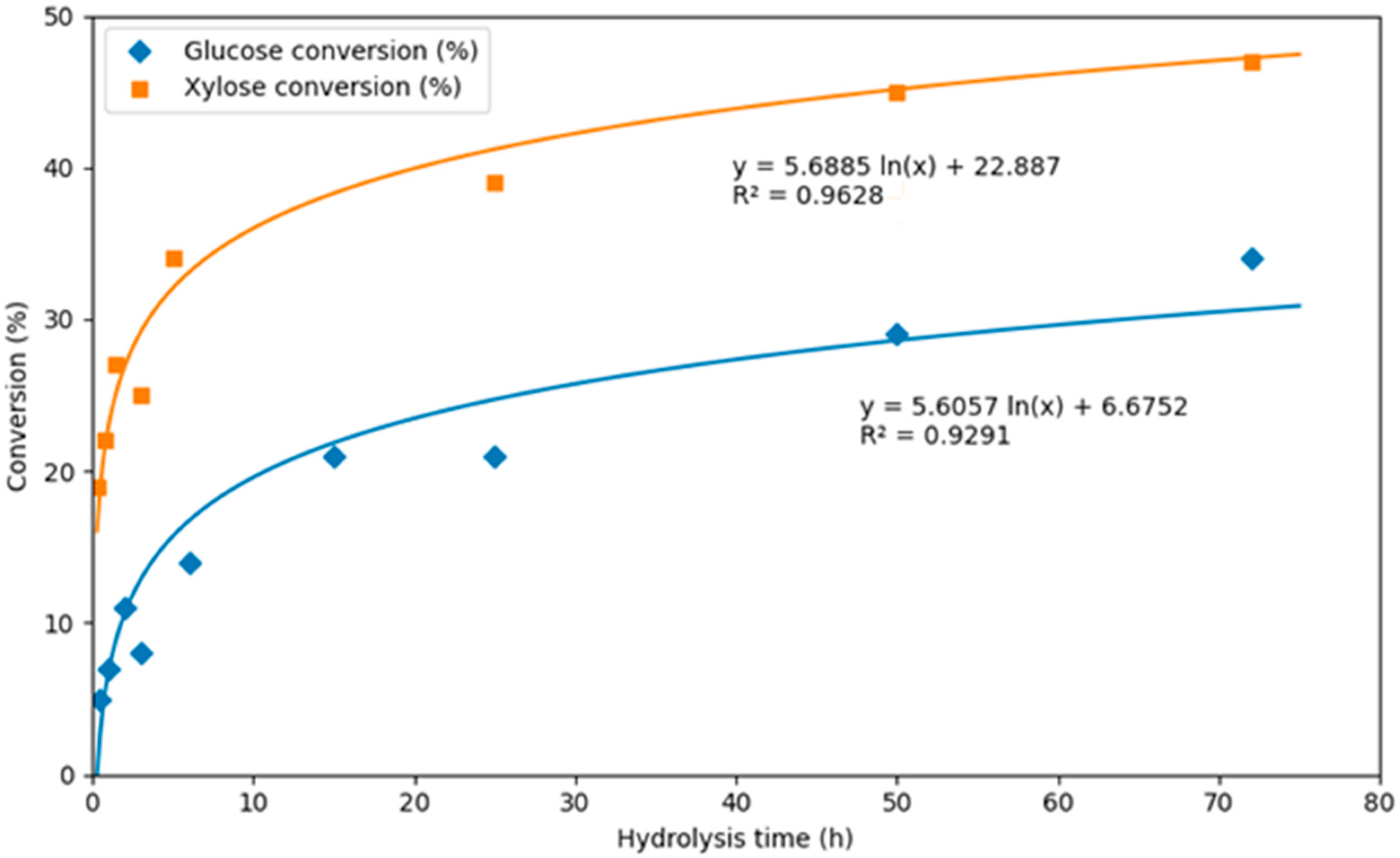
As illustrated in Figure 1, the enzymatic hydrolysis resulted in limited conversion rates for both glucan and xylan, even after 72 h. The conversion kinetics for both sugars were well described by logarithmic regression models, showing high coefficients of determination for glucose (R2 = 0.9291) and xylose (R2 = 0.9628). This logarithmic behavior statistically confirms a rapid initial reaction rate that quickly transitions into a severe stabilization phase. Although typically detrimental to bioethanol production, this limited hydrolysis is advantageous for papermaking purposes, as it ensures the preservation of the pulp yield.
The observed hydrolysis profiles must be interpreted within the context of the adopted high-consistency strategy. The residual lignin content (7.17%) contributed to recalcitrance via nonproductive adsorption; however, the primary limiting factor in this setup was low water availability (high solid loading) [39,40,41].
In high-consistency hydrolysis, the scarcity of free water significantly restricts mass transfer and enzymatic diffusion [42]. This phenomenon occurs because, at high solid loadings, a significant portion of the water is trapped within the cell wall pores or chemically bound to the fibers, leaving insufficient “bulk water” to act as a transport medium [14]. Because the viscosity of the medium remains high, enzymes cannot easily penetrate the fiber network to reach the inner cellulose microfibrils [42,43]. Consequently, the enzymatic action was physically confined to the fiber surface, promoting a ‘peeling effect’ primarily driven by these rheological constraints and mass transfer bottlenecks, rather than solely by chemical barriers.
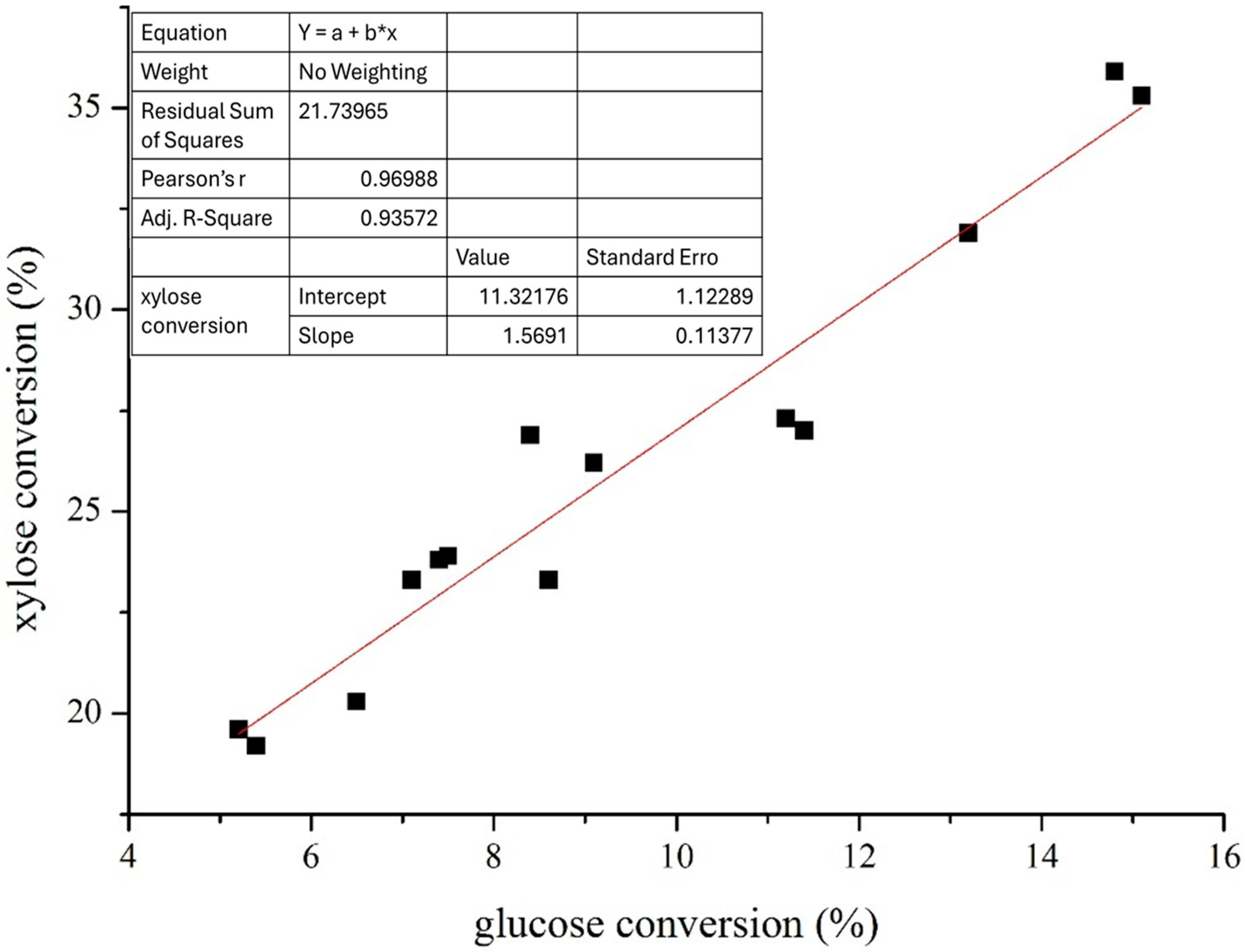
A strong linear correlation between glucan and xylan conversion (R2 = 0.96988, p < 0.05) was observed, indicating the nonselective, simultaneous hydrolysis of both polysaccharides (Figure 2). This behavior is expected for the Cellic® CTec2 cocktail, designed for total biomass saccharification, as this enzyme blend contains cellulases, β-glucosidases, and hemicellulase activities [24].
From a papermaking perspective, this concomitant degradation presents a significant challenge; selectively fibrillating the cellulose surface without sacrificing xylan is difficult. Because hemicelluloses act as essential interfiber bonding agents (strength promoters) [44], their removal compromises the adhesion between fibers. Furthermore, the degradation mechanism extended beyond surface erosion. As cellulases access the cellulosic core, they inevitably cleave polymer chains [45].

3.3. Properties of Pulps and Papers

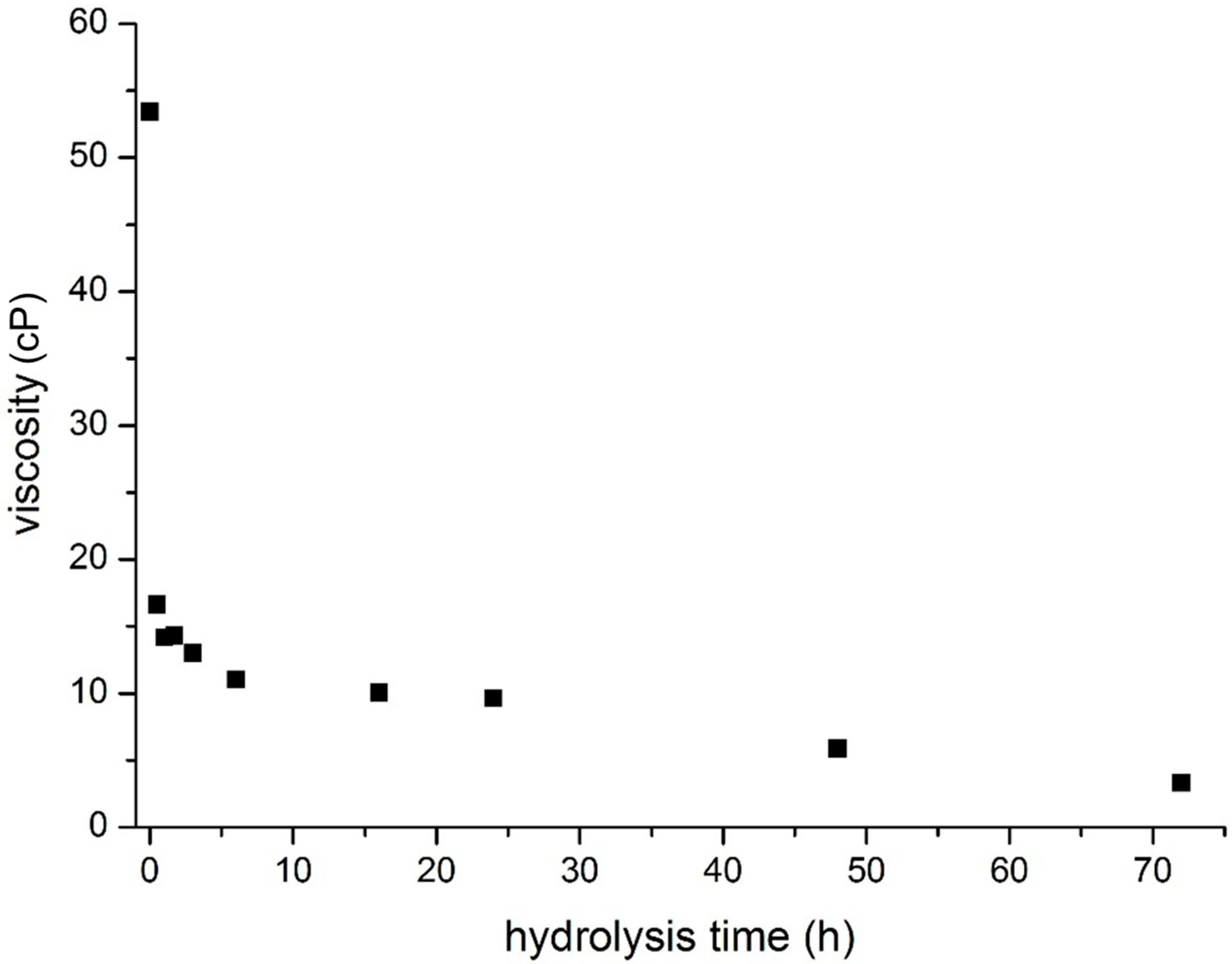
The viscosity exhibited a sharp and immediate decrease during the initial stage of hydrolysis, followed by a stabilization phase (Figure 3). This profile is characteristic of the random attack of endoglucanases on the accessible amorphous regions of cellulose microfibrils [46].
The rapid initial decrease suggests that enzymes preferentially cleave glycosidic bonds in disordered (amorphous) regions, causing a marked reduction in chain length without the immediate release of large amounts of soluble sugars (as seen in Figure 1). Mechanistically, because macroscopic viscosity is highly dependent on the average degree of polymerization (DP), even a minimal number of internal random cuts by endoglucanases drastically halves the molecular weight of the chains, explaining the abruptness of this initial drop [47]. As the hydrolysis proceeded, the reaction rate decreased as enzymes increasingly encountered highly ordered crystalline domains, leading to a gradual approach to the leveling-off degree of polymerization (LODP) [48]. From a mechanical perspective, this considerable reduction in viscosity is a critical indicator because the intrinsic strength of the individual fibers, and consequently the tear resistance of the paper, is heavily dependent on the preservation of long cellulose chains [10].
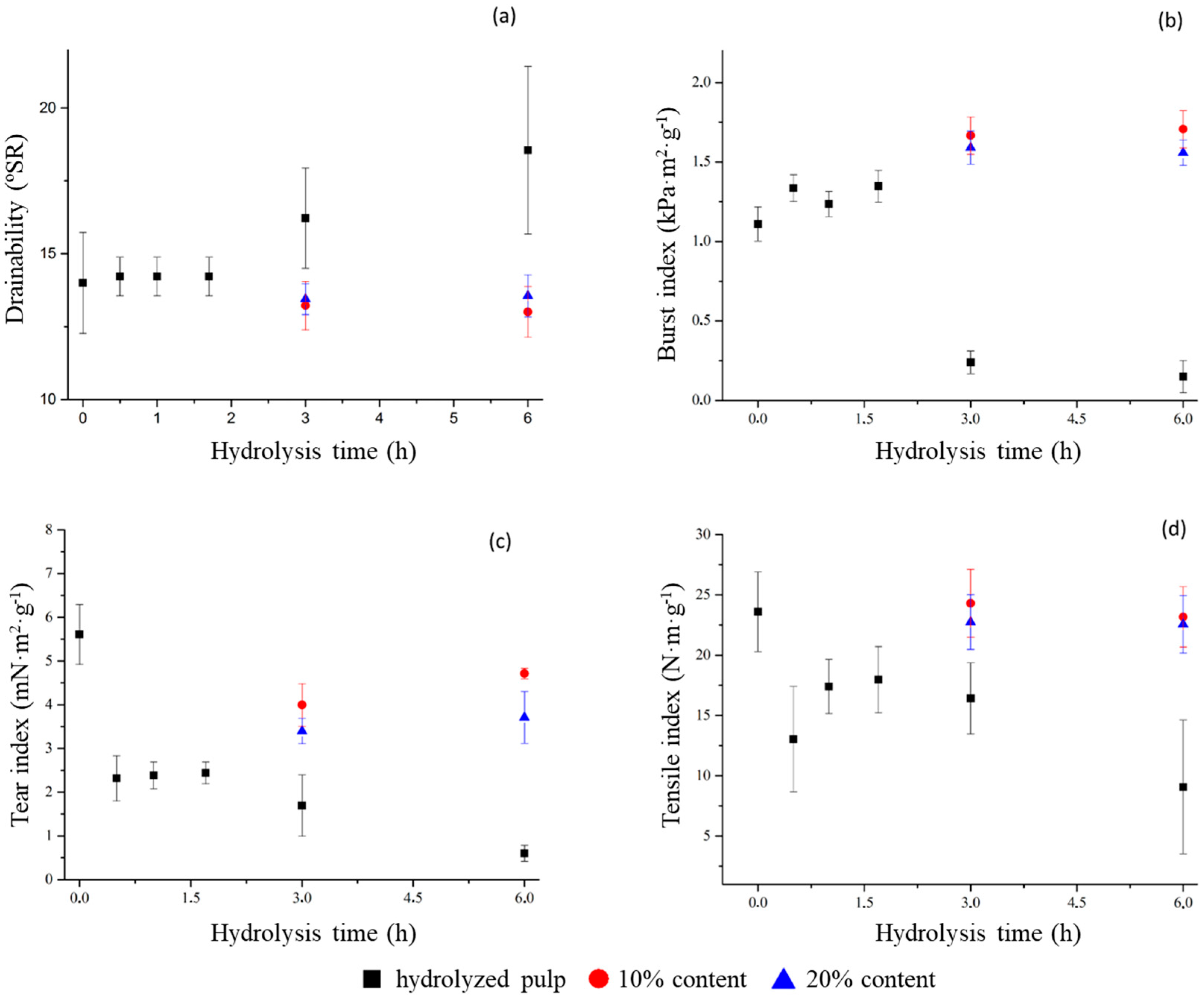
The effects of enzymatic hydrolysis on the properties of paper are shown in Figure 4. The drainage resistance (°SR) increased with the hydrolysis time, particularly after 3 h, owing to pulp-fiber degradation. Although values lower than 20 °SR are generally considered low, all recorded values remained below the 33 °SR threshold. Maintaining the drainage within this range guaranteed a satisfactory performance and the runnability of the paper machine, avoiding drainage bottlenecks [49].
Mechanically, the pulp exhibited a distinct trade-off between bonding and fiber strength. The tear index dropped abruptly within the first 30 min (from ~5.6 to ~2.3 mN m2 g−1). This immediate loss correlated perfectly with the rapid depolymerization observed in Figure 3. This confirmed that tear resistance is governed by the intrinsic strength of individual fibers, which is compromised by an endoglucanase attack [10]. Conversely, the burst index showed a slight improvement or retention of up to 1.5 h. This suggests that the beneficial effects of enzymatic biorefining, such as increased fiber swelling and external fibrillation, enhanced interfiber bonding, temporarily compensating for the loss of intrinsic fiber strength.
To evaluate the industrial feasibility of these pulps, the mechanical results were benchmarked against typical requirements for unbleached-packaging grades. High-performance unbleached pulps are expected to exhibit tensile-index values >50 N m g−1, a burst index >2 kPa m2 g−1, and a tear index >120 mN m2 g−1 [34]. As observed, the pure enzymatically hydrolyzed pulp fell significantly short of these targets (e.g., tensile strength <20 N·m·g−1 after 1.5 h), thereby confirming that severe depolymerization renders the material unsuitable for use as a sole fibrous component [10].
However, the blending strategy proved effective. The addition of 10% or 20% of the hydrolyzed pulp into pristine unbleached pulp increased the burst index to ~1.7 kPa·m2·g−1 (approaching the 2.0 reference) and restored tensile strength to levels comparable to that of the untreated control (Figure 4d).
Mechanistically, the severe enzymatic treatment generates a high concentration of cellulosic fines and highly fibrillated short fibers with a drastically expanded specific surface area [50]. When blended at 10% or 20%, these fine elements fill the interstitial voids between the long, unhydrolyzed fibers. During the drying process of the paper sheet, this massive surface area promotes a significant increase in interfiber hydrogen bonding [51]. In this scenario, the highly fibrillated hydrolyzed fraction acted as a biomacromolecular strength-enhancing additive, functionalizing the paper surface and consolidating the fiber network without compromising the structural integrity of the bulk network formed by the long, preserved fibers.
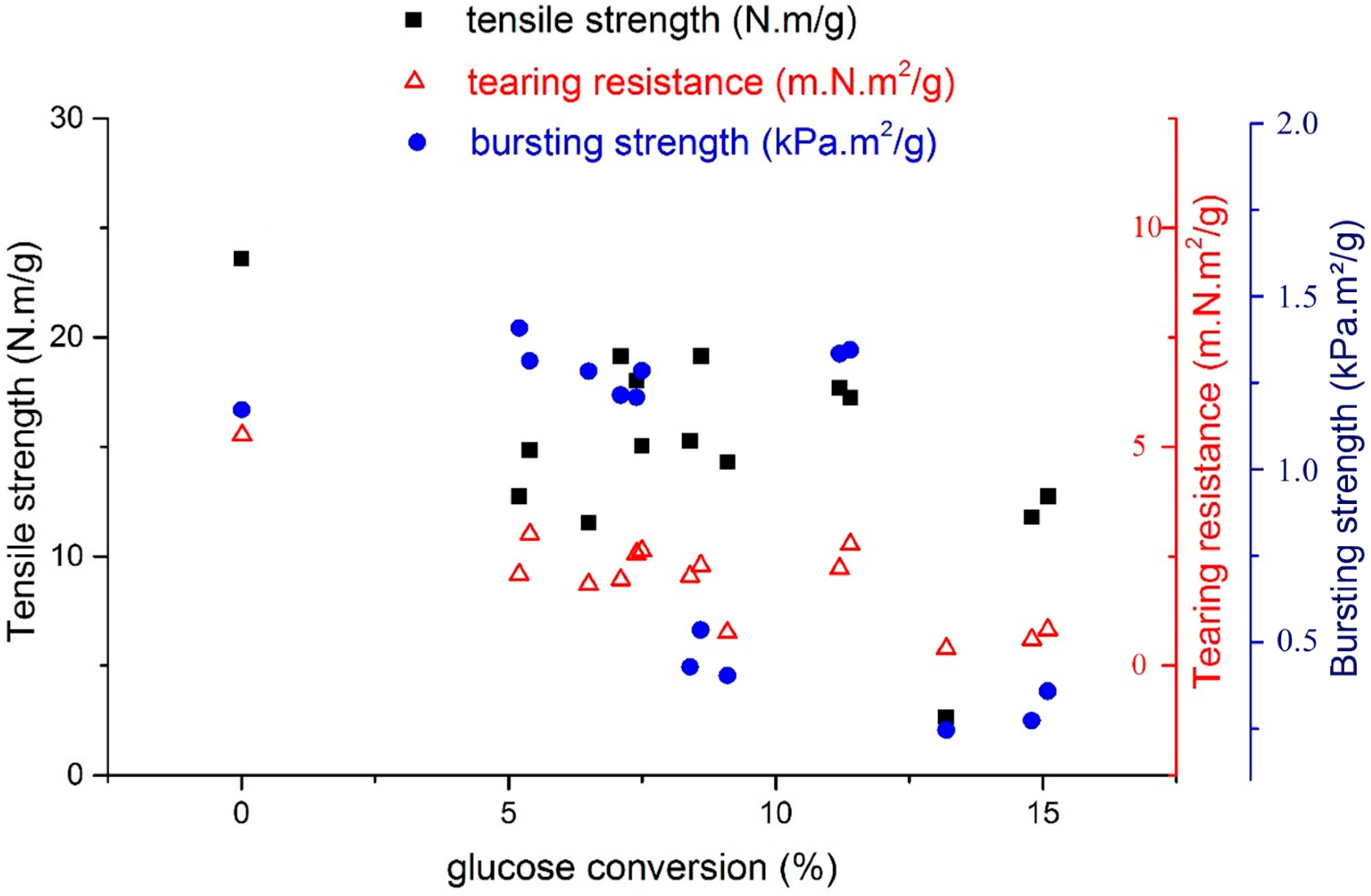
The mechanical properties of the paper were evaluated in relation to the glucose conversion. The conversion of glucose decreased the mechanical properties of the paper and the effect of the viscosity decreased [52].
A direct negative correlation was observed between glucose conversion and mechanical performance (Figure 5). The monotonic decay of tensile and tear strengths with increasing sugar release confirmed that saccharification and papermaking quality were incompatible goals for this enzyme cocktail.
This behavior is a direct consequence of the sharp decrease in viscosity observed previously (Figure 3), confirming that the cleavage of cellulose chains critically compromises the intrinsic fiber strength [52]. Therefore, for packaging applications, the hydrolysis must be strictly limited to the ‘swelling/fibrillation’ stage. Specifically, glucose conversion must be maintained below 5% (or reaction times ≤1.5 h) to avoid structural collapse, or the material must be utilized as a reinforcing additive in blends.

3.4. X-Ray Diffraction (XRD) and Microscopy Analysis

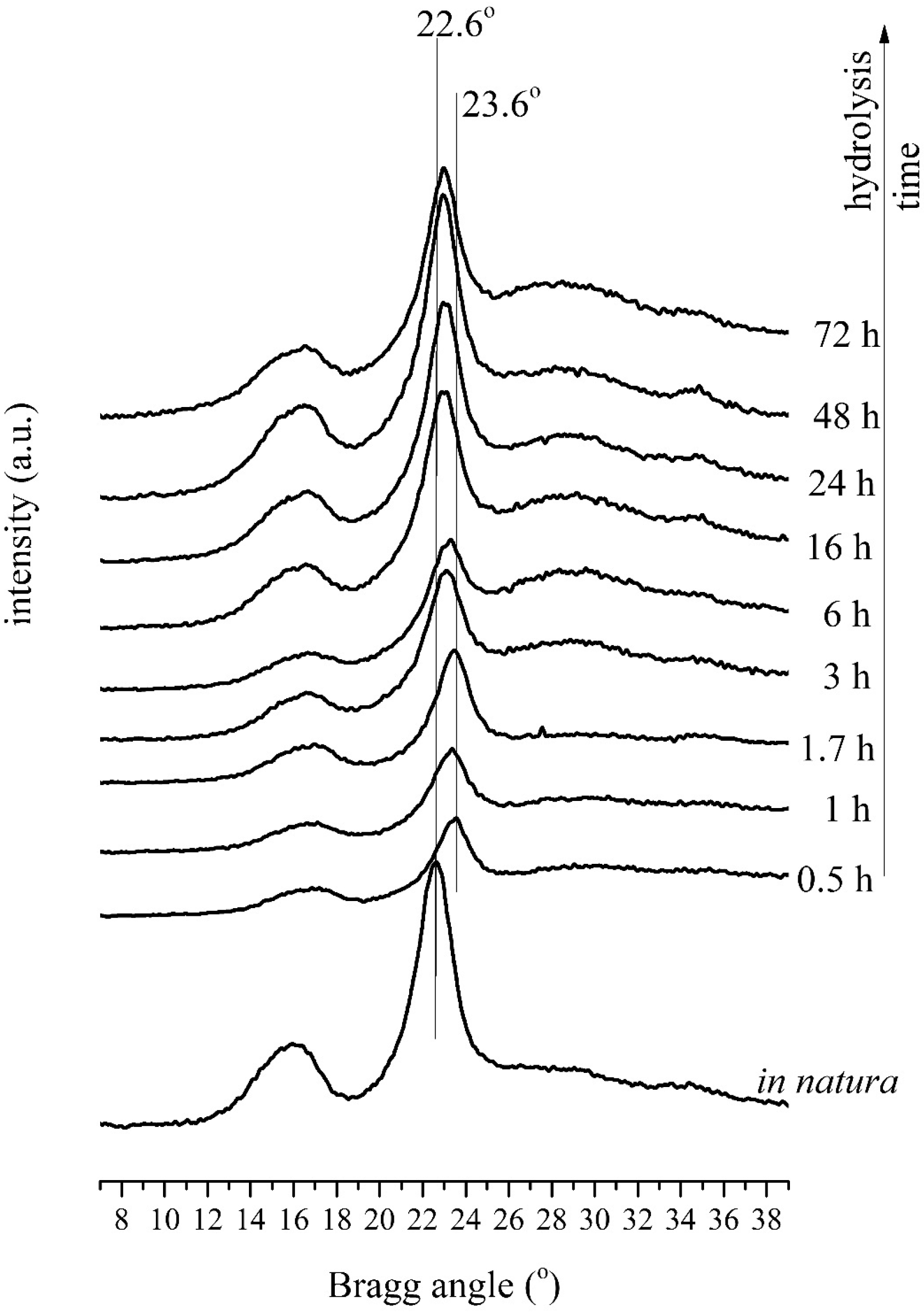
Structural changes induced by enzymatic hydrolysis were monitored using XRD (Figure 6). The diffractograms revealed a progressive shift in the main (200) peak from ~22.6° to higher Bragg angles (up to 23.6°), corresponding to a decrease in the interplanar distance (d-spacing) [53].
Native cellulose crystallites were surrounded by subcrystalline (paracrystalline) layers with distorted lattice spacing [54]. As cellulases and xylanases stripped away these disordered surface layers and the associated hemicellulose/lignin matrix, the remaining structure primarily consisted of a highly ordered, compact crystalline core that naturally exhibited a smaller and more uniform interplanar distance [55].
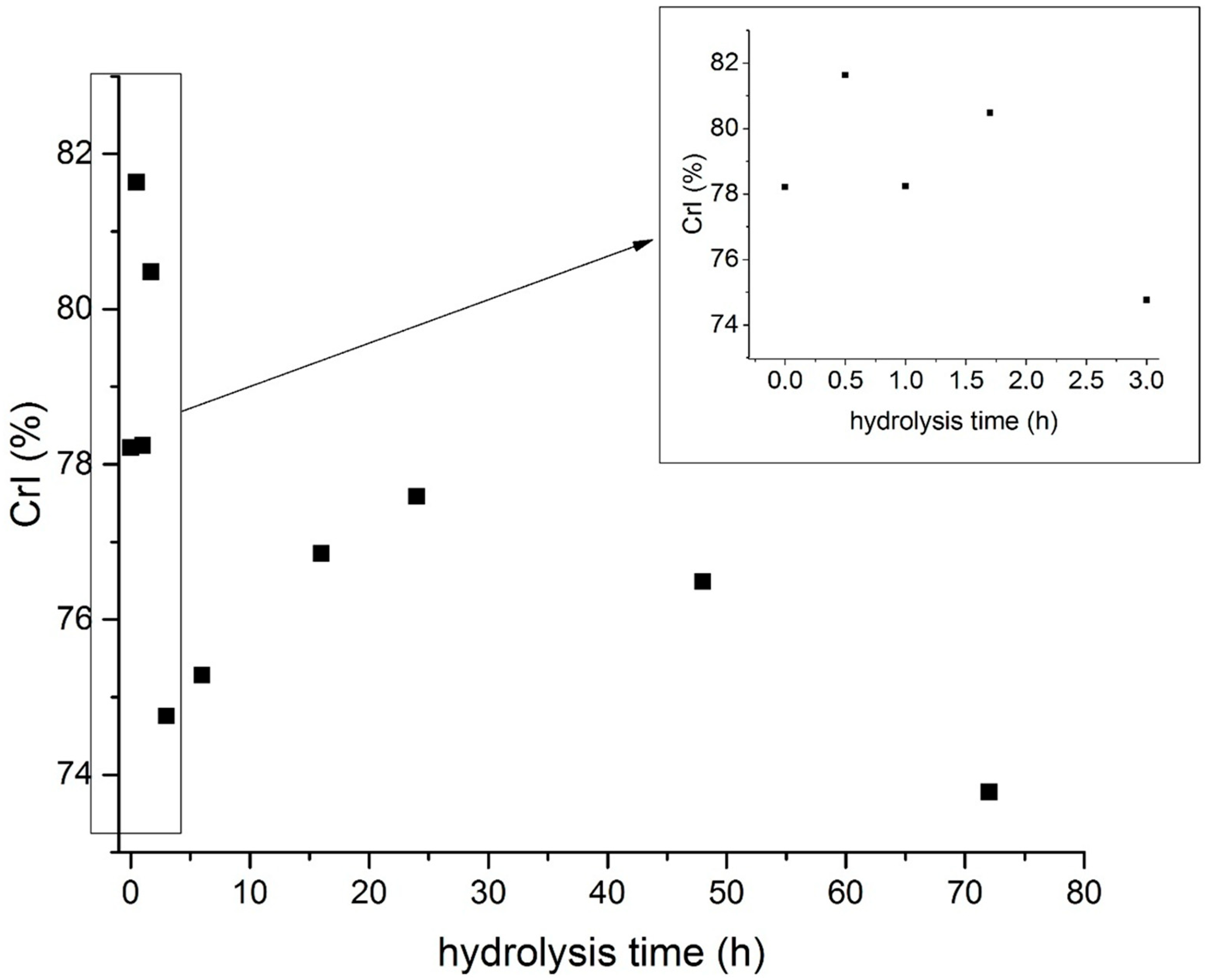
This structural evolution was correlated with variations in the crystallinity index (CrI) (Figure 7). The increase in the crystallinity index was attributed to the preferential removal of noncrystalline components, specifically the accessible xylan and amorphous cellulose fractions [55]. This selective hydrolysis explains the sharpening of the diffraction profiles without physical crystallite growth. Furthermore, this mechanism is strongly supported by the sharp decrease in viscosity observed in Figure 3, confirming that the enzymes rapidly cleaved the disordered chains acting as structural defects.
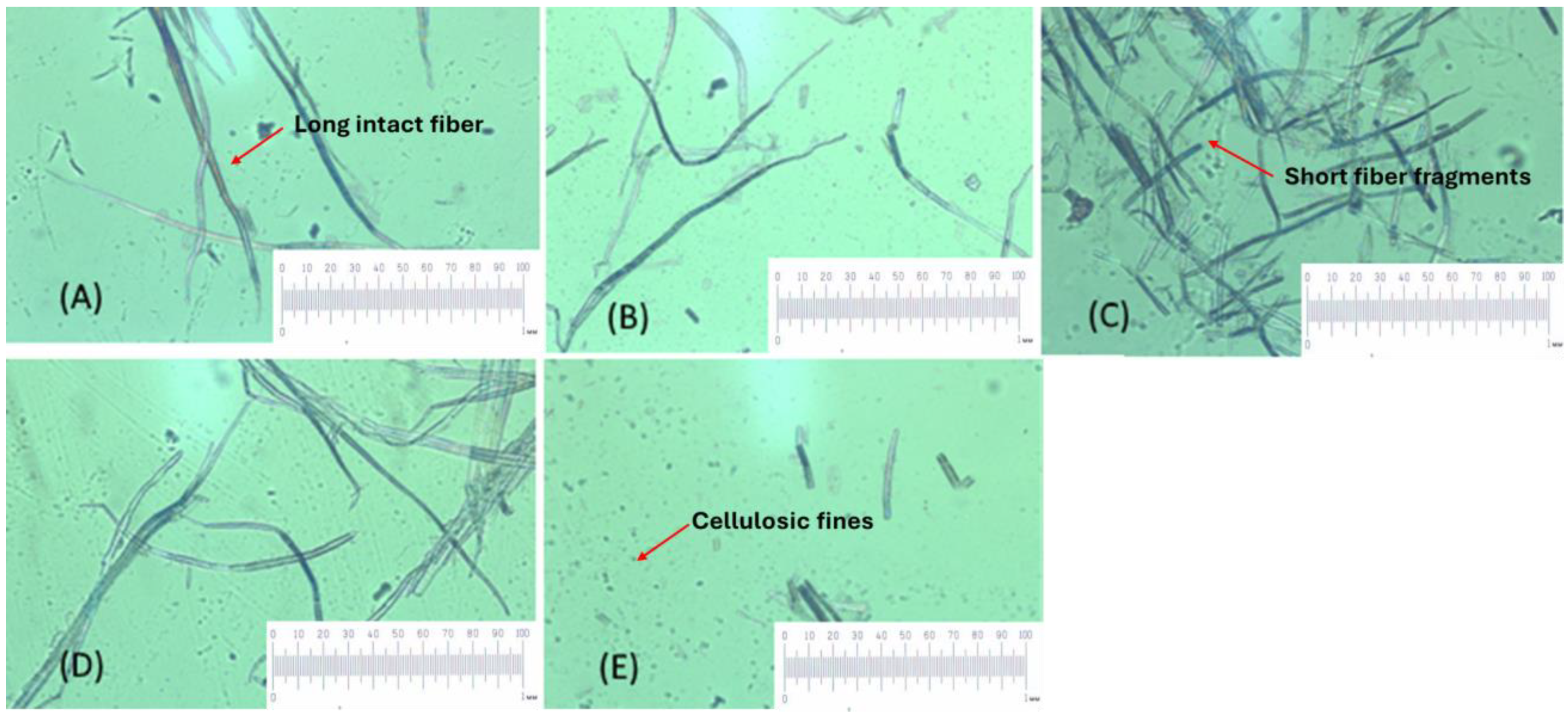
Finally, the morphological evolution of the fibers provided visual confirmation of the degradation mechanisms (Figure 8). The untreated pulp displayed long, preserved fibers forming a network. However, as hydrolysis proceeded, the fiber was progressively dismantled.
After 3 h and proceeding to 16 h, many ‘fines’ and short fiber fragments were generated. This fragmentation is a macroscopic consequence of the severe depolymerization observed in Figure 3. As the endoglucanases cleaved the internal amorphous regions of the cellulose chains, they caused the transverse breakage of the fibers, reducing their aspect ratio [10].
This visual evidence explains the two critical behaviors discussed earlier: loss of tear strength and drainage blockage. Tear resistance depends strongly on the fiber length to ensure effective stress distribution; therefore, fiber shortening results in an abrupt decrease in strength, as observed in Figure 4c [10]. In addition, the large number of fines generated after 3 h of treatment promoted the formation of a dense, nearly impermeable mat that clogs the drainage screen, directly correlating with the sharp increase in drainability [56].

4. Conclusions

This study demonstrated the feasibility and limitations of integrating high-kappa eucalyptus kraft pulp into a biorefinery. Enzymatic-hydrolysis efficiency was primarily constrained by the high-solid environment, where limited water availability restricted enzymatic diffusion rather than solely by lignin recalcitrance. Under these conditions, enzymes preferentially attacked the amorphous regions and paracrystalline surfaces, rapidly reaching an LODP, as indicated by the sharp decrease in viscosity. This selective removal of disordered domains increased the crystallinity index while simultaneously causing severe fiber fragmentation and the loss of hemicelluloses, which are essential for interfiber bonding.
Two distinct strategies were identified for papermaking:
  • Direct use: The production of paper solely from hydrolyzed pulp was constrained to a narrow operational window (reaction times ≤1.5 h or glucose conversion <5%). Beyond this point, the considerable decrease in viscosity and generation of fines caused a collapse in tear strength and unacceptable drainability values.
  • Blending strategy: The most promising route is to use hydrolyzed residue as a reinforcing additive. Incorporating up to 20% hydrolyzed pulp into the refined commercial pulp preserved the tensile strength and improved the burst index, successfully overcoming the mechanical degradation observed in the pure sheets.
In summary, although extensive saccharification compromised the fiber for packaging, a controlled biorefinery-at-the-mill approach enabled the extraction of fermentable sugars (glucose/xylose) from biofuels, while valorizing the solid residue as a strength additive for packaging-grade materials.

Author Contributions

Conceptualization, C.F.R., E.C.L., P.R.d.O., W.L.E.M. and J.D.F.; methodology, C.F.R., E.C.L., P.R.d.O., W.L.E.M. and J.D.F.; investigation, C.F.R., E.C.L., N.M.F.M.S., P.T.H.d.N. and P.R.S.Z.; data curation, C.F.R., E.C.L., N.M.F.M.S., P.T.H.d.N. and P.R.S.Z.; formal analysis, C.F.R. and E.C.L.; interpretation of results, E.C.L. and E.A.B.J.; writing—original draft preparation, E.A.B.J.; writing—review and editing, E.C.L. and W.L.E.M.; supervision, P.R.d.O., W.L.E.M. and J.D.F.; project administration, P.R.d.O.; funding acquisition, P.R.d.O. and W.L.E.M. Author Patrícia Raquel Silva Zanoni passed away prior to the publication of this manuscript. All other authors have read and agreed to the published version of this manuscript.

Funding

This study was financed in part by the Coordination for the Improvement of Higher Education Personnel (CAPES)—Finance Code 001—and by the National Council for Scientific and Technological Development (CNPq).

Data Availability Statement

Data are contained within the article.

Acknowledgments

The authors acknowledge the Brazilian Agricultural Research Corporation for the project “Energetic Forest—Sustainable Production and Conversion of Biomass into Energy”, under which this research was conducted. The authors are also grateful to Novozymes Latin America for providing the Cellic® CTec2 enzyme sample and to WestRock for donating the cellulosic pulp used in this study. The experiments related to pulp and paper properties were carried out at the Pulp and Paper Laboratory of the Department of Forest Engineering and Technology, Federal University of Paraná. The authors note with regret that Patrícia Raquel Silva Zanoni passed away prior to manuscript submission. Her contributions to this work are duly recognized.

Conflicts of Interest

The authors declare no conflicts of interest.

References

  1. Mäki, E.; Saastamoinen, H.; Melin, K.; Matschegg, D.; Pihkola, H. Drivers and Barriers in Retrofitting Pulp and Paper Industry with Bioenergy for More Efficient Production of Liquid, Solid and Gaseous Biofuels: A Review. Biomass Bioenergy 2021, 148, 106036. [Google Scholar] [CrossRef]
  2. Toppinen, A.; Pätäri, S.; Tuppura, A.; Jantunen, A. The European pulp and paper industry in transition to a bio-economy: A Delphi study. Futures 2017, 88, 1–14. [Google Scholar] [CrossRef]
  3. Phillips, R.B.; Jameel, H.; Chang, H.M. Integration of pulp and paper technology with bioethanol production. Biotechnol. Biofuels 2013, 6, 13. [Google Scholar] [CrossRef] [PubMed]
  4. Jönsson, L.J.; Martín, C. Pretreatment of Lignocellulose: Formation of Inhibitory by-Products and Strategies for Minimizing Their Effects. Bioresour. Technol. 2016, 199, 103–112. [Google Scholar] [CrossRef]
  5. Pala, H.; Mota, M.; Gama, F.M. Enzymatic Modification of Paper Fibres. Biocatal. Biotransform. 2009, 20, 353–361. [Google Scholar] [CrossRef]
  6. Lin, X.; Wu, Z.; Zhang, C.; Liu, S.; Nie, S. Enzymatic pulping of lignocellulosic biomass. Ind. Crops Prod. 2018, 120, 16–24. [Google Scholar] [CrossRef]
  7. Morais, F.P.; Carta, A.M.M.; Amaral, M.E.; Curto, J.M. Cellulose fiber enzymatic modification to improve the softness, strength, and absorption properties of tissue papers. BioResources 2021, 16, 846. [Google Scholar] [CrossRef]
  8. Signori-Iamin, G.; Marques, R.; Bastida, G.A.; Tarrés, Q.; Santos, A.F.; Delgado-Aguilar, M. Enzyme-assisted high-consistency fiber refining: Enhancing cellulose materials performance in the paper industry through process and physics-informed machine learning modeling. Cellulose 2026, 33, 1595–1615. [Google Scholar] [CrossRef]
  9. Frederick, W.J., Jr.; Lien, S.J.; Courchene, C.E.; DeMartini, N.A.; Ragauskas, A.J.; Iisa, K. Co-production of ethanol and cellulose fiber from southern pine: A technical and economic assessment. Biomass Bioenergy 2008, 32, 1293–1302. [Google Scholar] [CrossRef]
  10. Gurnagul, N.; Page, D.H.; Paice, M.G. The effect of cellulose degradation on the strength of wood pulp fibres. Nord. Pulp Pap. Res. J. 1992, 7, 152–154. [Google Scholar] [CrossRef]
  11. Małachowska, E.; Dubowik, M.; Boruszewski, P.; Łojewska, J.; Przybysz, P. Influence of Lignin Content in Cellulose Pulp on Paper Durability. Sci. Rep. 2020, 10, 19998. [Google Scholar] [CrossRef] [PubMed]
  12. Alam, I.; Sharma, C. Degradation of Paper Products Due to Volatile Organic Compounds. Sci. Rep. 2023, 13, 6426. [Google Scholar] [CrossRef]
  13. Shin, Y.L.; Lee, J.W. Tailoring lignin surface properties for enhanced enzymatic hydrolysis: Comparative insights from pine and eucalyptus. Bioresour. Technol. 2025, 436, 132972. [Google Scholar] [CrossRef]
  14. Weiss, N.D.; Felby, C.; Thygesen, L.G. Enzymatic hydrolysis is limited by biomass–water interactions at high-solids: Improved performance through substrate modifications. Biotechnol. Biofuels 2019, 12, 1–13. [Google Scholar] [CrossRef]
  15. Corrêa, L.J.; Badino, A.C.; Cruz, A.J.G. Energy Efficiency in Enzymatic Hydrolysis: Study with Different Pretreated Biomasses. Waste Biomass Valor. Valorization 2026. [Google Scholar] [CrossRef]
  16. Patel, R.; Dhar, P.; Babaei-Ghazvini, A.; Nikkhah Dafchahi, M.; Acharya, B. Transforming Lignin into Renewable Fuels, Chemicals, and Materials: A Review. Bioresour. Technol. Rep. 2023, 22, 101463. [Google Scholar] [CrossRef]
  17. Segers, B.; Nimmegeers, P.; Spiller, M.; Tofani, G.; Grojzdek, E.J.; Dace, E.; Kikas, T.; Marchetti, J.M.; Rajić, M.; Yildiz, G.; et al. Lignocellulosic biomass valorisation: A review of feedstocks, processes and potential value chains, and their implications for the decision-making process. RSC Sustain. 2024, 2, 3730–3749. [Google Scholar] [CrossRef]
  18. TAPPI T 236 om-22; Kappa Number of Pulp. Technical Association of the Pulp and Paper Industry: Peachtree Corners, GA, USA, 2022.
  19. TAPPI T 282 om-23; Hexeneuronic Acid Content of Chemical Pulp. Technical Association of the Pulp and Paper Industry: Peachtree Corners, GA, USA, 2023.
  20. TAPPI T 222 om-21; Acid-insoluble Lignin in Wood and Pulp. Technical Association of the Pulp and Paper Industry: Peachtree Corners, GA, USA, 2021.
  21. Sluiter, A.; Hames, B.; Ruiz, R.; Scarlata, C.; Sluiter, J.; Templeton, D.; Crocker, D. Determination of structural carbohydrates and lignin in biomass. Lab. Anal. Proced. 2010, 1617, 1–16. [Google Scholar]
  22. TAPPI T 204 cm-17; Solvent Extractives of Wood and Pulp. Technical Association of the Pulp and Paper Industry: Peachtree Corners, GA, USA, 2017.
  23. TAPPI T 211 om-22; Ash in Wood, Pulp, Paper and Paperboard: Combustion at 525 °C. Technical Association of the Pulp and Paper Industry: Peachtree Corners, GA, USA, 2022.
  24. Sun, F.F.; Hong, J.; Hu, J.; Saddler, J.N.; Fang, X.; Zhang, Z.; Shen, S. Accessory enzymes influence cellulase hydrolysis of the model substrate and the realistic lignocellulosic biomass. Enzym. Microb. Technol. 2015, 79, 42–48. [Google Scholar] [CrossRef]
  25. ISO 5269-2:2004; Pulps—Preparation of Laboratory Sheets for Physical Testing—Part 2: Rapid-Köthen Method. International Standardization Organization: Geneva, Switzerland, 2008.
  26. TAPPI T 402 sp-13; Standard Conditioning and Testing Atmospheres for Paper, Board, Pulp Handsheets, and Related Products. Technical Association of Pulp and Paper Industry: Atlanta, GA, USA, 2013.
  27. TAPPI/ANSI T 230 om-23; Viscosity of Pulp (Capillary Viscometer Method). Technical Association of the Pulp and Paper Industry: Peachtree Corners, GA, USA, 2023.
  28. ISO 5267-1:1999; Pulps—Determination of drainability—Part 1: Schopper-Riegler method. International Organization for Standardization: Geneva, Switzerland, 1999.
  29. TAPPI T 494 om-22; Tensile Properties of Paper and Paperboard (Using Constant Rate of Elongation Apparatus). Technical Association of Pulp and Paper Industry: Atlanta, GA, USA, 2022.
  30. TAPPI T 403 om-22; Bursting Strength of Paper. Technical Association of Pulp and Paper Industry: Atlanta, GA, USA, 2023.
  31. TAPPI T 414 om-21; Internal Tearing Resistance of Paper (Elmendorf-Type Method). Technical Association of Pulp and Paper Industry: Atlanta, GA, USA, 2021.
  32. Segal, L.; Creely, J.J.; Martin, A.E., Jr.; Conrad, C.M. An Empirical Method for Estimating the Degree of Crystallinity of Native Cellulose Using the X-ray Diffractometer. Text. Res. J. 1959, 29, 786–794. [Google Scholar] [CrossRef]
  33. R Core Team. R: A Language and Environment for Statistical Computing; R Foundation for Statistical Computing: Vienna, Austria, 2026. [Google Scholar]
  34. Bonfatti Júnior, E.A.; Raia, R.Z.; Bila, N.F.; Lopes, M.S.; Klock, U.; Andrade, A.S.; Vivian, M.A. Kraft pulping and papermaking of Cryptomeria japonica. Sci. For. 2019, 47, 811–822. [Google Scholar] [CrossRef]
  35. Li, J.; Zhang, Y.; Shi, S.; Tu, M. Effect of residual extractable lignin on acetone–butanol–ethanol production in SHF and SSF processes. Biotechnol. Biofuels 2020, 13, 67. [Google Scholar] [CrossRef]
  36. Bonfatti Júnior, E.A.; Silva Júnior, F.G. Removal of hexenuronic acids by extended oxygen delignification of high-kappa eucalyptus kraft pulp. Nord. Pulp Pap. Res. J. 2025, 40, 0033. [Google Scholar] [CrossRef]
  37. Hu, J.; Arantes, V.; Saddler, J.N. The enhancement of enzymatic hydrolysis of lignocellulosic substrates by the addition of accessory enzymes such as xylanase: Is it an additive or synergistic effect? Biotechnol. Biofuels 2011, 4, 36. [Google Scholar] [CrossRef]
  38. Ju, X.; Engelhard, M.; Zhang, X. An advanced understanding of the specific effects of xylan and surface lignin contents on enzymatic hydrolysis of lignocellulosic biomass. Bioresour. Technol. 2013, 132, 137–145. [Google Scholar] [CrossRef]
  39. Berlin, A.; Balakshin, M.; Gilkes, N.; Kadla, J.; Maximenko, V.; Kubo, S.; Saddler, J. Inhibition of cellulase, xylanase and beta-glucosidase activities by softwood lignin preparations. J. Biotechnol 2006, 125, 198–209. [Google Scholar] [CrossRef]
  40. Saini, J.K.; Patel, A.K.; Adsul, M.; Singhania, R.R. Cellulase adsorption on lignin: A roadblock for economic hydrolysis of biomass. Renew. Energy 2016, 98, 29–42. [Google Scholar] [CrossRef]
  41. Siqueira, G.; Arantes, V.; Saddler, J.N.; Ferraz, A.; Milagres, A.M. Limitation of cellulose accessibility and unproductive binding of cellulases by pretreated sugarcane bagasse lignin. Biotechnol. Biofuels 2017, 10, 1–12. [Google Scholar] [CrossRef]
  42. Modenbach, A.A.; Nokes, S.E. Enzymatic hydrolysis of biomass at high-solids loadings—A review. Biomass Bioenergy 2013, 56, 526–544. [Google Scholar] [CrossRef]
  43. Kristensen, J.B.; Felby, C.; Jorgensen, H. Yield-determining factors in high-solids enzymatic hydrolysis of lignocellulose. Biotechnol. Biofuels 2009, 2, 11. [Google Scholar] [CrossRef]
  44. Yang, X.; Berthold, F.; Berglund, L.A. Preserving Cellulose Structure: Delignified Wood Fibers for Paper Structures of High Strength and Transparency. Biomacromolecules 2018, 19, 3020–3029. [Google Scholar] [CrossRef] [PubMed]
  45. Arantes, V.; Saddler, J.N. Access to Cellulose Limits the Efficiency of Enzymatic Hydrolysis: The Role of Amorphogenesis. Biotechnol. Biofuels 2010, 3, 4. [Google Scholar] [CrossRef]
  46. Cao, Y.; Tan, H. Study on Crystal Structures of Enzyme-Hydrolyzed Cellulosic Materials by X-Ray Diffraction. Enzym. Microb. Technol. 2005, 36, 314–317. [Google Scholar] [CrossRef]
  47. Silva, V.T.F.; Milagres, A.M.F. A Rapid Parameter of Enzyme-Treated Cellulosic Material Revealed by Reducing Sugar Release. J. Renew. Mater. 2024, 12, 539–551. [Google Scholar] [CrossRef]
  48. Meng, X.; Yoo, C.G.; Li, M.; Ragauskas, A.J. Physicochemical Structural Changes of Cellulosic Substrates during Enzymatic Saccharificatio. J. Appl. Biotechnol. Bioeng. 2016, 1, 00015. [Google Scholar] [CrossRef]
  49. Bastida, G.A.; Zanuttini, M.A.; Tarrés, Q.; Fiol, N.; Aguilar, M.D.; Galván, M.V. Innovative system based on natural polyelectrolyte complex and cellulose micro/nanofibers to improve drainability and properties of recycled paper. Cellulose 2023, 30, 5895–5910. [Google Scholar] [CrossRef]
  50. Ceccherini, S.; Ståhl, M.; Sawada, D.; Hummel, M.; Maloney, T.C. Effect of enzymatic depolymerization of cellulose and hemicelluloses on the direct dissolution of prehydrolysis kraft dissolving pulp. Biomacromolecules 2021, 22, 4805–4813. [Google Scholar] [CrossRef] [PubMed]
  51. Li, K.; Zhao, L.; He, B. Probing effect of papirindustriens forskningsinstitut (pfi) refining on aggregation structure of cellulose: Crystal packing and hydrogen-bonding network. Polymers 2020, 12, 2912. [Google Scholar] [CrossRef]
  52. Carvalho, M.G.; Ferreira, P.J.; Figueiredo, M.M. Cellulose Depolymerisation and Paper Properties in E. globulus Kraft Pulps. Cellulose 2000, 7, 359–368. [Google Scholar] [CrossRef]
  53. Ju, X.; Bowden, M.; Brown, E.E.; Zhang, X. An improved X-ray diffraction method for cellulose crystallinity measurement. Carbohydr. Polym. 2015, 123, 476–481. [Google Scholar] [CrossRef]
  54. Kulasinski, K.; Keten, S.; Churakov, S.V.; Derome, D.; Carmeliet, J. A comparative molecular dynamics study of crystalline, paracrystalline and amorphous states of cellulose. Cellulose 2014, 21, 1103–1116. [Google Scholar] [CrossRef]
  55. Park, S.; Baker, J.O.; Himmel, M.E.; Parilla, P.A.; Johnson, D.K. Cellulose crystallinity index: Measurement techniques and their impact on interpreting cellulase performance. Biotechnol. Biofuels 2010, 3, 10. [Google Scholar] [CrossRef] [PubMed]
  56. Taipale, T.; Österberg, M.; Nykänen, A.; Roukolainen, J.; Laine, J. Effect of microfibrillated cellulose and fines on the drainage of kraft pulp suspension and paper strength. Cellulose 2010, 17, 1005–1020. [Google Scholar] [CrossRef]
Figure 1. Sugar conversions after enzymatic hydrolysis.
Forests 17 00358 g001
Figure 2. Glucose and xylose conversion correlation.
Forests 17 00358 g002
Figure 3. Evolution of cellulosic pulp viscosity over hydrolysis time.
Forests 17 00358 g003
Figure 4. Paper properties: drainability (a), burst index (b), tear index (c), and tensile index (d).
Forests 17 00358 g004
Figure 5. Mechanical resistance of paper as a function of glucose conversion.
Forests 17 00358 g005
Figure 6. Diffractograms of high-kappa eucalyptus kraft pulp after enzymatic hydrolysis.
Forests 17 00358 g006
Figure 7. Crystallinity index of high-kappa eucalyptus kraft pulp vs. hydrolysis time.
Forests 17 00358 g007
Figure 8. Microscopy analysis of cellulose fibers versus hydrolysis time, illustrating the progressive morphological degradation: (A) in natura pulp showing long intact fibers (scale bar: 100 µm); (B) after 1 h of hydrolysis (scale bar: 50 µm); (C) 3 h, where transverse cleavage generates short fiber fragments (scale bar: 50 µm); (D) 6 h, showing extensive fibrillation and fragmentation (scale bar: 20 µm); and (E) 16 h, characterized by a massive presence of cellulosic fines (scale bar: 20 µm). Arrows indicate the representative morphological structures discussed in the text.
Forests 17 00358 g008
Table 1. Characterization of high-kappa eucalyptus kraft pulp (dry basis).
ParameterMean ± Standard Deviation
Kappa number49.40 ± 1.30
Hexenuronic acid content (µmol g−1)18.90 ± 0.80
Acid-insoluble lignin content (%)5.77 ± 0.72
Acid-soluble lignin content (%)1.40 ± 0.15
Total lignin content (%)7.17 ± 0.83
Total extractives content (%)0.38 ± 0.01
Holocellulose content (%)92.45 ± 0.60
Ash content (%)0.66 ± 0.08
Glucose (%)73.39 ± 0.45
Xylose (%)14.28 ± 0.25
Galactose (%)0.51 ± 0.03
Arabinose (%)0.20 ± 0.02
Mannose (%)0.09 ± 0.01
Disclaimer/Publisher’s Note: The statements, opinions and data contained in all publications are solely those of the individual author(s) and contributor(s) and not of MDPI and/or the editor(s). MDPI and/or the editor(s) disclaim responsibility for any injury to people or property resulting from any ideas, methods, instructions or products referred to in the content.