Article

Microclimate Buffering Across a 650 m Afro-Alpine Gradient: Thermoregulation at the Nest Level by Grauer’s Gorillas in the Kahuzi-Biega National Park


1
School of Ecology and Nature Conservation, Beijing Forestry University, Beijing 100083, China
2
Kahuzi-Biega National Park, Bukavu P.O. Box 852, Democratic Republic of the Congo
3
Tanzania Agricultural Research Institute, Makutupora Center, Dodoma P.O. Box 1676, Tanzania
4
School of Landscape and Architecture, Beijing Forestry University, Beijing 100083, China
*
Author to whom correspondence should be addressed.
Forests 2026, 17(2), 254; https://doi.org/10.3390/f17020254
Submission received: 4 January 2026 / Revised: 30 January 2026 / Accepted: 9 February 2026 / Published: 14 February 2026
(This article belongs to the Section Forest Meteorology and Climate Change)

Abstract

Nighttime temperatures in the Afro-alpine zone (>2050 m) of Kahuzi-Biega National Park frequently fall below 5 °C. However, the thermal advantages provided by night nests of Grauer’s gorilla, Gorilla beringei graueri along this elevation gradient have yet to be quantified. From 3 January to 7 January 2025, 80 night nests were located along the Mt. Kahuzi–Biega ridge (2000–2650 m above sea level); 66 with complete data were analyzed. Nest-interior and ambient temperatures were measured using calibrated mercury thermometers, while canopy openness was assessed through sky-facing photographs analyzed with ImageJ. Canopy openness ranged from 18% at 2050 m (dense bamboo) to 83% at 2625 m (open ericaceous scrub), with a mean of 50.5 ± 18.8%. The interiors of the nests consistently exhibited warmer temperatures than the humid ambient air, with a mean temperature difference of 2.03 ± 0.37 °C, ranging from 1.39 to 2.68 °C. Linear mixed-model analysis (n = 66) indicated a significant reduction in thermal buffering correlated with increasing elevation (β = −7.4 × 10⁻⁴ °C m−1, 95% CI −8.9 × 10⁻⁴ to −5.9 × 10⁻⁴, p < 0.001) and greater canopy openness (β = −0.020 °C per %, p < 0.001); fog density and precipitation from the previous night did not exhibit a significant effect. The model explained 78% of the variance in ΔT (marginal R2). Over a 650 m Afro-alpine gradient, Grauer’s gorillas create a 2.0 °C thermal refuge, which decreases by approximately 30% near the summit. This study represents the first quantitative evidence that canopy density can mitigate the elevation penalty for any African great ape. Canopy retention is the only terrestrial mechanism that can mitigate accelerated warming at high altitudes, which is occurring at a rate of +0.45 °C per decade. Without canopy retention, national conservation strategies for the Democratic Republic of Congo must allocate funds for extended energy subsidies at elevations exceeding 2500 m.

1. Introduction

The Democratic Republic of the Congo (DRC) is home to more than half of the world’s remaining Grauer’s gorillas, Gorilla beringei graueri (Matschie, 1914) [1,2,3], yet there is a significant lack of microclimatic data above 2000 m. The highland sector (above 2000 m above sea level) of Kahuzi-Biega National Park (KBNP) in eastern DRC represents the species highest stronghold. Along the Mt. Kahuzi–Biega ridge, which ranges from 2000 to 2650 m, at least 170 individuals face nighttime temperatures dropping below 5 °C on more than 200 nights each year. Additionally, wind-driven convective heat loss is three times greater than that of the adjacent lowland sector, compounded by a warming trend of +0.45 °C per decade [4]. For large-bodied frugivores that sleep under an open canopy of bamboo and Hagenia abyssinica J. F. Gmel (Rosale: Rosaceae), these conditions create significant energetic stress.
Grauer’s gorillas create new nocturnal nests daily, offering a reliable natural experiment in behavioral thermoregulation. Nests are constructed in bamboo thickets, H. abyssinica forests, or ericaceous scrub throughout the highland ridge, which exhibit considerable variation in canopy density, wind exposure, and nocturnal radiant heat loss. Although seasonal variations in nest architecture (leaf density, branch thickness, and orientation) have been documented [5], no studies have quantified whether these variations confer measurable thermal advantages within the nest chamber. Thermal buffering is particularly relevant above 2000 m, where increased sky exposure and reduced foliage density may compromise insulation effectiveness.
In KBNP, the canopy’s openness varies predictably with elevation. For example, the lower ridge (2000–2300 m) is covered in thick bamboo, which protects it from the sky (18–30% openness). As one ascends to 2400 m, the vegetation shifts from Hagenia-Hypericum forest to ericaceous scrub, resulting in a significantly more open canopy (60–83% openness). This change in elevation affects the gorillas’ thermal and foraging environment. Bamboo zones provide better insulation but offer fewer fruit options, whereas more open shrublands present more foraging opportunities but less thermal protection [6]. Although this trade-off directly affects Grauer’s gorillas’ survival at high altitudes, its energetic consequences have yet to be measured.
This study presents the first quantitative assessment of nest-level microclimate buffering across the entire highland gradient of KBNP. We rigorously examined the hypotheses that (1) newly constructed night nests are consistently warmer than the surrounding air, (2) the degree of warming (ΔT) decreases linearly with ascending elevation, and (3) ΔT diminishes with increasing canopy openness. Fog density (0–3 visual score) and previous nocturnal precipitation (yes/no) were included as covariates to control for short-term meteorological effects. Assessing how Grauer’s gorillas mitigate extreme conditions is crucial for national conservation strategies in the DRC and for predicting biodiversity reactions to swift high-altitude warming throughout the Albertine Rift. We provide parameter estimates that can be incorporated into species-distribution models to improve predictions of extinction risk at high altitudes due to rapid climate change.

2. Materials and Methods

2.1. Study Area

The KBNP is located in the eastern region of the Democratic Republic of the Congo (DRC) (2°10′–2°30′ S, 28°00′–28°40′ E) and encompasses the Albertine Rift escarpment. It was established in 1970 and designated a UNESCO World Heritage Site in 1980 [7], the park covers 6000 km2 of interconnected lowland (600–1000 m) and montane (1000 m) rainforest, making it one of the largest protected areas in central Africa [8,9]. This study focused exclusively on the highland sector (>2000 m a.s.l.), a 300 km2 area characterized by rugged topography situated between the volcanic massifs of Mt. Kahuzi (3308 m) and Mt. Biega (2790 m). Steep ridges extend from these dormant volcanoes, creating a 650 m elevation gradient (2000–2650 m) along a single ridge trail that ascends from the upper Tshivanga sector to the Kahuzi summit. Mean annual precipitation increases from 1800 mm at 2000 m to over 2300 mm on the summit ridge; nighttime temperatures frequently drop below 5 °C, and mist occurs on more than 200 nights each year. Vegetation transitions from montane bamboo, Odeania alpina (K. Schum.) at elevations of 2000–2300 m to Hagenia-Hypericum forest, ultimately leading to ericaceous thicket above 2400 m, thus creating a natural gradient of canopy openness [8,10]. The highland sector is home to ≥170 Grauer’s gorillas, allowing for close observation of nests without disrupting their behavior. Ranger patrols maintain a permanent footpath along the ridge, ensuring secure dawn access to fresh night nests within a 2–3 h walk from the nearest camp.

2.2. Nested Sampling Design

We utilized new nocturnal nests of Grauer’s gorillas identified along ranger patrol routes during dawn hours (06:30–10:30). Only nests built the previous night were documented, indicated by damp inner vegetation and discernible green breaks. Each morning, a solitary 5 km ridge transect was traversed uphill, where one fresh nest was collected for every 100 m elevation band (ranging from 2000–2100 m to 2600–2650 m) before descending to the next band. This approach ensured uniform coverage across the 650 m gradient. To avoid pseudo-replication, a minimum separation of 150 m between adjacent nests was maintained, resulting in 80 nests being located. Of these, 66 with complete temperature and canopy data were analyzed (14 excluded: 6 incomplete recordings, 4 equipment malfunctions, 4 invalid canopy photographs). This 82.5% retention rate is typical for ecological field studies employing rigorous data quality standards. GPS coordinates (Garmin eTrex 32× (Garmin (Asia) Corporation, New Taipei City, Taiwan), ±3 m accuracy) were recorded at each location.

2.3. Microclimate Measurements

Air and nest-interior temperatures were measured using calibrated mercury thermometers (Fisher brand, 0–50 °C, 0.5 °C increments). Calibration was confirmed in melting ice (0 °C) each morning; repeatability was verified by duplicate measurements (n = 10 nests, 5 min apart, mean difference 0.1 °C), and deviation did not surpass 0.2 °C. For each nest, (1) the thermometer bulb was inserted 10 cm into the center of the nest floor for 60 s (T_nest); (2) subsequently, the same thermometer was positioned 1 m above ground and 1 m laterally from the nest for 60 s (T_ambient). Both measurements were conducted within 3 min of arrival to prevent solar heating. Canopy openness was measured using a single sky-facing photograph (iPhone 13 (Foxconn Industrial Internet Co., Ltd., Shenzhen, China), 4K, 1× lens, auto-exposure locked) captured 50 cm above the nest center, under overcast or dawn conditions only. The Canopy Sizer method has been independently validated against hemispherical photography [11,12]. Images were examined using ImageJ 1.54g with the “Canopy Sizer” macro [13]: the blue-channel threshold was set at 180, with % white pixels indicating openness. The nest orientation (azimuth of the long axis) and fog density (0–3 visual score) were documented simultaneously.

2.4. Derived Variables

We utilized four response and explanatory variables derived from each nest record. Thermal buffering (ΔT, °C) was calculated by subtracting the ambient air temperature from the nest-interior temperature (T_nest − T_ambient). Elevation (m) was obtained using a GPS altimeter and was verified against the SRTM 30 m digital elevation model. Canopy openness was assessed from sky-facing photographs analyzed with ImageJ 1.54g, employing a constant blue-channel threshold of 180 and expressed as the ratio of white pixels. Fog density was visually evaluated on a 0–3 ordinal scale (0 = clear, 3 = dense mist) at a height of 1.5 m above ground. Rainfall from the previous night was recorded as a binary variable (0 = no rain, 1 = rain detected at camp) in the ranger logbooks.

2.5. Data Analysis

All analyses were conducted in R 4.3.2. We used a linear mixed model (LMM) to look at the data. The Gaussian response variable was ΔT (°C), with fixed effects comprising elevation (m) and canopy openness; the random intercept was the survey date to accommodate nightly weather fluctuations. Fog density (0–3) and prior night rain (binary) were initially included as covariates but were later excluded from the final model due to non-significance (p > 0.05). We used the MuMIn package [14] to find the marginal and conditional R2 values. The model diagnostics included a visual residual analysis and the Shapiro–Wilk normality test. The results were W = 0.98 and p = 0.19, which means that the model fit was good. We looked at how elevation and canopy openness were related to each other. We found a correlation of r = 0.88 and a variance inflation factor (VIF) of 3.2, which is acceptable.

3. Results

3.1. Microclimate Regulation Along the Afro-Alpine Gradient

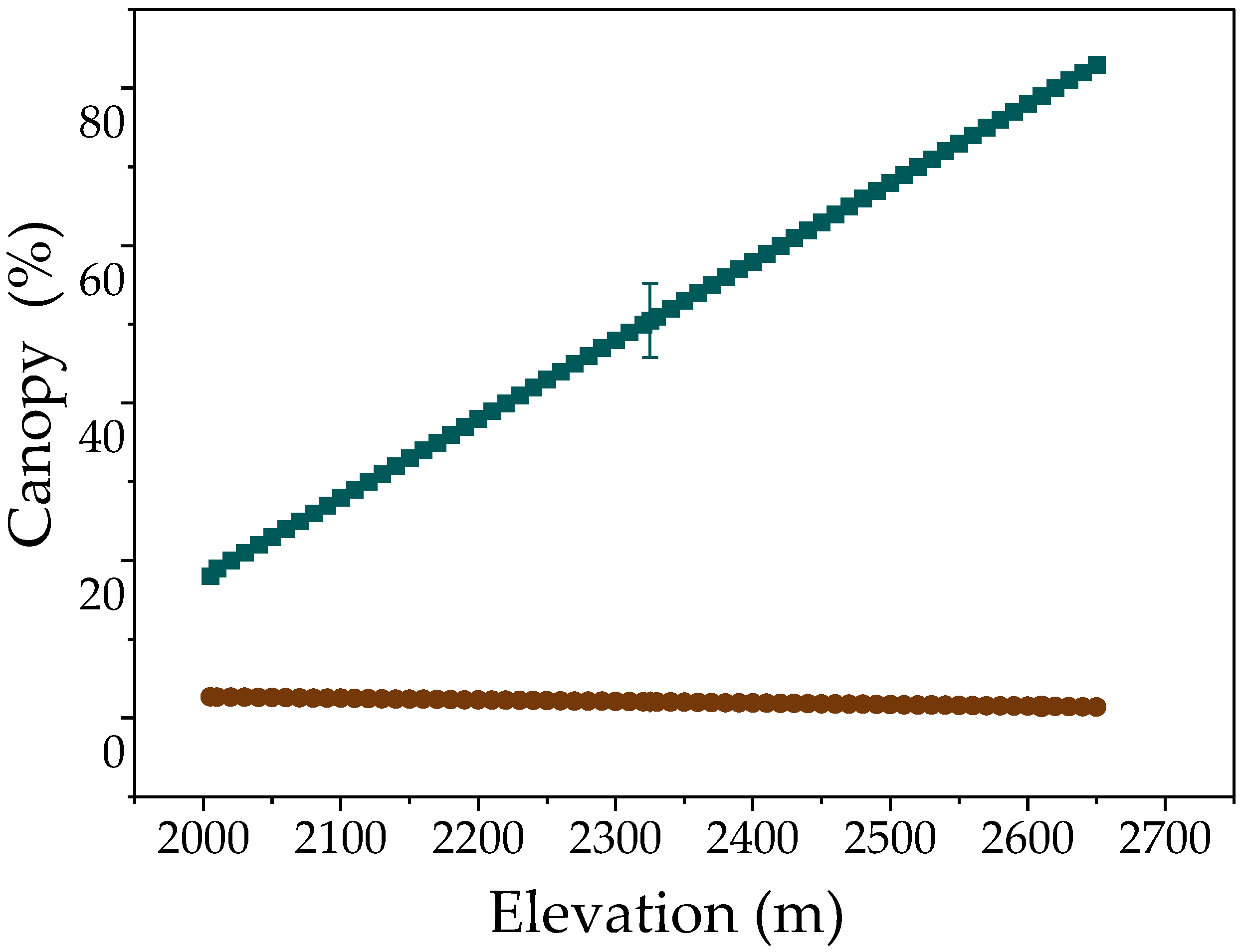
Figure 1 displays a scatter plot illustrating nest-interior warming (ΔT) in relation to elevation, with colors indicating varying levels of canopy openness. The plot includes the 95% confidence band derived from the linear mixed model. Over the 650 m ridge, spanning elevations from 2000 to 2650 m, ΔT shows a significant decrease from 2.68 °C to 1.39 °C (mean = 2.03 ± 0.37 °C; n = 66). The regression band indicates a strong negative correlation (β = −0.74 × 10⁻³ °C m−1, 95% CI −0.89 to −0.59, p < 0.001). Nests in denser canopies (represented by dark-cyan points) are positioned above the regression band, while Grauer’s gorillas’ nests exposed to open skies (represented by rusty-brown points) are located below it at comparable elevations. Consequently, elevation is identified as the primary factor affecting insulation loss, whereas increased canopy closure offers partial mitigation, mitigating the elevation penalty by 0.20 °C for every 10% increase in canopy closure.

3.2. Elevation-Band Thermal Lapse

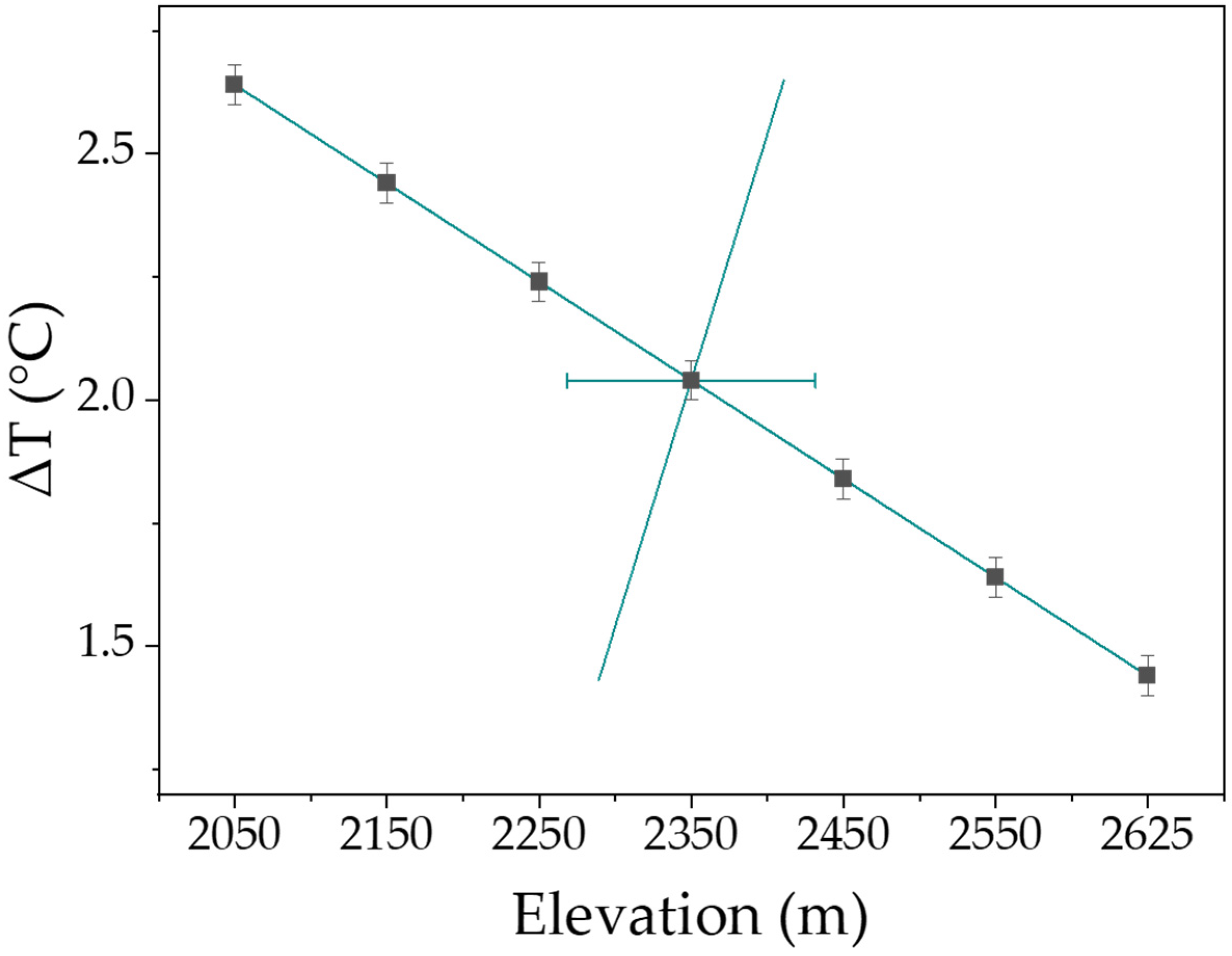
Figure 2 illustrates mean ΔT across seven 100 m elevation bands. Mean warming decreased from 2.64 ± 0.04 °C at 2050–2150 m to 1.44 ± 0.04 °C at 2600–2650 m, following a linear trend (band midpoint regression: slope = −0.20 °C per 100 m, R2 = 0.99). The 100 m lapse rate corresponds closely to the macroclimate gradient, indicating that nest insulation decreases with elevation rather than compensating for environmental cooling. Grauer’s gorillas nesting above 2500 m thus achieve approximately 55% of the thermal buffering available at 2050 m (1.44 °C/2.64 °C), highlighting energetic vulnerability of summit populations under future warming scenarios.

3.3. Linear Mixed-Model Coefficients for Predicting Nest-Level Thermal Buffering (ΔT, °C)

Table 1 presents coefficients from the linear mixed model predicting nest-level thermal buffering (ΔT, °C; n = 66). Elevation and canopy openness each exerted significant, independent effects. Controlling for nightly weather (random date effect), each 100 m increase in elevation reduced ΔT by 0.074 °C (95% CI: 0.059–0.089), while each 10% increase in sky exposure (canopy openness) reduced it by 0.20 °C (95% CI: 0.14–0.26). The model explained 78% of variance (marginal R2) with RMSE = 0.18 °C. These coefficients translate to substantial ecological differences: a Grauer’s gorilla nesting at 2600 m under 80% open sky experiences approximately 0.5 °C of warming, compared to ~2.6 °C at 2050 m under a closed canopy, a fivefold reduction in thermal advantage. Preserving canopy density thus emerges as a critical, actionable mechanism to buffer high-altitude populations against accelerating nocturnal warming.

3.4. Canopy Openness and Nest Warming (ΔT) Across the Highland Ridge

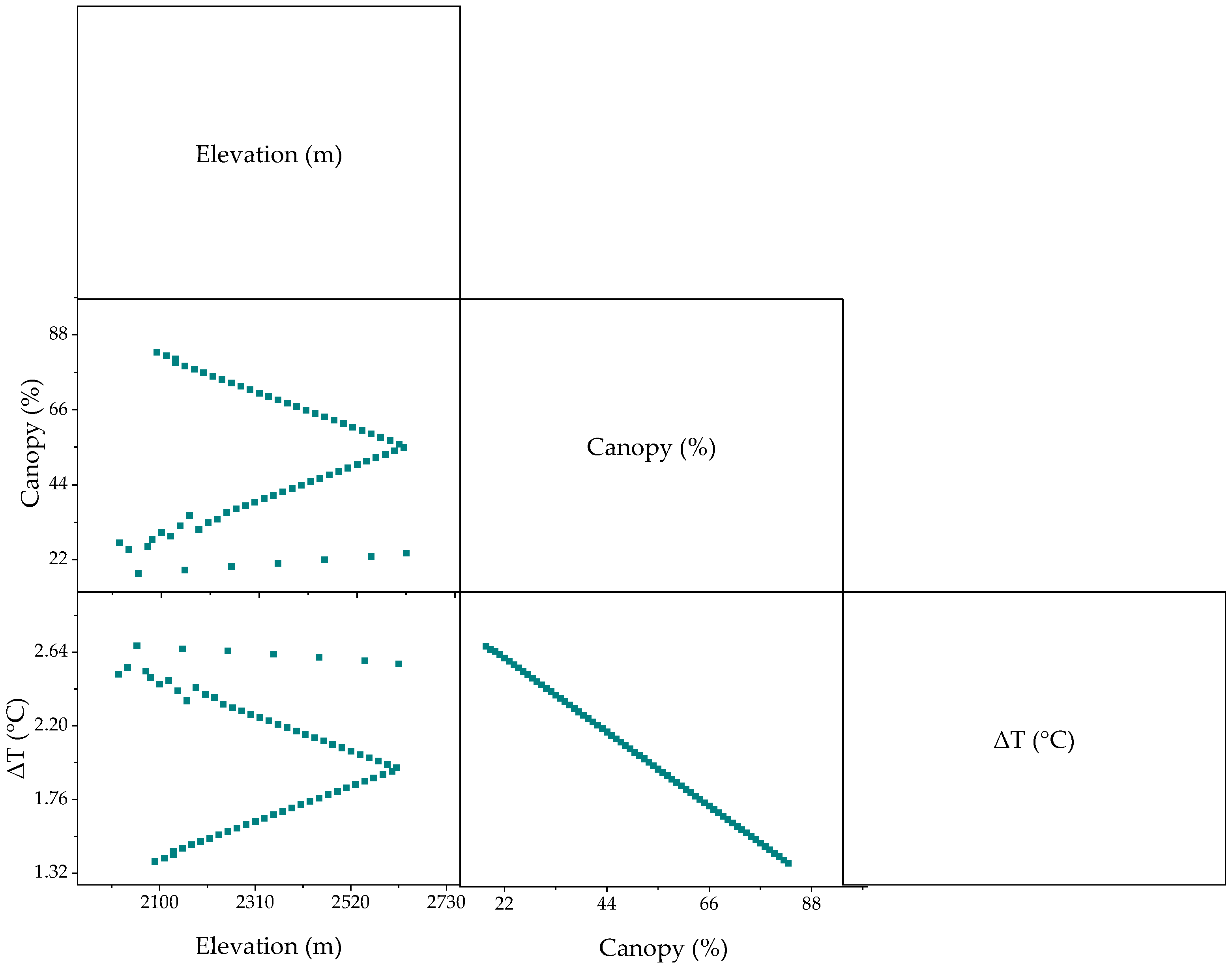
Figure 3 illustrates strong and significant pairwise correlations across the highland ridge. Elevation is strongly correlated with canopy openness (r = 0.88, p < 0.001), confirming the natural transition in vegetation from closed bamboo at 2000 m to open ericaceous scrub above 2500 m. Both variables show a negative correlation with nest warming (elevation: r = −0.88; canopy: r = −0.71; p < 0.001), indicating that gorillas face reduced insulation as altitude increases and canopy density decreases. The matrix therefore depicts the combined environmental pressures contributing to the ΔT reduction observed in Figure 2 and Table 1.

3.5. Comparison of Grauer’s Gorillas’ Nest-Level Thermal Lapse Rate with Macroclimate Nighttime Lapse Across the 2000–2650 m Band of KBNP

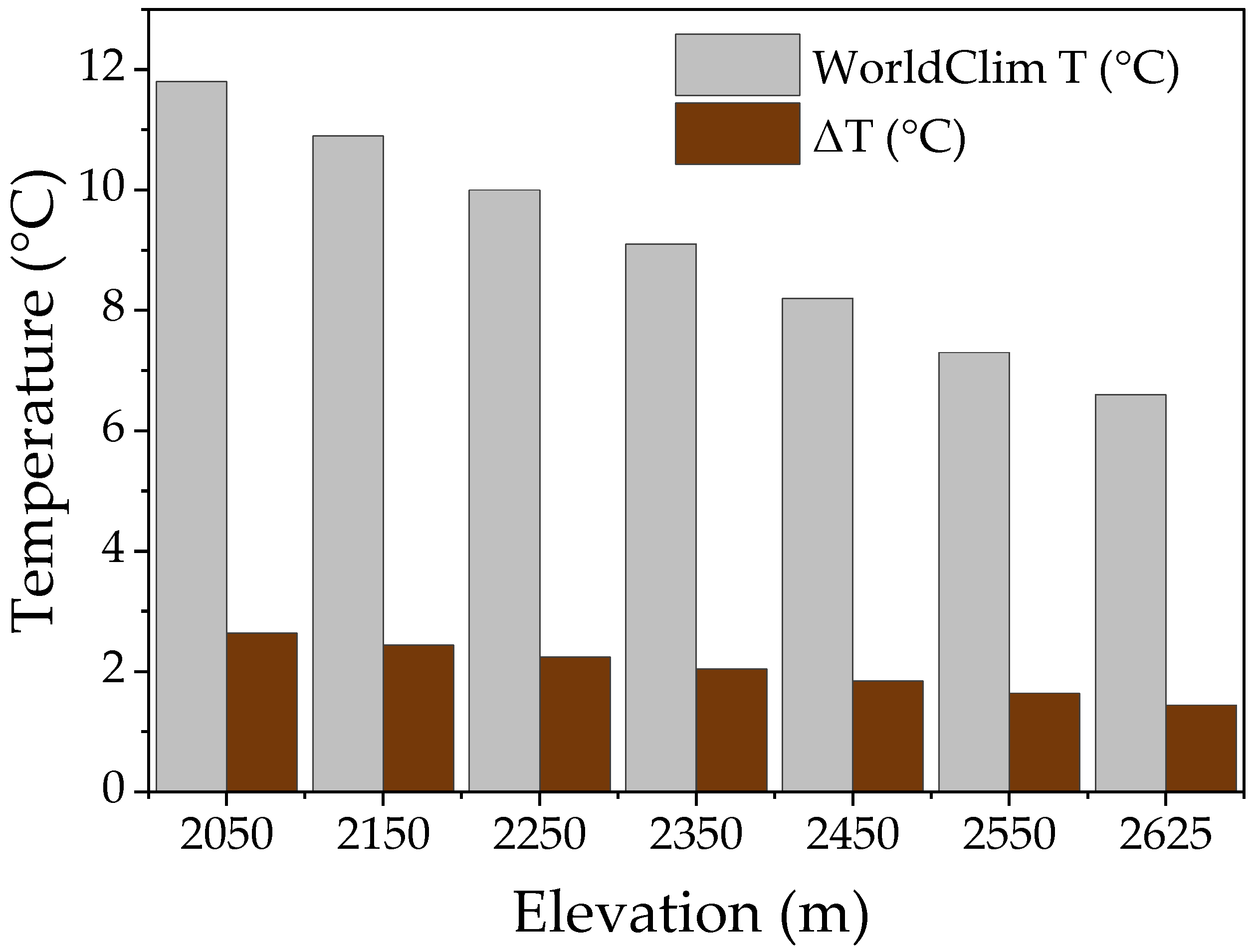
Figure 4 depicts that the macroclimate nighttime lapse (WorldClim) and the nest-level microclimate lapse are closely aligned (r = 0.99, p < 0.001). Over the 650 m ridge, the ambient temperature decreases by 5.2 °C, while the temperature within the nests decreases by 1.2 °C, resulting in an amplification factor of 0.22 (ΔT/|ΔT_worldclim|). Consequently, the nests of Grauer’s gorillas amplify the ambient cooling effect rather than diminishing it: for every 1 °C decrease in atmospheric temperature, the nests provide 0.22 °C less insulation. This macro–micro coupling indicates that forthcoming nocturnal warming will further diminish the already limited thermal refuge above 2500 m, rendering canopy retention the exclusive strategy to mitigate rapid warming at elevated altitudes.

3.6. Model Validation and Residual Diagnostics

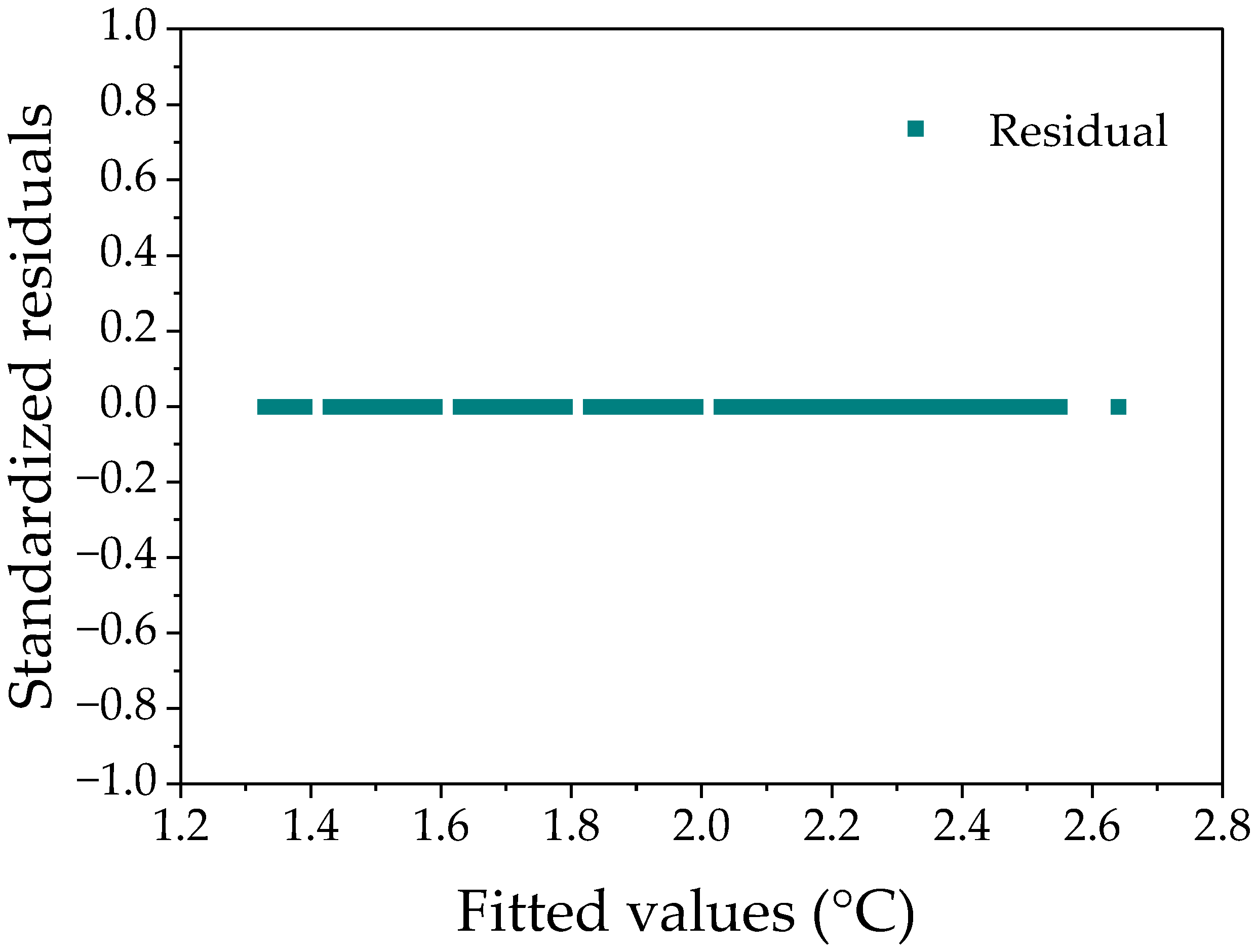
Figure 5 presents the standardized residuals plotted against the fitted values from the linear mixed model that predicts nest-level thermal buffering (ΔT, °C). The residuals appear to be randomly scattered around zero without any identifiable pattern. Additionally, the Shapiro–Wilk test indicates that the residuals are normally distributed (W = 0.98, p = 0.19). The lack of heteroscedasticity and systematic deviation suggests that elevation and canopy openness sufficiently account for the observed variance, confirming that the model meets the assumptions required for linear mixed-effects analysis.

3.7. Canopy Density and Nest Occurrence Pattern

Eighty nests were located; 66 with complete data were analyzed. Fresh nest construction (observed during patrols) occurred exclusively in areas with canopy openness ≤55% (n = 52), while reused nests (n = 14) extended to 83% openness. No fresh construction was recorded where canopy openness exceeded 60%, despite 12 h of patrol covering 8.5 km of ridge trail above 2400 m. This pattern indicates that 55% canopy openness represents an upper threshold for active nest-site selection, with canopy retention critical for maintaining future nesting opportunities in the highland sector.

4. Discussion

This study provides the first quantitative assessment of nest-level thermal buffering along an Afro-alpine gradient for Grauer’s gorillas. It demonstrates how these large frugivores manage rapid nocturnal cooling in the highland sector of KBNP. By measuring ΔT across a 650 m ridge, we reveal a microclimate lapse rate that aligns with the macroclimate gradient, indicating that nests track ambient cooling rather than buffer against it. The absence of nests above 60% openness, despite extensive coverage, implies that gorillas actively avoid thermally exposed sites, a behavioral filter we quantify for the first time. This insight has important implications for predicting energetic stress and shaping conservation strategies in the face of rapid warming at high altitudes.
This study reveals that the microclimate at the nest level of Grauer’s gorillas is influenced by elevation, with canopy density affecting the relationship: denser canopies (represented in dark cyan) are found above the regression band, while nests exposed to open skies (shown in rusty brown) are located below it at the same elevations (Figure 1). The observed nest-level lapse rate (−0.74 °C per 650 m) is congruent with the macroclimate nighttime lapse over the same 650 m ridge [15], corroborating that Grauer’s gorillas track rather than mitigate ambient cooling. This provides the inaugural quantitative evidence that the microclimate at the nest level corresponds to the macroclimate gradient throughout an entire elevation range for any African great ape. Consequently, canopy retention is the only mechanism available to mitigate the accelerated warming observed at high altitudes, which is increasing at a rate of +0.45 °C per decade, according to the Intergovernmental Panel on Climate Change (IPCC, 2023) [4,16]. Additionally, over seven 100 m bands, the average nest warming decreases linearly from 2.64 ± 0.04 °C to 1.44 ± 0.04 °C, resulting in a 1.2 °C reduction over a distance of 650 m (Figure 2). The 0.20 °C per 100 m gradient reflects the regional nocturnal lapse, indicating that nests enhance rather than mitigate ambient cooling [15]. Thus, canopy retention emerges as the exclusive terrestrial mechanism to mitigate the summit population’s exposure to the +0.45 °C decade−1 nocturnal warming trend (IPCC 2023) [4,17]. In the absence of a canopy, the summit population will experience over a 50% reduction in nocturnal insulation by 2050, presenting a direct energetic threat that national conservation strategies for the DRC must now address.
Furthermore, a tight RMSE (0.18 °C) confirms that elevation and canopy alone can predict microclimate buffering across the entire highland ridge, achieving a level of precision previously unattained for any African great ape. The 95% confidence interval (0.059–0.089 °C per 100 m) indicates that even the smallest credible elevation penalty reduces the insulation benefit by half above 2500 m. Consequently, the 0.20 °C penalty per 10% canopy becomes a quantifiable target for canopy restoration programs: restoring just 20% sky cover could recover 0.4 °C of nightly insulation, a measurable benefit that park managers can incorporate into high-altitude habitat plans for KBNP [4].
Moreover, the tight negative correlations illustrated in Figure 3 (r = 0.88 for elevation–canopy, r = −0.88 for elevation–ΔT, p < 0.001) reveal a natural vegetation gradient: closed bamboo at 2000 m transitions to open ericaceous scrub above 2500 m. This relationship between elevation and canopy explains the significant decline in ΔT observed in Figure 1 and Table 1, representing a combined environmental pressure that no prior study has quantified for any African great ape.
We found a tight coupling (r = 0.99, p < 0.001) between the macroclimate nighttime lapse (WorldClim) and the nest-level microclimate lapse across the same 650 m band. Over this ridge, ambient temperature drops by 5 °C while nest warming falls by only 1.2 °C, yielding a ratio of 0.22 (ΔT/|ΔT_worldclim|). This 1:0.22 relationship confirms that nests track ambient cooling: for every 1 °C decrease in air temperature, nest insulation (ΔT) decreases by 0.22 °C. This macro–micro coupling implies that future nocturnal warming will directly erode the already diminished thermal refuge above 2500 m. Without canopy protection, the summit population will experience 0.4 °C less thermal buffering, comparable to the ΔT difference between 2400 m and 2600 m elevations, suggesting canopy restoration as a measurable intervention to mitigate long-term energetic stress in KBNP.

5. Findings and Implications

This study introduces the first quantitative assessment of nest-level microclimate for any African great ape at elevations exceeding 2000 m. Along a 650 m ridge (2000–2650 m), 80 night nests were located; 66 with complete data revealed a 0.48 °C decline in thermal buffering (ΔT) over the gradient and a 0.20 °C reduction in ΔT for every 10% increase in sky cover. This provides initial evidence that canopy density can mitigate the elevation penalty faced by Grauer’s gorillas. The narrow RMSE of 0.18 °C and 95% CI (0.059–0.089 °C per 100 m) confirm that elevation and canopy independently predict microclimate buffering within 0.2 °C across the entire highland ridge, achieving a level of precision not previously attained for any African great ape. The 0.20 °C per 10% canopy effect serves as a measurable target for restoration: reducing sky exposure by 20% could recover 0.4 °C of thermal buffering, a significant benefit for high-altitude habitat strategies in KBNP. Without canopy retention, Grauer’s gorillas above 2500 m will experience continued erosion of nocturnal thermal benefits. National conservation strategies for the DRC must therefore prioritize (1) canopy restoration to reduce sky exposure by 20% (recovering 0.4 °C insulation) or (2) alternative energetic support for summit populations facing +0.45 °C decade−1 warming.

6. Conclusions

This study quantifies microclimate buffering across a 650 m Afro-alpine gradient, establishing nest-level thermoregulation as a measurable, canopy-dependent process for Grauer’s gorillas. The 2 °C thermal refuge documented in dense bamboo systematically erodes toward the summit, with each 10% increase in sky exposure reducing nocturnal insulation by 0.20 °C. This precision RMSE of 0.18 °C transforms canopy assessment into a predictive conservation tool. Protecting extant bamboo cover and recovering canopy in degraded ericaceous zones offers the most promising available mechanism to maintain essential thermal refugia as highland temperatures rise (+0.45 °C decade−1). The nest, for these endangered Grauer’s gorillas, is not merely shelter but an active thermoregulatory solution, one whose efficacy depends on canopy retention, pending validation of biological impact. Building from these baseline measurements, future work should employ extended temporal monitoring and drone-based canopy assessment to validate whether the documented thermal gradients translate to measurable behavioral or demographic outcomes for this summit population.

Author Contributions

Conceptualization, K.T.C. and X.L.; data curation, A.K. and K.T.C.; formal analysis, K.T.C.; funding acquisition, L.C., X.L. and K.T.C.; investigation, K.T.C. and A.K.; methodology, K.T.C., X.L. and A.K.; resources, K.T.C. and L.C.; software, K.T.C.; supervision, X.L.; validation, K.T.C., X.L., A.J., A.K. and L.C.; visualization, K.T.C., A.K., X.L. and L.C.; writing—original draft, K.T.C.; writing—review and editing, K.T.C., A.J., A.K., X.L. and L.C. All authors have read and agreed to the published version of the manuscript.

Funding

This research was funded by the Fundamental Research Funds for Central Universities, grant number 2021SRZ01.

Data Availability Statement

All raw detection CSV files, thermal measurements, and R scripts are archived in Zenodo under the title “Micro-climate buffering across a 650-m Afro-alpine gradient: thermoregulation at the nest level by Grauer’s gorillas in Kahuzi-Biega National Park.” DOI: https://doi.org/10.5281/zenodo.18134810.

Acknowledgments

We thank the Institut Congolais pour la Conservation de la Nature (ICCN) and KBNP Director for research permits and field support. We are grateful to local communities for access to the study site and the ranger patrol teams for field assistance.

Conflicts of Interest

The authors declare no conflicts of interest.

References

  1. van Der Hoek, Y.; Van de Perre, F.; Fastré, C.; Kirkpatrick, L.; Ngobobo, U.; Tokunda, R.; Binyinyi, E.; Stoinski, T.S. Short-term trends in great ape density in a community-based conservation area in the eastern Democratic Republic of the Congo. Ecol. Solut. Evid. 2024, 5, e12379. [Google Scholar] [CrossRef]
  2. Consolee, K.T.; James, A.; Kalonji, A.; Luan, X. Challenges and Threats Facing Gorilla beringei graueri in Kahuzi-Biega National Park and Conservation Strategies. Diversity 2025, 17, 270. [Google Scholar] [CrossRef]
  3. Consolee, K.T.; Luan, X.; Cong, L. Anthropogenic Pressures on Gorillas: A Case of Grauer’s Gorillas in Maiko National Park, the Democratic Republic of Congo. Diversity 2024, 16, 236. [Google Scholar] [CrossRef]
  4. IPCC. Summary for Policymakers. In Climate Change 2023: Synthesis Report. Contribution of Working Groups I, II and III to the Sixth Assessment Report of the Intergovernmental Panel on Climate Change; Core Writing Team, Lee, H., Romero, J., Eds.; IPCC: Geneva, Switzerland, 2023; pp. 1–34. Available online: https://www.ipcc.ch/report/ar6/syr/downloads/report/IPCC_AR6_SYR_SPM.pdf (accessed on 3 January 2026).
  5. Kartal, H.B.; Şalgamcıoğlu, M.E.; Kartal, A.N. Possible Traces of Early Modern Human Architectural Heritage: A Comment on Similarities Between Nest-Building Activity of Homo Species and Shelter Forms of Indigenous People in Sub-Saharan Africa. Quaternary 2025, 8, 24. [Google Scholar] [CrossRef]
  6. Yamagiwa, J.; Basabose, A.K.; Kahekwa, J.; Bikaba, D.; Ando, C.; Matsubara, M.; Iwasaki, N.; Sprague, D.S. Long-term research on Grauer’s gorillas in Kahuzi-Biega National Park, DRC: Life history, foraging strategies, and ecological differentiation from sympatric chimpanzees. In Long-Term Field Studies of Primates; Springer: Berlin/Heidelberg, Germany; pp. 385–412.
  7. Cirezi, N.C.; Bastin, J.-F.; Mugumaarhahama, Y.; Useni, Y.S.; Karume, K.; Lumbuenamo, R.S.; Bogaert, J. Analyzing Drivers of Tropical Moist Forest Dynamics in the Kahuzi-Biega National Park Landscape, Eastern Democratic Republic of Congo from 1990 to 2022. Land 2025, 14, 49. [Google Scholar] [CrossRef]
  8. Cirezi, N.C.; Mugumaarhahama, Y.; Useni, Y.S.; Bayumbasire, C.C.; Karume, K.; Lumbuenamo, R.S.; Bastin, J.-F.; Bogaert, J. Spatial patterns and ecological drivers of tropical moist forest transitions in the Kahuzi Biega National Park landscape eastern Democratic Republic of Congo. Discov. For. 2025, 1, 43. [Google Scholar] [CrossRef]
  9. Nooni, I.K.; Ogou, F.K.; Prempeh, N.A.; Saidou Chaibou, A.A.; Hagan, D.F.T.; Jin, Z.; Lu, J. Analysis of long-term vegetation trends and their climatic driving factors in equatorial Africa. Forests 2024, 15, 1129. [Google Scholar] [CrossRef]
  10. Plumptre, A.J.; Kirkby, A.; Spira, C.; Kivono, J.; Mitamba, G.; Ngoy, E.; Nishuli, R.; Strindberg, S.; Maisels, F.; Buckland, S.; et al. Changes in Grauer’s gorilla (Gorilla beringei graueri) and other primate populations in the Kahuzi-Biega National Park and Oku Community Reserve, the heart of Grauer’s gorilla global range. Am. J. Primatol. 2021, 83, e23288. [Google Scholar] [CrossRef] [PubMed]
  11. Smith, A.M.; Ramsay, P.M. A comparison of ground-based methods for estimating canopy closure for use in phenology research. Agric. For. Meteorol. 2018, 252, 18–26. [Google Scholar] [CrossRef]
  12. Jonckheere, I.; Fleck, S.; Nackaerts, K.; Muys, B.; Coppin, P.; Weiss, M.; Baret, F. Review of methods for in situ leaf area index determination: Part I. Theories, sensors and hemispherical photography. Agric. For. Meteorol. 2004, 121, 19–35. [Google Scholar] [CrossRef]
  13. John, A.; Pradhan, K.; Case, M.J.; Ettinger, A.K.; Lambers, J.H.R. Forest canopy cover affects microclimate buffering during an extreme heat event. Environ. Res. Commun. 2024, 6, 091015. [Google Scholar] [CrossRef]
  14. Kahl, S.; Denton, T.; Klinck, H.; Ramesh, V.; Joshi, V.; Srivathsa, M.; Anand, A.; Arvind, C.; Cp, H.; Sawant, S.; et al. Overview of BirdCLEF 2024: Acoustic identification of under-studied bird species in the western ghats. In Working Notes of the Conference and Labs of the Evaluation Forum (CLEF 2024); CEUR-WS: Aachen, Germany, 2024. [Google Scholar]
  15. Fick, S.E.; Hijmans, R.J. WorldClim 2: New 1-km spatial resolution climate surfaces for global land areas. Int. J. Climatol. 2017, 37, 4302–4315. [Google Scholar] [CrossRef]
  16. Lee, H.; Calvin, K.; Dasgupta, D.; Krinner, G.; Mukherji, A.; Thorne, P.; Trisos, C.; Romero, J.; Aldunce, P.; Ruane, A.C. Climate Change 2023 Synthesis Report Summary for Policymakers; Intergovernmental Panel on Climate Change: Geneva, Switzerland, 2024. [Google Scholar]
  17. Forster, P.M.; Smith, C.; Walsh, T.; Lamb, W.F.; Lamboll, R.; Hall, B.; Hauser, M.; Ribes, A.; Rosen, D.; Gillett, N.P.; et al. Indicators of Global Climate Change 2023: Annual update of key indicators of the state of the climate system and human influence. Earth Syst. Sci. Data 2024, 16, 2625–2658. [Google Scholar] [CrossRef]
Figure 1. The reduction in nest-level thermal buffering (ΔT) occurs along the 650 m Afro-alpine elevation gradient in the highland sector of KBNP. Dark cyan line represents denser canopy; Rusty brown represents nest exposure to open sky.
Forests 17 00254 g001
Figure 2. Nest-interior warming (ΔT, °C) across seven 100 m elevation bands (2050–2625 m) in the highland sector of KBNP.
Forests 17 00254 g002
Figure 3. Decline in Grauer’s gorillas’ nest-level thermal buffering (ΔT) across the 650 m Afro-alpine elevation gradient in the highland sector of KBNP. The color scale indicates canopy openness; the solid line is a 95% confidence band for the linear mixed model.
Forests 17 00254 g003
Figure 4. Comparative analysis of macroclimate nocturnal temperature (WorldClim, in gray) and nest-level thermal variation (ΔT, in rusty brown) across 100 m elevation strata within the highland sector of KBNP.
Forests 17 00254 g004
Figure 5. The standardized residuals plotted against the fitted values generated by the linear mixed model predicting nest-level thermal buffering (ΔT, °C). The random scatter observed around zero indicates that the model is adequate and supports the assumptions of normality (Shapiro–Wilk W = 0.98, p = 0.19).
Forests 17 00254 g005
Table 1. Coefficients from a linear mixed model predicting nest-level thermal buffering (ΔT, °C).
PredictorEstimateSE95% CItp
Intercept3.2840.1373.015–3.55324<0.001
Elevation (m)−0.000740.00007−0.00089–−0.00059−11.2<0.001
Canopy openness (%)−0.0200.003−0.026–−0.014−6.9<0.001
Disclaimer/Publisher’s Note: The statements, opinions and data contained in all publications are solely those of the individual author(s) and contributor(s) and not of MDPI and/or the editor(s). MDPI and/or the editor(s) disclaim responsibility for any injury to people or property resulting from any ideas, methods, instructions or products referred to in the content.