Article

Molecular and Physiological Responses of Larix olgensis Seedlings to Drought and Exogenous ABA

by
Lu Liu
,
Mengxu Yin
,
Qingrong Zhao
,
Tiantian Zhang
,
Chen Wang
,
Junfei Hao
,
Hanguo Zhang
and
Lei Zhang
*
State Key Laboratory of Tree Genetics and Breeding, Northeast Forestry University, Harbin 150040, China
*
Author to whom correspondence should be addressed.
Forests 2026, 17(2), 206; https://doi.org/10.3390/f17020206
Submission received: 3 December 2025 / Revised: 16 January 2026 / Accepted: 16 January 2026 / Published: 4 February 2026
(This article belongs to the Section Forest Ecophysiology and Biology)

Abstract

With the intensification of global climate change and the frequent occurrence of extreme drought events, forest production is facing severe challenges. This study imposed drought stress and exogenous abscisic acid (ABA) treatment on Larix gmelini seedlings, evaluated their physiological characteristics, and analyzed the transcriptional response mechanism using transcriptome sequencing. The results showed that drought stress induced organ-specific changes in superoxide dismutase (SOD) and peroxidase (POD) activities, malondialdehyde (MDA) accumulation, and soluble protein content. SOD activity in leaves significantly increased, while POD activity, MDA content, and soluble protein levels in roots exhibited more dynamic changes. After ABA application, SOD activity in leaves reached its peak at 24 h, which was opposite to the situation in roots and stems, where POD activity was highest at 24 h. At 48 h, MDA accumulation was most significant in roots, while the early response in leaves was minimal. At 24 h, the soluble protein increase was most significant in stems. In addition, at this time point, ABA application significantly increased the soluble protein content in all three organs. Transcriptome sequencing analysis further identified core response genes involved in the MAPK signaling pathway, plant hormone signal transduction, starch and sucrose metabolism, and flavonoid biosynthesis pathways, including SNRK2, MAPKKK17, PYL, PP2C, XRN4, TMEM, TIR1, and TGA. In summary, Larix gmelini seedlings alleviate the inhibitory effect of drought stress on growth through a synergistic mechanism, specifically by activating the antioxidant system, initiating the MAPK signaling pathway, regulating plant hormone signal transduction, and reshaping carbon metabolism pathways, thereby enhancing stress resistance.

1. Introduction

Drought is one of the most serious ecological problems that threaten plant growth and affect agricultural and forestry production, as well as one of the most significant abiotic stresses on plants. Drought leads to a decrease in plant biomass, stomatal closure, and photoinhibition and affects physiological processes such as water transport and photosynthesis in plants [1,2]. Under drought stress, the photosynthesis, leaf water potential, and water content of plants significantly decrease [3]. Numerous studies have reported on the impact of drought stress on forest plants. For example, drought stress induces leaf wilting and senescence in Populus species, curl, and even fall off, and long-term drought causes greater damage than short-term drought [4]. Drought reduces the leaf area of black poplar, inhibits branch growth, decreases the number of leaves, and lowers the biomass [5]. Larix spp. is a plant species in the pine family, widely distributed in temperate plain areas, mountainous areas, and temperate high mountain climates. Due to its rapid growth and good wood properties, it has been widely used in forest cultivation and wood processing, with good economic, ecological, and social benefits. However, the increasing frequency and intensity of droughts caused by global climate change have seriously affected the growth and quality of larch trees, limiting their ecological and economic value [6]. Therefore, implementing adaptive mechanisms to mitigate environmental stressors of climate change has become particularly necessary. Plant hormones are important regulatory substances for plant growth and development. When subjected to drought stress, they produce a series of physiological responses by regulating endogenous hormone synthesis, transport, and signal control, becoming the most sensitive physiological active substances in plants to drought stress [7]. Abscisic acid (ABA) is an important plant hormone, which participates in the regulation of many physiological processes, including bud dormancy, seed germination, stomatal closure, and transcription and post transcriptional regulation of stress response genes [8,9]. Multiple studies have shown that the application of hormones can affect the physiological and metabolic processes of plants by adjusting their internal hormone balance and signal transduction, effectively improving crop drought resistance. For instance, studies on Populus tomentosa have demonstrated that the overexpression of ABA-responsive element binding factors significantly enhances photosynthetic activity and maintains cell membrane integrity, thereby improving water-use efficiency and drought resistance [10]. In addition, ABA can regulate the antioxidant system of plants and reduce the damage of reactive oxygen species (ROS) [11]. Under drought stress, the accumulation of ROS in plant cells increases, leading to oxidative damage. ABA can reduce the accumulation of ROS by increasing the activity of antioxidant enzymes such as superoxide dismutase (SOD), peroxidase (POD), and catalase (CAT) [12,13]. Related studies have confirmed in plants, such as lavender, ryegrass, and locust tree, that ABA significantly improves plant drought resistance by regulating antioxidant enzyme activity and the expression of related genes [14].
The mitogen activated protein kinase (MAPK) signaling pathway in plants plays a crucial role in their growth, development, and response to environmental stress [15]. The MAPK cascade is often composed of three conserved kinases: MAPK kinase-kinase (MAPKKK), MAPK kinase (MAPKK), and MAPK [16]. When plants are subjected to various stresses, such as drought, high temperature, pests, and diseases, the MAPK signaling pathway is activated to regulate the expression of downstream genes, ultimately affecting the physiological and biochemical processes of plants to adapt to environmental changes [17]. Research has shown that there is a complex interaction between the ABA signaling pathway and the MAPK signaling pathway [18]. For example, ABA can regulate plant drought resistance by modulating the MAPK cascade module AIK1–MKK5–MPK6 [19]. In rice, MAPKKK28 has been confirmed to be located upstream of the MKK1–MPK1 cascade and involved in the ABA-response process. Its loss-of-function mutant exhibits reduced sensitivity to ABA and decreased drought resistance [20]. Similarly, in Arabidopsis thaliana, MAP3Kθ1 has also been shown to be involved in ABA-mediated stomatal closure and seed germination regulation. Overexpression of this gene can enhance plant drought resistance [21] In addition, ABA can activate the MAPK signaling pathway to regulate processes such as stomatal closure, osmotic regulation, and antioxidant defense, thereby enhancing plant drought resistance [22].
Carbohydrates are the main products of plant photosynthesis and the energy substances required for normal plant growth and development [23]. Drought stress also significantly affects the expression of carbohydrate-regulated genes in plant cells, and under drought stress, changes in the soluble sugar content serve as signaling molecules to regulate the expression of many key genes involved in plant defense responses and metabolic processes, thereby controlling plant resistance and growth [24,25,26]. ABA can regulate the synthesis and decomposition of starch, affect the accumulation of soluble sugars, maintain cell osmotic potential, and enhance plant drought resistance under drought stress [27,28]. Flavonoids are a widely present class of secondary metabolites in plants [29,30,31]. In the study of long-term drought treatment in Achillea, it was found that the expression of phenylalanine ammonia lyase (PAL) and flavonoid 3-hydroxylase (F3H) in the flavonoid metabolism pathway significantly increased in the early stage of stress, and then decreased in the middle stage, while the expression of chalcone synthase (CHS) chalcone isomerase (CHI), and flavonoid 3′- hydroxylase (F3′H) increased in the middle stage [32,33,34].
Jixi City, Heilongjiang Province, China, has a temperate continental monsoon climate, where spring precipitation accounts for only 12%–15% of the total annual precipitation. This leads to a drought occurrence rate of over 65% during the spring seedling-cultivation period, making drought the primary abiotic limiting factor for the establishment and growth of larch seedlings, which are the major local afforestation tree species. Therefore, this study is expected to provide theoretical and technical support for local forest seedling stress management and afforestation practices. The core hypothesis of this study is proposed as follows: exogenous abscisic acid (ABA) can enhance the drought adaptability of larch seedlings by regulating the activity of antioxidant defense systems and the accumulation pattern of soluble proteins in different organs and inducing the differential expression of genes involved in hormone signal transduction, antioxidant metabolism, and other related pathways. In this study, we subjected larch seedlings to drought stress and treated them with exogenous abscisic acid (ABA) to investigate their physiological responses under drought stress, including oxidative stress and soluble protein levels in different parts. Subsequently, we conducted transcriptome analysis to identify differentially expressed genes in the same part under different treatments. The core objective is to elucidate the physiological and molecular mechanisms underlying the regulation of drought adaptation responses in larch seedlings by exogenous ABA.

2. Materials and Methods

2.1. Test Materials

All chemicals and solvents used in this study were of analytical grade or HPLC grade. Commercial kits for the detection of superoxide dismutase (SOD), peroxidase (POD), catalase (CAT), malondialdehyde (MDA), and soluble protein were purchased from Suzhou Greasy Biotechnology Co., Ltd., Suzhou, China. Subsequently, the activities of SOD, POD, and CAT, along with the soluble protein content, were quantified using a Varioskan LUX multimode microplate reader (Thermo Fisher Scientific, Waltham, MA, USA).
The seeds of Larix olgensis were collected from Jixi City, Heilongjiang Province, China (geographical coordinates: 130°58′ E, 45°16′ N). After collection, they were placed in a ventilated and dry place to dry in the shade for future use, followed by pot cultivation. The growth medium used for pot cultivation was an artificially formulated seedling substrate (peat soil:perlite:leaf mould = 3:1:1, with pH adjusted to 6.5–7.0). The substrate was sterilized with high-pressure steam at 121 °C for 2 h before use to eliminate pathogenic bacteria, insect eggs, and weed seeds. The cultivation containers were polyethylene flowerpots with a diameter of 20 cm and a height of 25 cm, each filled with 2.5 kg of substrate (with the surface layer 2 cm away from the pot mouth). The seedlings were cultivated in an artificial climate chamber throughout the entire process, with a temperature setting of 25 °C and a photoperiod of 16 h of light/8 h of darkness. LED cold light sources were used to provide light, with a stable light quantum flux density of 300–400 μmol·m−2·s−1. The light source was positioned 30 cm away from the seedling canopy, and the position of the flowerpots was regularly adjusted to ensure uniform lighting. The relative air humidity was maintained at 60%–70% through a built-in humidifier and dehumidifier in the climate chamber, while the substrate moisture content was controlled at 60%–70% of the field capacity through precise watering. The seedlings were treated (with drought stress and ABA treatment) when they reached the one-year-old stage after sowing, at which point they had formed complete root, stem, and leaf nutrient organs and were in a vigorous growth phase, sensitive to environmental stress. During the cultivation period, the nutrient supply was provided by watering with 100 mL of deionized water every 2 weeks.

2.2. Research Methods

Preparation of ABA solution: Accurately weigh an appropriate amount of ABA powder (analytical grade, Sigma-Aldrich, Livonia, MI, USA). First, add a small amount of anhydrous ethanol (analytical grade, ThermoFisher Scientific China, Shanghai, China) to aid dissolution and ensure complete dissolution. Subsequently, use distilled water to dilute the above stock solution to a working solution with a final concentration of 50 mg/L, and ensure that the final volume fraction of the cosolvent ethanol in the mixed system does not exceed 0.1% (preliminary experiments have verified that this concentration has no significant effect on seedling growth). After the solution is fully stirred and mixed, use it immediately.
Plant sample processing: One-year-old Larix gmelini seedlings with consistent growth traits were selected as experimental materials, and two groups were set up: a natural drought treatment group and a drought + exogenous ABA compound treatment group. Specifically, the natural drought treatment involved stopping watering after the seedlings were pre-cultured and under controlled environmental conditions, relying on the natural consumption of water in the growth medium to construct a water-deficit-stress system. During the stress period, the moisture content of the medium was monitored daily using the weighing method to ensure consistent stress intensity among replicates. For the drought + ABA compound treatment group, foliar spraying was performed on the day of initiating drought stress. A handheld sprayer was used to uniformly spray 50 mL of ABA solution with a concentration of 50 mg/L on each seedling, ensuring that both the upper and lower surfaces of the needles and the stem were evenly coated with the solution during the spraying process.
Drought stress, a long-term and gradual abiotic stress, elicits plant responses that encompass sequential stages of initial stress perception, stress adaptation, and damage accumulation, so we set sampling time points at 0, 4, 8, and 12 days to cover the early, middle, and late stages of the drought response and systematically analyze the temporal regulation patterns of Larix gmelini seedlings under continuous water deficit; in contrast, exogenous ABA, as the core signaling molecule mediating plant stress responses, exerts its regulatory effects via rapidly initiated signal transduction and downstream gene expression programs, with key signaling pathway nodes and response peaks occurring within a short time frame post-treatment; thus, we selected sampling time gradients of 0, 24, and 48 h to precisely capture the critical time window for the ABA-mediated activation, transduction, and downstream physiological effects of stress resistance signaling pathways.
Tissue samples of roots, stems, and leaves were collected from two groups of seedlings on days 0, 4, 8, and 12 of drought stress treatment, respectively, to systematically investigate the temporal response mechanism of Larix gmelini seedlings to drought stress. Additionally, for the drought + ABA combined treatment group, tissue samples of roots, stems, and leaves were collected at 0, 24, and 48 h after spraying, aiming to analyze the regulatory effect of ABA-dependent pathways on seedlings under drought stress. Each treatment group was set up with three biological replicates, and each replicate included 10 independent seedlings to avoid interference from individual differences. After all samples were collected, the surface matrix impurities were removed, and they were immediately flash frozen in liquid nitrogen and transferred to an ultra-low temperature freezer at −80 °C for preservation, in preparation for subsequent physiological index measurements and transcriptome sequencing analysis.

2.3. Determination of Antioxidant Enzymes

Superoxide dismutase activity (SOD): The activity of SOD was quantified using the WST-8 method: approximately 0.1 g of sample was accurately weighed and transferred to 1 mL of extraction buffer. After thoroughly homogenizing under ice bath conditions, the mixture was centrifuged at 4 °C and 12,000 rpm for 10 min, and the supernatant was collected for subsequent assays. This method is based on the principle that WST-8 reacts with superoxide anions (O2•−) catalyzed by xanthine oxidase to generate a water-soluble formazan dye, which has a maximum absorption peak at 450 nm. The scavenging effect of SOD on superoxide anions attenuates color formation; a darker reaction solution indicates lower SOD activity, and vice versa. In the reaction system, the activity of the SOD enzyme is defined as the amount of enzyme that exerts a certain inhibitory effect on the system, with one enzyme activity unit (U/mL) representing this amount. The calculation formula is as follows:
S O D   a c t i v i t y = S i p 1 S i p × V 2 / ( W × V 1 / V ) × D
Among them, the inhibition percentage of the system ( S i p ) is the inhibition percentage in the above-mentioned xanthine oxidase coupling reaction system, W is the sample mass, D is the dilution ratio of the solution, V is the volume of the added extraction solution, V 1 is the volume of the sample added to the reaction system, and V 2 is the total volume of the reaction system.
Peroxidase activity (POD): Approximately 0.1 g of sample tissue was accurately weighed, homogenized with 1 mL of extraction buffer in an ice bath, and centrifuged at 12,000 rpm for 10 min at 4 °C. Then, the supernatant was collected. Following mixing of the supernatant with the corresponding reagent, the mixture was incubated. The absorbance value (A1) at 470 nm was immediately measured, and after 1 min, the absorbance value was measured again (A2). The absorbance change was calculated as Δ A = A2 − A1. Enzyme activity is defined as the increase in the absorbance change value ( Δ A ) at 470 nm per minute per gram of tissue, with a 0.5 increase in Δ A per minute per gram of tissue representing one enzyme activity unit (U). The calculation formula is as follows:
P O D   a c t i v i t y = Δ A / 2 ( W × V 1 / V ) / T × D
Among them, W is the sample mass, V is the volume of added extraction solution added to the sample volume, V 1 is the sample volume, T is time, and D is the dilution factor.

2.4. Determination of Malondialdehyde

The content of malondialdehyde (MDA) was determined using the thiobarbituric acid (TBA) colorimetric method. The reagent kit was purchased from Suzhou Grace Biotechnology Co., Ltd., Suzhou, China, and the measurement process was conducted using a Thermo Varioskan LUX multi-function microplate reader (Suzhou Grace Biotechnology Co., Ltd., Suzhou, China). This method relies on the condensation reaction between MDA and TBA under high-temperature and acidic conditions, resulting in the formation of red 3,5,5′-trimethyl-2,4-dioxo-1,2-oxazolidine (Trimetidine), which exhibits a maximum absorption peak at 532 nm. To eliminate the interference of substances such as sugars in the sample on the measurement, the absorbance value at 600 nm was also measured simultaneously, and the difference in absorbance between 532 nm and 600 nm ( Δ A = A532 − A600) was used to calculate the MDA content.
The experimental procedure is as follows: approximately 0.1 g of plant tissue was accurately weighed, mixed with 1 mL of extraction solution, and homogenized thoroughly in an ice bath. Then, it was centrifuged at 4 °C and 12,000 rpm for 10 min. An aliquot of the supernatant was transferred to an EP tube and added and mixed uniformly. Subsequently, it was incubated in a constant-temperature water bath for 30 min. After the reaction was complete, it was promptly removed and cooled in an ice bath. The cooled solution was centrifuged again at 25 °C and 12,000 rpm for 10 min; the entire supernatant was transferred to a 1 mL glass cuvette. The absorbance values were measured at 532 nm and 600 nm, respectively. The formula for calculating the MDA content is as follows: M D A   c o n t e n t = Δ A / ε × d × V 2 × 10 9 / ( W × V 1 / V ) .
Among them, A at 532 nm and 600 nm, Δ A = A532 − A600, V 1 is the volume of the sample added to the reaction system, V 2 is the amount of sample added and the total volume of the working solution, ε is the molar extinction coefficient of MDA, and d is the optical density.

2.5. Determination of Soluble Protein Content

The soluble protein content was quantified using the Coomassie Brilliant Blue method. Weigh about 0.1 g of tissue, add 1 mL of extraction solution to the ice bath homogenate, centrifuge at 12,000 rpm and 4 °C for 10 min, collected the supernatant, preheat the spectrophotometer for 30 min, set the wavelength to 600 nm, and calibrate to zero using distilled water. The assay solution was mixed in an EP tube and incubated at room temperature (25 °C) for 10 min. The entire mixture was transferred to a 2 mL glass colorimetric dish, and the absorbance value A was measured at 600 nm (complete the colorimetric process in 5–15 min).

2.6. Transcriptome Sequencing

Total RNA was extracted from each sample using the RNAprep Pure Plant Kit (Tiangen, Beijing, China). The quality of RNA was determined using a Nanophotometer Spectrophotometer (IMPLEN, Westlake Village, CA, USA) and an Agilent Bioanalyzer 2100 system (Agilent Technologies, Santa Clara, CA, USA). A library was constructed using the TruSeq Stranded mRNA LT sample preparation kit (Illumina, San Diego, CA, USA) and sequenced on the Illumina HiSeq X Ten platform at Meiji Biotech (Shanghai, China) to generate 150 bp double ended reads. Trimomatic V0.36 was used to process raw reads [35,36]. HISAT2 was used to map clean reads to the larch reference genome (http://www.larixgd.cn/ftp (accessed on 1 October 2025)) [37]. Gene expression levels were quantified as FPKM (Fragments Per Kilobase of exon model per Million mapped fragments) values using Cufflinks 2.2.1, and read counts were obtained with HTSeq Count 2.0.3 [38]. Differential expression analysis was performed using the DESeq (2012) R software package 1.42.0, with p-values ≤ 0.05, a fold-change (FC) ≤ 0.5 or ≥2, and FPKM ≥ 2 as thresholds for significantly differentially expressed genes (DEGs) [39]. To reduce the false positive rate caused by multiple hypothesis testing, we conducted false discovery rate (FDR) correction for the raw p-values. Principal component analysis (PCA) was conducted on the gene expression spectrum to assess sample variability and clustering trends using the PCA function in R software package 1.42.0 [40].

2.7. qRT-PCR (Quantitative Reverse Transcription PCR)

Total RNA was extracted using a plant RNA extraction kit (Kangwei Biotechnology, Taizhou, China) and treated with DNase I to remove genomic DNA contamination. Genomic DNA removal was performed using HiFiScript gDNA Removal RT MasterMix (Kangwei Biotechnology, Taizhou, China), followed by cDNA synthesis using the HiFiScript cDNA Synthesis Kit (Kangwei Biotechnology, Taizhou, China). The qRT-PCR reaction was performed using the UltraSYBR OneStep RT qPCR Kit (Kangwei Biotechnology, Taizhou, China) one-step fluorescent quantitative PCR kit. Ubiquitin (UBQ, Lk43556) was used as the reference gene for the normalization of target gene expression levels. The relative gene expression level was calculated using the 2−ΔΔCt method, the expression level of CK was normalized to 1, and the fold-change in the expression level was calculated at each time point relative to 0 days. Primer sequences were designed using Primer Premier 5.0 (Premier Biosoft International, Palo Alto, CA, USA). The sequences of gene-specific primers and reference gene primers are shown in Table 1.

2.8. Data Analysis

DEGs were annotated using the Kyoto Encyclopedia of Genomes (KEGG) database and automated annotation server. Fisher’s exact test was used to determine the significance of KEGG pathway enrichment in differential metabolites. Excel 2016 (Microsoft Inc., Redmond, WA, USA), IBM SPSS Statistical Version 22 (IBM Corp, Amonk, NY, USA), and Graphpad prism 9 were used for analysis. Duncan’s multiple comparison test was performed using one-way analysis of variance (ANOVA) to determine significance between treatments at the probability level of p < 0.05. The chart was created using Graphpad prism 9.0.

3. Results and Discussion

3.1. Physiological Responses of Larch Seedlings to Drought Stress and ABA Signaling

3.1.1. Physiological Response of Larch Seedlings to Drought Stress

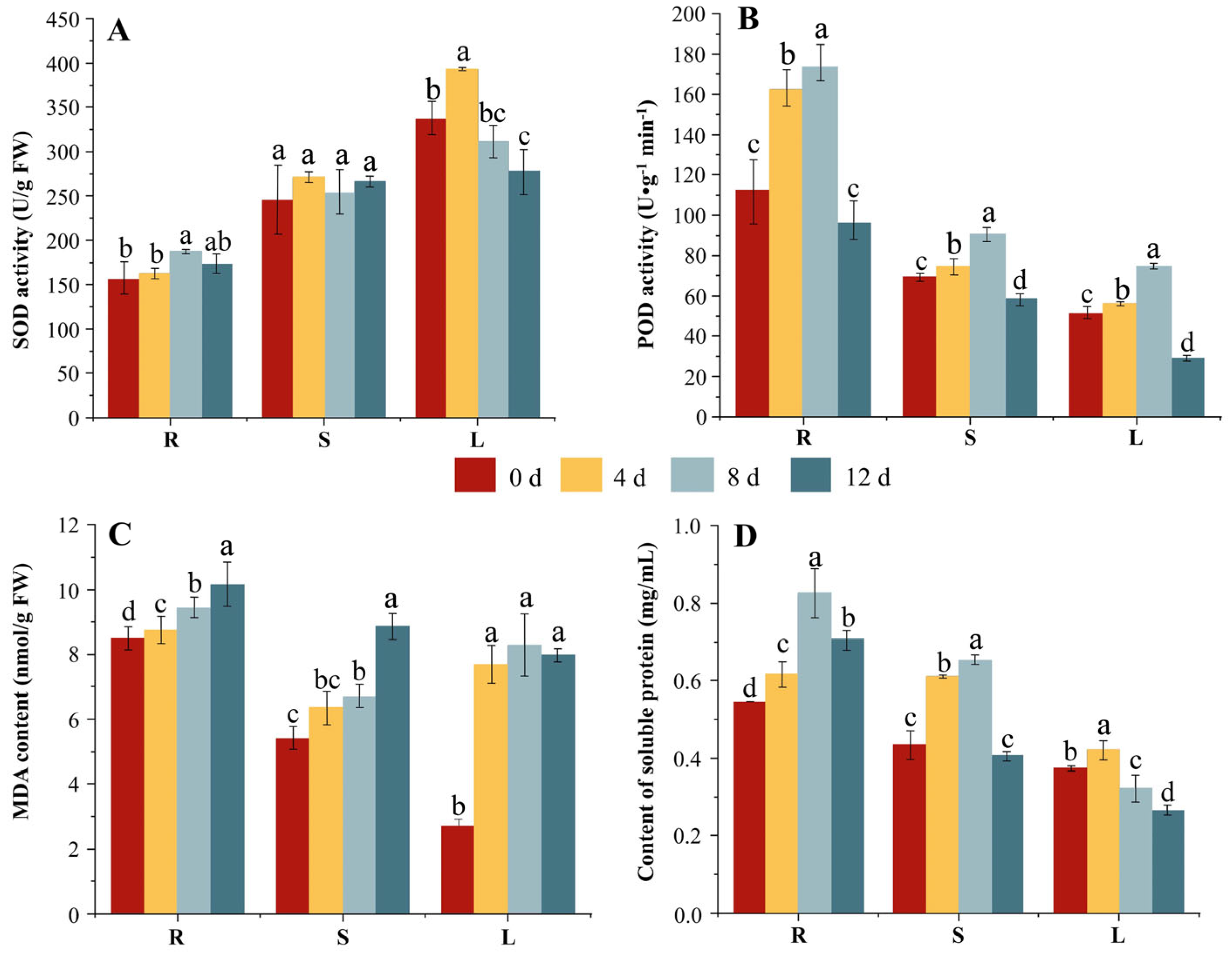
In the common antioxidant enzyme system, SOD serves as the first line of defense for clearing ROS and can efficiently catalyze the dismutation reaction of superoxide. It is a superoxide-anion-scavenging enzyme that plays an important role in the biological antioxidant system. As shown in Figure 1A, due to the direct impact of drought stress, the SOD activity in the roots, stems, and leaves of larch trees significantly increased under different drought treatments at different times. The leaves responded most strongly to drought stress, and their SOD activity increased most significantly. Among them, larch trees treated for 4 days reached the highest value of the SOD-increase trend, which may be related to the sensitivity of leaf stomatal structure to drought stress. POD has a dual function of eliminating the toxicity of hydrogen peroxide, phenols, and amines and participates in important metabolic activities such as plant respiration and ethylene and lignin biosynthesis [41]. As shown in Figure 1B, the POD activity in the roots of larch was significantly higher than that in the stems and leaves. Among them, the 8-day treatment duration had the most significant stimulatory effect on the POD activity in the roots, while the response in the leaves was not severe. The POD activity in the roots accounted for approximately 34.74% of the total POD activity across all organs (roots, stems, and leaves) under the same treatment duration. In terms of the accumulation of MDA, the average content ratio at different time points was as follows: roots > stems > leaves, as shown in Figure 1C. Among them, the MDA accumulation in leaves that had just been stressed was the least, with a maximum value of only 2.71 nmol/g FW. In addition, soluble protein content is an important physiological indicator for measuring the strength of plant drought resistance. The results showed that the soluble protein content in roots exceeded that in stems and leaves under drought-stress conditions and was most significant after 8 days of treatment, reaching a maximum of 0.87 mg/mL.

3.1.2. Physiological Response of Larch Seedlings to ABA Signal

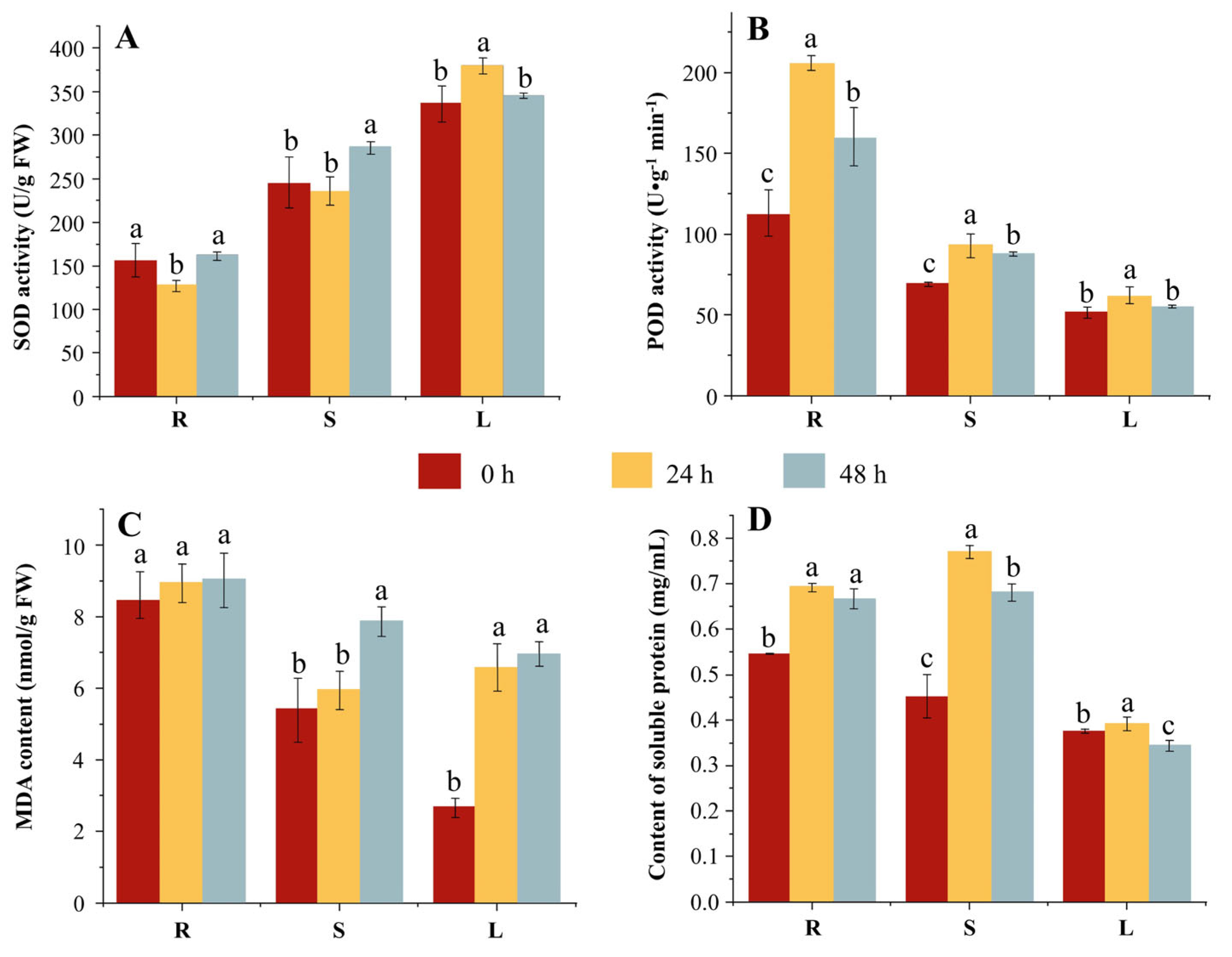
Under environmental stress such as drought, low temperature, salt alkali, etc., the ABA level in plants will significantly increase, triggering a series of physiological and biochemical reactions to help plants cope with adversity [36]. However, when exogenous ABA analogs are applied or plants are induced to synthesize ABA to help crops resist adverse environments, high concentrations of ABA may have negative effects due to the excessive inhibition of growth or exceeding the plant’s regulatory range [42]. As shown in Figure 2A-D, in terms of the antioxidant enzyme system, the SOD activity of larch leaves significantly increased after the application of ABA, higher than that of stems and leaves. It is worth noting that after 24 h of application, the SOD activity of leaves was higher than that at 0 and 48 h, while this situation was opposite in roots and stems. In terms of stimulating POD activity, the POD activity in the roots of larch under drought stress was generally higher than the other two parts, especially after 24 h of ABA application, which was 1.43 and 2.38 times higher than that in the stems and leaves, respectively. For the accumulation of MDA, the root of larch had the highest MDA content after ABA treatment, reaching 9.72 nmol/g FW after 48 h. It is worth noting that the MDA accumulation in larch leaves was somewhat similar to that under drought stress, and the increase in MDA was not significant at the beginning of stress, with an average content of 2.68 nmol/g FW. In terms of promoting soluble protein content, the average content of stems was higher than that of roots and leaves after three treatment durations, with the most significant increase observed after 24 h of treatment. In addition, the 24 h treatment duration showed consistent strongest promotion in all three parts, indicating that the average content of soluble protein in larch plants treated for this duration was higher than that in plants treated for 0 and 48 h in all three parts.

3.2. Molecular Responses of Larch Seedlings to Drought Stress and ABA Signaling

3.2.1. Molecular Response of Larch Seedlings to Drought Stress

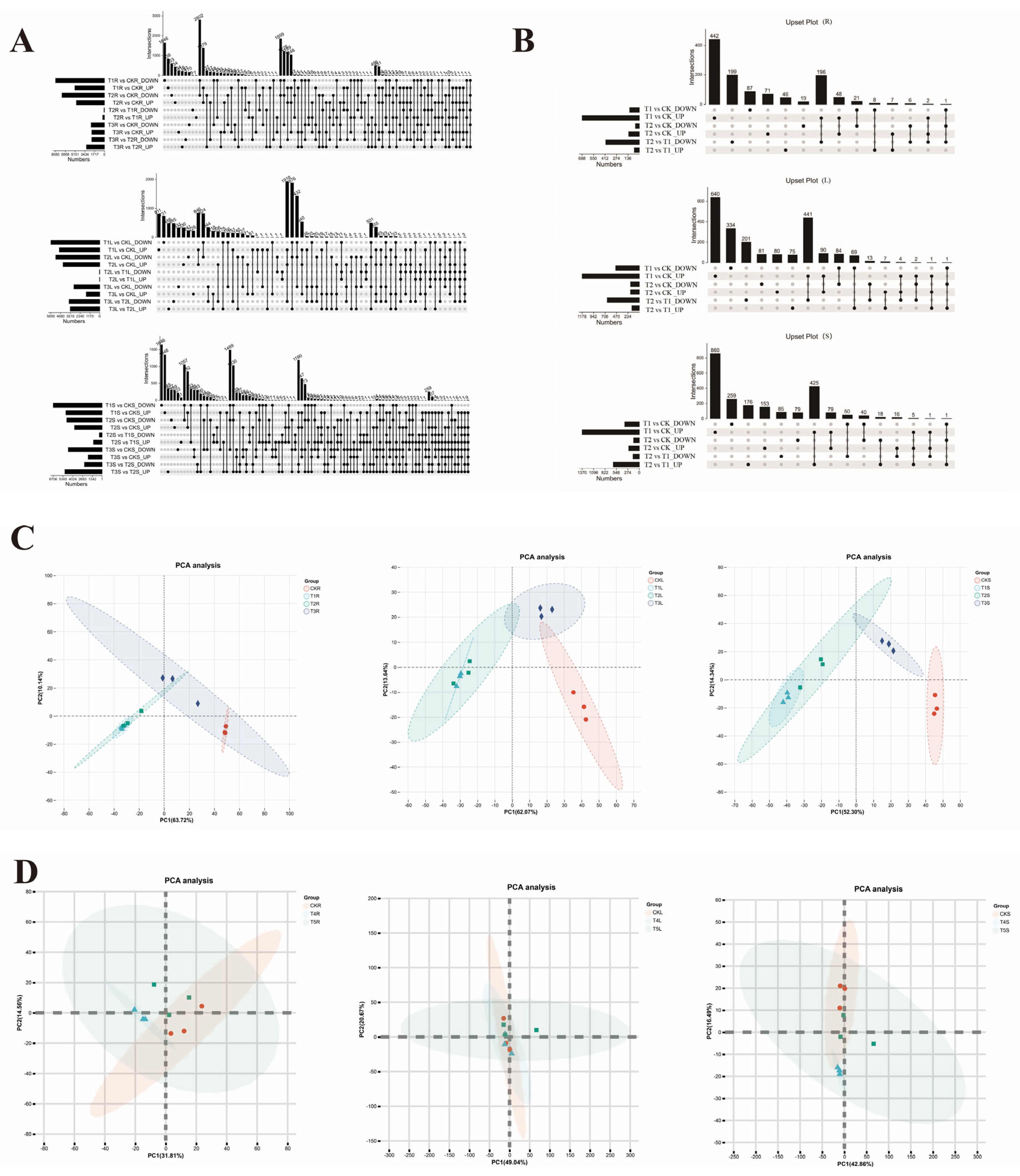
To elucidate the transcriptional-regulatory mechanism of larch seedlings in response to drought stress, this study analyzed the gene expression changes in root, leaf, and stem tissues of the drought-stress-treatment group (T1: Day 4; T2: Day 8; T3: Day 12) and the non-stress control group (CK) using RNA seq technology. Differential expression gene analysis showed that drought stress significantly induced transcriptional changes in various tissues of larch, and different tissues exhibited significant response differences. In the root tissue, T1, T2, and T3 detected 5210/8586, 4931/7468, and 2236/2354 upregulated/downregulated DEGs compared to CK, while leaf tissue detected 4848/5851, 4397/5271, and 1620/3096 upregulated/downregulated DEGs, and stem tissue detected 4974/6707, 3792/4852, and 1916/4654 upregulated/downregulated DEGs, respectively. Comparison between different stress time points showed that in roots, 3177 genes were upregulated in T3 compared to T2, T3 in leaves was upregulated by 3546 genes compared to T2, and T3 in stems was upregulated by 5117 genes compared to T2. This indicates that with the prolongation of the stress time, various tissues exhibit dynamic transcriptional reprogramming processes. The UPSET plot (Figure 3A,B) visually illustrates the complex intersection relationships of DEGs among different groups, and these results systematically reveal the specific transcriptional-response characteristics of different tissues of Larix gmelini to drought stress.
Figure 3C presents the results of principal component analysis of gene expression profiles in root (R), stem (S), and leaf (L) tissues of larch seedlings under different drought treatments. Each group of samples corresponds to the control group (CK) without drought stress, as well as the treatment groups at 4 days (T1, DAI4), 8 days (T2, DAI8), and 12 days (T3, DAI12) of drought stress. The suffixes “R/S/L” correspond to root, stem, and leaf tissues, respectively. In the PCA image of the gene expression profile of stem tissue, the horizontal axis represents PC1 (principal component 1), which explains 52.30% of the gene expression variation, while the vertical axis represents PC2 (principal component 2), which explains 14.34% of the variation. The cumulative explanatory rate of the two components reaches 66.64%. The sample distribution shows that the control group (CKS) is concentrated in the high-PC1-score region, T1S (drought for 4 days) and T2S (drought for 8 days) are clustered in the low-PC1-score region, and T3S (drought for 12 days) is distributed in the medium–high-PC1-score region. Samples within the same treatment group exhibit a high degree of clustering, and there is significant separation between groups in the PC1 dimension, indicating that the gene expression pattern of the stem under drought stress gradually deviates from the control with treatment time. In the PCA image of leaf tissue gene expression profiles, PC1 accounts for 62.07% of the gene expression variation, while PC2 accounts for 13.64% of the variation, with a cumulative explanatory power of 75.71%. The distribution characteristics of the samples are as follows: T1L and T2L are clustered in the low-score region of PC1, while CKL and T3L are distributed in the high-score region of PC1, and CKL and T3L are further separated in the PC2 dimension; there is some overlap in the distribution of T1L and T2L, while the separation between T3L and the other groups is significantly increased, suggesting that the gene expression pattern of the leaves has undergone a more prominent transformation in the later stage of drought (DAI12). In the PCA image of root tissue gene expression profiles, PC1 accounts for 63.72% of the gene expression variation, while PC2 accounts for 10.14% of the variation, with a cumulative explanatory rate of 73.86%. The distribution of samples is as follows: CKR is concentrated in the high-score region of PC1, T1R and T2R are clustered in the low-score region of PC1, and T3R is distributed in the medium-score region of PC1; within-group samples are clustered tightly, while between-group samples are clearly separated in the PC1 dimension, reflecting the temporal response characteristics of root gene expression to drought stress.
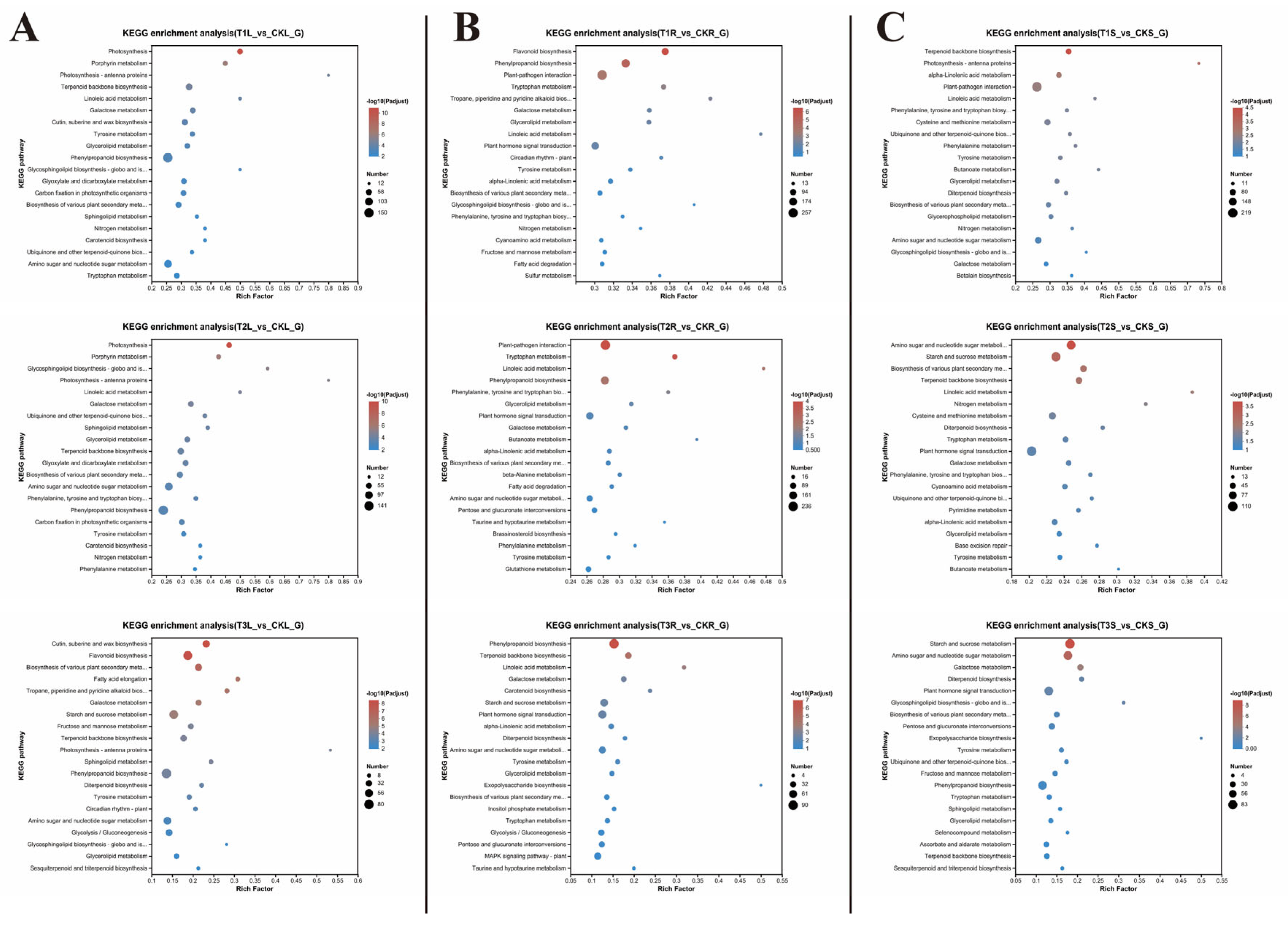
The KEGG enrichment analysis of DEGs in response to drought stress in larch seedlings (Figure 4) revealed the specific metabolic response patterns of different tissues during the stress process. In leaf tissues, early stress (T1 vs. CK) mainly activates photosynthesis related pathways (Photosynthesis, Porphyrin Metabolism, Photosynthesis antenna proteins), while mid-term stress (T2 vs. CK) involves not only the photosynthesis pathway but also Glycosylgolipid biosynthesis. Long-term stress (T3 vs. CK) is significantly enriched in secondary metabolic pathways such as cutin/suberin and wax biosynthesis and flavonoid biosynthesis. Root tissues exhibit different response characteristics: early stress (T1 vs. CK) mainly regulates flavonoid biosynthesis and phenylpropanoid biosynthesis, mid-term stress (T2 vs. CK) shifts towards tryptophan metabolism and linoleic acid metabolism, and long-term stress (T3 vs. CK) reactivates phenylpropanoid metabolism and terpenoid backbone biosynthesis. The metabolic reprogramming of stem tissue is characterized by early stress (T1 vs. CK) enrichment in terpenoid skeleton synthesis and alpha linolenic acid metabolism, while mid-to-late stress (T2/T3 vs. CK) mainly involves starch and sucrose metabolism and amino sugar metabolism. It is worth noting that core pathways such as plant hormone signaling transduction, MAPK signaling pathway, flavonoid biosynthesis, and starch and sucrose metabolism continued to appear in multiple tissue comparison groups, indicating that these pathways play a key regulatory role in the response of larch to drought stress.

3.2.2. Molecular Response of Larch Seedlings to ABA Signaling

To elucidate the transcriptional regulatory mechanism of larch seedlings in response to ABA signals, this study systematically analyzed the transcriptome dynamics of the ABA-treated group (T1: 24 h; T2: 48 h) and control group (CK) in root, leaf, and stem tissues based on RNA seq technology. The research results showed that exogenous ABA treatment significantly reshaped the transcriptional profiles of various tissues and exhibited distinct tissue-specific response patterns. Specifically, 1179 upregulated and 489 downregulated and 183 upregulated and 182 downregulated differentially expressed genes (DEGs) were detected in the root tissue at T1 and T2 time points, respectively, compared to CK; 689/118 and 129/48 upregulated/downregulated DEGs were detected in the leaf tissue. The stem tissue showed more significant transcriptional reprogramming, with 1371/351 and 255/139 upregulated/downregulated DEGs detected. A time series comparative analysis revealed that with prolongation of the ABA treatment time, root T2 upregulated 154 genes and downregulated 662 genes compared to T1, leaf T2 upregulated 62 genes and downregulated 405 genes compared to T1, and stem T2 showed a significant trend of the upregulation of 626 genes and downregulation of 153 genes compared to T1. Through the visualization analysis of the UPSET graph (Figure 3A), the intersection relationship of DEGs between each treatment group was revealed.
Figure 3D illustrates the PCA analysis of gene expression in the root (left panel R), leaf (middle panel L), and stem (right panel S) tissues of larch seedlings after ABA treatment. Each group of samples corresponds to different time points of ABA treatment, with CK representing the control group at 0 h of ABA treatment, and T4 and T5 actually correspond to the treatment groups at 24 h and 48 h of ABA treatment, respectively. In the gene expression profile of root tissues, the horizontal axis PC1 (principal component 1) can explain 81.81% of the gene expression variation, while the vertical axis PC2 can explain 4.94% of the variation, with a cumulative explanatory rate of 86.75%. PC1 is the core dimension that primarily accounts for sample differences. The sample distribution shows that all three samples exhibit good intra-group clustering, and there is significant separation between groups based on the PC1 dimension, indicating that the gene expression pattern of root tissues after ABA treatment has undergone significant changes over time. In the gene expression profile of leaf tissues, PC1 explained 48.04% of the gene expression variation, PC2 explained 20.67% of the variation, and the cumulative explanation rate was 68.71%. The sample distribution characteristics showed that the samples from the three treatment groups were clustered tightly, and there was a clear separation between groups in both the PC1 and PC2 dimensions, suggesting that the regulatory effect of ABA treatment on gene expression in leaf tissues was time-dependent. In the gene expression profile of stem tissue, PC1 explained 42.86% of the gene expression variation, PC2 explained 16.95% of the variation, and the cumulative explanation rate reached 59.81%. The consistency within the sample groups of the three treatment groups was high, and there was a clear separation between groups in the PC1 dimension, reflecting the temporal gene-expression-response pattern of stem tissue to ABA treatment.
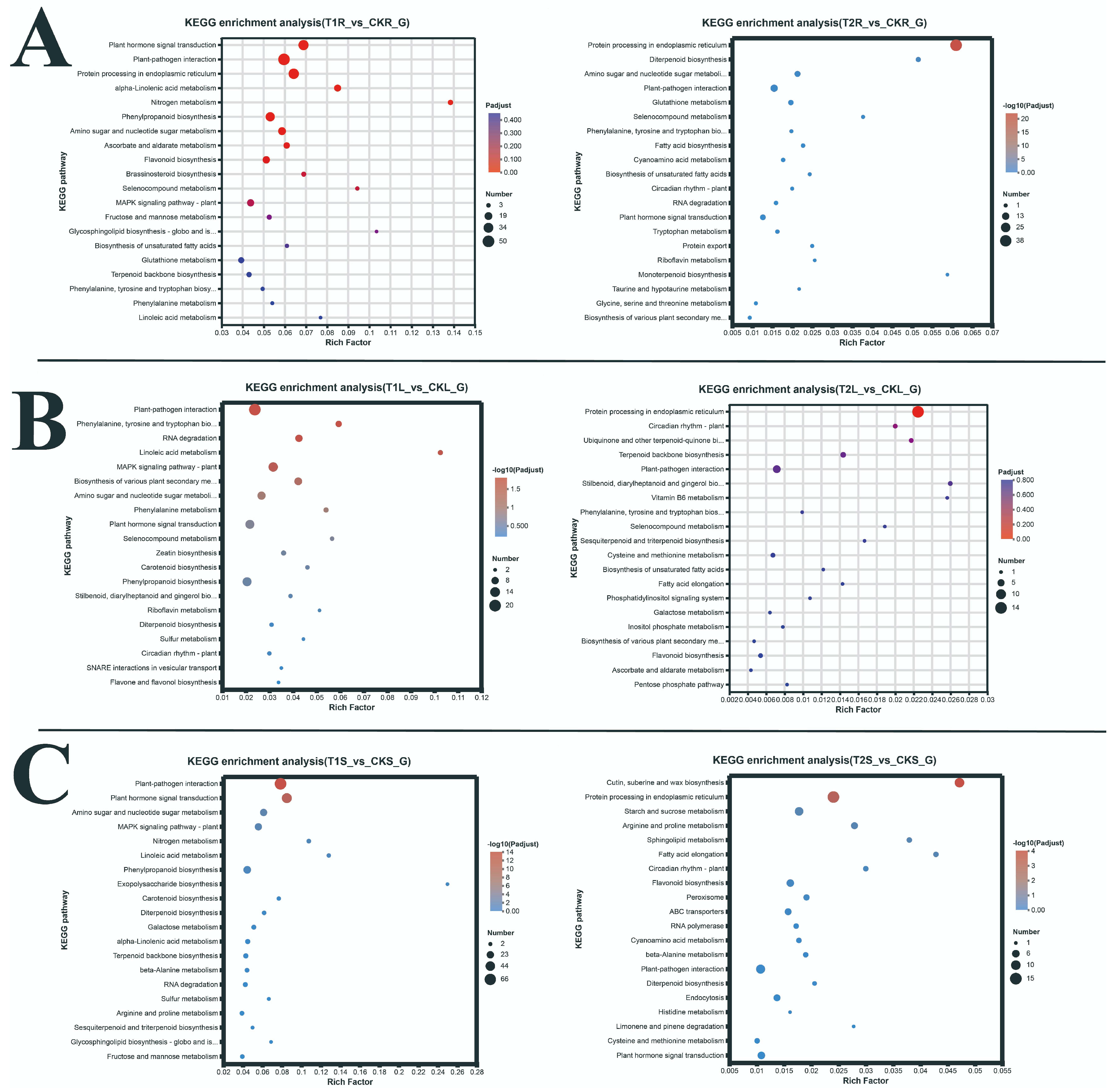
Through KEGG enrichment analysis of exogenous ABA-responsive DEGs in larch seedlings (Figure 5), it was found that root tissues were mainly enriched in plant hormone signal transduction, plant pathogen interaction, and endoplasmic reticulum protein processing pathways during short-term ABA treatment (T1 vs. CK), while long-term treatment (T2 vs. CK) shifted towards diterpenoid biosynthesis and amino sugar metabolism pathways; the short-term treatment of leaf tissues significantly enriched phenylalanine/tyrosine/tryptophan biosynthesis and RNA-degradation pathways, while long-term treatment mainly involved ubiquinone compound synthesis and circadian rhythm pathways. Meanwhile, core pathways such as plant hormone signaling transduction, MAPK signaling pathway, flavonoid biosynthesis, and starch and sucrose metabolism were continuously enriched in multiple tissue comparison groups, indicating that these pathways play a key regulatory role in the ABA-signaling-response process of larch.

3.3. Pathway Analysis of Response of Larch Seedlings to Drought Stress and ABA Signaling Molecules

3.3.1. MAPK Signaling Pathway Is Involved in the Response of Larch Seedlings to Drought Stress and ABA Signaling Molecules

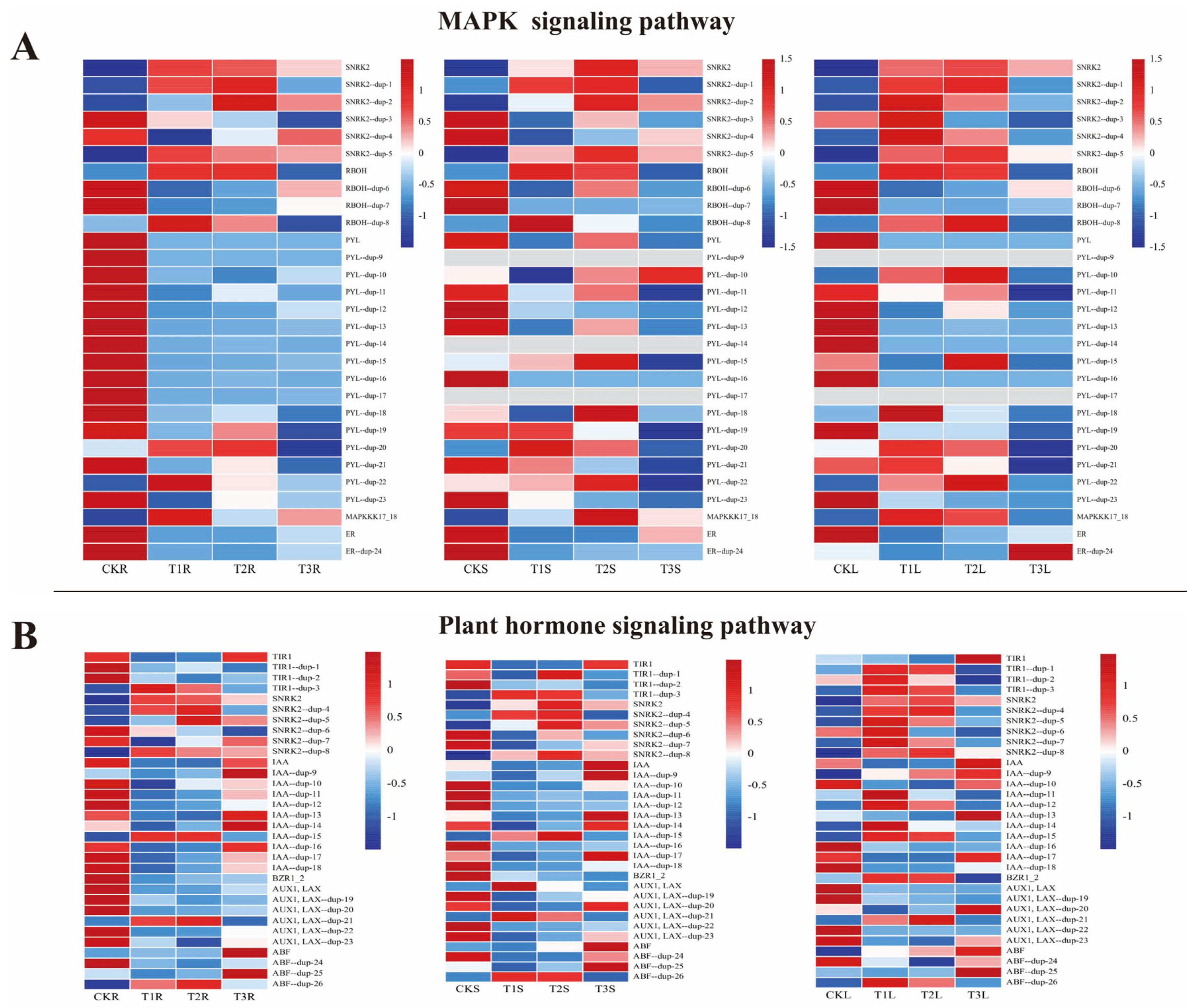
Based on the KEGG enrichment analysis of differentially expressed genes (DEGs), it was found that the MAPK signaling pathway is a key pathway for larch seedlings to respond to drought stress and ABA signaling molecules. Therefore, this study further systematically analyzed the gene expression dynamics of this pathway under drought stress conditions and an exogenous ABA treatment background (Figure 6A). The results showed that under drought stress treatment, core gene families such as SNRK2, RBOH, PYL, MAPKKK17, and ER exhibited significant spatiotemporal expression characteristics. For example, the SNRK2 family genes exhibited a typical upregulation followed by downregulation expression pattern in root, stem, and leaf tissues. The RBOH-dup-8 and PBOH genes of the RBOH gene showed a pattern of first increasing and then decreasing in the three tissues, while RBOH-dup-6/7 remained continuously downregulated. The PYL gene exhibited tissue-specific regulation, continuously downregulated in root and leaf tissues, and exhibiting a fluctuating pattern of a decrease–rise–decrease over time in the stems. The MAPKKK17 gene showed an expression pattern of first increasing and then decreasing in all three tissues. The ER family genes were continuously downregulated in root and stem tissues, while in leaf tissues, ER and ER-dup-24 showed opposite trends of continuous downregulation and upregulation, respectively. These findings reveal the complex regulatory network of MAPK pathway genes in drought response, and their dynamic expression patterns reflect the molecular mechanisms by which larch adapts to environmental stress by precisely regulating signal transduction pathways.
This study systematically analyzed the dynamic expression characteristics of core genes in the MAPK signaling pathway under exogenous ABA treatment. The results showed that key gene families such as YDA, XRN4, TMEM, SNRK2, PYL, EIN, and COPA exhibited significant tissue-specific expression patterns (Figure S1A). Specifically, YDA family genes exhibit a sustained decrease or first decreasing and then increasing pattern in root and stem tissues, while they continue to be upregulated in leaf tissues; XRN4 and TMEM family genes are continuously downregulated in root and stem tissues and significantly upregulated in leaf tissues. The expression trend of SNRK2 family genes in root and stem tissues is consistent, but the opposite pattern is observed in leaf tissues; PYL family genes are continuously downregulated in roots and upregulated in leaves and stems; EIN family genes are downregulated in root and stem tissues and upregulated in leaf tissues. The COPA gene exhibits a fluctuating pattern of first increasing and then decreasing in root and stem tissues, while it continues to be upregulated in leaf tissues. These findings reveal the molecular mechanism by which larch responds to ABA signaling by finely regulating the tissue-specific expression of MAPK pathway genes.

3.3.2. Plant Hormone Transduction Signaling Pathways Are Involved in the Response of Larch Seedlings to Drought Stress and ABA Signaling Molecules

This study systematically analyzed the key genes involved in plant hormone signaling pathways under drought stress and found that gene families such as TIR1, SNRK2, IAA, AUX, and ABF exhibited significant tissue-specific expression dynamics (Figure 6B). Specifically, the TIR1 gene shows a pattern of first decreasing and then increasing in root and stem tissues and continues to be upregulated in leaf tissues, while its homologous gene TIR1-dup-1/2 continues to be downregulated in roots and shows a pattern of first increasing and then decreasing in leaves; SNRK2 and its homologous gene SNRK2-dup-4/5 exhibit typical upregulation followed by a downregulation expression pattern in all three tissues. The IAA family genes are continuously downregulated in root and stem tissues, while significantly upregulated in leaf tissues; AUX family genes showed sustained downregulation in all three tissues. The ABF family genes generally exhibit an expression pattern of first decreasing and then increasing. These results indicate that larch has established a coordinated and orderly drought-response mechanism by finely regulating the spatiotemporal expression patterns of genes in different hormone signaling pathways. The antagonistic regulation of auxin (IAA/AUX) and abscisic acid (SNRK2/ABF) signaling pathways may play a key role in this process.
Following exogenous ABA treatment, we found that the TIR1, TGA, TCH4, SNRK, SAUR, PYL, PP2C, JAZ, IAA, EIN3, COR, AUX, ARR, ABF, and AHK gene families were involved in the ABA response. These genes exhibited distinct temporal and spatial expression patterns. For example, the TIR1 gene is continuously downregulated in root and leaf tissues and continuously upregulated in stems; the TGA gene is downregulated in root and leaf tissues and upregulated in stems. The TCH4 gene exhibits a pattern of first increasing and then decreasing in root and leaf tissues and a pattern of first decreasing and then increasing in stems. The SNRK gene is often downregulated or first decreased and then increased in root and leaf tissues and first increased and then decreased in stems. The SAUR gene is continuously upregulated in roots and exhibits a pattern of first decreasing and then increasing in leaves and stems. The PYL gene is downregulated in roots and upregulated in leaves and stems. The NPR family genes exhibit a conservative expression pattern of “first increasing and then decreasing” in all three tissues. These findings reveal the molecular mechanism by which larch responds to ABA signaling by finely regulating the tissue-specific expression of hormone signaling pathway genes. The synergistic and antagonistic effects of auxin (TIR1/SAUR), gibberellin (TCH4), and abscisic acid (SNRK/PAYL) signaling pathways together form a complex regulatory network (Figure S1B).

3.3.3. Starch and Sucrose Metabolic Pathways Are Involved in the Response of Larch Seedlings to Drought Stress and ABA Signaling Molecules

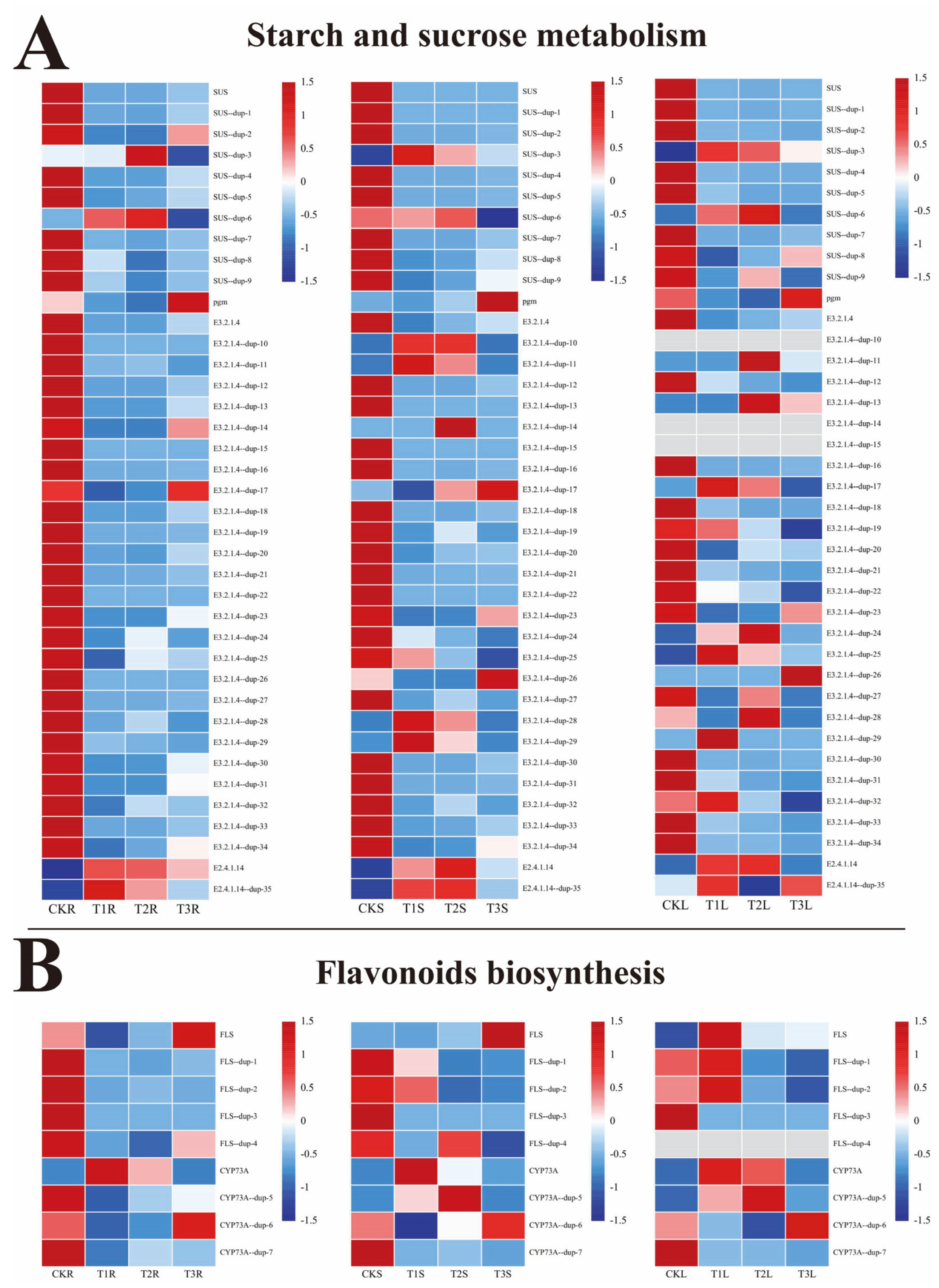
Carbohydrates are energy substances required for the normal growth and development of plants, and their synthesis and metabolism processes play important regulatory roles in plant growth and resistance to stress [43]. This study systematically analyzed the key genes involved in the carbohydrate metabolism pathway of Larix seedlings under drought stress (Figure 7A). The results showed that genes such as SUS, pgm, E3.2.1.4, and E2.4.1.14 in the starch and sucrose metabolism pathways exhibited significant tissue-specific expression dynamics. In the SUS gene family, SUS-dup-3 exhibits a typical pattern of first increasing and then decreasing in all three tissues, while other SUS members generally show sustained downregulation. The pgm gene shows a fluctuating pattern of first decreasing and then increasing in root and leaf tissues, while it continues to be upregulated in stem tissues. Most genes in the E3.2.1.4 family are consistently downregulated in all three tissues. The E2.4.1.14 gene exhibits an expression pattern of first increasing and then decreasing. These findings reveal the molecular mechanism by which larch adapts to drought stress by dynamically regulating the expression of carbohydrate-metabolism-related genes. The temporal expression changes of sucrose synthase and starch-metabolism-related genes may maintain the osmotic balance by regulating carbon source allocation, providing energy and carbon skeleton for plants to cope with drought stress.
This study systematically analyzed the expression characteristics of key genes involved in starch- and sucrose-metabolism pathways in larch seedlings treated with exogenous ABA (Figure S2A). The results showed that genes such as XYL1, WAXY, UGP2, TPS, SUS, GNI, E3.2.1.4, bglX, and AMY exhibited significant tissue-specific expression patterns. TPS family genes are consistently downregulated in three types of tissues. The SUS gene is continuously upregulated in root and leaf tissues and continuously downregulated in stem tissues. The GNI gene shows a pattern of first increasing and then decreasing in root and leaf tissues and mostly shows a pattern of first increasing and then decreasing in stem tissues. The E3.2.1.4 gene is continuously upregulated in root and leaf tissues and shows a pattern of first increasing and then decreasing in stem tissues. The bglX gene is downregulated in stem tissue and upregulated in leaf tissue. The AMY family genes showed a sustained downward trend in all three tissues. These findings reveal that ABA affects carbon source allocation via the tissue-specific regulation of carbohydrate-metabolism-related gene expression. The upregulation of sucrose synthesis related genes and downregulation of starch hydrolysis related genes may jointly promote the accumulation of osmoregulatory substances, thereby enhancing plant drought resistance.

3.3.4. The Flavonoid Biosynthesis Pathway Is Involved in the Response of Larch Seedlings to Drought Stress and ABA Signaling Molecules

Flavonoids are a class of secondary metabolites widely present in plants, which can enhance plant stress resistance [44]. The results showed that FLS and CYP73 family genes exhibited complex spatiotemporal expression characteristics under drought stress (Figure 7). The FLS gene is continuously upregulated in root and stem tissues and shows a pattern of first upregulation and then downregulation in leaf tissues, while its homologous gene FLS-dup-1/2/3 is continuously downregulated in all three tissues. The expression trend of the CYP73A gene showed an initial increase followed by a decrease in all three tissues; CYP73A-dup-5 shows an initial increase followed by a decreasing pattern in stem and leaf tissues and continues to be downregulated in root tissues. CYP73A-dup-6 shows a characteristic of first decreasing and then increasing in all three tissues, while CYP73A-dup-7 continues to be downregulated in all tissues. These findings reveal the molecular mechanism by which larch enhances drought resistance by differentially regulating the expression of flavonoid-synthesis-related genes. Upregulation of the FLS gene and dynamic changes in the CYP73A gene may jointly promote the accumulation of flavonoids, thereby enhancing ROS-scavenging ability and membrane stability to cope with drought stress.
This study revealed the spatiotemporal expression characteristics of key genes in the flavonoid biosynthesis pathway of larch seedlings treated with exogenous ABA through a systematic analysis (Figure 7B). The results showed that LAR and LAR-dup-1 exhibited a trend of first increasing and then decreasing in root, stem, and leaf tissues, while LAR-dup-2 showed a trend of first increasing and then decreasing in roots and continued to be downregulated in stems and leaves. The FLS family was downregulated in roots and first decreased and then increased in leaves. F3H is downregulated in roots and upregulated in leaves; E5.5.1.6 is downregulated in roots, upregulated in stems, and first upregulated and then downregulated in leaves. E2.1.1.104 decreases first and then increases in roots, decreases in stems, and increases in leaves. DFR is mainly upregulated in leaves; CYP75B1 is upregulated in stems and leaves, while CYP75A is upregulated in stems and first increases and then decreases in leaves. CHS is downregulated in roots, first decreased and then increased in stems, and first increased and then decreased in leaves. ANS and ANR are mainly upregulated in the stem. These results indicate that ABA establishes a complex metabolic regulatory network by regulating the tissue-specific expression of different gene families in the flavonoid synthesis pathway, thereby affecting the synthesis and accumulation of flavonoids. This spatiotemporal specific gene expression pattern may be an important molecular basis for larch to respond to ABA signals and enhance stress resistance.

3.4. qRT-PCR Validation

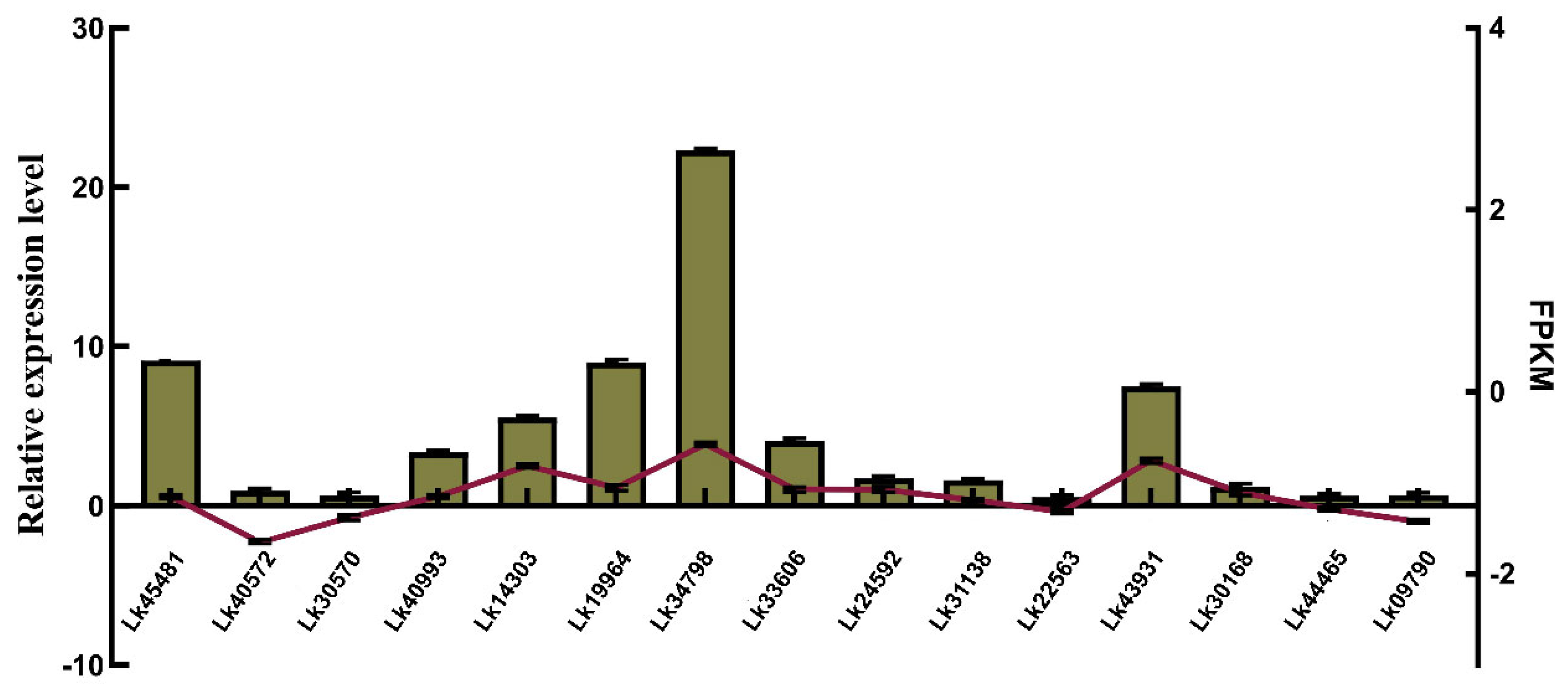
To verify the reliability of transcriptome sequencing results, this study selected genes with significant differential expression after 24 h of ABA treatment for qRT-PCR validation analysis. The results showed that although there were some differences in specific numerical values between FPKM normalization values and qRT-PCR relative quantification values, the gene expression changes detected using the two methods were highly consistent (Figure 8), fully confirming the accuracy and reliability of the transcriptome data in this study.

3.5. Discussion

Larch, as an important economic tree species, occupies a crucial position in the global supply of high-quality timber. However, the high sensitivity of this tree species to drought stress severely restricts its growth and development [45]. In the context of global climate change, the frequency and intensity of drought events are expected to continue to increase [46]. This makes it particularly important to enhance the drought resistance of larch through scientific management measures. Conducting relevant research not only helps to improve the adaptability of trees to water stress, but also provides effective solutions to address the ecological challenges brought by climate change [47].
The activity of antioxidant enzyme system plays a crucial role in the process of clearing ROS in plants, and its changes directly affect the accumulation level of ROS. When ROS accumulates excessively, it can trigger lipid peroxidation reactions, disrupt the cell membrane structure, and subsequently affect cell functions and plant growth. When plants are subjected to drought stress, osmoregulatory substances such as soluble proteins, soluble sugars, proline, and betaine rapidly accumulate in the plant body. These substances maintain the water balance by reducing cell osmotic pressure, thereby enhancing plant resistance to the accumulation of reactive oxygen species [48,49]. In addition, they can also stabilize the membrane structure, proteins, and other subcellular structures under osmotic pressure [50]. Previous studies have shown that there are significant differences in antioxidant enzyme responses among different plants under drought stress. For example, Liu et al. (2023) [51] and Xiong et al. (2022) [52] found that Gleditsia sinensis and Quercus spp. exhibited significantly increased activities of superoxide dismutase (SOD), peroxidase (POD), and catalase (CAT) under drought conditions; Chen et al. (2024) reported that under drought stress, the activity of these enzymes in mulberry trees is significantly decreased [53].
This study systematically investigated the antioxidant-response mechanism of larch under drought stress and exogenous ABA treatment. Further research has found that POD exhibits tissue-specific response patterns under drought stress. The POD activity in roots is passively enhanced under drought conditions, while ABA treatment actively increases its activity. POD not only enhances plant pathogen resistance by catalyzing the oxidation of phenolic substances to quinone compounds but also reduces oxidative damage by consuming intracellular oxygen. This dual protection mechanism was significantly enhanced under ABA treatment. In terms of osmotic regulation, drought stress induces the large accumulation of soluble proteins (such as LEA proteins and dehydrated proteins) in roots. These hydrophilic substances cope with water deficits by maintaining cell turgor pressure and membrane system stability. ABA treatment changed the distribution pattern of soluble proteins, significantly increasing the stem content, reflecting the regulatory role of ABA in optimizing substance transport and distribution.
MDA is an important product of lipid peroxidation, and its content is often used as an important biochemical indicator to evaluate the degree of cell membrane lipid peroxidation and oxidative damage to plants [54]. Zhang et al.’s study showed that under drought stress, ROS significantly accumulated in tobacco (Nicotiana tabcum L.) seedlings, while the MDA content also increased significantly, reflecting a strong oxidative stress state [55]. In this study, although MDA significantly accumulated as an oxidative damage marker under drought conditions, ABA treatment did not directly inhibit its production, indicating that ABA’s protective mechanism focuses more on preventive protection rather than damage repair. The comprehensive research results indicate that ABA enhances the drought resistance of larch through a triple synergistic mechanism: activating the SOD-POD antioxidant cascade reaction, optimizing the spatiotemporal distribution of soluble proteins, and maintaining the cell structure and functional integrity. These findings provide an important theoretical basis for a deeper understanding of the physiological mechanisms of drought resistance in forest trees and also provide practical guidance for the development of scientific drought resistant cultivation measures.
The mitogen activated protein kinase signaling pathway in plants is an important regulatory network that plays a crucial role in plant response to drought stress [56]. The MAPK pathway enhances plant drought resistance by regulating various physiological and biochemical processes, involving multiple aspects such as ABA and ROS signaling [57]. When plants are subjected to external stimuli such as drought stress, signals are first sensed by receptor proteins, activating MAPKKK. Activated MAPKKK phosphorylates and activates MAPKK, which in turn phosphorylates and activates MAPK. Ultimately, MAPK phosphorylates downstream target proteins, such as transcription factors, to regulate gene expression and initiate corresponding cellular responses [58]. In addition, under drought conditions, the ABA content in plants increases, activating ABA receptors and subsequently activating the SnRK2 kinase. The SnRK2 kinase can phosphorylate and activate certain components in the MAPK pathway, thereby regulating gene expression related to drought resistance [59,60]. In this study, we found that multiple key components in the MAPK pathway (including MAPKKK17, PYL, SNRK2, etc.) exhibited dynamic expression patterns under drought stress and exogenous ABA treatment. Transcriptome analysis showed that MAPKKK17 exhibited an upregulated and then downregulated expression pattern in root, stem, and leaf tissues, which may be related to the stage-specific response of plants to drought stress. It is worth noting that the PYL (ABA receptor) gene family exhibits significant tissue specificity: it is continuously downregulated in root and leaf tissues, while exhibiting a fluctuating pattern of downregulation, followed by upregulation, and then downregulation again in stem tissues, which may reflect the differential perception mechanism of ABA signaling in different tissues. It is worth mentioning that the SNRK2 kinase family genes showed significant activation under both drought and ABA treatment. In addition, our study also found that the expression changes of the RBOH gene (NADPH oxidase) were positively correlated with the activity of MAPK pathway, indicating that the ROS–MAPK signaling cascade plays a key role in the drought response of larch.
Plant hormones play a crucial regulatory role in plants’ response to stress and adversity [61]. When plants are subjected to drought stress, plant hormone signals play an important role by activating a series of signaling pathways, regulating stomatal opening and closing to reduce water evaporation, while inducing antioxidant system activation and promoting the accumulation of osmotic pressure substances in the plant body. This mechanism enhances the adaptability of plants to drought conditions and increases their chances of survival in water-scarce environments [62,63]. This study found that multiple key components in the plant hormone signaling pathway exhibit dynamic response characteristics. The PYL receptor family, a core component of the abscisic acid (ABA) signaling pathway, is continuously downregulated in root and leaf tissues while fluctuating in stem expression, while SNRK2 kinase is generally upregulated. In the auxin signaling pathway, IAA family genes are downregulated in root and stem tissues and upregulated in leaves, while the AUX1 transporter protein is downregulated in all three tissues. The ARR family genes of cytokinin signaling elements are significantly upregulated in stem tissue. These hormone signaling molecules work synergistically through a complex cross-regulatory network. In addition, we also found that ABA signaling promotes stomatal closure and the accumulation of osmoregulatory substances by activating the SNRK2MAPK cascade. Auxin and ABA exhibit an antagonistic regulatory pattern, and their distribution changes may affect the distribution of substances between organs. Cytokinins may alleviate oxidative damage by activating the antioxidant system. Of particular note is that key regulatory nodes of different hormone signaling pathways, such as PYL, IAA, ARR, etc., exhibit significant tissue-specific expression patterns. This spatiotemporal-specific regulation enables plants to coordinate the physiological responses of roots, stems, and leaves, forming a systematic drought-resistance-adaptation strategy.
Carbohydrates, as products of plant photosynthesis and essential substrates in respiration, play a crucial role as energy and carbon sources in the growth and development of plants. In addition, carbohydrates exhibit important regulatory functions in plants to cope with adversity, and their storage, transport, and decomposition mechanisms play a key role in plants’ effective responses and adaptation to environmental stress. These stored carbohydrates can be mobilized at critical moments to provide necessary energy support for plants, ensuring their survival and recovery under adverse environmental conditions [64]. This study found that under drought stress, SUS-dup-3 in the sucrose synthase (SUS) gene family showed an initial increase followed by a decreasing trend in all three tissues, while other SUS members were generally downregulated. The starch-metabolism-related gene pgm shows a decrease followed by an increase in root and leaf tissues, while it continues to be upregulated in stems. Starch hydrolase E3.2.1.4 was downregulated in all three tissues, while E2.4.1.14 showed a characteristic of first increasing and then decreasing. Under exogenous ABA treatment, the expression patterns of these metabolic enzymes were further adjusted. The TPS family is generally downregulated, while SUS is upregulated in roots and leaves and downregulated in stems. The GNI gene shows a fluctuating pattern of first increasing and then decreasing. These dynamic changes reflect the mechanism by which plants adapt to drought stress by finely regulating carbohydrate metabolism, and the increase in sucrose synthase activity promotes the accumulation of osmoregulatory substances. The phased adjustment and optimization of starch metabolism have optimized carbon source allocation. The ABA signal promotes the transport of soluble sugars to the stem by altering the expression pattern of sugar metabolism enzymes, forming a new distribution pattern of substances. This reprogramming of carbon metabolism not only provides plants with the energy and carbon skeleton needed to cope with drought but also maintains cell functions by regulating the osmotic balance, reflecting the precise balance-regulation strategy of plants between energy supply and stress adaptation.
The biosynthesis pathway of plant flavonoids is one of the important mechanisms for plants to cope with drought stress. It interacts with the ABA signaling pathway to jointly regulate plant drought resistance. Flavonoids enhance plant drought resistance in various ways, including acting as antioxidants to remove reactive oxygen species, regulating redox states, and affecting ABA synthesis and signal transduction [65,66]. Flavonoids have strong antioxidant activity and can eliminate ROS produced under drought stress, reducing oxidative damage [66,67,68]. Research has shown that drought stress can lead to the accumulation of ROS in plants, which can damage important biomolecules such as cell membranes, proteins, and DNA, thereby affecting the normal physiological functions of plants. Flavonoids reduce ROS to harmless substances by providing hydrogen atoms or electrons, thereby protecting plants from oxidative damage [67,68,69]. ABA can promote the synthesis and accumulation of flavonoids [70,71]. Research has shown that the exogenous application of ABA can significantly increase the content of flavonoids in plants [71]. ABA promotes flavonoid synthesis by activating the expression of genes related to flavonoid biosynthesis [51,70,72]. This study found that drought stress induced significant tissue-specific expression dynamics of multiple key enzyme genes in the flavonoid biosynthesis pathway. The FLS gene is continuously upregulated in root and stem tissues, while showing a trend of first increasing and then decreasing in leaves. Its homologous gene FLS-dup-1/2/3 is generally downregulated. The CYP73A gene showed a pattern of first rising and then falling in all three tissues, while its homologous gene CYP73A-dup-5 was first rising and then falling in stems and leaves and downregulated in roots. CYP73A-dup-6 showed a pattern of “first falling and then rising”, while CYP73A-dup-7 was continuously downregulated. Under exogenous ABA treatment, the flavonoid synthesis pathway further exhibits fine-tuned regulatory characteristics. LAR and its homologous gene LAR-dup-1 showed a trend of first increasing and then decreasing, while LAR-dup-2 first increased and then decreased in roots and was downregulated in stems and leaves. The CHS gene is downregulated in roots, first decreased and then increased in stems, and first increased and then decreased in leaves; DFR and CYP75B1 are mainly upregulated in leaves. The spatiotemporal-specific changes in these gene expression patterns are closely related to activation of the ABA signaling pathway. ABA upregulates the activity of SNRK2 kinase, thereby promoting the regulation of flavonoid synthesis structural genes (such as CHS, FLS, etc.) mediated by transcription factors such as MYB/bHLH. At the same time, ABA induced ROS signals, forming a feedback regulatory loop with the antioxidant function of flavonoids, whereby ROS accumulation promotes flavonoid synthesis, while flavonoid accumulation clears ROS to maintain redox balance. This multi-level regulatory network enables plants to dynamically adjust the synthesis and distribution of flavonoids, enhancing their drought resistance through their antioxidant activity and signal regulation functions, in conjunction with the ABA signaling pathway.

4. Conclusions

This study conducted an integrated physiological and transcriptomic analysis of larch seedlings under drought stress and exogenous ABA treatment. The findings revealed significant dynamic changes in the activities of SOD and POD, as well as the content of MDA, in seedlings under drought stress. Among them, leaf SOD activity was the most sensitive to drought stress, reaching a peak after 4 days of treatment. Root POD activity was significantly higher than that in stem and leaf tissues, with the strongest induction effect observed after 8 days of drought. MDA accumulation exhibited a tissue-specific pattern of “root > stem > leaf”. Soluble protein accumulation was centered in the roots, reaching a peak after 8 days of drought. Furthermore, exogenous ABA treatment also participated in the regulation of the oxidative stress response, which exhibited spatiotemporal differences. After 24 h of ABA treatment, leaf SOD activity reached a peak and was significantly higher than that in root and stem tissues. Root POD activity was 1.43 times and 2.38 times higher than that in stem and leaf tissues, respectively, at this time point, with the most prominent induction effect. Soluble protein accumulation was mainly in the stems, and ABA treatment for 24 h showed the strongest promoting effect on all three tissues: roots, stems, and leaves. Transcriptomic analysis further indicated that differentially expressed genes under combined drought and ABA treatment were significantly enriched in core pathways such as the MAPK signaling pathway, plant hormone signaling pathway, starch and sucrose metabolism pathway, and flavonoid biosynthesis pathway. This confirmed the key regulatory role of these pathways in seedling responses to drought stress and ABA signaling and identified potential key genes involved in drought and ABA stress, such as SNRK2, MAPKKK17, PYL, PP2C, XRN4, TMEM, TIR1, and TGA. In summary, larch seedlings alleviate the inhibitory effects of drought stress on growth by activating the antioxidant system, initiating the MAPK signaling pathway, regulating plant hormone signaling transduction, and remodeling carbon metabolism pathways through a synergistic mechanism, thereby enhancing stress adaptability.

Supplementary Materials

The following supporting information can be downloaded at: https://www.mdpi.com/article/10.3390/f17020206/s1. Figure S1: Comparison between Mapk signaling pathway and Plant hormone signaling pathway.; Figure S2: Comparison between starch and sucrose metabolism pathway and flavonoids biosynthesis pathway.

Author Contributions

L.L. and L.Z. directed this study. L.L., M.Y., Q.Z., T.Z., and C.W. were responsible for data collection, as well as conducting data analysis. L.L. and M.Y. edited and revised the figures and graphs mentioned in the paper and drafted and revised the manuscript. L.L., H.Z., and J.H. performed the final language editing of the article. All authors contributed to the article and approved the final version. All authors have read and agreed to the published version of the manuscript.

Funding

This research received the National Key Research and Development Program of China (2023YFD2200605) and the Major Project of Agricultural Biological Breeding (2023ZD0405802).

Data Availability Statement

Data are contained within the article and Supplementary Materials.

Acknowledgments

This research was funded by Open-Access Instrument Sharing Platform of the State Key Laboratory of Forest Genetics and Breeding (NEFU) for providing technical support.

Conflicts of Interest

The authors declare no competing financial interests.

Abbreviations and Nomenclature

MDA, malondialdehyde; SOD, superoxide dismutase; CAT, catalase; POD, peroxidase; PPO, polyphenol oxidase; ABA, Abscisic acid; MAPK, the mitogen activated protein kinase; MAPKKK, MAPK kinase-kinase; ROS, reactive oxygen species; PAL, phenylalanine ammonia lyase; F3H, flavonoid 3-hydroxylase; CHI, chalcone isomerase; F3′H, and flavonoid 3′-hydroxylase; O2•−, superoxide anion; XO xanthine oxidase; TBA, thiobarbituric acid; CK, control group; PCA, principal component analysis; DEGs, differentially expressed genes; PCA, principal component analysis.

References

  1. Beyel, V.; Brüggemann, W. Differential inhibition of photosynthesis during pre-flowering drought stress in Sorghum bicolor genotypes with different senescence traits. Physiol. Plant. 2005, 124, 249–259. [Google Scholar] [CrossRef]
  2. Brodribb, T.J.; Holbrook, N.M. Stomatal Closure during Leaf Dehydration, Correlation with Other Leaf Physiological Traits. Plant Physiol. 2003, 132, 2166–2173. [Google Scholar] [CrossRef] [PubMed]
  3. Takahashi, F.; Kuromori, T.; Sato, H.; Shinozaki, K. Regulatory Gene Networks in Drought Stress Responses and Resistance in Plants. In Survival Strategies in Extreme Cold and Desiccation; Iwaya-Inoue, M., Sakurai, M., Uemura, M., Eds.; Springer: Singapore, 2018; Volume 1081, pp. 189–214. [Google Scholar]
  4. Jiao, Z.; Han, S.; Yu, X.; Huang, M.; Lian, C.; Liu, C.; Yin, W.; Xia, X. 5-Aminolevulinic Acid Pretreatment Mitigates Drought and Salt Stresses in Poplar Plants. Forests 2021, 12, 1112. [Google Scholar] [CrossRef]
  5. Garavillon-Tournayre, M.; Gousset-Dupont, A.; Gautier, F.; Benoit, P.; Conchon, P.; Souchal, R.; Lopez, D.; Petel, G.; Venisse, J.; Bastien, C.; et al. Integrated drought responses of black poplar: How important is phenotypic plasticity? Physiol. Plant. 2018, 163, 30–44. [Google Scholar] [CrossRef]
  6. Du, H.; Xu, L.; Camarero, J.J.; Cherubini, P.; Li, M.-H.; He, H.S.; Meng, X.; Wu, Z. Radial growth responses of Larix gmelinii to drought events in dry and wet areas of northern temperate forests. Dendrochronologia 2024, 84, 126185. [Google Scholar] [CrossRef]
  7. Yu, Z.; Duan, X.; Luo, L.; Dai, S.; Ding, Z.; Xia, G. How Plant Hormones Mediate Salt Stress Responses. Trends Plant Sci. 2020, 25, 1117–1130. [Google Scholar] [CrossRef]
  8. Ali, S.; Hayat, K.; Iqbal, A.; Xie, L. Implications of Abscisic Acid in the Drought Stress Tolerance of Plants. Agronomy 2020, 10, 1323. [Google Scholar] [CrossRef]
  9. Hauser, F.; Li, Z.; Waadt, R.; Schroeder, J.I. SnapShot: Abscisic Acid Signaling. Cell 2017, 171, 1708–1708.e0. [Google Scholar] [CrossRef]
  10. Yang, Y.; Li, H.-G.; Wang, J.; Wang, H.-L.; He, F.; Su, Y.; Zhang, Y.; Feng, C.-H.; Niu, M.; Li, Z.; et al. ABF3 enhances drought tolerance via promoting ABA-induced stomatal closure by directly regulating ADF5 in Populus euphratica. J. Exp. Bot. 2020, 71, 7270–7285. [Google Scholar] [CrossRef]
  11. Rao, X.; Zhang, Y.; Gao, Y.; Zhao, L.; Wang, P. Influence of Exogenous Abscisic Acid on Germination and Physiological Traits of Sophora viciifolia Seedlings under Drought Conditions. Appl. Sci. 2024, 14, 4359. [Google Scholar] [CrossRef]
  12. Safari, M.; Khorasaninejad, S.; Soltanloo, H. Involvement of abscisic acid on antioxidant enzymes activity and gene expression in Lavandula angustifolia cv. Munstead under drought stress. Acta Physiol. Plant. 2024, 46, 44. [Google Scholar] [CrossRef]
  13. Mohammadi, M.H.S.; Etemadi, N.; Arab, M.M.; Aalifar, M.; Arab, M.; Pessarakli, M. Molecular and physiological responses of Iranian Perennial ryegrass as affected by Trinexapac ethyl, Paclobutrazol and Abscisic acid under drought stress. Plant Physiol. Biochem. 2017, 111, 129–143. [Google Scholar] [CrossRef] [PubMed]
  14. Shabankareh, H.G.; Khorasaninejad, S.; Soltanloo, H.; Asgharipour, M.R. Comparative physiological responses of English lavender cultivars to drought stress and abscisic acid treatments with implications for agricultural water management. Sci. Rep. 2025, 15, 40009. [Google Scholar] [CrossRef] [PubMed]
  15. Ding, R.; Li, J.; Wang, J.; Li, Y.; Ye, W.; Yan, G.; Yin, Z. Molecular traits of MAPK kinases and the regulatory mechanism of GhMAPKK5 alleviating drought/salt stress in cotton. Plant Physiol. 2024, 196, 2030–2047. [Google Scholar] [CrossRef] [PubMed]
  16. Chen, L.; Sun, H.; Wang, F.; Yue, D.; Shen, X.; Sun, W.; Zhang, X.; Yang, X. Genome-wide identification of MAPK cascade genes reveals the GhMAP3K14–GhMKK11–GhMPK31 pathway is involved in the drought response in cotton. Plant Mol. Biol. 2020, 103, 211–223. [Google Scholar] [CrossRef]
  17. He, X.; Wang, C.; Wang, H.; Li, L.; Wang, C. The Function of MAPK Cascades in Response to Various Stresses in Horticultural Plants. Front. Plant Sci. 2020, 11, 952. [Google Scholar] [CrossRef]
  18. Du, X.; Jin, Z.; Zhang, L.; Liu, X.; Yang, G.; Pei, Y. H2S is involved in ABA-mediated stomatal movement through MPK4 to alleviate drought stress in Arabidopsis thaliana. Plant Soil 2019, 435, 295–307. [Google Scholar] [CrossRef]
  19. Li, K.; Yang, F.; Miao, Y.; Song, C.-P. Abscisic acid signaling is involved in regulating the mitogen-activated protein kinase cascade module, AIK1-MKK5-MPK6. Plant Signal. Behav. 2017, 12, e1321188. [Google Scholar] [CrossRef]
  20. Ren, N.; Zhang, G.; Yang, X.; Chen, J.; Ni, L.; Jiang, M. MAPKKK28 functions upstream of the MKK1-MPK1 cascade to regulate abscisic acid responses in rice. Plant Cell Environ. 2024, 47, 5140–5157. [Google Scholar] [CrossRef]
  21. Jia, L.; Chen, Y.; Fan, M.; Li, W.; Zhang, J. MAP3Kθ1 is Involved in Abscisic Acid Signaling in Drought Tolerance and Seed Germination in Arabidopsis. J. Plant Biol. 2020, 63, 11–21. [Google Scholar] [CrossRef]
  22. Zhu, D.; Chang, Y.; Pei, T.; Zhang, X.; Liu, L.; Li, Y.; Zhuang, J.; Yang, H.; Qin, F.; Song, C.; et al. MAPK-like protein 1 positively regulates maize seedling drought sensitivity by suppressing ABA biosynthesis. Plant J. 2020, 102, 747–760. [Google Scholar] [CrossRef]
  23. Yang, J.; Zhang, J.; Li, C.; Zhang, Z.; Ma, F.; Li, M. Response of sugar metabolism in apple leaves subjected to short-term drought stress. Plant Physiol. Biochem. 2019, 141, 164–171. [Google Scholar] [CrossRef] [PubMed]
  24. Liu, Y.; Zhang, P.; Li, M.; Chang, L.; Cheng, H.; Chai, S.; Yang, D. Dynamic responses of accumulation and remobilization of water soluble carbohydrates in wheat stem to drought stress. Plant Physiol. Biochem. 2020, 155, 262–270. [Google Scholar] [CrossRef] [PubMed]
  25. Zhao, Y.; Wei, X.; Ji, X.; Ma, W. Endogenous NO-mediated transcripts involved in photosynthesis and carbohydrate metabolism in alfalfa (Medicago sativa L.) seedlings under drought stress. Plant Physiol. Biochem. 2019, 141, 456–465. [Google Scholar] [CrossRef] [PubMed]
  26. An, J.; Huo, H.; Liu, Q.; Jiang, Y.; Luo, H.; Hao, Y. Physiological and molecular mechanisms of nitrogen in alleviating drought stress in Phoebe bournei. Sci. Rep. 2025, 15, 14684. [Google Scholar] [CrossRef]
  27. He, W.; Liu, H.; Qi, Y.; Liu, F.; Zhu, X. Patterns in nonstructural carbohydrate contents at the tree organ level in response to drought duration. Glob. Change Biol. 2020, 26, 3627–3638. [Google Scholar] [CrossRef]
  28. Hu, W.; Zhang, J.; Wu, Z.; Loka, D.A.; Zhao, W.; Chen, B.; Wang, Y.; Meng, Y.; Zhou, Z.; Gao, L. Effects of single and combined exogenous application of abscisic acid and melatonin on cotton carbohydrate metabolism and yield under drought stress. Ind. Crop. Prod. 2022, 176, 114302. [Google Scholar] [CrossRef]
  29. Zhang, L.; Liang, X.-G.; Shen, S.; Yin, H.; Zhou, L.-L.; Gao, Z.; Lv, X.-Y.; Zhou, S.-L. Increasing the abscisic acid level in maize grains induces precocious maturation by accelerating grain filling and dehydration. Plant Growth Regul. 2018, 86, 65–79. [Google Scholar] [CrossRef]
  30. Wu, H.; Yang, Z. Effects of Drought Stress and Postdrought Rewatering on Winter Wheat: A Meta-Analysis. Agronomy 2024, 14, 298. [Google Scholar] [CrossRef]
  31. Khazaei, Z.; Esmaielpour, B.; Estaji, A. Ameliorative effects of ascorbic acid on tolerance to drought stress on pepper (Capsicum annuum L.) plants. Physiol. Mol. Biol. Plants 2020, 26, 1649–1662. [Google Scholar] [CrossRef]
  32. Misra, V.; Mall, A.; Ansari, S.A.; Raheem, A.; Tripathi, M.; Ansari, M.I. Silicon as a beneficial nutrient for productivity augmentation and abiotic/biotic stress tolerance in sugarcane. Biocatal. Agric. Biotechnol. 2023, 54, 102944. [Google Scholar] [CrossRef]
  33. Carvalho, M.; Gouvinhas, I.; Castro, I.; Matos, M.; Rosa, E.; Carnide, V.; Barros, A. Drought stress effect on polyphenolic content and antioxidant capacity of cowpea pods and seeds. J. Agron. Crop. Sci. 2021, 207, 197–207. [Google Scholar] [CrossRef]
  34. Wang, A.; Liu, Y.; Li, Q.; Li, X.; Zhang, X.; Kong, J.; Liu, Z.; Yang, Y.; Wang, J. FlbZIP12 gene enhances drought tolerance via modulating flavonoid biosynthesis in Fagopyrum leptopodum. Front. Plant Sci. 2023, 14, 1279468. [Google Scholar] [CrossRef] [PubMed]
  35. Li, B.; Fan, R.; Sun, G.; Sun, T.; Fan, Y.; Bai, S.; Guo, S.; Huang, S.; Liu, J.; Zhang, H.; et al. Flavonoids improve drought tolerance of maize seedlings by regulating the homeostasis of reactive oxygen species. Plant Soil 2021, 461, 389–405. [Google Scholar] [CrossRef]
  36. Bolger, A.M.; Lohse, M.; Usadel, B. Trimmomatic: A flexible trimmer for Illumina sequence data. Bioinformatics 2014, 30, 2114–2120. [Google Scholar] [CrossRef]
  37. Kim, D.; Langmead, B.; Salzberg, S.L. HISAT: A fast spliced aligner with low memory requirements. Nat. Methods 2015, 12, 357–360. [Google Scholar] [CrossRef]
  38. Trapnell, C.; Williams, B.A.; Pertea, G.; Mortazavi, A.; Kwan, G.; Van Baren, M.J.; Salzberg, S.L.; Wold, B.J.; Pachter, L. Transcript assembly and quantification by RNA-Seq reveals unannotated transcripts and isoform switching during cell differentiation. Nat. Biotechnol. 2010, 28, 511–515. [Google Scholar] [CrossRef]
  39. Love, M.I.; Soneson, C.; Patro, R. Swimming downstream: Statistical analysis of differential transcript usage following Salmon quantification. F1000Res 2018, 7, 952. [Google Scholar] [CrossRef]
  40. Liu, Q.; Liu, H.; Li, C.; Liu, X.; Liu, G.; Li, Z. Citric acid treatment inhibits fading of sorghum (Sorghum bicolor) by modulating the accumulation of flavonoids. Food Chem. 2024, 460, 140612. [Google Scholar] [CrossRef]
  41. Treece, G. Refinement of clinical X-ray computed tomography (CT) scans containing metal implants. Comput. Med. Imaging Graph. 2017, 56, 11–23. [Google Scholar] [CrossRef]
  42. Li, X.; Liu, H.; He, C.; Li, Y. Physiological Mechanisms of Exogenous ABA in Alleviating Drought Stress in Nitraria tangutorum. Plants 2025, 14, 2643. [Google Scholar] [CrossRef]
  43. Li, L.; Li, Y.; Ding, G. Response mechanism of carbon metabolism of Pinus massoniana to gradient high temperature and drought stress. BMC Genom. 2024, 25, 166. [Google Scholar] [CrossRef] [PubMed]
  44. Sun, J.; Qiu, C.; Ding, Y.; Wang, Y.; Sun, L.; Fan, K.; Gai, Z.; Dong, G.; Wang, J.; Li, X.; et al. Fulvic acid ameliorates drought stress-induced damage in tea plants by regulating the ascorbate metabolism and flavonoids biosynthesis. BMC Genom. 2020, 21, 411. [Google Scholar] [CrossRef] [PubMed]
  45. Tariq, A.; Graciano, C.; Pan, K.; Olatunji, O.A.; Li, Z.; Sadia, S.; Zhang, Z.; Ismoilov, K.; Ahmed, Z.; Ullah, A.; et al. Phosphorus fertilization of Phoebe zhennan seedlings under drought reduces nitrogen assimilation. J. Plant Nutr. 2022, 45, 2228–2238. [Google Scholar] [CrossRef]
  46. Ellison, E.; Baker, L.; Wilson, A. IPCC Special Report Meeting: Climate Change Around the Globe. Weather 2020, 75, 293–294. [Google Scholar] [CrossRef]
  47. Asensio, V.; Domec, J.-C.; Nouvellon, Y.; Laclau, J.-P.; Bouillet, J.-P.; Jordan-Meille, L.; Lavres, J.; Rojas, J.D.; Guillemot, J.; Abreu-Junior, C.H. Potassium fertilization increases hydraulic redistribution and water use efficiency for stemwood production in Eucalyptus grandis plantations. Environ. Exp. Bot. 2020, 176, 104085. [Google Scholar] [CrossRef]
  48. Rodrigues, T.d.S.; Arge, L.W.P.; Guedes, F.A.d.F.; Travassos-Lins, J.; de Souza, A.P.; Cocuron, J.; Buckeridge, M.S.; Grossi-De-Sá, M.F.; Alves-Ferreira, M. Elevated CO2 increases biomass of Sorghum bicolor green prop roots under drought conditions via soluble sugar accumulation and photosynthetic activity. Physiol. Plant. 2023, 175, e13984. [Google Scholar] [CrossRef]
  49. Wang, W.; Zhang, C.; Zheng, W.; Lv, H.; Li, J.; Liang, B.; Zhou, W. Seed priming with protein hydrolysate promotes seed germination via reserve mobilization, osmolyte accumulation and antioxidant systems under PEG-induced drought stress. Plant Cell Rep. 2022, 41, 2173–2186. [Google Scholar] [CrossRef]
  50. Khan, M.A.; Liu, D.-H.; Alam, S.M.; Zaman, F.; Luo, Y.; Han, H.; Ateeq, M.; Liu, Y.-Z. Molecular physiology for the increase of soluble sugar accumulation in citrus fruits under drought stress. Plant Physiol. Biochem. 2023, 203, 108056. [Google Scholar] [CrossRef]
  51. Liu, F.; Zhao, Y.; Wang, X.; Wang, B.; Xiao, F.; He, K. Physiological response and drought resistance evaluation of Gleditsia sinensis seedlings under drought-rehydration state. Sci. Rep. 2023, 13, 19963. [Google Scholar] [CrossRef]
  52. Xiong, S.; Wang, Y.; Chen, Y.; Gao, M.; Zhao, Y.; Wu, L. Effects of Drought Stress and Rehydration on Physiological and Biochemical Properties of Four Oak Species in China. Plants 2022, 11, 679. [Google Scholar] [CrossRef]
  53. Chen, G.; Li, D.; Yao, P.; Chen, F.; Yuan, J.; Ma, B.; Yang, Z.; Ding, B.; He, N. Metabolic and Transcriptional Analysis Reveals Flavonoid Involvement in the Drought Stress Response of Mulberry Leaves. Int. J. Mol. Sci. 2024, 25, 7417. [Google Scholar] [CrossRef] [PubMed]
  54. Keke, L.; Yiting, L.; Xiaohui, Y.; Yi, Y.; Junliang, Y.; Yunfeng, C.; Yongxing, Z. Silica nanoparticles enhanced seed germination and seedling growth of drought-stressed wheat by modulating antioxidant enzymes and mitigating lipid peroxidation. Environ. Sci. Nano 2025, 12, 3231–3246. [Google Scholar] [CrossRef]
  55. Zhang, Y.-N.; Zhuang, Y.; Wang, X.-D. Evaluation of growth, physiological response, and drought resistance of different flue-cured tobacco varieties under drought stress. Front. Plant Sci. 2024, 15, 1442618. [Google Scholar] [CrossRef] [PubMed]
  56. Zhang, S.; Klessig, D.F. MAPK cascades in plant defense signaling. Trends Plant Sci. 2001, 6, 520–527. [Google Scholar] [CrossRef]
  57. Danquah, A.; de Zelicourt, A.; Colcombet, J.; Hirt, H. The role of ABA and MAPK signaling pathways in plant abiotic stress responses. Biotechnol. Adv. 2014, 32, 40–52. [Google Scholar] [CrossRef]
  58. Siriwan, W.; Vannatim, N.; Chaowongdee, S.; Roytrakul, S.; Charoenlappanit, S.; Pongpamorn, P.; Paemanee, A.; Malichan, S. Integrated Proteomic and Metabolomic Analysis of Cassava cv. Kasetsart 50 Infected with Sri Lankan Cassava Mosaic Virus. Agronomy 2023, 13, 945. [Google Scholar] [CrossRef]
  59. Sun, T.; Zhang, J.; Zhang, Q.; Li, X.; Li, M.; Yang, Y.; Zhou, J.; Wei, Q.; Zhou, B. Exogenous application of acetic acid enhances drought tolerance by influencing the MAPK signaling pathway induced by ABA and JA in apple plants. Tree Physiol. 2022, 42, 1827–1840. [Google Scholar] [CrossRef]
  60. Hou, Z.; Zhang, X.; Tang, Y.; Yu, T.; Zheng, L.; Chen, J.; Zhou, Y.; Liu, Y.; Chen, M.; Xu, Z.-S.; et al. GmSAP5, a soybean A20/AN1 domain-containing stress-associated protein gene activated by GmAREB3, increases drought stress resistance in soybean by mediating ABA signaling. Crop. J. 2022, 10, 1601–1610. [Google Scholar] [CrossRef]
  61. Waadt, R.; Seller, C.A.; Hsu, P.-K.; Takahashi, Y.; Munemasa, S.; Schroeder, J.I. Plant hormone regulation of abiotic stress responses. Nat. Rev. Mol. Cell Biol. 2022, 23, 680–694. [Google Scholar] [CrossRef]
  62. Rahman, M.; Mostofa, M.G.; Keya, S.S.; Ghosh, P.K.; Abdelrahman, M.; Anik, T.R.; Gupta, A.; Tran, L.-S.P. Jasmonic acid priming augments antioxidant defense and photosynthesis in soybean to alleviate combined heat and drought stress effects. Plant Physiol. Biochem. 2024, 206, 108193. [Google Scholar] [CrossRef] [PubMed]
  63. Meng, L.; Zhang, T.; Geng, S.; Scott, P.B.; Li, H.; Chen, S. Comparative proteomics and metabolomics of JAZ7-mediated drought tolerance in Arabidopsis. J. Proteom. 2019, 196, 81–91. [Google Scholar] [CrossRef] [PubMed]
  64. Collins, A.D.; Ryan, M.G.; Adams, H.D.; Dickman, L.T.; Garcia-Forner, N.; Grossiord, C.; Powers, H.H.; Sevanto, S.; McDowell, N.G. Foliar respiration is related to photosynthetic, growth and carbohydrate response to experimental drought and elevated temperature. Plant Cell Environ. 2021, 44, 3623–3635. [Google Scholar] [CrossRef] [PubMed]
  65. Liu, W.; Feng, Y.; Yu, S.; Fan, Z.; Li, X.; Li, J.; Yin, H. The Flavonoid Biosynthesis Network in Plants. Int. J. Mol. Sci. 2021, 22, 12824. [Google Scholar] [CrossRef]
  66. Xu, C.; Wei, L.; Huang, S.; Yang, C.; Wang, Y.; Yuan, H.; Xu, Q.; Zhang, W.; Wang, M.; Zeng, X.; et al. Drought Resistance in Qingke Involves a Reprogramming of the Phenylpropanoid Pathway and UDP-Glucosyltransferase Regulation of Abiotic Stress Tolerance Targeting Flavonoid Biosynthesis. J. Agric. Food Chem. 2021, 69, 3992–4005. [Google Scholar] [CrossRef]
  67. Liu, T.; Liu, L.; Zhou, T.; Chen, Y.; Zhou, H.; Lyu, J.; Zhang, D.; Shi, X.; Yuan, D.; Ye, N.; et al. Chalcone isomerase gene (OsCHI3) increases rice drought tolerance by scavenging ROS via flavonoid and ABA metabolic pathways. Crop. J. 2025, 13, 372–384. [Google Scholar] [CrossRef]
  68. Nakabayashi, R.; Mori, T.; Saito, K. Alternation of flavonoid accumulation under drought stress in Arabidopsis thaliana. Plant Signal. Behav. 2014, 9, e29518. [Google Scholar] [CrossRef]
  69. Zhou, B.; Zheng, B.; Wu, W. The ncRNAs Involved in the Regulation of Abiotic Stress-Induced Anthocyanin Biosynthesis in Plants. Antioxidants 2023, 13, 55. [Google Scholar] [CrossRef]
  70. Yang, W.; Li, N.; Fan, Y.; Dong, B.; Song, Z.; Cao, H.; Du, T.; Liu, T.; Qi, M.; Niu, L.; et al. Transcriptome analysis reveals abscisic acid enhancing drought resistance by regulating genes related to flavonoid metabolism in pigeon pea. Environ. Exp. Bot. 2021, 191, 104627. [Google Scholar] [CrossRef]
  71. Gai, Z.; Wang, Y.; Ding, Y.; Qian, W.; Qiu, C.; Xie, H.; Sun, L.; Jiang, Z.; Ma, Q.; Wang, L.; et al. Exogenous abscisic acid induces the lipid and flavonoid metabolism of tea plants under drought stress. Sci. Rep. 2020, 10, 12275. [Google Scholar] [CrossRef]
  72. An, J.-P.; Zhang, X.-W.; Liu, Y.-J.; Wang, X.-F.; You, C.-X.; Hao, Y.-J. ABI5 regulates ABA-induced anthocyanin biosynthesis by modulating the MYB1-bHLH3 complex in apple. J. Exp. Bot. 2021, 72, 1460–1472. [Google Scholar] [CrossRef]
Figure 1. The effect of ABA on the physiological status of different parts (roots, stems, leaves) of larch, including changes in the SOD activity (A), POD activity (B), MDA content (C), and soluble protein content (D). Different colored bars in the figure correspond to different treatment durations: red bars represent 0 d, yellow bars represent 4 d, light blue bars represent 8 d, and dark blue bars represent 12 d; different lowercase letters above the bars indicate significant differences (p < 0.05, based on Duncan’s multiple comparison method) between different treatment durations within the same tissue; error bars represent standard errors (n = 3, with 3 biological replicates set for each treatment).
Forests 17 00206 g001
Figure 2. Figures (AD) represent the activities of superoxide dismutase (SOD) (A), peroxidase (POD) (B), malondialdehyde (MDA) content (C), and soluble protein content (D) in the roots (R), stems (S), and leaves (L) of Larix gmelini seedlings, respectively, at 0 h, 24 h, and 48 h after drought treatment; different colored bars in the figure correspond to treatment timed: red bars represent 0 h, yellow bars represent 24 h, and light blue bars represent 48 h; different lowercase letters above the bars indicate significant differences (p < 0.05, based on Duncan’s multiple comparison method) between different treatment times within the same tissue; error bars represent standard errors (n = 3, with three biological replicates for each treatment).
Forests 17 00206 g002
Figure 3. Molecular response analysis of larch seedlings in response to drought stress and ABA signaling. (A) UPSET plot of response of larch seedlings to drought stress DEGs. (B) UPSET plot of larch seedlings in response to ABA signal DEGs. (C) Principal component analysis (PCA) plot of expression profile in larch seedlings after drought treatment. (D) Principal component analysis (PCA) plot of expression profile in larch seedlings treated with ABA.
Forests 17 00206 g003
Figure 4. KEGG enrichment analysis of DEGs in response to drought stress in larch seedlings. Early stress (A); Mid-term stress (B); Long-term stress (C).
Forests 17 00206 g004
Figure 5. KEGG enrichment analysis of ABA signal DEGs in larch seedlings. Short-term ABA treatment (A); Mid-term ABA treatment (B); Long-term ABA treatment (C).
Forests 17 00206 g005
Figure 6. Expression patterns of MAPK signaling pathway and plant hormone metabolism signaling pathway genes in larch seedlings under drought stress. MAPK signaling pathway (A); Plant hormone signaling pathway (B).
Forests 17 00206 g006
Figure 7. Expression patterns of genes involved in starch/sucrose metabolism and flavonoid biosynthesis in larch seedlings under drought stress. Starch and sucrose metabolism (A); Flavonoids biosynthesis (B).
Forests 17 00206 g007
Figure 8. QRT PCR validation of differentially expressed genes. Left y-axis: qRT PCR relative expression level; right y-axis: normalized FPKM value.
Forests 17 00206 g008
Table 1. Primers used for qRT-PCR analysis.
Gene IDForward Primer (5′-3′)Reverse Primer (5′-3′)
Lk43556GCTGCTGATTCTGGTGGTATTCTTGACCTTCTTCTTCTTGTCC
Lk45481GGCTCTTGCTCATCTTTGTTCTAACCAGGCTCAAATAATCCAAG
Lk40572TGGAATGGAAGCCCTCTCAAGCATCCTCCTGCCTTCTTC
Lk30570CCTTTCAGATTGTGATCAAGGAACATTCTCCACAAGGCTGACTCT
Lk40993CTGGGTTCATCAAATGTGGCAGTGTCTGCTGGCGTAGATTGT
Lk14303GCAAAACCCTAATGCGTGTCCGTCCTCAAAGCCTTCAACA
Lk19964CCCCGATTTTACTGCTCCTTGTGTCTATCCGATTGCCCG
Lk34798GCTGCGTTTCATTATTTGGGCTTTTGGATTGCTGGATTCTGT
Lk33606ATGCCCATCAGTCTACTTGTGCGCTCGTTAGGTTGCCCAGTA
Lk24592AACAGCAGATGCCCAATACGCGAAAACCCAAAGTCAGAAAAC
Lk31138ACGGCAATACCTTTTCCACTTAGGTCCAGCCTCCTCCTCAC
Lk22563CCTTTGTTCTTCACATTCCCTGGACCAAGACCCCTTTACCCA
Lk43931GAAGTGGCTCATTCTGTGCTCTCAGAGGATTTGAGAAGCGGA
Lk30168GGTGATCGGTTTGATATGCGCAGAAGTGGAAGGTTGCCG
Lk44465CCTTTGTTCTTCACATTCCCTGGACCAAGACCCCTTTACCCA
Lk09790GTGGGATAATCTTTGGTGTTGCGCTGCCATTGTTGCCTCTT
Disclaimer/Publisher’s Note: The statements, opinions and data contained in all publications are solely those of the individual author(s) and contributor(s) and not of MDPI and/or the editor(s). MDPI and/or the editor(s) disclaim responsibility for any injury to people or property resulting from any ideas, methods, instructions or products referred to in the content.