Article

Height–Diameter Modeling and Re-Parameterization Optimization for Bambusa emeiensis

1
Key Laboratory of National Forestry and Grassland Administration on Bamboo & Rattan Science and Technology, International Centre for Bamboo and Rattan, Beijing 100102, China
2
Sanya Research Base, International Centre for Bamboo and Rattan, Sanya 572022, China
3
Changning Bamboo Forest Ecosystem National Research Station, Yibin 644300, China
*
Author to whom correspondence should be addressed.
Forests 2026, 17(2), 175; https://doi.org/10.3390/f17020175
Submission received: 27 December 2025 / Revised: 22 January 2026 / Accepted: 26 January 2026 / Published: 28 January 2026
(This article belongs to the Section Forest Inventory, Modeling and Remote Sensing)

Abstract

Based on field inventory data collected from 117 temporary plots in Sichuan Province, 19 bamboo culm height–diameter at breast height (DBH) base models for Cizhu (Bambusa emeiensis) were constructed and assessed to evaluate the effectiveness and applicability of multiple model structures and re-parameterization strategy for model performance improvement. Under a unified evaluation framework (taking the R2, RMSE, and AIC as criteria), the impact of model structure on fitting and predictive performance was analyzed. Based on partial correlation analysis and field operability, the branch-free culm node number was selected as an explanatory variable and used to re-parameterize each base model at each parameter position. The performance improvement achieved through re-parameterization for different model structures was systematically assessed. The results showed that at the base model level, the overall performances of most models were roughly similar, with the growth model performing relatively better according to comprehensive evaluation indicators (R2: 0.5764, RMSE: 2.376 m, AIC: 1109.19). As for re-parameterized models, they generally exhibited varying degrees of performance improvement compared to their corresponding base models, among which the growth model re-parameterized at the position of parameter b showed the best performance according to comprehensive evaluation indicators (R2: 0.6445, RMSE: 2.195 m, AIC: 1071.87). Re-parameterization based on growth structure variables can substantially enhance the fitting and prediction performance of bamboo height–DBH models for B. emeiensis. It is concise and easy to implement, which may provide reference for bamboo height–DBH modeling and other related research on B. emeiensis.

1. Introduction

The bamboo forest is an important forest resource in China, playing a crucial role in ecosystem services, carbon sequestration, and economic development. With the promotion of bamboo-as-a-substitute-for-plastic and carbon peaking and carbon neutrality strategies, the cultivation and utilization of bamboo forests have received unprecedented attention [1]. Bambusa emeiensis (B. emeiensis) is an important bamboo species widely distributed and used in southwest China. It is characterized by fast growth, high yield, and excellent material quality, which makes it one of the core bamboo species for bamboo industry in Sichuan Province [1,2,3]. However, research on the basic growth patterns of B. emeiensis is limited and quantitative models are insufficient, hindering its precise cultivation and scientific utilization.
In forestry surveys, tree height (H) and diameter at breast height (DBH) are the most fundamental and important indicators for tree measuring [4,5]. Tree height (H) can reflect forest growth status and characterize site quality, and is also an important indicator for estimating volume, biomass, and carbon storage. The measurement of the diameter at breast height (DBH) is easy to operate with small error, making it suitable for large-scale surveys. In bamboo research, the DBH and culm height (or culm length) are widely used for biomass and carbon storage estimation, as well as productivity evaluation, which are core indicators for bamboo forest resources and economic value evaluation [3,6,7]. Considering the dense stems and leaves, it is difficult to measure bamboo height in clustered bamboo forests. Constructing a reliable H–D model to estimate bamboo height based on the diameter at breast height (DBH) can not only reduce survey costs but also improve data consistency, which may provide significant theoretical and practical values.
As for traditional H–D models, it is difficult to fully account for the complex factors influencing the real situation. In recent years, researchers tried to enhance the accuracy and interpretability of models by introducing important environmental factors or tree measurement factors through various improvement methods. Some scholars introduced continuous variables directly into the model parameters for re-parameterization modeling, which could effectively improve the interpretability and ecological significance of the models [8,9]; some scholars chose to add dummy variables to the model, introducing classification variables such as the diameter grade and age class into model to improve the performance [10]; also, other scholars attempted to incorporate hierarchical factors such as plots, regions, or site types as random effects in the classical H–D base model, constructing mixed-effect models to address the hierarchical dependencies in the data, which demonstrate good fitting and predictive performance in datasets with clear hierarchical structures [11].
At present, there are a large number of H–D models for common plantation species such as Chinese fir (Cunninghamia lanceolata), eucalypts (Eucalyptus spp.), and Korean pine (Pinus koraiensis). The modeling technology for the relationship between the DBH and tree height is relatively mature and has been widely studied and applied in growth evaluation and management applications [12,13,14,15]. Meanwhile, re-parameterized H–DBH models based on classical functions haves also been applied in various tree species and forest inventory data, indicating the generality of the re-parameterization strategy in H–D modeling [8,9]. As for bamboo plants, there are a limited number of studies on modeling or re-parameterization methods for the relation between bamboo height and diameter, mainly focused on moso bamboo (Phyllostachys edulis). Researchers such as Xuan Gao [5], Xiao Zhou [11], Dagnew Yebeyen [16], Tianlei Luo [10], and Yiju Hou [17] constructed and evaluated H–D models for Phyllostachys edulis [5,10,11], highland bamboo (Oldeania alpina) [16], and Dendrocalamus tsiangii [17] in different regions, with the optimal model forms differing from each other. This highlights the necessity of conducting research on H–D modeling for different regions and bamboo species. It is worth noting that Xiao Zhou [11] introduced both a block-level random effect and plot-level random effect into the nested model to construct a mixed-effect bamboo height–DBH model for Phyllostachys edulis, which provided enhanced performance compared to the base model by taking plot differences into consideration. To date, there has been no large-scale modeling study on H–DBH for B. emeiensis in Sichuan Province, nor any study on the re-parameterization method applied to bamboo height–DBH modeling for B. emeiensis. In this study, based on existing studies, it was assumed that differences exist in the performance among different model structures and re-parameterization strategies in modeling the H–DBH of B. emeiensis, and that re-parameterization as a strategy can improve model performance.
In our study, pure B. emeiensis stand in 23 counties in Sichuan Province were selected as the research object. Explanatory variables were selected from tree measurement factors and environmental factors, and a bamboo height–DBH re-parameterization modeling study was carried out based on 19 base models. We selected the optimal base model and re-parameterized model from the 19 empirical base models and their re-parameterized forms, respectively. The effectiveness of the re-parameterization method was assessed, aiming to explore the growth pattern and provide reference for the precise and efficient management of B. emeiensis stand.

2. Materials and Methods

2.1. Overview of the Study Area

The research area is located in the hilly and mountainous areas of central and southeastern Sichuan Province, covering the main distribution areas of B. emeiensis, including 23 counties (cities) such as Changning, Dazhu, Beichuan, etc. The latitude and longitude ranges are 102°47′40″~107°56′40″ E and 28°02′47″~32°21′52″ N. The terrain in this area is diverse, mainly consisting of hills and low-to-medium mountains, with the altitude ranging from 300 to 3000 m [18]. The region is characterized by subtropical humid monsoon climate, with an annual average air temperature in the range of 5~19 °C [19] and annual average precipitation in the range of 800~1300 mm [20]. The rain and heat are in the same season, and the seasons are distinct. The soil in this area is mainly composed of luvisols, cambisols, and regosol [21].

2.2. Data Source and Processing

Based on the distribution data of B. emeiensis stand in the forest resource inventory of Sichuan Province, 23 counties were randomly selected from all counties with B. emeiensis stand distribution in the study area. Two sampling points with intervals exceeding 10 km were set up in each county, and three 10 m × 10 m temporary sampling plots with intervals exceeding 50 m were set up near each sampling point, and the total number of sampling plots was 117. Time-consuming and laborious sample-plot survey was carried out from May to December 2024. Environmental factors of the sample plots including latitude and longitude, altitude, and gradient were measured and recorded. We extracted environmental data such as solar radiation [22], temperature [19], and rainfall [20] from public meteorological databases. Each plot was inspected for each tree, and based on the distribution of the diameter at breast height of the bamboo in the plot, three bamboo samples with the smallest, the closest to the mean, and the largest diameter at breast height (namely dominant bamboo, average bamboo, and smallest bamboo) were selected for felling and trunk analysis. Growth indicators such as bamboo culm height, DBH, basal diameter, wall thickness at culm base and at breast height, diameter (at 1/4 height, 1/2 height, 3/4 height), crown width (the upper, the middle, the lower), culm height to crown base, and branch-free culm node number were measured and recorded. The instruments used in the field survey are as follows: Yili S5 area meter (Chengdu Hengyili Technology Co., Ltd., Chengdu, China); TM4030D-G tape measure (Kafuwell (Hangzhou) Industrial Co., Ltd., Hangzhou, China); digital vernier caliper (Wuxi Chenghao Precision Measuring Tools Co., Ltd., Wuxi, China); and Harbin DQL-8A geological compass (Harbin Optical Instrument Factory Ltd., Harbin, China).

2.3. Statistics on Growth Indicators and Environmental Factors of Bamboo Samples

A total of 303 bamboo samples were analyzed, and tree measurement factors and environmental factors of the sample plots are shown in Table 1. To demonstrate the distribution characteristics and joint relationship between the key variables of bamboo culm height and DBH in all samples, a two-dimensional joint distribution map of the two variables was presented (see Figure 1). Visual analysis was carried out by combining scatter plots, heat density, and kernel density contours together to assist in evaluating the reliability and generalization capability of model construction.

2.4. Candidate Base Models

Nineteen commonly used bamboo height–DBH empirical models were selected as the base models (see Table 2) [12]. Firstly, we compared and screened the basic models under a unified evaluation framework and determined the base model with outstanding comprehensive performance as the recommended model; subsequently, corresponding re-parameterization models were constructed for each base model, and the improvement effect of re-parameterization was evaluated; finally, based on the comprehensive evaluation results of the re-parameterized models, the optimal model was determined in the re-parameterized model set.

2.5. Model Re-Parameterization Method

In terms of re-parameterization method, by introducing external explanatory variables into parameters of the base model directly or indirectly, the model parameters can change with external factors, thus describing the impact of different sites or individual differences on growth more flexibly and improving the predictive performance of the model. As for previous studies, reasonable selection of growth indicators or environmental factors that can reflect individual differences in growth structure is crucial for improving the effectiveness of re-parameterization models [12,13,23].
In this study, re-parameterization explanatory variables were screened out from over 20 tree measurement factors and environmental factors. In the process of variable screening, a step-by-step screening strategy was adopted, taking into account statistical characteristics, biological significance, and feasibility of field investigations. Firstly, Pearson correlation analysis was conducted to examine the correlation between each candidate variable and bamboo height and DBH. This analysis was only used to describe the correlation patterns and differential characteristics of different types of variables at the overall level, which was not taken as a basis for variable screening or exclusion. The aim was to provide a comparative explanation of the relative correlation levels between growth indicators and environmental factors in explaining bamboo height variation [23,24]. On this basis, partial correlation analysis was used as the main statistical basis for variable screening. Under the condition of controlling for the influence of breast height diameter (DBH), the partial correlation between each candidate variable and bamboo height was evaluated in order to identify variables that could provide height information independent of DBH and avoid introducing indicators only reflecting DBH information into the re-parameterization model. Based on the partial correlation analysis results, considering the biological significance of variables and their measurement difficulty, stability, and repeatability in field investigations, candidate variables were screened one by one to avoid introducing indicators that were difficult to accurately determine or prone to systematic errors under mature forest stands or high canopy closure conditions. Finally, based on the comprehensive statistical characteristics, biological significance, and feasibility of the investigation, branch-free culm node number was selected as the single explanatory variable for re-parameterization modeling.
To avoid significant multi-collinearity between explanatory variables and DBH in the re-parameterized model, the variance inflation factor (VIF) was used to test the correlation structure between explanatory variables and DBH. It is generally believed that when VIF < 5, there is no serious collinearity concern between the independent variables. It is worth noting that the VIF test is only used to evaluate the correlation structure between independent variables, and its results do not directly represent the explanatory power of variables on bamboo culm height. The specific construction form of the re-parameterized model is shown in Formula (1) [14,25].
β 0 = β 1 + z × U
where U is external explanatory variable, selected from tree measurement factors or environmental factors; β0 is an original parameter in the base model to be re-parameterized; the value of β0 is a constant in traditional models while with re-parameterization method, an explanatory variable U was introduced, making β0 change with U, thus reflecting the regulatory effect of site or individual conditions on model parameters. Z is adjustment coefficient, reflecting the strength and direction of the influence of explanatory variable U on parameter β0. β1 is the parameterized benchmark parameter, defining the constant term of β0 when the explanatory variable U is taken at the baseline level.
Re-parameterization was based on 19 base models, covering various linear and nonlinear model structures, and the number of parameters of each base model was 2 or 3. In this paper, to comprehensively evaluate the adaptability of the re-parameterization strategy and to provide basis for future screening of the optimal culm height–DBH model, all parameter positions of all these 19 base models have been re-parameterized and modeled one by one.

2.6. Model Construction and Indicators for Evaluation

Model construction, parameter estimation, and model evaluation in this study were all carried out using R software (version 4.3.2). To ensure methodological consistency and fairness in comparing different base models and their re-parameterized forms, the predictive performance evaluation of the models was conducted under similar 5-fold cross-validation partitioning conditions. For the linear models, the least-squares method was used for parameter estimation, while for the nonlinear models, nlsLM algorithm was used for model fitting. The maximum number of iterations was set as 1000, and the convergence tolerance (parameter updates, objective function changes, and gradient thresholds) was uniformly set as 1 × 10⁻⁸.
The initial parameter values were not forcibly set as the same value for different models. Instead, they were determined based on the function structure of each model and the characteristics of the sample data according to unified regularized initialization principles as follows: (1) scale parameters of the same order as bamboo height were initialized using only the average or maximum bamboo culm height value of the training subset of each fold, without using test subset information to avoid information leakage; (2) we initialized shape parameters that control growth rate or curvature as empirically small positive numbers; (3) the coefficients used in the re-parameterization term to characterize the moderating effect of explanatory variables on model parameters were initialized to small positive numbers close to zero to avoid artificially amplifying their moderating effect in the early stages of fitting; and (4) no multi-start-point search or targeted parameter adjustment was used for any single model, and all models were initialized and fitted once under the above unified rules.
Under the unified fitting strategy and parameter setting conditions mentioned above, all nonlinear models included in the analysis converged successfully and entered subsequent cross-validation and model comparison analysis according to the same standards. Estimation and significance testing of model parameters were based on the fitting results of the entire sample data. For models with insignificant parameters in non-intercept terms, it was considered that their key model structure lacked stability, and these were excluded before model comparison and optimization.
In this study, 7 commonly used indicators were utilized to comprehensively evaluate the fitting performance and prediction error of each candidate model, namely coefficient of determination (R2), adjusted R-squared (R2adj), root mean square error (RMSE), mean absolute error (MAE), relative average absolute error (RMAE), Akaike Information Criterion (AIC), and Bayesian Information Criterion (BIC) [12,25,26,27]. In the process of model optimization, only R2, RMSE, and AIC were used as the core criteria in the hierarchical decision-making rules, and other indicators were just used to supplement the description of model performance characteristics and did not directly participate in model screening. The calculation formulas for these indicators are as follows:
R 2 = 1 i = 1 n ( H i H ^ i ) 2 i = 1 n ( H i H ¯ ) 2
R a d j 2 = 1 1 R 2 × n 1 n k
R M S E = 1 n i = 1 n ( H i H i ^ ) 2
M A E = 1 n i = 1 n H i H ^ i
R M A E = 1 n i = 1 n H i H ^ i 1 n i = 1 n H i H ¯
A I C = 2 k 2 l n ( L )
B I C = 2 l n ( L ) + k × l n ( n )
where Hi is observation value of bamboo height, H ^ i is prediction value of bamboo height, H ¯ is the mean value of observation values of bamboo height, n is the number of observation samples, k is the number of parameters in the model, and L is the likelihood function of the model.
Under the 5-fold cross-validation framework, R2, R2adj, RMSE, MAE, and RMAE were calculated separately on the test subset of each fold, AIC and BIC were calculated on the training subset of the corresponding fold, and the average of the results of each fold was used as the basis for model performance evaluation.

2.7. Model Selection and Comparison Strategy

In this study, hierarchical decision-making rule was adopted for model optimization. Firstly, the coefficient of determination R2 was taken as the main criterion; when the ΔR2 between candidate models was greater than 0.01, the model with higher R2 was preferred. If ΔR2 ≤ 0.01, the root mean square error (RMSE) was used as a secondary criterion. When ΔRMSE > 0.05 m, it was considered that there was a substantial difference in the predictive performance of the models, and model with larger RMSE was not preferred. When the models did not show substantial differences in both fitting goodness and prediction error (ΔR2 ≤ 0.01 and ΔRMSE ≤ 0.05 m), the Akaike Information Criterion (AIC) was used to constrain the model complexity, and the candidate model set with limited performance differences was identified based on the criterion of ΔAIC < 2. In this candidate model set, R2 was used subsequently as the ranking metric and the model with the highest R2 was selected as the recommended model. It should be noted that this “recommended model” was a recommendation result based on preset hierarchical decision rules, not the only model with absolute advantages among all candidate models. The remaining evaluation indicators (R2adj, MAE, RMAE, and BIC) were only reported as information for reference only and were not considered in model optimization and result discussion.
Based on the unified screening criteria mentioned above, base model with outstanding comprehensive performance among all the base models was screened out. Subsequently, nested comparisons were conducted on all base models and their corresponding re-parameterized models. Likelihood Ratio Test (LRT) was used to evaluate the re-parameterization effect between nested models. Considering multiple base models and re-parameterization forms with different parameter positions involved in this study, Bonferroni correction was applied to the LRT results to control the first type of error accumulation caused by multiple comparisons. At the adjusted significance level (p < 0.01/N, where N was the number of nested comparisons), it was considered that re-parameterization could significantly improve the model fitting performance. We quantified the degree of improvement of the re-parameterized model by comparing its changes in various evaluation indicators relative to the corresponding base model [28].
After completing the nested comparison, according to the aforementioned hierarchical decision-making rules, all re-parameterized models were horizontally compared to determine the model with better overall performance. On this basis, we further compared the performance differences between the re-parameterized models and their corresponding base model, and report the Shapiro–Wilk normality test and Spearman heteroscedasticity test results of these models. Residual error plot and Q-Q plot as auxiliary descriptions were presented.

3. Results

3.1. Two-Dimensional Distribution of Bamboo Height–DBH

Figure 1 shows the overall distribution characteristics of bamboo samples in the two-dimensional space of DBH and culm height. The samples showed a continuous distribution within the range of DBH and culm height, covering the complete range from small DBH–low culm height to large DBH–high culm height, without obvious distribution breaks. The two-dimensional kernel density results indicate that the samples formed a clear high-density core area in the range of medium DBH (about 4–8 cm) and medium culm height (about 10–16 m) while the sample density was relatively low in the range of small DBH–low bamboo height and large DBH–high bamboo height, showing a gradually sparse distribution pattern from the core area to both ends.

3.2. Base Model Fitting and Selection

For the 19 base models being considered, parameter estimation and numerical convergence were achieved with given fitting strategies and convergence tolerance conditions. Among them, there were four models (Chapman–Richards, Michailoff, Power Log, and Korf) with 1–2 non-intercept parameters that did not reach a significant level in the full sample fitting, indicating insufficient stability of their key structures. Therefore, they were excluded from the subsequent optimal base model screening process. The summary of evaluation indices for the base models is presented in Table 3.
After removing the four models with unstable structure, the overall predictive performance of the base models remained stable under the cross-validation framework. The range of R2 values was 0.5172~0.5764 (median = 0.5729), R2adj was 0.5090~0.5692 (median = 0.5582), RMSE was 2.376~2.549 m (median = 2.389 m), MAE was 1.886~2.057 m (median = 1.897 m), RMAE was 0.6303~0.6858 (median = 0.6344), AIC was 1109.19~1141.45 (median = 1110.94), and BIC was 1119.66~1151.92 (median = 1124.59).
At the base model level, most empirical models performed similarly in terms of goodness of fit and prediction error. Under the criterion of ΔR2 ≤ 0.01, a total of 12 models entered the candidate set (M2, M4–M6, M8–M12, M15, M17, M19). On this basis, the differences in RMSE indicators among the candidate models did not exceed the preset threshold (ΔRMSE ≤ 0.05 m), and no further differentiation was formed. After further introducing AIC to constrain model complexity, the candidate model set was compressed to eight models (M4, M6, M8, M9, M11, M12, M17, M19). According to the established hierarchical decision-making rules, R2 was further used as the ranking indicator in the models that met the AIC constraint conditions. The growth model had the highest R2 (0.5764), and was therefore selected as the optimal base model for this study. In addition, it also had the lowest RMSE (2.376 m) and maintained a low model complexity (AIC = 1109.2). The optimal base model was as follows:
y = 20.28 [ 1 e x p ( 0.1671 x ) ]

3.3. Construction of Re-Parameterized Models and Evaluation of Improvement Effects

3.3.1. Selection of Re-Parameterized Explanatory Variables

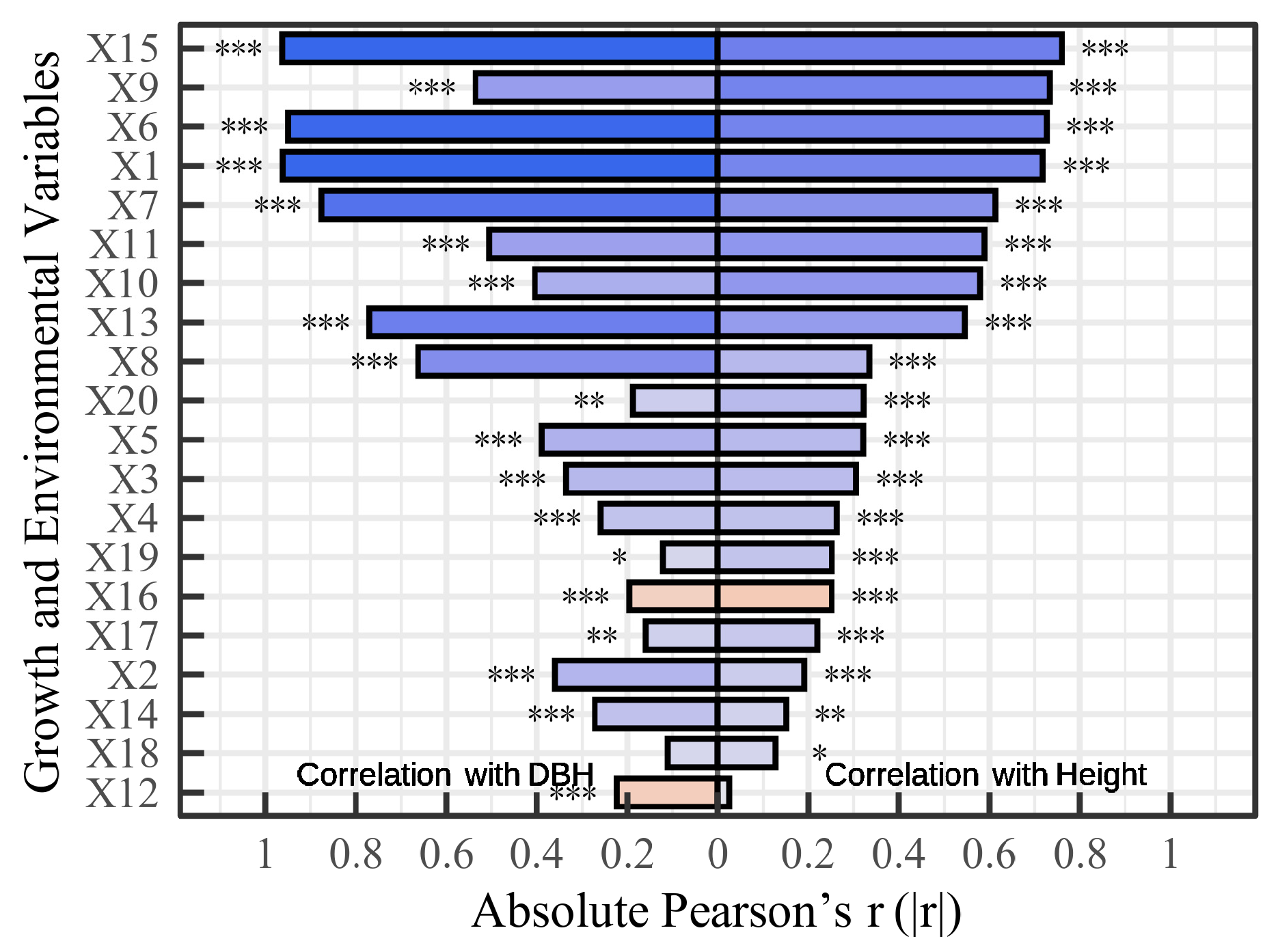
The correlation analysis results (Figure 2) indicate that there are significant differences in the correlation between different alternative explanatory variables and bamboo height and DBH. The Pearson correlation coefficients between growth indicators (X1–X15) and bamboo height ranged from 0.03 to 0.76 (median = 0.55), and the correlation coefficient with DBH ranged from −0.22 to 0.96 (median = 0.50), indicating a high overall correlation level. In contrast, the correlation coefficients between environmental factors (X16–X20) and bamboo height ranged from −0.25 to 0.32 (median = 0.22), and the correlation coefficients between them and DBH ranged from −0.20 to 0.19 (median = 0.12), indicating overall weak correlation.
The results of partial correlation analysis (Table 4) show that after controlling the influence of DBH, the partial correlation coefficients between each candidate variable and bamboo height were in the range of −0.36~0.60 (the median was 0.07), and there were still significant differences among different variables. Among them, the partial correlation coefficient between the total culm node number and culm height was the highest (r = 0.60, p < 0.001), followed by the culm-height-to-crown-base partial correlation (r = 0.46, p < 0.001). The branch-free culm node number also showed a high and significant partial correlation (r = 0.37, p < 0.001).
Among the variables with high partial correlation, the total culm node number was difficult to accurately count due to the obstruction of branches and leaves. And it was difficult to conduct non-destructive measurements of the culm height to crown base in high-density bamboo clusters. These two indicators are relatively difficult and uncertain to measure in large sample field surveys. In contrast, the branch-free culm node number maintains a strong significant partial correlation in statistics, and can be directly and accurately counted visually. It has good operability and stability in field investigations.
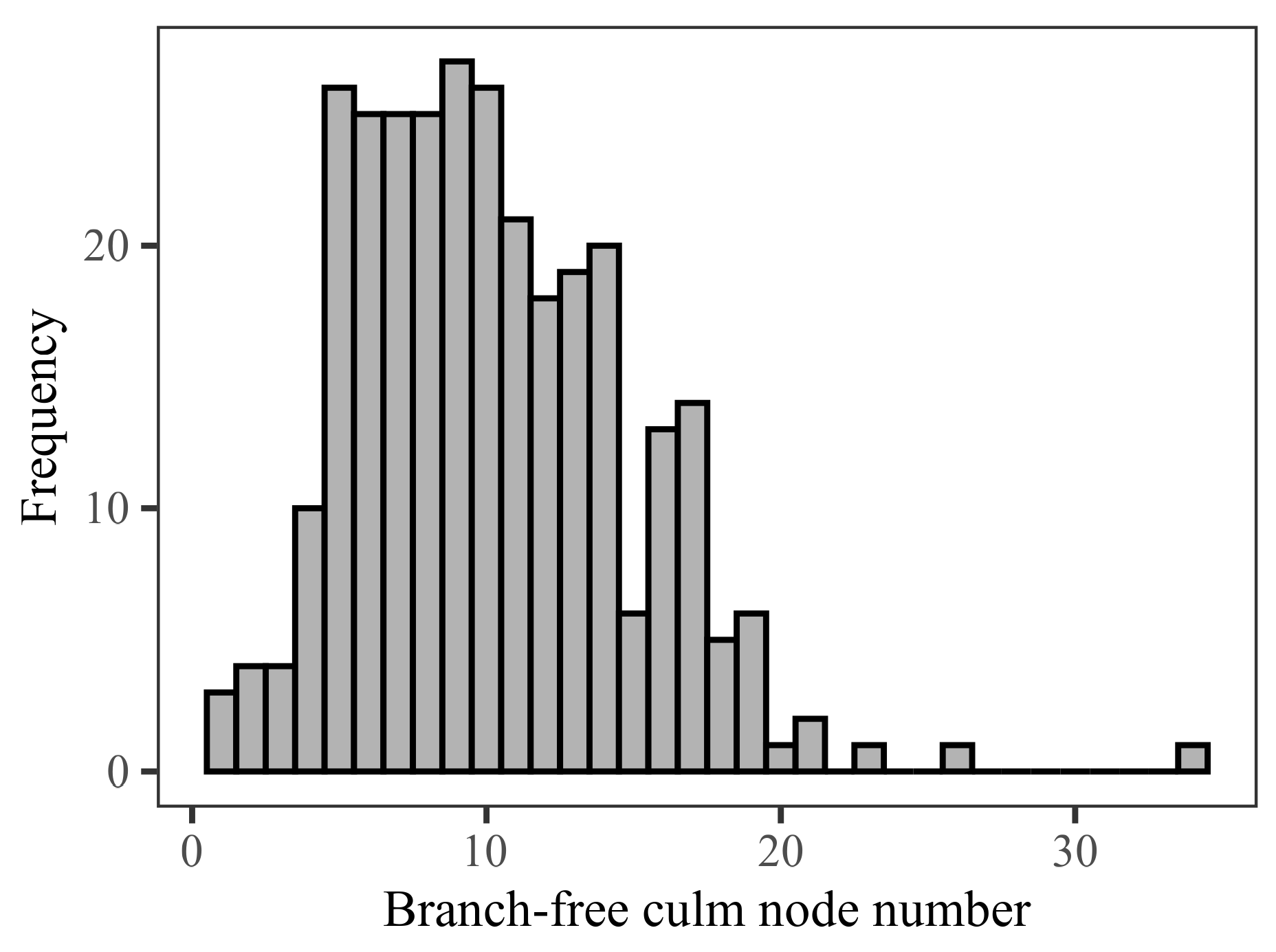
In addition, multiple studies have shown that the internode length of bamboo species varies significantly along the stem, with the longest and most variable internodes in the sub branch region, which is the main contributor to height growth and inter-individual height differences [28,29,30,31]. Therefore, based on the results of partial correlation analysis and field survey conditions, the branch-free culm node number was selected as the explanatory variable for the re-parameterization model. According to the variance inflation factor test, the VIF between the branch-free culm node number and DBH was less than 5, indicating that the process of re-parameterization did not introduce significant collinearity concerns (Figure 3).

3.3.2. Re-Parameterized Model Fitting

Re-parameterization modeling was performed on all parameters of 19 base models one by one, and a total of 47 re-parameterization models were fitted, all of which successfully converged. After excluding models with insignificant non-intercept parameters in the full sample fitting (Chapman–Richards, Michailoff, Power Log nested form, and Korf-c model), 37 structurally stable re-parameterized models were screened out for comparative analysis.
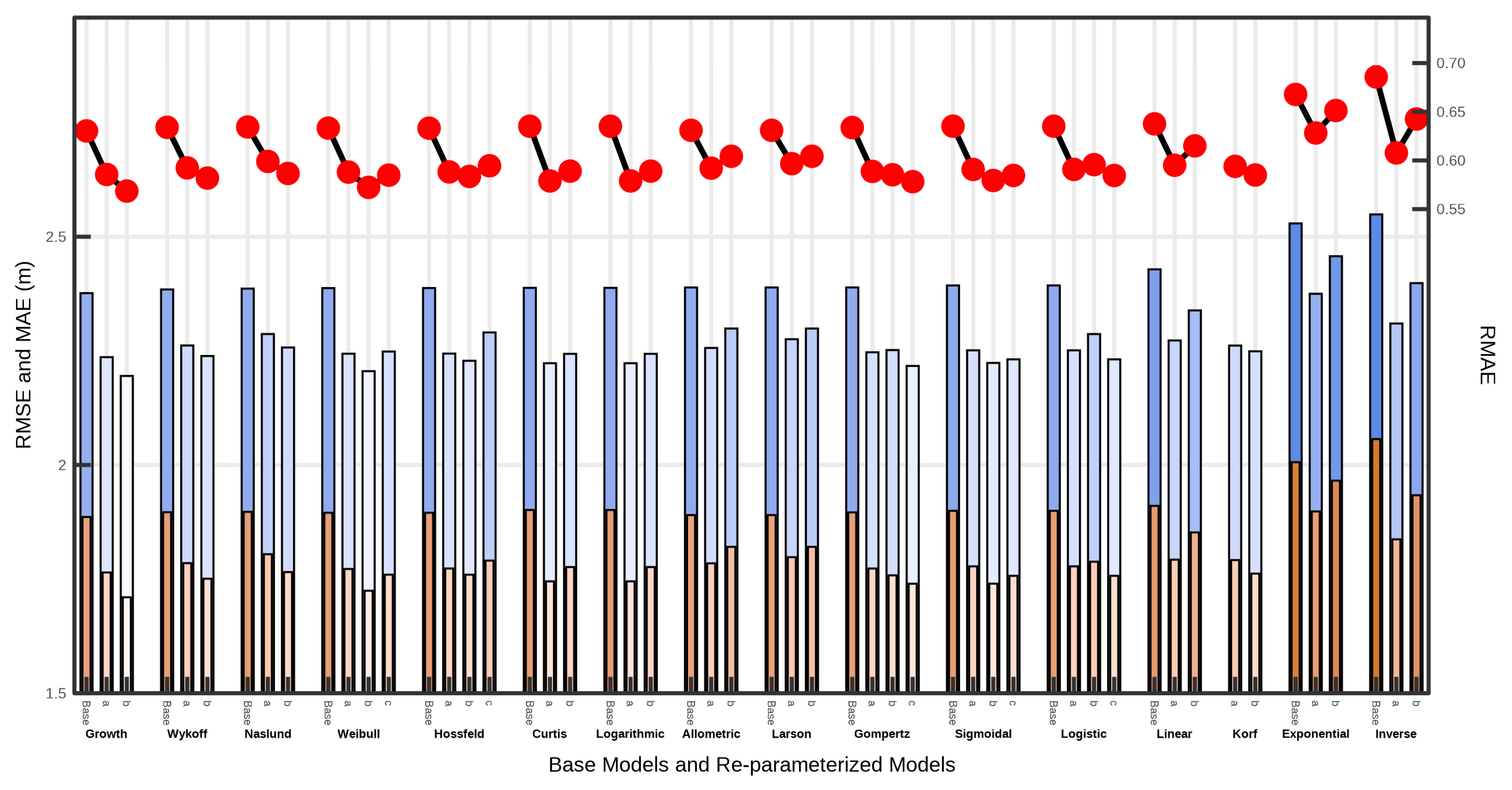
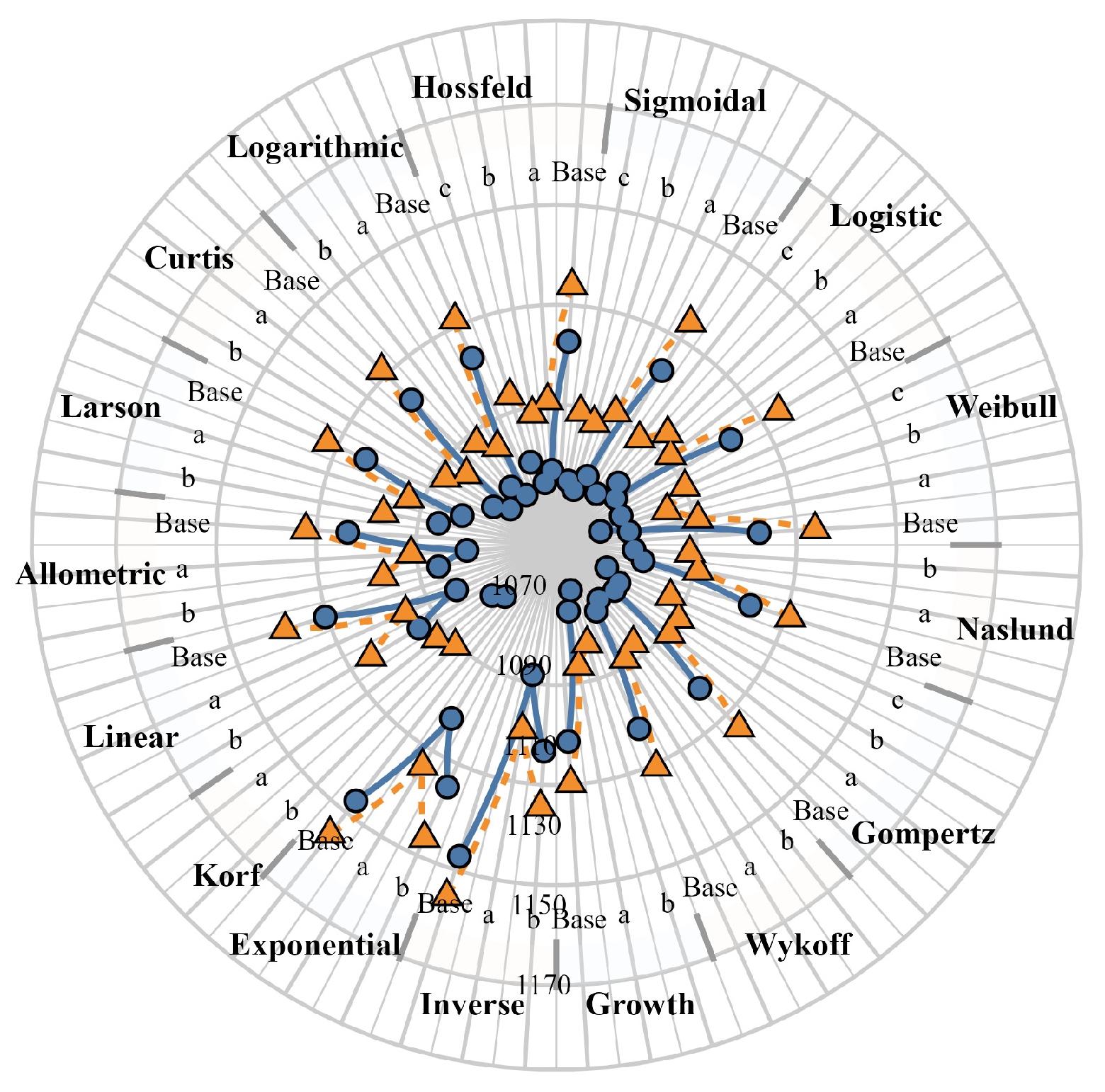
Under the cross-validation framework, the goodness-of-fit index, prediction error index, and information criterion index of each re-parameterized model are summarized as shown in Figure 4, Figure 5 and Figure 6. The R2 range of the models was 0.5595~0.6445 (the median was 0.6263), the R2adj range was 0.5442~0.6321 (the median was 0.6082), the RMSE value was in the range of 2.195~2.457 m (the median was 2.251), the MAE value was in the range of 1.710~1.966 m (the median was 1.776), the RMAE value was in the range of 0.5685~0.6513 (the median was 0.5890), the AIC value was in the range of 1071.51~1126.32 (the median was 1078.67), and the BIC value was in the range of 1085.84~1140.28 (the median was 1095.92).

3.3.3. Evaluation of the Effectiveness of Re-Parameterization Strategy

The likelihood ratio test results showed significant differences among the 37 re-parameterized models taken for comparison, with LR statistics ranging from 20.51 to 113.14 (median = 42.24), reflecting the varying degrees of re-parameterization response of different model structures. The p-value range of each model was 2.01 × 10⁻²⁶~5.92 × 10−06 (median = 8.08 × 10⁻¹¹), all of which were significantly lower than the Bonferroni correction threshold (p < 2.70 × 10⁻⁴, i.e., 0.01/37), indicating that re-parameterization can significantly improve model fitting compared to the corresponding base model in statistical significance.
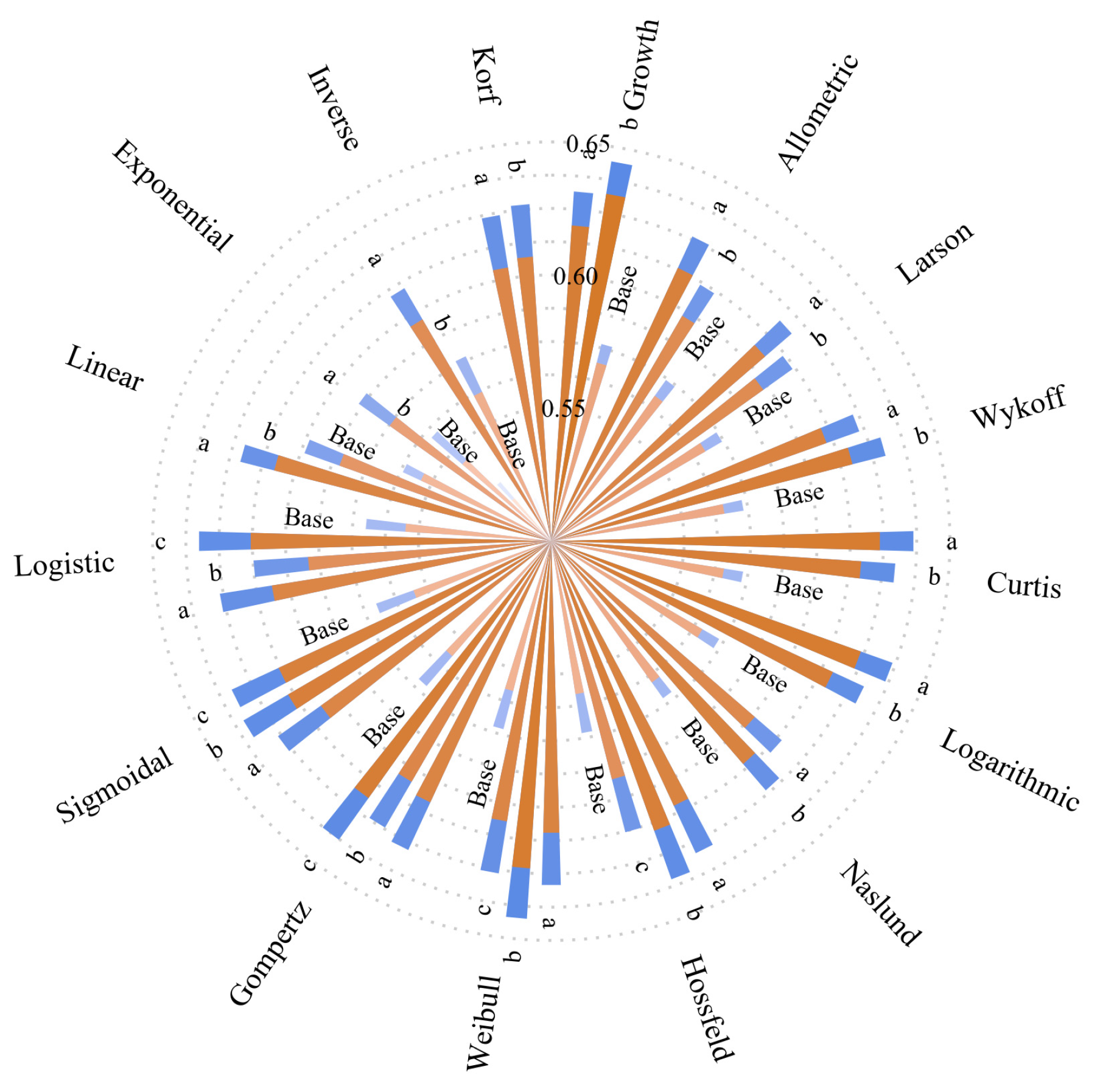
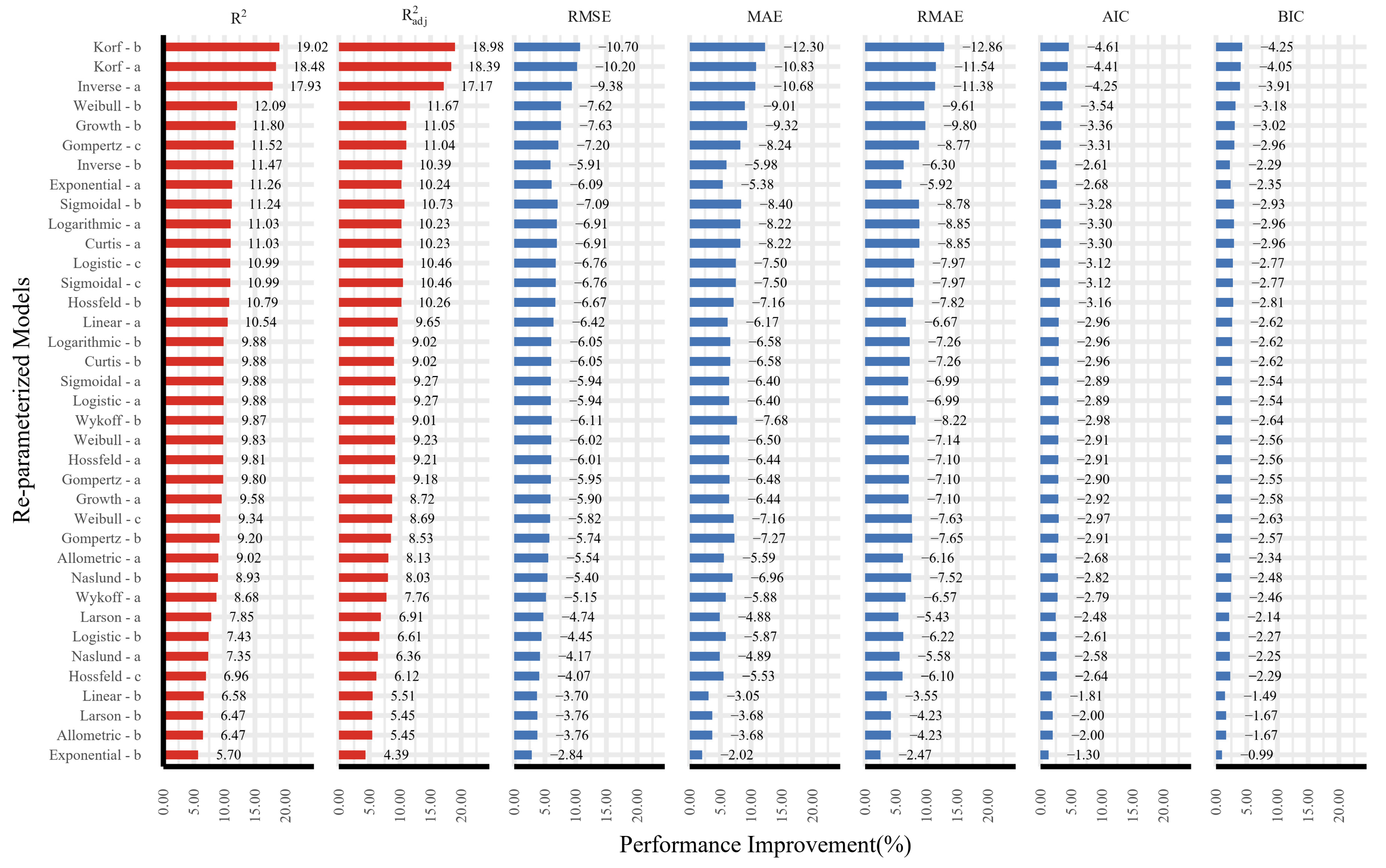
Accordingly to the overall trend of indicator changes, after re-parameterization, the goodness-of-fit indicators (R2, R2adj) of the base models generally improved (Figure 4) while the prediction error indicators (RMSE, MAE, RMAE) and information criterion indicators (AIC, BIC) showed an overall downward trend (Figure 5 and Figure 6). Further comparison of the indicator changes of each re-parameterized model relative to its corresponding base model (Figure 7) revealed that the R2 change ranged from 5.70% to 19.02% (with an average improvement of 9.88%); the variation range of R2adj was 4.39% to 18.98% (with an average increase of 9.21%); RMSE changes ranged from −2.84% to −10.70% (with an average decrease of 6.01%); MAE changes ranged from −2.02% to −12.30% (average decrease of 6.50%); RMAE changes ranged from −2.47% to −12.86% (average decrease of 7.14%); the amplitude of AIC change ranged from −1.30% to −4.61% (with an average decrease of 2.91%); the change in BIC ranged from −0.99% to −4.25% (with an average decrease of 2.57%).
Based on the above-mentioned results, after excluding re-parameterization models with insignificant non-intercept parameters, the re-parameterization method showed stable and consistent performance improvement in general, indicating that the strategy of re-parameterization has strong universal improvement effects on different model structures.

3.3.4. Representative Results of Re-Parameterized Models and Comprehensive Diagnostic Analysis

The optimization of the re-parameterized model also followed the hierarchical decision-making rules consistent with the basic model stage. Firstly, under the criterion of ΔR2 ≤ 0.01, a total of six re-parameterized models were included in the candidate set (M6-b, M17-b, M9-c, M15-a, M2-a, and M19-b). On this basis, the differences in RMSE indicators among the candidate models did not exceed the preset threshold (ΔRMSE ≤ 0.05 m), and no further differentiation was formed. After further introducing AIC to constrain model complexity, the candidate model set was compressed into two models (M6-b and M17-b), indicating that the two had similar performance from the perspective of information theory. According to the established hierarchical decision-making rules, among the models that satisfied the AIC constraint conditions, M6-b (growth model, with b-parameter re-parameterization) had the highest R2 (0.6445) and the lowest RMSE (2.195 m), and this was therefore selected as the optimal re-parameterization model in this study. This model is expressed as follows:
y   =   17.26 [ 1 e x p ( ( 0.1281 + 0.01081 U   ) x ) ]
As for the optimal re-parameterization model screened out in this study (Model growth-b, R2: 0.6445, R2adj: 0.6321, RMSE: 2.195 m, MAE: 1.710 m, RMAE: 0.5685, AIC:1071.87, BIC: 1085.84, compared to its corresponding base model (Model growth, R2: 0.5764, R2adj: 0.5692, RMSE: 2.376 m, MAE: 1.886 m, RMAE: 0.6303, AIC: 1109.19, BIC: 1119.66), the performance was optimized to varying degrees: the R2 improved by 11.80%, R2adj improved by 11.05%, RMSE decreased by 7.63%, MAE decreased by 9.32%, RMAE decreased by 9.80%, AIC decreased by 3.36%, and BIC decreased by 3.02%. This reflects the consistent improvement of fitting goodness, the prediction error, and information criterion indicators at the numerical level.
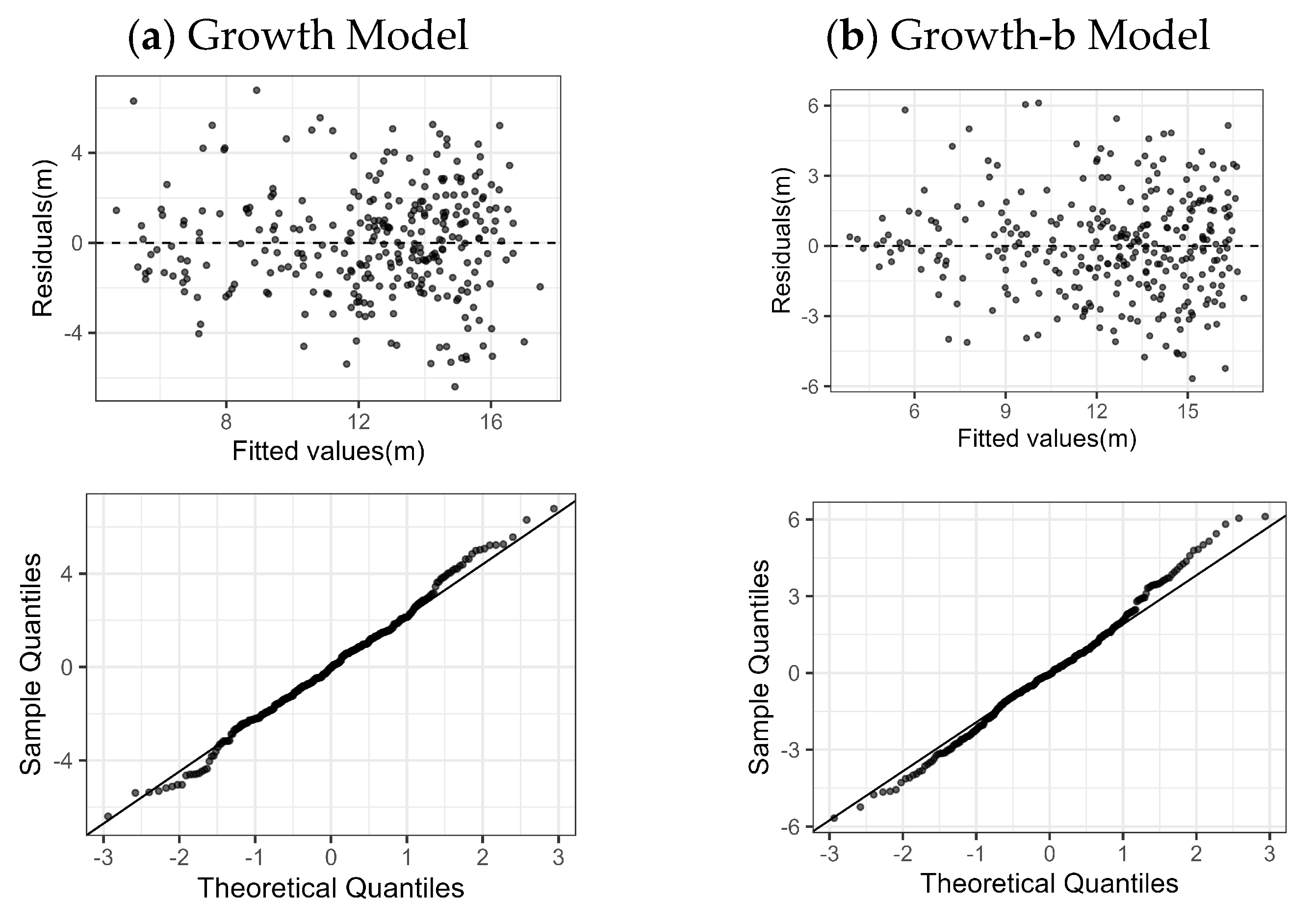
Shapiro–Wilk normality test results showed that the p-value of the residuals in the growth model was 0.3447, and the p-value of the growth-b model was 0.2174, indicating that the residuals of the two models conformed to the assumption of normal distribution (p > 0.05) in general. The Spearman test for heteroscedasticity showed that the p-value of the growth model was 0.0952, indicating no significant heteroscedasticity (p > 0.05). The p-value of the growth-b model was 0.0162, indicating a certain degree of heteroscedasticity trend in its residuals (0.01 < p < 0.05). In addition, based on the visualization analysis of residual plots and Q-Q plots (Figure 8), the residual distribution of the two models was reasonable in general, and their diagnostic results were still within an acceptable range.

4. Discussion

4.1. Advantages of Re-Parameterization Modeling and Selection Criteria for Explanatory Variables

Re-parameterization is a widely used structural improvement method in forestry modeling. The core aim is to introduce explanatory variables that can reflect individual or site differences into the model parameters so that the parameters can change with external factors, thereby improving the model’s ability to describe structural differences [8,9,32]. In recent years, some researchers have added as many explanatory variables as possible to re-parameterized models, controlling the upper limits of variables with stepwise regression through VIF test and obtaining smaller residuals or higher fit in the statistical sense through exhaustive variable combinations. However, a rapid increase in the number of variables can also bring about problems such as an unstable model structure, unstable parameter significance, weakened ecological interpretability, and significantly increased demand for field data, making it difficult to meet the needs of practical investigation and extensive application.
Therefore, for re-parameterized models, the key is not the more variables the better, but to select a small number of representative variables that can provide independent structural information and are easy to obtain in real conditions [33,34]. For tree species with rich research accumulation such as Cunninghamia lanceolata and Pinus koraiensis, there are clear selecting strategies for commonly used re-parameterized variables such as age group and canopy closure. However, the research foundation for bamboo height–DBH modeling related to B. emeiensis is weak, lacking mature experience in variable selection. If the multivariate exhaustive search strategy is directly followed, it may lead to a complex model structure but insufficient explanatory significance.
In view of this, Pearson correlation [23] was taken as a reference to screen out variables, from more than 20 tree measurement factors and environmental factors, whose explanatory power for bamboo height, independence with breast height diameter information, and operability in field investigations were taken into comprehensive consideration. Finally, the branch-free culm node number was selected as the re-parameterization explanatory variable that can reflect the number of effective elongation zones. It is also a kind of supplementary structural information that cannot be provided by the DBH. It is easy to measure and has a strong structural correlation with bamboo height. Therefore, after re-parameterization, the model performance was significantly improved. The modeling unit of this study was a single plant sample bamboo, and the model was constructed based on the observation data of single plant’s DBH and bamboo height. It is mainly used for single-bamboo height prediction and model comparison and evaluation. The inference of plot scale structure or density was not involved in this study, nor was spatial correlation analysis or regional extrapolation.

4.2. Characteristics of the Relationship Between Bamboo Height and DBH of B. emeiensis and Base Model Performance

The relationship between tree height and DBH usually exhibits significant regional and species differences, making it difficult to construct a unified model applicable for different tree species. Therefore, it is necessary to thoroughly screen the base models before modeling [12]. In the study of common tree species such as Cunninghamia lanceolata and Pinus koraiensis, some classic models have been proven to be able to better characterize the nonlinear pattern of tree height increasing with the DBH. In many studies, good fitting results can be obtained by just selecting from several classic nonlinear models. However, the growth pattern of bamboo plants is significantly different from that of trees. The differentiation of bamboo culm nodes is basically completed during the shoot stage and then the final height is established in a short period of time through the rapid elongation of internodes. The DBH and bamboo height tend to stabilize in the early stages of growth [5,28,29,30,35,36]. The early finalization growth pattern of bamboo plants differs fundamentally from the continuous cumulative growth of trees, making empirical models for tree species not necessarily applicable to bamboo. In addition, there has been no relevant study on bamboo height–DBH modeling for B. emeiensis in Sichuan Province. Therefore, in this study, more model structures were included in base model screening, aiming to fully explore the most suitable model form for the relationship between the breast height diameter and bamboo height of B. emeiensis.
Multiple studies have shown [28] that the allometric growth model can effectively describe the nonlinear proportional relationship between the DBH and bamboo height, which is consistent with the growth characteristic that bamboo culm height is limited by the ratio of internode elongation [5,11,16,17,37]. The screening results of the optimal base model in this study also showed that the allometric growth model performed best in all base models for B. emeiensis, which was consistent with previous research conclusions. The screening results of the base model in this study showed that, among the various model structures taken for comparison, the growth model performed relatively well, taking comprehensive evaluation indicators into consideration (R2: 0.5764, RMSE: 2.376 m, AIC: 1109.19). At the same time, it could also be observed that several models performed similarly in terms of fitting accuracy and error control, indicating that in the data conditions and evaluation framework of this study, some model structures showed similar overall descriptive ability for the relationship between the DBH and culm height of B. emeiensis.

4.3. Validity of Re-Parameterization Method and Biological Basis of Optimal Re-Parameterization Models

The likelihood ratio test is a statistical method used to test whether or not the re-parameterization method can significantly improve model performance [27,38]. In this study, the results showed that re-parameterization led to significant performance improvements on all base models, indicating that the introduction of structural explanatory variables can effectively enhance the ability to characterize the relationship between the DBH and bamboo height of B. emeiensis, which is consistent with similar research results on other tree species [12,13,14]. Multiple studies have shown that the internode length of bamboo exhibits a significant gradient distribution along the bamboo culm, with the longest and most variable internodes occurring in the region under the first branch, which is the main source of height increment and inter-individual height differences. Therefore, the branch-free culm node number that can reflect the number of effective elongation segments has strong explanatory power for bamboo height variation [28,29,30,31].
Among the re-parameterization models taken for comparison in this study, the re-parameterized growth model at the parameter-b position performed relatively well, taking comprehensive evaluation indicators into consideration (R2: 0.6445, RMSE: 2.195, AIC: 1071.87). In the growth model, parameter a represented the potential upper limit of height while parameter b controlled the growth rate of bamboo height with an increasing DBH. After re-parameterization, the model maintained the same functional form as the original growth model, only extending the growth rate parameter b from a constant to a linear function of the branch-free culm node number. This processing did not change the basic growth mechanism of the model. Instead, it allowed the growth rate to be adjusted according to culm-nodal structural characteristics while maintaining the analytical structure unchanged, thus reflecting the differences in the process of height development under different nodal sequence conditions at the structural level [39].

4.4. Potential Value and Application Prospects of Node-Based Culm Structural Variables in Bamboo Height–DBH Model

Based on the variable screening results in this study, there is a high correlation between the total culm node number and culm height. In addition, the total culm node number can reflect the overall development status of culm nodes, which may have stronger explanatory potential than the branch-free culm node number at the structural level. However, the total culm node number in mature bamboo forests is difficult to accurately count due to the obstruction of branches and leaves, and the measurement cost is high in large sample surveys. Therefore, it was not included in the re-parameterization modeling in this study. The principle is consistent with the logic of selecting explanatory variables based on operability in this study.
It is worth noting that considering the biological significance of the total culm node number, it is still meaningful in specific contexts. The node differentiation of bamboo plants is usually completed during the shoot stage, and high growth is mainly achieved in a short period of time through the rapid elongation of internodes. Meanwhile, bamboo exhibits extremely weak lateral growth, with a stable basal diameter throughout the entire growth cycle, which shows a high correlation with breast height diameter [5,28,29,30,35,36]. These characteristics mean that the potential number of nodes of the bamboo culm, effective elongation segment, and culm structure of bamboo can be determined in the early stages, and the breast height diameter also has high predictability during the young period.
Therefore, both the number of nodes and the diameter at breast height may be accurately obtained in the early stage of bamboo growth. Combined with the structural relationship between the diameter at breast height and node number, it is expected to make an early prediction of the final height of bamboo before its height is fully established. The above speculation needs further verification in young bamboo plots, but it may provide a possible future for the research on early growth models with node-based culm structural variables.

5. Conclusions

Based on data from 117 sample plots across 23 counties in Sichuan Province, 19 classic bamboo height–DBH base models and their re-parameterized forms were constructed and evaluated, thus building the model system for the relationship of bamboo height–DBH for B. emeiensis. The results indicate that there are differences in the fitting accuracy and error control among different model forms. Based on the comprehensive comparison of multiple evaluation indicators, the growth model achieved relatively good results (R2: 0.5764, RMSE: 2.376 m, AIC: 1109.19), and could depict the nonlinear growth relationship quite well between the diameter at breast height and the bamboo height of B. emeiensis. Based on correlation analysis, variables with relatively independent explanatory power for bamboo height were identified through partial correlation analysis by controlling the influence of the DBH. Combined with biological significance and the operability of field investigation, the branch-free culm node number was selected as the explanatory variable for re-parameterization. The branch-free culm node number as a structural explanatory variable can provide supplementary structural information that cannot be provided by the DBH. Introducing the branch-free culm node number into the model can provide additional structural adjustment capability for model parameters. By comparing base models with the corresponding re-parameterized models, it was found that after introducing the branch-free culm node number, most models achieved varying degrees of improvement in fitting accuracy and error control (R2 increased by 9.88%, RMSE decreased by 6.01%, AIC decreased by 2.91% on average). Among the re-parameterization models taken for evaluation in this study, the re-parameterization growth model at the position of parameter b performed outstandingly according to comprehensive evaluation indicators (R2: 0.6445, RMSE:2.195 m, AIC: 1071.87). It outperformed its corresponding base model in terms of coefficient of determination, error indicators, and information criteria, demonstrating higher prediction accuracy and simplicity. Parameter b in the growth model controls the rate of bamboo height increasing with the DBH. After being regulated by the branch-free culm node number, it can absorb the height variation caused by differences in internode elongation more effectively, thereby improving the predictive performance of the model significantly while maintaining a simple structure. The study can provide methodological support for rapidly estimating the culm height of B. emeiensis based on DBH at the plot scale. In this study, only culm height–DBH models were constructed and evaluated, without considerations of site quality evaluation, volume, and biomass prediction models. Investigation on relevant applications still needs to be further expanded in subsequent research. This study can provide reference for modeling bamboo growth with larger samples or more refined designs. In addition, the results of this study may provide reference for modeling research on other clustered bamboo species, but the applicability of the strategy in different bamboo species still needs to be further validated based on cross-species data.

Author Contributions

Conceptualization, Y.L. and C.C.; methodology, Y.L. and C.C.; validation, Y.L.; formal analysis, Y.L.; investigation, Y.L., X.W., and X.S.; resources, C.C.; writing—original draft preparation, Y.L.; writing—review and editing, Y.L.; supervision, C.C.; project administration, C.C.; funding acquisition, C.C. All authors have read and agreed to the published version of the manuscript.

Funding

This research was funded by the National Key R&D Program of China and the funding number is 2023YFD2201201.

Data Availability Statement

The data presented in this study are available on request from the corresponding author.

Acknowledgments

We appreciate everyone who participated in the work of field investigation. We also thank the constructive comments and suggestions from the anonymous reviewers in the manuscript revision.

Conflicts of Interest

The authors declare no conflicts of interest.

References

  1. Fan, S.; Liu, G.; Su, W.; Cai, C.; Guan, F. Advances in Research of Bamboo Forest Cultivation. For. Sci. Res. 2018, 31, 137–144. [Google Scholar] [CrossRef]
  2. Chen, R.; Peng, C.; Liu, G.; Zhou, Y.; Ren, L.; Zhao, J.; Su, H. Above-Ground Spatial Distribution Feature of Nutrients in Different Ages of Neosinocalamus Affinis and Correlation between Soil and Leaves Nutrients. J. Sichuan Agric. Univ. 2017, 35, 353–358. [Google Scholar] [CrossRef]
  3. Wang, X.; Li, Y.; Liu, M.; Cai, C.; Fan, S. Development of a Single-Plant Stem Volume Model for Bambusa Emeiensis. J. For. Environ. 2025, 45, 536–545. [Google Scholar] [CrossRef]
  4. Cheng, W.; Wu, X.; Yeerjiang, B.; Wang, J.; Zhao, X.; Zhang, C. Research on the Relationship between Tree Height and DBH of Temperate Coniferous and Broadleaved Mixed Forests Based on Mixed Effects and Quantile Regression. J. Beijing For. Univ. 2024, 46, 28–39. [Google Scholar]
  5. Gao, X.; Li, Z.; Yu, H.; Jiang, Z.; Wang, C.; Zhang, Y.; Qi, L.; Shi, L. Modeling of the Height–Diameter Relationship Using an Allometric Equation Model: A Case Study of Stands of Phyllostachys Edulis. J. For. Res. 2016, 27, 339–347. [Google Scholar] [CrossRef]
  6. Yen, T.-M. Culm Height Development, Biomass Accumulation and Carbon Storage in an Initial Growth Stage for a Fast-Growing Moso Bamboo (Phyllostachy Pubescens). Bot. Stud. 2016, 57, 10. [Google Scholar] [CrossRef]
  7. Jiang, R.; Lin, J.; Li, T. Refined Aboveground Biomass Estimation of Moso Bamboo Forest Using Culm Lengths Extracted from TLS Point Cloud. Remote Sens. 2022, 14, 5537. [Google Scholar] [CrossRef]
  8. Schmidt, M.; Breidenbach, J.; Astrup, R. Longitudinal Height-Diameter Curves for Norway Spruce, Scots Pine and Silver Birch in Norway Based on Shape Constraint Additive Regression Models. For. Ecosyst. 2018, 5, 9. [Google Scholar] [CrossRef]
  9. Dong, C.; Wu, B.; Zhang, H. Parametric Prediction Models of DBH and Height for Cunninghamia Lanceolata Plantation Based on Crown Width. J. Beijing For. Univ. 2016, 38, 55–63. [Google Scholar] [CrossRef]
  10. Luo, T.; Fan, S.; Liu, G.; Shen, J.; Wu, C. Study on Site Quality Evaluation and Classification of Phyllostachys Edulis in Central Fujian. J. Cent. South Univ. For. Technol. 2020, 40, 48–57. [Google Scholar] [CrossRef]
  11. Zhou, X.; Zhou, Y.; Zhang, X.; Sharma, R.P.; Guan, F.; Fan, S.; Liu, G. Two-Level Mixed-Effects Height to Crown Base Model for Moso Bamboo (Phyllostachys Edulis) in Eastern China. Front. Plant Sci. 2023, 14, 1095126. [Google Scholar] [CrossRef]
  12. Cao, X.; Miao, Z.; Hao, Y.; Dong, L. Height-diameter Model of Broad-leaved Mixed Forest Based on Species Classification in Maoershan. Chin. J. Appl. Ecol. 2024, 35, 307–320. [Google Scholar] [CrossRef]
  13. Long, J.; Tian, Y.; Wang, C. Construction of mixed effect model of height-diameter at breast height of Cunninghamia lanceolata plantation in Xiangxi Tujia and Miao Autonomous Prefecture. Hunan For. Sci. Technol. 2024, 51, 25–32. [Google Scholar]
  14. Liu, M.; Jia, W. Building tree height, height to crown base and crown contact height model for Korean pine plantation based on terrestrial laser scanning data. For. Eng. 2024, 40, 26–36. [Google Scholar]
  15. Hofiço, N.D.S.A.; Costa, E.A.; Fleig, F.D.; Finger, C.A.G.; Hess, A.F. Height-Diameter Relationships for Eucalyptus Grandis Hill Ex. Maiden in Mozambique: Using Mixed-Effects Modeling Approach. Cerne 2020, 26, 183–192. [Google Scholar] [CrossRef]
  16. Yebeyen, D.; Nemomissa, S.; Sileshi, G.W.; Zewdie, W.; Hailu, B.T.; Rodríguez, R.L.; Desalegne, F.H.; Woldie, T.M. Allometric Scaling, Biomass Accumulation and Carbon Stocks in Natural Highland Bamboo (Oldeania alpina (K. Schum.) Stapleton) Stands in Southwestern Ethiopia. Carbon Manag. 2022, 13, 482–496. [Google Scholar] [CrossRef]
  17. Hou, Y.; Yao, W.; Yang, G.; Cui, Y.; Zhou, H.; Zhang, X. Study on the Culm Structure and Allocation of Aboveground Biomass of Dendrocalamus Tsiangii. J. Bamboo Res. 2023, 42, 51–57. [Google Scholar]
  18. NASA JPL. NASA Shuttle Radar Topography Mission Global 1 Arc Second; NASA JPL: La Cañada Flintridge, CA, USA, 2013. [Google Scholar]
  19. Peng, S. 1-Km Monthly Mean Temperature Dataset for China (1901–2024). Earth Syst. Sci. Data 2019, 11, 1931–1946. [Google Scholar] [CrossRef]
  20. Peng, S.; Ding, Y.; Liu, W.; Li, Z. 1-Km Monthly Temperature and Precipitation Dataset for China from 1901 to 2017. Earth Syst. Sci. Data 2019, 11, 1931–1946. [Google Scholar] [CrossRef]
  21. Poggio, L.; de Sousa, L.M.; Batjes, N.H.; Heuvelink, G.B.M.; Kempen, B.; Ribeiro, E.; Rossiter, D. SoilGrids 2.0: Producing Soil Information for the Globe with Quantified Spatial Uncertainty. SOIL 2021, 7, 217–240. [Google Scholar] [CrossRef]
  22. Fick, S.E.; Hijmans, R.J. WorldClim 2: New 1-Km Spatial Resolution Climate Surfaces for Global Land Areas. Int. J. Climatol. 2017, 37, 4302–4315. [Google Scholar] [CrossRef]
  23. Qiu, X.; Xie, Y.; Liang, R.; Zhu, Z.; Zhou, Y.; Sun, Y. Construction of Cunninghamialanceolata Crown Width Prediction Model Using Machine Learning for Incremen-tal Learning. Sci. Silvae Sin. 2025, 53, 48–60. [Google Scholar] [CrossRef]
  24. Díaz-Vallejo, M.; Peña-Peniche, A.; Mota-Vargas, C.; Piña-Torres, J.; Valencia-Rodríguez, D.; Rangel-Rivera, C.E.; Gaviria-Hernández, J.; Rojas-Soto, O. Analyses of the Variable Selection Using Correlation Methods: An Approach to the Importance of Statistical Inferences in the Modelling Process. Ecol. Model. 2024, 498, 110893. [Google Scholar] [CrossRef]
  25. Gao, J.; Ma, Q.; Luo, G.; Wang, Z.; Li, Y.; Xiang, W. Response of early and late wood growth of main coniferous species to multiple factors in spruce fir coniferous mixed forest. J. Cent. South Univ. For. Technol. 2025, 45, 16–27. [Google Scholar] [CrossRef]
  26. Wang, J.; Dong, L.; Li, F. Ground Diameter-Height Models of Naturally Regenerated Seedlings and Saplings under Broad-Leaved Mixed Forest in Maoershan Mountains. Chin. J. Appl. Ecol. 2019, 30, 3811–3823. [Google Scholar] [CrossRef]
  27. Li, Z.; Jia, W.; Zhao, G. Simulation of longitudinal knot growth and sampling strategy in Larix olgensis. Chin. J. Appl. Ecol. 2025, 36, 3287–3295. [Google Scholar] [CrossRef]
  28. Cheng, L.; Hui, C.; Reddy, G.V.P.; Ding, Y.; Shi, P. Internode Morphometrics and Allometry of Tonkin Cane Pseudosasa Amabilis. Ecol. Evol. 2017, 7, 9651–9660. [Google Scholar] [CrossRef] [PubMed]
  29. Tan, J.; Liu, X.; Li, Q.; Ma, K.; Huang, W. Variation in Internode Length Patterns: A Data Analysis of Internode Length and Serial Number in Three Bamboo Species. Front. Ecol. Evol. 2024, 12, 1–12. [Google Scholar] [CrossRef]
  30. Chen, X. Variations in Patterns of Internode and Branch Lengths for Several Bamboo Species. Plant Biosyst. 2021, 155, 1088–1099. [Google Scholar] [CrossRef]
  31. Zha, R.; Chen, T.; Liu, Q.; Wei, Q.; Que, F.; Zha, R.; Chen, T.; Liu, Q.; Wei, Q.; Que, F. Morphological and Anatomical Analysis of the Internodes of a New Dwarf Variant of Moso Bamboo, Phyllostachys edulis f. exaurita. Plants 2023, 12, 1759. [Google Scholar] [CrossRef]
  32. Li, Y.; Jia, W.; Guo, G.; Liang, Y.; Li, Z. Study on branch growth of Larix olgensis based on climatic factors. J. Cent. South Univ. For. Technol. 2025, 45, 39–48. [Google Scholar] [CrossRef]
  33. Burnham, K.P.; Anderson, D.R. Multimodel Inference: Understanding AIC and BIC in Model Selection. Sociol. Methods Res. 2004, 33, 261–304. [Google Scholar] [CrossRef]
  34. Malmborg, C.A.; Willson, A.M.; Bradley, L.M.; Beatty, M.A.; Klinges, D.H.; Koren, G.; Lewis, A.S.L.; Oshinubi, K.; Woelmer, W.M. Defining Model Complexity: An Ecological Perspective. Meteorol. Appl. 2024, 31, e2202. [Google Scholar] [CrossRef]
  35. Yao, W.; Wang, R.; Lin, S.; Wang, X.; Yang, M.; Zheng, Y.; Ding, Y. Growth mechanisms and model fitting of module biomass of Pleioblastus pygmaeus seedlings. J. Nanjing For. Univ. Nat. Sci. Ed. 2020, 44, 103–110. [Google Scholar]
  36. Zhang, Y.; Dai, L.; Xie, Y.; Ma, Y.; Tang, W.; Yuan, T. Study on growth characteristics of young bamboo and shooting of Chimonobambusa utilis at different altitudes. J. Nanjing For. Univ. Nat. Sci. Ed. 2019, 43, 199–203. [Google Scholar]
  37. Kaushal, R.; Islam, S.; Tewari, S.; Tomar, J.M.S.; Thapliyal, S.; Madhu, M.; Trinh, T.L.; Singh, T.; Singh, A.; Durai, J. An Allometric Model-Based Approach for Estimating Biomass in Seven Indian Bamboo Species in Western Himalayan Foothills, India. Sci. Rep. 2022, 12, 7527. [Google Scholar] [CrossRef]
  38. Shen, Y.; Tian, D.; Jiang, L. Crown volume model for Larix olgensis plantation based on TLS. J. Cent. South Univ. For. Technol. 2025, 45, 65–75. [Google Scholar] [CrossRef]
  39. Lam, T.Y.; Ducey, M.J. Analysis of the Inflection Points of Height-Diameter Models. For. Ecosyst. 2024, 11, 100202. [Google Scholar] [CrossRef]
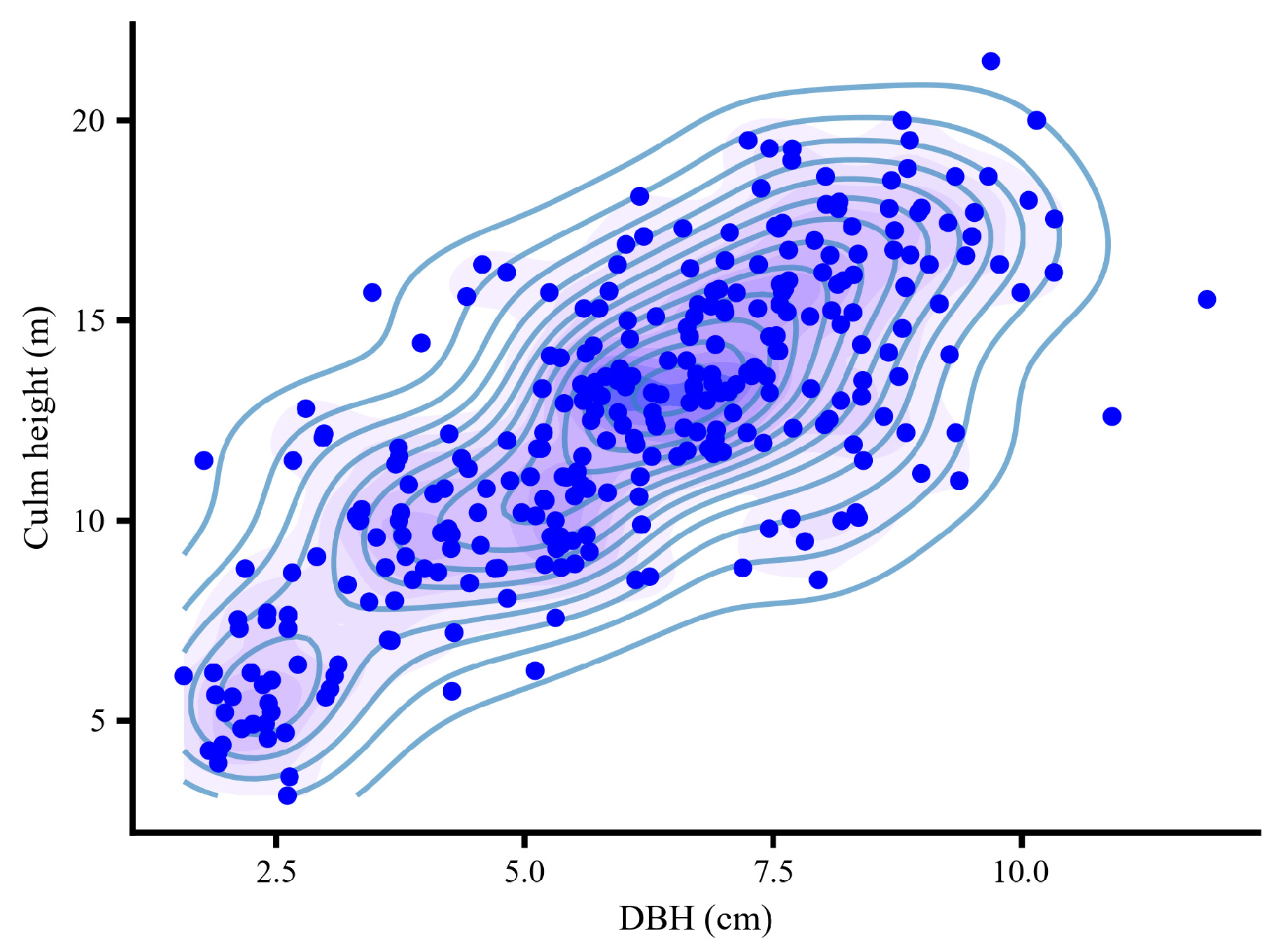
Figure 1. Two-dimensional distribution characteristics of DBH and culm height of Bambusa emeiensis samples. The scattered points represent the observed values of individual plant samples. We drew heat maps and contour lines through two-dimensional kernel density estimation as the background to reflect the distribution density of sample points.
Forests 17 00175 g001
Figure 2. Correlation between candidate explanatory variables and DBH/height. Length of each bar represents the Pearson correlation coefficients between each candidate explanatory variable and DBH (the left) and bamboo height (the right), respectively; the direction and intensity are related to color coding: orange indicates negative correlation, blue indicates positive correlation, darker colors indicate larger |r|, and the color close to gray indicates correlation close to 0; the asterisk indicates significance (* p < 0.05, ** p < 0.01, *** p < 0.001).
Forests 17 00175 g002
Figure 3. Frequency distribution of branch-free culm node number.
Forests 17 00175 g003
Figure 4. Comparison of R2 and adjusted R2 values of re-parameterized models and base models. The grouped radial bar chart is used to compare the goodness-of-fit indices of various candidate models. Length of each bar represents the evaluation index value: blue bars represent R2 and red bars represent R2adj. To facilitate distinguishing subtle differences between models, the coordinate axis range has been set as 0.50~0.65. Each sector represents a model, with external annotations distinguishing the base model and re-parameterized models with different parameter positions (such as Base, a, b, c).
Forests 17 00175 g004
Figure 5. Comparison of RMSE, MAE, and RMAE values of re-parameterized models and base models. The grouped bar chart is used to compare the prediction error indices of various models, namely RMSE, MAE, and RMAE. Blue bar represents RMSE, orange bar represents MAE, and they are corresponding to the left vertical axis. The color depth reflects the magnitude of the value. Red dot represents RMAE, corresponding to the right vertical axis. They are connected with a fold line to show the trend of changes between different models. Each group represents a model, and the labels distinguish the base model and its re-parameterized forms (a–c) at different parameter positions.
Forests 17 00175 g005
Figure 6. Comparison of AIC and BIC of re-parameterized models and base models. Radial line chart is used to compare the information criterion indices of various models. Blue represents AIC, red represents BIC, and the coordinate axis range is 1050~1200. Position of point relative to the center of the circle indicates the index value of each model. The fold line reflects the trend of changes between the base model (Base) and its re-parameterized models (a–c) at different parameter positions (a–c). The background band is used to distinguish different base model categories so as to intuitively compare the differences of the same model before and after re-parameterization.
Forests 17 00175 g006
Figure 7. Performance improvement of re-parameterized models compared to corresponding base models. The percentage change of each indicator in the re-parameterized model compared to the corresponding base model is shown. Length of each bar represents the relative change amplitude: blue indicates a decrease in indicator value relative to the base model and red indicates increase. There were differences in the direction of performance improvement for different indicators as for RMSE, MAE, RMAE, AIC, and BIC, decrease in numerical value indicated an improvement in model performance, while for R2 and R2adj, increase in numerical value indicated an improvement in model performance. Each model is ranked in descending order of R2 improvement.
Forests 17 00175 g007
Figure 8. Residual diagnostic plots for the optimal re-parameterized model and its corresponding base model. The figure shows the residual diagnosis results of the optimal re-parameterized model (growth-b) and its corresponding base model (growth). The left column is the basic model, and the right column is the re-parameterized model; the upper is the residual-fitted value plot, and the lower is the normal Q-Q graph. In the residual-fitted value graph, the horizontal axis represents the model fitted value (m), the vertical axis represents the residual (m), and the dashed line is the reference line with a residual equal to 0. In the normal Q-Q graph, the horizontal axis represents theoretical normal quantile (dimensionless), the vertical axis represents the sample residual quantile, and the solid line represents the theoretical normal reference line. The scattered points in the figure represent the observed values of individual samples.
Forests 17 00175 g008
Table 1. Summary statistics of growth indicators and environmental factors.
CodeGrowth and Environmental VariablesSummary Statistics
MeanSDMinMaxCV (%)
YCulm height (m)12.403.753.1321.4830.25
XDBH (cm)6.052.161.5711.8735.77
X1Basal diameter (cm)5.711.931.839.9233.89
X2Upper crown width (m)1.080.490.163.6045.65
X3Middle crown width (m)1.560.680.115.0043.41
X4Lower crown width (m)1.170.670.114.5057.35
X5Mean crown width (m)1.270.500.183.7339.02
X6Diameter at 1/4 culm height (cm)5.381.671.169.5131.13
X7Diameter at mid-culm height (cm)3.991.291.018.0532.37
X8Diameter at 3/4 culm height (cm)2.371.010.315.8342.76
X9Total culm node number31.158.77136828.16
X10Culm height to crown base (m)4.102.520.1511.5761.58
X11Branch-free culm node number10.164.6313445.58
X12Internode length at breast height (cm)39.759.195.3066.5023.13
X13Wall thickness at culm base (cm)0.790.230.201.7829.31
X14Wall thickness at breast height (cm)0.480.220.161.9445.60
X15Cavity diameter at breast height (cm)5.001.891.229.3337.87
X16Elevation (m)510.01180.88192.821004.2735.47
X17Slope (°)13.9112.41058.4089.23
X18Solar radiation (kJ m−2 day−1)11,719.81597.5210,527.5812,814.335.10
X19Air temperature (°C)17.291.542.1718.928.91
X20Precipitation (mm)97.0814.0062.56139.5214.42
Note: Code is the variable identifier used in subsequent analysis. Y indicates culm height, X indicates DBH, and X1–Xn indicate other candidate explanatory variables used for screening and participating in re-parameterization modeling. The temperature data was sourced from the National Tibetan Plateau Data Center (TPDC) [19]; the rainfall data was sourced from the National Earth System Science Data Center [20]; the solar radiation data was sourced from the WorldClim database [22]. The temperature in the table was the average monthly temperature for many years; rainfall refers to the average monthly precipitation over many years; the solar radiation was the monthly average daily solar radiation for many years.
Table 2. Candidate culm height–DBH models for Bambusa emeiensis.
Model IDModel NameModel ExpressionModel IDModel NameModel Expression
M 1Linear y = a + b x M 2Logarithmic y = a + b × log ( x )
M 3Exponential y = a × e x p ( b × x ) M 4Sigmoidal y = a 1 + e x p ( b c × x )
M 5Allometric y = a × x b M 6Growth y = a × ( 1 e x p ( b × x ) )
M 7Inverse y = a + b x M 8Logistic y = a 1 + b × e x p ( c × x )
M 9Gompertz y = a × e b × e c × x M 10Larson y = 10 a × x b
M 11Naslund y = x 2 ( a × x + b ) 2 M 12Wykoff y = e ( a + b x + 1 )
M 13Chapman–Richards y = a ( 1 e b x ) c M 14Michailoff y = a b × l n ( x + c )
M 15Curtis y = a b × l n ( x ) M 16Power-Log y = a × x b × l o g ( x ) c
M 17Weibull y = a ( 1 e b x c ) M 18Korf y = a × e b x c
M 19Hossfeld y = a × x b c + x b
Note: y represents bamboo height, the unit is m; x represents breast height diameter, the unit is cm; a, b, and c are model parameters; the dimensions of each model parameter are implicitly determined by their functional forms.
Table 3. Summary of evaluation metrics for base models.
ModelModel Performance Metrics
R2R2adjRMSE (m)MAE (m)RMAEAICBIC
M 1: Linear0.56160.55412.4291.9100.63761120.471130.94
M 2: Logarithmic0.57310.56582.3881.9010.63511111.221121.69
M 3: Exponential0.52930.52132.5292.0060.66781141.21151.67
M 4: Sigmoidal0.57000.55512.3931.9000.63521110.911124.87
M 5: Allometric0.57440.56712.3891.8900.63091112.21122.67
M 6: Growth0.57640.56922.3761.8860.63031109.191119.66
M 7: Inverse0.51720.50902.5492.0570.68581141.451151.92
M 8: Logistic0.57000.55512.3931.9000.63521110.911124.87
M 9: Gompertz0.57190.55702.3891.8960.63381110.631124.59
M 10: Larson0.57440.56712.3891.8900.63091112.21122.67
M 11: Naslund0.57250.56522.3861.8970.63441110.721121.19
M 12: Wykoff0.57330.56602.3841.8960.63401110.331120.81
M 13: Chapman–Richards (a)0.57290.55812.3871.8950.63321110.791124.75
M 14: Michailoff (c)0.57400.55922.3861.8930.63211111.241125.2
M 15: Curtis0.57310.56582.3881.9010.63511111.221121.69
M 16: Power-Log (b\c)0.57360.55882.3881.8940.63241111.71125.66
M 17: Weibull0.57290.55812.3871.8950.63321110.791124.75
M 18: Korf (a\c)0.52670.51032.5182.0090.67141130.321144.28
M 19: Hossford0.57300.55822.3881.8950.63311110.941124.90
Note: The superscripts on the letters indicate the presence of non-intercept parameters with p > 0.05 in the model (the letters correspond to the parameter symbols). The estimated values of model parameters and their significance levels in the table are based on the fitting results of the entire sample data. The model evaluation indicators are calculated based on the results of k-fold cross-validation (k = 5).
Table 4. Partial correlation between candidate explanatory variables and bamboo height after excluding the influence of DBH.
CodeCandidate Explanatory VariablePartial Correlation CoefficientSignificanceCodeCandidate Explanatory VariablePartial Correlation CoefficientSignificance
X1Basal diameter−0.10ns.X11Branch-free culm node number0.37 ***
X2Upper crown width−0.14*X12Internode length at breast height 0.31 ***
X3Middle crown width0.08ns.X13Wall thickness at culm base −0.10 ns.
X4Lower crown width0.11ns.X14Wall thickness at breast height −0.09 ns.
X5Mean crown width0.04ns.X15Cavity diameter at breast height 0.14 *
X6Diameter at 1/4 culm height0.00ns.X16Elevation −0.16 **
X7Diameter at mid-culm height−0.18**X17Slope 0.15 **
X8Diameter at 3/4 culm height−0.36***X18Solar radiation0.06 ns.
X9Total culm node number0.60***X19Air temperature0.14 *
X10Culm height to crown base0.46***X20Precipitation0.23 ***
Note: Partial correlation coefficients were calculated using Pearson method, with the influence of DBH being controlled; significance is indicated by asterisk (ns. indicates p > 0.05, * indicates p < 0.05, ** indicates p < 0.01, and *** indicates p < 0.001).
Disclaimer/Publisher’s Note: The statements, opinions and data contained in all publications are solely those of the individual author(s) and contributor(s) and not of MDPI and/or the editor(s). MDPI and/or the editor(s) disclaim responsibility for any injury to people or property resulting from any ideas, methods, instructions or products referred to in the content.