Physiological and Transcriptomic Insights into Waterlogging Responses of Liriodendron Hybrids
Abstract
1. Introduction
2. Materials and Methods
2.1. Plant Materials and Waterlogging Treatments
2.2. Determination of Chlorophyll Content and Antioxidant Enzyme Activities
2.3. Measurement of Endogenous Hormones
2.4. RNA Extraction, Library Construction, and Sequencing
2.5. De Novo Transcriptome Assembly and Functional Annotation
2.6. Gene Expression Quantification and Differential Expression Analysis
2.7. Quantitative Real-Time PCR Validation
2.8. Data Analysis
3. Results
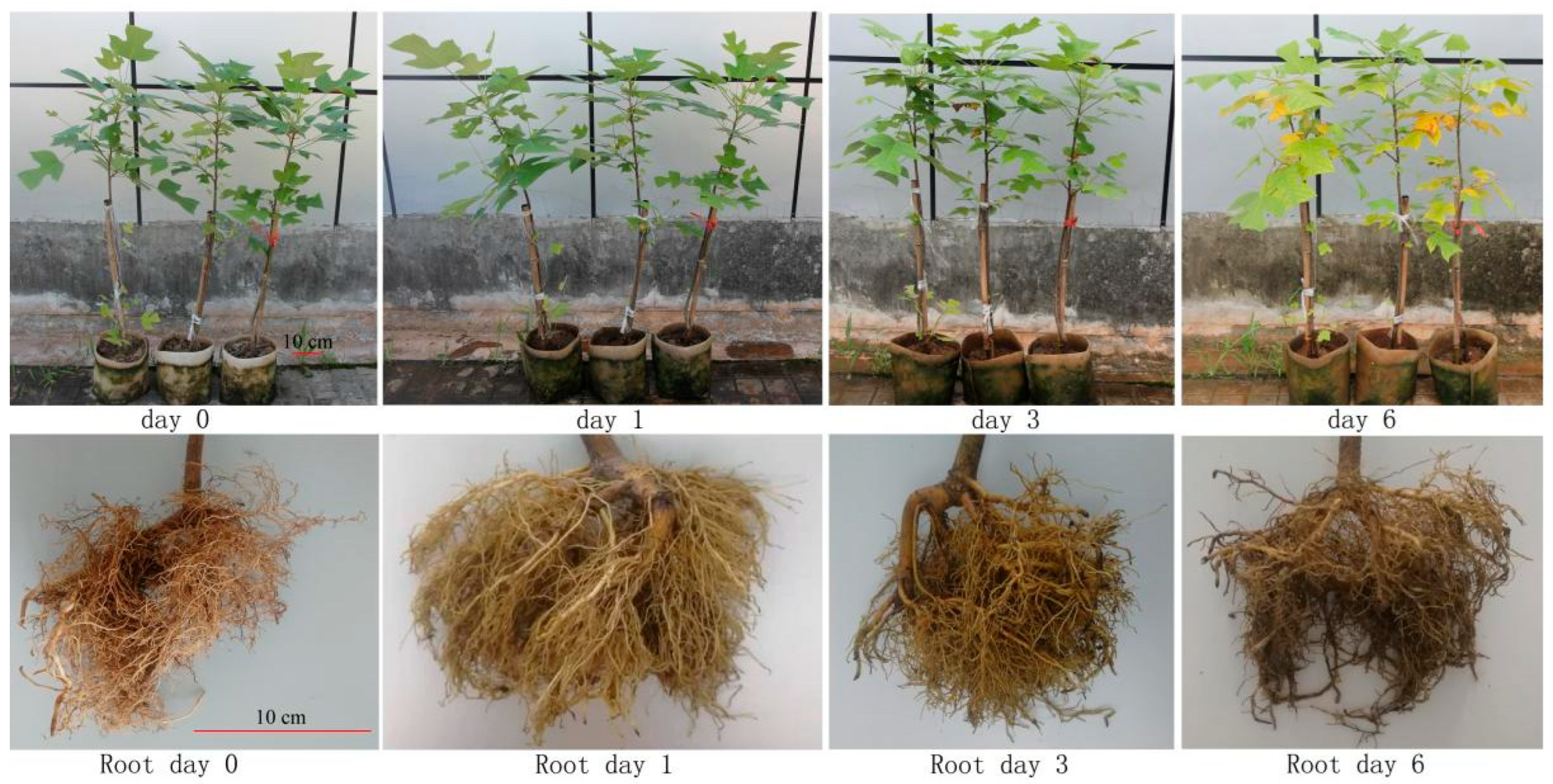
3.1. Morphological Responses of Liriodendron Hybrids to Waterlogging Stress
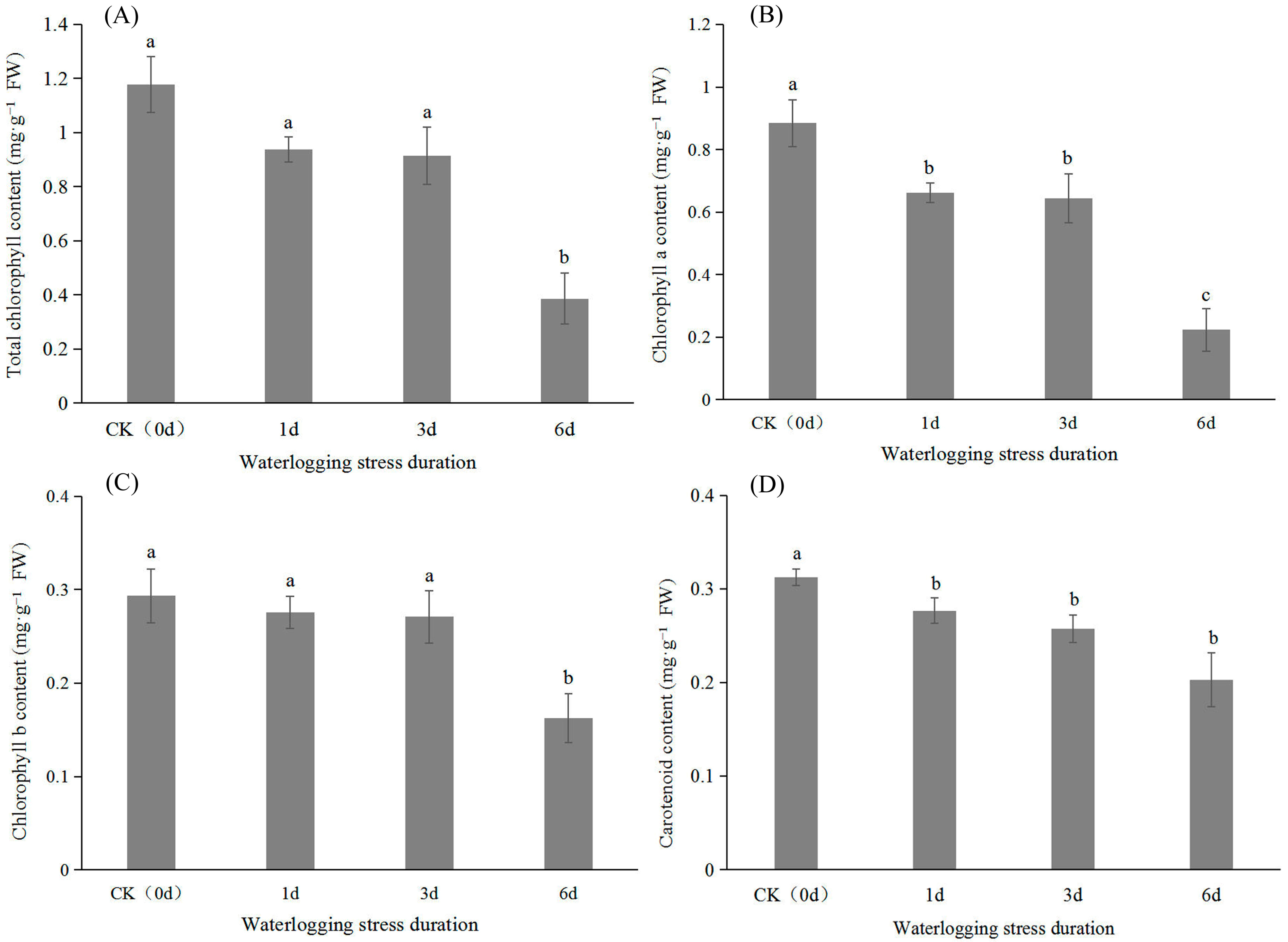
3.2. Effects of Waterlogging Stress on Photosynthesis (Chlorophyll Content)
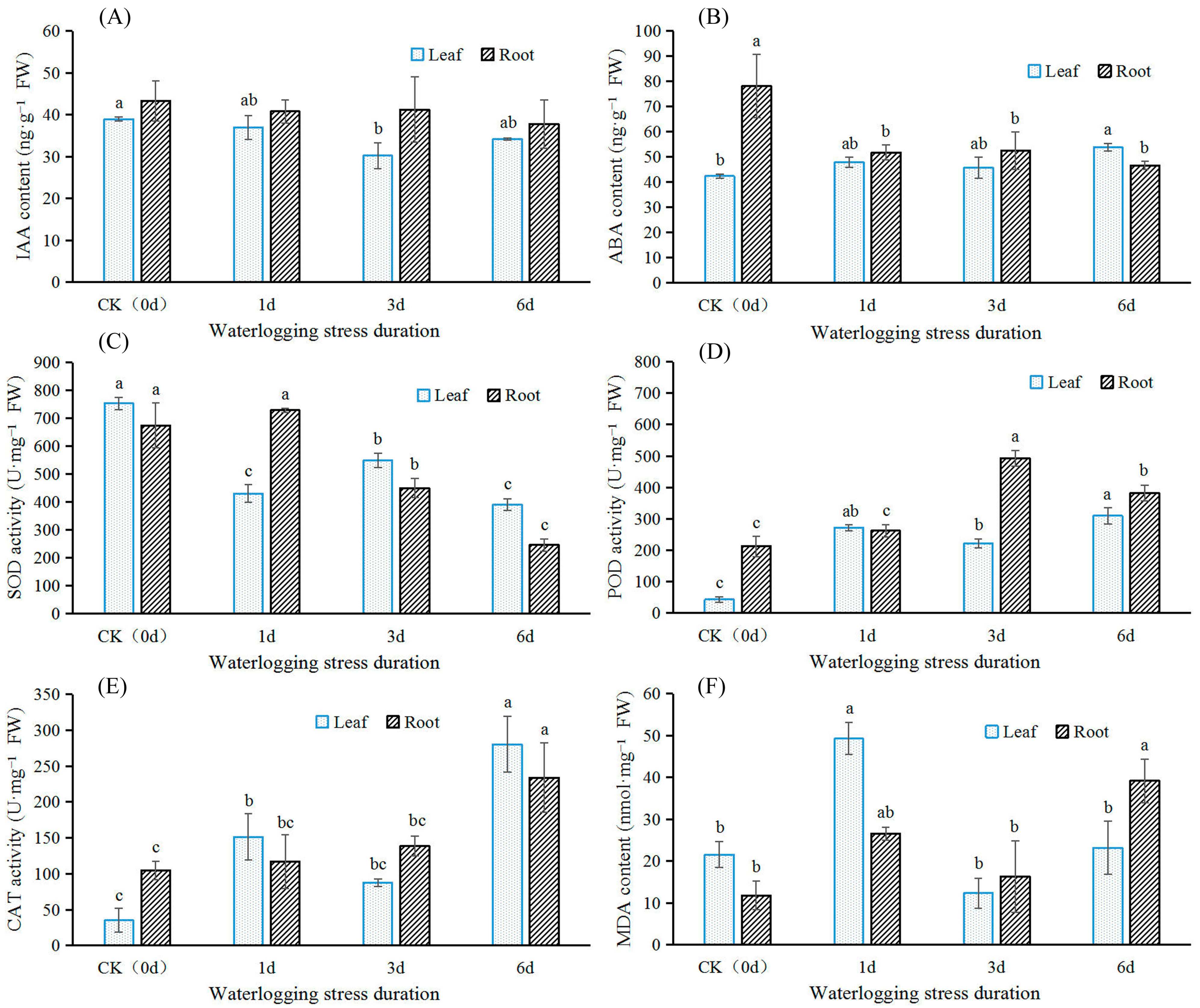
3.3. Changes in Endogenous Hormones and Antioxidant Enzyme Activities
3.4. Transcriptome Data Quality, Assembly, and Annotation
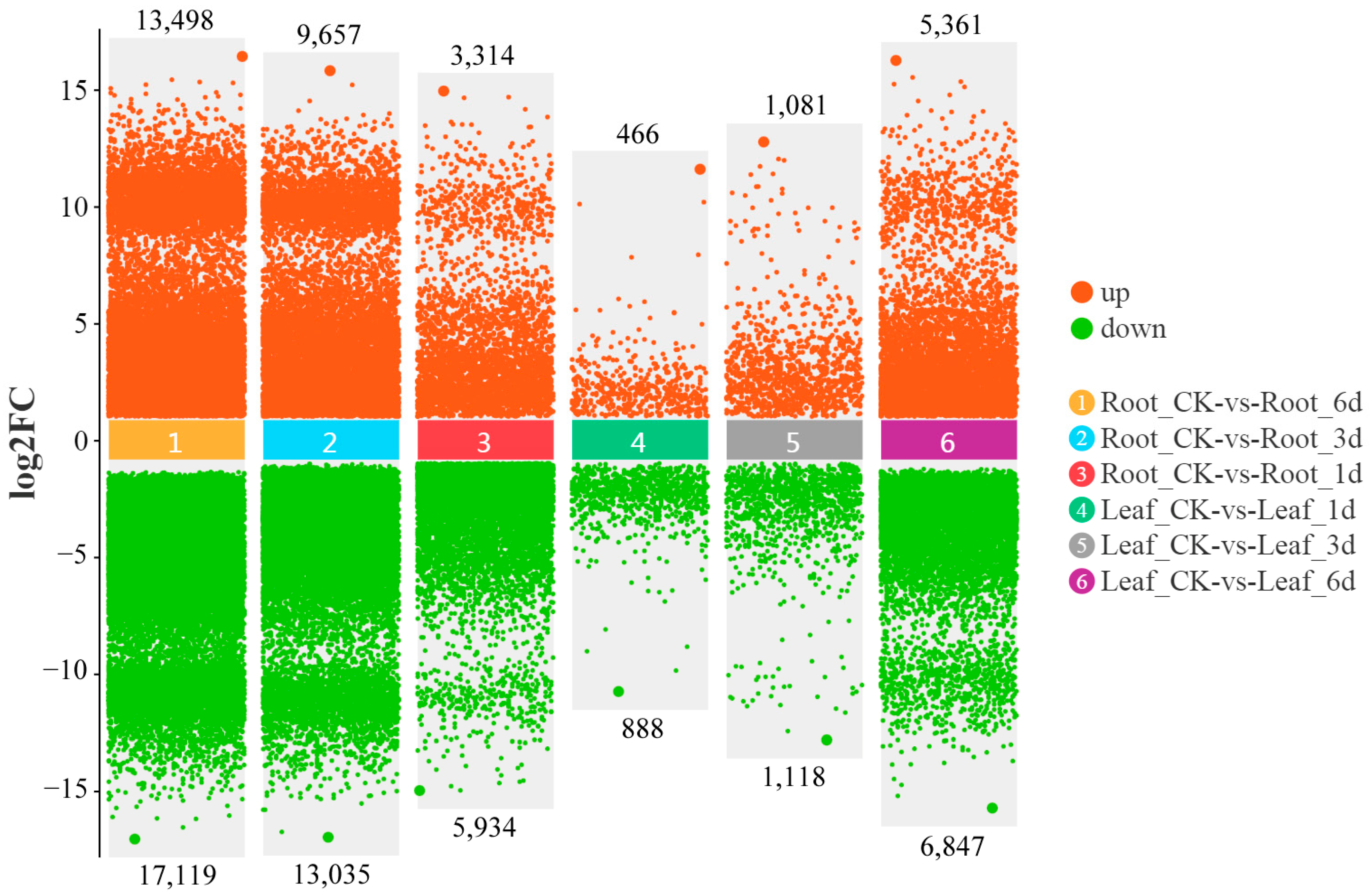
3.5. Differential Gene Expression Dynamics Under Waterlogging
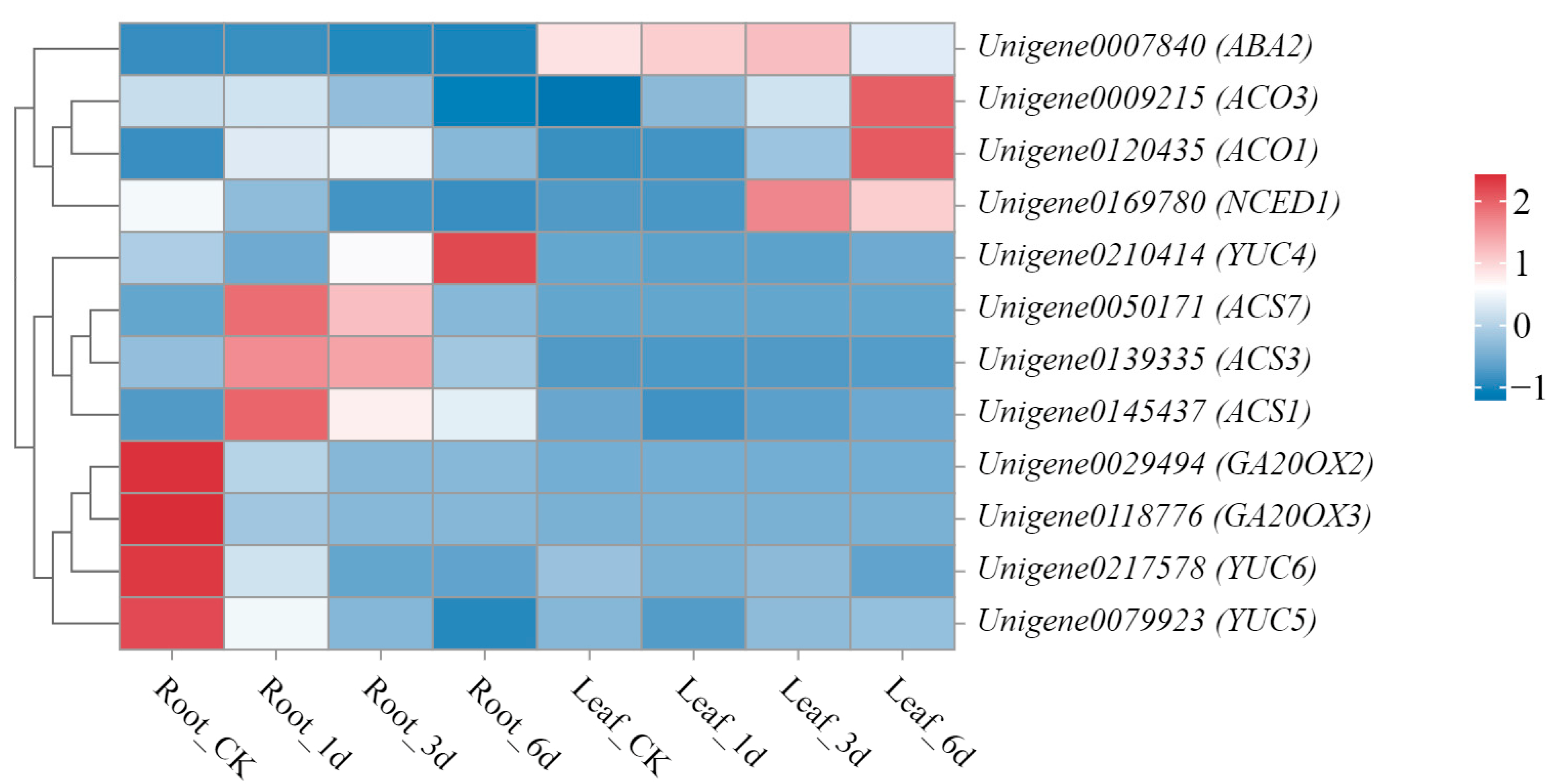
3.6. Expression of Key Genes in Hormone Biosynthesis
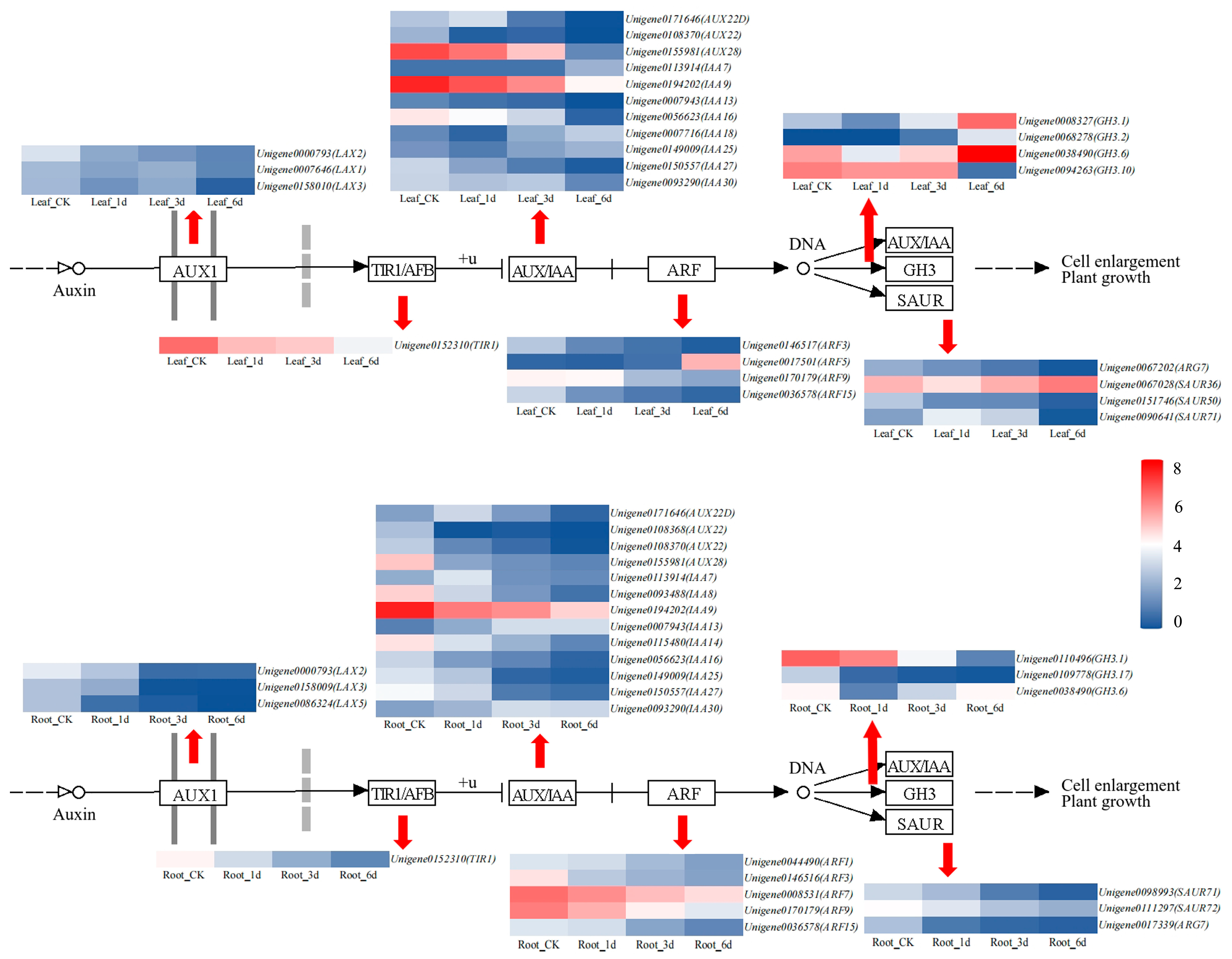
3.7. Auxin Signaling Pathway
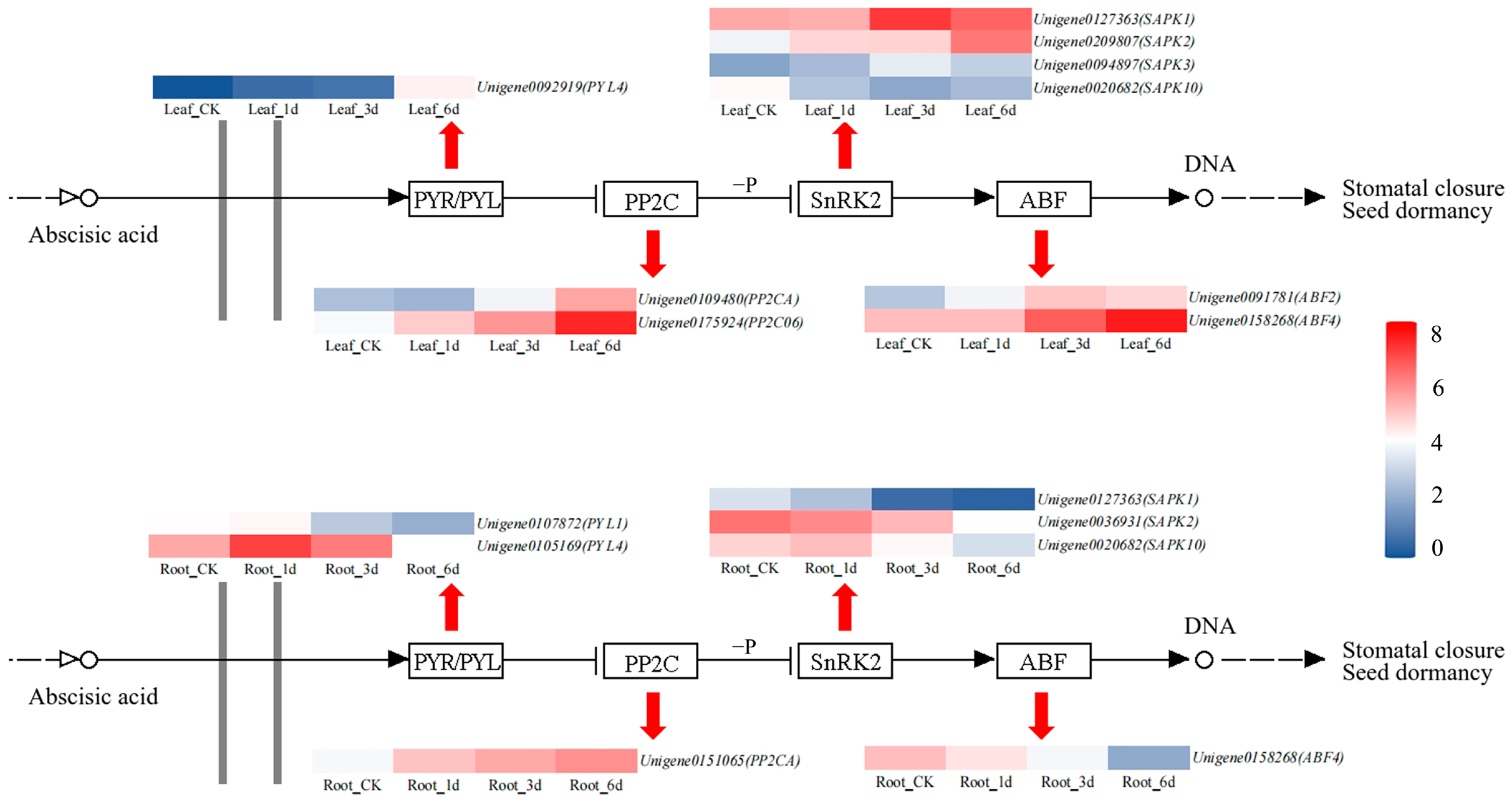
3.8. ABA Signaling Pathway
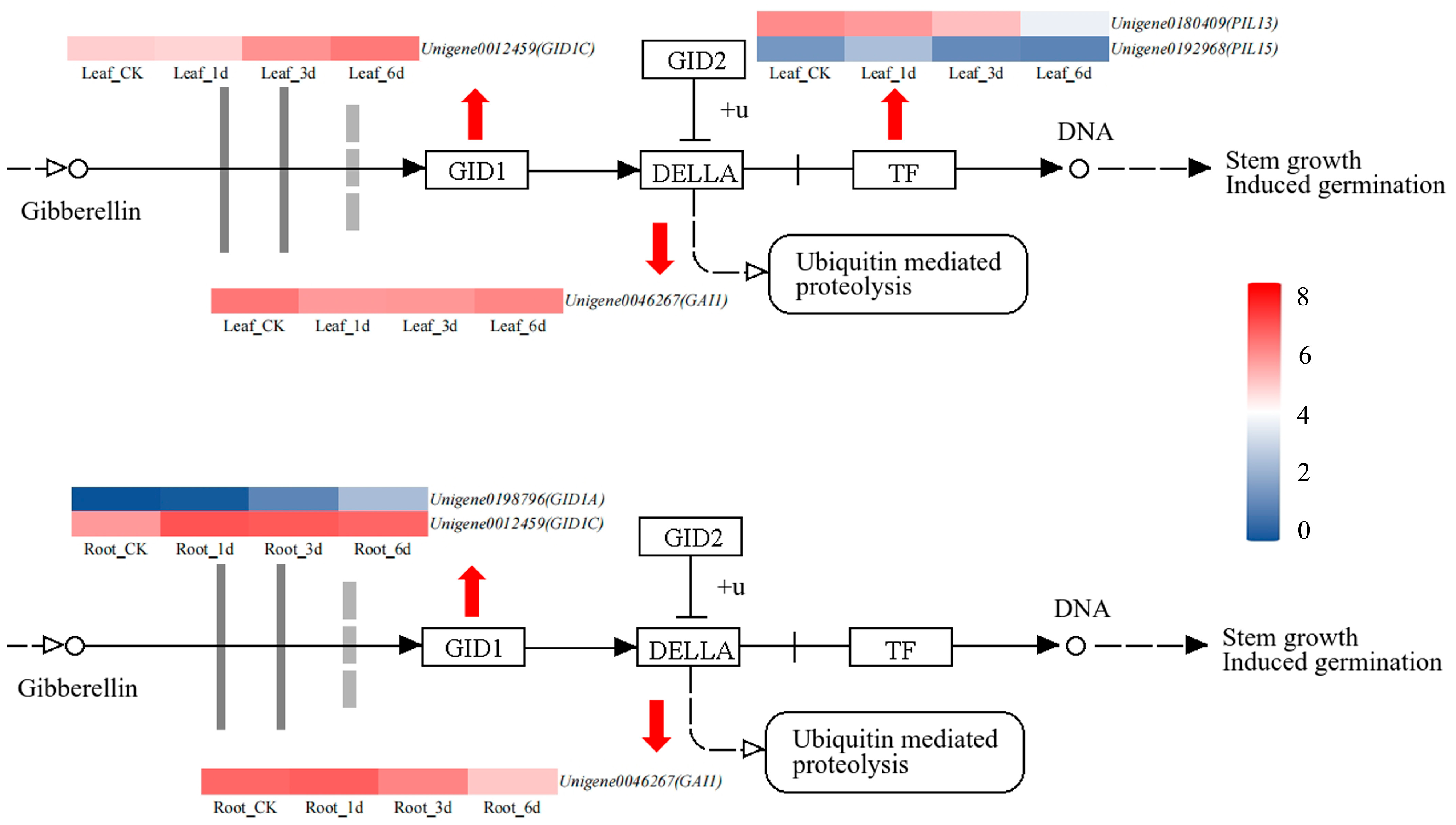
3.9. GA Signaling Pathway
4. Discussion
4.1. Organ-Specific Differences Between Leaves and Roots
4.2. Changes in Phytohormone Contents and Key Differentially Expressed Genes in Hormone Biosynthesis Under Waterlogging Stress
4.3. Differentially Expressed Genes in Hormone Signaling Pathways
5. Conclusions
Supplementary Materials
Author Contributions
Funding
Data Availability Statement
Conflicts of Interest
References
- O’Gorman, P.A. Precipitation extremes under climate change. Curr. Clim. Change Rep. 2015, 1, 49–59. [Google Scholar] [CrossRef]
- Min, S.-K.; Zhang, X.; Zwiers, F.W.; Hegerl, G.C. Human contribution to more-intense precipitation extremes. Nature 2011, 470, 378–381. [Google Scholar] [CrossRef]
- Diffenbaugh, N.S. Verification of extreme event attribution: Using out-of-sample observations to assess changes in probabilities of unprecedented events. Sci. Adv. 2020, 6, eaay2368. [Google Scholar] [CrossRef]
- Zhou, S.; Yu, B.; Zhang, Y. Global concurrent climate extremes exacerbated by anthropogenic climate change. Sci. Adv. 2023, 9, eabo1638. [Google Scholar] [CrossRef]
- Manghwar, H.; Hussain, A.; Alam, I.; Khoso, M.A.; Ali, Q.; Liu, F. Waterlogging stress in plants: Unraveling the mechanisms and impacts on growth, development, and productivity. Environ. Exp. Bot. 2024, 224, 105824. [Google Scholar] [CrossRef]
- Xu, Z.; Ye, L.; Shen, Q.; Zhang, G. Advances in the study of waterlogging tolerance in plants. J. Integr. Agric. 2024, 23, 2877–2897. [Google Scholar] [CrossRef]
- Voesenek, L.A.C.J.; Bailey-Serres, J. Flood adaptive traits and processes: An overview. New Phytol. 2015, 206, 57–73. [Google Scholar] [CrossRef] [PubMed]
- Chen, K.; Li, G.; Bressan, R.A.; Song, C.; Zhu, J.; Zhao, Y. Abscisic acid dynamics, signaling, and functions in plants. J. Integr. Plant Biol. 2020, 62, 25–54. [Google Scholar] [CrossRef]
- Sasidharan, R.; Hartman, S.; Liu, Z.; Martopawiro, S.; Sajeev, N.; van Veen, H.; Yeung, E.; Voesenek, L.A.C.J. Signal dynamics and interactions during flooding stress. Plant Physiol. 2018, 176, 1106–1117. [Google Scholar] [CrossRef]
- Rzewuski, G.; Sauter, M. Ethylene biosynthesis and signaling in rice. Plant Sci. 2008, 175, 32–42. [Google Scholar] [CrossRef]
- Nishiuchi, S.; Yamauchi, T.; Takahashi, H.; Kotula, L.; Nakazono, M. Mechanisms for coping with submergence and waterlogging in rice. Rice 2012, 5, 2. [Google Scholar] [CrossRef]
- Liang, K.; Tang, K.; Fang, T.; Qiu, F. Waterlogging tolerance in maize: Genetic and molecular basis. Mol. Breed. 2020, 40, 111. [Google Scholar] [CrossRef]
- Ara, R.; Mannan, M.A.; Khaliq, Q.; Miah, M.M. Waterlogging tolerance of soybean. Bangladesh Agron. J. 2015, 18, 105–109. [Google Scholar] [CrossRef]
- Parks, C.R.; Wendel, J.F. Molecular divergence between Asian and North-American species of Liriodendron (Magnoliaceae) with implications for interpretation of fossil floras. Am. J. Bot. 1990, 77, 1243–1256. [Google Scholar] [CrossRef]
- Zhang, X.; Fang, Y.; Chen, Y. Effect of waterlogging stress on physiological indexes of Liriodendron seedlings. J. Plant Resour. Environ. 2006, 1, 41–44. [Google Scholar] [CrossRef]
- Sun, X.; Chen, M.; Li, Y.; Wu, Z.; Zhong, Y.; Yu, F. Variations in physiological and biochemical responses in clones of Liriodendron tulipifera under flooding stress. Plant Physiol. J. 2018, 54, 473–482. [Google Scholar] [CrossRef]
- Ronen, R.; Galun, M. Pigment extraction from lichens with dimethyl sulfoxide (DMSO) and estimation of chlorophyll degradation. Environ. Exp. Bot. 1984, 24, 239–245. [Google Scholar] [CrossRef]
- Li, H.X.; Xiao, Y.; Cao, L.L.; Yan, X.; Li, C.; Shi, H.Y.; Wang, J.W.; Ye, Y.H. Cerebroside C increases tolerance to chilling injury and alters lipid composition in wheat roots. PLoS ONE 2013, 8, e73380. [Google Scholar] [CrossRef]
- Chen, X.; Wang, P.; Zhao, F.; Lu, L.; Long, X.; Hao, Z.; Shi, J.; Chen, J. The Liriodendron chinense MKK2 Gene Enhances Arabidopsis thaliana Salt Resistance. Forests 2020, 11, 1160. [Google Scholar] [CrossRef]
- Chen, T.; Sheng, Y.; Hao, Z.; Long, X.; Fu, F.; Liu, Y.; Tang, Z.; Ali, A.; Peng, Y.; Liu, Y.; et al. Transcriptome and proteome analysis suggest enhanced photosynthesis in tetraploid Liriodendron sino-americanum. Tree Physiol. 2021, 41, 1953–1971. [Google Scholar] [CrossRef]
- Jackson, M.B.; Ishizawa, K.; Ito, O. Evolution and mechanisms of plant tolerance to flooding stress. Ann. Bot. 2009, 103, 137–142. [Google Scholar] [CrossRef] [PubMed]
- Xu, Z.; Han, A.; Wang, F.; Gao, H.; Shen, Q.; Zhang, G. Transcriptome and metabolome profiles revealed differential response to waterlogging in leaves between sea barley (Hordeum marinum) and barley (Hordeum vulgare). J. Plant Growth Regul. 2025, 44, 6130–6149. [Google Scholar] [CrossRef]
- Chen, S.; Xu, Z.; Adil, M.F.; Zhang, G. Cultivar-, stress duration- and leaf age-specific hub genes and co-expression networks responding to waterlogging in barley. Environ. Exp. Bot. 2021, 191, 104599. [Google Scholar] [CrossRef]
- Jia, W.; Ma, M.; Chen, J.; Wu, S. Plant morphological, physiological and anatomical adaption to flooding stress and the underlying molecular mechanisms. Int. J. Mol. Sci. 2021, 22, 1088. [Google Scholar] [CrossRef]
- Hauser, F.; Waadt, R.; Schroeder, J.I. Evolution of abscisic acid synthesis and signaling mechanisms. Curr. Biol. 2011, 21, R346–R355. [Google Scholar] [CrossRef]
- Barrero, J.M.; Piqueras, P.; González-Guzmán, M.; Serrano, R.; Rodríguez, P.L.; Ponce, M.R.; Micol, J.L. A mutational analysis of the ABA1 gene of Arabidopsis thaliana highlights the involvement of ABA in vegetative development. J. Exp. Bot. 2005, 56, 2071–2083. [Google Scholar] [CrossRef]
- Tamang, B.G.; Magliozzi, J.O.; Maroof, M.A.; Fukao, T. Physiological and transcriptomic characterization of submergence and reoxygenation responses in soybean seedlings. Plant Cell Environ. 2014, 37, 2350–2365. [Google Scholar] [CrossRef]
- Pan, X.; Ji, K.; Fang, Y. Changes in contents of endogenous hormones in different clones of Liriodendron chinense × L. tulipifera under flooding stress. J. Nanjing For. Univ. (Nat. Sci. Ed.) 2007, 22, 43–46. [Google Scholar] [CrossRef]
- Argamasilla, R.; Gómez-Cadenas, A.; Arbona, V. Metabolic and regulatory responses in citrus rootstocks in response to adverse environmental conditions. J. Plant Growth Regul. 2014, 33, 169–180. [Google Scholar] [CrossRef]
- Zhao, T.; Li, Q.; Pan, X.; Hua, X.; Zhang, W. Adaptive mechanism of terrestrial plants to waterlogging stress. Plant Physiol. J. 2021, 57, 2091–2103. [Google Scholar] [CrossRef]
- Liu, Y.; Yang, T.; Lin, Z.; Gu, B.; Xing, C.; Zhao, L.; Dong, H.; Gao, J.; Xie, Z.; Zhang, S.; et al. A WRKY transcription factor PbrWRKY53 from Pyrus betulaefolia is involved in drought tolerance and AsA accumulation. Plant Biotechnol. J. 2019, 17, 1770–1787. [Google Scholar] [CrossRef] [PubMed]
- Lee, S.-U.; Mun, B.-G.; Bae, E.-K.; Kim, J.-Y.; Kim, H.-H.; Shahid, M.; Choi, Y.-I.; Hussain, A.; Yun, B.-W. Drought Stress-Mediated Transcriptome Profile Reveals NCED as a Key Player Modulating Drought Tolerance in Populus davidiana. Front. Plant Sci. 2021, 12, 755539. [Google Scholar] [CrossRef] [PubMed]
- Wei, H.; Movahedi, A.; Liu, G.; Li, Y.; Liu, S.; Yu, C.; Chen, Y.; Zhong, F.; Zhang, J. Comprehensive Analysis of Carotenoid Cleavage Dioxygenases Gene Family and Its Expression in Response to Abiotic Stress in Poplar. Int. J. Mol. Sci. 2022, 23, 1418. [Google Scholar] [CrossRef] [PubMed]
- Yang, Y.; Dong, C.; Yang, S.; Li, X.; Sun, X.; Yang, Y. Physiological and proteomic adaptation of the alpine grass Stipa purpurea to a drought gradient. PLoS ONE 2015, 10, e0117475. [Google Scholar] [CrossRef]
- Yang, Y.; Mo, Y.; Yang, X.; Zhang, H.; Wang, Y.; Li, H.; Wei, C.; Zhang, X. Transcriptome profiling of watermelon root in response to short-term osmotic stress. PLoS ONE 2016, 11, e0166314. [Google Scholar] [CrossRef]
- Fleet, C.M.; Sun, T.P. A DELLAcate balance: The role of gibberellin in plant morphogenesis. Curr. Opin. Plant Biol. 2005, 8, 77–85. [Google Scholar] [CrossRef]
- Achard, P.; Gong, F.; Cheminant, S.; Alioua, M.; Hedden, P.; Genschik, P. The cold-inducible CBF1 factor–dependent signaling pathway modulates the accumulation of the growth-repressing DELLA proteins via its effect on gibberellin metabolism. Plant Cell 2008, 20, 2117–2129. [Google Scholar] [CrossRef]
- Blakeslee, J.J.; Spatola Rossi, T.; Kriechbaumer, V. Auxin biosynthesis: Spatial regulation and adaptation to stress. J. Exp. Bot. 2019, 70, 5041–5049. [Google Scholar] [CrossRef]
- Sakamoto, T.; Miura, K.; Itoh, H.; Tatsumi, T.; Ueguchi-Tanaka, M.; Ishiyama, K.; Kobayashi, M.; Agrawal, G.K.; Takeda, S.; Abe, K.; et al. An overview of gibberellin metabolism enzyme genes and their related mutants in rice. Plant Physiol. 2004, 134, 1642–1653. [Google Scholar] [CrossRef]
- Wu, W.; Zhu, L.; Wang, P.; Liao, Y.; Duan, L.; Lin, K.; Chen, X.; Li, L.; Xu, J.; Hu, H.; et al. Transcriptome-Based construction of the gibberellin metabolism and signaling pathways in Eucalyptus grandis × E. urophylla, and functional characterization of GA20ox and GA2ox in regulating plant development and abiotic stress adaptations. Int. J. Mol. Sci. 2023, 24, 7051. [Google Scholar] [CrossRef]
- Chen, H.-l.; Li, P.-f.; Yang, C.-h. NAC-Like gene GIBBERELLIN SUPPRESSING FACTOR regulates the gibberellin metabolic pathway in response to cold and drought stresses in Arabidopsis. Sci. Rep. 2019, 9, 19226. [Google Scholar] [CrossRef] [PubMed]
- Song, X.; Zhao, Y.; Wang, J.; Lu, M.Z. The transcription factor KNAT2/6b mediates changes in plant architecture in response to drought via down-regulating GA20ox1 in Populus alba × P. glandulosa. J. Exp. Bot. 2021, 72, 5625–5637. [Google Scholar] [CrossRef] [PubMed]
- Du, H.; Wu, N.; Chang, Y.; Li, X.; Xiao, J.; Xiong, L. Carotenoid deficiency impairs ABA and IAA biosynthesis and differentially affects drought and cold tolerance in rice. Plant Mol. Biol. 2013, 83, 475–488. [Google Scholar] [CrossRef] [PubMed]
- Cheng, Y.; Dai, X.; Zhao, Y. Auxin biosynthesis by the YUCCA flavin monooxygenases controls the formation of floral organs and vascular tissues in Arabidopsis. Genes Dev. 2006, 20, 1790–1799. [Google Scholar] [CrossRef]
- Zhao, Y.; Christensen, S.K.; Fankhauser, C.; Cashman, J.R.; Cohen, J.D.; Weigel, D.; Chory, J. A role for flavin monooxygenase-like enzymes in auxin biosynthesis. Science 2001, 291, 306–309. [Google Scholar] [CrossRef]
- Sakamoto, Y.; Kawamura, A.; Suzuki, T.; Segami, S.; Maeshima, M.; Polyn, S.; De Veylder, L.; Sugimoto, K. Transcriptional activation of auxin biosynthesis drives developmental reprogramming of differentiated cells. Plant Cell 2022, 34, 4348–4365. [Google Scholar] [CrossRef]
- Yamada, M.; Tanaka, S.; Miyazaki, T.; Aida, M. Expression of the auxin biosynthetic genes YUCCA1 and YUCCA4 is dependent on the boundary regulators CUP-SHAPED COTYLEDON genes in the Arabidopsis thaliana embryo. Plant Biotechnol. 2022, 39, 37–42. [Google Scholar] [CrossRef]
- Ke, Q.; Wang, Z.; Ji, C.Y.; Jeong, J.C.; Lee, H.-S.; Li, H.; Xu, B.; Deng, X.; Kwak, S.-S. Transgenic poplar expressing Arabidopsis YUCCA6 exhibits auxin-overproduction phenotypes and increased tolerance to abiotic stress. Plant Physiol. Biochem. 2015, 94, 19–27. [Google Scholar] [CrossRef]
- Tang, L.P.; Zhou, C.; Wang, S.S.; Yuan, J.; Zhang, X.S.; Su, Y.H. FUSCA3 interacting with LEAFY COTYLEDON2 controls lateral root formation through regulating YUCCA4 gene expression in Arabidopsis thaliana. New Phytol. 2017, 213, 1740–1754. [Google Scholar] [CrossRef]
- Zhang, H.; Zhao, Y.; Zhu, J.K. Thriving under stress: How plants balance growth and the stress response. Dev. Cell 2020, 55, 529–543. [Google Scholar] [CrossRef]
- Ding, B.; Kong, X.; Dong, H. Research progress on the structure and function of abscisic acid receptor PYLs. Mol. Plant Breed. 2020, 18, 6844–6852. [Google Scholar] [CrossRef]
- Fujii, H.; Chinnusamy, V.; Rodrigues, A.; Rubio, S.; Antoni, R.; Park, S.Y.; Cutler, S.R.; Sheen, J.; Rodriguez, P.L.; Zhu, J.K. In Vitro reconstitution of an abscisic acid signalling pathway. Nature 2009, 462, 660–664. [Google Scholar] [CrossRef] [PubMed]
- He, X.; Zhang, L.; Chen, Y.; Yang, H.; Mao, Z. Cloning and expression analysis of tobacco NtPP2C37-like gene. Mol. Plant Breed. 2019, 17, 4973–4977. [Google Scholar] [CrossRef]
- Reyes, D.; Rodríguez, D.; González-García, M.P.; Lorenzo, O.; Nicolás, G.; García-Martínez, J.L.; Nicolás, C. Overexpression of a protein phosphatase 2C from beech seeds in Arabidopsis shows phenotypes related to abscisic acid responses and gibberellin biosynthesis. Plant Physiol. 2006, 141, 1414–1424. [Google Scholar] [CrossRef]
- Zhang, D.; Li, X.; Xiao, H.; Lu, Y.; Zhang, Y.; Wang, M. Bioinformatics and drought tolerance of PP2C gene family members in Hevea brasiliensis Muell. Arg. Bull. Bot. Res. 2017, 37, 730–737. [Google Scholar] [CrossRef]
- Dharmasiri, N.; Dharmasiri, S.; Estelle, M. The F-box protein TIR1 is an auxin receptor. Nature 2005, 435, 441–445. [Google Scholar] [CrossRef]
- Li, Y.; Qi, Y. Advances in biological functions of Aux/IAA gene family in plants. Chin. Bull. Bot. 2022, 57, 30–41. [Google Scholar] [CrossRef]


Disclaimer/Publisher’s Note: The statements, opinions and data contained in all publications are solely those of the individual author(s) and contributor(s) and not of MDPI and/or the editor(s). MDPI and/or the editor(s) disclaim responsibility for any injury to people or property resulting from any ideas, methods, instructions or products referred to in the content. |
© 2025 by the authors. Licensee MDPI, Basel, Switzerland. This article is an open access article distributed under the terms and conditions of the Creative Commons Attribution (CC BY) license.
Share and Cite
Hu, M.; Yang, X.; Yang, A.; Hu, P.; Yu, X.; Yu, F.; Chen, C.; Ouyang, X. Physiological and Transcriptomic Insights into Waterlogging Responses of Liriodendron Hybrids. Forests 2026, 17, 50. https://doi.org/10.3390/f17010050
Hu M, Yang X, Yang A, Hu P, Yu X, Yu F, Chen C, Ouyang X. Physiological and Transcriptomic Insights into Waterlogging Responses of Liriodendron Hybrids. Forests. 2026; 17(1):50. https://doi.org/10.3390/f17010050
Chicago/Turabian StyleHu, Miao, Xiaoyan Yang, Aihong Yang, Ping Hu, Xiaoling Yu, Faxin Yu, Caihui Chen, and Xunzhi Ouyang. 2026. "Physiological and Transcriptomic Insights into Waterlogging Responses of Liriodendron Hybrids" Forests 17, no. 1: 50. https://doi.org/10.3390/f17010050
APA StyleHu, M., Yang, X., Yang, A., Hu, P., Yu, X., Yu, F., Chen, C., & Ouyang, X. (2026). Physiological and Transcriptomic Insights into Waterlogging Responses of Liriodendron Hybrids. Forests, 17(1), 50. https://doi.org/10.3390/f17010050