Article

Can Culture Imaging Implement Radial Growth Parameters to Disentangle Intraspecific Variability in Fomes fomentarius?


1
Department of Earth and Environmental Sciences, University of Pavia, Via Ferrata 1, 27100 Pavia, Italy
2
Department of Silviculture and Forest Utilization, Institute of Forest Sciences, Białystok University of Technology, Wiejska 45E, 15351 Białystok, Poland
*
Author to whom correspondence should be addressed.
Shared first authorship.
Forests 2026, 17(1), 19; https://doi.org/10.3390/f17010019
Submission received: 20 November 2025 / Revised: 18 December 2025 / Accepted: 22 December 2025 / Published: 23 December 2025
(This article belongs to the Special Issue Advances in Fungal Diseases in Forests)

Abstract

Fomes fomentarius (L.) Fr. sensu lato is a common, widespread polypore and a pathological decayer in many hosts such as poplar, beech, and birch. It is either regarded as a single species, a species complex, or displaying a significant intraspecific variability. Limits between populations are fuzzy, and local differences have been mainly related to the current distribution of preferred hosts. The aim of the work was to test an imaging technique (RGB profiling) of cultures’ macromorphology on Petri plates to implement the traditional growth profiles of pure cultures in order to point out differences between strains from different European regions, hosts, and climates. Growth rates at 24 °C and 30 °C poorly segregated strains based on the origin, whereas there is a marked difference at 15 °C between strains from oceanic climates and continental climates. K-means clustering of RGB profiles also marked a difference at 15 °C between Central/North European strains and the Italian strains, although this variability gradually attenuates by increasing temperature. The combined approach, including a radial growth measuring and RGB profiling, successfully pointed out the intraspecific diversity in F. fomentarius, suggesting local adaptations. This study contributes to establishing a methodology to investigate the ecotype concept in polypores.

1. Introduction

Fomes fomentarius (Polyporaceae, Polyporales, Basidiomycota) is a common and widespread polypore with an almost holarctic distribution and a wide ecological niche including several angiosperm hosts [1,2,3,4,5]. The popularity of this species for scientific observations is mostly related to the intense degradation it causes in wood either as a saprotroph or a primary decayer significantly contributing to the host decline and death. Although its behaviour can differ depending on the host species, F. fomentarius has thus been assumed as a model for a certain category of white rot supported by both chemical (enzymatic) degradation and physical forcing through hyphal branching. As a whole, this allows the complete removal of all the components in the plant cell wall, i.e., both cellulose and lignin, approximately at the same rate [6]. Because of high wood decay activity, F. fomentarius factually shapes forest ecosystems dominated by Betula and Fagus as well as by Populus (depending on the bioregion) or by having a significant share of these trees in the forest stand. In summary, F. fomentarius always sprouts its basidiomata in tree trunks or big branches, either in declining individuals or dead ones. In this light, the frequency of F. fomentarius occurrence in distinct individuals works as an indicator of the suffering and decline of the host community in the forest.
Despite sensu lato being easily recognizable, F. fomentarius has been suggested by several authors to be a species complex based on the intraspecific variability including differences in morphology, host range, RFLP profiles, and DNA barcodes [7,8,9]. However, only Fomes inzengae (Ces. & De Not.) Cooke has been, up to now, successfully segregated in Europe by relying on multiple parameters including metabarcoding, morphology, enzyme and volatile organic compounds spectra, ecological niche, and heterokarya formation [8]. Fomes inzengae distribution still remains unclear and, despite shifted towards the Mediterranean, it has been reported to include sympatric areas in Central Europe [10]. The same authors point out a sort of altitudinal vicariance with particular concern to the beech (Fagus sylvatica L.) belt, where F. fomentarius sensu stricto predominates, whereas F. inzengae mainly occupies the lower belts and behaves as a generalist. Tomšovský et al. [10] also demonstrated that the multi-marker concatenation ITS-28S-rpb1-rpb2-tef1 confirms the ITS-only results [8,9] and successfully discriminates the F. fomentarius clade from F. inzengae, despite the ambiguity of morphological characters, such as the spore size. On the other hand, Badalyan et al. [9] suggests that F. inzengae could be a cryptic subspecies of F. fomentarius sensu lato, instead of a true species, due to the low nucleotide divergence in the ITS region. Regardless, with the taxonomic rank, Logar et al. [11] consistently reports that only two main lineages are present in SE Europe.
The debate around the rank of F. inzengae within F. fomentarius complex remarks how important it is to merge different approaches on the same strain set. Above all, it reminds us that genetic drifts and adaptation processes may support the ecological plasticity of the species sensu lato. In the particular case of F. fomentarius complex, the low current divergence could be the result of a recent disjunction between populations, followed by the reunion into sympatric or parapatric conditions. Incidentally, this has resulted in at least two very distinct macro-lineages, which are not the last step of the extant variability. This is why we need to explore the intraspecific variability of so-called F. fomentarius sensu stricto too, considering other possible evolutionary routes. Besides the speciation issues, described above, F. fomentarius sensu lato is a heterothallic fungus [12], which suggests a priori a high variability in its populations due to genetic recombination.
The present work dealt with F. fomentarius sensu stricto. The general aim of this work was to test some cultural features as possible markers of intraspecific variability by comparing European populations from different environments and climates. The specific aim of the work was to answer the following questions: can radial growth parameters point out differences between populations? Can RGB (red–green–blue) profiles of mycelia in cultures point out differences between populations? Are these two approaches consistent and complementary with each other?

2. Materials and Methods

2.1. Strains in the Study

All the examined strains consist of dikaryon mycelia isolated from basidiomata and preserved in the MicUNIPV Research Culture Collection in the Department of Earth and Environmental Sciences (DSTA)—University of Pavia.
The present work only included strains belonging to Fomes fomentarius sensu stricto based on the ITS (ITS1-ITS4 primers) region; cross-check by filtering for F. inzengae in BLAST NCBI [13] did not reveal any acceptable (>97% similarity) correspondence except for F. fomentarius. The whole procedure for strain isolation and DNA barcoding is described in Girometta et al. [14,15].
The strain set (Table 1) has been selected in order to represent different biogeographic regions and climates (Figure 1). However, Europe still lacks a small-scale, updated, and comprehensive climate/bioclimate classification and zonation, thus the main EU reference is the FAO Ecological Zones for forest reporting, as presented and adapted by San-Miguel-Ayanz et al. [16]. It should be noted that such a classification is partially inconsistent with the Italian one based on a phytoclimate concept [17,18]. In order to provide an objective overview, basic climate parameters are reported in Table 2.

2.2. Growth Tests of Mycelia in Pure Culture

Prior to the growth tests, each strain was refreshed by transplanting it in MEA (malt extract 2% + agar 1.5%; VWR International BE, Leuven, Belgium; Oxoid Ltd., Basingstoke, UK); 15 days old mycelia were then used as the source for inoculation.
The test was conducted in 9 cm diameter plates containing MEA as above; the inoculum was set laterally (at the edge of the plate) in order to maximize the colonizable radius, as in Buratti et al. [22].
Three different growth temperatures were tested (15, 24, 30 °C) and three replicates were set for each strain at each temperature. The plates were incubated in the dark, unsealed. The maximum growth radius was surveyed every 2 days by millimetric calliper along the maximum radius until the full plate coverage or 4 weeks (in case of poor and incomplete growth). Based on the three replicates, the growth rate was calculated in MS Excel 2016 as the slope of the regression line according to the Theil–Sen method for non-parametric linear regression; all the regression lines were tested for significance by IBM SPSS26 through Spearman’s ρ and Kendall’s τb, both of them set for 2-tails and α = 0.01 [23]. The comprehensive slope series for each temperature (15, 24, 30 °C) were compared based on both the Kruskal–Wallis test (H0 = slope distributions are not significantly different) and median test (H0 = the medians are not significantly different) for independent samples; Dunn’s test was applied for pairwise post hoc comparisons along with Bonferroni’s correction, as suggested by IBM SPSS26.

2.3. RGB Imaging and Analysis of RGB Profiles

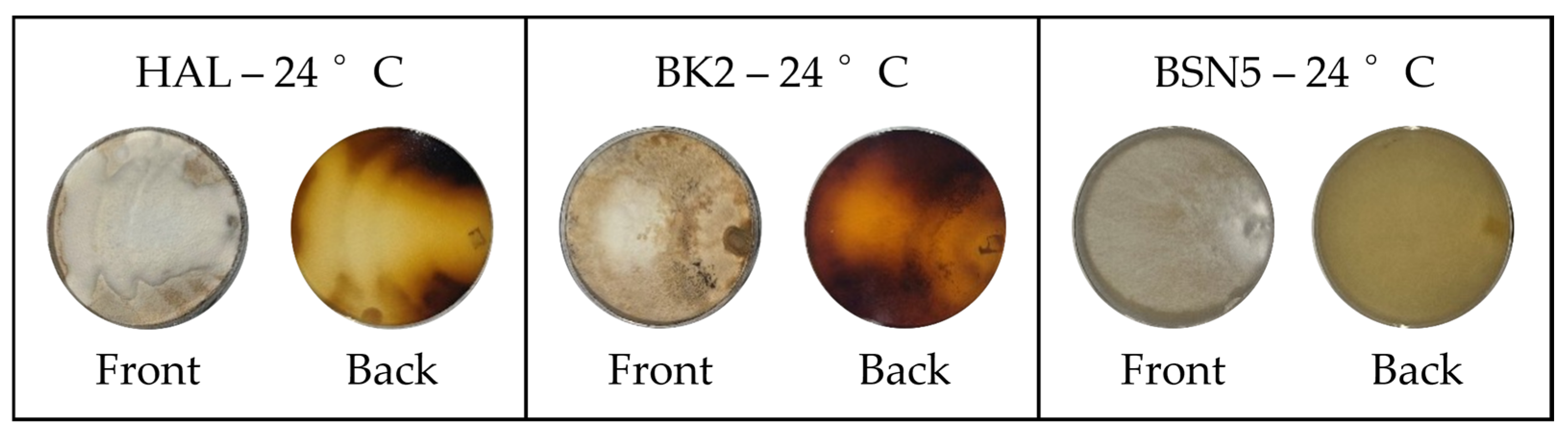
All the 90 culture plates from the above-described growth tests were examined at the end of the 4th week. Images from both the colony front (mat surface) and back side (reverse) were taken by means of a 12 Mpixel camera on an adjustable support provided with standardized light. The whole image set is reported in Supplementary Materials, whereas an example of different melanisation patterns is reported in Figure 2.
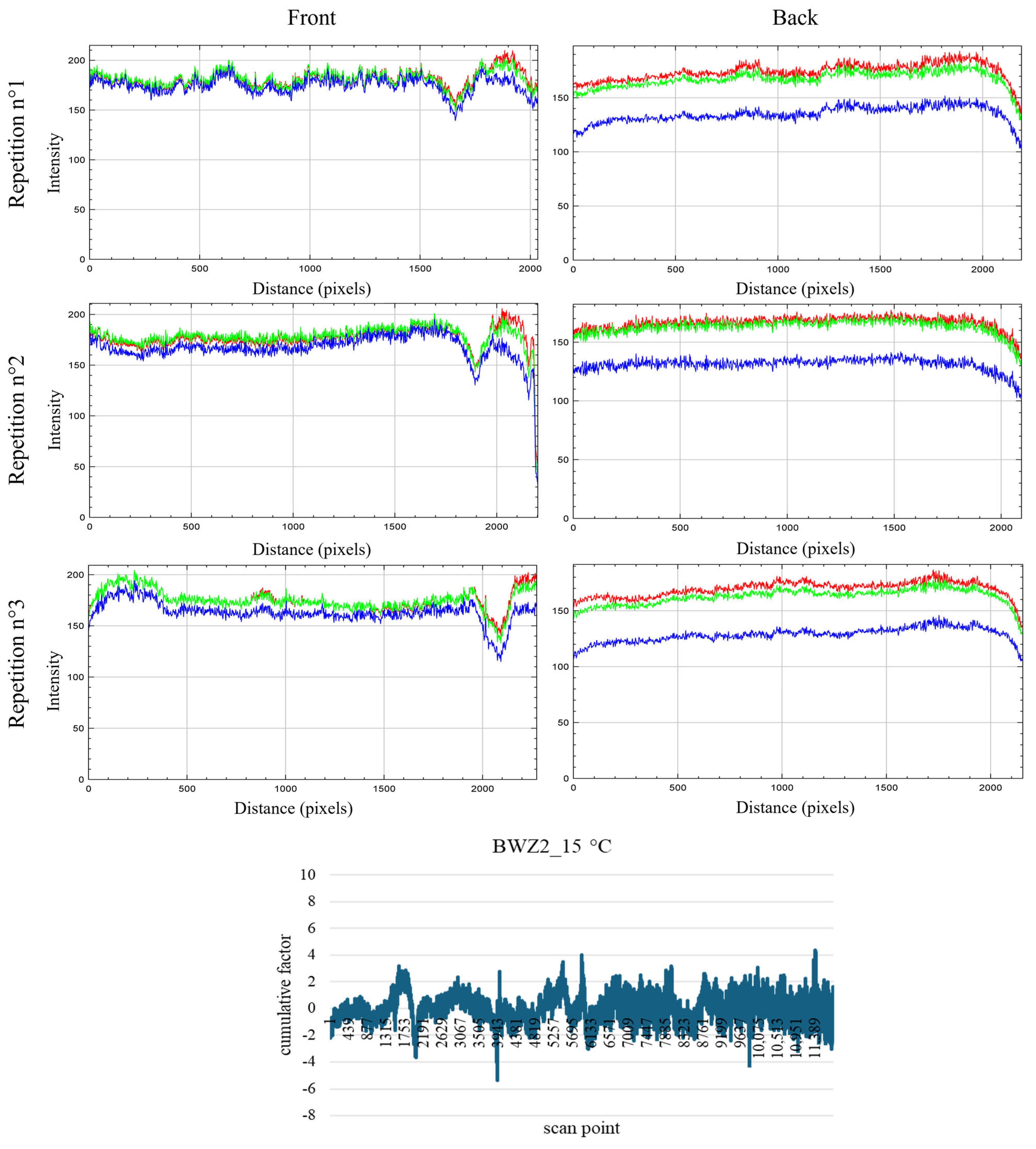
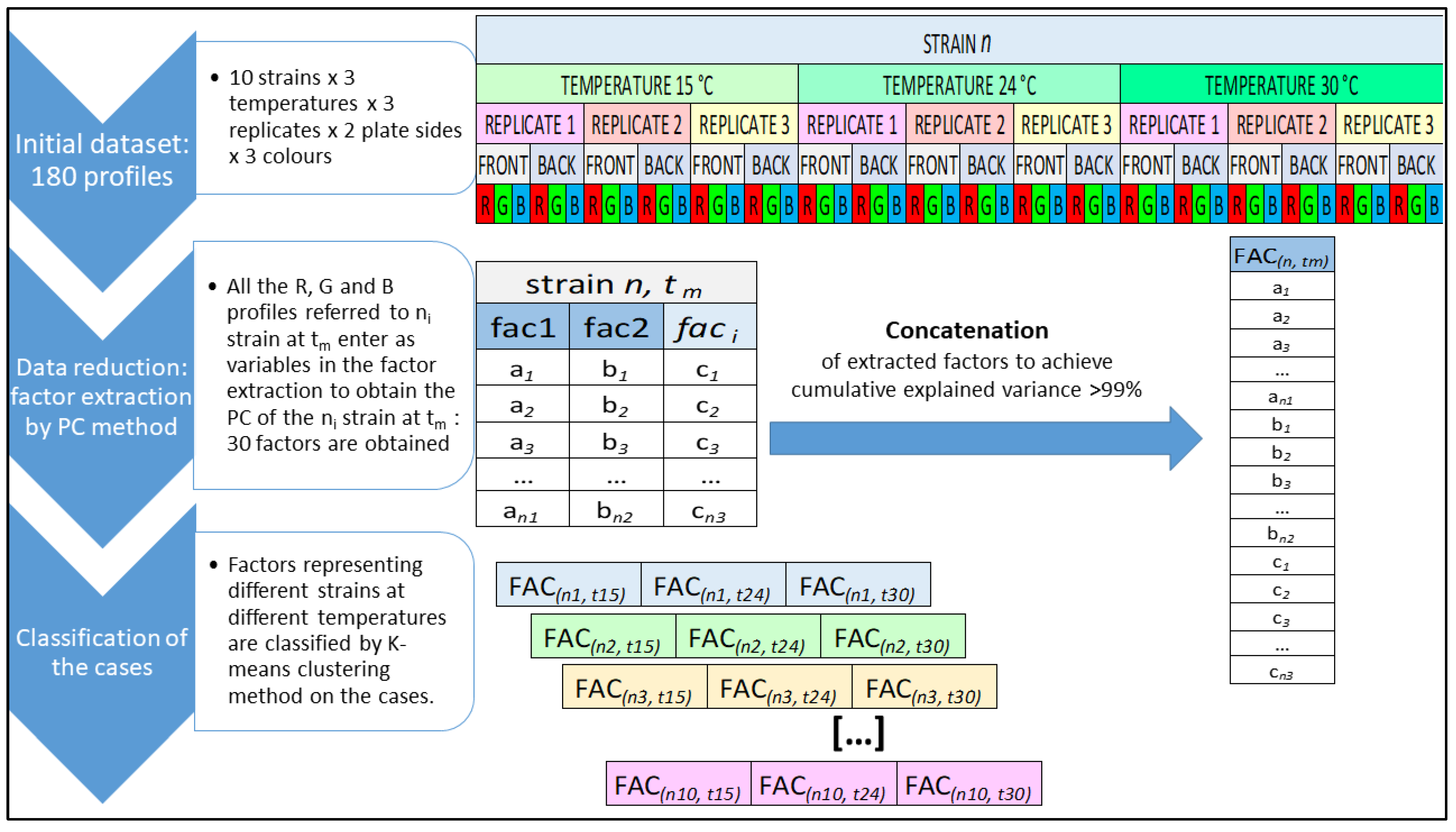
ImageJ 1.54g software [24] was used to acquire the RGB profile of each image, which is the pixel intensity in RGB components along the radius For RGB profiles, software samples every pixel, corresponding approximately to 200 µm each, along the colony diameter. An overall amount of 180 profiles were acquired, that is 18 profiles/strain. In this way, the analysis of the RGB profiles combined with radial growth curves appeared as a 5-dimension problem; however, only temperature was selected as the most featuring dimension (within the strain macro-dimension) in order to understand whether RGB profiles can or cannot point out differences between populations. Thus, in order to simplify the dataset, the factor extraction by principal components (PC) method was adopted on subsets including all the profiles from each strain at each temperature, distinctly [25]. Factors were unrotated, eigenvalue was set >1, and <25 iterations were set for convergence. Four (4) factors per strain per temperature were saved as scores and subsequently concatenated to obtain a cumulative factor explaining >99% variability of the primitive input variables.
An example of output is reported in Figure 3, whereas the whole file set is reported in Supplementary Materials.
This operation allowed us to reduce the dataset from 180 variables (primitive profiles) to 30 cumulative profiles, each one representing the strain ni at the temperature tm. The cumulative factors were finally classified by the k-clustering method sorting the cluster membership case by case; K = 2, K = 3, and K = 4 were tested; the maximum number of iterations was set to 100 (convergence criterion = 0); missing values were excluded listwise and no moving mean was applied. The algorithm was allowed to select the initial cluster centres randomly. One-way F-test (ANOVA) accounted for the variance, although the F-test is meant here for descriptive purpose only, since clusters were selected just in order to maximize the gap between cases assigned to different clusters.
Both factor extraction and k-clustering were obtained by SPSS26 software (IBM) combined with MS Excel 2016.
The complete analytical workflow is summarized in Figure 4.
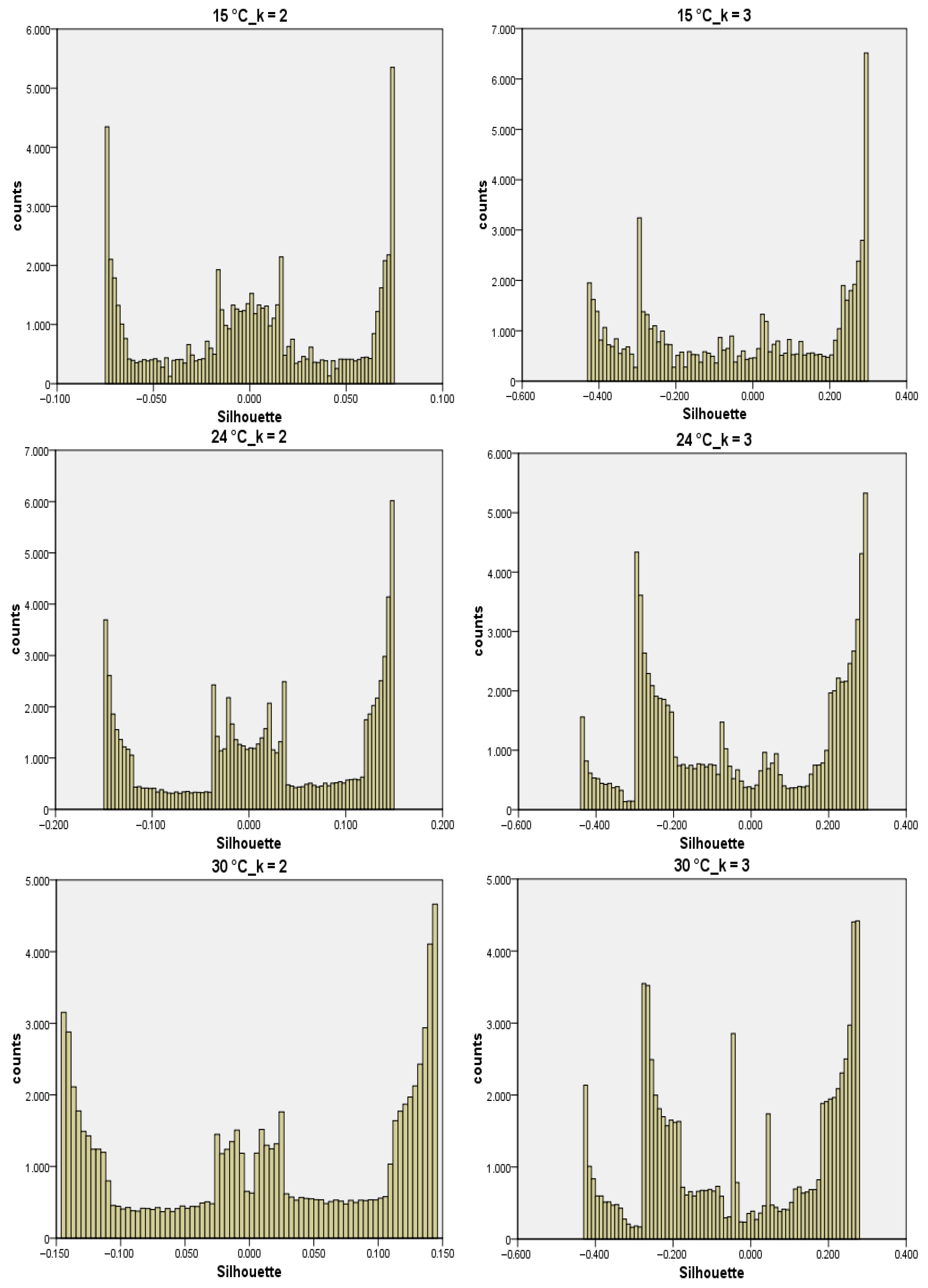
In order to verify the clustering quality, silhouette scoring [26] was run for k = 2 and k = 3 at each temperature by SPSS26. Other k values were not tested due to the extremely long data processing time consequent to the huge amount of records in each cumulative factor (68,522 at t = 15 °C; 85,814 at t = 24 °C; 79,590 at t = 30 °C). Silhouette is commonly used to explore the dissimilarity between clusters; here, the Euclidean distance was applied along with Minkowski’s power = 2.

3. Results

3.1. Growth Tests

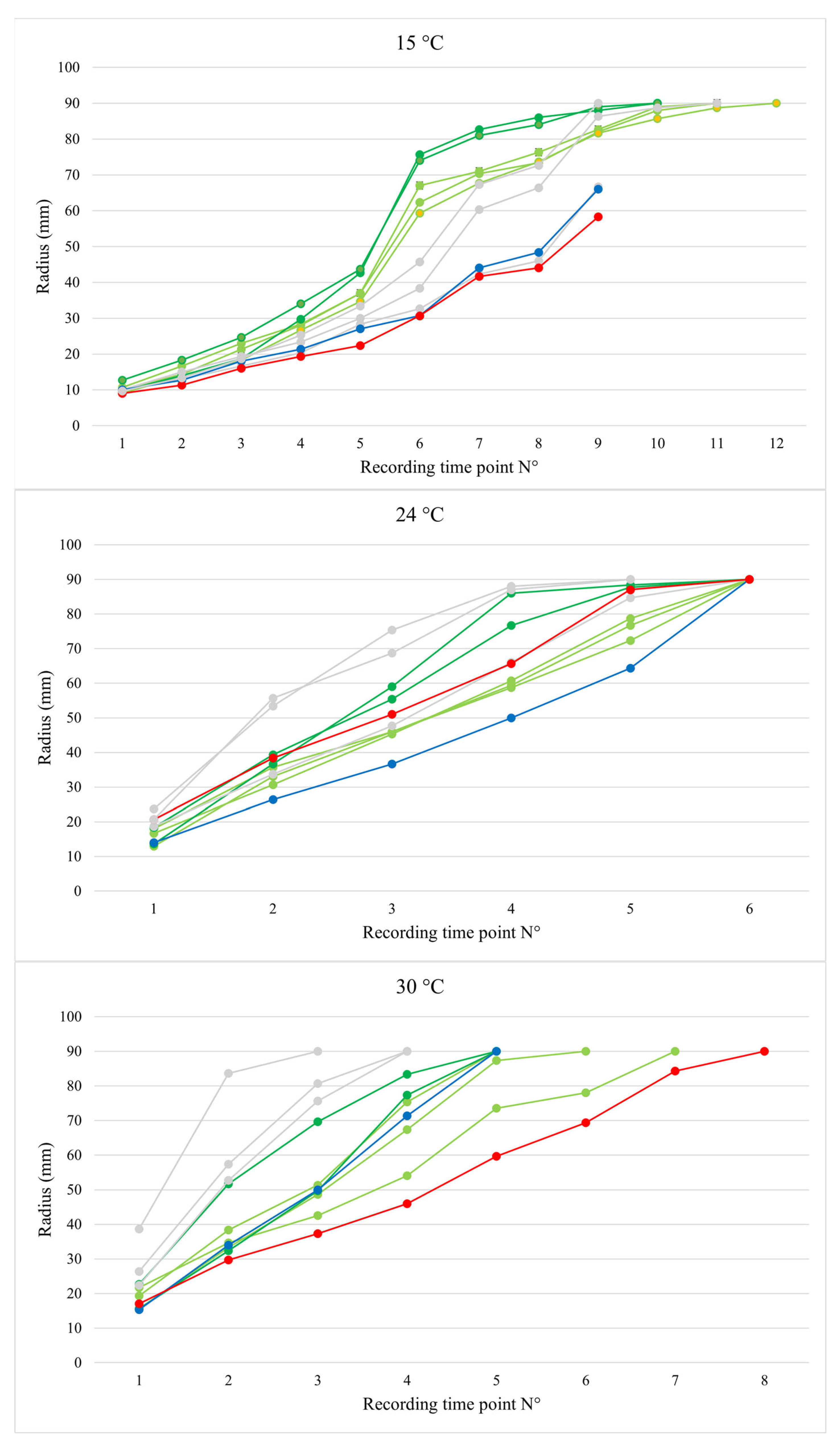
At a first glance of the raw radial growth curves (Figure 5), the populations are partially segregated at 15 °C and 30 °C based on their geographic origin, and, therefore, based on the climate conditions the strains have originally experienced this.
As shown in Figure 5, all the strains were able to colonize the whole plate by 4 weeks except for HAL (oceanic), LAM (oceanic), and BSN2 (continental) at 15 °C. This might sound unexpected, since HAL and LAM strains come from cooler climates, in southern Norway and north Apennines (about 1400 m asl), respectively, whereas F. fomentarius in Po Plain (where BSN2 comes from) is known to reactivate in the autumn and/or spring. However, other strains from the Po Plain behave differently at 15 °C, thus the raw profile is not decisive in this case. On the other hand, both the subsets of strains from north-east Poland (BWZ and BK) are the best performers at 15 °C.
Raw profiles look more tightly clustered at 24 °C, and strains from the Po Plain are slightly shifted to faster growth, unlike the HAL strain, which is slower.
Profiles are partially disentangled by increasing the temperature to 30 °C; this is likely to have boosted the growth of strains from the Po Plain to the extent that BSN5 completed the growth in only 6 days. On the other hand, the LAM strain is the worst performer at 30 °C, and this appears consistent with the mild, buffered summer temperatures of Lame Pass.
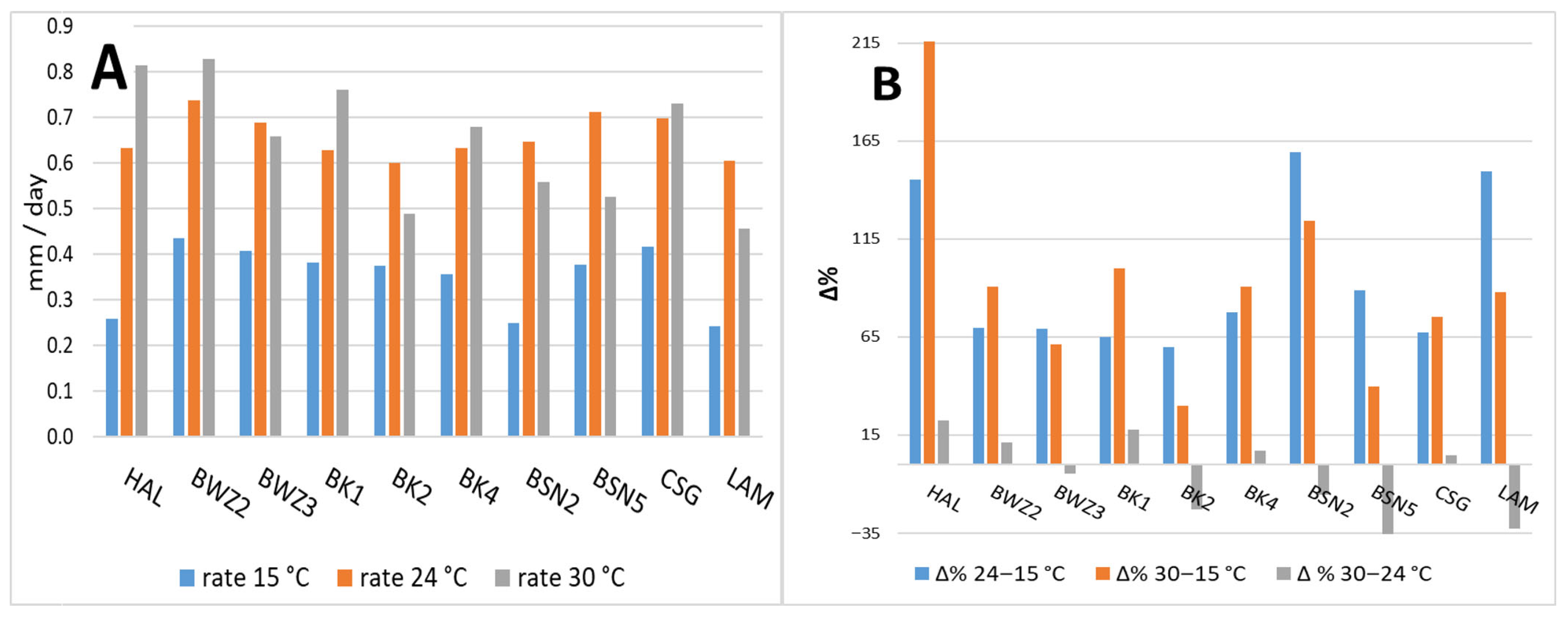
In order to simplify the comparison between the strains, the growth rate was calculated as the slope of the regression line on the growth profiles (Figure 6A); the differences between growth rates at different temperatures are shown in Figure 6B.
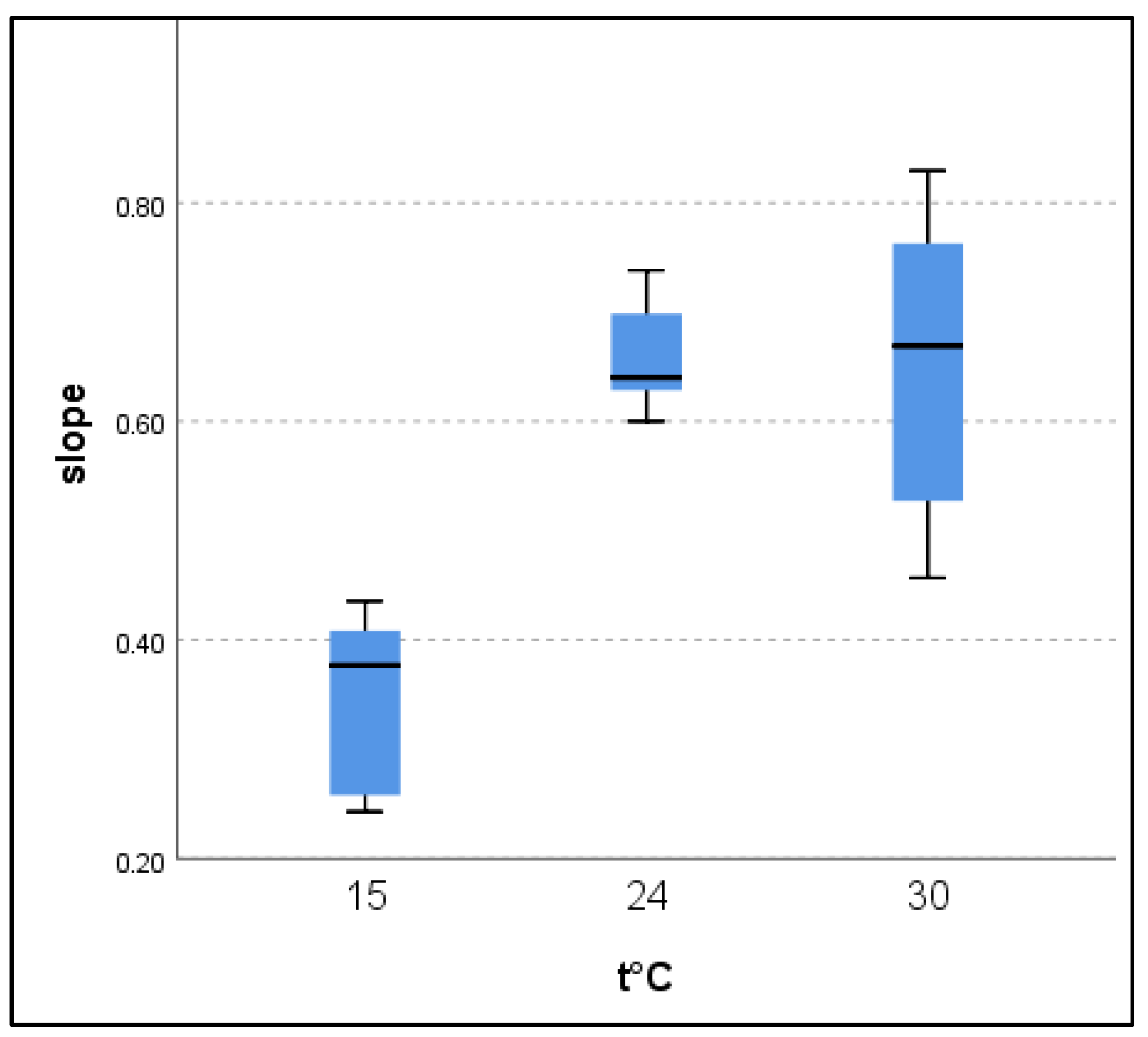
Both the Kruskal–Wallis and median tests highlighted that the slope series taken as a whole are significantly different based on temperature (overall H0 Kruskal–Wallis test = 0.00%; overall H0 median test = 0.00%).
However, pairwise comparisons pointed out that slope series at 24 °C and slope series at 30 °C are significantly similar as a whole (H0 Kruskal–Wallis test = 100%; H0 median test = 37.1%), whereas all the comparisons between 15 °C and 30 °C result in 0.0% significance. Slope data distribution at different temperatures is reported in Figure 7.
The growth rates substantially confirm the raw profiles. Strains HAL and LAM record the lowest rates at 15 °C but are favoured by increasing the growth temperature from 15 °C to 24 °C, and so does BSN2.
Regardless, with the geographic origin, all the strains flatten or decrease the growth rate over 24 °C, and this reveals some features poorly shown by the raw profiles. Namely, both BSN2 and BSN5 decrease their growth rate at 30 °C, whereas CSG and the Polish strains have quite inconsistent behaviour. Regarding the oceanic strains, the rates confirm the first glance from raw profiles, where HAL and LAM have opposite behaviours.

3.2. RGB Imaging and RGB Profiles

As described in the Materials and Methods section, the whole file set of plate pictures and RGB profiles is reported in Supplementary Materials.
At a first glance, it is almost impossible to find out a ratio of the profile shape and length either depending on the strain, locality, or temperature.
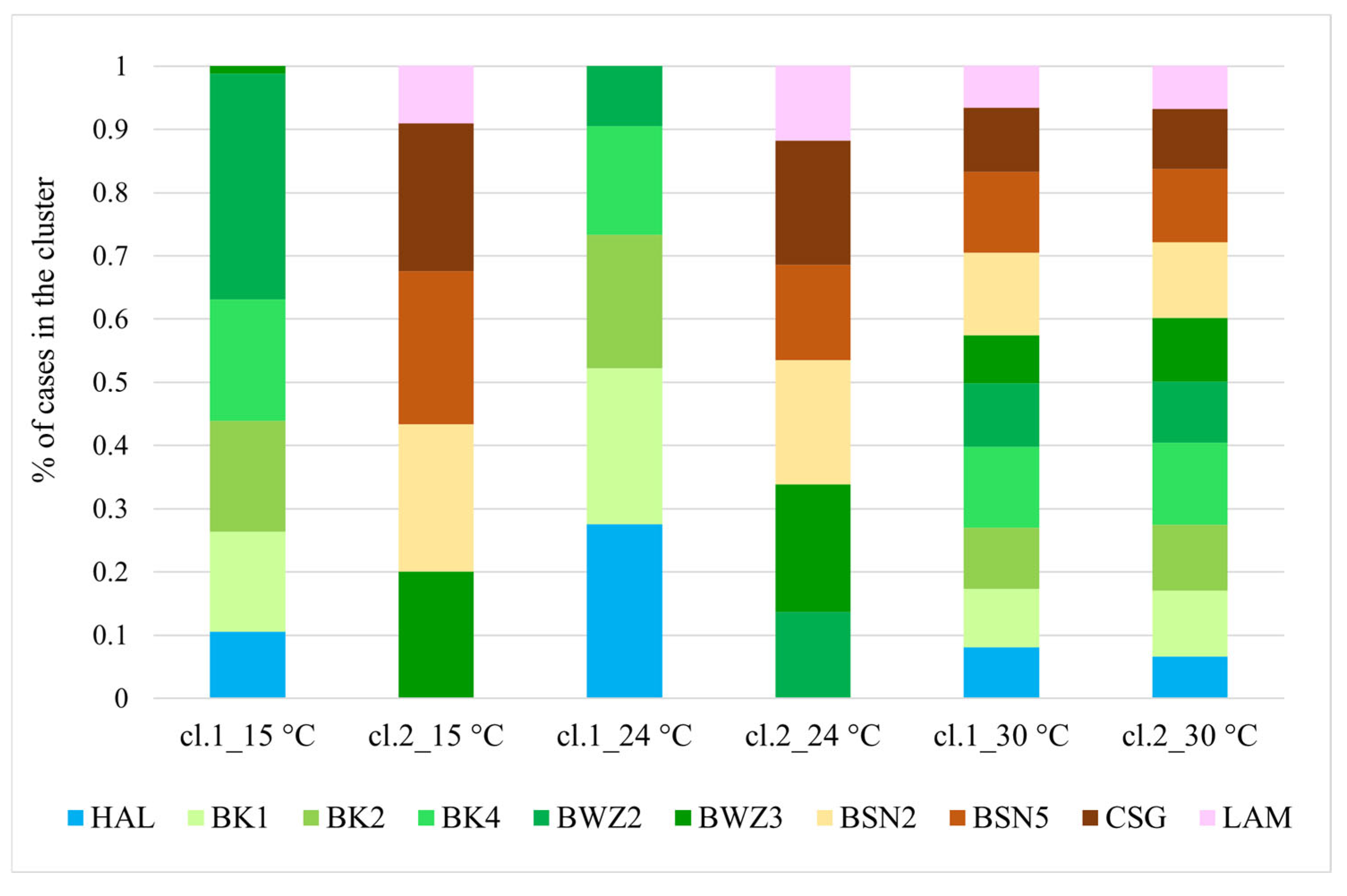
Thus, a further analytical step, including clusterization by the k-means method, was attempted in order to explore the information nested into the profiles. Upon case-by-case classification, no differences between strains or populations were revealed when K = 3 or K = 4, whereas certain differences emerge when K = 2, as shown in Figure 8.
As explained in the Materials and Methods section, the massive amount of data in each set made exploring the clusters’ parameters difficult. Silhouette scores were consequently calculated for K = 2 and K = 3 only and are reported in Table 3.
Based on the general theory of the silhouette cluster analysis [26], a well-clustered dataset should have a mean score close to +1, whereas −1 indicates complete clusters overlapping and invalidates the whole analysis concept. When the mean value is close to 0 (i.e., the sample is close to the so-called “decision boundary”, or <0.25) no substantial structure is found and part of the points in the dataset could be misclassified and attributed to the wrong cluster. Taken as a whole, k = 2 seems slightly better than k = 3, which is also consistent with ecological and biological sense. Despite this, as is apparently the case of the present study, the mean value is poorly informative in comparison to the silhouette score distribution. As shown in Figure 9, the clusters look contiguous rather than overlapped.
Based on the above, silhouette scores take quite the symmetric distribution, around 0 when k = 2. Despite the low absolute values, k = 2 is thus more consistent than k = 3 in supporting a scenario placed tightly in the neighbourhood of the decision boundary. Moreover, it is more consistent with the underlying ecological and biological hypotheses.

4. Discussion

Comparing growth profiles in standard conditions is one of the most classical methods to explore similarities and dissimilarities in a strain set. Fungi, including the lignicolous ones, usually display an indefinite growth, although they are strikingly differently affected by media composition and temperature [13,22]. Thus, strains display different rates and sometimes fail to forward or even start the growth in unsuitable conditions. However, their profile hardly ever fits a sigmoid or logistic line, whereas it is more frequently close to a straight one. In this light, this work confirms that growth rates calculated as the line slopes are complementary to raw profiles, and easier to explain, although not substitutive. Looking for an ecological or biogeographical ratio in the profile pattern, no expected driver factor (climate, spatial distance, plant host) seems to strongly overwhelm the others and complex frames emerge instead.
The oceanic strains are probably going to be little stimulated at 15 °C, whereas the Polish ones (which are continental) are the best performers and the Po Plain ones lie in the middle. In this case, climate, rather than geographic origin, seems to drive the profile.
The vast majority of F. fomentarius strains was expected to grow well at 24 °C, as was actually confirmed to be consistent with the mesophilic feature of the host plants and the climates they come from.
Concerning 30 °C, it should be noticed that—despite classified by FAO as “temperate oceanic”—the mid Po Plain is included in the Continental Biogeographic Region by Italian classifications and experiences a remarkable gap in summer–winter temperatures [17,18,19]. Thus, adaptation of these strains to values around 30 °C is perfectly consistent with the conditions in the lowlands where BSN and CSG come from. The LAM strain is the worst performer at 30 °C and this is consistent with the mild, buffered summer temperatures of Lame Pass.
As a whole, the raw profiles seem to suggest that Polish strains (continental) are more efficient at 15 °C, whereas Italian continentals increase performances at higher temperatures. Moreover, they show an apparently lower performance at both 15 °C and 24 °C by HAL, that rather accelerates at 30 °C. Both HAL and LAM come from typically oceanic climates, but the ecological meaning of this adaptation is unclear: as F. fomentarius is known to reactivate in spring too, it could be consistent with preventing the reactivation of mycelial growth when snowfall and temporarily low temperatures are still possible.
Regardless, with the geographic origin, all the strains flatten or decrease the growth rate over 24 °C, and this reveals some features poorly shown by the raw profiles. Although there is no clear correlation with the climate, continentality nor geographic position, both BSN2 and BSN5 decrease their growth rate at 30 °C, whereas CSG and the Polish strains have quite inconsistent behaviour. Thus, it should be noticed that BSN2 and BSN5 are likely to be genetically closer, as they come from the same small forest, that is much drier in summer than Podlaskie region ones (BWZ and BK).
Regarding the oceanic strains, the rates confirm the glance from raw profiles, where HAL and LAM have opposite behaviours. Perhaps this suggests that increasing temperature stimulates HAL growth regardless with possible backlash due to drought, which is an unlikely event in south Norway.
Moving from the growth tests to RGB imaging, all the results should be discussed with prudence, because the overall clustering parameters are weak according to the silhouette score, which is far below the threshold of |0.25| suggested by Kaufman and Rousseeuw [26]. Thus, the present study is likely to have resulted in a single, polarized cluster where data distribution points out two weakly disentangled subsets or poles.
Difficulties in applying clustering to RGB imaging cope with the apparently randomic and unpredictable distribution of melanisations in mycelia of many macro and microfungi, even though they are grown in homogeneous and standardized conditions in pure culture [27]. Moreover, the word “melanins” is in itself reductive, as it refers to a wide category of complex and hardly definable phenolic or indolic polymers as well as to their precursors reflecting different metabolic pathways [28]. This is also why a general discussion on melanisation factors and visible patterns is tricky since visible depositions could be just the tip of the iceberg.
Tudor et al. [29] report that F. fomentarius and other wood decayers modify melanin synthesis depending on the host species and moisture, namely F. fomentarius most melanise in beech and consistently carry out the most intense mass loss with respect to other samples, confirming a positive feedback where melanin synthesis is energetically expensive but supports further degradation in turn. Given the several functions of melanins, they serve different trophic modes (necrotrophism or saprotrophism in F. fomentarius) by preventing oxidative stress provoked by either the plant sapwood or the fungus itself [28]. In this light, melanisation in F. fomentarius results from the interaction with the substrate, and it has been reported that different hosts (i.e., different wood types) differently induce and prime the enzymatic secretion [30,31].
On the other hand, Fomes fomentarius is known to be a major producer of melanins and pigments in different stages of its growth [32]. However, colonies first develop perfectly white, unlike the Hymenochaetaceae Imazeki and Toki ones, and this highlights the contrast of even small dark depositions on the background, possibly leading to drive the RGB variable in unpredictable way.
Regardless with the attribution of the data to either one or two distinct clusters, this analysis seems to suggest that the Italian strains are discriminated from Polish and Norwegian strains at 15 °C, as they lie in (apparently) different clusters. The difference is gradually attenuated by increasing the temperature and is no longer detectable at 30 °C. More consistently than the growth profiles and rates, the RGB method seems, therefore, to suggest that strains from different climates and latitudes display different melanisation patterns and overall culture aspect as a response to the growth temperature.
Since 24 °C is approximately the optimal temperature for F. fomentarius species taken as a whole (consistent with the present study), this value is not expected to result in particular adaptation, nor does 30 °C, that is shifted towards the upper suboptimal range. On the other hand, strains from higher latitudes than LAM-CSG-BSN localities, i.e., the Polish and Norwegian ones, could have evolved adaptations to prolonged low temperatures as well as to climates including frequent frost shocks in spring especially [33]. For this concern, it should be reminded that F. fomentarius phenology could be more affected by spring temperatures than summer or autumn ones, as sporulation has been reported to be preferred in this season, although possibly in autumn too [34].
As F. fomentarius is a widespread and common species throughout Europe, genetic and phenotypic variation could have approximately taken the features of a cline within an almost uninterrupted distribution area, including a wide range of broadleaf hosts. This may explain the similarity between BK and HAL strains, which both come from Betula sp. host, whereas BWZ strains come from F. excelsior and look closer at the Italian strains. Reconstructing the biogeographic history and routes that have shaped the current F. fomentarius distribution is out of the scope of the present work; however, these results may suggest a host effect on the strain, in turn related to the (phyto) climate sensu [35]. In this light, it is likely that strains adapted to Betula species have experienced more significant genetic drift with respect to the pool including F. excelsior, S. aucuparia (in turn growing in a beech forest), Q. robur, C. avellana and Tilia sp. (the latter planted in an urban row), since Betula communities generally have different distribution and environmental requirements than the other mentioned hosts [36]. Accordingly, the host effect merges with the genetic drift expected along the distance cline, which explains why BWZ strains seem only partially similar to the Italian ones. What is observed in the present study is consistent with Tomšovský et al. [10], who reported two well distinct clades of F. fomentarius sensu stricto in the Czechia lowlands versus the beech belt in the mountains. Interestingly, the same authors also demonstrated that F. fomentarius and F. inzengae can both colonize Betula pendula Roth when in sympatric conditions, confirming that the plant community, rather than the single host species, is likely to shape F. fomentarius diversity.
Taken as a whole, the joint approach made of “traditional” growth profiles and RGB imaging is helpful to characterize different populations based on some phenotypic features in F. fomentarius as well as in other species growing in pure culture and developing featuring melanisations (e.g., Hymenochaetaceae) or other morphological traits such as aerial mycelia (e.g., Hericium Pers.). The “ecotype concept” is generally difficult to define, as it relies on barriers to outcrossing which are usually weak or absent, thus it seems indeed improper in this context. However, the combined methodology here proposed has outlined a range where further studies could finely tune the temperature setting of the growth tests. Namely, more information about local adaptations of each population or any other strain subset (e.g., host-based) could be retrieved by imposing temperature values between 15 °C and 24 °C, as well as below 15 °C [37,38]. Since plates are colonized by a few weeks or days, temperature variation during the test is not expected to prime notable effects. However, melanisation is commonly observed to change over a longer period of time, such as months or even years (basically, until plate dehydration inactivates mycelia). Thus, long-date monitoring could reveal unexpected patterns and strengthen the results with respect to clustering parameters. This phenomenon has been observed in many other fungal models, also including wood decay Agaricomycetes [28,39].

5. Conclusions

Finally, this study has not pointed out true “ecotypes” but suggests that intraspecific variability in F. fomentarius is also displayed in different local responses to the climate, despite the temperature set in laboratory conditions being a limited proxy. In this light, possible future studies addressing the ecotype (or species complex) concept in F. fomentarius should consider both genetic drift and functional traits.

Supplementary Materials

The following supporting information can be downloaded at: https://www.mdpi.com/article/10.3390/f17010019/s1, Figure S1: Petri plates; Figure S2: RGB profiles.

Author Contributions

Conceptualization, C.E.G. and S.B.; methodology, C.E.G. and S.B.; formal analysis, C.E.G. and S.B.; investigation C.E.G., H.A., S.B. and D.S.; resources, C.E.G., E.Z., M.W. and E.Y.; data curation, C.E.G., M.W. and E.Y.; writing—original draft preparation, C.E.G.; writing—review and editing, S.B., L.N., E.Z. and E.Y.; visualization, S.B. and H.A.; supervision, C.E.G., E.Z. and E.Y.; project administration, C.E.G. and E.Z.; funding acquisition, C.E.G. and E.Z. All authors have read and agreed to the published version of the manuscript.

Funding

The study was co-funded (2012–2016) by the State Nature Reserve “Bosco Siro Negri” (University of Pavia) and the Ministry of Environment and Energy Security (MASE). Grant number not applicable. Mobility to Poland including field sampling (as a side activity) was funded by Erasmus + Programme—Teaching staff mobility (2023).

Data Availability Statement

The original contributions presented in this study are included in the article/Supplementary Materials. Further inquiries can be directed to the corresponding author(s).

Acknowledgments

The authors are grateful to the present Director of the State Nature Reserve “Bosco Siro Negri” Paola Nola and the former one Francesco Bracco. The authors are also grateful to Aveto Regional Park (Italy) for authorization to sampling. The research collaboration between the University of Pavia and the Białystok University of Technology has been established thanks to Erasmus + Programme—Teaching staff mobility (2023).

Conflicts of Interest

The authors declare no conflicts of interest. The funders had no role in the design of the study; in the collection, analyses, or interpretation of data; in the writing of the manuscript; or in the decision to publish the results.

References

  1. McCormick, M.A.; Cubeta, M.A.; Grand, L.F. Geography and hosts of the wood decay fungi Fomes fasciatus and Fomes fomentarius in the United States. N. Am. Fungi 2013, 8, 1–53. [Google Scholar] [CrossRef]
  2. Ryvarden, L.; Melo, I. Poroid Fungi of Europe, 2nd ed.; Fungiflora: Oslo, Norway, 2017. [Google Scholar]
  3. Bernicchia, A.; Gorjón, S.P. Polypores of the Mediterranean Region; Romar: Segrate, Italy, 2020. [Google Scholar]
  4. Gáperová, S.; Gáper, J.; Gallay, I.; Pristaš, P.; Slobodník, B. Spatial distribution and host preferences of Fomes fomentarius and F. inzengae in Europe: A review. Folia Oecol. 2025, 52, 202–218. [Google Scholar] [CrossRef]
  5. GBIF. Available online: https://www.gbif.org/ (accessed on 23 October 2025).
  6. Schwarze, F.W. Wood decay under the microscope. Fungal Biol. Rev. 2007, 21, 133–170. [Google Scholar] [CrossRef]
  7. Judova, J.; Dubikova, K.; Gaperova, S.; Gaper, J.; Pristas, P. The occurrence and rapid discrimination of Fomes fomentarius genotypes by ITS-RFLP analysis. Fungal Biol. 2012, 116, 155e160. [Google Scholar] [CrossRef]
  8. Peintner, U.; Kuhnert-Finkernagel, R.; Wille, V.; Biasioli, F.; Shiryaev, A.; Perini, C. How to resolve cryptic species of polypores: An example in Fomes. IMA Fungus 2019, 10, 17. [Google Scholar] [CrossRef]
  9. Badalyan, S.; Zhuykova, E.; Mukhin, V. The phylogenetic analysis of Armenian collections of medicinal tinder polypore Fomes fomentarius (Agaricomycetes, Polyporaceae). Ital. J. Mycol. 2022, 51, 23–33. [Google Scholar]
  10. Tomšovský, M.; Kaeochulsri, S.; Kudláček, T.; Dálya, L.B. Ecological, morphological and phylogenetic survey of Fomes fomentarius and F. inzengae (Agaricomycetes, Polyporaceae) co-occurring in the same geographic area in Central Europe. Mycol. Prog. 2023, 22, 79. [Google Scholar] [CrossRef]
  11. Logar, R.; Gostinčar, C.; Turk, M.; Grebenc, T. Combination of hosts and geographic origin affect the differentiation in Fomes fomentarius species complex. In Proceedings of the XIX Congress of European Mycologists, Perugia, Italy, 4–8 September, 2023. [Google Scholar]
  12. Stalpers, J.A. Identification of wood-inhabiting Aphyllophorales in pure culture. Stud. Mycol. 1978, 16, 248. [Google Scholar]
  13. BLAST NCBI. Available online: https://blast.ncbi.nlm.nih.gov/Blast.cgi (accessed on 23 October 2025).
  14. Girometta, C.E.; Buratti, S.; Bernicchia, A.; Desiderio, A.; Goppa, L.; Perini, C.; Salerni, E.; Savino, E. The research culture collection of Italian wood decay fungi: A tool for different studies and applications. Ital. J. Mycol. 2024, 53, 85–98. [Google Scholar]
  15. Girometta, C.E.; Bernicchia, A.; Baiguera, R.M.; Bracco, F.; Buratti, S.; Cartabia, M.; Picco, A.M.; Savino, E. An Italian research culture collection of wood decay fungi. Diversity 2020, 12, 58. [Google Scholar] [CrossRef]
  16. San-Miguel-Ayanz, J.; de Rigo, D.; Caudullo, G.; Houston Durrant, T.; Mauri, A. European Atlas of Forest Tree Species; Publication Office of the European Union: Luxembourg, 2016. [Google Scholar]
  17. Geoportale Nazionale—Ministero dell’Ambiente. Available online: https://gn.mase.gov.it/portale/home (accessed on 23 October 2025).
  18. Blasi, C.; Capotorti, G.; Copiz, R.; Guida, D.; Mollo, B.; Smiraglia, D.; Zavattero, L. Classification and mapping of the ecoregions of Italy. Plant Biosyst. 2014, 148, 1255–1345. [Google Scholar] [CrossRef]
  19. FAO—Food and Agriculture Organization. Available online: https://www.fao.org/4/ad652e/ad652e21.htm (accessed on 24 October 2025).
  20. DMEER: Digital Map of European Ecological Regions—European Environment Agency. Available online: https://www.eea.europa.eu/en/analysis/maps-and-charts/dmeer-digital-map-of-european-ecological-regions (accessed on 24 October 2025).
  21. ClimateData. Available online: https://en.climate-data.org/ (accessed on 16 November 2025).
  22. Buratti, S.; Girometta, C.E.; Savino, E.; Gorjón, S.P. An Example of the Conservation of Wood Decay Fungi: The New Research Culture Collection of Corticioid and Polyporoid Strains of the University of Salamanca (Spain). Forests 2023, 14, 2029. [Google Scholar] [CrossRef]
  23. Soliani, L.; Giavelli, G.; Manfredini, M. Statistica Applicata alla Ricerca Biologica e Ambientale; UNI.NOVA: Parma, Italy, 2003. [Google Scholar]
  24. ImageJ. Available online: https://imagej.net/ij/ (accessed on 23 October 2025).
  25. Afifi, A.; May, S.; Donatello, R.; Clark, V.A. Practical Multivariate Analysis, 6th ed.; Routledge: Abingdon, UK, 2019. [Google Scholar]
  26. Kaufman, L.; Rousseeuw, P.J. Finding Groups in Data: An Introduction to Cluster Analysis; John Wiley & Sons: New York, NY, USA, 2009. [Google Scholar]
  27. Girometta, C.E.; Dondi, D.; Baiguera, R.M.; Bracco, F.; Branciforti, D.S.; Buratti, S.; Lazzaroni, S.; Savino, E. Characterization of mycelia from wood-decay species by TGA and IR spectroscopy. Cellulose 2020, 27, 6133–6148. [Google Scholar] [CrossRef]
  28. Qin, Y.; Xia, Y. Melanin in fungi: Advances in structure, biosynthesis, regulation, and metabolic engineering. Microb. Cell Fact. 2024, 23, 334. [Google Scholar] [CrossRef]
  29. Tudor, D.; Robinson, S.C.; Cooper, P.A. The influence of moisture content variation on fungal pigment formation in spalted wood. Amb. Express 2012, 2, 69. [Google Scholar] [CrossRef]
  30. Wei, Y.; Xue, J.; Shi, J.; Li, T.; Yuan, H. Comparative transcriptome analysis explores the mechanism of angiosperm and gymnosperm deadwood degradation by Fomes fomentarius. J. Fungi 2024, 10, 196. [Google Scholar] [CrossRef]
  31. Cairns, T.; Freidank-Pohl, C.; Birke, A.S.; Regner, C.; Jung, S.; Meyer, V. Uncovering the transcriptional landscape of Fomes fomentarius during fungal-based material production through gene co-expression network analysis. Fungal Biol. Biotechnol. 2025, 12, 1. [Google Scholar] [CrossRef]
  32. Fedotov, O.V.; Veligodska, A.K. Search producers of polyphenols and some pigments among Basidiomycetes. Biotechnologia Acta 2014, 7, 110–116. [Google Scholar] [CrossRef]
  33. Climate ADAPT, Sito Ufficiale dell’Unione Europea per L’ambiente. Available online: https://climate-adapt.eea.europa.eu/it/knowledge/european-climate-data-explorer/agriculture?set_language=it (accessed on 23 October 2025).
  34. Bernicchia, A. Polyporaceae sl; Candusso: Alassio, Italy, 2005. [Google Scholar]
  35. Botti, D. A phytoclimatic map of Europe. CYBERGEO 2018, 29495, 134885648. [Google Scholar] [CrossRef]
  36. FloraVeg EU. Available online: https://floraveg.eu/ (accessed on 23 October 2025).
  37. Orsenigo, S.; Mondoni, A.; Rossi, G.; Abeli, T. Some like it hot and some like it cold, but not too much: Plant responses to climate extremes. Plant Ecol. 2014, 215, 677–688. [Google Scholar] [CrossRef]
  38. Stewart, J.J.; Demmig-Adams, B.; Cohu, C.M.; Wenzl, C.A.; Muller, O.; Adams, W.W., III. Growth temperature impact on leaf form and function in Arabidopsis thaliana ecotypes from northern and southern Europe. Plant Cell Environ. 2016, 39, 1549–1558. [Google Scholar] [CrossRef] [PubMed]
  39. Jaszek, M.; Żuchowski, J.; Dajczak, E.; Cimek, K.; Gra̢z, M.; Grzywnowicz, K. Ligninolytic enzymes can participate in a multiple response system to oxidative stress in white-rot basidiomycetes: Fomes fomentarius and Tyromyces pubescens. Int. Biodeter. Biodegrad. 2006, 58, 168–175. [Google Scholar] [CrossRef]
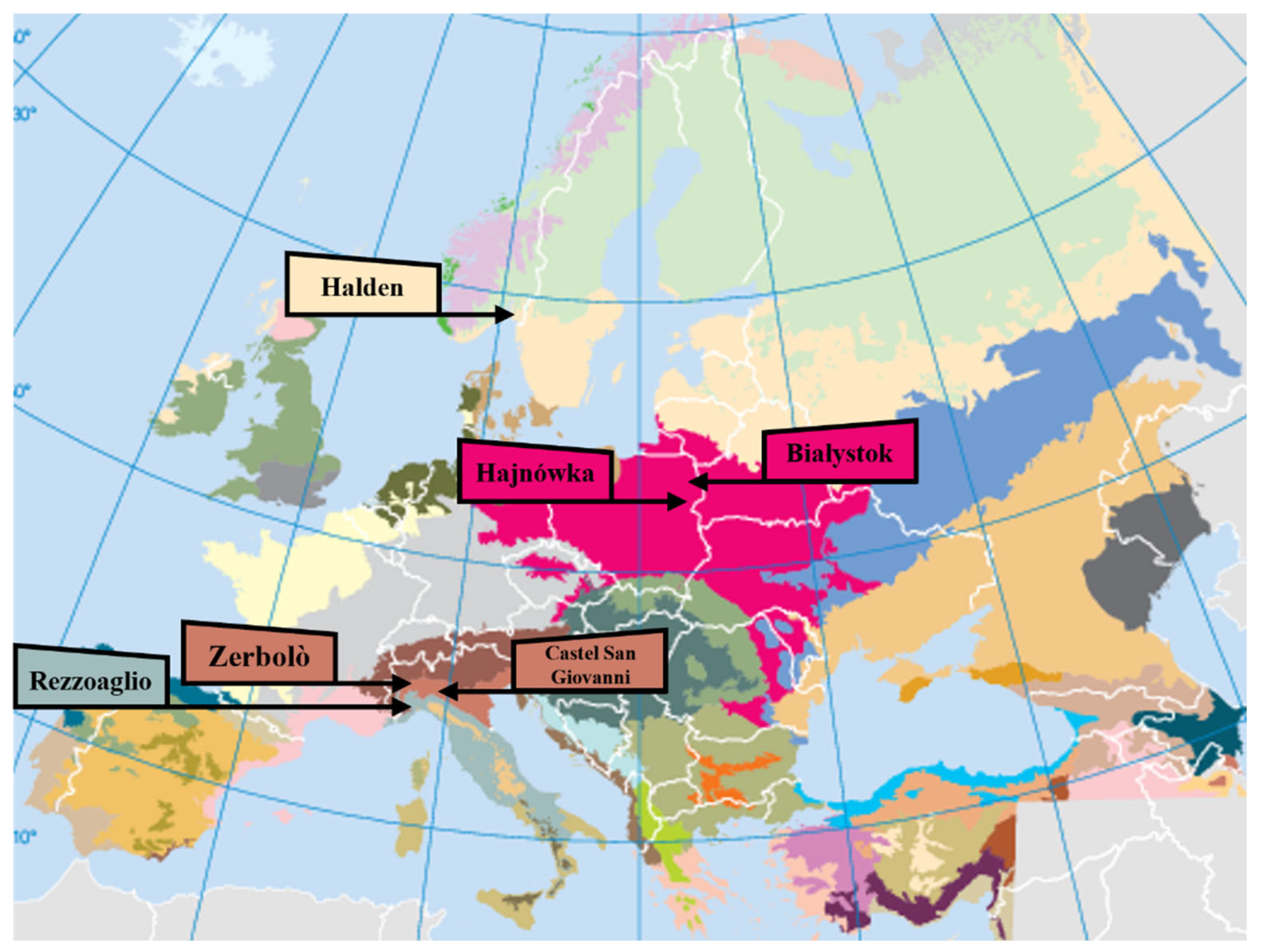
Figure 1. Geographic origin of the strains in the study: Halden—North Atlantic moist mixed forests; Hajnówka and Białystok—Central European mixed forests; Zerbolò and Castel San Giovanni—Po basin mixed forests; Rezzoaglio—Italian sclerophyllous and semi-deciduous forests. Modified from DMEER: Digital Map of European Ecological Regions—European Environment Agency [20].
Forests 17 00019 g001
Figure 2. Example of melanisation variations exhibited by strains from different localities incubated at the same temperature.
Forests 17 00019 g002
Figure 3. Example of BWZ2 strain profile obtained at 15 °C, as resulting from the cumulative factor obtained by the principal component method. Profiles were graphically represented by MS Excel 2016.
Forests 17 00019 g003
Figure 4. Analytical workflow underlying the RGB-based profiling of strains.
Forests 17 00019 g004
Figure 5. Raw growth profiles of the strains at different temperatures—mean of the three replicates. Records were taken every 2 days until plate coverage or4 weeks deadline. To simplify the visualization, profiles were clustered and represented as follows: dark green = Białowieża (BWZ); light green = Białystok (BK); grey = Po Plain (BSN + CSG); blue = Halden (HAL); red = Ligurian Apennines (LAM).
Forests 17 00019 g005
Figure 6. (A) Growth rates of the strains calculated on the three replicates as the slope of the Theil–Sen’s non-parametric regression line; all the regression lines are significant based on both Spearman’s ρ and Kendall’s τb (2-tailed, α = 0.01); (B) % difference (Δ) between growth rates.
Forests 17 00019 g006
Figure 7. Distribution of slope values as in the non-parametric regression line obtained by Theil–Sen’s method. Median is represented by the transversal line in each boxplot.
Forests 17 00019 g007
Figure 8. Distribution of cases in clusters when K = 2. The cases were meant as the records of each cumulative profile. Clusters were graphically represented by MS Excel 2016.
Forests 17 00019 g008
Figure 9. Distribution of silhouette scores at different temperatures for k = 2 and k = 3. Silhouette is calculated based on Euclidean dissimilarity.
Forests 17 00019 g009
Table 1. Main identifiers of the strain set in the work. Ecological zones by FAO—Food and Agriculture Organization [19]. Further references to the geographical zone are indicated as follows: (*) Białowieża Primeval Forest; (**) Po Plain; (***) Ligurian Apennines.
StrainMicunipv CodeSubstrateMunicipality CountryEcological ZoneCoordinatesGenbank Accession
HALMicUNIPV F.f.19Betula sp.HaldenNorwayTemperate oceanic11.52766 E, 59.13508 N PX663061
BWZ2MicUNIPV F.f.24Fraxinus excelsior L.Hajnówka *PolandTemperate continental23.59680 E, 52.72841 NPX663056
BWZ3MicUNIPV F.f.25Fraxinus excelsiorHajnówka *PolandTemperate continental23.59515 E, 52.72786 N PX663057
BK1MicUNIPV F.f.20Betula pendula RothBiałystokPolandTemperate continental23.15216 E, 53.11513 N PX663058
BK2MicUNIPV F.f.21Betula pendulaBiałystokPolandTemperate continental23.15170 E, 53.11333 N PX663059
BK4MicUNIPV F.f.22Betula pendulaBiałystokPolandTemperate continental23.15160 E, 53.11409 N PX663060
BSN2MicUNIPV F.f.4Quercus robur L.Zerbolò **ItalyTemperate oceanic9.05667 E, 45.21126 N PX663063
BSN5MicUNIPV F.f.18Corylus avellana L.Zerbolò **ItalyTemperate oceanic9.05823 E, 45.21180 NPX663064
CSGMicUNIPV F.f.7Tilia sp.Castel San Giovanni **ItalyTemperate oceanic9.43493 E, 45.06064 N PX663062
LAMMicUNIPV F.f.10Sorbus aucuparia L.Rezzoaglio ***ItalyTemperate mountain9.39129 E, 44.48951 NPX663065
Table 2. Mean annual climatic conditions of the fungal strains origin locations https://en.climate-data.org/ (accessed on 16 November 2025) [21].
StrainMean Temperature
°C (Min-Max)
Precipitation (mm)Humidity (%)Rainy Days (d)
HAL7.2 (4.3–10)74.20.88.5
BWZ28.3 (4.6–11.6)59.30.88.3
BWZ38.3 (4.6–11.6)59.30.88.3
BK18.2 (4.5–11.6)59.60.88.5
BK28.2 (4.5–11.6)59.60.88.5
BK48.2 (4.5–11.6)59.60.88.5
BSN213.8 (9.3–18.5)90.50.76.8
BSN513.8 (9.3–18.5)90.50.76.8
CSG13.9 (9.5–18.5)80.30.77.0
LAM9.8 (6.7–13)122.40.89.3
Table 3. Mean silhouette scores of the clusters at different K and temperatures.
15 °C24 °C30 °C
k = 2k = 3k = 2k = 3k = 2k = 3
cluster 1−0.037+0.215−0.069−0.235−0.083+0.206
cluster 2+0.039−0.195+0.079+0.218+0.089−0.248
cluster 3-−0.263-−0.213-−0.194
mean+0.002−0.025+0.017−0.022+0.014−0.028
Disclaimer/Publisher’s Note: The statements, opinions and data contained in all publications are solely those of the individual author(s) and contributor(s) and not of MDPI and/or the editor(s). MDPI and/or the editor(s) disclaim responsibility for any injury to people or property resulting from any ideas, methods, instructions or products referred to in the content.