Article

Developing Diameter Distribution Models of Major Coniferous Species in South Korea

1
Department of Forest Management, College of Forest and Environmental Sciences, Kangwon National University, Chuncheon 24341, Republic of Korea
2
Natural Resources Institute Finland (Luke), Latokartanonkaari 9, 00790 Helsinki, Finland
*
Author to whom correspondence should be addressed.
Forests 2025, 16(6), 961; https://doi.org/10.3390/f16060961
Submission received: 25 February 2025 / Revised: 14 April 2025 / Accepted: 4 June 2025 / Published: 6 June 2025
(This article belongs to the Special Issue Silviculture and Management Strategy in Coniferous Forests)

Abstract

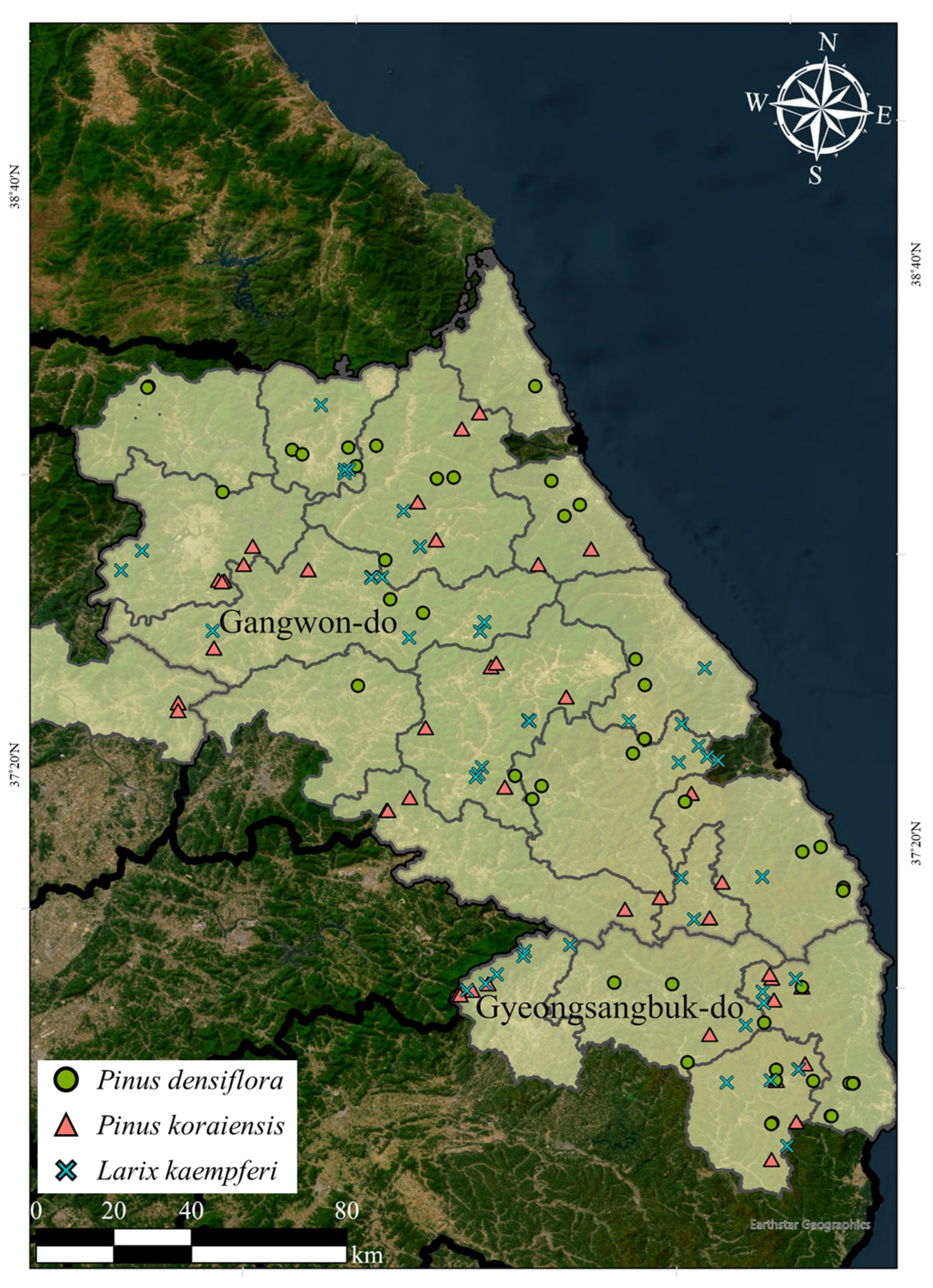
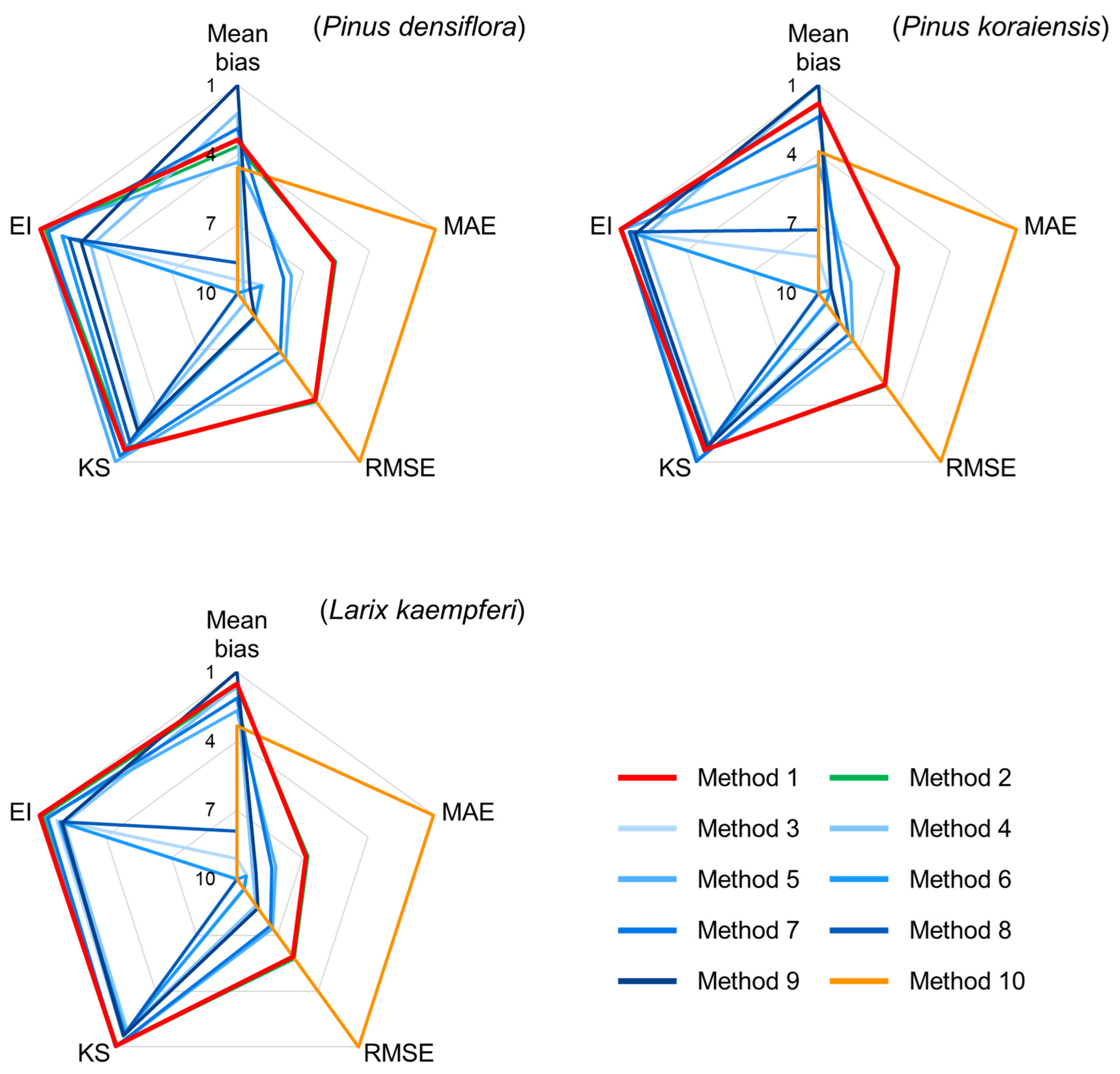
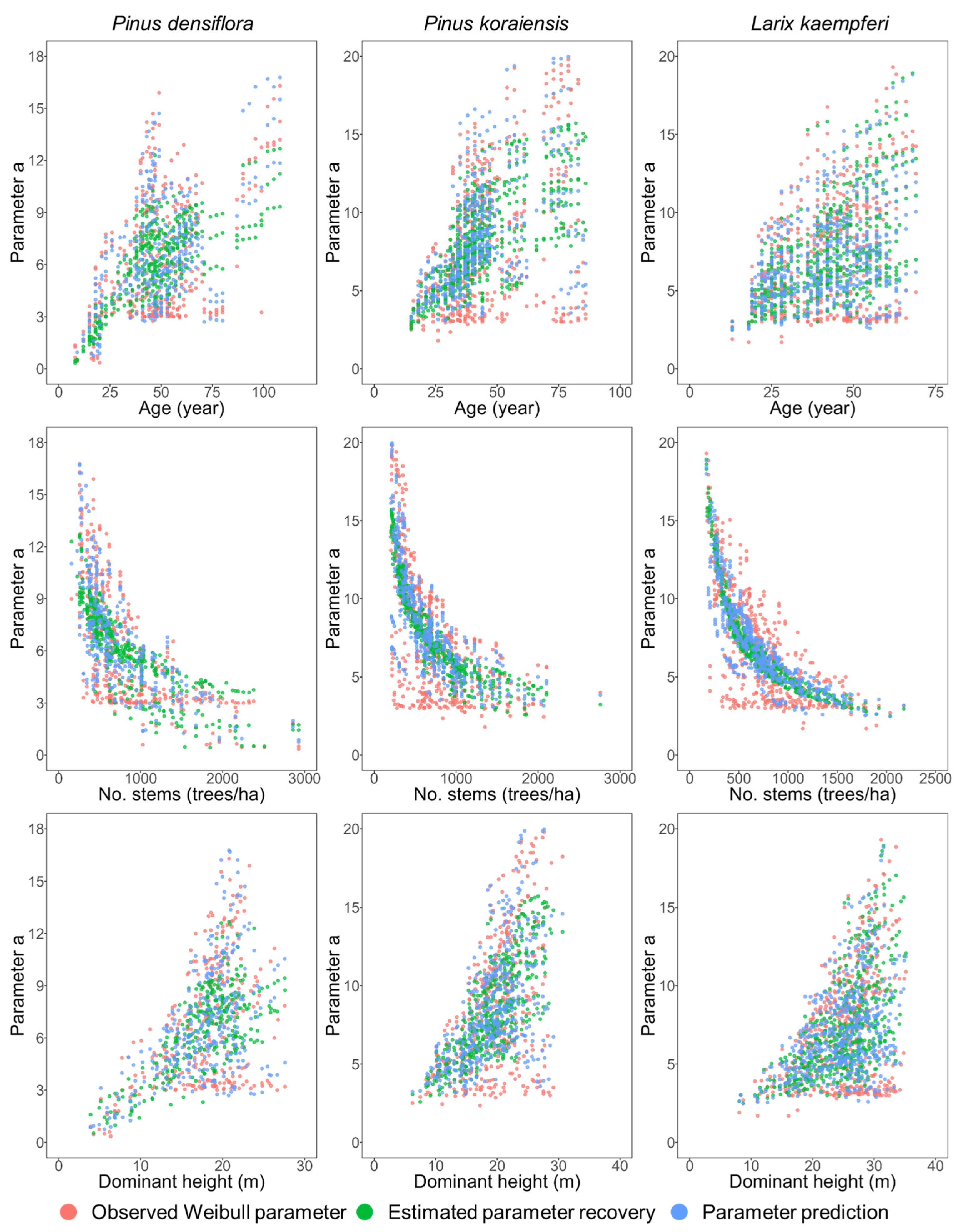
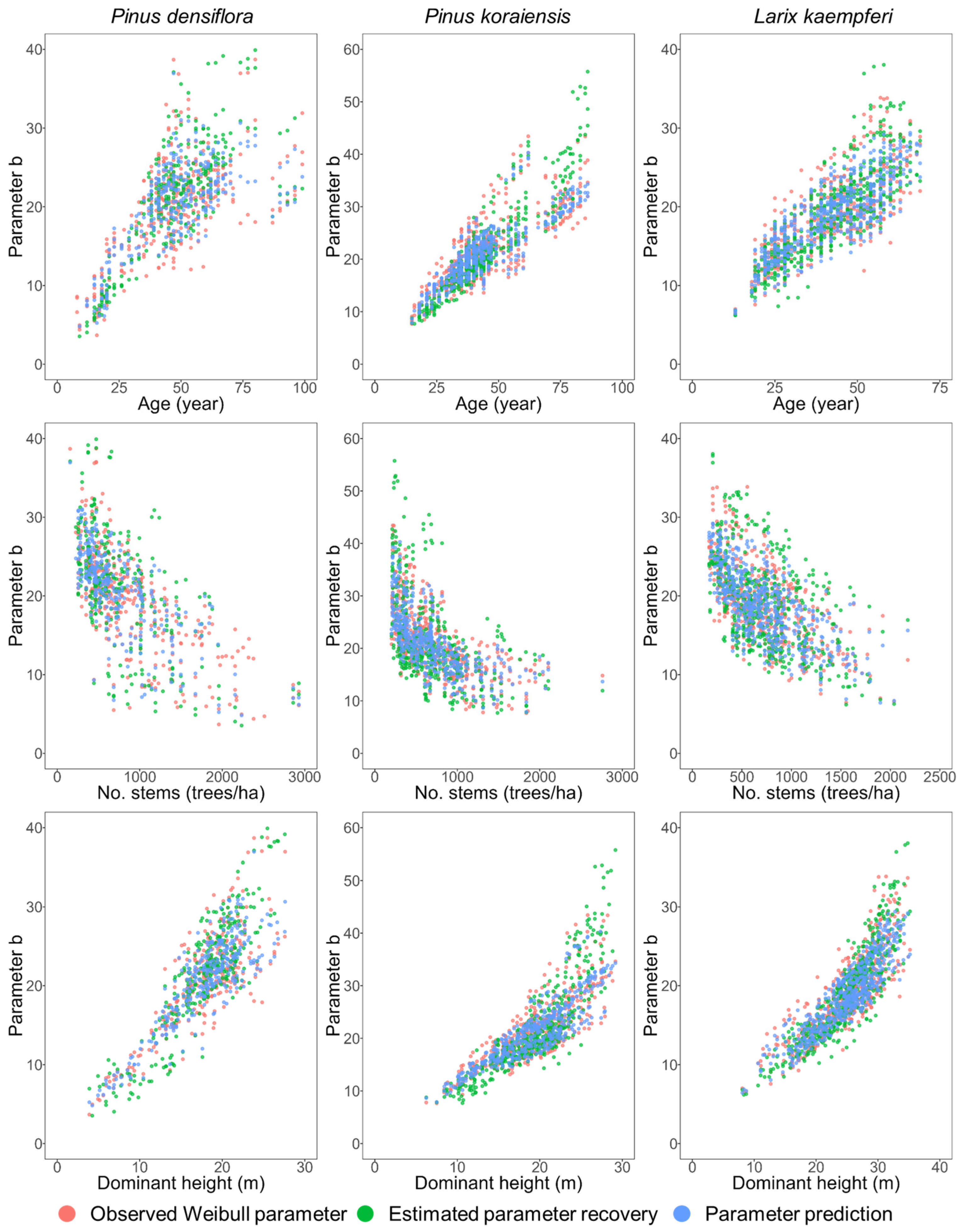
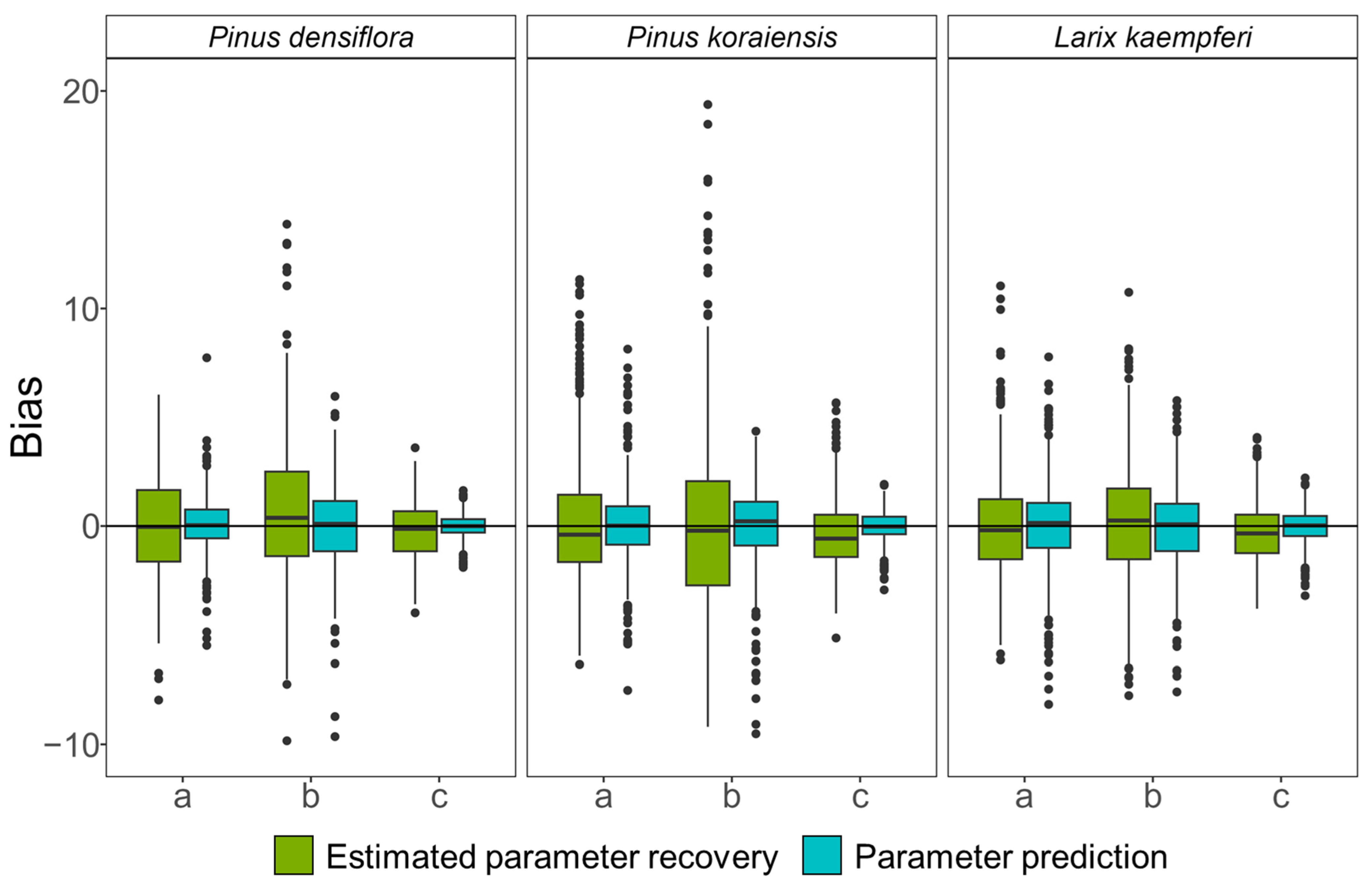
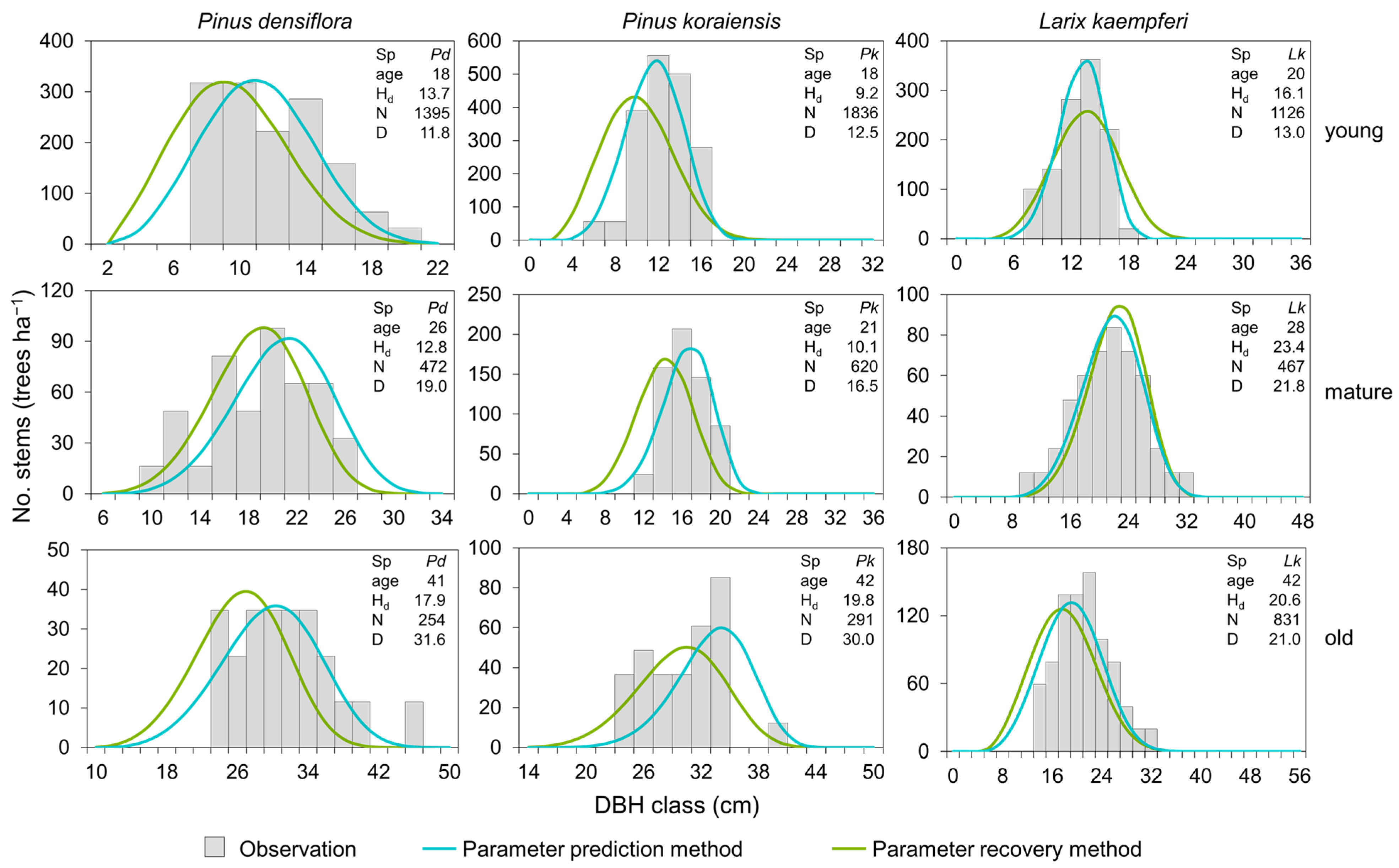
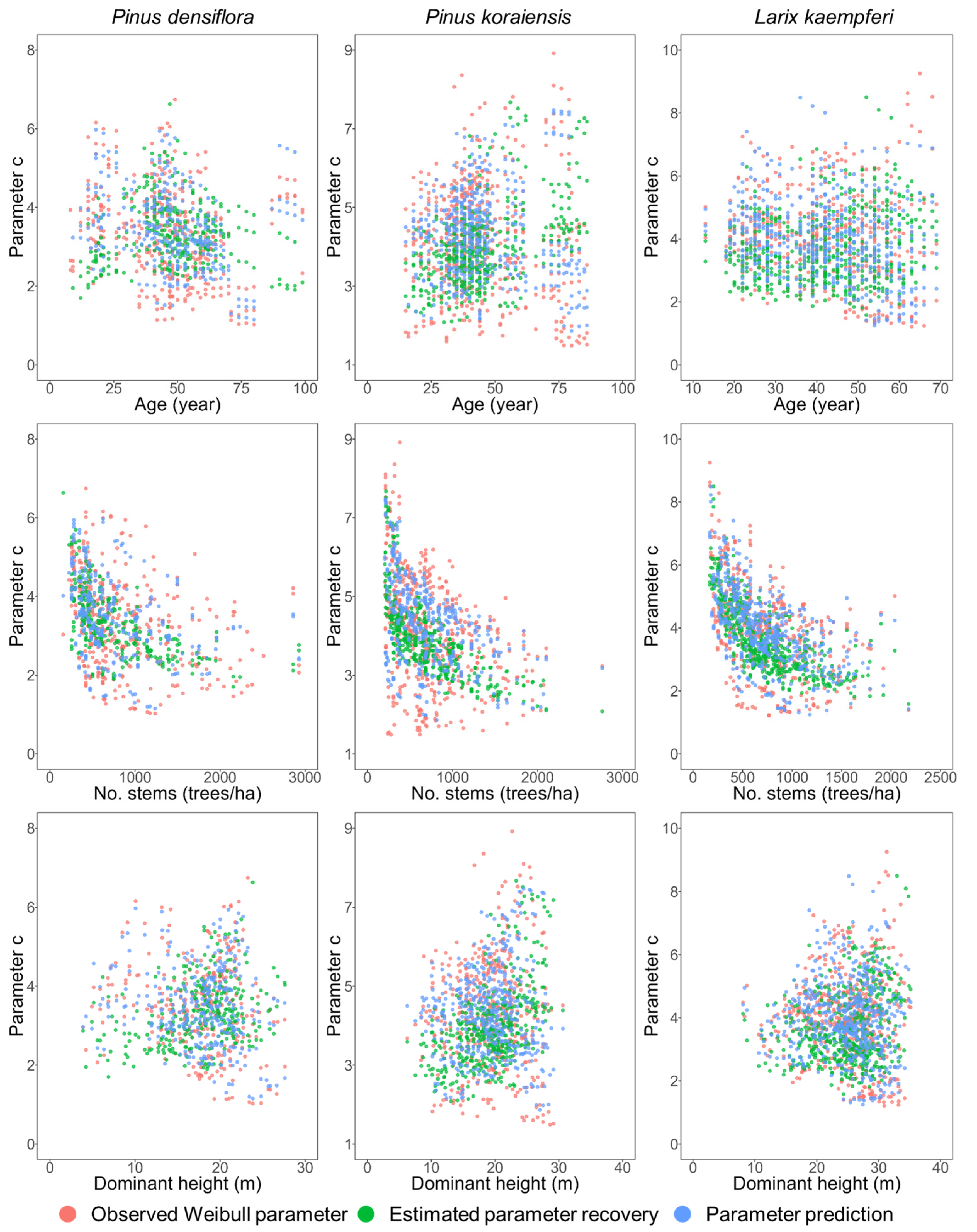
This study developed diameter distribution models using the Weibull function for Korean red pine (Pinus densiflora), Korean white pine (P. koraiensis), and Japanese larch (Larix kaempferi). The study data were collected from 49 Korean red pine stands, 54 Korean white pine stands, and 49 Japanese larch stands located in national forests in Gangwon and North Gyeongsang Provinces, South Korea. To identify the optimal method for modeling the diameter distribution of these three species, parameter recovery methods and parameter prediction methods were analyzed. To identify the optimal parameter recovery method for presenting the diameter distribution of these three species, ten parameter recovery methods were compared using moment-based, percentile-based, and hybrid approaches. For parameter prediction methods, major stand characteristics were used as independent variables to develop the models for the parameters a, b, and c of the Weibull function. For estimating the Weibull parameters, two methods—the estimated parameter recovery method and the parameter prediction method—were compared and analyzed. The optimal parameter recovery method was the one using the minimum DBH, the mean DBH, and the DBH variance. The coefficient of determination (R2) for the models predicting the minimum DBH, the mean DBH, and the DBH variance ranged from 0.7186 to 0.9747, and the R2 for the models directly predicting parameters ranged from 0.7032 to 0.9374, indicating high explanatory power and unbiased results. When comparing the two methods, the parameter prediction method showed higher accuracy and lower bias. In addition, paired t-tests were conducted to assess differences from the observed Weibull parameters. The results showed a significant difference for the estimated parameter recovery method, whereas no significant difference was found for the parameter prediction method, further supporting its reliability.
Keywords: Weibull function; diameter distribution model; parameter recovery; parameter prediction; diameter growth Weibull function; diameter distribution model; parameter recovery; parameter prediction; diameter growth